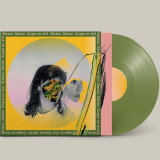
Cat Clyde’s 3rd album Down Rounder is a wonder of deeply felt songwriting, a record that finds the Canadian singer-songwriter marveling at what’s around her while considering her own place within it all. With ten songs on the album, Down Rounder possesses an intimate and personal feel, transporting the listener to the recording studio as Cat performs these hair-raising tunes with confidence and passion. Cat joined producer Tony Berg in Los Angeles’ famed Sound City studios to lay down the entirety of Down Rounder in six days flat. The record sounds both lively and lived-in, with Clyde’s malleable singing voice—spanning an appealing twang to a lovely, plaintive croon and anywhere in between—espousing an essential connection between our spiritual center and the natural world that surrounds us. The album is an exploration and expression of self, patterns in the natural and unnatural world, connecting to nature, the turning wheel of life, shedding old selves, embracing new selves, and the ever changing, expanding and contracting nature of love and life. After racking up millions of streams across multiple platforms with previous releases, Down Rounder sounds like the work of someone who’s found themselves artistically and holistically, while extending a hand to any listener who wants to follow Clyde on her singular and thrilling path.
Suche:what! what! records
Den Stillstand während der Covid-Pandemie haben Perkele genutzt, um ältere Songs im Proberaum neu aufzunehmen, die bisher gerne live gespielt wurden und stets ein positives Feedback bekamen. Die Proberaumvideos kamen auf YouTube so gut an, dass die Band mit Anfragen bombardiert wurde, diese neuen Aufnahmen auch auf Streamingplattformen zu teilen. Leider war die Aufnahmequalität zu schlecht dafür, dazu haben sich im Laufe der Jahre die alten Songs weiterentwickelt und es wurde Zeit sie auf den neuesten Stand zu bringen. Ein Studiotermin musste also her. Im Sommer 2022 war es dann so weit und hier ist nun das Ergebnis.
Zum 30jährigen Bandjubiläum gibt es also 5 Perkele-Klassiker, in neuem Gewand. Lasst Euch überraschen!
On this LP we find Michael Hurley stretching out on six longer than usual compositions that are heartbreaking & beautiful as anything he's ever done. Side one features Hurley on a creaky pump organ and a Hammond organ. Side two starts out with two newer compositions - just Michael on guitar & vocals. The record ends with a stunning version of Tea Song (which Michael originally wrote & recorded way back in 1963). A sustained feeling of loss & need for redemption haunts this record. It ain't easy listening, but then what worth a damn is? Includes insert with Michael's notes on the songs and some artwork.
The Songs All Sound the Same is a singles collection by American rock and roll band Supersuckers. It was originally released in 1992 on eMpTy Records. This album led ultimately to the signing of the band with Sub Pop. Now fully remastered and with new artwork it is released in 2021 for the first time on vinyl (an earlier version was on a picture disc). Raw, loud and fast, this is the first document of an incredible career. Liner notes by Eddie Spaghetti.
- A1: Sexy Ways (Recloose Disco Flip)
- A2: You Can't Miss What You Can't Measure (Alton Miller Mix)
- A3: Get Your Ass Off And Jam (Marcellus Pittman Remix)
- B1: Cosmic Slop (Moodyman Mix)
- B2: Music For My Mother (Andres Wo Ahh Ay Vocal Mix)
- B3: Super Stupid (Dirtbombs Version)
- C1: Music 4 My Mother (Underground Resistance Mix)
- C2: Undisco Kidd (Gay Marvine Edit)
- C3: Take Your Dead Ass Home (The Fantasy Version)
- D1: Let's Take It To The Stage (Amp Fiddler Laughin @Ya Mix)
- D2: Standing On The Verge (Anthony Shake Shakir & T Dancer Remix)
- D3: You And Your Folks (Claude Young Jr Club Mix)
- E1: Be My Beach (Mophono & Tom Thump)
- E2: You And Your Folks (Claude Young Jr Dub)
- E3: Let's Make It Last (Kenny Dixon Jr Edit)
- F1: Looking Back At You (Ectomorph Stripped And Dubbed)
- F2: Maggot Brain (Bmg Dub)
Funkadelic have created an enduring legacy, and the power of their impact is visceral in Detroit. Their records not only played with genre, but possessed a diabolical sense of humour that led to music domination by the late 70s with Parliament, Funkadelic, Parlet, Bootsy's Rubber Band and the Brides Of Funkenstein all releasing albums the same year for two years in a row.
The music itself is beyond stereotype, but equally huge is that they were a black band not allowing themselves to be limited by anyone else's notions of who they could be, having a massive impact on the next generation of Detroit music, Detroit Techno.
But more than just Techno, it is a freedom of thinking that extends beyond boxes, so we included all sorts of today's generation of Detroit musicians and producers to show the wide range of music that was Funkadelic and how these ideas are still contemporary, they endure and inspire.
Part 2 of the Settle Down debut on E-Beamz with 2 tracks connecting the dots beween the eras of UK club music history.
The clattering drums & undulating bassline of 'Sniper' give way to warping mentasms that evoke memories of some of the earliest strains of dance music from acid house to jungle tekno and hardcore.
'No Shoes on The Carpet' speeds things up and doffs it's cap to the ragga jungle of the mid 90's as well as the first strain of what would become drum & bass with the deep, diving bassline recalling classics from the Philly Blunt & V Recs back catalogues.
This is no holds barred dancefloor weaponry of the highest calibre.
At the very coalface of the UK rave/breakbeat/techno/call it what you like scene since the 1990s, Jerome Hill is something of a hidden treasure amongst the plethora of DJs and producers to have dropped both bangers and bloopers over the ensuing three decades. With minimum of fuss and fanfare, Hill has steered record labels like Super Rhythm Trax, Don’t, Fat Hop and Hornsey Hardcore to revered acclaim, as well as firing out a consistent stream of releases for imprints such as Matthew Herbert’s Accidental Jr, Exalt Records, and I Love Acid, to name but a few.
Surprisingly, ‘Flow Mechanics’ is Hill’s debut album after a production career that kicked off in 1998 as one half of Groove Asylum. And its collection of unabashed acid and rave bangers is a perfect fit for the Hypercolour label, whose personnel over the last few years has included Luke Vibert, DMX Krew, Shelley Parker and Gary Gritness. Tracks produced directly for club play; the album features 8 cuts destined to fit in cross-genre sets.
With pumping electro cuts such as ‘Deafening Lull’ and ‘Knob Jitter’, four to the floor acid stompers like ‘Walk The Plank’, the mutant garage of ‘Brought Up Badly’ and the house groover ‘Stax Had The Funk’, ‘Flow Mechanics’ is a joyous romp through rave’s sound palette, replete with playful samples and skits (featured on the vinyl LP version), and a mischievous demeanour that affords the listener an lively album that doesn’t take itself too seriously.
A travelogue that unites physical and inner space, a series of trance states rendered in vivid colour, a delirious portal into the ether.
Marlene Ribeiro’s first albumunder her own name is all of this and much more. Toquei No Sol is a fresh new chapter for this unique artist, by far the most melodic and transcendent outing yet for her hypnotic dreampop.
This is only the latest release in a long history of sonic experimentation for Marlene, which includes her previous work as Negra Branca across a series of releases on labels such as Tesla Tapes and Zamzam and a long period as a member of audial iconoclasts and Rocket mainstays GNOD, not to mention collaborations with the like of Valentina Magaletti and Thurston Moore.
Toquei No Sol is also a record with a very distinctive and potent sense of place, paradoxically despite having been woven together from recordings made in Ireland, Wales, Portugal, Madeira and Salford.
It’s genesis came via a visit to Marlene’s maternal grandmother Emilia, whose influence as well as the sounds of her kitchen in Portugal.
can be heard on the album’s first track ‘Quatro Palavras’.
“Emilia ended up getting excited about me being able to record things there and then and - total news to me - told me she used to sing a lot when she was younger to the point of getting offered studio time but refusing it as she was fearful of what that could imply in those times” relates Marlene “From that point I planned to include her in this record as sort of the chance she never had of getting her voice out there.”
Elsewhere, a disarmingly catchy and irresistible grace is married to
a utilitarian approach to sound and texture. The ritualistic “Sangue De Lua de Lobo” (first released on a Sofia records compilation Songs Of The Lunar Eclipse) contains random objects from Marlene’s then-garden in Ireland, whereas on the drifting, beatific ‘Forever’ the percussion tracks are constructed from the sounds of pots and pans in her own Salford kitchen.
Yet at all times her fleet-footed approach to melody rings through even as the tracks conjure visions of heat-hazes, meditative spaces and late-night epiphanies. Although listeners may hear echoes of the
loop-driven psychedelia of Panda Bear’s Person Pitch or the incantatory ululations of Pocahaunted in these beguiling soundscapes and magick-strewn mantras, the truth is that the aesthetic here is
very much Marlene’s alone.
“It’s all a big misty haze of nostalgia, playfulness, self-reflection and hopefulness” is what Marlene reckons herself. Yet Toquei No Sol
is also a transporting vision from an artist both returning to her roots
and looking out to new celestial horizons.
American dancehall vocalist Sluggy Ranks was part of a growing dancehall movement in the '90s which emphasized cultural roots and positive messages instead of "slack" artists' obsessions with sex and violence. Ranks was born in Kingston and grew up in its Ray Town section, attending the same primary school as Wayne Wonder. Ranks began his singing career in the mid- to late '80s, coming to the U.S. to record the beginning of a series of Jamaican hit singles that included "95% Black 5% White" and his signature song, "Ghetto Youth Bust." Ranks later re-recorded both songs for his full-length 1994 album, Ghetto Youth Bust, which was produced by King Jammy and issued in the U.S. on Profile Records. While the majority of Ranks' most significant output through the '90s was largely issued on singles (and thus not very accessible to most American listeners), he also cut albums like Just Call Sluggy and 1999's My Time.
- A1: Pushing Up Daisies
- A2: Don't Take It Personally
- A3: What's Wrong With Me
- A4: My Very Best
- A5: This Is Your Life
- A6: Homesick
- A7: Heartbreak's Where It's At
- A8: Do What You Want
- A9: Step My Way
- A10: Let Go Of My Heart
- A11: Right Where You Left Me
- A12: Rain
- A13: Buying Smokes
'Irish indie rock band The Academic are very excited to announce details of their forthcoming new album. “Sitting Pretty” . The album was produced by Nick Hodgson at Snap Studios in London. Sitting Pretty is an album about navigating life in your 20s; the uncertainties and the ever-shifting sense of self. “It’s about the entrance into true adulthood and how that can alienate you from yourself, making you feel like you’re playing a supporting role in your own life,” the band explain. “In one moment feeling 100% certain about everything, only to become overwhelmed with feelings of aimlessness and lack of direction in the next.” To complete the announcement, the band are excited to share four UK headline dates for February 2023, including the Roundhouse in London for their biggest headline show outside Ireland
WRWTFWW Records is thrilled to announce the first ever release of the soundtrack for the sci-fi Amiga demoscene wonder Odyssey by the Alcatraz group, with music from Greg - and what is possibly the first ever vinyl release for an Amiga demoscene soundtrack, if not the first ever vinyl release for a demoscene soundtrack whatsoever!
The special limited edition vinyl features the complete soundtrack of the demo sourced from the original masters as well as printed innersleeves, a 24x24 inch double-sided poster with extensive liner notes on the fascinating history of the Amiga demoscene on one side and a floppy disk print on the other, and a WRWTFWW sticker sheet. Odyssey is also available in digital format.
Wikipedia says: The demoscene is an international computer art subculture focused on producing demos: self-contained, sometimes extremely small, computer programs that produce audiovisual presentations. The purpose of a demo is to show off programming, visual art, and musical skills. Demos and other demoscene productions (graphics, music, videos, games) are shared at festivals known as demoparties, voted on by those who attend and released online.
In the demoscene galaxy, one era was particularly exciting: the Amiga years during which the demos were created for the Commodore Amiga home computer - a time of intense rivalry between programmers, graphics artists, and computer musicians, testing the limits of the (fixed) Amiga hardware.
The Odyssey demo was one of the largest productions ever released by an Amiga group, a real sci-fi movie on five floppy disks made with 3D sequences. It was presented at a demoscene party in 1991 and won the competition, setting a new standard for Amiga demo possibilities.
One of the highlights of the demo was the funky cosmic music from Swiss composer Greg, a true space opera, the 90s galactic soundscape you didn’t know was missing from your life! And so here it is, available for the first time, 10 tracks of pure video game music joy, adventurous computer pop, pixelated techno-trance, Star Wars gone floppy disk, and interstellar beats for days.
- A1: Pyramid Of Knowledge – Dancing Stars
- A2: Mirko Hecktor – Extraterrestrial Encounter
- B1: Iro Aka - Deshaper
- B2: Moisk – Daer
- B3: Tadan – Metamorph
- C1: Dom Ahtuam – About You
- C2: Rambal Cochet – Habib
- C3: Listensport & Tom Sprenger - Ahhello (Dirk Leyers Mix)
- D1: Hektisch Sprengen Djs – Tranceskeptisch Springen
- D2: Mikkel Rev – Bamboo Forest
Terra Magica Rec. is back with its fifth release “Club TERRAM”! This time it will be another V.A. compilation of never heard and unreleased original gems of electronic body music.
Think: A double 12” vinyl which is fully charged for dismantled club use as those mighty TERRAM clubbers say. Compiled and arranged by Tom Sprenger & Mirko Hecktor all tracks are dance floor oriented rhythms which will activate your maximum energy output as well as total chill out crash. Let the new bots work your life balance. Multiverse to introverse to metaverse. With its discoish genre splicing between 90s-IDM 2 Big Beat and Breakbeats 2 NuCosmic 2 Acid-Madchester 2 rolling trancey driven Goa beats the record reflects the electronic underground culture of dance clubs and discotheques of the past 50 years. These stand for emancipation, gay liberation, cicil rights, working class and democracy. Find your inner peace on the chill out floor side. Or go bonkers to the hedonistic main room floor fillers. Find your unique personal safe space in TERRAMs different floors and hidden rooms. A CLUB FOR A L L. As Richard Dyer wrote in 1979 “In Defence of Disco”: ‘Capitalism constructs the disco experience, but it does not necessarily know what it is doing, apart from making money’.
The underground is where we go moving.
Samuel Rohrer - drums, percussion, electronics, keys, modular synths Music produced, recorded and mixed by Samuel Rohrer
Samuel Rohrer’s newest solo album, Codes of Nature, shows the artist making yet more refinements and additions to an already rich catalog of musical ideas. Though he has excelled in collaborative projects with Ambiq, Ricardo Villalobos, Max Loderbauer, Tobias Freund, Dark Star Safari, Nils Petter Molvaer, Oren Ambarchi and
many others, it is fascinating to experience him also working in a field completely his own, yet managing to still give the impression of being fully integrated or connected with a larger musical universe.
A strange, intriguing ambiguity between the specific and the universal is indeed what makes Rohrer’s music worth playing on a loop – the cool, downtempo, yet energized constructions on Codes are powered by subtle atmospheric and tonal changes, and work like a camouflage adaptable to any environment. This is a record whose strength derives from its versatility. It’s clear that this versatility of sounds has been inspired by a commitment to positive differentiation that is not just a musical one, and that’s where this work will inspire others in turn.
— Total playing time: 50:04
RED APPLE MARBLE VINYL REPRESS.
Everything changed for The Beths when they released their debut album, Future Me Hates Me, in 2018. The indie rock band had long been nurtured within Auckland, New Zealand’s tight-knit music scene, working full-time during the day and playing music with friends after hours. Full of uptempo pop rock songs with bright, indelible hooks, the LP garnered them critical acclaim from outlets like Pitchfork and Rolling Stone, and they set out for their first string of shows overseas. They quit their jobs, said goodbye to their home town, and devoted themselves entirely to performing across North America and Europe. They found themselves playing to crowds of devoted fans and opening for acts like Pixies and Death Cab for Cutie. Almost instantly, The Beths turned from a passion project into a full-time career in music.
Songwriter and lead vocalist Elizabeth Stokes worked on what would become The Beths’ second LP, Jump Rope Gazers, in between these intense periods of touring. Like the group’s earlier music, the album tackles themes of anxiety and self-doubt with effervescent power pop choruses and rousing backup vocals, zeroing in on the communality and catharsis that can come from sharing stressful situations with some of your best friends. Stokes’s writing on Jump Rope Gazers grapples with the uneasy proposition of leaving everything and everyone you know behind on another continent, chasing your dreams while struggling to stay close with loved ones back home.
"If you're at a certain age, all your friends scatter to the four winds,” Stokes says. “We did the same thing. When you're home, you miss everybody, and when you're away, you miss everybody. We were just missing people all the time.”
With songs like the rambunctious “Dying To Believe” and the tender, shoegazey “Out of Sight,” The Beths reckon with the distance that life necessarily drives between people over time. People who love each other inevitably fail each other. “I’m sorry for the way that I can’t hold conversations/They’re such a fragile thing to try to support the weight of,” Stokes sings on “Dying to Believe.” The best way to repair that failure, in The Beths’ view, is with abundant and unconditional love, no matter how far it has to travel. On “Out of Sight,” she pledges devotion to a dearly missed friend: “If your world collapses/I’ll be down in the rubble/I’d build you another,” she sings.
“It was a rough year in general, and I found myself saying the words, 'wish you were here, wish I was there,’ over and over again,” she says of the time period in which the album was written. Touring far from home, The Beths committed themselves to taking care of each other as they were trying at the same time to take care of friends living thousands of miles away. They encouraged each other to communicate whenever things got hard, and to pay forward acts of kindness whenever they could. That care and attention shines through on Jump Rope Gazers, where the quartet sounds more locked in than ever. Their most emotive and heartfelt work to date, Jump Rope Gazers stares down all the hard parts of living in communion with other people, even at a distance, while celebrating the ferocious joy that makes it all worth it -- a sentiment we need now more than ever.
Paris, 1965. Pianist François Tusques laid the foundation stone of French-style free jazz with his first, soberly titled, album “Free Jazz”. Also in the team were several future key names of the French scene, (Michel Portal, Bernard Vitet, Beb Guérin, Charles Saudrais and François Jeanneau) all of whom honed their skills at the beginning of the decade in Jef Gilson’s groups, although he was none too fond of the turbulent new face of jazz at the time.
Ten years later, Jef Gilson had obviously changed his tune, as the label Palm that he had created in 1973 was now the launch pad for what would become the cream of French and international avant-garde jazz. This would notably be the case for François Jeanneau and “Une Bien Curieuse Planète”. His first album as leader (after briefly erring into pop with Triangle) was recorded in 1975, a few months after “Watch Devil Go” by his old friend Jacques Thollot, and with more or less the same casting: Jeanneau on sax of course, Jenny-Clark on bass and percussions, Lubat replacing Thollot on drums and Michel Grailler (plucked out of Magma) was called in as a reinforcement for his completely ‘out of space*’ synthetiser sounds. Thus began a strange trip to a very strange planet, at the border of experimental jazz and swinging avant-garde.
From 1960 to nowadays, from Georges Arvanitas to Laetitia Shériff, from Manu Dibango to “Mama” Béa Tékielski, everyone has wanted to play with François Jeanneau at some point. There is a good reason for this. The saxophonist is a formidable improviser, but also a solid composer, as he demonstrates on this record with, for example, the monumental “Droit d’Asile”, the spooky “Theme For An Unknown Island” or the Coltranesque “Mr J.C. For Ever”. Over half a century later, the planet seems far more familiar to us. And François Jeanneau is always on the front line for a guided tour.
Jérôme « Kalcha » Simonneau
- 1: La Nouille … L'air
- 2: Complainte De La Bete
- 3: Mordue
- 4: Les Vaches Musiciennes
- 5: La Fille Brule
- 6: Un Bezoar Dans Le Ventre
- 7: Failli Tomber
- 8: La Vie Secršte Des Doryphores
- 9: Boue Qui Roule
- 10: Vengeance Tardive
- 11: Ingurgiter Ton Image
- 12: Para Lo Lop
- 13: La Fontaine Noire
- 14: La Violeta
- 15: Je Suis Sur L'autoroute
- 16: Aucel Perdut
- 17: Chant Pour Dissuader L'etre Aim De Sortir La Nuit
Pauline Marx, formerly of the fantastic duo La Fureur de Vouivre, seems like a being from another time and place; namely, an escaped marauder lurking in the forests of a Bruegel painting and integrating the surreal flora and fauna of a Boschian creation into the scenery and lore of deep Brittany. Her invented mythology is loaded with murky rituals and contorted mantras, backed by the surprising sounds and textures of terrains so earthly and so unreal.
The Devil at the Crossroads
Where do you think you come from? Where do you think you're going? Lasciate ogni speranza, voi ch’entrate: you, with the noodle to the four winds, who pass the threshold of this disc, you better leave all hope there, and glide in the poisonous footstep of the devil your guide.
Where do you think you come from? The mountain is no longer just the mountain; after your passage, it will no longer even be a mountain. Like the whole landscape, it will have been eaten, sauced by invisible leeches. Your nostalgia for the ground and your thirst to find the source will have only discovered a forest of vain words and foul water. Where do you think you're going? At the crossroads, the world is consumed in the previous future. Only the devil will know how to make you overcome the disgust of traditions, and only the love for the devil will give you enough vim to reach your goal: a village, perhaps, but which belongs to no one, a haven to your excessiveness .
The dark tradition to which this game of ternary trampling belongs, like the rhythm of a heart in tune with the inverted world, has no country and no assigned time. Rather a topology of Eve awakened after a thousand-year sleep, an idiosyncratic and possessed reading of our common humus, made up of stories composted in the limbo of the past, of songs captured in extremis vitae and rebus in the privatized antechambers of death.
What does she tell us about? Of our automobile and in love roamings, of the porosity of the membranes that separate beings and things, of the constant inversion of signs. The seventeen stages of this short journey, where intertwine the throbbing of objects, blown horns and rubbed horsehair, form the map of a country never to be found, ours, where only the voice of an old child and the disgusting devil's poisonous charm can guide us.
- A1: Tell Me Something I Don't Know
- A2: Whatever Happened To Corey Haim?
- A3: Faded Beauty Queens
- A4: Saturday Night
- A5: Not For All The Love In The World
- B1: Our Wasted Lives
- B2: You Can't Fool Old Friends With Limousines
- B3: Found My Rosebud
- B4: The Curse Of Comfort
- B5: The Irish Keep Gate-Crashing
- C1: A City Of Long Nights
- D1: The Irish Keep Gate-Crashing (Reprise)