• The “Fickle Heart” LP was a real team effort. Initially, demos were brought to Chiswick Records by drummer/producer Lou Salvoni. Though more associated with the bar band and punk end of music, Chiswick was much more musically diverse. There is a drive in the lead track ‘Driver’s Seat’ which was the signature sound of what was a tougher record than much of the similar music around it. Engineer Barry Farmer was brought in from Pathway Studios, where he had been at the controls for some earlier Chiswick releases as well as those on Stiff. This was older school than the new upstarts and the band was made up of some of the top musicians around London at the time. Much of it was recorded at Regents Park Studio, where Steve Lipson joined the production team.
• ‘Driver’s Seat’ first came out in the UK in October 1978, as well as in Spain, Holland and Germany, where it charted. But it was the July 1979 US release through Atlantic when it really took off, with a Top 20 chart position. The album came out in November of that year.
• Though ‘Driver’s Seat’ is the featured track, it is far from being a one-track album, with confident arrangements and musicianship throughout and production that all adds up to an enduring record of great songs. Though set in its period, it transcends it, still sounding fresh today, some 43 years after its release.
• The album hasn’t been available on vinyl since 1995; remastered from the original tapes, it sounds better than ever.
Cerca:what! what! records
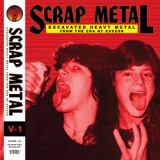
By now you’re probably familiar with our wildly popular Brown Acid series of rare, lost and unreleased proto-metal and stoner rock singles from the 60s-70s. In the endless pursuit of those glorious gems, we often uncover equally brilliant rarities from the late-70s to late-80s Golden Age of Heavy Metal that also just must be heard, but they don’t fit the series’ aesthetic. Scrap Metal, Volume 1 collects some of the greatest unknown and lost Heavy Metal tracks, long buried beneath the avalanche of the era’s classic output.
We all know the old adage that history is told by the winners. But sometimes the losers tell the best stories. And while none of these bands found fame and fortune, this artifact and the volumes to come are testament to the enduring power of heavy music. You can hear the blood, sweat and beers that went into each of these singles. The recordings may be low budget, but the inspiration and talent is immutable. Not only are the amps turned up to 11, the boyish sexual innuendo is cranked to 69. You can hear the convergence of influences — NWOBHM, thrash, glam metal, doom, etc — colliding at once as the era birthed a wellspring of subgenres.
Many of these singles are self-released and were thus limited to a small run of copies. Those that remain are hoarded by collectors and sold for exorbitant amounts. We’ve collected the best of the best for you here. As with Brown Acid, all of these tracks are licensed legitimately and the artists all get paid. Because it’s the right thing to do.
LINER NOTES:
Rapid Tears launch this series with the perfect christening. The Toronto, ON quintet’s 1981 single “Headbang” is such the pinnacle of heavy metal madness that it almost sounds like a spoof. There’s also enough of the rapid-fire sputum that inspired Metallica to bang the head that doesn’t, as such, engage in said practice, to be found on the band’s sole full length Honestly. But “Headbang” is a straightforward glammy anthem for the ages.
Air Raid’s “69 In A 55” may be lyrically so sophomoric that it’s actually pretty clever, but this 1983 Bay Area power metal single is loaded with sleek Judas Priest riffs and interwoven melodies that are downright sublime. The band’s sole release, the 2-song Rock Force 7” features a curious band photo in which 3 band members — dolled up in Crüe makeup and leather — are sexually menacing the lead singer/guitarist tied to a bed. Another low budget highlight is when singer/guitarist Tommy “Thrasher” Merry imitates a delay effect on his vocals as he sings, “tonight!...tonight...night.”
Hades’ “Girls Will Be Girls” has a real demo cassette feel to its vastly uneven mix, but the energy to the performance makes this an undeniable keeper. The long running Paramus, NJ quintet’s 1982 2- song debut 7” titled Deliver Us From Evil features this blistering thrasher dominated by shimmering leads and confident vocals that show why the band went on to near-fame on Metal Blade Records.
Resless don’t need no T to prove that they’ve got “The Power” with this 1984 driving mid-tempo rocker in the vein of Mötley Crüe and Ratt. The River Vale, NJ quartet’s tight crunch wails all over Bon Jovi posers but it’s the band’s unique and subtle deployment of background vocals that gives this rager its staying power.
Pittsburgh, the Steel City, is home to Don Cappa, a band that pays tribute to the burgh, the metal, and the awesomeness of both with “Steel City Metal.” Their lone single, issued in 1987 with only 300 copies released, sounds like the work of some serious steel driving men, with a drummer who might’ve forgotten to wear a hard hat one too many times on the construction site.
The Beast has more of a punk feel to their aggressive “Enemy Ace” track from the 4-song Power Metal EP from 1983 — something like Dr. Know meets D.O.A. But their look, artwork and lyrics all prove that Heavy Metal is where their hearts lie. And this hook filled monster delivers repeated lines like, “I command them all in my lofty realm,” with commendable conviction.
Dead Silence from Denver, Colorado, debuting in 1984 is not to be confused with Dead Silence from Denver, Colorado, who also debuted in 1984. The former a workman’s hard rock bar band, the latter a political peace punk band and neither knowing of the other’s existence throughout their tenure. The pre-internet days were a marvel, indeed.This Dead Silence spits out a slick, Nugent tinged rocker called “Can’t Stop” about life on the road.
The Danger Zone is, by all accounts, not the place to be. And, Hazardous Waste of Boston, MA saw fit to add their two cents on the matter with this 1986 single that combines Van Halen’s flashy musicianship with NWOBHM aggression that sounds so awesome it teeters on itself entering the “Danger Zone.”
Czar’s heavy, doomy “Iron Curtain” single from 1982 hearkens to the sleazy sounds of Saint Vitus and Pentagram with its cranked up DOD Distortion pedal in a Peavey combo amp guitar tone and meaty, barking vocals. The upstate NY quintet only issued this 2-song single, but its driving rhythm, nosedive whammy-bar guitar solos and comparatively mature Cold War subject matter show they had real potential.
Not much is known about Real Steel’s majestic “Viking Queen” from 1987, other than it rocks hard and the 7” 45 sells for upwards of a grand on the collectors market. The Flint, Michigan band recorded at the home studio of local radio personality Bill Lamb, who primarily released Christian Gospel recordings. So, perhaps the band was struck down by a bolt of lightning shortly after this rare single’s release. Whatever the case may be, it’s a must have for fans of classic metal mayhem.
- 1: I Will Wait For You (Les Parapluies De Cherbourg)
- 2: Yesterday When I Was Young (Hier Encore)
- 3: Non Andare Via (Ne Me Quitte Pas)
- 4: Un Uomo Una Donna (Un Homme Et Une Femme)
- 5: Pour Toi (Feelings)
- 6: La Vie En Rose
- 7: Col Tempo Sai (Avec Le Temps)
- 8: Petite Fleur
- 9: Que Reste-T-Il De Nos Amours (I Wish You Love)
- 10: The Goodlife (La Belle Vie)
- 11: What Now My Love (Et Maintenant)
- 12: My Way (Comme D'habitude)
The Italian singer Chiara Civello and the French producer Marc Collin are back together for a second time. After Eclipse, they present « Chansons: Chiara Civello Sings International French Standards ».
A tracklisting of 12 classic songs dating from 1945 to 1975 all by French song writers.
From Michel Legrand to Charles Aznavour, Charles Trénet, Édith Piaf, Jacques Brel or Gilbert Bécaud and Francis Lai. Household names for French music lovers, but not necessarily so for international audiences.
With Companion, Otto A Totland completes his album trilogy of personal, sparse piano compositions, following in the footsteps of 2014's Pinô and 2017's The Lost.
As a self-taught pianist, Otto further determines himself as a timeless composer who follows nothing but his own gut and heart. The outcome is something so pure it’s hard to not be affected. The development of his pieces over the years has grown into something so himself that it's almost immediately recognisable. With Companion he has matured in his own craft, and the various pieces here feel confident and absolutely beautiful in a way that sees the end of the trilogy as a warm, empathic document for the times.
As with the previous two albums, Companion was again recorded at Nils Frahm's Berlin studio for optimal warmth and space, Pinô and The Lost at his previous Durton Studio while Companion at the historic Studio 3 at Funkhaus. All three records are released by Sonic Pieces in hand-crafted limited edition covers as a statement showing that craftmanship and humanity still exists in this world constantly moving towards the exact opposite.
This quote by Norwegian philosopher Guttorm Fløistad seems an appropriate connection to both Otto's music and the way we are all heading : “The only thing for certain is that everything changes. The rate of change increases. If you want to hang on you better speed up. That is the message of today … In order to master changes, we have to recover slowness, reflection and togetherness. There we will find real renewal.” With this in mind, Companion is exactly what it's title sets out to be. A friend that can follow and comfort in both good or bad times.
Following this year’s hugely successful UK No. 1 album
‘As The Love Continues’ entering the US Billboard Chart
at No. 9, Mogwai went on to be nominated for this year’s
Mercury Music Prize. Now they reissue their 90’s EPs on
vinyl for the first time in over 20 years through Chemikal
Underground.
Each EP was originally released in limited numbers
between 1997 and 1999 and quickly sold out. Although
packaged as the CD and download compilation album
‘EP+6’, this is the first time ‘4 Satin’, ‘No Education = No
Future (Fuck the Curfew)’ and ‘E.P.’ have been available
on vinyl since the initial pressings.
A beautiful triple vinyl reissue of the three EPs originally
released in the 1990s, presented in their original artwork
inside a 7mm wide spine outer sleeve.
‘4 Satin’: Curacao vinyl, originally released in 1997.
‘No Education = No Future (Fuck the Curfew)’: Clear
vinyl, originally released in 1998.
‘E.P.’: Sun yellow vinyl, originally released in 1999.
“I’m incredibly proud of these EPs,” says guitarist and
singer Stuart Braithwaite. “I think they’re interesting as
we were experimenting with so many things back then.
A lot of what we tried out on those records are things
that went on to define us.”
A long time in the pipeline, Mogwai’s ‘e.p. x 3’ is both an
illuminating document for fans who came to the group in
more recent years and an essential purchase for
collectors of the group’s music on vinyl.
What or HOO do you get if you mix guitarist Neil Halstead, Farmer Dave of Beechwood Sparks with uncompromising folk angel- Jackie Oates, producer-songwriter and organic gardener with a penchant for wah-wah, Nick Holton? The answer is the widescreen, heartbreaking glory of HOO’s second album WE SHALL NEVER SPEAK. A more song filled leap forward from debut CENTIPEDE WISDOM’s post-rock electro adventures. Holton is a master builder of woozy dynamics, his songs unfurl with a mysterious, hooky logic all their own - this is cinematic and deeply emotive machine music. A glorious hybrid of electro, shoegaze, dubby ‘niceness’ and floating dream pop. The spooked, narcotic throb of opener GHOST IN YOU. The pounding, chewy Kraut/Space rock of CRANIUM. THE MIGHTY’s exquisite slow build towards Can-like lift-off. The snarly, groovy drive of centrepiece & single STILL DREAM. A brief flirt with musique concrète on the metronomic NO ONE CAN SEE THIS. The Halstead co-penned shoegazy, echoey swagger of WE SHALL NEVER SPEAK. The album’s poisoned chalice & peak song moment, POWDER MOON. The synthpop of YOU CHANGED THE WAY YOU SMILE. Closer SEA OF GLASS sounds like Leonard Cohen visiting Kraftwerk’s Klingklang studio. Let that sink in - the idea is perhaps the heart of this venture.The detail and texture is extraordinary. A glorious hybrid of an album that over eight songs builds into something unique. Epic and homegrown. Upbeat and melancholic. Questing and questioning. Haunted by loss but future-facing. It’s a genuine marvel. Holton’s HOO co-conspirators this time are Neil Halstead, Charlie Holton, Ian McCutcheon, Paul Blewett, Chris Monger and Lee Lavender. Guests include acclaimed folk singer Jackie Oates and West Coat Legend Farmer Dave Scher
- A1: Semi-Fraudulent / Direct-From-Hollywood Overture
- A2: Mystery Roach
- A3: Dance Of The Rock & Roll Interviewers
- A4: This Town Is A Sealed Tuna Sandwich (Prologue)
- A5: Tuna Fish Promenade
- A6: Dance Of The Just Plain Folks
- A7: This Town Is A Sealed Tuna Sandwich (Reprise)
- A8: The Sealed Tuna Bolero
- A9: Lonesome Cowboy Burt
- B1: Touring Can Make You Crazy
- B2: Would You Like A Snack?
- B3: Redneck Eats
- B4: Centerville
- B5: She Painted Up Her Face
- B6: Janet's Big Dance Number
- B7: Half A Dozen Provocative Squats
- B8: Mysterioso
- B9: Shove It Right In
- B10: Lucy's Seduction Of A Bored Violinist & Postlude
- C1: I'm Stealing The Towels
- C2: Dental Hygiene Dilemma
- C3: Does This Kind Of Life Look Interesting To You?
- C4: Daddy, Daddy, Daddy
- C5: Penis Dimension
- C6: What Will This Evening Bring Me This Morning
- D1: A Nun Suit Painted On Some Old Boxes
- D2: Magic Fingers
- D3: Motorhead's Midnight Ranch
- D4: Dew On The Newts We Got
- D5: The Lad Searches The Night For His Newts
- D6: The Girl Wants To Fix Him Some Broth
- D7: The Girl's Dream
- D8: Little Green Scratchy Sweaters & Courduroy Ponce
- D9: Strictly Genteel (The Finale)
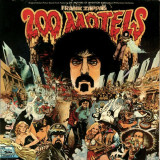
Frank Zappa’s “200 Motels” was a miraculous feat, a cinematic collision of the venerated musician and composer’s kaleidoscopic musical and visual worlds that brought together Zappa and his band, The Mothers, Ringo Starr as Zappa – as “a large dwarf” – Keith Moon as a perverted nun, Pamela Des Barres in her acting debut, noted thespian Theodore Bikel, the Royal Philharmonic Orchestra, and an incredible assortment of characters (both on screen and off) for a “surrealistic documentary” about the bizarre life of a touring musician. In celebration of “200 Motels” golden anniversary, Zappa Records, UMC and MGM have assembled a definitive Super Deluxe six-disc box set of the beloved, yet hard to find, soundtrack for release on November 19. Fully authorized by the Zappa Trust and produced by Ahmet Zappa and Zappa Vaultmeister Joe Travers, the monstrous 200 Motels 50th Anniversary Edition brings together the original soundtrack, newly remastered by Bernie Grundman at Bernie Grundman Mastering, along with a staggering amount of unreleased and rare material unearthed from FZ’s Vault, including original demos, studio outtakes, work mixes, interviews and movie ads, along with newly discovered dialog reels, revealing an early audio edit of the film. Also included is a wealth of never-before-heard audio documentary material surrounding the project. The six-disc set will be housed in a 64-page hardcover book in a handsome 12” x 12” slipcase. The packaging replicates the original booklet updated with revealing new liner notes from Pamela Des Barres, Ruth Underwood and Joe Travers, as well as Patrick Pending’s essay from the 1997 reissue, and is chock full of motion picture artwork, stills and images, from the film and its making, many which have never been seen before. This must-have collector’s release will also include a custom “200 Motels” keychain and Do-No-Disturb motel door hanger and a full-size replica of the original movie poster. Years in the making, all the audio was meticulously identified and transferred over several years as Travers dug through the Vault to create a new high resolution 96K/24B digital patchwork stereo master from the original analog tapes. The Vault material was mastered by John Polito in 2021. The remastered 200 Motels soundtrack will also be reissued on vinyl as a 2LP pressed on 180-gram black vinyl and on a 2CD format - both will include a smaller version of the movie poster.
Long-standing FUSE mainstay Rich NxT makes a long-awaited return to Hot Creations this October with the Vibewise EP. The three-tracker marks his debut solo release on the label, having featured as remixer on the imprint previously.
The A-side sets off with Roll On and the title signifies the exact nature of the track. A chuggy, groove-paced creeper, borrowing a unique vocal hook from UK hip hop protagonist Einstein. Rich’s hallmark style leaves few prisoners in its wake, as swinging bass tones open into the techy sounds of Papermill. Gritty basslines meld into whirring synth pulses before the title track brings things to a close, with stripped-back percussion residing next to loopy kick-hat combos throughout.
As one of FUSE’s original residents, Rich NxT played a major part in the brand’s evolution, helping take it from a free afterparty to one of the most respected event brands and labels on the planet. Elsewhere, the DJ / producer draws on his strongly identifiable sound to run two vinyl imprints, NxT Records and What NxT.
Bill Withers created mellow, downhome-style soul for barely more than a decade before electively retreating from the industry to pursue craftsman interests. Yet over the course of the handful of albums he made for Sussex and CBS, the Appalachian native struck lasting emotional chords in legends ranging from Booker T. Jones to Stephen Stills—not to mention the millions of listeners that fell under the spell of now-standard tracks such as “Lean on Me,” “Use Me,” and “Ain’t No Sunshine.” The antithesis of the sweaty R&B shouter that prowled the edge of stages, Withers dealt in calm and vulnerability. Serving as a template for modern British soul contemporaries like Sam Smith and an extension of the timeless fare explored by Van Morrison, Curtis Mayfield, and Al Green, Bill Withers’ Greatest Hits belongs in every music lover’s library.
Mobile Fidelity’s reissues of the 1981 compilation provide a transparent view of Withers’ relaxing timbre and the subtle grooves underlining his arrangements. Characteristics ranging from the tension of the guitars, funky bends of the bass, whisper-soft coo of the formal strings, airiness of the backing harmonies, and sharpness of the snare drum emerge with utmost clarity and lifelike presence. Always prized for its naked honesty and pure conviction, Withers’ music positively caresses the senses on this LP and SACD, the unadulterated production and beautiful soundscapes revealed anew with each listen. You won’t find a better-sounding roots R&B collection.
There are records with empathy, records which are your friends and then there's the others... There might be little difference between them, a certain "je ne sais quoi", an "almost nothing but still something" which makes the difference between almost pointless and vital records. Despite, or rather thanks to his cynical despair, Matt Elliott's music never holds up a moralizing mirror to us - on the contrary, it creates a compassionate dialogue with listeners like the rhythm of two steps that synchronize to become as one. In 2016, Matt Elliot brought out his seventh solo album The Calm Before whose obscure title is neither exactly threatening nor comforting... the calm before what? Before the storm for sure but maybe also before the great record, the immediate classic we felt might be coming for a long time in the dual discography of the Bristol-born artist working under his own name and his electronic alias Third Eye Foundation. The elegant details and perspectives of Little Lost Soul (2000) already hinted at the upcoming masterpiece from the English singer-songwriter. The Mess We Made (2003) was Matt Elliott's first solo album and portrayed a universe in a kind of flight towards Balkan horizons made up of visceral despair. With the Songs trilogy, he put aside the electronic side of his work to continue working with a minimalist, stark and lucid style of writing. The Broken Man (2012) was full of tears and long laments sometimes carried by Katia Labèque's piano on a record which painted new shades of grey. On this record Matt began working with the producer, arranger and multi-instrumentalist David Chalmin (La Terre Invisible) who has kept on collaborating with the Bristol-born singer since then. Their partnership continued on Only Myocardial Infection Can Break Your Heart (2013) and The Calm Before (2016). Stéphane Grégoire is the head of the Ici D'Ailleurs label which has accompanied Matt Elliott since 2005 and perhaps he describes this album the best: "This new record by Matt is without a doubt his best album to date, a record that takes him into another dimension where he fully asserts himself as a songwriter and singer of the calibre of artists like Bill Callahan, Leonard Cohen or Johnny Cash." Matt Elliott's other records all seemed like empathic links between each other. Farewell To All We Know is an instant classic based on the sensitive piano and superb arrangements of David Chalmin, the sensitive cello of Gaspar Claus, the subtle bass of Jeff Hallam (who has also played with Dominique A and John Parish). There is a clear form of alchemy in all of this and still we find Matt Elliott's usual atmospheres and scenery, the same Eastern European folk music, long songs that take time to settle over time. Everything is the same but also is transfigured. By making his music stark and purifying and redefining the subject matter, Matt Elliott's work became so much more delicate. However this work is never frail nor really turned in on himself and thus becomes like a vital tune that vibrates and unfolds. The opening song Farewell To All We Know seems torn between the fear of what tomorrow may bring, inevitability and hope for the future in a permanent and progressive dramatic tension expressed by his Spanish guitar, the impressionist style piano and Matt's voice teetering on the edge of whispers. A funereal tribute to endless twilights and the dawns we all dream of seeing. There are touches of Leonard Cohen from Songs from a Room or Thanks For The Dance in The Day After That with Gaspar Claus's counterpoint cello. There is no spirit of resignation in Matt Elliott's work - life's path has to be followed against all odds. We have to follow the river's flow to reach the immense ocean and its infinite freedom. The haunted instrumental Guidance Is Internal harks back to the atmospheres of Howling Songs (2008) with its guitar parts full of scansions and muted threats. The music is transcendental but never seems afraid of the risk of falling. This is also what Bye Now tells us with its quasi-obsolete simplicity and sunburst melancholy reminiscent of the work of Luiz Bonfá, Bill Evans on Peace Piece or laidback crooners of the 50s. In Farewell To All We Know, Matt Elliott incessantly alternates between the dual desires to face up to the world or to protect himself from it. Hating The Player, Hating The Game is a lucid statement about the dullness of our daily lives sometimes, our right to get out of the game and no longer want to be part of it. Matt Elliott is tender but spares no one, particularly himself. Aboulia speaks of the tiredness of living and of looming death while Crisis Apparition says that there is always a time for reconstruction after chaos. This is like initially wearying wandering in the ruins of Aleppo with the slow dilution of the melody into a hallucinated drone. However the smell of great fires always fades and the earth always regenerates. Matt Elliott seems to suggest that the survival instinct is stronger than any cold winds could ever be. Matt Elliott never sings of certainties and prefers possibilities. Possibly the worst is over? Maybe... Maybe the storm has passed and devastated everything, now we just have to rebuild and live again. Farewell To All We Know shows us the distance that still needs to be walked and he walks next to you - right next to you, he is the friend who doesn't spare you the truth like all true friends really do.
Mega rare 1974 jazz funk rock album recorded by Argentina's top jazzmen Pocho Lapouble, Ricardo Lew and Adalberto Cevasco (also members of Quinteplus, Jorge Lopez Ruiz's band and Gato Barbieri's group among many others). Includes the irresistible fast-paced funk rock track 'Se Acabó el Recreo' and the ethereal 'Todo en Su Medida y Armoniosamente' and 'Haceme Shaft', featuring Patricia Clark on vocals and unexpected moog arrangements. First time reissue, with remastered sound and original artwork.
Those into world jazz will be aware of the amazing modal, big band and post-bop jazz recordings released in Argentina in the '60s. The body of work produced by the likes of Chivo Borraro, Jorge López Ruiz or Enrique Villegas would be able to rival the recordings of their American counterparts.
The following decade would see a great openness to the exploration, with a jazz language, of other musical genres, with a certain preponderance of rhythm. The members of El Trio are part of a jazz generation with a greater propensity to experiment with electricity and with what could be considered an avant la page exercise of what soon afterwards would be called jazz rock -it is music composed and played, in the faraway Buenos Aires, at the same time Miles Davis adventured into new fields, with such records as "In a Silent Way" or "Bitches´ Brew".
"Todo en su medida y armoniosamente" reflects that same spirit of experimentation and fusion of diverse influences with an eye on both rock and local folklore. It's not surprising that the protagonists of this recording -Pocho Lapouble (drums), Ricardo Lew (guitar) and Adalberto Cevasco (bass) - had accompanied Gato Barbieri himself in his project "Latinoamérica" shortly before the release of this album where the presence of rhythms from the southern hemisphere infused the avant-garde jazz of the Argentine saxophonist. Drummer Pocho Lapouble had also created Quinteplus, which in 1972 released a single studio LP inspired by those same premises of fusion jazz.
This album was originally released on the eclectic local label Music Hall in 1974 and probably distributed in tiny quantities, hence the rarity of this record and the current crazy prices in the collectors' market.
1. Some records hit you with an instant impression of timeless brilliance, and Low Life’s Dogging is one of those records, what the wise call “an instant classic”. 2. From Squats to Lots: The Agony and the XTC of Low Life is more like their second album Downer Edn (read Edition), a little more withdrawn, a little more textured. Complex. Rich. Which is to say: you’re going to need some time with it. 3. Some show, some grow. Low Life have done both. This one is a grower. Spend some time with this one. It’s got that nuanced flavour. Don’t guzzle. Sip. Savour. 4. Sip it, and sense the recurring brilliance of Mitch Tolman’s lyrics, exploring the usual territory of gutter life, lad life, punk life, low life. The dirge. Disgust and shame in white Australia. Council housing, bills piled to the neck, substance abuse and rehabilitation, the fallen lads and lasses who stood too close to the flame, loss and loneliness, from squats to lots. Un-Australian gutter symphony. 5. There is a celebration of resilience and that’s a central theme of this record and a time like ours needs a record like Agony & XTC. Low times are coming through, but if you’re low they won’t get to you. 6. Iggy Pop’s Bowie produced studio rock masterpieces ‘The Idiot’ and ‘Lust For Life’ are important reference points to the 3rd album sounds of Low Life. Here comes success! 7. ‘The Agony and Ecstasy’ is a 1985 novel by Irving Stone about the life of Italian Renaissance painter Michelangelo. Stone wrote another novel about the single eared painter Vincent Van Gogh called ‘Lust For Life’. This synchronicity hit me. 8. Iggy and the Stooges are a pretty safe reference for Low Life (and all good rock music). Iggy and the Stooges are a low life’s Michelangelo, but solo Iggy like Lust for Life is a better reference for this particular incarnation of Low Life, which is to say they are studio rock albums. 9. Bowie later referred to this period of his life as profoundly nihilistic. But Iggy looked at it as the period of his life that saved him from an early grave. This confrontation is Low life lore. 10. Let’s stick to this, because there’s something about this era of Bowie that makes sense with Low Life’s new album, particularly Low. One should never miss the Low in our new album from Low Life. Producer and studio boss Mickey Grossman has the ear for the Low, and he has carved out a little statue of David right here. 11. Mickey’s ears are recording, mixing and producing the best of Sydney, most notably the Oily Boys Cro Memory Grin. A great companion record to this one. Use Agony & XTC AFTER Oily Boys. Not on an empty stomach, and don’t try to operate heavy machinery (bobcat, bulldozer etc). 12. The relationship between Low Life and Sydney hardcore should not be understated, but it also shouldn’t guide how to listen to Agony & XTC. This is not austere, disciplined music. 13. Think, like, if Poison Idea were given the kind of studio time and budget as Happy Mondays. You wouldn’t play it to a teenager. It’s not for children. This is a mature flavour, one for the adults who have had to contend with failure and hardship, medical bills and disappointed family members, betrayed lovers and worrisome growths, police brutality and tooth decay, humiliating bowels and collapsed septums, detoxing and drying out, for those who have seen themselves as corrupted and putrid and unloveable, for those who endure all of this and aren’t willing to lie down and cop it sweet: Low Life are still here and they ain’t going nowhere. NOTES ON HOW NOT TO LISTEN TO AGONY AND XTC OF LOW LIFE: 1. Don’t think of shoe-gaze. It suggests a safe passage to 90’s reminiscences, a vogue style of our time, but nothing to do with Low Life style. Low Life style is always of its time. The content changes. Agony & XTC shares weight of records like My Bloody Valentine’s Loveless and Slowdive’s Kebab, records that were laboured on after the songs were recorded, songs that were written as they were recorded. 2. We can call these “studio albums” as opposed to albums built in the heat of live performance. Studio albums from the 90’s are called shoe-gaze by some journalist nerds, but we know better than to use words like this. 3. Studio albums are excessive and, at the same time, so empty. Agony & XTC, Loveless, Kebab, Rumours: excessive! And empty. This is not to suggest this is Low Lite, some throwback, soft. A band like Low Life can make an overproduced studio rock album without having to use the word shoe-gaze. So, don’t think studio albums mean anything especially 90’s. Don’t look back. 4. Let’s lose these distasteful labels, like “shoe-gaze”, “rehab rock”, “stab”, “guitar OD overdrive”, “western Sydney wonder”. They can fade out. A low life was once referred to as a vagabond. Who uses this term today? Nobody. Language can murder. Words can die. Kill ‘em all! - Daniel 'DX' Stewart, Melbourne, 2021.
This is the 26th release on RIOT Radio Records, a fiercely independent techno label based in Scotland.
Moscow based Trust True is a producer and DJ who’s quite literally off his rocker. Displaying agonizing and often deranged broken beats which seize the very beat of your heart, his music rushes, grinds and pulsates with so much ferocity, even your living breath will be succumb to its lethal effect.
Continuing with our ‘Limited As Fuck’ series of releases, this additional hard hitting ‘OUTBURST’ will further provocatively attack your gnarly senses in an additional unrealised beguilement stemming from this mental Russian’s 1st ever vinyl release on RIOT Radio Records, ‘Outburst – The Red Mixes’, in April 2021.
Four tracks from that menacing beast have been given the full-on remix treatment and oh boy, what a bunch of hard as nails remixers are on this obliterating follow up release. The Scottish contingent kicks proceedings off with Duellist at the helm followed by Argentinian duo 909distortion & AxggaA literally melting the wax it’s printed on their remix is that fierce. It continues at a relentless pace with Canada’s Patrick DSP mangling the howls of ‘AAIRAA’ to ravenous levels and the mechanical mind of Italian Max Durante finishes the release off with borderline hardcore vengeance.
WARNING: FROM AFAR THE DEMENTED BRINGS FORTH IT’S DERANGED LUNACY ONCE MORE
« Half of Tiger & Woods on a brillant release for SKYLAX RECORDS » If you ever wondered what it might be like to have a 707 or a Sampler instead of a pacemaker, you could always ask Valerio del Prete aka Delphi, who has been setting dancefloors around the world on fire for years. Delphi has displayed his mastery of acidized arpeggios and deep electronic tropes via an EP on Pigna, before linking up with Roman techno don dada Marco Passarani as the discotech duo Tiger & Woods. Several EPs and two albums of stripped back disco on Editainment and Running Back encapsulate their winning approach – reimagined loops from heady discotheques mixed through the axis of Rome, Chicago and Detroit. In 2016 he released the house/Italo/EBM stomper Blue Tuesday on a split 12” on Tiger & Woods own label T&W Records. For this new release, the brilliant producer (half of tiger & woods we repeat) kicks off the show with the very Italo-discoïde "donuts for dinner", nourished throughout by a monstrous kick and soaring synths. He poses as a worthy heir to the Italian masters of 80s pop who often used the B-side of their songs to experiment with their most adventurous ideas. Zequenz immediately made us think of an imaginary orgy between Ron Hardy and the members of Kraftwerk, this sound is incredibly sharp and would not have denoted on the decks of the legendary DJ. Which leads us straight to the most brawling track on the EP, the aptly named "Ron's lesson" and it is indeed a lesson. This crazy track (obviously dedicated to the legendary chicago DJ) seems to have come straight out of an imaginary session, we must remember how much at that time naivety and therefore distortion (!) Reigned over productions, giving an incredibly raw and edgy side on the dancefloor. Again, this song could have been released 30 years ago. And finally, to come full circle, the very graceful overheat joins the aesthetic of the first track in an elegant and dreamy way. Note that on the label's bandcamp, with the purchase of the vinyl, you can get 3 exclusive bonus tracks (Clutch play, Runinng in place, Sucker). The magic is here, CLEARLY.
By way of some cosmic miracle, only one Total Hell pops up
when the band moniker is searched on Discogs. And that would
be the band responsible for the five-song blast of heavy metal
sounds at hand. Now active for about two years plus change
and exported from the very metal and punk fertile New Orleans,
Total Hell is DD Deth (aka Drew Owen—Sick Thoughts
wheelman, Trampoline Team etc) on drums / vocals, Henry
Hell (John Henry of Static Static, Heavy Lids) on bass / vocals,
and guitarists Jason “Panzer” Craft (Persuaders, Tirefire) and
Michael Maniac (Michael He-man of Trampoline Team).
If self-deprecation is beyond the listener’s processing skills,
then please know that as self-described purveyors of the “New
Wave of Shitty Heavy Metal”, Total Hell’s big-boy debut is
not “shitty” in any manner whatsoever. These four recordings
(“Desecrate”, “Clones From Hell”, “Violator”, and “Disfigured”)
are melodic monstrosities that hit with a wall-to-wall, floorto-
ceiling hugeness, while doing so in an economical manner.
There will be no mistaking this for Broken Bones screeching out
of an iPhone inside the vegan squat. On the flip, this is no Bob
Rock joint. DD Deth elaborates: “Recorded on a Tascam 8-track
cassette live at home (aka “The Parkway”) by Michael He-Man
and the process was a nightmare. Original tape crapped out on us
back in early 2020 so we had to redo the whole thing. Intros and
interludes were done last minute by me with the cheapest midi
keyboard on the net.” Well, color Goner Records impressed.
One might get momentarily lost in the cavernous drums that
introduce opener “Desecrate”, but soon the buzzsaw-riff-wall
will crush one into a smudge on the bathroom floor. Without
rocking some safety goggles and diving headfirst down a
terminology rabbithole, this is punk jumping into the sack
with metal and leaving black boots on the bedroom floor rather
than white hightops. Xmas came early for fans of Anti-Cimex,
Celtic Frost, pre-shit Discharge, Motörhead, Blitz, Midnight,
Venom, Broken Bones and...one gets the picture.
With a string of releases as Garage Shelter and as of last year, alongside Hardrock Striker as Bleu Blanc House, Signal St. returns to line up his first LP with SKYLAX.Laden with indecipherable disco and funk samples, emotive chord changes and clocking in at one hour, it’s fully fledged dance album with no filler, showing what contemporary house music should sound like in 2018 on a label that has always pushed the genre. The album wanders through a range of functions and energies, from One For You on which Signal St. channels Moodymann, Life Aquatic, where the looping styles of Moomin play centre to a dance of whispy 808 symbols and the percussive workout of Right Next To Me which gives way to the album’s final act. Though club-ready and touching on a range of moods, it evolves from its from its disco/funk beginnings and descending into a 10-minute downtempo finale, swallowed by an abyss of reverb. Like an explosive separation of two people, thrown from the plains of heaven to the depths of hell, “Zapoï and other dysfunctional love stories, closing the loops” pulls together the many faces of Signal St. in a dance album that reflects a young producer entering his prime.that will delight both fans of the purest house but also those whose scrolls of Romanian raresh bewitch. It's clearly another piece of art to add to your skylax records collection. Future classic. !
Restlessly awakening from the depths of a feverish slumber, doomed heavy metal masters KHEMMIS return to reveal their fourth full length studio album, DECEIVER, arriving via Nuclear Blast Records in November 2021. Six tracks of desolate, soul-awakening heaviness encapsulate a project that has been nearly three years in the making. With a title that reflects the internal struggles that many of us battle in our daily lives, DECEIVER is a ferociously honest and appetizingly raw piece of musical artistry.
The first single LIVING PYRE signifies far more than just the beginning of another musical endeavour for the band; it is a substantial benchmark for emotional struggle and growth. “When it comes to my own mental health, when I’m in a bad place, I can’t access the part of me that creates art. After reaching that understanding of myself, the bulk of this song came out in one sitting. I was feeling stable. I was feeling hopeful–even though so much outside in the world was not exactly inspiring. All of us needed a reason to feel a glimmer of hope,” recounts Hutcherson. With a big, quintessentially KHEMMIS chorus embellished by a swampy sorrow, this song incorporates familiar elements of the band’s sound with a touch of Swedish death metal in its latter half. “The reason that this was the song that came first lyrically was because I was juggling all the things that were happening with the inside and outside world intersecting. All the lyrics for me feel very ‘of the time.’ So much was happening in this world, and they were just my efforts to contend with it,” explains Pendergast. “Like Ben, this was a breakthrough moment for me. Once I got the song out, it allowed me to write other songs for the album. It’s less about the fire metaphor implied by the title than about the fact that in order to escape fire you have to find water. You find the deepest, darkest cavern…you just want to stay there forever. It slowly fills up and you eventually drown.”
HOUSE OF CADMUS was another deeply collaborative writing effort between all three members of KHEMMIS. “I thought the opening riff had this cool almost-swing to it...but evil,” recalls drummer Zach Coleman. “I was drawn to the atmosphere of that first riff, and it felt like it needed to be a song that was dark the whole way through. Ben and I discussed getting some New Orleans-style sounds somewhere on the album, and I think this is where we were able to sneak some in to tie together other aspects of the song.”
“I knew that I wanted the lead guitar line in the second half of the song to tie two very different parts together,” explains Hutcherson, “but the idea was all really abstract until we were in a room together. It wasn't until we jammed out that big funeral/death doom bridge and the slow, sad coda that we found out what we wanted that lead line to be: memorable and emotive. It was a very honest musical moment together.” The writing and recording processes of HOUSE OF CADMUS were so emotionally driven that even producer Dave Otero of Flatline Audio (Cephalic Carnage, Cattle Decapitation, Act Of Defiance) encountered his own deeply personal and intense connection with the song. “With the lyric turn at the end, I was inspired by Dave’s imagery,” says Pendergast. “This idea of a person leaving some important part of themselves behind as they float away and leave the thing they love on the shore. The sound of this song is like a lighthouse beam cutting through the fog in a dark night on the ocean.”
While the lyrical themes of DECEIVER;sorrow, pain, longing for hope, will no doubt be familiar to longtime fans, these six songs display a broader collection of musical influences than on any other KHEMMIS record to date. “It being our 4th album, especially after the transition between the last two albums, it felt really freeing. We felt that we could really do anything on this record,” explains Coleman. “There’s a lot here that we’ve never done before,” adds Pendergast. “In some areas it gets darkly psychedelic. I think we found a cool way to mutate things using transitions that feel really natural. There is a subtle symmetry between the first and last songs which is one of the things that makes listening to the full album a satisfying holistic experience. It builds from almost nothing, becomes very dark, and then you slowly crawl out of that lowest circle of hell.” KHEMMIS’s DECEIVER is a beautiful, musically ambitious journey from beginning to end drenched in impassioned melody and complex, unrestrained variations of sonic savagery adorned with chilling, intensely tragic cover art by frequent collaborator Sam Turner.
Restlessly awakening from the depths of a feverish slumber, doomed heavy metal masters KHEMMIS return to reveal their fourth full length studio album, DECEIVER, arriving via Nuclear Blast Records in November 2021. Six tracks of desolate, soul-awakening heaviness encapsulate a project that has been nearly three years in the making. With a title that reflects the internal struggles that many of us battle in our daily lives, DECEIVER is a ferociously honest and appetizingly raw piece of musical artistry.
The first single LIVING PYRE signifies far more than just the beginning of another musical endeavour for the band; it is a substantial benchmark for emotional struggle and growth. “When it comes to my own mental health, when I’m in a bad place, I can’t access the part of me that creates art. After reaching that understanding of myself, the bulk of this song came out in one sitting. I was feeling stable. I was feeling hopeful–even though so much outside in the world was not exactly inspiring. All of us needed a reason to feel a glimmer of hope,” recounts Hutcherson. With a big, quintessentially KHEMMIS chorus embellished by a swampy sorrow, this song incorporates familiar elements of the band’s sound with a touch of Swedish death metal in its latter half. “The reason that this was the song that came first lyrically was because I was juggling all the things that were happening with the inside and outside world intersecting. All the lyrics for me feel very ‘of the time.’ So much was happening in this world, and they were just my efforts to contend with it,” explains Pendergast. “Like Ben, this was a breakthrough moment for me. Once I got the song out, it allowed me to write other songs for the album. It’s less about the fire metaphor implied by the title than about the fact that in order to escape fire you have to find water. You find the deepest, darkest cavern…you just want to stay there forever. It slowly fills up and you eventually drown.”
HOUSE OF CADMUS was another deeply collaborative writing effort between all three members of KHEMMIS. “I thought the opening riff had this cool almost-swing to it...but evil,” recalls drummer Zach Coleman. “I was drawn to the atmosphere of that first riff, and it felt like it needed to be a song that was dark the whole way through. Ben and I discussed getting some New Orleans-style sounds somewhere on the album, and I think this is where we were able to sneak some in to tie together other aspects of the song.”
“I knew that I wanted the lead guitar line in the second half of the song to tie two very different parts together,” explains Hutcherson, “but the idea was all really abstract until we were in a room together. It wasn't until we jammed out that big funeral/death doom bridge and the slow, sad coda that we found out what we wanted that lead line to be: memorable and emotive. It was a very honest musical moment together.” The writing and recording processes of HOUSE OF CADMUS were so emotionally driven that even producer Dave Otero of Flatline Audio (Cephalic Carnage, Cattle Decapitation, Act Of Defiance) encountered his own deeply personal and intense connection with the song. “With the lyric turn at the end, I was inspired by Dave’s imagery,” says Pendergast. “This idea of a person leaving some important part of themselves behind as they float away and leave the thing they love on the shore. The sound of this song is like a lighthouse beam cutting through the fog in a dark night on the ocean.”
While the lyrical themes of DECEIVER;sorrow, pain, longing for hope, will no doubt be familiar to longtime fans, these six songs display a broader collection of musical influences than on any other KHEMMIS record to date. “It being our 4th album, especially after the transition between the last two albums, it felt really freeing. We felt that we could really do anything on this record,” explains Coleman. “There’s a lot here that we’ve never done before,” adds Pendergast. “In some areas it gets darkly psychedelic. I think we found a cool way to mutate things using transitions that feel really natural. There is a subtle symmetry between the first and last songs which is one of the things that makes listening to the full album a satisfying holistic experience. It builds from almost nothing, becomes very dark, and then you slowly crawl out of that lowest circle of hell.” KHEMMIS’s DECEIVER is a beautiful, musically ambitious journey from beginning to end drenched in impassioned melody and complex, unrestrained variations of sonic savagery adorned with chilling, intensely tragic cover art by frequent collaborator Sam Turner.
Germany-based metal band OBSCURA launch trilogy concept on stunning new album “A Valediction”. The group’s first (sixth overall) album for Nuclear Blast pivots on many fronts. Advanced, elegant, and yet refreshing, “A Valediction” sums up past endeavors effortlessly as it gazes with purpose and conviction into the future. OBSCURA are fan-renowned and critically acclaimed for challenging and then expanding upon norms. From “Cosmogenesis” (2009) through “Diluvium” (2018), the band flourished and made significant progress in a musical genre unprepared for a creative shot of German invention. “A Valediction” spearheads OBSCURA into a new era of extreme metal.
Guitarist/vocalist Steffen Kummerer founded OBSCURA in 2002. Early on, he set out to improve, redefine, and push forward. Under his self-label creation, the Bavarian released debut album “Retribution” (2006), followed by heavy touring throughout Europe. Word quickly spread that a brand-new band from the south of Germany was on the rise. Buzz lead to a deal with U.S.-based Relapse Records. The first record out was “Cosmogenesis”. In Europe, Metal Hammer Germany awarded the album 6/7 while in the U.S., “Cosmogenesis” hit the Billboard charts at #71. The cross-continental praise and fevered momentum landed OBSCURA on high-profile tours in Europe, North America, and Japan.
When follow-up “Omnivium” arrived in 2011, they upped their chart success (Billboard #11; Media Control #14), received more accolades from publications like Terrorizer, Rock Hard, and Decibel, had another massive round-world tour cycle, while enhancing and making progress on their clever brutality. OBSCURA further developed their sound on “Akróasis” (2016). Moored by jaw-dropping tracks like ‘Sermon of the Seven Suns,’ ‘Ode to the Sun,’ and the title track, “Akróasis” elevated OBSCURA to the highest levels of international renown, having climbed up the Billboard charts (#5) as well as earning top marks in Rock Hard (8.5/10), Metal Hammer Germany (6/7), and Revolver (4/5). The Germans toured the world yet again, playing over 100 shows in support of “Akróasis”.
OBSCURA’s most significant accomplishment was, however, just around the corner. The final part of a tetralogy, “Diluvium” (2018), fiercely pursued OBSCURA’s multi-album transformation into musical innovators and metal powerhouses. Music videos for the title track, ‘Emergent Evolution’ and ‘Mortification of the Vulgar Sun,’ in concert with a substantial interest in virtuosic, forward-thinking metal, posited OBSCURA in the good graces (yet again) of the worldwide press in addition to rocketing up, for the very first time, the official album charts in Germany (#58) and Switzerland (#93). The Germans also topped out at #3 on the Billboard Heatseekers chart with “Diluvium”.
OBSCURA‘s stats have been impressive: Twenty years active; six highly prized albums; over 600 shows on four continents. Worldwide fan and press engagement—the videos for ‘The Anticosmic Overload,’ ‘Akróasis,’ and ‘Diluvium’ have over 4.5 million views—is only getting stronger the longer OBSCURA continue to offer up and interact with (via play-throughs and member/gear spotlights) their very captive audience. This is only the tip of Kummerer’s custom ESP guitar, however. A Valediction finds OBSCURA turning the page to a new chapter in the band’s evolution. A year in the works, the songwriting sessions followed a new approach, where the framework was relaxed, allowing new inspirations, imagining, and opportunities to arise. Songs like the opening epic ‘Forsaken,’ the '80s-tinted ‘When Stars Collide’ (featuring Soilwork/The Night Flight Orchestra frontman Björn Strid), the brutal groove of ‘Devoured Usurper,’ the ethereal artistry of ‘Heritage,’ and the fleet-fingered title track benefitted compositionally (refined structures) and aesthetically (more dynamism) from OBSCURA’s restyled songwriting stratagem.
OBSCURA wrote, recorded, and finalized “A Valediction” during the pandemic. The stipulations of working during this time allowed OBSCURA to work cross-country, tracking each respective part—drums, guitar, and bass—in national studios across The Netherlands, Austria, and Germany. Once the pieces were completed, the recordings were shipped off to award-winning producer Fredrik Nordström and Studio Fredman (In Flames, Architects) in Gothenburg, Sweden, where Kummerer and Münzner completed vocals and acoustic guitars using custom-built ENGL amps. Nordström was also tapped to mix and master. The final result is a deeper, heavier, yet more rounded production.
Lyrically, “A Valediction” is layered in structure and meaning. The word ‘valediction,’ by definition, deals with goodbyes and farewells. In a way, this is auf wiedersehen to the four-part album series while also addressing complex topics of Kummerer’s personal life. Instead of obscuring issues of loss, death, and abandonment in metaphor and allusion, the German laid bare his torment across songs like ‘Forsaken,’ ‘Solaris,’ ‘In Unity,’ ‘The Neuromancer,’ and ‘In Adversity.’ But for every line of desperation, he also offers positivity. Indeed, new beginnings—physical, emotional, or environmental—can provide light in the darkness. Lauded artist Eliran Kantor (Testament, Helloween) was brought on board to visualize the leitmotif. The bronze-themed colourway Kantor used exemplifies OBSCURA’s resistance to individual and sonic corrosion.
In 2021, OBSCURA will lighthouse their musical prowess, thematic complexity, and lyrical ambition on “A Valediction”. The group continue to be a beacon for change. No doubt OBSCURA’s new stats will amaze, but what they’re focused on is the release of “A Valediction” and then taking it on the road. Several high-caliber tours of Europe, North America, and Asia are planned through to 2023, with routes are in the works for the band to visit Australia, South America, and beyond. Truly, there is no band quite like OBSCURA. “A Valediction” proves that persistence, perseverance, and enterprising minds can achieve anything. Welcome to the next level!