Buscar:what! what! records

- 1: Lucky To Be Me (Leonard Bernstein)
- 2: God Only Knows (Brian Wilson)
- 3: The Shadow Of Your Smile (Johnny Mandel)
- 4: La Javanaise (Serge Gainsbourg)
- 5: As (Stevie Wonder)
- 6: A Time For Love (Johnny Mandel)
- 7: Trains And Boats And Planes (Burt Bacharach)
- 8: What Goodbye Is For (Jim Tomlinson)
- 9: Carinhoso (Alfredo Da Rocha Vianna Filho /Pixinguinha)
- 10: E La Chiamono Estate (Bruno Martino)
Stacey Kent is an American jazz singer in the mould of the greats, with a legion of fans, a host of honors and awards including a Grammy nomination, album sales in excess of 2 million and more than one billion streams, and Platinum, Double-Gold and Gold-selling albums that have reached a series of chart-topping positions.
Stacey, a comparative literature graduate with a passion for music, travelled to Europe to further her studies after receiving her degree from Sarah Lawrence College in NY. Through a series of twists of fate, she found herself in London where she enrolled in a graduate music program at the Guildhall School of Music and Drama, where she met her future husband and musical partner, Jim Tomlinson.
Kent's musical journey began with childhood piano lessons. A keen ear and true voice lead her to search out opportunities to express her love of music. However, nothing suggested the shift from the academic path to the one that propelled her to international recognition as one of the foremost jazz singers of her generation. With a catalogue of 13 studio albums, including the Platinum selling, Grammy-nominated Breakfast On The Morning Tram (Blue Note/EMI 2007) and an impressive list of collaborations, Stacey has graced the stages of nearly 60 countries over the course of her career.
Her worldwide fan base is testimony to her ability to express the emotional heart of her songs with delicately nuanced interpretations that transcend borders and defy categorization. Her unique multi-lingual repertoire includes standards, chanson, Bossa Nova, and originals written by Jim Tomlinson, her saxophonist/producer/composer/arranger husband in collaboration with the Nobel Prize-winning author, Kazuo Ishiguro with whom they have worked since 2006. She has also recorded with Brazilian legends, Marcos Valle, Roberto Menescal and Danilo Caymmi, and the celebrated French string quartet, the Quatuor Ébène.
Stacey's last studio album, Summer Me, Winter Me, was released in November 2023 on Naïve Records. A collection of fans' requests from her as yet unrecorded concert repertoire, Summer Me, Winter Me entered the French jazz charts at number 1 and has quickly established itself as a new highlight in her discography. She now returns with A Time For Love.

There’s an alternate reality where everyone makes a living wage and the cleanest buses you’ve ever seen arrive every other minute. Where the most intense songs are about confessing your love to a crush at the apple orchard, and where gentle feelings and chaotic energy are inseparable best friends. This is the timeline where Cootie Catcher is right at home. This Toronto based four-piece exudes both vulnerability and unbridled excitement, creating a sound that hypercharges the open-hearted tenderness of twee pop with spiraling synths and giddy electronics. New album Something We All Got is the clearest and most vibrant reading of Cootie Catcher’s vision yet, with songs of sweetness, nervousness, and expectancy that beam out unguarded.
After releasing music made primarily in basement recording environments, Something We All Got is the band’s first flirtation with studio recording. The edges are still sharp, however, with some parts assembled from time-honored lo-fi methods and fun, personally-sourced samples seeping into the production. The sound is explosive and upbeat, with euphoric guitars, bubbly synth lines, speedy drums both played and programmed, and all other manner of sound constantly colliding. Cootie Catcher has three songwriters, Sophia Chavez, Anita Fowl, and Nolan Jakupovski, all of whom have distinctive voices but still manage to overlap in their writing on shared concerns like navigating the lines of romantic and platonic relationships, their city’s social scenes, and struggles in both the microcosmic experience of playing in a band and the zoomed-out challenges of living through late-stage capitalism.
Joy still touches every surface of Something We All Got. “Quarter Note Rock” bounces around the room in a fit of jangling guitar chords, scratched samples, and interplay between breakbeat loops and somersaulting live drums. It’s a blast of positivity even with lyrics about how disappointing it can be to meet your heroes. A smiling electro pop instrumental supports lyrics about having to step painfully away from an almost realized love on “Gingham Dress,” a song that subverts themes of domesticity as a backdrop for the dashed wilt of hopeless devotion.
Cootie Catcher rolls down hills and jumps through flaming hoops throughout Something We All Got without ever dumbing down the visceral emotions that drive these songs. There’s a palpable tension between the band’s exhilarating sonics and the raw, often uneasy sentiments expressed, but it’s an integral part of what makes them unique. Rather than hide behind the kind of calculated vagueness that plagues so much of the indie rock landscape in the time of cursed algorithms, Cootie Catcher runs full-speed toward every confusion and excitement, fearlessly direct and embracing the reality they’re in.


The next chapter in Axis Expressionist Series. A collection of vinyl and limited digital releases, curated by Millsart, an alias of Jeff Mills, of his most eclectic and transcendent compositions that derive from his Every Dog Has Its Day project as well as new unreleased works.
Vernacular creations that fall off from the "other side" of the Electronic Music tree, this project is designed for the experienced Techno music listeners, and its goal is to reflect upon the pure artistry of the craft of storytelling. A realization between music and life. Whereas "dancing" is the goal of Dance Music, the goal of this music is about "reflecting on the complexity and simplification of life". Soundtracks for people in their evolutionary process.

12
In the spring of 1971, somewhere between Brussels, Paris and a collective pop fever dream, Le Monde Fabuleux Des Yamasuki landed on vinyl. It sounded like nothing else then and it still does not today. More than half a century later, Sdban Records proudly presents a reissue of this singular cult album, available from April 3, 2026 on vinyl.
The album was produced by Jean Kluger and written both by Jean and Daniel Vangarde (aka Bangalter, later the father of Thomas Bangalter of Daft Punk), who were alreadywell ahead of their time, long before electronic music rewrote the rules of pop culture.
Released under the name Yamasuki, also referred to as The Yamasuki Singers, or The Yamasuki's, the project was never intended as a conventional band. It was a studio-born fantasy, a concept album disguised as a pop record. What began as a standalone single quickly expanded into a full-blown pan-cultural pop opera that ignored genres and common sense with joyful abandon.
Musically, the album sits at a delirious crossroads. Psychedelic pop collides with funk rhythms, samba and bubblegum melodies, full of chants and choruses in a phonetic pseudo-Japanese, written with the help of a dictionary. Kluger and Vangarde famously recruited a children's choir to perform the vocals, and for added spectacle, they brought in a Japanese judo grandmaster, whose ritualistic shouts and battle cries erupt throughout the record.
Several singles were released. One of them, Yamasuki, with accompanying dance move, appeared in the United Kingdom and France on John Peel's Dandelion label, a fitting home for a record that thrived on the margins of pop culture. Its B-side, Aieaoa, proved even more potent. In 1975, the song was reborn as A.I.E. (A Mwana) by Black Blood, an African group recording in Belgium, this time sung in Swahili. That melody would travel even further. Aie a Mwana became the debut single of English pop group Bananarama, and in 2010 it resurfaced once more as Helele, an official song of the FIFA World Cup, recorded by South African singer Velile Mchunu with Danish percussion duo Safri Duo. That version became the most widely known incarnation of the song. With Jean Kluger directly involved, it was less a cover than a continuation of the original idea.
The album's afterlife did not stop there. Over the years, Yamasuki has been quietly sampled, covered, and featured across media far beyond the realm of novelty pop. Kono Samourai was sampled in The Healer by Erykah Badu (2007), produced by Madlib, while Yama Yama has found its way into recent pop culture as well: appearing in the television series Fargo, on Angus Stone's project Dope Lemon, and on the 2008 Late Night Tales compilation curated by Arctic Monkeys drummer Matt Helders. Proof, if any were needed, that this strange little record carries a deeper musical DNA than its playful exterior might suggest.
This new reissue of Le Monde Fabuleux Des Yamasuki proves the renewed interest and respect for this cult album, faithful to the original spirit while finally giving it back the physical presence it deserves. In an era obsessed with genres and algorithmic neatness, Yamasuki still laughs, dances and karate-kicks its way past definitions. It reminds us that pop music can be playful without being disposable, strange without being cynical and joyfulwithout explanation. The world of Yamasuki was always fabulous, we are just lucky it found its way back to us!

- A1: Island Universes (Intro)
- A2: 7Th Thunders
- A3: The Best Recluse
- A4: Wondering Ascetic
- A5: Put The Work In
- A6: Rhythm Of Water
- A7: Benevolent Beings
- B1: Where Is Your Tribe (Interlude)
- B2: A Kings Mind
- B3: Umbilical Cord
- B4: Shell Of The Soul
- B5: Divine Reality
- B6: The Meet & Greet
- B7: Life Span
- B8: Triple Beam
- B9: The Path Of Stars
In his 1954 book The Doors of Perception, Aldous Huxley theorized that every person lives and experiences life on their own island universe. We can try to explain our experience to others using language, symbols, and art, but we'll never be sure that we're feeling something precisely the same as anyone else. This line of thinking has become a source of inspiration for many prolific artists. Now, Cincinnati-based producer Jason Grimez is inviting us to hear what it sounds like on an island of his own creation. The Island of Dr. Bionic is the third installment in Dr. Bionic's Terrestrial Radio series. Due out 5/2/2025 on Chiefdom Records, it's a collection of instrumental fusion for fans of hip-hop, jazz, funk, and beyond. Grimez is the producer, mixer, and mastermind behind Dr. Bionic. He's a Cincinnati-based creator with a deep understanding of 90s hip-hop and DJ culture, and he draws inspiration from music of all kinds. Grimez' ever-growing catalog is best described as organic groove. He calls on a rotating cast of veteran musicians to join him at his home studio to write, record, and try out new ideas. Long-time listeners will find some familiar names in the liner notes, for good reason. 'Life Span' (track 14) features a head-bobbing beat from Marvin Hawkins. Nick Brown is responsible for the dreamy Rhodes performance on 'Shell Of The Soul' (track 11). If Charlie Suit's unforgettable sax performance on 'The Path Of Stars' (track 16) is stuck in your head for more than 3 days, please consult Dr. Bionic. Once the recording sessions are complete, the real production work begins. "We get together and record a ton of stuff, and then I'll go back and cut it and mix it together," Grimez explained. "It all finds a home over time."

In Joe Meek's last months, he produced some of his best, hard-edged mod and proto-psychedelic records - like this one. But still he clung on to the name of the Tornados, like a touchstone, reminding him of his greatest success with the 1962 hit single ‘Telstar’.
This Tornados in 1966 was very different to the original line-up, based around an entirely different group called the Saxons, and had an entirely different sound. ‘No More You And Me’ has blistering guitar lines, and an intense soulful vocal; it's a British popsike monster that drives along like the Eyes or Wimple Winch. On the flip, ‘You Always Did What You Wanted’ is British blue-eyed soul, a terrific beat ballad with hypnotic swirling piano.
Both point to directions Meek could have headed in had he lived, and are A-grade 60s beat. It's the first time on vinyl for both tracks. And it's another brace of dancefloor-friendly tracks from Bob Stanley's Measured Mile label.

17
It’s been 12 years since Karizma’s last album, and in that time the world has changed beyond recognition.
What has remained constant is Karizma’s commitment to constantly pushing the boundaries of his sound and defying categorization, effortlessly moving from down-tempo soul, hip-hop, house and electronic dance, and connecting it all with his emotive production and his ear for moving a dance- floor.
“Can’t Call !t” is a double album that sees Karizma craft 17 tracks to take his music in ever new directions. As always, he pours his heart into every cut, always with a message and purpose of intent.
Like all of us, Karizma’s wondering what comes next, which way things will go. Can you call it?

If you enjoy this music, then it is for you.
Our modus operandi is to provide djs and listeners with only the finest dance music possible.
We focus on intrinsic groove for your dance floor and all our music is made with high quality ingredients. A respect for what has come before, with a mission to bring fresh sounds and sonic experiences.
Underground Music, Brooklyn, NY
- 1: Where To Now?
- 2: Mementos
- 3: In The Name Of The Moth
- 4: With A Shrug
- 5: No Such Place
- 6: Triangular Dream
- 7: Underwater
- 8: Frenzy
- 9: Immortality Project
- 10: Leviathan
There's a tendency in metal to mistake aggression for honesty, volume for depth. To confuse the performance of darkness with its actual weight. Hidden Fires Burn Hottest, the new album from San Francisco-based post-black metal band Bosse-de-Nage, sidesteps this entirely. It’s the group’s most fully realized work yet, precisely because it refuses to be pinned down.
Bosse-de-Nage have been working with The Flenser for over fifteen years. They were one of the first bands the label ever partnered with and have the longest active relationship in the label's history. But unlike most bands who build momentum through constant touring and visibility, Bosse-de-Nage has largely existed apart from the music world's usual machinery. They've evolved on their own terms, in relative isolation, allowing the work to develop without outside pressure or influence. What began rooted in black metal anonymity has mutated into something that actively defies categorization. The aggression is still there, but it's no longer the point. Hidden Fires Burn Hottest finds the band treating emotions like physical objects, feelings with spatial properties. “No Such Place"" describes a space that can't exist but does anyway, somewhere between thought and location. ""Immortality Project"" examines infinite possibility not as promise but as problem, endless options collapsing under their own weight. These songs don't use metaphor to describe emotion. They make emotion into something you could theoretically touch.
Tracked by Jack Shirley (Deafheaven, Oathbreaker) at Atomic Garden East and mixed and mastered by Richard Chowenhill of Agriculture, Hidden Fires Burn Hottest was years in development, with some tracks beginning in 2018.
The long writing process offered time that most records don't get. Time to live with ideas, revise endlessly, to let structures settle. For the first time, lyricist Bryan Manning wrote everything in advance, creating a surplus to pull from rather than working under deadline pressure. The difference shows.
Coming off Further Still, an album built on constraint and economy, Bosse-de-Nage sought the opposite: sprawl, strangeness, fewer rules. Space for ideas to develop without rushing them. Dynamics that move through quiet as much as noise. Presence earned through atmosphere instead of volume. The record even includes ""Mementos,"" which might be considered the first love song the band has ever written.
Nothing here coheres into a theme. These are pieces pulled from low moments and private feelings made public through sound. The band has never been interested in positivity, in music that resolves cleanly or offers comfort. But bleakness doesn't mean humorlessness. There's something darkly funny running through much of it, even when it shouldn't be.
Hidden Fires Burn Hottest doesn't explain itself. It just insists: what you feel is as real as what you can see."
10
There's a tendency in metal to mistake aggression for honesty, volume for depth. To confuse the performance of darkness with its actual weight. Hidden Fires Burn Hottest, the new album from San Francisco-based post-black metal band Bosse-de-Nage, sidesteps this entirely. It’s the group’s most fully realized work yet, precisely because it refuses to be pinned down.
Bosse-de-Nage have been working with The Flenser for over fifteen years. They were one of the first bands the label ever partnered with and have the longest active relationship in the label's history. But unlike most bands who build momentum through constant touring and visibility, Bosse-de-Nage has largely existed apart from the music world's usual machinery. They've evolved on their own terms, in relative isolation, allowing the work to develop without outside pressure or influence. What began rooted in black metal anonymity has mutated into something that actively defies categorization. The aggression is still there, but it's no longer the point. Hidden Fires Burn Hottest finds the band treating emotions like physical objects, feelings with spatial properties. “No Such Place"" describes a space that can't exist but does anyway, somewhere between thought and location. ""Immortality Project"" examines infinite possibility not as promise but as problem, endless options collapsing under their own weight. These songs don't use metaphor to describe emotion. They make emotion into something you could theoretically touch.
Tracked by Jack Shirley (Deafheaven, Oathbreaker) at Atomic Garden East and mixed and mastered by Richard Chowenhill of Agriculture, Hidden Fires Burn Hottest was years in development, with some tracks beginning in 2018.
The long writing process offered time that most records don't get. Time to live with ideas, revise endlessly, to let structures settle. For the first time, lyricist Bryan Manning wrote everything in advance, creating a surplus to pull from rather than working under deadline pressure. The difference shows.
Coming off Further Still, an album built on constraint and economy, Bosse-de-Nage sought the opposite: sprawl, strangeness, fewer rules. Space for ideas to develop without rushing them. Dynamics that move through quiet as much as noise. Presence earned through atmosphere instead of volume. The record even includes ""Mementos,"" which might be considered the first love song the band has ever written.
Nothing here coheres into a theme. These are pieces pulled from low moments and private feelings made public through sound. The band has never been interested in positivity, in music that resolves cleanly or offers comfort. But bleakness doesn't mean humorlessness. There's something darkly funny running through much of it, even when it shouldn't be.
Hidden Fires Burn Hottest doesn't explain itself. It just insists: what you feel is as real as what you can see."

- 1: Missionary Of Mercy
- 2: Puppet Regime
- 3: Canary
- 4: Blaze Of Obscurity
- 5: Retaliate!
- 6: Hypochondriac
- 7: Enemy Within
- 8: The Brotherhood
Pariah’s cult album re-issued! “Blaze of Obscurity” brings you pure Thrash Metal fury! Satan changed their name to Pariah in 1988-1989. There’s Heavy Metal, Power Metal, Thrash Metal, Death Metal, the list seems almost endless. Sub-genres are important in metal and bands are quickly classified and labeled. Pariah (the last re-incarnation of Satan) is one of few bands that are difficult if not impossible to classify. Is it Heavy metal? NWOBHM? Thrash Metal? Pariah did not make it easy to describe their sound. It might be too sophisticated to simply label it Heavy Metal, which in its infancy was a rather simple affair.
They don’t sound like any Metal band out there, perhaps discounting some of the more aggressive and technical ones, and then the signature NWOBHM sound is added. The guitar playing by Russ Tippins and Steve Ramsey is undeniably what defines Pariah as well as Satan in the past. Undeniably, Satan has gone a long way; from humble NWOBHM beginnings, to Experimental/Melodic Mettal (in Blind Fury) and something that could be described as a NWOBHM/Thrash Metal hybrid (“The Kindred”). It’s as if they’ve been experimenting trying to find their identity, and theyfinally found it. Stylistically, “Blaze of Obscurity” could be seen a step back to “Suspended Sentence”, but this time around they got everything right, down to the last note. Those who have heard Satan know what to expect: great guitar playing.
And sure enough, “Blaze of Obscurity” is a demonstration of guitar mastery and is overall a very guitar-driven album, with plenty of mind-boggling riffs and solos are all over the place, but more importantly, it’s a demonstration of some amazing songwriting as well. This is easily Pariah/Satan’s creative peak and one of the most consistent albums I’ve ever heard, featuring eight great and conceptually perfect songs with lyrics that come across as sophisticated and thought-provoking. It is not fair to put the entire spotlight on Tippins and Ramsey though since the drumming and bass work from Sean Taylor and Graham English really shines. The rhythm is fast and tight, keeping it focused, aggressive and intense till the end. Vocalist Michael Jackson (yes, that’s his name) has to be commended too as this is easily his careers best performance.
The verdict: “Blaze of Obscurity”: the level of musical genius expressed here, along with near flawless songwriting, is more than enough to skyrocket it to heights reserved only for classics. Probably not your choice for some light listening those quiet Sunday evenings, but those who take a more serious, intellectual approach when selecting their music will find very much to appreciate here.
Tracklisting
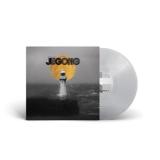
JeGong, known for their immersive, rhythm-driven explorations of Krautrock and experimental sound design, now take an exhilarating leap into brighter, nostalgically stranger territory. `Gomi Kuzu Can` is an electrifying journey through Kraut, Post- and Experimental Rock, delivered with the analog warmth of the '70s. Across eleven meticulously crafted tracks, JeGong embrace their roots while fearlessly expanding into neon-lit, beat-driven worlds where kinetic rhythms meet playful sonic futurism. It is music built for movement, contemplation, and the ecstatic strangeness of possibility. Their approach borrows the endurance and patience of minimalism, but they subvert minimalism's austerity with grit, distortion, and physicality. The result is music that feels alive in motion: constantly shifting, tightening, unfurling, and mutating even when its core pulse remains unbroken. "We wanted to create a `70s sound as the recording foundation - a sonic aesthetic that sets a mood through warm tape saturation. Like a kind of memory box where you can store recollections, for example from childhood, when you would spend hours by yourself watching TV and listening to the radio, often both at the same time." (JeGong) `Gomi Kuzu Can`, is hand-built, lovingly assembled from circuitry, intuition, and raw creative impulse. This tactile quality is precisely what makes the album's danceability so impactful. In blending organic rhythm with retro-electronic brightness, they've created a sound that is both familiar and refreshingly new. In the end, JeGong's sound is less a genre and more a landscape: rugged, hypnotic, austere, and strangely spiritual. It is music built on the bones of rhythm and the electricity of repetition, crafted with the precision of engineers and the instincts of explorers. FOR FANS OF Neu!, Cluster, Tangerine Dream, Swans, Mogwai, Sonic Youth, John Zorn The single colour edition comes as Glass Clear vinyl!

- How To Exist
- Best Days
- Getaway Car
- La Dolce Vita
- Work In Progress
- The Actor
- Magnificent Seven
- The Double
- Well Well Wellness
- Through The Looking Glass
- True Romance
- The Entertainment
Formed in Galway City, Ireland James McGregor (vocals/ guitar), Sean Connelly (guitar) and Damian Greaney (drums) went to school together there and met Tom Freeman (bass) on the music scene. Relocating to London in 2019, the quartet signed to Alan McGee's new record label 'Creation23' almost overnight. They have since impressed audiences across Europe with live performances at festivals including Rock Werchter, Eurosonic and Electric Picnic, performing to a huge crowd at Sefton Park in Liverpool in support of Kings of Leon, as well as a head- turning televised appearance on Sky 1's Soccer AM. Media have been quick to show their support too plus previous singles, taken from their 2023 debut "Exit Strategy" received praise on BBC Radio 1's Annie Mac on her "New Names" showcase, BBC 6 Music's Steve Lamacq on his 'Recommends' show, received day-time radio play on RTE 2FM, and impressed the legendary Rodney Bingenheimer on Sirius XM.
The four-piece are drawn together by not only a mutual appreciation of music past and present but also a love of films and books, notably the ones on the more 'noir' side of the spectrum. You could say Arctic Monkeys got them into a band, The Strokes showed them how tightly you could distil it and Radiohead showed them how wide you could take it. But these days there not afraid to also put Billie Eilish and Charlie XCX into that mixture and films from director Fellini to "Drive". What matters is that from starting out playing acoustic folk, that turned into 3 minute (post-)punkish songs, they now have expanded a lot from there, taking in all the experience they have now recording and touring. Pushing the emotion by being authentic and creating what you really want despite the noise and haste around you.

- A1: Dance... (4:47)
- A2: Beat Up Chanel$ (3:18)
- A3: Cannibalism! (2:47)
- A4: Old Technology (2:39)
- A5: Crank (2:55)
- A6: Gas Station (3:38)
- A7: Yes Goddd (2:39)
- B1: Unknown Loverz (3:19)
- B2: Old Fling$ (3:37)
- B3: I'm Actually Kinda Famous (2:36)
- B4: $T. Loser (3:25)
- B5: What Is It Like, To Be Liked? (2:18)
- B6: *Prayer* (0:37)
- B7: Brittany Murphy. (3:44)

13
''Stealth' is certainly an apt title for this disarming collection of crypto-New Age. From its opening, one might be forgiven for assuming that what follows is a tableau of digital disruption, and noise in one of its less offensive iterations.
However, Takao instead presents a rich and detailed tapestry of compositions that take New Age affectations, fashioning them into something far grander. There's a penchant for the nai¨ve, the more garish of digital instruments in the vein of James Ferraro - but importantly, Takao steers away from submitting to gestures themselves nai¨ve or garish, opting instead to focus attention to a more nuanced, delicate style.
Indeed, a more intrinsic tradition to posit 'Stealth' as an inheritor of would be the Impressionism of Debussy, or even Satie, with Takao's approach drawing light and composure from his instruments at their most bare and unadorned. Ever so pleasing and atmospheric, 'Stealth' is remarkably affecting in its subtlety.' (Nico Niquo)

- 1: Bluey Theme Tune (Orchestral Version)
- 2: Sleepytime
- 3: Puppets
- 4: Curry Quest
- 5: Alongside
- 6: Ice Cream (Waltz Of The Flowers)
- 7: Flat Pack
- 8: Hotel
- 9: Seesaw
- 10: Pirates
- 11: Stumpfest
- 12: Tradies
- 13: Relax
- 14: Space
- 15: Mount Mumandad
- 16: We'll See
- 17: Bluey Theme Tune (The Sign Version)
Joff Bush and the Bluey Music team proudly present the brand-new Bluey album. Featuring 17 brand-new recordings including ‘Sleepytime’, ‘Flat Pack’, ‘Seesaw’, and the new ‘Bluey Theme Tune (Orchestral Version)’.
“This was our most ambitious album to date - so we wanted something extra special - something we’ve wanted to make for a long time."..."Hearing the music from episodes like ‘Sleepytime’ and ‘The Sign’ in all its orchestral splendour meant tissues needed to be on hand throughout the mixing process.”
“Fittingly, the theme of this album is ‘growing up’. Much of this music, like the episodes they derive from, explore what it means when kids start to discover their independence and venture out on their own. Whether that’s learning to sleep in their own bed or taking a spaceship to Mars. I hope you enjoy ‘Up Here’, as the opportunity I had to make this album is thanks to YOU!"

- 1: Up In The Air
- 2: Miracle
- 3: 2005
- 4: Freak Out
- 5: Snow Days
- 6: 100Mph
- 7: Floating Through Time (Interlude)
- 8: L Train
- 9: Lost Signals
- 10: Lulu Boy
- 11: Ten Years
“If I never make it home, thank you for everything.” — “Ten Years” It’s hard to believe twenty years have passed since The Academy Is… released their breakthrough debut Almost Here, a record that quietly shaped an underground era. In the years since, the band grew up, lived full lives, and ultimately found their way back. Almost There serves as a conceptual companion to their debut, reexamining the past from the present with clarity, reflection, and experience. “Almost Here was about leaving home,” William Beckett reflects. “This album is about finding your way back.” The songs capture the bittersweet truth that time moves fast, carrying a quiet urgency to chase what matters before it slips away.

