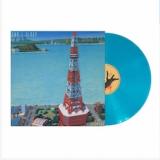
''Stealth' is certainly an apt title for this disarming collection of crypto-New Age. From its opening, one might be forgiven for assuming that what follows is a tableau of digital disruption, and noise in one of its less offensive iterations.
However, Takao instead presents a rich and detailed tapestry of compositions that take New Age affectations, fashioning them into something far grander. There's a penchant for the nai¨ve, the more garish of digital instruments in the vein of James Ferraro - but importantly, Takao steers away from submitting to gestures themselves nai¨ve or garish, opting instead to focus attention to a more nuanced, delicate style.
Indeed, a more intrinsic tradition to posit 'Stealth' as an inheritor of would be the Impressionism of Debussy, or even Satie, with Takao's approach drawing light and composure from his instruments at their most bare and unadorned. Ever so pleasing and atmospheric, 'Stealth' is remarkably affecting in its subtlety.' (Nico Niquo)
Search:takao
- 1
Limited Edition Three Blind Mice Premium Re-issue Collection
180g vinyl LP with obi and insert
Remastered and cut by Bernie Grundman
Pressed and printed in Japan
Orig. Rel.:1970
This is the first album by Takao Uematsu, who played in the George Otsuka Group.
His blackness of blowing, spirit and technique, which are directly descended from Joe Henderson, set him apart from other Japanese players.
- A1: Tokyo...singin' In The City
- A2: Warera Hoshi No Ko
- A3: Sail On Fire
- A4: Straight From Your Heart
- A5: Jumping Take Off
- B1: Santiago Bay Rendez-Vous
- B2: Funk'n'roll Train
- B3: Cry Baby Cry
- B4: Noon
- B5: Can I Sing...for You
"CAN I SING?" (originally released October 5, 1983): 180g clear blue vinyl Remastered and cut by Alex Wharton (Abbey Road Studios, London)
Takanaka’s 10th original studio album, showcasing his signature “singing guitar.”
With guest appearances by Takao Kisugi (vocals), Yuji Toriyama (rhythm guitar), Yoshihiro Naruse (Casiopea; bass), and Daiji Okai (Yonin Bayashi; drums).
Blending techno-based sequencing with Takanaka’s warm, expressive guitar sound, the album radiates energy and melodic joy.
Comes with DL card & 2P insert / wrapped in shrink + a sticker
At long last, Takao is back with his long-awaited second album, seven years in the making. His 2018 "Stealth" was (and still is) a much-loved set, mixing elements of ambient and environmental music; with this new release Takao breaks free of the gravitational pull of these earlier influences and strides confidently forward. "The End of the Brim" jettisons some of the more abstract elements of his previous work, embracing a “universal listenability” and a more concrete intensity, with a focus on supple rhythms and strengthened senses of melodic development and harmonic sophistication. This musical growth can be linked with Takao’s admiration of composers Ken Muramatsu and Toshifumi Hinata, who are generally associated with commercial “production music” and easy listening. Another contributing factor is his private study with veteran keyboardist Ichiko Hashimoto of Colored Music. The ten tracks here include three vocal tracks, with three different singers (Yumea Horiike, Cristel Bere, Atsuo Fujimoto of Colored Music) and seven keyboard-led pieces. The vocal pieces are integral parts of the album’s flow, rather than typical “songs” driven by the name and personality of the singer. All of these factors, plus the veteran presence of engineer Hiroshi Haraguchi, known for his work with Haruomi Hosono, who mixed half of the album's tracks, along with the use of excellent old-school synths, aligned with Takao’s forward-looking vision, have combined to give us an album with a unique sense of timelessness. A spotlight illuminating future paths for pop music, available on CD/Vinyl LP/Digital, with English/Japanese lyrics, and liner notes by Yuji Shibasaki.
- A1: Matrix
- A2: Melody And Crystal
- A3: Promise Song
- A4: Lucky Me
- A5: Citrus
- B1: Play Out Loud
- B2: Chasing Blurry Lines
- B3: A Song To Sing With You (Feat. Yukino Sakurai)
- B4: Eternal Eve
- B5: Glass Heart
The smash hit album "Glass Heart" is now available as a limited edition vinyl record!
The Netflix series "Glass Heart" has just begun streaming worldwide. The band "TENBLANK," featured in this passionate youthful musical love story, has
released their debut album, "Glass Heart," in conjunction with the drama's release.
TENBLANK is a rock band formed by four members: the solitary genius musician Fujitani Naoki (played by Sato Takeru), college student drummer Saijo Akane
(played by Miyazaki Yu), hardworking and charismatic guitarist Takaoka Hisashi (played by Machida Keita), and music-obsessed pianist Sakamoto Kazushi
(played by Shison Jun).
The album was released digitally alongside the drama's release on July 31st, and was released on CD the following day, August 1st.
Glass Heart, which attracted attention thanks to the contributions of a stellar lineup of composers including Noda Yojiro (RADWIMPS) and Yaffle, has dominated
charts not only in Japan but also in other Asian countries, creating a global buzz.
Now, this smash hit album "Glass Heart" will be released as a limited edition vinyl record. Experience TENBLANK's music in a new way with the warm texture
and depth of sound that only analog can provide.
Kumachan Seal: solo project of Japanese vocalist / songwriter / producer Sairi Ojima, who has been playing in numerous indie bands, including Neco Nemuru, since her teens. She began her solo career in 2013, and released her first cassette in 2017. This EM Records release is her first CD/LP album, with all compositions by Ojima, who co-produced the album. Each of the eleven songs reveals beguiling layers of detailed and surprising sounds, with Ojima's DIY sonic core embroidered by vibrant and colorful beats and guitar from EM artist Le Makeup and the quintessential ambient-pop synths and keyboards of fellow EM-er Takao. Le Makeup mixed ten of the eleven songs, with Takao mixing "China Sandwich". The heart of Ojima's musical identity is her clear, aque- ous voice; apart from one instrumental, all the tracks here feature that mellifluous voice, but in an interesting twist, only half the songs have lyrics, with the remainder employing her wordless voice as melodic and textural elements. Although Kumachan Seal can be heard as a sort of bedroom pop filtered through ambient music and the new-age revival, listeners will note that the final two songs, "Atsumono" and "Tiny Cell", are respectively a slightly skewed four-on-the-floor track and a lightly skanking Doo-wop- flavored confection, slightly reminiscent of the UK's Brenda Ray. This album, full of Ojima's calm and cool observation of the world, is available on CD, LP and DL, and includes an English lyric sheet.
A deep and mysterious groove that makes you hesitate to give in to it. Kiyoshi Sugimoto is a guitarist who has sharply shot through the heart of the times. This is the highest point of his achievement.
Kiyoshi Sugimoto is a guitarist that Terumasa Hino longed for and Akira Ishikawa fell in love with. His cutting-edge and diverse sound has always been at the forefront of modern jazz and jazz rock, and has sharply shot through the heart of the times. There is no doubt that this work, "Babylonia Wind", captures one of the pinnacles of his musical expression. Hideo Ichikawa's electric piano spreads like a ripple, Yoshio Ikeda's rich yet restrained bass, Motohiko Hino's drums with good grain and strong propulsion, Takao Uematsu's saxophone that combines wildness and luster, and Sugimoto's sharp guitar that flashes. From the deep sea-like "Babylonia Wind" to the delicate and fleeting "Hieroglyph", when you listen to the whole album, you will be astonished by the variety of expression and awed by the depth of the groove.
Black Vinyl[38,61 €]
The drums of fire scorch the age. With his young and talented Sound Limited, Takeshi Inomata heralds the arrival of the golden age of jazz rock in high spirits. Drummer Takeshi Inomata, who led the Japanese jazz scene with his precise stick work and musicality with an eye on the times, formed Sound Limited at the end of the 1960s, influenced by the brass rock music that was flourishing at the time. He said, “I wanted to fuse jazz and rock and bring together young musicians to play music with vitality. I want this group to be a group with a large scale that is not confined to the small frame of modern jazz,” he said, launching a new axis. Their first album, “The Sound of Sound Limited” (1970), became their masterpiece. It is a masterpiece that is full of energy and enthusiasm throughout the album, starting with “Theme~Mustache,” which has become one of the most beloved and iconic songs of the band.
Drums, Music Director – Takeshi Inomata
Electric Bass – Jun Suzuki
Electric Guitar – Ryo Kawasaki, Shigenori Kamiya
Flute – Toshiaki Yokota
Mixed By – Eiji Uemura
Organ – Yusuke Hoguchi
Tenor Saxophone – Takao Uematsu
Trombone – Shigemichi Domoto, Takashi Imai
Trumpet – Shunzo Ohno, Takashi Kumagai
- A1: Tonpei Hidari - Tonpei No Hey You Blues
- A2: Chu Kosaka & Ultra - Kimagure Party
- A3: Kazushi Inamura - Go Yojin
- A4: Fumio Karashima - American Tango
- B1: Takao Uematsu - Mysterious Jump
- B2: Maximum - Ashita Tenki Ni Nare
- B3: Jun Miyauchi - Heartbreak Highway
- B4: Hiroshi Murakami & Dancing Sphinx - Baby, It`s Trivial
- For this brand new chapter in the highly acclaimed Wamono series, DJ Chintam goes digging into the vaults of one of the most revered Japanese labels, Trio Records, and unearths some killer drum breaks, dope bass lines and funky horns, for an essential selection of jazz funk fusion and rare groove vibes produced on Trio between 1973 and 1981!
- 180g heavy vinyl pressing, reverse board jacket.
- Fully licensed Trio Records masters.
- Mastering and lacquer cut by Jukka Sarapää at Timmion Cutting Lab, Helsinki, Finland.
- Signature artwork by Yoxxx.
---
After many years working as a buyer for several record stores, DJ Chintam opened his own Blow Up shop in 2018 in Tokyo's Shibuya district. A member of the Dayjam Crew and a specialist of soul, funk, rare groove and disco music, Chintam is also an expert of the home-brewed Wamono grooves. He supervised and wrote the legendary Wamono A to Z records guide book together with DJ Yoshizawa Dynamite.
For this brand new chapter in the highly acclaimed Wamono series, our man Chintam goes digging into the vaults of one of the most revered Japanese labels: Trio Records. Established in 1969 by audio manufacturer Trio Electronics, now known as Kenwood, the label - and its subsidiaries such as Showboat and Trash - released high quality music spanning a large variety of genres including rock, jazz, fusion, soundtracks and popular songs, until its end in 1984. Through the eight tracks selected here, Chintam unearths some dope drum breaks, heavy bass lines and funky horns, for an essential selection of jazz funk fusion and rare groove vibes produced on Trio between 1973 and 1981.
Put the needle on the record, turn up the volume and dig right now into the Wamono sound - the cream of the Japanese jazz, funk, soul, rare groove and boogie music developed throughout the years since the sixties in Japan!
---
180GWALP05 - Manufactured and distributed by 180g.
- A1: Main Title
- A2: The Giant Tail
- A3: Facing Fear
- A4: A Close Call
- A5: Godzilla Appears In Nemuro
- A6: In The Ocean Depths
- A7: A Sleeep Of 60 Million Years
- A8: The Object From Outer Space / Unusual Phenomenon
- A9: The Self Defence Force Mobilizes
- A10: Godzilla’s Theme 2000
- A11: End Title – The Feared God Godzilla
- B1: The Object From Outer Space Flight
- B2: Eerie Silence
- B3: Eerie Silence Ii
- B4: Ominous Premonition
- B5: The Wonder Of G Revealed
- B6: The Flight Of The Giant Ufo
- B7: The Earth Invasion
- B8: Before The Explosion
- B9: Millennium
- B10: Thinking Of Dad
- B11: Millennial Kingdom
- C1: Miraculous Survival
- C2: Organizer – Godzilla’s Theme
- C5: Extraterrestrial Life/The Metamorphosis
- C6: Astonishing Resurrection
- C7: Millennial Kingdom
- C8: G’s Decision
- C9: The Space Monster Ironic Fate
- C10: End Title – The Feared God Godzilla
- C11: End Title – The Feared God Godzilla Ii
- C3: Extraterrestrial Life /The Birth
- C4: Rising Tension
He's back - again! Years after the end of the Heisei era, the big G came back to film in 1999 with the first of a new era: GODZILLA 2000: MILLENNIUM. Directed by Takao Okawara (GODZILLA VS. DESTOROYAH), a new look Godzilla is still harassing Tokyo, with the Godzilla Prediction Network out there trying to figure out where he'll show up next. To make matters worse, the government's Crisis Control Intelligence care more about firing missiles, but everything changes when they discover a mysterious meteor has a UFO inside. All of this results in Orga, a kaiju made from Godzilla's DNA, and of course it's up to the Big G to kick its ass back to space. Scoring GODZILLA 2000 was Takayuki Hattori, who had previously composed 1994's GODZILLA VS. SPACEGODZILLA. Hattori's music is very much about mood; the composer brings a sense of lyricism to proceedings, but of course, he also knows how to get us excited for Godzilla's appearances. Hattori does that with a spectacular new theme for the Big G that perfectly captures the creature's grandeur and immense power. There's also a fantastic piece for the UFO that has a wonderfully primevil beat, and of course, Akira Ifukube's classic theme for Godzilla returns in a big way. A perfect start to the Millennium era! (Charlie Brigden)
Artwork by Matt Ryan Tobin
2X 140gram Eco-Vinyl
These 4 records reissued for the first time, with so rare and rich contents from 1970's Japanese Jazz which is gathering attention globally, were released on Terumasa Hino private label "LOVE RECORDS" and distributed by Japanese major label.
Representing "Ode to workman" from "J Jazz : Deep Modern Jazz From Japan 1969-1984" released on BBE, in his session with local N.Y. musicians, these 4 records are so important pieces in 1970's independent Jazz !
Terumasa Hino and Reggie Workman's second work. As adding two new energetic members, Takao Uematsu and Yuji Imamura, the sound became heavier and more thrilling. Sometimes it leads to dark depression, but sometimes gives a feeling of euphoria, it is still vivid as Afrocentric Jazz. With its quality and rarity, it has been always wanted all over the world.
- A1: Theme~Mustache
- A2: Tak's Tune
- A3: Joint
- B1: Monster
- B2: Lullaby For Yuh
- B3: Scotland Scene
- B4: Theme
Clear Vinyl[38,24 €]
The drums of fire scorch the age. With his young and talented Sound Limited, Takeshi Inomata heralds the arrival of the golden age of jazz rock in high spirits. Drummer Takeshi Inomata, who led the Japanese jazz scene with his precise stick work and musicality with an eye on the times, formed Sound Limited at the end of the 1960s, influenced by the brass rock music that was flourishing at the time. He said, “I wanted to fuse jazz and rock and bring together young musicians to play music with vitality. I want this group to be a group with a large scale that is not confined to the small frame of modern jazz,” he said, launching a new axis. Their first album, “The Sound of Sound Limited” (1970), became their masterpiece. It is a masterpiece that is full of energy and enthusiasm throughout the album, starting with “Theme~Mustache,” which has become one of the most beloved and iconic songs of the band.
Drums, Music Director – Takeshi Inomata
Electric Bass – Jun Suzuki
Electric Guitar – Ryo Kawasaki, Shigenori Kamiya
Flute – Toshiaki Yokota
Mixed By – Eiji Uemura
Organ – Yusuke Hoguchi
Tenor Saxophone – Takao Uematsu
Trombone – Shigemichi Domoto, Takashi Imai
Trumpet – Shunzo Ohno, Takashi Kumagai
Kusōzu : Nine Death Stages is the second album by the Tokyo trio Archeus, which consists of Keiko Higuchi (voice, percussion, trombone, shamisen), Shizuo Uchida (bass strings), and TOMO (hurdy gurdy, voice). It follows their debut, self-titled and self-released CD and cassette from 2021 and is further proof – if any were needed – that these musicians, who’ve known each other for some time, but only started playing together relatively recently, share a telepathic communication, improvising together, fully in the moment, and as one. Where their debut album featured four extended improvisations, Kusōzu is an object lesson in economy and clarity – nine tracks, thirty-three minutes, everything that needs be said and nothing more.
All three musicians are incredibly active in the Japanese underground. Higuchi currently plays with Sachiko in Albedo Fantastica, adding Uchida for Albedo Gravitas; Uchida and Higuchi team up with Masami Kawaguchi (guitar) in vDBG. She’s also recorded with improvisers such as Naoto Yamagishi, Yasumune Morishige, and Shin-Ichiro Kanda. Uchida is also a member of MAI MAO, Kito-Mizukumi Rouber, Hasegawa-Shizuo, UH, and TERROR SHIT, and he’s recently recorded with improvising guitarist Takashi Masubuchi; TOMO has previously been a member of Tetragrammaton and Pouring High Water, and has recently performed live with Mick of Kousokuya, Mitsuru Tabata, Keiji Haino, and Daisuke Takaoka.
While Higuchi and Uchida have been making music together for some time now, they appear careful not to impose their previously articulated lexicon to bear on Archeus. There are trace elements of their playerly voices still present – the stretchy, plastic scrabbling on bass strings from Uchida; Higuchi’s murmurations of tone, and sudden plunges back down to earth, vertiginous and woozy – but there are other things going on here, particularly with TOMO joining in the action. His hurdy gurdy is a wild card in a group of wild cards, here cranking out burred, purring drones, there fidgeting through floods of notes, cranked up really high, ducking and weaving between Higuchi and Uchida as the three pursue the eternal now that is core to the best improvised music.
Archeus seem to work alchemically, transmuting their base matter into gold. Named after the Buddhist art practice of kusōzu, the graphic painting of nine stages of a decaying corpse in the open air, “to demonstrate the effects of impermanence,” as scholar Gail Chin once wrote.
Kusōzu : Nine Death Stages is Archeus at their most rigorously attentive to each other’s playing, and by the end, the music is itself thinking and feeling.
Akira Ifukube Returns! It's 1996 AD and Toho decide to freeze their Godzilla franchise, so what better way to go out with than a nuclear meltdown, which happens in GODZILLA VS. DESTOROYAH. Directed by Takao Okawara, the epic kaiju flick has Godzilla deadlier than ever before, with the absorption of uranium sending the temperature of his nuclear reactor heart soaring, which will ignite Earth's atmosphere and kill everybody when it explodes. Oh, and there's also another kaiju on the loose, the prehistoric mutation Destoroyah. It never rains but it pours!
Returning to score GODZILLA VS. DESTOROYAH was Akira Ifukube, the man who created the Big G's sound in 1954. Fittingly, for his final film, he got to lay Godzilla to rest once again, but first brought back several of his older pieces for the mayhem, including the original Godzilla theme, with another repurposed for the amazing new Super-X3. Destoroyah also receives a terrifying theme with powerful brass, but even his strength isn't enough for Godzilla's awesome force. But with that comes the death of the Big G, and Ifukube composes a beautiful requiem for his final scene. The king is dead. Long live the king! (Charlie Brigden)
Composed by Akira Ifukube
Artwork by Wes Benscoter
Manufactured in Czech Republic
George Otsuka (or Ohtsuka), sadly passed away in March 2020, was one of Japan’s most renowned jazz drummers. ‘Sea Breeze’, released in 1971on the Union label, is his first record in quintet formation and is reissued here on a single LP housed in a gatefold sleeve.
And we can say that George Otsuka knew how to surround himself: Shunzo Ohno is on trumpet and Flugelhorn, Takao Uematsu on tenor sax and soprano, Takashi Mizuhashi on bass and Hideo Ichikawa on electric piano.
If all the tracks on this album are solid, included the astonishing cover of “Fool on the Hill”, it is especially “Sea Breeze”, the eponymous track opening the album that will make an impression. A super and long jazz-funk track where the five musicians, in perfect osmosis, leave each other enough space to express the full extent of their talent.
Recent copies of the original vinyl,which were only released in Japan have sold for £200-300.
If you collect vintage 70's soul-jazz vinyl, there is a good chance that you already own a record that features the amazing vocal talents of Dee Dee Bridgewater. Whether it be Roy Ayers, Norman Connors, Billy Parker or Carlos Garnett - Dee Dee is the glue that fuses these artists together. Although best known for her jazz work, Dee Dee has had a wonderfully rich and varied career encompassing soul, musicals, gospel, and underground disco from the 70's to the present day. She is still active as a vocalist, composer, and producer and remains one of our favourite vocalists at Mr Bongo HQ. We take things back to the early years of Dee Dee's career with her debut album 'Afro Blue'. Recorded in Tokyo in 1974, the album was released exclusively in Japan via two different Japanese labels (Trio Records in 1974 and All Art in 1985 respectively). Each release had unique cover art and we have opted to present the album in its original 1974 form.
'Afro Blue' features an exquisite collaboration of American and Japanese musicians, such as Cecil & Ron Bridgewater, Motohiko Hino and producer Takao Ishizuka. The result is a sublime deep soul-jazz masterpiece with timeless versions of 'People Make The World Go Round', 'Love From The Sun', and 'Afro Blue'. It is arguably one of the finest albums in its genre. This record has long been a sought-after item for DJs and collectors alike, so we are delighted to finally make this wonderful music from an understated great available to all.
If you collect vintage 70's soul-jazz vinyl, there is a good chance that you already own a record that features the amazing vocal talents of Dee Dee Bridgewater. Whether it be Roy Ayers, Norman Connors, Billy Parker or Carlos Garnett - Dee Dee is the glue that fuses these artists together. Although best known for her jazz work, Dee Dee has had a wonderfully rich and varied career encompassing soul, musicals, gospel, and underground disco from the 70's to the present day. She is still active as a vocalist, composer, and producer and remains one of our favourite vocalists at Mr Bongo HQ. We take things back to the early years of Dee Dee's career with her debut album 'Afro Blue'. Recorded in Tokyo in 1974, the album was released exclusively in Japan via two different Japanese labels (Trio Records in 1974 and All Art in 1985 respectively). Each release had unique cover art and we have opted to present the album in its original 1974 form.
'Afro Blue' features an exquisite collaboration of American and Japanese musicians, such as Cecil & Ron Bridgewater, Motohiko Hino and producer Takao Ishizuka. The result is a sublime deep soul-jazz masterpiece with timeless versions of 'People Make The World Go Round', 'Love From The Sun', and 'Afro Blue'. It is arguably one of the finest albums in its genre. This record has long been a sought-after item for DJs and collectors alike, so we are delighted to finally make this wonderful music from an understated great available to all.
2022 repress
currently the rediscovery of long forgotten japanese electronic, jazz and new age music is at a peak like never before. but although many re-issues already flood the record stores around the world: the large, diverse musical culture of japan still got some gems in store that are really missing.
for example, it is still quiet around the the work of japanese bass player, new-age and ambient musi-cian motohiko hamase. when the today 66-years old artist started to be a professional musician in the 1970's, he quickly gained success as a versed studio instrumentalist and started to be part of the great modern jazz isao suzuki sextett, where he played with legends like pianist tsuyoshi yamamoto or fu-sion guitar one-off-a-kind kazumi watanabe.
he also was around in the studio when legendary japanese jazz records like 'straight ahead' of takao uematsu, 'moritato for osada' of jazz singer minami yasuda or 'moon stone' of synthesizer, piano and organ wizard mikio masuda been recorded.
in the 1980's hamase began to slowly drift away from jazz and drowned himself and his musical vision into new-age, ambient and experimental electronic spheres, in which he incorporated his funky medi-tative way of playing the bass above airy sounds and arrangements.
his first solo album 'intaglio' was not only a milestone of japanese new-age ambient, it was also fresh sonic journey in jazz that does not sound like jazz at all. now studio mule is happy to announce the re-recording of his gem from 1986, that opens new doors of perception while being not quite at all.
first issued by the japanese label shi zen, the record had a decent success in japan and by some overseas fans of music from the far east. with seven haunting, stylistically hard to pigeonhole compo-sitions hamase drifts around new-age worlds with howling wind sounds, gently bass picking and dis-creet drums, that sometimes remind the listener on the power of japanese taiko percussions. also, propulsive fourth-world-grooves call the tune and all composition avoid a foreseeable structure. at large his albums seem to be improvised and yet all is deeply composed.
music that works like shuffling through an imaginary sound library full of spiritual deepness, that even spreads in its shaky moments some profound relaxing moods. a true discovery of old music that oper-ates deeply contemporary due to his exploratory spirit and gently played tones. the release marks another highlight in studio mule's fresh mission to excavate neglected japanese music, that somehow has more to offer in present age, than at the time of his original birth.
- 1