Cerca:what so not

Generi
Tutto
Dj Koze - Pick Up

Dj Koze

Pick Up

12inchPAMPA031
PAMPA
25.04.2025

2025 Repress

DJ Koze might be one of the world's best producers, but above all he's a DJ, and it's his DJ ear that governs. J
ust as in a great set, so with his releases: 'Seeing Aliens' came out of nowhere, a big buzzing beast of a track, to announce that Koze was back on the scene and prime everyone for the coming album, knock knock.
But now that Koze has your attention, it's time to remind everyone what's most important about club music, pull things back, take a turn to the left, and get deep into the groove.

Thus 'Pick Up': the second single from knock knock is 100% pure groove, doubly so in the extended 12' version.

In a sense it's incredibly familiar - it is essentially a filter disco record, very close to something you could imagine coming out of Paris around the turn of the millennium. But of course, this is Koze. Nothing is normal or familiar in his world, and he's taken this most foundational of clubland staples into new territory. Flipping amples of Gladys Knight & the Pips 'Neither One Of Us (Wants to Be the First to Say Goodbye)' and Melba Moore's 'Pick Me Up, I'll Dance', it creates something completely airborne, shot through with emotions such as gods must feel: not quite explicable to the human mind but strong enough to knock you off your feet. In its way it's absolutely as powerful as 'Seeing Aliens', but it comes in like the proverbial iron fist in a glove of velvet.
The flip, a ten-minute new track, 'The Love Truck' is a big contrast again. If 'Pick Up' is giddy flight,
'The Love Truck' is woozy floating. Its sharp, clicking percussion recalls 2000s minimal techno, but this time absolutely nothing is generic. The long, intense, on-and-off bass tones, the flickers of birdsong, the pure voices slipping in backwards as if from the future... it's all like the most blissful dream, and culminates in a coda so subtle yet so beautiful it's like ever time you've ever seen the sun rise and thought 'I never want this to end', all the while understanding deep down that the fleeting nature of the pleasure is also what give it its power. But of course, being created with that consummate DJ's ear, it's also full of the thrill of wondering what Koze has in store next.

In Stock

Disponibile in Stock e pronto per la spedizione

11,72
ADJA - GOLDEN RETRIEVE HER LP

Adja

GOLDEN RETRIEVE HER LP

12inchSDBANULP44
SDBAN ULTRA
10.04.2025

Brussels-based artist Adja Fassa releases her debut album, two years after her well-received EP IRONEYE - and it is promising to be quite a ride.

This contemporary body of work showcases 11 stories, each telling their story of the impact our capitalistic society has on our most intimate moments: from dystopian neo-soul tales of Deliveroo-drivers being stalked by telemarketers (both of them selling/delivering literal 'hope and dreams'), to re-imagined jazz standards and classical songs about conditional friendships, based on time and money. We even get her take on the 'stick-it-to-the-man-sing-along-rock-song', which she called 'Sucking on my Emphatitties'. And then we have the title song 'Golden Retrieve Her' which is as much an accumulation of feelings as of musical curiosities

" 'Golden Retrieve Her' is a wordplay on wanting to retrieve my kindness in a violent social system. Simultaneously, it is criticizing the fact that we, the masses, are often asked to either be naive or pretend we are. All of this accumulated in a visual image of what our social system considers 'the perfect, obedient nuclear family': a kind couple with 2.4 children, a house in the suburbs and... a Golden Retriever." ~ Adja

Serious and concrete topics, wrapped up in a symbolic package, as Adja values both straightforwardness, critical thinking and, paradoxically, a bit of mysticism. For her visual artwork, she created four, self-made tarot cards, that represent the four themes on the album:

'The Wheel Of Fortune', embodies the desire to get the upper hand in a system that doesn't align with your values. 'The Mirror', represents projection and likeness within lost connections (whether with strangers or with friends), 'The Dark Wheel' embodies the turning point of the wheel of fortune, where one is completely surrendered to their own moral demise and 'The Cave' stands for the - sometimes painful, sometimes blissful - return to one's own mind and heart.

Musically, this album contains as much variety as song titles, as Adja continues to explore her own depths as an artist and musician, together with her partner-in-crime, guitarist, composer and jazz-arranger Alexis Nootens. She collaborated with music producer Adam Scrimshire, who was featured in the Guardian as UK's one of three most significant soul music producers alongside Swindle and Inflo, and renowned Belgianproducer, mixer and musician Koen Gisen, who both mentored her into deepening her own productional skills. Last but not least, she gathered 13 musicians to deliver the sound she brings to her album, among them her 5 steady band members and 8 studio musicians from all over Europe. As we said: it promises to be quite a ride.

LIVE:
09/05 : Ancienne Belgique, Brussels
11/05 : Jazz à Liège

More tba.

In Stock

Disponibile in Stock e pronto per la spedizione

23,11
DJ Koze - Music Can Hear Us LP 2x12" +7"

Dj Koze

Music Can Hear Us LP 2x12" +7"

2x12inchPAMPALP016X
PAMPA
04.04.2025

"Pure Love," featuring Damon Albarn, is the first single from DJ Koze's highly anticipated new album Music Can Hear Us. The new long player, a follow-up to his worldwide hit album Knock Knock, which reached #7 in the German Album Charts and included the global dance hit “Pick Up” will be released on April 4th on Pampa Records. It's a 64-minute trip into space and back.

In Stock

Disponibile in Stock e pronto per la spedizione

35,17
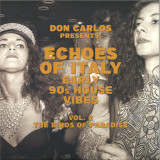
Various - ECHOES OF ITALY – THE BIRDS OF PARADISE – EARLY 90S HOUSE VIBES VOL.2 (2x12")

Googling “paradise house”, the first results to pop up are an endless list of European b&b’s with whitewashed lime façades, all of them promising “…an unmatched travel experience a few steps from the sea”. Next, a little further down, are the institutional websites of a few select semi-luxury retirement homes (no photos shown, but lots of stock images of smiling nurses with reassuring looks). To find the “paradise house” we’re after, we have to scroll even further down. Much further down.

It feels like yesterday, and at the same time it seems like a million years ago. The Eighties had just ended, and it was still unclear what to expect from the Nineties. Mobile phones that were not the size of a briefcase and did not cost as much as a car? A frightening economic crisis? The guitar-rock revival?! Certainly, the best place to observe that moment of transition was the dancefloor. Truly epochal transformations were happening there. From America, within a short distance one from the other, two revolutionary new musical styles had arrived: the first one sounded a bit like an “on a budget” version of the best Seventies disco-music – Philly sound made with a set of piano-bar keyboards! – the other was even more sparse, futuristic and extraterrestrial. It was a music with a quite distinct “physical” component, which at the same time, to be fully grasped, seemed to call for the knotty theories of certain French post-modern philosophers: Gilles Deleuze, Félix Guattari, Paul Virilio... Both those genres – we would learn shortly after – were born in the black communities of Chicago and Detroit, although listening to those vinyl 12” (often wrapped in generic white covers, and with little indication in the label) you could not easily guess whether behind them there was a black boy from somewhere in the Usa, or a girl from Berlin, or a pale kid from a Cornish coastal town.

Quickly, similar sounds began to show up from all corners of Europe. A thousand variations of the same intuition: leaner, less lean, happier, slightly less intoxicated, more broken, slower, faster, much faster... Boom! From the dancefloors – the London ones at least, whose chronicles we eagerly read every month in the pages of The Face and i-D – came tales of a new generation of clubbers who had completely stopped “dressing up” to go dancing; of hot tempered hooligans bursting into tears and hugging everyone under the strobe lights as the notes of Strings of Life rose up through the fumes of dry ice (certain “smiling” pills were also involved, sure). At this point, however, we must move on to Switzerland.

In Switzerland, in the quiet and diligent town of Lugano, between the 1980s and 1990s there was a club called “Morandi”. Its hot night was on Wednesdays, when the audience also came from Milan, Como, Varese and Zurich. Legend goes that, one night, none less than Prince and Sheila E were spotted hiding among the sofas, on a day-off of the Italian dates of the Nude Tour… The Wednesday resident and superstar was an Italian dj with an exotic name: Don Carlos. The soundtrack he devised was a mixture of Chicago, Detroit, the most progressive R&B and certain forgotten classics of old disco music: practically, what the Paradise Garage in New York might have sounded like had it not closed in 1987. In between, Don Carlos also managed to squeeze in some tracks he had worked on in his studio on Lago Maggiore. One in particular: a track that was rather slow compared to the BPM in fashion at the time, but which was a perfect bridge between house and R&B. The title was Alone: Don Carlos would explain years later that it had to be intended both in the English meaning of “by itself” and like the Italian word meaning “halo”. That wasn’t the only double entendre about the song, anyway. Its own very deep nature was, indeed, double. On the one hand, Alone was built around an angelic keyboard pattern and a romantic piano riff that took you straight to heaven; on the other, it showcased enough electronic squelches (plus a sax part that sounded like it had been dissolved by acid rain) to pigeonhole the tune into the “junk modernity” section, aka the hallmark of all the most innovative sounds of the time: music that sounded like it was hand-crafted from the scraps of glittering overground pop.

No one knows who was the first to call it “paradise house”, nor when it happened. Alternative definitions on the same topic one happened to hear included “ambient house”, “dream house”, “Mediterranean progressive”… but of course none were as good (and alluring) as “paradise house”. What is certain is that such inclination for sounds that were in equal measure angelic and neurotic, romantic and unaffective, quickly became the trademark of the second generation of Italian house. Music that seemed shyly equidistant from all the rhythmic and electronic revolutions that had happened up to that moment (“Music perfectly adept at going nowhere slowly” as noted by English journalist Craig McLean in a legendary field report for Blah Blah Blah magazine). Music that to a inattentive ear might have sounded as anonymous as a snapshot of a random group of passers-by at 10AM in the centre of any major city, but perfectly described the (slow) awakening in the real world after the universal love binge of the so-called Second Summer of Love.

For a brief but unforgettable season, in Italy “paradise house” was the official soundtrack of interminable weekends spent inside the car, darting from one club to another, cutting the peninsula from North to centre, from East to West coast in pursuit of the latest after-hours disco, trading kilometres per hour with beats per minute: practically, a new New Year’s Eve every Friday and Saturday night. This too was no small transformation, as well as a shock for an adult Italy that was encountering for the first time – thanks to its sons and daughters – the wild side of industrial modernity. The clubbers of the so-called “fuoriorario” scene were the balls gone mad in the pinball machine most feared by newspapers, magazines and TV pundits. What they did each and every weekend, apart from going crazy to the sound of the current white labels, was linking distant geographical points and non-places (thank you Marc Augé!) – old dance halls, farmhouses and business centres – transformed for one night into house music heaven. As Marco D’Eramo wrote in his 1995 essay on Chicago, Il maiale e il grattacielo: “Four-wheeled capitalism distorts our age-old image of the city, it allows the suburbs to be connected to each other, whereas before they were connected only by the centre (…) It makes possible a metropolitan area without a metropolis, without a city centre, without downtown. The periphery is no longer a periphery of any centre, but is self-centred”.

“Paradise house” perfectly understood all of this and turned it into a sort of cyber-blues that didn’t even need words, and unexpectedly brought back a drop of melancholic (post?)-humanity within a world that by then – as we would wholly realise in the decades to come – was fully inhuman and heartless. A world where we were all alone, and surrounded by a sinister yellowish halo, like a neon at the end of its life cycle. But, for one night at least, happy."

In Stock

Disponibile in Stock e pronto per la spedizione

28,99
DJ PYTHON - I WAS PUT ON THIS EARTH

** club fire from DJ Python

“i was put on this earth”, his first solo music since 2022, and debut on XL
Recordings.

On “i was put on this earth”, DJ Python - aka Brian Piñeyro - gently forays into uncharted territory as a singer, producer,
and collaborator; an evolution all the more impressive in light of his groundbreaking musical projects to date like Mas
Amble, Angel, and Club Sentimientos Vol 2. While splitting his time between New York and London, Python has teamed
up with a diverse set of collaborators including South London rapper Jawnino, Honduran-born powerhouse Isabella
Lovestory, unclassifiable songwriter Organ Tapes, and NYC mainstay Physical Therapy. Across the five-track EP,
Python shares bold solo songs alongside these intriguing collaborations. The project retains the captivating melodies,
atmospheric textures, and rhythmic innovation that defined Python's earlier recordings while building on and shaping these
signature elements into ambitious and addictive new songs.
The first look at the EP comes in the form of “Besos Robados”. Isabella Lovestory lends an insouciant yet insistent vocal
to this sublime downtempo lovers' reggaeton track that's been a fan-favourite since appearing on Python's epic BBC
Radio 1’s Essential Mix.

On ‘i was put on this earth’, DJ Python says “to whom it may concern…
its too beautiful to embrace change and to challenge urself to find something meaningful in it... i love my friends and
love is deep :') i want them to know that always... but sometimes i get busy and overwhelmed n im not the best at
saying how i feel always... just want to sit around and talk and feel understood together w someone who you like or u
find interesting.. thats the best :) and if the day is nice or if the day is not nice but ur inside and its cozy.. thats too
wicked. and ur making a soup and eating it together... just with the stuff in the kitchen.. dont even go out to get
ingredients.. no need to follow a recipe.. cause ur grandma taught u to cook w the "sazon" (cooking by tasting w as u
go on adding diff ingredients and spices.. no recipes. .. u can only really cook if u can freestyle in the kitchen she said)..
and then u think about how ur grandma taught u that.. and your w someone in the kitchen making something together..
and then u taste it and it warms u up and ur like damn this is fire.. thats what this and i think maybe what "its all"
about... thank u for taking time to read this and i hope you enjoy the album…
kiss u…
Brian”

In Stock

Disponibile in Stock e pronto per la spedizione

13,03
Rinder & Lewis - Seven Deadly Sins (LP)

Laurin Rinder & W. Michael Lewis's Seven Deadly Sins is a hugely influential, synth-powered, atmospheric space-disco masterpiece. It's arguably the best American Disco LP ever made. It's certainly one of the most important albums in the history of dance music. And, like its innovative producers, it's absolute genius.

During the mid to late seventies the production team of Laurin Rinder and W. Michael Lewis helped to define the Disco sound that was coming out of Los Angeles with studio projects such as El Coco, Saint Tropez, Le Pamplemousse (with vocals from The Jones Girls), In Search Of Orchestra and many others.

Like all of their work, Seven Deadly Sins comprises beautifully arranged and incredibly well produced deep disco that is revered by aficionados. A seven track, largely instrumental concept album covering each of the sins, it was recorded for AVI in 1977. It's a brilliantly conceived, groove-fuelled album that layers moogy keys and druggy synths over club-ready rhythms. The idea that this record is celebrating rather than condemning the sins is said to be another factor that made the record a big one in the underground clubs.

Opening sin “Lust” is an intense, swelling, seven minute blockbuster synth journey. An ethereal Loft/Garage classic, it's a sprawling, brooding slice of epic dancefloor dynamite that remains a firm favourite of discerning disco heads like Harvey. So ahead of its time, it still sounds ridiculously fresh today, drifting through a multitude of melodies over a smooth, lightly percussive mid-tempo beat. A slow-mo sexy killer.

Up next, the sprightly-manic “Sloth” is nothing like its title. A driving, swaggering instrumental incorporating the same Euro-disco elements as our Daft Parisian friends did a few decades on, it's certainly not for the faint-hearted.

A clear highlight, the cosmic, throbbing proto-techno of “Gluttony” gets things firmly back on track. Pure industrial vibes with dark synth bass punctuated by uplifting melodic sequences that brilliantly utilise guitar and horns, is this the sound of Wax! Trax being born? You won't be able to get enough of this.

Opening up the B-Side, “Pride” is a breezy slice of classic late seventies jazz/funk with deft Hammond and clavinet grooves and expansive horn sections. It's absolutely fantastic. The wicked leftfield vocal cut “Envy” provides more disco pump with squelchy acid synth flourishes, funky guitar and neck-snapping percussive breaks.

The dark proto-techno/house cut “Anger” is a fully on top tour de force of drums. With heavy African percussion throughout and a short Afrobeat section towards the end, it was sampled by Carl Craig and Laurent Garnier for their Tres Demented project and was also a massive Ron Hardy / Music Box favourite. The album is rounded out by the hard-grooving “Covetousness”, another driving jazz-funk workout par excellence with liberal use of the syndrum.

As Laurin Rinder recalled in an interview with Dream Chimney, the duo essentially lived in the studio: “we really had cots, beds and the whole thing, we were just pumpin’ them out. 7 days a week, 3 different projects at the same time. I played drums on everything but had to play a little differently. I had to ask the engineer ‘What’s the name of this group?‘”.

Evidently, their prolific output was the result of a crazy cocaine-fuelled production schedule: “The amount of coke we did, to do all this, you can’t even imagine. $300 a day. I had to have plastic inserts in my nose so I could do more.” Looking at the frankly terrifying cover, you'd have never known!

Be With is beyond delighted to present the first ever legit vinyl reissue of Seven Deadly Sins, carefully remastered by Be With's engineer Simon Francisco to ensure it sounds better than ever. Cicely Balston's expert skills have made sure nothing is lost in the cut whilst the records have been pressed to the highest possible standard at Record Industry in Holland. The unforgettable cover artwork has been reproduced here at Be With - dare you stare back at it for too long?

In Stock

Disponibile in Stock e pronto per la spedizione

26,85
Tifra - Terra Incognita

Tifra

Terra Incognita

12inchHAWS028
Haws
21.03.2025

What lies on the terrain for which no map exists? Tifra has volunteered to take the plunge and find out. For the 28th record on Haŵs, the Dutch DJ/producer steps up to the frontline with ‘Terra Incognita’ - a primitive force to be reckoned with that reveres the hypnotising, ominous unknown. Four investigational tracks unify the checkpoints, wandering through themes of 00s/90s leftfield house, prog, and continuous, undulating grooves.

The EP sets sail with ‘Invoke Hysteria’, scavenging through malevolent, hostile waters and a caution of pad synths, drums and agitated melodies.

Relenting onwards, ‘Serpent’ slinks into a mellow respite, moving slowly and deliberately like a snake in the moonless dark. Deep, resonant synths coil around the percussive heartbeat of the track, weaving together velvet layers of bass, wind instruments and steady, surrendering exhalations of breath.

The titular ‘Terra Incognita’ hoists up the anchor and yields to the trance of the summoning liquid night. Repetitive melodies form the contours of its shifting course, moulding a ritualistic rhythm under the dissolving face of the sky.

Admo steps up to the wheel for the remix, smoking out the initial perfume of the atmospherics into a new, tough brutality. Hauling the track out of its initial spacey orbit, he re-embellishes it with dour synths, drums and a primal, subterranean growl.

Some say that there is no worse poverty than that of connection, so why not be the first to take the risk, break the divide and find out what lies beyond the veil? Otherwise, make your own guesses, and then let them guess who you are.

In Stock

Disponibile in Stock e pronto per la spedizione

11,98
Sonic Youth - Hold That Tiger LP 2x12"

In October 1987, four months after the release of their critically acclaimed Sister LP, Sonic Youth showcased their latest work in a blistering set at Cabaret Metro, Chicago. The concert was introduced by Big Black's Steve Albini (who at the time was banned from the venue) and subsequently released as a semi-official bootleg under the title Hold That Tiger on writer/provocateur Byron Coley's impishly Geffen-baiting label Goofin' (years later the band would use this nom de guerre for their own imprint).

Hold That Tiger's sterling reputation among the Sonic Youth faithful is well deserved. In fact, it isn't a stretch to suggest that the album is to the first handful of SY releases what It's Alive is to the first three Ramones LPs – a feral and liberatory public snapshot of a band's blossoming imperial phase. Indeed, HTT is the sound of a group at the peak of their powers, presenting new songs alongside a handful of older ones with the kind of wild, cathartic enthusiasm common to rock 'n' roll's most revered live albums.

Taking nothing away from Sister – inarguably one of indie rock's first true masterpieces – it is reasonable that many fans prefer the live versions heard on Hold That Tiger to their studio counterparts. On HTT, Sonic Youth is a spiky, pummeling and confident force, alternately mammoth and meditative. Sister and its predecessor EVOL notably added an airy, dreamlike reverie to the band's turbulent doom-lurch, a stylistic evolution that seems to crystallize on HTT. Throughout, Kim Gordon's sinewy, sumptuous bass and Steve Shelley's propulsive, tom-heavy percussion provide the bedrock groove for Thurston Moore and Lee Ranaldo's ferocious barrages of noise-guitar crunch.

By 1987, the band was confidently articulating their dual lexicon of punk-noir dissonance and supernal, psychedelic sonic calligraphy – bending their jagged, streetwise gnarl into balloon animals of dazzling and beautiful songs. This collision of splendor and chaos would become a hallmark of the group's singular alchemy as well as provide a blueprint for the post-SST American underground they would help invent and ultimately nurture.

Hold That Tiger's encore – four songs by the band's beloved Ramones, which Thurston would later astutely compare to "the perfect pudding after a hearty meal" – serves as a reminder that, like any true punks, Sonic Youth never could resist a good, rousing anthem to send the kids home with their ears ringing, their hearts hot-wired.

This first-time reissue with speed-corrected master comes in a gatefold tip-on jacket. Mastered by Bob Weston from the original tapes. Recorded by Aadam Jacobs. Audio repair/editing by Aaron Mullan.

In Stock

Disponibile in Stock e pronto per la spedizione

26,01
Various - Soul Jazz Records Presents Studio One Showcase 45 Expanded Edition

Soul Jazz Records" Studio One Showcase 45 features a roll call of classic Studio One reggae legends including Horace Andy, Cornell Campbell, Bob Marley and The Wailers, Jackie Mittoo, The Heptones, The Skatalites and more - seminal reggae artists who all launched their careers at the legendary Studio One label. The album was previously only ever released as a long-deleted limited-edition seven-inch box set for Record Store Day. This album has now been expanded into a super double-vinyl album edition as well as first time on CD, with both featuring a massive eight bonus tracks of wicked Studio One classics and rarities.

In Stock

Disponibile in Stock e pronto per la spedizione

28,78
CLIPPING. - DEAD CHANNEL SKY LP 2x12"

Clipping.

DEAD CHANNEL SKY LP 2x12"

2x12inchSP1575LPX
Sub Pop
14.03.2025

Because of their mix of hellified gangster shit and progressive compositions, I once jokingly called Clipping "Deathrow Tull." Well, it's not a joke anymore. While Clipping's last few projects have been record-long concepts like classic prog rock, their cyberpunk-infused new album Dead Channel Sky is mixtape-like, a carefully curated collection in which every track is a love letter to a possible present. It sounds crisp and classic at the same time. When something strikes us as retrospective and futuristic at the same time, it's a reminder of how slipshod our present moment truly is. Juxtaposing high-tech, corporate command-and-control systems (the "cyber") with the lo-fi, D.I.Y. underground (the "punk"), cyberpunk proper starts in 1982 and ends in 1999, from Blade Runner to The Matrix. Concurrently, hip-hop matured, went through its Golden Era, then melted into further forms: it went from from Fab 5 Freddy to Public Enemy to Missy Elliott. While other genres flirted with it, hip-hop was fickle and fey. Rap and rock birthed mutant offspring maligned by most, and hip-hop's relations with electronica rarely fared any better. What if someone explicitly merged hip-hop and cyberpunk - those twin suns of the '80s and '90s - into one set and sound? After all, both movements are the result of hacking the haunted leftovers of a war-torn culture that's long since moved on. On Dead Channel Sky, Clipping texture-map the twin histories of hip-hop and cyberpunk onto an alternate present where Rammellzee and Bambaataa are the superheroes of old; where Cybotron and Mantronix are the reigning legends; where Egyptian Lover and Freestyle are debated endlessly, and Ultramag and Public Enemy are the undeniable forefathers; where the lost movements of 1980s and the 1990s are still happening: rave, trip-hop, hip-house, acid house, drum & bass, big beat-the detritus of a different timeline, the survivors of armed audio warfare. Clipping are no strangers to sci-fi: two of their records were nominated for Hugo Awards (one of science fiction's top literary prizes), and a novella spun-off from their music was nominated for a third. On Dead Channel Sky, Clipping's co-conspirators include everyone from the guitarist Nels Cline, to their labelmates Cartel Madras, rapper/actor Tia Nomore, and wordsmith Aesop Rock. Diggs is known for intricate lyrics and rapid-fire rapping, and the tracks that Snipes and Hutson build in the background are no less complex. All of the above serves to give us a glimpse of an adjacent possible present, where hip-hop and cyberpunk are one culture. Binary stars are often perceived as one object when viewed with the naked eye. Like those twin sun systems, it'll take some special equipment and some discerning attention to pull the stars apart on this record. As Diggs barks on the fire-starting "Change the Channel": Everything is very important!

In Stock

Disponibile in Stock e pronto per la spedizione

28,53
Kitchen Plug - Nice To Meet You

Meet Kitchen Plug, the Parisian trio that somehow combines the rebellious energy of punk, the synth-driven chaos of electro, and the charisma of a boy band... except, they don’t really dance (yet).

With their new EP "Nice To Meet You," these self-proclaimed nerds have served up an unpredictable, colorful mix of electronic anthems and rock-infused vibes. It's like if your favorite computer-generated juice suddenly turned into an unstoppable emotional rollercoaster.

Expect cheeky melodies, emotional highs (and occasional lows), and enough playful swagger to make you question why you’re not already in their inner circle of "copains" (that’s French for friends, by the way). Kitchen Plug isn’t just making music; they’re creating a sound so lively and full of attitude that you’ll probably feel like you're getting a bear hug from your favorite nerdy best friend — just with more synths and less homework.

"Nice To Meet You" is the kind of EP that doesn't take itself too seriously, but it’ll still make you feel something. So, what are you waiting for? Plug in, and let's see if they can live up to their own hype. (Spoiler alert: They will.)

In Stock

Disponibile in Stock e pronto per la spedizione

12,56
Boz Scaggs - Lowdown / JoJo / What Can I Say

Boz Scaggs classic ‘Lowdown’ makes a long awaited return to 12 Inch, appearing for the first time on green vinyl. Originally released in 1976 as part of the album ‘Silk Degrees’. The track ‘Lowdown’ showcases Scaggs’ smooth vocals and the songs captivating bassline. This comes as a triple threat, backed with JoJo and What Can I Say, three of the most renowned Blue Eyed Soul anthems for the price of one.

Cutting his teeth alongside Steve Miller in the Steve Miller Band, this EP captures Boz Scaggs at the peak of his powers. This new pressing serves as a perfect introduction to new listeners as well as replacing worn out copies for longtime fans. Copies on the second hand market are scarce, if you’re lucky enough to find one it will set you back in the region of £80, so not one to be missed.

In Stock

Disponibile in Stock e pronto per la spedizione

15,34
Bodega Pop - Love Raid: Arabic Leftfield, Novelty, and Protest 45s 1960-1974

Love Raid is first in a series of cassette-only mixtapes with the cult WFMU show and blog Bodega Pop collecting assorted digs from across New York's bodegas and cell-phone stores. This first edition is focused on leftfield, novelty, and protest 45s from across the Arabic world recorded between 1960 & 1974.

"A series of random discoveries in the mid-1990s led me to abandon American and British pop and focus on non-English-language music, predominantly Arabic, for the next two decades.

Feeding my ears required biking down to Bay Ridge, Brooklyn, or hopping on the subway to Steinway Street in Queens, where I would pop into a handful of the local bodegas and immigrant-run cell-phone stores, some of which offered music from North Africa and the Middle East on cassettes and compact discs.

When CDs spiralled into obsolescence in the mid-2010s, I reluctantly made the switch to vinyl, concentrating on 45s and intentionally filling holes not well represented in the digital era – more artists than not hadn't made the transition from analog in the 1980s. This meant focusing on singles by a lot of artists I'd not heard of, and it quickly became evident just how much of the era – from approximately 1960 to 1974, when 7" records were all but abandoned in Egypt and Lebanon – had been forgotten.

What also became evident was the breadth of popular music issued by even hegemonic titan Sono Cairo. The consensus is that state radio and music publishing ignored traditional folk, shaabi, and other lowbrow pop in favor of the exalted art song we associate with Oum Kalthoum, Abdel Halim Hafez, and Farid al-Atrash.

While this active neglect of the broadest Arabic pop spectrum is mostly true, I accumulated a not inconsequential number of what I can only describe as "novelty" records by mostly one- and two-hit wonders. From catchy gimmicks like the "doktor, ya habibi" of Maha's "Doktor" and the "boom boom boom" of twins Thunai Badr's "Love Raid," to the Monty Python-level silliness of Sayed Mandoline's fake Italian crooning and maniacal laughter in "I Present to You the Mandolin," these were sounds I was genuinely surprised to hear.

Even more remarkable were the songs recorded in English: Karim Shukry's celebratory "Ramadan" and Motyaba & Nada's civil-rights plea "No Black No White" are two of my favorites, and thus included in the present collection.

The tracks compiled here are often as beautiful as they are beguiling, but while the intention was to absolutely put together a solid listen, it was also my hope to slightly expand our understanding of Arabic music of this period beyond not just the usual suspects, but also subjects – and treatment of same."

--Gary Sullivan.

In Stock

Disponibile in Stock e pronto per la spedizione

16,60
Edictum - A Cosmic Scale

The album’s title deftly gestures to the sheer vastness of astronomical dimensions, while simultaneously capturing the musical breadth within, where the eight planets are imagined as the eight notes of an octave. The work draws inspiration not only from earlier compositions —most notably Gustav Holst’s The Planets—but also from the rich astronomical and cultural contexts surrounding these celestial bodies. Here, the focus transcends direct citation of melodic motifs, instead embracing an intriguing conceptual approach on a meta level, unfolding in a series of vividly contrasting soundscapes. These contrasts shape a sweeping sonic journey, one that fully embraces the album format with both arms, inviting the listener to venture into realms both strange and wondrous, feeling the immensity of the interstellar space that lies between them. Contrast, after all, is the brushstroke that enriches our world.

Embarking on an auditory voyage, "Astral Guide" establishes the sonic framework that propels us into the boundless expanses of the cosmos. Its ethereal tones evoke the vastness of space, crafting a mood ripe for exploration within the realms of sci-fi. The subsequent tracks unfold like constellations, weaving a rich tapestry of sound that seamlessly marries cinematic soundscapes with pulsating, club-oriented rhythms. This album invites listeners to traverse its immersive landscapes, whether nestled in the comfort of home or dancing under the starlit sky, each note a guide through the transcendent experience of a nocturnal journey.

"Solar Flares" draws its inspiration from the awe-inspiring expanse of solar phenomena, capturing the majestic power of the sun as it reaches into the cosmos. This track resonates with the idea that energy, while vital, can also be a force of destruction when unleashed with overwhelming intensity. The composition beautifully mirrors the sun’s duality, where brilliance and devastation coexist, inviting listeners to reflect on the delicate balance between creation and annihilation. Through its rich textures and dynamic shifts, "Solar Flares" serves as both a homage to the celestial and a poignant reminder of nature's formidable power.

"Mercury – The Winged Messenger" embodies a meticulously crafted soundscape where artistry meets astronomy. The tempo of 173.6 BPM, derived from precise astronomical data, propels the composition into a vibrant realm that resonates with cosmic energy. Synthwave sound design intertwines seamlessly with the fluid rhythms of Drum’n’Bass, imbuing the piece with an uplifting dynamism that evokes the ethereal grace of Mercury itself. In this sonic exploration, listeners are invited to ascend on wings of sound, navigating the celestial tapestry of the universe with each invigorating beat.

"Venus, The Bringer of Peace" strikes a decidedly cozy note, presenting a poignant contrast to the more tempestuous themes often found in cosmic narratives. This composition evokes a nostalgic vision of an optimistic era, one in which humanity transcended borders and embraced the infinite possibilities of space exploration, where no destination felt too distant. The dense, languid atmosphere envelops the listener, creating a tangible sense of serenity that unfolds gradually, allowing for a meditative journey through sound. Each note serves as an invitation to linger in this tranquil embrace, reflecting on the harmonious potential of our collective aspirations and the beauty of connection in a vast universe.

The central theme of „Gaia, The Bringer of Life“ —originally not part of the planetary cycle— is the profound enabler of life on Earth. The arrangement delicately mirrors the slow, tentative unfolding of this potential, marked by an initially sparse orchestration that gradually builds in momentum. This progression crescendos, embodying the explosive dynamism of the Cambrian burst of life, ultimately culminating in a euphoric fanfare—a triumphant, celebratory flourish echoing life’s victorious emergence.

"Blue Moon" unfolds as a contemplative reverie on the tranquil clarity of a night sky, now seldom glimpsed in its natural purity, unclouded by the relentless haze of urban light. The listener is drawn into the vast embrace of the star-strewn firmament, a journey that sways between euphoric awe at nature’s sublime beauty and a profound melancholy for its fragile and imperiled state. Musically, this duality finds expression in the delicate interplay of modal mixtures, while an ever-shifting triplet groove, poised at the intersection of Outrun and melodic house, lends a pulse that is both nostalgic and forward-looking—echoing the beauty and transience of a world on the brink.

Rather than replicating the original composition of „Mars, The Bringer of War“, this interpretation seeks to evoke its profound, foreboding atmosphere. Cyberpunk emerges here as an ideal genre, channeling the dark, relentless march synonymous with Mars, the ancient god of war. The piece reverberates with intensity, as distorted vocalizations rise, embodying the anguish and visceral torment that shadow war’s violent crescendo. This auditory descent into conflict captures the relentless pulse of warfare, where sound itself becomes an embodiment of suffering and fury.

Majestically, "Jupiter, the Bringer of Jollity" emerges on the celestial stage, sweeping away the somber tones with its radiant vigor. Drawing inspiration from the triumphant strains of the original, and borrowing a melodic motif in the refrain, the piece expresses joy and buoyancy through a shift to a major key and the lilting sway of a danceable 12/8 meter. Spirited and exuberant, it leaps boldly from major to minor and back again, playfully shifting time signatures to capture a mood of unbridled festivity and jollity.

Here, a more conciliatory concept is chosen than in the original inspiration. „Saturn“ aligns with the number six, being the sixth planet from the Sun and bearing the iconic hexagonal pattern at its northern pole. What, then, could be more fitting than to render this piece in a 6/8 time signature? The arrangement unfolds with a multifaceted richness, mirroring the countless stones and ice fragments that form the foundations of Saturn’s majestic rings.

„Uranus“ adopts the theme of a light-footed, dancing instrumentation, giving the impression of perpetual motion, never quite settling. This musical choice harmonizes with the planet’s own orbit, as it spins with breathtaking velocity, teetering and swaying, seemingly unable to attain rest or stability.

The chill and vastness of the cosmos find expression in „Neptune, The Mystic“. At its core, an electronic soundscape envelops a classical arrangement, its unreachability intensified by an ethereal, otherworldly choir. Hovering at the outermost boundaries of the solar system, where warmth is but a distant memory, the composition lingers in a slow, contemplative tempo, evoking a realm where space for speculation stretches wide and silence reigns supreme.

Though Pluto may have lost its planetary status, and its companion Charon never achieved one, this shift in classification subtly aligns with the cosmic scale invoked here—one that mirrors the musical tradition of an eight-note sequence. Fittingly, the album closes with „Kuiper Belt“, a composition emblematic of the turbulence and vitality of countless smaller

celestial bodies that, though diminutive, find their rightful place within the vast architecture of the solar system.

They say nature is the greatest composer, shaping the universe with a symphony of chaos and order, beauty and danger. It is this duality that fuels the artistic vision of Edictum—a producer who, armed with a doctorate in chemistry, delves as deeply into the mysteries of molecules as he does into the depths of sound. In the tension between the vastness of the cosmos and the microscopic processes that dictate life’s rhythm, Edictum creates sonic landscapes that dissolve the boundaries between science and art.

His music is a story of contrasts—a sonic tale where the raw forces of nature clash with the intricate structures of human culture. Opposites intertwine to form a harmonious whole: the primal rhythms of the earth meet the celestial melodies of the cosmos, the rigid laws of physics blend with the boundless freedom of art. Edictum explores these polarities with meticulous devotion, each composition an expedition into uncharted soundscapes—a quest to give voice to the unfathomable.

With over 20 years immersed in the realms of electronic music, Edictum has honed a keen sense for rhythm and movement. His driving beats compel both body and mind into a hypnotic flow. Yet beyond the pulse of dance lies a complex framework of conceptual thought. Today, his creative focus revolves around holistic album projects—self-contained worlds with overarching narratives that embrace contrast and complexity. Each track stands alone as a fragment of the whole, but together, they weave a cohesive tapestry, much like the chapters of a novel that guide the listener on an emotional and sonic journey.

Edictum’s distinctive musical signature has earned him international recognition. With over 150 releases, many on prestigious platforms like the iconic *NewRetroWave* label, and collaborations with artists such as Jan Johnston, Azumi Inoue, Powernerd, and Turbo Knight, he has solidified his place in the global electronic music scene. His latest work, *A Cosmic Scale*, marks his seventh vinyl album and is released under his own label, *Echoes of Expanse*. The label’s name is no coincidence—it captures the essence of his art: echoes of infinity, the vibrations of the universe distilled into a singular sonic experience that carries the listener ever further into the boundless expanse of sound and space.

In Stock

Disponibile in Stock e pronto per la spedizione

22,90
The Lilac Time - Astronauts LP

Over three years in the making, Needle Mythology Records is delighted to announce a super deluxe, expanded remastered reissue of The Lilac Time’s 1991 masterpiece, Astronauts. Released as a triple vinyl, triple CD or single vinyl, only 1000 copies of each format will be produced, there will be no further pressings. Both the 3LP and 3CD editions will come with an extensive 11,000 word oral history of Astronauts and liner notes by Needle Mythology co-founder and longtime Stephen Duffy fan, Pete Paphides.

All three albums including a 2024 remaster, a collection of works in progress entitled‘Softened By Rain The Making Of Astronauts’ and a live compilation ‘Any Road Up The Lilac Time Live 1990/91’ have been mastered for vinyl by Miles Showell at Abbey Roadand will be housed in a triple gatefold sleeve with a colour inner sleeve and new artwork for each disc, which has been especially created by designer Mike Storey. The main sleeve for Astronauts itself will replicate the original artwork but with the four distinctive “blobs” rendered in a red “foil” texture. In addition to these three disc sets, 1000 single vinyl remastered copies of Astronauts will also be made available, in a cherry red vinyl edition to match the outer sleeve.

With the shoegaze and baggy movements at their zenith, The Lilac Time’s fourth album was released at a moment when the left-field music zeitgeist was shaped by the nascent shoegaze, baggy and grunge movements. Whilst Astronauts conformed to none of those trends, neither was it the record Stephen had in his head when he finally finished working on it. We’ll never know how that record would have sounded, but it’s hard to imagine a better version of the album he did end up making. The songwriter who brought ‘A Taste of Honey’ and ‘Hats Off, Here Comes The Girl’ into the world envisaged the sort of choruses that would jump from the single speaker of your favourite transistor and lodge themselves into the collective memory bank.

But while he really was writing some of his most beautiful melodies, Astronauts is a family of songs that demands to be kept together in the sundazed cloud of inspiration that created it. It constitutes a partial retreat from the outwardfacing utopianism of its predecessors, choosing instead to dwell on the journey taken to get to this point. That this is an audibly different band to the pastoral expeditionaries of the group’s previous releases is almost entirely down to the departure of Nick Duffy and the arrival of Sagat Guirey. Suddenly, accordions, banjos and mandolins are out; jazz guitar is in. Sagat’s filigree work on the outro of ‘A Taste for Honey’ acts as a sublime parting shot to a lyric which acts as a wiser, wistful companion piece to Stephen’s 1985 solo hit ‘Kiss Me’, something tantamount to the camera retreating to reveal the years elapsed between the time depicted and the present day. The distance between the carefree youth of pop stardom and the first intimations of mortality can be measured between the first and second verses of the quietly devastating ‘Madresfield’; from the depiction of the deserted cricket pavilion obscured by fresh snowfall to the sudden shift in perspective from subject to protagonist: ‘No one ever told me/That killing time is harmful/For time cannot recover/What soon the ground will offer.’ For all of that, however, the resulting album didn’t correspond to the vision its creator had for it. At a loss as to what to do with it, Stephen surrendered Astronauts to Creation with no plans to promote or draw attention to it. The consciousness shift of which Stephen had hoped The Lilac Time might be a precursor hadn’t happened. Or, rather, it had – but it had happened elsewhere, in the Haçienda and Shoom and in Ibiza. Not on the hills of Herefordshire. In a nod to that sea change, Stephen handed over one song, ‘Dreaming’ to Hypnotone, who

In Stock

Disponibile in Stock e pronto per la spedizione

28,15
MAXIMILIAN - Mikrokosmos EP. 5
 
2
disponibile anche

001[10,04 €]

002[9,87 €]

003[11,72 €]

004[10,50 €]


It's not every day we see a new release from MAXIMILIAN.

We are very exited to present to you his new EP. 5, and what a release it is!
An EP full on deep-House dance floor belter with warm strings and comes with strong basslines.

The gift that keeps on giving, MAXIMILIAN - Mikrokosmos EP 5 is being treated to some epic sounds of your favourite night out - now available on vinyl.

In Stock

Disponibile in Stock e pronto per la spedizione

10,50
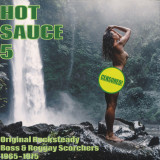
Various - Hot Sauce Vol 5

Here is our Hot Sauce Volume 5 showcasing some seriously groovy and rare Rocksteady,
Boss and Reggay tracks mixed expertly for yet another thrilling early Reggae experience on vinyl.


Here is the much anticipated volume 5 of the HOT SAUCE compilation LPs dedicated to the Trojan related labels between 1965 and 1975.
HOT SAUCE volume 5 features outstanding original Rocksteady, Boss Reggae and early Reggae (“Reggay”) tracks including rare songs, overlooked gems, hidden treasures and a couple of hits. The record labels showcased on this fourth volume are Amalgamated, Bread, Downtown, Duke, Explosion, Grape, Harry J Records , JJ Records, Rio, Splash, Upsetter and Techniques.

The tracks here have been selected according to their musical interest firstly, their rarity, and their complementarity.
These tracks are all outstanding tracks, “killer tracks”, there is no “filler” whatsoever.

Particular attention has been paid to the way the songs are sequenced (or “mixed”) so that the album builds up nicely and gradually, generally starting
with the Rocksteady songs on the A side and the 70s songs on the B side.
The HOT SAUCE series is a musical journey across Trojan and its labels showcasing early Jamaican Reggae’s diverse musical genres and outstanding artists.
Since the early 70s’ “Tighten Up” and “Club Reggae” series, no compilations have really explored these labels in depth on vinyl.
It might be the last volume of the series as we know it so we wanted to make a splash for volume 5.
It is a nod to self-censored lewd Reggae covers from Trojan and Pama in early 70s. So don't fret,
a collectible yellow sticker has been strategically applied on the shrink-wrap to cover Miss Rocksteady's bottom!!
With its striking cover and its thrilling Reggay selection, volume 5 is bound to become another successful album in the Hot Sauce series...

In Stock

Disponibile in Stock e pronto per la spedizione

29,62
ARTIFACTS - BETWEEN A ROCK AND A HARD PLACE LP 2x12"

Between A Rock And A Hard Place is the debut studio album by American hip hop duo Artifact, originally released in 1994. The recording sessions took place at Soundtrack Studios in New York, except for the song ""Cummin' Thru Ya Fuckin' Block"", which was recorded at Chung King Studios. The album was produced by T-Ray, Buckwild, Drew and Redman, with co-producers Rockwilder and Artifacts. It features guest appearances from Jay Burns Jaya, Redman and Busta Rhymes. The album debuted at number 137 on the Billboard 200, number 17 on the Top R&B/Hip-Hop Albums and number 2 on the Heatseekers Albums charts in the United States. It was supported with three singles: ""Wrong Side of da Tracks"", ""C'mon wit da Git Down"" and ""Dynamite Soul"". Between A Rock And A Hard Place is available as a limited edition of 1500 individually numbered copies on gold coloured vinyl and includes an insert.

In Stock

Disponibile in Stock e pronto per la spedizione

42,82
Phase Fatale - Scanning Backwards LP 2x12"

Scanning Backwards, Phase Fatale’s second full-length album originally released on Berghain’s in-house label Ostgut Ton in 2020 is now reissued via his label BITE on limited edition pink marble vinyl after being long sold out and sought after. Using the connection between weaponized sound and psychological manipulation as a conceptual foundation, Hayden Payne explores the ways in which music – and sub frequencies in particular – are used to influence thinking and to synchronize emotions and behavior: from military technology to sound systems and the physicality and sexuality of queer techno culture.

Known for his innovative post-punk takes of dance music as featured on EPs for unterton and Ostgut Ton, the Berghain resident draws on his background as both a guitarist and sound engineer to create a heady mix of broken rhythms, noise-, and shoegaze-inflected techno, often at slower tempos. The result is music with space and pace to expand, highlighting the intense rushes of frequencies found in both sonic warfare and functional dance music. Over eight tracks named after a combination of historical and fictional narratives from literature and science fiction, Payne’s rhythmic excursions explore different manifestations of sound as power – specifically within the context of seeing Berghain as an instrument itself. This is also reflected in the album artwork, taken from an early flyer for the SNAX party series and an obvious ode to the fetishization of power dynamics.

In his own words: “All tracks on the album, no matter the style, were tailored to sound a certain way in Berghain – something I figured out through years of dancing in the middle of the floor, DJing as a resident and investigating what frequencies really penetrate the body. This includes speech and high-frequency, brain-penetrating instrumentation and drilling textures that I had not utilized so often before, but which I think also have an effect on thought and memory. It’s especially true in a space where gay and fetish roots combine with music in unexpected ways, almost in a cultish manner. A musical and physical deprogramming and reprogramming, psychic driving and de-patterning, the erasing and replacing of memories.”

Ultimately, Scanning Backwards surveys not only the manipulative properties of electronic music (mantras, loops, subliminal messages) but also how rhythm facilitates both moving and thinking in synchrony; a pulse of coordinated sound- and brainwaves.

In Stock

Disponibile in Stock e pronto per la spedizione

27,69
john lee hooker - sensation documenting the sensation recordings 1948-52

• John Lee Hooker is not an artist who plays by the rules that govern what we generally accept as “traditional” blues music—he very rarely plays in 12-bar format when he performs his songs. On his most popular tune, ‘Boogie Chillen’, his lyrical and musical phrases last anywhere as short as nine or ten, or maybe fifteen or even nineteen measures long, depending on how long he wants to “boogie” on his guitar riffs that roll and tumble between his patented vocal phrases.

In Stock

Disponibile in Stock e pronto per la spedizione

26,85
Articoli per pagina:
N/ABPM
Vinyl