Suche:white label

Styles
Alle
Awdha - Uno

Awdha

Uno

12inchARTSW001
ARTS
27.04.2018

Knowledge is a tool, and like all tools, its impact is in the hands of the user. ARTS WHITE was born to give a platform for every single player in the game that has high-level tool skills in Techno, the focus is primarily dedicated to useful and chirurgical direct functional material.

All on White label style, Black and White 12".

Auf Lager

Bei uns am Lager und sofort versandfertig

8,36
Phonique - Green Supreme

Green Vinyl

On his own Ladies and Gentlemen imprint, Green Supreme is the fourth studio album from house music veteran Phonique: a collection of 11 remarkable songs from one of the scene's most revered producers. To describe Phonique as prolific would be something of an understatement. To date, he has amassed a discography of more than 500 original tracks and remixes - as well as three previous studio albums - for acclaimed labels such as Dessous, Poker Flat, Crosstown Rebels, Systematic, Souvenir and of course his own label Ladies and Gentlemen, a collection which includes some runaway successes. Despite working on Green Supreme, Phonique's fierce production rate has continued unabated in 2016, with highlights including 'T Groove' on Katermukke and his stunning remix of Frank & Friedrich 'Coming Home' which landed on Universal earlier this year.

Auf Lager

Bei uns am Lager und sofort versandfertig

17,77
Kessell - Chains Of Abstraction Ep Incl. Reeko Remix

We welcome our very own Kessell to Pole Group Recordings, being a pivotal part of the Spanish techno scene with his project Exium with Hector Sandoval, he runs his label Granulart curating the repertoire with the best producers out there. Now is time for his debut as a solo artist with this four tracker, including three original tracks and a Reeko remix.

First cut is Cloned motions, a relentless number made of an obsessive sequence that runs over a percussive sea of sharp elements that grow in space with reverberated washes and a continuous arrangement. A mental exercise.

Chains of abstraction goes more bleepy, with a low filtered start that soon is filled with cosmic sinoidal sequences running all over the track while drums mutate and take turns to add an alien groove to the overal feel.

B side track one is for Reeko, remixing Sensorium, opaque kick drums, subtle sequences and white noise drones combine their movements in a dense exercise that fills every possible frequencies in the sound spectrum.

The original mix of Sensorium is based on bell like fm synth lines, lots of reverb, noise crescendos and an hypnotic groove below to keep things movable.

A precission work from the hands of a veteran expert producer.

Auf Lager

Bei uns am Lager und sofort versandfertig

7,77
Metamethod - Exoshift Ep

A year after his last outing on the label, Metamethod is back with a second EP for Nightime Drama. The man born Simon Haynes is a veteran of the scene who has worked under many different aliases and is now back at the techno frontline, creating the same sort of powerful grooves that made him so essential back in the 90s.
'Exoshift' opens things up with a lurching, low sung beat that rocks back and forth as frazzled synths and rusty frequencies skate about up top. It's body music that really makes a mark while 'Autofac' then slips into more of a forward moving groove with prickly percussion and woodpecker hits all driving along a bleak techno landscape. Last of all, 'SuperLifter' marries bulky, broken sounding drums with celestial pads that glow white amongst the murk and greyness of the rest for he track. It is atmospheric, grainy techno for serious heads only.

Auf Lager

Bei uns am Lager und sofort versandfertig

8,36
Ulf och Andreas - EP 1

Ulf och Andreas

EP 1

12inchKMWL016
Kontra Musik
11.05.2026

Next in the vinyl-only Kontra-Musik White Label series is a new collaboration between founder Ulf Eriksson and the label's most prolific artist, Andreas Tilliander, also known as TM404. The record opens in housier territory and ends with the deepest of dubs. In between, the duo carve out a distinct sonic language through two stripped, old school Detroit techno-inspired cuts, built around rolling basslines, subtle swing and a dense sense of depth.

vorbestellen11.05.2026

erscheint voraussichtlich am 11.05.2026

13,03
MESSIER ONE - WHO DO YOU WORSHIP?

The Messier Objects returns with the second release on their label containing ten new tracks from the new TMO alter ego ‘Messier One.’ The work combines nostalgic IDM, eerie ambient and dreamy dub techno into one mini-album, inspired by the brute forces of nature and the power of healing and regeneration.

Expect to feel the force of nature on the A-side, where tracks such as ‘Earth’s Signal 04’ and ‘The Greatest Ebb Current’ contain distorted and fuzzy pads, eerie and vague echoing vocals, and whitenoise patterns that somehow feel strangely calming. Together with the broken drum patterns on tracks such as ‘Who Do You Worship?’, and the distorted kicks on ‘Kaalo Asmi Loka Kshaya Kritpraviddho’, the A-side manages to create crude IDM and ambient patterns – resembling historic natural events as if you were there yourself.

On the B-side. the noisy and broken patterns from the previous six tracks are replaced with warm and meditative sounds. ‘Two Tides’ is filled with soothing arpeggiated soundscapes and echoing voices, and the organic jungle chants and mythical vocals in ‘Rebuilding Temples’ further continue the process of regeneration. The B-side is accompanied with two remixes from Messier808 (known from the first release), who brings his typical meditative 4x4 patterns to the table, accompanied by dreamy textures, cyclical melodies and illusive effects from a now ‘healed’ society.

This thoughtful release brings a complete story told in only ten chapters. As always, their releases are backed by breathtaking artworks using vibrant and organic colours, completing an intriguing mini-album.

nicht am Lager

Bestelle jetzt und wir bestellen den Artikel für dich beim Lieferanten.

21,81
Architectural - Liminal Dancery

After debuting on Delsin in 2023 as Reeko, Spanish techno icon Juan Rico now steps up as Architectural to present his second EP on the Amsterdam based label. Where Reeko is known for his adventurous, highly energized, broken techno bangers, his approach as Architectural is more fine-drawn. Over the course of four tracks, his tracks build slowly into immersive pulsations, pushing deep frequencies into captivating rhythm grooves layered with mesmerizing atmospheres.

vorbestellen11.05.2026

erscheint voraussichtlich am 11.05.2026

13,24
Various - A Winter Sampler VII (3x12")

All Day I Dream offers a soft and serene close to a snowy season with A Winter Sampler VII, a 12-track compilation out now. Continuing the label’s tradition of seasonal collections, the latest installment gathers a global cast of artists whose productions capture the reflective calm and subtle warmth that arrives as winter begins to thaw.

vorbestellen11.05.2026

erscheint voraussichtlich am 11.05.2026

28,53
MARC FELDMANN & DOMINIK ANDRÉ - WHITE SERIES #4 EP

‘White Series #4’ marks the debut EP of Marc Feldmann and Dominik André as a producer duo. The record opens with ‘Natural Oscillation’
, a hypnotic techno piece where flowing percussion meets subtle trance influences. ‘A Breeze of Mistral’ builds on this energy with layered repetition and a deep pulse that unfolds gradually, drawing the listener further in. On the flip side, Audrey Danza reinterprets Natural Oscillation with a direct, dancefloor-focused approach. She sharpens the groove, raises the tempo, and pushes the track forward with her signature, driving drums and a tightly locked kick, transforming the original’s hypnotic flow into a no-frills cut. The EP slows the pace with ‘Discernible Rhythms’, a reflective, 80s-influenced synth chugger that adds warmth and restraint to the record. Released as a hand-stamped white label on Subject To Restrictions Discs, White Series #4 reflects and continues the label’s contribution to the more understated forms of electronic club music.

nicht am Lager

Bestelle jetzt und wir bestellen den Artikel für dich beim Lieferanten.

10,80

Last In: vor 7 Tagen
Massiel, Nicolas Barnes - Echoform LP

Massiel, Nicolas Barnes

Echoform LP

12inchDA007
Devilish Affair
06.05.2026out soon

Rooted in dubwise textures, subtle groove architecture, and warm analog sensibilities, this record unfolds with elegance, restraint, and a strong sense of atmosphere. With Echoform, the label once again underlines its refined aesthetic and deep understanding of timeless underground music.

vorbestellen

Der Artikel ist noch nicht erschienen. Du kannst den Artikel jetzt vorbestellen, dieser ist nach Wareneingang für dich versandbereit.

11,72
Jolanda Moletta - Oceanine

Jolanda Moletta

Oceanine

12inchBNSD098
Beacon Sound
01.05.2026

Oceanine, Jolanda Moletta’s third album and her first for Beacon Sound, is a powerful and ethereal statement of artistic community. Expanding on her previous work, each track represents a collaboration with a different female vocalist, with the foundational elements being generated entirely by her own voice. By turns haunting, enchanting, and inspiring, you won’t want to come up for air once you’ve been pulled under. Representing a
musical practice that is distinctly feminist, this is an album with a longer view in mind, to an age when the altars were to goddesses and women were centered as powerful beings representing the earth’s cycles of regeneration and renewal. Oceanine then, in all its beauty, can be viewed as an album of survival. It is deeply transportive, accessing something that lies within all of us. As the late, great Lithuanian folklorist and archaeologist Marija Gimbutas noted, “We must refocus our collective memory. The necessity for this has never been greater as we discover that the path of 'progress' is extinguishing the very conditions for life on earth.”

Jolanda Moletta is a multimedia artist and one-woman electronic choir. She creates wordless compositions through extended vocal techniques, integrating wearable-controlled live processing, alongside symbolic visuals. Moletta considers her performances to be a collective ritual and creates her Sonic & Visual Spells following the cycles of nature and the moon. Jolanda's 2022 critically acclaimed album Nine Spells was released on the Ambientologist label, followed by Night Caves on Whitelabrecs in 2025. Moletta’s artistic practice is a radical and spiritual journey through sound art, ritual, and the symbolic archaeology of the feminine.

Oceanine is inspired by sirens, water nymphs, and the timeless call of the sea. At its core lies Jolanda’s deep, lifelong connection to the Mediterranean Sea and to the ancient and modern myths and folklore that have emerged from its waters. Growing up by the Mar Ligure, Jolanda was surrounded by stories carried by salt, wind, and waves: legends of sirens, echoes of ancient voices, and the sea as both origin and oracle. This intimate relationship with the Mediterranean is not merely a backdrop, but a living source that shapes Oceanine’s emotional, symbolic, and sonic world.

Each track features a different female vocalist, creating a rich tapestry of voices, styles, and perspectives. This artistic choice not only broadens the album’s sonic palette, but also deepens its narrative core: celebrating the power, beauty, and mystique of feminine energy through myth, history, and sound.

The entire album is built exclusively from the human voice, processed and layered, yet always remaining voice, and nothing else. For each piece, Jolanda invited every vocalist involved to contribute a raw stem: a short, unedited melodic fragment of just a few seconds, inspired by the album’s themes. These intimate vocal seeds became the foundation of each track: the guest artists’ voices appear as brief, melodic stems, while the entire surrounding “orchestral” fabric is created solely from Jolanda’s own layered and processed voice. In this way, Jolanda’s voice becomes the Ocean itself, embracing, absorbing, and carrying the sirens’ calls within a vast, immersive soundscape. Every song is a unique expression of the feminine experience, revealing its depth, complexity, and emotional range, echoing the call of the sea and the many faces of the siren archetype.

The figure of the siren has transformed across centuries. In myths of Ancient Greece and Rome, sirens were hybrid beings, part woman, part bird, whose irresistible songs lured sailors to their doom. During the Middle Ages, the image shifted toward the half-woman, half-fish figure, often associated with temptation and danger. Historically, the voice of women has often been feared. Sirens were considered harbingers of misfortune not simply because they seduced or destroyed, but because they were powerful liminal beings.

In Ancient Greek, sirens functioned as psychopomps: figures who existed between worlds and guided souls, especially between life and death. Their songs were believed to carry forbidden knowledge, including prophetic insight and the ability to reveal truths about fate and the future. The danger of the sirens lay in what they revealed: knowledge that humans were not meant, or ready, to hear.

Oceanine confronts this legacy head-on. The voices heard throughout the album are not merely beautiful: they are dark and luminous, wild and enchanting, magical, soothing, dreamy, and at times fractured or distorted. They whisper, lament, beckon, and enchant. Like sirens, they skim the surface of the water and sink into its depths, hovering on the edge between tenderness and danger, vulnerability and power. They rise toward the sky, dissolve into mist, and return as echoes charged with raw, elemental emotion: voices that seduce, warn, mourn, and remember. They refuse to be reduced to decoration.

Alongside the album’s release in May, Oceanine will also unfold as a visual and performative work through a short art film. The film includes a live session recorded inside a sea cave facing the Mar Ligure, the very coastline where Jolanda spent her childhood, dreaming of sirens and listening to the sea as if it were speaking directly to her. This site-specific performance reconnects the music to its place of origin, allowing the voice to resonate within stone, water, and air, and transforming the cave into both a sanctuary and a threshold between myth and reality.

What if the sirens’ songs were considered dangerous because they carried another truth, an ancient truth long forgotten?

Oceanine embraces the idea that we are still deeply woven into myth. Though we may see ourselves as rational and modern beings, our world is saturated with ancient symbols and archetypes, often distorted, simplified, or stripped of their original meaning. And if those symbols are allowed to shift, if the mirror once held by the siren becomes an invitation to look beyond appearances and into what has been obscured, then we may finally uncover a deeper truth and reclaim the voice that was always ours.

Oceanine is not just an album. It is a reclamation, a spell, and a call from the depths.

vorbestellen01.05.2026

erscheint voraussichtlich am 01.05.2026

23,95
Candi Staton - When You Wake Up Tomorrow

When Henry Street & Sacred Rhythm Music join forces for a remix outing, it should be obvious the source material and resulting productions are of the utmost caliber. This record proves such a case in point: Johnny "D" DeMairo & Joe Claussell team up for two takes on Candi Staton’s 1979 disco opus 'When You Wake Up Tomorrow.’ The original, whose pedigree could be inferred simply by reading Patrick Adams’ and Jimmy Simpson’s names on the label, is a faultless dance floor cut featuring all the elements you’d expect—lavish horn and string arrangements, sparkling synthesizer accents, and plenty of hand-beat drumming—along with with Staton’s peerless voice. Johnny D’s mix starts carefully, the vocal refrain accented with auxiliary percussion until the rug is pulled out from under us, the ensuing chasm making the following thrust of the track that much more powerful. On the flip.

Claussell’s take starts with reinforced four-on-the-floor, along with a studio count-in, perhaps alluding back to his previous ‘It Seems To Hang On’ edit. As the track establishes itself, ample room is afforded for interplay between bass and guitar, with all the interlacing elements aggrandizing the mood with careful shots of delay and expertly-timed pivots in atmosphere. Both sides are proof of what shouldn’t need evidence: two masters of their craft assembling two wholly new mixes that far surpass the banal copy and paste, add and subtract methodology slung by the less blessed. Pressed on white vinyl, with a custom jacket to boot.

nicht am Lager

Bestelle jetzt und wir bestellen den Artikel für dich beim Lieferanten.

28,78

Last In: vor 12 Tagen
The Zombies - Begin Here (Mono Remastered) (LP)

long content, you may need to expand row to see all... Begin Here features fan favorites “She’s Not There, “Summertime,” and “The Way I Feel Inside,” plus three US bonus tracks including “Tell Her No.”

This definitive new edition combines all 17 tracks from the UK and US versions of The Zombies’ 1965 debut album, remastered in its original mono mix. Begin Here (Mono Remastered) is the next chapter in the series of Zombies reissues via the band’s own label Beechwood Park Records, with the same team as Odessey and Oracle - again being overseen by Matthew and Jamie White, mastering by Reuben Cohen at Lurssen Mastering, and brand-new liner notes by the legendary David Fricke. The album will be housed in a single pocket jacket with poly-lined sleeves and an insert.

vorbestellen24.04.2026

erscheint voraussichtlich am 24.04.2026

23,49
Onna - Onna Last Live 1983 LP 2x12"

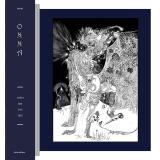
Onna Last Live 1983 includes the final performance by the original line-up of Onna, the psych-rock project of revered Japanese manga artist, Keizo Miyanishi. Onna’s legend has largely rested, until now, on one self-released and self-titled seven-inch from 1983. Reissued by Holy Mountain in 2009, its rediscovery, along with several archival live and studio sets that leaked out across the 2000s, signalled to a wider audience the power of Miyanishi’s strikingly hypnotic songwriting. With Onna Last Live 1983, though, we hear the group’s perfect line-up performing at its peak.

While Miyanishi was the core member and conceptualist of Onna, the other members of the group would also go on to make significant contributions to the Japanese underground. Guitarist Michio Kurihara would eventually be known for his membership of YBO2, Ghost and White Heaven, and collaborations with the likes of Boris and Damon & Naomi. Drummer Ken Matsutani formed Marble Sheep & The Run-Down Sun’s Children and The Mickey Guitar Band, while also running the Captain Trip label. Joined by the late bass player Yasui Yutaka, to whom the album is dedicated, this quartet only performed live in 1983; the live set here was recorded at Silver Elephant.

It’s a different line-up to the Onna duo that’s documented on their single. After Miyanishi and fellow manga artist Mafuyu Hiroki recorded that material, Miyanishi decided he wanted to start playing gigs; Hiroki left, and Kurihara, Matsutani and Yutaka joined soon after. This line-up allowed Miyanishi to significantly expand Onna’s powers, leading to a sound that Kurihara once described to Ptolemaic Terrascope magazine as “repetitive and heavy, yet quite orthodox.”

The songs here are simple yet deeply effective in their repetitive power, generally revolving around two or three simply strummed chords for guitar. Bass and drums repeatedly lock into mantra-like grooves as Kurihara’s guitar scales the walls, with Miyanishi’s consumptive moans and sighs sent torquing through FX. The cumulative effect of the seven songs here is very heavy indeed; if the prologue “Always…” drifts beautifully through five minutes of placid, beseeching melancholy, the epilogue, “Never Seen A Light Like This”, spirals out into sixteen minutes of glazed-over psych-rock, completely monomaniacal and thrilling in its slow-motion tumult.

Throughout, you can hear Miyanishi and co. reaching for something ineffable, something beyond and between the notes. It’s a phenomenal performance; it’s also no surprise that the group disintegrated after this show, given its intensity. Matsutani and Yutaka left after the Silver Elephant show, with Miyanishi and Kurihara continuing through the first half of 1984 firstly as a duo, and then a trio with new drummer Yoshiki Ueonyama. Kurihara left soon after. But Onna Last Live 1983 is proof plenty of the powers of the original Onna quartet, sending their Rallizes/Velvets dream-mantras off into darkened, stormy skies.

vorbestellen24.04.2026

erscheint voraussichtlich am 24.04.2026

50,00
Various - Tchic Tchic: French Bossa Nova 1963-1974  Colored Edition LP 2x12"
  • A1: Les Masques - Il Faut Tenir (1969)
  • A2: Isabelle Aubret - Casa Forte (1971)
  • A3: Christianne Legrand - Hlm Et Ciné Roman (1972)
  • A4: Jean Constantin - Pas Tant D'chichi Ponpon (1972)
  • A5: Billy Nencioli & Baden Powell - Si Rien Ne Va (1969)
  • B1-: Marpessa Dawn - Le Petit Cuica (1963)
  • B2: Jean-Pierre Sabar - Vai Vai (1974)
  • B3: Sophia Loren - De Jour En Jour (1963)
  • B4: Isabelle - Jusqu’à La Tombée Du Jour (1969)
  • B5: Sylvia Fels - Corto Maltesse (1974)
  • C1: Frank Gérard - Comme Une Samba (1972)
  • C2: Ann Sorel - La Poupée Des Favellas (1971)
  • C3: Charles Level - Un Enfant Café Au Lait (1971)
  • C4: Andrea Parisy - Les Mains Qui Font Du Bien (1970)
  • C5: Audrey Arno - Quand Jean-Paul Rentrera (1969)
  • C6: Aldo Frank - T’as Vu Ce Printemps (1970)
  • D1: Christianne Legrand - Cent Mille Poissons Dans Ton Filet (1972)
  • D2: Clarinha - Lemenja (1970)
  • D3: Hit Parade Des Enfants - Aquarela (1976)
  • D4: Jean-Pierre Lang - Tendresse (1965)
  • D5: Magalie Noël - Une Énorme Samba (1970)
  • D6: Françoise Legrand - La Lune

Ever since the late 1950s bossa-nova revolution, Brazil’s influence on French music has been undeniable. Pierre Barouh, Georges Moustaki and a vast array of lesser known artists, all made the Musica Popular Brasileira (MPB) an axis of promotion at the service of a cool and metaphysical, modern and mixed Brazilian lifestyle. Some were seduced by the poetic languors of the bossa, some were looking for fun, and others just loved the American hybridization of jazz-bossa, jazz-samba.


What is bossa nova? One of its creators, Joao Gilberto said: "Its style, cadence, everything is samba. At the very start, we didn't call it bossa nova, we sang a little samba made up of a single note - Samba de uma nota so .... The discussion around the origins of bossa nova is therefore useless”. It is nevertheless useful to remember that these magnificent Brazilian songs, which the guitarist describes as samba, were shifted and balanced around improbable chords. "I like things that lean, the in-betweens that limp with grace," said Pierre Barrouh, quoting Jean Cocteau.


With emotion, arrangements for violin and supple guitar licks, bossa nova rapidly changed. A transformation that can be heard in the Tchic, tchic, French Bossa Nova 1963-1974 compilation, the result of a cultural reappropriation, which traveled through the United States and supplemented itself in France.

A musical revolution that has remained significant, bossa nova was born in Rio. From 1956 to 1961, Brazil lived through its golden years. In five years, the country had invented its modernist style. Elected president in 1956, Juscelino Kubitschek de Oliveira, an elegant man with a broad forehead, brandished a promising slogan: "Fifty years of progress in five years". He quickly got to work. Not worried about increasing debt, he launched the project for a new federal capital, Brasilia, designed by the communist architect Oscar Niemeyer. Volkswagen opened state-of-the-art factories and created the “fusquinha”, the Beetle. In Rio, the Vespa made its first appearance. The Arpoador Surf Club crew run into the “girl” from Ipanema, Helô Pinheiro - the tanned garota ("chick"), between a flower and mermaid, who at 17 walked by the Veloso bar, where the fiery author and composer, Tom Jobim and Vinicius de Moraes, were getting drunk on whiskey. From then on, bossa symbolized cool.

In 1958, Joao Gilberto recorded Chega de Saudade, which the directors of Philips denied, calling it "music for fagots". The marketing director, who believed in it, secretly pressed 3000 78-inch vinyls and distributed them at schools around Rio, creating a tidal wave.

American jazzmen then took over. In particular, trumpeter Dizzy Gillespie and guitarist Charlie Byrd. In November 1962, the Brazilian Ministry of Foreign Affairs funded a "Bossa-Nova" concert at Carnegie Hall in New York, inviting the genre’s pioneers. Unprepared, the show soon turned to disaster. But the troupe was invited to the White House by Jackie Kennedy. The first lady loved "the new beat" and in particular Maria Ninguem, a song by Carlos Lyra, later covered by Brigitte Bardot.

In Brazil, the 1964 military coup quickly ended this euphoria. The destructive atmosphere that ensued pushed many Brazilian musicians to leave, if not to exile. Thus, Tom Jobim, Sergio Mendes and Joao Gilberto arrived to the United States. In New York, Joao Gilberto met saxophonist Stan Getz. At the time, he was married to the Bahianese Astrud Weinert Gilberto, who had a German father. She had never sung before, but she knew how to speak English. Getz therefore asked her to replace her husband on The Girl From Ipanema. The Getz/Gilberto record with Tom Jobim on piano, was released in March 1964. Phil Ramone, the "pope of pop" was in charge of sound.

Bossa nova arrived in Paris through the classic “guitar-voice” channel (Pierre Barouh, Baden Powell, Moustaki…) But France loved jazz and Paris had already welcomed its American contributors. All these good people were to pass through Saint-Germain-des-Prés. The cabaret l'Escale became the Mecca of Latin American sound where one could find Pierre Barrouh and his friends, such as the Camara Trio, samba-jazz aces, whose only record was published by the Saravah label. With a band strangely called Les Masques (a band that included Nicole Croisille and Pierre Vassiliu, among others), the Camara Trio recorded an interesting Brazilian Sound, including the track Il faut tenir which is present on this tasty compilation of rarities.

Other enlightened musicians can also be found on the compilation, such as Jean-Pierre Sabar (songwriter for Hardy, Auffray, Leforestier ...) and the French pop rock organist Balthazar. In 1975, Sabar recorded Aurinkoinen Musiikkimatka on a Finnish label, which featured the crazy Vai, Vai, included on this record. We are now following the footsteps of Brazilian electronic musicians such as Sergio Mendes, Eumir Deodato or Marcos Valle who created funk and disco sounds on their keyboards and synthesizers. A style that influenced Véronique Sanson when she wrote Jusqu’à la Tombée de la nuit in 1969 for Isabelle de Funès, the niece of Louis and a great friend of Michel Berger - Sanson did end up singing this track on her 1992 Sans Regret record.


The pinnacle of exoticism and travel, Sylvia Fels’ Corto Maltese includes bongos, sea mist and ocean sounds. The title was taken from Jacky Chalard’s concept album written in 1974, Je suis vivant, mais j’ai peur (I am alive, but I am scared), based on Gilbert Deflez’s science fiction novel.


However, bossa nova extended the scope of popularity. "In the 1970s, I was a fan of Sergio Mendes, Getz / Gilberto. I fell in love with this music that I knew because I had been an orchestral singer, " explained Isabelle Aubret, who in 1971 delivered a composite record of covers by the very funky Jorge Ben, Orfeu Negro, Tom Jobim, Vinicius de Morais and Jean Ferrat. "I recorded this album for Meys Records in Paris, far from Brazil, with wonderful musicians, François Raubert, Roland Vincent, Alain Goraguer...". The latter wrote the arrangements for Casa Forte, a very percussive title borrowed from Edu Lobo, one of the initiators of the bossa who spent time in California. "Jazz and bossa came together and produced very rhythmic music. I love singing, it allows me to dream, to have fun, to feel a high on stage, and these songs brought me joy, made me swing, my singing felt like a dance.”


The world tours of French singers and their desire for the tropics, often brought them to Rio with its hills, forests, caipirinhas and tanned bodies. There are surprises though, like this Iemenja (Iemenja is the goddess of the sea in the Afro-Brazilian candomblé religion). Not unlike the composer and musician Jean-Pierre Lang, based in Sao Paulo, Claire Chevalier taught Brazil to Brazil. In 1970, the singer and painter published a 45-inch vinyl, Mon mari et mes amants (My husband and my lovers), under the improbable pseudonym of Clarinha (little Claire). She was then living in Rio, with her husband, Joël Leibovitz, who founded a band called Azimuth, and who owned a record label specialized in "sambas enredos" songs for samba school parades.


For its B side, she asked Pierre Perret to come up with lyrics for a song composed by Carlos Imperial: "Oh goddess of the sea, o goddess Iemenja, I bring a white rose to adorn your long hair ..." . "Perret came to see us, and we had fun, remembers Joël Leibovitz. We wrote Lemenja for fun, we recorded it at the Havaí studio, behind the Central do Brasil the central station. Erlon Chaves, the arranger who worked with Elis Regina, joined us" adding his share of Afro-Brazilian percussions and funky brass to the mix.

There is a common misunderstanding in Franco-Brazilian history: that bossa, admittedly hedonistic, is perceived as funny, even though the poets who wrote the texts are often philosophizing on the human condition. Its French interpreters pull it towards a carnival inspired universe, far removed from its fundamental essence. Thus, Jean Constantin covered the famous Samba da minha terra, an ode to the art of samba written by the classic Bahian composer Dorival Caymmi, renaming it with the enticing title of Pas tant de tchi tchi pompon: "On your pier there is no tchi tchi / when you arch your back, you know everything is alright ”(lyrics by Gérard Calvi). This expedited bossa aims for the absurd, but retains a certain elegance.

Indeed, Jean Constantin was not an idiot, the rather large man had a huge mustache and liked fantasy, (Les pantoufles à papa, Le pacha, inspired by cha-cha-cha-cha, salsa and jazz) but he was also the lyricist of Mon manège à moi interpreted by Edith Piaf, the composer of Mon Truc en plume by Zizi Jeanmaire and the soundtrack of François Truffaut’s 400 Blows. Le Poulpe, published in 1970, from which this bossa is extract, was arranged by Jean-Claude Vannier, an accomplice of Serge Gainsbourg’s Melody Nelson. In short: "There is enough of samba / By looking at the parasol / Because my poor cabeza / Is going to die in the sun".

Even the American actress Marpessa Down, who was at the heart of the bossa nova revolution with her role as Euridyce in Marcel Camus’ film Orfeu Negro, winner of the 1959 Cannes Palme d'or, fed the clichée with Je voudrais parler au petit cuica - "Tell me how you manage to always make people want to dance / It's true, I must admit that I cannot resist your magic" - in consequence, once can hear the cuica, a little drum inherited from the Bantu.


But bossa nova had many angles. Societal, of course, pushing actresses who were symbols of women's liberation like Brigitte Bardot, Jeanne Moreau, or Sophia Loren to engage in the exercise of accelerated bossa. In February of 1963, Sophia Loren made a record in French in Rome, Je ne t'aime plus, featuring the song De jour en jour, a bossa written by two Italians, Armando Trovajoli and Tino Fornai, which was released a little later by Barclay. Bossa accompanied the 1960s, a decade of moral liberation. Ann Sorel, who interpreted La Poupée des favellas, caused a sensation with L’amour à plusieurs, a provocative song written by Frédéric Bottom and Jean-Claude Vannier. As for the actress Andrea Parisy, she displayed her bourgeois cheekiness in Marcel Carné's Les Tricheurs before interpreting Les mains qui font du bien. And Magalie Noël, the friend of Boris Vian, who sung Johnny fais-moi mal, was hired to sing Une énorme Samba, composed by Alain Goraguer (arranger to Gainsbourg, Bobby Lapointe and Jean Ferrat) with lyrics by Frédéric Botton.

But in the end, of what wood is bossa nova made of? The answer is given by Christianne Legrand, daughter of Raymond the conductor, and sister to Michel the composer: "With me, with jà" - jà means "immediately" in Portuguese. In 1972, the singer, an expert in vocal jazz and a member of the Double Six, published Le Brésil de Christianne Legrand. Two songs included on the Tchic Tchic compilation that demonstrate how bossa, jazz, funk, rock, etc. work like a swiss army knife: the music is used to denounce broken systems, or miracles, HLM et ciné roman, Cent mille poissons dans ton filet, two songs from the O Cafona soundtrack, a successful telenovela broadcast, at the time in black and white, on TV Globo. The first was adapted in French by the fighter and friend of the Legrand tribe, Agnès Varda. The second is content with a play on words, jostling them into a summer fun.


Véronique Mortaigne

vorbestellen17.04.2026

erscheint voraussichtlich am 17.04.2026

27,31
Various - The Gaiety Records Story Volume 1 LP
  • Checkerlads - Baby Send For Me
  • Checkerlads - You Just Can't Hide
  • White Knights - Love That's True
  • White Knights - Promise Her Love
  • Tomorrow's Keepsake - High And Mighty
  • Plague - Face Of Time
  • Plague - High Flyin' Bird
  • Lexington Avenue - Bird Collector
  • Lexington Avenue - Sound The Alarm
  • Nrg - Take Me Back Home
  • Solid Reputation - Brown Eyed Girl

Formed by Don Grashey and Lloyd Palmer in Winnipeg, Manitoba, Gaiety Records was an outlet for many relatively obscure but excellent Canadian garage and rock bands during its existence. They released their own singles as well as sub-licensing material to other labels, such as RCA (49th Parallel), Columbia (Jarvis Street Revue and Souls of Inspyration), Decca, Epic, Musicor, and others. Features the Checkerlads , White Knights , Tomorrow's Keepsake, Lexington Avenue, NRG , Solid Reputation, and the Plague , including their face melter, 'Face of Time' and the essential psych classic 'High Flyin' Bird'.

vorbestellen17.04.2026

erscheint voraussichtlich am 17.04.2026

33,82
Fruit & Veg - Vol. 2

Fruit & Veg

Vol. 2

12inchVFS056RP
Vinyl Fanatiks
14.04.2026

2026 Black Vinyl Repress

We are extremely excited to share with you this wonderful piece of old skool hardcore. Created in Bristol in 1993 and released on a limited white label back then, this record has become a holy grail over the past 30 years. Very rare, very sought after and 100% original West Country vibes.

Written by Rich Williams, who emigrated to LA many years ago and James Towler – producer for John Lydon these days! These guys were on some next level vibes when they wrote this ultimate slice of darkcore rave!

Pressed by the mighty Phil ‘The Vinylman’ East on 180g heavyweight vinyl. This release is a bespoke product as no one record is the same. Designed to look like the planet Jupiter and part of a 4 vinyl Cosmik series.

Is it dark enough???

nicht am Lager

Bestelle jetzt und wir bestellen den Artikel für dich beim Lieferanten.

15,92

Last In: vor 6 Tagen
ANNIE & THE CALDWELLS - WRONG / I MADE IT REMIXES

The history of house and disco music is full of gospel soul singers creating anthemic bangers for the dance floor. Annie and the Caldwells, a family band from West Point, Mississippi, are the latest to join their ranks.

============================

This collection — featuring remixes from musclecars, Kornél Kovács, Alexis Taylor (of Hot Chip), and disco icons Nicky Siano and Justin Strauss — follows the release of the Caldwells’ wildly acclaimed debut Can’t Lose My (Soul) Luaka Bop, Spring 2025. Hailed as “a masterpiece” by The Guardian (★★★★★), and one of the best albums of the year by The Times, MOJO, UNCUT, and The Economist, Can’t Lose My (Soul) found fans all over the world — like Sir Elton John, who called their album “A great, great record that I insist you go out and buy.”

“I was blown away when I first heard the original version of ‘Wrong’,” says Kornel Kovács, whose remix of “Wrong” appears on this white label. “Deborah’s voice floored me, as well as the background singers. One of the greatest vocal performances I’ve heard, let alone worked with. The result is a club-ready take that’s become a highlight in my recent DJ sets.”

Producers Brandon Weems and Craig Handfield (of musclecars) had a similar experience when they heard the family for the first time: “We quickly fell in love with the groovy bassline and the choir vocals,” said Craig. “We thought it’d be fitting to put our own spin on it, while paying homage to those jive brothers from Tulsa. The uplifting keys paired with the punch of the drums, rounded out with that organ…this one is sure to bring a joyful noise!”

Annie Caldwell and her family have since performed in more than twenty countries on four continents, and recently made a star turn on the UK's preeminent music program Later... with Jools Holland. They’re hitting the road again in 2026. Watch this space.


[c] Wrong [You Dropped a Bomb] - Extended Wooden Dance Floor Mix (A Nicky Siano Production) 6:48

nicht am Lager

Bestelle jetzt und wir bestellen den Artikel für dich beim Lieferanten.

16,77

Last In: vor 24 Tagen
Artikel pro Seite:
N/ABPM
Vinyl