Поиск:whitney k
Все
- A1: Little Drummer Boy
- A2: Have Yourself A Merry Little Christmas
- A3: My Favorite Things
- A4: This Christmas
- B1: The Christmas Song (Chestnuts Roasting On An Open Fire)
- B2: Rudolph The Red-Nosed Reindeer
- B3: When You Wish Upon A Star
- B4: Mary Did You Know
- C1: Do You Hear What I Hear?
- C2: Petit Papa Noel
- C3: The First Noel
- C4: Noche De Paz (Silent Night) (Silent Night)
- D1: Winter Wonderland
- D2: Silent Night
- D3: Oh Holy Night
- D4: Do You Hear What I Hear?
Vor zehn Jahren erschien das soulig-stimmungsvolle Weihnachtsalbum von Mary J. Blige, das mit Klassikern wie “Rudolph The Red-Nosed Reindeer”, “Winter Wonderland” und “Silent Night” inzwischen ein echter Christmas-Klassiker geworden ist. Zum 10 jährigen Jubiläum erscheint es jetzt erstmals auch auf Vinyl mit zwei bisher unveröffentlichten Bonustracks (”O Holy Night” & ”Do You Hear What I Hear? (Solo Version)”.
Die neu erscheinende CD enthält ebenfalls beide Bonustracks. Produziert wurde ”A Mary Christmas” von Mastermind David Foster, der in den letzten Jahrzehnten bereits Stars wie Celine Dion, Whitney Houson, Michael Bublé und viele andere mit einem unnachahmlichen Albumsound versorgte und enthält neben Mary J. Bliges wundervoller Stimme Kollaborationen mit Stars wie Barbra Streisand, Chris Botti, The Clark Sisters, Jesse J and Marc Anthony.
- A1: High Energy (Extended Version)-Evelyn Thomas-1984-7.51
- A2: In The Evening (Original 12" Version)-Sheryl Lee Ralph-1984-6.16
- A3: Another Night (Dance Mix)-Aretha Franklin-1985-6.40
- B1: Body Rock (Dance Mix)-Maria Vidal-1984-6.30
- B2: Tell It To My Heart (Club Mix)-Taylor Dayne-1987-6.46
- B3: Love Will Save The Day (Extended Remix)-Whitney Houston-1988-7.59
- C1: Passion (Full Length Album Version)-The Flirts-1982-5.04
- C2: So Many Men So Little Time (Extended Version)-Miquel Brown-1983-8.14
- C3: Can't Take My Eyes Off You (12” Version)-Boys Town Gang-1981-9.31
- D1: The Male Stripper (Original Extended U.s. Remix)-Man 2 Man Meet Man Parrish-1987-7.51
- D2: Love Reaction (12" Version)-Divine-1983-5.34
- D3: Rocket To Your Heart (Remix)-Lisa-1983-9.35
- E1: Why? (12” Version)-Bronski Beat-1984-7.48
- E2: You Spin Me Round (Like A Record) (Murder Mix)-Dead Or Alive-1984-8.01
- E3: Theme From S ‘Express (12" Version)-S ‘Express-1988-5.58
- F1: No G.d.m. (Dedicated To Quentin Crisp) (12" Version)-Gina X Performance-1981-5.55
- F2: Relax (New York Mix)-Frankie Goes To Hollywood-1983-7.26
- F3: Don't Drop Bombs (Extended Remix)- Liza Minnelli-1989-5.57
- G1: Oh L'amour (The Extra Beat Boys 12” Mix) -Dollar-1987-6.53
- G2: Fascinated (Club Mix)-Company B-1986-7.33
- G3: Love In The First Degree (Jailers Mix)-Bananarama-1987-6.02
- H1: You Came (The Shep Pettibone Mix)-Kim Wilde-1988-7.36
- H2: Call Me (Viva Mix)- Spagna-1987-5.40
- H3: In Private (12” Version)-Dusty Springfield-1989-7.16
Box 2[78,19 €]
The influence that 80s gay nightlife had on electronic music, pop music in general and the evolution of clubbing for
subsequent generations is pretty much incalculable. In spite of the shadow of AIDs and reactionary political and media
forces both at home and in the USA, the period 1980 – 1990 bore witness to a dazzling explosion of dance music that
artfully drew a line from the peak of late-70s disco to the emergence of house and its 90s glory days. The art of the
12” single, the thrill of the remix, the rise of the superclub, the electronic spark of chart pop, the challenging of gender
barriers… all had their origin in the gay clubs. It’s not unreasonable to make the claim that by the end of the 80s,
virtually ALL chart pop music sounded like it had its origins on the dancefloors of Heaven nightclub!
Over 4LPs and 24 tracks, ‘Box Of Sin’ strives to tell the story of that decade, and to tease apart the strands of 80s gay
clubbing to show a period of unrivalled creativity and disco diversity. Via the box’s themed discs it shows how highenergy became house, how gender-bending synth bands took over the pop charts, how pop stars the whole world
over found a route to fame via the gay clubs, and how the era’s biggest producers aimed their masterworks purely at
the dancefloor. High energy, deep house, Eurobeat, synthpop, divas, acid house… all combine to paint a picture of a
rich and vibrant lifestyle. Along the way, ‘Box Of Sin’ unearths some overlooked gems rarely compiled today:
meanwhile some of the decade’s biggest names in club music gather to get into the picture – from Whitney Houston
to Dead Or Alive, Bananarama to Bronski Beat, Aretha Franklin to Inner City.
Based on the actual club charts at the time and with a stunning design package inspired by the small ads section of
80s gay press, ‘ Box Of Sin’ comes fully annotated and with an introduction by renowned gay author Paul Burston.
Throughout, it’s illustrated with photography documenting 80s gay clubbers in action, provided for Demon by The
Bishopsgate Institute, the UK’s LGBTQ+ archive. The project also resurrects the much-loved brand ‘Disco Discharge’, a
recognisable hallmark of quality among collectors and aficionados of club music heritage.
Das neue Album, welches auf das 2018 erschienene Debüt "Embody" des dänischen Liedermachers folgt, wurde erneut in Sebbersund in der Nähe von Ross' Elternhaus mit John Wood aufgenommen. Wood, der vor allem für seine Arbeit an der Seite von John Martyn, Cat Stevens, Nico, Nick Drake, Pink Floyd und anderen bekannt ist, bat dieses Mal seinerseits um eine Zusammenarbeit mit Hjalte, nachdem dieser den legendären Produzenten vor seiner ersten Platte um Rat gebeten hatte. Nach der zerbrechlichen und zurückhaltenden Schönheit des Debüts, gibt es nun ein neues Gefühl des Selbstvertrauens, einen zusätzlichen Biss in den Texten, eine zusätzliche Tiefe in dieser besonderen Stimme. "Ich bin ein besserer Songwriter, ein besserer Sänger und ein besserer Gitarrist geworden", betont Hjalte. "Ich habe jedoch die gleiche Absicht wie beim letzten Mal beibehalten und mich darauf fokusiert, ein Album in voller Länge zu machen und mich dabei absolut und gänzlich auf die Musik zu konzentrieren. "Waves of Haste" ist eine subtile und gleichfalls mutige Erweiterung seines Sounds. Das Album besteht aus neun fesselnden Songs und wurde nach der Begegnung in New York mit Daniel Goodwin von diesem gemischt und gemastert, einem Produzenten, der für seine Arbeit mit Künstlern wie Kevin Morby und Whitney und vielen anderen bekannt ist. Diese Paarung bringt das Beste in Hjaltes Songwriting zum Vorschein, hebt die Gegensätze von Norwegen und New York hervor, gelangt dabei zu etwas gemeinsamen Größerem "Waves Of Haste" klingt gleichzeitig modern und elegant alt(modisch), erinnert an den gefühlvollen Sound der 70er Jahre und ist außergewöhnlich grandios. Die LP - gepresst bei Optimal - kommt als klassich schwarzes Vinyl in aufwendig gestaltetem Klappcover inklusive Prägedruck. Das Artwork wurde entworfen vom erfolgreichen dänischen Maler/Bildhauer Kasper Eistrup (auch ehemals von der Band Kaschmir bekannt). Für Liebhaber der Genres Singer/Songwriter, Folk, Independent, für Fans von Nick Drake, Kevin Morby, José Gonzales, Robert Wyatt, John Martyn, Leonard Cohen...
2024 BLACK VINYL REPRESS.
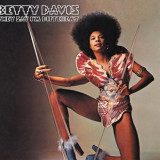
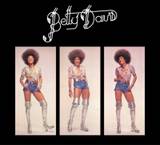
One can hardly imagine the genre-busting, culture-crossing musical magic of Outkast, Prince, Erykah Badu, Rick James, The Roots, or even the early Red Hot Chili Peppers without the influence of R&B pioneer Betty Davis. Her style of raw and revelatory punk-funk defies any notions that women can’t be visionaries in the worlds of rock and pop. In recent years, rappers from Ice Cube to Talib Kweli to Ludacris have rhymed over her intensely strong but sensual music.
There is one testimonial about Betty Davis that is universal: she was a woman ahead of her time. In our contemporary moment, this may not be as self-evident as it was thirty years ago – we live in an age that’s been profoundly changed by flamboyant flaunting of female sexuality: from Parlet to Madonna, Lil Kim to Kelis. Yet, back in 1973 when Betty Davis first showed up in her silver go-go boots, dazzling smile and towering Afro, who could you possibly have compared her to? Marva Whitney had the voice but not the independence. Labelle wouldn’t get sexy with their “Lady Marmalade” for another year while Millie Jackson wasn’t “Feelin’ Bitchy” until 1977. Even Tina Turner, the most obvious predecessor to Betty’s fierce style wasn’t completely out of Ike’s shadow until later in the decade.
Ms. Davis’s unique story, still sadly mostly unknown, is unlike any other in popular music. Betty wrote the song “Uptown” for the Chambers Brothers before marrying Miles Davis in the late ‘60s, influencing him with psychedelic rock, and introducing him to Jimi Hendrix — personally inspiring the classic album ’Bitches Brew.’
But her songwriting ability was way ahead of its time as well. Betty not only wrote every song she ever recorded and produced every album after her first, but the young woman penned the tunes that got The Commodores signed to Motown. The Detroit label soon came calling, pitching a Motown songwriting deal, which Betty turned down. Motown wanted to own everything. Heading to the UK, Marc Bolan of T. Rex urged the creative dynamo to start writing for herself. A common thread throughout Betty’s career would be her unbending Do-It-Yourself ethic, which made her quickly turn down anyone who didn’t fit with the vision. She would eventually say no to Eric Clapton as her album producer, seeing him as too banal.
In 1973, Davis would finally kick off her cosmic career with an amazingly progressive hard funk and sweet soul self-titled debut. Davis showcased her fiercely unique talent and features such gems as “If I’m In Luck I Might Get Picked Up” and “Game Is My Middle Name.” The album Betty Davis was recorded with Sly & The Family Stone’s rhythm section, sharply produced by Sly Stone drummer Greg Errico, and featured backing vocals from Sylvester and the Pointer Sisters.
- A1: I Wanna Dance With Somebody (Who Loves Me) (Who Loves Me)
- A2: Just The Lonely Talking Again
- A3: Love Will Save The Day
- A4: Didn't We Almost Have It All
- A5: So Emotional
- B1: Where You Are
- B2: Love Is A Contact Sport
- B3: You're Still My Man
- B4: For The Love Of You
- B5: Where Do Broken Hearts Go
- B6: I Know Him So Well
Whitney did more than turn Whitney Houston into a pioneering sensation known around the world by her first name. Originally released in June 1987, the singer's blockbuster sophomore record became the first album by a female artist to debut at No. 1 on the Billboard 200 chart — a position it claimed for a total of 11 weeks en route to selling more than 10 million copies in the U.S. The Diamond platinum effort also contains four No. 1 Hot 100 hits that, when combined with the three chart toppers from her 1985 debut, gave her seven consecutive No. 1 singles — an accomplishment that no other artist has accomplished. Commercially and creatively, Whitney stands on hallowed ground — especially now that the record plays with a sound that puts into perspective just how extraordinary, engaging, and vital Houston's music remains.
Mastered from the original master tapes and pressed on MoFi SuperVinyl at RTI, Mobile Fidelity's 180g 33RPM SuperVinyl LP of Whitney invites listeners to experience the Rock & Roll Hall of Fame inductee's pivotal album in audiophile quality for the very first time. Free of the dynamic limitations and tonal flatness prevalent on prior vinyl and CD pressings, it lets the music breathe and reveals the copious detail, nuance, and texture within the immaculately produced songs. MoFi's SuperVinyl profile offers further advantages in the forms of a nearly inaudible noise floor, dead-quiet surfaces, and superb groove definition.
In addition to featuring extreme clarity and immediacy, this numbered-edition reissue does wonders for the attribute that inspired more than 20 million people around the globe to add Whitney to their record collections: that inimitable voice. Houston's trademark mezzo-soprano — an acrobatic instrument equally capable of taking off on fantastic flights and unwinding for hushed meditations — benefits from the fantastic airiness and transparency afforded by this meticulously restored edition. Whitney has never sounded or looked better. The crossover landmark deserves nothing less.
Issued just two years after Houston's breakthrough debut, Whitney immediately signalled the genre-defying singer's intent to continue to push ahead and expand her palette. Shot by photographer Richard Avedon, the album cover depicts an iconic image of Houston — captured with a gleaming smile, bright eyes, teased-out afro, toned arms, and a right hand that appears to wave a friendly hello — whose active, athletic profile stands in contrast to the extremely formal sit-down shot of her that graces her '85 record. The change is telling: Whitney overflows with unfettered joy, rhythmic vibes, and deep-seated emotions that forever endeared her to the hearts and minds of countless listeners — and which set the standard for the wave after wave of divas that followed in her footsteps.
It's no coincidence that the first track on Whitney is the declarative "I Wanna Dance with Somebody (Who Loves Me)." Like Michael Jackson's "Billie Jean" and Madonna's "Material Girl," the feel-good smash is one of the quintessential '80s gems — a lithe, melodic, celebratory release of pent-up energy and loneliness that glides across club floors, shouts to the rooftops, and shrugs off any concerns about vulnerability or embarrassment. Houston's swooping voice moves in sync with the sleek beats and dipping-and-diving synths. She practically takes her fellow musicians by their hand and leads them in a blissful dance that nobody would dare sidestep. Focusing on Houston's singing — a task made challenging only because of the impossible-to-ignore hooks and grooves — showcases the virtuosic facets of not only her register but her control, discipline, smoothness, and warmth.
That she replicates those feats for the entirety of the nearly 53-minute-long album makes Whitney that much more special. Houston reaches back and channels her childhood gospel training on the R&B-flared "So Emotional"; effortlessly slips into Quiet Storm mode on the duet with her mother, gospel great Cissy Houston, on "I Know Him So Well"; flirts with smooth jazz and collaborates with tenor saxophonist Kenny G on the lush "Just the Lonely Talking Again"; conjures dreamscapes and shadow-boxes with supple funk on a romantic cover of the Isley Brothers' "For the Love of You"; and, for the majestic power ballad "Didn't We Almost Have It All," displays the sky-scraping reach of her vocals amid a grand arrangement made even bigger by Houston's sweeping performance and triumphant finish.
Houston's once-in-a-generation talents weren't lost on the adoring public, radio deejays, or industry experts. In addition to harbouring four No. 1 hits and receiving nominations for four Grammy Awards, Whitney generated another Top 10 success in the guise of the Afro-Cuban-leaning "Love Will Save the Day." The album also netted Houston four American Music Awards; two Billboard Music Awards; back-to-back People's Choice Awards; a Soul Train Award; and various other accolades. It all makes the crux of the Washington Post's July '87 review of the album appear prophetic: "Her voice sounds stronger still and the songs are varied but so consistent she could garner 10 Top 10s out of a field of 11."
That claim still holds true. A brilliant fusion of pop, R&B, smooth jazz, and soul, Whitney is a showstopper – and one of the key reasons Houston is the most-awarded female artist of all time.
Joshua Ray Walker announces NEW RECORD “What Is It Even?” - lending his signature alt-country style to iconic pop songs - paying homage to female-identified powerhouse vocalists and their influence on global culture. Launching with his reimagination of Lizzo’s “Cuz I Love You,” Walker pushes himself and his band to respectfully and artfully build a bridge between two seemingly polar styles of music. What Is It Even? Album Rollout 6/2 - “What Is It Even?” Preorder launch & IG1 “Cuz I love You” 7/7 - "Linger" 8/4 - “What Is It Even?” Street Date The catalyst of Joshua Ray Walker’s new album, What Is It Even?, was sparked on the patio of the Tulsa, Oklahoma music venue and dive bar Mercury Lounge, a fitting origin story for any country record. But this is far from an ordinary country record. It was on that Tulsa patio, deep into tour, when Walker and drummer Trey Pendergrass were half joking about what their gospel jump blues version of Whitney Houston’s “I Wanna Dance With Somebody” would sound like, wondering “what if the Blues Brothers covered a Whitney Houston song?” At that point, it was still unclear how the Dallas native would follow up his trio of critically acclaimed, interconnected albums, all of which were packed tight with character-driven songs that put multiple national-tours worth of crowds on the precipice of staining their shirts with either beers or tears, depending on the song. The third of the trio, See You Next Time, led to Walker appearing on The Tonight Show and CBS Saturday Morning, brought with it performances at the Ryman Auditorium in Nashville and Gruene Hall in Texas, landed him on Rolling Stone’s “Best of 2021” list, and prompted SPIN to call him “one of country’s most exciting storytellers.” Those stories about dive bar dwellers running out of last chances made listeners feel a gauntlet of emotions. What Is It Even?, a 10-track covers album consisting of songs made famous by female pop acts, produced with John Pedigo and arranged alongside his touring band of Pendergrass, bassist Billy Bones, and pedal-steel player Adam Kurtz, was born out of wanting to make people feel joy.
- A1: Frankie Knuckles Pres. Director’s Cut – The Whistle Song (Re-Directed)
- A2: Frankie Knuckles Pres. Director’s Cut Feat. Jamie Principle – Your Love (Director's Cut
- B1: Frankie Knuckles Pres. Director’s Cut Feat. B. Slade – Get Over U (Director's Cut Mix
- B2: Frankie Knuckles Pres. Director’s Cut Feat. Jamie Principle – I'll Take You There
- C1: Ashford & Simpson - Bourgie Bourgie (A Director's Cut Exclusive)
- C2: Joey Negro & The Sunburst Band Feat. Donna Gardier & Diane Charlemagne – The
- D1: Artful & Ridney Feat. Terri Walker - Missing You (Eric Kupper’s ‘Director's Cut Tribute To
- D2: Marshall Jefferson Feat. Curtis Mcclain – The House Music Anthem (Move Your Body)
Volume 1[24,79 €]
Volume 2 - Red Vinyl[31,72 €]
Volume 3 (Red Vinyl)[29,37 €]
There are few people across the globe, who will have not been touched by the work of Frankie Knuckles. Forever regarded as ‘The Godfather of House’ for his unrivalled contribution to the house music we know today; what started as an underground movement in Chicago has grown to international heights thanks to Frankie. His records earned him recognition on a global scale, allowing him to work with some of the globes biggest names including the likes of Diana Ross, Whitney Houston and Michael Jackson.
Five years ago, Frankie passed away in Chicago on 31st March 2014 leaving behind one of the greatest house music legacies spanning almost four decades. Now he is commemorated by long time writing and production partner Eric Kupper. Eric, himself a seasoned DJ producer and writer, has worked on over 116 Billboard #1 Dance Records and played a pivotal role in a many of Frankie’s productions. Having both worked together for many years they established themselves at ‘Director’s Cut’ from 2011 and set about producing original releases and remixes based on the classic ‘Def Mix’ sound while sharing equal credits for their creations.
Together they re-produced and re-purpose classic cuts for modern dancefloors, with reworks including tracks from Marshall Jefferson, Ashford & Simpson, Artful & Ridney and The Sunburst Band, alongside Frankie Knuckles originals. These releases have now been brought together by Eric to feature on special album called ‘The Directors Cut Collection’ on SoSure Music. It includes the Director’s Cut reworks of Frankie’s classic cuts such as ‘Your Love’ and ‘Take You There’ with Jamie Principle, alongside Frankie’s first #1 single - ‘The Whistle Song’ on which Eric shares writing credits.
Within a multitude of classic reworks, highlights include a previously unreleased version of Ashford & Simpson’s ‘Bourgie Bourgie’ and a huge Director’s Cut Retro Signature mix of Marshall Jefferson’s 'The House Music Anthem (Move Your Body)' featuring Curtis McClain.
The Director’s Cut Collection is a fitting tribute to commemorate the fifth anniversary of Frankie’s passing whilst giving Eric a platform to tell his side of the creative story. This album is to be released in collaboration with The Frankie Knuckles Foundation who work to continuing Frankie’s legacy well into the future.
- 1: Aretha Franklin - God Bless The Child
- 1: 2Bettye Swann - Make Me Yours
- 1: 3Barbara Lynn - You'll Lose A Good Thing
- 1: 4The Marvelettes - Please Mr. Postman
- 1: 5Betty Padgett - Sugar Daddy (Part )
- 1: 6Diana Ross & The Supremes - Your Heart Belongs To Me
- 1: 7Nina Simone - Plain Gold Ring
- 1: 8Millie Jackson - All The Way Lover
- 1: 9Gwen Mccrae
- 1: 0Dee Edwards - Why Can't There Be Love
- 1: Brenda Lee - I'm Sorry
- 1: 2Helene Smith - Help Me To Keep What I've Got
- 1: 3The Shirelles - Will You Love Me Tomorrow
- 2: 1Etta James - I Just Want To Make Love To You
- 2: Esther Phillips - Release Me
- 2: 3Martha Reeves & The Vandellas - My Baby Won't Come Back
- 2: 4Dionne Warwick - Don't Make Me Over
- 2: 5Gladys Knight & The Pips - Every Beat Of My Heart
- 2: 6Mary Wells - The One Who Really Loves You
- 2: 7Lavern Baker - Love Me Right
- 2: 8Ella Fitzgerald & Nelson Riddle And His Orchestra - Geo
- 2: 9Alice Russell & Tm Juke - Hurry On Now
- 2: 10Spanky Wilson & The Quantic Soul Orchestra - Message To
- 2: 11Greyboy, Quantic & Sharon Jones - Got To Be A Love (Pau
- 2: 1Marva Whitney - I Am What I Am (Parts 1 & )
- 2: 13Sandra Nkaké - Happy
Obwohl der Begriff "soul" schon während der Dreißigerjahre in der US-amerikanischen Populärmusik auftauchte, entstand Soul als eigenständiges Genre erst in den 1950ern aus Gospel und Rhythm"n"Blues sowie je einer Prise Blues und Jazz. Schon bald darauf sollte Soul zum Inbegriff "schwarzer Popmusik" werden. Kennzeichnend für die afroamerikanisch geprägte Unterhaltungsmusik sind emotional gefärbte Sangeskünste. Sich mit ganzer Seele und herzergreifendem Gesang den Vibes, dem Groove und der Message hinzugeben, das macht Soul aus. Sängerinnen wie Aretha Franklin, Etta James, Tina Turner, Lavern Baker, Marlena Shaw oder Diana Ross beherrschten dieses Metier meisterhaft. Sie finden sich neben Dionne Warwick, Nina Simone, Dusty Springfield, Irma Thomas, Amy Winehouse, Ibeyi und vielen anderen Künstlerinnen auf der geschmackvoll kompilierten Doppel-LP "Soul Women".
The best R&B songwriter and soul singer that most people have never heard of, Sam Dees has written songs for countless artists, including Gladys Knight, Aretha Franklin, Whitney Houston, George Benson, the Temptations, Teddy Pendergrass, Millie Jackson, Jackie Wilson, the Manhattans, Regina Belle, KC & the Sunshine Band, Willie Clayton, and many others. He's also a pretty fine singer, having recorded for the Chess, Atlantic, Polydor, and SSS labels, and he had a nice string of his own hits in the 1970s. His 1975 Atlantic album The Show Must Go On has long been regarded by Southern soul aficionados as one of the best of the genre. Sounding a bit like a deeper-voiced Curtis Mayfield (in both style and theme), Dees sings with assurance, wisdom, passion, and a whole lot of soul here. Songs like "Child of the Streets", "Troubled Child," & "What's It Gonna Be," share Mayfield's commitment to social commentary, and Dees knows his way around a love song, too. It's absolutely essential.
90's Movie Hits Collected is a throwback to the glory days of movies like Batman Forever, Man On The Moon, GoldenEye, Young Guns II, Pretty Woman, Godzilla, The Bodyguard, Trainspotting and many more blockbusters. The 2LP 90's Movie Hits Collected includes classics from U2, R.E.M., Tina Turner, Jon Bon Jovi, Roxette, UB40, Jamiroquai, Whitney Houston. Seal, and Lenny Kravitz amongst others.
This film music compilation album is part of the Collected compilation series, which is a collaboration between Universal Music and Music On Vinyl. The compilations bring together the biggest and best names of its genre, combined with forgotten hits and less discovered gems, giving the listener an experience of both nostalgia and uncovering new musical grounds at the same time.
90's Movie Hits Collected is available on black vinyl and includes an insert with photos.
- A1: George Michael - Too Funky
- A2: The Shamen - Ebeneezer Goode
- A3: U2 - Even Better Than The Real Thing (The Perfecto Mix)
- A4: Annie Lennox - Why
- A5: Richard Marx - Hazard
- A6: Bon Jovi - Keep The Faith
- B1: The Klf - America What Time Is Love?
- B2: The Cure - Friday I'm In Love
- B3: Heaven 17 - Temptation (Brothers In Rhythm Remix)
- B4: Electronic - Dissapointed
- B5: Boy George - The Crying Game
- B6: Marc Almond - The Days Of Pearly Spencer
- B7: Elton John - The One
- C1: Bruce Springsteen - Human Touch
- C2: Sophie B. Hawkins - Damn I Wish I Was Your Lover (Radio Version)
- C3: Patty Smyth & Don Henley - Sometimes Love Just Ain't Enough
- C4: Manic Street Preachers - Motorcycle Emptiness
- C5: Paul Weller - Uh Huh Oh Yeh! (Always There To Fool You!) (Always There To Fool You!)
- C6: Simple Minds - Love Song
- C7: Tears For Fears - Laid So Low (Tears Roll Down) (Tears Roll Down)
- D1: Snap! - Rhythm Is A Dancer
- D2: Dr. Alban - It's My Life
- D3: Charles & Eddie - Would I Lie To You?
- D4: Shanice - I Love Your Smile (Driza Bone Remix)
- E3: Tori Amos - Crucify (Remix)
- E4: Crowded House - Weather With You
- E5: Ten Sharp - You
- E6: Simply Red - For Your Babies
- E7: Lisa Stansfield - All Woman
- F1: Jimmy Nail - Ain't No Doubt
- F2: Take That - Coult It Be Magic (Rapino Radio Mix)
- F3: Kylie Minogue - Give Me Just A Little More Time
- F4: Roxette - How Do You Do!
- F5: Go West - Faithful
- F6: Wet Wet Wet - Goodnight Girl
- F7: Vanessa Williams - Save The Best For Last
- F8: Whitney Houston - I Will Always Love You
- D5: En Vogue - My Lovin' (You're Never Gonna Get It) (You're Never Gonna Get It)
- D6: Cece Peniston - Finally
- D7: Dina Carroll - Ain't No Man
- D8: Lionel Richie - My Destiny
- E1: Shakespears Sister - Stay
- E2: Tasmin Archer - Sleeping Satellite
NOW Music is proud to present the next instalment in our ongoing ‘Yearbook’ series – and our first to celebrate the ‘90s, NOW – Yearbook 1992; 79 tracks from a brilliant year in Pop! Available as a Special Edition CD housed in ‘hard-back-book’ packaging, including a 28-page booklet featuring a summary of the year, a track-by-track guide, a quiz, and original singles artwork, a standard 4CD package, and a Limited edition 3-LP set pressed on green vinyl.
The Search for God is a wake-up call for a troubled world that’s still worth saving, animated by a belief in the power of small connections to add up to big changes. At 10 songs delivered in a brief 15 minutes, Jimmy Whispers’ long-awaited sophomore album feels present in a way that feels brand new for the cult auteur. Like many of us, Jimmy has been affected by the pressure of the past few years. After embracing sobriety in 2019, and now as a filmmaker sharing the stories of lesser known Los Angeles community members, he’s brought his dreaming down to earth, while turning its direction even further out.
Recorded with his longtime friend Ziyad Asrar of the band Whitney (and re-recorded after a hard drive incident destroyed the original files), The Search for God was created in the wake of Jimmy’s COVID isolation, and returns to some teen influences that are out of step with the chill/lo-fi LA indie rock scene he’s found himself lumped in with. Created mostly with two vintage synths, a single Roland CR5000 drum machine, and a busted karaoke machine, it channels Midwestern emo, the Beach Boys’ Smile, subtle nods at hyper-pop production, and forgotten jewel-box era college radio of the early aughts into a pure pop sound that transcends easy categorization.
The album’s standout single—and its statement of purpose—is “Hellscape,” which packs more into a minute and 40 seconds than you’d think possible: multiple immediately-unforgettable hooks, kaleidoscopic keyboards, and a bracing reminder that even the most transcendent moments are rooted in a world full of suffering. “This is a fucking hellscape,” Jimmy sings. “This is real life / this is happening.”
That may sound like punk nihilism, but The Search for God is anything but. Every lyrical acknowledgment of how fucked things are right now comes with a promise that we can still make positive changes. Jimmy calls it “God”; you might call it Love or Peace or A Place In the Universe That Makes Some Kind of Sense.
Will The Search for God deliver whatever that is to you? Of course not. At its heart, it’s still just a really good pop album. But maybe that’s enough. For a minute or two at a time, Jimmy’s music cracks open a space where the divine can enter our lives. The utopia we’ve all been dreaming of is already here if we’re just willing to build it. Jimmy Whispers is there, ready to add his voice, whenever we want to reach out.
The album showcased Cornfield's knack for crafting deeply personal songs with an observational tone and witty lyric delivery. She took these heartbreakingly relatable songs on the road, playing numerous shows & festivals across North America and Europe, including opening for Pedro The Lion, Stars, Sarah Harmer and others.
On Cornfield's new album, Could Have Done Anything, she teamed up with producer and Bonny Light Horseman member, Josh Kaufman in Upstate New York, first at the stained- glass- tinted Dreamland Recording Studios, then at the nearby Isokon Studio, run by engineer D. James Goodwin (Kevin Morby, Whitney) and his assistant, Gillian Pelkonen. Kaufman and Cornfield played every instrument themselves, channeling the energy of her favorite classic records,
from Elliott Smith's Figure 8 and Jeff Buckley's Grace to Neil Young's Harvest -- albums where the listener is simply carried by the songs, and their musicians' beautiful playing. Standouts like "You And Me" highlight intimacy and absence, while "Gentle Like The Drugs" captures memories from Cornfield's spring 2022 tour with Pedro the Lion - her first time seeing sunsets in Arizona.
Black Vinyl[27,69 €]
"Palomino" ist das mit Spannung erwartete neue Album von First Aid Kit, dem von der Kritik gefeierten schwedischen Folk-Duo, bestehend aus den Singer-Songwriterinnen und Schwestern Johanna und Klara Soderberg. Der erste Track des Albums, "Angel", wurde bereits vor der Ankündigung des Albums veröffentlicht. "Palomino" ist ihr 5. Studioalbum, bestehend aus 11 Songs und vom Schweden Daniel Bengtson produziert. « Palomino » est le cinquième album du groupe suédois First Aid Kit. Écrit et enregistré dans leur pays d'origine, la Suède, « Palomino » a été créé pendant cette période sombre de pandémie mondiale, mais s'avère être l'album le plus pop de First Aid Kit à ce jour. Composé de 11 titres, il a été produit par Daniel Bengtson. «C'est le premier album que nous enregistrons en Suède depuis notre premier album « The Big Black & The Blue » il y a 12 ans ! Nous avons travaillé avec le producteur suédois Daniel Bengtson dans son charmant studio Rymden à Stockholm. C'était une expérience super amusante. Nous nous sommes vraiment laissé le temps d'enregistrer, nous ne voulions pas nous précipiter. Les morceaux ont été principalement écrits pendant la pandémie. Durant cette période compliquée, la musique était synonyme d'évasion, une bouffée d'air face à ce qu'il se passait dans le monde. Nous voulions que cet album soit plus optimiste et joyeux que notre album précédent, « Ruins », qui était un album de rupture. Ce nouveau projet est probablement notre album le plus pop à ce jour. Nous avons trouvé de l'inspiration partout - auprès de groupes tels que Fleetwood Mac, Carole King, Tom Petty, T Rex, Elton John, mais aussi Angel Olsen, Whitney et Big Thief.''
- A1: The First Noel
- A2: The Christmas Song (Chestnuts Roasting On An Open Fire) (Chestnuts Roasting On An Open Fire)
- A3: Little Drummer Boy (Feat Bobby Kristina Brown)
- A4: One Wish (For Christmas) (For Christmas)
- A5: Cantique De Noel (O Holy Night) (O Holy Night)
- A6: I'll Be Home For Christmas
- B1: Deck The Halls/Silent Night
- B2: Have Yourself A Merry Little Christmas
- B3: O Come O Come Emmanuel
- B4: Who Would Imagine A King
- B5: Joy To The World
- B6: Do You Hear What I Hear? (With Pentatonix)
Whitney Houston - das Debütalbum, das die Karriere der legendären Sängerin begründete - kehrt als 1-LP-Vinyl zurück. Die Stimme hinter tausenden von ausverkauften Shows weltweit ist auf diesem 13-fachen Platin-Album, das die Diamant-Zertifizierung erreichte, zurück. Fans werden die Songs - "Saving All My Love", "How Will I Know" und "The Greatest Love of All" - wiedererkennen, die der Sängerin die Anerkennungen für das erste Debütalbum und das erste Album einer weiblichen Solokünstlerin, das drei Nummer-1-Singles hervorgebracht hat, einbrachten. Im Jahr 1986 dominierte das Album 14 Wochen lang die Charts und verkaufte weltweit 22 Millionen Tonträger. Außerdem erreichte sie damit als erste Künstlerin ein Billboard #1 Album des Jahres. Das Album wurde auch für einen GRAMMY Award nominiert und gewann einen GRAMMY für die beste Pop-Gesangsdarbietung für "Saving All My Love".
- 01: Eisenhower To The West Side
- 02: Do You Feel Fine?
- 03: Guillotine
- 04: Same
- 05: Money's Ran Off
- 06: Pray To Christ In Heaven
- 07: No Man For No Home
- 08: Last July
- 09: Sister Say
- 10: Dirt
- 11: I Tried
- 12: Summer City
- 13: Jess
- 01: Stay In Line
- 02: Get Your Fix
- 03: On Fear
- 04: Momma's Way
- 05: Herculean House Of Cards
- 06: The Leaving
- 07: In Between - Live
- 08: Ain't Nobody's Fault - Live
- 09: Fool's Gold - Live
- 10: Even Jesus Christ Had Died - Live
- 11: Eisenhower To The West Side (Ballad Reprise) - Live
- 12: Hammer Out The Edges
Gold Vinyl[35,84 €]
Trey Gruber's posthumous debut double LP Herculean House of Cards. A compilation of early demos, studio demos, and live recordings. A tortured songwriter and struggling addict who jolted the tired Chicago DIY scene with his own brand of primal despair, Trey Gruber and his band Parent were on track to join the ranks of Twin Peaks, Mild High Club, and Whitney. His death in 2017 at the age of 26 brought it all to a halt. In his final years Trey wrote and recorded hundreds of previously unheard demos, dandelions in the cracked concrete of 21st century disconnect, an alphabet's worth of which have been compiled by his family and friends for his only album: Herculean House Of Cards. The 26-song 2xLP covers years of material, from home tape recordings, sessions at Mathew Roberts (Mild High Club) & Paul Cherry's home studio, to a studio session with Charles Glanders (Whitney) at Chicago's Foxhall Studios, along with audio taken at The Hideout during his last live performance, among others. Though Gruber was an unrelenting perfectionist who was constantly self-deprecating about his best demos, Herculean House of Cards is a wholly comprehensive and accurate reflection of his infectious charisma and raw songwriting. He had a charmingly distinct way with words but also could be disarmingly vulnerable. Like he was in life, Gruber never shied away from being open with his struggles with alcoholism and addiction. On the vivid opener "Eisenhower to the West Side," he sings in painstaking detail of, "A jail-skin cell, a junkies fight/Corner-boys full of grace/And Jesus Christ full of spite." He told then-future bandmate flautist Rebecca Ridge, "It's not some Lou Reed glorification of drugs _ `makes me feel like a man'_ I talk about the disconnect and the ugliness. They're sad pop songs." But even with the pain and the darkness in his lyrics, Gruber's songs had an unmistakable sense of hope and catharsis.
- A1: Eisenhower To The West Side
- A2: Do You Feel Fine?
- A3: Guillotine
- A4: Same
- A5: Money's Ran Off
- A6: Pray To Christ In Heaven
- A7: No Man For No Home
- A8: Last July
- B1: Sister Say
- B2: Dirt
- B3: I Tried
- B4: Summer City
- B5: Jess
- C1: Stay In Line
- C2: Get Your Fix
- C3: On Fear
- C4: Momma's Way
- C5: Herculean House Of Cards
- C6: The Leaving
- D1: In Between - Live
- D2: Ain't Nobody's Fault - Live
- D3: Fool's Gold - Live
- D4: Even Jesus Christ Had Died - Live
- D5: Eisenhower To The West Side (Ballad Reprise) - Live
- D6: Hammer Out The Edges (Bonus Track)
Black Vinyl[35,84 €]
Trey Gruber's posthumous debut double LP Herculean House of Cards. A compilation of early demos, studio demos, and live recordings. A tortured songwriter and struggling addict who jolted the tired Chicago DIY scene with his own brand of primal despair, Trey Gruber and his band Parent were on track to join the ranks of Twin Peaks, Mild High Club, and Whitney. His death in 2017 at the age of 26 brought it all to a halt. In his final years Trey wrote and recorded hundreds of previously unheard demos, dandelions in the cracked concrete of 21st century disconnect, an alphabet's worth of which have been compiled by his family and friends for his only album: Herculean House Of Cards. The 26-song 2xLP covers years of material, from home tape recordings, sessions at Mathew Roberts (Mild High Club) & Paul Cherry's home studio, to a studio session with Charles Glanders (Whitney) at Chicago's Foxhall Studios, along with audio taken at The Hideout during his last live performance, among others. Though Gruber was an unrelenting perfectionist who was constantly self-deprecating about his best demos, Herculean House of Cards is a wholly comprehensive and accurate reflection of his infectious charisma and raw songwriting. He had a charmingly distinct way with words but also could be disarmingly vulnerable. Like he was in life, Gruber never shied away from being open with his struggles with alcoholism and addiction. On the vivid opener "Eisenhower to the West Side," he sings in painstaking detail of, "A jail-skin cell, a junkies fight/Corner-boys full of grace/And Jesus Christ full of spite." He told then-future bandmate flautist Rebecca Ridge, "It's not some Lou Reed glorification of drugs _ `makes me feel like a man'_ I talk about the disconnect and the ugliness. They're sad pop songs." But even with the pain and the darkness in his lyrics, Gruber's songs had an unmistakable sense of hope and catharsis.
Freestyle puts out another reissue 12" in their drive to unearth rare and classic UK funk, soul & boogie records - this time a much needed pressing of the late Candy McKenzie's heavy boogie-funk cover of Patrice Rushen's classic Remind Me. Produced by Candy's late cousin, and seasoned session bass player, John McKenzie (and licensed from the family estate) this was originally released in 1983 - and comes with an excellent dubbed-out 'Different Style' instrumental version on the flip.
-----------------------
Candy McKenzie (1953-2003) was a North West London-based vocalist from a Guyanese family heavily steeped in musicianship . She began learning the piano at a young age, picking up vocal harmony from her father, a jazz bass player. Her brothers Bunny & Binky, were also celebrated bassists. Candy would marry young in 1970 at the age of 17, though just one year later her brother Binky (who played with the likes of Cream, Alexis Korner & John Mclaughlin in the late 60s) tragically killed her mother and father, along with Candy's husband in an attack at the family home to which Candy was present. Candy was also injured but escaped with her life.
In the years that followed the tragedy Candy, regularly accompanied by her brother Bunny, would find reggae vocal session work - often at the Chalk Farm Studios frequented by many key producers & acts. She found her way onto Aswad's first album and Keith Hudson's legendary Flesh Of My Skin Blood Of My Blood LP - and a little while later on a couple of sessions with Bob Marley for Island, under the supervision of Lee Perry.
The latter two parties took a keen interest in Candy, with Island wisking her away to Jamaica in 1977 to record an album at the legendary Black Ark. Her vocals found their way onto The Congos seminal Heart of the Congos LP, but the album she recorded with Perry was shelved - with just the Black Art holy grail 12" Disco Fits / Breakfast in Bed finding it's way to release at the time.
Back in London, Candy spent the early to mid 80s recording various lovers and funk/soul 12"s, including this fantastic cover of Patrice Rushen's Remind Me, produced by her cousin John. She went on to record singles for labels like Elite & Cooltempo throughout the '80s and early '90s, and appeared as backing vocalist with the likes of Leonard Cohen, Whitney Houston, Elton John and Diana Ross. She passed away in 2003, with her one and only album recorded at the Black Ark finally seeing release on Trojan in 2011.
Candy's cousin John McKenzie got his starts in the music industry in the mid 70s as part of prog group Man and communal festival rockers Global Village Trucking Co., as well as playing with the likes of Annette Peacock and Steve Hillage. His father Mike McKenzie was also a key Carribbean jazz figure in the UK throughout the early 1950s, through to the '60s and '70s. John would become a heavily in-demand session musician - playing with everyone from the Eurhythmics to Bob Dylan - while also finding time to produce this record, alongside a couple of excellent 12"s with Mel Gaynor as Finesse, between 1982 and '83. He would regularly tour the world as a live musician for a huge array of headline acts, appearing on multiple chart hits, and in his later years was a member of the excellent group Ibibio Sound Machine. He lost his battle with cancer in 2020.
This reissue is dedicated to the memory of both John & Candy McKenzie.
• Co-writer Charles Spurling sang and wrote at King in the late 60s, providing songs for James Brown, Hank Ballard, Junior McCants and Peggy & Artie among others. ‘Ball Of Fire’ is an exceptional song, first recorded by Connie Austin as a smouldering mid-tempo number on which she pours her heart out. It would be updated a year later by Marva Whitney who took it at a faster funkier pace. Charles Spurling remembers Connie as a good-looking, fast-living girl who was murdered in Los Angeles soon after.
• Spurling was a good singer himself and had five King releases between 1967 and 1969. The excellent ‘You’ve Got Love On Top Of Love’ failed to make it to wax until now. Kent found the tape in the King vaults and issued it on CD in 2001; now it is on a righteous single.
- A1: I Wanna Dance With Somebody (Who Loves Me) (Who Loves Me)
- A2: Just The Lonely Talking Again
- A3: Love Will Save The Day
- A4: Didn't We Almost Have It All
- A5: So Emotional
- B1: Where You Are
- B2: Love Is A Contact Sport
- B3: You're Still My Man
- B4: For The Love Of You
- B5: Where Do Broken Hearts Go
- B6: I Know Him So Well
Black Vinyl[23,11 €]
Blue Vinyl
Das Werk einer der meistausgezeichneten Künstlerinnen aller Zeiten lebt in dieser 1-LP-Vinyl, Whitney, weiter.Das GRAMMY-nominierte zweite Studioalbum der Künstlerin erreichte 10-fachen Platin-Status und wurde mit einem Diamanten ausgezeichnet, was der Künstlerin zu ihrem Superstarstatus verhalf, da sie die erste schwarze Künstlerin war, die drei Diamanten-Albumzertifizierungen erhielt. "I Wanna Dance with Somebody (Who Loves Me)", "Didn't We Almost Have it All", "So Emotional" und "Where Do Broken Hearts Go" wurden allesamt zu Billboard Top 10 Singles und bescherten ihr - zusammen mit den früheren Erfolgshits - sieben aufeinanderfolgende #1 Singles.
Orange Vinyl
Whitney Houston - das Debütalbum, das die Karriere der legendären Sängerin begründete - kehrt als 1-LP-Vinyl zurück. Die Stimme hinter tausenden von ausverkauften Shows weltweit ist auf diesem 13-fachen Platin-Album, das die Diamant-Zertifizierung erreichte, zurück. Fans werden die Songs - "Saving All My Love", "How Will I Know" und "The Greatest Love of All" - wiedererkennen, die der Sängerin die Anerkennungen für das erste Debütalbum und das erste Album einer weiblichen Solokünstlerin, das drei Nummer-1-Singles hervorgebracht hat, einbrachten. Im Jahr 1986 dominierte das Album 14 Wochen lang die Charts und verkaufte weltweit 22 Millionen Tonträger. Außerdem erreichte sie damit als erste Künstlerin ein Billboard #1 Album des Jahres. Das Album wurde auch für einen GRAMMY Award nominiert und gewann einen GRAMMY für die beste Pop-Gesangsdarbietung für "Saving All My Love".
• Co-writer Charles Spurling sang and wrote at King in the late 60s, providing songs for James Brown, Hank Ballard, Junior McCants and Peggy & Artie among others. ‘Ball Of Fire’ is an exceptional song, first recorded by Connie Austin as a smouldering mid-tempo number on which she pours her heart out. It would be updated a year later by Marva Whitney who took it at a faster funkier pace. Charles Spurling remembers Connie as a good-looking, fast-living girl who was murdered in Los Angeles soon after.
• Spurling was a good singer himself and had five King releases between 1967 and 1969. The excellent ‘You’ve Got Love On Top Of Love’ failed to make it to wax until now. Kent found the tape in the King vaults and issued it on CD in 2001; now it is on a righteous single.
Available from Blank Forms for the first time since its original 1980 release on ALM-Uranoia, New Sense of Hearing documents a collaboration between Takehisa Kosugi and Akio Suzuki, two luminaries of Japanese experimental music in the lineage of Fluxus. Blank Forms's high-quality reissue of the sought-after, long out of print LP, is produced by musician-artist Aki Onda and mastered from the original tapes recorded on April 2, 1979, at Tokyo's Aeolian Hall. Described by Suzuki as the "culmination" of their sound,New Sense of Hearing features the two musicians improvising together in that empty Tokyo theater, Kosugi on vocals, violin, and radio transmitter and Suzuki on the Analapos, his namesake glass harmonica, spring cong, and kikkokikiriki, all apparatuses of his own invention. Suzuki and Kosugi first met at the city's Minami Gallery in 1976 on the occasion of "Sound Objects and Sound Tools," an exhibition of Suzuki's homemade instruments. Two years later, at the Festival d'Automne in Paris, Suzuki invited Kosugi to join him for a suite of performances as part of the exhibition "MA: Espace - Temps au Japon," organized by architect Arata Isozaki and composer-writer Toru Takemitsu. Suzuki and Kosugi performed together at the Musée des Arts Décoratifs, Paris, nearly fifty times, honing their approach to mutual improvisation, before traveling with the exhibition to Stockholm and New York_critic Tom Johnson wrote in the Village Voice that he had "seldom seen two performers so completely tuned in on the same types of sounds, the same performance attitude, the same philosophy, the same sense of what music ought to be."For New Sense of Hearing, the duo reunited in Japan and produced an extraordinary dispatch from their collaboration of arioso violin, echoing vocals and bangs, and metallic twangs. As Johnson observed in 1979, Kosugi and Suzuki are "in a very subtle artistic world where there can be no direct relationships. . . . Only coincidence." Takehisa Kosugi (1938-2018) was a composer, artist, and violinist from Tokyo. In 1960, Kosugi founded Group Ongaku, the country's first improvisational performance collective dedicated to Happenings, with Mieko Shiomi and Yasunao Tone. Four years later, Fluxus leader George Maciunas published Events, an eighteen-piece set of his text compositions. Between 1971 and '74, his band the Taj Mahal Travelers produced four live albums. In 1977, the Merce Cunningham Dance Company invited Kosugi to be their resident musician; from 1995 to 2011 he served as the company's musical director. The Whitney Museum of American Art presented "Takehisa Kosugi: Music Expanded," a two-day retrospective of Kosugi's work, in 2015. Akio Suzuki (b. 1941) was born in Pyongyang, North Korea, to Japanese parents. For the artist-musician's first Fluxus-style work Kaidan ni Mono wo Nageru (Throwing Things at the Stairs), 1963, Suzuki tossed a bucket of miscellaneous objects down a flight of stairs in Nagoya Station and listened to the sounds it produced. During the next decade, he would create original instruments including the Suzuki-type glass harmonica and the echo instrument Analapos. In 1976, Tokyo's Minami gallery hosted his first exhibition, "Akio Suzuki's World: Sound Objects and Sound Tools." For his 1988 performance piece Space in the Sun, Suzuki spent twenty-four hours listening to his surroundings on the meridian line which runs through Amino, Kyoto. Suzuki has performed and exhibited at many venues and music festivals, including Documenta 8 (Germany, 1987), the British Museum (2003), Musée Zadkine (France, 2004), Kunstmuseum Bonn (Germany, 2018), and the Museum of Contemporary Art Tokyo (2019).
White Vinyl[27,52 €]
"Palomino" ist das mit Spannung erwartete neue Album von First Aid Kit, dem von der Kritik gefeierten schwedischen Folk-Duo, bestehend aus den Singer-Songwriterinnen und Schwestern Johanna und Klara Soderberg. Der erste Track des Albums, "Angel", wurde bereits vor der Ankündigung des Albums veröffentlicht. "Palomino" ist ihr 5. Studioalbum, bestehend aus 11 Songs und vom Schweden Daniel Bengtson produziert. « Palomino » est le cinquième album du groupe suédois First Aid Kit. Écrit et enregistré dans leur pays d'origine, la Suède, « Palomino » a été créé pendant cette période sombre de pandémie mondiale, mais s'avère être l'album le plus pop de First Aid Kit à ce jour. Composé de 11 titres, il a été produit par Daniel Bengtson. «C'est le premier album que nous enregistrons en Suède depuis notre premier album « The Big Black & The Blue » il y a 12 ans ! Nous avons travaillé avec le producteur suédois Daniel Bengtson dans son charmant studio Rymden à Stockholm. C'était une expérience super amusante. Nous nous sommes vraiment laissé le temps d'enregistrer, nous ne voulions pas nous précipiter. Les morceaux ont été principalement écrits pendant la pandémie. Durant cette période compliquée, la musique était synonyme d'évasion, une bouffée d'air face à ce qu'il se passait dans le monde. Nous voulions que cet album soit plus optimiste et joyeux que notre album précédent, « Ruins », qui était un album de rupture. Ce nouveau projet est probablement notre album le plus pop à ce jour. Nous avons trouvé de l'inspiration partout - auprès de groupes tels que Fleetwood Mac, Carole King, Tom Petty, T Rex, Elton John, mais aussi Angel Olsen, Whitney et Big Thief.''
Black Vinyl[27,10 €]
Jordan Reyes is one of the busiest musicians in experimental music
today, and here he takes a bold turn with the metal-inflected Everything Is
Always, touching on death, Zen and science fiction
Reyes' previous collaborators include ONO, Eli Winter and Robert Stokowy, and
here he brings in a large and expert cast: Steve Hauschildt (Emeralds) at the
mixing board, and Heba Kadry (Slowdive, Big Thief, Alex G, Lower Dens)
mastering, plus instrumentalists including Lia Kohl (Whitney, Steve Gunn), Jon
Mueller (Volcano Choir, Death Blues), Patrick Shiroishi and Sam Wagster (Fruit
Bats, Eli Winter). The result is conceptual yet refined, and distinctively American
Dreams. Pressed on Randomly Colored color vinyl.
Random Colour Vinyl[36,77 €]
Jordan Reyes is one of the busiest musicians in experimental music
today, and here he takes a bold turn with the metal-inflected Everything Is
Always, touching on death, Zen and science fiction
Reyes' previous collaborators include ONO, Eli Winter and Robert Stokowy, and
here he brings in a large and expert cast: Steve Hauschildt (Emeralds) at the
mixing board, and Heba Kadry (Slowdive, Big Thief, Alex G, Lower Dens)
mastering, plus instrumentalists including Lia Kohl (Whitney, Steve Gunn), Jon
Mueller (Volcano Choir, Death Blues), Patrick Shiroishi and Sam Wagster (Fruit
Bats, Eli Winter). The result is conceptual yet refined, and distinctively American
Dreams. Pressed on Randomly Colored color vinyl.
- A1: Rock This Mother
- A2: Talk To Me Girl
- A3: You Can Find Me
- A4: Check This Out
- A5: Jesus Going To Clean House
- A6: Hope You Understood
- A7: Is It What You Want
- A8: Love Is Everlasting
- A9: This Is Hip-Hop Art
- A10: Opposite Of Love
- A11: Do You Know What I Mean
- B1: Saving All My Love For You
- B2: Look Out Here I Come
- B3: Girl You Always Talking
- B4: Have A Great Day
- B5: Take My Hand
- B6: I Need Your Love
- B7: Your Town
- B8: Talk Around Town
- B9: Booty Head/Take A Little Walk
- B10: I Love My Mama
- B11: I Never Found Anyone Like You
Vinyl LP[23,49 €]
As the sun sets on a quaint East Nashville house, a young man bares a piece of his soul. Facing the camera, sporting a silky suit jacket/shirt/slacks/fingerless gloves ensemble that announces "singer" before he's even opened his mouth, Lee Tracy Johnson settles onto his stage, the front yard. He sways to the dirge-like drum machine pulse of a synth-soaked slow jam, extends his arms as if gaining his balance, and croons in affecting, fragile earnest, "I need your love… oh baby…"
Dogs in the yard next door begin barking. A mysterious cardboard robot figure, beamed in from galaxies unknown and affixed to a tree, is less vocal. Lee doesn't acknowledge either's presence. He's busy feeling it, arms and hands gesticulating. His voice rises in falsetto over the now-quiet dogs, over the ambient noise from the street that seeps into the handheld camcorder's microphone, over the recording of his own voice played back from a boombox off-camera. After six minutes the single, continuous shot ends. In this intimate creative universe there are no re-takes. There are many more music videos to shoot, and as Lee later puts it, "The first time you do it is actually the best. Because you can never get that again. You expressing yourself from within."
"I Need Your Love" dates from a lost heyday. From some time in the '80s or early '90s, when Lee Tracy (as he was known in performance) and his music partner/producer/manager Isaac Manning committed hours upon hours of their sonic and visual ideas to tape. Embracing drum machines and synthesizers – electronics that made their personal futurism palpable – they recorded exclusively at home, live in a room into a simple cassette deck. Soul, funk, electro and new wave informed their songs, yet Lee and Isaac eschewed the confinement of conventional categories and genres, preferring to let experimentation guide them.
"Anytime somebody put out a new record they had the same instruments or the same sound," explains Isaac. "So I basically wanted to find something that's really gonna stand out away from all of the rest of 'em." Their ethos meant that every idea they came up with was at least worth trying: echoed out half-rapped exhortations over frantic techno-style beats, gospel synth soul, modal electro-funk, oddball pop reinterpretations, emo AOR balladry, nods to Prince and the Fat Boys, or arrangements that might collapse mid-song into a mess of arcade game-ish blips before rallying to reach the finish line. All of it conjoined by consistent tape hiss, and most vitally, Lee's chameleonic voice, which managed to wildly shape shift and still evoke something sincere – whether toggling between falsetto and tenor exalting Jesus's return, or punctuating a melismatic romantic adlib with a succinct, "We all know how it feels to be alone."
"People think we went to a studio," says Isaac derisively. "We never went to no studio. We didn't have the money to go to no studio! We did this stuff at home. I shot videos in my front yard with whatever we could to get things together." Sometimes Isaac would just put on an instrumental record, be it "Planet Rock" or "Don't Cry For Me Argentina" (from Evita), press "record," and let Lee improvise over it, yielding peculiar love songs, would-be patriotic anthems, or Elvis Presley or Marilyn Monroe tributes. Technical limitations and a lack of professional polish never dissuaded them. They believed they were onto something.
"That struggle," Isaac says, "made that sound sound good to me."
In the parlance of modern music criticism Lee and Isaac's dizzying DIY efforts would inevitably be described as "outsider." But "outsider" carries the burden of untold additional layers of meaning if you're Black and from the South, creating on a budget, and trying to get someone, anyone within the country music capital of the world to take your vision seriously. "What category should we put it in?" Isaac asks rhetorically. "I don't know. All I know is feeling. I ain't gonna name it nothing. It's music. If it grabs your soul and touch your heart that's what it basically is supposed to do."
=
Born in 1963, the baby boy of nine siblings, Lee Tracy spent his earliest years living amidst the shotgun houses on Nashville's south side. "We was poor, man!" he says, recalling the outhouse his family used for a bathroom and the blocks of ice they kept in the kitchen to chill perishables. "But I actually don't think I really realized I was in poverty until I got grown and started thinking about it." Lee's mom worked at the Holiday Inn; his dad did whatever he had to do, from selling fruit from a horse drawn cart to bootlegging. "We didn't have much," Lee continues, "but my mother and my father got us the things we needed, the clothes on our back." By the end of the decade with the city's urban renewal programs razing entire neighborhoods to accommodate construction of the Interstate, the family moved to Edgehill Projects. Lee remembers music and art as a constant source of inspiration for he and his brothers and sisters – especially after seeing the Jackson 5 perform on Ed Sullivan. "As a small child I just knew that was what I wanted to do."
His older brother Don began musically mentoring him, introducing Lee to a variety of instruments and sounds. "He would never play one particular type of music, like R&B," says Lee. "I was surrounded by jazz, hard rock and roll, easy listening, gospel, reggae, country music; I mean I was a sponge absorbing all of that." Lee taught himself to play drums by beating on cardboard boxes, gaining a rep around the way for his timekeeping, and his singing voice. Emulating his favorites, Earth Wind & Fire and Cameo, he formed groups with other kids with era-evocative band names like Concept and TNT Connection, and emerged as the leader of disciplined rehearsals. "I made them practice," says Lee. "We practiced and practiced and practiced. Because I wanted that perfection." By high school the most accomplished of these bands would take top prize in a prominent local talent show. It was a big moment for Lee, and he felt ready to take things to the next level. But his band-mates had other ideas.
"I don't know what happened," he says, still miffed at the memory. "It must have blew they mind after we won and people started showing notice, because it's like everybody quit! I was like, where the hell did everybody go?" Lee had always made a point of interrogating prospective musicians about their intentions before joining his groups: were they really serious or just looking for a way to pick up girls? Now he understood even more the importance of finding a collaborator just as committed to the music as he was.
=
Isaac Manning had spent much of his life immersed in music and the arts – singing in the church choir with his family on Nashville's north side, writing, painting, dancing, and working various gigs within the entertainment industry. After serving in the armed forces, in the early '70s he ran The Teenage Place, a music and performance venue that catered to the local youth. But he was forced out of town when word of one of his recreational routines created a stir beyond the safe haven of his bohemian circles.
"I was growing marijuana," Isaac explains. "It wasn't no business, I was smoking it myself… I would put marijuana in scrambled eggs, cornbread and stuff." His weed use originated as a form of self-medication to combat severe tooth pain. But when he began sharing it with some of the other young people he hung out with, some of who just so happened to be the kids of Nashville politicians, the cops came calling. "When I got busted," he remembers, "they were talking about how they were gonna get rid of me because they didn't want me saying nothing about they children because of the politics and stuff. So I got my family, took two raggedy cars, and left Nashville and went to Vegas."
Out in the desert, Isaac happened to meet Chubby Checker of "The Twist" fame while the singer was gigging at The Flamingo. Impressed by Isaac's zeal, Checker invited him to go on the road with him as his tour manager/roadie/valet. The experience gave Isaac a window into a part of the entertainment world he'd never encountered – a glimpse of what a true pop act's audience looked like. "Chubby Checker, none of his shows were played for Black folks," he remembers. "All his gigs were done at high-class white people areas." Returning home after a few years with Chubby, Isaac was properly motivated to make it in Music City. He began writing songs and scouting around Nashville for local talent anywhere he could find it with an expressed goal: "Find someone who can deliver your songs the way you want 'em delivered and make people feel what you want them to feel."
One day while walking through Edgehill Projects Isaac heard someone playing the drums in a way that made him stop and take notice. "The music was so tight, just the drums made me feel like, oh I'm-a find this person," he recalls. "So I circled through the projects until I found who it was.
"That's how I met him – Lee Tracy. When I found him and he started singing and stuff, I said, ohhh, this is somebody different."
=
Theirs was a true complementary partnership: young Lee possessed the raw talent, the older Isaac the belief. "He's really the only one besides my brother and my family that really seen the potential in me," says Lee. "He made me see that I could do it."
Isaac long being a night owl, his house also made for a fertile collaborative environment – a space where there always seemed to be a new piece of his visual art on display: paintings, illustrations, and dolls and figures (including an enigmatic cardboard robot). Lee and Issac would hang out together and talk, listen to music, conjure ideas, and smoke the herb Isaac had resumed growing in his yard. "It got to where I could trust him, he could trust me," Isaac says of their bond. They also worked together for hours on drawings, spreading larges rolls of paper on the walls and sketching faces with abstract patterns and imagery: alien-like beings, tri-horned horse heads, inverted Janus-like characters where one visage blurred into the other.
Soon it became apparent that they didn't need other collaborators; self-sufficiency was the natural way forward. At Isaac's behest Lee, already fed up with dealing with band musicians, began playing around with a poly-sonic Yamaha keyboard at the local music store. "It had everything on it – trumpet, bass, drums, organ," remembers Lee. "And that's when I started recording my own stuff."
The technology afforded Lee the flexibility and independence he craved, setting him on a path other bedroom musicians and producers around the world were simultaneously following through the '80s into the early '90s. Saving up money from day jobs, he eventually supplemented the Yamaha Isaac had gotten him with Roland and Casio drum machines and a Moog. Lee was living in an apartment in Hillside at that point caring for his dad, who'd been partially paralyzed since early in life. In the evenings up in his second floor room, the music put him in a zone where he could tune out everything and lose himself in his ideas.
"Oh I loved it," he recalls. "I would really experiment with the instruments and use a lot of different sound effects. I was looking for something nobody else had. I wanted something totally different. And once I found the sound I was looking for, I would just smoke me a good joint and just let it go, hit the record button." More potent a creative stimulant than even Isaac's weed was the holistic flow and spontaneity of recording. Between sessions at Isaac's place and Lee's apartment, their volume of output quickly ballooned.
"We was always recording," says Lee. "That's why we have so much music. Even when I went to Isaac's and we start creating, I get home, my mind is racing, I gotta start creating, creating, creating. I remember there were times when I took a 90-minute tape from front to back and just filled it up."
"We never practiced," says Isaac. "See, that was just so odd about the whole thing. I could relate to him, and tell him about the songs I had ideas for and everything and stuff. And then he would bring it back or whatever, and we'd get together and put it down." Once the taskmaster hell bent on rehearsing, Lee had flipped a full 180. Perfection was no longer an aspiration, but the enemy of inspiration.
"I seen where practicing and practicing got me," says Lee. "A lot of musicians you get to playing and they gotta stop, they have to analyze the music. But while you analyzing you losing a lot of the greatness of what you creating. Stop analyzing what you play, just play! And it'll all take shape."
=
"I hope you understood the beginning of the record because this was invented from a dream I had today… (You tell me, I'll tell you, we'll figure it out together)" – Lee Tracy and Isaac Manning, "Hope You Understand"
Lee lets loose a maniacal cackle when he acknowledges that the material that he and Isaac recorded was by anyone's estimation pretty out there. It's the same laugh that commences "Hope You Understand" – a chaotic transmission that encapsulates the duality at the heart of their music: a stated desire to reach people and a compulsion to go as leftfield as they saw fit.
"We just did it," says Lee. "We cut the music on and cut loose. I don't sit around and write. I do it by listening, get a feeling, play the music, and the lyrics and stuff just come out of me."
The approach proved adaptable to interpreting other artists' material. While recording a cover of Whitney Houston's pop ballad "Saving All My Love For You," Lee played Whitney's version in his headphones as he laid down his own vocals – partially following the lyrics, partially using them as a departure point. The end result is barely recognizable compared with the original, Lee and Isaac having switched up the time signature and reinvented the melody along the way towards morphing a slick mainstream radio standard into something that sounds solely their own.
"I really used that song to get me started," says Lee. "Then I said, well I need something else, something is missing. Something just came over me. That's when I came up with 'Is It What You Want.'"
The song would become the centerpiece of Lee and Isaac's repertoire. Pushed along by a percolating metronomic Rhythm King style beat somewhere between a military march and a samba, "Is It What You Want" finds Lee pleading the sincerity of his commitment to a potential love interest embellished by vocal tics and hiccups subtlely reminiscent of his childhood hero MJ. Absent chord changes, only synth riffs gliding in and out like apparitions, the song achieves a lingering lo-fi power that leaves you feeling like it's still playing, somewhere, even after the fade out.
"I don't know, it's like a real spiritual song," Lee reflects. "But it's not just spiritual. To me the more I listen to it it's like about everything that you do in your everyday life, period. Is it what you want? Do you want a car or you don't want a car? Do you want Jesus or do you want the Devil? It's basically asking you the question. Can't nobody answer the question but you yourself."
In 1989 Lee won a lawsuit stemming from injuries sustained from a fight he'd gotten into. He took part of the settlement money and with Isaac pressed up "Saving All My Love For You" b/w "Is It What You Want" as a 45 single. Isaac christened the label One Chance Records. "Because that's all we wanted," he says with a laugh, "one chance."
Isaac sent the record out to radio stations and major labels, hoping for it to make enough noise to get picked up nationally. But the response he and Lee were hoping for never materialized. According to Isaac the closest the single got to getting played on the radio is when a disk jock from a local station made a highly unusual announcement on air: "The dude said on the radio, 107.5 – 'We are not gonna play 'Is It What You Want.' We cracked up! Wow, that's deep.
"It was a whole racist thing that was going on," he reflects. "So we just looked over and kept on going. That was it. That was about the way it goes… If you were Black and you were living in Nashville and stuff, that's the way you got treated." Isaac already knew as much from all the times he'd brought he and Lee's tapes (even their cache of country music tunes) over to Music Row to try to drum up interest to no avail.
"Isaac, he really worked his ass off," says Lee. "He probably been to every record place down on Music Row." Nashville's famed recording and music business corridor wasn't but a few blocks from where Lee grew up. Close enough, he remembers, for him to ride his bike along its back alleys and stumble upon the occasional random treasure, like a discarded box of harmonicas. Getting in through the front door, however, still felt a world away.
"I just don't think at the time our music fell into a category for them," he concedes. "It was before its time."
=
Lee stopped making music some time in the latter part of the '90s, around the time his mom passed away and life became increasingly tough to manage. "When my mother died I had a nervous breakdown," he says, "So I shut down for a long time. I was in such a sadness frame of mind. That's why nobody seen me. I had just disappeared off the map." He fell out of touch with Isaac, and in an indication of just how bad things had gotten for him, lost track of all the recordings they'd made together. Music became a distant memory.
Fortunately, Isaac kept the faith. In a self-published collection of his poetry – paeans to some of his favorite entertainment and public figures entitled Friends and Dick Clark – he'd written that he believed "music has a life of its own." But his prescience and presence of mind were truly manifested in the fact that he kept an archive of he and Lee's work. As perfectly imperfect as "Is It What You Want" now sounds in a post-Personal Space world, Lee and Isaac's lone official release was in fact just a taste. The bulk of the Is It What You Want album is culled from the pair's essentially unheard home recordings – complete songs, half-realized experiments, Isaac's blue monologues and pronouncements et al – compiled, mixed and programmed in the loose and impulsive creative spirit of their regular get-togethers from decades ago. The rest of us, it seems, may have finally caught up to them.
On the prospect of at long last reaching a wider audience, Isaac says simply, "I been trying for a long time, it feels good." Ever the survivor, he adds, "The only way I know how to make it to the top is to keep climbing. If one leg break on the ladder, hey, you gotta fix it and keep on going… That's where I be at. I'll kill death to make it out there."
For Lee it all feels akin to a personal resurrection: "It's like I was in a tomb and the tomb was opened and I'm back… Man, it feels so great. I feel like I'm gonna jump out of my skin." Success at this stage of his life, he realizes, probably means something different than what it did back when he was singing and dancing in Isaac's front yard. "What I really mean by 'making it,'" he explains isn't just the music being heard but, "the story being told."
Occasionally Lee will pull up "Is It What You Want" on YouTube on his phone, put on his headphones, and listen. He remembers the first time he heard his recorded voice. How surreal it was, how he thought to himself, "Is that really me?" What would he say to that younger version of himself now?
"I would probably tell myself, hang in there, don't give up. Keep striving for the goal. And everything will work out."
Despite what's printed on the record label, sometimes you do get more than one chance.
Purple Vinyl
BEATCONDUCTOR comes in with two dubby & emotive future bass reworks of GLADYS KNIGHT'S "NEITHER ONE OF US." "EMOTIONAL TRAP" repurposes a classic WHITNEY HOUSTON acapella to create a dark gospel house influenced groover. “SIMMER DOWN" surprises with a upbeat, catchy, danceable club edit of HALLEY WILLIAMS "SIMMER." Don’t sleep on this one.
- A1: Rock This Mother
- A2: Talk To Me Girl
- A3: You Can Find Me
- A4: Check This Out
- A5: Jesus Going To Clean House
- A6: Hope You Understood
- A7: Is It What You Want
- A8: Love Is Everlasting
- A9: This Is Hip-Hop Art
- A10: Opposite Of Love
- A11: Do You Know What I Mean
- B1: Saving All My Love For You
- B2: Look Out Here I Come
- B3: Girl You Always Talking
- B4: Have A Great Day
- B5: Take My Hand
- B6: I Need Your Love
- B7: Your Town
- B8: Talk Around Town
- B9: Booty Head/Take A Little Walk
- B10: I Love My Mama
- B11: I Never Found Anyone Like You
Cassette[11,72 €]
As the sun sets on a quaint East Nashville house, a young man bares a piece of his soul. Facing the camera, sporting a silky suit jacket/shirt/slacks/fingerless gloves ensemble that announces "singer" before he's even opened his mouth, Lee Tracy Johnson settles onto his stage, the front yard. He sways to the dirge-like drum machine pulse of a synth-soaked slow jam, extends his arms as if gaining his balance, and croons in affecting, fragile earnest, "I need your love… oh baby…"
Dogs in the yard next door begin barking. A mysterious cardboard robot figure, beamed in from galaxies unknown and affixed to a tree, is less vocal. Lee doesn't acknowledge either's presence. He's busy feeling it, arms and hands gesticulating. His voice rises in falsetto over the now-quiet dogs, over the ambient noise from the street that seeps into the handheld camcorder's microphone, over the recording of his own voice played back from a boombox off-camera. After six minutes the single, continuous shot ends. In this intimate creative universe there are no re-takes. There are many more music videos to shoot, and as Lee later puts it, "The first time you do it is actually the best. Because you can never get that again. You expressing yourself from within."
"I Need Your Love" dates from a lost heyday. From some time in the '80s or early '90s, when Lee Tracy (as he was known in performance) and his music partner/producer/manager Isaac Manning committed hours upon hours of their sonic and visual ideas to tape. Embracing drum machines and synthesizers – electronics that made their personal futurism palpable – they recorded exclusively at home, live in a room into a simple cassette deck. Soul, funk, electro and new wave informed their songs, yet Lee and Isaac eschewed the confinement of conventional categories and genres, preferring to let experimentation guide them.
"Anytime somebody put out a new record they had the same instruments or the same sound," explains Isaac. "So I basically wanted to find something that's really gonna stand out away from all of the rest of 'em." Their ethos meant that every idea they came up with was at least worth trying: echoed out half-rapped exhortations over frantic techno-style beats, gospel synth soul, modal electro-funk, oddball pop reinterpretations, emo AOR balladry, nods to Prince and the Fat Boys, or arrangements that might collapse mid-song into a mess of arcade game-ish blips before rallying to reach the finish line. All of it conjoined by consistent tape hiss, and most vitally, Lee's chameleonic voice, which managed to wildly shape shift and still evoke something sincere – whether toggling between falsetto and tenor exalting Jesus's return, or punctuating a melismatic romantic adlib with a succinct, "We all know how it feels to be alone."
"People think we went to a studio," says Isaac derisively. "We never went to no studio. We didn't have the money to go to no studio! We did this stuff at home. I shot videos in my front yard with whatever we could to get things together." Sometimes Isaac would just put on an instrumental record, be it "Planet Rock" or "Don't Cry For Me Argentina" (from Evita), press "record," and let Lee improvise over it, yielding peculiar love songs, would-be patriotic anthems, or Elvis Presley or Marilyn Monroe tributes. Technical limitations and a lack of professional polish never dissuaded them. They believed they were onto something.
"That struggle," Isaac says, "made that sound sound good to me."
In the parlance of modern music criticism Lee and Isaac's dizzying DIY efforts would inevitably be described as "outsider." But "outsider" carries the burden of untold additional layers of meaning if you're Black and from the South, creating on a budget, and trying to get someone, anyone within the country music capital of the world to take your vision seriously. "What category should we put it in?" Isaac asks rhetorically. "I don't know. All I know is feeling. I ain't gonna name it nothing. It's music. If it grabs your soul and touch your heart that's what it basically is supposed to do."
=
Born in 1963, the baby boy of nine siblings, Lee Tracy spent his earliest years living amidst the shotgun houses on Nashville's south side. "We was poor, man!" he says, recalling the outhouse his family used for a bathroom and the blocks of ice they kept in the kitchen to chill perishables. "But I actually don't think I really realized I was in poverty until I got grown and started thinking about it." Lee's mom worked at the Holiday Inn; his dad did whatever he had to do, from selling fruit from a horse drawn cart to bootlegging. "We didn't have much," Lee continues, "but my mother and my father got us the things we needed, the clothes on our back." By the end of the decade with the city's urban renewal programs razing entire neighborhoods to accommodate construction of the Interstate, the family moved to Edgehill Projects. Lee remembers music and art as a constant source of inspiration for he and his brothers and sisters – especially after seeing the Jackson 5 perform on Ed Sullivan. "As a small child I just knew that was what I wanted to do."
His older brother Don began musically mentoring him, introducing Lee to a variety of instruments and sounds. "He would never play one particular type of music, like R&B," says Lee. "I was surrounded by jazz, hard rock and roll, easy listening, gospel, reggae, country music; I mean I was a sponge absorbing all of that." Lee taught himself to play drums by beating on cardboard boxes, gaining a rep around the way for his timekeeping, and his singing voice. Emulating his favorites, Earth Wind & Fire and Cameo, he formed groups with other kids with era-evocative band names like Concept and TNT Connection, and emerged as the leader of disciplined rehearsals. "I made them practice," says Lee. "We practiced and practiced and practiced. Because I wanted that perfection." By high school the most accomplished of these bands would take top prize in a prominent local talent show. It was a big moment for Lee, and he felt ready to take things to the next level. But his band-mates had other ideas.
"I don't know what happened," he says, still miffed at the memory. "It must have blew they mind after we won and people started showing notice, because it's like everybody quit! I was like, where the hell did everybody go?" Lee had always made a point of interrogating prospective musicians about their intentions before joining his groups: were they really serious or just looking for a way to pick up girls? Now he understood even more the importance of finding a collaborator just as committed to the music as he was.
=
Isaac Manning had spent much of his life immersed in music and the arts – singing in the church choir with his family on Nashville's north side, writing, painting, dancing, and working various gigs within the entertainment industry. After serving in the armed forces, in the early '70s he ran The Teenage Place, a music and performance venue that catered to the local youth. But he was forced out of town when word of one of his recreational routines created a stir beyond the safe haven of his bohemian circles.
"I was growing marijuana," Isaac explains. "It wasn't no business, I was smoking it myself… I would put marijuana in scrambled eggs, cornbread and stuff." His weed use originated as a form of self-medication to combat severe tooth pain. But when he began sharing it with some of the other young people he hung out with, some of who just so happened to be the kids of Nashville politicians, the cops came calling. "When I got busted," he remembers, "they were talking about how they were gonna get rid of me because they didn't want me saying nothing about they children because of the politics and stuff. So I got my family, took two raggedy cars, and left Nashville and went to Vegas."
Out in the desert, Isaac happened to meet Chubby Checker of "The Twist" fame while the singer was gigging at The Flamingo. Impressed by Isaac's zeal, Checker invited him to go on the road with him as his tour manager/roadie/valet. The experience gave Isaac a window into a part of the entertainment world he'd never encountered – a glimpse of what a true pop act's audience looked like. "Chubby Checker, none of his shows were played for Black folks," he remembers. "All his gigs were done at high-class white people areas." Returning home after a few years with Chubby, Isaac was properly motivated to make it in Music City. He began writing songs and scouting around Nashville for local talent anywhere he could find it with an expressed goal: "Find someone who can deliver your songs the way you want 'em delivered and make people feel what you want them to feel."
One day while walking through Edgehill Projects Isaac heard someone playing the drums in a way that made him stop and take notice. "The music was so tight, just the drums made me feel like, oh I'm-a find this person," he recalls. "So I circled through the projects until I found who it was.
"That's how I met him – Lee Tracy. When I found him and he started singing and stuff, I said, ohhh, this is somebody different."
=
Theirs was a true complementary partnership: young Lee possessed the raw talent, the older Isaac the belief. "He's really the only one besides my brother and my family that really seen the potential in me," says Lee. "He made me see that I could do it."
Isaac long being a night owl, his house also made for a fertile collaborative environment – a space where there always seemed to be a new piece of his visual art on display: paintings, illustrations, and dolls and figures (including an enigmatic cardboard robot). Lee and Issac would hang out together and talk, listen to music, conjure ideas, and smoke the herb Isaac had resumed growing in his yard. "It got to where I could trust him, he could trust me," Isaac says of their bond. They also worked together for hours on drawings, spreading larges rolls of paper on the walls and sketching faces with abstract patterns and imagery: alien-like beings, tri-horned horse heads, inverted Janus-like characters where one visage blurred into the other.
Soon it became apparent that they didn't need other collaborators; self-sufficiency was the natural way forward. At Isaac's behest Lee, already fed up with dealing with band musicians, began playing around with a poly-sonic Yamaha keyboard at the local music store. "It had everything on it – trumpet, bass, drums, organ," remembers Lee. "And that's when I started recording my own stuff."
The technology afforded Lee the flexibility and independence he craved, setting him on a path other bedroom musicians and producers around the world were simultaneously following through the '80s into the early '90s. Saving up money from day jobs, he eventually supplemented the Yamaha Isaac had gotten him with Roland and Casio drum machines and a Moog. Lee was living in an apartment in Hillside at that point caring for his dad, who'd been partially paralyzed since early in life. In the evenings up in his second floor room, the music put him in a zone where he could tune out everything and lose himself in his ideas.
"Oh I loved it," he recalls. "I would really experiment with the instruments and use a lot of different sound effects. I was looking for something nobody else had. I wanted something totally different. And once I found the sound I was looking for, I would just smoke me a good joint and just let it go, hit the record button." More potent a creative stimulant than even Isaac's weed was the holistic flow and spontaneity of recording. Between sessions at Isaac's place and Lee's apartment, their volume of output quickly ballooned.
"We was always recording," says Lee. "That's why we have so much music. Even when I went to Isaac's and we start creating, I get home, my mind is racing, I gotta start creating, creating, creating. I remember there were times when I took a 90-minute tape from front to back and just filled it up."
"We never practiced," says Isaac. "See, that was just so odd about the whole thing. I could relate to him, and tell him about the songs I had ideas for and everything and stuff. And then he would bring it back or whatever, and we'd get together and put it down." Once the taskmaster hell bent on rehearsing, Lee had flipped a full 180. Perfection was no longer an aspiration, but the enemy of inspiration.
"I seen where practicing and practicing got me," says Lee. "A lot of musicians you get to playing and they gotta stop, they have to analyze the music. But while you analyzing you losing a lot of the greatness of what you creating. Stop analyzing what you play, just play! And it'll all take shape."
=
"I hope you understood the beginning of the record because this was invented from a dream I had today… (You tell me, I'll tell you, we'll figure it out together)" – Lee Tracy and Isaac Manning, "Hope You Understand"
Lee lets loose a maniacal cackle when he acknowledges that the material that he and Isaac recorded was by anyone's estimation pretty out there. It's the same laugh that commences "Hope You Understand" – a chaotic transmission that encapsulates the duality at the heart of their music: a stated desire to reach people and a compulsion to go as leftfield as they saw fit.
"We just did it," says Lee. "We cut the music on and cut loose. I don't sit around and write. I do it by listening, get a feeling, play the music, and the lyrics and stuff just come out of me."
The approach proved adaptable to interpreting other artists' material. While recording a cover of Whitney Houston's pop ballad "Saving All My Love For You," Lee played Whitney's version in his headphones as he laid down his own vocals – partially following the lyrics, partially using them as a departure point. The end result is barely recognizable compared with the original, Lee and Isaac having switched up the time signature and reinvented the melody along the way towards morphing a slick mainstream radio standard into something that sounds solely their own.
"I really used that song to get me started," says Lee. "Then I said, well I need something else, something is missing. Something just came over me. That's when I came up with 'Is It What You Want.'"
The song would become the centerpiece of Lee and Isaac's repertoire. Pushed along by a percolating metronomic Rhythm King style beat somewhere between a military march and a samba, "Is It What You Want" finds Lee pleading the sincerity of his commitment to a potential love interest embellished by vocal tics and hiccups subtlely reminiscent of his childhood hero MJ. Absent chord changes, only synth riffs gliding in and out like apparitions, the song achieves a lingering lo-fi power that leaves you feeling like it's still playing, somewhere, even after the fade out.
"I don't know, it's like a real spiritual song," Lee reflects. "But it's not just spiritual. To me the more I listen to it it's like about everything that you do in your everyday life, period. Is it what you want? Do you want a car or you don't want a car? Do you want Jesus or do you want the Devil? It's basically asking you the question. Can't nobody answer the question but you yourself."
In 1989 Lee won a lawsuit stemming from injuries sustained from a fight he'd gotten into. He took part of the settlement money and with Isaac pressed up "Saving All My Love For You" b/w "Is It What You Want" as a 45 single. Isaac christened the label One Chance Records. "Because that's all we wanted," he says with a laugh, "one chance."
Isaac sent the record out to radio stations and major labels, hoping for it to make enough noise to get picked up nationally. But the response he and Lee were hoping for never materialized. According to Isaac the closest the single got to getting played on the radio is when a disk jock from a local station made a highly unusual announcement on air: "The dude said on the radio, 107.5 – 'We are not gonna play 'Is It What You Want.' We cracked up! Wow, that's deep.
"It was a whole racist thing that was going on," he reflects. "So we just looked over and kept on going. That was it. That was about the way it goes… If you were Black and you were living in Nashville and stuff, that's the way you got treated." Isaac already knew as much from all the times he'd brought he and Lee's tapes (even their cache of country music tunes) over to Music Row to try to drum up interest to no avail.
"Isaac, he really worked his ass off," says Lee. "He probably been to every record place down on Music Row." Nashville's famed recording and music business corridor wasn't but a few blocks from where Lee grew up. Close enough, he remembers, for him to ride his bike along its back alleys and stumble upon the occasional random treasure, like a discarded box of harmonicas. Getting in through the front door, however, still felt a world away.
"I just don't think at the time our music fell into a category for them," he concedes. "It was before its time."
=
Lee stopped making music some time in the latter part of the '90s, around the time his mom passed away and life became increasingly tough to manage. "When my mother died I had a nervous breakdown," he says, "So I shut down for a long time. I was in such a sadness frame of mind. That's why nobody seen me. I had just disappeared off the map." He fell out of touch with Isaac, and in an indication of just how bad things had gotten for him, lost track of all the recordings they'd made together. Music became a distant memory.
Fortunately, Isaac kept the faith. In a self-published collection of his poetry – paeans to some of his favorite entertainment and public figures entitled Friends and Dick Clark – he'd written that he believed "music has a life of its own." But his prescience and presence of mind were truly manifested in the fact that he kept an archive of he and Lee's work. As perfectly imperfect as "Is It What You Want" now sounds in a post-Personal Space world, Lee and Isaac's lone official release was in fact just a taste. The bulk of the Is It What You Want album is culled from the pair's essentially unheard home recordings – complete songs, half-realized experiments, Isaac's blue monologues and pronouncements et al – compiled, mixed and programmed in the loose and impulsive creative spirit of their regular get-togethers from decades ago. The rest of us, it seems, may have finally caught up to them.
On the prospect of at long last reaching a wider audience, Isaac says simply, "I been trying for a long time, it feels good." Ever the survivor, he adds, "The only way I know how to make it to the top is to keep climbing. If one leg break on the ladder, hey, you gotta fix it and keep on going… That's where I be at. I'll kill death to make it out there."
For Lee it all feels akin to a personal resurrection: "It's like I was in a tomb and the tomb was opened and I'm back… Man, it feels so great. I feel like I'm gonna jump out of my skin." Success at this stage of his life, he realizes, probably means something different than what it did back when he was singing and dancing in Isaac's front yard. "What I really mean by 'making it,'" he explains isn't just the music being heard but, "the story being told."
Occasionally Lee will pull up "Is It What You Want" on YouTube on his phone, put on his headphones, and listen. He remembers the first time he heard his recorded voice. How surreal it was, how he thought to himself, "Is that really me?" What would he say to that younger version of himself now?
"I would probably tell myself, hang in there, don't give up. Keep striving for the goal. And everything will work out."
Despite what's printed on the record label, sometimes you do get more than one chance.
Das neue Album "SPARK" stellt WHITNEY als zeitgemäßes Syndikat des klassischen Pops vor, dessen Dutzend fantasievoller und liebenswerter Tracks bezaubernde Melodien um Dilla-Beats im Paisley-Stil und üppige Electronic-Elemente wickeln. So überraschend es auch klingen mag - "SPARK" ist für WHITNEY weniger eine radikale Neuerfindung als vielmehr eine ehrliche Abrechnung damit, wie es sich anfühlt, wenn man aus der Vergangenheit in die Gegenwart aufbricht, wenn man die nächsten Schritte im Leben und in der Karriere auf einmal und ganz ohne Entschuldigung macht. "SPARK" behält dabei jedoch die Wärme und Leichtigkeit von WHITNEYs früheren Werken bei. Diese Songs glühen mit der Neuheit des Hier und Jetzt. Die Anfänge von "SPARK" gehen auf den Überraschungserfolg von WHITNEYs Debütalbum "Light Upon the Lake" aus dem Jahr 2016 zurück. Die sanft verzerrten Psych-Folk-Träume fanden schneller ein breites Publikum, als die beiden je erwartet hatten. Nach Jahren des ununterbrochenen Tourens fühlten sie sich gezwungen, denselben Sound auch für ihren Zweitling "Forever Turned Around" (2019) zu verwenden. Je weiter die Aufnahmesessions voranschritten, desto mühsamer wurden diese, da Julien und Max daran arbeiteten, Versionen von sich selbst zu sein, die sie nicht mehr waren; um Songs in einer Form zu schreiben, die einfach nicht mehr passte. Es fühlte sich nicht mehr wie ihre Musik an, sondern lediglich wie ein Überbleibsel ihrer anfänglichen Begeisterung. Sie hatten kaum genug Material oder Energie, um fertig zu werden. Max und Julien wussten, dass eine drastische Veränderung notwendig war, aber sie hätten nie gedacht, dass Lockdowns im Zuge der Pandemie dies erleichtern würden. Wochen nachdem Julien nach dem Ende einer jahrelangen Beziehung nach Portland gezogen war, um einen klaren Kopf zu bekommen, folgte ihm Max in der Hoffnung, mit seinem besten Freund und Co-Autor dem langen Winter in Chicago zu entkommen. Vier Tage später wurden die Flüge gestrichen. Anstehende Tourneen wurden abgesagt. In den nächsten 14 Monaten arbeitete die Band mit einem Eifer und einer Entschlossenheit, die an ihre Anfänge erinnerten, bevor der Erfolg die Erwartungen bestimmte. Aufgenommen in Texas mit den Produzenten Brad Cook und John Congleton ist "SPARK" ein inspirierendes Zeugnis für Durchhaltevermögen und Erneuerung geworden, für beste Freunde, die einander genug vertrauen, um sich gegenseitig auf die andere Seite zu tragen.
- A1: Charles Aznavour - Parce Que Tu Crois
- A2: Joe Simon - Before The Night Is Over
- A3: Ray Charles - I Got A Woman
- A4: Timmy Thomas - Why Can't We Live Together
- A5: Vera Hall - Trouble So Hard
- B1: Bob & Earl - Harlem Shuffle
- B2: Syl Johnson - I Hate I Walked Away
- B3: Dusty Springfield - Son Of A Preacher Man
- B4: The Persuasions - Good Times
- B5: Johnny Mathis - Come To Me
- B6: Millie Jackson - All The Way Lover
- C1: Etta James - Something's Got A Hold Of Me
- C2: C.b. & The Ten Others With Axes - Rosie
- C3: Bobby Bland - (If Loving You Is Wrong) I Don't Want To Be Right - Album Version
- C4: Bobby Caldwell - Open Your Eyes
- C5: Boom Clap Bachelors - Tiden Flyver
- C6: Galt Macdermot - Coffee Cold
- D1: Gene Chandler - Duke Of Earl
- D2: Marva Whitney - It's My Thing (You Can't Tell Me Who To Sock It To)
- D3: Joe Simon - Walking Down Lonely Street
- D4: Lowrell - Mellow Mellow (Right On)
- A1: Gloria Lucas - One Sweet Song
- A2: Lyn Collins - Think (About It)
- A3: Minnie Riperton - Adventures In Paradise
- A4: Ruby Delicious - Rock Steady
- A5: Brenda George - What You See Is What You're Gonna Get
- A6: Jackie Dee - Love You Wholeheartedly
- A7: Gwen Mccrae - All This Love That I'm Givin
- B1: Marva Whitney - What Do I Have To Do To Prove My Love To You
- B2: Ruth Davis - I Need Money
- B3: Millie Jackson - Do What Makes The World Go Round
- B4: Gladys Knight & The Pips - Thank You (Falettin Me Be Mice Elf Agin)
- B5: Spanky Wilson & The Quantic Soul Orchestra - Don't Joke With A Hungry Man
- B6: Ann Peepbles - Slipped, Tripped & Fell In Love
- C1: Betty Wright - Clean Up Woman
- C2: Little Rose Little - Family Tree
- C3: The Quantic Sould Orchestra - Hold It Up
- C4: Jackson Sisters - I Believe In Miracles
- C5: Rose Royce - Car Wash
- C6: Taana Gardner - Heartbeat
- D1: Melba Moore - Mind Up Tonight
- D2: Sisters Love - Gimme Your Love
- D3: Diana Ross - Upside Down
- D4: Donna Summer - Hot Stuff (Single Edit)
- D5: Carrie Lucas - Dance With You
- A1: You Give Good Love
- A2: Saving All My Love For You
- A3: How Will I Know
- A4: Greatest Love Of All
- A5: I Wanna Dance With Somebody (Who Loves Me) (Who Loves Me)
- B1: Didn't We Almost Have It All
- B2: So Emotional
- B3: Where Do Broken Hearts Go
- B4: I'm Your Baby Tonight
- C1: All The Man That I Need
- C2: I Will Always Love You
- C3: I'm Every Woman
- C4: I Have Nothing
- C5: Exhale (Shoop Shoop) (Shoop Shoop)
- D1: I Believe In You & Me
- D2: My Love Is Your Love
- D3: I Look To You
- D4: Never Give Up
- D5: Higher Love (With Kygo)
This first-ever vinyl reissue, remastered from the original analog tapes, includes a gatefold jacket and inner sleeve with restored, new, and alternate art and photos by Terry and Jo Harvey Allen; an insert with lyrics, original notes, and Terry’s letter to H.C. Westermann about the songs; and a high-res download code. Deluxe CD edition features a trifold jacket and inner sleeve. Recorded exactly two years after acclaimed visual artist and songwriter Terry Allen’s masterpiece Lubbock (on everything), the feral follow-up Smokin the Dummy is less conceptually focused but more sonically and stylistically unified than its predecessor it’s also rougher and rowdier, wilder and more wired, and altogether more menacingly rock and roll. Following the 1973 Whitney Biennial, in which songwriter and visual artist Terry Allen and fellow iconic artist Horace Clifford “Cliff” Westermann both exhibited, Allen maintained a lively long-distance correspondence and exchange of artworks and music with Westermann, whose singular and highly influential art he admired enormously. In a February 1981 letter to his friend and mentor, written shortly after the late 1980 release of his third album Smokin the Dummy, while he and his family were living in Fresno, California, Terry explains the genesis of the album title: Westermann died shortly after receiving this letter, enclosed with a Smokin the Dummy LP, the minimalist black jacket of which Allen suggested that Cliff fold into a jaunty cardboard hat if he didn’t like the music. That response was unlikely, since Westermann loved Terry’s music, calling his debut record Juarez (1975) “the finest, most honest and heartfelt piece of music I ever heard.” The Panhandle Mystery Band had only recently coalesced during those 1978 Lubbock sessions, Lloyd Maines’s first foray into production. Through 1979, they honed their sound and tightened their arrangements with a series of periodic performances beyond Allen’s regular art-world circuit, including memorable record release concerts in Lubbock, Chicago, L.A., and Kansas City. Terry sought to harness the high-octane power of this now well-oiled collective engine to overdrive his songs into rawer and rockier off-road territory. His first album to share top billing with the Panhandle Mystery Band, Dummy documents a ferocious new band in fully telepathic, tornado-fueled flight, refining its caliber, increasing its range, and never looking down. Alongside the stalwart Maines brothers co-producer, guitarist, and all-rounder Lloyd, bassist Kenny, and drummer Donnie and mainstay Richard Bowden (who here contributes not only fiddle but also mandolin, cello, and “truck noise theory,” the big-rig doppler effect of Lloyd’s steel on “Roll Truck Roll”), new addition Jesse Taylor supplies blistering lead guitar, on loan from Joe Ely (who plays harmonica here). Jesse’s kinetic blues lines and penchant for extreme volume were instrumental in pushing these recordings into brisker tempos and tougher attitudes. Terry was feverish for several studio days, suffering from a bad flu and sweating through his clothes, which partially explains the literally febrile edge to his performances, rendered largely in a perma-growl. (By this point, he was regularly breaking piano pedals with his heavy-booted stomp.) Like the album title itself, the songs on Smokin the Dummy ring various demented bells. The tracks rifle through Terry’s assorted Obsessions especially the potential energy and escape of the open road, elevated here to an ecstatic, prayerful pitch and are populated by a cast of crooked characters: truckers, truck-stop waitresses, convicts, cokeheads, speed freaks, greasers, holy rollers, rodeo riders, dancehall cheaters, and sacrificial prairie dogs, sinners seeking some small reprieve, any fugitive moment of grace. A reigning deity of a certain kind of country music since the mid-70s. – The New York Times // The kind of singular American artist who expresses the fundamental weirdness of his country. – The Wire
- A1: Elle Cato - I Feel Love
- A2: Ultra Nate - I Can Dream
- A3: Michelle Perera - Never Give Up
- B1: Mr V - Dj Rae - Scott Paynter - The Feels
- B2: Blondewearingblack - What Can I Do
- B3: Blakkat - Second Chance
- C1: Joe Roberts – Easy
- C2: Dj Rae - Come Undone
- C3: Blakkat - Can’t Get Enough
- D1: Michelle Perera - Life Is A Song (Philly Mix)
- D2: Lea Lorien - Never Looking Back
- D3: Michelle Perera – Addicted
There is nothing quite like an evening under the rhythmic spell of the legendary David Morales. Stepping on the dancefloor while he's behind the decks requires full trust and surrender. You agree to hand the reins of your mind, body, and spirit to his intuition and ability to guide you to where you need to be at all times. It will occasionally be cathartic and intense. It will often make the hairs on your body stand on end, and make you sweat more than you ever have before. The endorphin release will be powerful. You will feel like you can touch joy and euphoria it in the air around you. As he gently brings you back down to reality, you will feel renewed and ready for anything life brings your way. This is more than a night of dancing. This is an experience at the hands of a magical maestro of music. How is this possible from a night on the dancefloor? Well, it begins with the brilliant mind of an artist at the peak of his creative power, imbued with the empathy necessary to connect with what has become a global legion of fans. "If there is any secret, it's really simple: I love what I do with all of my heart," Morales says. "I'm a DJ first. I thrive on human interaction. I am always adjusting my sets based on what the people in the room need. Each night, we form an emotional connection that inspires the music as it comes."
For Morales, "working in the studio is important, but it exists as a way of supporting the DJing experience. It's all to inform how it will work on the dancefloor."
To that end, you're reading these words as you dive into a new collection of Morales classics. Ever the collaborator, he has enlisted the input of a wide range of voices and talent. There is the diva power of fellow legend Ultra Nate, who brings her signature sass to "I Can Dream," while Michele Perera's explosive chemistry with David is all over the inspiring "Life is a Song" and "Never Give Up", as well as the impassioned "Addicted."
Morales reminds the listener of his ever-evolving musical scope in collaborations with blondewearingblack ("What Can I Do"), Lea Lorien ("Never Looking Back"), and Blakkat ("Can't Get Enough"). There's the clubland supergroup of David with Mr. V, Scotty P. and DJ Rae on "The Feels." Rounding out the set is a reunion with longtime muses Elle Cato ("I Feel Love") and British soul icon Joe Roberts ("Easy"). Just be sure to listen closely, because there's bound to be a surprise tucked between these grooves to tickle your ears and move your body.
The beauty of this sparkling new foray into electronic music is the heightened intimacy between Morales and the music. What you are hearing here is almost exclusively from the man's own fingertips. "The technology has evolved in the most extraordinary and liberating ways," he says, adding that he is now able to be far more directly hands-on during the building of each track. "Back in the '90s, I had to have more people involved, With the changes and growth in technology, I can now do it, myself. I don't even have to be in the studio anymore. It's smart, financially, but it's also way more fun and creative."
David adds, "I don't have to wait to manifest an idea anymore. I can just build my ideas as they come to me." In fact, he reveals that many of these new tracks were born in unique places, like planes, cars, his bedroom, and a host of other settings. "Music is always spinning around my mind. I no longer worry about losing an idea."
Surviving the highs and lows of an ever-changing world has also brought Morales back to the basic essentials of life and music. "The pandemic has brought things full circle for me," he says. "I love what I do and I still have the passion of a kid who is just getting started"
Yet, we know that Morales has been in the game for longer than a minute. He's a Grammy award-winning producer, remixer, and songwriter. He has lent his skill to countless of records by icons that include Mariah Carey, Madonna, Whitney Houston, Michael Jackson, Aretha Franklin, Donna Summer, Seal, and Jamiroquai. As a turntable artist originally from New York City, he earned his bones of credibility back in the '80s and '90s in clubs like the Paradise Garage, Red Zone, Tunnel, and Club USA. He initiated the concept of DJs touring beyond their hometowns with countless, wildly successful treks that have taken him the farthest-reaching corners of the world. As electronic music thrives on pop radium, David tops the list of every young artist and DJ as a primary influence.
Even with such a staggering legacy, Morales never looks over his shoulder.
"That is how you stumble and fall," he says. "If you get all caught up in the past, you're going to lose sight of what is right in front of you. You lose the excitement of discovery. That is what gets me off; taking what I know and combining it with what I don't know as I learn it. There is nothing better than experiencing how it all comes together. It's different every time."
And that is the ultimate secret to that extraordinary spell that David Morales casts over us all every single time.
Freestyle Records in association with Rare Sounds USA present a stellar repress of Speedometer's 2003 debut LP This Is Speedometer.
Originally released on Clive Johnson's Blow It Hard (started after the demise of the well-loved weekly Soho club night of the same name, and home to the New Mastersounds first releases alongside choice cuts from JTQ and others) This Is Speedometer showcased the sounds of one of the UK's premier acts in the deep funk scene of the early noughties for the first time on the long player format.
Starting out back in 1999, Speedometer started out as an instrumental quartet gigging in small clubs in the Southeast of England, paying homage to classic funk tunes by artists such as The Meters and The JB's. The band soon expanded and began writing original material, adding the highly regarded horn section and vocalists in 2001, which enabled them to deliver the powerhouse deep funk sound on display here. In addition to their own albums, singles and live shows, Speedometer have backed many US funk & soul legends including Sir Joe Quarterman, Eddie Bo, Marva Whitney, Sharon Jones & Lee Fields and more.
Now coming up on 20 years since it's original release, you can now marvel at Speedometer's classic, original soul-funk sound thanks to a sparkling new cut. Dig in!
d 04: Just Keep On (Doin the Do) feat. The Speedettes