Geese are a band that begins and ends in Brooklyn, as a
project between friends to build a home studio out of a
basement.
Their debut album, ‘Projector’ (from which this single is
taken), is born from the same ambition: make music by
any means necessary. The songs were recorded with
sneakers as mic stands and blankets draped over the
amps, all within the afternoon following a school day, up
until they ran the risk of noise complaints.
As a result, ‘Projector’ is as much a moment in time as it is
an album. It represents five teenagers whose love of
music touches every part of their lives: their restless
anxiety about their futures, and their pent-up frustration
with their present - a perspective all too familiar in today’s
uncertain world. Perhaps then it only makes sense that the
figure on the album cover was born from a dream:
curiously alien, yet strangely familiar.
Creative direction by Matt De Jong and Jamie JamesMedina (Fontaines D.C., Arlo Parks, Mura Masa, FKA
Twigs).
Two sold out London shows at The Windmill and The
Sebright Arms. First time ever playing in the UK.
7” features ‘Low Era’ on the A side and a never before
heard bonus track called ‘Smoke In Japan’ on the B side.
Search:whos who
Geese are a band that begins and ends in Brooklyn, as a
project between friends to build a home studio out of a
basement.
Their debut album, ‘Projector’ is born from the same
ambition: make music by any means necessary. The
songs were recorded with sneakers as mic stands and
blankets draped over the amps, all within the afternoon
following a school day, up until they ran the risk of noise
complaints.
As a result, ‘Projector’ is as much a moment in time as it is
an album. It represents five teenagers whose love of
music touches every part of their lives: their restless
anxiety about their futures, and their pent-up frustration
with their present - a perspective all too familiar in today’s
uncertain world. Perhaps then it only makes sense that the
figure on the album cover was born from a dream:
curiously alien, yet strangely familiar.
Creative direction by Matt De Jong and Jamie JamesMedina (Fontaines D.C., Arlo Parks, Mura Masa, FKA
Twigs).
Two sold out London shows at The Windmill and The
Sebright Arms. First time ever playing in the UK
Geese are a band that begins and ends in Brooklyn, as a
project between friends to build a home studio out of a
basement.
Their debut album, ‘Projector’ is born from the same
ambition: make music by any means necessary. The
songs were recorded with sneakers as mic stands and
blankets draped over the amps, all within the afternoon
following a school day, up until they ran the risk of noise
complaints.
As a result, ‘Projector’ is as much a moment in time as it is
an album. It represents five teenagers whose love of
music touches every part of their lives: their restless
anxiety about their futures, and their pent-up frustration
with their present - a perspective all too familiar in today’s
uncertain world. Perhaps then it only makes sense that the
figure on the album cover was born from a dream:
curiously alien, yet strangely familiar.
Creative direction by Matt De Jong and Jamie JamesMedina (Fontaines D.C., Arlo Parks, Mura Masa, FKA
Twigs).
Two sold out London shows at The Windmill and The
Sebright Arms. First time ever playing in the UK
Renowned Finnish jazz innovator and band leader Iro Haarla takes a detour towards progressive rock Iro Haarla Electric Ensemble to release their debut album in October Known for her large number of works in the field of acoustic free jazz, Iro Haarla is a notable Finnish pianist, composer, arranger and band leader. Now, having inked a deal with Finnish cult label Svart Records, Haarla takes an eye-opening sidestep towards progressive rock. Her new band consisting of renowned Finnish musicians, Iro Haarla Electric Ensemble weaves a vastly colourful world of sound around Haarla’s peculiar melodies, and welcomes us to new sonic territory: a vibrant world where black music influenced rhythms, acoustic instruments, analog synthesizers and spacelike, valiant electric guitars converge. In her long career as one of the most distinctive creative powers in modern scandinavian jazz, Haarla’s history includes both the works with her past life partner Edward Vesala (d. 1999) and an extensive repertoire of her own innovative solo works, recorded for the renowned ECM Records. For What Will We Leave Behind - Images from Planet Earth Haarla has put together a band whose musical expression is strong and profound. The rhythm of the music lies in the dynamic hands of bass player Ulf Krokfors and drummer Aniida Vesala, and together with Sami Sippola’s (Hot Heroes) responsive tenor saxophone and Finnish rock legend Jukka Orma’s (Sielun Veljet) imaginative ability to dive into new dimensions with his electric guitar, What Will We Leave Behind grows into an unforgettable experience for both prog rock and jazz enthusiasts. Out on the 29th of October 2021, the Iro Haarla Electric Ensemble debut is a homage to nature - our common planet and home. Inspired by nature, the album is also a cry for help in the age of natural disasters and depletion of natural resources around us. “I admire nature’s grand beauty, which arises from extreme phenomena and the battle for survival. The thread of life is unbroken”, Haarla says. Each album track portrays a place on Earth: between the humane opening track The Song We Loaned From Our Children and the hopeful closing track What Will We Leave Behind? vibrates a variety of soundscapes from lakesides, oceans, glaciers and rainforests, all the way to the winds and rumbles of mountains and man-made cities. Adding even more depth to the musical themes and landscapes, the album’s cover art was picked up from environmental art pioneer Teuri Haarla’s photo collection.
Since its creation in 2007, Hifiklub has led more than 150 collaborations which have allowed the Toulon trio to open its music to multiple artistic experiences revealing a constant desire for research and novelty. From unprecedented encounters to unique projects, Hifiklub has developed over the years a now substantial discography whose musical proposals range from pop to jazz through the most experimental sounds and even traditional music. One path, however, remained unexplored: contemporary music."Last Party On Earth" is organized around the association of three energies: contemporary composer Jean-Michel Bossini, singer Duke Garwood and the instrumental ensemble Hifiklub.
Surrounded by mysticism and darkness, the creation has cinematographic dimensions. It positions the listener in a depth and disposition of soul where the voice - and the poetry - of Duke Garwood is carried by Hifiklub and Jean-Michel Bossini around cold and tormented atmospheres. The album seduces by the detail of its sounds, its apparent tranquility and its intimate atmospheres thwarted by harsh flashes.
Mixed by Alain Johannes (Queens of the Stone Age, Them Crooked Vultures, Eleven), the album sees the exceptional participation of the string trio Anpapié (Alice Piérot, Fanny Paccoud and Elena Andreyev) who magnificently perform the score by Jean-Michel Bossini.
All songs performed by Hifiklub, Duke Garwood and trio Anpapié (conducted by Jean-Michel Bossini)
Pascal Abbatucci Julien – drums, percussion
Eléna Andreyev – cello
Jean-Loup Faurat – guitar
Duke Garwood - vocals, guitar
Régis Laugier – bass
Nico Morcillo – guitar
Alice Piérot – violin
Fanny Paccoud – alto
Collaboration is an essential ingredient to this open trio’s creative approach, forming a recurring theme in Hifiklub’s extensive discography and filmography. Based in Toulon, the hyperactive experimental rock band offer a diverse ever-evolving catalogue that now boasts over 150 artist collaborations since they started in 2006. Over the years they have formed as many fruitful artistic friendships allowing them to explore the endless possibilities of expression combining sound, image and text.
Some of the artists that feature in Hifiklub’s kaleidoscopic discography: Lee Ranaldo (Sonic Youth), Alain Johannes (Queens of the Stone Age, Them Crooked Vultures, Eleven), Roddy Bottum (Faith no More, Imperial Teen), Matt Cameron (Pearl Jam, Soundgarden), The Legendary Tigerman, Jad Fair (Half Japanese), Iggor Cavalera (Sepultura, MixHell), Jean-Marc Montera, R. Stevie Moore, Mike Watt (Minutemen, The Stooges), Fatso Jetson, Nels Cline (Wilco), Scanner, Mike Cooper, Eugene Chadbourne…
It’s been four successful collaborative releases and Mama told ya has grown up so much since this last couple of years.
Faithful to its praise of collaboration, this fifth release will be no exception: Anetha invited the prodigious Alex Wilcox in a 4-tracks emotional roller coaster adventure entitled « It’s okay to cry ». Because yeah, newsflash : it really is.
Best piece of advice from Mama, you should now let it go, open the floodgates, release the pressure. Let yourself be carried through BPMs, Glitched-Ghetto-Techno, satured yet textured, that our powerful duo concocted. It is time to catharsis! The artwork has been commissioned to the extraordinary Risa from Olga Goose Candle. It was an evidence to bring to the table her vintage kooky wax characters whose ultimate poetic fate is to melt. Into tears.
Photographer Anaïs Lallite and designers Diplomatie Studio took care of the design, mastering was entrusted to Sixbitdeep, as usual. Embark for a jazzy-cowboy-bepopesque-techno ballad in Funky Blender (A1). At first, you’ll feel the sharp blades twirling by your ear: Alex Wilcox chops up what’s left of our sorrow then smooths it up with some soul in it through that « groovgeous » bass saxophone. Featuring Latrice Pink, Alex Wilcox shows some damn good maestria in glitched and vocal effects with RESPOND! (A2). The urge to let it go is relentless. So irrepressible that you let the boisterous uptempo drumming race sweeps you in direction of that point of no return where you’ll have nothing else to do but finally release. And here we are, Paris, Texas (B1), where two universes collide. Both Anetha and Alex Wilcox discharge their heart into two beautiful tunnels of grief intertwining into one bomb aquatic transe track. The drop you’ve been waiting for is here and it’s okay to cry, honey. Alex Wilcox upbeats one last time our journey in a spooky, spine-chilling electronic course in BOO. (B2).
Legendary Brazilian group Orquestra Afro-Brasileira are reborn for first new album in over fifty years, produced by Beastie Boys collaborator Mario Caldato Jr.
Led by maverick composer Abigail Moura, Orquestra Afro-Brasileira were one of the most influential yet overlooked groups in Brazilian music history. Operating for almost thirty years until 1970, they released just two albums - the first of which, Obaluayê, has recently been reissued by Day Dreamer Records - and left behind a legacy of Afro-Brazilian consciousness that continues to resonate today.
Combining Yoruba spirituality, folk tales, Candomblé chants and West African percussion with the instrumentation of the big band jazz tradition in the United States, the Orquestra placed Afro-Brazilian heritage in a new and vital context. Weaving emancipatory narratives into complex poly-rhythms and powerful, syncopated horn lines, the group educated and enlightened all those who saw them perform.
For Abigail’s protégé and percussionist on the group’s 1968 album Carlos Negreiros, the message of the group’s music had a profound impact: “I became aware of what it is to be black,” he says, “discovering the extraordinary potential of the Afro-Brazilian culture in the making of the national ethos.” Now the last remaining member of the original Orquestra, Carlos was tracked down by producer Mario Caldato Jr. - whose credits include Beastie Boys, Marcelo D2 and Seu Jorge among others - to oversee the first new album of Orquestra Afro-Brasileira material since 1968.
“I was overwhelmed with the percussive rhythms, beautiful deep vocals and combined energy,” Caldato Jr. explains. “It felt like the most authentic Brazilian roots music I had ever heard. It was raw and dynamic, a pure organic sound and energy. It was a spiritual experience.”
Alongside arranger Caio Cezar, Carlos assembled his Orquestra to record five tracks at Berna Ceppas’ Estudio Maravilha 8 studio in Rio De Janeiro. With percussion, horns and vocals cut in single takes over three days, the session captured the intuitive, pure and natural spirit of the group in full flow.
Following the success of the initial session, five additional tracks were recorded at the iconic Estudio CIA dos Tecnicos in Copacabana to complete the album. Mixed by Caldato Jr., 80 Anos is a contemporary incarnation of Abigail Moura’s vision, bristling with the flair of the original recordings.
Tartelet has a knack for uncovering virtuosic, off-kilter electronic music. Max Graef—born, bred and still holding it down in Berlin's Prenzlauer Berg—is their latest artist in this mold. Though adventurous dance music is thick on the ground in the German capital, Graef's 2013 run of singles, cropping up on Graef's own Box aus Holz, plus Melbourne Deepcast, The Gym, Heist and Tartelet, continually surprised, infusing worn-in house with manic energy and acrobatic elasticity. Where many of his peers make languid, self-consciously laid-back tunes, Graef makes brilliantly restless ones. Dropping the needle on one of his EPs, you nearly expect it to pop right off again.
Rivers of the Red Planet, Graef's first full-length and Tartelet's latest album project, takes all that wildness and refines, expands, updates and scrambles it. It's as ambitious and deviously entertaining a record as you'll hear in 2014, the fulfillment of Graef's desire to make anything but another contemporary house music album. At any given moment, Rivers of the Red Planet feels like it could have been recorded through the smoke at a jazz club in the booth at a techno club 30 years from now or inside an MPC stocked with crusty dollar-bin samples. (We'd guess the staff at Graef's beloved OYE Records in Berlin will have a difficult time settling on which section to file it in.) If it sounds sampled, it's a testament to Graef's natural musicianship and production prowess —the record is heavy on sounds he played himself, from drums and Rhodes to fat synth melodies wrung out of an old Crumar Performer water-damaged to perfection. For vocals, Graef enlisted Nigerian singer Wayne Snow, whose rugged soulfulness makes him a natural pairing. On cuts like "Drums Of Death" and "Speed Metal Jesus," the club- readiness of his EPs lives on. But Rivers of the Red Planet may be most at home in your living room, with a good bottle of red and a roaring fire's crackles mixing with the pops and hiss of the vinyl—a playful listen that sinks in, burrowing deep and getting you all warm and gooey on the inside.
Deviation Records is pleased to present you their latest and exiting collaboration with the Mieruba Label Team.
The Super Biton has existed since the 60s, like Ségou, its orchestra, the Super Biton has always remained behind what was done in Bamako and in the big cities of Africa. The Ségou orchestra developed and incorporated amplified instruments that mingle with brass, in particular electric guitars, symbols of modernity at the time. It opens up to Cuban music, and congas and bongos complement the sound of the orchestra. The group drew a unique sound from it, a perfect balance between tradition and the modern. There are about fifteen artits on stage, singers, guitarists drummer and percussionists. The Super Biton has for years been the best known and most sought-after orchestra of Mali outsid the country's borders, the Super Biton transcends the only Bambara heritage with its repertoire. Ségou is crossroads between Bambara, Fulani, Mandingo and Somono cultures and Biton has drawn on all these traditions to creat a repertoire extremely rich in rhythms and words. Some musicians completed their training in Cuba. They play "bambara jazz", incorporating a lot of
brass instruments such as saxophone, trumpet, clarinet. The compositions are modern and sophisticated.
Mieruba Art Center is a place dedicated to the transmission and safeguarding of Malian musical heritage through musical exchange between the older and newer generation - Artist residences, music lessons, rehearsals, Workshops, Masterclasses - and so on. Just as happy former musicians of Mali, the members of Super Biton give lessons on site. It is also the office of the Mieruba-ML label in the same place where Deviation Records is collaboration for the second time on the album - After the « Lost Maestros Collection » - with the
support of La Manufacture de Vinyles. Phil of Deviation Records tells: "I am very enthusiastic at the idea of offering you these two volumes of the History of the Super Biton of Ségou, Clique of Super Heroes of sound,
a source of inspiration for generations of musicians, DJs and also griots and storytellers of great renown! This double LP compiles the first Chapter of the rich Afro-Jazz-Folk Collection whose tapes have been remastered by Monsieur Jonin and cut at the MB Mastering Studio in Aubervilliers .The gatefold artwork is conceived by
Ewwanuelle Collage and formatted by Bertrand Tondeur, Graphic designer of Les Mouches. All that’sleft to say is that i hope that you enjoy listening to the final result !"
Armand Bultheel is half of the group Agar Agar. He also makes music on his own, which he now feels ready to present to the world.
He composed an album, Lullabies For Computers which will be his first to be released on vinyl.
It's a series of lullabies, addressed to our computers that so often accompany us in bed and sleep - even if in the end, while composing the tracks, Armand felt more like writing them for his friends. With this album, he presents a sensitive and organic electronic music,
whose softness provokes a contrast of emotions between joy and melancholy.
Happy to share these tunes, he put in the softest ingredients possible, with round bass and little melodies that wander over.
He slipped in the colors of his favorite synths, one of which he made in the shape of a human mouth.
Lullabies for Computers is the second part of the new "Meditations" series from Cracki Records, a series of records made to listen (for once) to escape and dream.
Richard Dawson is the diminutive Geordie troubadour
whose moving songs have been described as state-ofthe-nation addresses, even - or perhaps especially -
when he’s singing about pre-medieval peasants. Circle
are the genre-straddling pioneers of The New Wave Of
Finnish Heavy Metal, known for wearing spandex or
dead fish onstage and singing in a made-up language.
Together they are… Richard Dawson & Circle! ‘Henki’
is their epic joint record. It might seem a departure to
those who are most familiar with Dawson from recent
solo albums like 2017’s ‘Peasant’ and ‘2020’ (released
in 2019). In fact, ‘Henki’ fits comfortably into the bigger
picture of two acts who have always strived for
uninhibited originality.
Easily the greatest flora-themed hypno-folk-metal
record you’ll hear this year, ‘Henki’ adds an electrifying
new chapter to the remarkable story of each act,
marking the beginning of a beautiful partnership.
CD in printed inner wallet with 12-page booklet.
Double LP in printed inner sleeves plus digital
download card.
Intimate, sensual: such is the music of Malik, shaped as desired over the albums: Un (2017), Tempéraments (2019), which earned him the nomination “Revelation album of the year” at the Victoires de Music 2020… And, today, Troy. Which opens a new chapter, that of an organic bias whose idea germinated after his last tour. Major fashions, solar and organic: TROIE imposes itself in warmth and sensuality.
Malik Djoudi has always been fond of duets or collaborations - with Juliette Armanet, Cécile de France or even Etienne Daho, support from the start - does not deprive himself of it here. Thus, we savor the tempo shared with the young rapper Lala & ce, “Point sensible” and the synthetic poetry explored with Philippe Katerine, “Eric”. Third collaboration, and not the least: "A few words", sung with Isabelle Adjani, the immense actress in a state close to Ohio, that of the navy sweater made in Gainsbourg.
Prodigal son of the ESP Institute, Juan Ramos, rises from the cesspool of a world gone mad with 'Agua Del Cenote', his fifth release with the label. Whilst many artists are following their inner light to bring us some much needed joy amidst these rotten times, Juan (being the little shit that he is) follows an inner demon and delivers listeners and dancers a demented clusterfuck of sadistic chaos. The title track opens with what sounds like a butane torch and we metaphorically freebase into oblivion. Our perception of reality unravels, writhing in abrasive textures smeared across a low-slung, mid-tempo erotic thump. Everything feels blurry and distant, as if we’re swimming through an underground aquatic tunnel, in a panic, searching for an invisible band of spirits whose tune summons us into certain annihilation. Following this is a remix from a decorated lord of 20th Century electronics, Harald Grosskopf AKA The Synthesist. Harald wipes away grit and lethargy to reveal elements hidden deep within the mix as well as softens Juan’s sense of terror by building up to an optimistic layer of added synth. We’d love to offer some relief with the balance of the EP, however, the remaining two tracks paint complimentary hues in the same cerebral palette. 'Let It Go (Freaks Only)' veers closely to House in terms of tempo and gestalt, utilizing a vocal sample from Third Generation (Kerri Chandler) and a healthy dose of sub bass, but Juan hardly apologizes for his masochistic tendencies and certainly never relents into an uplifting mood. Closing the EP, Juan serves an antidote of sorts with 'Cuko', as if suggesting a way out of the swamp, but leaves it up to the listener’s intuition to not only see the carrot, but actually follow it into the light, thus completing the quest.
- A1: Pepe - Recollection
- A2: Harry Wolfman - Lotf
- A3: Cleanfield - Conflict With Clayton
- A4: Disclosure - Deep Sea
- A5: Simon Hinter - Wanna Make Love
- A6: &On&On - Don’t Say A Word
- A7: M-High - Harmony In The Distance
- A8: Slum Science - Mezmerized
- A9: Disclosure - Observer Effect
- A10: East End Dubs - Brave
- A11: Onipa - Fire (Edit)
- A12: Arfa & Joe - Recognise
black vinyl[25,17 €]
green vinyl
For a duo whose youthful energy rejuvenated the world of house music at the start of the 2010s, it seems incredible that Disclosure are now into their second decade of musical life. The incredible vigour of those early records, the spark of invention and ever-onward musical thrust, remains with the Disclosure brothers, Howard and Guy Lawrence, to this day. The emphasis throughout DJ-Kicks is on motion. After a brief ambient introduction from Pépe's Life Signs, Disclosure keep the energy high, in a mix that showcases the wonderful malleability of a house beat in the right hands. From sub bass to disco samples, African funk to 303 tweak, all is welcome in Disclosure's house, with the mix allowing individual songs space to breath even as the pace remains harefooted.
2021 REPRESS, first released in only 50 copies in the legendary Bunker Mantra Box, but now for a short time available to the general public. Dark and manic house from the Acid Coloniae of Cologne, by Andreas Gehm (aka The Minister), whos profile has been raised recently with a ton of hyped releases and remixes for o.a. Snuff Traxx & Robert Ownes. Second part of a two parter.
- A1: Mon Amour Tu Bois Trop - 3 27
- A2: Les Chants De Maldoror (Kraut Koto) - 4 37
- A3: À Rebours (Hang Bôté) - 3 33
- A4: Intérieur Négro - 3 13
- A5: Vowel - 2 33
- B1: Hard Billy - 3 41
- B2: La Mort De Pierre - 2 38
- B3: Le Cirque De Consolation - 3 40
- B4: Il Pleut Des Hommes - 3 43
- B5: Dandelion (Piano Solo) - 2 15
- B6: Missing Love - 3 22
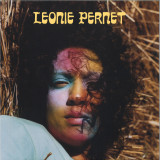
Léonie Pernet's second album Le Cirque de Consolation, to be released November 19th on InFiné & CryBaby, inhabits a world where borders dissolve and everyone makes their own unique and singular utopia. Hereby, the record questions the links between pop music, African cultures and electronic music, neo-classical music or the role of voice, whether human or synthetic. Sophomore albums can be a painful process for an artist - how refreshing it is to hear one so decidedly optimistic.
Textextext - (add your write up)
The sought after whirlwind of French Pop that exploded onto the scene with her debut "Crave", Leonie Pernet, returns with her second album, "Le Circque de Consolation", a sort of double negative of her first. While the yearning that sat at the center of "Crave"might not have been resolved, the young multi-instrumentalist and singer has found a new perspective - a more open and positive outlook on her own life and work. Perhaps telling, then, that the title was the first element of the album to exist: as it is and has always been a journey of personal (and collective) consolation first, a musical confrontation with the self.
"This record parallels my life's journey," confirms Léonie, "it reflects what has happened in my life since 'Crave' came out and how I feel today. There's still a lot of melancholy, but a lot more sunshine and light. In four years, I've become sober, which has saved me; I've worked a lot on my voice, which is a part of a desire to speak, to address my audience more directly, and also a more pronounced pop desire." In line with her new-found "openness", Leonie invites another musician into her creative process for the first time on "Le Cirque de Consolation": Jean Sylvain le Gouic, who lended his coproduction and perspective to her, while Leonie still plays almost all instruments herself with an astounding prowess.
Leonie's voice oozes with a new-found self-confidence and takes center stage amidst eclectic, distinctively fun and open-minded production. Sometimes she sings in English, mostly in French: "I worked a lot on my voice," confirms Léonie, "I didn't dare to sing before, neither live, nor on record, nor in the studio." Surrounding her astounding, intoxicating voice are forays into any direction imaginable: from harsh, experimental electronics to the more sombre, organic and quiet moments - and everywhere, there is the vision of Africa, (also Middle East) it's many sonic gifts and cultures.
Leonie has found a universal utopia that she craves for - a musical, cultural amalgamation that is decidedly non-western, political and poetic, rooted in self-discovery and the connection with other humans: African and oriental percussion, synthesizers, drum-machines; Léonie mixes genres and instruments with ease and precision. The French novelist and philosopher Édouard Glissant - whose work and writing had a big influence on Pernet - coined the term "Creolization ", the "bringing together of several cultures or at least several elements of distinct cultures, in one part of the world, resulting in new data, totally unpredictable in relation to the sum or the simple synthesis of these elements."
From "Hard Billy ", a techno-influenced rebellious anthem, to "Les Chants de Maldoror," a club and dance song propelled forward by feverish derboukas, to the deeply moving "A rebours" and its Afro-electronic rock. Léonie Pernet inhabits a world where borders dissolve and everyone makes their own unique and singular utopia. Hereby, the record questions the links between pop music, African cultures and electronic music (Intérieur Négro), neo-classical music (Le Cirque de consolation, Dandelion), or the place of the voice, whether human or synthetic as in the atmospheric "Vowel". Sophomore albums can be a painful process for an artist - how refreshing it is to hear one so decidedly optimistic.
Far View’ is a compilation of tracks from Joel Vandroogenbroeck’s series of library
music releases for the Coloursound label, a uniquely trippy catalogue of music
vignettes long overdue for their day in the library music sun, remastered from the
original analogue reels.
The late Joel Vandroogenbroeck was among the rare breed of musicians who defy
all categorization, using music conventions to explore the far reaches of human and
cosmic consciousness. After passing through the jazz and rock worlds from the
1950s through the ‘70s, Joel found new outlets for his expansive vision in the ‘80s
with the Swiss library music label Coloursound. ‘Far View’ draws tracks from these
releases, which form a unique entry in the genre of library music. For the uninitiated,
this is just one way to begin a brilliant musical trip through Vandroogenbroeck’s
undersung career.
A musical prodigy from youth, Joel arrived at Brussels’ classical Music Conservatory
in the early ‘50s, but his studies were curtailed by the revelation of jazz. Soon, Joel
was touring in groups around Europe and beyond with luminaries like Eje Thelin,
Stan Getz, Bob Brookmeyer and Zoot Sims. As time passed, his musical
consciousness continued to expand: time spent in Africa sparked a deep exploration
of the music of the Middle East. The new rock sounds from England, like The Beatles
and Jimi Hendrix, were mind-blowing. And from Germany came the krautrockers,
with something completely else again.
Vibing on the eclectic energies of the day, Vandroogenbroeck formed Brainticket,
whose approach to composition fused jazz, rock and a mélange of global musical
traditions, combining a Western rhythm section and analogue synthesizers with an
astonishing array of acoustic instruments; ethnic flutes, sitar, harp, kalimba and all
manner of percussion. Steeped in diverse approaches of playing and listening,
Brainticket drew from prog rock and psych, traditional sounds and minimalist music,
all of which passed through their hands like the tributaries that formed the basis of
what would soon be known as New Age music.
In the late 1970s, Vandroogenbroeck began composing for sound libraries, with
recordings to be used as underlay music in films, radio and television. Gunter
Greffenius’ Coloursound Library was formed in 1979 with an inclusive vision of
music, including experimental, progressive rock, and some of the earliest examples
of ambient music - styles not well represented in other libraries. Coloursound gave
Joel the freedom to create music in any style or genre, and over the next decadeplus, he embarked on a musical journey that is unmatched anywhere in the world of
library music. Working under the pseudonyms VDB, his output on Coloursound is
some of his most sublime and otherworldly - ranging from dark electronics to
imagined music of the ancient past to ethereal ambient sounds of the future, which
makes sense, as Joel’s records were always ahead and in and out of their time.
Joel VandroogenbroeckJ passed away in in December 2019, while work was being
done assembling this collection. Curated by David Hollander, whose ‘Unusual
Sounds’ album and book of the same name delightfully explore the library music
world, ‘Far View’ draws from ten of Joel’s Coloursound albums with lovely cohesion.
Featuring brilliantly remastered sound, liner notes from David Hollander, album art
designed by Robert Beatty and reproductions of the Coloursound album jackets, ‘Far
View’ is an entry point to Joel Vandroogenbroek’s mind-bending body of work - sonic
soma to expand your consciousness and vibrate with the cosmos.
There are records with empathy, records which are your friends and then there's the others... There might be little difference between them, a certain "je ne sais quoi", an "almost nothing but still something" which makes the difference between almost pointless and vital records. Despite, or rather thanks to his cynical despair, Matt Elliott's music never holds up a moralizing mirror to us - on the contrary, it creates a compassionate dialogue with listeners like the rhythm of two steps that synchronize to become as one. In 2016, Matt Elliot brought out his seventh solo album The Calm Before whose obscure title is neither exactly threatening nor comforting... the calm before what? Before the storm for sure but maybe also before the great record, the immediate classic we felt might be coming for a long time in the dual discography of the Bristol-born artist working under his own name and his electronic alias Third Eye Foundation. The elegant details and perspectives of Little Lost Soul (2000) already hinted at the upcoming masterpiece from the English singer-songwriter. The Mess We Made (2003) was Matt Elliott's first solo album and portrayed a universe in a kind of flight towards Balkan horizons made up of visceral despair. With the Songs trilogy, he put aside the electronic side of his work to continue working with a minimalist, stark and lucid style of writing. The Broken Man (2012) was full of tears and long laments sometimes carried by Katia Labèque's piano on a record which painted new shades of grey. On this record Matt began working with the producer, arranger and multi-instrumentalist David Chalmin (La Terre Invisible) who has kept on collaborating with the Bristol-born singer since then. Their partnership continued on Only Myocardial Infection Can Break Your Heart (2013) and The Calm Before (2016). Stéphane Grégoire is the head of the Ici D'Ailleurs label which has accompanied Matt Elliott since 2005 and perhaps he describes this album the best: "This new record by Matt is without a doubt his best album to date, a record that takes him into another dimension where he fully asserts himself as a songwriter and singer of the calibre of artists like Bill Callahan, Leonard Cohen or Johnny Cash." Matt Elliott's other records all seemed like empathic links between each other. Farewell To All We Know is an instant classic based on the sensitive piano and superb arrangements of David Chalmin, the sensitive cello of Gaspar Claus, the subtle bass of Jeff Hallam (who has also played with Dominique A and John Parish). There is a clear form of alchemy in all of this and still we find Matt Elliott's usual atmospheres and scenery, the same Eastern European folk music, long songs that take time to settle over time. Everything is the same but also is transfigured. By making his music stark and purifying and redefining the subject matter, Matt Elliott's work became so much more delicate. However this work is never frail nor really turned in on himself and thus becomes like a vital tune that vibrates and unfolds. The opening song Farewell To All We Know seems torn between the fear of what tomorrow may bring, inevitability and hope for the future in a permanent and progressive dramatic tension expressed by his Spanish guitar, the impressionist style piano and Matt's voice teetering on the edge of whispers. A funereal tribute to endless twilights and the dawns we all dream of seeing. There are touches of Leonard Cohen from Songs from a Room or Thanks For The Dance in The Day After That with Gaspar Claus's counterpoint cello. There is no spirit of resignation in Matt Elliott's work - life's path has to be followed against all odds. We have to follow the river's flow to reach the immense ocean and its infinite freedom. The haunted instrumental Guidance Is Internal harks back to the atmospheres of Howling Songs (2008) with its guitar parts full of scansions and muted threats. The music is transcendental but never seems afraid of the risk of falling. This is also what Bye Now tells us with its quasi-obsolete simplicity and sunburst melancholy reminiscent of the work of Luiz Bonfá, Bill Evans on Peace Piece or laidback crooners of the 50s. In Farewell To All We Know, Matt Elliott incessantly alternates between the dual desires to face up to the world or to protect himself from it. Hating The Player, Hating The Game is a lucid statement about the dullness of our daily lives sometimes, our right to get out of the game and no longer want to be part of it. Matt Elliott is tender but spares no one, particularly himself. Aboulia speaks of the tiredness of living and of looming death while Crisis Apparition says that there is always a time for reconstruction after chaos. This is like initially wearying wandering in the ruins of Aleppo with the slow dilution of the melody into a hallucinated drone. However the smell of great fires always fades and the earth always regenerates. Matt Elliott seems to suggest that the survival instinct is stronger than any cold winds could ever be. Matt Elliott never sings of certainties and prefers possibilities. Possibly the worst is over? Maybe... Maybe the storm has passed and devastated everything, now we just have to rebuild and live again. Farewell To All We Know shows us the distance that still needs to be walked and he walks next to you - right next to you, he is the friend who doesn't spare you the truth like all true friends really do.
Five years after the release of "Je vous dis" in 2018, Geins't Naït and L.Petitgand's second album from the "Mind Travel" and "Make Dogs Sing" collection on the German label "Offen", the duo are now writing a new chapter in their story with this fascinating poetic tale. The same mysterious and heady atmosphere which characterises the two musicians is present in this new work but clearly they have never ceased refining and polishing their sounds to give their compositions even more power and depth. Geins't Naït and L.Petitgand here offer twelve new tracks with names as enigmatic as the title "Like this maybe or This" itself and the record's whole universe. In reality, these mysterious names lead us to let ourselves be taken to the deep meaning of their creation. The subject matter is certainly difficult to grasp and invites us on an inner journey while leading us to doubt and question ourselves incessantly. There is a perfect alchemy between these two artists though this was far from self-evident as they come from two very different schools. Thierry Merigout, who is now the only representative left from the late 80's experimental project Geins't Naït in Nancy, comes from the post-industrial scene. As for Laurent Petitgand, he is a pure melodist who is best known for his work as a composer of music for films and live shows and has collaborated with Wim Wenders and Paul Auster in particular. "Like this maybe or This" is a fully accomplished symbiosis between Geinst Nait's industrial and experimental tonalities and the celestial melodies of Laurent Petitgand. "Shape of the storie" starts the album with a bewildering atmosphere which mixes a sample of a guttural voice with cavernous resonances thus prefiguring the album's general atmosphere. However, while some tracks like "HAC" fuel our existential anguish, other tracks have a poetic and melancholic tonality which touches our deepest humanity. This is the case of "Dustil" whose subtle piano notes combined with the melancholy violin show us a sublimated world. This fascinating blend of violence and gentleness makes this record an atypical work which enables listeners to lose themselves in an emotional nebula where they can perceive the turbulence and also the intensity of our inner life.
Repress - Yellow Vinyl
Harlem River marks the solo debut of songwriter Kevin Morby. Known for his work as the singer/guitarist for the Brooklyn band The Babies and bassist for Woods, the Kansas City native and new Los Angeles resident, calls the record “an homage to New York City”, his adopted home for the past five years. Harlem River features eight interweaving tales of tragedy and misfortune; a series of desperate characters playing out their dramas with the city as backdrop. A departure from some of the signature sounds of his better known projects, Morby’s songs glisten with a haunting intimacy and while he maintains that the songs are stories about other people, it’s hard not to feel a piece of him in each one; a half-imagined, half-painfully personal world of lost love, addiction, violence and prayers for the departed. The album was recorded in Los Angeles in February and March of ‘13 with producer Rob Barbato who recorded the Babies second album “Our House on the Hill” and whose guitar and bass work figure prominently on Harlem River. The album also features drummer Justin Sullivan (the Babies) as well as contributions from Will Canzoneri, Tim Presley (White Fence), Dan Iead and Cate Le Bon.