Search:whos who

Styles
All
WHITNEY K - BUBBLE

Whitney K

BUBBLE

12inchFIRELPW786
Fire Records
12.09.2025
  • Heaven
  • Something Strange
  • Jolene
  • Freud Estate
  • Tv Dreaming
  • The Ocean
  • Sunshine2
  • Beetlejuice
  • Morning After
  • Apocalypse Rock
  • We'll See
  • Rosy
  • Lately

Whitney K returns with 'Bubble', his first album for Fire Records and follow-up to 2022's acclaimed 'Hard To Be A God'. Whitney K continue his migrant mind games, summoning up a series of intriguing characters, littered with everyday foibles and fantasies. Along the way, he pens a journal of possibilities as he travels further into transient America, touching on everything from bar room chatter, rumour and distortion to misinformation, daydreams, misunderstanding and self-realisation; with anecdotes lifted from the paperback in his back pocket and his half-forgotten past. 'Bubble' is a 13-part cerebral mystery that unravels on songs that bring to mind the gruff sentimentality of the late Kris Kristoferson, Lennon's 'Jealous Guy', Eels at their most troubled and the American Gothic sketches of David Ackles; the perfect soundtrack for a Raymond Carver book club. Recorded in Montreal, it's self-produced by band members Josh Boguski and Michael Halls at their home studio. This stripped back release is Whitney K's most raw yet refined work to date-an honest, sonically paradoxical collection that finds fresh possibilities in the familiar shapes of rock, pop, and folk with the same unfiltered energy and poetic gravity we have come to expect from this modern-day troubadour whose descriptive storytelling is filled with sketchy characters and rudimentary comment. RIYL Bill Callahan, Silver Jews, Leonard Cohen, Lou Reed, Cate LeBon, Kurt Vile, Wilco, MJ Lenderman, Waxahatchee, Cass McCombs, Giant Sand...

pre-order now12.09.2025

expected to be published on 12.09.2025

24,58
Pangaea  / Manía - Neuromance

Pangaea / Manía

Neuromance

12inchHES049
Hessle Audio
12.09.2025

HES049 sees Pangaea expand his sonic palette with two striking tracks that bridge underground club dynamics and bold pop instincts. Manía features rising Spanish artist Jazz Alonso, whose lyrics - "Si preguntan na na na / Yo me tapo la boca" - evoke a sense of playful secrecy, turning whispered rumours and private obsessions into a rhythmic chant. "Cosa mía, pequeña manía" becomes both confession and provocation, layered over a beat that coils with tension and groove.

On the flip, Neuromance pushes the tempo to 155 BPM, blending the high-speed energy of happy hardcore with the synthetic melancholy of '80s synth pop. Snapping synth stabs and gated drums drive a precise, mechanical rhythm, while vintage textures drift through a low end rooted in UK club culture. Together, the two tracks showcase Pangaea at his most dynamic, bold, and refined.

out of Stock

Order now and we will order the item for you at our supplier.

15,34

Last In: 30 days ago
Everything Is Recorded & Noah Cyrus & Bill Callahan - Porcupine Tattoo

Everything Is Recorded, the collaborative music project centred around producer Richard Russell, returns with a brand new single, “Porcupine Tattoo” - a stripped-back lament featuring two American musical icons - Noah Cyrus and Bill Callahan - who appear on record together for the very first time. The collaboration came together while Russell was hosting sessions for a forthcoming Everything Is Recorded album, one set to build on previous acclaimed releases including 2018’s eponymous, Mercury Prize-nominated debut album. Reaching out to Callahan - an artist he’s long admired and whose song “I’m New Here” was covered by, and provided the title for, Gil Scott-Heron’s final, Russell-produced studio album - Russell asked the simple question “who would you like to write a song for?”. “Noah Cyrus” was Callahan’s reply. The final single features Callahan’s original demo vocal, pitched down and resting on layers of sub bass and complemented by Cyrus’ crystalline counterpoint vocal. It was recorded during a rainy week of sessions in a bungalow at Los Angeles’ Chateau Marmont, which Russell described as “comfortable but haunted”. The song continues a lineage of Russell productions – from “I’m New Here” to Bobby Womack’s “Deep River” and Damon Albarn’s “History of a Cheating Heart” – that explore a sparser, more acoustic side of his sound. The limited edition 7” vinyl single is released on XL Recordings in partnership with Drag City, Bill Callahan’s long term label home. The 7” exclusively features a second collaboration between Everything Is Recorded and Callahan in the form of “Norm”, a tribute to the Austin-based singer songwriter’s favourite comedian Norm MacDonald”

out of Stock

Order now and we will order the item for you at our supplier.

11,13

Last In: 7 months ago
Various - Dolores: Salsa & Guaracha From 70's French West Indies

In Guadeloupe, many people think that jazz and ka music are like a ring and a finger. To some extent, the same could be said about so called Latin music and the music played in the French West Indies.

Both aesthetics were born in the Caribbean and bear so many connections that they can easily be considered cousins. In constant dialogue, there are lots of examples of their fruitful alliance and have been for a while. The English country dance that used to be practiced in European lounges came to be called kadrille in Martinique and contradanza in Cuba. They both featured additional percussion instruments inherited from the transatlantic deportation. Drawing from shared feelings about the same traumatized identity – later to be creolized – it would be hard not to assume that they were meant to inspire each other. The golden age of the orchestras that graced the Pigalle nights during the interwar period further proves the point. As soon as the 1930s, Havana-born Don Barreto naturally mixed danzón and biguine music in a combo based at Melody's Bar. In the following decade, Félix Valvert, a conductor who was born and raised in Basse-Terre in Guadelupe, also worked wonders in Montparnasse with La Coupole, which was an orchestra made up of eclectic musicians. Afro- Caribbean performers of various origins were often hired on rhythm and brass sections in jazz bands, which used to enliven the typical French balls of the capital. In the 1930s and onwards, Rico’s Creole Band was one of them.


Martinican violinist-clarinettist Ernest Léardée, who would become the king of biguine music as well as the main figure of French Uncle Ben's TV commercials (a dark stigma of post-colonial stereotypes), had musicians from the whole Caribbean sphere play at his Bal Blomet – and they all enchanted "ces Zazous-là" (according the words of Léardée's biguine-calypso piece). In les Antilles (French for French West Indies), music history started to speed up in the 1950s, when trade expanded and radio stations grew bigger. The Guadelupean and Martiniquais youth tuned in their old galena radio sets to South American and Caribbean music. As for the women traders, les pacotilleuses, they bought and sold goods across different islands (the "passing of items through various hands" was thought to be most pleasurable) and brought back countless sounds in their luggage. Such was the case of Madame Balthazar, who once returned from Puerto Rico with the first 45rpm and 33rpm to ever enter Martinique.

Out of this adventure was created the famous Martinican label La Maison des Merengues, a music business she opened and undertook with her husband and which proved to be a major landmark. At the end of the 1950s, in Puerto Rico, Marius Cultier competed in the Piano International Contest playing a version of Monk's Round 'Midnight. He won the first prize and this distinction foreshadowed everything that was to come. Cultier, the heretic Monk of jazz, was quickly praised for writing superb melodies, always tinged with a twist that conferred a unique sound to his music. It didn't take long for the gifted self-taught musician to get to play with Los Cubanos, making a name for himself thanks to his impressive maestria on merengues.

The rest is history. Besides, in the late 1950s, Frantz Charles-Denis, born into the upper middle class in Saint-Pierre and better known by his first name Francisco, went back home after working at La Cabane Cubaine – a club located rue Fontaine where he had caught the Latin fever. Francisco's music was therefore heavily marked by his Cuban cousins' influence, which gave the combos he led a specific style and also led to renewal. Things were swinging hard in La Savane, located in the main square in Fort-de-France. He set up the Shango club close by and tested out the biguine lélé there, a new music formula spiced up with Latin rhythms. Soon afterwards, fate had him fly to Puerto Rico and Venezuela.

As for percussionist Henri Guédon (percussions were only a part of his many talents), he was born in Fort-de-France in May 22nd 1944, the day marking the celebration of the abolition of slavery. As an old man, he could remember that in " his father's Teppaz, a lot of hectic 6/8 music was constantly playing...". In the opening lines of his Lettre à Dizzy, a small illustrated collection of writings published by Del Arco, he highlighted the huge impact that cubop had on him as a teenage boy, around 1960. He eventually turned out to be the lider maximo in La Contesta, a big band steeped in Latin jazz. He was also the one who originated the word zouk to describe music which brought the sound of the New York barrio to Paris. It was the culmination of a journey that started in Sainte-Marie: "a mythical place for bélé, the equivalent of Cuban guaguancó". In the early 1960s, the tertiary economy developed to the detriment of agriculture. Yet rural life was where roots music emerged in Martinique and in Guadeloupe.

Record companies played a major part in the process of Latin versions sweeping across the islands – before reaching everywhere else. Producer Célini, boss of the great Aux Ondes label, and Marcel Mavounzy, both the head of Émeraude records - a firm which was founded in 1953 - as well as the brother of famous saxophonist Robert Mavounzy, were big names to bear in mind. Although there were many of them - all of whom are featured on this record - Henri Debs was definitely the major figure in the recording adventure. He proved to be so influential that he even got compared to Berry Gordy. In the mid 1950s, when he acquired his first Teppaz, he worked on his first compositions: a bolero and a chachacha. Then, he became the one man who made people discover Caribbean music, from calypso to merengue. He was among the first ones to rush out to San Juan, Puerto Rico, to buy records and distribute them through a store run by one of his brothers in Fort-de-France. He had members of the Fania All Star come and perform there, which he was madly proud about. He was also the first one to pay attention to Haitian music, such as compas direct and various other rhythms which would soon flood the market. As a result, many of the combos hitting his legendary studio would end up boosted by widespread "Afro-Latin" rhythms. However, he never denied his identity: gwo ka drums were given a major role, although they were instruments which had long been banned from the "official" music spheres. The present selection bears witness to such a creative swarming. Here are fourteen tracks of untimely yet unprecedented cross-fertilization: all types of music rooted in the Creole archipelago have found their way, whatsoever, to the tracklisting. Whether originating from the city or being more rural, they all go back to what Edouard Glissant, in an interview about the place of West Indian music in the Afro-American scope, called "the trace of singing, the one which got erased by slavery." "It is so in jazz, but also in reggae, calypso, biguine, salsa... This trace also manifests through the drums, whether Guadelupean, Dominican, Jamaican or Cuban... None of them being quite the same. They all point to the idea of a trace, seeking it out and connecting to each other through it. This is the hallmark of the African diaspora: its ability to create something new, in relation to itself, out of a trace. It may be the memory of a rhythm, the crafting of a drum, a means of expression which doesn't resort to an old language but to the modalities of it." The opening track features one of the emblematic orchestras of this aesthetic identity, criscrossing many music types from the archipelago. The 1974 Ray Barretto guajira – Ray Barretto was a major New York drummer influenced by Charlie Parker and Chano Pozzo – is magnificently performed by Malavoi, a legendary Fayolais group (i.e from Fort-de-France). Additionally, the compilation ends on a piece by Los Martiniqueños de Francisco. It symbolically closes the circle as it is a genuine potomitan of Martinique culture which also functions as a tireless campaigner for Afro-Caribbean music. Practicing the danmyé rounds (a kind of capoeiria) to the rhythm of the bèlè drum, it delivers a terrific Caterete, a kind of champeta of Afro- Colombian obedience which was originally composed by Colombian Fabián Ramón Veloz Fernández for the group Wgenda Kenya. The icing on the cake is Brazilian Marku Ribas, who found refuge in Martinique in the early 1970s, bringing his singing to the last trance-inducing track. These two "versions" convey the whole tone of a selection composed of rarities and classics of the tropicalized genre, swarming with tonic accents and convoluted rhythms. It is the sort of cocktail that the West Indians never failed to spice up with their own ingredients. For instance, the Los Caraïbes cover of Dónde, a famous Cuban theme composed by producer Ernesto Duarte Brito, has a typical violin and features renowned Martinique singer Joby Valente and his piquant voice.


The track used to be – or so we think – their only existing 45rpm. The meaningful Amor en chachachá by L'Ensemble Tropicana, a band which included Haitian musicians among whom was composer and leader Michel Desgrotte, also recalls how Latin music was pervasive in the tropics in the mid-1960s. They were the ones keeping people dancing at Le Cocoteraie in Guadelupe and La Bananeraie in Martinique. Around the same time, another "foreign" band, Congolese Freddy Mars N'Kounkou's Ryco Jazz, achieved some success on both islands by covering Latin jazz classics – such as their adaptation of Wachi Wara, a "soul sauce" by Dizzy Gillespie and Chano Pozo whose interweaving of strings and percussions can have anyone hit the dancefloor. How can you resist Dap Pinian indeed, a powerful guaguancó by Eugene Balthazar, performed by the Tropicana Orchestra and published by the Martinique-founded La Maison des Merengues? It also acts as a symbol of the maelstrom at work. Going by the name Paco et L'orchestre Cachunga, Roger Jaffory used to play guaguancó too: his Fania-inspired Oye mi consejo is one example of his style. Baila!!!!! Dancing was also one of the Kings' focus points. Oriza is a Puerto Rican bomba and a "classic" originally composed by Nuevayorquino trumpeter Ernie Agosto, which reserves major space for brasses, giving it a special sheen.

Emerging from the New York barrios crucible was also La Perfecta, a Martinique group originating from Trinidad, whose name directly references the totemic Eddie Palmieri figure as well as his own band, also called La Perfecta. Here they borrow Toumbadora from Colombian producer and composer Efraín Lancheros and interpret it by emphasizing percussions, which set fire to the track even more than the wind instruments. The same goes for Martinique's Super Jaguars, who use Tatalibaba – a composition by Cuban guitarist Florencio "Picolo" Santana which was made famous by Celia Cruz & La Sonora Matencera – as a pretext for sending their cadences into a frenzy. In a more typically salsa vein, the Super Combo, a famous Guadelupean orchestra from Pointe-Noire that was formed around the Desplan family and had Roger Plonquitte and Elie Bianay on board, adapt Serana, a theme by Roberto Angleró Pepín, a Puerto Rican composer, singer and musician also known for his song Soy Boricua. Here again, their vision comes close to surpassing the original. In the 1970s, L'Ensemble Abricot provided a handful of tracks of different syles, hence reaching the pinnacle of the art of achieving variety and giving pleasure. They played boleros, biguines, compas direct, guaguancó and even a good old boogaloo - the type they wanted to keep close to their hearts for ever, "pour toujours", as they sang along together in one of their songs. Léon Bertide's Martinican ensemble excelled at the boogaloo which had been composed by Puerto Rican saxophonist Hector Santos for the legendary El Gran Combo.


Three years later, in 1972, Henri Guédon, with the help of Paul Rosine on the vibraphone, tackled the Bilongo made famous by Eddie Palmieri. Such a classic!!!!! And so were the Aiglons, the band from Guadelupe: choosing to execute Pensando en tí, a composition by Dominican Aniceto Batista, on a cooler tempo than the original, they noticeably used a wonderfully (un)tuned keyboard in place of the accordion. On the high-value collectible single – the first one released by Les Aiglons under the Duli Disc label – there is a sticker classifying the track under the generic name "Afro". Now that is what we call a symbol. Jacques Denis

out of Stock

Order now and we will order the item for you at our supplier.

21,43

Last In: 36 days ago
The Orchids - Lyceum LP 2x12"

The Orchids

Lyceum LP 2x12"

2x12inchPLEXUS001
Circuitry
05.09.2025

“'Lyceum' is a fountainhead of unqualified greatness. It’s a strange, sad sound harking back to old school tunesmanship – Aztec Camera, ‘Rattlesnakes’, prime-time Felt – but the whole affair is permeated with a resonant, almost tearful quality. ‘Lyceum’ is reminiscent of Galaxie 500’s ‘Today’ in that it sounds like it cost less than a round of drinks to produce. But the lo fi sound merely enhances the misty glazed-pop sound and raises the hallelujah choruses to the forefront. Rather than drowning them in production mush. Don’t pass it by”.
– Bob Stanley, Melody Maker 1989
Hailing from the suburbs of Glasgow, this five-piece are best known for their three starry-eyed albums on the renowned Sarah Records - this being an expanded version of their first (an eight-track 10” at the time).
By the tail end of the 1980s the independent music scene in the UK was turning its back on the polish and over-indulgence of the mid-80s with its gated drums and wallpaper production. And those who weren’t stretching the boundaries of sonic innovation had tuned back to the post-punk ethos of ramshackle charm and zealous melody, even dousing the spirit with some political fervour once more. Influences were more likely to be Television and the Television Personalities than MTV.
The Orchids and The Sea Urchins were the first two bands to release 7” singles on the Sarah label having previously begun their recording existence on a shared flexi disc in 1987 (The Sea Urchins went on to become Delta, whose classic album ‘Slippin' Out’ from 2000 will be the second release on Circuitry). The Scottish five-piece released ‘I’ve Got a Habit’ and ‘Underneath the Window, Underneath the Sink’ as EPs before really finding their feet with ‘Lyceum’; the tracks, remastered from the original Toad Hall tapes are included on this reissue as are the three songs from the ‘What Will We Do Next?’ 7” (this collection closes with the frazzled stretch that is ‘Yawn’). 'Lyceum' was originally released in August 1989.
The album opens with ‘It’s Only Obvious’ and its gloriously youthful chorus of “who needs tomorrow when all I need, all I needed was you”. James Hackett somehow appears both forthright and rejected, something that one of their musical heroes The Go-Betweens also had down to a fine art. It barely takes a breath until midway through side two where ‘Hold On’ (sounding suspiciously like an unlikely objective) descends into the intro of ‘Blue Light’, the counted-in ‘1, 2, 3, 4’ whispered like the most hopelessly dejected rally. If that sounds depressing it isn’t. This record by The Orchids was a spirited source of comfort for an 18 year old at the time and still shudders with the best type of melancholy, one that’s spirited not indulgent. If you’re not familiar with the band’s charm, this is where you should begin.
'Lyceum' is released on double black vinyl by new label Circuitry.

pre-order now05.09.2025

expected to be published on 05.09.2025

21,43
Mel D - Young Bones (LP+CD)

Mel D

Young Bones (LP+CD)

12inchTWOGTL128-LP
TWO GENTLEMEN
05.09.2025

Within the nine carefully composed tracks of Young Bones, Mel D’s characteristic voice stands out in all its facets, varying from fragile to powerful, haunting to playful, but most of all soulful. With a voice that’s both extraordinarily clear and melancholic, Mel D is something surprisingly rare: a singer whose artistic expression goes beyond the mere use of her voice. On Young Bones, Mel D uses contemporary figures, rephrasing them into timeless formulas. Her unique musical language embodies references to genres like Indie or Alternative. In other moments, her sound leans baroque, then jazzy, soulful, and contemplative. Each song represents an ode to being connected: to the world, other people, and most of all to the beauty of music. Mel D draws her inspiration from struggles felt in the current world climate: “I have felt overwhelmed by the world we live in and its countless challenges,” said Mel D. “As if we’re all a bit directionless in our own lives.” Nevertheless, Mel D uses her musicality as a tool for resistance - using it to transform sadness and anger into creativity, and to give world-weariness a voice that seduces, comforts, and inspires. On Young Bones, Mel D sings us to a place where we might find hope - with songs rooted in concern, solidarity, humanness, and empowerment, inviting the listener to lean into those feelings. Bring the Witches Back, a hymn to witchcraft, is a quiet song that summons the return of witches with feminist urgency, for more love and magic to open ourselves towards each other and the world. Soft, a soulful song with a tender melody, gently lulls the listener into an in-between dimension, full of opportunities. Meanwhile, in the coming-of-age ballad, Slowly Growing, she raises questions about belonging and identity, pointing directly at our emotional core. Where Do You Look When It Hurts? speaks to the sensation of exhaustion and emptiness, offering musical warmth and a sense of community in moments of lethargy. Finally, listening to the album, one always feels in good company. Playfully working in folk and electro-pop elements, Mel D takes us on a ride toward love and a sense of belonging, particularly on the track We win. Young Bones was recorded in Zurich and Paris with two outstanding producers of our times: Renaud Letang, who has previously collaborated with Feist, Chilly Gonzales or Lianne La Havas, and Dino Brandão. The latter recognized Mel D’s artistic uniqueness during their first meeting, inviting her to a recording session in his studio and bringing her into the band of Swiss superstar, Faber. Mel D’s solo project was more a product of coincidence than planning, as she says, even though an undisputed talent and passion for music had always been apparent throughout her youth. During her studies in fine arts in Zurich, she founded the electronica-duo mischgewebe, and composed soundtracks for theater and movie productions, as well as for exhibitions. Long before forming her current artistic identity, she went by the nickname Mel D, in a humorous reference to the Spice Girls. Although her personality and musical language suggest thoughtfulness and a melancholy touch, Mel D acknowledges that an honest laugh is never out of place, making her sympathetic and approachable.

out of Stock

Order now and we will order the item for you at our supplier.

24,79

Last In: 7 months ago
Naoki Zushi - III (LP 2x12")

Naoki Zushi

III (LP 2x12")

2x12inchWOE021LP
World Of Echo
05.09.2025

World Of Echo announces the reissue of two remastered albums by Japanese guitarist and songwriter Naoki Zushi, 1988’s Paradise, and 2005’s III. Two classics of Japanese psychedelia, both Paradise and III were originally released on Org Records, the imprint of Shinji Shibayama of acid-folk group Nagisa Ni Te, with whom Zushi has guested on second guitar for decades. Both intimate and expansive, rich with revelatory songwriting and blasted, sky-scouring guitar, these reissues return these albums to print for the first time since the 2000s. It’s the first time III has been officially released on vinyl, with an extra, previously unreleased track, “Under The June Moonlight.”

Recorded in Kyoto’s Townhouse Studios in mid 1987 and released in limited-to-500 vinyl pressing in 1988, Paradise emerged from a scene in Kansai, Japan that was embracing the idiosyncracies of 1970s singer-songwriters, the soaring solos of early seventies psychedelia, and the DIY impulse of 1980s post-punk. While Zushi’s musical history stretched back to the early eighties – he was a founding member of Jojo Hiroshige’s noise outfit Hijokaidan – he found his feet with groups like Hallelujahs, whose dream-pop collection Niku O Kuraite Chikai Wo Tateyo was recently reissued by Black Editions, and Idiot O’Clock.

Paradise appeared two years after that Hallelujahs album and share much the same membership – Zushi’s backing band on several of the songs includes Shibayama on drums and Ken-Ichi Takayama (aka Idiot) on electric guitar, though just as often, Zushi plays all the instruments himself. The coordinates here are wide-reaching – you can hear the volume and intensity of Neil Young & Crazy Horse (on “Hallelujah: Left Side” and “Paradise: Midday”), the slow-motion magic of Galaxie 500, the idiosyncratic spirit of The Only Ones, all mixed up with tender guitar miniatures and stumbling garage-psych-pop moves.

Seven years later, after the transitional album Phenomenal Luciferin, Zushi released III. Perhaps his masterpiece, it’s already been bootlegged on vinyl, but this reissue is the real deal. The album was recorded at Studio Nemu over seven years, and sees Zushi backed by Shibayama (bass) and Masako Takeda (drums), his erstwhile bandmates in Nagisa Ni Te. By this stage, Zushi had started to really stretch out, and many of the songs on III swoon languorously, taking their sweet time to say what they need to say. It’s rich with lovely, melancholy songs, in a similar realm to bandmates Nagisa Ni Te, of course, but you can also hear traces of everything from Syd Barrett’s The Madcap Laughs, through seventies private press loner folk, to the slow-burn meanderings of the likes of early Low or Damon & Naomi.

When interviewed by Shibayama in the mid-nineties, Zushi said of Paradise, “it was a sort of collection of songs that had meant something to me up to that point… it was my paradise. I wanted to create paradise.” That’s something Zushi achieves on both of these albums – visionary Japanese psychedelia, en route to paradise. - Jon Dale


g Under The June Moonlight vinyl only bonus track

pre-order now05.09.2025

expected to be published on 05.09.2025

30,04
GASTR DEL SOL - THE SERPENTINE SIMILAR

GASTR DEL SOL

THE SERPENTINE SIMILAR

12inchDC106
DRAG CITY
05.09.2025

Back from the undead in the fresh (because we believe in upgrades & afterlifes!) is this new pressing of the first of all Gastr del Sol records, The Serpentine Similar. It is one of several distinct initiators of a definitive musical drift in the 1990s, and a drift all of its own, to boot! At the time, this album was largely heard within an underground whose boundaries were clearly defined - but if today"s sound-pool of "commercial" music is deeper and wider than it was back then, it is without a doubt due to the cracking open of certain doors of perception by Gastr del Sol, alongside their esteemed others. The year was 1992. After a bruising run of tour dates the year before, the final lineup of Bastro, a power-trio of David Grubbs, Ken (Bundy) Brown and John McEntire, retired, exhausted. Shortly thereafter, they were rebirthed, sans drums, via a new set of ideas composed in the cut-down configuration of Grubbs on guitars, keyboards and vocals and Brown on bass. Playing in duo format opened up sound and intention, leaving the need for speed (and the stock in rock) out, while letting in an expanse of brooding, droning acoustic space that highlighted the songs" serpentine shapes. This was something so radically different as to require a new calling card: henceforth, Gastr del Sol. Signing to Teen Beat, Gastr del Sol completed The Serpentine Similar in late 1992 for release the following year (the DC reissue came in "97). In the final rendering, Serpentine"s roof-rent, white-sky execution was attenuated with several percussion appearances from the prodigal John McEntire. Over the next five years, his cameo presence was a constant in Gastr del Sol"s steadily-evolving tradition of significant breaks from tradition at every turn. There would be an even more significant tradition-breaker onboard for all this; following the release of The Serpentine Similar, Jim O"Rourke joined Grubbs in Gastr as Brown exited (to focus on Tortoise, with McEntire et al). For the new Gastr duo, a world of new directions in music awaited, the future became the past, and the music of Gastr del Sol emerged from the thin air, then returned there. Now, The Serpentine Similar has been returned to vinyl from the temporal streams of contemporary music listening, a glorious rematerializing of all its spatial details on LP for the first time in 20 years.

pre-order now05.09.2025

expected to be published on 05.09.2025

30,46
HAWA & KASSE MADY DIABATE - TOUMARO
  • Keme Bourama
  • Sozani
  • Kasse Dya
  • Kasse Moro
  • Fognana Kouma
  • Niagaleba
  • Kaira
  • Simbo
  • Mande Djali
  • Toumaro

Kasse Mady Diabate, a key figure in Malian music, left his mark on history with his gentle yet powerful voice, earning him the nickname "the golden voice of Mali". A respected Mandingo artist, he was known for his ability to touch souls with melodies and texts steeped in depth and tradition. As a griot, he carried the musical heritage of his people with dignity and talent. The album title song, Toumaro (A bientôt), written by his daughter Hawa Kasse Mady Diabate, is part of this heritage, celebrating love and gratitude. After Kasse Mady"s sudden death in 2018, Hawa continued the album her father had started, offering a poignant tribute to his legacy and a beautiful way to connect with him spiritually through music. Hawa herself is an iconic figure on the Malian music scene, particularly as a member of Trio Da Kali, the griot "super-group" whose album Ladilikan with the Kronos Quartet was a true masterpiece. Toumaro is a testament to the richness of the griot tradition, carried on by artists such as Hawa as well as Lassana Diabate and Madou Kouyate. Their collaboration on Toumaro with renowned musicians underlines the importance of passing on cultural and musical values, while renewing the genre through contemporary arrangements.

pre-order now05.09.2025

expected to be published on 05.09.2025

23,49
TARA LAINE - You Made Me Believe (7")
  • A1: Original
  • B1: Instrumental

The talented Canadian vocalist Tara Laine recorded the funky gem “You Made Me Believe” with members of the band Change, an Italian-
American post-disco group that was heavily influenced by Chic. Recorded in 1985 for the legendary Street Level label, featured here is he
original 12” version complete with bonus instrumental. This session was produced by in-demand session drummer Leslie Ming, whose fine work
can be heard on the records of Kashif, Melba Moore, B.T. Express and many others.

pre-order now05.09.2025

expected to be published on 05.09.2025

14,66
CHESTNUT BROTHERS - Sweet Little Rita (7")
  • A1: Original
  • B1: Instrumental

Local Philadelphia singing sensations Al and Tyrone Chestnut self produced the classic 12" single "Sweet Little Rita” mixed in New York in 1983
by the highly regarded Steve Goldman, who was the chief engineer for Mighty M productions and whose mixes for Kashif, Evelyn Champagne King, Melba Moore, George Benson and others, became radio staples. Like most Street Level releases,
"Sweet Little Rita" was recorded inPhiladelphia, mixed in New York, and originally released in Canada. Presented here is the original 12" version plus bonus instrumental version.

pre-order now05.09.2025

expected to be published on 05.09.2025

14,66
LEMURIA - Thunder In Your Love (7")
  • A1: Original
  • B1: Instrumental

A hard-hitting slab of electro-boogie released on the legendary Street Level label in 1985, Lemuria’s Thunder In Your Love was written and
produced by Phil Valentine, who also provides the gritty lead vocals, and features backing from members of the influential Italo-American post-
disco outfits B. B. & Q. Band and Change, including New York session aces Leslie Ming (drums), Timmy Allen (bass) and guitarists Kevin
Robinson and Ira Siegel, whose impressive fret work powers this highly addictive track. This is a must-have for collectors of funky sounds and
rare groove from the mid-1980s.

pre-order now05.09.2025

expected to be published on 05.09.2025

14,66
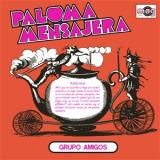
GRUPO AMIGOS - PALOMA MENSAJERA
  • No Sabes Que Me Siento Bien
  • Mujer
  • Dama
  • Son Las 5
  • En El Campo
  • Everybody Is Free Bonus Track
  • Ensueño
  • El Tren Del Señor Taylor
  • Atardecer De Un Verano
  • Buscando Un Hogar
  • Psiquiatra
  • Dirty Girl Bonus Track

"Paloma mensajera" (featuring members of New Juggler Sound / Laghonia) shows the shift that was taking place within Peruvian rock away from psych and hard rock which had predominated during the early 70s. The style adopted by Grupo Amigos (and other bands and artists during this period) highlights the influence of soft rock, UK, US and Latin American folk rock and, above all, the desire to keep the melodic greatness of The Beatles alive. This reissue includes bonus tracks and extensive liner notes. DESCRIPTION "Paloma mensajera" (featuring members of New Juggler Sound / Laghonia) shows the shift that was taking place within Peruvian rock away from psych and hard rock which had predominated during the early 70s. The style adopted by Grupo Amigos (and other bands and artists during this period) highlights the influence of soft rock, UK, US and Latin American folk rock and, above all, the desire to keep the melodic greatness of The Beatles alive. The positive reception albums by artists such as We All Together, Telegraph Avenue and Zulu garnered between 1972 and 1975, marked a change of paradigm and in preferences within the Peruvian rock scene. Eclecticism gained new ground, to the detriment of the sectarian and orthodox, while melody grew more present and visible, moving away from the progressive experimentation that typified underground Peruvian rock up to the beginning of the 70s. For their first single on MAG, included on this reissue, the band adopted a formula in which Beatles harmonies converged symmetrically with folk motifs. 'Dirty Girl' was a hit on the radio. A full album followed but only a fairly small number of copies of the album were pressed, which seems to have been the main reason for omitting it from the historical accounts of Peruvian rock music from the late 90s onwards. In "Paloma mensajera" all compositions were penned by the group, after several years during which cover versions were a staple. Some of the musical resources that the band had at their disposal in terms of composition and arrangements are striking and even surprising, considering that they were a debut band, whose members were under the age of 20. The arrangements included the clever use of a Moog synthesizer which had just arrived at the MAG studio. The success achieved by the Beatles tribute performances played by the members of Grupo Amigos for decades have eclipsed the songs that Edmundo, Andrés Da Ros and Simón Ames composed with youthful enthusiasm and energy between 1972 and 1973 to the point where they have almost been forgotten. This re-release of "Paloma mensajera" should help rectify this major injustice. It includes bonus tracks and extensive liner notes.

pre-order now05.09.2025

expected to be published on 05.09.2025

22,27
Royal Philosopher - Thank You Jah

Amoul Bayi Records continues its mission of discovering and showcasing West African artists. After introducing talents such as Daba Makourejah and Saah Karim, the Dakar-based label returns with a new release from one of the most soulful
voices in Gambian reggae: Royal Philosopher.

"Thank You Jah" is a song of gratitude, carried by the emotive and distinctive voice of Royal Philosopher. With humility, he expresses his thankfulness for the talent he has received, the path he has walked, and the strength that has guided him along the way.

Built on a dynamic Digi Roots riddim produced by Yared and mixed by Rootical45, the track provides the perfect space for his voice to shine. The refrain – “Thank you Jah for giving I talent” – echoes like a personal prayer and a universal message, able to resonate beyond belief systems.

Royal Philosopher is a Gambian singer whose powerful and precious voice is shaped by spirituality, African heritage, and musical commitment.

Born in Banjul, he first discovered his vocal gift in a church choir, where he developed a heartfelt and sincere expression. He fell in love with reggae through the voice of Garnett Silk, whose intensity and devotion deeply influenced his path. He began his journey with the group The Royal Family, before pursuing a solo career, releasing music with consistency and authenticity.

Today, he presents "Thank You Jah", a single produced by Amoul Bayi Records, imbued with gratitude and faith, true to his artistic vision: sincere, elevated, and deeply connected.

Designed both for turntables and streaming platforms, the single will be released in digital format and on 7" vinyl. The artwork is by renowned Senegalese graffiti artist King Mow.

out of Stock

Order now and we will order the item for you at our supplier.

13,87

Last In: 7 months ago
World Brain - Open Source

Lucas Chantre, aka WORLD BRAIN, last graced us with a solo release half a decade ago, with 2019’s Peer 2 Peer. As its name suggests, that album explored the promise and perils of universal connectivity via quirked-up songwriting and instrumental psychedelia. His new release, Open Source, deepens this internal and external journey. Bursting beyond the four walls of ‘bedroom pop’ and reflecting a move from Berlin to Paris—where much of the album was recorded—and on to Brussels, the album has a jazzy, cinematic scope (as on the Brubeck-inspired march “Fromage collatéral,”) enveloping the listener in a cosmic-pastoral audiosphere.

There are still many tones that evoke the software sounds of decades past (the exemplar here is “cAPTCHA,” whose virtual marimba and vocalese suggest a breathless, Exotica-inspired introduction .mov for the information superhighway) but the palette has become richer and more organic, lead by the woodwinds which play a major role throughout, with flute provided by labelmate Martha Rose. (On the aforementioned “cAPTCHA” one also hears the world-class whistling talents of the incomparable Molly Lewis.)

Yet the single most noticeable new element may be the use of Chantre’s native French, sung by his sister on “Ville fleurie” and the gorgeous, fluttering “Minute papillion” (the title an idiomatic injunction to slow down!) Chantre initially wrote these lyrics in English, but felt something wasn’t quite right, only realizing what was off when he heard them sung in another language. That spirit of discovery – of finding a new spark in returning home – suffuses Open Source. It invites us to play, beckons us to relax, reminds us to find serenity amidst the churn of the present: minute papillon, dans le tourbillon.

out of Stock

Order now and we will order the item for you at our supplier.

19,54

Last In: 7 months ago
Shania Twain - Greatest Hits 2x12"

Shania Twain veröffentlicht ihr rekordverdächtiges Greatest Hits Album erneut. Mit über 100 Millionen
verkauften Tonträgern ist Shania die meistverkaufte Country-Sängerin aller Zeiten, und diese Zusammenstellung zeigt, warum. Neben ihren Kult-Songs ”Man! I Feel Like A Woman!”, ”Any Man Of Mine”,
”You’re Still The One” und ”Forever And For Always” enthält diese überarbeitete und remasterte Version
nun auch ihren neuesten Hit ”Giddy Up!” und den Fan-Favoriten ”Life’s About To Get Good”.
Verfügbar ab dem 17.11.2023 als 2LP.

out of Stock

Order now and we will order the item for you at our supplier.

26,26

Last In: 3 months ago
Farron - Patience EP

Farron

Patience EP

12inchA.R.T.LESS2166
a.r.t.less
02.09.2025

In a culture of instant gratification, patience is a subversive virtue. This attitude is precisely what lies at the heart of Farron's debut 12" on the Mojuba sublabel, a.r.t.less. The "Patience EP" is a convergence of two distinctive musical forces. Here, the architect behind the Shaw Cuts imprint, whose rhythmic complexity is influenced by a personal music taste ranging from hip-hop to punk via breakbeat, meets the emotional Detroit and dub-infused techno coordinates of a.r.t.less. The result is a record that embodies this tension. Farron's characteristic, subtly broken percussion merges with warm, floating pads and stabs to form a unique, seductive whole. It's not techno for pure escalation at peak time, but rather, music for the hours before and after with a sound that challenges and rewards the body and mind equally. The EP's four tracks tell a coherent story of maturation and catharsis that goes far beyond functional club tools. Following early releases as LaChriz on labels such as Ilian Tape and the consistent refinement of his vision through Shaw Cuts, this release is both a natural progression for Farron as an artist and an exciting new addition to the sound palette of a.r.t.less. Some things are worth waiting for!

out of Stock

Order now and we will order the item for you at our supplier.

13,32

Last In: 7 months ago
terry callier - I don’t want to see myself (without you)/if I could make you

The rediscovery of Terry Callier is of the high points of in the history of Acid Jazz Records, who present the reissue of the 7” version of the song that started it all - ‘I Don’t Want To See Myself (Without You)’. A true classic of the modern soul scene.

‘I Don’t Want To See Myself…’ was the final release from Callier, whose career encompassed recording for Prestige, Chess’s Cadet label and Elektra, before this one- off single on the independent Erect label.

Despite the record fetching huge sums by the 1990s, his career had been largely unexplored, until Acid Jazz founder Eddie Piller decided to track him down. After several attempts, Eddie finally found him working as a computer programmer, and in July 1990 Acid Jazz reissued the single.

Over the next decade Terry resumed his recording and performing career, releasing new music, and was finally recognised for his brilliance as an artist. In 2006 Eddie found himself once more in conversation with Terry and they agreed on releasing a 7-inch version of the single, with an edit created by Andy Lewis.

This single is long since deleted, and now sells for upwards of £30, so with the full co-operation of his daughter Sundiata and licensed from Terry Callier Music, it is set for reissue in March 2025, backed with ‘If I Could Make You’.

out of Stock

Order now and we will order the item for you at our supplier.

14,24

Last In: 6 months ago
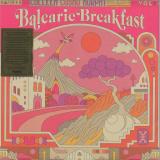
Various - Colleen ‘Cosmo’ Murphy presents ‘Balearic Breakfast’ Volume 4 LP 2x12"

Colleen ‘Cosmo’ Murphy presents ‘Balearic Breakfast’ Volume 4
Heavenly Recordings, limited edition 9 track double 12” vinyl

Released 29th August 2025
“There are curators, and then there's Colleen 'Cosmo' Murphy.” Resident Advisor

The sun has finally come out. It’s the first time something like this has happened for months and months; the first glow of an approaching summer, whatever date the calendar is currently saying it is. The whole thing acts as a curative meditation, miraculously wiping away all the greyness of the past few months. Right now, optimism abounds, outlooks change and your daily soundtrack has shifted from spiky and uptight into a kind of cosmic space where songs ebb and flow and drift on like rivers run on forever towards the glimmering sea. Bliss, right?

If you’re reading this, we’re assuming that you’re the kind of person who views summer as a state of mind rather than a good looking day on the BBC Weather app. With that in mind, we reckon you already know all about Heavenly Recordings’ series of untouchable, utterly essential Balearic Breakfast compilations, each one lovingly compiled by visionary DJ, producer and broadcaster Colleen ‘Cosmo’ Murphy - the genius club legend whose radio show of the same name (broadcast 10am to high noon every Tuesday via Mixcloud) began as an escape route from the pandemic before rapidly building a global community of dedicated Balearican listeners.

Each Balearic Breakfast album has provided a spiritual getaway from the greyness of the everyday through a handpicked selection of glorious, psychedelically coloured, expansive music. It doesn’t matter where on the planet the music hails from, or when it was made, it just matters that it fits like a jigsaw piece into the musical whole. Be it off world jazz music or vocoder led robo-disco music; whether decades old or pressed to vinyl for the first time, everything on these flawless Balearic Breakfast collections just needs to flow together and bring the listener into the sunshine, whatever time of year they’re listening.

Due for release this August, the fourth Balearic Breakfast compilation sees Cosmo take this head trip further than ever before. From the opening track’s swoop and glide that nods to Vangelis’ Blade Runner soundtrack before gliding into it’s own expansive voyage to the stars (Kandeen Love Song) to Cosmo’s own glorious Parisienne stroll through Saint Etienne’s recent Alone Together to Ilya Santana’s Spanish space disco anthem Cosmovision - a track that rolls through like a turbo powered Supernature - and the phenomenal 2015 disco version of Gloria Ann Taylor’s early ’70s classic Love Is A Hurtin’ Thing, this Balearic Breakfast offers the perfect soundtrack to the summer, whether it’s actually happening outside or just taking place in your head. After all, they don’t call breakfast the most important meal of the day for nothing.

out of Stock

Order now and we will order the item for you at our supplier.

32,14

Last In: 7 months ago
Shione Yukawa - Gingham Check no Kotori / Kaze yo Fukanaide

The beloved 2007 hit song by Shione Yukawa, which was also featured on NHK's "Minna no Uta," is finally being released on vinyl!

The long-awaited first 7" release of "Gingham Check no Kotori" comes with a rare, never-before-seen jacket shot taken by photographer Suilen Higashino at the time of its release!

The B-side features the 2008 hit "Kaze yo Fukanaide" recorded in London, making this a luxurious 7-inch vinyl. This must-have record for music fans showcases two exquisite tracks by the naturally gifted singer-songwriter Shione Yukawa, whose captivating voice continues to enchant audiences to this day.

pre-order now29.08.2025

expected to be published on 29.08.2025

29,37
Items per Page:
N/ABPM
Vinyl