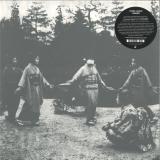
The debut album from Addy Weitzman, ‘Light Months Will Fly Over Us’ explores new-wave, romantic pop and art rock with elegance and ambition, drawing from Weitzman’s scattered network of collaborators, as well as a “frighteningly vast” personal archive of compositions. Sequenced by Seth Troxler and released on his Slacker 85 label, it represents a pivot in musical direction for the imprint, and a showcase for the songwriting craft Weitzman honed as a member of cult electro duo Footprintz, and Montreal synth-pop projects The Beat Escape and Dawn to Dawn.
The title Light Months Will Fly Over Us is derived from a line in a poem by the Russian writer Anna Ahkmatova. Weitzman was immediately struck by its “hopefulness, its mystery… it gives the feeling of being suspended, hanging in a dream-like state”. This interpretation has been translated to the album, rich in memorable songwriting that nonetheless invites the listener to lean in further. Delicately mixed by engineer Pierre Guerineau, known for his work alongside Marie Davidson, each of the eight tracks gently interrogates life’s greater mysteries; fear, love and salvation, each defining and revealing the human soul.
Opener ‘End of The Line’ invites us into an immediately lush space of lounge lizard existentialism, soft brass and piano helping Weitzman introduce “where the journey begins and the fantasy dies”. Across orchestral arrangements arranged by Adam Wilcox, whose sensitive, ambitious compositions are weaved throughout the album, ‘Beyond The Speed of Life’ brings to mind the laments of Scott Walker. Navigating vulnerability via grandeur, Weitzman’s earnest vocals flourish in wide-eyed call-and-response with the object of a transcendent love affair.
Alongside collaborator, Richard Lamb, the next chapter of the LP plunges into contrasting machine-driven moods; the wry, bubbling ‘Entertainment Is All I Wanted (And I Found It)’ is imbued with the playfulness and experimentation of 80s electronic pioneers such as Fad Gadget, while the tougher, icier ‘Stranger To Your Kind’ shifts in a more instrumental direction, recalling Weitzman’s dancefloor experience, as well as contemporaries such as Matthew Dear.
Album centerpiece and striking first single ‘Running & Returning’ is the first of a suite of three tracks in collaboration with Weitzman’s The Beat Escape and Dawn to Dawn bandmate, Patrick Boivin. Blending lush saxophones and angular guitars with a wistful melodic touch and lyrics, its irresistible art-rock rhythm provides the foundation for one of Weitzman’s most involving vocal performances.
It’s followed by an anthem for existential absurdity: ‘Ice Cream Candle’ provides a driving acceptance that “the more and more you learn, the less you understand”; Weitzman submits to this uncertainty with equal grace on ‘No Man’s Land’, as baroque invocations of “words swept through the fields” and meeting “where the water lilies grow” give way to a blistering guitar solo, humbly riding hypnotic percussion.
For the compassionate finale of Light Months Will Fly Over Us, Weitzman narrates the experience of ‘Gabrielle’, a woman slipping between rooms between shuttered blinds in the towering city, “where cigarettes and roses fill the air.”
As lyrically delicate as it is musically ambitious, Light Months Will Fly Over Us is a sublime debut album, enriched with care, love and much-needed enchantment.
Search:whos who
- Bam Bam (Feat. Takoda)
- Clown Camp
- How To Swing (Feat. Nikiranda)
- Tap Water
- I Don't Like My Telephone(Feat. Salamirose Joe Louis)
- Castle In The Sky
- Kaza Dum
- Circuit City
- Tummy (Feat. Teleporter)
- Velvet Room (Feat.deradoorian)
- Band Practice
- Larry
Los Angeles trio sunking marry hip hop, and electronic influences on their 2nd album I DON"T LIKE MY TELEPHONE. Childhood friends Bobby Granfelt, a jazz drummer and self-proclaimed hip-hop head, Antoine Martel, a synthesist and composer, branched off their mainstay High Pulp to explore their polar opposite tastes and make music as sunking in addition to multi-instrumentalist Victory Nguyen. Their 2022 debut Smug, was more jazz-influenced, while I DON"T LIKE MY TELEPHONE is akin to the early work of beat-driven artists Thundercat, Madlib, and Flying Lotus. They hand selected artists Salami Rose Joe Louis, Niki Randa, Deradoorian, and Takoda to lend vocals and help capture that spirit. I DON"T LIKE MY TELEPHONE as a series of self-contained "micro-compositions," built around Granfelt"s drum loops and Martel"s new gear. In addition to, they were fueled by an increasing love for electronic music artists like Galcher Lustwerk, The Field, and Susumu Yokota, whose 1994 cult classic Acid Mt. Fuji they cite as a particular inspiration. The result is a record as vibrant as a kaleidoscope, and compact as one too, shuffling through more styles and ideas in neat, three-minute chunks of virtuosity.
- A1: (20:54)
- B1: (21:52)
‘With Time, We Learned To Ask Less’ is the first duo album by Giuseppe Ielasi and Riccardo D. Wanke after decades of friendship and the occasional artistic collaboration. Working with only electric guitar and electric piano as well as a gentle dose of reverb, these improvisation-based recordings showcase the rapprochement of two artists whose interests are perfectly aligned. Their carefulness, attention to detail, and shared desire to sculpt space through music instead of just occupying it create a unique harmony between these two exceptional musicians who consistently stay mindful of the old adage that music is the space between the notes. Following up on solo albums sees them seamlessly combining the sparse but lush aesthetics of those experiments throughout these 44 minutes. Having lived close to each other in Northern Italy, where the prolific mastering engineer Ielasi still resides to this day, he and Wanke were members of the group Medves together with Andrea Belfi, Renato Rinaldi and Stefano Pilia before Wanke relocated to Lisbon. When Ielasi, who had mastered Wanke’s recent solo albums including 2023’s »i« for electric pianos, was invited to play a concert in the Portuguese capital in the summer of that year, the two took the opportunity to go on stage together. Infatuated by the results of this fully improvised set, they organised a two-day session in Ielasi’s Monza studio shortly thereafter and edited the recordings over the course of the following months. The resulting album shows them moving slowly through sonic space and time, complementing and counterpointing each other’s playing. They leave each other room in which to unfold and let short moments of silence speak for themselves. ‘With Time, We Learned To Ask Less’ is the closest you will get to hearing the air sing.
Format Details: 12” matte jacket, orange & blue side A/B effect colour vinyl, dust sleeve & marketing sticker.
Originally released in 2002, Daylight EP was the follow-up to Aesop Rock’s critically-acclaimed Labor Days album, a cult classic released only six months prior. The EP was built around its titular opening song, “Daylight,” one of the standout tracks from Labor Days, and continued expanding upon the range and depth of Aesop’s multi-talented gifts for writing and producing. In addition to the title track, Daylight EP also included its counterpoint, “Night Light,” an alternate version in concept whose paraphrased lyrics simultaneously refer back to– and stand in stark opposition to– the original's, over darker, more menacing production. The tracklist for Daylight EP boasted seven songs plus a hidden track for a total of eight, and collectively featured production by Blockhead, El-P, Blueprint and Aesop Rock himself, as well as guest appearances from Vast Aire (Cannibal Ox) and Blueprint.
At the time of its initial release, Daylight EP was only offered in CD and digital formats, while the vinyl was stripped back, available only as a three-song 12” single. Now, Rhymesayers Entertainment is pleased to present the complete EP on vinyl for the first time ever, pressed on two-color side A/B effect orange & blue vinyl to complement the original artwork. Finally, fans and vinyl collectors everywhere can own this integral piece of Aesop Rock’s legacy and enjoy the genius behind this project.
Way back when, Upgrade & Afterlife was the umpteenth release from the individual and collective forces of David Grubbs (known then for Bastro, The Red Krayola, Codeine, Squirrel Bait) and Jim O"Rourke (known for O"Rourke), whose further history has since numbered at least another umpteen or so essential listens. What is it though, wrapped up in delectable sonic amber here, that defines this Upgrade? To be sure, we hear these young men dashing through the joys of youth-their actual young youth-as well as a version captured in memory and relived with a performative touch. Time remembered as tones, with gravity gained via perceptions. The stuff of memory and sentiment as selective and potentially deceptive in their nature. Who needed "em? As part of its time-traveling function, Upgrade & Afterlife is a return to roots, but not always necessarily Gastr"s. They were more than happy to stand on branches up above other folks in order to see any next thing worth leaping for. In addition to the elder-statesman Conrad, Gastr del Sol drew upon a memorable spectrum of players for the sounds of Upgrade & Afterlife, including Anthony Burr, Steve Braack, Gene Coleman, Mats Gustafsson, Terri Kapsalis, John McEntire, Günter Müller, Jerry Ruthrauff, Ralf Wehowsky and Sue Wolf. When issued, this combination of players, parts and play - packaged in an impressively broad tip-on Stoughton gatefold sleeve emblazoned with Roman Signer"s instantly iconic "Wasserstiefel" image - became the fastest-moving Gastr del Sol record to date. A delightful result, to our way of thinking, of the band"s ability to push at the far boundaries of their music while consolidating upon pleasure points within sounds and songs. Gastr used these polarities to compulsively draw the listener intimately close with sudden injections of g-force and an uncanny interpolation of space.
“After a stay in Detroit in 2022 (where I met some of the artists whose music I admire the most), I returned to Montreuil, illuminated and brimming with energy. I had my MPC2000XL repaired, found a second-hand Yamaha Motif ES6 at Zikplace in Croix de Chavaux, and a Korg Triton on Le Bon Coin. The three instruments connected together rekindled my practice of electronic music in my home studio. Passionate about the new setup, I tried to record a little each day.
After two years of work, I felt the desire to bring together the eight tracks that brought me the most joy during their recording. A certain nostalgia and/or melancholy can arise from the sounds of the instruments used, each dating from the late 1990s. They plunged me back into the house and R&B clips that played on MTV when I was a pre-teen, which I adored.
The recording is raw and conveys a message of peace, humility, and unity. It pays homage to the early hours of house music.
The title of the project, “please don’t wait,” is simple and refers to the passage of time, urgency, and the present moment. It’s a message that invites movement and action.”
-Mad Rey”
Debut album from French producer Sweetzak, half of the duo Rue des Garderies (whose album was acclaimed by some of the specialist media in 2024: Album of the Year by Inverted Audio ; Juno ; World of Echo ; Soundohm ...). An ambient epic of complex textures, sculpted with emotion and intuition.
Zach writes his dreams, his grand inner music emanating directly from his soul and offering it to the world, guided by his intuition.
Nine abstract, ambient, and celestial tracks, evolving with his sensitivity, conducted like an intimate orchestra, revealing his landscapes and skies.
Sweetzak takes us on a journey within himself and questions our emotions in this first album with complex textures, like a glimpse into what moves him.
- Samaritan
- Auld Ashok
- Bygg En Menneskekropp
- Shape Of Ash
For 15 years, female-fronted quintet LEONOV have been honing their captivating brand of celestial doom metal. Named after Aleksej Leonov, the first human to take a walk in space, the Norwegians combine the melancholic slow burn of King Woman with the ethereal heaviness of Subrosa and an incredible voice that undeniably reminds of Julie Christmas. Shape of Ash showcases the refined sound of a band that has been around for quite a while_ a band whose career has been a similar slow burn as their music, yet a band that has managed to stay together and create music throughout all these years, despite the odds of families and the real world. Like staring into a purgatory bonfire, listening to `Shape of Ash' is a powerfully entrancing experience. Dealing with themes of helplessness, uncertainty, conflict and resolution, these four songs touch upon the many adversities of life. On Shape of Ash, LEONOV create moments of primordial heaviness on which Tåran's unique voice floats atop, blends in effortlessly in some moments and takes reserved distance in others. With the 4 songs that make up this stunning EP, the band sets the bar incredibly high for their upcoming full length album. We can't wait for it! FOR FANS OF GGGOLDDD, King Woman, Marriages, Subrosa, Cult of Luna, Julie Christmas, Chelsea Wolfe, True Widow, Spurv
Black Truffle is pleased to announce a new edition of Kassel Jaeger’s Fernweh, returning François J. Bonnet’s electroacoustic project to the label five years after the acclaimed Meith (BT069). Originally released on Giuseppe Ielasi and Jennifer Veillerobe’s impeccably curated Senufo Editions in 2012, Fernweh stands near the beginning of the gradual expansion of Bonnet’s approach after the austere acoustic textures of Aerae and Algae (both released on Senufo), leading to the lush, layered environments of recent solo works on Shelter Press and the epic electronic expeditions undertaken in duo projects with Stephen O’Malley and Jim O’Rourke.
A major work in the Kassel Jaeger oeuvre, stretching over two LP sides, Fernweh draws together synthesized and musique concrète materials into a drifting assemblage. Its title’s meaning is close to the concept of ‘Wanderlust’, fitting for this music that moves freely and unexpectedly between what Bonnet calls ‘climates’. Beginning with fizzing electronics whose rhythm of gradual approach suggests breaking waves, the clinical atmosphere is soon haunted by intangible traces of lived reality. Textures call up wind, water, insects, the crunch of feet on sand or the clinking of glasses, yet they can never be identified with any certainty. At times these concrete elements possess a vivid ‘closeness’; at others, the sounds shade into a formless distance. Though the listener forms no clear picture from the concrete sounds, these elements aerate the music, lending it their space.
Drawing from the rigorous formal language and conceptual apparatus of the French musique concrète tradition—with which Bonnet, as director of the GRM and researcher into its deepest archival recesses, is intimately familiar—the music of Kassel Jaeger is equally informed by how underground experimental music has rethought electroacoustic techniques, with Fernweh at times calling up the grit and grime of para-industrial eccentrics like Maurizio Bianchi or the Toniutti brothers, and at other moments suggesting the slow-moving grandeur of early Olivia Block. Subtle features of dynamics and rhythm act as connective tissue between the numerous ‘scenes’, with wave-like envelopes, rapid pulsations, and short, tape-loop patterns all recurring throughout the piece, shared ambiguously between electronic and concrete sounds. Amid these shifting, often inharmonic textures, the electronic elements sometimes cohere into melodic shapes and chordal patterns, cutting through the fog in distorted arcs or underpinning the layered surface with slow-moving harmonies. Like his friend and collaborator Jim O’Rourke, Bonnet displays a radical openness at odds with academic tradition, allowing unabashed emotion to coexist with rigorous experimentation. As Fernweh dies away with mysterious shudders, listeners are left at once moved and unsure of exactly what they just heard.
Chicago-based composer/producer Joey Meland makes music under the moniker Cocojoey. Treating genre conventions and ostensible barriers between disparate musical vocabularies like playthings to gleefully smash and reshape at will, Meland channels decades of experience as a polymathic professional musician adept in styles like metal, jazz, synthpop, and experimental sound design into their infinitely combinatory compositions. STARS, their first album on Hausu Mountain, follows the self-released COCOJOEY’S WORLD with a spellbinding burst of heart-on-sleeve self-expression. The album finds Cocojoey indulging their most adventurous impulses in production and technical instrumental performance, launching into a constantly morphing program that contrasts day-glo earworm hooks against cathartic moments of screaming intensity. Cocojoey’s music exudes warmth and finger-wagging mischief as it exhumes the depths of their psyche with the pure-hearted goal of making their audience smile — when those listening find a chance to breathe within the ecstatic overstimulation.
The album’s tightly constructed song cycle blasts the listener with moment after moment of novel juxtaposition, both in terms of genre and emotional energy, that keep us reeling in a state of delirious whiplash. Warp-speed piano solos over bossa nova-inflected chord progressions segue into detonations of death metal that front-load Meland’s ferocious screaming vocals and meticulously programmed double-kick drum patterns. A strain of iridescent prog emerges in the sheer overload of notes and ideas, as drum n’ bass breaks collide with labyrinthine multi-time signature keyboard lines and bright flashes of clean vocals. Despite whatever contrasting styles might hit within any given Cocojoey song, Meland returns again and again to the upheaval and release provided by extreme metal — though that idiom lands with joyful exuberance, an abrasive yet heartwarming flavor whose positive energy carries through even to those who might not encounter screams and hyper-technical drum breakdowns in their typical listening regimen.
- All I Really Want
- You Oughta Know
- Perfect
- Hand In My Pocket
- Right Through You
- Forgiven
- You Learn
- Head Over Feet
- Mary Jane
- Ironic
- Not The Doctor
- Wake Up
When Alanis Morissette took direct aim at an ex who wronged her on the eviscerating “You Oughta Know” in 1995, everything about the Top 10 song communicated it wasn’t the usual narrative about love gone south. Or the typical wounded singer wallowing in self pity. Morissette, and both the lead single from and her entire American major-label debut — the profoundly personal Jagged Little Pill — represented a sea change. They kickstarted a movement, one whose impact continues to echo throughout the mainstream nearly three decades later.
Ranked the 69th Greatest Album of All Time by Rolling Stone, included on the Rock and Roll Hall of Fame’s list of 200 Definitive Albums, and featured in several books about essential albums, Jagged Little Pill remains more than a blockbuster that has sold more than 17 million copies in the U.S. and 33 million units worldwide. It’s a statement, an attitude, a soundtrack for anyone seeking inspiration, an outlet, or permission to be themselves.
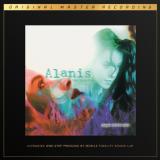
Sourced from the original master tapes, pressed at Fidelity Record Pressing on MoFi SuperVinyl, and strictly limited to 4,000 numbered copies, Mobile Fidelity’s UltraDisc One-Step 180g 45RPM 2LP box set of Jagged Little Pill presents the landmark effort in audiophile-grade sound for the first time. A key part of the record’s appeal and accessibility — Glen Ballard’s smooth production, touches that help Morissette’s exposed-nerve fare seem more accessible and melodic — comes through on this special 30th anniversary edition with an openness, presence, and dynamic explosiveness that make the vocalist’s songs that much more real and visceral.
The singer’s distinctive mezzo-soprano deliveries — the octave-rippling highs, dark-hued lows, dramatic crescendos, belted choruses, wispy reflections, occasional yodels — resonate with full-range ardor and depth. As crucial as anything on the record, Morissette’s confessional words take center stage like never before. Ditto the instrumentation and atmospherics that form the magnetic backgrounds of the songs. Key in on the contributions from Red Hot Chili Peppers Dave Navarro and Flea on “You Oughta Know” to Tom Petty & the Heartbreakers' co-founder Benmont Tench’s organ playing on six tracks.
The deluxe packaging of Mobile Fidelity’s Jagged Little Pill UD1S set underscores the work’s distinguished status. Housed in a slipcase, the LPs come in special foil-stamped jackets with faithful-to-the-original graphics that illuminate the splendor of the recording. Benefitting from an ultra-low noise floor, superior groove definition, and dead-quiet surfaces, this UD1S reissue is for listeners who prize sound quality and desire to engage themselves in everything involved with the album, including the now-iconic cover art that juxtaposes two portraits of the then-21-year-old singer-songwriter and features typewriter font.
That script — which suggests a raw, blood-on-the-floor document created without modern aids like spell check or language correction — hints at the heightened level of unvarnished intimacy, honesty, and catharsis Morissette offers throughout Jagged Little Pill. Named after a phrase uttered on the astute “You Learn,” the album explores the frank emotions, inherent contradictions, and wishful desires people feel everyday but are often too afraid to express. Morissette displays no such fear or shyness.
Akin to a woman reading from a diary, Morissette leaves nothing to the imagination as she skewers hypocrisy during the poignant “Forgiven,” seeks recompense on the vengeful “You Oughta Know,” and spills her guts on the soul-purging “All I Really Want.” For all the anger and bile ascribed to the singer and record, Jagged Little Pill is incredibly healthy and upbeat. Morissette uses the catchy pop-rock frameworks and moody ambience to suss out situations, to learn, to give hope. There’s the clever yearning of “Hand in My Pocket”; wry contrarianism of “Ironic”; kind-heartedness of “Hand over Feet”; the live-and-let-live spirit of “You Learn” – all positive and amiable.
Throughout Jagged Little Pill, the ever-approachable Morissette connects with listeners who recognize themselves in her — and has an intelligent conversation with anyone who wants to participate. It seemed almost everyone did. In addition to the mammoth sales that make the effort the 17th-best-selling album in American history, Jagged Little Pill collected four Grammy Awards, two American Music Awards, three Billboard Music Awards, and eight Juno Awards. In 2018, the record became the basis for a musical that netted 15 Tony nominations on Broadway.
Ironic? Anything but. Jagged Little Pill transcends generations, gender, and trends. As Morissette sings on the opening “All I Really Want,”, the album represents “deliverance” — “a place to find common ground.”
- 1: I'm A Stranger Here/Stranger Blues
- 2: Nervous
- 3: I Just Want To Make Love To You
- 4: Born With The Blues
- 5: I Got My Eyes On You
- 6: John Henry
- 7: I Need Money
- 8: Everyday, I Have The Blues
- 9: Night Time Is The Right Time
- 10: My Own Fault
- 1: Baby, Won't You Please Come Home
- 2: Moanin
- 3: Money Honey
- 4: Kansas City
- 5: Bye Bye Baby
- 6: Medley : The Blues Ain't Nothin' But A Woman & Bye Bye Baby
- 7: Eyesight To The Blind*
- 8: Your Funeral & My Trial*
- 9: Bye Bye Bird*
- 10: Fattening Frogs For Snakes*
- 11: Bye Bye Blues*
- 12: Wake Up Baby**
The blues, born in the cotton fields of the American South, emerged from makeshift instruments and simple harmonies rooted in African heritage. It captured the struggles, hopes, and fleeting joys of laborers enduring harsh conditions, with its hallmark "blue note" adding a unique dissonance to this evocative musical style.
As industrialization progressed, the blues migrated to urban centers like Chicago and New Orleans, evolving with modern instruments and expanding themes to reflect urban struggles, sensual nights, and existential despair. This period birthed many of the musicians who later formed the American Folk and Blues Festival (AFBF), an initiative started in 1950s Germany to introduce Europe to the genre and counter its reductive reputation as a precursor to jazz.
The Lost Recordings celebrates these legendary artists through restored performances from the 1962 Olympia in Paris and the 1963 Stadttheater in Bremen. Featured artists include John Lee Hooker, Memphis Slim, Sonny Terry, Brownie McGhee, T-Bone Walker, Helen Humes, and others, showcasing the depth and evolution of the blues.
From intimate duos like Brownie McGhee and Sonny Terry’s harmonica-guitar interplay to T-Bone Walker’s electrifying group performances, each act demonstrates the genre's versatility and influence. John Lee Hooker’s solo mastery mesmerized audiences, while T-Bone Walker pioneered the electric guitar's place in blues, inspiring legends like B.B. King.
The album also highlights Sonny Boy Williamson, whose charismatic harmonica and profound sensitivity defined his performances. These concerts take listeners on a journey through the authentic sound of the blues, traversing America’s history and foreshadowing its transformative impact on global music.
- A1: East Coast Love Affair - Xylocopa Violate
- A2: Helen Sharpe - Got 2 Have Your Love (Jazz Rave Mix)
- A3: Len Lewis - Joy
- B1: Percy X & Mark Broom - Lady Killer
- B2: Sound Of The Suburbs - All You Need
- B3: Amtraxx - Funky
- C1: Eden Burns - Big Bark Manifesto
- C2: Karizma - Kellah
- C3: Ivan-I & Starchild - All Things Dub
- C4: Lightning Head - Me & Me Princess (Version 2)
- D1: Selective Perception - Dij-Ya-Do-One
- D2: 82J6 - Exercise Life
- D3: Quest - Smooth Skin
HUGE CONGRATULATIONS TO MOXIE AND THE LOVE INTERNATIONAL X TEST PRESSING TEAM FOR WINNING THE BEST COMPILATION IN THE DJ MAG BEST OF BRITISH AWARDS 2025
“I feel really chuffed as a lot of work went into building this compilation,” beams Moxie, when we congratulate her on the award. “I also worked alongside a great team, including Dave Harvey, Ellie Stokes, Chez de Milo and everyone at Prime Distribution. I’d been manifesting working on a project like this for years, so when it all came together I was so happy with it. But to have recognition from the DJ Mag public vote is the cherry on the cake.”
Few artists have shaped their local scene quite like Alice Moxom under her celebrated Moxie alias. A born-and-bred Londoner, Moxie is a dance music powerhouse whose influence runs deep—from the grassroots to global stages. Her trajectory spans early teenage years digging for garage records, to dubstep sets at legendary club nights, to running her long-standing and beloved NTS Radio residency. For over a decade, she’s been a midweek staple on NTS, championing deep house, Detroit techno, and all things dubby, groovy, and percussive, while regularly platforming artists through guest mixes and interviews with icons like Jeff Mills, Four Tet, and Or:la.
Her latest endeavor, the Love International compilation, brings that wealth of experience to life. 'I’d secretly been manifesting this for a while,' Moxie admits. 'Love International has such a specific energy, and I wanted the compilation to reflect that—dubby, fun, euphoric, deep. It’s all the styles of music I love, pulled together in harmony. Being at Love International always feels like coming home. Whether it’s dancing in Barbarellas or sharing a smile with a stranger on the dancefloor, there’s this sense of unity that’s hard to describe. That’s why I chose ‘U Skladu’ for the sleeve—because that’s what it feels like: in harmony.'
Introducing ''Sleek Vibra,'' the debut vinyl EP from Alessandro Gramaccioni (AFM), a compelling young Italian artist whose unique sonic vision has been forged through his involvement with the Amen Rave collective and a previous digital EP on Lapsus Records' CEE imprint. This powerful six-track offering for Adepta Editions sees AFM expertly fuse and reimagine a spectrum of genres, weaving together IDM, rave-oriented sounds, bass music, techno, and Afro-Arab rhythms. The result is an immersive sonic tapestry, where memory and tangible form converge into a cohesive audio-tactile experience. ''Sleek Vibra'' invites listeners on a futuristic journey through shadowy sonic landscapes, where the mechanical relentlessly intertwines with the organic. This intense sonic declaration holds nothing back, painting a vivid and uncompromising picture of sonic annihilation in its wake.
- A1: Free State Fence
- A2: The Surfer
- A3: Prayer For Civilisation
- A4: Hillbrow 1
- A5: Hillbrow 2
- B1: Hippo In Town
- B2: Independence Day
- B3: Don't Dance
- B4: Crossed Cheques
- B5: September 1984
This is an album made during a crucial period in South Africa’s history during which there was a palpable feeling of a slow turning towards the collapse of the apartheid state side by side with an increasingly well-organised culture of resistance through the formation of the United Democratic Front (UDF) and various affiliated bodies. However, as a result, there was increased pushback from the state security establishment, a turning to dirty tricks and the formation of hit squads whose members murdered and tortured many of our friends and created chaos throughout South Africa as well as neighbouring countries.
This album is situated in this political environment however it took advantage of the new do-it-yourself music technologies available at that time. Technologies that made it possible to make and release records without interference from traditional record company executives. Two musician friends of mine pooled their resources after their respective bands had broken up. Ivan Kadey (National Wake) and Lloyd Ross (Radio Rats) built an 8-track recording studio control room and fitted it out in a second hand caravan and called it Shifty. They parked it in a garage attached to the only house left in a demolished and derelict mining village near Soweto on the outskirts of Johannesburg.
All the work on this album was completed there, mainly after hours and mostly alone where I enjoyed an exhilarating freedom to develop a whole new set of musical skills and ideas, incorporating my love of a wide range of music I’d grown up with. Influences of 1970s progressive/kraut/and psychedelic rock combined with mbaqanga bass styles, early reggae/dub and Indian tabla rhythms. Stockhausen, early Zappa and Holgar Czukay were radio text and shredding influences, and Chris Cutler’s band Henry Cow & Art Bears helped me see a way to political expression. Mostly though was the exciting post-punk and no-wave music coming through to us from Europe and America: bands like This Heat, the Mekons, Raincoats, Sonic Youth and Pere Ubu were immensely important to me as was my reading from the period: J.M.Coetzee’s first 3 novels are strong influences on Free State Fence; the stark landscape, superstition, ritual, and sexual repression are in many of his settings. JG Ballard was a constant presence throughout that period, especially whilst living in such a surreal environment, surrounded by mine dumps, but mostly I think the whole French post-modern philosophical movement—Derrida, Foucault and of course, Baudrillard’s Simulacra and Simulation—set out a new sense of possibilities, possible ways to express oneself, ways to think, and ways to try and analyse the political intersection of public and private life. Most important at that time was the influence of sound recordings I had made and experiences garnered from working as a sound recordist on documentary films. These financed my work and later the studio and were consistent employment throughout the 1980s. Film work also enabled me to experience much of South Africa that was hidden from most. The track Independence Day is a good example; drawn from some time spent in the rural homeland of Venda. This then was the first full length Kalahari Surfers album, completed in summer of 1984 it was taken to EMI pressing plant but rejected by the cutting engineer as being ""political, pornographic and anti religious"". Chris Cutler at Recommended Records took up the challenge and released the album through his label. He wrote the original liner note
- A1: My Life Started Today
- A2: Rosebud
- A3: All That We Ever Have
- A4: Sound And The Fury
- A5: The Only Ones
- B1: Funny The Things
- B2: Sincerely
- B3: Shadow Dancer
- B4: To Be Loved
- B5: Dancing Shadow
Demon Music Group are delighted to confirm the signing of ‘Night Mirror’ – the fourth solo album from electronic music legend, Claudia Brücken. • Written and recorded in London between 2023-2025 with longtime collaborator John Williams, ‘Night Mirror’ is a stunning collection of 10 brand new songs, suffused with optimism, loosely bound by themes of reflection and rebirth. •
Having first come to notice as the lead singer of Düsseldorf electronic music pioneers Propaganda, one of the first signings to the celebrated ZTT Records (Frankie Goes To Hollywood, Art Of Noise, 808 State), Claudia’s striking image and distinctive vocals made her one the most influential and inspiring female musicians of her generation. Propaganda enjoyed chart success with hit singles like ‘Dr Mabuse’ and ‘Duel’ and their 1985 album ‘A Secret Wish’ is frequently cited as one of the landmark electronic pop albums of all time. • In subsequent years, along with collaborations with the likes of Wolfgang Flür (Kraftwerk), Martin Gore (Depeche Mode), ACT, Andrew Poppy, Andy Bell (Erasure), and Peter Hook (New Order). Claudia was most recently in the limelight fronting the reimagined xPropaganda whose 2022 album ‘The Heart Is Strange’ garnered ecstatic reviews and reached No. 11 in the UK album chart. •
On ‘Night Mirror’ Claudia is reunited with musical partner John Williams, whose work as a producer, writer, engineer, and record label head has seen him work with such luminaries as The Housemartins, Alison Moyet, Blancmange, Simple Minds and The Proclaimers. Contributing to the album are an accomplished series of musicians, whose credits include The Lighthouse Family, Cathy Dennis, Orlando Weeks (The Maccabees), and Kaiser Chiefs. • This LP release is presented on Dark Cherry vinyl. • This is a priority release for Demon, and we will be supporting with full retail, press, radio and online campaigns.
Thomas Valverde unveils Polka, his second album. This new record dedicated to solo piano takes the approach of a pared-down, minimalist production. Both upright and grand pianos are used. The grand piano is used to develop a powerful, committed and liberating discourse, while the upright piano brings a more organic sound and allows an intimate experience. The tracks on the album are conceived as sidereal love songs. Songs without words, more apt to translate the invisible, the threads of love and beauty. Everything has to be said on the keyboard, in the notes and between the notes. The album was recorded at the prestigious La Fabrique des Ondes studio, with David Chalmin (collaborator of Thom Yorke, The National, Katia & Marielle Labèque) recording and mixing. The album's title is a nod to two of his teenage heroes: Serguei Rachmaninov (genius composer) and Vladimir Horowitz (legendary pianist), whose music haunts so many musicians and music lovers. It's also a pun on the name of DJ and producer Paul Kalkbrenner (Paul K), whose simple, powerful tunes influenced the title "Polka". Thomas Valverde is also the founder and artistic director of the Biarritz Piano Festival, which features some of the world's finest pianists.
The collaboration between influential DJ/producer Eli Escobar and acclaimed vocalist/songwriter Nomi Ruiz has been a long time in the making. The two Puerto Rican New York native’s first collaboration, the electrifying track ‘Desire’ in 2011, set the stage for a series of projects, including their recent joint effort ‘Dance 4 Love ’99’. Now, they are set to release their debut LP, ‘Love Louder’.
‘Love Louder’ captures Eli and Nomi’s experiences of love and loss, reflecting their enduring connection to New York City and its vibrant, yet fading, nightlife culture. The album, while featuring dancefloor gems like ‘Heathens’ and ‘Full Fantasy’, takes an emotional turn, focusing on the themes of loss and presence in a rapidly changing world. The title track opens with lyrics invoking the late Donny Hathaway, reflecting a more profound introspection from the duo. They share their pain over loss, particularly the passing of mutual friend James Dewitt (DJ BluJemz), whose absence profoundly affected their creative process.
Escobar recently opened a club in Brooklyn named Gabriela, honoring a friend who passed away during the pandemic, emphasizing their commitment to preserving New York's cultural landscape. ‘Love Louder’ serves as a love letter to their hometown, intertwining celebration with mourning. In the poignant track ‘Go Be Gone’, Ruiz expresses the difficulty of embracing change and saying goodbye.
As they honor the past, they also aim for a brighter future through their music.
We're still a little way from summer but Franck Roger already has an eye on house music for the warmer months. His 'I Can't Wait' comes with a vocal from South African Ree Morris whose smoky tones bring classic deep house vibes to a nice smooth instrumental. Franck's Atlantic dubthrumental version is even more deep and cuddly then flipside joint "Goldstone 92' is a portal back to the 90s with bumping drums and humid chords that bring good vibes only.