Who is Isabelle Lewis, anyway?
What kind of music does she make? Is she an opera singer? Does she write pop songs? Does she compose ethereal ambient soundscapes? Does she play chamber music on the violin? Is she producing dark, electronic beats?
Well… yes. But Isabelle Lewis is not so much a person as a project. Isabelle’s debut album, Greetings, credits a trio of composer–performers at its heart: producer Valgeir Sigurðsson, vocalist Benjamin Abel Meirhaeghe, and violinist Elisabeth Klinck. The sound of the elusive Isabelle Lewis is heard most clearly in the push and pull between them, the three-way tension that gives the album its musical and emotional drive.
Each of the three brings more to the collaboration than those epithets might imply. Elisabeth’s solo performance practice incorporates composition, improvisation, live electronics, and a close command of bowing and fingering techniques that make her fiddle sing, whisper or whistle as required. Benjamin is a self-taught countertenor - keening, crooning, and swelling to a voluptuous sensuality—but also an interdisciplinary stage director and performer. Well known for his work as a producer and studio collaborator, and as a composer of scores for film and stage, Valgeir’s solo discography interweaves meticulously crafted electronics, drones, noise, and other digital elements with acoustic instruments and vocals recorded with naked, unflinching clarity.
But the extravagant theatricality Benjamin brings to the aptly titled “Drama”—also featuring a heroic violin solo from Elisabeth—grapples against the thudding bass of the implacable digital backdrop. On “Mother, Shelter Me” Valgeir’s austere and detailed production throws the hushed violin and vocals into stark relief. The result is an exquisitely uncanny juxtaposition of past and present, human and mechanical, like a Rococo treasure viewed under cold fluorescent lights, or an 18th-century automaton slowly opening its clockwork eyes.
Even the lyrics seem somehow out of time. On “O Solitude,” Benjamin goes so far as to quote an entire song by the first great English opera composer, Henry Purcell, verbatim. No stranger to Purcell’s music, which has made its way into Benjamin’s theatrical productions as well, here Isabelle Lewis removes Purcell’s melodies and harmonies and sets the text, Katherine Phillips’s 17th century translation of a poem by Antoine Girard de Saint-Amant, to new music whose heightened, archaic character nevertheless seems haunted by Baroque ghosts.
Throughout the album, the outsized emotions and timeless archetypes of Benjamin’s lyrics feel like relics from some half-forgotten past—from the neatly rhymed couplets of “Fisherman,” a seemingly straightforward (but still somewhat askew) character study, to the abstraction of “Moonshell,” whose words seem like the fragments of some ancient, lost lament. It is just another of many ways in which Isabelle Lewis carefully distorts the listener’s notions of time. On a more micro level, time can stop for a moment of weightless, drifting ambience, and then plunge forward as the cloud of harmonies suddenly lock into tempo with the drop of the bass or the change of a chord. Or else that weightless moment is allowed to be, as in the aptly named prologue and epilogue to these Greetings (“Voicemail”/“…and farewell”), or in the interstitial tracks that bind the album together, connecting its dramatic peaks with expanses of meditative stasis.
The album as a whole is elegantly shaped, swelling from an intimate, interpersonal statement into something deeper and more spacious. The first half of the album leans slightly towards self-contained pop songcraft and ticking beats, while side B jumps off from “O Solitude” into the almost symphonic grandeur of songs like “Moonshell” or the instrumental “Not the water, air, or the dirt.”
But as it progresses, the contrasts only grow more sublime: antique and postmodern, human and machinelike. The ominous weight of the droning sub-bass and trombone (guest player Helgi Hrafn Jónsson) only makes the interplay between vocals and violins (guest player Daniel Pioro joining Elisabeth) seem more delicate and vulnerable. The ethereal string tremolos of “Moonshell” seem to pull against the heavy, shuddering electronics and layers of crooning vocals.
And that, in short, is where you will find Isabelle Lewis. Like an ancient stone archway, or a delicate house of cards, the architecture of Greetings is held together by the tension between opposing forces. Not just in Elisabeth’s playing, Benjamin’s singing, or Valgeir’s arrangements and production but in the conflict and contrast that generates the synergy between them.
Oh—Isabelle says hi, by the way. She’s looking forward to meeting you.
Suche:whos who
Lex first grabbed our attention following his brilliant release on B2 Recordings which became a staple vibe setter in Jimpster’s DJ sets and Sofa Sessions streams in 2021. Gaining his deep musical knowledge through his own revered record store Radical Soundz, the Greek DJ and producer has been immersed in dance music for over 20 years and considered one of the key figures in the Athens underground house scene. With releases and remixes on labels such as Leng, Samosa, King Street and Black Riot, Lex is making waves internationally with a unique sound that fuses live elements and expansive arrangements taking influence from masters such as Ron Trent but adding a warm, cosmic glow. Fellow Greek artist Locke joins pro- ceedings for this EP bringing his own psychedelic sound garnered from his years playing crazy events taking in South American jungle parties, burning hot African desert raves, the underground clubs of Berlin to the sparkling coastal shores of Baja California. Locke is more than just a DJ. He is a connector, educator and traveler whose soulful music has the crowds chasing the sun as he brings love and celebra- tion to the events he plays.
On title track 7 Day Path we’re treated to a beautiful spacious jam which unfolds across 7 minutes, driving, live percussion keeping the energy high whilst Herbie- esque synth leads help to create a beautifully paced and dynamic arrangement.
Next up we have Italian legend DJ Rocca onboard for a remix of 7 Day Path. The prolific producer and DJ has been a tour de force since the late 90’s collaborating with the likes of Howie B, Dimitri From Paris, Chris Coco, Daniele Baldelli and Jazzanova producing singles, remixes and albums for labels such as Sonar Kollekt- iv, Compost, Classic, Rekids, Futureboogie, !K7, Tirk, International Feel, Defected, Rotters Golf Club and Faze Action Recordings. Here he adds his trademark dubby disco wiggle pushing the original in a jazzy direction with live flute. Definitely one to be heard under the stars on a Croatian beach for maximum Adriatica effect!
Flipping over, things head deeper and darker with See No Ball featuring Locomot- ives, a more straight-up heads-down stripped back club jam with a repeated vocal, funky guitar chops and a smattering of improvised synth and Hammond B3 keeping things jazzy and musical.
Closing out this brilliant EP we have Catch Up With The Sun which drops the BPM’s for a low-slung cosmic jam loaded with good vibes.
This one is highly recommended for fans of Khruangbin, Lord Echo, Leon Bridges or Fat Freddy's Drop.
Open is the sixth studio album from acclaimed composer, producer, filmmaker and multi-instrumentalist, Kutiman. It is an addictive & irresistible twelve-track trip taking in elements of classic soul, Middle Eastern psychedelia, Afrobeat, Thai funk, jazz fusion, cosmic library soundscapes and more.
The uptempo “Vanishing Point” opens proceedings, recalling both Abstract Orchestra’s 2017 Dilla tribute and the lounge OST/library music flips of Tosca and DJ Vadim fame.
My Everything introduces prominent guest & frequent Kutiman collaborator, Dekel, whose soul-pop vocals coupled with jangly acoustic guitar riffs tip to contemporary indie artists such as Michael Kiwanuka and SAULT. “A Day Off passes through” Anatolian psych and Khruangbin-esque Thai funk whilst the afrobeat/jazz fusion “Confetti” pays tribute to Kutiman’s other namesake, Fela Kuti.
Dekel rejoins for the beatdown, lilting dub-soul “Believe In You” with hints of Lord Echo and the sun-inflected New Zealand dub-soul sound. The Tuareg-leaning guitar lines on “Canoe” travel across the Saharan desert easterly towards Sudan and Ethiopia by the end, whilst meditative and Coltrane-adjacent album closer “Ripples” provides a final moment of reflection from a truly global excursion of soundscapes.
* Evergreen digital roots `n’ dub from The Disciples with vocals from the late great Jamaican singer Creation Stepper aka Willy Stepper, whose voice graced many a 70’s roots reggae classic.
* This cut is a relick of Stepper’s 1978 classic `Kill Nebuchadnezzar’ backed with another vocal cut - `Ozone Layer’ with two dub cuts.
* Mixed and produced by Russ D in the Disciples studio in 1991 but only getting a release in 2011 on the Disciples Vintage label, which promptly sold out.
Naoki Zushi. Perhaps best known for his stellar guitar contributions to psych folk group, Nagisa Ni Te, Zushi has had a parallel career, for several decades, slowly releasing solo albums that spotlight his exultant guitar playing. Originally released to CD only by Shinji Shibayama of Nagisa Ni Te’s Org imprint in 2018, IV has Zushi playing and writing at a peak, its six songs slowly unfurling with a kind of paradoxical understated grandeur. This is psychedelic guitar music at its most paced and considered, yet given to flights of inspiration, and in this respect, Zushi sits within a lineage of guitarists who’ve used their instrument both as textural anchor and improvisatory tool – think of figures like Phil Manzanera and Robert Fripp, but also Roy Montgomery, Liz Harris of Grouper, even Tom Verlaine on his instrumental solo albums. Like those artists, Zushi locates moments of deep emotional resonance amidst luxuriant textural and melodic exploration. Zushi’s history stretches back to the mid 1970s. While for many, he first appeared on the scene as a founding member of noise legends Hijokaidan, alongside Jojo Hiroshige, his musical contributions predate that encounter. He started out playing progressive rock and improvised music, making home recordings of when he was in high school. He was a member of Rasenkaidan (Spiral Staircase) alongside Hiroshige and Idiot (Kenichi Takayama), the group that soon mutated into Hijokaidan (Emergency Staircase). Zushi and Takayama would soon form Idiot O’Clock, in 1982; Zushi also led his own Naoki Zushi Unit, starting in 1983. But for many, Zushi’s first significant appearance on record was as a member of Shinji Shibayama’s mid-eighties psych-pop group, Hallelujahs, whose sole album was recently reissued on vinyl. That group mutated into Nagisa Ni Te, and Zushi has played a significant role as their lead guitarist for several decades. His own solo music has appeared sporadically – Paradise (1987), Phenomenal Luciferin (1998), III (2005) and IV, with a few recent, meditative offerings, For My Friends’ Sleep (2021) and Nocturnes (2022). With IV, though, Zushi achieved something remarkable, a kind of extended exploration of the time-altering properties of echoplexed, hypnotically spiralling guitar interplay. The opening ‘Mirror’, “a song about the mirror inside me,” Zushi explains, starts out as a lush psych-folk song, slow and gentle, but soon takes to the skies with a cat’s cradle of Fripp-esque guitars, before thick, droning chords sweep the song to a drowsy coda. ‘Nocturne’ weaves silver skeins of guitar melody around a cyclical chord pattern; it gathers energy and quiet intensity through insistent repetition. The rest of the album explores the nuance Zushi can draw out of simple elements, building on what ‘Mirror’ and ‘Nocturne’ offer – the profundity of a chord change; the melancholy of a few quietly sighed words; the exhilaration of a guitar solo bursting out of the speakers; the subtle shifts in emotional register offered by tone and touch. Throughout, there’s something quiet, yet ineffable, shading the contours of the songs, such that it makes perfect sense when Zushi says, “What I want to express through music may be ‘sense of mystery’.” A few of the songs had their basic parts recorded at LM Studio and Studio Nemu with Shibayama and Masako Takeda joining on bass and drums, respectively; much of the album, however, was tracked at Zushi’s home studio. That seems appropriate for a collection of songs that are expansive in their intimacy. Asked what drove the sessions, Zushi answers, “I thought I’d make IV an album that particularly focuses on the guitar play.” And focus it does, as Zushi’s sky-scraping, soaring, elemental tone is front and centre throughout. But these are no guitar heroics; rather, Zushi uses the guitar as conduit and diviner, a tool for spirit location, and IV is his most eloquent expression yet of such singular magic.
Continuing our quest to get all of the classic early AMT albums released on vinyl, we turn to 2006’s ‘Starless And Bible Black Sabbath’, and with the help of Makoto Kawabata’s studio wizardry, we’ve made it possible.
This latest instalment in the ‘Acid Mothers Temple Vinyl Archives - First Time On Vinyl’ series (as with the three previous SOLD OUT releases in the series) have all been meticulously put together with the help of Makoto Kawabata with the original CD artwork recreated for these vinyl editions from archive photos stored in the vaults at the Acid Mothers Temple in Osaka, Japan and the original audio remastered by James Plotkin.
Here’s what "Brainwashed" had to say upon it’s original CD only release back in 2006 …
“The title track is the meat of the beast, beginning with a minute of booms and gongs reminiscent of a thunderstorm before launching into some slow, heavy Sabbath-esque riffs. Squealing guitar and synth effects accompany the vocals of bassist Tabata Mitsuru, whose voice captures some of the sound and feeling of Ozzy's more than it does the melody. The pace is slower than most AMT fare, but things speed up considerably around the eight and a half minute mark. The group convincingly imitates the Sabbath guitar sound here and the rhythm section is particularly tight, giving listeners something on which to hang their ears or even providing them with a chance to gasp for air during Makoto's guitar explorations. Around the sixteen minute mark, everything comes to a wailing halt before the band returns to the dirge-like tempo that started the song. This pattern continues for the duration of the piece, until a couple of minutes before the ending, when the group makes a smooth transition to acoustic guitar and processed vocals to cool down.
Clocking in at nearly thirty-five minutes, the length alone may tax some listeners. However, the second track, "Woman From A Hell, "provides relief, which with a running time of six minutes is uncommon in the Acid Mothers canon for its brevity. This one condenses many of the ideas of the title track, and accomplishes much of the same evocation of Sabbath, but with the vocals in a more prominent role. The disc comes full circle, ending with thunderstorm sounds much like theones which started the album. Though the title track could have been shortened and perhaps an additional track included, this album remain some of the group's more accessible releases in some time and should please fans old and new alike.
According to the group's website, Makoto is reviving the Melting Paraiso U.F.O. line-up after a year of recording and touring with the Cosmic Inferno. This is a shame of sorts, since the Cosmic Inferno infused a much-needed vitality to the group that it had lacked since the departure of vocalist Cotton Casino. Yet the reformed Melting Paraiso U.F.O. has the potential to be even better since, if anything, Makoto seems to be the Mother of Reinvention.”
Acid Mothers Temple & The Cosmic Inferno are: Tabata Mitsuru - Bass, Vocal, Maratab - Hiroshi Higashi - Synthesizer, Dancin' King - Shimura Koji - Drums, Latino Cool - Okano Futoshi - Drums, God Speed - Makoto Kawabata - Guitars, Speed Guru
An extremely prolific artist, whose work encompasses composition, opera, theatre, radio plays, film or performance, Ergo Phizmiz returns in due time to the Discrepant fold long after his 'Two Quartets' and 'Disco Carousel' - under his given DW Robertson name - albums. A purveyor of the Creative Commons rights, Phizmiz has been deploying much of his work on the ever expanding Free Music Archive directed by WFMU since the early 2000's, creating a sprawling and defiant body of work that defies given and stale notions of sound hierarchies, history and copyright through a process that comprises collage, sampling, reappropriation, songwriting, covers and pretty much any available media with a playful and thoughtful approach.
For this new Discrepant entry, Phizmiz goes back in time to push into the future a number of pieces recorded more than two decades ago creating this perpetual motion outside a linear chronologic progression. Anticipating by almost 20 years the memefication of ASMR videos, 'Selected Ambient & ASMR Works 2001-2003' - itself a pun on the AFX classics - embraces the ambient tag not at its functional face value, but instead as a means to the "evocation of imaginary spaces, and correspondingly the invention of their sonic environments". Collecting recordings from a myriad of instruments - violin, xylophone, banjo, kora, found percussion and so on...-, shortwave radio and field recordings to create loops with different lengths that play with and/or against themselves continuously in a process "(dis)conjunction" not far removed from Feldman's 'Why Patterns?' or hip-hop's sampledelia. A free-floating temporal space that collapses the flashing images of Angelfire pages unto Web 2.0 sense of displacement.
Apnea Records proudly welcomes a new face to the family, though one whose name resonates deeply in the electronic music world. Versalife, also known as Conforce, steps onto the label with the first of two meticulously crafted EPs in the "Parallax Effect" series. With a career spanning over 20 years of sonic innovation, Versalife delivers a masterful blend of broken rhythms, metallic textures, pulsating synths, and analog tones. From industrialesque electro to deep IDM explorations, "Parallax Effect PT.1" takes listeners on an immersive journey through cutting-edge soundscapes. And with Part 2 on the horizon, this is just the beginning of an exciting new chapter for both Versalife and Apnea Records. Pure bliss for lovers of forward-thinking electronic music!
We here at TSTD are longtime fans of Mexican producer/musician MONSIEUR VAN PRATT. So it’s a great pleasure to finally work with the man. For this 7 inch he delivers two tracks:
Side A is a slow disco edit of a super rare Mexican late 70s cover version of Bobby Caldwell’s classic love song “What You Won’t Do for Love”.
Side B takes us into the church of Black Soul, a slow Gospel Soul track for your sunset disco beach bar dj sets.
Monsieur Van Pratt, founder of Super Spicy Records, is a prominent producer and DJ originally from Mexico City, whose influence on electronic music is widely recognized both nationally and internationally. With an impressive career that includes more than 100 releases in digital format.
- You Better Move On
- Soldier Of Love
- A Shot Of Rhythm And Blues
- You're The Reason
- Go On Home Girl
- Detroit City
- I Need You Baby
- Anna
- You Don't Care
- Turn Around (And Try Me)
- Call Me Lonesome
- Where Have You Been
- Bye Bye Love
- Show Me The Road
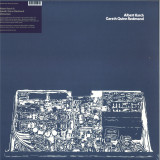
WRWTFWW Records is happy to announce a new collaborative album between Polish producer, multi-instrumentalist and sound engineer Albert Karch (notably known for his superb 2019 album Celestially Light featuring Ichiko Aoba) and Irish ambient master and label’s favorite Gareth Quinn Redmond (Ar Ais Arís, Laistigh Den Ghleo, Umcheol albums from the WR catalogue). The 6-track LP comes as a limited edition of 300 copies worldwide with an artwork by Dublin artist Barry Gibbons and liner notes. It is available in digital format as well.
Recorded in at Albert Karch’s studio in Warsaw in January 2023, Warszawa is conceptually rooted in the reason the two artists met in the first place: the work of Japanese composer Satoshi Ashikawa (Still Way - Wave Notation 2) who sought to compose a time that was stationary. Sparse in approach but sharp with intention, the 6 pieces of the collaborative album were sculpted with precise and floating use of piano, drums, synthesizers, and strings. The result is gentle but emotionally deep minimalistic ambient, reassuring environmental music with an indescribable Mark Hollis touch, also an artist whose worked influenced the recording sessions.
Gareth Quinn Redmond’s previous albums, Laistigh Den Ghleo, another ode to the work of Satoshi Ashikawa, Umcheol, mixing ambient with traditional Irish music instruments, and his tape loops wonder Ar Ais Arís are still available on WRWTFWW Records - complete the collection now!
Warszawa by Albert Karch and Gareth Quinn Redmond is dedicated to the memory of Satoshi Ashikawa.
'Mei Semones' sweetly evocative blend of jazz, bossa nova and math-y indie rock is notonly a way for her to find solace in her favorite genres, but is an intuitive means ofcatharsis. "Blending everything that I like together and trying to make something new -that's what feels most natural to me," says the 23-year-old Brooklyn-based singer-songwriter and guitarist. "It's what feels most true to who I am as an artist." Plinking guitar tones and asymmetrical time signatures exemplify her forays intoangular indie rock more now than ever before, especially on her debut Bayonet Recordssingle "Wakare no Kotoba"_its wide-interval arpeggios in odd meters being some ofthe most technically difficult guitar work Mei has ever implemented in her songwriting.Translated to "parting words'' in English, the self-described "anti-love song" serves as afarewell to a toxic friendship, complete with orchestral swells and crashing guitars. Originally from Ann Arbor, Michigan, Semones began playing music at a young age,starting out on piano at age four before moving to electric guitar at age eleven. Afterplaying jazz guitar in high school, she went on to study guitar performance with a jazzfocus at Berklee College of Music. College is where she met her current bandmates,including string players Noah Leong and Claudius Agrippa, whose respective viola andviolin add softness and multidimensionality to Mei's intricate guitar work. After releasinga slew of singles and an EP in 2022, coinciding with her move to New York City, Mei andher band have since gone on to collaborate with post-bossa balladeer John Roseboroand embark on their first-ever tour with the melodic rock outfit Raavi. Semones chronicles infatuation, devotion, and vulnerability in her songs, complete withsweeping strings, virtuosic guitar-playing and heartfelt lyrics sung in both English andJapanese, that have all become part of her sonic trademark: ornately catchy, genre-fusing compositions serving as the backdrop to tender lyrics touching on theuniversalities of human emotion.
- Yoake
- Kodoku
- Tsukino
- Muchuu
- Hfoas
'Mei Semones' sweetly evocative blend of jazz, bossa nova and math-y indie rock is not only a way for her to find solace in her favorite genres, but is an intuitive means of catharsis. "Blending everything that I like together and trying to make something new - that's what feels most natural to me," says the 23-year-old Brooklyn-based singersongwriter and guitarist. "It's what feels most true to who I am as an artist." `Tsukino', Mei's debut, self-released EP, is being released physically for the first time ever on Bayonet Records! The EP will be released by itself on CD & Tape formats, and will be included in a vinyl pressing on the B-side of Semones' landmark EP, `Kebutomushi'! Plinking guitar tones and asymmetrical time signatures exemplify Semones' forays into angular indie rock more now than ever before. Originally from Ann Arbor, Michigan, Semones began playing music at a young age, starting out on piano at age four before moving to electric guitar at age eleven. After playing jazz guitar in high school, she went on to study guitar performance with a jazz focus at Berklee College of Music. College is where she met her current bandmates, including string players Noah Leong and Claudius Agrippa, whose respective viola and violin add softness and multidimensionality to Mei's intricate guitar work. After releasing a slew of singles and an EP in 2022, coinciding with her move to New York City, Mei and her band have since gone on to collaborate with post-bossa balladeer John Roseboro and embark on their first-ever tour with the melodic rock outfit Raavi. Semones chronicles infatuation, devotion, and vulnerability in her songs, complete with sweeping strings, virtuosic guitar-playing and heartfelt lyrics sung in both English and Japanese, that have all become part of her sonic trademark: ornately catchy, genrefusing compositions serving as the backdrop to tender lyrics touching on the universalities of human emotion.
As is now a well-established tradition, when 7 appears in the catalogue number it is the turn of handyman Asymmetrical.
The title takes its inspiration from a tag that appeared in the bathroom of the historical Knick Knack Yoda after one of the (in)usual nights, and is a leap in time, a project born from the layering of different sessions that took place between 2018 and 2020 and only sees the light of day today.
7 is also the number of inches of PVC on which this double is engraved, hosting on one side the track that gives the album its name, on whose rhythms the sound of Luigi Gargano’s saxophone echoes. On the other Estetica Della Notte, is a journey into the phenomenology of tumultuous nights in the shadow of Rome’s Dome. The covers of the 170 numbered records are embellished by Ester Reset’s photographic project, available for extended fruition in the editorial project accompanying the 30 limited edition copies.
BRAND NEW STUDIO ALBUM FOR AN ITALIAN PROG-ROCK LEGENDS!
The comeback of the Milanese band Alphataurus can only have the status of a big event among fans of Italian progressive rock, thanks mainly to the indelible mark left several decades ago with their 1973 eponymous masterpiece. After ten years of absence, filled with a long series of live appearances, Alphataurus once again knocks on the doors of prog-rockers with a brand new album, whose long recording process unfortunately ended with the departure of founder guitarist Guido Wassermann.
“2084: Viaggio nel Nulla” (2084: Journey into Nowhere) is a 100% Alphataurus record, starting from its beautiful and futuristic three-panel cover illustrated by the band’s new drummer, recalling the paintings of the magnificent debut album.
All Traps on Earth is the name chosen by Änglagård’s founding member and bassist Johan Brand for this project of his, involving keyboard player Thomas Johnson and drummer / percussionist Erik Hammarström from the same ‘source band’.
They are joined by Johan’s talented daughter, Miranda Brand on vocals, as well as a plethora of guests from the Swedish scene.
Fans of King Crimson, Goblin, Magma, the Canterbury scene and even of Ennio Morricone, whose sounds are frequently recalled during the record, will enjoy this album for sure, but we have no doubt that any prog-lover will appreciate this unexpected, fantastic album.
Mixtacy, a new independent label based in Tokyo, was launched in 2024 by DJs, for DJs, and of DJs. Their passion lies in updating the classic house style with modern underground artists. The first EP features four exclusive tracks by mysterious Japanese underground artists, available only on vinyl. All tracks are mastered by the Romanian talent, Dragutesku. A1 Addictive Desire by YAMADAtheGIANT, whose debut 12inch vinyl sold out 200 copies in just two months in Japan. This raw acid deep house track made by hardware synths, sequencers, and sampled vocals from the cult NY house track The Playground/Desire (1992). A2; Nightfall Yearnings by P.S. Morris, a 20 years experienced master of MPC from rural Japan. This classic-style deep house tune boasts a phat groove focused for the dance floor. B1; Forest is by Bitowa, originally from the Japanese hip-hop underground, now coming into the techno field from Okinawa, southwest Japan. This modern tech house track features acapellas sampled from garage classics and disco, resulting in a unique texture. B2; Lost Sweet Cherry is made from cut-ups of Japanese porno analog tapes by the owner of strange vinyl shop Tonotopica in Asahikawa, northeast Japan. This dub sets a psychedelic atmosphere as the night starts.
NYC duo Straw Man Army return with their third LP, “Earthworks”, to complete a trilogy of records begun with 2020’s “Age of Exile,” and 2022’s “SOS”. Whereas “Age of Exile” dealt with the haunted landscapes of colonial history in the Americas, and “SOS” gave voice to a crisis of the present moment, like a prayer in bewildering times, 2024’s “Earthworks” signals the band’s attempt to close this trilogy by turning their gaze towards the future, where paradox, complexity and contradiction spiral in ascendance to an agonizing pitch. While continuing to develop their own style of anarcho-punk, “Earthworks” finds the band pulling once again from jazz and ambient influences, expanded Krautrock rhythms, and post-rock experiments, with a stronger emphasis on melodic vocals and varied song structures than on previous offerings. Taking cues from the wistful anti-war harmonies of The Byrds and the angry melodies of Zounds, tracks like “Turn the Wheel” and “Second Nature” mark new territory for a group whose messages and methods of experimentation have merged to form a singular sound equally at home on All the Madmen Records or in the spiritual legacy of ESP Disk. “Earthworks” is an album that holds and subverts many contradictions—juggling the weight of melancholy, grief, guilt, impunity, and the yearning for clarity against the backdrop of boiling wrath; the wrath of nature, the occupied, the dispossessed, and of the mind against itself. To quote the track “Spiral” — “Is this all that’s left for us these days? / Apathy and rage?”— Straw Man Army offers this record as a companion to our frustration, our sickness, our despair, and a lifeline for our fugitive attention in the struggle for peace.
Ben Klock & Fadi Mohem announce debut collaborative album featuring Coby Sey and Flowdan on new label LAYER
Ben Klock and Fadi Mohem present their first collaborative album on their new label LAYER. The ten-track full length project titled Layer One follows the hypnotic EP Klockworks 34 that set the stage in 2022. In a bold departure from the techno roots that have defined and nurtured their careers, Klock and Mohem are now pushing genre boundaries, exploring IDM, ambient and experimental electronic music while still retaining the brilliance that characterised their earlier work.
The conceptual direction of Layer One delves into a post-human world, where humans are close to extinction on Earth, leaving only imprints, traces, and relics behind—digital fossils and machine-generated images capturing fleeting moments of non-human photography, as Artificial Intelligence remains in a world that quietly thrives without us. We do not perceive this as a bleak apocalyptic dystopia, but more a sober and serene reflection of a world that continues to exist and flourish, indifferent to the absence of humanity. Despite this unremitting setting, through this journey we find survivors who signal a remembrance of the human sensibilities.
Elevating this project are two very human and dynamic collaborations featuring the charismatic Coby Sey and the legendary grime MC Flowdan. Sey, a prominent figure in the British music scene known for his work with artists like Tirzah and Mica Levi, injects his music with a mesmerizing emotional depth. Opening the album with the powerful track ‘Ultimately,’ Sey offers spoken-word musings on creativity and life over experimental landscapes meticulously crafted by Klock and Mohem. Nostalgia permeates this opening track, and track 7 ‘Clean Slate’ reinforces this sentiment with Sey’s stream-of-consciousness wordplay.
Flowdan, the gritty MC whose verses have become anthems of the UK grime movement, made headlines in 2023 with two songs that reached the top 20 of the UK singles chart. In 2024, he was awarded his first Grammy for the Skrillex and Fred Again collaboration Rumble, becoming the first grime artist to win in any category. On track ‘Our Sector,’ Flowdan unleashes his raw energy and dynamic flow, adding a thrilling vocal dimension to the album’s narrative. The fluid delivery of his lyrics and rhythmic timing are enhanced by the staccato beats and abstract synths. These collaborations are not mere features; they are pivotal moments that crystallize the album’s vision—an experimental re-imagining of electronic music’s possibilities.
Immediately offering an impressive entry to Klock and Mohem’s changing sonic universe ‘Escape Velocity’ shows the collaboration at its strongest. Deftly juggling between ambient chords and more densely intricate rhythmic moments. These tightly layered textures and intense clashing moments are continued through most of the album. On other tracks the duo are just as innovative ‘Rest Assured’ rips open the sound palette Klock and Mohem are known for, synths dart around flickering through into unexpected areas. Penultimate track ‘The Machine’ feels like the internal innards of a PC or synthesizer brought to life. Electricity flows through the track like an auditory exploration of the digital world's hidden mechanical and electrical processes. In contrast, final track ‘Melatonin’ does exactly what the name suggests; its soothing melodic ambience cradles the listener as the album draws to a close.
Alongside the album’s release, the duo will release two singles. This album represents the work of two artists at the peak of their creative powers, inviting listeners to step outside the familiar and explore a different musical perspective.
Ghostly 25 Year Anniversary Edition. Thus far, Zach Saginaw's releases as Shigeto have been fragments, albeit singularly satisfying fragments -- EP-length glimpses into the Detroit producer's creative psyche. After filling two EPs on Ghostly International, Shigeto's lush, sumptuous take on instrumental hip-hop has fully materialized. Full Circle, the artist's first full-length album, completes the journey begun with Shigeto's Semi-Circle EP, synthesizing the drummer/producer's signature themes of family, continuity, and musical boundary-pushing into a vibrant, fully unified artistic statement.The sounds on Full Circle come from four years of obsessive field recording and collaboration. Saginaw brought his Tascam mini-recorder with him everywhere, capturing the "glasses, chains, breathing, children, family meals, monks singing in cathedrals, walks in the south of France, and good friends offering their musical skill" that would all find homes in the record's compositional nooks and crannies. As a result of Saginaw's constant documentation, the songs on Full Circle play like chapters in an ongoing story--as in "Escape from the Incubator", whose initial rhythmic claustrophobia opens up into a boom-clap nocturnal chase, or "French Kiss Power Up", whose romantic digital strut gives way to discord and fragmentation as the waves of synthesizer give way to a shaky, neurotic coda. Full Circle is framed by the "Ann Arbor" diptych, a pair of beat suites named after Saginaw's hometown (one featuring a sample of Detroit MC SelfSays), all double-thick synths and triple-strength kick drums. Saginaw plays the majority of his rhythms by hand, and Full Circle's consistently deep pocket is the record's secret weapon, thumping and breathing like a living being.Having set the stage with Semi-Circle and What We Held On To EPs--twin treatises on Saginaw's Japanese grandmother's escape from a US internment camp--Shigeto is clearly ready to draw the tale to a close and take center stage. "This release represents the end of the beginning--or perhaps that there is no end and no beginning at all," says Saginaw. Regardless, Full Circle is the start of something great.