Buscar:with tak ensemble

Estilos
Todo
RASMUS OPPENHAGEN KROGH - PILLARS
  • Sooner Or Later
  • Pillars
  • Look Ahead
  • Simulacrum
  • The Bell On The Hillside
  • Summit
  • Hope
  • Branches
  • Namesake
  • June

Following his award-nominated and critically acclaimed 2023 album Until Then, Danish guitarist and composer Rasmus Oppenhagen Krogh now presents his fourth album as a bandleader. "The title refers to the pillars that life and existence rest on," Krogh explains. "The moments, feelings, and meetings that form us as human beings, and that follow us the rest of the way. Snapshots that become defining for how our life develops." Musically, Pillars balances clear song structures with rich, intricate harmonic foundations. Krogh draws on influences from jazz, indie, rock, film scores, electronic music, and pop, creating a genre-fluid universe in which the ensemble"s improvisational voices shape each piece. Krogh"s guitar takes the lead, acting as a melodic guide, while the production - crafted alongside longtime collaborator Rasmus Juncker (Yör, Anna Roemer, Little North) - adds depth and texture, highlighting the album"s bold and multi-faceted sonic identity. As on previous releases, Krogh is surrounded by some of Denmark"s finest musicians, all longtime collaborators whose personal voices and improvisational approach have deeply influenced his musical development. The ensemble includes Anders Christensen on electric bass (Paul Motian, Jakob Bro, The Raveonettes), Jakob Hoyer on drums (The Raveonettes, Jakob Bro, Nikolaj Norlund), Lars Greve on reeds and effects (Resonerede Rum, Girls in Airports, Peter Sommer), Simon Toldam on piano and synths (Simon Toldam Trio, Han Bennink Trio, Efterklang), and Victor Dybbroe on percussion (Girls in Airports, Teitur, Blomsten). Their interplay and openness create a living, evolving sound world, with Krogh"s guitar at its emotional center. Beyond his own projects, Krogh is a sought-after guitarist, working with artists ranging from Guldimund to Takykardia and Emil de Waal. Pillars underscores his identity as a deeply personal and forward-looking voice in contemporary instrumental music.

Reservar28.11.2025

debe ser publicado en 28.11.2025

23,11
SKIRT AND PUNPEE - Oddtaxi 7"

SKIRT AND PUNPEE

Oddtaxi 7"

7"-VinylPCKA-00030
PONY CANYON
07.11.2025
  • Side A. Oddtaxi
  • Side B. Oddtaxi - From The First Take

The long-awaited analog release of “ODDTAXI” by Skirt and PUNPEE, the opening theme of the TV anime "ODDTAXI" is finally here!

■Skirt
Skirt is a self-described “unhealthy pop” band known for its refreshingly light yet slightly shadowed songwriting and band ensemble, earning widespread
acclaim across professions, genders, and age groups.
The project began in 2006 as the solo multi-track recording endeavor of Wataru Sawabe. In 2010, he launched his own label, Kaczka Sound, and released
his first album ""S-O-S,"" marking the true beginning of Skirt’s full-fledged musical journey.
In April 2021, Skirt collaborated with PUNPEE on the opening theme "ODDTAXI" for the anime "ODDTAXI". Drawing from his extensive knowledge of
comedy, Sawabe served as a judge for the finals of the UNDER 25 OWARAI CHAMPIONSHIP—a comedy competition for performers under 25—in
September 2023, and also wrote the event’s official theme song, "Kitai to Yokan"
In addition, he has contributed music to numerous animated works, films, and TV dramas. His exceptional songwriting skills have led him to write songs
for a range of artists including Takashi Fujii, Kaede (Negicco), Toko Miura, and adieu (Moka Kamishiraishi).
As a versatile multi-instrumentalist, Sawabe has also participated in live performances and recordings with artists he deeply admires, such as Spitz,
Makoto Kawamoto, and Moonriders. Skirt continues to attract attention as both a band and the project of a wonderfully talented, genre-defying
singer-songwriter.

■PUNPEE
Active as both a rapper and producer, PUNPEE has released acclaimed albums such as "MODERN TIMES" and "The Sofakingdom"" His diverse body
of work includes contributions to a Red Bull TV commercial, the opening theme for the TBS show "Wednesday's Downtown" a remix of Hikaru Utada’s
"Hikari -Ray of Hope MIX-" and the track "Time Machine ni Notte / Kazoku no Fukei" for the Sotetsu–Tokyu through line commemorative short film.
But of course, what truly matters—is what comes next. P

Reservar07.11.2025

debe ser publicado en 07.11.2025

25,63
SARATHY KORWAR - THERE IS BEAUTY, THERE ALREADY
  • On A Perfect Day
  • We Take Things For Granted
  • Skin, Colour, Sun, Lover
  • A Day Is A Cycle Of Drum Beats
  • Looking For A Ghazal
  • Amongst All Of The Rubble
  • Is There Beauty?
  • Beauty Doesn't Know What It Looks Like
  • We Won't Go Searching
  • There Is Beauty, There Already

Sarathy Korwar, genre-breaking drummer, producer and composer, announces the release of his seventh album "There Is Beauty, There Already" out on Otherland. Celebrating the melodic power of the drum ensemble, the album follows his 2022 Indofuturist manifesto "KALAK" with a deeply immersive longform suite of percussion-led compositions.

Reservar07.11.2025

debe ser publicado en 07.11.2025

21,43
DEMIAN - S/T LP

DEMIAN

S/T LP

12inchEZRDR210LP
Riding Easy
31.10.2025

"The Bad Seeds and Zakary Thaks were mid ‘60s Texas garage rock bands formed in the wake of the British Invasion, influenced by The Rolling Stones, Kinks, Yardbirds and others, becoming top local live attractions at a time when the 13th Floor Elevators and Moving Sidewalks were leading the way into psychedelia. In late 1966 Rod Prince on guitar and Roy Cox on bass from Bad Seeds joined up with David Fore from Zakary Thaks on drums to create a new band out of San Antonio featuring two lead guitarists. Todd Potter filled out the quartet on second guitar and they chose the name Bubble Puppy, taken from Aldous Huxley’s 1932 dystopian novel Brave New World. Huxley was an early advocate of LSD, appropriately. In 1969 Bubble Puppy scored a top 20 hit single with “Hot Smoke & Sasafrass” which led to their LP “A Gathering Of Promises”. International Artists, the legendary Texas label that previously had unleashed mind expanding classics by the Elevators, Red Crayola, Golden Dawn and others was a perfect fit. After the LP and additional 45s didn’t repeat the success of “Hot Smoke & Sasafrass” the band hooked up with Nick St. Nicholas of Steppenwolf as their new manager and moved to Los Angeles. A new band name was in order, Nick St. Nicholas chose Demian, title of the 1919 novel by Herman Hesse. His books were popular with the counterculture at the time and had provided Steppenwolf with their new name after they changed it from the Sparrow and hit it big. Demian recorded the LP live in the studio at the Record Plant in one midnight to six session. They had their arrangements fully realized, allowing them to combine live show energy and economy with to-the-point delivery suitable for repeated listening. No doubt they were aiming for pop hit success, using proto hard rock skills in a radio friendly way without compromising the heavy guitar moves. The vocals have echoes of the earlier Bubble Puppy style in spots but are more melodic with vibrant harmonies reminiscent of Moby Grape, Buffalo Springfield, James Gang… at times flashing on Steve Stills/Richie Furay westcoast without being too sweet about it. It works terrifically when the radio friendly voices top off killer hard guitar ensemble action. Early hard rock that is too bluesy flashy can get tiresome with repeat listening, especially if overdosing on guitar solos with the band relegated to the background… Demian keep it interesting with inventive song structures allowing all four players to integrate constantly into an ever changing but focused whole. This LP is a grower, despite the basic two guitars, bass and drums lineup and no frills production you reach a lot of different places during the ride. Demian is deadly hard rock, a perfectly organized vibe straddling live energy and crafted itinerary, amongst the first obscure major label killers that commanded premium $$ with collectors even way back in the late ‘70s. It gets you there every time, even half a century later!"

Reservar31.10.2025

debe ser publicado en 31.10.2025

39,92
VARIOUS - IT'S A BEAUTIFUL DAY
  • Seabird
  • Estoy Brillando
  • Yo No Sé Señor
  • Cariño Grande
  • A Beautiful Day
  • Something Going
  • The World Is Getting Worst
  • We Wish To Be Listened
  • Mujer
  • Guess I'm Going Away
  • Tiempo En El Sol
  • It's A Sin To Go Away

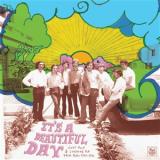
"It's a Beautiful Day" brings together 12 outstanding songs recorded between 1971 and 1976, reminiscent of sunshine pop, psych folk and soft rock with Peruvian touches, taken from extremely hard to find records, some of them reissued here on vinyl for the first time. A mindblowing look at a really stunning musical moment in Peru. Unusual instruments and exceptional vocal play also feature in the ten original songs and two cover versions, all performed by Lima-based groups. MAG has been, since its foundation in 1953, an essential label in the music scene of Peru, allowing the development of the careers of both tropical artists and musicians of other genres. At the head was Don Manuel Antonio Guerrero, its founder, whose name comes from the acronym of the label itself (M.A.G.). In 2021 MAG was acquired by the Spanish company Distrolux SL, owner of the Munster and Vampisoul record labels, after years of previous collaborations in which some of the most emblematic titles in the catalog were already reissued for the international market: Nils Jazz Ensemble, Sonora Casino, Traffic Sound, Al Valdez, Pax... Following our recent release "14 MAGníficos Bailables", comprising some of the best tropical music on MAG, this new compilation brings together 12 songs recorded between 1971 and 1976, reminiscent of sunshine pop, folk psych and soft rock but with Peruvian touches. The lyrics range from youthful reflections, environmental awareness, paradigm changes to all shades of love that the youth of the day experienced. Unusual instruments and exceptional vocal play also feature in the ten original songs and two cover versions, all performed by Lima-based groups.

Reservar31.10.2025

debe ser publicado en 31.10.2025

12,56
Various - Classic Classic Chapter 02 (2x12")

Following Volume 1, this second instalment of Classic’s 30th Anniversary series dives even deeper into the label’s visionary, genre-bending catalogue—balancing pioneering remixes, cult favourites, and future classics.

Once again, this 2x12” release is beautifully presented in a raw reverse board sleeve, a tactile nod to Classic’s earliest releases. Inside, are deep teal and green GMUND card stock inner sleeves with embossed detailing elevate the package into a collector’s item worthy of the music it holds.

Record One opens with one of the most revered remixes in house history. Isolee’s ‘Beau Mot Plage’ (Freeform Reform Parts 1 & 2), originally licensed from Germany’s Playhouse and lovingly reworked by Freeform Five’s Anu Pillai with a live ensemble. It’s a sprawling, euphoric journey that helped define Classic’s international reach and is still widely regarded as one of the greatest house records ever pressed.

Up next is Greenskeepers’ off-kilter banger ‘Bang in Your Face?’, showcasing the quirky, ‘G-swing’ sound for which James Curd and his crew became known for during their long-standing relationship with the label.

On the flip, Pépé Bradock’s jaw-dropping rework of Iz & Diz’s ‘Mouth’ takes center stage—a remix composed entirely from human sounds, equal parts sensual and surreal. Universally praised, it’s a masterclass in sonic innovation and remains one of the most acclaimed house remixes of all time.

The side closes with Markus Nikolai’s beloved ‘Bushes’, The First Re-Creation (Version 1.2) by Classic co founder Derrick Carter—a distinctive and maximalist edit that draws out the Latin horns, strings, and quirky vocals, turning a cult hit into a distinctly ‘Classic’ anthem.

Record Two captures Classic’s renewed energy in the 2010s.

Folamour’s ‘Devoted To U’ from his Umami LP is a 10-minute odyssey in groove—warm, progressive, and cinematic, with soaring piano lines and narrative richness.

Then comes Crazy P’s ‘One True Light’, shimmering with spacey textures, cosmic energy, and the deep, effortless groove the band has perfected over decades.

On Side D, we have Girls of the Internet’s lush and emotionally rich ‘When U Go’, blending soulful vocals with clean, spacious production that balances melancholy with movement.

Closing out Volume 2 is Sophie Lloyd’s now iconic ‘Calling Out’, featuring the unstoppable vocal force of Dames Brown. A modern gospel-disco-house anthem, the track glows with raw energy, live instrumentation, and spiritual fire—cementing its place as one of Classic’s defining moments of the last decade.


d B2. Markus Nikolai - Bushes (Derrick Carter's First Re-Creation) Version 1.2


d B2. Markus Nikolai - Bushes (Derrick Carter's First Re-Creation) Version 1.2


d B2. Markus Nikolai - Bushes (Derrick Carter's First Re-Creation) Version 1.2


d B2. Markus Nikolai - Bushes (Derrick Carter's First Re-Creation) Version 1.2


d B2. Markus Nikolai - Bushes (Derrick Carter's First Re-Creation) Version 1.2

Disponible a partir del29.04.2026

22,48

Ültimo hace: 13 Días
Praed Orchestra! - The Dictionary of Lost Meanings LP 2x12"
  • A1-: Mirror House
  • A2-: Djinn Dance
  • B1-: The Dictionary Of Lost Meanings
  • B2-: The Spell
  • C1-: Fragmented Realities
  • C2-: Three Dimensional Spirits
  • D1-: Ila3Sab

PRAED return to Discrepant, after their 2017’s entry Fabrication of Silver Dreams (CREP44)

Known for their signature blend of Egyptian Shaabi, free jazz and improvisation, the Lebanese duo behind PRAED - Raed Yassin and Paed Conca - now assemble a full orchestra for the second time taking the music to a deeper, rooted level.

Following their 2020 release Live in Sharjah, also under the PRAED Orchestra! moniker, the duo now revisit their unique blend of Arabic heritage and free jazz sensibilities with an album that keeps pushing further into strange and unexpected directions.

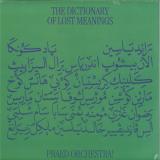
The Dictionary of Lost Meanings is just that, seven fully composed pieces and large-scale improvisations, performed by an expanded ensemble of musicians from across the globe. The result is dense and playful, unpredictable but familiar, a record where Arabic rhythms and microtonal melodies collide playfully against electronics, warped vocals and orchestral textures.

It’s less about genre than about memory — like tuning into a radio station broadcasting from somewhere between the past and the future.

PRAED continue to blur the line between popular culture and experimental music in ways that feel both grounded and completely their own.

PRAED ORCHESTRA! are
Raed Yassin: Synthesisers, Vocals, Beats
Paed Conca: Clarinet, Electric bass
Alan Bishop: Alto saxophone, Electric bass, Vocals
Andreas Bral: Harmonium, Electronics
Elisabeth Klinck: Violin
Christian Kobi: Soprano and Tenor Saxophones
Hans Koch: Bass Clarinet
Martin Küchen: Alto and Sopranino Saxophones
Maurice Louca: Synthesizer, electronics
Stan Maris: Accordion
Radwan Ghazi Moumneh: Buzuk, Vocals, Modular Synth
Youmna Saba: Electric Oud, Vocals
Sam Shalabi: Oud, Electric Guitar
Els Vandeweyer: Vibraphone
Khaled Yassine: Drums, Percussion
Michael Zerang: Drums, Percussion
Recorded by Jasper Jan Peeters at the Summer Bummer Festival, DE Studio,
Antwerp August 26, 2022
Mixed by Adham Zidan
Mastered by Mark Gergis
Produced by PRAED
Photos by Geert Vandepoele

No en stock

Haga su pedido ahora y le encargaremos el artículo en nuestro proveedor.

25,84

Ültimo hace: 56 Días
TOKIMEKI RECORDS - Teibou (Feat. Hikari) 7"
  • A1: Teibou
  • B1: Teibou Instrumental

The latest release from the music project "Tokimeki Records," which has garnered worldwide attention for its covers and unearthing of classic J-pop songs
from the 80s and 90s, with a focus on city pop, is a cover of the 1987 hit "Tsuteibo" by 80s singer and gliding writer Nina Atsuko.

Tokimeki Records has taken the original song's arrangement, which evokes the classic 80s AOR, and created a sparkling, summery 2025 sound.
The groovy medium beat and brass ensemble are a perfect match for the seaside at the end of summer.
Hikari (Mime) features on vocals. Based on a neo-soul style, the lyrics and melody evoke 80s city pop, and are expressed in a cool and solid way.

The jacket is an artistic surf photo by surf photographer Sasao Kazuyoshi, which seems to capture the world of the song.
This single is from the surf music compilation "SALT... meets ISLAND CAFE -Sea of ​​Love 3-," supervised by the magazine "SALT...," which proposes new
values ​​for beach lifestyle and surf culture.

Reservar24.10.2025

debe ser publicado en 24.10.2025

30,21
Tori Kudo & 3C123 - Tori Kudo & 3C123

A reissue of a cassette that was originally released on Uramado in 2020, this is the first time this live session appears on vinyl. The performance, featuring Kudo on piano and 3C123 on clarinet, was recorded on October 18, 2009, at the Uramado venue in Shinjuku. A beautiful and quixotic forty-minute set, that reconnects both Kudo and 3C123 with various musical histories, including those of classical composition and free improvisation.

The performance documented on Tori Kudo & 3C123 is a curious one. While they both appear to slip into improvised ruminations at times, for the most part, Kudo performs pieces by Erik Satie on the piano, over which 3C123 teases an excoriating stream of improvisation from the clarinet. His playing here is wild in its poetry: sometimes lushly nestly alongside Satie’s melodies, elsewhere loosing Ayler-esque squalls from the instrument, it’s a bravura performance that is matched, in an indirect manner, by the poise and pacing of Kudo’s generous, fluent recital.

When asked about the thinking behind the performance documented here, Kudo explains by describing the historical juxtaposition of Satie with Takehisa Kosugi’s improvised violin as “an essence of the Japanese art of collective improvisation.” The playing here, as within Japanese collective improvisation, is about sitting ‘alongside’ each other, not necessarily in direct (or even indirect) reference, but rather sharing the space; “just being there together,” Kudo says, and letting go of the need for performers to engage in interplay.

Tori Kudo & 3C123 is certainly part of that tradition, and this is where its curious poetry resides; in that ‘third space’ that sits in between, but not directly connecting, the two performers. Kudo makes an analogy with Fluxus, which is appropriate. But you can also hear their shared history here, somehow, as Kudo and 3C123 have known each other since the eighties, when they shared a house in Kunitachi City, Tokyo. Their musical paths have been multiple – Kudo, of course, best known perhaps for his Maher Shalal Hash Baz ensemble; 3C123 as a member of Vedda Music Workshop, and with other Japanese musicians like Koichiro Watanabe.

No en stock

Haga su pedido ahora y le encargaremos el artículo en nuestro proveedor.

31,72

Ültimo hace: 6 Meses
Mr. Circle - Thi Nam

Originally released in 1981, Mr. Circle’s Thi Nam should really have been recognised decades ago as a jazz dance classic. A beautiful example of European jazz fusion at its most sophisticated and optimistic, the album is immersed in the sonics and rhythms of pan-Latin fusion and Brazilian samba, but with one foot in the upful jazz fusion exemplified by Roy Ayers or the Mighty Ryeders.
Taking inspiration from Ursula Dudziak, Flora Purim, and Norma Winstone, singer Monika Linges uses the crystalline tone of her voice as an instrument within the ensemble. The LP is built around the interaction of her vocalising with bandleader Mikesch van Grümmer’s keyboard versatility, all underpinned by the surging Brazilian rhythms laid down by drummer Gerd Breuer and percussionist Ponda O’Bryan.
The result is a unique set of sunlit, Brazilian-inspired jazz fusion. Aimed squarely at the feet throughout, the album kicks off with a double whammy: the funky title track, followed by. the percussion-rich Juntos. The long form Suka begins with a shimmering intro before taking flight halfway through into an urgent jazz samba with Linges’ vocals to the fore. Featuring the vocals of Bill Ramsay, Tides is another driving jazz-dancer with a Brazilian twist, while the summery, propulsive Schoch-Schach features virtuosic interplay between Linges and alto saxophone.

No en stock

Haga su pedido ahora y le encargaremos el artículo en nuestro proveedor.

26,01

Ültimo hace: 6 Meses
The Pitch & Julia Reidy - Neutral Star

The Pitch is a quartet made up of Boris Baltschun, Koen Nutters, Michael Thieke and Morten Joh. Founded in Berlin in 2009, they play a hypnotic form of structured improvisation full of acoustic exploration and electronic intervention. On Neutral Star, The Pitch are joined by Australian guitarist/composer extraordinaire Julia Reidy for a record of star gazing electro-acoustic jazz.

Reidy's playing and compositional technique between Takoma-style fingerpicking and Glenn Branca'esque microtonality, perfectly complements the loose improvisational framework The Pitch is providing. Endless ≠ Limitless, a recent piece by Reidy and Joh, is transformed from a washed-out/obscured tape delay composition into a colorful, meandering ensemble piece with a swarming character - blooming with intrigue for the patient ear. The B-side strikes a more gentle tone: the 24-minute Neutral Star begins with a siren-like overtone whose drone-like flowing slowly morphs into a deterritorial modality with jazzy undertone. Accompanied by constant eruptions of vibraphone, clarinet, electronics and double bass punctuation – while permanently questioned by Reidy's drippingly pearly steel guitar work. Slowly evolving into new territories through the expansive instrumentation and keen listening between the players.

The fact that Neutral Star was recorded in one take (by Rabih Beaini in his Morphine Raum studio/venue) in front of a live audience and without overdubs is hard to believe, even for the trained ear. The recording appears to be too multilayered for a single snapshot, with its compositional structures constantly shifting and moving against themselves, counterintuitively and anti-cyclically. Reidy´s playing has been described as "unstable harmonic territory, and the collaboration with The Pitch interprets this concept brilliantly - adding further non-places to the territory. And the listener, however, is never left alone in the process of tectonic shifts - at least as long as their listening is attentive and contemplative at once.

No en stock

Haga su pedido ahora y le encargaremos el artículo en nuestro proveedor.

27,94

Ültimo hace: 6 Meses
JOHN PRINE - LOST DOGS + MIXED BLESSINGS LP 2x12"
  • New Train
  • Ain't Hurtin' Nobody
  • All The Way With You
  • We Are The Lonely
  • Lake Marie
  • Humidity Built The Snowman
  • Day Is Done
  • Quit Hollerin' At Me
  • Big Fat Love
  • Same Thing Happened To Me
  • This Love Is Real
  • Leave The Lights On
  • He Forgot That It Was Sunday
  • I Love You So Much It Hurts
También disponible

BUTTERED POPCORN VINYL[32,35 €]


Anlässlich des 30-jährigen Jubiläums von ,Lost Dogs & Mixed Blessings" erscheint über Oh Boy Records eine Deluxe-Edition von John Prines beliebtem Album mit fünf bisher unveröffentlichten Demos und alternativen Takes sowie dem bisher unveröffentlichten Titel ,Hey Ah Nothin'". Dieses lange verschollene Juwel wird sowohl langjährige Fans als auch Neulinge begeistern und bietet einen intimen Einblick in die Entstehung des Albums und den spontanen Geist, der die Sessions geprägt hat. Das für einen Grammy nominierte Album wird außerdem zum ersten Mal auf Vinyl veröffentlicht, neu gemastert von den Originalbändern. ,Lost Dogs & Mixed Blessings" wird wegen seiner Wärme, seinem Witz und seiner Tiefe sehr geschätzt, und diese Neuauflage bietet einen noch genaueren Einblick in eine der fröhlichsten und kreativsten Phasen in Prines legendärer Karriere. "Lost Dogs & Mixed Blessings" erschien ursprünglich 1995 nach Prines Grammy-prämiertem Album "The Missing Years" und festigte seinen Ruf als einer der größten Songwriter Amerikas. Produziert von Howie Epstein von Tom Petty and the Heartbreakers, zeigt das Album Prine auf einem persönlichen und künstlerischen Höhepunkt, erfüllt von der Freude über eine neue Liebe, seine Vaterschaft und einer unerschütterlichen kreativen Chemie. Unterstützt von einem All-Star-Ensemble, darunter Heartbreakers-Pianist Benmont Tench und Gastsängerinnen Carlene Carter und Marianne Faithfull, ist ,Lost Dogs & Mixed Blessings" ein lebendiges Beispiel für Prines unvergleichliches lyrisches Talent. Das Album fließt mühelos von der ironischen Zufriedenheit von ,Ain't Hurtin' Nobody" zu der epischen Erzählung von ,Lake Marie", einem Song, den Bob Dylan einmal als einen seiner Lieblingssongs bezeichnet hat. Mit seiner Mischung aus herzlichen Balladen, surrealen Erzählungen und verspieltem Humor bleibt ,Lost Dogs & Mixed Blessings" eines der umfangreichsten und beliebtesten Werke von Prine. Mit 14 Titeln und einer Länge von fast einer Stunde fängt es die Fülle der Erfahrungen der Lebensmitte ein, ehrlich, entspannt und voller Leben. Dreißig Jahre später lädt diese Veröffentlichung dazu ein, ein Album wiederzuentdecken, das weiterhin tröstet, überrascht und inspiriert.

Reservar12.09.2025

debe ser publicado en 12.09.2025

32,35
JOHN PRINE - LOST DOGS + MIXED BLESSINGS LP 2x12"

JOHN PRINE

LOST DOGS + MIXED BLESSINGS LP 2x12"

2x12inchOBRLPC113
Oh Boy Records
12.09.2025

Anlässlich des 30-jährigen Jubiläums von ,Lost Dogs & Mixed Blessings" erscheint über Oh Boy Records eine Deluxe-Edition von John Prines beliebtem Album mit fünf bisher unveröffentlichten Demos und alternativen Takes sowie dem bisher unveröffentlichten Titel ,Hey Ah Nothin'". Dieses lange verschollene Juwel wird sowohl langjährige Fans als auch Neulinge begeistern und bietet einen intimen Einblick in die Entstehung des Albums und den spontanen Geist, der die Sessions geprägt hat. Das für einen Grammy nominierte Album wird außerdem zum ersten Mal auf Vinyl veröffentlicht, neu gemastert von den Originalbändern. ,Lost Dogs & Mixed Blessings" wird wegen seiner Wärme, seinem Witz und seiner Tiefe sehr geschätzt, und diese Neuauflage bietet einen noch genaueren Einblick in eine der fröhlichsten und kreativsten Phasen in Prines legendärer Karriere. "Lost Dogs & Mixed Blessings" erschien ursprünglich 1995 nach Prines Grammy-prämiertem Album "The Missing Years" und festigte seinen Ruf als einer der größten Songwriter Amerikas. Produziert von Howie Epstein von Tom Petty and the Heartbreakers, zeigt das Album Prine auf einem persönlichen und künstlerischen Höhepunkt, erfüllt von der Freude über eine neue Liebe, seine Vaterschaft und einer unerschütterlichen kreativen Chemie. Unterstützt von einem All-Star-Ensemble, darunter Heartbreakers-Pianist Benmont Tench und Gastsängerinnen Carlene Carter und Marianne Faithfull, ist ,Lost Dogs & Mixed Blessings" ein lebendiges Beispiel für Prines unvergleichliches lyrisches Talent. Das Album fließt mühelos von der ironischen Zufriedenheit von ,Ain't Hurtin' Nobody" zu der epischen Erzählung von ,Lake Marie", einem Song, den Bob Dylan einmal als einen seiner Lieblingssongs bezeichnet hat. Mit seiner Mischung aus herzlichen Balladen, surrealen Erzählungen und verspieltem Humor bleibt ,Lost Dogs & Mixed Blessings" eines der umfangreichsten und beliebtesten Werke von Prine. Mit 14 Titeln und einer Länge von fast einer Stunde fängt es die Fülle der Erfahrungen der Lebensmitte ein, ehrlich, entspannt und voller Leben. Dreißig Jahre später lädt diese Veröffentlichung dazu ein, ein Album wiederzuentdecken, das weiterhin tröstet, überrascht und inspiriert.

Reservar12.09.2025

debe ser publicado en 12.09.2025

32,35
TADAAKI MISAGO AND TOKYO CUBAN BOYS - Nippon No Koten Geijyutu
  • A1: Sakura Sakura
  • A2: Kariboshikiri Uta
  • A3: Shika No Tone
  • A4: Yagibushi
  • B1: Genroku Hanami Odori
  • B2: Esashi Oiwake
  • B3: Rokudan
  • B4: Awa Odori

An unrelenting storm of Minyo, Latin, and Jazz—fierce, thrilling, and utterly original. A groundbreaking work of classical artistry, created by two
masters: Naotero Misuna and Norio Maeda.

Naotero Misuna, known as “Maestro Misuna,” led the Tokyo Cuban Boys, a legendary big band formed in 1949—before Latin music had even taken
root in Japan. With over 300 recordings to their name, they are one of Japan’s most iconic ensembles. Throughout their long career, the band remained
rooted in Latin music while boldly incorporating other genres and contemporary styles. Among their most internationally acclaimed works are those that
focus on traditional Japanese music, such as folk songs and ancient melodies.

This album, Japanese Classical Arts, arranged by the great Norio Maeda, is a masterpiece that transforms Minyo + Latin + Jazz into a thrilling sonic
experience. Leading the charge is a powerful rendition of “Sakura Sakura,” which moves seamlessly between Afro-Cuban jazz and jazz-rock, captivating l
isteners around the world. The album also features meticulously crafted arrangements of “Kariboshikiri Uta,” “Yagibushi,” “Genroku Hanami Odori,” and
“Awa Odori.” The inclusion of Kohachiro Miyata on shakuhachi and Tadao Sawai on koto is nothing short of brilliant.

This is exhilarating Wa-Jazz at its finest—music that makes you want to shout, “This is it!

Text by Yusuke Ogawa (UNIVERSOUNDS / DEEP JAZZ REALITY)

Reservar12.09.2025

debe ser publicado en 12.09.2025

38,03
Various - Dolores: Salsa & Guaracha From 70's French West Indies

In Guadeloupe, many people think that jazz and ka music are like a ring and a finger. To some extent, the same could be said about so called Latin music and the music played in the French West Indies.

Both aesthetics were born in the Caribbean and bear so many connections that they can easily be considered cousins. In constant dialogue, there are lots of examples of their fruitful alliance and have been for a while. The English country dance that used to be practiced in European lounges came to be called kadrille in Martinique and contradanza in Cuba. They both featured additional percussion instruments inherited from the transatlantic deportation. Drawing from shared feelings about the same traumatized identity – later to be creolized – it would be hard not to assume that they were meant to inspire each other. The golden age of the orchestras that graced the Pigalle nights during the interwar period further proves the point. As soon as the 1930s, Havana-born Don Barreto naturally mixed danzón and biguine music in a combo based at Melody's Bar. In the following decade, Félix Valvert, a conductor who was born and raised in Basse-Terre in Guadelupe, also worked wonders in Montparnasse with La Coupole, which was an orchestra made up of eclectic musicians. Afro- Caribbean performers of various origins were often hired on rhythm and brass sections in jazz bands, which used to enliven the typical French balls of the capital. In the 1930s and onwards, Rico’s Creole Band was one of them.


Martinican violinist-clarinettist Ernest Léardée, who would become the king of biguine music as well as the main figure of French Uncle Ben's TV commercials (a dark stigma of post-colonial stereotypes), had musicians from the whole Caribbean sphere play at his Bal Blomet – and they all enchanted "ces Zazous-là" (according the words of Léardée's biguine-calypso piece). In les Antilles (French for French West Indies), music history started to speed up in the 1950s, when trade expanded and radio stations grew bigger. The Guadelupean and Martiniquais youth tuned in their old galena radio sets to South American and Caribbean music. As for the women traders, les pacotilleuses, they bought and sold goods across different islands (the "passing of items through various hands" was thought to be most pleasurable) and brought back countless sounds in their luggage. Such was the case of Madame Balthazar, who once returned from Puerto Rico with the first 45rpm and 33rpm to ever enter Martinique.

Out of this adventure was created the famous Martinican label La Maison des Merengues, a music business she opened and undertook with her husband and which proved to be a major landmark. At the end of the 1950s, in Puerto Rico, Marius Cultier competed in the Piano International Contest playing a version of Monk's Round 'Midnight. He won the first prize and this distinction foreshadowed everything that was to come. Cultier, the heretic Monk of jazz, was quickly praised for writing superb melodies, always tinged with a twist that conferred a unique sound to his music. It didn't take long for the gifted self-taught musician to get to play with Los Cubanos, making a name for himself thanks to his impressive maestria on merengues.

The rest is history. Besides, in the late 1950s, Frantz Charles-Denis, born into the upper middle class in Saint-Pierre and better known by his first name Francisco, went back home after working at La Cabane Cubaine – a club located rue Fontaine where he had caught the Latin fever. Francisco's music was therefore heavily marked by his Cuban cousins' influence, which gave the combos he led a specific style and also led to renewal. Things were swinging hard in La Savane, located in the main square in Fort-de-France. He set up the Shango club close by and tested out the biguine lélé there, a new music formula spiced up with Latin rhythms. Soon afterwards, fate had him fly to Puerto Rico and Venezuela.

As for percussionist Henri Guédon (percussions were only a part of his many talents), he was born in Fort-de-France in May 22nd 1944, the day marking the celebration of the abolition of slavery. As an old man, he could remember that in " his father's Teppaz, a lot of hectic 6/8 music was constantly playing...". In the opening lines of his Lettre à Dizzy, a small illustrated collection of writings published by Del Arco, he highlighted the huge impact that cubop had on him as a teenage boy, around 1960. He eventually turned out to be the lider maximo in La Contesta, a big band steeped in Latin jazz. He was also the one who originated the word zouk to describe music which brought the sound of the New York barrio to Paris. It was the culmination of a journey that started in Sainte-Marie: "a mythical place for bélé, the equivalent of Cuban guaguancó". In the early 1960s, the tertiary economy developed to the detriment of agriculture. Yet rural life was where roots music emerged in Martinique and in Guadeloupe.

Record companies played a major part in the process of Latin versions sweeping across the islands – before reaching everywhere else. Producer Célini, boss of the great Aux Ondes label, and Marcel Mavounzy, both the head of Émeraude records - a firm which was founded in 1953 - as well as the brother of famous saxophonist Robert Mavounzy, were big names to bear in mind. Although there were many of them - all of whom are featured on this record - Henri Debs was definitely the major figure in the recording adventure. He proved to be so influential that he even got compared to Berry Gordy. In the mid 1950s, when he acquired his first Teppaz, he worked on his first compositions: a bolero and a chachacha. Then, he became the one man who made people discover Caribbean music, from calypso to merengue. He was among the first ones to rush out to San Juan, Puerto Rico, to buy records and distribute them through a store run by one of his brothers in Fort-de-France. He had members of the Fania All Star come and perform there, which he was madly proud about. He was also the first one to pay attention to Haitian music, such as compas direct and various other rhythms which would soon flood the market. As a result, many of the combos hitting his legendary studio would end up boosted by widespread "Afro-Latin" rhythms. However, he never denied his identity: gwo ka drums were given a major role, although they were instruments which had long been banned from the "official" music spheres. The present selection bears witness to such a creative swarming. Here are fourteen tracks of untimely yet unprecedented cross-fertilization: all types of music rooted in the Creole archipelago have found their way, whatsoever, to the tracklisting. Whether originating from the city or being more rural, they all go back to what Edouard Glissant, in an interview about the place of West Indian music in the Afro-American scope, called "the trace of singing, the one which got erased by slavery." "It is so in jazz, but also in reggae, calypso, biguine, salsa... This trace also manifests through the drums, whether Guadelupean, Dominican, Jamaican or Cuban... None of them being quite the same. They all point to the idea of a trace, seeking it out and connecting to each other through it. This is the hallmark of the African diaspora: its ability to create something new, in relation to itself, out of a trace. It may be the memory of a rhythm, the crafting of a drum, a means of expression which doesn't resort to an old language but to the modalities of it." The opening track features one of the emblematic orchestras of this aesthetic identity, criscrossing many music types from the archipelago. The 1974 Ray Barretto guajira – Ray Barretto was a major New York drummer influenced by Charlie Parker and Chano Pozzo – is magnificently performed by Malavoi, a legendary Fayolais group (i.e from Fort-de-France). Additionally, the compilation ends on a piece by Los Martiniqueños de Francisco. It symbolically closes the circle as it is a genuine potomitan of Martinique culture which also functions as a tireless campaigner for Afro-Caribbean music. Practicing the danmyé rounds (a kind of capoeiria) to the rhythm of the bèlè drum, it delivers a terrific Caterete, a kind of champeta of Afro- Colombian obedience which was originally composed by Colombian Fabián Ramón Veloz Fernández for the group Wgenda Kenya. The icing on the cake is Brazilian Marku Ribas, who found refuge in Martinique in the early 1970s, bringing his singing to the last trance-inducing track. These two "versions" convey the whole tone of a selection composed of rarities and classics of the tropicalized genre, swarming with tonic accents and convoluted rhythms. It is the sort of cocktail that the West Indians never failed to spice up with their own ingredients. For instance, the Los Caraïbes cover of Dónde, a famous Cuban theme composed by producer Ernesto Duarte Brito, has a typical violin and features renowned Martinique singer Joby Valente and his piquant voice.


The track used to be – or so we think – their only existing 45rpm. The meaningful Amor en chachachá by L'Ensemble Tropicana, a band which included Haitian musicians among whom was composer and leader Michel Desgrotte, also recalls how Latin music was pervasive in the tropics in the mid-1960s. They were the ones keeping people dancing at Le Cocoteraie in Guadelupe and La Bananeraie in Martinique. Around the same time, another "foreign" band, Congolese Freddy Mars N'Kounkou's Ryco Jazz, achieved some success on both islands by covering Latin jazz classics – such as their adaptation of Wachi Wara, a "soul sauce" by Dizzy Gillespie and Chano Pozo whose interweaving of strings and percussions can have anyone hit the dancefloor. How can you resist Dap Pinian indeed, a powerful guaguancó by Eugene Balthazar, performed by the Tropicana Orchestra and published by the Martinique-founded La Maison des Merengues? It also acts as a symbol of the maelstrom at work. Going by the name Paco et L'orchestre Cachunga, Roger Jaffory used to play guaguancó too: his Fania-inspired Oye mi consejo is one example of his style. Baila!!!!! Dancing was also one of the Kings' focus points. Oriza is a Puerto Rican bomba and a "classic" originally composed by Nuevayorquino trumpeter Ernie Agosto, which reserves major space for brasses, giving it a special sheen.

Emerging from the New York barrios crucible was also La Perfecta, a Martinique group originating from Trinidad, whose name directly references the totemic Eddie Palmieri figure as well as his own band, also called La Perfecta. Here they borrow Toumbadora from Colombian producer and composer Efraín Lancheros and interpret it by emphasizing percussions, which set fire to the track even more than the wind instruments. The same goes for Martinique's Super Jaguars, who use Tatalibaba – a composition by Cuban guitarist Florencio "Picolo" Santana which was made famous by Celia Cruz & La Sonora Matencera – as a pretext for sending their cadences into a frenzy. In a more typically salsa vein, the Super Combo, a famous Guadelupean orchestra from Pointe-Noire that was formed around the Desplan family and had Roger Plonquitte and Elie Bianay on board, adapt Serana, a theme by Roberto Angleró Pepín, a Puerto Rican composer, singer and musician also known for his song Soy Boricua. Here again, their vision comes close to surpassing the original. In the 1970s, L'Ensemble Abricot provided a handful of tracks of different syles, hence reaching the pinnacle of the art of achieving variety and giving pleasure. They played boleros, biguines, compas direct, guaguancó and even a good old boogaloo - the type they wanted to keep close to their hearts for ever, "pour toujours", as they sang along together in one of their songs. Léon Bertide's Martinican ensemble excelled at the boogaloo which had been composed by Puerto Rican saxophonist Hector Santos for the legendary El Gran Combo.


Three years later, in 1972, Henri Guédon, with the help of Paul Rosine on the vibraphone, tackled the Bilongo made famous by Eddie Palmieri. Such a classic!!!!! And so were the Aiglons, the band from Guadelupe: choosing to execute Pensando en tí, a composition by Dominican Aniceto Batista, on a cooler tempo than the original, they noticeably used a wonderfully (un)tuned keyboard in place of the accordion. On the high-value collectible single – the first one released by Les Aiglons under the Duli Disc label – there is a sticker classifying the track under the generic name "Afro". Now that is what we call a symbol. Jacques Denis

No en stock

Haga su pedido ahora y le encargaremos el artículo en nuestro proveedor.

21,43

Ültimo hace: 40 Días
DRAB MAJESTY - CARELESS

DRAB MAJESTY

CARELESS

12inchDAISC675
Dais Records
05.09.2025

In the smoggy orange light of a new millennium, the young Deb Demure would take the bus, once a week, from his home in crumbling Hollywood to his grandmother's apartment, nestled in the pastel pristineness of Beverly Hills. During these visits, Deb couldn't help but notice the disconnect between the glow of his grandmother's temple, and the downtrodden, alienated figures that populated the seats of the mass transit that took him there. Week after week, he would observe these characters: fading B-movie starlets, leisure-suited alcoholics and forgotten civil servants. But one fateful commute home, as the twilight waned to the purple Los Angeles night, he realized these figures were not as lost as they appeared - there was a nobility in their failure, reflective of the dignity of the city's vanishing golden era. They were survivors, in need of a voice: a spokesperson for every color of hope and hopelessness, transcendent of gender and time; Drab Majesty became Deb's musical podium for this undertaking. Raised in a music-centric household, Deb would find the time to teach himself to play his father's right-handed guitar upside down and left-handed; an unorthodox fashion from where his earliest understanding of chords and harmony were conceived. Exploring the bins of discarded vinyl in his neighborhood thrift stores, his toolkit expanded with the subterranean sonic gems of the recent past. Influences range from the virtuosic arpeggiated guitar work of Felt's Maurice Deebank and the grittier pop progressions of Red Lorry Yellow Lorry's Chris Reed as well as Steve Severin from Siouxsie and The Banshees. He also studied the harmonic oscillations and utilization of the occult power of vibratory frequency present in New Age sounds of Greek artist, IASOS. In terms of orchestration, he consciously culls from the seaside maximalism of Martin Dupont and mechanized grooves of early Depeche Mode. Like a dualistic pendulum, his vocals swing from a preistly baritone to a choir boy's falsetto reflecting the sepulchral ambiance of church visits with his grandmother. Currently the drummer for Los Angeles lo-fi rock ensemble Marriages and having honed an unorthodox home recording style, Deb sources his sounds from a repository of "mid-fi" synthesizers and other lesser-quality instruments. Following the release of his debut cassette EP, "Unarian Dances", he also shared a split 12" with synth pop forefathers, Eleven Pond. During the Spring of 2015, Drab Majesty signed with Dais Records and released his first single, Unknown to the I, as a introduction for his first initial foray into the album format, romantically titled Careless. Written over the course of 2 years, "Careless" is a compendium of songs that have outlasted a malicious burglary of his studio, his struggles with substance addiction, and most recently, the death of his beloved grandmother.

Reservar05.09.2025

debe ser publicado en 05.09.2025

22,27
DRAB MAJESTY - CARELESS

DRAB MAJESTY

CARELESS

12inchDAISC575
Dais Records
05.09.2025

In the smoggy orange light of a new millennium, the young Deb Demure would take the bus, once a week, from his home in crumbling Hollywood to his grandmother's apartment, nestled in the pastel pristineness of Beverly Hills. During these visits, Deb couldn't help but notice the disconnect between the glow of his grandmother's temple, and the downtrodden, alienated figures that populated the seats of the mass transit that took him there. Week after week, he would observe these characters: fading B-movie starlets, leisure-suited alcoholics and forgotten civil servants. But one fateful commute home, as the twilight waned to the purple Los Angeles night, he realized these figures were not as lost as they appeared - there was a nobility in their failure, reflective of the dignity of the city's vanishing golden era. They were survivors, in need of a voice: a spokesperson for every color of hope and hopelessness, transcendent of gender and time; Drab Majesty became Deb's musical podium for this undertaking. Raised in a music-centric household, Deb would find the time to teach himself to play his father's right-handed guitar upside down and left-handed; an unorthodox fashion from where his earliest understanding of chords and harmony were conceived. Exploring the bins of discarded vinyl in his neighborhood thrift stores, his toolkit expanded with the subterranean sonic gems of the recent past. Influences range from the virtuosic arpeggiated guitar work of Felt's Maurice Deebank and the grittier pop progressions of Red Lorry Yellow Lorry's Chris Reed as well as Steve Severin from Siouxsie and The Banshees. He also studied the harmonic oscillations and utilization of the occult power of vibratory frequency present in New Age sounds of Greek artist, IASOS. In terms of orchestration, he consciously culls from the seaside maximalism of Martin Dupont and mechanized grooves of early Depeche Mode. Like a dualistic pendulum, his vocals swing from a preistly baritone to a choir boy's falsetto reflecting the sepulchral ambiance of church visits with his grandmother. Currently the drummer for Los Angeles lo-fi rock ensemble Marriages and having honed an unorthodox home recording style, Deb sources his sounds from a repository of "mid-fi" synthesizers and other lesser-quality instruments. Following the release of his debut cassette EP, "Unarian Dances", he also shared a split 12" with synth pop forefathers, Eleven Pond. During the Spring of 2015, Drab Majesty signed with Dais Records and released his first single, Unknown to the I, as a introduction for his first initial foray into the album format, romantically titled Careless. Written over the course of 2 years, "Careless" is a compendium of songs that have outlasted a malicious burglary of his studio, his struggles with substance addiction, and most recently, the death of his beloved grandmother.

Reservar05.09.2025

debe ser publicado en 05.09.2025

22,27
DRAB MAJESTY - CARELESS

Drab Majesty

CARELESS

12inchDAISC775
Dais Records
02.09.2025

In the smoggy orange light of a new millennium, the young Deb Demure would take the bus, once a week, from his home in crumbling Hollywood to his grandmother's apartment, nestled in the pastel pristineness of Beverly Hills. During these visits, Deb couldn't help but notice the disconnect between the glow of his grandmother's temple, and the downtrodden, alienated figures that populated the seats of the mass transit that took him there. Week after week, he would observe these characters: fading B-movie starlets, leisure-suited alcoholics and forgotten civil servants. But one fateful commute home, as the twilight waned to the purple Los Angeles night, he realized these figures were not as lost as they appeared - there was a nobility in their failure, reflective of the dignity of the city's vanishing golden era. They were survivors, in need of a voice: a spokesperson for every color of hope and hopelessness, transcendent of gender and time; Drab Majesty became Deb's musical podium for this undertaking. Raised in a music-centric household, Deb would find the time to teach himself to play his father's right-handed guitar upside down and left-handed; an unorthodox fashion from where his earliest understanding of chords and harmony were conceived. Exploring the bins of discarded vinyl in his neighborhood thrift stores, his toolkit expanded with the subterranean sonic gems of the recent past. Influences range from the virtuosic arpeggiated guitar work of Felt's Maurice Deebank and the grittier pop progressions of Red Lorry Yellow Lorry's Chris Reed as well as Steve Severin from Siouxsie and The Banshees. He also studied the harmonic oscillations and utilization of the occult power of vibratory frequency present in New Age sounds of Greek artist, IASOS. In terms of orchestration, he consciously culls from the seaside maximalism of Martin Dupont and mechanized grooves of early Depeche Mode. Like a dualistic pendulum, his vocals swing from a preistly baritone to a choir boy's falsetto reflecting the sepulchral ambiance of church visits with his grandmother. Currently the drummer for Los Angeles lo-fi rock ensemble Marriages and having honed an unorthodox home recording style, Deb sources his sounds from a repository of "mid-fi" synthesizers and other lesser-quality instruments. Following the release of his debut cassette EP, "Unarian Dances", he also shared a split 12" with synth pop forefathers, Eleven Pond. During the Spring of 2015, Drab Majesty signed with Dais Records and released his first single, Unknown to the I, as a introduction for his first initial foray into the album format, romantically titled Careless. Written over the course of 2 years, "Careless" is a compendium of songs that have outlasted a malicious burglary of his studio, his struggles with substance addiction, and most recently, the death of his beloved grandmother.

No en stock

Haga su pedido ahora y le encargaremos el artículo en nuestro proveedor.

22,27

Ültimo hace: 7 Meses
Causa Sui - Euporie Tide LP 2x12"

Causa Sui

Euporie Tide LP 2x12"

2x12inchEPR013LP
El Paraiso
29.08.2025
  • 1: Homage 0:08
  • 2: The Juice 6:06
  • 3: Echo Springs 5:06
  • 4: Boozehound 5:20
  • 5: Mireille 7:13
  • 6: Fichelscher Sun 2:15
  • 7: Ju-Ju Blues 6:35
  • 8: Sota El Cel 1:40
  • 9: Euporie 10:54
  • 10: Eternal Flow 9:26

Finally back in print on vinyl and CD after having been unavailable for several years! First released in 2013, Euporie Tide has become the quintessential Causa Sui record over the years. For many fans this 2LP has served as the perfect entry point to the band's multi-faceted oeuvre. And with good reason – from the first notes of ”Homage” to the peaceful closer ”Eternal Flow” the listener is taken on a beatific ride. The band manages to condense an impressive range of influences into these ten tracks. Previous albums were largely centered around lengthy freeform jamming, but on Euporie Tide, this side of the band is carefully dosed to balance concise, almost proggy song structures. Everything fans of the band cherish so much is here in abundance: the fuzzy downtuned desert-rock riffs, the blissed-out, motoric krautrock, the dynamic builds, and the fragments of electric jazz and kosmische that are woven into the compositions.

Euporie Tide was created following collaborative albums with members of Sunburned Hand of the Man (Pewt'r Sessions) and Tortoise (released as Chicago Odense Ensemble), which certainly had a cross-pollinating effect on this set. Rarely does a band from the European stoner rock scene embrace such a wide range of stylistic influences, and twelve years after the album's initial release, Euporie Tide deservedly stands as Causa Sui's crowning achievement.

Deluxe black 2LP edition with heavy sleeve, wrap-around obi strip and pvc-lined inner sleeves.

Reservar29.08.2025

debe ser publicado en 29.08.2025

26,85
ALAN SPARHAWK - WITH TRAMPLED BY TURTLES

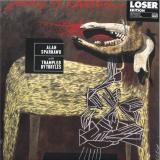
No one can help you build something beautiful quite like those who know you best. Alan Sparhawk knows this well. In his years in Low, he built decades of stirring music with his wife and lifelong creative partner Mimi Parker. In recent years, he has performed around Minnesota with his son Cyrus in DERECHO Rhythm Section, a funk band that also frequently features his daughter Hollis on vocals. There's an irreplaceable naturalism that comes with this kind of dynamic. Those who know you understand you. They love you. They want to help you bring your greatest passions to fruition. So it made sense that Sparhawk would turn to fellow Duluth musicians Trampled by Turtles to realize his latest record. As friends and mentees of Low's, taken under Sparhawk and Parker's wing from their earliest days as a bar band, Trampled by Turtles have performed with Sparhawk countless times over the years. The Duluth ties run deep: "There's a certain vibe that has to do with underdog syndrome, coming from a small town," Sparhawk muses. "Some of it is the weird grind and slackness that being at the mercy of Mother Nature puts in you. It humbles you." The two artists hold the kind of ironclad bond. Following Parker's passing in 2022, Trampled by Turtles invited Sparhawk to join them on tour to give him a space to be surrounded by friends. Occasionally, he would join them onstage. The outpouring of love was palpable every time they played together, a surge of warmth. When playing together is that powerful, why stop there? In winter, 2024, Sparhawk and Trampled by Turtles created With Trampled by Turtles, a record exactly as its name implies: Collective. Communal. Fraternal. Empathetic. A vessel for comfort, a reminder of the harmony that can exist when surrounded by those closest to you. Where White Roses, My God, Sparhawk's last album, plunged headfirst into electronica and radical vocal modulation, With Trampled by Turtles leans into the folk and bluegrass stylings of its backing band, Sparhawk's voice now completely unvarnished. With Trampled by Turtles is far more than just Alan Sparhawk and Trampled by Turtles. It's an affirmation of all the people who have been vital in Sparhawk's life and music, and an opportunity to hold each of their gifts into the light. It's producer Nat Harvie, who has been collaborating and performing with him for years. It's Sparhawk's daughter Hollis, who duets with her father on "Not Broken." And it's Mimi Parker, too: "Too High," "Princess Road Surgery," and "Not Broken" were all tracks she and Sparhawk had been working on in the last few years. These songs finally found a setting that stirringly commemorates them, bolstered by a full ensemble to make every note sing. Their presence is a kind of eternal connection to Parker, a way her musical grace will keep flourishing.

No en stock

Haga su pedido ahora y le encargaremos el artículo en nuestro proveedor.

24,16

Ültimo hace: 8 Meses
Artículos por página
N/ABPM
Vinyl