Finally the two main protagonists of the current live electronic movement and founders of our fair label Carl Cox and Christopher Coe have stepped up to the plate with this truly innovative and uncompromisingly live collection of techno tunes that defy categorization and are certain to land us fair and square on the dancefloors of the underground clubs of the world!
What can we say.. This EP just bangs! Improvised, recorded live and straight to 2 track in one day, this 4 tracker comes straight from the machines of Carl and Christopher’s collaborative studio in Australia and onto wax!
It is with great delight that we can present this collaboration straight after the release of Carl’s first solo album in 10 years.
This is a statement of definition from the boys, they have planted their feet firmly in the live scene with this edgy, experimental and jackin’ collection of beats!
The mindset is real.
Buscar:wo land
Vol.3[20,13 €]
Vol.5[17,44 €]
Vol.6 10"[17,61 €]
Vol.6[16,77 €]
Vol.9 - Black[19,71 €]
Vol.9[12,56 €]
Vol. 10 12"[19,12 €]
Vol.9 7"[13,87 €]
Vol.11[19,29 €]
Vol.11[18,70 €]
Vol. 10 7"[16,77 €]
REPRESSED
Defending the 2014 titles for both DMC World DJ Championship and the Battle for World Supremacy. The only DJ in history to win the UK DJ Championsh and Battle for UK Supremacy 2 years running. Ritchie Ruftone brings a skip proof DJ battle tool.
Both sides of the vinyl contain the same scratch samples, one side is 4/4 at 100 bpm and the other utilizing 3/4 ultra-pitch. The 'go to tool' tool for all your scratching needs, regardless of bmp tempos. All samples land on 6 and 12 o'clock. Drop the needle anywhere and practice yo cuts!
Landing on Cosmocities right on cue for the summer season ahead, Japanese producer Masumi Nishimura alias Inner Science deals out a new entry into his shimmering, shape-shifting mindset. Flying us off to a soothingly dreamy and colourful headspace, bristling with vibrant sound design minutiae to wrap your ears around, Inner Science exhibits the elevating power of his music through three original joints, complemented by two exquisite remixes from multi-faceted British genius Joe Goddard and Giegling staple, Map.ache. The acid-infused glitter of “Unfold” paves the way with understated bravura; a piece of squelchy yet dazzling nature, organically making the rounds between propulsive club music territories and exotica-laced cascades of sound. “Quiet Track 3” follows a similar course with its phantasmagoric landslides of chimey melodies and driving bass traction on stealth mode, all scudding and mingling with haiku-esque spiritual balance, while “Never Fade Away” blows the winds of poetic transcendence through a finely engineered mix of forward-racing groove and a honey-dripping, rainbow-like shower of elementally lush textures and envelopes.
Flip it over and here’s Joe Goddard taking “End of the Beginning" for a slower, slightly less sign-busy jaunt across sun-soaked clearings and pastures. Laying further focus and emphasis on the synth work and build-up here, Goddard channels Inner Science's many facets and wildland-like exuberance through a more directed, further orchestrated pathway. Tackling “Momentary Spread”, map.ache treats us to a further dynamic, floor-friendly approach, routing its listener onto proper functional, gridlocked tracks. Bleached-out pads evaporating into aether as the bass etches into your mind with durable effect, it’s a proper oneiric roller that engulfs you down its gushing throat of faded escapism and brittle, post-discoid melancholy
Back in 2010 Caribou's Dan Snaith hosted a remix competition for his track 'Sun' from his then-new album Swim. The winner was an unknown producer called altrice.
Hailing from Tucson, Arizona of Iranian/Mexican descent, altrice took the bright euphoric highs of the original and crumbled them into rumbling lows, the crystalline edges becoming rough and undefined. Along with a bursting goody-bag of prizes, Snaith also provided altrice with the stems for the rest of Swim and the offer to remix the whole album track-by-track, creating 'stem'. Aside from a further dream-come-true remix of Radiohead, this is largely the last we heard from altrice in the past 12 years.
A year and a half ago though, having kept up correspondence with Snaith over the years, altrice began sending new material. With encouragement from Snaith he eventually wound up with an EP which has since become essential DJ material for Snaith and the cohort of friends he's shared it with, as well as appearing in Leon Vynehall's Radio 1 Residency, KH (Four Tet)'s recent Essential Mix and more.
With three tracks already released from the EP receiving further DJ support from Avalon Emerson, Floating Points, Yu Su, Sofia Kourtesis, Mano Le Tough and more, today the EP is released in full officially via Snaith's own Jiaolong label. compciter is a collection of music that for the first time is entirely altrice's own sound, alluring and off-kilter, a wealth of sounds and styles that are tied together by an irresistible warmth.
Speaking of the EP, altrice says:
"This EP is the result of allowing my stylistic boundaries to be nudged in a new direction, putting away a self-inflicted notion that I’m only fluent in certain subgenres of electronic music. I made some production choices that, for better or worse, will make this project stand out. I’ve been overwhelmed by the reactions in clubs and at festivals, and individuals reaching out with kind words about the music. It’s surreal."
From the huddled and obscured yet comforting vocal samples - described by Pitchfork as "a beacon of light in an uncertain landscape" - of 'bda creature' to the swinging 90s eurodance drums of 'places faces' and the way the welcoming guitar melody and soulful vocals of 'eyes' gives way to a full on bass pummel, the tracks that have been released so far from the EP are already causing a stir both on and off the dancefloor. Today, the chopped up vocals and vast roomy sound of 'yoni' along with '1609km' - which would almost be straightforward house if it didn't pull the rug out to make way for delicate piano and harmonica flourishes - complete a set that fulfils a promise 12 years in the making..
Scene Unseen return with their second release, following the debut release from Jinjé and this time we see a release from a pioneer in the Chilean electronic music and Hip-Hop scenes, DJ Raff.
Having released more recently on the label Big in Japan (the previous label from the Scene Unseen camp), with his beautiful Resistancia EP, the label were keen to welcome him back onboard for the new project.
Raff’s routes were originally in the Hip-Hop scene back in his native, Chile. His influence of this scene cannot be understated, as his name appeared in the credits of over 50 Hip-Hop releases coming out of the country. Most notably with Anna Tijoux and Makiza, as well as seeing his own track ‘Latino & Proud’ used in the EA Sports game, FIFA 2012 and then later as the theme music for the Comedy Central show, Broad City.
As time moved on, so did Raff’s sound and he started to move into more of an instrumental focus, moving away from any vocals and the Hip-Hop rhythms. Since then he has released on Mutante Discos, Nacional Records, Wonderwheel Recordings and his own Pirotecnia label, among others. As well as remixing for the mighty Dengue Dengue Dengue, Landikhan and more.
DJ Raff has played events like Sonar Barcelona, Mutek.ES, Lollapalooza (US, Argentina, Chile), RBMA Mexico and Red Bull also invited him to mentor at the 2015 RBMA Bass Camp academy in Chile. His last album 'Movimiento' was released in 2017 on Nacional records and earnt him a nomination for best electronic music artist at the Pulsar awards in Chile.
Raff’s new EP for Scene Unseen, Estado Líquido, is an EP of true beauty once again, showcasing four tracks that combine his signature Latin American vibes with his hip-hop influences.
The title track opens the EP with the calm samples and inspiration from the sound of the ocean, an emotive nod to the people attempting to travel from Africa to Europe over the years and the struggles they have faced.
“Basta” translates to “Enough” in Spanish, this track is inspired by the large-scale protests in Chile back in 2019 and lasting until March 2020. An electronic hip-hop beat alongside a constant synth arpeggio that was something more common to his early productions. Casualidad is a reference to a more personal stage of Raff’s life, with soft, bright, and uplifting melodies flowing between more fine percussive works.
Final track, Ceremonia, combines percussive African rhythms with melancholic Synth leads and pads, alongside a deep solid bass line and repetitive chants. The repetitive chants and percussions hold together the opposite worlds of happy festive rhythms and nostalgic melodies, taking the song to a place where both feelings combine in harmony.
Artwork is made by DMNC (Francisco Meneses) a designer, art director and VJ from Santiago de Chile. Previous work is linked to 3D animation and he actively collaborates with various electronic music projects across Latin America.
- A1: Fractions - Zero Ground
- A2: Dimi - Drive Me Up
- B1: Hadone - Hope Reminds Me Of Her
- B2: Tellurian - Big Bad City (Dax J Mix)
- C1: Vtss - Atlantyda
- C2: Lds - Algorithmic Reality
- D1: Buried Secrets - Distant Voices
- D2: Uvb - God Knows You're A Cunt
- D3: Zanias - Holocene
- E1: Dax J - Zephyr
- E2: Aahan Feat The Dag - Venting
- F1: Vladimir Dubyshkin - Lorry
- F2: Knarz - Kind Der Nacht
- F3: Hive - Devious Methods
3x12" 2023 Repress
To celebrate its landmark 20th release, Monnom Black invites you to enter The World of Monnom Black II - a return trip to techno's most uncompromising landscape. The triple vinyl release features 14 hand-picked contributions from the label's trusted collaborators alongside cutting-edge artists new to the roster; making this compilation one of the label's most varied and innovative collections yet.
On The World of Monnom Black II, new artists including VTSS, DIMI (AnD), Vladimir Dubyshkin, Hadone, Fractions, LDS, Aahan and Buried Secrets all throw down tracks which fuse tight machine rhythms with intricate detail. There's also a return for many established label favourites such as UVB, Dax J, Zanias and Thomas P. Heckmann as Knarz.
To round out the compilation there's a re-release of the timeless 1998 hip hop cut, "Devious Methods", from legendary drum and bass producer, Hive, and Tellurian's hardcore classic, "Big Bad City", gets a new mix from Dax J.
This release further confirms Monnom Black's reputation for representing raw analogue music and cements the label's place as the home of some of the roughest and classiest contemporary sounds in techno.
Welcome to the world of Monnom Black.
- A1: Hardy's Jet Band – Sorry, Doc! (3 12)
- A2: Hardy's Jet Band – Wind It Up (2 52)
- A3: Hardy's Jet Band – Safari Track (2 58)
- A4: Hardy's Jet Band – Look At Me (2 27)
- A5: Hardy's Jet Band – Blue Butterfly (2 44)
- A6: Hardy's Jet Band – What You Call To Be Free (3 03)
- B1: Orchestra Klaus Wuesthoff – Lady In Space (2 26)
- B2: Orchestra Klaus Wuesthoff – Big Beat (2 45)
- B3: Jan Troysen Band – A Blue Message (3 31)
- B4: Jan Troysen Band – Pop Happening (2 29)
- B5: Orchestra Gary Pacific – Ghetto Gap (2 43)
- B6: Orchestra Gary Pacific – Soft Wind (2 07)
- B7: Orchestra Gary Pacific – So Far (1 38)
Behold! Yes, Blue Butterfly, one of the absolute stunners on the revered Selected Sound, is finally available for all the beat-heads. Heavyweight library funk with a psychedelic touch, the super in-demand Blue Butterfly from *deep breath* Hardy's Jet Band, Orchestra Klaus Wuesthoff, Jan Troysen Band and Orchestra Gary Pacific - was originally released in 1971. Incredibly ahead of its time, it's been rare and sought-after for decades.
For many aficionados, this is the best Selected Sound release. Loaded with fuzzy wah-wah guitar, deep flute-lines atop soulful psych-rock breakbeats and huge organ action, its uncompromising funk will blow you away. Sampled for many hip hop beats and dropped by well known rare groove DJs around the world, one jewel in particular from this glorious German vault needs little introduction. The intro to Orchestra Gary Pacific's mesmeric "Soft Wind" rides the illest, crispest drum break you've perhaps never heard - like, the drum break to end them all - alongside a smooth, deep bass line from the heavens. It featured notoriously on the beloved Dusty Fingers comps of the 90s and was brilliantly sampled by Pacewon for his eternal "Sunroof Top". Just listen and be dazzled.
Beyond this mini-masterpiece, the other killer tracks offer brilliance in abundance. Hardy's Jet Band take control of the full A side, and it's full of dynamic psych-funk bombs. Hard, "big city" industrial groovers. In particular, the initial one-two of "Sorry, Doc!" and "Wind It Up" provide thrilling funky-blues rock instrumentals showcasing relentless guitars, flutes, sax and organ, the latter containing gorgeous, hypnotic breakdowns; these tracks just slay. The title track, "Blue Butterfly" is a real deep strut of a track with fantastic soloing from guitar and flute over crisp drums whilst the highway banger "What You Call To Be Free" certainly sounds a lot like unbridled, rhythmical liberty.
On the flip, the ghost-riding "Lady In Space" is a string-drenched acid-western foxtrot. Yep. “Pop Happening” by Jan Troysen Band is a heavy, druggy psych-fuzz organ groover whilst their slow beat-organ-flute gem "A Blue Message" is a gorgeous psych floater conjuring deeply strange frontier lands. Preceding their monster "Soft Wind", the soulful, uptempo groover “Ghetto Gap” by Orchestra Gary Pacific contains solo piano and flute whilst closing out the set is the free-and-easy samba beat of "So Far".
Founded in the late 60s by German composer and musician Klaus Netzle (who recorded under the alias Claude Larson for Sonoton) Selected Sound began as a production music company specialising in jazz, orchestral and electronic recordings. You can’t miss those early LPs in their iconic glossy metallic copper sleeves with minimal German typography. Serious, classy stuff.
The audio for Blue Butterfly has been remastered for vinyl by Be With regular Simon Francis whilst Richard Robinson has handled reproducing the glossy metallic (iconic) original Selected Sound sleeve. Essential.
- A1: Logic System - Unit
- A2: Kraftwerk - Computerwelt (2009 Remastered
- B1: Whodini - Magic's Wand
- B2: Rocker's Revenger - Walking On Sunshine (Feat Donnie Calvin
- C1: Klein & Mbo - Dirty Talk (European Connection
- D1: Liaisons Dangereuses - Los Niños Del Parque
- D2: Yello - Bostich
- E1: The The - Giant
- F1: The Residents - Kaw-Liga
- G1: Clan Of Xymox - Stranger
- G2: A Split - Second - Flesh
- H1: Severed Heads - Dead Eyes Opened
- H2: The Weathermen - Poison!
- I1: New Order - Blue Monday
- J1: Anne Clark - Our Darkness
- J2: 16 Bit - Where Are You?
- K1: Phuture - We Are Phuture
- K2: Model 500 - No Ufo's (Vocal
- L1: Frankie Knuckles Feat Jamie Principle - Your Love
- L2: Quest - Mind Games (Street Mix
- M1: Jasper Van't Hof - Pili Pili
- N1: Guem Et Zaka Percussion - Le Serpent
- N2: Hugh Masekela - Don't Go Lose It Baby
- O1: Sly & Robbie - Make 'Em Move
- Q1: The Ecstasy Club - Jesus Loves The Acid
- R1: Foremost Poets - Reason To Be Dismal?
- S1: Lhasa - The Attic
- S2: A Guy Called Gerald - Voodoo Ray
- T1: M/A/R/R/S - Pump Up The Volume - Usa 12" Mix
- T2: Bobby Konders - Nervous Acid
- U1: Meat Beat Manifesto - Helter Skelter
- V1: Raze - Break 4 Love
- W1: Sueño Latino With Manuel Goettsching Performing E2-E4 - Sueño Latino (Paradise Version
- X1: Off - Electrica Salsa
- O2: Brian Eno - David Byrne - Help Me Somebody
- P1: Primal Scream - Loaded (Andy Weatherall Mix
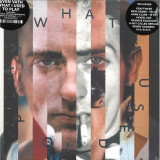
For this uniquely personal retrospective spread over twelve vinyl discs, Sven Väth takes us back to the early days of his DJ career. On What I Used To Play we meet great pioneers of electronic music, gifted percussionists, obscure wave bands, and innovative producers of a bygone 'new electronic' era. Rough beats and irresistible grooves from the identification stage of house, techno, and acid remind us not just how far electronic music has evolved over the past four decades, but how great it was to dance to EBM, techno, and house for the very first time.
If there is one protagonist of the electronic music scene who has remained curious, innovative and at the very cutting edge of music for over four decades, it's Sven Väth. His multi-layered artist albums and Sound of the Season mix compilations have been defining the genre for over two decades, and even today, he is constantly on the lookout for the next top tune to add to the highlights of his next set. At least, that's the case when he's not producing them himself as an artist or remixer. "Actually, it's always been part of my DNA to think ahead," and nothing had been further from his mind than looking back at his past, but when in spring of 2020 the international DJ circuit had to be scaled down to virtually zero, the 'restless traveler' suddenly had time. Time to stop and reflect on "how it actually was back then, at the very beginning of my career..."
"It was a great trip and with every track, beautiful memories came flooding back".
In the London apartment, he had just moved into, Sven has set up a "little music room", where he cocooned himself for several days, "to look way back for the first time and review my musical journey through the eighties, so to speak."
The interim result was six thematically oriented playlists with a grand total of 120 tracks from 'early 80s' to 'Balearic late 80s', together with excursions into afrobeat, European new wave, and EBM sounds and a few epochal techno/house tracks from the USA in between. From these 'Best of Sven Väth's favorites', the project What I Used To Play crystallized. Sven remembers how the Cocoon team reacted to his proposal: "They found the idea of making a compilation out of it MEGA from the beginning and everyone said 'Sven, go for it', but then, of course, the work really started, namely, to clear the rights and to get clean sounding masters of the up to 40-year-old tracks. There was also disappointment, of course. We couldn't clear certain titles because the rights holders in the USA had fallen out with each other or simply disappeared from the scene. In short, it wasn't easy, but now I can safely say we got the most important tracks."
Finally, after two years of research, curation, design, and administrative fine-tuning, the "little retrospective" from 1981 to 1990 is available. The exquisitely packaged, and three-kilo heavy box set is not only physically impressive, WIUTP is also the definitive record of Sven Väth's musical development. On each of the twenty-four sides of vinyl, you can trace track by track, what influenced him during which phase, and how he took off as a DJ from his parents' Queen's Pub straight into the spotlight at Dorian Gray. There and at Vogue (later OMEN), Sven became the style-defining player in the DJ booth that he still is today.
1981 - 1990: Future Sounds of Now
In the early eighties, the crowd in clubs like Vogue and Dorian Gray danced to what nowadays we call 'dance classics' - mainly disco, funk, soul, and chart pop. It was up to a new generation of DJs, including Sven Väth, the youngest protagonist in the Rhine-Main area at the time, to create their own club-ready music mix. Good new tracks and potential floor-fillers were rarities that had to be sought out and found, in order to prove oneself worthy.
Without MP3s, internet streaming, or other digital download possibilities, music didn't just gravitate to the DJ, instead, it had to be tracked down. In well-stocked record stores in Frankfurt and Wiesbaden or even in Amsterdam, London, or New York, Sven and friends sourced the material for countless magical nights. On WIUTP we can follow Sven's very personal journey through this wild, innovative era in which synth-pop, funk, hip-hop, and disco were successively replaced as 'club music' by house, techno, acid, and breakbeat. By the end of the decade, it was clear to see that these once exotic 'fringe' phenomena would soon become 'mass' phenomena.
Early 80s
Dirty Talk by the Italian-American duo Klein & M.B.O. represents the most innovative phase of the Italo-disco genre in the early eighties like no other track. Mario Boncaldo (I) and Tony Carrasco relied entirely on the original synthetic drum and percussion sounds of the Roland TR-808, coupled with the raunchy vocals of Rossana Casale and guitar accents of Davide Piatto. Of course, other tracks from this period were also influential in style, most notably Unit by Logic System, which worked as the perfect soundtrack to the laser lighting system at the legendary Dorian Gray club. With stomping beats and robotic rap interludes, Bostich by Yello also belongs on Sven's eternal playlist - after all, it caught the attention of Afrikaa Bambaataa, who invited the Swiss duo to perform at the Roxy in New York in 1983.
EBM Wave - Mid 80s
From today's point of view, the almost ten-minute-long, downtempo track Giant by Matt Johnson's band project The The, would probably not be considered an obvious club classic. However, a closer (re)listen reveals the rhythmic intricacies of the percussion overdubs by JG Thirlwell (aka Foetus) on Johnson's composition, and it becomes clear why this exceptional piece of music is one of Sven's absolute favorites. Other classics from this phase include Kaw-Liga by the mysterious The Residents, the hypnotic-synthetic Our Darkness by Anne Clark (and David Harrow), and last but not least, the somber, monotonous anthem Where Are You? by 16Bit, one of Sven Väth's projects together with Michael Münzing, Luca Anzilotti from 1986.
US House - Late 80s
You certainly can't talk about Chicago house without mentioning Frankie Knuckles. The resident DJ at the Warehouse not only gave the name to an entire genre, but also produced epochal floor fillers on the Trax label like the timeless Your Love, sung (and moaned) by Jamie Principle. Acid house protagonists Phuture also hail from Chicago, and on We Are Phuture (also released on Trax) we hear the chirping acid sounds of the legendary Roland TB-303 in full effect. Another featured classic is No UFO's by Detroit's Model 500 aka Juan Atkins, who is rightly considered the 'Godfather of Techno' even if the genre-defining track from 1985 still breathes with the spirit of hip-hop and electro from the first breakdance era.
Afrobeat
Le Serpent, by Algerian-born Abdelmadjid Guemguem, is a track that sounds completely different from everything else on WIUTP. Made in 1978, it's a monumental, rousing groove created without bass or synths, just with five congas! Even though Guem sadly passed away in 2021, his immortal, acoustic beats are understood all over the world and will continue to enrich many thousands of DJ sets for years to come. Another classic that not only Sven appreciates beyond measure is Hugh Masekela's Don't Go Lose it, Baby. In addition to being one of the most important jazz pioneers, the trumpeter and freedom fighter from Johannesburg was very experimental, integrating electronic sounds into his music in later years, in a similar vein to Miles Davis and Herbie Hancock. Dutch jazz pianist Jasper van't Hof's afrobeat project Pili Pili has also aged well. The trance-like, almost sixteen-minute-long track of the same name, manages to fill a whole side on the seventh of twelve vinyl discs in the WIUTP box.
UK-US-Euro - Late 80s
Time for a change of scene, in the truest sense of the word, and from a musical perspective, this section is like landing on another planet. First up is Andrew Weatherall's classic remix of Primal Scream's Loaded, featuring the iconic Peter Fonda sample (lifted from the 1966 biker film Wild Angels) that came to personify the mood triggered by the British Second Summer of Love in the late eighties: "We wanna be free to do what we wanna do, and we wanna get loaded...". This period also saw the emergence of M/A/R/R/S whose only single, 1987's Pump Up The Volume, became a club classic with support from DJ legend CJ Mackintosh. In this most eclectic of sections, we also encounter New York house and reggae producer Bobby Konders and his seminal Nervous Acid.
Balearic - Late 80s
Those who know him, know that Sven had already lost his heart to the 'magic island' of Ibiza as a teenager, so with that in mind, the WIUTP project couldn't end without a Balearic chapter. Inspired by Manuel Göttsching's E2-E4, the immortal, eponymously titled Sueño Latino belongs in there without question. Equally popular on the island was, and still is Break 4 Love by Raze, which thinking about it, would also fit perfectly into the house chapter. Last, but not least, there's an overdue reunion with Sven Väth himself, in his role as frontman of the successful Frankfurt trio OFF. Together with Michael Münzing and Luca Anzilotti (later of Snap!) this 'Organization For Fun' created the off-the-wall club hit Electric Salsa in 1986 which incidentally turned into an international chart smash, putting Sven in the enviable position of having to decide between pop stardom and a DJ career. Well, we all know how that decision turned out and the rest, as they say, is history. A not insignificant part of his story is What I Used To Play. Enjoy!
Yellow Vinyl
Over their six albums The Go! Team have taken sonic day trips to other lands - musically dipping into other cultures. But now on this, their seventh - they"ve bought a round-the-world ticket.... Benin, Japan, France, India, Texas and Detroit - all stops along the way. Wildly different voices from wildly different cultures side by side but all still sounding unmistakably Go! Team. Setting the course for a kaleidoscopic, cable access, channel hop. On the vocal roll call there"s Star Feminine Band, an all-girl group from West Africa, the Indian Bollywood playback singer Neha Hatwar, Kokubo Chisato from J-Pop indie band Lucie Too, 19 year-old Detroit rapper IndigoYaj, Hilarie Bratset (ex-Apples in Stereo), Brooklyn rapper Nitty Scott, and a whole host of others, alongside Go! Team staple Ninja. Picking up from 2021"s "Get Up Sequences Part One", Part Two continues the feeling of Technicolour overload. It"s a journey spanning Cyclone Tracey wig-outs, chroma key sitar psychedelia, Casiotone anthems, spoken word melodrama and kalimba callouts. Brill building melodies lead into musical handbrake turns, four track into panoramic. Eighteen years after their debut LP The Go! Team are still unlike anyone else and on "Get Up Sequences Part Two" they sound as fresh as a club soda....
Das Sony Classical-Debütalbum "Arctic" der international hochgelobten norwegischen Geigerin Eldbjørg Hemsing ist eine musikalische Reise durch die Arktis mit neuer Musik u.a. von den Star-Komponisten Jacob Shea ("The Blue Planet") von Bleeding Fingers Music und Frode Fjellheim ("Frozen"). Zusammen mit dem Arctic Philharmonic Orchestra zelebriert Eldbjørg Hemsing darauf die zerbrechliche und weithin unentdeckte Schönheit eines Ökosystems, das in einem beispiellosen Ausmaß vom Klimawandel bedroht ist. "Die Arktis wird oft als ein schroffer, unbewohnbarer Ort verkannt, dabei handelt es sich um eine Region von einmaliger Schönheit und voller Leben, die auf faszinierende Weise illustriert, wie alles in fragilen Kreisläufen zusammenhängt. 'Arctic' ist eine musikalische Reise durch diesen einmaligen, gefährdeten Naturraum", erklärt Eldbjørg Hemsing. "Ich möchte mit diesem Projekt den Menschen zeigen, wie großartig und schützenswert diese Landschaft ist und auf die Bedrohung durch den Klimawandel hinweisen, die Auswirkung auf uns alle hat." "Arctic" ist voller mitreißender Melodien und beeindruckenden orchestralen Klanglandschaften, die sich beim Anhören des Albums aufbauen, wie die atemberaubenden Lebensräume der Arktis im Lauf der Jahreszeiten. Für die musikalische Gestaltung ihres Albums hat die im norwegischen Valdres geborene Musikerin mit einer Vielzahl an Komponisten zusammengearbeitet und ein einmaliges Album kreiert, das amerikanische Filmmusik mit europäischer Klassik verbindet. So enthält "Arctic" neue Musik von den Filmkomponisten Jacob Shea von Bleeding fingers Music und Frode Fjellheim wie auch neue Arrangements von Melodien der Komponisten Selim Palmgren, Einojuhani Rautavaara, Henning Sommerro, Ola Gjeilo, Ole Bull, Edvard Grieg und James Newton Howard. Aufgenommen wurde das Album in Bodø innerhalb des norwegischen Polarkreises mit dem Arctic Philharmonic Orchestra. "Ich wollte einmalige, einprägsame Melodien mit einem malerischen orchestralen Klang verbinden, der dem großen Panorama der Arktis entspricht, um diese emotionale Geschichte zu erzählen. Entstanden ist eine sehr abwechslungsreiche Art Filmmusik für den Konzertsaal oder ein Soundtrack für eine innere Reise", sagt Eldbjørg Hemsing über die Musik von "Arctic". Das zentrale Werk des Albums ist die 20 Minuten lange "Arctic Suite" des amerikanischen Filmkomponisten Jacob Shea von Bleeding Fingers Music, der zusammen mit Hans Zimmer die millionenfach gespielte, ikonische Musik zu "The Blue Planet" geschrieben hat. In den sechs Teilen der "Arctic Suite" vertont Jacob Shea die einmaligen arktischen Naturphänomene und findet Melodien für "Frozen Worlds" im Winter, die "Aurora" in der Polarnacht oder den "Sunrise" in der Morgendämmerung des Polartages. Er gibt den Fischschwärmen im Malmström einen Klang in "Rush of Life" oder dem poetischen Pfeifen der "Polar Winds" und endet mit einem melancholischen Blick auf aktuelle Veränderungen in "Sea Ice Melting". Komponist Frode Fjellheim ist bekannt von seiner Arbeit zu "Frozen". Er entstammt den Samen, einem Volk, das bereits seit Jahrhunderten den europäischen Polarkreis bewohnt. Für seine Kompositionen "Under the Arctic Moon" und "The Return of the Sun" lässt er sich von den traditionellen Liedern der Samen, den "Joik", inspirieren. In "The Return of the Sun" singt er sogar eine dieser traditionellen Melodien. Die musikalische Reise durch die "Arctic" umfasst weitere neue und farbenfrohe Orchesterarrangements von Werken nordischer Komponisten wie das klangmalerische "Snowflakes" von Selim Palmgren, "Whispering" von Einojuhani Rautavaara, "Dawn" von Ola Gjeilo und "Vårsøg" von Henning Sommerro. "Vårsøg" ist eine bekannte Melodie in Norwegen und steht sinngemäß für die "Suche nach einem neuen Frühling". Das ursprünglich als Folk-Pop Song geschriebene Lied verkörpert damit die Hoffnung auf einen Neuanfang im Leben. Arrangeur Ben Palmer hat die Melodie in eine emotionale Hymne für Violine und Orchester gebettet.
Over their six albums The Go! Team have taken sonic day trips to other lands - musically dipping into other cultures. But now on this, their seventh - they"ve bought a round-the-world ticket.... Benin, Japan, France, India, Texas and Detroit - all stops along the way. Wildly different voices from wildly different cultures side by side but all still sounding unmistakably Go! Team. Setting the course for a kaleidoscopic, cable access, channel hop. On the vocal roll call there"s Star Feminine Band, an all-girl group from West Africa, the Indian Bollywood playback singer Neha Hatwar, Kokubo Chisato from J-Pop indie band Lucie Too, 19 year-old Detroit rapper IndigoYaj, Hilarie Bratset (ex-Apples in Stereo), Brooklyn rapper Nitty Scott, and a whole host of others, alongside Go! Team staple Ninja. Picking up from 2021"s "Get Up Sequences Part One", Part Two continues the feeling of Technicolour overload. It"s a journey spanning Cyclone Tracey wig-outs, chroma key sitar psychedelia, Casiotone anthems, spoken word melodrama and kalimba callouts. Brill building melodies lead into musical handbrake turns, four track into panoramic. Eighteen years after their debut LP The Go! Team are still unlike anyone else and on "Get Up Sequences Part Two" they sound as fresh as a club soda....
Yellow Vinyl
Over their six albums The Go! Team have taken sonic day trips to other lands - musically dipping into other cultures. But now on this, their seventh - they"ve bought a round-the-world ticket.... Benin, Japan, France, India, Texas and Detroit - all stops along the way. Wildly different voices from wildly different cultures side by side but all still sounding unmistakably Go! Team. Setting the course for a kaleidoscopic, cable access, channel hop. On the vocal roll call there"s Star Feminine Band, an all-girl group from West Africa, the Indian Bollywood playback singer Neha Hatwar, Kokubo Chisato from J-Pop indie band Lucie Too, 19 year-old Detroit rapper IndigoYaj, Hilarie Bratset (ex-Apples in Stereo), Brooklyn rapper Nitty Scott, and a whole host of others, alongside Go! Team staple Ninja. Picking up from 2021"s "Get Up Sequences Part One", Part Two continues the feeling of Technicolour overload. It"s a journey spanning Cyclone Tracey wig-outs, chroma key sitar psychedelia, Casiotone anthems, spoken word melodrama and kalimba callouts. Brill building melodies lead into musical handbrake turns, four track into panoramic. Eighteen years after their debut LP The Go! Team are still unlike anyone else and on "Get Up Sequences Part Two" they sound as fresh as a club soda....
still haven't met, nor spoken, all we know he's a he. the music is a unique blend of the best sounds in pop, rock, and hip hop, occasionally sprinkled with vintage greek lyra and polish spoken word. this could either lead us to find out more about him, or simply lead us up the garden path. one thing we know for sure, much though his past remains a blur, he most definitely is a beacon for our future. #ournameisleonidas - Kitsuné Musique -
Alcazarized is the second studio album by Swedish nu-disco group Alcazar, originally released in 2003. It was the first album to be released as a four-piece, after singer Magnus Carlsson joined them. The album features “Funky Feet”, a track that ABBA recorded but never officially released, and “This Is The World We Live In”, which is an adaption of both Diana Ross “Upside Down” and Genesis “Land Of Confusion”. In addition, “Love Life” was written by Pet Shop Boys Neil Tennant and Chris Lowe.
Alcazarized is available on vinyl for the first time as a limited edition of 750 individually numbered copies on gold coloured vinyl and includes an insert.
- A1: Mamadou Tangoudia - Kori
- A2: Halima Kissima Touré - Koolo Fune
- A3: Lassana Hawa Cissokho - Ñogome
- B1: Hadja Soumano - Nteri Diaba
- B2: Naïny Diabaté - Sankoy Djeli
- B3: Mah Kouyaté - Soso
- C1: Halima Kissima Touré - Alla Da Fo Ña
- C2: Ami Traoré - Tenedo
- C3: Babani Koné - Soyeba
- C4: Kaniba Oulé Kouyaté - Songne Bela
- D1: Diaby Doua - Boliñaame
- D2: Diobo Fode - Yexu
- D3: Halima Kissima Touré - Duna
- D4: Hadja Soumano - Ayebo
The Soninke collective consciousness finds its origins in a founding myth, a blood pact: the legend of Biida and the decadence of the empire of Ghana or Wagadu (evoked by Léopold Sédar Senghor as a land of plenty in his poem Le Kaya Magan). From the 3rd century AD, gathered in the region of Sahel, on the edge of the Sahara desert, the Soninko ruled over their kingdom and its capital Kumbi Saleh. According to folklore, they were blessed with abundant rain and nuggets of gold could be picked directly from the ground.
They owed this prosperity to a providential but cruel protector: the Wagadu Biida, a seven-headed serpent who lived at the bottom of the Kumbi well. Every year, as a reward for his favours, the Biida demanded an offering: the life of the most beautiful virgin woman in the community. Sacrifices took place for generations, until the 13th century AD, when fate chose Siya Yatabéré, Maamadi Sehedunxote's sweetheart...
Centuries later in 1977, Gaye Mody Camara, a young Soninke raised in Mali's Kayes region, settled in France to found his own empire. Initially selling wax, kola nuts and other goods in his Parisian outlets, he rapidly started distributing cassette tapes and eventually producing a multitude of recordings for his own label: Camara Production.
Crossing paths and collaborating over the next four decades with legendary artists, griots and industry moguls like Boncana Maïga, Jean-Philippe Rykiel, Ganda Fadiga, Diaby Doua or Ibrahima Sylla, Camara became one of the great independent music producers of his generation, and a pilar of the Parisian Soninke diaspora.
Released in close collaboration with Gaye Camara and with the assistance of Daouda N'diaye, one of A.P.S' (Association pour la Promotion de la langue et de la culture Soninké) historical members, this selection of songs and accompanying notes aim to shed a light on an intricate culture and its modern music, injustifiably unknown outside of West Africa and the various Soninko diasporas around the world.
From Malian Zouk to Mauritanian Reggae and other psychedelic groovers originally released on cassettes or digitally, we have given the utmost attention to bringing this music to a new format. It has been carefully remastered and pressed on a couple of 180g vinyls, with riso printed liner notes.
Nach der Veröffentlichung von "Acoustic Adventures -
Volume One", besteht der Großteil des zweiten Kapitels
aus schnelleren Stücken wie 'Black Sheep', dem
Allzeit-Live-Klassiker 'FullMoon' und 'Flag In The Ground'.
Aber SONATA ARCTICA wären nicht SONATA ARCTICA,
wenn sie auf Nummer sicher gehen würden: 'San
Sebastian' oder der Abschlusstrack 'Victoria's Secret'
schaffen es, ein völlig neues, erfrischendes Gefühl beim
Hörer zu verbreiten; ein Gefühl, das man natürlich am
besten vor einer Bühne erleben kann! Um diese
besondere Saga zu vollenden und endlich den
Startschuss für ihre nächste, mehrfach verschobene
"Acoustic Adventures"-Tour zu feiern, um die
Corona-geschüttelten finnischen und europäischen
Festland-Gemüter zu erheben. Aber erst einmal: Kommt
ins Wohnzimmer, lehnt euch zurück und folgt SONATA
ARCTICA auf ihrer abgespeckten, aber nicht minder
spannenden Reise in die Welt der akustischen Musik...!
"Sounds sublime" - Gilles Peterson
"What a delightful, excitingly beautiful album. From "At Once Familiar " all the way through to "Same as Before" everything song feels and sounds sonically glorious. A modern day classic" - Nightmares On Wax
Taking a short sabbatical from their journey into the spiritual stratosphere and beyond, Work Money Death landed on terra firma just long enough to record a follow up to the critically acclaimed "The Space In Which The Uncontrollable Unknown Resides Can Be The Place From Which Creation Arises". The new album "Thought, Action, Reaction, Interaction" explores many of the meditative motifs that mould this unique group in their quest for the perfect sound and space. Those who are familiar with Work Money Death will know their output is as much an adventure for the listener as it was for the musicians.
"Thought, Action, Reaction, Interactions" is a salute to the now sadly deceased master of the spiritual sound Pharoah Sanders, and in particular the spontaneity of his recording process.
Each of the four tracks on "Thought, Action, Reaction, Interaction" were recorded in one take with no rehearsal and while the players may have known where they were starting off none of them were sure where they would end. As much as it is entertainment, and have no doubt this LP is an unctuous, spirit-smoothing joy from beginning to end, this is an experiment of making music in the moment. Spontaneous and spiritual in its truest sense, "Thought, Action, Reaction, Interaction" is a work of innovation and unsurpassed beauty.
"At Once Familiar" is a rising salute to the day, meditative, moving and fierce. An introduction to Burkill's emotive style, at once sweeping and succinct. It fills a room, and your head, with a very real sound, rich in texture and spirit.
"Freedom As A Heartfelt Song" is buoyant with harp, the spirit of the Yorkshire Pharoah is never more to the fore. Visceral sax rides over and uplifting backing, symbiotic and pinioned with power and beauty. Think Sun Ra horns meets Don Ellis brass.
"Song Of Healing" drifts on a river of music, guided through the rapids with a heartbeat bass line. This is temple sombre, with Eastern flavours and an overarching calm. A communion of sound, a master class in the understatement and power of the slow note, deceptively light.
"Same As Before" is spoken word playing foil to the call and response of the brass, dancing alongside and against each other. Spiritual vibrations cement ethereal forms to substantive sounds. A prayer to change."
As with the previous Work, Money, Death release (which was recorded in difficult conditions due to the Covid pandemic) the aim was to recreate a situation, in this case the impromptu and unrehearsed recording sessions of Sanders in the late 60's and early 70's, everything recorded in one take, creating a body of work that is a strong nod to a certain time and ethos but not a pastiche of it.
““Sounds sublime””
Gilles Peterson — BBC6, WorldWideFM
““What a delightful, excitingly beautiful album. From “At Once Familiar “ all the way through to “Same as Before” everything song feels and sounds sonically glorious. A modern day classic””
Nightmares On Wax —
- A1: I Walk The Line
- A2: Folsom Prison Blues
- A3: Rock Island Line
- A4: Ballad Of A Teenage Queen
- A5: Hey Porter
- A6: Get Rhythm
- A7: Oh Lonesome Me
- A8: I Love You Because
- B1: Five Feet High And Rising
- B2: The Rebel - Johnny Yuma
- B3: Don’t Take Your Guns To Town
- B4: Hey Good Lookin’
- B5: Frankie's Man, Johnny
- B6: Bonanza!
- B7: Country Boy
- B8: In The Jailhouse Now
If one single song is indelibly associated with Johnny Cash, it has to be I Walk The Line - the song that landed him his first American hit in October 1956. But for many, Cash is defined by a single line from Folsom Prison Blues. “I shot a man in Reno, just to watch him die…”
confirmed Cash as a hard-living, fast-shooting guy (Don’t Take Your Guns To Town; Bonanza!) and also saw him identifying with prisoners and prison life. The ‘Man in Black’ had become a friend of Presidents and pop idols; a man whom stars like Bono and Bob Dylan deferred to; a legend courted by fans such as Quentin Tarantino and Johnny Depp.
And though a lot has been written about Johnny Cash since he died in 2003, questions remain about how this man came to dominate the world of popular music - but here, in your hands, are sixteen reasons why…
If naming is a form of claiming, of being claimed, how is one tethered to both the physical landscape that surrounds us, as well as our own internal emotional landscape_at times calm, at times turbulent, and ever changing? H.C. McEntire's new album Every Acre grapples with those themes_themes that encompass grief, loss, and links to land and loved ones. And naming_claiming land, claiming self, being claimed by ancestry and heritage_permeates the hauntingly beautiful landscape that is this poignant collection of songs. The songs straddle the line between music and poetry. In "New View," McEntire cites poets "Day, Ada, and Laux, Berry, and Olds"_fixtures in the world of writing, whose works are beacons of light over bleak horizons. The beginning of the song is backed by soft guitar plucks that fall on the downbeat and spangle like stars, and, throughout, guitar, bass, and drums swell together gently, mimicking ebbing and flowing tides under the moon. McEntire's voice (at once tender and fierce) intones the truth of both giving and taking, releasing and claiming: "Bend me, break me, split me right in two. Mend me, make me_I'll take more of you." Permeated by heartbeat-like drums, "Shadows" develops quiet ruminations on surrender and loss_reminiscing, moving on. This ponderous, dreamlike song asks the question of how "to make room." How does one make room, for self and for renewal and surrender, when it is so difficult to leave what you know behind? Playing with slivers of descending chromatics, along with the occasional downward-stepping bass, here McEntire yearns for home, and for nesting. Perhaps one of the more grief-stricken songs, "Rows of Clover" is a lamentation, one that touches on the loss of a "steadfast hound." The lone piano in the beginning of the song is rhythmically hymn-like. The stark verse arrangement gradually leads to a chorus that reads like a moody exhale, swollen with lush guitar strums and a Bill Withers-esque understated soul groove. But what stands out the most is an image of being "down on your knees, clawing at the garden"_the only explicit mention of a person in the song. "It ain't the easy kind of healing," sings McEntire, seemingly from further and further away as her voice echoes; and healing ta;kes time, time takes time_truths that linger painfully. "Dovetail" is a song that tells of various women. The song moves back and forth between solo piano and the addition of bass and drums under vocals. McEntire's gentle, trembling vibrato_harmonized in thirds in a celebratory manner_calls to mind a rejoicing psalm and shines through these images, leaving the listener cuttingly fraught with emotions_such as wonder, sadness, nostalgia_that can only arise with these juxtapositions. Gracious (and graceful) with its lilting melodies and lush harmonies, Every Acre ex - plores the acres of our physical and emotional homes. These songs are reaching for the kind of home that we all seek: one where we can rest and lay down (or tuck away) our burdens of loss. And maybe, moving through every acre of a world that often tries to tear our sense of identity and heritage down, McEntire sheds light on what it is to be human in this life_both stingy and gracious, both hurtful and kind.
Orange Viny
If naming is a form of claiming, of being claimed, how is one tethered to both the physical landscape that surrounds us, as well as our own internal emotional landscape_at times calm, at times turbulent, and ever changing? H.C. McEntire's new album Every Acre grapples with those themes_themes that encompass grief, loss, and links to land and loved ones. And naming_claiming land, claiming self, being claimed by ancestry and heritage_permeates the hauntingly beautiful landscape that is this poignant collection of songs. The songs straddle the line between music and poetry. In "New View," McEntire cites poets "Day, Ada, and Laux, Berry, and Olds"_fixtures in the world of writing, whose works are beacons of light over bleak horizons. The beginning of the song is backed by soft guitar plucks that fall on the downbeat and spangle like stars, and, throughout, guitar, bass, and drums swell together gently, mimicking ebbing and flowing tides under the moon. McEntire's voice (at once tender and fierce) intones the truth of both giving and taking, releasing and claiming: "Bend me, break me, split me right in two. Mend me, make me_I'll take more of you." Permeated by heartbeat-like drums, "Shadows" develops quiet ruminations on surrender and loss_reminiscing, moving on. This ponderous, dreamlike song asks the question of how "to make room." How does one make room, for self and for renewal and surrender, when it is so difficult to leave what you know behind? Playing with slivers of descending chromatics, along with the occasional downward-stepping bass, here McEntire yearns for home, and for nesting. Perhaps one of the more grief-stricken songs, "Rows of Clover" is a lamentation, one that touches on the loss of a "steadfast hound." The lone piano in the beginning of the song is rhythmically hymn-like. The stark verse arrangement gradually leads to a chorus that reads like a moody exhale, swollen with lush guitar strums and a Bill Withers-esque understated soul groove. But what stands out the most is an image of being "down on your knees, clawing at the garden"_the only explicit mention of a person in the song. "It ain't the easy kind of healing," sings McEntire, seemingly from further and further away as her voice echoes; and healing ta;kes time, time takes time_truths that linger painfully. "Dovetail" is a song that tells of various women. The song moves back and forth between solo piano and the addition of bass and drums under vocals. McEntire's gentle, trembling vibrato_harmonized in thirds in a celebratory manner_calls to mind a rejoicing psalm and shines through these images, leaving the listener cuttingly fraught with emotions_such as wonder, sadness, nostalgia_that can only arise with these juxtapositions. Gracious (and graceful) with its lilting melodies and lush harmonies, Every Acre ex - plores the acres of our physical and emotional homes. These songs are reaching for the kind of home that we all seek: one where we can rest and lay down (or tuck away) our burdens of loss. And maybe, moving through every acre of a world that often tries to tear our sense of identity and heritage down, McEntire sheds light on what it is to be human in this life_both stingy and gracious, both hurtful and kind.