For Another Michael, it all boils down to trust. In mid-2017, the critically acclaimed indie three-piece packed their bags and collectively relocated from Albany, NY to a shared house in West Philadelphia. This move signaled not only the start of a new chapter for the trio, but also a deepening of the bonds that would come to define their captivating debut LP, `New Music and Big Pop.' "It's hard for a group of people to get closer than living together," says bassist and producer Nick Sebastiano. "The stronger our connection grew, the more it shaped the music we found ourselves making." It should come as little surprise, then, that `New Music and Big Pop' is Another Michael's most collaborative work yet. Recorded in a small A-frame house-turned-makeshift studio outside Ferndale, NY, the record finds the trio pushing their sound in a dreamier, more folk-influenced direction, building songs around vulnerable, intimate performances using an ethereal palette of breezy guitars, subtle keyboards, and layered harmonies. As on the band's early EPs, singer and songwriter Michael Doherty's mesmerizing voice is front and center here, calling to mind Robin Pecknold or Ben Bridwell in its reedy, crystalline timbre, but it feels more at home than ever before amidst the album's lush, Technicolor landscape, which the band partnered with producer and fellow housemate Scoops Dardaris to create. The result is a masterfully understated record that belies its status as a full-length debut, a thoughtful, poetic, collection all about growth and change, hope and faith, endings and beginnings, delivered by a band that's only just begun to scratch the surface of their story.
Buscar:wo land
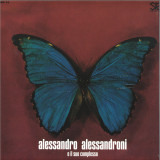
Sonor Music Editions presents the reissue of another holy grail by maestro Alessandro Alessandroni. The first legendary Farfalla release, "Alessandro Alessandroni E Il Suo Complesso" originally released in a few hundred copies on the cult Sermi imprint in February 1968. The seminal debut album realized by the legendary Italian maestro, featuring bewitching scat vocals by his wife Giulia De Mutiis (aka Kema), that truly started the Italian Library production golden era that would culminate in mid ‘1980s. A true landmark of the genre and an Italian discography jewel that spaces among the best Jazz, Bossa Nova and Lounge music; undoubtedly a desirable item of world’s record collecting field. Obsessive Jazz suites, enchanting scats over mind-blowing Bossa tunes, bouncy break-beats drums, groovy Pop and refined loungy atmospheres over some soft Psichedelia arrangements. An essential Italian Library masterpiece.
US based label, Lurid welcomes Spanish producer Señora for a stunning new double gatefold album entitled ‘Fósil’ that showcases his unique take on hypnotic rhythm, found sounds and sampling.
Señora became a firm favourite with the likes of Andrew Weatherall (R.I.P.) and Sean Johnston for his rugged grooves and innovative approach to production, melding the sounds of machines, animals, electricity and other weird noises in a flurry of FX and sonic experimentation. He debuted on this label in 2017 and has also landed on Shango Records, Night Noise and LNDKHN since then. Now based in Berlin and a regular at clubs and festivals round Europe he offers up a debut album that features nine stunning pieces that ”aim to reflect on the next evolutionary steps of the human race".
The otherworldly ‘Preludio: Ocaso Hominido’ kicks off with a swampy bass sound overlaid with cosmic details and downtempo drums. It’s a brilliantly mysterious opener than leads on to ‘Antropoceno’, a spacious soundtrack with bubbling synths, undulating drums and plenty of sonic details that paint a picture of a starry night sky up above. The tumbling drums of ‘Segundo Sexo’ sink you into a dubby reverie with bird calls and wordless vocal sounds mixing with percolating percussion.
The excellent ‘El Elefante Que Siempre Andaba Solo’ is a perfectly flabby and chugging dark disco cut with bright chords and scintillating drum work while ‘Código y Marfil’ is a futurist landscape in outer space with modulated synths and deft astral details making it colourful and cinematic. This most escapist of listens then plays out through the supple bass warbles and spacecraft sound effects of the entrancing ‘Papaver Somniferum’ and churning drums and twisted bass funk of the brilliantly slow burning ‘El Último Discurso’ before closing on ‘Fuga: La Gran Desconexión’ a downbeat offering with myriad pads circling the skies above a deeply rooted rhythm.
This is a hugely atmospheric album of perfectly realised inter planetary sounds, the whole thing taking you on a cerebral and evocative journey far away from here.
Supported by: Tim Sweeney (Beats In Space), Dr. Rob (Ban Ban Ton Ton), Balearic Mike, Elena Colombi (NTS), Andrew Wowk (Decoded Magazine), Faze Magazine Germany, DJ Mag Espana, Future Music UK, ClubbingSpain, and others.
The debut album from Kiri Ra! is an intuitive journey through landscapes of spectral otherness with colors of post classical minimalism, ambient folk and spiritual jazz. Starting as cross Baltic improvisation group in 2014, Kiri Ra! found form in the winter of 2016 when Finnish experimental artist Lau Nau, Finnish jazz saxophonist Linda Fredriksson, and Swedish pianist Matti Bye were commissioned by The Swedish Film Institute to create music for experimental amateur documentary films from its archive. Their debut album is made up entirely of improvised live studio recordings that stemmed from this film-scoring effort. With meticulous attention to detail and a sense of wonder, the players are collective witnesses to what can unfold between three musicians in a room. As illustrated on the tracks "Happlo'os" and "))Glänta//", softly played piano ostinatos, field recordings and bowed percussion set a visceral foundation for the saxophone to carve melodic tones of tingling melancholia. This warmth and sense of intimacy prevails throughout the album, as illustrated on the serene track "Linnesöndagen Gynnas Icke", whilst "Kites Över Gärdet" is an almost supernatural unfolding of timelessness.
Hunt & Gather’s debut vinyl release comes by way of Pezzner’s cryptic moniker “The Native Language”. Written as a quasi-homeless man living off the rich in the San Juan Islands who writes music once per year to suffice his own delusions.
Walking the streets in these damp, anxious days that all run together lately, I was approached by a man who would blend right into the neighborhood, layered in flannel and sweatshirts for sleeping.
Rough, but for his shoes. (Never cheap out on anything that separates you from the ground.) “Pezzner,” he called out, from a safe distance. “What did the mangrove say to the marauding hordes.” My soul left my body for a moment and my voice responded on its own. “Petrichor.”
He caught my eye, nodded, left a padded envelope on the ground and vanished. The envelope had passed through many hands, slipped into the bed of a ferry-bound truck, passed from one fellow traveler to another, stashed under the counters of anarchist bookstores, left tucked between books at Little Free Libraries. The greenish stains suggested that at one point it had been swum across a lake. Another DAT, contents encoded here unabridged, and a letter from someone who called himself The Sentinel.
The Vessel lived out his days on Shaw Island, under a canopy of trees that gets smaller and smaller every season. His condition the same, any electricity lit his brain on fire, could only bring himself to compose one day a year, only at night, out of sight. Until he met The Angel, an eccentric with means, who built for him a device.
A Faraday Cage to block all electromagnetic emissions. Burlap walls, for atmosphere. A system of pulleys and levers, wood and rope, all running into a box that sat outside. An entirely mechanical control surface. No electrons in here. The Vessel lit fires, watched the shadows dance, closed his eyes and disappeared into the motion for hours at a time. The Sentinel came every morning to change the tapes. The Angel watched and pondered, his plans unknown.
The box sat sealed, bare except for another set of ideograms, scratched in day by day over time. Inside, the usual bedroom-producer shit. Outside, the ideograms told a story, passed from the Vessel to the Sentinel and drawn by the Angel, of a man who became another creature. Alert to the lowest frequencies, feeling music deep in the soil below their feet. Music that brings messages, from distant friends, warning of new creatures and the danger they brought. Skin alive to the world, so sensitive it can detect the landing of a single fly. A mind capable of keeping a map of the world inside. A mind that can look in a mirror and see a soul it knows well. A mind that can grieve.
After processing its contents, I filled the envelope with granola bars and walked it down to the market. The clerk gave me a knowing look as I placed it on the counter behind a stack of pork rinds from the previous century. As I walked out, a young man carrying a plastic bag and wearing impeccable shoes walked in.
Steven Rutter aka B12 is one of techno’s most influential artists, famed for many releases on the iconic Warp Records including "Electro-Soma" that defined what is now the deep techno genre.
B12 was originally a duo before Steven Rutter took over the alias as a solo artist, but after a string of new releases on labels like Soma and Delsin, he decided to start producing under his own name.
Deciding it was time to look to the future with a new lease on life, Steven Rutter kept his sound the same, but shed the skin of B12 to mark a new point in his musical career.
Battling with personal demons, the B12 sound had become dark and introverted, and the Steven Rutter style keeps that same moody atmosphere, while adding upbeat rhythms and more jovial chord progressions without losing focus of the core sound that’s made his music so influential.
In addition to a numerous EP, “Riddle Me Sane” is the third album Steven Rutter has done under his own name, and it's in the timeless B12 style that's adored by his fans in all four corners of the world.
Cosmic melodies and sci-fi influenced textures with dystopian sound design, the thought provoking album paints pictures of alien landscapes, while its down tempo grooves also have the key elements needed for the dance floor.
Comfortingly familiar for those who love the classic B12 style, it also marks a distinct turning point in the sound that Steven Rutter has been looking to focus on.
Tracks like “Techno Prisoner” perfectly embody the style this release is aimed to purvey, but this masterpiece has been expertly programmed to play as a continuous piece of music rather than a selection of solo cuts.
Presenting the long sought after, groundbreaking and classic 1990 UK long-player finally remastered and reissued for 2018. London's Warriors Dance label was a unique operation and a pioneering London label during the late 80's acid house phenomena. Home to an assortment of DJs, MCs and soundmen, they went on to make their own original and indelible mark on the rave scene from the infamous 'Addis Ababa' studio on Harrow Road on the North-West side of the city.
A former reggae and soul studio that was instrumental to the output of influential artists like Soul II Soul and more, a steady diet of reggae, bass, hip-hop, house and techno kept their edgy, and die hard UK sound and style right at the cutting edge of the dance music underground across the globe with the top DJs and producers of the day celebrating the label.
The studio, helmed by label owner Tony 'Addis', acted as an incubator for artists whose names would go down in the history books - No Smoke, Bang The Party, The Addis Posse, Melancholy Man, Hollywood Beyond, The Housemaids and more all featured heavily on the label and contributed to its legendary output. The attitude and approach to the music was utterly and unapologetically a London thing, with heavy African and Caribbean influences also drawing on the sounds emanating from Chicago, Detroit and further afield.
Years later, and with the advent of the internet, Discogs, Youtube and any other digital platform you'd care to mention, Warriors Dance continues to be discovered and rediscovered again by curious diggers and music heads with a thirst for heavyweight tracks to play in their DJ sets. This saw the WD mythology rise again, making their records much sought after by fans from all over the world.
When 'International Smoke Signal' landed in 1990 there was nothing else quite like it in the musical landscape, the perfect sonic example of the Warriors Dance ethos and style incorporating all of the influences and grooves that made the label's output so unique, a sound heavily inspired by the preceding period in London and the UK where hip-hop, soul, reggae, rare groove and acid house were played side by side in the warehouses and empty spaces of former industrial areas. Throughout the late 1980's these often drab and dangerous places were transformed by local DJ crews like Soul II Soul and Shake 'N' Fingerpop with more to offer those looking for an open-minded party scene new places to explore, in turn switching people on to broader styles of music.
It's all in here, the heavy breakbeat driven B-boy house flavour of the album version of the classic 'Koro Koro', the Manu Dibango featuring tribal acid groove of 'International Smoke Signal' to the percussive and ultra-deep stylings of 'Oh Yes (Freedom)' the LP encapsulate a time and place yet continue to capture the imagination today.
Timeless music. There's no doubt the No Smoke project is a direct influence on the deeper, tribal house sounds around today and pioneered the afro house sound alongside 'Yeke Yeke', 'Motherland' etc as the acid house phenomenon swept the world. 'Koro Koro' is the omnipresent anthem which was broken at London clubs like Confusion by Bang The Party's Kid Batchelor and RIP which went on to blow up in New York, and was then signed by Profile Records. Hugely sampled and still played to this day.
'International Smoke Signal' fuses the otherworldly science of dub and reggae with Bronx breakbeats, synth laden ambient house excursions and the heartbeat of mother Africa with the technoid thrum of the motor city effortlessly, all while maintaining its London roots and swagger. A true dance music masterpiece. This is the first time the LP has been remastered and reissued, spread across 2 heavy slabs of high quality vinyl for maximum sonic impact. Made in conjunction with the Warriors Dance family and Tony Addis.
Special thanks to Nicky Trax & Tony Addis. - Remastered by Optimum Mastering, Bristol UK. Proudly distributed by Above Board distribution. 2018.
Ethno-alternative lo-fi absurdism from the mind of London based multi-instrumentalist & Primordial Soup member, Samuel Huxley. Expect everything from Hindu ceremonial music to dark lounge, post-punk & avant-garde, to Kabuki theatre score & world electronica, any number of which can be found within a single track.
The Romance of Baba Loco is the union of wisdom & madness, eastern mysticism & western folly, absurdism to catch you with yer pantaloons down… Bang bang smash to perennial illumination. Cling clang for funk monkeys. The bejewelled vistas beyond, nihilism be gone… The donkey was not ill-tempered after many blows, on the ass, from the stick. He smiled like a gentleman, and kept on clip cloppin’ towards the promised land…
The Romance of Baba Loco is the latest iteration of a recording project by Samuel Huxley that originally made ambient soundscapes for psychotropics (Paradise Dose). In 2017 Samuel was curating infamous venue and scene of a multitude of glories & horrors, The Five Bells in New Cross, SE London. One of his first acts to play was Primordial Soup, at that time a 3 piece absurdist art rock band. They quickly became friends & began performing semi-improv shows as a 5 piece, and later went on to form Primordial Soup Collective who’s main focus was esoteric experimental theatre & film, and rare multidisciplinary exhibitions.
This changing focus of Soup away from sound provoked Samuel to channel his musical compulsions in to his solo project which had by then ventured far away from ambient soundscapes to shrieking Indian and Moroccan oboes over African & Indian tribal rhythms, with the desire to create the raw lo-fi atmospheres of street music. Gradually guitar styles of South East Asia & Latin America were introduced, leading to backing track solo performances & outrageous live improv freakouts with Craig Deporto (ex-Flamingods) & Luke Bell (Ex-Wild Birds of Britain).
Finally two days before the glorious pandemic lock down, Samuel signed to Faith & Industry, which birthed new moniker “The Romance of Baba Loco” and 3 months worth of ceaseless creation. From the Hindu Ceremonial music of the Shehnai & Nadaswaram to post-punk, absurdism & experimental art, The Romance of Baba Loco finally united two seemingly dissonant sides of his personality in a manner he had not previously achieved. The old material was cast off, and these peculiar fruits of imprisonment, can be found on his first release, “Cling Clang For Funk Monkeys”.
'Endlessly strange and formlessly mesmerising' - The Quietus. 'on the feet of a wind' is a wild assemblage of carbonated synthetic music from Powell and a sister record to 'flash across the intervals' and 'multiply the sides' - two albums already released in 2020. Recalling Xenakis, Parmegiani and Hecker but with the smile/smirk of vintage Powell, the record is released via a folder, a new music and film platform created by Powell, Michael Amstad and Marte Eknæs that bundles up music, film, image, text and other forms of madness into folders that are shared/expanded online.The release is accompanied by a 'Hi-sensitive' film directed by Amstad and Eknæs entitled 'flares, currents'. The film contains a recombined live version of 'rise, world unfold', the musical series that concludes this album. a folder is a collection of disorienting works of experimental film, ambiguous texts, and other assorted media set to the most brazenly strange and formlessly mesmerising musical structures of Powell's career. It's also a work of artistic assemblage, without fixed notions of time. Tarkovsky once described his filmmaking as "sculpting in time," and a folder exists in a similar kind of "zone;" it is a project continuously added to, subtracted from, abstracted, and injected into the glut of cyberspace like a slow moving pathogen that refuses to be defined or categorised. Shunning titles in favour of oblique category markers, films like a34 present a mosaic of images of biological forms and sublime landscapes set to super-synthetic, carbonated compositions. All of this signals an artist liberated from the confines of the narrow branding signifiers an electronic musician can find themselves in. While it is aware of its place in cyberspace, this project also connects to something primordial and awesome. "Xenakis talked about creating universes with sound," says Powell, "and we are all free to create our own worlds in life, art - whatever. This is what happened to me in a way: I have been in this world for three years or something, and I don't really want to leave. The folder is a refuge.'
LP Ltd edition PINK Vinyl (300 copies) + BONUS Fire Records Compilation CD. A Powys trio whose free-spirited invention and exuberant intensity flows through experimental pop: hypnotic, exhilarating and defiantly unique. The Welsh band Islet return with the release of their long-awaited new album, and now available on Ltd edition Pink Vinyl. Eyelet was recorded at home tucked away in the hills of rural Mid Wales. It took form the months following the birth of band members Emma and Mark Daman Thomas' second child and the death of fellow band member Alex Williams' mother. Alex came to live with Emma and Mark, and the band enlisted Rob Jones (Pictish Trail, Charles Watson) to produce. 'Caterpillar' described by Emma as "a song for my unborn child". It's followed by syncopated lullaby 'Good Grief' with its haunting keyboard hook and icy percussion thawed by Emma's yearning vocals about the quiet strength of generations of women. With nods towards Arthur Russell and Jenny Hval, 'Geese' is a mini symphony of driven electronica inspired by Welsh cultural theorist Raymond Williams' novel People Of The Black Mountains. Young Fathers inflected rhythm can be heard on 'Radel 10' that accompanies the multi-tracked variations of Emma and defiant lyrics that were inspired in part by The Good Immigrant - the landmark anthology of essays on race and immigration by BAME writers. "One of the best albums to come out of the UK in years" Louder Than War // "Unhinged, euphoric, wonderful." Pitchfork // "They create an ideology that fuels creativity" The Quietus // "They invigorate life on the margins with this whirlwind of psychedelic pop" The Guardian // "Full of reflective, explorative psych wonderment" ???? The Line Of Best Fit // Short listed for Welsh Music Prize 2020 // ????? The Vinyl District // ????? Buzz // ????? God Is In The TV // ???? AllMusic // Track
Dehumanization is the only full length album from the band Crucifix. Recorded in 1983, it is considered a classic American hardcore album and a landmark of anarcho-punk.Dehumanization delivers a raging critique of war, violence, displacement, and the decimation of human rights and human dignity—themes at once global in scope and also completely endemic to Reagan-era America. The intensity of this message is matched only by the intensity of the sound: a heavy minimalist construction built on brutal guitar riffs, low-end distortion, hardcore fury and teenage speed. It is an album of pure raw power, a hot blast of personal and political outrage and musical adrenaline.Fusing California hardcore with metal and second wave British anarcho-punk, Crucifix carved out their own highly distinctive wall of sound on this release. Ignoring the rules of punk purism in favor of a well produced huge guitar sound, the album preceded much of the hardcore metal crossover of the mid-80s and played an influential but often unacknowledged role in the punk and metal subgenres that followed. “Annihilation,” the album’s opening track, has become iconic . Quoted often, it’s been sampled by Orbital and covered by A Perfect Circle and Sepultura. The original vinyl version of Dehumanization was released on the Crass Records offshoot label Corpus Christi in the UK, and has been out of print since the 1980s. This new Kustomized rerelease has been carefully remastered from an original vinyl source and adheres closely to the audio quality of the original. In addition, the six-panel foldout poster sleeve has been reproduced in its entirety. Taken together, the words, music and graphics of Dehumanization form a complete work and a resonant and enduring document of the period
Calypso Drip FM is a journey of styles & influences that formed the varied musical landscape of its creator. Only known by the moniker of Gryff, the author wanted a project that reminded listeners of radio stations of decades past. Particularly the type you would have on GTA: Vice City.
Gryff is a 90s kid, but the track list of his debut album plays like a greatest hits of a much mature songwriter and producer.
Almost exclusively written by himself, requesting the help from Andrew Threlfo in production for 'Do You Feel Like This?', and with NY songstress Primo The Alien as guest and co-writer for Reverse, his undeniable talent is showing in spades.
This incredible debut album is going to make waves in the scene and turn the young musician into a big player.
Sometimes a record comes along that is a wonderful anomaly that really is all about the music. Silver Leaf recently appeared on the radar via obscuro diggers on both sides of the Atlantic and landed with a Hey!
What is known about Silver Leaf, beyond that it was a short-lived mid-80s project out of Cincinnati, Ohio, is that it features ex-Zephyr keyboardist John Faris, working alongside the mysterious vocalist Silvia Leaf.
The difference between the blues and occasional psychedelic rock of early 70s Boulder, Colorado's Zephyr and the lo-fi recordings of Silver Leaf are striking, but in Hey! and Can We Rebuild Our City?, the power of the ballad and strong playing of John, is wrapped in mid-80s, mid-States lo fi heaven.
Whether a non-de-plume, Ms Leaf's searing, innocent vocals fly above John's keys and programming. Hey!'s repetitive exhalations act like a mantra to a party, while tom's chime in accompaniment. Here it comes!
Can We Rebuild Our City? starts with Faris' forlorn intro before crashing percussion heads to some kind of wonderful, as Leaf questions a calls to hearts.
Releasing just 3 singles, Silver Leaf's music is unique and essential, an experience and a delight to present.
Fleet Foxes' Robin Pecknold shares, "SHORE feels like a relief, like you'd feel when your feet finally hit sand after getting caught in a riptide. It's a celebration of life in the face of death, honoring our lost musical heroes, from David Berman to John Prine to Judee Sill to Bill Withers, embracing the joy and solace they brought to our lives and honoring their memory. SHORE is an object levitating between the magnetic fields of the past and the future." SHORE was released digitally in its entirety on the fall equinox (22/9) alongside an album length Super-16mm landscape film captured and edited in Washington State by the filmmaker Kersti Jan Werdal. The album was recorded in upstate New York at Aaron Dessner's Long Pond Studio, in Paris at Studios St. Germain, in Los Angeles at the legendary Vox, in Long Island City at Diamond Mine, and New York City's Electric Lady. Fleet Foxes' self-titled debut made a profound impact on the international musical landscape, earning them Uncut's first ever Music Award Prize and a spot in Rolling Stone's 100 Best Albums of the 2000's. The follow-up album Helplessness Blues was met with the same critical praise as its predecessor (MOJO âÿ_ âÿ_ âÿ_ âÿ_ âÿ_, Pitchfork's Best New Music) and earned them a GRAMMY nomination. Both Fleet Foxes and Helplessness Blues are certified Gold in the US. The band's third studio album Crack-Up, released in 2017, had the highest European chart entry at #5. Fleet Foxes has sold over 1 million records in Europe
You could think of the collection of tracks here as a library record of sorts, and each track inhabits its own universe. Tropical fits various moods and situations, and it could soundtrack any number of activities at home or on a dancefloor - whether real, imaginary, or hallucinated. Strangely enough, it sounds like it could have been constructed from obscure Italian library breaks, when instead every instrument has been played and panned, several times over, across magnetic tape.
The genesis of many of these tracks began when CV Vision moved to Berlin in 2014. His flat had a small chamber where he could fit a drum set, so he treated the walls with foam, and in true DIY style, dived headfirst into recording these tracks. It was the natural next step on an audio adventure that first began when CV Vision picked up the guitar in his teens, and a couple years later started recording with friends in his home town of Bayreuth. Fast forward ten years and here is his debut - a culmination of practising chops and learning instruments, mastering recording techniques and fine-tuning the CV Vision sound.
It’s a sound that condenses elements of acid rock, psych soul, library funk and new wave oddities into a movie soundtrack for your mind. It’s a journey from ‘60s west coast LSD-drenched excursions to ‘80s synth and post-punk mutations. Tropical is a plunge into another time, another music you can simply swim around in and explore.
Side A opens up with Tropical Tune In, which rides in on a clave and a warm wind, blowing a distinctly herbal aroma and recalling exotica dons like Les Baxter and Martin Denny. Following on with the aural equivalent of a sea breeze through your mind, Spaziergang am Meer blows away the cobwebs and conjures some nice library moments like Stringtronics or F eelings . Next, Ba_c_k(Lava) bounces out of a cold wave post-punk melting pot and crashes through the speakers like a blazed Zebedee, with some sweet eastern synths for added flavour, before the rolling bass licks of Der Böse Schamane take us into another dimension, landing somewhere between a psych rock freak out and a Black Ark dub session. Mr Maze channels the arpeggiators of synth outsiders like Mort Garson and Bruce Haack, creating a glorious interlock of robotic electronics and freakbeat vocals. The side comes to a close with the guitars of Der Strand (außer Rand und Band) letting loose like syrupy springs, and setting a languid mood like the bedroom scene in Bedazzled (1967 version). Side B kicks off with Parallel Universum, which comes through like a woozy krautrock workout, all ducking synths with big chord shifts to create an epic deranged beehive of a soundtrack. Im Land der Ameisen evokes the spirit if not the sound of White Rabbit, when logic and proportion have fallen sloppy dead, before waking up and wandering through the side alleys of Marrakech with the West Coast Pop Art Ensemble and the Electric Prunes, as Ritual (No. 4) blares out the speakers of passing tuk tuks. Ein Wasserfall plumbs the deep synth depths, like Raymond Scott in scuba gear, modular rack strapped to his back delivering oxygen as he swims between connector cables and seaweed forests through a watery underworld. Banana King sounds like a lost soundtrack to Donkey Kong or Mario Cart, if the cart radio was tuned into a synth
documentary hosted by James Pants, while Das Kloster am Berg takes the baton from Brenda Ray and her Naffi cohorts, all dubbed-out niceness and post punk swagger. The LP closes out with Tropical Drop Out, a dreamscape rather than a wake up call, coaxing you deeper into the trek across the desert of your mind.
And that’s Tropical in its essence: capsules from another time, snapshots of another sound, messages from another mind - all in the service of inducing the visions in your head.
written by Max Cole
The five members of Sun June spent their early years spread out across the United States, from the boonies of the Hudson Valley to the sprawling outskirts of LA. Having spent their college years within the gloomy, cold winters of the North East, Laura Colwell and Stephen Salisbury found themselves in the vibrant melting-pot of inspiration that is Austin, Texas. Meeting each other while working on Terrence Malick's 'Song to Song', the pair were immediately taken by the city's bustling small clubs and honky-tonk scene, and the fact that there was always an instrument within reach, always someone to play alongside. Coming alive in this newly discovered landscape, Colwell and Salisbury formed Sun June alongside Michael Bain on lead guitar, Sarah Schultz on drums, and Justin Harris on bass and recorded their debut album live to tape, releasing it via the city's esteemed Keeled Scales label in 2018. The band coined the term 'regret pop' to describe the music they made on the 'Years' LP. Though somewhat tongue in cheek, it made perfect sense ~ the gentle sway of their country leaning pop songs seeped in melancholy, as if each subtle turn of phrase was always grasping for something just out of reach. Sun June returns with Somewhere, a brand new album, out February 2021. It's a record that feels distinctly more present than its predecessor. In the time since, Colwell and Salisbury have become a couple, and it's had a profound effect on their work; if Years was about how loss evolves, Somewhere is about how love evolves. "We explore a lot of the same themes across it," Colwell says, "but I think there's a lot more love here." Somewhere is Sun June at their most decadent, a richly diverse album which sees them exploring bright new corners with full hearts and wide eyes. Embracing a more pop-oriented sound the album consists of eleven beautiful new songs and is deliberately more collaborative and fully arranged: Laura played guitar for the first time; band members swapped instruments, and producer Danny Reisch helped flesh out layers of synth and percussion that provides a sweeping undercurrent to the whole thing. Throughout Somewhere you can hear Sun June blossom into a living-and-breathing five-piece, the album formed from an exploratory track building process which results in a more formidable version of the band we once knew. 'Real Thing' is most indicative of this, a fully collaborative effort which encompasses all of the nuances that come to define the album. "Are you the real thing?" Laura Colwell questions in the song's repeated refrain. "Honey I'm the real thing," she answers back. They've called this one their 'prom' record; a sincere, alive-in-the-moment snapshot of the heady rush of love. "The prom idea started as a mood for us to arrange and shape the music to, which we hadn't done before," the band explains. " Prom isn't all rosy and perfect. The songs show you the crying in the bathroom,, the fear of dancing, the joy of a kiss - all the highs and all the lows." It's in both those highs and lows where Somewhere comes alive. Laura Colwell's voice is mesmerising throughout, and while the record is a document of falling in love, there's still room for her to wilt and linger, the vibrancy of the production creating beautiful contrasts for her voice to pull us through. Opening track 'Bad With Time' sets this tone from the outset, both dark and mysterious, sad and sultry as it fascinatingly unrolls. "I didn't mean what I said," Colwell sings. "But I wanted you to think I did." Somewhere showcases a gentle but eminently pronounced maturation of Sun June's sound, a second record full of quiet revelation, eleven songs that bristle with love and longing. It finds a band at the height of their collective potency, a marked stride forward from the band that created that debut record, but also one that once again is able to transport the listener into a fascinating new landscape, one that lies somewhere between the town and the city, between the head and the heart; neither here nor there, but certainly somewhere.
Hot on the heels of our tentacular project "The Most Famous Unknown", Planet Phuture is proud to welcome rising French talent Cuften to the fold. A most fitting match for PP's phuture-facing vision, Damien Peltier has been pushing some of the finest techno around over the last couple of years, landing a handful memorable cuts via the likes of Parisian label Tripalium and his own imprint, Purusu. Cloaked in dim-lit atmospheres and open-ended post-apocalyptic narratives, his debut solo 12" blends in all of the elements that made his sound stand out from the crowd of releases coming up these days - traversed by dogged primitive rhythms and reassessed 303-infused Detroit'isms, but also stamped with his signature no-frills rave elegance.
Speeding up the cosmic highway like Deckard roams San Fran's neon-splattered alleys on the hunt for replicants, Cuften takes us on a full-immersion journey into dystopian electronic soundscapes. Full-beam on, "Solar Ashes" has us drifting amidst ruins of a devastated city - its lysergic bass languidly threading its way across brutalist concrete facades and cold ember set for reignition. A more martial affair, "The Black Rain Order" pulls out the rattling drums, slo-boiling arpeggios and moebius-strips of wistful acid to score a supremely tense crescendo, both optimally tasted on and off the dance floor.
Moving up closer to the free-spirited vibe of the '90s open-air raves, "Rise Of The Neo-Humans" unleashes a baroque firestorm of sucker-punchy toms and hyperventilating shuffle, woven against an endlessly expanding corolla of hallucinogenic shapes and fluttering harmonics. Sinking further deep into all-dark dubby grounds, "Lasttt Batttle" extrudes its obsessive melody out a thick gangue of squelchy chords and bleepin' engineering to form the kind of brain-washing hybrid pumper that'll roast your last remaining neurones. Trouble-brewing isn't over though and the droney "Kjhfskjoize" shall take you to places unknown through eleven minutes of envelope-shifting shamanism, thinking noise bake-off and gravity-defying arrangements. Bend your mind.
- A1: Pa Pa Pa (Lp1 Stop The Hate)
- A2: As We Struggle Everyday
- A3: Stop The Hate
- A4: Land Grab
- A5: Na Bigmanism Spoil Government
- B1: You Can't Fight Corruption With Corruption
- B2: Show Of Shame
- B3: Privatisation
- B4: Set Your Minds & Souls Free
- C1: Free Your Mind (Lp2 For(E)
- C2: Your Enemy
- C3: Blood
- C4: Different Streets
- D1: Higher You'll Find
- D2: Hymn
- D3: Young Lady
- D4: We Are Strong
Legendary activist and Afrobeat originator Fela Kuti used his
music to lament social injustices and political corruption in his
native Nigeria. Fela’s legacy spans decades and genres,
touching on jazz, pop, funk, hip-hop, rock and beyond. While
this impact can be felt in Nigeria and the entire world, it also
greatly affected Fela’s son Femi and his son Made, both of
whom carry his legacy as torchbearers for change. Partisan
Records release two albums from Femi and Made, packaged
together and appropriately titled ‘Legacy +’.
Both albums that make up ‘Legacy +’ are steeped in the
tradition of Afrobeat invented by Fela but each also offers their
own unique vision.
Femi’s ‘Stop The Hate’ honours Fela in a traditionally fun,
sharply political and affirming way. Meanwhile Made’s
‘For(e)ward’ is a modern and progressive freedom manifesto,
pushing boundaries of the subgenre even further. Made also
performs every instrument on his album.
Both albums also feature portraits of Femi and Made, done by
Brooklyn-based artist Delphine Desane, whose work was
recently featured on the cover of Vogue Italia.
"Over the years, I have had the absolute pleasure of meeting countless wonderful people in every corner of this beautiful planet, and a lot of times these music enthusiasts have expressed a very similar-sounding story. That our presence – whether it be via a studio recording or our ferocious show – is capable of transporting them to a better place and washing away all earthly worries. Doesn't this sound amazing – especially during these challenging times?"
This gentle voice belongs to the vocalist-guitarist Jonne Järvelä, who happens to be the creative force behind the unique Finnish ensemble KORPIKLAANI. Having experienced multiple triumphant years within the inner circle of folk-influenced heavy metal, Jonne now acknowledges his position as one of the most recognisable artists ever coming from the land of a hundred thousand lakes.
KORPIKLAANI – preceded by Jonne's own project SHAMAANI DUO (1993-1997) and the band SHAMAN (1997-2003) – was founded somewhere deep in the primeval northern forests in 2003. Ten celebrated studio albums, numerous world tours and hundreds of millions of digital streams alongside multiple other releases, have established KORPIKLAANI’s status as one of the leaders of innovative heavy music. For their diehard legion of fans, they are known as Folk Metal Superstars.
"I have always been fascinated by ancient Lappish/Samish culture and the infectious melodies of aged folk songs. However, that's only one side of the coin as I have loved rip-roaring metal since I was a frantic kid looking for some rebellious sounds. My butt was kicked by the likes of MOTÖRHEAD, IRON MAIDEN and JUDAS PRIEST", says Jonne.
"Since the early 2000s, KORPIKLAANI has combined these elements as we have tirelessly attempted to pump new life into the ancient tales of joy and heartbreak, and added the enormous energy of current heavy metal into that folk metal melting pot.We have always been on a mission to create something new and unprecedented."
Here and now, KORPIKLAANI’s fearless journey continues on – and this time, the journey is powered by rather serious subject matter. Their eleventh full-length studio record "Jylhä" (which has no direct translation but can be described as majestic, or wild and rugged in a beautiful way) brings all the well-known and essential ingredients to the table: heavy-duty guitar riffing, rhythmic folk melodies and more.
What about the tales of the wilderness then? The fascinating and miscellaneous tales have always been a crucial part of KORPIKLAANI’s journey within the realms of unspoiled Finnish nature, ancient Scandinavian myths, shamanistic voyages and beyond. "Did I already mention that "Jylhä" offers some new angles?", the singer/guitarist laughs. "Well, lyrically, there are definitely some previously unknown passages – such as fables connected to the infamous Lake Bodom murders in Southern Finland in early 1960s."
KORPIKLAANI’s long-time lyricist Tuomas Keskimäki – the renowned Finnish poet and author, comments: "When I am coming up with narratives, interesting wordplays and other ideas for KORPIKLAANI, I often feel like I am diving into some absorbing fantasy world. I would describe this state of mind as some kind of a deep trance", says Keskimäki.
"As a whole textual piece, "Jylhä" is rather widespread. For example, there are stories about the fragility of life, revealed by using nature metaphors. ‘Miero’ is one of these tales: after all, it's a fact that the lifetime of a human being is just one blink of an eye compared to the eternal aeons of the cosmos."
"On the darker side, there are several murder songs - I wasn't really planning these rather untraditional lyrics, they just happened... One of these is ‘Kiuru’, and that story is inspired by a famous Finnish double homicide case, which took place in the small village of Tulilahti in 1959. In these lyrics, the character called Kiuru – Skylark in English – acts as eyewitness and a prophet, but at the same time, this creature also functions as an allegory of many things... All in all, I am really happy with the lyrics and all these new themes!"
When asked about his current sentiment regarding the new KORPIKLAANI opus "Jylhä", the commander of the forest clan sighs and smiles. "Using "Jylhä" as our solid steppingstone, we are able to reach completely new heights. For me, it's crystal clear that KORPIKLANI has never been better."
It is a fitting album for our dark times, summed up well by the song ‘Huolettomat’ (The Careless). It talks about living in the present moment, alongside a story of joy and celebration. Today is today, tomorrow is uncertain.
- A1: Transhuman
- A2: Hamburg - Dusseldorf
- A3: Zukunftmusik (Radiophonique) (Radiophonique)
- A4: Specimen
- B1: Clone
- B2: To The Limit
- B3: Zufallswelt
- B4: Plant In Fever
- C1: Shifted Reality
- C2: Kreiselkompass
- C3: Data Landscape
- C4: Transhumanist
- D1: Sexersizer
- D2: Maschinenraum
- D3: Let Yourself Go
- D4: Let Yourself Go (Beatsole Remix)
There are few genres in which German artists play such a central pioneering role as they do in electronic music, be it techno, electropop, trance or rave. At the frontline for many years were Kraftwerk and U96, two absolute trailblazers of this musical direction. While Kraftwerk wrote international music history mainly in the 1970s with cult albums such as Autobahn (1974), Radio-Aktivität (1975), Trans Europa Express (1977) and Die Mensch-Maschine (1978), U96 had a profound influence on the global pop music, rave and techno scene of the 1990s with hits such as ‘Das Boot’, ‘Love Sees No Colour’, ‘Night In Motion’ and ‘Heaven’. Transhuman, scheduled for release on UNLTD Recordings on 30th October 2020, will feature a spectacular collaboration between U96 (Ingo Hauss
& Hayo Lewerentz) and Wolfgang Flür, Kraftwerk’s drummer in the years between 1972 and 1987 and therefore involved in the most seminal albums by the group from Düsseldorf.
This remarkable cooperation was first announced and implemented by two joint numbers on U96’s 2018 offering Reboot. Transhuman sees U96 and Wolfgang Flür develop their creative exchange across a full album, creating fascinating sonic worlds. The title song ‘Transhuman’ and an updated version of ‘Zukunftsmusik (Radiophonique)’ will be released as lead singles, including, as we’ve come to expect from U96, experimental video clips. That New York record label Radikal Records immediately secured the rights to the album for the US and Canada points to major interest in this project, not only on these shores but also across the Atlantic.
“Transhuman is a stylistic mélange of our different histories,” describe Wolfgang Flür and U96 masterminds Hauss and Lewerentz an offering that is spectacular in many respects, featuring, along with typical U96 tracks such as ‘Clone’ and ‘Specimen’, numbers such as ‘Transhuman’, ‘Planet In Fever’ and ‘Sexersizer’ that are inspired by Flür’s past. Notably, the content has been reduced to the sheer basics, in other words: sparingly used associative statements with deep, but at times also playful and mysterious messages that the listener feels rather than consciously registers. The lyrics are about the transformation of people through technology and our massive interference in life on our planet. Hauss: “Pieces like ‘Zukunftsmusik’ and ‘Transhuman’ don’t tell a story in the classic sense, they articulate emotions and associations in very few words, bringing to mind recordings such as Radio-Aktivität, Autobahn and Die Mensch-Maschine. In addition Transhuman, features a number of melodies created on the basis of computer algorithms, in other words fractal music which takes us even further back in history, to Klaus Schulze, Stockhausen, the electronics laboratories of the fifties and sixties and the musique concrete compositional technique.”