Etruria Beat boss Luca Agnelli returns to the label as he unveils four fresh originals in the form of ‘Dangerous’. A leading name within Italy’s techno landscape and beyond, DJ, producer and label owner Luca Agnelli’s musical journey continues to surge with releases and remixes via the likes of Drumcode, Soma and his own Etruria Beat imprint.
Having played a series of stand-out shows to close the year including Universe82 festival (Valencia), Duel (Naples), Die Rakete (Nuremberg) and Steam (Athens), not to mention a breathtaking performance from the top of Torre Del Cassero in his home region of Tuscany, early 2020 sees a welcome return to home turf as the Etruria Beat boss steps out to reveal his latest EP ‘Dangerous’, comprised of four commanding productions.
Title track ‘Dangerous’ unveils a high-octane ride through escalating synths, resounding kicks and menacing low- end tones, whilst ‘High Gravity’ utilises further infectious lead line work and slick, metallic drum licks. Next, ‘End Of Time’ sees the introduction of soaring melodies alongside off-kilter sonics and tripped-out vocal snippets, before closing proceedings with ‘Acidulous’, a driving acid-led effort that snakes through both tough and more melodic territories in impressive fashion.
Search:wo land
A record to be enjoyed to its very last second AM Jazz is set to place this songwriter where he just might, finally, receive the recognition he deserves; from unsung hero to a truly worthy candidate for being called up to join the City of Manchester’s ranks of great musical icons. Whether you prefer to know him as Mr. Roberts or simply call him Al, it’s time to become acquainted with the real Jim Noir.
Tossing his bowler onto the hat stand and sliding on his slippers, AM Jazz sees ‘Jim’ putting his feet up whilst Alan Roberts takes the lead. A creative masterpiece for the record player and the mantlepiece, it’s a multi-layered album that features close friends including those dearly departed, and is his truest record to date, by a songwriter painting his own hypnotic Portrait of the Artist as a Young Man.
“I haven’t 'felt' like Jim Noir for a long time. I’m not sure I ever did; it was a construct of other people’s imaginations,” reveals Al. “AM Jazz is definitely the kind of music I make generally. It harks back to when I started making music years ago and didn’t worry about capturing a particular style. It will be nice to show people more of that.
It's the best album I've written; real hypnotic minimalism, the good stuff!” 15 years since he recorded the first ever 'Jim Noir' EP, AM
Jazz is the record all Noirheads won’t be surprised Al had inside him.
Letting the Beatlesesque stylings of his most recent album Finnish Line be (5 years ago no less), AM Jazz suits the Noir repertoire of his catalogue so far and is another homegrown offering which sees the Daveyhulme composer tinkering in his suburban Manchester studio once more, with the magic of his computer work sorcery, analog and tape recordings.
“For this I went back to the slightly more haphazard way I wrote my first album, Tower Of Love, wherein I’d use things in front of me, or a bit wrong like headphones for a microphone, to make the most Hi-Fi Lo-fi album ever.”
Whilst a brief disappearance of Jim’s online persona may have provoked bleak theories as to his whereabouts, Al had little time for digital distraction. Whilst writing and creating with friends, he has worked on electronic pet project, FAX with former Alfie guitarist, Ian Smith, and the vintage analogue house meets electro sound of his own solo EP Granada Personnel Recovery, as well as producing local band, Shaking Chainsor, and helping long-time musical colleague, Aidan Smith with his long-awaited 'The Planets' project; “I’ve been writing in dribs and drabs when I feel like it,” Al says. “I used to write all day everyday but it’s a lot harder now I’m (feeling) over 100 years old.” Never not sonically exploring or being inspired by the sounds around him, there was even a red-carpet moment when he appeared as a film premier guest after a couple of his songs were selected for the OST of director Jason Wingard’s film Eaten By Lions.
Performing all AM Jazz’s instrumental parts himself but also, at the right moment, bringing in present and past pals along the way, sexy lounge song, ‘Hexagons’ features 'Phil Anderson' and Mark Williamson singing and playing “legendary OTT guitar solo” respectively. Meanwhile the orchestration of ‘Peppergone’ waltzes like a beautifully romantic ode to Beethoven’s Moonlight Sonata – a tribute to dearly departed best friend 'Batfinks' who originally wrote the chords in his song 'Peppercorn.' “I hope he doesn’t think it’s shit,” Al jests. Listen closely and you may even find a few unsuspecting celebrity guest appearances as, perhaps, it could be the very first album to feature soundbites of podcasts sneaking onto the recordings. “I will have a podcast on if I’m recording; Adam Buxton, Athletico Mince, Frank Skinner or Richard Herring… I’m sure some mics will have picked them up, like in the old Tower of Love days,” he says referring to his breakout debut.
Culled from around 50 tunes AM Jazz moves like the time of the day, from dawn to night, stirring from the pop of ‘Good Mood’ and ‘Upside Down’s Beta Band groove. “As the album was playing, I imagined this smoky backstreet with all those neon signs outside clubs at about 4am,” Al says. Mellow ‘TOL Circle’ is like Percy Faith’s Theme From A Summer Place synthesized, capturing the style of TV library music or movie soundtrack obscurity that has always stirred Al’s curiosity, and the album plunges into a vast chasm of instrumental exploration with ‘Mystermoods,’ visiting Japan’s funky synth whiz duo Testpattern and Hakabashi Sakamoto. Darkening and deepening in intensity, ‘Eggshell’ is like an undiscovered gem from Angelo Badalamenti’s cutting room floor, the Panda Bear shimmer of ‘Lander’ is where blissful positivity and sadness meet, about another of his friends who left the world too young. “By the album’s close, its nearly time to let go and enter the ether,” he says of the album’s story. “Like one would do when they take their final sigh on this earth.”
LP IN STOUGHTON JACKET, PRINTED INNERS, OBI STRIP WITH FOUR OF SAMANTHA KEELY SMITH'S INCREDIBLE CONSCIOUSNESS MEMORY LANDSCAPES GRACING THE ALBUM SLEEVE.
The Pyroclasts album is the result of a daily practice which was regularly performed each morning, or evening during the two week Life Metal sessions at Electrical Audio during July 2018, when all of the days musical participants would gather and work through a 12 minute improvised modal drone at the start and or end of the day’s work. The piece performed was timed with a stopwatch and tracked to two inch tape, it was an exercise and a chance to dig into a deep opening or closing of the days session in a deep musical way with all of the participants. To connect/reconnect, liberate the creative mind a bit and greet each other and the space through the practice of sound immersion. The players across the four pieces of Pyroclasts are Tim Midyett, T.O.S., Hildur Guðnadóttir, and as always Stephen O’Malley & Greg Anderson.
The music on Pyroclasts is inextricably woven to Life Metal. It exists on the very same tape reels, was explicitly recorded by Steve Albini. The brightness and vividity of that glorious session glares through these four tracks, the precision and radiance, prismatic lustrousness of the saturation, the elemental sculptural shapes, the abstract renderings. It is a sister, or perhaps a shadow album. Or perhaps the now apparent miasma or aether. But it also exists in a form of a pause, a time space which exist in between and around the compositional structures of Sunn O)))’s titanic works.
For the listener or recipient/participant there are deep rewards within the patience of pulling down the walls and letting the music feel, and feel the music. To be immersed will reveal great detail and colour, clarify image, encourage a depth of focus and stillness which may lead to a quite profound experience. Sitting inside the space of time. A deep form of elementalism, even atomism, and connection with presence moment, time and reality.
Sunn O))) would invite their audience to consider these points of perception when experiencing and listening to Pyroclasts. Sunn O))) would also invite and encourage the audience to use Pyroclasts as a lens to review and reexperience the complexity of the Life Metal album, and even to interrupt its sequence with Pyroclasts. This elaboration can bring the astute listener both abyssal, hallowed rewards.
Pyroclasts was recorded and mixed by Steve Albini at Electrical Audio on two inch tape July 2018, and mastered by Matt Colton through all analogue AAA process at Metropolis July 2019.
Stephen & Greg would like to dedicate this album to the memories of Ron Guardipee, Kerstin Daley & Scott Walker.
The drum and bass chart-topping artist, CURRENT VALUE, whose tunes are often a staple of Aphex Twin’s performances, returns to METHLAB RECORDINGS with his SENEX LP, which features twenty one of his most technical and innovative sonic works on the
ike-minded label.
A twin release with it's more upfront & riotous cousin PUER delivered via Souped Up Recordings, SENEX displays its half of the CURRENT VALUE sound with an expansive array of sonic sequences marked by their forward thinking sonic character and the singular timbres for which CURRENT VALUE is known.
Early in the album’s span come the glittering arpeggios of MEGACITY, which filter downwards above the bassline pursuit that plays out beneath their fluttering rays. Further in, DISMANTLE deconstructs a set of classic rhythms before reshaping them within the milieu of it's hazy pads under the pressure of it's mechanical low frequency generator.
An elysian piano melody wafts through the opening percussion of FRIENDLY TAKEOVER and therein masks the brutalist companion frequencies that await within the track’s second section.
ACCESS POINT surges within a stream of bitcrushed binary at the albums third quarter, and opens the way for the enigmatically warped sonics that course through the albums final sections and flow within the depths of it’s voidborne closing track, CRYSTAL BALL.
With SENEX, CURRENT VALUE delivers one half of his joint 11th and 12th albums as he explores his most experimental sonic leanings to both a further breadth and depth than ever before upon the METHLAB RECORDINGS label.
- 1: Frusciante
- 2: Funky As Me Feat. Nico The Beast & Dj Mysterons
- 3: Status Quote Feat. S Squair Blaq & Dj Hypercutz
- 4: Cruisin’ Through The City Feat. 1989Tre & Lisa Spykers
- 5: Blue Gardenia
- 6: On Fire Feat. Amira Lacrima
- 7: Instant Feat. Mantique
- 8: Cat With A Box Feat. Lady Emz
- 9: Skg Landing
- 10: Thrilled Feat. Mic Bles & Dj Moya
- 11: For Sale
Mr. Collage’s debut solo album “Layers” takes a traditional Hip-Hop approach, utilizing samples as well as recorded instruments. “Layers” is a sonic painting consisting of dusty vinyl memories and future plane tickets. Funky beats and basslines, afro percussions and a second-hand synth are layered to complete the musical background of the album.
Is that all? Def not! The album features some very talented artists from the USA, Australia, Spain, Greece and Belgium. The rappers Nico The Beast, S Squair Blaq, Mic Bles and 1989TRE get funky on Collage’s beats and lady MC Amira Lacrima with her mellow raps gets into a story telling.
Soul comes strong in the album too with Lady EMZ cherishing life over a Northern Soul-inspired beat and Mantique spicing up the funkiness with her deep voice. Not to mention vocalist Lisa Spykers adding an extra R&B/Soul vibe by joining forces with 1989TRE.
On the wheels of steel, the IDA World Finalists - Fly Immigrants (DJ Mysterons and DJ Hypercutz) and the heavy artillery of scratching of Mind The Wax, DJ Moya take care of the scratches in the album.
Layers will be released on vinyl by label Mind The Wax in December 2019, and includes 11 tracks.
- A1: Heartbeats
- A2: Sleep Chamber
- A3: Black Marble
- A4: Garden Of Hera
- A5: Zenith
- B1: Chess Pieces
- B2: Echoes Of The Past
- B3: Of Hades
- B4: The Eye Of The Needle
- B5: Flashback
- B6: Heartbeats (Reprise)
- C1: Death
- C2: Moonrise
- C3: Vapor
- C4: The Taste Of Skin
- C5: Andromeda
- C6: Twilight
- D1: Run
- D2: Nightfall
- D3: Opening Flower
- D4: Heartbeats (Lullaby) (Lullaby)
“…Voices Heard From The Year Of Thirteen Moons…”
Beyond the decay of ruins hums the subtle sound of Vapor, a suite of dystopian instrumentals by Italians Do It Better visionary Johnny Jewel. His trademark analog synthesizers have never sounded more crystalline, their landscape never more evocatively barren. Chiming bells slowly twirl like the rusted music box of a child’s nightmare, a pitch-black bleak that is utterly frightful — Jewel channels the beauty & horror of a world that long ago abandoned its own destiny. This is a fever dream flashback. The kind that strikes you in the blur of night & refuses to weaken its grip until the sheets are drenched in sweat. This soundtrack is as elegant as it is violent, conjured in the deepest blacks & most vivid reds. These 21 celestial tracks clock in at just over an hour. Warping wind from a spiraling pinwheel…The sound of dust in the Garden of Hera, walking the tightrope between Life & Hades. The thin line that divides the Heavens from the Earth. Breathe Deep.
Produced & Mixed By Johnny Jewel
Mastered By Mike Bozzi At Bernie Grundman Mastering
Cut By Bernie Grundman In Hollywood
Artwork By Johnny Jewel
- A1: My Wooden Cross (P Perea)
- A2: Peter (J Gatineau)
- A3: Cimarone (J Sherylee)
- A4: Remorse Ful (J C. Pierric/S. Planchon)
- A5: Trois Caros (V Momplet)
- A6: Liberia Land (J Sherylee)
- B1: Watery Stars (J P. Decerf)
- B2: Iceberg (J Sherylee)
- B3: Pictures Of My Soul (P Petitbon)
- B4: Man Fly (G Gesina)
- B5: Ghost March (J Pharos)
- B6: Marchaleco (J C. Capon/D. Humair)
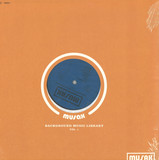
For this first volume of Musax Background Music Library, Farfalla Records continues exploring the maze of the french library music through one of its most discreet and prolific representatives: Jacky Giordano and one of his many projects, the Musax label. Farfalla Records carefully selected this tracklisting among LPs recorded between 1978 and 1979 of which the originals became particularly sought after by the collectors. Jacky Giordano who appears under his aliases Joachim Sherylee and José Pharos, is surrounded by qualified and renowned musicians such as Jean-Pierre Decerf, Jean-Claude
Pierric, Serge Planchon, Patrick Petitbon, Gérard Gesina, Jean-Charles Capon, Daniel Humair and also a band composed of members from the legendary Crazy Horse cabaret, namely Pedro Perea, Claude Brisset, Bruno Bompard, Jean-Claude Guselli, Claude Thirifays, Vincent Momplet and Joseph Gatineau. This selection mixing explosive jazz-funk, lascivious jazz and electronic music more spacey
or experimental, which could also be the soundtrack for a TV show, a porn movie or a car chase between cops and gangsters in the bad neighbourhoods of Paris. A fascinating slice of the French music scene of the late 70 is brought to life before our very eyes. (Erwann
Pacaud)
Award-winning bassist Daniel Casimir and vocalist Tess Hirst release their debut album via pioneering London-based record labe Jazz re:freshed. Following the success of Daniel Casimir's critically acclaimed debut EP 'Escapee' which featured Hirst on vocals and fellow rising stars on the scene Moses Boyd, Joe Armon-Jones and Shirley Tetteh, this album - 'These Days' is inspired by the duo's London surroundings, delivering thought-provoking lyricism, neo-soul and modern jazz
Casimir, a former Birmingham Conservatoire student, has collaborated with Julian Joseph, Jason Rebello, Benet McLean, Lonnie Liston Smith, Nathan Facey, Shane Forbes, Chihiro Yamanaka, Ashley Henry, David Lyttle, Nubya Garcia, The Tracey Quintet (Meantime Jubilation), Tom Harrison (Unfolding In Tempo), Jasmine Power (Stories And Rhymes), Camilla George and Art Blakey Jazz Messenger saxophonist, Jean Toussaint.
Named Young Jazz Musician of the Year by the Musicians' Company in 2016, Casimir has received plaudits for his arrangements and recital, while Hirst has made a name for herself with her vocals on the jazz circuit having moved between London, Leeds and LA to hone her craft. What sets Hirst apart as a musician is not only the originality of her music but her perspective of herself as an artist. She is an Ethnomusicology Graduate of SOAS and her writing style walks us through her upbringing in West London and down the halls of academia
Casimir and Hirst fuse traditional jazz sounds into beautiful compositions, narrating their way through a political and cultural landscape across these twelve tracks. The frenzied groove heavy'Security' addresses the need to trust one another and how we protect ourselves personally, while the rich atmospherics of 'Freedom' combined with Hirst's vocals, explore liberation and the rejection of duty - from a female perspective.
At the heart of 'These Days', Casimir plays with a passion and power that resonates throughout each composition. His knack for complex chord changes are highlighted in 'What Did I Do', bringing an energy and enthusiasm to the track while Hirst decries our changing capital. Elsewhere, references to John Agard's poem 'Listen Mr. Oxford Don' in 'The Magic Money Tree', explore the past and its relevance to now while a re-imagining of Charles Mingus' 'Fables Of Faubus' further ensures this theme remains central to the essence of the album.
Daniel Casimir and Tess Hirst have already received radio support from BBC Radio 3, BBC Music Introducing and Jazz FM, along with coverage in the London Evening Standard and Jazzwise Magazine
'Don't Let Them' interpolates elements of 'Fables Of Faubus' written by Charles Mingus (c) 1959. Published by Jazz Workshop Inc. Administered by BMG Rights Management (UK) Ltd. Used by permission. All rights reserved.
Vinyl Only
Obrani Records goes back to business with the new release "Test" EP from label's founder Kristina and TC80's remix. Starting with references to the vintage sound, - through some psychedelic patterns and haunted beats to a delicate surreal tech landscape. It may bring you to a parallel reality of hidden cyber worlds, so don't miss the opportunity to join this fascinating trip of twisting groovy house, minimal, techno, and electro into exciting new forms.
The mostly anonymous producer FSS joins Veyl with ‘MMXX_FFS’, a collection of nine raw, mangled numbers that manage to make lo-fi sound hi-fi. Built in moments stolen from working with DIY punk bands and artists producing for Warp, UNO, True Panther, Lucky Me and Tri Angle.... Originally from New Mexico, now living in London, with NYC on the horizon, FSS is no newcomer, and this isn’t your usual debut.
Inspired by a need to release the rage and disillusionment brought on by the extreme shit show the world has become, the writing of ‘MMXX_FSS’ — “it’s nearly 2020, for fuck’s sake” — doubled as a cathartic process for the artist, providing much-needed relief from the constant struggle of living on this planet.
Urged to push into the wild and off the beaten path, the record’s sound is iltered through an ongoing battle with tinnitus, a heavy fascination with distortion, and a treasure of inspired electronics. Memories of clear, bright landscapes play like loops, bombarded with the shock and suffering of urban action. Based on the constantly vacillating reality between moments of familial bliss to existential terror in white hot flashes, ‘MMXX_FFS’ is a snapshot of this process. Generating more.
FSS’ debut is out this December on cassette and digital, as always featuring artwork by Tomaso Lisca.
Public Release once again plunges into the deep well of dance music talent it's hometown of San Francisco has long fostered for Moon Replacement, the debut single by Anderson Chase, two originals wrapped around a couple remixes of its titular track.
Clocking in at over eight minutes, “Moon Replacement” is a tense, drawn-out affair. It coaxes you onto the dancefloor with hardedged drums that slap with a metallic clang, a steely bass throb that defines its backbone, and spindly synth noodles that creep around the crust on top. Chase’s previous life as a punk and metal drummer seeps through; this is a tenacious house boogie that trundles along at that Goldilocks BPM of 118, fast enough to snap you to attention, slow enough that you don’t lose stamina as you give into the groove.
Japanese house producer Gonno, known for his ability to graft scalpel-sharp minimal techno loops onto out-there, mindexpanding arrangements, puts his own spin on the song for the A2 slot.
He darkens the mood while zapping it with a static charge to quicken its pace. On the reverse is Mark E’s take, which goes in the opposite direction, applying some heat so the square structure’s joins start to melt, wiggle, wobble. The bottom is still stocky, a molten mass of heavy-duty bass energy, but the melody that dances around the top is airier and lighter, glints of sunshine through storm clouds.
And then “Between Us” arrives to stick the landing, get us back to where we started. Like “Moon Replacement,” it’s a blocky foot-stomper that directs you forward with its tireless rhythm section, though this time with an even longer shadow cast behind it.
On The Corner provide the first taste of a landmark recording that the label embarked upon two years ago on the East African island archipelago of Zanzibar.
Pete On the Corner was consulting for the ambitious permaculture development of Fumba Town. The story of Siti Binti Saad, the mother of Taarab is rooted in Fumba. Pete joined the dots to shine new light on the pioneering life of Siti Binti Saad as the innovative town development took shape and looked to connect with the Island's unique history at the centre of the Swahili world.
Whilst steering a recording project that would celebrate Siti Binti Saad's legacy, Pete brought in producer Sam Jones and the pair met with filmmaker Andy Jones (who documented the life and work of the legendary Bi Kidude) who revealed that Siti Binti Saad had a great grand-daughter, Siti Muharam who led a very private life but had a 'golden voice'. With music director Matona on board the scene was set to go beyond celebrating the singular legacy of a Swahili pioneer and find a new hero.
Siti Muharam has a golden timbre and on this 7" we get the first taste of her debut LP that will represent her great grandmother's legacy for the next generations.
Following on from his beautiful release on Claremont 56 in 2018 - Alterleo aka Denis Leonovich, takes a different approach for this new e.p on the Kinfolk imprint and produces a storming world infused 4-tracker.
'Cabriodelic' is a mid-tempo march that utilises sublime keys, sci-fi ethics and military style drums to incredible effect. 'On The Way' keeps the drums heavy but ventures into a deeper sub tropical technoid-esque landscape.
'Tour De L'Afrique' is exactly that, a jaunty vibe that buzzes and rolls through an unknown afro-centric land.'In Sands' finishes off the package nicely with an acidic heavy Moroccan spiced percussive roller.
Essential music for the truly tropical dance floors of the world.
- A1: Desencanto - Contraviento
- A2: Tras Tus Ojos - Jaime Roos Y Estela Magnone
- A3: De Los Relojeros - Eduardo Darnauchans
- A4: Kabumba - Hugo Jasa
- A5: El Chi-Li-Ban-Dan - Eduardo Mateo
- B1: En Este Momento - Travesía
- B2: Capítulos - Mariana Ingold
- B3: Llamada Insólita - La Escuelita
- B4: Y El Tiempo Pasa - Hugo Jasa
- B5: Bombinhas - Leo Masliah Y Jorge Cumbo
- B6: A Ustedes - Fernando Cabrera
Synth ambiences, acoustic landscapes, deep songwriting and subtle candombe percussions combine in most of the musical output released in Uruguay during the 80s. A very unique sound was developed within the narrow boundaries of Montevideo by just a small group of very talented artists. These sounds reverberated in singer-songwriting, jazz fusion approximations, experimental music and the work of musicians at the intersections of these worlds.
In “América Invertida”, ethereal vocal arrangements and acoustic guitars cohabit with synthesizers and drum machines; Candombe and Latin American music form a fellowship with new wave and dream pop.
"América Invertida" is presented with obi strip, deluxe artwork finishing and insert including extensive liner notes and previously unseen photos. Most of the tracks are reissued here for the first time.
This compilation is the fruitful output of a collaboration with Montevideo based label Little Butterfly, the first of many to come
... After his first appearance on Subaltern’s 'Kaleidoscope Vol.1’ with the scorching ‘Alter’, far-east sonic assassin and Back To Chill member Helktram makes his comeback on Subaltern Records with a heavy-as-stone three tracker. Each of the cuts is a dance-floor weapon which shows a different side of the Japanese mastermind’s razor-sharp production.
- Recoil: Opening with a crunchy guitar melody, ‘Recoil’ sets the pace
of the EP: a catchy and relentless bass-line takes us on a march
through forests and mountains, as distant pads and SFXs remind us
to stay alert. After the first round the guitar comes back, warning us
we’re not done yet. A straight hitter which will keep playing in your
head long after the night is over.
- Mineral: The aptly titled ‘Mineral' is hard as diamond and rough as
coal. This triplet juggernaut tramples systems all over the world
leaving its mark on any raver who encounters it. A sinister
thereminesque melody paves the way to a stripped-down beat with a
militant bass riff. Skilfully executed distortion engulfs the low-end
turning it into a powerful growly wobble.
- Beware: A threatening melody paints the post-apocalyptic landscape
of the EP’s third cut in what is Helktram’s trademark style. In this
track distortion is the name of the game: an unforgiving lead
matched by grimy and glitchy stabs evolves into an uninterrupted riff
which carries the rhythm leaving space for the bass melody. As the
title suggests, extreme caution is required when handling this
blaster.
When acclaimed South African musician Guy Buttery first sought out Dr. Kanada Narahari in late 2016, it was as his patient.
“It was a dark time.” Buttery recalls, “I had been bedridden for months and had been suffering from debilitating bouts of fatigue which no diagnosis or medication could help me get to the bottom of. When I first met Kanada, I was at the stage where even picking up my guitar to make music had become a joyless and taxing exercise.”
As Buttery’s searched for a cure, a family member recommended he see Kanada an Ayurvedic doctor who had relocated to South Africa from India and set up a practice in Durban. It was during this consultation, that the musician first experienced how Narahari infused the healing properties of Indian Classical music into his practice. Rather than treating him with a smorgasbord of pharmaceuticals, Narahari played his sitar and set Buttery on a strict daily diet of Raga’s to fast track his recovery.
Buttery was not only struck by his doctor’s musical talents but by the powerful healing properties inherent in his sitar compositions. When he left Narahari’s doctors room that afternoon, he asserts he was feeling decidedly clearer, lighter and stronger.
“Diving into Kanada’s music was definitely one of the reasons I'm still here today.” he admits. “The consistent tonal centre at the heart of Indian Classical Music, literally became my support pillar over this period. A central core of sorts in which to fall back on, strengthen and discover.”
Narahari as it turned out, was not only a prominent music therapist (and one of the only Ayurvedic doctors practicing in South Africa) but like Buttery, a highly accomplished musician with a devoted following back in his homeland.
Born in a small village along the Western Ghats in Karnataka, India, Narahari, at the age of nine, had enrolled to study Carnatic classical vocal and developed an interest in Hindustani Classical music with a particular passion for the sitar. While Buttery had secured his reputation as one of South Africa’s musical treasures, a multi-instrumentalist who commands sold-out performances both locally and internationally and more recently had been awarded the prestigious 2018 Standard Bank Young Artist for Music.
From this consultation, a friendship developed between the two musicians with Buttery soon inviting Narahari to join him in his studio. But it wasn’t all plain sailing in the beginning. While Buttery and Narahari’s sensibilities were very much aligned, there were a range of cultural and musical influences, nuances and inflections that first needed to be navigated and understood.
“I suppose we had to find a common ground.” Buttery says, before adding, “Which in the end turned out to be pretty "uncommon ground" for the both of us.”
It was after a few intensive sessions together that something exhilarating began to emerge. What began as a few idle improvisations soon evolved into feverish and lengthier jams. Whenever time permitted, the musicians would meet, descending deeper into the emerging sounds, while reimagining the realms that existed between their African and Indian heritages.
Over the next few months, the duo would rack up over fifteen hours of recordings in studio, and it was up to Buttery to shape the material into an album which they collectively titled Nāḍī, which Narahari translates from the Sanskrit as "The Channel" or "An Internal River".
During this period, Narahari bestowed upon Buttery, the moniker Guruji while Guy would refer to him, in affectionate return, as Panditji. Each time the musicians would meet, the studio space would be cleared by an impromptu ritual, with Guruji burning African Imphepho while Panditji would chant a Sanskrit mantra dusting Indian Agarbatti clouds over their instruments.
Once the room had been made hazy with this aromatic alchemy (with the ancestors welcomed in) the musicians would pick up their instruments and plunge into shimmering tides of sound. Reflecting on these sessions, Narahari recalls the immense creative freedom he felt throughout: “Guy and I tried to wander as much as possible, without any speculative, preoccupied ideologies or limitations. Love remained at the forefront of our journey together.”
“Those evenings we spent together in the studio” adds Buttery, “felt incredibly rich with purpose and a profound sense of freedom. While improvising, anything could happen and mostly did.”
On a first listen, the tracks on Nāḍī emerge as salty, humid invocations to the inscrutable depths and misty myths of the Indian ocean-- that vast body of water that stretches between, and laps the shorelines, of the artists’ respective homelands.
When asked to describe the sound him and Narahari refined, Buttery prefers to relay a series of evocative images.
“For me” he explains, “Nāḍī is a lighthouse, a beacon that resides at the bottom of the ocean.” As Buttery envisions it, “what once offered light to guide ships to safety, has been submerged and re-purposed by marine life as a coral-reef temple. Similarly, this sunken lighthouse exists as a concealed cenotaph, memorializing the ancient sea-routes and passages that once connected the two distant lands.”
On paper this may sound obscure but listening to the songs, it serves as an apt metaphor.
Across each meditative movement, listeners are able to relive the journey, immersing themselves in a series of incantations, replete with high dynamics, delicate African-Indian inflections and virtuoso string playing of an entirely new order. Further complimenting the fusion of musical dialects are a range of guest artists including Shane Cooper on bass, Thandi Ntuli on vocals, Chris Letcher on organ, Ronan Skillen on tabla and percussion and Julian Redpath on guitar, synth and backing vocals.
Now like the submerged lighthouse, the recordings stand as a monument, a marker and snapshot of this fortuitous meeting, a tribute to the healing gifts of Guruji and Panditji in performance. It’s a process that already, both musicians look back on with reverence and nostalgia.
Buttery ruminates in closing, that when he first met Kanada his illness correlated with the biggest drought South Africa had experienced in many years “…for whatever reason, whenever we would connect and make music together, the sky would tend to open. Even if it was just a few drops. This went on for months, until finally the drought dissipated and my health had been restored.”
By the time the heavens did open across the East Coast, a deep friendship had been forged and with it abundant musical offerings poured down. A treasured sample of which we able to share in every time we press play and immerse ourselves in the sacrosanct musical universe that is Nāḍī.
pparel Music is delighted to welcome aboard one of the most talented house music producers in the scene, Goddard, who’s the protagonist of APLTD012. The twelfth release of the Apparel’s limited catalogue is a brand new 4 tracks EP called “Signals” by the Mancunian featuring a 4-hands collaboration with Harry Wolfman and a remix by Jad & The. Every single track has been chosen carefully since the beginning of the project to make this record a representative work of the artist who perfectly blends his musical knowledge with the label’s imprint. The opening track “Fourth Dimension” is a teamwork between Goddard and the above mentioned Wolfman and is the ideal start with its crunchy, slightly distorted beat, bold bassline and spacey chords and arpeggios, surely a track for the DJ’s out there to play out to a busy dancefloor. A2 is the title track “Signals” and it lowers the heartbeat, displaying all Goddard’s talent on the keys and creating an impeccable fluctuating soundscape of his musical characteristics: the beat is an oscillating, yet solid structure while the different timbres of his synths evaporate and reappear conceiving a dreamy, spacey track. Side B begins with the whimsical chords of “It’s Not So Cold In Tromso” where the artist takes the listener to a brief and intense trip to see the Norwegian northern lights; the track is made by a strong rhythm section and flighty, far-out, harmonies which really evoke Scandinavian landscapes. B2 is a free interpretation of the previous track by the Australian Jad & The who amalgamates a jungle-ish beat to Goddard’s introspective harmonic section telling his opinion on the trip to “Tromso”.
Signals EP will be released the 2nd of December on 12” vinyl and we’re more than happy to welcome Goddard to Apparel Music’s family.
‘Portuguese electronic alchemist Bruno Silva aka Ondness aka Serpente lands his first ever vinyl release as Ondness on the ever-evolving SOUK imprint. The last year couldn’t have been better for Bruno Silva. Two major releases under his moniker Serpente, “A Noiva” (Tormenta Eléctrica) and “Parada” (Ecstatic) and a Ondness tape, “Not Really Now Not Any More” (Holuzam). “O Meio Que Sumiu” is the first vinyl release by Ondness, following more than a dozen releases on tape, CDRs and digital. He’s also graduating to vinyl on the Discrepant family, after his 2018 tape “Celas Death Squad” combining Serpente and Ondness works as a split.
“Meio Que Sumiu” can be translated as the “community that disappeared” and it alludes to the disappearance of outdoors communities and how it affects the music we listen (and how we listen to it). Ondness wanted to release an album less about himself and his inspirations and more about his aspirations about how dance music could be in an era of constant interactivity and information.
But also, how it fails to be that aspiration. Once again, like in “Not Really Now Not Any More”, Bruno works in the territory of science fiction. Investigating the present and future with nostalgia about how things could be and could evolve.
It’s music in the realm of non- existing, instead of raving nostalgia about dance music from the 1990s, Bruno explores the idea of possible futures with different approaches to dance/electronic music in each song.
In “Meio Que Sumiu” it’s obvious his music has matured and found its listenes. Bruno is no longer a bedroom musician. (He never was, but he sure worked on that idea. And very well, we might say). The dancefloor is now his, with music that explores the deeper immersion of ourselves. Communities may be changing, but the principles of dance music are always the same. Even with motion sickness for future nostalgia, like the music in “Meio Que Sumiu”.
For his return to Make Mistakes, Derek Russo ventures into the Belly of the Whale with three pieces of beautiful, retro future, dance floor chic.
Embryonic Speck opens up the record, evoking classic rave beats, in a crisp, clear, modern style. With this cut, Derek has crafted a late-night slayer for the discerning dance floor. A relentless groove drives the track along, creating the hypnotic, smoky dreams of rave’s past.
Night Sea Journey takes it down into disco depths. A wandering bassline swaggers through the track, crashing through dark waves of sound. Sexy and mysterious, made to drag the sweaty sea on the dance floor through the night.
Straddling, a piece of timeless, familiar house music, rounds things out by bringing in a touch more warmth and whimsy. Still for the darkness, but with a lighter mood, and booty wiggle bass. Deep, and grooving, with a playful sexiness, what more could you ask for?
“Consider the subtleness of the sea; how its most dreaded creatures glide under water, unapparent for the most part, and treacherously hidden beneath the loveliest tints of azure. Consider also the devilish brilliance and beauty of many of its most remorseless tribes, as the dainty embellished shape of many species of sharks. Consider, once more, the universal cannibalism of the sea; all whose creatures prey upon each other, carrying on eternal war since the world began.
Consider all this; and then turn to the green, gentle, and most docile earth; consider them both, the sea and the land; and do you not find a strange analogy to something in yourself? For as this appalling ocean surrounds the verdant land, so in the soul of man there lies one insular Tahiti, full of peace and joy, but encompassed by all the horrors of the half-known life. God keep thee! Push not off from that isle, thou canst never return!”
― Herman Melville, Moby Dick
Rounding-off a landmark year for Clark which saw an accelerated drive for variety and freshness - including skewed renditions of Bach performed at the Royal Albert Hall and a hugely acclaimed score for TV series ‘Kiri’ - the leftfield legend takes it back to the source with two bangers for the massive.
The riff-powered heavy electrics of ‘Branding Problem’ romp from Detroit to Belgium via Chicago and the M25. It’s platinum-grade dancefloor techno, but it’s more too. The production flair and inventive sound sculpting ensure a level of quality and originality not found in your average grist-for-the-mill DJ fodder.
‘Legacy Pet’ is hardcore and tech step dipped in loopy juice; it’s the sound of a raver wandering out from a cavernous warehouse, across fields and into an enchanted dingily dell dance, throwing gun fingers with the goblins and faeries.
“I’ve been quite amused at how easy it is to stream background music these days. How accessible it all is and how entitled we all feel to it, like it’s some sort of air freshener you spray in your Uber.
For some reason I’m imagining a future where Elon Musk does a streaming deal, so he can prance around controlling nano implant VR chips for 1 million amortal coastal elites, while the rest of us don’t have electricity and only manage one rave a year - to a sound system powered by rationed candles. This is music for that fantasy scenario, ha.
Anyway, I don’t want these 2 tracks to be part of background air freshener world. They are limited edition club gear. I wanna play them out so badly in my live show.
Influences: Hardcore UK rave, Detroit techno, Jungle, Oizo, Ed Rush and Optical, No U-Turn. The origins, the source and it’s constant subsequent mutations. BEHOLD THE CONTINUUM, HARDCORE WILL NEVER DIE.” Clark