‘Out There’, the first album by the duo KOLORA, is a continuous collection of warm and layered soundscapes. The organic guitar sound of Liloe Barend in combination with the synthetic synthesizer sounds of Koenraad Wiering provide a calming sound palette.
The collaboration between Liloe & Koenraad arose during and because of the corona period. Both musicians live in the artist commuity ‘Heesterveld Creative Community’ in Amsterdam South East and were restricted by the corona measures. However, these limitations turned out to be fertile ground for a new musical collaboration: KOLORA.
In addition to KOLORA, Liloe Barend has her own solo project ‘Liloe Rix’ and is a guitarist in the cover band Steam Sister. Last summer she released her new EP with her solo project as a singer-songwriter.
Koenraad Wiering works in the music world as a producer and DJ. You can find him on stage as a DJ under his own name ‘Koenraad’ and also under various pseudonyms including: DJ Beukeboom and 06NRG. In addition to music, he also designins and build light installations.
Search:wo
Mikal Asher, a scion of Jamaica's Morgan family dynasty, reunites with Chocolate Star Records here and does so with a collaboration with disco legend Gary Davis. Asher, akin to his brother Denroy Morgan, upholds the family's legacy of righteousness through music. Known as the Binghiman, he crafts captivating tunes with profound lyrics and has recorded in Ghana's Hustle Hard Studios and collaborated with industry pioneers in Kingston and Brooklyn, setting new standards in musical excellence along the way. Here, 'Wicked Ah Fi' transforms into a modern dub stepper, while 'Black Woman' offers a soulful, laid-back dedication to Davis' wife, Sonjia. This 12" also comes with innovative remixes from California-based DJ and producer Knoe1.
2024 edition of the single that marked the return of Joe Bataan in 2004. A dancefloor favourite by the King of Latin Soul!
Back in 2004, Vampisoul was extremely honoured to play a role in the return to recording of the legendary Joe Bataan, which fully materialized in the lauded 2005 album "Call My Name", written and produced by Daniel Collás. But first came out the preview 45 'Chick-A-Boom' / 'Cycles Of You', which quickly became a DJ favourite and guaranteed dancefloor filler, long out of print until now. Let's hear Collás explain how it all happened:
"This whole project grew out of a song called 'Cycles of You', which I had written around 2000-2001 with the guitarist and bassist of my band at the time, Easy. The chord progression and vocal melody really reminded me of Bataan, and it occurred to me that it wouldn't be impossible to get him into the studio to do a guest vocal if we ever recorded it. I had met Bataan a few years before at a small, family-reunion style show at the Nuyorican Poets Cafe in my neighborhood, where he not only still sounded great, but was also gracious and easy to talk to.
"By the time we got around to recording with Easy, the band was about to break up but we still had the studio booked. We all agreed that we didn't want to continue as a band, but at the same time, it would be a shame to never record what we had been working on. Around this time Bataan was playing out again, so I went to the show to see him and find out if he'd be interested in doing some vocals with us. He was agreeable, so we decided to turn it into a Joe Bataan session and do 'Cycles of You'. The funny thing is, 'Chick A Boom', a live favourite with Easy, was hastily added so we could have a B-side, but it ended up chosen to be the A-side of the single."
- A1: Sungu Lubuka - Petelo Vicka Et Son Nzazi
- A2: Mfuur Ma - Groupe Minzoto Ya Zaïre
- A3: M.b.t's Sound - M.b.t's
- A4: Musique Tshiluba - Abeti Et Les Redoutables
- B1: Lalia - Trio Bydoli
- B2: Adeito - Tabu Ley Et L'orchestre Afrisa
- B3: Ngantsie Soul - Les Bantous De La Capitale
- C1: Nganga - Les Frères Soki Et L'orchestre Bella-Bella
- C2: Tembe Na Tembe Ya Nini - Orchestre Celi Bitshou
- C3: Lolo Soulfire - Lolo Et L'orchestre O.k. Jazz
- D1: Femme Ne Pleure Pas - Zaiko Langa Langa
- D2: Kiwita Kumunani - Orchestre O.k. Jazz
- D3: Fiancée Laya - G.o. Malebo
- D4: Ah! Congo - Orchestre National Du Congo
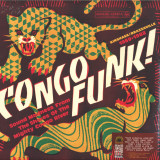
The making of Congo Funk!, our long-awaited journey to the musical heart of the African continent, took the Analog Africa Team on two journeys to Kinshasa and one to Brazzaville. Selected meticulously from around 2000 songs and boiled down to 14, this compilation aims to showcase the many facets of the funky, hypnotic and schizophrenic tunes emanating from the two Congolese capitals nestled on the banks of the Congo River.
On its south shore, the city of Kinshasa – capital of Democratic Republic of the Congo, the country formerly known as Zaïre – is often seen as Africa’s musical Mecca, the city that spawned such immortal bands as African Jazz, O.K. Jazz and African Fiesta, and the place to which aspiring musicians from throughout the continent would go to make a name for themselves.
But the city of Brazzaville on the north shore of the river – capital of the Congo Republic – played an equally important role in spreading Congolese sounds continentally. In addition to producing legendary bands such as Les Bantous de la Capital, it was the powerful transmitters of Radio Brazzaville that allowed the unmistakable groove of Congolese Rumba to be heard as far away as Nairobi, Yaoundé, Luanda and Lusaka thus turning the electric guitar into the continent’s most important instrument!
Although the musical landscape of these cities had been defined by a core group of bands in the late 1950s, the modernisation of Congolese music has been steadily evolving until the events surrounding the Muhammad Ali vs George Foreman boxing match marked a turning point. The promoter of that event known as “Rumble In The Jungle” was none other than the notorious Don King who needed 10 millions dollars to get Ali and Foreman into a boxing ring. The only candidate willing to put this kind of cash on the table was Mobutu Sese Seko, President of the Democratic Republic of the Congo.
Mobutu - the megalomaniac dictator who got to power with the support of the United States and Belgium in exchange for unlimited and affordable access to the riches of the country - had a soft spot for music and it doesn’t come as a surprise that he agreed to a three-day live music festival being organised prior to the “Rumble”. Zaïre 74 - as the festival was dubbed - was meant to hype the boxing match and many stars were invited.
Although a myriads of artists flocked in for the occasion, it was the performance of James Brown on Zairian soil that caused havoc among the younger generation, inspiring hundreds of would-be musicians to take up their electric guitars and reverbs cranked to the max in search of a new sound in which hyperactive Rumba was blended with elements of psych and funk. While the results were very different from the popular music of the three Musketeers - as Tabu Ley, Franco and Verckys were known - they weren’t a complete break with tradition.
These new sounds emerged at a time when the Congolese record industry – previously dominated by European major labels – was experiencing a period of decline due to rising production costs and needed a radical change. The void was filled by dozens of entrepreneurs willing to take chances on smaller scale releases. It was the beginning of a golden age for Congolese independent record labels, and the best of them – Cover N°1, Mondenge, Editions Moninga, Super Contact – preserved the work of some of the region’s finest artists, while launching a generation of younger musicians into the spotlight.
The movement was greatly helped by legendary radio shows but it was the dynamic productions of Télé-Zaïre that set the dynamite on fire. Legend has it that TV shows were so huge that president Mobutu himself ordered RTV du Zaïre to put on daily concerts since it halted criminal activities for the duration of the evening.
Congo Funk! is the story of these sounds and labels, but most of all it is the story of two cities, separated by water but united by an indestructible groove. The fourteen songs on this double LP showcase the many facets of the Congolese capitals, and highlight the bands and artists, famous and obscure, who pushed Rumba to new heights and ultimately influenced the musical landscape of the entire continent and beyond.
Coral Morphologic and Nick León’s Projections of a Coral City marks a series of collisions between distant
worlds: the organic and the artificial, the Eocene and the Anthropocene, sea and cement—and even, perhaps, ambient music and activism.
Coral Morphologic are the Miami duo of marine biologist Colin Foord and musician J.D. McKay; since 2007, they have used a variety of multimedia projects to generate environmental awareness of marine biodiversity—most notably Coral City Camera, an underwater webcam streaming live from an urban reef ecosystem in PortMiami.
Their citymate Nick León is a linchpin of South Florida’s contemporary leftfield electronic scene, with releases for Tra Tra Trax, Future Times, and NAAFI, and credits on records by Rosalía, GAIKA, and Iceboy Violet, among others.
This collaborative project dates back to 2022, when Coral Morphologic mounted a monumental projection-
mapping installation on Biscayne Boulevard. For five nights in late November and early December, macroscopic films of corals played out across the exterior of Knight Concert Hall. The installation was, on the one hand, a glimpse into a possible future, imagining how the city’s skyline might appear if unchecked global warming and rising seas led coral reefs to colonize the built environment. But it also represented a look back into the deep past, a reminder that Miami is literally built from marine limestone mined from the Everglades. Its concrete foundations began life, eons ago, as a marine ecosystem—the same ecosystem that may one day reclaim them. As above, so below.
As an album, Projections of a Coral City is a suite of interconnected movements spread across two sides of vinyl. The tones are watery, the mood elegiac, the colors a washed-out pastel. Forms that appear static on the surface gradually open up to reveal hidden depths teeming with microscopic movement. You might detect resonances with other aquatically minded works—Jürgen Müller’s Science of the Sea, Harold Budd’s liquid piano compositions, even the slow-moving melancholy of Dr. Roger Payne’s Songs of the Humpback Whale. But ultimately Projections of a Coral City creates the impression of a world unto itself—a hauntingly beautiful space at the meeting point between sorrow and hope.
——-
Balmat is a label with a cloudy outline. Jointly shepherded by Albert Salinas and Philip Sherburne, two friends living in Cardedeu, Catalonia, and on the Balearic island of Menorca, Balmat grew out of Lapsus Radio, a weekly show born almost ten years ago. Balmat’s mission is simple: to foster new ideas, expand upon personal obsessions, and put enveloping sounds out into the world.
“Balmat” means “empty” or “void” in Catalan. But quite apart from any negative connotations, we prefer to think of it in terms of possibility: a space waiting to be filled.
Überkeine sets the tone of his own record label with four esoteric tracks, designed for the club. An obvious intention to establish a radical style with conceptualized sonorities, is revealed throughout the Ep. The sound materials are elaborate, and go straight to the point. Obsessing over the flow of creativity offered by his modular synthesizer, he delivers a very dense techno and already affirms a well-marked identity. Powerful and textured kicks, intricate synthetic sounds contained in an arrangement reduced to the essential. The tracks come to life as the forthright reflection of the thoughts of the producer. Guillotine Whistle instantly plunges into the unbridled world of the Ep. An ominous atmosphere hovers over our heads as it reveals organic and disconcerting tones. A gentle brutality emanates from this whistling guillotine that awaits to cut you up in two. Leading the way towards Drifting Data, a track inspired directly from Jungle Patterns. Überkeine is humbly trying to render DnB to a techno format. The dense, saturated Bassline sustains the idea of breaking the dancefloor in pieces. A hard hitting, broken beat environment accompanied by heavily filtered synthetic chaos. Third track’s the charm, the B side starts with Mirror Moist. A drop-down, wet and straightforward techno track with a carnal Bassline. As sensual as it gets, this track conveys a kinky loop urging intimacy and blasting heat throughout the club. Last but not least, Shaney’s remix of Mirror Moist. Picking up core elements of the original vibe and translating it into the off-beat techno nightmare it deserved to be. Full-on obscure dancefloor piece of equipment.
DJ Support: Danny Krivit, Craig Charles (BBC Radio 6 Music), Hallex M, Jazzanova, Delite Radio, Mi Soul, Pointblank, Totally Wired Radio, XFM, Radio Solar, Tony Minvielle, Simon Phillips, Chris Phillips (Jazz FM), KCRW DJs, Ian Friday, Aroop Roy, Samantha Badd (Café Del Mar), Mr. V, Simon Harrison (Basic Soul), Greame Park, Mike Fossati, Timo Mass, Deli G, Servino (Horse Meat Disco), Hyenah.
‘Badly Written Songs’ is, of course, a tongue-in-cheek title. It comprises a carefully structured and well-produced array of songwriting, topped and tailed with live instrumentation, commanding vocal performances and high-end production: the result of years of sound engineering and music production experience. Since the last album, Ross Hillard has continually honed his skills whilst earnestly crafting this sophomore long player. As well as developing a range of audio plugins, Ross also manages recording sessions at his own Paddocks Recording Studios: huge live spaces boast cutting-edge technology, integrated with distinguished analogue kit. The studio is complemented by a collection of prized microphones, together with a fully-restored vintage Raindirk mixing desk.
The opening track and first single from this album is the positively-anthemic gem entitled ‘Good Morning Sunshine’. It tells a forward-looking story promoting the merits of getting back into the driving seat of life. It’s propelled further by superb jazz-inspired drums and live horns that build up to an exhilarating crescendo. Featuring the vocal talents of Sophia Marshall, the story she paints is supported by a wonderful, darkly humorous cartoon video. An animated cadaver hilariously acts out her notions of positive living.
Other tracks also destined for a single release include: ‘Loving You’. It’s a song written around love lost. A bouncing house composition lays the foundations for Sophia Marshall's beautiful vocal that narrates the many facets to be found in loving another person. ‘Better’ again echoes jazz-inspired drums behind Sophia's vocals, drawing attention to how so many people are lost on their devices, missing out on the awesome world around them. A catchy chorus chants the notion behind this song, i.e., that you ‘could be better!’ This single is also supported by another fantastic video featuring the same comical, deceased character introduced through the ‘Good Morning Sunshine’ video.
Drumsauw announced debut release 'Focus' on DCLTD.
Drumsauw, the rising techno prodigy also known as Joseph Sutherland, is gearing up for his highly anticipated debut on DCLTD. With a rapid ascent since 2017 and support from industry titans like Adam Beyer and Ritchie Hawtin, Drumsauw's arrival on the label promises an electrifying fusion of driving beats and impeccable production finesse.
'Focus' fires like a jackhammer, a piercing slice of percussive techno that reveals an atmospheric side as metallic synths enter at the mid-way mark and the momentum into dreamier territory.
'Set Back' is a highly effective cut built around ultra crisp drum work, shuffling kicks, a mind warbling vocal and menacing synth line.
Well Curated is a series of releases and parties that - in its own words - "reflects the ethnomusicology of the last 50 years of music" - and aims to reach into all genres, merging classic styles and breaking down barriers. Steve Spacek occupies the A-side with the breezy broken beat and soul-in-space of 'Alone In Da Sun', while Lukid's 'Hair Of The Dog' is a more intense counterpart, with wobbling sub-bass and swirling, surging atmospherics hovering above.
In Zeiten, in denen Alle Mainstream sind, ist es nicht leicht ein Underground-Musiker zu sein. Vor allem, wenn man davon leben wollen muss. Der Leipziger Musiker Josen Bach ist so einer. Seit Jahren erfolgreich unter dem Radar!
Er verdient seine Brötchen als Schlagzeuger, als Theatermusiker und jetzt neu: Als Bandleader seiner eigenen Band DIE QUITTUNG. „Einfrieren“, so lautet der Titel des am 24.11. erscheinenden Albums, ist bereits das zweite Album von DIE QUITTUNG, allerdings das erste auf dem Berliner Label staatsakt.
Die Produktion für „Einfrieren“ ging während der Pandemie los und ist nun endlich pfannenfertig gemischt und gemastert. Selbstverständlich wird sein neues Label nun alles dafür tun, DIE QUITTUNG so breit wie möglich im Mainstream zu etablieren! Bald ist es vorbei mit dem Untergrundlegendenstatus. Nur noch mit Sonnenbrille zum Bäcker.
Diogo Silva, Nuno Fulgêncio and Rui Martins collectively go by the name Bardino. With their sound consisting of an inventive mix of
electronica, rock, jazz, the Porto-based trio are pushing their sound into unchartered waters. A feeling that will be reinforced after
experiencing their new album, ‘Memória da Pedra Mãe’.
Their enthralling music draws upon the imagery of the beautiful and rugged scenery of their home country. ‘Centelha’ , their previous
album (released by Saliva Diva in 2020) was recorded in Chaves,
in the very remote region of Trás-os-Montes. Their 207 EP of the same name was created in the rustic heart of Serra das Meadas. In this
latest offering, the mention of "Pedra Mãe" (Mother Stone), refers to a rare geological phenomenon popularly known as "breeder stones"
found in isolated, deserted, and inhospitable places. On the inspiration of the new album, they explain that they want to refer to "the
importance of collective memory in the cohesion and identity of communities and the process of creating new memories, a process that
is both natural and conflicting, since it mirrors a tension between past, present and future".
The album was recorded in the summer of 2023 at Arda Recorders in Porto and produced by João Brandão and Rui Martins. In this
new material, Bardino's resources expand: Nuno Fulgêncio's drums, Diogo Silva's bass and Rui Martins' veritable arsenal of keyboards
(acoustic and electric piano, various synthesisers) are augmented by the alto and tenor saxophones of Brian Blaker (who stands out in
"Memória" and "Black Mica"), the guitar of Leonardo Outeiro (who features on "Punctum No 2") and, already indicating their affiliation
with the Porto label Jazzego, Hugo Oliveira, who records as Minus & MRDolly (and is a guest on "Pedra Mãe") and Sérgio Alves, aka
AZAR AZAR (who plays piano and Moog on "Tília"). Bardino's entry into the increasingly unavoidable Jazzego catalogue also reinforces
their obvious links to a new wave of projects that have been experimenting with different tangents to the notion of "jazz", taking this
music as part of a wider set of coordinates.
Over the course of eight tracks, and clearly benefiting from the distinct imprint of the recognised quality work of João Brandão, one of
Portugal's current best producers, Bardino presents dense, deeply cinematic music of the highest definition, in which the different
instruments translate a broad emotional and visual landscape, with solos of enormous elegance arranged over grooves that induce the
idea of movement. All the musical coordinates mentioned earlier are present, but perhaps in this new material you can feel a greater
fluidity, certainly the result of honing the vision of the central trio through a vast experience collected on stages all over the country. And
there are even echoes of a decidedly Portuguese songbook, as is so clearly felt in "O Semeador", something new in the range of aesthetic
references embraced by Bardino. This is, in fact, music that thrives on a benign tension between past, present and future, in the sense
that it embraces traditions and history, seeks a new framework in this diverse now and dares to project itself forward. Because the future
is the best of all locations.
The "ongakudō / droga muzyki" project is ("The way of music" in English). Initiated by Groh - head of the JuNouMi label (est. 2002 Polish hip-hop label), the project is the result of cooperation between Polish and Japanese artists.
First, Twardowski created music based on samples from Japanese albums. Then MCs KANETSUGU (JP) and Prykson Fisk (PL) were invited. The next element were DJs - 1an from Tokyo and DJ Eprom from Warsaw (former IDA world champion).
An important element of the project is the graphic design, for which Małgorzata "Mauko" Korczak is responsible - exploring the art of Japanese Shodō calligraphy. As many as three versions of covers were created. One limited edition (hand-numbered 100 pieces), a version with a black wax and a version exclusively for the Japanese market.
This 7" is the first part of the Polish-Japanese series. It is the beginning of our journey.
Four years ago, Francesco Strippoli debuted on Bordello A Parigi with Universal Oneness followed by the analogue rich Prison Planet EP. Once again, donning his Armonics alias, the Bari based producer returns with four tracks for Future Echoes. The synthesizer warmth that has characterised past releases is immediately present. At the heart of “Floating High” is Strippoli’s keyboard work. Beats are crisp and understated as waves of melodic murmuration bob and weave to perfectly complement each other. A steady kick introduces the textured title work. Warbling notes give way to bolder chords, chords that are blurred by shimmering arpeggios as layers of harmony expand and unfold. Nostalgia meets the needle on the flip. “Retrospectiva” blends subtle shades with brassy extravagance, the sun and romance of southern Italy radiating in tempered brilliance. The energy of “Music and Lights” closes. Throbbing keys are further fortified by swirling synth stabs, the intensity being ratchetted up to boiling point in this dancefloor delight. Quality through and through.
Since the early 90s Rotterdam is known throughout the world of dance music for its many influential creative endeavours and one of these was the short-lived label See Saw. Active between 1991 and 1995, the label was the home to mostly Dutch producers who were just dipping their toes in the waters of house and techno. Or, who already had a whole leg in like Speedy J.
Sandwiched between two of his early releases as The Melody (Discogs detectives know what’s up!) sits The Jewel EP, the only EP Gijs Vroom did under his Diamonds & Pearls alias. A kind stranger online once described the record as effective and joyful and we couldn’t agree more. It’s a mixed bag of zippy breaks, swirling pads, tight Lately basses, and foxy vocal snips and like many records of the era it maximises charm with minimal equipment. It’s these kinds of twelve-inches that stood at the cradle of the Dutch house sound and so it is very deserving of a little nook in your record bag.
repressed !
Office 04 circles in memories: The record is about Johannes 'Iron Curtis' Paluka's time at Karl-Marx-Straße Berlin where he used to live next door to label head Baaz and graphic designer Chris Fladung.
A1 track 'Magnet' is an ecstatic piece of house music holding all elements IC's production is esteemed and loved for : Heavy, unrelenting kicks, rolling bass lines, shimmering pads, topped with searing hot yet gamelan-like synts and an icing of slightly loose, detuned organ stabs predesting grand emotions on any dance floor. 'What happened happened' surely marks up as another proof of Curtis' fearless takes on house music: distorted field recordings and blurred spoken words, a web of gossamer melodies and subtle clicks and cuts, all cohered by the louche bassline and the reshuffled groove in a true dilla-ish vein.
Adapting elements to their own agenda, clandestine groove explorers Berg turn 'What happened' into a true midnight roller: razor-sharp hihitas join forces with a steam-maschine like percussion, whipping relentlessly in-between kick drum and kick drum. Berg cools off their take with prancing melody motifs and strung out pads of the original track, though never loosing focus of the 'reductions' aim: keep the dancer dancing.
The harmonious nature of creation, the search for symmetry, the perpetual motion of bodies. Characteristics that amplify the sensations when we face something bigger than ourselves. In the same way, the lake reveals itself as a mirror for the soul, and the carp begin to flow into our soul, bringing out some "Distance Problems", able to be filled only with music.
KOI008 is brought to you by the enigmatic yet oniric outer-world creator S.O.N. with three mesmerizing original tracks. On the remix duties, Romanian superstar Sublee delights us with his take on "Vanessa", in front of which we must only surrender.