Hedvig Mollestad must surely be one of the hardest working musicians on the Norwegian music scene at the moment, with “Tempest Revisited” being her third album in a mere 18 months, all at a consistently high artistic level. Her first solo album, “Ekhidna” (2020), received a Spellemannpris (Norwegian Grammy), appeared on several jazz and rock best of the year lists and got her into Downbeat´s “25 for the future” selection. “Tempest Revisited” draws lines back to 1998 and the very beginning of Rune Grammofon. This was the year we released “Electric”, the collected electronic works of Arne Nordheim, one of Norway´s greatest composers. It was also the year when parts of “The Tempest”, possibly his most cherished and well-known work, was chosen to be performed at the opening of Parken, the new cultural house in Ålesund, birthplace of Hedvig Mollestad. To celebrate 20 years, the culture house was ready for a new storm, and the first name that came to them was Hedvig, a local artist that was already making waves on the international scene with her power-trio. Hedvig took inspiration from the front of the house, adorned with Nordheim´s score for “The Tempest”, at the same time making a direct connection to the sometime heavy weather conditions of this coastal area in the northwest part of Norway. One could say it´s a big paradox that over all this might be Hedvig´s most lyrical and less aggressive collection of music. On the other hand it´s quite a dynamic record, lots of light and shade and enough sonic parts at work to evoke the elements, the mighty Gran Cassa drum only one of them. The music included here was adapted from the initial performance in 2018 and produced by Hedvig in the studio the following year for this album release. The musicians included are old friends Marte Eberson from the Ekhidna band, Ivar Loe Bjørnstad from her trio and Trond Frønes (Red Kite) on bass as well as three sax players. Yet another triumph in a more than impressive discography.
Cerca:work hard play hard
Trio of Nils Økland, Sigbjørn Apeland and Øyvind Skarbø - apart from the unusual instrumentation of violin or Hardanger fiddle, harmonium and drums, is the empathy displayed by the group as a whole; the hyper-sensitivity with which each individual member appears to respond to the contributions of the others in the pursuit of a collective goal, however obscure or unknowable that goal might be. Such extreme alertness to subtle changes of mood and nuance, and to the evolving sound-world of each, totally improvised, performance is rare in music of any type. 1982 have made it their signature. And because 1982 have so singularly created their own identity and sound, they can do anything they like. Normal conventions of style and genre, format and duration cease to matter: it is all 1982 music, anchored in the strong personalities of the three players and their respect for the primacy of the group as an entity in itself. Thus they can record as a trio - as on the group’s first two albums, ‘1982’ (from 2009) and ‘Pintura’ (their Hubro debut, from 2011) - or with guests, as in the acclaimed '1982 + BJ Cole' (from 2012), and the collaboration with composer Stian Omenås and a quintet of wind players for ‘1982: A/B’ (from 2014). There was also the unique ‘message in a bottle’ intervention of ‘The Bottlemail Project’, begun in 2011, whereby 15 copies of a new recording were ‘distributed’ via USB sticks enclosed in bottles and released into the open sea from Bergen and various worldwide locations. The new album, ‘1982: Chromola’, as well as marking the group's tenth anniversary, represents a return to the essential identity of the trio playing alone, without guests. Recorded at Sandviken church in Bergen on the day following an evening concert, the album uses material from both occasions, engineered once again by Davide Bertolini, who worked on the band’s four previous recordings. As an album it is remarkable for many things, but perhaps most notably for the role of Sigbjorn Apeland, who plays pipe organ on all but one of the seven tracks rather than harmonium, which features only in the closing, seventh, piece.
Time fortifies the bonds between us. Since emerging in 2018, Light The Torch have grown stronger in lockstep together as a band and as friends. Through this growth, the Los Angeles, CA trio—Howard Jones vocals, Francesco Artusato [guitar], and Ryan Wombacher [bass]—only enhanced every aspect of their signature sound. Upheld by head-spinning seven-string virtuosity, yet also anchored to skyscraping melodies, the group crafted twelve no-nonsense and no-holds-barred metallic anthems on their 2021 second full-length album, You Will Be The Death of Me [Nuclear Blast].
“The past few years have helped me to become much more personal in my writing,” explains Howard. “Even though I’m kind of a loner, this band became real family. My experiences with Ryan and Fran inside and outside of the band truly bonded us. I think it shows in this album, it truly represents who we are as a group.”
“Every second on this record was thought-out,” adds Fran. “Howard’s performance gives me chills, because it feels so alive. There’s so much emotion in it. I know the guy very well at this point, and our friendship is a big part of Light The Torch.”That friendship cemented over the course of the past three years. The group shot out of the gate as a contender on their full-length debut, Revival. It bowed at #4 on the Billboard US Independent Albums Chart and at #10 on the Hard Rock Albums Chart in addition to receiving acclaim from Revolver, Outburn, and many more. “Calm Before the Storm” racked up a staggering 14.5 million Spotify streams, while “The Safety of Disbelief” remains one of SiriusXM Octane’s all-time most requested songs. They also crisscrossed North America and Europe on tour with the likes of Trivium, Avatar, In Flames, Ice Nine Kills, Killswitch Engage and August Burns Red to name a few.
In late 2019, an idea for the title track “Death of Me” kickstarted the creative process. The guys returned to Sparrow Sound in Glendale, CA to once again work with the production team of Josh Gilbert and Joseph McQueen [Bullet for My Valentine, As I Lay Dying, Suicide Silence].This time around, they also welcomed Whitechapel’s Alex Rudinger on drums. “He’s incredible,” says Fran. “He was exactly what we needed.”Now, they kick down the door for You Will Be The Death of Me with the single “Wilting In The Light.” Howard’s instantly recognizable vocals soar over a sweeping riff and rolling beat before culminating on a massive luminous hook, “Over and over again we struggle. We’re wilting in the light, and we stumble in the dark.”“It has a different vibe and a very interesting riff,” observes Howard. “I love it when listeners can take what they want from a song. This was a special one for us.”
“More Than Dreaming” opens up the record with gut-punching guitar and another knockout hook. Elsewhere, airy keys wrap around chugging distortion on the title track “Death Of Me.” Regarding the latter, the frontman goes on, “Most people have some source of grief in their lives. It’s relatable, and it was appropriate for the song.”After the melodic melancholia of “Come Back To The Quicksand,” Light The Torch recharge the 1987 Terence Trent D’Arby classic “Sign Your Name” as the record’s climax. Shimmering keys bleed into an overpowering verse before it snaps into the immortal chorus beefed up with thick distortion. “Howard stayed at my house with me and my wife for the entire recording of the album,” recalls Fran. “I like to cook, and one night during the first week of pre-production I made everyone dinner. A compilation with ‘Sign Your Name’ started playing, and I thought, ‘I can do a version that would sound awesome!’ Howard knew and loved the song too. For as crazy as it sounded, it worked so well.”
In the end, the bond between Light The Torch burns brighter than ever in the music as they deliver a definitive statement with You Will Be The Death Of Me.
“We wanted to make a fully listenable and fun album that doesn’t let up,” Howard leaves off. “At the same time, we’re showing some heart, passion, and connection. It’s what we’ve always intended to do with this band.”
- 1: Take My Hand
- 2: Something In My Eye
- 3: Medicine
- 4: Badger's Wake
- 5: World In Action
- 6: One By One
- 1: Take A Bow
- 2: October Sun
- 3: So Low
- 4: Summer Sun
- 5: Gather Up
- 1: Theme From Snuff Box
- 2: Middle Of The East
- 3: Like Stone
- 4: Phantom Birds
- 5: Music For Insomniacs Part Iv
- 6: Say It Again
- 1: The Innkeepers Song Live
- 2: Obsessed & So Obscure
- 3: Woman
- 4: Solstice
- 1: Bigger Than A Dog (Original Witchazel Intro)
- 2: Take My Hand (Live On Absolute Radio)
- 3: Autumn (Witchazel Outtake)
- 4: The Dawn (From Myspace Ep 'Summer Sun' 2010)
- 5: Snuff Box Live Loop (Used Live Between 200 - 2012)
- 6: Catch Me In Time
- 7: Dark Beach (From Myspace Ep 'Summer Sun' 2010)
- 8: The Hangman (Acoustic Version 2007)
- 9: Wonder Theme (Became 'Something In My Eye')
- 10: Music For Insomniacs (Alternative Intro)
- 11: Theme From 'Sorry' (Live From Charlie Brooker's Screenwipe 2007)
- 12: Music For Insomnaics Rejected Theme
- 13: Walk With Samuel Devil Inside Me
- 14: Blankety Blank Vocal Intro
- 15: The Blue Elephant Trip Two
- 16: Sweet Velvet Became 'Seasons On Fire
- 17: The Blue Elephant Alternative Intro
- 1: Covered In Clowns
- 2: Get Her Out Of My Mind
- 3: I'm Going
- 4: Make It Go Away
- 5: Peter Cleopatra And The Windmill
- 6: Play On
- 7: Take A Bow
- 8: The Preacher's House
- 9: A Shot Rang Out In The Forest
- 10: The Wrong House
- 11: Where's My Love?
- 12: You Danced All Night
- 1: Medicine / So Low
- 2: Silver Sun
- 3: Theme From Snuffbox
- 4: Solstice
- 5: The Pheasant
2x 12 Inch[30,88 €]
‘Gather Up’ is the culmination of ten years on Acid Jazz for Matt Berry.
‘Gather Up’ comes as a beautifully packaged 4CD hardback book set with 28 pages of
illustrations and notes or a 5LP box set with a 64-page booklet and certificate of
authenticity signed by Matt.
‘Gather Up’ is also available as a standalone 21-track ‘Best Of’ on gatefold CD and red
coloured vinyl double LP.
The 55 tracks on the 4CD / 5LP sets are split between an anthology compilation that
tracks the very best tracks from his eight albums and associated singles for the label over
the last decade, an album of unreleased tracks and rarities, a demo version of his 2020
album ‘Phantom Birds’ (titled ‘Phantom First’) and the previously unreleased ‘Live At A
Festival’ album, which showcases Matt and his band The Maypoles in full flight.
The book included in both formats has an extended essay by Chris Catchpole which
reviews Matt’s musical career and an exclusive set of photo images culled from the
archive of Matt’s long time photographic collaborator Ben Meadows.
Following the huge acclaim earlier this year for Matt Berry’s eighth studio album, ‘The
Blue Elephant’, Acid Jazz release ‘Gather Up’, a compilation album encompassing the
singular musical adventures this extraordinary musician has taken over the past decade,
offering a revelatory and fascinating insight into the working process of a genuine musical
maverick and sonic explorer.
Over 10 years with Acid Jazz, Berry has released nine incredibly diverse albums
(including one live album). From the tangled-folk rock thickets of ‘Witchazel’ and ‘Kill The
Wolf’ (which features the song from which this release gets its name), to the out-there
explorations of ‘Music For Insomniacs’ or ‘TV Themes’’ retro-kitsch delights, through the
soul power in ‘Matt Berry & The Maypoles Live’ or the twilight grooves of ‘The Small
Hours’ to the classic pedal-steel songwriting of ‘Phantom Birds’ and the smorgasbord of
psychedelic sounds on ‘The Blue Elephant’, Berry’s journey has produced a feast for the
ears that twists and turns down more unexpected avenues than most artists could
manage over several careers.
‘Gather Up’ pulls together an excellent career spanning collection expertly compiled by
Berry, including non-album tracks such as ‘Snuff Box Theme’. No easy achievement
considering the sheer breadth, diversity and volume of his exceptional musical output.
p 16 Music for insomniacs [Part 4]
Lovers of fabulously swung, nice ‘n chunky house music have a treat in store on Hudd Traxx 066 as Swiss producer Agnès makes a very welcome, vinyl only return to our label.
Much-loved for his stripped back and dubby style - with previous EP “Got That Music In My Mind” championed by Disclosure on their Mixmag mix - here we witness the Sthlmaudio Recordings founder loosening up with four shoulder-rolling rides of deep house greatness which commemorates his and Eddie Leader’s tour of South America in 2013/14.
It’s the first new material we’ve heard from the producer since his 2016 EP “Accent Grave” and the track “Embryonic Connections” off our 15th year anniversary collection released early in the year.
Effortless in construction, with the genre’s classic tropes of poking organs, sub-tickling bass, rich atmospheres and cheeky, playful vocal samples littered throughout; the EP’s real beauty comes across in Agnès’ unfathomable grasp of swing and shuffle, instantly injecting listeners with a fidgety energy and need to dance. His percussion sounds fizz, pop and crack in a manner that’d make Kerri Chandler blush while neon-hued pads glue the whole thing together with a radioactive warmth. Chuck in an almost shamanic level of dancefloor understanding & connectivity and what you have here is a breakthrough dose of unrivalled hedonism.
There’s a sophisticated simplicity and sympathy at work here; with a reduced, hard-hitting and well thought out sound palette connecting the tracks together with the same impassioned spirit. That fiery flame of a basement and a red light, encapsulated perfectly and destined to rouse the spirits of house heads across world this Autumn…
- A1: Mon Amour Tu Bois Trop - 3 27
- A2: Les Chants De Maldoror (Kraut Koto) - 4 37
- A3: À Rebours (Hang Bôté) - 3 33
- A4: Intérieur Négro - 3 13
- A5: Vowel - 2 33
- B1: Hard Billy - 3 41
- B2: La Mort De Pierre - 2 38
- B3: Le Cirque De Consolation - 3 40
- B4: Il Pleut Des Hommes - 3 43
- B5: Dandelion (Piano Solo) - 2 15
- B6: Missing Love - 3 22
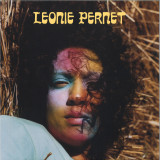
Léonie Pernet's second album Le Cirque de Consolation, to be released November 19th on InFiné & CryBaby, inhabits a world where borders dissolve and everyone makes their own unique and singular utopia. Hereby, the record questions the links between pop music, African cultures and electronic music, neo-classical music or the role of voice, whether human or synthetic. Sophomore albums can be a painful process for an artist - how refreshing it is to hear one so decidedly optimistic.
Textextext - (add your write up)
The sought after whirlwind of French Pop that exploded onto the scene with her debut "Crave", Leonie Pernet, returns with her second album, "Le Circque de Consolation", a sort of double negative of her first. While the yearning that sat at the center of "Crave"might not have been resolved, the young multi-instrumentalist and singer has found a new perspective - a more open and positive outlook on her own life and work. Perhaps telling, then, that the title was the first element of the album to exist: as it is and has always been a journey of personal (and collective) consolation first, a musical confrontation with the self.
"This record parallels my life's journey," confirms Léonie, "it reflects what has happened in my life since 'Crave' came out and how I feel today. There's still a lot of melancholy, but a lot more sunshine and light. In four years, I've become sober, which has saved me; I've worked a lot on my voice, which is a part of a desire to speak, to address my audience more directly, and also a more pronounced pop desire." In line with her new-found "openness", Leonie invites another musician into her creative process for the first time on "Le Cirque de Consolation": Jean Sylvain le Gouic, who lended his coproduction and perspective to her, while Leonie still plays almost all instruments herself with an astounding prowess.
Leonie's voice oozes with a new-found self-confidence and takes center stage amidst eclectic, distinctively fun and open-minded production. Sometimes she sings in English, mostly in French: "I worked a lot on my voice," confirms Léonie, "I didn't dare to sing before, neither live, nor on record, nor in the studio." Surrounding her astounding, intoxicating voice are forays into any direction imaginable: from harsh, experimental electronics to the more sombre, organic and quiet moments - and everywhere, there is the vision of Africa, (also Middle East) it's many sonic gifts and cultures.
Leonie has found a universal utopia that she craves for - a musical, cultural amalgamation that is decidedly non-western, political and poetic, rooted in self-discovery and the connection with other humans: African and oriental percussion, synthesizers, drum-machines; Léonie mixes genres and instruments with ease and precision. The French novelist and philosopher Édouard Glissant - whose work and writing had a big influence on Pernet - coined the term "Creolization ", the "bringing together of several cultures or at least several elements of distinct cultures, in one part of the world, resulting in new data, totally unpredictable in relation to the sum or the simple synthesis of these elements."
From "Hard Billy ", a techno-influenced rebellious anthem, to "Les Chants de Maldoror," a club and dance song propelled forward by feverish derboukas, to the deeply moving "A rebours" and its Afro-electronic rock. Léonie Pernet inhabits a world where borders dissolve and everyone makes their own unique and singular utopia. Hereby, the record questions the links between pop music, African cultures and electronic music (Intérieur Négro), neo-classical music (Le Cirque de consolation, Dandelion), or the place of the voice, whether human or synthetic as in the atmospheric "Vowel". Sophomore albums can be a painful process for an artist - how refreshing it is to hear one so decidedly optimistic.
Germany-based metal band OBSCURA launch trilogy concept on stunning new album “A Valediction”. The group’s first (sixth overall) album for Nuclear Blast pivots on many fronts. Advanced, elegant, and yet refreshing, “A Valediction” sums up past endeavors effortlessly as it gazes with purpose and conviction into the future. OBSCURA are fan-renowned and critically acclaimed for challenging and then expanding upon norms. From “Cosmogenesis” (2009) through “Diluvium” (2018), the band flourished and made significant progress in a musical genre unprepared for a creative shot of German invention. “A Valediction” spearheads OBSCURA into a new era of extreme metal.
Guitarist/vocalist Steffen Kummerer founded OBSCURA in 2002. Early on, he set out to improve, redefine, and push forward. Under his self-label creation, the Bavarian released debut album “Retribution” (2006), followed by heavy touring throughout Europe. Word quickly spread that a brand-new band from the south of Germany was on the rise. Buzz lead to a deal with U.S.-based Relapse Records. The first record out was “Cosmogenesis”. In Europe, Metal Hammer Germany awarded the album 6/7 while in the U.S., “Cosmogenesis” hit the Billboard charts at #71. The cross-continental praise and fevered momentum landed OBSCURA on high-profile tours in Europe, North America, and Japan.
When follow-up “Omnivium” arrived in 2011, they upped their chart success (Billboard #11; Media Control #14), received more accolades from publications like Terrorizer, Rock Hard, and Decibel, had another massive round-world tour cycle, while enhancing and making progress on their clever brutality. OBSCURA further developed their sound on “Akróasis” (2016). Moored by jaw-dropping tracks like ‘Sermon of the Seven Suns,’ ‘Ode to the Sun,’ and the title track, “Akróasis” elevated OBSCURA to the highest levels of international renown, having climbed up the Billboard charts (#5) as well as earning top marks in Rock Hard (8.5/10), Metal Hammer Germany (6/7), and Revolver (4/5). The Germans toured the world yet again, playing over 100 shows in support of “Akróasis”.
OBSCURA’s most significant accomplishment was, however, just around the corner. The final part of a tetralogy, “Diluvium” (2018), fiercely pursued OBSCURA’s multi-album transformation into musical innovators and metal powerhouses. Music videos for the title track, ‘Emergent Evolution’ and ‘Mortification of the Vulgar Sun,’ in concert with a substantial interest in virtuosic, forward-thinking metal, posited OBSCURA in the good graces (yet again) of the worldwide press in addition to rocketing up, for the very first time, the official album charts in Germany (#58) and Switzerland (#93). The Germans also topped out at #3 on the Billboard Heatseekers chart with “Diluvium”.
OBSCURA‘s stats have been impressive: Twenty years active; six highly prized albums; over 600 shows on four continents. Worldwide fan and press engagement—the videos for ‘The Anticosmic Overload,’ ‘Akróasis,’ and ‘Diluvium’ have over 4.5 million views—is only getting stronger the longer OBSCURA continue to offer up and interact with (via play-throughs and member/gear spotlights) their very captive audience. This is only the tip of Kummerer’s custom ESP guitar, however. A Valediction finds OBSCURA turning the page to a new chapter in the band’s evolution. A year in the works, the songwriting sessions followed a new approach, where the framework was relaxed, allowing new inspirations, imagining, and opportunities to arise. Songs like the opening epic ‘Forsaken,’ the '80s-tinted ‘When Stars Collide’ (featuring Soilwork/The Night Flight Orchestra frontman Björn Strid), the brutal groove of ‘Devoured Usurper,’ the ethereal artistry of ‘Heritage,’ and the fleet-fingered title track benefitted compositionally (refined structures) and aesthetically (more dynamism) from OBSCURA’s restyled songwriting stratagem.
OBSCURA wrote, recorded, and finalized “A Valediction” during the pandemic. The stipulations of working during this time allowed OBSCURA to work cross-country, tracking each respective part—drums, guitar, and bass—in national studios across The Netherlands, Austria, and Germany. Once the pieces were completed, the recordings were shipped off to award-winning producer Fredrik Nordström and Studio Fredman (In Flames, Architects) in Gothenburg, Sweden, where Kummerer and Münzner completed vocals and acoustic guitars using custom-built ENGL amps. Nordström was also tapped to mix and master. The final result is a deeper, heavier, yet more rounded production.
Lyrically, “A Valediction” is layered in structure and meaning. The word ‘valediction,’ by definition, deals with goodbyes and farewells. In a way, this is auf wiedersehen to the four-part album series while also addressing complex topics of Kummerer’s personal life. Instead of obscuring issues of loss, death, and abandonment in metaphor and allusion, the German laid bare his torment across songs like ‘Forsaken,’ ‘Solaris,’ ‘In Unity,’ ‘The Neuromancer,’ and ‘In Adversity.’ But for every line of desperation, he also offers positivity. Indeed, new beginnings—physical, emotional, or environmental—can provide light in the darkness. Lauded artist Eliran Kantor (Testament, Helloween) was brought on board to visualize the leitmotif. The bronze-themed colourway Kantor used exemplifies OBSCURA’s resistance to individual and sonic corrosion.
In 2021, OBSCURA will lighthouse their musical prowess, thematic complexity, and lyrical ambition on “A Valediction”. The group continue to be a beacon for change. No doubt OBSCURA’s new stats will amaze, but what they’re focused on is the release of “A Valediction” and then taking it on the road. Several high-caliber tours of Europe, North America, and Asia are planned through to 2023, with routes are in the works for the band to visit Australia, South America, and beyond. Truly, there is no band quite like OBSCURA. “A Valediction” proves that persistence, perseverance, and enterprising minds can achieve anything. Welcome to the next level!
Following March’s 9696 Dream mixtape and July’s Flex Time EP, this new album sees 96 Back shine the spotlight on his own vocals for the first time, at points (such as on lead single ‘9 To Find 6’) operating fully in the realms of experimental pop. At other times, such as on ‘Teach Me Tenderness’ and ‘Feel Hard’, 96 Back stretches and processes his vocals to almost breaking point, while album closer ‘Melt You’ sees him duet with past collaborator Iceboy Violet, ending Love Letters on a sombre but romantic note. That’s not to say Love Letters is fully removed from the dancefloor, however: tracks like ‘Don’t Die’ and ‘Love Compact’ are precision-tooled for the club, while the likes of ‘Felzin’ and ‘Vibrant Colours’ continue to explore the intricate but emotive electronics that 96 Back has been so successful with in the past. More varied and vivid than any of 96 Back’s releases to date, Love Letters feels like a coming of age moment. It casts its net incredibly wide at points, and it’s an album full of ambition, but it meets every challenge it sets itself — as affecting in its quieter, tender moments as during its dramatic peaks. In 96 Back’s words: “This is a record I feel like I’ve been trying to write for years, it feels like the most accurate body of work to match the ideas in my mind. Trying to project a lot of the records I hold very dear to me through this lens, interpreting how they sound to me and merging them with ideas of finding the drama and excitement in the full spectrum of emotions on the tip of my tongue, that’s what ended up being Love Letters, Nine Through Six.”
Repress - Yellow Vinyl
Harlem River marks the solo debut of songwriter Kevin Morby. Known for his work as the singer/guitarist for the Brooklyn band The Babies and bassist for Woods, the Kansas City native and new Los Angeles resident, calls the record “an homage to New York City”, his adopted home for the past five years. Harlem River features eight interweaving tales of tragedy and misfortune; a series of desperate characters playing out their dramas with the city as backdrop. A departure from some of the signature sounds of his better known projects, Morby’s songs glisten with a haunting intimacy and while he maintains that the songs are stories about other people, it’s hard not to feel a piece of him in each one; a half-imagined, half-painfully personal world of lost love, addiction, violence and prayers for the departed. The album was recorded in Los Angeles in February and March of ‘13 with producer Rob Barbato who recorded the Babies second album “Our House on the Hill” and whose guitar and bass work figure prominently on Harlem River. The album also features drummer Justin Sullivan (the Babies) as well as contributions from Will Canzoneri, Tim Presley (White Fence), Dan Iead and Cate Le Bon.
With a string of releases as Garage Shelter and as of last year, alongside Hardrock Striker as Bleu Blanc House, Signal St. returns to line up his first LP with SKYLAX.Laden with indecipherable disco and funk samples, emotive chord changes and clocking in at one hour, it’s fully fledged dance album with no filler, showing what contemporary house music should sound like in 2018 on a label that has always pushed the genre. The album wanders through a range of functions and energies, from One For You on which Signal St. channels Moodymann, Life Aquatic, where the looping styles of Moomin play centre to a dance of whispy 808 symbols and the percussive workout of Right Next To Me which gives way to the album’s final act. Though club-ready and touching on a range of moods, it evolves from its from its disco/funk beginnings and descending into a 10-minute downtempo finale, swallowed by an abyss of reverb. Like an explosive separation of two people, thrown from the plains of heaven to the depths of hell, “Zapoï and other dysfunctional love stories, closing the loops” pulls together the many faces of Signal St. in a dance album that reflects a young producer entering his prime.that will delight both fans of the purest house but also those whose scrolls of Romanian raresh bewitch. It's clearly another piece of art to add to your skylax records collection. Future classic. !
1. Some records hit you with an instant impression of timeless brilliance, and Low Life’s Dogging is one of those records, what the wise call “an instant classic”. 2. From Squats to Lots: The Agony and the XTC of Low Life is more like their second album Downer Edn (read Edition), a little more withdrawn, a little more textured. Complex. Rich. Which is to say: you’re going to need some time with it. 3. Some show, some grow. Low Life have done both. This one is a grower. Spend some time with this one. It’s got that nuanced flavour. Don’t guzzle. Sip. Savour. 4. Sip it, and sense the recurring brilliance of Mitch Tolman’s lyrics, exploring the usual territory of gutter life, lad life, punk life, low life. The dirge. Disgust and shame in white Australia. Council housing, bills piled to the neck, substance abuse and rehabilitation, the fallen lads and lasses who stood too close to the flame, loss and loneliness, from squats to lots. Un-Australian gutter symphony. 5. There is a celebration of resilience and that’s a central theme of this record and a time like ours needs a record like Agony & XTC. Low times are coming through, but if you’re low they won’t get to you. 6. Iggy Pop’s Bowie produced studio rock masterpieces ‘The Idiot’ and ‘Lust For Life’ are important reference points to the 3rd album sounds of Low Life. Here comes success! 7. ‘The Agony and Ecstasy’ is a 1985 novel by Irving Stone about the life of Italian Renaissance painter Michelangelo. Stone wrote another novel about the single eared painter Vincent Van Gogh called ‘Lust For Life’. This synchronicity hit me. 8. Iggy and the Stooges are a pretty safe reference for Low Life (and all good rock music). Iggy and the Stooges are a low life’s Michelangelo, but solo Iggy like Lust for Life is a better reference for this particular incarnation of Low Life, which is to say they are studio rock albums. 9. Bowie later referred to this period of his life as profoundly nihilistic. But Iggy looked at it as the period of his life that saved him from an early grave. This confrontation is Low life lore. 10. Let’s stick to this, because there’s something about this era of Bowie that makes sense with Low Life’s new album, particularly Low. One should never miss the Low in our new album from Low Life. Producer and studio boss Mickey Grossman has the ear for the Low, and he has carved out a little statue of David right here. 11. Mickey’s ears are recording, mixing and producing the best of Sydney, most notably the Oily Boys Cro Memory Grin. A great companion record to this one. Use Agony & XTC AFTER Oily Boys. Not on an empty stomach, and don’t try to operate heavy machinery (bobcat, bulldozer etc). 12. The relationship between Low Life and Sydney hardcore should not be understated, but it also shouldn’t guide how to listen to Agony & XTC. This is not austere, disciplined music. 13. Think, like, if Poison Idea were given the kind of studio time and budget as Happy Mondays. You wouldn’t play it to a teenager. It’s not for children. This is a mature flavour, one for the adults who have had to contend with failure and hardship, medical bills and disappointed family members, betrayed lovers and worrisome growths, police brutality and tooth decay, humiliating bowels and collapsed septums, detoxing and drying out, for those who have seen themselves as corrupted and putrid and unloveable, for those who endure all of this and aren’t willing to lie down and cop it sweet: Low Life are still here and they ain’t going nowhere. NOTES ON HOW NOT TO LISTEN TO AGONY AND XTC OF LOW LIFE: 1. Don’t think of shoe-gaze. It suggests a safe passage to 90’s reminiscences, a vogue style of our time, but nothing to do with Low Life style. Low Life style is always of its time. The content changes. Agony & XTC shares weight of records like My Bloody Valentine’s Loveless and Slowdive’s Kebab, records that were laboured on after the songs were recorded, songs that were written as they were recorded. 2. We can call these “studio albums” as opposed to albums built in the heat of live performance. Studio albums from the 90’s are called shoe-gaze by some journalist nerds, but we know better than to use words like this. 3. Studio albums are excessive and, at the same time, so empty. Agony & XTC, Loveless, Kebab, Rumours: excessive! And empty. This is not to suggest this is Low Lite, some throwback, soft. A band like Low Life can make an overproduced studio rock album without having to use the word shoe-gaze. So, don’t think studio albums mean anything especially 90’s. Don’t look back. 4. Let’s lose these distasteful labels, like “shoe-gaze”, “rehab rock”, “stab”, “guitar OD overdrive”, “western Sydney wonder”. They can fade out. A low life was once referred to as a vagabond. Who uses this term today? Nobody. Language can murder. Words can die. Kill ‘em all! - Daniel 'DX' Stewart, Melbourne, 2021.
Record Kicks drops "Solid Ground", the explosive debut album by US band The Grease Traps, recorded at Kelly Finnigan' Transistor Sounds and mixed by Orgone's Sergio Rios.
Recorded between Kelly Finningn's Transistor Sound in San Francisco and Fifty Filth Studio in Oakland and mixed by Orgone' producer Sergio Rios and Kevin O' Dea, Record Kicks is proud to finally present Solid Ground, the long-awaited debut album by US very finest deep funk & soul outfit The Grease Traps. The album is set for worldwide release on November 5 on vinyl, CD and digital format. The band, based in Oakland, CA, is the latest addition to Milan-based Record Kicks roster. Active since 2002, with a 45 released on well-respected funk/soul label, Colemine Records, now, after six years spent working on the album's recording and mixing, they are ready to present their first full-length release Solid Ground on Record Kicks. The album is anticipated by the two killer funk singles "Bird of Paradise" and "More and More" on limited edition 45 vinyl.
As avid record collectors and fans of that old school analog sound, Solid Ground was recorded straight to 8-track tape on a Tascam 388, which also graces the cover art. Half of the tracks were recorded live at Transistor Sound Studio by soul crooner, Kelly Finnigan, and Ian McDonald where both Kelly and their band, Monophonics, have recorded their last few albums. The other half of the tunes were recorded by Kevin and Aaron at Fifty Filth Studio in Oakland, CA where the band also rehearses and mixed by analog-obsessive Orgone producer Sergio Rios. The album's original tunes draw from the Traps' various soul influences ranging from gritty funk ("Bird of Paradise" and "Hungry") to fuzzed-out psychedelic ("Residue") to sweet lowrider soul ("More and More"). The lyrics by lead singer The Gata also don't shy away from pressing issues of the day such as racism in America ("Roots") and finding hope in a world that seems pitted against you (the JB's style "Solid Ground"). The rare funk covers from the album provide a taste of the raw energy one would experience at a Grease Traps live show. The Traps also supplemented their sound with special guests including the Monophonics horns, background vocals from seasoned Bay Area vocalists, Sally Green and Bryan Dyer, as well as strings organized by Kansas City master viola player, Alyssa Bell.
The seed of The Grease Traps formed back in 2000 when keyboardist, Aaron Julin, answered an ad put out by guitarist, Kevin O'Dea, searching for players who were hip to the rare grooves laid down by Blue Note artists such as Grant Green and Lou Donaldson. They quickly formed Groovement, covering those same artists along with other jazz-funk staples. When their sax player and frontman moved away, they switched gears to form the band, Brown Baggin, getting into the harder funk of the JB's, the Meters, Kool & the Gang, and lesser known acts such as Mickey & the Soul Generation. They also started digging into the rare funk compilations put out by Keb Darge, Jazzman Gerald,and labels like Harmless, Ubiquity, Soul Jazz, and Now-Again. Modern day soul and funk outfits such as Breakestra, the Whitefield Brothers, and the Daptone/Soul Fire crews provided additional inspiration.
In 2005, while still playing with Brown Baggin yet fed up with juggling the schedules of seven band members, Aaron and Kevin put out an ad to find a bassist and drummer to jam with as a quartet. The first two cats to show up were bassist, Goopy Rossi, and drummer, Dave Brick. It was clear from the get-go that this rhythm section had great chemistry. Originally intended as a fun side project, the Traps quickly took priority as Brown Baggin dissolved. Performing as an instrumental quartet for a number of years, they eventually expanded their repertoire to include horns as well as that sharp-dressing soul brother, The Gata, on lead vocals. Over the years, they've shared the stage with acts such as Shuggie Otis, Robert Walter, Durand Jones, Monophonics, Neal Francis, and Jungle Fire.
* Jonny L is widely and rightly regarded as one of the most talented and influential artists working in the scene today. His style is hard to define as he rarely repeats an idea or theme in any track, and this can be easily felt in this eclectic but essential selection of previously unreleased work. Each track here was made in the early years of rave, and yet each maintains the standard high quality and accomplished sound you would expect from Jonny L. This is a rare opportunity to grab hold of some of his formative work, and as an EP, it is simply outstanding and unmissable..
Australia's biggest selling dance act and one of the most popular drum'n'bass acts of the early 21st century, Pendulum are an Australian group based in the United Kingdom. Formed in Perth in 2002, the group was originally comprised of producers Rob Swire and Gareth McGrillen, who worked in tandem with a local DJ named Paul "El Hornet" Harding. One of the team's initial releases, "Vault," became a sensation amid the drum'n'bass community in 2003, benefiting greatly from its high-profile placement at the beginning of J Majik's FabricLive mix album. In 2005, Pendulum made their full-length album debut, Hold Your Colour, featuring the singles "Tarantula" and "Slam."
Pendulum signed to Warner Music U.K. and made their major-label debut with 2007's "Granite," a Top 30 hit. Their second full-length album, In Silico (2008), spawned four singles, including U.K. Top Ten hit "Propane Nightmares". In Silico went on to reach platinum status in the U.K., as well as just missing out on the U.K. number one album chart spot. Their third album, Immersion, was released in 2010, and shot straight to the top of the U.K. albums chart. It featured collaborations with the Prodigy's Liam Howlett, Porcupine Tree's Steven Wilson, and Swedish metallers In Flames. In support of the album, Pendulum embarked on a world tour, playing two sold-out shows at London's Wembley Arena and headline slots at some of the U.K.'s largest festivals.
At the end of 2011, Pendulum took a break from live performing, with Rob Swire and Gareth McGrillen focusing their energy on their side project, Knife Party. In 2018, Pendulum returned from a seven-year hiatus, with Rob Swire, Gareth McGrillen and Paul Harding currently touring as Pendulum - Trinity.
When you’re trying to make it through tough times, you need a little light to find your way. That light blazes brightly on the alchemical second album from Penelope Isles, an album forged amid emotional upheaval and band changes. Setting the uncertainties of twentysomething life to alt-rock and psychedelic songs brimming with life, colour and feeling, ‘Which Way to Happy’ emerges as a luminous victory for Jack and Lily Wolter, the siblings whose bond holds the
band tight at its core.
Produced by Jack and mixed by US alt-rock legend Dave Fridmann, the result is an intoxicating leap forward for the Brighton-based band, following the calling-card DIY smarts of their 2019 debut, ‘Until the Tide Creeps In’. Sometimes it swoons, sometimes it soars. Sometimes it says it’s OK to not be OK. And sometimes it says it’s OK to look for the way to happy, too. Pitched between fertile coastal metaphors and winged melodies, intimate confessionals and expansive cosmic pop, deep sorrows and serene soul-pop pick-you-ups, it transforms ‘difficult second album’ clichés into a thing of glorious contrasts: a second-album surge of up-close, heartfelt intimacies and expansive, experimental vision.
Field recordings were made during a stay at a small cottage in Cornwall, where Penelope Isles began work on the album. With romantic heartache already in the air, things swiftly got worse:
lockdown began, claustrophobia kicked in and emotions ran high. As Jack puts it, “We were there for about two or three months. It was a tiny cottage with four of us in and we all went a bit bonkers, and we drank far too much, and it spiralled a bit out of control. There were a lot of emotional evenings and realisations, which I think reflects in the songs.”
At different points along the way, Jack Sowton and Becky Redford left the Isles. An old friend, multi-instrumentalist Henry Nicholson, stepped in swiftly - “A godsend after a low time,” says Lily. Another friend, Hannah Feenstra, contributed drum parts; now, Joe Taylor is the band’s drummer. After Cornwall, the band redid many of the rhythm tracks, recorded a little in Brighton, then recorded more in Cornwall at their parents’ house. “It was,” says Jack, “a proper
rollercoaster ride.”
The ride continued with Fridmann, whose recent credits include Isles’ favourites Mogwai’s No 1 album, ‘As the Love Continues’. As Lily puts it, the process of sending Fridmann a mix, receiving it back in the morning and then having five hours to make decisions on it resulted first in stress, then in something sublime. “I love everything he’s touched - MGMT, Mogwai, Mercury Rev. He would turn our mix into this electric, fiery thing. There were some moments that were
initially hard, like on ‘Miss Moon’, where he took out the bass when it gets to the chorus. But now it’s my favourite bit on the record. He made everything so colourful. It’s an intensesounding record - a hot record. It was so refreshing to have that blast of energy from Dave - it’s like he framed our pictures.”
Away from the confines of the cottage, the Wolters also opened the door to a collaboration with storied composer Fiona Brice, whose credits include John Grant, Lost Horizons and Placebo. A
“big bucket-list tick” for Jack and Lily, the team-up results in glorious arrangements across the album: for Lily, ‘11 11’ stood out. “I was in absolute tears when she sent back the strings for ‘11 11’. It was like, oh my goodness, she’s nailed it.”
On its release, ‘Until the Tide Creeps In’ received rave reviews from Q, DIY, The Line of Best Fit and many others, while finding champions in Steve Lamacq and Shaun Keaveny. It also become part of a lifeline for music fans during the 2020 lockdown when the band participated in Tim Burgess’s Twitter Listening Party. Meanwhile, extensive touring saw the Isles develop into a formidable live force, with ‘Gnarbone’ emerging as a sure-fire showstopper.
Now, the Isles have 11 more showstoppers to add to the mix. At the album’s heart, the band’s core traits have never been stronger: the bond between the Wolters, a sensitivity towards complex feelings, a desire to celebrate life in all its facets and an ambitious reach combine to create an album that feels utterly, emphatically present on every front, rich in depth and uplift.
LP pressed on 180g clear vinyl with A4 print.
Legally blind from birth, Brazilian keyboard player, composer and bandleader Manfredo Fest learnt to read music in braille and began studying classical music at a young age. By 17 he had fallen in love with jazz (particularly the music of fellow blind pianist George Shearing) before becoming swept up in Rio's emergent bossa nova movement in the sixties. Moving to the States in 1967 where he would go on to work with fellow countryman Sergio Mendes, Fest recorded and self-released Brazilian Dorian Dream in 1976, enlisting Thomas Kini (bass), Alejo Poveda (drums, percussion) and Roberta Davis (vocals).
Like a turbo-powered, intergalactic elevator ride, Brazilian Dorian Dream builds on the principle of the modal diatonic scales of the Dorian mode, with influences of Brazilian rhythms, North American jazz and funk, and music of the European baroque and romantic era. The coming together of these intergenerational and intercontinental styles coupled with Fest's visionary use of the Fender Rhodes, Clavinet, Arp and Moog synthesizers (plus a whole load of effects units), makes for an album light years ahead of its time.
The miraculous wordless vocals of American jazz singer Roberta Davis are nailed so tightly alongside Manfredo's keys and mind-bending synths that it sounds almost alien. On the album's liner notes, Fest preaches Davis' ability highlighting how hard it is to sing such precise intervals so accurately. One of the tracks on which the vocals shine brightest is space funk stepper "Jungle Cat", which features hard funky drums, freaky synth lines and expert Rhodes comping. The track builds up and up before releasing into the unmistakable scat melody in the chorus.
A few years after releasing Brazilian Dorian Dream, Fest recorded and released his Manifestations album in 1979, featuring 'Jungle Kitten'': a new dancefloor focused variation on "Jungle Cat". At around 140 BPM 'Jungle Kitten' was possibly deemed too fast for statside dance floors, which explains why it never got a US 12" release. But the track became something of an underground hit at jazz dance clubs and all-dayers across the UK in the 80s and as a result it has probably become Fest's most well known track since.
“ When I started working on the piece in March of 2020, I had only decided to record it in the way I wanted to. The coronavirus was spreading globally, and the situation was gradually changing into something very serious. With no gigs scheduled and hardly seeing anyone, I felt as if my spirit was in a slightly deeper place than usual during the production. I sat down in front of my equipment as if I were dropping a fishing line into a quiet lake. I kept feeling that something new was lurking beneath the water surface. I was trying to catch that something that seemed to be just out of reach, that floated in and out of sight like a speck of smoke. “ _Referenced from: Afterword of 7FO「Ran - Bouten」
2021 brings a new album by Osaka electronic musician / producer 7FO. This work is a departure from the recent global ambient / new age approach, and the unique sound aesthetic created using only hardware equipment is a new frontier of 7FO or a return to his origin. "Ran - Bouten" is a new electronic music album with a poetic sensibility using machines.Discovered by overseas labels such as RVNG intl., Bokeh Versions, and Metron-and with the release that followed EM Records in his hometown Osaka, it's like his personal folk craft that was once quietly played at his own pace. Music has reached listeners around the world. In recent years, he has been touring from a famous performance with Tapes at the Belgian "Meakusma Festival 2019" to a Japan-Korea tour. "Ran - Bouten" was born as a result of facing the sound alone without being asked by anyone to cool down the heat when the steaming and intense experience had settled down. Inside the cool electronic sound like a water bath, you can feel the maker's heart sending hot blood.Peep into the condensed universe of a home-recorded miniature world that looks like an independent production of unknown age. He was alone in a dark room, making full use of KAWAI's 1990 digital and FM synthesizers , tracing the shape of nature and resonating the micro and macro sound worlds. The Rhythm and melody that continues to the Paradise Pure Land, which floats in a dreamy atmosphere, is the true value of 7FO even without his guitar play.Mastering by Makoto Oshiro, which supports everything from home listening to club sound systems. Hiroaki Hidaka designed the jacket to make the image of the sound appear cool and friendly everywhere.
- 1: Cold As A Tombstone
- 2: Archangel Of Death
- 3: Wild Hearses
- 4: Louise
- 5: Nightmare
- 6: Crucifix (I Burn For You)
- 7: Orion
- 8: Bring Me His Head
- 9: Phobos
- 10: Mausoleum
- 11: The Funeral Pyre
- 1: Archangel Of Death
- 2: Wild Hearses
- 3: Crucifix (I Burn For You)
- 4: Bring Me His Head
- 5: Mausoleum
- 6: The Funeral Pyre
- 7: Cold As A Tombstone
- 8: Louise
- 9: Nightmare
- 10: Orion
- 11: Phobos
Founded in 2014 in Berlin by The Oath front woman Johanna Sadonis, the group first consisted of Cathedral, Angel Witch and Ladytron members. The debut album “Lucifer I”, penned by Johanna and Cathedra’s Garry Jennings and released by British label Rise Above Records, brought LUCIFER international recognition. With a shift of constellation within the band in 2016 and Johanna Sadonis’ move from Berlin to Stockholm, LUCIFER were ready for chapter two. In Nicke Andersson, notable for his groups The Hellacopters, Entombed, Imperial State Electric, Death Breath among others, Johanna found a new renowned writing partner. Relentless touring and recording have turned LUCIFER into an explosive live beast and a reliable source of timeless rock and roll.
LUCIFER wasted no time and used the pandemic to record yet another long player that rings in a new chapter and dives even further into the grande realms of colossal old fashioned rock, with a severe morbid twist. For this opus they entered guitarist Linus Björklund’s Studio Ryssviken for an even more heart pounding drum sound while continuing their work at The Honk Palace. They expanded their song writing partnership within the band and Johanna has not only penned the new material with Nicke but also with guitarist Linus, as well as guitarist Martin Nordin contributing. With “Lucifer IV” the group is proving furthermore to be steadily building their very own pillar of rock history, brick by brick. The first single to give you a glimpse of what’s to come is “Wild Hearses” - buckle up for a deliciously morbid sweet and heavy ride past tombs and churches!
“Lucifer IV” is available as Ltd. 180g Gatefold LP + CD (in deluxe hardcover gatefold sleeve), Ltd. CD Digipak and Digital Album
- 1: Mohammed Rafi – Jaan Pehechaan Ho
- 2: Vanilla, Jade And Ebony – Graduation Rap
- 3: Skip James – Devil Got My Woman
- 4: Vince Giordano And The Nighthawks – I Must Have It
- 5: Lionel Belasco – Miranda
- 6: Blueshammer – Pickin' Cotton Blues
- 7: Mr. Freddie – Let's Go Riding
- 8: Vince Giordano And The Nighthawks – Georgia On My Mind
- 9: Lionel Belasco – Las Palmas De Maracaibo
- 10: Vince Giordano And The Nighthawks – Clarice
- 11: Craig Ventresco – Scalding Hot Coffee Rag
- 12: Vince Giordano And The Nighthawks – You're Just My Type
- 13: Lionel Belasco – Venezuela
- 14: Joe Calicott – Fare Thee Well Blues
- 15: Pink Anderson & Simmie Dooley – C. C. & O. Blues
- 16: Mcgee Bros – C-H-I-C-K-E-N Spells Chicken
- 17: Robert Wilkins – That's No Way To Get Along
- 18: Dallas String Band – So Tired
- 19: Little Hat Jones – Bye Bye Baby Blues
- 20: David Kitay – Theme From Ghost World
Cinema Paradiso is proud to present the Ghost World soundtrack, released on vinyl for the very first time, as a double gatefold LP.
A film adaptation of the popular Daniel Clowes comic of the same name, Ghost World starred Scarlett Johannson, Thora Birch and Steve Buscemi, becoming a critically acclaimed cult favourite immediately upon its release in 2001. As he did with Crumb, director Terry Zwigoff has created a soundtrack as eclectic and riveting as his movie subjects. The sounds of early jazz and blues play a crucial role in the events of Ghost World - the music heard here is some of the best ever recorded.
Skip James's classic "Devil Got My Woman" from 1931 may be the best-known work on this soundtrack, but it hardly steals the show. Three tracks from weird but riveting jazz-meets-calypso bandleader Lionel Belasco are included; the 70-year-old recordings are so original, they sound timeless. The same praise can be stated of film opener "Jaan Pehechaan Ho" a Bollywood rarity that has elements of surf music, funk, and garage rock. Of course, we also have to hear "Graduation Rap" and Blueshammer's "Pickin' Cotton Blues" two intentionally bad contemporary tracks that make the characters in the movie (and anyone listening to this soundtrack) feel out of place in today's pop culture.
Zwigoff wisely fills out the LP with tracks from his personal 78 record collection, a mix of '20s and '30s string band and blues tunes that are seldom found in compilations (including great cuts by the Dallas String Band, Joe Calicott, and McGee Bros).
The haunting "Theme from Ghost World" composed by David Kitay, finishes off the second LP, perfectly capturing all the bittersweet moods found in the film.
COLOURED vinyl[45,42 €]
Over nearly 20 years, Howlin Rain may have become the quintessential independent American rock ’n roll band: a steam-spitting Hydra of cranked guitars, kicking asphalt dust through a kaleidoscoping travelogue of desert motels and dives, volleying forth transmissions of sci-fi poetry from the blacktop veins of this cracked and aching country.
Now, in America 2021, capping these strangest and sorest of times, the band returns with The Dharma Wheel, a six-track, 52-minute dive into a joyous fantasy realm of exaggerated present.
“I wanted The Dharma Wheel to be a portal from our everyday world, the one from which you stand on hard ground and hold the album in your hands and peer into the artwork, and into another universe,” says songwriter, guitarist and vocalist, Ethan Miller. “You enter into that universe with your eyes and ears and mind and take a ride through free-form meditation on these ideas — from big, fundamental concepts about our existence right down to the grease that rolls down the arm of a pulp novel killer as he eats a gas station hot dog in an old Dodge in an alleyway.”
Lyrically, Miller has completed his evolution into a mushroom-plucking Whitman of the West, singing outlandish tales in a topographic blend of Humbead’s Revised Map of the World and an inverted U.S. where downtrodden bodhisattvas roam the back streets and moonless country roads.
“Down in Florida swamps, run by nature’s law, standing in the water, Eden gone. Two men loading rifles, beasts making time, they shot a boy from an orange tree and watched the colored birds take flight, watch the colors as they soar and dive.” — ‘Under the Wheels.’
The band, Jeff McElroy (bass, backing vocals), Justin Smith (drums/percussion, backing vocals) and Dan Cervantes (guitar, backing vocals), again sounds hardwired into Miller’s vision, building tracks that swagger and sway in response to his verse. Lending a hand this time around is the legendary Scarlet Rivera (Bob Dylan’s Rolling Thunder Revue) on violin, and the endlessly inventive Adam MacDougall (Chris Robinson Brotherhood, Circles Around the Sun) on keys.
Songs were shaped via the blast furnace of endless gigs, then recorded often mere hours after the band slipped the stage.
“The captured sonic fact about this record is that it’s the sound of a band that rehearsed this material a lot and put a ton of work into its construction and was on the road a lot and recorded on days off in the tour schedule,” Miller says. “In some cases we were on stage on Saturday night playing these songs at quarter-to-2 in the morning and by Noon the next day we were sipping coffee in the studio playing them for the machine.”
Rivera’s violin is the first sound heard as the album dawns on the instrumental “Prelude.” Soon, the band joins, twirling the theme into a psychedelicized awakening. “Don’t Let the Tears” brings the boogie, with MacDougall’s madcap synth work and wah-wah guitars showering 70’s glitter upon a parquet dance floor of the mind. “Under the Wheels” and “Rotoscope” center the album with taut, compositional epics populated by murdering drifters and fuzz pedal explosions. The blue hour comedown of “Annabelle” meditates upon the weariness of lost love, with Rivera again amping the heartache via her violin strings.
“In the evening the trains go by, and shake the dust from dirty walls, sometimes I feel like a spider in an old mason jar, who threatens only convex light from down the hall. I’ve been lost to the world since the photos of the black hole, landed on my desktop screaming, perhaps the all and nothing all-in-one is just too much to take, for particles and matter that never found their way.” — ‘Annabelle’
The record closes with the 16-minute title track, a multi-movement suite which cycles from Crazy Horse-meets-Traffic jams through colossal, mass-moving funk stomp, eventually cresting and washing into a sing-along gospel lament.
The Dharma Wheel is an album of great depth, and one steeped in good vibes: a rich, glistening world of the ultra-vivid. As illustrated in Arik Roper’s cover art, the grand dharmachakra has been set in motion, churning off the California coast.
“We were trying to build a world big enough that the imagination won’t go soft on you after just a few listens and where our love for this music, and music in general — along with a good dose of audacity — create a magic carpet ride through the world of The Dharma Wheel,” Miller continues. “In pursuing that I think we also managed to make a record that has a lot of joy in it: the joy of playing music, the joy of experiencing music, the joy of storytelling and poetry, the kind of singular joy and extended ecstatic moment that only a real ‘band’ can express in just that way.”
And it’s this joy, this exuberance and dedication to the lines of cosmic expression — all centered in the exalted art of the everyday — that constructs the heart of the record. At its core, The Dharma Wheel is the triumph of a working band, a transmission from a never-paused before arriving for our strange, bruised, spectacular now.”