In 1997, a quiet, unassuming man of 59 years old named Victor Tavares - better know as Bitori - walks into a studio for the very first time to record a masterpiece which many Cabo Verdean consider to be the best Funaná album ever made. Bitori´s musical adventure had begun long before this point. It was 1954 when he embarked on a journey across the seas to the island of Sao Tomé & Principe. The young man´s hope was to return to Cabo Verde with an accordion.
Following two years of hard labour Bitori had succeeded in saving enough money to acquire what was to become his most valued possession, his cherished instrument. The two month journey back to Santiago, his island of birth, proved time enough to master it. Self taught, Bitori developed his own style, an infectious blaze, that quickly caught the attention of the older generation. Before long Bitori was being asked to share his musical talents, igniting the local festivities around Praia with his music.
But not everybody welcomed the rural accordion-based sound. Perceived as a symbol of the struggle for Cape Verdean independence and frowned upon as music of uneducated peasants, Funaná was prohibited by the Portuguese colonial rulers. Performing it in public or in urban centres had serious consequences - often jail time and torture awaited musicians that were caught in the act'. In light of such persecution the genre of Funaná began to slowly disappear.
In 1975 Cabo Verde achieved independence from Portuguese colonial rule. Along with Cabo Verde's independence came a lifting of the ban placed on Funaná. The musical repercussions in Cabo Verde were plenty - many upcoming artists embraced Funaná, translating and adapting its musical form in new ways. It was not to be until the mid-1990's, however, that Funaná in its traditional form was actually recorded. It was a young singer from Tarafal, Chando Graciosa, who was to play a key role in this event. Upon hearing Bitori, Graciosa immediately felt drawn to Bitori's unique playing style - a raw and passionate sound accompanied by honest lyrics that reflected the harsh reality of the Cabo Verdean working class. He eagerly approached Bitori suggesting they join forces and travel overseas with the objective of taking Funaná beyond its rural roots. The two of them, with others in tow, achieved their goal and travelled to Europe, introducing a receptive European audience to the vibrant energy of Funaná.
Eventually Bitori returned to his beloved Cabo Verde. Graciosa opted to settle in Rotterdam in order to pursue his career - he vowed, however, to bring Bitori across to Holland at a later date to record an album.
In 1997 the time was ripe to immortalise the sound Bitori had shaped over a time span of four decades. Built around a formidable rhythm section, formed of drummer Grace Evora and bass player Danilo Tavares, "Bitori Nha Bibinha" was recorded. The recording catapulted Chando Graciosa to stardom, making him Cabo Verde´s No.1 interpreter of Funaná.
The success in Cabo Verde was phenomenal and Funaná rapidly gained the recognition it deserved, especially in urban dance clubs. Bitori´s songs quickly became standards - classics known and loved throughout the country. The musical success, however, was solely limited to the Cabo Verdean islands - until now!
Analog Africa is proud to contribute to the worldwide promotion of Funaná - the once forbidden sound of the Cabo Verde archipelago - by releasing a worldwide re-issue of Bitori and Chando Graciosa´s legendary recording.
The release will herald Bitori´s first European tour taking place during the summer of 2016. Watch this space! And listen!
Buscar:work hard play hard
"It's the year 2024 and the planet Perth is under attack!!
The boys of SENATE Corp. are its only hope!"
Good Company Records returns for 2016 with two blasts of sci-fi Techno from the twisted minds behind last year's 'Gangstalker' cannonade for Lobster Theremin sublabel Pacific Command.
Strike one is the unrelenting, caustic hardcore of Pugilist Dub, strong enough to melt away even the toughest exoskeleton.
Into the centre hole & through the other side, it's Forza Rays - a dystopian electro stormer that will haunt your working week.
"Mission report: The Discoid invaders never stood a chance."
Select with extreme prejudice, and play without mercy: Just don't forget your gloves.
Those disco specialists at To Rack & Ruin are back in business, kicking off their 2016 campaign with an absolute scorcher from Moscovite producer Phil Gerus. After making waves with a string of releases for the likes of Futureboogie and Sonar Kollektiv, Gerus arrives at the Mancunian edit institution in fine form, ready to take over the world with a quartet of fully loaded floor movers for all you dancing fools.
Going hard and heavy from the off, Phil introduces himself with the tumbling toms and zero gravity sequences of 'Delicious Wishes', a neon tinged reshape of an Angelic original. Working the loops and FX like a pro, the Russian sprinkles space dust all over this camp cosmic classic, packing a whole host of extra oomph in the warp drive! "Bossy Lady" Phil turns his attention to Italo, setting pulses racing and feet stomping with the space age sound of . Playing free and easy with the pitch control, the Moscow magician conjures up a space disco body mover complete with tripped out vocals, chunky guitar and nebulous synth lines. Sticking with the moods and grooves of the Mediterranean,
Over on the flip we have "Stop! Let's Slow Down" powering into the peak time in a shimmer of sequins as it supercharges a boogie vintage for the modern DJ. The finest floor shaking boogie reheat since Tiger & Woods last hit a hole in one, this is gonna raise the temperature at any party worth its salt. Phil takes us home with a spaced out version of an all time Italo classic. Reworking the percussion and looping up that low slung baseline, our host supercharges the groove for modern club deployment, rounding off another essential release from your favourite edit imprint.
Pressed on Black Vinyl with hand stamped logo & info
Soma's Italian connection, Roberto Clementi, makes a welcome return opening his 2016 account with the solid, Wall Of People. Including a top notch remix form Ilian Tape label heads, Marco & Dario Zenker. Robert has slowly been building his credentials in the Techno world with some fine releases and this driving number is another to add to increasing discography with Soma.
The Zenker Brothers remix opens the EP as the Munich based duo lend their deep and highly refined production talents to Wall Of People. Ruptured beats play havoc with a shimmering high end and rattling percussive elements all tied in with a pulsing, modulating synth hook that keep the track feeling fairly dark. Clementi's original shows a much harder edge to his previous work with big, sub heavy beats worked around a more pumped up rhythm and tearing synth line
The Roundtable & Northside Records are pleased to offer this long awaited and special Record Store Day reissue of this highly collectible Australian rare groove LP.
If you can imagine the gathering of a group of Australian session musicians channelling the sounds of Herbie Hancock Headhunter's and Marc Moulin's Placebo, recording an album out of hours at a TV studio and then releasing a privately pressed hard hitting jazz funk record then what you have is Arena, one of Australia's most revered and scarce rare groove records.
This was the name given to a pick-up group of session players led by Ted White, a veteran of the British big band jazz scene (an associate of Ted Heath and Basil Kirchin) who had immigrated to Australia in the 1960s to work in the burgeoning television industry. This one-time studio project (recorded only to test out the facilities for a new studio) barely yet thankfully saw an LP release in 1975. Pressed in minute quantities only with limited distribution, the album was subsequently forgotten and obscured by time, only to be resurrected in the 90s by DJs and collectors seeking out lost and rare records.
The album has since become one of the country's most celebrated and collectible jazz funk recordings and has proved to be a pivotal point in Australian jazz, marking a shift from the modern jazz and R&B sounds of the previous decades to the cross pollinating electric jazz funk of the 70s. Characterized by the heavy use of electronically treated saxophone, psychedelic guitar, Moog and spacey Fender Rhodes, the album is a classic of the genre.
While acknowledging the often compiled and sampled breaks track, The Long One, the complete album offers much more, exemplified by its complicated and obsessive jazz rhythms, abstract and middle-eastern horn lines and pulsing electric funk.
repressed !
First Ep (of four) announcing the forthcoming Orlando Voorn COLLECTED double CD that will showcase what we believe is the best from the Dutch producer in his early days. This EP focuses on the housier side of Orlando Voorn and gather on one slice of wax 4 useful classic tracks for the djs.
Orlando Voorn, the artist:
He who started in the late 80's as a successful DMC DJ in The Netherlands, mixing electro and hip-hop tracks, established thenafter an historic musical connection between Amsterdam and Detroit. Orlando Voorn's unique signature of early productions, analog tweaks, funky beats and cosmic chords, quickly attracted the attention of the like of Juan Atkins and Kevin Saunderson, for which he produced game changing classic tracks like "Game One (as Infiniti)" and "Fix (as Flash)" in the early 90's only to continue to do so until today on numerous labels (R&S, Fragile, Nightvision...) and under various aliases (Playboy, Ghetto Brothers, Format...).
Musique Pour La Danse, the serie:
COLLECTED is about... collecting definitive and inestimably valuable works by key dance producers from the past and digging with them classics, hard-to-find and unreleased gems from their vaults to bring them back for your sole and only pleasure. Stay tuned for more house music and beyond.
- A1: Air With. Khalil Anthony
- A2: Jus Anutha Wunna Deez
- A3: Boogie Down With. Erik Rico
- B1: Sum Ol' Nex' Ish
- B2: A Fly New Tune With. Ta'raach
- B3: Turn It Out With. Dave Aju
- B4: I Can Hardly Breathe With. A Brother Is
- C1: Another Night Under The Glitterball
- C2: For Bae
- C3: Moon On The Hill With. Dj Kali
- D1: Vampires
- D2: Baked With. Malik Ameer
- D3: Take U 2 My House With. Khalil Anthony
- D4: For Those I've Lost Along The Way
Following two EP releases on Delusions Of Grandeur the time felt right for thatmanmonkz to get working on his debut LP. The Sheffield b-boy is no newcomer to production having been releasing music since the mid-noughties but has seen a definite rise in interest the last few years following essential releases on his own Shadeleaf label as well as remixes and productions for the likes of Classic, Kolour LTD and Kon's StarTime.
With his first musical love being Hip Hop it's easy to understand how his approach to house turns out so refreshing. Inevitably MPC's, big, bold samples, Jay Dee inspired grooves and a raw, underproduced sound all play a big part and never one to shy away from an interesting collaboration he has enlisted the skills of several vocalists including Detroit MC Ta'raach (whose credits include Slum Village and Jill Scott), Erik Rico (collabs include Ron Trent and DJ Spinna), Khalil, Dave Aju, Pete Simpson (as A Brother Is...) and Malik Ameer.
Things kick off with a low-slung soul jam entitled Air featuring Kahil Anthony complete with sparkling Rhodes arps and a dub-wise bassline underpinning a beautifully lazy groove. Jus Anutha Wunna Deez follows with a rough and ready house jam that clearly doffs its cap to those old Sound Signature and Mahogoni Music releases we know and love so much. Next up we have Boogie Down with Erik Rico rocking some Parliament inspired vocal business bringing the feelgood vibes to this rolling P-Funker. Some Ol' Nex' Ish goes for a jazz samba meets house fusion whilst A Fly New Tune goes strictly old school with a classic combo of dusty break, filtered fusion rhodes n bass sample, movie dialogue snippets and a masterful flow delivered by Ta'raach. Dave Aju steps up next on Turn It Out laying down a unison vocal refrain to compliment the bumping disco groove complete with a call and response section for some singalong party participation!
As we continue, Another Night Under The Glitterball sees thatmanmonkz back in familiar territory with a rock solid, deep jazz-house jam. On I Can Hardly Breathe we're treated to a downtempo gospel-infused affair which leads us perfectly into the most bumpy club- friendly track of the LP For Bae. Moon On The Hill is a collaboration with Italian DJ Kali and his Raw Standard crew and treats us to some distinctly mid 90's Kruder and Dorfmeister vibes to zone out to before heading off in an altogether more bonkers, psychedelic dancehall direction on Vampires. Baked is another classy thatmanmonkz take on Hip Hop featuring Malik Ameer on the mic. Take U 2 My House sounds like something Prince might have made in the mid-80's if he'd just come off a 3 day bender at Panorama Bar. And closing the show in perfect style and fashion we have For Those I've Lost Along The Way which is a blunted yet beautifully optimistic number that has echoes of Lonnie Liston Smith and a brilliant spiritual vocal sample which provides the perfect closer to an amazing debut LP.
Manuel and Julian (Bedlam) experiment in different Setups on the fringes of modernist Techno. Working about freely allows them to keep a spontaneous Jam feel to their music. Utilizing whatever hard and software they can get their hands on, their tracks levitate from straight-up punchiness to subbed, backstabbing synths and more eclectic notes.
Side A:
Opens with kickless track - NUCK CHARMS , builds up the tension needed for brute, peak energy live cut, DELIA'S DENTIST'. - STEADY ON THE BRAKE however, plays with the expectation of a kick drum, setting the focus on a sneaky synth line, delivering dynamic to the early stages of a set.
On Side B:
The opener JETSUN' sets foot into more field-tested territories of Techno with an expansive bassline and driving percussions. - WALDO'S MOMENT , the track after, provides an electro framework, coated in overly dramatic arabesque melodics. The EP is secluded by close friend and label partner Sedus, who turns the quirky electronics of - WALDO'S MOMENT / SEDUS VERSION into a candid peak-time banger, utile in any Techno set.
Stock Projects - S/T' arrives in a limited run of 300 on 140g vinyl.
We have released several of Brazilian jazz legend Dom Salvador's records on Mr Bongo. He worked with artists including as Elis Regina, Jorge Ben and Edu Lobo and led Salvador Trio, as well as releasing under his own name. Dom lives in New York and plays a Hotel piano bar daily.'Barumba' is an uptempo funk-jazz monster with heavy drums and piano right from the off. Soaring horns add to the drama.Originally released on his self titled LP on CBS Brazil in 1974.
'Morre o burro, Fica o Homem' is the third Osmar Milito track to feature in our Brazil 45's series. A classic samba-rock track; funk drums fills and punchy horns underpin the MPB vocals, building in tempo slightly over the track. The song was originally written by Jorge Ben.Taken from his expensive and hard to find 'Nem Paletó, Nem Gravata' LP released on ATCO Brazil in 1973.r
This EP was made during a period where my whole outlook on everything was transforming. The Voidloss project started as an investigation, I was conducting a lot of research and study on the mind, the occult, on different thought modes, and the Voidloss project represented this. The idea was about a leap in to the void. A leap of abandonment into the dark, with total acceptance, total commitment. The idea was to lose myself to the void. This was mainly a spiritual journey for me, and could be best explained by 3 things, the void of Miyamoto Musashi from Go Rin No Sho, The concept of the Tao from the writings of Lao Tzu, and the concept of the abyss from the works of Aleister Crowley. Part of this journey deep inside the self was frightening and horrific, the total loss of self, of all identity and ego, and part of it was beautiful and enlightening. I wanted the music to reflect this, and I wanted the music to change as I changed, as I went to and through all these interesting places. In essence this was about freedom. So fast forward some years and I felt I had sharpened my mind quite effectively, the music had twisted and changed and flowed with me. At the point I began making the music for this EP, I had grown quite angry with the amount of conformity I was perceiving in life. Politically, socially, musically, there was this drive of conformity in the world. I think part of it, and only a part, comes from the prevalence of social media, the need to belong and to be liked, the idea of judging yourself and your works through the perception of others. Musically I felt that within techno there was a tendency for the music to fit within a set of confines dictated by fashion and hype, and this was reducing the diversity of the music, it seemed also that the practices of commercial music were seeping in to techno as the music became more popular. Hype and business driven decisions, brand building and so on. I always felt techno was more about art, and I began to get frustrated. Equally I felt that politically there was less and less choice, as all decisions seemed to lead to the same outcomes. I became more interested in the concept of anarchism, of the idea that government was no longer needed. I have always in my life had a drive to question everything. I've always been 'naughty' and rebellious and done things my way, to my advantage or my disadvantage, I could never accept being anything other than myself all the way. If everyone walks in one direction, I will walk the other way, even if it takes me over the edge of a precipice, just to see what is there. All this stuff influences my music, and during the period of making this EP I was angry, kicking against the things I no longer liked or wanted, screaming dissent. There is a lot of anger and rage, and of course rebellion. I wanted the music to capture that unbridled fury you have when you are in your late teens, when you just start learning about yourself and you start rebelling and questioning things around the time the world is really pushing you to conform. I was soundtracking my own philosophical riot. Previous to this my Voidloss stuff had been more introverted, more pensive and melancholy, more self destructive, more cerebral. For this new music I wanted something more immediate but without being too obvious. In terms of the choices I made I still leaned more towards broken rhythms for beat structure. I find it very difficult to do anything interesting with 4x4 kicks any more, it's too rigid for me, it limits my freedom. I like the looseness you get from more 'drummer' like beats, I guess probably because I have been playing drums all my life. The challenge is to get the same rolling power from broken rhythms as you get from 4 to the floor. It's not easy, there is a ridiculous amount of trial and error and the rejection percentage is high. I also was trying to use less 'synthy' sounds. I wanted to try to take a more acousmatic approach to sound design. With the current modular synth revival in techno I was hearing a lot of 'old' synth sounds re-emerging, and this didn't seem like a progression to me. I wanted to make sounds that were hard to source for the listener, where they weren't sure if it was synth or real world sample, digital or analogue. This involved a lot of experimentation. My process involved a lot of field recording, especially with contact microphones, which open up a whole new world of interesting sounds. You are effectively recording sounds through objects in the environment, 'hearing' the world as these objects hear them, I was using guitars, feedback loops, handmade instruments as well. So I was combining this with different synthesis, granular synthesis, sample synthesis, physical modelling, FM synthesis and of course analogue. Everything was reprocessed and re-synthesised, I tried hard to obscure the source and make something new as much as possible. The stuff on this EP was part of my live PA for some time, so as I learned how the music worked live I could go back and make changes, sometimes the environment I was playing in transformed the sound as well, and so I would try to go back an incorporate this in to the music. For remixes I wanted to choose artists that I respected for their vision as well as for their output, so my list of people I wanted was extremely short. Inigo Kennedy has always been an artist I have respected greatly. His music has always been unique to himself, he remains outside of fashions and trends even though his name has become very big recently. He takes risks with his work, experimenting and exploring, yet remaining relevant to the club, and just tirelessly forging ahead, seemingly for the sake of art above all else. And he's just a really nice guy to deal with. His remix is everything I expected it to be in that it is the unexpected. Regis is another artist who forges his own path in music, you cant really even begin to discuss the avantgarde in techno without including his name, he is one of the foundation stones for artistry and the outsider mentality in techno. His music is always unique to his own vision, and along with it comes an interesting artistic philosophy taking in situationism, post punk and industrial ideology and a good dose of tricksterism ala PT Barnum, all of which comes out in his music and the way it is presented. The man is a truly singular force and it is an honour to have him on this record. Overall the concept here is that of rebellion and dissent. Of asking questions, following your own path, of maintaining some place in yourself that burns like a forest fire.
Whether or not I have succeeded I guess is down to the listener, I'm never happy with my music, I keep wanting to move forwards, or somewhere else, and am constantly trying and failing to capture some essence of perfection. But like Bukowski said
'It's the only good fight there is'
Selected feedback:
Miki Craven (Dead Rose Records/Kobayashi/TWD/Outpost, Barcelona)
'Like all the tracks. Hard to say'
favourite track: Displacement rating: 4/5
J.C. (AHD, Tresor, Deeply Rooted House, Soul People Music)
'Tyskie Bey remix is pretty cool!'
favourite track: Displacement (Tyskie Bey Remix) rating: 5/5
MARCEL DETTMANN (Berghain, Berlin)
favourite track: Displacement rating: 5/5
Juho Kusti (Deep Space Helsinki)
favourite track: Displacement (Tyskie Bey Remix) rating: 4/5
Angel Molina (Barcelona)
'Displacement (original & Tyskie Bey Rmx)' do especially for me, these are the 2 tracks I'll test from here. thanks!'
favourite track: Displacement (Tyskie Bey Remix) rating: 4/5
Tomohiko Sagae
'cool.A2 for me.'
favourite track: Edict rating: 5/5
NX1 (Nexe Records, Barcelona)
'Very nice originals and remixes. full support for this label.'
favourite track: Edict rating: 5/5
Dj Developer (Modularz, USA)
'track 1 & 2 !! thanks'
favourite track: Displacement rating: 4/5
Arnaud Le Texier (Children Of Tomorrow /Safari Electronique)
'Thx I will play!'
favourite track: Displacement (Tyskie Bey Remix) rating: 4/5
Paul Mac (UK)
'All about the Elec Pt.1 version. Heavy Vibes :)'
favourite track: Displacement (Elec Pt.1 Remix) rating: 4/5
Takaaki Itoh (Japan)
'really like edict, full support.'
favourite track: Edict rating: 5/5
Inigo Kennedy (Asymmetric UK)
'Both the Displacement remixes work well for me!'
favourite track: Displacement (Elec Pt.1 Remix) rating: 4/5
Dj Deep (France)
'Nice release'
favourite track: Displacement rating: 4/5
Kwartz (Pole Group, Spain)
'Cool EP! The four tracks are great, thanks!'
favourite track: Edict rating: 4/5
Anthony Parasole (Brooklyn, NYC)
'Tyskie Bey for me, thanks!'
favourite track: Displacement (Tyskie Bey Remix) rating: 4/5
Vincent de Wit (The Hague, The Netherlands)
'WTF ! Great tunes to play. Realy some insane 909 tracks!!'
favourite track: Displacement (Elec Pt.1 Remix) rating: 4/5
! Irreal, the fth long player from Chicago's Disappears, is another trip down the rabbit hole. The album plays out as a dream sequence - hazed dub landscapes give way to the group's most experimental and open music yet.
If their last album Era conrmed the fact that Disappears are on their own trip, then Irreal is where it kicks in. Eternalism, roboethics, identity - it's a Ballardian mix of imperfect melodies, half thoughts and good ol' dystopian modernity. It's a master class in texture, pace and control.
Produced by John Congleton at famed Chicago recording institution Electrical Audio, Irreal sits in the negative space where art rock and post punk collapse onto each other. It's the sound of Disappears reporting back from The Void.
track listing:
1.Interpretation 2. I _ O 3. Another Thought 4. Irreal 5. OUD 6. Halcyon Days 7. Mist Rites 8. Navigating the Void
press quotes for Era:
'On Era, Disappears begin to pave a path to transcendence that's a little more varied, grabbing the more anemic sounds of Clinic and Liars, while keeping the forward momentum of their most obvious influences Spacemen 3 and rough-edged Velvet Underground. They know they trade in the business of the past and work within confined musical language, but they play on, middle fingers scratching their eyebrows.' 7.3 Pitchfork
'For Chicago based quartet Disappears, time seems to move at a different, altogether more indeterminate pace. Era is a work of magic; a record you could lose days or even weeks in, without noticing at all.' Drowned in Sound
'It's an incredible mix of legitimately haunting energy and maturity that is really, really hard to nd, and even harder to nd in an exciting form that doesn't come off cynical or jaded.' The Talkhouse
'Era is truly a landmark album for this formidable foursome' -Brainwashed
REPRESSED !!
Tim Xavier's newest imprint looks to cross the boundaries between House and Techno, this time featuring Jamaica Suk with her Spektrum EP. Stepping into harder Techno territory the up and coming artist brings a solid 4-track EP with style and flair like none other.
Born and raised in California, Jamaica Suk has always been surrounded by music playing many instruments as a child. In her teenage years she began to play bass guitar in many Math Rock and Shoegaze bands. After becoming frustrated with the conflicting ideas of band members she would eventually find a new love in electronic music.
After enrolling in audio engineering school in San Francisco, she quickly became a known force within San Francisco's electronic music scene. Once she completed her audio engineering studies she decided she wanted more. Traveling around the world following her Techno dreams, she would eventually find her new home in Berlin where she has built her own fully functioning production studio at Salon Wilde Renate.
Jamaica makes her vinyl debut on Face To Face, following her Embers EP on Coal Recordings. Her sound can be described as sexy and sophisticated contemporary Techno but still packing a punch that puts it perfectly in line for prime time sets. The 4-track EP with a bonus digital only track explores all her ideas as a musician and artist including taking inspiration from her rock roots with gritty raw elements.
Already highly respected amongst her professional peers as a tour de force of creative energy and drive. There is nothing this woman can't do, as all her work is produced and mixed solely by herself. She continues to push the boundaries of Techno music while staying true to herself as an artist and it's through this determination we're sure to see more from Jamaica as she continues to evolve.
During the '70s, work days at Umiliani's Sound Workshop Studios were hectic; thousands of sessions were held in order to keep up with a very busy Italian movie industry: Hundreds of soundtracks alongside with music library were recorded and released on vinyl in very limited quantities for TV and film production use only. Those LPs are now proper collectors' items, extremely hard to find.
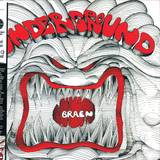
Filled with hypnotic bass lines, heavy drums and screaming fuzz guitars "Underground", the first LP of the fictitious group known as Braen's Machine, is one of the rarest and the most expensive of them all, always "reaching" sky high prices throughout the second hand vinyl market. A fast-beat jam with hammond scales and a twin lead guitar theme ("Flying") opens the A Side soon followed by "Imphormal", a classicfunk-beat-meetsfender- rhodes-and-psychedelic-guitar number. The music then switch to "thriller territories" with "Murder" which is based on prepared piano swells and a deeply hypnotic walking bass, reminiscent of the best Morricone's soundtracks for Dario Argento's movies. Two highly percussive songs complete the A Side: "Gap" is an improvised song with guitar and keyboards dwelling over an infectious drum rhythm while a marching snare and a vibraslap effect are the special features on "Militar Police".
The mood relaxes slightly on the opening of the B Side with a lazy jazz groove on "New Experience" but the rock influences are soon brought back on the following track "Fall Out". "Obstinacy" is all about keyboards with syncopated rhodes themes and distorted hammond sustained notes whilst the fuzz guitar is back again screaming through the left channel on the last song of the album, "Description". We could happly say that that was the golden age of the Italian music library. But who's behind the name "Braen's Machine" On the original cover the songs are credited to the composers Braen and Gisteri. Braen was a pseudonym often used by Alessandro Alessandroni, an extremely skilled and versatile musician, and one of Umiliani's closestcollaborators. He could write, conduct and arrange, he could sing (ever heard "Mah Na Mah Na"), he could whistle (ever heard Morricone's "For a fistful of dollars") and he could play almost anything: guitar, bass tuba, accordion, sitar and the list grows..... His first album "Alessandro Alessandroni e il suo complesso" (Sermi, 1969), had transformed the Italian library music from orchestral sound beds into the psychedelia we all love; the extremely fuzzy guitars are very "present" on "Underground" too. For a long time Gisteri's real identity was rather mysterious; often wrongly attributed to Umiliani. Gisteri was the pseudonym of Oronzo De Filippi, art name of Rino De Filippi, music supervisor to the Italian public broadcast company (RAI) between the '60s and the '70s. De Filippi composed other notable pieces such as "Riflessi" (Edipan, 1975) and "Nel mondo del lavoro" (Sermi, 1972).
De Filippi passed away few years ago but we were able to contact Alessandroni to talk about this LP. Remembering "Underground" recording session as one of the thousands he took part of, Alessandroni told us that this record was produced very quickly, in two days maximum. This was made possible by a team of wonderfully capable session musicians and the creative genius behind the mixing desk; this incredible combination helped to focus on the mood of each track even more. Unfortunately there are no liner notes but Alessandroni's memories and speculations, based on other music tracked in the same period at Soundworkshop by resident engineer Claudio Batussi, led us to identify this as the most probable lineup: Munari on drums, Majorana on bass, Vannucchi on keyboards and Alessandroni himself on guitar. For this reissue the sound has been restored and the cover art reproduced exactly as it was.
After releases on John Osbourne's label Tanstaafl BILL YOUNGMAN once again rips it off for Killekill with our catalog number 019.
From straight forward, hard hitting techno as in 'LEVITATE' he crosses over to the typical Youngman style 2-step/techno hybrid as in 'MAGNETIC'. Broken beats and playful me- oldies as in 'TEARDROP TURNS TO SOLID' are definitely not new to him, but the combi- nation of these two elements, as we find it here, definitely is. A beautiful masterpiece that works for the lonely hours as well as for the peaktime dancefloors.
TERRANOVA returns to the fore with the HEADACHE EP, another impressive assortment of floor-ready house weaponry - after the sublime sophistication of the PAINKILLER EP (KOMPAKT 262) and its accompanying remixes (FM X/PAIN 001), the new material shoves the pendulum back into more rugged club territory, showcasing the sort of sonic urgency and rawness the legendary project has become known for in the first place.
As missing links between the dystopian pop of TERRANOVA's turn-of-the-century work and the slick kinetic drama of their current incarnation on Kompakt, the three cuts of the HEADACHE EP congenially continue the multi-layered, nifty thrust of 2012's house nouveau epic HOTEL AMOUR (KOMPAKT 248 CD 95), but also manage to evoke the wonderstruck immediacy of an act burning through its first speakers. This becomes particularly manifest with the deployment of CATH COFFEY as vocalist for title track HEADACHE (also a primer for TERRANOVA's upcoming full-length). A member of iconic British rap outfit Stereo MCs in the early 90s and collaborator of Tricky, the singer was featured on TERRANOVA's initial outings and is a well-established presence in their early work. On the new 12", she reintroduces her unique brand of battle-hardened, deadpan soulfulness to the searing funk of the reinvigorated project.
HEADACHE, a cover of a song from Birmingham's iconic and controversial postpunk outfit The Au Pairs, as well as its instrumental sequel HEADLOCK are both fuelled by the propulsive beats and upscale hooks we've grown to expect from TERRANOVA, but there seems to be something else at work, too - a somewhat darker undercurrent that may or may not be part of the actual arrangement. In any case, this adds much-needed depth to today's dance floors, providing them with a riveting soundtrack for the most intense of prime times. There's no need for EP closer TOURETTE to hide behind its compatriots, either: it's a full-blown thrill ride in its own right, brimming with jittery sampling, arresting percussion and some pretty rad bassline abrasiveness thrown in for good measure. A well-placed shot at the dancer's solar plexus, this wraps up the HEADACHE EP nicely, giving players and punters another perfectly valid reason for post-apocalyptic celebration.
Hochwertiges Digi-Pack des Debut-Album !!!
A solitary shed by a lake. Surrounded by woods coated in ice. It's the deepest winter and the Pentatones quartet finds itself in the deserted nature of the Mecklenburg-Vorpommern County. They are searching for sounds pulsating beyond instruments and machines. Inaudible Music this is, made sound by them only. By night the four move over the frosted lake, play the clarinet and put themselves in a chilly trance. Months later they will remember dimly these moments in the woods and cast them atmospherically into their album debut 'The Devil's Hand' with icy romance. Highly attentive to details, they have worked on it for 3 years. Since 2006 the Pentatones tinker with their tessellate electroacoustic sound, in whose center the voice of singer Delhia de France is floating. To friends of club music she might be known from her collabs with techno producers such as Marlow, Douglas Greed or Robag Whrume. With the Pentatones she combines her emotional timbre in various forms with the raw basslines by Hannes Waldschütz and the analog and electronic beats and samples by Julian Hetztel a.k.a. Le Schnigg. Albrecht Ziepert creates melodic moods on the keys, whose appeal one can hardly elude. Their kaleidoscopic arrangements dance between susceptibility and experiment. Enticing pop structures melt with crackling analog electronics - a mixture laid out to make dance at times, at times to chill. The ambiance of her compositions is gloomy, yet light-flooded in a certain way. It is most notably Delhias voice, which outshines everything, never standing still, meandering and spinning, opening up a new emotional space with every breath. The computer with its infinite production possibilities is used in its function as another instrument. Together with the sampler it forms the center of action, processing everything, from voice to keys, which needs an artistic distancing effect. A contrabass is setting the pace at times, then again the brass accelerates the tracks highly emotively. In stylistic regards their compositions are never predictable. A touch of organic jazz here, a subtle hip-hop allusion there, accompanied by a moving club rhythm structure and Delhias captivating voice, which sings, then talks, and whispers in the next moment.
It's not only the infinite world of sound, which inspires them to their adventurously twisted compositions. For all members being equally active in the visual field, art plays an important role in the act of creating and in the overall concept of the Pentatones. This is being reflected in their life shows, acknowledged with much applause on festivals like 'Sonne, Mond und Sterne', the 'Fusion Festival' or 'Ars Electronica'. When they sample themselves during their concerts, modify their sound in real time and vividly interpret their songs, Delhia dances audaciously in extravagant, self-designed costumes in haughty reserve and effuses eccentric pop magic. Sometimes she takes the megaphone and by hereby altering her voice, she infuses her music with another exotic tone. With their self-produced videos the Leipzig residents by choice create an artistic universe, which stages the dramatic lyrics of the lead singer in a sublime way. After all they see themselves as an artificial band, operating beyond the conventional patterns of presentation, bypassing intuitively and creatively common pop stereotypes. Twisted-Pop which gets straight under your skin, without ever grooving streamlined. You can dance to it, lose yourself in it or step into new worlds. There is only one thing difficult to deal with after you enjoyed 'The Devil's Hand' and that's to release yourself from its overwhelming emotional impact.