Suche:work hard play hard

Styles
Alle
Evil Blizzard - Death Songs and Lullabies LP
  • 1: Off With Their Heads
  • 2: Down Down Down
  • 3: Black Square
  • 4: Wake The Dead In Bedlam
  • 5: Questions // Answers
  • 6: Four Letter Words
  • 7: Hater Creator
  • 8: Warpaint

With multiple bass players (at one point eight of them) and an array of rubber masks that give both children and adults sleepless nights, somehow, against all the odds, Evil Blizzard are set to release their fifth studio album of nightmare inducing noise and visuals. Titled, the new album sees Evil Blizzard pushing the boundaries further afield from their early sound of 'multiple bass psych', seeing elements of dub, krautrock and goth to provide a much more Post Punk vibe than previous work. Reference points were 'Metal Box', 'Ritual De Lo Habitual', Can and Discharge (whose singer JJ joins the band on the track 'Wake The Dead In Bedlam') as well as the omnipresent Hawkwind, Stooges and Sabbath vibes. By far the band's most stylistically varied and challenging album and yet their most cohesive body of work since their critically acclaimed second album 'Everybody Come To Church'. As well as their trademark 'multi bass onslaught', this album sees sequencing, sampling and even the use of string instruments made from bone.

Recorded between September and November 2025 at Rock Hard Studios, Blackpool, improvised sessions were edited down into more 'song' structures, then reworked into the final pieces. "Recording this was the hardest work we've done," claims Filthydirty. "Previously, we'd just turn up, turn up louder, press record and sieve through the debris and call it 'an album'. On this album we only had two, maybe three tracks that were finished when we went in, and the rest were worked out in reverse; ploughing through improvisations and jams and seeing what actually had any bones or gristle to work with. “Consequently, we had the time and focus to reappraise what we'd done in the past, highlight what we'd done right and realise where perhaps self-indulgence or lack of focus were overlooked instead of time or budget restraints, he continues. “The result is an album that reflects all our record collections. Lyrically it's been impossible to not absorb the chaos and anger transmitting on every news channel recently, and while we'd never write specifically about a certain issue or matter, the shitshow that is the 2020's definitely made its mark or our thinking.

vorbestellen01.05.2026

erscheint voraussichtlich am 01.05.2026

23,49
BAHAMADIA - KOLLAGE

BAHAMADIA

KOLLAGE

12inchBEWITH166LP
Be With Records
01.05.2026out soon

Bahamadia’s 1996 debut album Kollage is rightly regarded as one of the greatest rap albums of the 1990s. For the first time ever, Be With present the definitive double LP version of this eternal hip-hop classic, including the legendary "Path To Rhythm" which never appeared on the original LP or on vinyl, anywhere. An indelible VIBE from start-to-finish, Kollage presents Bahamadia's swirling rhymes delivered with an irresistibly butter flow and razor-sharp assuredness over a steady slew of smoothed-out, jazzed-up, blunted beats. Achingly cool and effortlessly funky throughout, it's an absolute must for true 90s hip-hop fanatics.

The entire Kollage project was recorded at D&D Studios and the ties to Gang Starr are keenly felt, with DJ Premier producing five tracks in addition to the killer songs Guru had already produced with her. Working with the cream of the mid-90s East Coast sound, Kollage is, accordingly, a record that demonstrates a varied musical taste with disparate influences, as Bahamadia has previously stated: “The title Kollage was a reflection of my state of mind. I first got interested in music from playing my parents’ and grandparents’ records, as well what I heard on the radio. I wanted Kollage to reflect that diversity both lyrically and sonically."

With intelligent, poetic lyricism and a laconic verbal style bursting with both warm texture and deceptive energy, Bahamadia’s flow was as inspired by Aretha and Nancy Wilson as it was Q-Tip, Schoolly D and Lady B. Swaggering out the gate, "WordPlay" finds Bahamadia confidently showcasing her considerable old-school battle-rhyme skills over a Guru beat that utilises an infectiously bouncy bassline with splashes of sultry jazz horns and a Jeru vocal snatch for the hook. Up next, the quietly shimmering and ruggedly beautiful "Spontaneity" is one of the most alluring on the record, Da Beatminerz crafting a brilliantly soulful and jazzy soundscape for Bahamadia's effortless vocals to float across. It's followed by "Rugged Ruff", where the rapper carefully constructs a swift off-beat flow over Premier's raw jazzy fire.

With smooth spacey synth vibes overseen by former Geto Boys producer N.O. Joe, "I Confess" is, without question, a fly love song and soothing (p)-funk groove. "UKNOWHOWWEDU" is an airy, chilled tribute to her hometown. Produced by Ski Beatz & DJ Redhanded, it rides a gloriously mellow break. It's a true Philly anthem, shouting out a who’s who of the entire city’s scene. Early banger "Total Wreck" follows, presenting a murky Guru instrumental elevated by jazzy horns. Bahamadia invokes the title's suggestion, firing her brilliant bars more aggressively than we’re accustomed to. More Beatminerz-brilliance comes in the way of "Innovation", an opportunity for the MC to invoke Freestyle Fellowship in her forward-thinking and literary verses. "Da Jawn" features hometown buddies The Roots, with Black Thought gliding into a back-and-forth with Bahamadia over ?uestlove’s warm, snapping percussion. With the strut club banger "True Honey Buns (Dat Freak Sh*t)", DJ Premier provides some laidback vibrant boom bap for Bahamadia to share a wild, cautionary tale about a night out with her girl, Kia.

Fan favourite "3 Tha Hard Way" is a hypnotically sinister cut, with Bahamadia, K-Swift and Mecca Star taking star turns to coast over DJ Premier’s raw beat whilst the tender "Biggest Part Of Me" is a heartfelt stunner dedicated to her son. Incredibly, only the European and Japanese CD versions of Kollage was released with the brilliantly breezy “Path To Rhythm”, featuring Ursula Rucker. Whilst ostensibly a "bonus track", it's anything but, to our ears. Very much in sonic conversation with KRS-One's stretched-out sleeper classic "Higher Level", it's absolutely essential so we had to include it, appearing on wax for the first time here, exclusively. Quite a coup.

Somewhat predictably, whilst Kollage was released to significant critical acclaim, it suffered from disappointing sales. In the intervening years - and for far too long - it was a criminally underrated record, an increasingly hidden gem. We hope this double LP reissue - which looks and sounds amazing - will go some way to correct this. This 2024 Be With double LP re-issue has been mastered for vinyl by Simon Francis, cut by Cicely Balston and pressed at Record Industry. It's too bold and beautiful to remain overlooked and underserved.

vorbestellen

Der Artikel ist noch nicht erschienen. Du kannst den Artikel jetzt vorbestellen, dieser ist nach Wareneingang für dich versandbereit.

28,36
Skylar Spence - Prom King LP 2x12"

Skylar Spence

Prom King LP 2x12"

2x12inchCAK107X
Carpark Records
01.05.2026out soon
 
11

When Ryan DeRobertis announced the name change of his project from Saint Pepsi to Skylar Spence, there was no indication of any stylistic departure, though the change arrived with a musical shift toward faster tempos and more pristine production. Whereas Saint Pepsi had often used decades-old boogie, disco, and new wave as grist for the sampling mill, Skylar Spence is intent on trafficking more overtly in those genre aesthetics through his own production techniques and vocal contributions. With Prom King, DeRobertis reorients his music for his new full-band live act and winds up with an album full of tight and enveloping dance tunes.

Working with Carpark Records 'gave me the confidence to 'go big' with the new material: to write pop songs with universal messages in the sonic wrapping paper that I've grown accustomed to,' DeRobertis says. 'A few songs on Prom King are about specific events in my life—a party where I got too messed up, watching a friend's life spiral out of control and trying to help—but I tried hard not to be too autobiographical because I want my music to unite, above all else. I'm much more interested in connecting with the listener than mystifying my personality.'

While DeRobertis' previous long-players have been more amorphous collections in the style of beat tapes, Prom King is compact and cohesive, with the album's varied stylistic references (new wave, UK garage, boogie) united through strong guitar melodies and Todd Edwards-ian cobblings-together of tiny vocal samples. 'I slowed some music down and called myself an artist,' DeRobertis sings on lead single 'Can't You See,' acknowledging in his lyrics what is already apparent in the music's tone—he can maintain fidelity to his vision while working in more uptempo, disco-based song structures.

'Ridiculous!' and 'Bounce Is Back' are big groovers that capitalize on jacking hi-hats and hand drumming, respectively, and both have an air of Balearic warmth and smoothness. On the title track, DeRobertis entwines a chorus of unintelligible but expressive samples with his own vocals—what feels like a synthesis of two approaches—and the result is an affecting pattern of build and release. More contemplative sophisti-pop numbers like 'Fall Harder' and 'Affairs' add a realist's breadth of scope: thoughts of past foibles bleed into present-dwelling and dancing.

Prom King is DeRobertis making sense of missed opportunities. His high school did not have a prom king; he has filled the position with an imaginative album of personal and musical revisionism.

vorbestellen

Der Artikel ist noch nicht erschienen. Du kannst den Artikel jetzt vorbestellen, dieser ist nach Wareneingang für dich versandbereit.

28,36
Hekt - Forever LP

Hekt

Forever LP

12inchNMBRS82
Numbers
01.05.2026out soon
 
5

Hekt's debut album Forever is released 1st May 2026 on Numbers, with the first single "Someday" featuring Valeria Litvakov out now.

Made with his friends Henriette Motzfeldt & Catharina Stoltenberg (solo and together as Smerz), Copenhagen-based composer/producer Fine Glindvad (who records as Fine), and Valeria Litvakov, Forever is built around juxtaposition: pop and bass brushing shoulders with dopamine fueled EDM. The record is a funhouse of mirrors where polystyrene arpeggios skitter underneath uplifting chords.

As Hekt describes the record: "Forever is desire and digital synthesis, car rides and lingering perfume. It’s missing someone who was never really there, holding on to something you didn’t want in the first place. The songs you hear when you’re falling in love on the dancefloor, and the songs you hear when you open your eyes and realize it’s just you alone with the DJ, the last one to leave. Songs to make out and break up to. A party so good you get depressed it can’t last forever."

Forever is a continuation of Hekt's work exploring the emotional core of pop music. "Someday" is the soundtrack to a hundred imagined futures with strangers in the club, as pristine arps and heartswelling chords skitter under Valeria Litvakov's ruminations, both lovestruck and terrified. Smerz add a level of fantastic to the slanted otherworldly pop of "Up in the Air, So" and "Forever." On both tracks, the melodies are squishy and impressionistic, the sound of all those memories we make in dance floors, taxis home, and in the blurry morning sunshine as we adjust to reality.

And while guest vocalists abound on Forever, Hekt also takes a turn at the mic himself. On "Without You" he shakes up a perfectly mixed cocktail of melancholy and beauty. And on "Promise" his voice is turned into another melodic accent against the fragile IDM sound design. Elsewhere he turns up the aggro. Dueting with Catharina Stoltenberg on Boys Noize's secret weapon, "Anytime Anywhere," the two trade bars across a compressed field of static and feedback while little hints of sub and wiry synths circle the edge of the stereo.

Hekt's music has always attempted to redefine what club music can and might be. This reimagining of the very basic building blocks of the dance floor is felt across Forever where he leans into the emotions of 2010s EDM. "What I loved about hardstyle and jumpstyle was the emotional intensity that kind of music can bring if you’re in the right setting. And I think that is what has stuck with me from EDM too. Emotional intensity," he explains. "It’s just been the soundtrack to some of the most fun moments in my life." On "But I Can't Really Show You," he compresses the EDM-era into 3-minutes. Vocal catharsis, dubstep womp, and soaring chords make it sound like the entirety of Tomorrowland being processed through MAX/MSP. This Skrillex-meets-Calvin Harris colossus is designed to destroy every sub woofer as it pulls on every last heart string.

And then there are the straight-up club stompers. "Baby" is UK club music reimagined with the steely lines of Danish modernism - think DJ Q going b2b with Errorsmith. It has a bassline made out of flubber with a vocal chopped beyond recognition as it bounces across chromatic synth lines. Even when he strips things down on the slinky garage-esque "Big Things," there are still unexpected twists and turns. The melody sounds like an Ibiza House compilation played in reverse, alongside drums that swing in and out of psilocybin bleeps and bloops. On other tracks like "Dream" and "You Won't Believe," the tropes of dance musics past, present, and future are dissolved in baths of synthesis and polished sound design.

Forever is a record where club music and Scandinavian EDM seamlessly mixes into avant-garde pop. Hekt has crafted singular and unclassifiable love songs alongside effortless bangers, making an ode to those eternal dance floor moments where time stops and you start hoping for something big.

vorbestellen

Der Artikel ist noch nicht erschienen. Du kannst den Artikel jetzt vorbestellen, dieser ist nach Wareneingang für dich versandbereit.

22,27
Flaer - Preludes LP

Flaer

Preludes LP

12inchODA01FT
ODDA Recordings
24.04.2026

Artist and multi-instrumentalist Flaer looks to the landscape to explore pastoral melancholy on debut release, Preludes. It is released in a second edition black vinyl, with an alternate cover artwork.

Ensconced in his family home in rural Leicestershire in the early months of 2020, painter and musician Realf Heygate (b. 1994) picked up his childhood cello for the first time in several years and began to play. Setting himself parameters to only record onto 4-track tape with acoustic instruments – cello, piano and acoustic guitar – he assembled a suite of instrumental compositions that form the basis of Preludes, his debut album as Flaer and the inaugural release on Odda Recordings.

Channelling the tension and unease between the pastoral idyll of the English countryside and the darkness which lurks beneath the surface, the mini-album draws inspiration from the analogue aesthetic of 1970s folk horror films, weaving field recordings of birdsong, church bells and the natural environment into chimerical melodies that reflect on Heygate’s childhood experiences of rural England.

“It was really important not to isolate the sound from its environment,” he explains, describing the compositional and recording process as “site-specific”. Developed over a series of intuitive musical enquiries, the mini-album’s uncanny quality emerges from combining raw demo takes with overdubs of almost orchestral grandeur.

Heygate points to the final track as indicative of the work as a whole: “‘Follow’ really is the mantra for the release and embodies the practical approach I was taking to music making: not to force the music but see where it takes you.”

As a painter, Heygate’s practice takes artefacts through sequences of reproduction that embrace the fluctuating materiality of the copy. Since obtaining a degree in Fine Art from Central Saint Martins in 2017, he has exhibited solo at Peter von Kant and Springseason galleries in London, and has participated in group shows at Saatchi Gallery, Cob Gallery and Senesi Contemporanea.

Describing his artistic practice as one of self-erasure, music instead provides Heygate with a more personal and autobiographical outlet. Where the two worlds combine is on Preludes’ striking artwork, which features paintings of 13th century stone carvings from the font of the church in the town where he grew up.

Speaking to a time where people were connected to the land in a more profound way, each symbol is assigned to a track on the album, which Heygate likens to giving them a title.

“To add that one juxtaposition might open a whole new interpretation or language that might be hard to find otherwise,” he explains.“Over time it might reveal itself to you, which is why I'm excited about it being released. To throw them out there and see what comes of it.”

vorbestellen24.04.2026

erscheint voraussichtlich am 24.04.2026

24,58
THE EASTERN DARK - Johnny And Dee Dee / Julie Is A Junkie 7"
  • A1: Johnny And Dee Dee
  • B1: Julie Is A Junkie

To commemorate the 40th Anniversary of the passing of James Darroch, singer/songwriter/guitarist for Sydney's incredible The Eastern Dark, Grown Up Wrong! is thrilled to announce a long-awaited reissue of the band's classic single "Julie Is A Junkie/Johnny and Dee Dee".

Heavily influenced by the Ramones - the band opened their first live show with 'Blitzkrieg Bop' and from then on opened with a new Ramones song every time they played, working through the band's complete catalogue in chronological order - as all manner of hyper-melodic and high energy rock. The Eastern Dark were a classic trio powered by former Celibate Rifles bassplayer James Darroch's blazing guitar and anchored by former Lime Spiders backing vocalist Bill Gibson's hard driving and melodic bass playing (and supreme backing vocals) and Geoff Milne's untouchable beat keeping. They set Sydney's Radio Birdman influenced scene alight in 1984 and quickly built an international following on the back of their classic single. Sadly, just hours after completing what would become their next release - the mini-LP "Long Live the New Flesh" - the band's life, and that of 26-year old James Darroch, was brutally ended in a road accident whilst the band was on its way to Melbourne.

On the back of the tragedy, the band's music lived on and it's global impact was reflected in the influence it bore on numerous bands, from Boston's the Lemoneads to Tokyo's Teengenenete, and obviously a succession of Australian bands from the Hard-Ons through to God and the Meanies and beyond.

After years of searching, surviving members Bill Gibson and Geoff Milne recently found the single's original multi-track tapes, and for the new release, the original recordings have been both remixed and remastered for maximum impact under their supervision.

vorbestellen17.04.2026

erscheint voraussichtlich am 17.04.2026

14,71
SNOCAPS - SNOCAPS

Snocaps

SNOCAPS

12inch281531
ANTI
17.04.2026
  • Coast
  • Heathcliff
  • Wasteland
  • Brand New City
  • Hide
  • Cherry Hard Candy
  • Avalanche
  • Doom
  • Over Our Heads
  • Angel Wings
  • Don't Want To
  • You In Rehab
  • Coast Ii
auch erhältlich

BLUE COLOURED EDIT[24,79 €]


Allison and Katie Crutchfield have formed a new band called Snocaps. Their 13-track debut album, released digitally as a surprise, will be made available on April 17, 2026 in vinyl & CD formats. An indie-rock record that recalls Allison"s band Swearin" and Katie"s early records as Waxahatchee, Snocaps was born out of the twin sisters" desire to work on music together as they had in their teens and twenties. Allison and Katie are backed by friends and close collaborators Brad Cook and MJ Lenderman. The album was produced and almost entirely engineered by Cook, and all four musicians play multiple instruments across the record. After a handful of shows at the end of 2025, Snocaps will be put on ice for the foreseeable future, although, as Katie says, "Allison and I have been, in some way, shape or form, doing this together for over 20 years," so it is practically a given that they will work together on music at some point again in the future.

vorbestellen17.04.2026

erscheint voraussichtlich am 17.04.2026

22,27
SNOCAPS - SNOCAPS

SNOCAPS

SNOCAPS

12inch281535
ANTI
17.04.2026

Allison and Katie Crutchfield have formed a new band called Snocaps. Their 13-track debut album, released digitally as a surprise, will be made available on April 17, 2026 in vinyl & CD formats. An indie-rock record that recalls Allison"s band Swearin" and Katie"s early records as Waxahatchee, Snocaps was born out of the twin sisters" desire to work on music together as they had in their teens and twenties. Allison and Katie are backed by friends and close collaborators Brad Cook and MJ Lenderman. The album was produced and almost entirely engineered by Cook, and all four musicians play multiple instruments across the record. After a handful of shows at the end of 2025, Snocaps will be put on ice for the foreseeable future, although, as Katie says, "Allison and I have been, in some way, shape or form, doing this together for over 20 years," so it is practically a given that they will work together on music at some point again in the future.

vorbestellen17.04.2026

erscheint voraussichtlich am 17.04.2026

24,79
Various - Tchic Tchic: French Bossa Nova 1963-1974  Colored Edition LP 2x12"
  • A1: Les Masques - Il Faut Tenir (1969)
  • A2: Isabelle Aubret - Casa Forte (1971)
  • A3: Christianne Legrand - Hlm Et Ciné Roman (1972)
  • A4: Jean Constantin - Pas Tant D'chichi Ponpon (1972)
  • A5: Billy Nencioli & Baden Powell - Si Rien Ne Va (1969)
  • B1-: Marpessa Dawn - Le Petit Cuica (1963)
  • B2: Jean-Pierre Sabar - Vai Vai (1974)
  • B3: Sophia Loren - De Jour En Jour (1963)
  • B4: Isabelle - Jusqu’à La Tombée Du Jour (1969)
  • B5: Sylvia Fels - Corto Maltesse (1974)
  • C1: Frank Gérard - Comme Une Samba (1972)
  • C2: Ann Sorel - La Poupée Des Favellas (1971)
  • C3: Charles Level - Un Enfant Café Au Lait (1971)
  • C4: Andrea Parisy - Les Mains Qui Font Du Bien (1970)
  • C5: Audrey Arno - Quand Jean-Paul Rentrera (1969)
  • C6: Aldo Frank - T’as Vu Ce Printemps (1970)
  • D1: Christianne Legrand - Cent Mille Poissons Dans Ton Filet (1972)
  • D2: Clarinha - Lemenja (1970)
  • D3: Hit Parade Des Enfants - Aquarela (1976)
  • D4: Jean-Pierre Lang - Tendresse (1965)
  • D5: Magalie Noël - Une Énorme Samba (1970)
  • D6: Françoise Legrand - La Lune

Ever since the late 1950s bossa-nova revolution, Brazil’s influence on French music has been undeniable. Pierre Barouh, Georges Moustaki and a vast array of lesser known artists, all made the Musica Popular Brasileira (MPB) an axis of promotion at the service of a cool and metaphysical, modern and mixed Brazilian lifestyle. Some were seduced by the poetic languors of the bossa, some were looking for fun, and others just loved the American hybridization of jazz-bossa, jazz-samba.


What is bossa nova? One of its creators, Joao Gilberto said: "Its style, cadence, everything is samba. At the very start, we didn't call it bossa nova, we sang a little samba made up of a single note - Samba de uma nota so .... The discussion around the origins of bossa nova is therefore useless”. It is nevertheless useful to remember that these magnificent Brazilian songs, which the guitarist describes as samba, were shifted and balanced around improbable chords. "I like things that lean, the in-betweens that limp with grace," said Pierre Barrouh, quoting Jean Cocteau.


With emotion, arrangements for violin and supple guitar licks, bossa nova rapidly changed. A transformation that can be heard in the Tchic, tchic, French Bossa Nova 1963-1974 compilation, the result of a cultural reappropriation, which traveled through the United States and supplemented itself in France.

A musical revolution that has remained significant, bossa nova was born in Rio. From 1956 to 1961, Brazil lived through its golden years. In five years, the country had invented its modernist style. Elected president in 1956, Juscelino Kubitschek de Oliveira, an elegant man with a broad forehead, brandished a promising slogan: "Fifty years of progress in five years". He quickly got to work. Not worried about increasing debt, he launched the project for a new federal capital, Brasilia, designed by the communist architect Oscar Niemeyer. Volkswagen opened state-of-the-art factories and created the “fusquinha”, the Beetle. In Rio, the Vespa made its first appearance. The Arpoador Surf Club crew run into the “girl” from Ipanema, Helô Pinheiro - the tanned garota ("chick"), between a flower and mermaid, who at 17 walked by the Veloso bar, where the fiery author and composer, Tom Jobim and Vinicius de Moraes, were getting drunk on whiskey. From then on, bossa symbolized cool.

In 1958, Joao Gilberto recorded Chega de Saudade, which the directors of Philips denied, calling it "music for fagots". The marketing director, who believed in it, secretly pressed 3000 78-inch vinyls and distributed them at schools around Rio, creating a tidal wave.

American jazzmen then took over. In particular, trumpeter Dizzy Gillespie and guitarist Charlie Byrd. In November 1962, the Brazilian Ministry of Foreign Affairs funded a "Bossa-Nova" concert at Carnegie Hall in New York, inviting the genre’s pioneers. Unprepared, the show soon turned to disaster. But the troupe was invited to the White House by Jackie Kennedy. The first lady loved "the new beat" and in particular Maria Ninguem, a song by Carlos Lyra, later covered by Brigitte Bardot.

In Brazil, the 1964 military coup quickly ended this euphoria. The destructive atmosphere that ensued pushed many Brazilian musicians to leave, if not to exile. Thus, Tom Jobim, Sergio Mendes and Joao Gilberto arrived to the United States. In New York, Joao Gilberto met saxophonist Stan Getz. At the time, he was married to the Bahianese Astrud Weinert Gilberto, who had a German father. She had never sung before, but she knew how to speak English. Getz therefore asked her to replace her husband on The Girl From Ipanema. The Getz/Gilberto record with Tom Jobim on piano, was released in March 1964. Phil Ramone, the "pope of pop" was in charge of sound.

Bossa nova arrived in Paris through the classic “guitar-voice” channel (Pierre Barouh, Baden Powell, Moustaki…) But France loved jazz and Paris had already welcomed its American contributors. All these good people were to pass through Saint-Germain-des-Prés. The cabaret l'Escale became the Mecca of Latin American sound where one could find Pierre Barrouh and his friends, such as the Camara Trio, samba-jazz aces, whose only record was published by the Saravah label. With a band strangely called Les Masques (a band that included Nicole Croisille and Pierre Vassiliu, among others), the Camara Trio recorded an interesting Brazilian Sound, including the track Il faut tenir which is present on this tasty compilation of rarities.

Other enlightened musicians can also be found on the compilation, such as Jean-Pierre Sabar (songwriter for Hardy, Auffray, Leforestier ...) and the French pop rock organist Balthazar. In 1975, Sabar recorded Aurinkoinen Musiikkimatka on a Finnish label, which featured the crazy Vai, Vai, included on this record. We are now following the footsteps of Brazilian electronic musicians such as Sergio Mendes, Eumir Deodato or Marcos Valle who created funk and disco sounds on their keyboards and synthesizers. A style that influenced Véronique Sanson when she wrote Jusqu’à la Tombée de la nuit in 1969 for Isabelle de Funès, the niece of Louis and a great friend of Michel Berger - Sanson did end up singing this track on her 1992 Sans Regret record.


The pinnacle of exoticism and travel, Sylvia Fels’ Corto Maltese includes bongos, sea mist and ocean sounds. The title was taken from Jacky Chalard’s concept album written in 1974, Je suis vivant, mais j’ai peur (I am alive, but I am scared), based on Gilbert Deflez’s science fiction novel.


However, bossa nova extended the scope of popularity. "In the 1970s, I was a fan of Sergio Mendes, Getz / Gilberto. I fell in love with this music that I knew because I had been an orchestral singer, " explained Isabelle Aubret, who in 1971 delivered a composite record of covers by the very funky Jorge Ben, Orfeu Negro, Tom Jobim, Vinicius de Morais and Jean Ferrat. "I recorded this album for Meys Records in Paris, far from Brazil, with wonderful musicians, François Raubert, Roland Vincent, Alain Goraguer...". The latter wrote the arrangements for Casa Forte, a very percussive title borrowed from Edu Lobo, one of the initiators of the bossa who spent time in California. "Jazz and bossa came together and produced very rhythmic music. I love singing, it allows me to dream, to have fun, to feel a high on stage, and these songs brought me joy, made me swing, my singing felt like a dance.”


The world tours of French singers and their desire for the tropics, often brought them to Rio with its hills, forests, caipirinhas and tanned bodies. There are surprises though, like this Iemenja (Iemenja is the goddess of the sea in the Afro-Brazilian candomblé religion). Not unlike the composer and musician Jean-Pierre Lang, based in Sao Paulo, Claire Chevalier taught Brazil to Brazil. In 1970, the singer and painter published a 45-inch vinyl, Mon mari et mes amants (My husband and my lovers), under the improbable pseudonym of Clarinha (little Claire). She was then living in Rio, with her husband, Joël Leibovitz, who founded a band called Azimuth, and who owned a record label specialized in "sambas enredos" songs for samba school parades.


For its B side, she asked Pierre Perret to come up with lyrics for a song composed by Carlos Imperial: "Oh goddess of the sea, o goddess Iemenja, I bring a white rose to adorn your long hair ..." . "Perret came to see us, and we had fun, remembers Joël Leibovitz. We wrote Lemenja for fun, we recorded it at the Havaí studio, behind the Central do Brasil the central station. Erlon Chaves, the arranger who worked with Elis Regina, joined us" adding his share of Afro-Brazilian percussions and funky brass to the mix.

There is a common misunderstanding in Franco-Brazilian history: that bossa, admittedly hedonistic, is perceived as funny, even though the poets who wrote the texts are often philosophizing on the human condition. Its French interpreters pull it towards a carnival inspired universe, far removed from its fundamental essence. Thus, Jean Constantin covered the famous Samba da minha terra, an ode to the art of samba written by the classic Bahian composer Dorival Caymmi, renaming it with the enticing title of Pas tant de tchi tchi pompon: "On your pier there is no tchi tchi / when you arch your back, you know everything is alright ”(lyrics by Gérard Calvi). This expedited bossa aims for the absurd, but retains a certain elegance.

Indeed, Jean Constantin was not an idiot, the rather large man had a huge mustache and liked fantasy, (Les pantoufles à papa, Le pacha, inspired by cha-cha-cha-cha, salsa and jazz) but he was also the lyricist of Mon manège à moi interpreted by Edith Piaf, the composer of Mon Truc en plume by Zizi Jeanmaire and the soundtrack of François Truffaut’s 400 Blows. Le Poulpe, published in 1970, from which this bossa is extract, was arranged by Jean-Claude Vannier, an accomplice of Serge Gainsbourg’s Melody Nelson. In short: "There is enough of samba / By looking at the parasol / Because my poor cabeza / Is going to die in the sun".

Even the American actress Marpessa Down, who was at the heart of the bossa nova revolution with her role as Euridyce in Marcel Camus’ film Orfeu Negro, winner of the 1959 Cannes Palme d'or, fed the clichée with Je voudrais parler au petit cuica - "Tell me how you manage to always make people want to dance / It's true, I must admit that I cannot resist your magic" - in consequence, once can hear the cuica, a little drum inherited from the Bantu.


But bossa nova had many angles. Societal, of course, pushing actresses who were symbols of women's liberation like Brigitte Bardot, Jeanne Moreau, or Sophia Loren to engage in the exercise of accelerated bossa. In February of 1963, Sophia Loren made a record in French in Rome, Je ne t'aime plus, featuring the song De jour en jour, a bossa written by two Italians, Armando Trovajoli and Tino Fornai, which was released a little later by Barclay. Bossa accompanied the 1960s, a decade of moral liberation. Ann Sorel, who interpreted La Poupée des favellas, caused a sensation with L’amour à plusieurs, a provocative song written by Frédéric Bottom and Jean-Claude Vannier. As for the actress Andrea Parisy, she displayed her bourgeois cheekiness in Marcel Carné's Les Tricheurs before interpreting Les mains qui font du bien. And Magalie Noël, the friend of Boris Vian, who sung Johnny fais-moi mal, was hired to sing Une énorme Samba, composed by Alain Goraguer (arranger to Gainsbourg, Bobby Lapointe and Jean Ferrat) with lyrics by Frédéric Botton.

But in the end, of what wood is bossa nova made of? The answer is given by Christianne Legrand, daughter of Raymond the conductor, and sister to Michel the composer: "With me, with jà" - jà means "immediately" in Portuguese. In 1972, the singer, an expert in vocal jazz and a member of the Double Six, published Le Brésil de Christianne Legrand. Two songs included on the Tchic Tchic compilation that demonstrate how bossa, jazz, funk, rock, etc. work like a swiss army knife: the music is used to denounce broken systems, or miracles, HLM et ciné roman, Cent mille poissons dans ton filet, two songs from the O Cafona soundtrack, a successful telenovela broadcast, at the time in black and white, on TV Globo. The first was adapted in French by the fighter and friend of the Legrand tribe, Agnès Varda. The second is content with a play on words, jostling them into a summer fun.


Véronique Mortaigne

vorbestellen17.04.2026

erscheint voraussichtlich am 17.04.2026

27,31
Morita Vargas - III

“III” is an intimate, cinematic and dream-like body of work — written, produced and mixed by Morita Vargas, and recorded in Buenos Aires between 2014 and 2025. The album was mastered by Rafael Anton Irisarri at Black Knoll Studio (NY), adding depth and clarity to its carefully built sonic landscape.

The visual world of the record is an essential part of the release. The cover artwork was crafted by Juliana Guglielmi, Ariadna Aylen Barrios, and Noelia Garreffa, whose combined vision creates a unified visual narrative that reflects the album’s emotional depth and atmospheric essence. The LP layout and full manufacturing realization were carefully executed by Ilja Tulit, translating the complex design ideas into their final tangible form of a vinyl release.

“III” marks a special release for Hidden Harmony Recordings. Morita Vargas was among the first artists released when the label began in 2020–2021, and her work played an important role in shaping the spirit and direction of Hidden Harmony.

vorbestellen17.04.2026

erscheint voraussichtlich am 17.04.2026

27,52
Cousin Feo & Dre Mendoza - Provoleta - 5th Anniversary’ LP

BLUE & WHITE COLOUR IN COLOUR VINYL

In the culinary arts, it’s easy to overcomplicate the final product. Theme, presentation, texture…they’re important but should work to complement the raison d'etre of any food. At the end of cooking a dish, it should taste good and feed people. Some dishes, like barbeque or provoleta, resist the tendency towards hollow showmanship. One of their expressions can be more or less aesthetic, but the first purpose is to be simple and tasteful. Argentinian provoleta goes so far as to blur the line between ingredient and dish. It relies on the inherent flavor of provolone being heated at the right speed for the perfect amount of time. You can add garlic or chives or red pepper to the slice, but ultimately they serve to bring out an essence that’s already there.

Los Angeles’ Cousin Feo has developed his rapping acumen in the five years since releasing Provoleta, but returning to the project today shows that he always had the penmanship, grit and delivery that christens an emcee worthy of remembrance. Like the bubbles rising up in the appetizer that is the album’s namesake, Feo showed that true profundity is found in the simple gestures.

Since dropping the project in 2019, Cousin Feo has expanded his vision of a world where hip-hop and football, two proletarian art forms, mingle in creative and compelling ways. He has collaborated across multiple continents, chronicled football histories, aided in canonizing legends, kept the flames high in age-old rivalries and constantly forced his audience to search for the last time they heard bars this hard. In anyone else’s hands it would be too great a task.

The maturity he showed on Provoleta wasn’t nascent, it was an inherent quality forcing itself to the surface. The songs refract his experience as a working class Angeleno through the archetypes of Argentinian football legends. The kernel that unites the two worlds is hustle. When Feo was coming up, missteps had greater consequences than crashing out in the group stage and street deals had the weight of a Boca-River Plate match.

Each track uses slightly different ingredients to let Feo’s underlying talent shine. “Maradona” feels salvific, fitting for a football legend canonized from the Andes to the Alps and a Los Angeles rapper looking to inspire similar hope in the neighborhoods that raised him. On “Di Stefano” Feo massages the instrumental with the same composure of the late forward, until he pierces through the headphones like one of Di Stefano’s arrows. It’s also refreshing to hear a song celebrating Messi before his meme-ification, focusing on the universal truths contained in his footballing talent instead of using number 10 as a stand-in to make a point in a fruitless argument. And he still finds space to show deference to Batistuta, Kempes and other members of the Argentinian pantheon who’ve been erased from the popular imagination by the national team's contemporary success.

Real ones know that true players, true rappers, and true artists will always stand the attacks of time and consensus. In Provoleta’s first verse, Cousin Feo says he moves with the hand of God. Maybe one day he’ll tell the whole truth and let us know how he was able to wrestle the pen away too. Limited edition of 300 hand-numbered copies.

vorbestellen17.04.2026

erscheint voraussichtlich am 17.04.2026

30,67
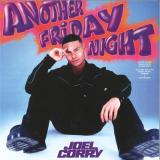
Joel Corry - Another Friday Night

Joel Corry

Another Friday Night

12inch5054197774058
Warner UK
14.04.2026

On 6th October, multi BRIT-nominated DJ/producer Joel Corry releases his debut album, ‘Another Friday Night’ via Asylum / Atlantic Records, with the pre-order going live on the 18th August.

To be released on both vinyl & CD, as well as via streaming/download, ‘Another Friday Night’ is a collection of Joel’s most iconic records of the last five years, including breakthrough hit ‘Sorry’, ‘Lonely’, multi-platinum UK #1 single ‘Head & Heart’ ft. MNEK, ‘BED’ w/ RAYE & David Guetta, ‘OUT OUT’ w/ Jax Jones, Charli XCX & Saweetie, plus fresh 2023 cuts like ‘Dance Around It’ with Caity Baser and the anthemic ‘0800 HEAVEN’ with Nathan Dawe & Ella Henderson, ‘Another Friday Night’ toasts a remarkable run of releases that’s seen Joel become one of the UK’s biggest and most impactful dance acts.

“My debut album ‘Another Friday Night’ is the biggest moment of my life”, says Joel Corry. “Everything I have dreamed about and worked so hard for has come together with the release of this record. It has been an incredible journey and I am so proud to have reached this moment in my career. I want the songs to make people feel good and bring happiness to their days, and the album includes everyone’s favourite bangers from over the years, as well as some really exciting new material. This is the ultimate Joel Corry playlist, perfect for Another Friday Night.”

Ahead of the release of ‘Another Friday Night’ on October 6th, Joel has also announced a special headline show at London’s Ministry Of Sound on Friday 29th September – his first London headline date since playing at former 5000-cap venue, Printworks, in autumn 2021.

Fans who pre-order ‘Another Friday Night’ will be granted early pre-sale access to tickets on August 24th, before general sale opens on August 25th

nicht am Lager

Bestelle jetzt und wir bestellen den Artikel für dich beim Lieferanten.

18,91

Last In: vor 19 Tagen
Guilty Razors - Complete Recordings 1977 - 1978

UILTY RAZORS, BONA FIDE PUNKS.


Writings on the topic that go off in all directions, mind-numbing lectures given by academics, and testimonies, most of them heavily doctored, from those who “lived through that era”: so many people today fantasize about the early days of punk in our country… This blessed moment when no one had yet thought of flaunting a ridiculous green mohawk, taking Sid Vicious as a hero, or – even worse – making the so-called alternative scene both festive and boorish. There was no such thing in 1976 or 1977, when it wasn’t easy to get hold of the first 45s by the Pistols or the Clash. Few people were aware of what was happening on the fringes of the fringes at the time. Malcolm McLaren was virtually unknown, and having short hair made you seem strange. Who knew then that rock music, which had taken a very bad turn since the early 1970s, would once again become an essential element of liberation? That, thanks to short and fast songs, it would once again rediscover that primitive, social side that was so hated by older generations? Who knew that, besides a few loners who read the music press (it was even better if they read it in English) and frequented the right record stores? Many of these formed bands, because it was impossible to do otherwise. We quickly went from listening to the Velvet Underground to trying to play the Stooges’ intros. It’s a somewhat collective story, even though there weren’t many people to start it.
The Guilty Razors were among those who took part in this initial upheaval in Paris. They were far from being the worst. They had something special and even released a single that was well above the national average. They also had enough songs to fill an album, the one you’re holding. In everyone’s opinion, they were definitely not among the punk impostors that followed in their wake. They were, at least, genuine and credible.

Guilty Razors, Parisian punk band (1975-1978). To understand something about their somewhat linear but very energetic sound, we might need to talk about the context in which it was born and, more broadly, recall the boredom (a theme that would become capital in punk songs) coupled with the desire to blow everything off, which were the basis for the formation of bands playing a rejuvenated rock music ; about the passion for a few records by the Kinks or the early Who, by the Stooges, by the Velvet mostly, which set you apart from the crowd.
And of course, we should remember this new wave, which was promoted by a few articles in the specialized press and some cutting-edge record stores, coming from New York or London, whose small but powerful influence could be felt in Paris and in a handful of isolated places in the provinces, lulled to sleep by so many appalling things, from Tangerine Dream to President Giscard d’Estaing...
In 1975-76, French music was, as almost always, in a sorry state ; it was still dominated by Johnny Hallyday and Sylvie Vartan. Local rock music was also rather bleak, apart from Bijou and Little Bob who tried to revive this small scene with poorly sound-engineered gigs played to almost no one.
In the working class suburbs at the time, it was mainly hard rock music played to 11 that helped people forget about their gruelling shifts at the factory. Here and there, on the outskirts of major cities, you still could find a few rockers with sideburns wearing black armbands since the death of Gene Vincent, but it wasn’t a proper mass movement, just a source of real danger to anyone they came across who wasn't like them. In August 1976, a festival unlike any other took place in Mont-de-Marsan – the First European Punk Festival as the poster said – with almost as many people on stage as in the audience. Yet, on that day, a quasi historical event happened, when, under the blazing afternoon sun, a band of unknowns called The Damned made an unprecedented noise in the arena, reminiscent of the chaotic Stooges in their early adolescence. They were the first genuine punk band to perform in our country: from then on, anything was possible, almost anything seemed permissible.

It makes sense that the four+1 members of Guilty Razors, who initially amplified acoustic guitars with crappy tape recorder microphones, would adopt punk music (pronounced paink in French) naturally and instinctively, since it combines liberating noise with speed of execution and – crucially – a very healthy sense of rebellion (the protesters of May 1968 proclaimed, and it was even a slogan, that they weren’t against old people, but against what had made them grow old. In the mid-1970s, it seemed normal and obvious that old people should now ALSO be targeted!!!).
At the time, the desire to fight back, and break down authority and apathy, was either red or black, often taking the form of leafleting, tumultuous general assemblies in the schoolyard, and massive or shabby demonstrations, most of the time overflowing with an exciting vitality that sometimes turned into fights with the riot police. Indeed, soon after the end of the Vietnam War and following Pinochet’s coup in Chile, all over France, Trotskyist and anarcho-libertarian fervour was firmly entrenched among parts of the educated youth population, who were equally rebellious and troublemakers whenever they had the chance. It should also be noted that when the single "Anarchy in the UK" was first heard, even though not many of us had access to it, both the title and its explosive sound immediately resonated with some of those troublemakers crying out for ANARCHY!!! Meanwhile, the left-wing majority still equated punks with reckless young neo-Nazis. Of course, the widely circulated photos in the mainstream press of Siouxsie Sioux with her swastikas didn’t necessarily help to win over the theorists of the Great Revolution. It took Joe Strummer to introduce The Clash as an anti-racist, anti-fascist and anti-ignorance band for the rejection of old-school revolutionaries to fade a little.

The Lycée Jean-Baptiste Say at Porte d’Auteuil, despite being located in the very posh and very exclusive 16th arrondissement of Paris, didn’t escape these "committed" upheavals, which doubled as the perfect outlet for the less timid members of this generation.
“Back then, politics were fun,” says Tristam Nada, who studied there and went on to become Guilty Razors’ frontman. “Jean-Baptiste was the leftist high-school in the neighbourhood. When the far right guys from the GUD came down there, the Communist League guys from elsewhere helped us fight them off.”
Anything that could challenge authority was fair game and of course, strikes for just about any reason would lead to increasingly frequent truancy (with a definitive farewell to education that would soon follow). Tristam Nada spent his 10th and 11th unfinished grades with José Perez, who had come from Spain, where his father, a janitor, had been sentenced to death by Franco. “José steered my tastes towards solid acts such as The Who. Like most teenagers, I had previously absorbed just about everything that came my way, from Yes to Led Zeppelin to Genesis. I was exploring… And then one day, he told me that he and his brother Carlos wanted to start a rock band.” The Perez brothers already played guitar. “Of course, they were Spanish!”, jokes their singer. “Then, somewhat reluctantly, José took up the bass and we were soon joined by Jano – who called himself Jano Homicid – who took up the rhythm guitar.” Several drummers would later join this core of not easily intimidated young guys who didn’t let adversity get the better of them.

The first rehearsals of the newly named Guilty Razors took place in the bedroom of a Perez aunt. There, the three rookies tried to cover a few standards, songs that often were an integral part of their lives. During a first, short gig, in front of a bewildered audience of tough old-school rockers, they launched into a clunky version of the Velvet Underground's “Heroin”. Challenge or recklessness? A bit of both, probably… And then, step by step, their limited repertoire expanded as they decided to write their own songs, sung in a not always very accurate or academic English, but who cared about proper grammar or the right vocabulary, since what truly mattered was to make the words sound as good as possible while playing very, very fast music? And spitting out those words in a language that left no doubt as to what it conveyed mattered as well.
Trying their hand a the kind of rock music disliked by most of the neighbourhood, making noise, being fiercely provocative: they still belonged to a tiny clique who, at this very moment, had chosen to impose this difference. And there were very few places in France or elsewhere, where one could witness the first stirrings of something that wasn’t a trend yet, let alone a movement.

In the provinces, in late 1976 or early 1977, there couldn’t be more than thirty record stores that were a bit more discerning than average, where you could hear this new kind of short-haired rock music called “punk”. The old clientele, who previously had no problem coming in to buy the latest McCartney or Aerosmith LP, now felt a little less comfortable there…
In Paris, these enlightened places were quite rare and often located nex to what would become the Forum des Halles, a big shopping mall. Between three aging sex workers, a couple of second-hand clothes shops, sellers of hippie paraphernalia and small fashion designers, the good word was loudly spread in two pioneering places – propagators of what was still only a new underground movement. Historically, the first one was the Open Market, a kind of poorly, but tastefully stocked cave. Speakers blasted out the sound of sixties garage bands from the Nuggets compilation (a crucial reference for José Perez) or the badly dressed English kids of Eddie and the Hot Rods. This black-painted den was opened a few years earlier by Marc Zermati, a character who wasn’t always in a sunny disposition, but always quite radical in his (good) choices and his opinions. He founded the independent label Skydog and was one of the promoters of the Mont-de-Marsan punk festivals. Not far from there was Harry Cover, another store more in tune with the new New York scene, which was amply covered in the house fanzine, Rock News (even though it was in it that the photos of the Sex Pistols were first published in France).
It was a favorite hang-out of the Perez brothers and Tristam Nada, as the latter explained. “It’s at Harry Cover’s that we first heard the Pistols and Clash’s 45s, and after that, we decided to start writing our first songs. If they could do it, so could we!”
The sonic shocks that were “Anarchy in the UK”, “White Riot” or the Buzzcocks’s EP, “Spiral Scratch” – which Guilty Razors' sound is reminiscent of – were soon to be amplified by an unparalleled visual shock. In April 1977, right after the release of their first LP, The Clash performed at the Palais des Glaces in Paris, during a punk night organised by Marc Zermati. For many who were there, it was the gig of a lifetime…
Of course, Guilty Razors and Tristam were in the audience: “That concert was fabulous… We Parisian punks were almost all dressed in black and white, with white shirts, skinny leather ties, bikers jackets or light jackets, etc. The Clash, on the other hand, wore colourful clothes. Well, the next day, at the Gibus, you’d spot everyone who had been at this concert, but they weren’t wearing anything black, they were all wearing colours.”

It makes sense to mention the Gibus club, as Guilty Razors often played there (sometimes in front of a hostile audience). It was also the only place in Paris that regularly scheduled new Parisian or Anglo-Saxon acts, such as Generation X, Siouxsie and the Banshees, the Slits, and Johnny Thunders who would become a kind of messed-up mascot for the venue. A little later, in 1978, the Rose Bonbon – formerly the Nashville – also attracted nightly owls in search of electric thrills… In 1977, the iconic but not necessarily excellent Asphalt Jungle often played at the Gibus, sometimes sharing the bill with Metal Urbain, the only band whose aura would later transcend the French borders (“I saw them as the French Sex Pistols,” said Geoff Travis, head of their British label Rough Trade). Already established in this small scene, Metal Urbain helped the young and restless Guilty Razors who had just arrived. Guitarist for Metal Urbain Hermann Schwartz remembers it: “They were younger than us, we were a bit like their mentors even if it’s too strong a word… At least they were credible. We thought they were good, and they had good songs which reminded of the Buzzcocks that I liked a lot. But at some point, they started hanging out with the Hells Angels. That’s when we stopped following them.”

The break-up was mutual, since, Guilty Razors, for their part, were shocked when they saw a fringe element of the audience at Metal Urbain concerts who repeatedly shouted “Sieg Heil” and gave Nazi salutes. These provocations, even still minor (the bulk of the skinhead crowd would later make their presence felt during concerts), weren’t really to the liking of the Perez brothers, whose anti-fascist convictions were firmly rooted. Some things are non-negotiable.
A few months earlier (in July 1978), Guilty Razors had nevertheless opened very successfully for Metal Urbain at the Bus Palladium, a more traditonally old-school rock night-club. But, as was sometimes the case back then, the night turned into a mass brawl when suburban rockers came to “beat up punks”.

Back then, Parisian nights weren’t always sweet and serene.

So, after opening as best as they could for The Jam (their sound having been ruined by the PA system), our local heroes were – once again – met outside by a horde of greasers out to get them. “Thankfully,” says Tristam, “we were with our roadies, motorless bikers who acted as a protective barrier. We were chased in the neighbouring streets and the whole thing ended in front of a bar, with the owner coming out with a rifle…”
Although Tristam and the Perez brothers narrowly escaped various, potentially bloody, incidents, they weren’t completely innocent of wrongdoing either. They still find amusing their mugging of two strangers in the street for example (“We were broke and we simply wanted to buy tickets for the Heartbreakers concert that night,” says Tristam). It so happened that their victims were two key figures in the rock business at the time: radio presenter Alain Manneval and music publisher Philippe Constantin. They filed a complaint and sought monetary compensation, but somehow the band’s manager, the skilful but very controversial Alexis, managed to get the complaint withdrawn and Guilty Razors ended up signing with Constantin with a substantial advance.

They also signed with Polydor and the label released in 1978 their only three-track 45, featuring “I Don't Wanna be A Rich”, “Hurts and Noises” and “Provocate” (songs that exuded perpetual rebellion and an unquenchable desire for “class” confrontation). It was a very good record, but due to a lack of promotion (radio stations didn’t play French artists singing in English), it didn’t sell very well. Only 800 copies were allegedly sold and the rest of the stock was pulped… Initially, the three tracks were to be included on a LP that never came to be, since they were dropped by Polydor (“Let’s say we sometimes caused a ruckus in their offices!” laughs Tristam.) In order to perfect the long-awaited LP, the band recorded demos of other tracks. There was a cover of Pink Floyd's “Lucifer Sam” from the Syd Barrett era – proof of an enduring love for the sixties’ greats –, “Wake Up” a hangover tale and “Bad Heart” about the Baader-Meinhof gang, whose actions had a profound impact on the era and on a generation seeking extreme dissent... On the album you’re now discovering, you can also hear five previously unreleased tracks recorded a bit later during an extended and freezing stay in Madrid, in a makeshift studio with the invaluable help of a drummer also acting as sound engineer. He was both an enthusiastic old hippie and a proper whizz at sound engineering. Here too, certain influences from the fifties and sixties (Link Wray, the Troggs) are more than obvious in the band’s music.

Shortly after a final stormy and rather barbaric (on the audience’s side) “Punk night” at the Olympia in June 1978, Tristam left the band ; his bandmates continued without him for a short while.

But like most pioneering punk bands of the era, Guilty Razors eventually split up for good after three years (besides once in Spain, they’d only played in Paris). The reason for ceasing business activities were more or less the same for everyone: there were no venues outside one’s small circuit to play this kind of rock music, which was still frightening, unknown, or of little interest to most people. The chances of recording an LP were virtually null, since major labels were only signing unoriginal but reassuring sub-Téléphone clones, and the smaller ones were only interested in progressive rock or French chanson for youth clubs. And what about self-production? No one in our small safety-pinned world had thought about it yet. There wasn’t enough money to embark on that sort of venture anyway.

So yes, the early days of punk in France were truly No Future!
nicht am Lager

Bestelle jetzt und wir bestellen den Artikel für dich beim Lieferanten.

21,43

Last In: vor 23 Tagen
The Expanders - The Expanders LP

The Expanders began playing reggae music together in the summer of 2003, and today are one of the hardest working reggae bands in Southern California. They have come to be known for their vintage style of reggae, played in the tradition of classic 1970s Jamaican groups like The Ethiopians, The Gladiators and The Mighty Diamonds. Their music is centered in three- part vocal harmonies and strong song writing, with lyrics that range from socially heavy to playful and upbeat. The music on the self- titled debut album (2011) was recorded between 2006 and 2010. The band took the time to develop this recording with the goal that the music have an authentic vintage Jamaican sound. To achieve this type of recording, they enlisted the mixing skills of engineer Jay Bonner, original bass player for The Aggrollites, who now runs the JanDisc record label. The initial tracks were all laid down to analog tape at the famous Killion Studios, owned and operated by engineer Sergio Rios, himself an in-demand musician (most notably as guitarist for Orgone, The Lions, and Breakestra)

vorbestellen03.04.2026

erscheint voraussichtlich am 03.04.2026

23,49
Ben Christensen - Here Come The Lions

Ben is a Detroit-based producer who makes up half of Symptoms of Love, along with BPT records alum Ryan Spencer. He here brings us a 4 tracker of the absolute highest order. It both sounds like music that no one else is making, while also sounding like a pastiche of everything that you've ever liked in the past. The magic formula baby!!!!!!! Shall we walk thru the music together?

BPT founder and music's #1 man Jeremy Castillo has described the EP absolutely brilliantly as such: "YMO style dissonant electro with a Detroit touch on the a side, with pitched down Patrick Cowley psychedelic Macarena on the B-side.

The A1 and title track is an incredible statement of intent from Ben - it really does sound like if Hosono grew up in Detroit listening to Electrifying Mojo. It's an absolute blast of sunlight coming through your headphones. Press play and watch your vitamin D levels rise baby!!!

A2 cut "Music Remembers" is a groovy joy ride reminiscent of Galaxy II Galaxy, complete with re-pitched vocal chops and 808 claps galore. This will hit SO hard on a spring day if you live in a city currently blanketed in snow.

On the flip, B1 "Whose Water" will be a big hit with anyone who dug Dam Funk's Garret project. Introspective downtempo synth fans rejoice!!! And we wrap a stellar outing with B2's "New Sun" - a propulsive Cosmic workout that will open up any dancefloor. The psychedelic Macarena is right baby!!!

nicht am Lager

Bestelle jetzt und wir bestellen den Artikel für dich beim Lieferanten.

20,59

Last In: vor 17 Tagen
Passarani - Analog Fingerprints Vol. 0 (2x12")

Analog Fingerprints Vol. 0 is a compilation bringing together the early 2000s works of Marco Passarani under his Analog Fingerprints alias, collecting key tracks originally released on Rome’s Plasmek and Pigna labels.

For Numbers, the story starts long before the label itself. In their formative years, digging in Glasgow’s Rubadub, Passarani’s records felt like dispatches from a future city. Releases on his own Nature Records and on labels such as Generator and Interr-Ference Communications were mind blowing: rooted in Detroit techno, Chicago house and electro, yet pushing somewhere new. Much like fellow travellers Autechre, who would remix him in 2001, Passarani’s music balanced machine funk with restless experimentation.

Information was scarce, and you would hear these records first on the dancefloor or at listening stations in shops like Rubadub. Print fanzines like Ear and early web outposts such as Forcefield offered only fragments. But there was a palpable axis forming between Detroit techno and a new European wave of record labels including Skam, Rephlex, Clone, Viewlexx and Nature itself. It was the sound that defined Saturday nights at Rubadub’s ‘69’ parties in Paisley, just outside of Glasgow.

Passarani’s records, in particular, were instrumental in bringing together the future Numbers co-founders. Richard had already booked him pre-Numbers; meanwhile Calum (Spencer) and Jack (Jackmaster), then 16/17 year olds working alternate Saturdays in Rubadub, were so enamoured with the Roman sound that they travelled to Rome for the Bitz Festival in 2003 to seek out Passarani and Lory D at their source.

The first Analog Fingerprints release landed as a 12” on Plasmek in 2001, following the fractured, IDM-leaning 6 Katun material. For Passarani, the project marked a recalibration. A DJ first and foremost, he had moved into production via early computer setups, from a Commodore Amiga through primitive PC audio, Cubase and Logic, later experimenting with Ableton. The IDM scene had offered a playground for trial and error, but there was always a tension between abstraction and the dancefloor. Analog Fingerprints became the bridge: still intelligent, but with more dance than distance. After years of broken beats and complex arrangements, he wanted directness without surrendering identity.

Working closely with Francesco de Bellis and Mario Pierro in the Pigneto district, the trio formed Pigna as a vehicle for reclaiming a more accessible dance sound, deliberately steering away from the minimal wave beginning to dominate Europe. Sessions were fast, instinctive, often stretching late into the night with friends dropping by. It was a studio as social space, production as collective energy.

“In that constant search for balance, Analog Fingerprints was my way of expressing something closer to the classic dance floor. The track 'Tribute' - a tribute to my favourite early Detroit techno track of all time, 'First Bass' by Separate Minds - came after I realised I had almost lost my connection with the dance floor. The simplest step was to take inspiration from early Chicago and Detroit and twist it in our Roman ‘Pigna’ way. My goal was to create more accessible dancefloor tracks by mixing my unconscious Italo roots with my teenage love for that early US sound, ensuring the result was as far as possible from the minimal sound that was starting to dominate everywhere.” - Marco Passarani

Technically, the Analog Fingerprints tracks span a transitional era: Roland TR-909, SH-101 and Alpha Juno hardware met early software experiments. A Novation Drumstation rack stood in for the unattainable TR-808, syncing with TB-303 and TR-606. Yet the true secret weapon was Jeskola Buzz, a tracker-style modular environment that allowed step-by-step parameter control and strange melodic constructions, later exported into the audio sequencer. Even the lead on ‘Tribute’ came from an early PPG Wave-style plugin. It was hybrid thinking at a moment when digital tools still felt unstable but full of possibility for technologists like Passarani.

Behind the music sat Finalfrontier, a loose Roman collective orbiting Nature and Plasmek. Distribution and production were intertwined; importing obscure records into Italy built connections with like-minded outsiders across Europe and the US. Expensive phone bills and fax machines forged an “electronix network” that linked Rome to Clone, Viewlexx, Skam, Rephlex, Rubadub and Detroit’s Underground Resistance. There was a shared sense of survival and resistance, of operating against commercial systems.

Passarani recalls “The first time I found a sheet of paper inside an Underground Resistance 12” with info about upcoming releases... and a huge picture of Spock on the back. Imagine that: you love the music, you love Star Trek, and there’s someone on the other side of the ocean sharing those same values and sounds. It was the perfect match. We even gave our original company the suffix ‘Finalfrontier’: that says it all.”

Feedback in that era arrived physically: distributor faxes, conversations with visiting DJs, the experience of playing abroad and meeting kids who had connected with the records. Glasgow became a key node in a scattered outlier network. Passarani personally brought the first two Nature releases to Fat Cat in London, playing them in-store. Shortly after, a fax arrived from Rubadub in Glasgow requesting copies.

“I still remember that phone buzz and the fax paper slowly sliding out, with someone I didn’t know saying they wanted 75 copies of Nature 001. Or like the time we got a fax from the Rephlex crew just saying, “Hello Nature Records, Keep up the good work.” That was how we knew the message was getting through. It was a fantastic feeling; just one piece of thermal fax paper as an analog notification - the mood for the entire week would change.” - Passarani

The connection to Glasgow has since stretched across generations. As Passarani reflects, links often fracture as scenes renew themselves, but in Glasgow something different happened. New and old mixed seamlessly. There was a visible trust in what came before, and a willingness to carry it forward rather than discard it. Observed from Rome, it was deeply encouraging.

Analog Fingerprints Vol. 0 captures that moment of exchange: Rome to Glasgow, Detroit to Europe, experiment to dancefloor. It documents an artist recalibrating his sound and a network of scenes discovering one another in real time, connected by vinyl, faxes and shared intent.

nicht am Lager

Bestelle jetzt und wir bestellen den Artikel für dich beim Lieferanten.

24,16

Last In: vor 20 Tagen
RED D - THIS IS STILL BELGIUM VOL 2

Somewhere long ago in a vinyl galaxy near you We Play House Recordings released an E.P. called ‘This Is Still Belgium Vol 1’. The release was called like that because the music on it could only have been made by Belgians. Vol 2 never happened…until now. Label boss Red D has always been inspired by the rich Belgian club music of the 90’s and inevitably those influences have sneaked into his own productions, but never as clear as on the three tracks you are reading about now.

And so the original WPH series has been revived with WPH 024.5, aptly called ‘This Is Still Belgium Vol 2’. The music is situated somewhere between house, progressive house and early trance music, basically club music with soul & melody at its core.

On the A-side we find Red D teaming up with his friend Mona Lee, a soul sister who has been making waves in recent years in soulful house circles and who comes up with the vocal prowess to match Red D’s emotional trip of a track and heartfelt lyrics. Can you handle the break?

The B-side opens up with ‘Tides’, a deep hypnotic builder for late night eyes-closed dance floors and closes with ‘Papillon’, a track that came to life long ago in the minds of Telepaticos (Marcos Salon & Sandro Valcke). When Red D heard a demo version of this one the melody got stuck in his head and never really left him. Many moons later he rediscovered the parts of this one on a hard drive and got to work on his interpretation that features on this E.P. Safe to say the track holds a special place in Red D’s heart and we’re sure you’ll feel it as well!

nicht am Lager

Bestelle jetzt und wir bestellen den Artikel für dich beim Lieferanten.

16,60

Last In: vor 44 Tagen
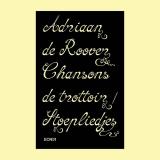
Adriaan de Roover - Chansons de Trottoir / Stoepliedjes (TAPE)

Adriaan de Roover

Chansons de Trottoir / Stoepliedjes (TAPE)

CassetteECN51
Edições CN
20.03.2026

This is a special work by acclaimed composer and musician Adriaan de Roover, who has released records on Dauw, VIERNULVIER, PIAS, and Consouling Sounds. Chansons de trottoir / Stoepliedjes documents his relationship to sampling in the form of a radio play.

Originally created as a radio piece for Resonance FM in Manchester, the album is a sonic portrait of a walk through Brussels. It is constructed from two field recordings: one made during a walk from Metro Midi towards Adriaan’s home, and another recorded on a walk towards Flagey. Rather than foregrounding recognizable landmarks, the piece focuses on the pavement underfoot: the steady, repetitive rhythm of footsteps on sidewalk tiles.

The recordings are mixed with samples from the music of the Brussels hip-hop group STIKSTOF. Their music became the soundtrack to a period in which Adriaan’s desire to move from Antwerp to Brussels began to take shape. Through repeated listening, the city of Brussels gradually revealed itself to him. This experience echoes that of countless music fans who, while listening to The Beatles, imagine what Liverpool might be like: a city revealed through sound and myth, often crystallized in lukewarm Hard Rock Café–style projections.

Chansons de trottoir / Stoepliedjes is an exercise in sampling and an exploration of how one might find a personal place within the music of others. It frames appropriation as an attentive and considered act. Suspended between memory and imagination, the piece exists closer to a dream state than to reportage.

vorbestellen20.03.2026

erscheint voraussichtlich am 20.03.2026

14,50
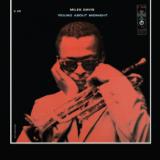
Miles Davis - Round About Midnight LP

In 1955 Miles Davis played an all-star jam session at the Newport Jazz Festival with Thelonious Monk on piano, Gerry Mulligan on baritone sax and Zoot Sims on tenor sax. This performance immediately drew the attention of Columbia Records' George Avakian, who was so impressed that he immediately offered Davis a contract if he could form a regular band. The group he then assembled would go down in history as Davis' so-called "First Great Quintet", consisting of John Coltrane on tenor sax, Red Garland on piano, Philly Joe Jones on drums, Paul Chambers on bass and of course Miles himself on trumpet. 'Round Midnight is Miles Davis' first record for Columbia and also the first studio recording of the First Great Quintet. The recording sessions began on October 26 1955 but the album wasn't released until 1957 as Davis was still under contract at Prestige at the time. These respective sessions yielded Steamin', Workin', Cookin' and Relaxin'; albums that would go down in history as quintessential blueprints of late 1950s hard bop.

The record is made up of a collection of standards and one traditional song ("Dear Old Stockholm", from the 19th century). Notably, it features what may be considered the most well-known versions of Thelonious Monk's "'Round Midnight" and "Bye Bye Blackbird". That Avakian made a golden signing was sufficiently clear from the start, but no one could foresee that it would be this quintet on Columbia that would go on to change the course of modern jazz forever with Kind of Blue. 'Round Midnight is available as a limited edition of 1500 individually numbered copies on crystal clear vinyl.

vorbestellen20.03.2026

erscheint voraussichtlich am 20.03.2026

33,40
HOUSE OF ALL - INKLINGS LP
  • 1: Spirit Salient
  • 2: The Rebel Duke
  • 3: Wrecked
  • 4: Valiant Heart
  • 5: Prince Of This World
  • 6: Time Is Out Of
  • 7: Joint
  • 8: My Throbbing Heart Shall Rock Thee
  • 9: Ours Is The Fall
  • 10: Sweet Remembrencer
  • 11: I Am Thine

It's hard to fathom Martin Bramah's trajectory from his beginnings as a guitarist/writer behind two crazily influential postpunk albums - The Fall's Live At The Witch Trials and Blue Orchids' The Greatest Hit (Money Mountain) (vocalist on the latter too, of course) - then nearly three decades of sporadic-at-best activity, offering releases just frequently enough to remind fans of his peculiar brilliance . . . before another stay in the void. Chalk it up to what you want - Mark E. Smith's utter usurpation of The Fall, his split from partner Una Baines after Blue Orchids' debut, the vague collapse of rash experimentation in `underground' music as early `80s nu-pop and American college rock diluted any real spirit, a few failed attempts at working with with Mark again . . . and maybe just life getting in the way. A sense of lost opportunities isn't tough to justify. Inasmuch as Martin was originally the singer for The Fall - Mark began as guitarist but couldn't play! - and given that the group's mythology was born in an era before that gang of Mancunian misfits had even thought of playing, it's high irony that 49 years after The Fall began, Martin has both become wildly prolific and the leader of a band with more rights of inheritance to The Fall's credibility than any other living person could justify . . .yet the band isn't remarkable for that as it is for the range and wealth extent of their collective powers and talent: two great and original guitarists, three of the UK's most daringly-skilled drummers, a genuine bass legend, and a brilliant spare Blue Orchid guitarist. Four albums in, the HOUSE Of ALL is getting ambitious, with each album a subtle improvement on the last, forging a path away from their pasts without denying a thing. Inklings differs from the first three for not having being largely improvised at first, with sounds, rhythm, groove and melody later forged into songs. They rehearsed! They had fun doing it! They're going on an extended tour! There were even extra tracks! We'll leave it to fans and critics to sit down and analyse the specifics of it all, but Steve, Si, Pete, Phil, Karl and Martin have made a bold and powerful album unlike any other you'll hear in 2026 . . . stately, majestic, bold and worthy of a group of real survivors. In perverse form, the album will be officially announced and preceded by a song not on the album!

vorbestellen20.03.2026

erscheint voraussichtlich am 20.03.2026

22,06
Artikel pro Seite:
N/ABPM
Vinyl