Kee Avil's music is both adventurous and intimate, intellectually challenging and emotionally resonant. The Montréal guitarist and producer's 2022 debut LP Crease garnered plaudits from outlets like The Wire, The Quietus, Mojo and Foxy Digitalis, picking up a Canadian Juno Award nomination and Bandcamp Album Of The Day and Albums Of The Year along the way. Its intricate construction, unnerving atmospheres, and knife-edge take on avant-pop prompted comparisons to early PJ Harvey, This Heat, and Gazelle Twin. A remix EP with work by claire rousay, Ami Dang, Cecile Believe, and Pelada brought collaborative perspectives to four Crease tracks, offering new pathways within those songs. With Spine, Kee Avil strips back her heavily textured compositions, opening up a much rawer sound. She calls it folk—and while traditionalists might scoff, this is urgent music that reflects the precarity of modern life, as well as the jarring mixture of electronic and real-world interactions that have become the fabric of our day-to-day experiences. There's a hypnotic post-punk somnambulance to it all, using the repetition and fracturing of melodic phrases interwoven with delicate electronics to create curious and persistent hooks. While not a concept album, themes of time's passage, remembrance, and decay crop up across multiple tracks. Each track intentionally only has four elements—guitar, electronics, and two other instruments, with Kee's voice and guitar pushed to the front. Within this minimalist framework, the juxtaposition of beauty and discomfort that is key to the Kee Avil sound stands out in skin-prickling relief. "We're shaped by many versions of ourselves," says Avil. "I was looking back at these versions of myself and what could have been, what didn't end up being and what did end up being, and going back like that through time. Seeing the future, the past." Spine was written in Kee Avil's home studio after a lapse in writing while touring Crease and working on other projects. She is a well-known and respected member of the Montréal experimental scene, and formerly ran Concrete Sound Studio with Zach Scholes, who continues to work with her as a producer on Spine. Compared to the three years that went into making her debut, Spine emerged in a matter of months—a process that may also be a factor in its intensity and sharpness: "This record was much harder, like it was really discovering everything from scratch." In her desire to not simply replicate or extend the sound of Crease, she felt she had to rip up the rule book, write in a different way, and pare back songs against her usual instincts. Sometimes, when we work against our ingrained habits, we get to the core of who we really are. Spine is an exercise in that process. Without over-intellectualizing or being didactic, it hits immediately and emotionally, especially if you are a person who has spent much time in the process of self-examination. Kee's voice hisses, whispers, and chants; her guitar bends and rings; electronics skitter and crackle; violin creaks like a door in the wind. There is something so evocative about the atmospheres she creates that it's easy to overlay one's own feelings onto her work, but to do that wholly would be to overlook one of the most important things about Spine: Kee Avil's clear and thoughtful vision. This isn't just the next step forward in her artistic trajectory; it's a stunner of a record that stands on its own, a bracing and thrilling listen that has much to reveal about the contradictions inherent in being human. — jj skolnik.
Suche:world on a wire
For the very first time on vinyl, Jah Wobble's 1997 extraordinary descent into downtempo and world beat science. Released on his now-defunct 30 Hertz label, The Light Programme showcased an excellent cast of musicians. On board are historical Can drummer Jaki Liebezeit – with more of his African-induced rhythms – multi-instrumentalist - and The Wire contributor - Clive Bell, conga player Neville Murray, guitar and synth player Mark Ferda and the exceptional harpist Zi-Lan Liao. If you enjoyed ‘My Life In the Bush Of Ghosts’ you’ll fall in love with ‘The Light Programme’.
‘Står op med solen’ (Rising with the sun) is the second album by Amalie Dahl’s Dafnie. With this album, the band continues the exploration of their collective sound. We hear influences from both old school free jazz, and contemporary Scandinavian jazz like Fire! Orchestra and Christian Wallumrød Ensemble, as well as clear connection to the Trondheim milieu, where the group was founded in 2020.
The energetic and expressive band explores their more subtle side with this record. ‘Står op med solen’ is an album longing for humans to be one with nature. The music comments on the world’s ultra-capitalistic power structures of today. The band navigates like one organism through parts of organic free jazz, strict structures and composed cells.
They start out where their first record ended, in the familiar free jazz sound with riffs and melodies, and take us safely on their onward journey. Amalie Dahl’s Dafnie brings together five well-known names from the Norwegian jazz scene, also known from other projects like Kongle Trio, Bliss Quintet, I like to sleep, Veslemøy Narvesen, Galumphing Duo, Treen and Trondheim Jazz Orchestra, among others.
The band has already been touring in Scandinavia, Poland and Germany during the past 3 years, and is well known for their playful and close chemistry. Their first record ‘Dafnie’ (Sonic Transmissions Records, 2022) received excellent reviews in The Wire, The Quietus among others. To celebrate the new album Amalie Dahl’s Dafnie will do 11 concerts in Europe between April 22nd and May 5th.
With the demise of the group Wire in 1980, founder members Bruce Gilbert and Graham Lewis joined forces to create Dome. With the assistance of engineer Eric Radcliffe and his Blackwing Studio Dome took the ethic of »using the studio as a compositional tool« and recorded and released three Dome albums on their own label in the space of 12 months: »Dome« (July 1980), »Dome 2« (October 1980) and »Dome 3« (October 1981). A final fourth album, »Will You Speak this World: Dome 4« was released on the Norwegian Uniton label in May 1983.
These albums represent some of the most beautifuly stark and above all timeless exercises in studio experimentation from early 1980s alternative music scene.
MidnightRoba is Roba El-Essawy, the voice of UK trio Attica Blues. Golden Seams marks Roba's return to music, this time both as vocalist and producer. Recorded during lockdown of 2020, Golden Seams features artists Jason Moran, Ben Williams, Edward Wakili-Hick, Junius Paul, David Mrakpor, Robert Mitchell, Tony Nwachukwu, Artyom Manukyan, Bubby Lewis, Mike King, Alec Harper, Dezron Douglas and Tommaso Cappellato. The album's foundation is firmly inspired by jazz, but in a style of her own. From electronic tracks such as Safe With Me, Self Doubt and Shelter Within, to the ballads Don't Let This Change, Reminded and jazz ballad Be Still, to the spiritual Bitter Boy (ft Jason Moran) and the classical title track Golden Seams.
The album was supported by Gilles Petterson on both BBC Radio 6 (as a feature artist) and Worldwide FM and by Kevin Le Gendre on BBC Radio 3's J to Z; by Tony Minvielle, Anne Frankenstein and China Moses on Jazz FM, where Don't Let This Change featured as Track of the Week, as well as by Kev Beadle, Alexander Nut, Leanne Wright, Charlie Dark, etc on NTS, Totally Wired Radio and Worldwide FM.
X CLUB. is the production duo of Ben Clarke and Jesse Morath. Founded in Brisbane/Meanjin Australia’s warehouse scene and exported to London and beyond, their music is inspired by early 90s techno all the way through to future-facing drum’n’bass, with X CLUB. carving out a space entirely of their own thanks to their authentic and eclectic take on dance music with serious consideration for underlying groove.
With releases on labels such as Steel City Dance Discs, SPANDAU20/CROWDS, 99CTS Records and Stay On Sight, X CLUB. have seen their records reach global audiences with frequent touring across the UK, Europe, North America, Asia and Australia.
Wrestling With New Technique by X CLUB. is the second release on their own label HIDE THE JUNK, a powerful four track offering that follows on from it's HTJ001 predecessor which set out to explore the groovier, percussive and fun side of techno. These tracks have met dance floors the world over, summer into winter, making for big stage moments and more intimate club connections. It's the follow up EP that fans and DJ's alike have come to know and expect in X CLUB. and the start of what will be an exciting 2024.
Brooklyn-based artist Jonah Parzen-Johnson returns with the new album You're Never Really Alone, out on We Jazz Records, March 8. If you look at the label on the LP containing eight intimate compositions for baritone sax & flute, you will find the words, “we made this together”. At first thought, this simple phrase may seem out of place on a solo record, but just like the compositions on this album, it was carefully crafted to cut to the core of what this music is all about.
In Jonah’s words: “It’s pretty hard to end up at a solo saxophone concert by accident. Odds are pretty good, if you are there, it is because you light up when you experience something new, something experimental. That shared desire connects us, and suddenly, for a night, we are a community. For me, being connected to those spontaneous communities is the best part of being an experimental artist. Everything I make is in service to the cultivation of that community, our community. Without it my music doesn’t exist and because of that I can joyfully say to each person, at every concert, that we made this together.
”You’re Never Really Alone arrives in stark contrast to Parzen-Johnson’s 2020 We Jazz Records solo debut, Imagine Giving Up. Where Imagine Giving Up was celebrated for Parzen-Johnson’s ability to assemble deeply evocative electr acoustic sound worlds, “filling the landscape in one element at a time until a picture emerges that could almost be a full band,” (Wire Magazine, March 2020) You’re Never Really Alone shows us that Jonah can look you in the eye and say “my voice alone is enough”.
Across eight tracks, Parzen-Johnson, a Chicago native, explores the technical limits of his baritone saxophone and flute without ever making the listener feel like he has something to prove. You will find circular breathing, multiphonics, and explosive levels of sound, but more importantly, you will enjoy every moment of musical storytelling and compositional skill. This album is made for repeat listening.
The opening track, “When I Feel Like Myself” is a meditative invocation of self realization. Parzen-Johnson summons three and four note harmonies from his saxophone with deep control, as he gently explores how tension can become its own release. An unadorned melodic thread gently weaves each musical expression to the last, guiding us deeper into an album that simultaneously celebrates the power of one, and the yearning for exploration that unites us all.
From the cold corners of the Canadian soil, Illect's Newselph returns with some fiery furnace baked heat in the form of a remix album. On If It Ain't Broke, Remix It, Newselph carries on tradition in the spirit of Hip Hop legends like Pete Rock, Erick Sermon and Buckwild in the sacred art of remixing and refixing. Like the boom baptists before him, Newselph's ear hears transmissions reserved for angels and dolphins. He takes tracks that in their original incarnations are perfectly fine, banging even, and gets all up in the inner workings of said slaps to create something entirely different. For his latest release, he mines his backyard and reworks ten tracks from his Illect labelmates. The lead single, Those Were The Days, features the UK's Kinetik and BREIS. Newselph turns breezy into bluesy, and the track morphs into a makeshift teleportation device to a simpler time when fat laces, arcade games and handwritten letters reigned supreme. The Flowers remix features Jurny Big and Brand Nubian's most recognisable voice, Sadat X. The two emcees come together to the world and the roles they play within it. Newselph's push-and-pull guitar groove would fit perfectly as the backdrop for a campfire convo filled with nostalgic stories and witty anecdotes. Things get deeper than Atlantis on Matters Of Man, where Newselph again links up with his man, Sareem Poems, and one-third of the Ugly Heroes crew, Chris Orrick. Serving up a healthy slice of adult contemporary musings, the two rhyme writers break down this thing called life with the kind of knowledge, wisdom and understanding that would make King Solomon chill. Like watery clay in the hands of Sam Wheat and Molly Jensen, Newselph scrapes and shapes a rubbery bassline, dreamy droplets of keys and pensive melodies into a reassuring ode of optimism. Other guest appearances on the album include Sivion, Sojourn, MidCentury Modern, Ozay Moore, Dre Murray, DJ Because and many more. Like the classic TV show The Wire, all the pieces matter, and the sum of parts come together seamlessly to form something more meaningful.
[h] 9. Matters of Man (Remix) [
- A1: Theo Beckford – Easy Snapping
- A2: The Skatalites – Guns Of Navarone
- A3: Delroy Wilson – Dancing Mood
- A4: Michigan And Smiley – Nice Up The Dance
- B1: Heptones – Baby
- B2: The Abyssinians – Declaration Of Rights
- B3: Alton Ellis – I'm Still In Love With You
- B4: Tommy Mccook – Tunnel One
- C1: Sugar Minott – Jah Jah Children
- C2: The Skatalites – Man In The Street
- C3: Dub Specialist – Banana Walk
- C4: Dennis Alcapone – Run Run
- D1: Larry Marshall – Nanny Goat
- D2: Brentford Allstars – Throw Me Corn
- D3: Lone Ranger – Love Bump
- D4: Jackie Mittoo – Freak Out
Soul Jazz Records’ feature-length documentary/CD/Book ‘Studio One Story’ is being re-released on 1 August 2011, and is also available for the first time as a stand alone DVD. The DVD is being issued as a prelude to the forthcoming deluxe-hardback book ‘Original Cover Art of Studio One Records’ released this autumn by Soul Jazz Records as well as a new Studio One album compilation on Soul Jazz to coincide with the new book.
Studio One Story is a documentary this is both a staggering slice of musical history and a definitive guide to Studio One, Jamaica’s greatest ever record company, and its legendary founder, Clement ‘Coxsone’ Dodd. ‘Studio One Story’ was filmed in 2002, two years before the death of the legendary Clement ‘Sir Coxsone’ Dodd, a man famously reticent of being interviewed - until the making of this film. Described by Chris Blackwell as the Motown of Jamaica, or ‘The University of Reggae’, Studio One is where the careers of literally hundreds of reggae artists began: Bob Marley and the Wailers, Alton Ellis, The Heptones, Ken Boothe, The Skatalites, Burning Spear and Sugar Minott, to name but a few! Studio One is the ‘foundation’ label of Jamaican Reggae and Clement ‘Sir Coxsone’ Dodd is seen by many as its father.
One and a half years in the making, Studio One Story is a truly unique documentary in which the late Clement Dodd gave unprecedented personal access to tell the previously untold story of how he and the many artists and musicians at Studio One literally shaped the rise of Reggae music from the 1950s onwards through to the late 1970s. This is the true story of reggae music and its Jamaican roots told from the inside: From the rise of Kington’s sound systems in the 1940s and 1950s, through to the evolution of a Jamaican music industry (and Studio One’s dominance) in the 1960s and the worldwide success of reggae in the 1970s.
The 4 hour documentary (including over an hour of extras) was filmed on location in Kingston, Jamaica and features interviews with Horace Andy, Alton Ellis, Ken Boothe, Sugar Minott, Denis Alcapone, The Ethiopians, Sylvan Morris, Johnny Moore, Lone Ranger, King Stitt and many others. The DVD also includes rare footage of The Skatalites, Jackie Mittoo, Count Ossie, Marcia Griffiths and others. As well as the stand-alone DVD, Soul Jazz Records are reissuing the original (DVD +CD+Book) original box set.

IF YOU ARE ORDERING THIS PLEASE CHECK IF YOU NEED NTSC (AMERICA, JAPAN, ETC) OR PAL (EUROPE, AUSTRALIA, ETC).
THE DVD HAS FRENCH AND ENGLISH SUBTITLES.
NB.MP3 Release is for the audio CD only.
REVIEWS ‘Studio One was Jamaica’s Motown. This documentary brings it brilliantly to life.’ The Telegraph ‘The history of Clement ‘Coxsone’ Dodd’s legendary Jamaica studio is fantastically told through interviews, copious amounts of music and historical footage and more.’ Uncut ‘Studio One Story is no mere historical document; it is a map that will lead you directly to a massive seam, endlessly mineable, of musical gold’ The Observer ‘A fascinating documentary’ The Telegraph ‘Compulsive viewing for anyone with an interest in Reggae’ The Wire
From the Dolls-meets-the-devil opening title track to the desperate Sister Lovers-adjacent finale "The Findings," The Interrogator is thirteen vibrant, crackling, scary and hilarious songs which taken together represent nothing less than a thorough and thrilling moral inventory of our decadent and depraved times. Following up and doubling down on the themes of last year's lionized cult favorite For Executive Meeting, Elizabeth Nelson has authored an album as politically potent and pointedly hilarious as antecedents like The Mekons' Rock 'n' Roll and Neil Young's on On the Beach and wed it to the sound of ZZ Top's Eliminator. As writers like Rob Sheffield and Robert Christgau have known for years Elizbeth Nelson has been one of our very best songwriters for going on a decade. On the charged anthem "Bad Day for the Group Chat" she reassesses the current state of affairs: "I have bested all my peers." “Elizabeth Nelson showcases the simultaneously fraught and giddy frequency of our weird, wired world. The Paranoid Style may be the bearer of bad news, but at least the band bears it smashingly.” NPR // “You’ll forgive them for being critic’s darlings because they’re also the goddamn life of the party.” SPIN // Features performances by Peter Holsapple of The dB’s, Continental Drifters & REM through out. Elizabeth Nelson writes for the Oxford American, N.Y. Times, Pitchfork, The Ringer and more. She has over 15,000 followers on Twitter. A
'Erotic Probitoic' is Nourished By Time’s debut EP on Scenic Route, following hot on the heels of his featured track , ‘Wild Thang, Sweet Thang’, on the critically acclaimed Scenic Route 16-track digital compilation, The Road Less Travelled Vol.1, supported by BBC 1Xtra, Dazed, CRACK, BBC 6 Music, Lot Radio, NTS, The Wire and Resident Advisor. The Erotic Probiotic is an intimate glimpse into the world of Baltimore native, whose two track EP shows the duplicity of this exciting singer/songwriter/producer.
Side A, ‘Give It Away’, a beautiful multi layered serenade, showcasing the breadth of his vocal range, with delicate textures sprinkled throughout; heartaching guitar riffs and celestial chords enveloping you into this contagious dream pop melody. Give It Away is a lush R&B ballad about choosing yourself over love but choosing love over pride. The Live performance video was shot at his sold out Servant Jazz Quarters show, in April, directed by Jono Canning.
Staring Into The Fireplace, a relatable anarchist anthem for anyone working a dead-end job, filled with angst and a foreboding energy driven by eerie drums and a melancholy tone. Written whilst employed by Whole Foods during COVID , spraying down shopping carts, what he describes as “the most soul destroying job”. The song explores America’s social constructs moulded by race and capitalism, through his gravelly baritone vocals over lo-fi punk sound, with lyrics reinforcing his ‘bun down Babylon’ sentiment. Along with a self directed music video.
The Erotic Probiotic is the first EP with Scenic Route as he looks to cultivate his unique off beat, guitar driven pop sound in the lead up to his album.
20 years ago Sunburned Hand of the Man released "Headdress" and it
cracked there world open
This is not hyperbole. The album resulted in the band becoming the cover children for a scene / genre-defining story titled "New Weird America" by the Wire and also saw the album given a 9.0 / Best New Music tag from Pitchfork ("...the music flows so readily with complete and utter disdain for trend and fashion that it feels simultaneously primitive and advanced..."). Largely out of print since back then, "Headdress" is back to help put the world back on a better path.
Remastered for this 20th anniversary edition freshly from the original masters and housed within a gatefold bearing archival photos, this is true head music for true heads.
Tune in, shake yr ass and drop out with this ever-providing slab.
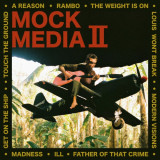
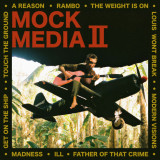
Mock Media, the new Canadian supergroup comprised of Garnet Aronyk (of Crack Cloud), Bennett Smith (of N0V3L), Austin Boylan (of Pottery) and Evan Aesen (of Painted Fruits), share their captivating debut album 'via Meat Machine Records (Crack Cloud, N0V3L, CLAMM)
Mock Media’s debut LP Mock Media II – out on Tin Angel records captures this firebrand four piece’s head-on plunge into enthralling existential contradictions: songs that explore the darkest corners of humanity, yet come out at the other end with the unwavering joy that marked their genesis. It’s an album of sneaky eclecticism: the high-wired punk rock stylings serve as Mock Media’s framework to clad their agog explorations into pop, electronic and world folk music.
We are delighted to announce the first vinyl release on TBX Records that features an eclectic selection of tracks. The TRAX VA showcases the diverse talents of four exceptional artists who have come together to create a mesmerising sonic journey. The a-side track dives you into the world of Rich NxT as he crafts 'Bluefunk', a groovy and hypnotic track that's sure to get your feet moving.
Next up comes Perky Wires who bring a fresh perspective with 'Take the Beat UP'. This track is a masterclass in blending a bouncy bassline with a tight house beat, resulting in a vibey experience that's both energetic and emotionally resonant. B-side is represented by a track called 'Melow' by Politics Of Dancing which invites you to a place of auditory serenity. Djebali closes this compilation by delivering 'Matmata'. This track unfolds like a story, with intricate layers of sound that keep you engaged from start to finish. Get ready to embark on a musical adventure like no other, and join us in celebrating this historic moment as we release our first vinyl record.
With Scream If You Don’t Exist, Richie Culver metamorphoses from outsider musician to underground fixture, feeling his way from the fringes towards a growing community of musicians that have gravitated towards his singular sound world. Building upon the stark catharsis of his previous dispatches, on his sophomore album the artist draws from grimdark drone, industrial noise, experimental hip-hop and UK rave to map out a space for himself, caught between genre and discipline. While on his debut, I Was Born By The Sea, Culver took a last glimpse back at his grey, salt-flecked past while struggling towards somewhere brighter, here, he documents the process of finding fresh waters, parsing through the complexity of inhabiting a more open and optimistic place while contending with the weight of his resolve, staring hard won self-acceptance in the face. The album’s title speaks to this creative and emotional work, serving both as the foundational paradox from which the artist’s new discordant sound emerges and as a call to action, a defiant cry in the face of existential angst.
Part of this process involves visiting familiar territory with renewed focus. Macabre opener ‘Hottest Day Of The Year’ signals an unpleasant memory with crow caw, queasy, gas leak ambience and dental drill whir as Culver recalls a life lived in nihilism: “Everything is just something that happened / Reductionism, muscles spasms, a mother’s first contraction.” Yet, on Scream If You Don’t Exist, Culver’s irresistible formula for ragged machine poetry is shot through with palpable urgency. No longer listless and despairing, he finds new intricacies for these compositions, tracing a stark interplay between crushing bass excavations and penetrating vocal clarity, a contrast picked out in the delicate threads of rhythmic pulse suggesting themselves in the blunt pressure and skittering creep of ‘Weakness’, on which Culver offers up vulnerability as a tentative solution to self-described emotional constipation: “Please do / Do take my kindness for weakness / For I am weak / And that is ok.” The amniotic soundscape of ‘YOLO (then u die)’ gives way to depth charge drone and unnerving machinic improvisations, like a noise show heard from deep in the Mariana trench, while on ‘Underground Flower’ the low-end fog lifts to reveal a brighter, colder scene. “Love me for who I could be / Not who I am,” he pleads, tending gently to his own tenacious bud.
Scream If You Don’t Exist gives us a glimpse of this flower in bloom. On the album’s cursed self-help tape title track stuttering loops of off-kilter keys and childlike repetition make light of the very real risk of disappearing all-together, a nervous breakdown rendered as a malfunctioning nursery rhyme. Paranoiac anthem ‘Say 4 Sure’ introduces bit-crushed boom-bap stomp, as though hammered out on a water-logged Game Boy, swarms of loose-wire noise sparking up against guttural grunts and ragged exhalations, while ‘On The Top’ enacts a seance for the hardcore spirit, with loops of rave piano and hiccuping vocal chops pirouetting through knackered samples, air raid sirens and the ghostly crash of breakbeat cymbals. As though in response to the solitary nature of much of his musical exploration, this time, the artist invites other voices into the world of Scream If You Don’t Exist. On ‘Swollen’, the unflinching, brimstone prophecy of Billy Woods sounds clear through an expanse of spirallic bass, preaching the same frayed gospel as Culver when he issues the quietly devastating contemporary diagnosis: “Computer broke but it still works for now / That’s the best you can say for most of us anyhow,” while another fearless correspondent from the fringes, Moor Mother, brings earthbound heft to the ambient drift and obliterating barrage of ‘Restaurants,’ teasing out meaning with elongated intonation and pitch-shifted intensity.
It’s during the album’s most meditative moments that we might recognise this space Culver has found for himself for what it really is. ‘OMG They’re Gone’ follows a chopped and slowed monologue from Culver’s wife, who works as a death doula, reflecting on her own experiences with grief and the reality of living within a culture both terrified and ignorant of the process. Floating over glistening ebb, etherised croons and luminous chimes, her words stand as a prescient reminder of the power of ephemerality. Just as Culver flourishes in imperfection, here we can find enormous strength in transcience. But it’s with ‘Just Jump In,’ which unfurls like a buoyant counterpart to the sparkling oil rigs of ‘I was born by the sea’, that Culver illuminates the hopeful waters we realise we’ve been making our steady way towards. “I know now / That you loved me,” he admits, a revelation a lifetime in the making. Through the rawest reflection Culver has found a way forward, driven by an optimism drawn from a resolve to be better, to love and be loved, an admission to weakness and the discovery of a new kind of strength. “Don’t test the water,” he reassures us and himself, “just jump in.”
Scream If You Don’t Exist will be released in November 2023 by Participant, on limited edition vinyl, and digital download . The release will be accompanied by a series of films directed by Mau Morgo, Josiane M.H Pozi, William Markarian-Martin, Simon Bus, and Bruxism.
‘Just Before The World Starts Burning’ is the debut album from The Sleeping Souls. Known
globally as Frank Turner’s loyal bandmates and fellow road warriors they have played
together for over a decade. But alongside this role, Tarrant Anderson (bass), Matt Nasir
(piano), Callum Green (drums), Ben Lloyd (guitar) and together with Frank’s guitar tech
Cahir O’Doherty (Fighting With Wire, Jetplane Landing and currently New Pagans) on
vocals, they have branched out on their own with an album of driving and at time heavy
rock anthems that are as sharp as a butchers knife with poignant hard hitting lyrics and
crunching guitar riffs.
‘Just Before The World Starts Burning’ is the debut album from The Sleeping Souls. Known
globally as Frank Turner’s loyal bandmates and fellow road warriors they have played
together for over a decade. But alongside this role, Tarrant Anderson (bass), Matt Nasir
(piano), Callum Green (drums), Ben Lloyd (guitar) and together with Frank’s guitar tech
Cahir O’Doherty (Fighting With Wire, Jetplane Landing and currently New Pagans) on
vocals, they have branched out on their own with an album of driving and at time heavy
rock anthems that are as sharp as a butchers knife with poignant hard hitting lyrics and
crunching guitar riffs.
English indie rock group Black Box Recorder formed in London in 1997 and featured Sarah Nixey, Luke Haines (of The Auteurs), and John Moore (of The Jesus and Mary Chain). Their debut album, England Made Me, was released on Chrysalis Records in 1998. The album was named after the eponymous Graham Greene novel and fuses indie rock and easy-listening pop stylings with lyrics that explore life and the experience of growing up in England. Pitchfork's Michael Sandlin described the sound of the album as \"mildly morose but slightly tongue-in-cheek Sylvia Plath-meets-Paul McCartney pop sensibility\". England Made Me remains a high point in the band's catalogue with standout tracks including 'Kidnapping An Heiress', 'Girl Singing In The Wreckage', and the single 'Child Psychology' which was recently back in the spotlight with a viral moment on social media after being championed by Billie Eilish. This new anniversary edition has been curated with the assistance of the band and features a newly remaster version of the album, along with a bonus 10\" vinyl that includes six b-sides, 4 of which are first time on vinyl. All audio has been remastered from the original production tapes by Phil Kinrade at AIR Mastering and and cut by Alex Wharton at Abbey Road Studios.
I want to introduce this work ‘Halos of Perception’ to you in the way Lisa introduced me to it, through the sharing of experiences.
Lisa and I met for a walk near South Yarra station to talk about this work, when inclement weather made it too wet to visit the tunnels. Moving almost seamlessly from a world of leisurewear, infinite milk alternatives and blaring neons to stretches of green by the water that brimmed with sounds and life, we saw a few people climbing the Burnley bouldering wall, butterflies suspended in the hot wind and lots of plants I wish I knew the names of. Overhead the cars rumbled like a ceaseless animal as we talked about hidden ecosystems, imagined spaces and networks of care.
Stemming from a serendipitous encounter with an original Cave Clan member that led to many underground adventures, this work explores the worlds that exist outside of our perceptions. By the river, I leafed through a selection of tunnel photos Lisa had printed off at Officeworks, revealing alien textures, tunnels that stretch on into abysses of their own, underground flowing streams. Light is sparse and delicate, something reflected by the flickering and wavering in Lisa’s piano compositions.
As we walked, we noticed the ways in which infrastructure is often designed to keep people out—cut doors into fencing and clipped wires show an active and ongoing defiance of this. We spoke about how her Cave Clan friend used to go down to this painted room and read in solitude, using candles for light. The way sound exists underground, encased in these hollow cement tunnels, a painted room with its own deep hum. How people used to hold underground shows, how there were rules for safety (no exploring after rain, never alone) that was shared with each other. This warmth and absorption of other’s experiences is present in Lisa’s work—it’s immersive, like wading in water.
We paused on the walk to eat berries and talk about how The Caretaker creates transitory worlds with recorded sound, how this technology captures memory, and the exploratory pursuits of Pauline Oliveros’ Deep Listening Band. These citations of memory and deep listening inform Lisa’s use of analogue and classical instruments, playback artefacts and acoustic feedback in her own world-building. When speaking about ‘Halos of Perception’, she describes it as a fascination with timbre and acoustic artefacts.
Ideas of networks and enmeshment are felt deeply in Lisa’s compositions, motifs overlaid over each other evoking the image of many hands interlinking playfully, tenderly, softly. The way her compositions delve into refraction and echo makes me think about the tunnels and the way they splinter off into many possibilities. Manipulated textures reminiscent of the chalky, earthy, moss air that perfumes the tunnels’ subterranean air. Tactile details that gesture towards close attention, verging on obsession.
This work is also about imagining ecosystems of potential. Lisa shared with me that during this project, she has been reimagining subterranean networks in dreams, thinking about oral traditions, and the way water moves—from the sky to the earth, through the ground, connecting all these spheres. Realised in collaboration with hyperreal video artist Tristan Jalleh, Lisa’s dream landscape melds waterfalls, leaks, flower graffiti, and hidden messages lit up by imagined light sources with existing subterranean networks. There’s a real sense of wonder in this world she has built, how the city can reveal itself to you with some patience and care, how the city and its secrets can find its way into your dreams.
— Panda Wong
The 45rpm double disc Audiophile Analog Collection features a variety of recordings from the world of movies, blues, percussion ensembles, world music and jazz. This is part of a special series of compilations of analog audiophile recordings at their best, with emphasis on execution and great sound.
The 2xHD Fusion Mastering System is an innovation in audio restoration for a virtual audio reality. In the constant evolution of its proprietary mastering process, 2xHD has progressed to a new phase called 2xHD Fusion, integrating the finest state-of-the-art analogue Nagra-T tape recorder modified with high-end tube playback technology, wired with OCC silver cable for better transparency and 3D imaging. 2xHD Vinyl are sourced from first generation analogue recordings without any digital corruption. The cutting is done at Bernie Grundman Mastering Lab on tube cutting equipment.
Sometimes, space is the perfect catalyst for intense creativity. Following the release of their fourth LP, 2019's Your Church On My Bonfire, PAWS - the Scottish DIY indie rock songwriting partnership of Phillip Jon Taylor and Joshua Swinney, toured briefly, and as the world began to shut down, they slipped out of sight. Phillip retreated north to the Highlands where he focused on his painting, solo work and the rewarding demands of fatherhood. Josh headed south to London, pursuing his other passion as a chef at the highly acclaimed Plimsoll. It would have been easy for both to settle into their new lives, but PAWS never died…and neither did the tie connecting the two friends. Having missed playing together for too long, a plan was set and in October 2022 Josh travelled to Phillip's home studio in his crofters cottage where work began on the band's fifth self-titled LP. Relying on a set of phone demos and chemistry honed after years on the road the songs came together surprisingly fast. Having recorded previously with both Blink 182’s Mark Hoppus and Frightened Rabbit’s Andy Monaghan, the band once again seized control of production duties as they had on their sophomore release Youth Culture Forever. Utilizing all they had learned and adding their own DIY ethos into the mix, the music was done in a week. Josh headed home and Phillip set to work on lyrics. The resulting record finds the band as grounded and assured as they ever have been. Marrying the deafening assault of youthful abandon with the whispered reasoning that comes with getting older; swaying from anger and exasperation to wide eyed optimism. PAWS is a succinct, razor wire encased documentary chronicling the pains of modern living. Delving into the dark underbelly of 90s alternative rock, painting with evocative instrumentals and reveling in celebratory indie punk, the band also embrace sordid pop and ambient electronics. And while it pays homage to where they have come from, it also signals a clean slate for the pair. Two friends united over distance. After some time apart, all they needed was a spark.
Betamax of The Comet Is Coming and Pete Bennie of Speakers Corner Quartet are Coma World. They have come together again to produce a further batch of rhythmically enlightened Dystopian Jazz, alongside illustrious graphic and sound artist Raimund Wong (Floating World Pictures) for this record - 'Coma Wong' (out 6 October 2023 on Byrd Out). The storm clouds are gathering at sea, with the white horses dancing ever faster on the waves. Coma World chose to ride out the tempest, sail up, speeding along together towards who knows what… Expect drums precision engineered with just the right degree of insouciance, drone-bathed sounds rippling and depth charge bass that explodes beneath the surface across 12 tracks. The Wire on their first album, the self-titled ‘Coma World’: “a bold drum ‘n’ bass affair, a nervy meeting between dub and jazz experimentations with new channels explored track by track”. Tom Ravenscroft on BBC 6 Music on ‘Calamari’ from the new album: “I think this is like my favourite track right now… Love it.”
German post-punk band Onyon scrambled our brains when we heard them for the first time last year, so much so that we signed them & reissued their eponymous debut cassette EP (originally co-released in limited quantities by the Flennen/U-Bac labels) in June of '22. "Last Days On Earth" is the band's latest & first proper full-length for Trouble In Mind. The oddball, synth-soaked world of Onyon is disorienting at first - the band's herky-jerky rhythms may operate in a familiar fashion to bands like Devo, Kleenex/Liliput or label-mates LITHICS, but Maria Untheim's woozy synth squiggles that populate & punctuate the band's songs keeps everything at arms-length. Flirting with the primitive cool of 80's minimal-synth and the wire-haired cretinism of 60s garage, especially on tunes like the manic `Dogman' or first single `Alien, Alien'. Guitarist Ilka Kellner's six-string salvos rage unpretentiously with edges torn & frayed, rarely (if ever) soloing, but never afraid to unleash a spindly lead-line over Florian Schmidt's rubbery bass lines & Mario Pongratz's stuttering drum patterns that phase in & out of time imperceptibly like drunks doing their best to seem sober. Kellner & Untheim share vocal duties (in both English & German - sometimes in the same song), but the real magic comes when the two sing together, voices merging in loosely harmonic gang vocals; one deadpan, the other slightly unhinged. The group's beguiling lyrics add to the mystique - inscrutable neu-world fables about egg machines, ghosts, worms that talk, and urges to consume newspaper that ooze a rural, old-world understanding of life & the imperceptible spaces in between reality & fiction, transmuted thru a modernist sci-fi lensflare. Recorded, mixed & mastered in late 2022 by Martin Müller, "Last Days On Earth" is released on CD, black vinyl & limited purple vinyl (while supplies last) as well as streaming via most digital platforms.
Maurice Louca & his band Elephantine announce Moonshine, shining brightly with a live, raw, collective sound. Maurice Louca's band is incredible: double drummers Tommaso Cappellato & Özün Usta, Piero Bittolo Bon on alto, Daniel Gahrton on baritone and Isak Hedtjärn on clarinet, Rasmus Svale Kjærgård Lund on tuba, Rosa Brunello on bass, Els Vandeweyer on vibraphone, Louca on guitar/lap steel/synth.
As Asher Gamedze puts it in his essay: "Abstract territories of freedom, always grounded, expansive, multiple, internally differentiated, and elephantine."
One of the most gifted, prolific and adventurous figures on Egypt's thriving experimental arts scene, Louca has in recent years garnered a global reputation through three previous solo albums and an expanding, evolving lineup of genre-defying collaborations. The Wire called his 2014 sophomore solo effort, Salute the Parrot, "remarkable music-dense, driven and splashed with colour.
For Louca, Elephantine serves as both the pinnacle of his wide-ranging experience and a bold next step in his development as a composer, arranger and bandleader, from Cosmic Jazz, African and World music to transcendental modal traditions. The music-from its pensive lulls through its stretches of hard-grooving hypnosis and moments of avant-jazz.
“Orlando Furioso is a haunting, one-of-a-kind statement, from an important new voice in improvised music.” - Steve Lehman
“…imagining instruments that haven’t been invented yet: space harps, cosmic gamelan, Venusian banjo. It’s the purest distillation of Atria’s musical language, simultaneously grounded and unearthly.” - Stewart Smith for The Wire (November 2022)
“Making liberal use of microtonal harmony and hypnotic, ostinato rhythms – as well as the occasional stylistic smash-cut, reminiscent of John Zorn – Orlando Furioso announced itself on Wednesday as a punchy, creative force on the New York scene. (…) Atria’s rhythms had a welcoming, social propulsion, and the microtonality of his writing for keyboard proposed an individual – even insular – language.” - Seth Colter Walls for The New York Times.
Early European composers felt that their work reflected in its structure the divine nature of the material world. Via tuning, form, and contrapuntal alchemy, these musicians sought to illuminate and edify the complex and perfect order of existence. The music recorded here also reflects the contours of an ordered world, but it is no place any of us has ever visited. By assembling far-flung building blocks from the detritus of a 21st-century musical vocabulary, Orlando Furioso brings the listener into a bizarre new cosmos. The result is deeply expressive music that speaks not with the voice of a narrator or memoirist, but with that of a cartographer.
Like a science-fiction Dante, the listener is taken on a tour of many diverse and colorful provinces of an alien world. Though each composition references its own set of real-world musical locales (from the Andes to Indonesia to Italy to New Orleans), they are bound by stylistic consistency into a coherent, continuous geography. Permeating this world is an uncompromising commitment to microtonal harmony, rhythmic intensity, and an ability to deploy the esoteric (Nicola Vicentino's notorious 31-tone temperament) and the head-smackingly obvious (a surprise djent breakdown) with equal conviction. Though Vicente's compositions are steering the ship, serious recognition is due to all the players on the record for their ability to meet these demands.
Our omnivorous musical diets offer real abundance. They enrich our craft by providing access to limitless approaches from which to choose - more masters to study, traditions to absorb, and techniques to hone than is possible in multiple lifetimes. They can also inflict heavy and often contradictory burdens of influence. When every corner of the map has been charted, it becomes difficult to find a new direction in which to travel. One solution I hope to see more often is the one pursued on this record: breaking down distinct musical worlds into component parts and reassembling them into a language. When completed with precision and with no stone left unturned, the seams between the pieces vanish and the listener is deposited somewhere beautiful and strange, left to assign their sensations meanings of their own. - Mat Muntz
Orlando Furioso is led by Vicente and features David Acevedo, David Leon, Andrew Boudreau, Alec Goldfarb, Daniel Hass, Simón Willson, and Niña Tormenta. Orlando Furioso celebrated its release at Roulette Intermedium in Brooklyn, NY, as a part of Wet Ink Ensemble's 24th Season opening concert, a performance which The New York Times heralded as "virtuosic", "punchy, creative" and "even revelatory."
Winner of the Deutscher Jazz Preis: Best International Debut Album 2023
- 1: I'm Not Getting Excited - Live
- 2: Great No One - Live
- 3: Whatever - Live
- 4: Mars, The God Of War - Live
- 5: Future Me Hates Me - Live
- 6: Introduction
- 7: Jump Rope Gazers - Live
- 8: Uptown Girl - Live
- 9: Bird Talk
- 10: Happy Unhappy - Live
- 11: Out Of Sight - Live
- 12: Thank You
- 13: Don't Go Away - Live
- 14: Little Death - Live
- 15: Dying To Believe - Live
- 16: River Run - Live
The anticipation is there in Elizabeth Stokes’ solo guitar riff under the opening lines of “I’m Not Getting Excited”: a frenetic, driving force daring a packed Auckland Town Hall to do exactly the opposite of what the track title suggests.
As the opener of The Beths’ Auckland, New Zealand, 2020 expands to include the full band, the crowd screeches and bellows. It’s a collective exhalation, in one of the few countries where live music is still possible.
The album title, and film of the same name, deliberately include the date and location, lead guitarist Jonathan Pearce says. “That’s the sensational part of what we actually did.” In a mid-pandemic world, playing to a heaving, enraptured home crowd feels miraculous.
In March 2020, everything seemed on track for another huge year for The Beths. Home after an 18-month northern hemisphere tour, they had just finished recording sophomore album Jump Rope Gazers and were primed for more extensive touring. But within days, New Zealand’s lockdown split the band between three separate houses. All touring was cancelled.
“It was existentially bad,” Stokes says. As well as worrying about economic survival, they lost something crucial to the band’s identity: live performance. “It's a huge part of how we see ourselves... What does it mean, if we can't play live?”
The band found an outlet through live-streaming, returning to the do-it-yourself mentality of their early days to connect with a global audience. The album and film have their genesis in that urge to share the now-rare experience of a live show, as widely as possible.
The fuzzy-round-the-edges live-streams pointed the way aesthetically. Native birds, wonkily crafted by the band from tissue paper and wire, festoon the venue’s cavernous ceiling while house plants soften and disguise the imposing pipes of an organ. The presence of the film crew isn’t disguised: much of the camerawork is handheld; full of fast zooms and pans.
With much of the material still fresh, the band was less focused on re-invention than playing “a good, fast rock show”, Pearce says. The tempo is up on crowd favourites “Whatever” and “Future Me Hates Me” (released as a live single on its third anniversary) as both band and audience feed off the mutual energy in the room.
Certain songs have taken on special resonance post-Covid. Pearce has found “Out Of Sight”, a tender rumination on long-distance relationships, hits particularly hard with live audiences.
Album closer “River Run” visibly brings Stokes to tears as a mix of achievement and relief kicks in. “You can finally relax at that point … You play the last note, breathe out a sigh and look up - and you’re in a giant room full of people happy and smiling.”
. It started in a cafe in Chico, California, with a flier, covered in glitter, wires, feathers, and assorted melted items, with a three-word advertisement: “Noise person wanted.” It wasn’t a sign. It was a sample. A tiny piece lifted from the visionary environment that the band XDS would continue building over the next couple of decades, hoarding an eclectic stockpile of collage materials/influences/approaches for assembling psychedelic dance-punk jams played with homemade instruments, blown-out samples, off-kilter drumming and dub baselines. Shoko Horikawa had come from Japan to (the small, music-crazy college town) Chico for school, and responded to Jesse Hall’s mysterious flier and a pitch to collaborate on making interesting sounds. The partnership would end up featuring her syncopated polyrhythmic drums alongside his vocals (through a duct tape-and-PVC-pipe mic) and custom-built Guitar-o-bass, plus synths/samplers and various noise-making devices. The two-piece Experimental Dental School eventually morphed into XDS as the duo moved the operation from Chico to Oakland to Portland and back to Chico, touring the world (playing alongside the likes of Deerhoof and other innovators) and releasing 11 recordings (on Cochon Records, German label TCWGA, etc.) as they went. On the new XDS album, Bicycle Ripper, the band’s genre-bending roots are as deep as ever, but the goal now is to be less “noise” people and more “fun” people. The songs are weird yet cohesive, with jittery grooves and inventive hooks. Throw a dart at the album and hit “Hot Panther, Cold Moon” for one random sample: an unrelenting fuzzed-out bass dances with a insistent drums; a sharp turn into sparse tin-can-guitar break; then a return to the dance floor with a bonus overdriven bass riff and full-throttle drums. The Panther stays hot whether she’s under the “hot hot sun” or the “cold cold moon.” It’s all very irresistible and, yes, really really fun
Men at Work already had an album in the Top Ten when the Australian ensemble released Cargo, which continued the momentum gained by its record-setting debut. As ambitious and even more diversified than its initial salvo, the 1983 effort firmly established the band as new-wave pioneers – a group whose goofy playfulness, sharp hooks, brass accents, and memorable choruses helped define the decade's landscape. Any doubts about Men at Work's quirky sensibility were promptly answered by the iconic cover art gracing this multi-platinum set.
Mastered on our world-renowned mastering system and pressed at RTI, this LP not only brings the artwork back into full-scale glory but also takes the enjoyably melodic pop-rock to new sonic heights courtesy of improved imaging, separation, and balance. Previously obscured details jump to the surface, and leader Colin Hay's unique voice takes on life-like dimensions that hover between the speakers.
While remaining true to the approach that garnered them a Grammy Award for Best New Artist, Men at Work expands the creative palette on Cargo by giving guitars a more prominent role and increasing the rhythmic textures. With the sweeping ballad "Overkill" and politically savvy cynicism of "It's a Mistake," the band furthered their radio domination and extended their run of Top 10 singles. A third hit, "Dr. Heckyll and Mr. Jive," cracked the Top 30. Well-tailored melodies and whimsical imagination definitely had a place in the public's consciousness, and no group understood this more.
As the final album captured by the original lineup, Cargo remains an indelible piece of the 1980s audio terrain and a reminder of the era's endless fun. Bolstered by lively saxophone solos, self-effacing humor, and instantly catchy refrains, the album is as good as excuse as any to turn on the stereo, sit down, forget your worries, and dance to leisurely pursuits so perfectly captured by this beloved group.
Freak Frequency was a fitting title for the new material Greg Obis was planning for Stuck, the frenetic and twisted post-punk outfit he formed in 2018. Inspired by the doomy social economics of Mark Fisher’s Capitalist Realism, the bleak worldbuilding of horror games Demon’s Souls and Bloodborne, and the bombastic yet arty satire of Devo, Obis channelled his audio analogy into Freak Frequency, an album ringing out with explosive sounds and ideas.
Stuck formed after Obis’ previous projects, Yeesh and Clearance, called it quits in short proximity. Obis is on guitar and vocals, which span from booming theatrics to ecstatic yelps. The project’s rhythm section is completed by shoegaze guitarist-turned-chugging bassist David Algrim and tightly wound drummer Tim Green—also a graphic designer, and the artist responsible for Stuck’s distinctively unified visual aesthetic. Original co-guitarist Donny Walsh contributed freely inventive lines for the first few years of the project, including on Freak Frequency; Ezra Saulnier of Red Tunic, the newest member of the band, now brings calculated contrapuntal riffs to match Obis’ parts.
The building blocks of Stuck include the egg punk eccentricities of Uranium Club and The Coneheads filtered through noise rock power, à la Jesus Lizard or Slint; that melange is glittered with the precision microtones of Unwound and Women. “I want the feeling of immersion and chaos and tension, with a big guitar amp playing a big chord,” says Obis of his inspirations, citing friends and peers Cloud Nothings and Preoccupations. “But I want it delivered by having a lot of smaller points of light poking through.”
In fact, writing for Freak Frequency began while Content’s recording was still underway—beginning with “Scared,” which features acoustic layers under feedback squalls. “Time Out,” with motoric guitars in the sputtering lineage of Wire, was also composed in late 2019. Obis wrote it about the cycles of compulsion and shame woven into social media use, and the way negativity drives algorithmic engagement. It became an exciting exercise for the group in ramping up speed; “I thought I knew how far I could push Tim’s tempos,” Obis recalls. “But Tim kept insisting we do it 20 bpm faster than what I had. He is an absolute monster for playing that.”
Album opener “The Punisher,” a spiral staircase of disembodied guitars and rhythmic slams over a 2/4 beat, came in the aftermath of the January 6 insurrection. It felt immediately emblematic to Freak Frequency, and Obis describes it as his favorite Stuck track: one he wishes he could write again and again. “It hits all the boxes that Stuck can do: it’s goofy, but there’s a lot of intricate guitar interplay, and at the end, there’s a big payoff,” he explains. The last song written was “Do Not Reply,” a pre-album single that came to Obis after engineering for Melkbelly and channelling their earworm melodies. Algrim wouldn’t let it on the record unless Melkbelly’s front person Miranda Winters dueted on vocals; she was happy to oblige, and the gritty epic closes Freak Frequency.
With slippery snark, percussive heft, and funhouse mirrors of sludge, Freak Frequency delivers its needed screeds with gratifying nuance. If Stuck’s interpretation of this messed-up world goes down like a bitter pill, it’s only because its sugar coating is too delicious to keep from eating.
- A1: Introduçào
- A2: From The Foundation - Ft Dub Judah
- A3: City Walls - Ft Ras Addis
- A4: More Jah Songs - Ft Tena Stelin
- B1: Moses - Ft Ras B
- B2: Strictly Ital - Ft Ras Addis
- B3: Babylon Ambush
- B4: There's A Love - Ft Christine Miller
- C1: Respek I-Spek - Ft Levi Roots
- C2: Touch I Heart - Ft Afrikan Simba
- C3: Rua Joào Vieira 106
- C4: Sangue Brasileiro (Brazilian Blood)
- C5: Nyah Keith
- D1: Transformai - Ft Ras Bernardo & Jeru Banto
- D2: Zulu Dawn
- D3: Hail Jah - Ft Ras Addis
- D4: Foundational Dub
When Transform-I was released in 2009, Bristol’s Dubkasm were unmistakably prominent on the reggae scene but it is this LP - their tenth release - that put them on the map and cemented their status as outernational roots innovators and one of the most creative outfits in reggae. By 2006, Jah Shaka had been rinsing their percussive vocoder smash ‘Zulu Dawn’ (track 15) at the end of every dance for close to three years. Dubplates from the LP became firm favourites on some of the greatest soundsystems in the world, including Aba Shanti-I, Iration Steppas, and Channel One.
DJ Stryda and producer Digistep’s reputation grew still further when the pair managed to get an extremely rare vocal from the legendary Dub Judah, who at the time had not voiced a tune for many years. The resulting 7”, ‘From the Foundation’ (track 2) was the first tune to be released from Transform-I, an album which took the music world by storm with its singular blend of a deep, conscious roots reggae sound with instrumentation that drew on Digistep’s Brazilian heritage.
As the great DJ and journalist Steve Barker said in his rave Wire magazine review of the initial release, ‘Like many innovations heard for the first time, you wonder why this has not been done before’. Indeed, the LP’s blend of percussion instruments like zabumba, cavaquinho, and cuica with an absolutely stellar cast of vocalists including Tenastelin, Christine Miller, and Ras B, with a pre-Reggae Reggae Sauce fame Levi Roots recording from his living room, became timeless the moment it was released. Barker praised the album for being ‘more orthodox than expected’, by which I think he meant that the album is a completely authentic roots record, rather than an attempt to mix musical flavours to conceal a lack of ideas. Instead, ideas flew back and forth across the Atlantic, as basic tracks were laid in the Dubkasm Studio (then in Brazil, now in England) and overdubs and vocals were recorded in London, Nottingham, Bristol and Norway, with the final mixes being done at the Daddy Roots studio in Bristol. The combination is seamless both because Digistep grew up with Brazilian music, courtesy of his father, and because Dubkasm have lived and breathed reggae since their formation in 1994 – just go and listen to early releases like ‘Chemical Reaction Dub’ (1996) or ‘Hornsman Trod’ (2003) and you’ll hear heavyweight productions with a Rasta ethos immersed in U.K. soundsystem culture.
Since the album’s release, Dubkasm have gone from strength to strength and collaborated with a dazzling array of artists. Transform-I was remixed by some of Bristol’s best electronica producers in 2010, and 2013’s 12” ‘Victory’ became a huge soundsystem hit around the world, before being voiced by two of the greatest singers of all time, Luciano and Turbulence, and being remixed the following year by one of the world’s finest dubstep producers, Mala (who in 2016 released his own project fusing Latin music with electronic bass – the excellent Mala in Cuba).
The first project of its kind, beautifully reissued in its original format by Dubquake (the outfit behind France’s incredible OBF Soundsystem), Transform-I is the LP that launched Dubkasm on their current trajectory and has truly lived up to its name.
This new album compiles several songs made in the years following Black To Comm's classic "Alphabet 1968" album. Originally released on the seminal Type label in 2009 (and to be reissued on Cellule 75 this year) "Alphabet 1968" combined the sound of vintage shellac and vinyl loops with broken electronics and field recordings, the press release mentioning disparate influences "ranging from Moondog to Basic Channel by way of Bernard Herrmann". In a beautiful one-page review in The Wire magazine (later reprinted in his book Ghosts Of My Life) Mark Fisher compared Richter's music to JF Sebastian’s miniature automata in Blade Runner ("with their bizarre mixture of the clockwork and the computerised, the antique and the ultramodern, the playful and the sinister"), ETA Hoffmann's inventor-magicians and Auguste Villiers de l'Isle-Adam's 1886 tale of Thomas Edison's (fictitious) construction of an artificial human.
Now titled "Coh Bâle" (inspired by a strange dream) these recordings were supposed to become a follow-up to said album but for reasons unknown it never materialized and the album seemed forever lost. At the time Richter started to dive deeper into several strains of (so-called) world music aka the folk music of Southeast Asia and Eastern Europe as well as liturgical and medieval music, the Kraut-Electronica of Harmonia and several certain Mediterranean experimentalists from the 1980's who started to merge their mostly electronic and field recording based compositions with traditional musics from all over the world by way of new sampling technology.
Many of the songs for the album were recorded while travelling and at various residencies around Europe: a detuned piano in a Thessaloniki basement (Richter played at a children's birthday party there), vintage synthesizers in the GRM studios in Paris, decaying acoustic instruments found in an old Black Forest mansion, childrens' voices at a workshop in Karlsruhe's ZKM Institute; then mixed on headphones in the ICE trains running between these places and his hometown Hamburg.
"Coh Bâle" is taking inspirations from old Nonesuch Explorer and Ocora LP's, Crammed Records, 80s Mediterranean Ambient (Nuno Canavarro, Roberto Musci) combined with the DIY spirit of Deux Filles and Flaming Tunes and the playfulness of Asa Chang & Junray. The songs are both mysterious and transparent, intricate and frugal, vibrant and patient. One of the album's unexpected climaxes is a gorgeous (artificial) berimbau version of the Welsh traditional "Iechyd o Gylch".
No two songs feature the same instrumentation and many acoustic sources (pianos, flutes, wood percussion, viola, tablas, autoharp) were disassembled and later coalesced into new configurations or used as virtual instruments; later combined with samples, field recordings, electronics and (on a few tracks) autotuned vocals reminding of recent works by the likes of Claire Rousay or More Eaze.
We had to wait for a worldwide pandemic for Richter to dig deep into the vaults and finally bring these recordings to light. This is the 2nd release from his archives after the "Diode, Triode" LP which presented Musique Concrète/Acousmatic recordings made at INA/GRM and ZKM. Another massive Double-CD (MM∞XX Vol. 1 & 2) was released last year featuring collaborations with 33 artists such as Andrew Pekler, Richard Youngs, Eric Chenaux, Maja Ratkje, Radwan Ghazi Moumneh of Jerusalem In my Heart, GRM boss François Bonnet (Kassel Jaeger), Felix Kubin, Timo van Luijk (In Camera, Af Ursin), Luke Fowler and many others, showing Richter's versatility and his willingness to reinvent himself for every new release.
Marc Richter is widely known under his Black To Comm moniker, having released (at least) 12 albums under this alias in the last 20 years. He is currently signed to the Thrill Jockey label. Richter composes soundtracks for film and has worked with visual artists such as Mike Kelley and Ho Tzu Nyen. He also records as Jemh Circs and Mouchoir Étanche for his own Cellule 75 label (named in tribute to the late Luc Ferrari).
Marc Richter aka Black To Comm released his debut record 20 years ago. In 2023 he is still busy releasing music under various disguises and is currently signed to the Thrill Jockey label. To celebrate this anniversary his own Cellule 75 label is re-releasing some classic out-of-print vinyl albums that originally came out on the defunct Type and De Stijl labels. The LP will feature a full-colour lyric sheet / poster exclusive to this edition.
After releasing the critically acclaimed Alphabet 1968 on the seminal Type label (Grouper, Jóhann Jóhannsson, Yellow Swans), Richter chose De Stijl for this 2012 album, an American label that had just put out future classics by the likes of Circuit Des Yeux, Hype Williams and Wolf Eyes.
EARTH is a 2009 silent film by Ho Tzu Nyen, one of Singapore's foremost visual artists. After hearing Black To Comm's Alphabet 1968 Ho Tzu Nyen invited Richter to accompany the film at Berlin's Asian Film Festival, Unsound in Krakow and several other art biennals and music festivals around the world.
In his own words: "Most of the music was composed under the influence of heavy pain killers while recovering from a broken leg (the recordings literally took place in bed). The music (like the film) is about slowness and decay, states of unconsciousness, sleeping and waking up, dying and being reborn. The film is a post-apocalyptic collage based on paintings by classical European painters (Caravaggio, Delacroix, Rembrandt, Gericault) -- the music translates this concept employing corresponding collage-based sampling techniques using loops made from vintage vinyl and shellac records combined with acoustic and electronic instrumentation and voice."
From the original De Stijl one-sheet:
"Richter’s already formidable expressive power stretches over all of EARTH. Reflecting the countless cyclical forces that make up, oh, more or less everything we know and are, the music on EARTH is bracing, lovely, bustling and still, and at times bittersweet, a commingling of sensations and emotions that can’t be neatly separated from one another. (EARTH is complex, as you know.) Guests on EARTH include David Aird, a.k.a Vindicatrix (on the Mordant Music label), contributing startling vocal work; Renate Nikolaus on an array of instruments and noise devices; Rutger Zuydervelt (singing bowls); and Christopher Kline (singing saw). EARTH is Black to Comm’s seventh album and his debut for De Stijl, following the acclaimed Alphabet 1968 (on Type) and last year’s vinyl-only collaboration with Mike Kelley of Destroy All Monsters (on the En/Of label)."
Alex Neilson in The Wire:
"The most marked aspect of Earth is the voice of David Aird, aka Vindicatrix. Imperious and dolorous, he has the gravity of post-Climate Of Hunter Scott Walker, David Sylvain or Klaus Nomi stripped of the pathetic ritz. This is something that's easy to do badly, but Aird pulls it off with aplomb. On "The Children" he breaks into a morose yodel, rolling the words around his palate and colouring each syllable black before gifting them to the air. The meaning isn't understood verbally as much as viscerally. Beneath Aird's ululations, Richter casts handfuls of angelic debris from keyboards and digital devices, generating a celestial electronic tapestry reminiscent of Japanese musician Nobukazu Takemura. Sounds vie and twist at frequencies you can't so much hear as feel in the bridge of your nose, and the variety and full-bloodedness of the accompaniment is what prevents Aird's vocal from occassionally lapsing into shtick."
Marc Richter aka Black To Comm released his debut record 20 years ago. In 2023 he is still busy releasing music under various disguises and is currently signed to the Thrill Jockey label. To celebrate this anniversary his own Cellule 75 label is re-releasing some classic out-of-print vinyl albums that originally came out on the defunct Type and De Stijl labels. The LP will feature a full-colour printed inner sleeve exclusive to this edition.
In 2009 the Type Recordings label run by John Twells had just released seminal records by Grouper, Jóhann Jóhannsson and Yellow Swans when they signed Richter and put out his breakthrough Alphabet 1968 album. The LP sold out within two weeks, receiving a glowing full-page review in The Wire Magazine by the late Mark Fisher (later reprinted in his book Ghosts Of My Life), was selected for Boomkat's Top 10 releases of the year (alongside debut albums by Leyland Kirby, Demdike Stare and Oneohtrix Point Never) and was greeted with universal praise in the underground blog network as well as established magazines such as The New Yorker and Pitchfork.
The music itself played with the notion of nostalgia without being nostalgic itself. It's the sound of half-remembered dreams, a surreal distorted vision of the past, an aural polaroid of long forgotten musics, a ghostly voice from a non-existent era.
From the original Type one-sheet:
"The mission statement for Alphabet 1968 was to write an album of "songs" for want of a better word. Short tracks which represented genre points, the milestones which stuck in Richter's mind when he thought back to his favorite records. What we arrive at is a breathtaking 10-track album which, over the course of 45 minutes, explores world music, techno, noise, avant-garde, ambient music and even exotica. Each track is linked with a loose thread of radio static or environmental sound, dragging you through the album, as if tuning in to a stray broadcast or a particularly adventurous mix. Richter has pieced the album together from hours of recordings made at his studio with home made gamelan, small instruments and loops gathered from a collection of ancient vinyl and 78 records. The scope of the album is admirable, but ignoring this, it is simply a shockingly arresting collection of experimental oddities, with references ranging from Moondog to Basic Channel by way of Bernard Herrmann. It's not hard to fall in love with Alphabet 1968, far harder would be to place exactly where the record should fit into your collection."
Mark Fisher in The Wire:
"But what if we were to take Richter's provocation seriously - what would a song without a singer be like? What would it be like, that is to say, if objects themselves could sing? It’s a question that connects fairy tales with cybernetics, and listening to Alphabet 1968, I’m reminded of a filmic space in which magic and mechanism meet: JF Sebastian’s apartment in Blade Runner. The tracks on the LP are crafted with the same minute attention to detail that the genetic designer and toymaker brought to his miniature automata, with their bizarre mixture of the clockwork and the computerised, the antique and the ultramodern, the playful and the sinister. Richter’s musical pieces have been built from similarly heterogeneous materials - record crackle, shortwave radio, glockenspiels, all manner of samples, mostly of acoustic instruments. ….. JF Sebastian's apartment was itself an update of older spaces in which science and sorcery co-existed: the workshops of ETA Hoffmann's inventor-magicians, or of Pinocchio's creator, Geppetto. I think, too, of Auguste Villiers de l'Isle-Adam's astonishing 1886 tale The Future Eve in which Edison, using the expertise he has recently acquired from inventing the phonograph, sets himself the task of constructing an artificial woman. But if there are songs here, they are sung by the gramophone and other recording and playback machines. Richter so successfully effaces himself as author that it is as if he has snuck into a room and recorded the objects as they played (to) themselves. Rather than simply automating his music, as in the case of Pierre Bastien and his mechanical machines, Richter makes us feel that he has merely recorded the unlife of objects. ….. Indeed, the impression of things winding down is persistent on Alphabet 1968. Entropy has not been excluded from Richter's enchanted soundworld. It feels as if the magic is always about to wear off, that the enchanted objects will slip back into the inanimate again at any moment."
...And I Mean It is an amalgam of girl group, new wave, blues, pop, and folk-rock by Genya Ravan. To hear her exquisite voice on "Night Owl" soaring above her own backing vocals is intense, imagine Etta James backed by the Sex Pistols doing a rock version of "Earth Angel." Of all Ravan's work, ...And I Mean It is possibly the most concise and picture-perfect statement of what the woman is musically about. A girl group pioneer who worked with Richard Perry prior to his finding the Pointer Sisters groove, there is no doubt Ravan influenced that major producer, and his work did the same for her. "Pedal to the Medal" is high-end treble rock before it came into vogue. This is the other side of Siren, the album Genya produced for Ronnie Spector, with more emphasis on a good-time rocking party. "I'm Wired, Wired, Wired" is a rock & roll anthem for people who burn the candle at both ends, while "I Won't Sleep on the Wet Spot" embodies the unbridled sexuality of this album. The music crunches while Ravan uses her voice, her production skills, and her legacy to create something far removed from her days in Ten Wheel Drive. The horns are replaced by searing guitars and Charlie Giordano's magical piano work. The sound of the keyboard and its erratic splashes really are key to "I Won't Sleep on the Wet Spot," while the guitar and bass battle it out. "Steve...," on the other hand, is Goldie & the Gingerbreads ten years after. This Ravan/Conrad Taylor composition was the 45 from the album, and it has "hit" written all over it. 20th Century just didn't have the right mechanisms in place to get some of the great music they put out on radio, such a pity as Harriet Schock, Randy Edelman, and the fake soundtrack for All This and World War II (a Beatles tribute album) contained songs that should have been big hits. What did hit off this album, on FM radio as an album track, is the brilliant duet by Ian Hunter and Ravan, the subtle and folky "Junkman." Released on Hunter's excellent Once Bitten Twice Shy CD on Legacy in 2000, the song and the performance are timeless. Ravan once said: "I was asleep with the tv on, and was saying to myself...that's my voice...that's my song...that's me! I woke up to find "Junkman" on TV in a film." The song got placed in a cable movie without the producer's knowledge! "Junkman" was a sound not heard on FM radio prior to its release, much like MTV's "unplugged" versions of songs, but it is more unplugged than most of this material -- take the rocked-out version of Motown that is the cover of Marvin Gaye's "Stubborn Kinda Girl," or the Springsteen-style blast that is "It's Me," a tune Springsteen should cover.
Sometimes I sink into the dark side of life,
Lucky me to have music to pull me back into the light” Kutiman
Following on from his critically acclaimed Open LP released in October, revered polymath Kutiman returns to Siyal Music with his Dense EP. Kutiman continues to push forward with developing his sound as we see the artist creating his first ever electric leaning release. Not the only first, as the haunting vocals layered throughout are a result of Kutiman debuting his very own voice. Kutiman pulls elements from various musical inspirations, be it moody electronica, garage and 2step, modern classical music, ambient or twisted r'n'b. The outcome is a unique, cutting edge blend of emotional pitched down vocals, melodic airy pianos and glitching sound effects.
“This EP expresses emotions from a dark period that I went through. At the time I was into dark electronics and also found inspiration from Rhythm and Sound, Burial, The Blaze, Plasticman and more. The EP all started from a little "Volca" drum machine, which I hooked up and set up a mostly analogue setup around it with some synths and drum machines that enabled me to "jam" a lot of the music without the need to stop for overdubbing or editing”. Kutiman
With an illustrious career spanning over a decade, Ophir Kutiel aka Kutiman moved to Tel Aviv as a teenager to study jazz at the prestigious Rimon music college. It was during this time that he was able to immerse himself in music, with influences cited as Massive Attack, DJ Shadow, Amon Tobin and Parliament. Fast forward to 2007 and his self-titled debut album received a 8.2 rating from Pitchfork and set the precedent for what was to come. Other tastemakers to highlight over the years include; The Guardian, Billboard, The New Yorker, The Wire, Uncut and XLR8R among others. Kutiman is forever pushing boundaries with his music, and draws on a range of world influences from spiritual jazz to psychedelic funk. ‘Dense EP’ sees Kutiman adding yet another string to his musical bow, as we enter the era of electronic inspired music.
- A1: Waves On Every Chain
- A2: Wonderful Wayne/Jackie Boy (Feat Lil Druk)
- A3: Rap Politics
- A4: Nice Guy
- A5: Brand New Benz
- B1: Vonnie Skit
- B2: Vonnie Song
- B3: Spend It (Feat Blxst & Nija)
- B4: Bitch Wyd?
- B5: Crazy World
- C1: Massacre
- C2: Masterpiece
- C3: Wavy Gang Immortal (Feat Samuel Shabazz & King Hendricks)
- C4: Code + Love Me Some More
- D1: Spill My Cup
- D2: Corner Suite
- D3: Hallelujah (Feat Gmo Stax)
- D4: Famous
Back with his second full-length release of 2022 and follow-up to the wildly successful album, “FACE,” Babyface Ray gifts fans with “MOB,” an 18-track album featuring tightly selected appearances by Lil Durk, Blxst, Ninja, Doe Boy, Samuel Shabazz,King Hendrick$ & GMO Stax. 2022 was a banner year for Ray, with him being named to XXLs Freshmen class of 2022, as well as being elected to be part of the 2022 class for YouTube Music’s Black Voices Fund. He also embarked on his first sold out nationwide headlining tour, and appeared at several notable festivals, including Rolling Loud, Lyrical Lemonade's Summer Smash, Made In America, Wireless Fest, Broccoli City and others. After making a late night appearance on Jimmy Fallon, Ray announced his second headline tour slated for 2023, entitled “Courtesy of the MOB.” If one thing is clear, it’s that Babyface Ray is a force to stay for years to come.
Aptly titled, ‘Welcome’ is the debut album from Don Glori. A kaleidoscopic free dive into his world, featuring 8 recordings of revolving jazz, Brazilian, soul and funk inspired compositions spinning together and blurring into a genre bending slew of new music.
There is an intangible element of joy and connection sitting just outside the grasp of description or definition that can be felt throughout this album. Each song on this album captures the spirit and irrepressible energy that underpins the core of the Don Glori project.
Imperfections are captured along with the moments of transcendence. Layers of vocal harmonies oscillate next to pulsating samba rhythms while spiritual overtones permeate throughout. Congas and percussion form a holy union with the drum kit, co-piloted by Don Glori’s own bass lines.
Saxophones, horns and flutes flutter in between the musical canyons carved out by the piano and vibraphone. When you press all of these forces together you can start to feel the intangible; the intrinsic human elements existing in the creases. The sweat, excitement and willingness of each musician to dedicate their spirit and take risks on every track of this album.
It’s clear from the outset that this is an expansive body of work, from the spiritual jazz opener ‘Maiden Waters’ to the bubbling street party that is ‘Dlareme’, and ending on the unashamedly seductive ‘Commodore’. This is the kind of record that will translate equally well to both the dance floor and the lounge room rug.