LTD 300 - Printed Sleeve
------------------------
Barranquilla born multi-instrumentalist Pernett is undoubtedly a true pioneer in fusing Colombian folklore with electronic elements. Back in 2003, when he released his first album “Música Para Pick Up”, Humberto was immediately seen as genius by some, crazy and outrageous by others. How dare he incorporate synthesizers into traditional music? What would be called this avant-garde genre where gaitas, traditional drums and keyboards come together? To this date, Pernett has released 6 albums, worked with an impressive number of prestigious artists such as Phil Manzanera, Calle 13, Novalima, or Quantic, and is still influencing whole generations of forward-thinking musicians.
Originally released from is latest album, “Vamos A Hacer” and El Pajarito have been edited for the occasion, by talented recording engineer Benjamin Calais AKA Ben Matik,
A-side “Vamos A Hacer - Ben Matik Instrumental Edit” is a joint collaboration between Pernett and renown British producer Will Holland aka Quantic. A heavy blend of funky breaks and cumbia. A 7-minutes version, exclusive to this 10″, has been especially taken out from the masters vault, and edited by Ben Matik: the original short version takes a unexpected turn to a completely freaked-out “Puya” rhythm, where gaitas and synths perfectly merge together.
B-side “El Pajarito - Ben Matik Instrumental Edit” is a deep downtempo anthem, a perfect fusion of powerful electronic beats, 808 bass, analog synths and gaitas. special attention should be paid to the enchanting voice of Diana Pereira on this one.
Artwork by Mateo Rivano.
Buscar:would
Chapter Two[14,92 €]
This second EP from Alex Jungle comes with the standard amount of chaos and confusion, what with it being titled Chapter Three. But once again, Alex drops four demented breakbeat tracks, flexing his muscles with both the old skool and the classic jungle styles, yet keeping his eyes on progression and innovation. The only thing better than having this Chapter Three EP would be having Chapter Two as well.
Alex Jungle returns to Kniteforce after a small break, with some BIG breaks. Chapter Two (there is no Chapter One...yet) sees Alex drop four incredible breakbeat tracks, leaning into the happy vibe but always tough and technical and with a style unique to himself..the only thing better than this Chapter Two Ep would be...Chapter Three....
- A1: Clean Up
- A2: Taste Of Soul
- A3: This Scorcher
- A4: Water Hole
- A5: Blue Lue
- A6: Taste Of Living
- A7: Juice Box
- B1: Keep On Dancing
- B2: Mellow Fellow
- B3: Can I Change My Mind
- B4: Spring Time
- B5: Hang 'Em High
- B6: Lazy Bones
- B7: Hello Studio One
By the time Jackie Mittoo released this outstanding album (his 4th), he had already gained a big reputation in the early days of Reggae, Ska and Rocksteady for his contributions to the Studio One catalog and his work with the Skatalites. With his beloved Hammond organ, endless talent and a bag on influences that included Jamaican sounds, Soul and Funk, Mittoo created a cool, moving, warm and groovy sound that would explode in his amazing dance songs and has gained cult status among followers of Jamaican Music, Soul and Funk lovers. A great collection of reggae-soul instrumentals by one of the most talented figures of the genre.
- 01: Expreso Ritmico
- 02: Mi Conga Es La Que Es
- 03: Tambo Iya
- 04: Yeya Son
- 05: De Mis Razones
- 01: La 132
- 02: Este Tumbao
- 03: Mas No Me Falta Fe
- 04: Que La Tristeza Se Fue
- 05: Te Quedas
Next up in our Cuban Classics series, one of the jewels of record label Areito’s extensive and sought-after catalogue. Ricardo Eddy Martinez’s Expreso Ritmico from 1978 is a prized album fusing funk, disco, and orchestrated influences with Afro-Cuban percussion, Latin breaks, and lush vocal harmonies.
Whilst maintaining its distinctive Cuban identity, Expreso Ritmico is one of the more American / Western-influenced Cuban titles of the time drawing inspiration from jazz funk, disco, and library music. The album was directed, written, and orchestrated by keyboardist and drummer Ricardo Eddy Martinez, who was also the mastermind behind the orchestration of the Los Reyes 73 album (that was recently reissued by Mr Bongo). Martinez would later go on to work with international musicians and singers such as Gloria Estefan, José Feliciano, Chick Corea, and many more, whilst also working as a sound engineer in the US.
Produced by Adolfo Pichardo, who worked on much of Areito’s output, Expreso Ritmico is packed with gold. The opening title track carries a loose, breezy Latin-disco-funk vibe that breaks into a brilliant Afro-Cuban workout. ‘Que La Tristeza Se Fue’ was expertly sampled and looped by Jazzanova on their 2008 song ‘Look What You Are Doing To Me, featuring Phonte from the hip hop group Little Brother. Elsewhere, ‘Tambo Iya’ has an Afro-funk, Soul Makossa-esque groove, while tracks such as ‘Te Quedas’, ‘Mi Conga Es La Que Es’ and ‘La 132’ run with a heavy pulsating Latin-funk sound. Head to the sultry psych funk of ‘Este Tumbao’ for a spacey journey that blends and morphs through genres.
- A1: Cloud Nine
- A2: I Heard It Through The Grapevine
- B1: Run Away Child, Running Wild
- C1: Love Is A Hurtin’ Thing
- C2: Hey Girl
- C3: Why Did She Have To Leave Me (Why Did She Have To Go)
- C4: I Need Your Lovin’
- D1: Don’t Let Him Take Your Love From Me
- D2: I Gotta Find A Way (To Get You Back)
- D3: Gonna Keep On Tryin’ Till I Win Your Love
The Temptations Get High on Psychedelic Soul: Cloud Nine Soars with Ambitious Arrangements and Production, Features Standout Vocal Performances and Instrumentation by the Funk Brothers
The Temptations’ Cloud Nine announced that Motown — and “The Sound of Young America” — would never be the same. Influenced by the emergence of cutting-edge rock and pop currents, as well as increasing sociopolitical turmoil, the album broke down barriers between rock, psychedelia, and soul while heralding the arrival of visionary arrangements and production techniques. Bookended by traditional R&B numbers, the 1969 record sent the Temptations in bold new directions and signaled the advent of psychedelic soul.
Sourced from the original master tapes, strictly limited to 3,000 numbered copies, pressed at Fidelity Record Pressing, and housed in a Stoughton gatefold jacket, Mobile Fidelity’s 180g 45PM 2LP set presents Cloud Nine in audiophile sound for the first time on a domestic pressing. This collectible reissue bestows Norman Whitfield’s extraordinary production with the grand-scale dynamics, natural tonality, expansive openness, and low-end weight it deserves. The timbre of each of the five members’ voices is readily identifiable — even within the group harmonies — bestowing a realism never experienced outside the recording studio.
Making its debut on 45RPM, the album further benefits from the wide groove space by playing with greater separation and more realistic presence than prior editions. Everything from the brassiness of the horns to the dry snap of the snare comes across with reference-grade clarity and positioning. And since Motown’s renowned Funk Brothers backing band plays on many of the cuts, you’ll want to savor every note. The imaging, soundstaging, and organic bloom-and-decay of the notes make that possible.
Amid Cloud Nine, the instrumentation and architecture stand out as much as any element. Never before had a Motown album contained such ambitious patterns and complex passages. Seemingly conscientious of the departure from their past methods, the Temptations and Whitfield bunched together the tracks that mark a deep dive into psychedelic territory and counterbalance them with seven sterling soul cuts that dovetail with Motown tradition drenched with heartfelt vocals, swelling strings, and finger-snapping beats.
On the original 33RPM release, traditional Motown soul — laden with heartfelt vocals, swelling strings, and finger-snapping beats — occupies Side Two. These songs reveal an ensemble still very much on top of delivering pristine pop-soul material graced with romantic sweetness, persuasive insistent, and soaring highs. Re-energized after the departure of lead singer David Ruffin, who was fired for a variety of reasons in June 1968, the Temptations seamlessly meld with his replacement, Dennis Edwards, on one melodic gem after another.
The collective tackles five songs co-written by the legendary Motown team of Barrett Strong and Whitfield. Not the least of which are the smooth, shuffling “Why Did She Have to Leave Me (Why Did She Have to Go)” and deceptively simple, horn-spiked “Gonna Keep on Tryin’ till I Win Your Love.” On these tracks, as well as on a lush rendition of the ballad “Love Is a Hurtin’ Thing” and pleading, tender send-up of the Gerry Goffin-Carole King classic “Hey Girl,” Edwards and Paul Williams take turns on the lead with the estimable Eddie Kendricks, Melvin Franklin, and Otis Williams providing backing support.
All five vocalists trade-off leads on the simmering title track, a groundbreaking composition shot through with wah-wah-pedal effects, liquid funk, deep bass lines, Cuban percussion, saturated reverb, and gang choruses. Whitfield mines each member’s natural vocal range with spectacular results, keeps time with cymbals, and channels both the heated temperatures and escapist desires of a society embroiled in war, conflict, and experimental drugs.
Amazingly, the Temptations top themselves on the similarly revealing “Run Away Child, Running Wild.” Nearly 10 minutes in length, the song explodes R&B parameters and harbors a cinematic scope. Urgent pianos, distorted guitars, stripped-down percussion, steamy Hammond organs, minimal bass motifs, five distinct voices narrating the tale of a boy who fled home and now finds himself amid the scary, unforgiving external world: They combine to give the urgent tune a walls-closing-in atmosphere where fear and desperation reign. Bolstered by an extended instrumental section that precedes a climactic return of the singers’ voices, “Run Away Child, Running Wild” equaled the success of the record’s title track, with both reaching No. 6 on the pop charts.
The eight long play on the label comes from none other than UK electro royalty – Transparent Sound. If you have been following the music world for a while, then you would know this name as it’s been on the radars since the 1994. From the beginning it was a synergy between two artists Orson Bramley and Martin Brown, now the project solely run by Orson and he is presenting us Potent Mystery, an electro album in the best possible execution of this genre filled with melody and mystery. For the remix duties stepped up Acidulant the Maltese based hardware guru and the master of live sets from Bristol – Ben Pest. Each of these men and stellar artists have spent numerous years perfecting the craft of the electronic music which have resulted of this album being born as we can hear it now. Electro. Magnetic. Radiation.
We return to 2005 for the next chapter in the Drugsex repress series, revisiting DSEX003 – Hasty Retreat, a record that captured a rising UK producer shaping his sound within the underground. Produced by Rob Mooney with production from Dave Robertson (Reset Robot), the release reflects a period of exploration and technical refinement in his early career.
The A-side, Hasty Retreat, is a driving tech-house cut — tight, physical and weighted for the dancefloor. Robertson’s engineering contribution to Mooney’s fresh ideas and south coast underground house sensibilities added precision and sonic depth that would foreshadow his future work as Reset Robot across house and techno channels.
On the flip, and exactly the same as the original cut Up All Night appears in its remix form from label head honcho Rob Pearson. Pearson’s reinterpretation ensured it fitted like a glove on the Drugsex vibe . Rob deepened the groove, balancing pressure and atmosphere in a way that typified his trademark Croydon Tech sound of the time.
Looking back twenty years, the early Tech House coming out of South London feels as fresh as ever. These records weren’t about tricks or big drops — they were about deep grooves that you could lose yourself in, hypnotic basslines that carried the night, and subtle percussion and atmospheres that rewarded careful listening.
To mark 15 years of Butter Side Up, the label presents a special 2×vinyl compilation featuring eight brand-new cuts from artists who have been part of the BSU story over the years - a true family affair.
Contributions from Ron Obvious, Garrett David, DJ Pipe and a host of newer collaborators reflect the breadth of the label’s community. Each artist bringing their own flavour but all carrying the BSU spirit.
The first record leans into club‑focused cuts, while the second drifts deeper into housier, after‑hours territory. Something for everyone.
Featuring original illustrations and artwork by Yideah.
- A1: Coaster - Simon Park
- A2: Rippling Reeds - Wozo
- A3: Leaving - Sam Spence
- A4: Northern Lights 1 - John Cameron
- A5: Spaghetti Junction - Peter Reno
- A6: Space Walk - Rubba
- A7: Prospect - Paul Hart
- B1: Tomorrow's Fashions - Geoff Bastow
- B2: Blue Movies - Brian Wade
- B3: Videodisc - Trevor Bastow
- B4: Interface - Astral Sounds
- B5: Starways - Brian Chatton
- B6: Optics - Unit 9
- B7: Atomic Station - Wozo
- C1: Future Prospect - Adrian Baker
- C2: Planned Production - Warren Bennett
- C3: Future Perspectives - Anthony Hobson Aka Tektron
- C4: Waterfall - Chameleon
- C5: Telecom - James Asher
- C6: Eagle - Simon Park Aka Soul City Orchestra
- C7: Astral Plain - Alan Hawkshaw
- D1: Drifting In Time - Paul Williams
- D2: Earth Born - Brian Bennett
- D3: Soft Waves - Harry Forbes
- D6: Infinity - John Cameron
- D7: Morning Dew - Andy Grossart & Paul Williams
- D4: Topaz - Astral Sounds
- D5: Eternity - Alan Hawkshaw
Nothing said new or modern or futuristic quite like a synthesiser in the 70s and 80s. If you were shooting an advert and you wanted your product or your company to appear forward-thinking and ahead of the game, then you would want something electronic, something out of the ordinary. When TV producers and advertising directors started searching for music that sounded like “Tubular Bells” – and then Tomita, and later Jean Michel Jarre – music libraries such De Wolfe, Bruton, Parry and Chappell had to have the tracks readily available.
Compiled by Bob Stanley, “Tomorrow’s Fashions” varies from advertising jingles and TV themes to space exploration and gorgeous, beatless ambience. Though it’s 40-to-50 years old there’s a real freshness to this music. Older jazz players Brian Bennett, John Cameron, Alan Hawkshaw and others seized the chance to operate a synth; younger pups including John Saunders and Monica Beale were simply intrigued by the new technology being wheeled into the studios. There’s a tangible sense of adventure.
“Tomorrow’s Fashions’” brand of electronica anticipated new age and ambient music. It also had both a direct and indirect influence on pop – the early Human League and the future sounds of Warp Records are all over this collection. Electronic library tracks have been sampled by everyone from MF Doom to Kendrick Lamar.
One person’s primitive and experimental is another person’s space-age lullaby. This was music made in the shadows – in Soho’s secretive music library studios – that has now become desirable and influential. The chances are chunks of it will be sampled and used on hit records that have yet to be written. If the musicians’ aim was to soundtrack tomorrow’s fashions, they couldn’t have got it more right.
2025 Repress
Bar Part Time launches its record label with none other than Toronto UFO hunter, certified bad boy DJ, and good friend Cal-C. Cal comes correct with a ripper of a 4 track EP, Bath Bomb. A deep digger and wild style DJ in his own right, Cal brings you a grip of tracks that a tasteful selector can make use of throughout all points of a night time music party. Title track "Bath Bomb" is a blissed out, downtempo joyride that would make a perfect companion for either sunset or sunrise. "Morning Dew" evokes sounds of all your favorite early 90s Italian records, with a particularly euphoric crescendo. Hey man, did you say this guy was from Toronto or Torino? Either way, molto bene! As we move on, "Blurry Moon" is a slice of dancefloor perfection that sounds like something Jose Padilla would've made if he were from San Pedro instead of San Antonio. And lastly, the aptly named "Wine 69" (nice) is an M1 organ cruiser that's practically begging to be heard in front of an azure sea in balmy temps. Vamos a la playa!
Le Chatroom, a record label established in 2016 by the English producer Kouslin, searches for the missing link between underground bass music and outer national sounds. Its music is defined by the blend of synthetic and organic tones, modern / classic instruments and low- end heavy percussive rhythms.
Pushing artists from all around the globe that share the same love for this newfound sound, Kouslin's aim with Le Chatroom is to promote musical diversity, open-mindedness and experimentation at a time when unity between cultures is crucial. With 'LCR001' the label advances into a new physical environment from which this release should be experienced.
Real talk and native percussion establish the steady climax of 'Brothers', the A-side of Le Chatroom's inaugural wax release. Kouslin cuts through this sediment with a bright flute, before the state of the sound switches into something far darker and meditative. By placing several samples at irregular intervals, the Londoner achieves a fascinating charm that'll unite us all.
Booming bass in 'Gyals' lingers with a steady pace while percy tribal hits forge a raw groove that's far from common. With this movement, the producer from Bristol disintegrates the sense of a generic production and sticks to his true nature. Through this it becomes clear that Galtier has his polyrhythms down to a science.
Londoner Sheik clinches the B-side with a craze that unveils a nearly psychotic sense of sample architecture. Pushing crystal clear 808 kicks in- between the haunting atmospheres and a wall of pressure simply becomes one of his most inventive takes documented on wax. If you love to swerve through a minefield, the odd 'Oxram' would be your favourite pick off this first outline.
The three producers that feature on 'LCR001' pass on their fundamentals to conjure Le Chatroom's philosophy red-handed. Together they do the imprint's name justice by handing over critical bass repertoire that'll excite many!
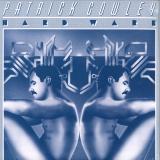
Simon Herody put together a live solo performance sequencing electronic devices on stage for him to jam over with acoustic instruments. He played a lot in hotels and lobbies. The music had to be present but not too intrusive. Subtle electronics to guide his saxophone and flute playing. The setup proved successful and inspired him to compose the works that would become 'Hard Lounge'.
'At the same time, I was working at a bar/record store in Neukölln called Motif. Everything changed when I discovered the album "Heisei No Oto - Japanese Left-field Pop From The CD Age." I remember this guy, Jamie, who would sometimes bring new releases to the shop. This album really changed things for me; I was constantly playing it and it inspired the creation of these works tremendously.
The composition process for "Hard Lounge" was pretty unclear. I never really made conscious choices; I wanted to escape the conflicts that come with picking the right chords. I aimed to create music that transports your imagination to a sort of retro 80s jazz lounge, where people feel comfortable and at ease just sitting and listening. I wanted to act like a music designer, giving people a chance to listen without demanding too much of their attention.'
The Rhythm Section – raves first super group - consisting of Ellis Dee, Rennie Pilgrim, Newton and Ritchie T. The group disbanded in 1993 after the rise of jungle as the guys didn’t want to go in that direction and felt their job was done in building the rave scene to what it was. But then in 1995 they had a request to reform and tour America as the rave culture was growing out there. So, they did reform, minus Ritchie T, and embark on a rather rave induced tour of the US with all the antics that you would expect from those guys!
They also wanted to make some new music for the tour and The Sequel album was born. Though written in 1995, they guys purposely kept the sound retro, calling upon their knowledge of the late 80s and early 90’s London warehouse scene.
Released originally as a limited edition double album which commands a high price on Discogs, this is the second part of the album – part one being the 180g blue vinyl release on Vinyl Fanatiks last year.
The first new Electro Clash tracks from Break 3000 since 2003! After a string of re-issues of old gems on Italy's "Mondo Phase", the Argentinian label "Calypso's Dream" and his own "Electron Feel" last year, Break 3000 is finally back with some new original cuts!
The A-side "Electronique" has all the ingredients you would want from a hard-hitting Electro Clash track. EBM style drums and a powerful raw bass line topped with soaring rave leads and pads and added original (Vocoder) vocals by Break 3000 himself. This one is road tested already on dance floors and big systems and a guaranteed crowd pleaser! Second up is the driving "Continua", leaning more towards Break 3000 Techno classics like "Flash" and "Fix" this filtered rave lead will make a wild crowd go even wilder. Dark and twisted Electro Techno at its best.
The B-side opens with another aspect of the Break 3000 sound spectrum. We look back to the early years here and to songs like "The Wait" and "Spacemaschinenreise" that were produced in 1999. In a Detroit meets Rotterdam styled Electro setting this song uses a lot of the old sounds from 26 years ago, mostly coming from his original EMU sampler used at the time and a great 80s vocal sample gives this track it's title. We are transported back to the golden era of Cold Wave here. Closing out this new EP is the wonderful Marcello Giordani from Parma, Italy who build a strong reputation with his "Italo Deviance" label over the years. He gives the original "Electronique" a great funky "Proto House" bass line in best "Bobby Orlando" manner, what a brilliant crossover track this one is! With the Vermona drum sounds his - Dark Disco meets Early House - jam will certainly be on many DJ's want list.
We hope you enjoy these new tracks! There is more to come… stay tuned!
All tracks are mastered by Salz Mastering in Cologne. Music, Photography & Art by Break 3000.
"Bassland Prophecy" was a collection of Southern California musicians, including Alex Xenophon (Deep Squared), Stuart Breidenstein (formerly of Skylab 2000), Alissa Kueker (vocals), and Maxx Vaxx (Euterpre, Butterfly Garden).
The act nourished and grew the emerging LA scene and was a renegade force in live electronic improvisation. Rather than composing full tracks, Breidenstein stated over email that they built musical "ingredients" on the fly, syncing DOS and hardware sequencers mid-performance. Their unpredictable sets, from illegal raves to makeshift desert parties, resulted in electrifying, unforgettable sonic trips.
Recalling 90s LA, Breidenstein said: “Before the internet, finding a rave was an adventure. You’d get a flyer with a phone number, call it the night of the event, then drive—sometimes 100 miles or more from a map point to the actual party. The scene was raw and underground, built by music obsessives hunting for the freshest sounds.”
Two standout tracks from 1996—“Nine / Deeper” and “Blue and Purple Starship of Trust”—perfectly represent their unique genre-bending concoctions. Against all odds, the recordings survived and have been given new life, remastered and reissued on Bristol-based *Sex Tapes From Mars*. To produce the wizardry, their setup included a Juno 106, Yamaha FB-01, a Roland S330 sampler, and a Sequential Circuits Pro-One mono synth with external MIDI, and some guitar effects pedals.
“Nine / Deeper,” born from one of their many spontaneous studio sessions, became eerily intertwined with recurring appearances of the number 9 and black cats. So much was the frequency of apophenia episodes that paranoia began to take over the artists. Recorded in a makeshift living room studio, the 14-minute excursion traverses genres and tempos, beginning quick and hypnotic, and climaxing chuggy and drenched in adlibbed acid lines, culminating in a surreal and legendary live performance in Hollywood. The piece captures the raw spontaneity of their sets, crafted with vintage gear, cassette tape recordings, and, as always, a DIY ethos. Breidenstein states, “While improvised sessions often failed, when it succeeded, it was definitely a kind of infectious magic the listener would recognize.”
“The Blue and Purple Starship of Trust” is a deeply personal piece, named after when Breidenstein saw a heavenly blue morning glory on a walk around his neighborhood, and emerged from heartbreak and the following deep depression entrenching his life at the time. Recorded in a single take onto cassette tape, blending piano, guitar, and heart-rending vocals into an emotional, dreamlike journey. The track starts with a lush, cascading synth sound, bolstered up by rolling, reverbing downtempo drums. Using Sequential Circuits Pro-One throughout, the rippling synths and off-key piano licks act like pipetted droplets of water, all elements bleeding into each other in some kind of hallucinogenic swelling, reflecting Breidenstein’s fading relationship. The guitar part is a nod to Bill Withers’ “Ain’t No Sunshine,” and Breidenstein recalls just “bawling as the guitar line was recorded.”
Created in a time of artistic struggle, living in an old school bus, surviving on instant noodles while hauling their gear from venue to venue, and scraping by on gig money, these recordings act as rare artifacts of a movement that thrived on passion and perseverance, standing as a poignant testament to resilience. Though they released a handful of tracks, ranging from deep house to ambient to techno, their true legacy lay in their high-energy, genre-blurring live shows, which are powerfully encapsulated within these recordings and leave a lasting impact on underground electronic music today.
Right on time once again, the fifth outing on Punctuality welcomes Irish producer Drua to the fore. In typical Punctuality fashion the release draws influence from the canon of golden era late 90s and early 2000s dance music with an entirely modern production aesthetic, engineered for big rigs and sweaty dancefloors alike.
Nightfire is a fully realised vision of Drua’s sound that could best be described as contemporary hard house. All four tracks are laden with punchy, rolling basslines, detailed low end, vibrant stabs, sultry vocals, undulating rhythms and sprinklings of quintessential club sparks.
The nouveau handbag styling of UP kicks off the EP. Stuttered vocals, M1 organs and solid grooves are fused together with clever sampling that is sure to make this one a hit for the festival season of s/s ‘25, as early support from the likes of Roza Terenzi, Confidence Man, Spray, Sally C and Maara would indicate.
Job 2.3 has all the elements of a Punctuality anthem and maintains the big tune mood of the EP: skippy bass notes, low end wubs, subtle breaks, catchy vocal hooks and precise drums nail the brief in executing this prog-hard-house hybrid heater.
On the flip, Nightfire nods to classic leaning deep house through a peak time lens. Introspective pads make way for pulsing subs, sensuous vocal chops and hip catching basslines. This is one of those tracks that can shift the arc of a DJ set to the next level. Big tip here.
The EP concludes with Arch In Ur Back which has all the elements to work a dancefloor: multiple grooves, rolling breakbeats, party starting vocals and the modern sound design that punctuality has gained worldwide notoriety for. An all killer no filler EP in the form of four well rounded club tools from Drua that are sure to be mainstays for discerning DJs and Punctualists
- A1: Korogi ‘73 - Fushigi Song
- A2: Yas-Kaz - Hei (Theme Of Shikioni)
- A3: Yoichiro Yoshikawa - Tassili N'ajjer
- A4: Norihiro Tsuru - Farsighted Person
- B1: Geinoh Yamashirogumi - Theme Of Kaneda
- B2: Yoichiro Yoshikawa - Fiesta Del Fuego
- B3: Columbia Orchestra - Heart Beats / Theme For Andrew Glesgow
- B4: Kan Ogasawara - Gishin Anki
LP vinyl only release + 4 page liner notes (comes with hype sticker)
The percussive new age soundtracks of '80s and early '90s Japanese TV, anime and manga built alternative worlds and pushed boundaries in the process.
When Japanese composer Yas-Kaz left Tokyo for Bali in the mid 1970s he had little idea of how influential his trip would become. In studying the storied art of gamelan, the jazz and avant-garde percussionist opened a door to a world of sound and rhythm left behind by the West. The music he and his contemporaries made would become known as new age. It also happened to soundtrack the golden era of anime.
Awash with money and with the prerogative to entertain the burgeoning middle classes, anime in the 1980s experienced a creative and commercial boom. Not constricted by generic expectations, production houses such as the now renowned Studio Ghibli were able to experiment liberally with both form and content. And with it came the space for composers to be similarly adventurous.
TV, Anime & Manga New Age Soundtracks 1984-1993 charts this moment across eight tracks spanning classics of the genre and previously unknown rarities. The collection brings together music that found kinship in electronic and acoustic instrumentation, often combining spiritual or environmental themes with percussive, varied and highly refined syncopations of non-Western musical traditions.
Among them is ‘Kaneda’ by Geinoh Yamashirogumi, the shape-shifting group of self-styled musicians, anthropologists and computer scientists that masterminded the soundtrack to game-changing dystopian anime Akira - and with whom the sound, tuning and breakneck speed of Balinese gamelan has become indelibly entwined.
Reflecting the desires of the era to reach beyond Japan’s borders, many of the soundtracks featured were commissioned for narratives set in distant lands or alternative worlds. There’s violinist and composer Norihiro Tsuru’s ‘Farsighted Person’, written for The Heroic Legend of Arslān, set in ancient Persia; Yas-Kaz’s own ‘Hei (Theme of Shikioni)’, for period sci-fi manga & anime series Peacock King - Spirit Warrior; and two tracks - Tassili N’Ajjer and Fiesta Del Fuego - from Yoichiro Yoshikawa’s soundtrack to NHK’s proto-Planet Earth series The Miracle Planet.
Such was the variety and quality of the music produced, if there is a guiding principle to the tracks collected here it is a sense of escapism and adventure that came with the confluence of modern electronic instruments and a fascination with percussive traditions.
Elsewhere, pioneering children’s TV composer Chumei Watanabe’s ‘Fushigi Song’ (performed by a vocal group Korogi ‘72) offers a trippy and infectious groove with sonic similarities to Don Cherry’s ‘Brown Rice’; little-known jazz-funk library group Columbia Orchestra showcase the best of Tokyo’s session musicians on ‘Hearts Beats - Theme for Andrew Glasgow’; before lawyer-turned-composer Kan Ogasawara closes out the compilation with a dramatic flourish on ‘Gishin Anki’.
Following on from Time Capsule’s acclaimed deep-dive into the world of manga & anime synth-pop in 2022, this vinyl only collection is set to broaden and diversify an understanding of how soundtracks shaped the sound of new age music in Japan for a generation.
Curators: Kay Suzuki, Rintaro Sekizuka (Vinyl Delivery Service)
Artwork: Tu-yang
AN ATLAS OF LOSS
Do minerals dream of becoming semiconductors? Do they yearn to carry charges, amplify, switch, and convert energy into emotions comprehensible to humans? And what if, from the darkness of the underground, they had been listening to us sing in caves before the emergence of the first flute? Could they have guided us, through the course of history, to find them, extract them, and create new sounds through sinusoidal waves, to form valves and bend circuits?
If so, minerals would transition from what philosopher Eugene Thacker defines as the ‘planet’—that virginal and unreachable realm for humans that we study through geology, paleontology, and environmental sciences—to the ‘world,’ the space we inhabit, interpret, and synthesise in our daily lives. Sadly, we only remember the world when it erupts violently, through climate catastrophes or when a new virus emerges. Sometimes a tsunami collides with a nuclear plant, or viruses are cultivated as biological weapons in high-security laboratories, provoking a deep biological anxiety, hard to quell, which we all feel beneath our skin.
There exists a third realm, disconnected from both the world and the planet: the ‘earth’, an immense, dense rock floating in space alongside other planets, situated in the cosmological dimension. Relating to the earth is so complex that we only do so through theoretical speculations of a scientific nature or through science fiction, interweaving until one becomes the prophecy of the other, in an infinite, pendular dance. Beyond the darkness of space and Lovecraft’s cosmic horror, the fantasy of human extinction is the most recurrent: to reach a collapse so devastating that we do not survive it, even though the earth does, without us.
In a world where we quantify everything through body sensors, financial algorithms, nanometre-scale robots, and surveillance drones—a world in which everything that can be domesticated and controlled can also be commodified—a superior artificial intelligence would survive the collapse of the species (some speculate it might even cause it) and learn from our mistakes, thanks to our obsessive gathering of data.
Long after our voices fade, minerals will persist in the darkness of screens, in the silicon of chips, and in their pure form, still unexploited underground. Over the millennia, this intelligence might piece together fragments of our reasoning, as if an alien civilization finally connected with one of our spacecrafts loaded with messages cast into the void. It would sort through endless streams of data, unable to grasp the depths of emotion behind what it quantified, recreating simulations of our past, stripped of the nuance that once defined us and conducting experiments in sandboxes.
Some remnants of our existence—faint echoes of forgotten beauty—would be pieced together in an atlas of loss, buried beneath layers of numbers, decayed bots, and corroded hard drives. What will follow? Perhaps bison will once again roam—trotting to the strange pulse of techno, their ancient forms framed by the ruins of our cities.
Buildings will crumble, slowly dissolving under the soft touch of ambient music, and a thousand flowers will bloom with that ancient music created through electrical signals and computation. 7 songs for a future both improbable and inevitable—a final message from a world lost to itself, from planet Earth to planet Earth.
Alfons Pich, 2025
After a couple of years of silence, the Colombian label Insurgentes, operated by DJ Lomalinda and Verraco, and responsible for putting several South American sound explorers on the map to the world in the past decade, is back for one last release, one last dignified death: la última vez.
And for this last installment, one last album. ‘Fiera’ is the name of the LP that Seph wrote and programmed during 2022 and 2023. For us, his greatest work so far: an energetic and impulsive journey, it's an active listening that never stops, you can never trust the loop. 8 tracks that do honour to the Insurgentes catalogue and consolidate the sound of the celebrated and respected Argentine artist who has been in force for more than two decades, crossing the territories of techno, 90s IDM, dub and ambient. Tags that are masterfully captured and collided in the grooves of these 300 vinyls.
Today is both a happy and a sad day. But the feeling of contradiction has always been the main alkaloid of our artistic work and the result of our search for identity. Without Insurgentes there would be no TraTraTrax. Without Insurgentes, no platform would have been created for many of the dreams that today are a fact and that even dictate our future. We would like to thank all those who have been linked anywhere along the way with our sonic fiction, with our desire to build bridges, with our thirst to connect ass and mind.
Que la tierra te sea leve, querido INS
- A1: Harleys & Indians (Riders In The Sky)
- A2: Crash! Boom! Bang!
- A3: Fireworks
- A4: Run To You
- B1: Sleeping In My Car
- B2: Vulnerable
- B3: The First Girl On The Moon
- B4: Place Your Love
- B5: I Love The Sound Of Crashing Guitars
- C1: What’s She Like?
- C2: Do You Wanna Go The Whole Way?
- C3: Lies
- C4: I’m Sorry
- C5: Love Is All (Shine Your Light On Me)
- D1: Go To Sleep
- D2: Almost Unreal
- D3: Crazy About You
- D4: See Me
Crash! Boom! Bang! 30-year anniversary celebrated with a unique special edition: a double album in black and white vinyl with 18 tracks and an 8-page booklet.
30 years ago, Roxette released their fifth album "Crash! Boom! Bang!", including a stream of hit singles like "Sleeping In My Car", the title track, "Fireworks", "Run To You" and "Vulnerable". The album would sell more than five million copies and was followed by their second World Tour, which saw them perform for over a million people, including the second performance ever by an international act in China.
“Roxette were among the three most played artists on American radio during 1989, 1990 and 1991, and we were on top of the charts all over the world. So, it's no wonder we felt pretty confident when it was time to record the new album”, Per Gessle says. “Having had that kind of success made us feel that we had a perfect opportunity to stretch out into new directions. To show slightly different sides of what Roxette could be. And I still think "Crash! Boom! Bang" is our best album”. Crash! Boom! Bang! saw chart success upon release, No. 1 in Sweden, No. 2 in Germany and No. 3 in Australia and the UK.
Roxette – Marie Fredriksson and Per Gessle – came out of Sweden in the late 80’s. Their game was pop, their mission to conquer the world. With 33 chart-busting singles and total record sales exceeding 75 million, it seems safe to say “mission accomplished”.
Following the success of his ‘Love Dub So’ EP, Nick Barber’s Doof project returns to Mysticisms, delving back to his earliest recordings of his ground-breaking Trance project, presenting tracks from his previously cassette only release ‘The Love Mixes’.
A youth that had captured the psychedelia of Pink Floyd, Gong, Hawkwind and on to Psychic TV, as a self-taught guitarist, his first trip to India and Thailand in 1989 and witnessing the early electronic dance music at the Full Moon parties, had seemed rudimentary in nature compared to musicality of psychedelic rock.
Returning to England, the electronic / rock crossover of The Shamen’s ‘Progeny’ parties – featuring DJs like Paul Oakenfold and Mixmaster Morris with the live acts of Orbital and Ramjac Corporation – offered something new that turned his head, before finally finding his crew in the legendary squat / underground Pagan parties. There, residents Lol and Yaz first played the new electronic Trance sound, introducing Barber to the music of Eye-Q, Dance To Trance and the hugely influential Pete Namlook.
Recorded between 1990 – 1991, while living in Cambridge to study Philosophy, these are the first versions of tracks that formed the basis of his debut EP on Novamute, in 1993. Working with minimal equipment – an Akai sampler, Roland monosynth, Yamaha delay pedal, all sequenced on an Atari black and white PC and single MIDI output and then recorded straight to an 8-track Tascam cassette multitrack – the exuberance and rawness of the music are full of the excitement and naivety of youth.
Never intended for public release or initially even as a demo, Barber would play the music off the Tascam multitrack for friends at after parties. Dubbing a handful of cassettes himself and personally drawing the covers, around a dozen cassettes were handed out to mates. Eventually one copy found its way to Mute Records, who were looking to launch their dance offshoot, Novamute. Re-edited mixes of Gift Of The Gods and The Nagual appeared on his debut EP and history was made, before Doof went on to release for luminaries like TIP Records and Dragonfly and a career touring the globe was launched.
Remastered from the original tapes, this EP offers a snapshot of that time, the energy and joy of these early recordings is clear and overwhelming. Where Ambient, House and Techno met the birth of electronic Trance that truly stand up some 30 years later as originals then and now.
Trance The Mystery.
When you’re running a label, a demo occasionally comes across your desk that makes you reconsider everything you thought your label was all about. For Balmat, such was the case with this stunning album from Stephen Vitiello, Brendan Canty, and Hahn Rowe. It sounds like nothing we’ve released so far—and that very otherness opened up a whole new world of possibilities for us.
Fans of ambient, experimental electronic music, and sound art will be familiar with Vitiello, a New York native, long based in Virginia, who has collaborated with a cross-generational list of greats: Taylor Deupree, Steve Roden, Lawrence English, Tetsu Inoue, Nam June Paik, Ryuichi Sakamoto, Pauline Oliveros, and many more. On labels like 12k, Room40, and Sub Rosa, he has explored a wide range of minimalism, microsound, lowercase, ambient, improv, and other styles. But this album is something different. It may begin in ambient-adjacent territory, but it quickly veers off, and it just keeps zigzagging, taking on elements of krautrock, post-punk, dub, and the groove-heavy interplay of groups like Natural Information Society and 75 Dollar Bill.
This stylistic turn is thanks in large part to Vitiello’s choice of collaborators. “We’re coming from three different schools,” Vitiello says: “sound art, art rock, and punk rock.”
Active since the early 1980s, Rowe—a violinist, guitarist, and producer/engineer—has played with, or manned the boards for, a frankly jaw-dropping list of musicians: Herbie Hancock, Gil Scott-Heron, the Last Poets, Roy Ayers, John Zorn, Glenn Branca, Swans, Live Skull, Brian Eno, David Byrne, Anohni, R.E.M., Yoko Ono, and many more. But he might be most closely associated with Hugo Largo, a one-of-a-kind New York quartet—two basses, vocals, and Rowe’s violin—that in the late 1980s helped lay the groundwork for what would eventually become known as post-rock.
Canty, of course, is the legendary drummer of Fugazi, the visionary DC post-hardcore group, as well as Rites of Spring before them, and, currently, the Messthetics, a Dischord-signed instrumental trio with guitarist Anthony Pirog and Fugazi bassist Joe Lally.
Vitiello’s trio first collaborated on First, a 17-minute piece released on the Longform Editions label in 2023. Second picks up where the freeform drift of First left off, channeling the trio’s exploratory energies into more intentionally structured tracks and—in a real first for Balmat—some almost shockingly muscular grooves. “Sometimes my projects are more conceptually driven,” Vitiello says, “but I think this was more musically geared. I just wanted to open up the references and bring in an incredible drummer, bring in some melodies, and I’m sort of the center.” But his collaborators, he stresses, are “vastly creative in making anything I might suggest better.”
Like its predecessor, Second took shape in phases, shifting between improvisation and collage. Vitiello laid down the skeleton of the music at home, sketching out initial ideas on Rhodes keyboard and acoustic and electric guitar; he then fed the parts through samplers and his modular system, recording 10- or 20-minute jams. Once he had edited them into more structured forms, he hit the studio with Canty, who added not just drums but also bass and piano; finally, Vitiello took the results of those sessions to Rowe, who played violin, viola, electric bass, and 12-string acoustic and bowed electric guitar, and assisted in some of the final structuring and mixdown.
A few more surprises along the way: Reanimator’s Don Godwin, the studio engineer where Vitiello recorded with Canty, contributed what he calls “resonant dustpan”; and none other than Animal Collective’s Geologist, who just happened to be in the studio that day, sits in on hurdy gurdy on “Mrphgtrs1,” the album’s gorgeous, stunningly atmospheric drone closer. “I love these chance encounters,” Vitiello says. “Somebody I admire, a group I admire—that was an unexpected gift.”
An unexpected gift is a great way of describing Second as a whole: three veteran musicians venturing outside their usual zones and finding a new collaborative language together. The results can’t be neatly slotted into any given genre; they belong not to any given category, but to the spirit of conversation itself.
M-Scape is a solo project by Japanese DJ/producer/remixer Makoto Nakatani.
Urban Reconstruction is a release that blends House, Techno and Broken-Beat in a very skilful way.
The title track is, dare we say, a Los Hermanos sounding track that holds both the energy and harmonies Gerald Mitchell would produce.
'I Do' is house on a broken beat tip while 'Freedom' got more of the M-Scape sound fusing House, Jazz and Techno.
Ending the EP is 'Let The Drums Play' which is not far from what electronic-Jazz pioneer Mark de Clive-Lowe does and a great way to end an EP that makes a stellar debut on Local Talk.
Yore returns with an unusual one for us. This first EP by Ross Alexander is more Techy than what you would expect on Yore – However, its still somewhere between the slim lines of House and Techno – more Techno in a Detroit way. Well, Ofcourse – what else would it be, right?
All four tracks are ready for your dancefloor – so grab yours, as these very limited copies, will be gone in no time.
Strictly limited to 200 Copies worldwide (no repress).
Scruniversal's sub label Tunes Delivery invites Moscow scene veteran Leonid Lipelis to don his Beard In Dust moniker for their third instalment, one which dips into various different eras of dance history for inspiration. There's a distinctly late 80s feel to opening tune 'Music of the U', complete with sampled bell stabs and the kind of beats that wouldn't be out of place on an S'Express or early Coldcut house affair. 'The Armenian Break' and 'City of Love' look back even further, back to the female-fronted disco efforts of the 70s, the latter adding a touch of Balearic flourishes. 'Abstractish P' circles around some serene arpeggios, with rave whistles and, as it progresses, twisting guitar notes, lending it an individual air, while closer 'RoRyaRe' nods to ExCel-era 808 State with some nice bleepery before settling into more progressive headnodding territory and some distinctive synth play.
When SW. AKA, Stefan Wust, first established SUED in 2011, their compelling, cosmic and anonymous material struck a rare chord, emanating far beyond the freeform Berlin underground in which it was written. Unknowingly, Los Angelean Oliver Bristow had
established a parallel musical universe, founding the hyper-specific label Acid Test, inviting pioneering artists such as Donato Dozzy, Tin Man and Pepe Bradock to indulge in glorious interpretations of 303 control. Without compromise, these were records that quietly
reinvigorated electronic music.
Some years later, a new label, SWOB, unites Wust and Bristow in a very different landscape. And while it would be easy to transform the purity and integrity of this special alchemy into something like nostalgia, yearning for an alternative culture before
influencers and against algorithms, SWOB endeavours to find inspiration in arguably tougher truths.
“By the mid-90s, the techno scene had already reached a breaking point”, recalls Wust.
“Today, the scene is so highly professionalized that it barely resembles what was once called the "underground. But "underground" was never more than the simple reality that music circulated on cassettes among friends or that dubplates were played at illegal
parties... The consequence of today’s professionalization is the death of the original movement.”
Still, no one can kill an idea. Here, inspired by the “Outside Tekno” or “Outkast Techno” that emerged to subvert even back in the day, SWOB are proud to introduce the tekkNOthing trilogy, a new project from SW. beginning on cassette and culminating later
on vinyl. Some years in development, tekkNOthing first began to take shape during the 2020 global pandemic, when ‘the underground’ quickly began to mean something radically different once again.
“I noticed how everything was accelerating while simultaneously spinning in circles – existing in a kind of creative limbo on a global scale”, recalls Wust. “And that’s where true freedom lies: for artists – in any sense – to consciously engage with this necessity. In
other words, irrationality or nonsense can eventually generate meaning.” While hardly capitulating to the contemporary hammering of techno’s most recent developments, tekkNOthing’s first chapter quickly establishes a frenetic pace; tracks like ‘nuclearFALLoutX’ and ‘paslolESmess’ interlock and unfold at a tempo removed from that typically associated with SW. while ‘euroBSS’ and ‘viscousHEAT’ successfully experiment with a more guttural palette, veering far into a rejuvenating and previously uncharted leftfield.
A resolutely human endeavour, the music of SW. is nonetheless written and recorded in the looming shadow of AI, whose free-form adoption of pop culture, hip-hop and techno reminds Wust of “when photography emerged in the 19th century... painting was no
longer bound to naturalism. Similarly, music today is no longer bound to fixed standards – through AI, it can become truly free.”
If not in competition, than taking inspiration from this landscape of new opportunity, tekkNOthing diversifies further with eight unpredictable tracks across part II, taking in stuttering machine-funk on ‘crAMPDUNK’, a freeform organ jam via ‘sonicENdo’ and the
inexplicable piston-percussive, post-punk exotica heard on ‘poorTENOOR#a#01’ DJs with dual cassette decks skills might even find function in the more overtly floor-focused ‘DU ¨NEhowSE#1takeÄ’ or ‘lookLOOK’.
The times may have changed, but the promise remains simple; more music, more freedom.
Australia's world-renowned cinematic soul outfit Surprise Chef return with new album Superb. A record that represents a change in their creative approach and turns up the heat in their music. Trading in their meticulous writing and recording techniques for a looser and less planned approach with the intentions of bringing more levity to the process, and it comes through in spades. The high caliber musicianship is still front and center, but they push their sound into a more energetic and fun place on this album. Album opener "Sleep Dreams" is the closest thing to a Surprise Chef tune one would come to expect but then lead single "Bully Ball" comes on and you get the picture that they came to kick in the door on this one. The song's gritty drums thunder through the speakers and get covered with percussion, keys, bass, and guitar chanks that stay in the pocket and bring the funk with them. The band pushes the boundaries of arrangement with tunes like "Body Slam" that starts off like a sweet soul track then pulls a 180, turning dark and haunting, centering on a sound they created by tucking a timpani into a bathroom two doors down from the mixing board. That same sense of experimentation comes up again on "Fare Evader" where they pepper another neck breaking rhythm track with synth notes that sound like robot sound effects from a 70s sci-film. The fellas turn up the tempo for the dance with tunes like "Consulate Case" and "Tag Dag"; the former pulling influence from afro-funk and the latter from jazz-funk. They take us deep into the beautiful world of Surprise Chef ballads on "Websites" and double down on their abilities to make beautiful and ethereal tracks with "Dreamer's Disease". With their new album Superb, their new approach, and plans to tour the world, we are about to see Surprise Chef take the step from the underground's most beloved to a household name and we are definitely here for it.
“Less than a month after one of the most violent fire events in the history of the continent, new shoots had burst through the scorched hardpan, nourished by the still-vital roots of those flayed and blackened trees.” John Vaillant, Fire Weather.
Loscil (aka Scott Morgan) returns to kranky with Lake Fire, a nine-track offering of ash-laden sonics that mine the tension within the cycle of destruction and rejuvenation.
Lake Fire is the result of a disjointed creative process. Originally conceived as a suite for electronics and ensemble, most of the original compositions were deserted, save for Ash Clouds, featuring James Meager on double bass. The remaining tracks were reshaped and remixed, built anew out of the remnants of the abandoned work. The result is a phoenix, an album burnt to the ground only to be reassembled out of its cinders. Fragments of the original lurk beneath a densely overpainted canvas of sound.
Infused into the resulting rearrangements are impressions from a road trip into the mountains marking a personal half-century milestone, surrounded by the ominous proximity of wildfires and dense smoke; celebrating life while the world burns. The album’s title comes from the striking irony that forest fires are often named after regional lakes - perhaps subconsciously referencing ancient lore. The cover photos were taken from this same trip, while sitting in a rowboat staring into the grey abyss of an opposing mountainside outside of Revelstoke, BC, obfuscated by smoke from a nearby lake fire.
Press quotes for previous solo release “Clara”:
"The sound sculptor Scott Morgan continues to astound.” Pop Matters
"A beautifully nuanced work, Clara is both revealing and mysterious -- and loscil fans wouldn't expect anything less.” Allmusic
press quotes for previous collaboration release with Lawrence English “Colours of Air”:
"As you might expect from the steady hands at the tiller, this is a cortex-hugging drone record of beauty and depth.” The Quietus
"One of the thrills of listening to this record is how its initially predictable veneer fades on subsequent listens to reveal layers of mischief underneath.” Resident Advisor
Australia's world-renowned cinematic soul outfit Surprise Chef return with new album Superb. A record that represents a change in their creative approach and turns up the heat in their music. Trading in their meticulous writing and recording techniques for a looser and less planned approach with the intentions of bringing more levity to the process, and it comes through in spades. The high caliber musicianship is still front and center, but they push their sound into a more energetic and fun place on this album. Album opener "Sleep Dreams" is the closest thing to a Surprise Chef tune one would come to expect but then lead single "Bully Ball" comes on and you get the picture that they came to kick in the door on this one. The song's gritty drums thunder through the speakers and get covered with percussion, keys, bass, and guitar chanks that stay in the pocket and bring the funk with them. The band pushes the boundaries of arrangement with tunes like "Body Slam" that starts off like a sweet soul track then pulls a 180, turning dark and haunting, centering on a sound they created by tucking a timpani into a bathroom two doors down from the mixing board. That same sense of experimentation comes up again on "Fare Evader" where they pepper another neck breaking rhythm track with synth notes that sound like robot sound effects from a 70s sci-film. The fellas turn up the tempo for the dance with tunes like "Consulate Case" and "Tag Dag"; the former pulling influence from afro-funk and the latter from jazz-funk. They take us deep into the beautiful world of Surprise Chef ballads on "Websites" and double down on their abilities to make beautiful and ethereal tracks with "Dreamer's Disease". With their new album Superb, their new approach, and plans to tour the world, we are about to see Surprise Chef take the step from the underground's most beloved to a household name and we are definitely here for it.
Originally released in 2015
To celebrate Molly Nilsson’s most enduring fan-favourite album to date, Night School and Dark Skies
Association are releasing a limited 10th anniversary pressing on Red-Gold vinyl, limited to 500 copies.
Since its release in late summer of 2015, Zenith has come to be considered Nilsson’s greatest album to date. Now
on its 6th pressing, in 2025 Zenith represents the mid-point in the songwriter’s career to date and contains firm fan
favourites in Mountain Time, Happyness and her most popular song, 1995. Zenith sits square between Nilsson’s
original flurry of DIY creativity and her later, outward-looking political material.
A sweeping, cinematic, emotional change is in the air. Molly Nilsson's sixth studio album Zenith begins with clear, wide eyes open to Earth as we would love it to be but seldom is. Recorded in her home of Berlin and whilst touring and, as ever, conceived, produced, written and recorded in solitude, Zenith is Nilsson's big statement and consequently her most affecting work to date. It sees her reveling in big arrangements, sweeping synth strings, bigger choruses and emotions. Like the rest of us she looks within and to endless sunsets in wonder and puzzlement
"Are You in Heaven?" was famously shouted by Roxy DJ Eddy de Clercq to the crowd at one of the very first legendary house parties in Amsterdam. This phrase not only symbolizes an iconic moment that captured the spirit of the era—it’s also the title of one of the three tracks featured here.
In 1991, inspired by the dance music craze that swept across Europe at the time, Arnoud Winkler and Jochem Peteri (who would later become the one-man supergroup Newworldaquarium) produced music that is equal parts euphoric, emotive, vital, and vibrant—youthful in spirit, naive yet clever. A European translation of a US-American art form, born from pure enthusiasm and concentrated passion for a culture that, to this day, continues to resonate universally.
Originally released on Lower East Side Records, the story told here is full of rave symbolism, after-party joy, and literal can-you-feel-it moments: rattling sub-bass, blissful pads, whispering voices, dub techniques, and subconscious peak-time signals.
Complemented by a new edit of Ulysses Horizon by Gerd Janson (alongside a revised version of the original), alongside Flowerdale Beach, and Are You in Heaven?, the music here hasn’t lost a single inch of its charm or allure. A taste of Dutch house deluxe.
"Kindred spirits and loyal soldiers on the frontlines of the dub war Detroit's 2Lanes and Los Angeles' Cromie link up to present to the world, Destiny Cloud. With a project name inspired by a mystical vacant storefront in Cromie's neighborhood of Altadena (still standing after the fires, bless), the guys formed like a storm after being intro'd by a notorious LA promoter and hotboy producer matchmaker. Funnily enough, the first session was foiled by a missing cable, so it wasn't until the sexy summer of 2023 that the cloud seeds that went on to become Sun Phase/Moon Phase were planted. From the jump, their vision was lucid and their objective collective: lock in at the stu(s) to make the most jiggy, psychedelic, tripped out club shit they could muster. Fast forward to today, Destiny Cloud is proud to bring you the latest missive on 2Lanes' Auto Shop imprint.
On the A side, Sun Phase sets it off with searing stabs from the hands of session killer Ji Hoon on a heavenly Jupiter-8 (sorry not sorry, the real thing does sound better) before a bassline straight off the Adriatic's Argonaughty comes in to funk up the flow over a bed swung hi-hats and drum circle conga lines the Wickedest west coast house heads can appreciate (no hippy shit, but we ARE on Hipp-E's dick). A keep-it-simple-stupid *muah' organ line plays nice with a gang of embellishments to take this one through its duration (Joey pressed record and said "ooh-wah" into the vocoder; no lie, I was there). With his Toxic Love remix, NYC upstart DJ John Brooklyn injects the tune with the highest grade octane to up the revs. The aforementioned organ becomes a timeless trance lead, and new pipes are inserted reminding us all that house music is forever.
Day turns to night on the B Side with Moon Phase, where booming kicks let you know off the rip that this is some real deal late night trunk funk. We're talking dualities here y'all; Cromie's deep-as-the-Pacific bassline meets Joey's frozen-lake-cold Detroit stabs as the drums speak in tongues with those on the other side of the slab. Reverb ghosts and rhythmic acid have this one veering more psychedelic without losing the jiggy factor, while diving proggy synths will have the Global Underground saying, "yea this is our shit, for real." With a run time that allows for maximum fun time, the ambient outro gives you a kiss on the forehead to put that ass to sleep. The iconic DJ Miss Parker takes the wheel on the remix, taking this one straight down the Tunnel with new-school/true-school Tenaglia-isms that wouldn't sound out of place in 2000, 2005 or 2025.
Like all the work we do, this one's a team effort. Salar Ansari put's his deft touch on the mixdowns and Jack Anderson blesses the center of both sides of the disc. Out mid-May, just in time for when things start heating up
Mathame Unveil Their Latest Masterpiece: "ANGEL"
Renowned for their groundbreaking contributions to electronic music, Italian duo Mathame is set to captivate audiences once again with their latest single, "ANGEL" Conceived in January 2024 amidst their vibrant tours across Mexico and Asia, the track marks a new pinnacle in Mathame's illustrious career. Critics have lauded "ANGEL" as a real summer anthem, perfectly capturing the essence of summer vibes with its infectious energy and uplifting melodies.
In February 2024, Mathame's journey took them to the heart of Manhattan, NYC, where they collaborated with the equally illustrious Italian duo Parisi. Known for their collaborations with industry giants like Fred Again and Swedish House Mafia, Parisi has been close allies of Mathame since Mathame invited them to perform their first-ever live shows in London and NYC during 2023 and 2024 at Mathame’s events.
This union of brotherhood and musical genius birthed "ANGEL" a track co-written by both duos and perfected through electrifying live performances during the spring. The creative process culminated in the iconic setting of Ibiza, where the final touches were added, ensuring "ANGEL" would emerge as the definitive summer anthem of 2024.
Critics have hailed "ANGEL" as a testament to the innovative spirit and profound synergy. The track showcases their ability to blend mesmerizing melodies with pulsating rhythms, creating an unforgettable experience for listeners worldwide.
- A1: Take Kare Feat Young Thug & Lil Wayne
- A2: Quaterback (Feat Migos & Peewee Longway)
- A3: Rarri Feat Young Ralph
- A4: Stunna
- A5: Best Friend
- B1: Power
- B2: Calling Your Name
- B3: No Way
- B4: Mine
- B5: Freaky
- C1: Be Me See Me
- C2: Overdosin
- C3: Again
- C4: Thats All
- C5: U Digg What Im Saying
- D1: Draw Down
- D2: Wood Would
- D3: Wanna Be Me
2[77,94 €]
For The First Time On Vinyl!
Slime Season is the seventh self-released mixtape by American rapper Young Thug, released on September 16, 2015. It features production from a range of artists, including London on da Track, Metro Boomin, Ricky Racks, Wheezy, and WondaGurl, and guest appearances from Migos, Gucci Mane, Peewee Longway, and Lil Wayne.
12" EP. Azmari is thrilled to announce the release of their fourth opus, 5-track EP 'In Oculis'. The EP is a reflection of the band's collective desire to reinvent themselves. With a more minimalistic approach, the four musicians have created an eclectic, intense, and vibrant body of work, recorded during various residencies in Belgium and abroad. The result is a fusion of genres that range from powerful grooves to cinematic jazz, from floating melodies to entrancing soundscapes.
For this new project, Azmari teamed up with a long-time collaborator, Guillaume Souffrice (alias Mosso Mosso), who had already been Azmari's guitarist in the band's early days. Souffrice's expertise as a music therapist and multi-instrumentalist, combined with his passion for cross-cultural rhythms and melodies, adds a new depth and dimension to the band's sound.
Souffrice's extensive travels have taken him from Iranian Kurdistan, where he studied the daf (a large frame drum used in Sufi ceremonies), to northern India, where he immersed himself in the modal subtleties of the shehnai (Indian oboe). His love for psychedelic guitar tones and the classic wha-wha pedal remains at the heart of his musical approach, creating a fusion of tradition and experimentation.
The EP opens with 'Night Plants Can Run,' a track that starts with a rhythmic loop on the Berimbau, a Brazilian percussion instrument traditionally used in Capoeira. The song offers a steady, groovy journey between Rio de Janeiro and Sarajevo, with a guitar theme doubled by the saxophone, all underpinned by a deep 4/4 groove. The middle part of the track introduces a lot of percussion (an Azmari signature move) that gives a sense of urgency and chase, inspired by the band's experience playing the track in the studio, imagining a pursuit through the depths of the Amazon.
Next, 'Disassembling the Matrix' takes listeners on a 9/4 march that feels both elusive and powerful. Born from a jam session where an arpeggiator loop wouldn't stop, the band decided to continue with it, highlighting the beauty of a spontaneous creation once again. 'Lizzard's Dream' is a guitar-driven trip that gradually intensifies in energy. The song surprises with a sudden groovy break - a moment that was initially the core of the track - before returning to its soft and introspective theme, closing out the A-side of the vinyl.
The fourth track, 'Eyelights,' was born from the shores of Vevey Lake in Switzerland. It reflects the result of a long period of mental observation and rhythmic exploration. Three different time signatures were used to create the song's intro, which comes together as they go along. The melody loops with a peaceful and nostalgic vibe, creating a dreamlike atmosphere. Under the direction of Frederik Segers, who produced the EP, 'Eyelights' takes on a cinematic feel, with classical upright piano sounds that are a first for Azmari.
The EP closes with "17th Tiger Print," which takes us to the banks of the Ganges. Souffrice's shehnai leads the track into a hypnotic, hallucinatory dimension, where the interplay between his instrument and the baritone saxophone creates a textured, mystical atmosphere. This track encapsulates the essence of Azmari, a sound that bridges cultures and emotions in a minimalist yet highly effective way.
'In Oculis' marks another milestone in Azmari's musical evolution, blending the band's signature style with new influences and experimentation. Whether you're a longtime fan or new to their sound, this EP promisesto take you on another ride around the world.
Jack Cutter is a songwriter and guitarist based in the San Francisco Bay Area in California. He started with a $5 banjo just after finishing high school. In University, during the late 60's, he performed with bar bands in Buffalo, New York. After completing University and a year as an Aerospace Engineer, he decided that attack helicopters were not really what the world needed and so
he headed off to California in pursuit of music and mystic times.
Fast forward to Fall 2014: Jack is playing his quintessential tune, 'Gift of Our Fathers' in the SF BART subway to an onslaught of morning commuters when he was spotted by 40 Thieves. Eureka! Love at first sight and in the next few months, two of Jack's original acoustic pieces were given the 40 Thieves
treatment.Enter David Sanderson aka David Harks, a singer, songwriter, producer and label curator from the East Sussex region of the UK. 'Having fallen in love with the cosmic boogie (of 40 Thieves classic 'Backward Love') I really felt I would
love nothing more than to write a tune with them. Layne got back in touch with a track he was working on entitled Serpent Strut with Jack Cutter and we worked via email over a few months to brew up that misty soul.' Deep, stony, psychedelic, drawing from the well of Hawkwind, Joni Mitchell, David Crosby, Baffo Banfi and Tolkien-tinged acoustic Led Zep, the proof of
concept is now complete and in the capable and loving hands of Claremont 56.
Fozbee & Cooz were the first artists we approached as Vinyl Fanatiks when it came to re-issuing fantastic music from the early 90’s. They were a big inspiration on us here at the label, with all their original releases sat in the racks here since the 90’s.
Two brothers our of Hertfordshire, they were the link between Jack Smooth and his first release – loaning him their Akai sampler so he could write his first track. They were also round the corner from Bukem, who wanted to work with the guys on music back then. But as the brothers lived at home with their parents and Bukem had a strict weed smoking policy when writing music, the project didn’t take off the ground as their mum would of gone mad!
Fast forward 32 years and we are honoured to be able to share with you the brothers first release under their monicker of Fozbee & Cooz. Two big rave classics that got a lot of pirate radio play back in the day too. And as usual, the original of this release commands a high price on Discogs, so grab a fully authorised copy from us at a fraction of the price!
Jordan Strong presents the first in a series of vinyl releases on his Wave Machine imprint featuring his "This Must Be The Place" original and three solid remixes. As Jordan is an eclectic house producer he's created a unique driving indy/nu disco track with hints of his hand played African percussion accompanied by his own meditative spoken word and synth elements that give this track its own unique groove that would take a brave and seasoned collector to truly understand. Incredible remixes include Knoe1's Indy Acid version, Chris Herrera's dubby chugger, and Hamza Rahimtula's absolutely brilliant uplifting tribal primetime banger. Each version stands out from the other and has as its own magical time and place on the dance floor making this record a well-rounded and timeless gem.