Suche:x 13

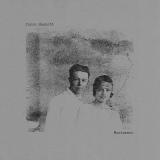
- Nocturne 1: Snow Dance
- Nocturne 2: Lovely Cold Ruins
- Nocturne 3: Darkusosy
- Nocturne 4: Goodbye Pork Pie Gal
- Nocturne 5: Piano Man's Pain
- Nocturne 6: Rain Soaked Choker
- Nocturne 7: Nosferatu
- Nocturne 8: Chainca Shadow
- Nocturne 9: Larks
- Nocturne 10: Satalight Song
- Nocturne 11: Meet Me In The Hills
- Nocturne 12: Pyjamas
- Nocturne 13: The Hissing Mist
Spectral, nostalgic, highly evocative, sometimes-desolate reflections — alone on the piano, and together with saxophonist and flautist Finn Peters — soaked in Satie, Ravel, and Mompou. Expressive and enchanting, but mournfully distracted, with a tentative, exploratory wonderment which reminds you of Paul Klee’s well-worn idea of a drawing as a line taking a walk. Easy to recommend to those of you who recently enjoyed Mashu Hayasaka’s Etudes LP, on All Night Flight. This is lovely stuff from Jesse, in an unexpected departure from his work with Elmore Judd, the Gorillaz, Nyege Nyege Tapes…
- 1: Live From Mumbai 00:36
- 2: No Other Than 04:03
- 3: Powerman & Iron Fist (Fighting Without Fighting Version) 0:00
- 4: Sure Shot! 03:32
- 5: Fresh Like Dougie 04:42
- 6: How To Cut & Paste (Lesson 1) 04:54
- 7: Audobahn 03:56
- 8: All Out War 03:46
- 9: Break Down 03:24
- 10: Golden Crown (Feat. Oxygen) 04:52
- 11: Fashion Plate 04:13
- 12: Sister Of Phyllis Diller 04:01
- 13: Heroes Of The East (Feat. Paten Locke) 04:21
- 14: The Pack Up (Part 3) 02:44
RED & YELLOW SPLATTER Vinyl[29,20 €]
Expanded Edition Double Cassette Box Set including main album and Bonus Cassette with unique download cards
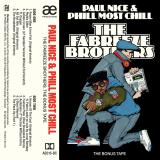
AE Productions in association with Sure Shot Recordings and In Effect Recordings are pleased to announce a 10 Year Anniversary Edition of the critically acclaimed Phill Most Chill and Paul Nice album as the Fabreeze Brothers.
The hugely successful first edition which was pressed on colour vinyl and supplied in double fold out sleeve sold out in only 2 weeks from release date and then the 2nd pressing black vinyl edition sold out a little while later but has for years been out of print but is increasingly requested by shops, via email, social media, AE Productions website back in stock requests, etc…
As it has been 10 years since original release back in 2015 at the time of proceeding with manufacturing, it was the perfect opportunity to do a 3rd pressing to mark the anniversary but we had to pull out all the stops for a 3rd run of this incredible album and also make it subtly different again in packaging design from the 1st and 2nd pressings so that each has it’s own particular feel and quality.
With help from the original designer and all-round vinyl artwork supremo Mr Krum we have found some nice adjustments for the gatefold sleeve where the detail from the insert sheet found in the original issues is incorporated into the inside panels of the sleeve. We have also tweaked the hype sticker to mark the 10th Anniversary Edition and updated the vinyl labels so as to work better with the new Splatter vinyl which follows the original red and yellow vinyl but each splattered with the opposite colour.
For something a little extra we have compiled a Limited Expanded Edition Double Cassette Box Set that includes the original album and also a ‘Bonus Tape’ which features all of the remixes, alternate versions, Original Versions of album cuts and bonus tracks found on B-sides of the array of singles and we included for good measure 2 tracks that only appeared on the promotional only LP sampler that ended up being different on the final release. This is limited to cassette just for the non-vinyl heads as all of these tracks already appear on vinyl. The outer box is A5 card in black with gold foil Fabreeze Brothers logo and comes with discography booklet.
‘The Bonus Tape’ from the box set is also available as a standalone cassette release with alternate j-card art work so that it has it’s own flavour and so that anyone that purchased one of the original run of cassettes that sold out before we could even ship any copies, did not need to purchase the main album again unnecessarily and to make it noticeable from the Expanded Edition Box Set version.
This version also has an alternate shell design in keeping with the clear shell with dark liner that was commonplace back in the 90’s and the cassette geeks may note the red text on the spine as was also a common design back then – giving this a pseudonym of ‘the 90’s tape’ during the design process.
We couldn’t stop there so we also have an extremely low quantity Limited Edition Mini Disc version which is the main album plus 8 of the bonus tracks from The Bonus Tape – only missing the 2 least significant alternate versions but clocking in at just a few seconds under 80 minutes – the absolute maximum for the format! Mini Disc???!!! You’re probably asking – yes!
While looking into the cassette duplication options we realised that the duplicator also offers Mini Disc production so we thought that it may be worth doing a very small run just because not only are professionally manufactured Mini Disc’s rare in Hip Hop, they are rare within the entire music industry as they never really took off as a medium to purchase music but ended up as the choice for home recorded Walkman and car use. Indeed, AE boss Mr Fantastic still has his main machine, portable and old discs. Amazingly also, the sleeve artwork transferred brilliantly to the Mini Disc template. They are manufactured using high quality Sony discs using ATRAC 4.5 codec.
All releases are supplied with unique free download codes on cards that are included inside the packaging but also with the Expanded Edition cassette and Mini Disc having 2 cards – 1 for the main album and a 2nd card for ‘The Bonus Tape’. The free downloads are supplied direct from Phill Most Chill’s Bandcamp page keeping it independent.

- 1: Lack Of Love
- 2: Bb
- 3: Andata
- 4: Solitude
- 5: For Jóhann
- 6: Aubade 2020
- 7: Ichimei - Small Happiness
- 8: Mizu No Naka No Bagatelle
- 9: Bibo No Aozora
- 10: Aqua
- 11: Tong Poo
- 12: The Wuthering Heights
- 13: 20220302 - Sarabande
- 14: The Sheltering Sky
- 15 20: 180219 (W/Prepared Piano)
- 16: The Last Emperor
- 17: Trioon
- 18: Happy End
- 19: Merry Christmas Mr. Lawrence
- 20: Opus - Ending
Experience the profound artistry of Ryuichi Sakamoto with Opus, a definitive vinyl collection curated by the composer himself. Spanning decades of groundbreaking work, this 4-LP set brings together iconic film scores, Yellow Magic Orchestra classics, and deeply personal compositions that reflect Sakamoto’s singular musical voice. Highlights include Merry Christmas Mr. Lawrence, Andata, and Aqua, alongside never-before-released pieces including for Jóhann (a tribute to Jóhann Jóhannsson), BB (dedicated to Bernardo Bertolucci), and 20180219 (featuring prepared piano).
Pressed at 45 RPM across four heavyweight LPs for exceptional audio fidelity, each disc is housed in its own jacket with matching black paper dust sleeves. The set is encased in a hand-crafted textured slipcase with elegant black foil detailing and includes a collector’s booklet with composition notes and credits. Opus is more than a retrospective; it’s a final statement from one of the most influential composers of our time.
- 01: Maanitus &Amp; Tšiižik
- 02: Markka
- 03: Melkutus
- 04: Letška
- 05: Kuuen Parin Hoirola
- 06: Brišatka
- 07: Tšiižik
- 08: Kirkonkellot
- 09: Kirkonkellot Korkea
- 10: Hoirola, 3 Parin
- 11: Lippa
- 12: Kyngäkiža
- 13: Ristakondra
- 14: Vanha Polkka
- 15: Viistoista
- 16: Vanha Valssi
- 17: Kiberä
- 18: Maanitus Kuokan Kanteleella
- 19: Tuuti Lasta Nukkumahe
Vinyl[22,65 €]
Death Is Not The End present a further volume of Arja Kastinen's eerie amalgamations of 110 year old wax cylinders with her own meticulously transcribed takes, this time focussing in on Armas Otto Väisänen's field recordings of kantele player Iivana Mišukka (b. 1861 d.1919).
"Ivana Mišukka (1861–1919) was one of the Karelian kantele players recorded by the folk music researcher Armas Otto Väisänen on wax cylinders in 1916 and 1917. In the early 20th century, the remote areas of Border Karelia were undergoing the final phase of a transformation in musical culture, with the ancient runo song tradition giving way to newer forms of music. This transition is reflected in Mišukka's repertoire and choice of instrument. The ancient small kantele, hollowed out of a single piece of wood, was already rare at the turn of the century. Mišukka's kantele was a new type of instrument with 26 strings, constructed of several parts, but he played it using the traditional plucking technique. Like other Border Karelian kantele players, his repertoire consisted of music rooted in runosong culture, as well as newer dances and songs from the east and west. Most of the recorded material falls into the latter category.
Ivan Bogdanov Mišukka was born out of wedlock in Suursara village, Suistamo, on 1 May 1861. He began playing the kantele at the age of five or six, quickly mastering the instrument. In adulthood, he was considered one of the area's best master players. Mišukka was landless for most of his life and lived in different parts of the Suistamo parish. His first wife, Tekla Markintytär, died in 1897 at the age of 40, and his second wife, Jevdokia Filipintytär Jeminen, died in 1907 at the age of 50. Seven children were born from the first marriage, two of whom died young. The third wife, Maria Ignatintytär Gurnan (Kuurnanen), was a well-known master of lamentations. Together with Maria, Iivana Mišukka worked as a tenant farmer in the village of Suursara. Mišukka suffered from rheumatism, which prevented him from participating in physical work like Maria. This was apparently partly the reason why Iivana Mišukka went to earn extra money by playing the kantele on gig trips. He often had other traditional artists from Suistamo as his travelling companions, such as the runosingers Konstantin Kuokka and Iivana Onoila. Iivana Mišukka died in Leppäsyrjä village, Suistamo, on 18 May 1919 at the age of 58, and his kantele was donated to Teppana Jänis.
Mišukka only used 14 of the 26 strings on his kantele, playing the same tunes either a fourth higher or lower. He tuned his kantele to the major scale using fifths, except for a low seventh scale degree on the upper strings, but not below the fundamental. Since he did not use the seventh note of the scale on the upper strings at all, he could use the major scale both lower and a fourth higher with this tuning. According to Mišukka, the sound of higher, or 'finer', strings is 'more beautiful', while that of lower ones is 'greater'. Among runosingers, the size of the thirds varied, ranging from major to minor to neutral. A similar phenomenon can be observed in kantele tunings, where the third, sixth and seventh scale degrees vary in a comparable way.
During a meeting, Väisänen suggested that Mišukka play the smaller kantele belonging to Konstantin Kuokka. The idea was to bring it closer to the horn to improve the recording quality. However, the kantele was completely out of tune, and now Mišukka tuned it to the Lydian scale (track 18).
Using the old plucking technique, Mišukka placed his right middle finger on the fundamental tone, his right index finger on the second scale degree, his left middle finger on the third scale degree and his left index finger on the fourth scale degree, and his right thumb on the fifth. The thumb also played the notes above the fifth note of the scale. As Mišukka remarked to Väisänen: 'Peigaloll' tuloo enemb ruadoa' (the thumb has to do more work). However, he did not use the seventh note of the scale on the upper strings at all. Below the fundamental note, he played the seventh and sixth notes of the scale with his right middle finger of and the fifth note of the scale with his right ring finger. This fifth scale degree below the fundamental is almost always used as a drone. Sometimes, when the melody required it, Mišukka, like other players, also varied the fingering. He would also occasionally strike the same string with the side of his fingernail after plucking it.
The wax cylinder recordings of Karelian kantele players are kept in the archives of the Finnish Literature Society in Helsinki, Finland. Copies were made of them onto reel-to-reel tapes in both the 1960s and 1980s. The 1960s copies are mono and the 1980s copies are stereo. However, not all kantele recordings from these decades have survived.
The sound of the kantele is difficult to hear in wax cylinder recordings due to its low volume, and it occasionally becomes completely obscured by noise. During the copying process, the cylinder sometimes rotates unevenly, resulting in breaks or jumps in the music. Additionally, the rotation speed of the cylinder in the copies does not correspond to the performance speed of the original music, which alters the pitch. However, since Väisänen's precise notes are available in the archive, it is possible to deduce the melodies, their speed, and the tuning level of the kantele in the recordings. Of the copies of the original recordings from the 1960s and 1980s, I have selected the one that best met the requirements of this publication and adjusted the speed of the recording to align with Väisänen's notes. To enhance the listening experience, I have replayed the songs, which now partly overlap the old recordings on this release."
— Arja Kastinen
- 01: Maanitus &Amp; Tšiižik
- 02: Markka
- 03: Melkutus
- 04: Letška
- 05: Kuuen Parin Hoirola
- 06: Brišatka
- 07: Tšiižik
- 08: Kirkonkellot
- 09: Kirkonkellot Korkea
- 10: Hoirola, 3 Parin
- 11: Lippa
- 12: Kyngäkiža
- 13: Ristakondra
- 14: Vanha Polkka
- 15: Viistoista
- 16: Vanha Valssi
- 17: Kiberä
- 18: Maanitus Kuokan Kanteleella
- 19: Tuuti Lasta Nukkumahe
Tape[16,39 €]
Death Is Not The End present a further volume of Arja Kastinen's eerie amalgamations of 110 year old wax cylinders with her own meticulously transcribed takes, this time focussing in on Armas Otto Väisänen's field recordings of kantele player Iivana Mišukka (b. 1861 d.1919).
"Ivana Mišukka (1861–1919) was one of the Karelian kantele players recorded by the folk music researcher Armas Otto Väisänen on wax cylinders in 1916 and 1917. In the early 20th century, the remote areas of Border Karelia were undergoing the final phase of a transformation in musical culture, with the ancient runo song tradition giving way to newer forms of music. This transition is reflected in Mišukka's repertoire and choice of instrument. The ancient small kantele, hollowed out of a single piece of wood, was already rare at the turn of the century. Mišukka's kantele was a new type of instrument with 26 strings, constructed of several parts, but he played it using the traditional plucking technique. Like other Border Karelian kantele players, his repertoire consisted of music rooted in runosong culture, as well as newer dances and songs from the east and west. Most of the recorded material falls into the latter category.
Ivan Bogdanov Mišukka was born out of wedlock in Suursara village, Suistamo, on 1 May 1861. He began playing the kantele at the age of five or six, quickly mastering the instrument. In adulthood, he was considered one of the area's best master players. Mišukka was landless for most of his life and lived in different parts of the Suistamo parish. His first wife, Tekla Markintytär, died in 1897 at the age of 40, and his second wife, Jevdokia Filipintytär Jeminen, died in 1907 at the age of 50. Seven children were born from the first marriage, two of whom died young. The third wife, Maria Ignatintytär Gurnan (Kuurnanen), was a well-known master of lamentations. Together with Maria, Iivana Mišukka worked as a tenant farmer in the village of Suursara. Mišukka suffered from rheumatism, which prevented him from participating in physical work like Maria. This was apparently partly the reason why Iivana Mišukka went to earn extra money by playing the kantele on gig trips. He often had other traditional artists from Suistamo as his travelling companions, such as the runosingers Konstantin Kuokka and Iivana Onoila. Iivana Mišukka died in Leppäsyrjä village, Suistamo, on 18 May 1919 at the age of 58, and his kantele was donated to Teppana Jänis.
Mišukka only used 14 of the 26 strings on his kantele, playing the same tunes either a fourth higher or lower. He tuned his kantele to the major scale using fifths, except for a low seventh scale degree on the upper strings, but not below the fundamental. Since he did not use the seventh note of the scale on the upper strings at all, he could use the major scale both lower and a fourth higher with this tuning. According to Mišukka, the sound of higher, or 'finer', strings is 'more beautiful', while that of lower ones is 'greater'. Among runosingers, the size of the thirds varied, ranging from major to minor to neutral. A similar phenomenon can be observed in kantele tunings, where the third, sixth and seventh scale degrees vary in a comparable way.
During a meeting, Väisänen suggested that Mišukka play the smaller kantele belonging to Konstantin Kuokka. The idea was to bring it closer to the horn to improve the recording quality. However, the kantele was completely out of tune, and now Mišukka tuned it to the Lydian scale (track 18).
Using the old plucking technique, Mišukka placed his right middle finger on the fundamental tone, his right index finger on the second scale degree, his left middle finger on the third scale degree and his left index finger on the fourth scale degree, and his right thumb on the fifth. The thumb also played the notes above the fifth note of the scale. As Mišukka remarked to Väisänen: 'Peigaloll' tuloo enemb ruadoa' (the thumb has to do more work). However, he did not use the seventh note of the scale on the upper strings at all. Below the fundamental note, he played the seventh and sixth notes of the scale with his right middle finger of and the fifth note of the scale with his right ring finger. This fifth scale degree below the fundamental is almost always used as a drone. Sometimes, when the melody required it, Mišukka, like other players, also varied the fingering. He would also occasionally strike the same string with the side of his fingernail after plucking it.
The wax cylinder recordings of Karelian kantele players are kept in the archives of the Finnish Literature Society in Helsinki, Finland. Copies were made of them onto reel-to-reel tapes in both the 1960s and 1980s. The 1960s copies are mono and the 1980s copies are stereo. However, not all kantele recordings from these decades have survived.
The sound of the kantele is difficult to hear in wax cylinder recordings due to its low volume, and it occasionally becomes completely obscured by noise. During the copying process, the cylinder sometimes rotates unevenly, resulting in breaks or jumps in the music. Additionally, the rotation speed of the cylinder in the copies does not correspond to the performance speed of the original music, which alters the pitch. However, since Väisänen's precise notes are available in the archive, it is possible to deduce the melodies, their speed, and the tuning level of the kantele in the recordings. Of the copies of the original recordings from the 1960s and 1980s, I have selected the one that best met the requirements of this publication and adjusted the speed of the recording to align with Väisänen's notes. To enhance the listening experience, I have replayed the songs, which now partly overlap the old recordings on this release."
— Arja Kastinen

- Stahlwerk Ruhr + Blocco Schengen
- Planlosneu - Derpolier
- The Eschaton - Plague Pits
- Autoscooter Abfahrt - Kühle Matroasen
- She's Gone - Veinspine
- Die Feuerwehr Kommt Nicht - Age O.p.f
- Mondlandschaft - Bêtes Sauvages
- Stromschlag - Der Fotograf
- Keine Gnade - Pleasue Victim
- Immergleich, Immer Stumm - Ruhr
- El Baile De Las Goticas Feas - The Berlangas
- Plastik Fantastik - Weltklang Feat. Akkumuller
- I Wanna Shit - Nuke Kanata
Schmitz is a cool guy. He dreams of meeting the ruler of the universe. One day, his dream comes true: he meets the electro goddess Irma. The compilation is a kind of audiobook in 13 acts, danceable and cool, fast and loud, an homage to all space cats. The LP comes with a booklet introducing the bands and telling the story.

- 1: Bluey Theme Tune (Orchestral Version)
- 2: Sleepytime
- 3: Puppets
- 4: Curry Quest
- 5: Alongside
- 6: Ice Cream (Waltz Of The Flowers)
- 7: Flat Pack
- 8: Hotel
- 9: Seesaw
- 10: Pirates
- 11: Stumpfest
- 12: Tradies
- 13: Relax
- 14: Space
- 15: Mount Mumandad
- 16: We'll See
- 17: Bluey Theme Tune (The Sign Version)
Joff Bush and the Bluey Music team proudly present the brand-new Bluey album. Featuring 17 brand-new recordings including ‘Sleepytime’, ‘Flat Pack’, ‘Seesaw’, and the new ‘Bluey Theme Tune (Orchestral Version)’.
“This was our most ambitious album to date - so we wanted something extra special - something we’ve wanted to make for a long time."..."Hearing the music from episodes like ‘Sleepytime’ and ‘The Sign’ in all its orchestral splendour meant tissues needed to be on hand throughout the mixing process.”
“Fittingly, the theme of this album is ‘growing up’. Much of this music, like the episodes they derive from, explore what it means when kids start to discover their independence and venture out on their own. Whether that’s learning to sleep in their own bed or taking a spaceship to Mars. I hope you enjoy ‘Up Here’, as the opportunity I had to make this album is thanks to YOU!"

- 1: You're A Dog, Don't Talk To Me
- 2: Hoot Owls
- 3: Give Me The Cure
- 4: New Tea
- 5: Don't Blame It On Me
- 6: Parsnip Snips
- 7: Runaway
- 8: Old Black Crow
- 9: Light Green Fellow
- 10: The Time Is Right
- 11: Goin' To Polynesia
- 12: Abominable Snowman
- 13: U.s. Space Weevils
Das Album hat Songs, die Michael für eine zweite Folkways-LP aufgenommen hat, die nie rausgekommen ist, und auch Songs von einer Demo-Aufnahme für ESP-Disk, die leider nicht geklappt hat. Das sind einige unserer Lieblingsstücke von Hurley. Es sind einfache, warme und eindringliche Heimaufnahmen von Songs, die später zu Klassikern seiner Karriere wurden. Man kann die Entwicklung in seinem Songwriting und Gitarrenspiel verfolgen, während Hurley zu dem Künstler wird, den wir heute kennen. Ein Muss!

- 1: The Auctioneer
- 2: Tour Worn
- 3: Hey You Hey You (Are You Are You Ok Ok?)
- 4: Ducklings
- 5: Some Advice
- 6: The Wardrobe Song
- 7: Party With A Hard T
- 8: Pixels
- 9: Listening
- 10: Top Score
- 11: The Ship Is Still Sinking
- 12: Paintballs
- 13: Keep Eyes On
- 14: Vertical
- 15: A Great Deal
- 16: Can We Get This Straight?
PET NEEDS return with their fourth studio album ‘ELBOWS OUT! THIS IS CAPITALISM’ to be released on Xtra Mile Recordings on 27th March 2026. Recorded by George Perks (Enter Shikari, You Me At Six, Mogwai, Skindred) it follows the release of their Top 20 album ‘Intermittent Fast Living’ in February 2024. The album charts the exploits of the band buying a second-hand punk rock career at auction and trying (and failing) to make it work.
Over the course of the genre-spanning 12 tracks, the story unfolds with a mix of frenetic punk rock defiance; reflective melodic introspective and beat heavy party anthems as well as guest appearance by CJ Ramone, legendary auctioneer Eric Olson and friends The Whops and Jess Guise who help the story develop. The album is a satirical look at the pitfalls of trying to make it as a DIY punk band, delivered by a band at their most creative and bold as they continue on their own ascension of success.
PET NEEDS are a punk fuelled melodic rock fourpiece from Colchester who have toured the world since they signed with Xtra Mile in 2020. Their past three albums have helped catapult the band to the rising stars they are today. They regularly headline tours in UK, Europe and in America as well as huge support tours with Laura Jane Grace, Art Brut, Frank Turner, Flogging Molly, Skinny Lister, Bouncing Souls, NOFX, The Hives. The Lottery Winners, Spike & The Gimmie Gimmies and The Levellers. In the lead up to the album release the band will tour the UK’s regional towns giving fans exclusive listens to some of the new songs. And throughout week of release will perform instores and outstores to push for a high chart position.

- 1: Time Has Come
- 2: Harptree
- 3: Take A Little Time Out
- 4: Scraggle Cat And Puss Cat Willum
- 5: Concerto Uno
- 6: Harptree Too
- 7: Concerto Due
- 8: Harptree Tree
- 9: That Crazy Wind
- 10: Behind My Eyes
- 11: Heaven Knows (Treehugging)
- 12: Whalewatching
- 13: Earthmotherearth
"Earth Mother Earth" is literally a home made album by former YES singer Jon Anderson. Acoustic based and recorded in his home, "Earth Mother Earth" in some ways brings back the magic of Anderson’s debut solo album "Olias of Sunhillow" making use of harp, acoustic guitars and vocals. In this case he goes for a more natural approach with songs about love and faith and making use of sounds recorded in his garden, including birds chirping in the background. Musically this album shows the huge influence that Simon & Garfunkel and Cat Stevens had on Anderson (and, thus, YES)

- 1: New New World
- 2: Understanding Truth
- 3: Unbroken Spirit
- 4: Love Of The Life
- 5: Big Buddha Song
- 6: Incoming
- 7: Effortlessly
- 8: Love And Understanding
- 9: Just One Man
- 10: Sharpening The Sword
- 11: Cloudz
Coming out of some serious health issues which undermined his singing capacity, Jon came back with this solo album which can easily be rated among his best ever. The album has a convincing spiritual mood enriched by means of an intelligent variety of tunes, from the most religious ones, to more symphonic compositions à-la "Jon & Vangelis”. His old buddy Rick Wakeman appears on this album along with other brilliant musicians who are able to create a very organic work as a whole. It is a wonderful, a hugely enjoyable musical, spiritual, and vocal journey with one of rock's most important contributors.

- 1: Intro (Comshell 5)
- 2: Global Warming
- 3: Branded
- 4: Welcome To Kuwait
- 5: Critic / Cynic
- 6: The 'Hood
- 7: The Underworld
- 8: He's A Woman / She's A Man
- 9: Process Elimination
- 10: Labyrinth Of The Mind
- 11: Reap What You Sow
- 12: Darkness (Live)
- 13: The 'Hood (Live)
EvilDead fans, listen up: 27 March 2026 will see the re-release by the American thrash metal act of their cult album The Underworld’ including a number of bonus tracks. The original recordings date back to 1991 and have been remastered by Bill Metoyer (Slayer, Armored Saint). Remastered

- A1: Suite 1
- B1: Suite 2
- C1: Suite 3
- D1: Suite 4
Step inside the shadow-drenched world of The Curse of Frankenstein with this definitive soundtrack release from Hammer Films, celebrating the film that launched Hammer Horror and changed cinema forever.
In early 1957, composer James Bernard wrote, orchestrated and recorded sixteen powerful cues for The Curse of Frankenstein. Created in a remarkably short production window, Bernard’s score became the sonic blueprint for Hammer’s bold new gothic identity.
Although all sixteen tracks were used in the finished film, the original session recordings are now lost. During Hammer’s painstaking 2025 4K feature restoration, approximately 13 minutes of clean music were newly extracted from the film’s original mixed music-and-effects track — a rare archival recovery that brings Bernard’s work back from the grave.
For the first time anywhere in the world, this historic music is released on vinyl, presented as four atmospheric suites across two 45rpm 7" EPs. Carefully curated to preserve the dramatic flow of the score, this release allows listeners to experience the chilling intensity, gothic menace and emotional weight that defined Hammer’s Frankenstein.
Pressed on green vinyl and produced exclusively as a Limited Collector’s Edition, this set is essential for Hammer fans, classic horror collectors and film-music connoisseurs.
This Limited Collector’s Edition includes:
• Four suites of music from the original The Curse of Frankenstein soundtrack
• Two 45rpm 7" EPs pressed on green vinyl
• Liner notes by David Huckvale, biographer of James Bernard
• Liner notes by Hammer music expert John Mansell
Own a landmark piece of horror film history and experience the sound that resurrected Frankenstein. This exclusive vinyl release is available only from Hammer Films — once it’s gone, it’s gone forever.

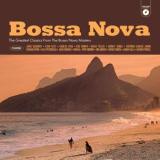
- 1: Joao Gilberto - Chega De Saudade
- 2: Stan Getz - Bim Bom
- 3: Carlos Lyra - Ciúme
- 4: Baden Powell - Improviso Em Bossa Nova
- 5: Silvia Telles - Se É Tarde Me Perdoa
- 6: Quincy Jones - Soul Bossa Nova
- 7: Antônio Carlos Jobim - A Felicidade
- 8: Charlie Byrd - Meditacao
- 9: Ella Fitzgerald - Desafinado
- 10: Joao Donato E Seu Trio - Muito A Vontade
- 11: Maysa - O Barquinho
- 12: Pery Ribeiro - Garota De Ipanema
- 13: Orlandivo - Onde Anda O Meu Amor
- 14: Grant Green - Brazil
- 15: Laura Villa - Corcovado
- 16: Luiz Bonfa - Luzes Do Rio
Mit der neuen Ausgabe der Vintage Sounds Vinyl Collection kehrt ein echter musikalischer Schatz zurück - diesmal ganz im Zeichen der Bossa Nova. Diese liebevoll kuratierte Zusammenstellung präsentiert 16 zeitlose Klassiker, die den unverwechselbaren Klang Brasiliens geprägt haben und bis heute weltweit für entspannten Groove und federleichte Eleganz stehen. Auf dem Album versammeln sich die wichtigsten Künstler einer Ära, die Musikgeschichte geschrieben hat: Joao Gilberto, Baden Powell, Silvia Telles, Quincy Jones und natürlich Antônio Carlos Jobim, dessen Kompositionen bis heute als Herzstück des Genres gelten. Freuen Sie sich auf unvergängliche Perlen wie "Chega De Saudade", "Garota De Ipanema", "Desafinado", "Corcovado", "A Felicidade", "Soul Bossa Nova", "O Barquinho" oder "Meditaçao" - alle sorgfältig ausgewählt und auf hochwertigem Vinyl neu erlebbar gemacht.

- 1: Duck Tape
- 2: Pcb
- 3: Macho Nacho
- 4: The Wind
- 5: Everything I Must
- 6: In Love
- 7: Live Laugh Love
- 8: Five Guitars
- 9: Toads On Roads
- 10: Pretty People
Topsy Turvy sind zurück und bereit für den Kampf. Mit ihrem Space-Age-Glam-Look ist ,Fighting the Ginormous Macho Nacho" das zweite Album des Wiener Trios, das respektlos, clever und immer verspielt ist. Mit Instrumententausch, opernhaften Vocals und jeder Menge Van-Halen-Synthesizern webt die Band eine unruhige Mischung aus Garage-Punk, Surf, Vintage-Rock und Psychedelia, die sich an den legendären ,Girls In The Garage"-Compilations orientiert und bis hin zum knurrenden Trotz von Amyl and The Sniffers oder Automatic reicht. Entstanden aus der kollaborativen Szene einer produktiven DIY-Szene in Wien, ist es nicht nur das bisher fokussierteste Werk der Band, sondern auch ein Hochgesang des unabhängigen Geistes, eine lebendige, atmende Rebellion gegen toxische ,Macho Nacho"-Männer auf der ganzen Welt. Topsy Turvy's "Fighting The Ginormous Macho Nacho" ist die zweite Veröffentlichung der Band, nicht lang nach ihrem gefeierten Debütalbum "But Sore" aus dem Sommer 2024. Vinyl-LP inklusive Din A2 Poster.


- 1: Return Of The North Star (Produced By Bt)
- 2: House Of Flying Daggers (Produced By J Dilla)
- 3: Sonny's Missing (Produced By Pete Rock)
- 4: Pyrex Vision (Produced By Marley Marl)
- 5: Cold Outside (Produced By Atl / Ice Water Inc)
- 6: Black Mozart (Produced By Rza)
- 7: Gihad (Produced By Necro)
- 8: New Wu (Produced By Rza)
- 9: Penitentiary (Produced By Bt)
- 10: Baggin Crack (Produced By Erick Sermon)
- 11: Surgical Gloves (Produced By The Alchemist)
- 12: Broken Safety (Produced By Scram Jones)
- 13: Canal Street (Produced By Ice Water)
- 14: Ason Jones (Produced By J Dilla)
- 15: Have Mercy (Produced By Moss)
- 16: 10 Bricks (Produced By J Dilla)
- 17: Fat Lady Sings (Produced By Ice Water Inc)
- 18: Catalina (Produced By Dr. Dre And Mark Batson)
- 19: We Will Rob You (Produced By Allah Justice)
- 20: About Me (Produced By Dr. Dre And Mark Batson)
- 21: Mean Streets (Produced By Allah Mathematics)
- 22: Kiss The Ring (Produced By Scram Jones)
- 23: Walk Wit Me (Produced By Scram Jones)
- 24: Badlands (Produced By Bt)
First released in 2009, Only Built 4 Cuban Linx… Pt. II stands as Raekwon’s celebrated sequel to the Purple Tape, expanding his cinematic mafioso rap universe.
This newly designed instrumental edition removes the vocals to place full focus on the album’s production, featuring beats by J Dilla, Dr. Dre, RZA, Pete Rock, The Alchemist, and more.
For the first time ever on vinyl, the instrumentals are presented as a standalone listening experience, revealing the album’s grit, mood, and layered sound design.
Pressed on classic black vinyl and housed in a heavy matte-finish jacket with spot gloss text, the Shaolin Noir Edition keeps the spotlight on the music itself, serving as a clean, essential companion to one of Raekwon’s most acclaimed releases.

- 1: Far Cry
- 2: Dream Theme (Feat. Marta Sofia Honer)
- 3: Lilacs
- 4: Tea (Feat. William Corduroy)
- 5: Time (Feat. William Corduroy)
- 6: Leaves (Feat. Irvin Pierce & Andrew Toombs)
- 7: Life Lessons
- 8: Froggy Meadow
- 9: Alone With Guitar
- 10: Dormir Très Bien
- 11: Deep Sleep (Feat. Jeremiah Chiu, Marta Sofia Honer, Matt Gold & Macie Stewart)
- 12: Life Goes On
- 13: Memories Of Dreams
