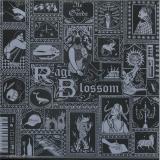
Born Bad Records knew exactly what it was doing when it signed this Nantes-based trio, whose sharply defined sound and raw authenticity stand out. With Rage Blossom, Île de Garde unveils an EP charged with palpable tension, somewhere between dark pop and psycho-wave. A catalogue of modern misdeeds, a David Lynch-like backdrop where Sylvia Plath’s poetry might cross paths with the controlled excesses of Fever Ray.
The EP opens with “Fear The Sun,” its Mike Oldfield-esque soundscapes plunging us into an apocalyptic and unsettling world. “Homicide Volontaire” follows with meticulous narration, a technical exercise evoking the anger and defiant lucidity of a Virginie Despentes. The hallucinatory hit “To Death” snaps like an anthem to collective dancing in the face of the inevitable. Since we’re going to die, let’s dance! On the B-side, “Ageless Woman” weaves together a half-mythological, half-mysterious text, carried by haunting backing vocals. “Birthday Girl,” featuring Kuntessa, radiates an ironic and joyful riot-grrrl energy, an uninhibited celebration of women’s liberation. Finally, “Boy,” a small post-punk jewel, closes the EP with an ending as surprising as it is delicate.
The group’s genius also lies in the complementarity of its musicians. Morgane Poulain anchors the drums with a dynamic that is both subtle and narrative, airy yet jagged. Cécile Aurégan, the architect behind a multitude of synths, builds powerful sonic landscapes, layer upon layer. Klara Coudrais, the band’s poetic figurehead, elevates her texts with a rich and plural vocal palette, giving life to several characters who vibrate with intensity. The band’s writing, hovering between darkness and light, echoes a kind of visceral poetry, exploring the seasons of the soul with authenticity and force.
With this EP, Île de Garde establishes itself as a band to watch closely, capable of translating on stage both the raw energy and the fine craftsmanship that define their music. An immersive journey, full of tension, urgency, beauty, and electric flashes.
Île de Garde, a Nantes-based trio with sharply drawn sonic contours and raw authenticity, unleashes its full arsenal on Rage Blossom, an EP radiating palpable tension between dark pop and psycho-wave. A catalogue of modern misdeeds, a David Lynch-like setting where Sylvia Plath’s poetry would meet the controlled excesses of Fever Ray. An immersive journey of tension, urgency, beauty, and electric sparks.
Opening track “Fear The Sun” plunges us into an apocalyptic and unsettling landscape. “Homicide Volontaire” continues with meticulous storytelling, a crime vignette evoking anger and the fierce lucidity summoned by a situation with no way out. The hallucinatory trance of “To Death” snaps like an anthem to collective dance in the face of the inevitable. Since we are going to die, let’s dance! “Ageless Woman” blends a half-mythological, half-mysterious text, carried by hypnotic backing vocals. “Birthday Girl,” featuring Kuntessa, releases an ironic and joyful riot-grrrl spirit, an uninhibited celebration of feminine liberation. Finally, “Boy,” a small post-punk case study, closes the EP with a simple, sensitive truth.
The three musicians propel and relay one another in this breathless race. Morgane Poulain drives the drums with a dynamic that is both subtle and narrative, airy yet staccato. Cécile Aurégan, architect of multiple synths, builds powerful sonic landscapes, layer after layer. Klara Coudrais, the storyteller, elevates her texts with a rich and multifaceted vocal palette, giving life to all their characters, both mythical and ordinary. The band’s writing, between darkness and light, proclaims a visceral poetry, exploring the seasons of the soul with authenticity and strength.
Suche:x ile
Introduced by the digital single ‘Deixa Passar’, this 12” EP concretises on physical support the renewed collaboration between the two Schema Records artists Gerardo Frisina and Tomaz ”Toco” Di Cunto, working together again five years after the release of the EP “Frisina Meets Toco” (SCEP 487): the two unreleased songs here included, the aforementioned “Deixa Passar” and “Ilê”, are featured both in their original and reworked versions, and represent an excellent blend of samba jazz and Brazilian popular music. In both tracks, the music composed and arranged by Gerardo backs up the Portuguese language lyrics and melodic lines of Toco, who duets with Luzia Dvorek in an almost surprising contrast between serious and graceful sounds. The instrumental department features Gianluca Petrella on trombone, Eduardo Taufic on piano (Deixa Passar) and Fender Rhodes (Ilê), and Edu Moreno on flute (Ilê), in an excellent ‘union of opposites’, between popular music and modern sounds, between acoustic instruments and electronics, with mystical influences that envelop the songs with a mysterious and attractive aura. Not only musically, but also visually and lyrically, this EP is a tribute to the Brazilian culture and lands, already from a cover that re-imagines the iconic shapes of the famous Copacabana pavement in Rio De Janeiro: while “Deixa Passar” celebrates Rio’s carnival as an opportunity to momentarily free oneself from the burdens of life, “Ilê” recalls the traditions of Salvador De Bahia’s historic ‘bloco afro’ quarter called Ilê Aiyê.
Île Flottante is Mr. Beatnick´s 5th album, following 2023’s Joy In Variation (including the notorious cover of Love on a Real Train) and his well-received off-beat collaboration with London-based avant-garde agitator Richard Greenan – Coasty – this is his first contribution to the International Feel trademark. Probably best known for some big deep house revivalist tunes circa 2013 on the now dormant Don’t Be Afraid record label, Beatnick now converts that aural quality and dimensionality into the Balearic system.
Île Flottante takes its name from the tastiest French pudding of Mr. Beatnick’s childhood holidays. The name, also a jeux de mots - floating island - hinting at the album’s inspirations and sense of identity, as a danceable soundtrack to a fictional island. Explored with high intensity and over a yearlong process, the sounds of the well-worn, but never failing Balearic universes were a mind expanding influence. Think of genre staples like Software, Manuel Goettsching, Mark Barrott, Len Leise, Don Carlos, Gaussian Curve, Joan Bibiloni or Yasuaki Shimuzu.
„I spent a year listening to a lot of synthesized island music, and marveling at the many twinkling wonders of the Balearic musical universe. Struck by a sense of belonging that had often eluded me on my musical journey thus far, as the weirdo at the back of the club who had orbited many scenes for 20 years, but never felt like I fitted in, I found music that made me feel like I had come home. The songs that came out of this process are presented in the order that they were written - an open book of ocean hymns, honest and spoken from the heart.“
Île Flottante tries its very hardest to avoid being any one thing in particular. At one point, it is a gentle beach walk accompanied by polyrhythmic drum plod and flourishes of Guzheng. At another, the infamous James Yancey septuplet swing is repurposed against a marimba melody that wouldn’t be out of place in one of Link’s forest adventures.
Elsewhere, there are the bellows of distant whales, touches of Italian dream house and a splash of vintage madchester, all working to create a space that feels both familiar and loaded with well worn tropes, but with its own quirky sense of personality, facets which are often attributed to Mr. Beatnick’s holistic b-boy approach. This is his understanding of a Balearic (b-boy) stance. Just with a float instead of a freeze.
- A1: The Red Island
- A2: L'ile Rouge (Générique)
- A3: Thomas Et Suzanne
- A4: Flute Interlude
- A5: Colonial Party
- A6: Harp Interlude
- A7: L'ile Rouge Variation
- A8: Harpsichord Interlude
- B1: Madagascar Ballade
- B2: La Marche Nocturne
- B3: Harp Interlude 2
- B4: L'ile Rouge (Générique De Fin)
- B5: Flute Interlude 2
- B6: Red Island Variation 2
- B7: Thomas Et Suzanne Variation 1
- B8: L'ile Rouge Variation 2
- B9: Thomas Et Suzanne Variation 2
- B10: Tropical Dance
- B11: Tropical Dance 2
Der OST des französischen Produzenten Arnaud Rebotini aka Black Strobe zum belgisch-französischem Spielfilm 'L'Ile Rouge / Red Island' (2023) von Regisseur Robin Campillo (der nach der Grand Jury Prize-Auszeichnung bei den Filmfestspielen in Cannes 2017 für seinen Film '120 BPM' Kultstatus genießt). Das semi-autobiografische Drama 'L'Ile Rouge' handelt vom Heranwachsen eines 10-jährigen Jungen Anfang der 1970er Jahre auf einem französischen Militärstützpunkt in Madagaskar und läuft im September 2023 beim 71. Internationalen Filmfestival von San Sebastián.
- Les Soleils De L'île De Pâques A1
- La Brûlure De Mille Soleils A2
- La Brûlure De Mille Soleils A3
- La Brûlure De Mille Soleils A4
- La Brûlure De Mille Soleils A5
- La Brûlure De Mille Soleils A6
- La Brûlure De Mille Soleils A7
- La Brûlure De Mille Soleils A8
- La Brûlure De Mille Soleils A9
- La Brûlure De Mille Soleils A10
- La Brûlure De Mille Soleils A11
- La Brûlure De Mille Soleils A12
- La Brûlure De Mille Soleils A13
- Les Soleils De L'île De Pâques B1
- Les Soleils De L'île De Pâques B2
- Les Soleils De L'île De Pâques B3
- Les Soleils De L'île De Pâques B4
- Les Soleils De L'île De Pâques B5
- Les Soleils De L'île De Pâques B6
- Les Soleils De L'île De Pâques B7
- Les Soleils De L'île De Pâques B8
- Les Soleils De L'île De Pâques B9
- Les Soleils De L'île De Pâques B10
- Les Soleils De L'île De Pâques B11
- Les Soleils De L'île De Pâques B12
- Les Soleils De L'île De Pâques B13
- Les Soleils De L'île De Pâques B14
- Les Soleils De L'île De Pâques B15
- Les Soleils De L'île De Pâques B16
- Les Soleils De L'île De Pâques B17
- Les Soleils De L'île De Pâques B18
- Les Soleils De L'île De Pâques B19
- Les Soleils De L'île De Pâques B20
- Les Soleils De L'île De Pâques B21
- La Brûlure De Mille Soleils A1
WRWTFWW Records is overjoyed to announce the release of two never-released-before soundtracks by French award-winning composer, audio experimenter, electroacoustic and musique concrète magician, and all-around sound visionary Bernard Parmegiani, sourced from the original reels, and neatly packed together in a gatefold sleeve double LP with English and French liner notes. The 2 albums are also available in an all-in-one digipack CD. Les Soleils de l'Île de Pâques (1972), by French director Pierre Kast, is a sci-fi feature which secured itself a well-deserved place in the pantheon of mysterious cult films thanks to hallucinatory (and superb) cinematography, exploration of supernatural phenomenons and occult symbolism, and one hell of a trippy atmosphere. La Brûlure de Mille Soleils (1965) also comes from Pierre Kast, but this time with the help of none other than writer, photographer, multimedia artist, homme à tout faire Chris Mar
This is the third record of the Modern House Quintet.
This new one features one house/deep house track (A side) and a more 'detroit-atmosphere' cut on the B-side.'Belle-Ile' opens with a filtered piano organ which responds to a massive bassline. The second part of the track introduces gradually a flute line, a trumpet sample and a layered pad.'Fountain' starts with a pad which is progressively defiltered and quickly joined by a bassline. The break introduces an acid bassline, supported by a string chord. All these elements blend together to create a Detroit atmospheric vibe.
- A1: Générique
- A2: Départ
- A3: Rencontre Brisson
- A4: Serge Sur L'île
- A5: Filature
- A6: Theme Alba & Serge
- A7: Chef Charon
- A8: Poursuite
- A9: La Lettre De Lola
- B1: Départ 2
- B2: Serge Assomé
- B3: Deux Rockers
- B4: Chef Charon 2
- B5: Grand Mère Antoine
- B6: Sortie Café Sous La Pluie
- B7: Alba & Serge
- B8: Départ Serge
- B9: Serge & Lola
- B10: Générique De Fin
Transversales is a French label based in Paris founded by Sebastien Rosat & Jonathan Fitoussi.
Transversales is specialised in the reissues of long lost tapes, rare original soundtracks and library.
Jonathan Fitoussi is a French composer residing in Paris. He works on minimalist and contemporary musical forms. He's also audio restoration engineer at INA & INA GRM. Sebastien
Rosat is a French Music Supervisor working for Films, TV and Advertising. He's also a member of French electronic duo Sommet.
This first release is the original soundtrack of the film Rock, composed in 1982 by Bernard Parmegiani (1927-2013). A major figure of Electro Acoustic music and member of the historic GRM
(Groupe de Recherches Musicales) where he composed an important work of concert, among which is the masterpiece: De Natura Sonorum.
The work of Parmegiani, a virtuoso of the magnetic tape, is widely known to the public even without their knowledge, through the famous title he composed for the TV program Stade 2', for the French radio France Inter and also through the jingle adopted by Roissy-Charles de Gaulle Airport in Paris (1971 - 2005).
Bernard Parmegiani produced a large number of jingles, soundtracks and indicatives but ROCK stands apart in his repertoire. He recorded it without any outside constraints in his own studio. On listening to ROCK, one is reminded of John Carpenter or François de Roubaix: a work which mixes the sounds of the TR-808 drum-machine, Synthi AKS, Farfisa organ and Clavinet.
Limited Edition Remastered from the Original Master Tapes / Exclusive liner notes
- A1: Par Hasard
- A2: Au Jeu Du Mikado
- A3: Ce Garcon-La
- A4: Les Enfants Du Piree
- A5: Un Naufrage En Hiver
- B1: Attends Ou Vas-T'en
- B2: Anita
- B3: L'exotisme
- B4: Quand Viendras-Tu
- B5: Si Tu M'aimes
- C1: Night Of The Hunter
- C2: D'accord, D'accord
- C3: L'ile Sauvage
- C4: L'amour Est Un Peu Fragile
- C5: En Souriant
- D1: La Fille Du Soleil
- D2: Carnaval
- D3: Emma Et Vienna
- D4: C'est Le Vent
- D5: La Tour Eiffel
- D6: Romance
Hailing from Paris, Mikado featured singer Pascale Borel and instrumentalist Gregori Czerkinsky. As well as cult debut single Par Hasard, issued by Crepuscule in October 1982, the remastered collection includes subsequent singles Naufrage en Hiver, Carnaval and La Fille du Soleil as well as debut album Mikado from 1985, executive produced by Haruomi Hosono of Yellow Magic Orchestra.
Bonus tracks include b-sides, jungles, and several demo songs for an unfinished second album. There is also an English language version of Par Hasard (Romance), Christmas album track Noel Sous le Soleil, plus a previous unreleased cover version of the theme from Night of the Hunter.
Cover photography is by Pierre et Gilles, the famous French artists celebrated for creating a world where painting and photography meet. The 2xCD edition is housed in a 6 panel digipack with a 12 page booklet. The double vinyl set comes in a gatefold sleeve and includes a free digital copy.
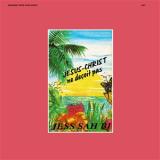
Jess Sah Bi is well-known as half of the legendary duo Jess Sah Bi & Peter One who brought homegrown Country-Americana to the West African masses with their smash debut Our Garden Needs Its Flowers in the mid-1980s. Touring stadiums and reaching listeners worldwide, their music has racked up millions of spins on YouTube and remains imprinted in the hearts of Ivorians of a certain age. ATFA reissued their album in 2018, garnering critical acclaim from publications including Pitchfork and Rolling Stone and reaching a new generation of listeners outside Ivory Coast (Cote d'Ivoire). Sometime in the early 90s, Die Sahbi - or Jesse, as he known to friends-became gravely ill with an unknown ailment and almost died. He visited various doctors and all kinds of religious healers and nothing helped. One day he went down to an Evangelical Christian revival in his neighborhood. They prayed over him and he was delivered. He says, "Their prayers helped chase out whatever demons and unhealthy spirits were inside me. After that my illness went away. When I went to the United States a few months later on an exchange program I wanted to make music to thank God because I was saved." He recorded an album of music praising God in order to honor a promise he made to himself at the depths of his desperation in the hospital. The album Jesus-Christ Ne Deçoit Pas Jesus Christ Does Not Let Us Down came out in 1991 and sold around 3000 cassettes in Ivory Coast. The master tape was lost along the way so the recording has never been on digital platforms until now. Jesse didn't have much time to record while visiting South Carolina, hence the relatively short album, 6 songs including two reprises for filler. A local pastor connected him with a studio and some American musicians (Robert Fortner and Gary Davis) to help. They added acoustic guitar, percussion and keyboard accompaniment to Jesse's soaring French and Gouro vocals, harmonica and finger-picked acoustic. The resulting recording is deeply soothing and contemplative music that perfectly compliments the songs already embraced by millions. But he had to find the rest of the studio expenses-$600 total-which he secured drawing cartoons for UNICEF. Jesse is Ivory Coast's first political cartoonist, a vocation for which he was widely celebrated at the time. It also made him a few enemies which lead to him leaving the country permanently a few years later. Jesus-Christ Ne Deçoit Pas is Jess Sah Bi's first and only gospel album. Fortunately, fans responded with enthusiasm: widespread radio airplay and concerts followed, along with a growing solo profile in the country. The first big gospel artists in Ivory Coast were the duo Mathieu et Constance, who emerged in 1989. There was a bigger gospel music movement in English-speaking counties like Ghana and Nigeria (Christians make up roughly 40% of the population in Ivory Coast, slightly less than Muslims). Jesse didn't have any intention of working in Christian music but he realized, "You don't make music to make money-you want to send a message." In the years since Jesus-Christ's release, gospel music in Ivory Coast has grown to become a key part of music culture in the country. Spiritual music appears in community actives across the public and private spectrum from religious gatherings and parties to television broadcasts and music festivals. And, as it has evolved and indigenized locally, gospel music has picked up elements of traditional Ivorian music, reggae and soul. The album ultimately precipitated the demise of the duo, who were soon separated geographically as Peter One relocated to Nashville. He went on to become a nurse and release a successful solo album on Verve following the ATFA collaboration. Nowadays Jesse lives in the Bay Area and continues to record and perform music wherever and whenever he has the chance. He is publishing a new book of humorous cartoons in 2025 and his most recent album Never Give Up came out in 2020
- 1: O Nevado (Feat. Alexandre Andrés)
- 2: O Abraço Da Serpente (Feat. Ilessi, Flavia Huarachi, Anders Skibsted)
- 3: A Cor Da Romã (Feat. Moa Edmunds Guevara)
- 4: Vera Cruz (Feat. Mané Fernandes, Albert Karch)
- 5: Misteriosa Buenos Aires
- 6: De Regreso (Feat. Flavia Huarachi)
- 7: O Ouro De Marawa (Feat. Gus Orihuela & André Maria)
- 8: O Garimpeiro E O Curumim (Feat. Ilessi, Flavia Huarachi, Anders Skibsted)
- 9: Entre Ríos (Feat. Luciana Insfran)
- 10: El Pajarillo Y La Mariposa (Feat. Flor Bobadilla, Cecilia Pahl, Alexandre Andrés)
- 11: Patagônia (Feat. Moa Edmunds Guevara, Pancho Rangonese, Albert Karch, Stanislav Zhukovsky)
- 12: Os Muitos Nomes De Salkantay
- 13: A Safira De Igarassu (Feat. João Machala)
- 14: Isla Del Sol (Feat. Júlio Rangel, Albert Karch)
- 15: Sentido De Su Ausencia (Feat. Iamana Mari, Gabriel Milliet)
- 16: Sequóias (Feat. Gustavo Assis Brasil, Albert Karch)
Caçador de Horizontes is the fourth and most ambitious album by Brazilian composer and songwriter Raphael Gimenes. Conceived as an expansive double album, it brings together voice and acoustic guitar with richly arranged strings, brass and a wide palette of percussion, engaging with the tradition of Brazilian songwriting while evoking the harmonic sensibility of artists such as Milton Nascimento, alongside elements of modern classical music.
Inspired by travels across the American continent, the album moves between intimate moments and large-scale instrumental passages, creating a cinematic and emotionally resonant atmosphere. Produced by Lucas Delacroix, Alexandre Andrés and Gimenes himself, it features more than 30 musicians from different countries and was supported by the Danish Arts Foundation (Statens Kunstfond).
‘Yarrow’ is a bouquet of new music by Portland, Oregon-based musician and field recordist Patricia Wolf, marking the label’s ninth release and the third of Season Two. These works are her reflections on the life cycle of plants and their dynamic ecological relationships.
Wolf created the album in response to her artist residency at the Rocky Mountain Biological Laboratory in Gothic, Colorado, as part of the Art-Science Exchange Project in the summer of 2024. She worked closely with ecologists Dr Paul CaraDonna, Dr Amy Iler, Dr Jane Ogilvie, Dr Nickolas Waser, Dr Mary Price, and Dr Will Petry, spending weeks engaged in long-term research on plants, pollinators, and their interactions as the climate changes.
Each track on Yarrow looks at a different part of a plant’s life. The songs touch on the conditions that plants need to grow, the quiet life of roots, how flowers attract pollinators, and the strength of seeds. The first single, 'Inflorescence', the scientific name for the floral display that a plant makes in an effort to reproduce, captures this event in song. The music slowly builds layers, reflecting the album’s overall feel. The album ends with the majestic Boards of Canada-esque 'Adapted for Extreme Conditions', and the entire b-side features Patricia’s field recordings from around Gothic, Colorado, and a guided meditation by Dr Paul CaraDonna, whose research inspired the project, inviting listeners to tune into the sounds and activities of the ecosystem.
- A1: Lego Dave Du Shit (5*Kila Hyas Drm) 03 47
- A2: Rck Jumeaux 03 04
- A3: Bleast 02 55
- A4: A-Bient 1 00 31
- A5: B-Bient 2 00 34
- A6: C-Bient 3 00 42
- B1: Qui A Dub Maman ? 05 41
- B2: Îles Nvelles 05 12
- B3: D-Bient 4 00 51
- B4: E-Bient 5 00 51
- C1: Which Is Good (Prod. By Mad Rey) 03 20
- C2: Gagra 04 54
- C3: Sa Ronne 03 26
- C4: F-Bient 6 00 48
- D1: Last Jam Feat. Mad Rey 06 08
- D2: Mezacidub Iii 04 50
- D3: H-Bient 8 00 48
- D4: G-Bient 7 00/44
Lego Dave du Shit, a noble aristocrat from the vallée du Shit, traveled to the RCK JUMEAUX planet to answer the Bleast’s question: “Qui A Dub Maman?”
To do so, he had to explore the Îles Nvlles, inhabited by robots, where he learned the ancestral chant of the Witches of Good: “Which is Good.”
He’s waiting to return to Earth in September to reunite with his friend Loba from Gagra, and to take part in the LAST JAM of October.
That being said, he must also visit in November the guardian Mezacidub III, son of Mezacidub II and Valprius Organo (a clone of the Bilrituel Cyborg of Tarza Y7).
In a few words, APR7S is simply an expression used after the party – or “after” in English.
DJ Support: Antal, I Cube, Noel Watson, Colleen Cosmo Murphy, Sean Johnston, San Soda, Takaya Nagase, Tina Edwards, Pete Herbert, Kenneth Bager, Severino, Aaron Paar, Felix Joy, Harri Harrigan, Laroye, Telford, Darker Than Wax, Rocky (X Press 2), Shane Johnson, Dan Tyler, Felix Dickinson and many more
Having previously released selected retrospectives focused on the musical output of Ryo Kawasaki and Joan Bibiloni, NuNorthern Soul has now turned its attention to the vast back catalogue of Jasper Van’t Hof’s pioneering electro-acoustic, Afro-fusion collective, Pili Pili.
The band was established in 1984 by Van’t Hof, a Dutch pianist who began his career in Europe’s jazz scene of the late 1960s, as a way of combining his love of jazz-fusion and the music of North-West Africa. Van’t Hof already had a reputation for combining roles in traditional jazz combos with more experimental and abstract projects. These included a spell in violinist Jean-Luc Ponty’s first band, years spent masterminding jazz-rock outfit Jasper Van’t Hof’s Porkpie, the recording of an all- electronic album (1982’s Visitors), and a celebrated collaborative live album with the great Archie Shepp, Mama Rose.
Pili Pili, though, was another step forward for Van’t Hof. Working with percussionists and vocalists from Benin and Mali (including the now legendary Angelique Kidou) and a string of adventurous jazz soloists (saxophonist Tony Lakoto and trumpeter Annie Whitehead included), Van’t Hof’s collective frequently combined live and programmed percussion, electronic and acoustic instrumentation, and the talented improvisor’s own memorable melodies and impactful solos.
NuNorthern Soul’s retrospective focuses on the most productive and celebrated period of Pili Pili’s near three-decade history, showcasing tracks originally recorded and released on studio albums released between 1984 and 2002. The six tracks on show offer an essential glimpse into the musical gold to be found across the Pili Pili catalogue.
In keeping with NuNorthern Soul’s previous retrospectives, the vinyl version of Selected Works 1984-95 comes with extended liner notes telling the remarkable story of this most unusual of cross-cultural collaborations. These feature extensive quotes, reflections and memories from Jasper Van’t Hof and were written by music historian Matt Anniss.
Sixth release of BinarySound’s limited vinyl series BS-LTD, featuring exclusively French producers.
On the A-side: Venetia, a rising star from Belle-Île, now based in Paris.
On the B-side: La Marmaille & SELA, two producers from Lyon who first met in La Marmaille’s basement studio.
Limited to 250 copies.
The electronic producer Franz Kirmann returns to Bytes for his eighth solo album. The “Almadies” are long wooden boats used by Senegalese fishermen. It is also the name of the neighborhood where Kirmann grew up, in the suburbs of Dakar, Senegal, near the Atlantic Ocean. "These new compositions are the result of sound experiments conducted over the past few months and reflections on the concept of mind-constructed geographies," Kirmann explains. "The way memories and souvenirs shape an image of a place or country that is part reality, part fantasy, part cliché, yet also deeply personal. This experience is influenced by education, social background, history, and other socio-economic factors. " The ten tracks are crafted from collages of electronic sounds blended with field recordings from various places Kirmann has visited — from Dakar to the Caribbean, as well as London and Paris. His aim is to blur the line between electronically generated sounds and real soundscapes, creating music where it becomes difficult to distinguish the real from the constructed. All the sounds on the album were produced using synthesizers and field recordings. No drum machines, percussion or traditional acoustic instruments were used. Influences include Brian Eno and John Hassell’s Fourth World, Vol. 1: Possible Musics (1980), described by Hassell as "a unified primitive/futuristic sound combining features of world ethnic styles with advanced electronic techniques" , which also works in the context of Almadies. Another big influence was Ariel Kalma’s Le Temps Des Moissons (1975) as well as artists including O Yuki Conjugate and Robert Aiki Aubrey Lowe to Susumu Yokota and Michael Banabila.
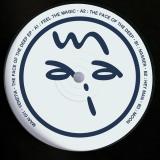
Venetia presents The Face of The Deep EP. The rising artist from Belle-Île-en-Mer, delivers an elevated deep house record infused with shades of melancholy and nostalgia, exploring a rich spectrum of moods and emotions through driving rhythms, pulsating energy, and deep, resonant basslines. Crafted for late-night dancefloors or early-mornings, wrapped in warm, immersive textures, culminating in an outro that feels like soundscape frame of a moving film.
- A1: Forest Nativity (Extended Version)
- A2: Le Grand Soleil De Dieu
- A3: La Condition Masculine (English Version)
- A4: Quand Le Soleil Est La (Alternate Drum Machine Version)
- A5: Ganvie
- B1: Kikadi Gromo
- B2: Immigration Amoureuse
- B3: Where Are You? I Love You
- B4: Dash, Baksheesh & Matabish
- B5: Je Vous Aime Zaime Zaime (Drum Machine Version)
- C1: Agatha (Alternate Version)
- C2: L'amour Malade Petit Francais
- C3: Ndoloc
- C4: Chant D'amour Pygmee
- C5: Funky Maringa
- D1: Crocodile - Crocodile - Crocodile
- D2: L'ile De Djerba
- D3: Kitibanga
- D4: Asma (Alternative Instrumental Version)
- D5: Savannah Georgia (Alternative Version)
"Trésor Magnétique" ist eine Zusammenstellung unveröffentlichter Tracks und vernachlässigter Schätze aus dem Vermächtnis des legendären, kamerunisch-französischen Musikers/Schriftstellers Francis Bebey. Sorgfältig digitalisiert in den Abbey Road Studios, strahlen sie eine Klarheit und Dringlichkeit aus, die den Jahrzehnten seit ihrer Entstehung bis zur Jetztzeit trotzt. "Trésor Magnétique" ist keine verstaubte Retrospektive, sondern ein lebendiger, atmender Dialog mit der Gegenwart und der perfekte Einstieg in eine umfangreiche Diskografie, die sich fliessend zwischen tanzbarem Afro-Funk, folkloristischen Gesängen, politisch aufgeladenen Kommentaren und schimmernden elektronischen Erkundungen bewegt. Francis Bebey war seiner Zeit nicht nur voraus – er prägte seine eigene Zeit. Wir entdecken hier nicht nur verlorene Artefakte, sondern werden mit Ideen konfrontiert, die heute noch radikal und relevant sind.
Trinkais about the strength of the encounter that music provides between Dandara Modesto, Brazilian singer and songwriter, João Pires, Portuguese composer and guitarist and Juninho Ibituruna, Brazilian percussionist. Sewing of Atlantic music, they build a path between Bahia, Portugal and Minas Gerais. Each arranged in one place echoing the connection through the music that unites them in complementarity: João's melodies and guitar with Dandara's voice and interpretive power and the pulse rhythm ancestor of Juninho.