Peter Rehberg is known for his pioneering electronic work with computer software which over time evolved into a modular set up alongside running MEGO and then Editions Mego labels.
Rehberg was a prolific collaborator, with other musicians and with contemporary dance and theatre productions, most notably with French artist and choreographer, Gisèle Vienne with whom he created a series of soundtracks from Showroomdummies, released under the name DACM in 2002 (Showroomdummies MEGO 056), to Crowd in 2017. A collection of Rehberg’s solo works for Vienne was released in 2008 (Work for GV 2004-2008 EMEGO 092). The outfit KTL, with Stephen O’Malley, was initiated by Gisèle Vienne for her work Kindertotenlieder and subsequently made a series of soundtracks for Vienne’s works branching off into a prolific series of live shows. The work Rehberg did for theatre and performance teased out aspects of his practice one may not have encountered in his own solo work as PITA or that of collaborations with other musicians.
Editions Mego is proud to present a previously unreleased theatre soundtrack made for Icelandic choreographer Margrét Sara Guðjónsdóttir, whom Rehberg had a decade long collaboration with until his untimely passing in 2021. The original composition for Liminal States was created by Rehberg for the performance Pervasive Magnetic Stimuli in 2018 and then revisited as a catalyst for the concepts behind Liminal States. This work is based on an ongoing artistic research conducted by the choreographer into altered states of perception through phenomenological embodiment. It is the last in a trilogy dealing with the notion of larger forces that act on us beyond our conscious mind. The trilogy consists of Pervasive Magnetic Stimuli (2018), Boundless Ominous Fields (2024) and now Liminal States (2024).
Rehberg's score for Liminal States is a vast canvas of spectral ambience at once tangible and unfathomable in its constantly shapeshifting lysergic dread. The results are a psychological journey through the mental effects of sound on space and subsequently the mind. The first part presents cascading waves of shimmering electronics laying the groundwork for the second part where the psychological illusion splinters into all manner of sonic effects taking the listener on a deep mental voyage. If references are witnessed the late period long form hallucinatory works of Coil, such as Time Machines and Constant shallowness leads to evil, are amongst a similar mind message delivered here. Unlike any other release in Rehberg’s output Liminal States is a single long form work which, despite the form, retains Rehberg’s idiosyncratic sound vision.
Guðjónsdóttir and Rehberg’s collaboration blurs that relationship into a greater force which truly enables the theme of liminal states to unfold in a brave new fashion. Rich in timbre and sonic invention this is powerful work easily holding its own outside of the intended performance whilst still complimenting the missions statement entirely. This profound collaboration has the cumulative effect where the concept and soundtrack are one and may be one of the strongest works in the entire Rehberg canon.
Search:x mind
- A1: Verflossen Ist Das Gold Der Tage
- A2: Staub Und Sterne
- A3: Hinter Uns Die Wirklichkeit
- B1: Bedingungslos
- B2: Die Nächte Sind Erfüllt Von Maskenfesten
- B3: Umschlungen Von Milliarden
- C1: Sanft Verblassen Die Geschichten
- C2: Es Ist Alles Schon Gesagt
- C3: Schwarzer Regen Fällt
- D1: Jeder Gedanke Umsonst Gedacht
- D2: Welche Welt
- D3: Ist Es Das, Was Du Willst
II[29,37 €]
Reissue of the 3rd full length by Thomas Bücker aka Bersarin Quartett.
Melancholia. Longing. It is difficult to speak about these moods or states of the mind without invoking stereotypes. In ancient medicine, melancholia was considered to be one of the four temperaments, matching the four humours. In fact, melancholia, meaning "black bile" in Ancient Greek, was thought to be caused by an excess of this very body substance. By contrast, in more modern interpretations, literates and Freudians relate many variations of longing to the one primordial longing, the desire to return to one's mother's womb. In this context, the womb is considered to be the place of absolute comfort and cosiness, of total bliss. Thus it should not be surprising that to many of us melancholia is a mood which we like to invoke and to maintain, we like to envelop ourselves in it like in a warm blanket. Our brain and our sensory systems appear to be made for perceiving and emotionally responding to music in a very immediate fashion. Consequently music is the obvious drug for all of us melancholia-addicts. However, there is a thin line between melancholia and sadness, and music which is meant to be melancholic too often crosses this line by far. Only very few artists succeed in avoiding this crossing, and in creating music which is melancholia in its most pure form. It is safe to say that BERSARIN QUARTETT - the electronic music project of Thomas Bücker - is one of them.
After his debut in 2008 and the sophomore "II" in 2012 - album of the month in many magazines and in numerous "Best of the year" lists - Bücker in 2015 returned with his third BERSARIN QUARTETT album "III". Much like his two predecessors, III is a pure paradox. It is the creation of a perfectionist, an adamant control freak. Every element, be it a note, an ambience layer, a string arrangement, a field recording, a baseline, a vocal (Clara Hill on Track 11) or a beat, is meticulously modified and then assigned its place in Bücker's vast but still minimalistic arrangements. Thus, superficially Bücker's pieces seem to radiate a certain mechanical bleakness. However, there is a unique reduced warmth and liveliness emerging from these stainless compositions and transcending them. This transcendence is precisely the point where Bücker ironically looses control over his creations. In contrast to the first two BERSARIN QUARTETT albums, III offers a few darker shades and succeeds even further in narrowing down the arrangements to the absolute essentials without loosing the characteristic grandeur of Bücker's sound. Whereas BERSARIN QUARTETT's debut was merely a description of melancholia in its most pure form, III maybe even goes as far a defining what melancholia really is. It is the only emotion in the vast spectrum of human states of mind which one can bear forever.
Gonzen, uminari or retumbos. Perhaps you've heard these sounds? They're known to occur all over the world and, as one might expect, humans have strained to offer various explanations for these unsettling emissions that materialise unbidden from the sky.
We like to say that we've understood what's happening so that we can move on. Tidy up the loose ends and don't scare the horses. Nothing wrong with that in good measure, but there's something to be said for the Haudenosaunee peoples' explanation. They pointed out that the Great Spirit hasn't finished their work of shaping the earth and is making a fair bit of noise while they're at it.
If you accept that many questions never truly get answered, in fact can or should never truly be answered, you may be able to tune your mind to this collection of lingering sonic detonations. If you accept that the work is ongoing, our labours seldom done, that there's not much point talking about the end of anything, you may be ready to join us. It's not our task to finish it, nor are we free to desist.
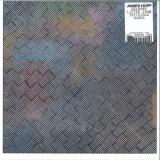
Shadows Lifted from Invisible Hands is an autobiographical record, comprised of four songs that Hoff refers to as ambient media. Each track is composed from sources drawn from his own involuntary aural landscape, specifically musical earworms and tinnitus frequencies.
Neither sound nor a daydream, the earworm (or stuck song) emblematizes music as a commercial form—immediate, ubiquitous, and persistent. Likewise, tinnitus is inaudible and unscrupulous, manifesting across a spectrum of frequencies at will. The cognitive swirling of these phenomena provides an ambivalent, internal soundtrack that scores a person’s movement through the world.
Those suffering from tinnitus or those who have grown accustomed to the “Tinnitus Effect” in movies will likely recognize the buzzing pitches on the record, but will likely not recognize the songs. Distorted and distilled, Shadows Lifted from Invisible Hands features altered versions of four commercial pop songs: Blondie’s “Heart of Glass,” David Bowie’s “Space Oddity,” Madonna’s “Into the Groove,” and Lou Reed’s “Perfect Day.”
Having been haunted by these songs on and off for years, Hoff tweaks the tracks, transposing and recomposing them for orchestral instrumentation. Speaking back to these involuntary echoes, these tracks go to great lengths to obfuscate their sources; to be sure not to simply re-introduce each earworm, as though they were samples. Otherwise, what’s the point? No one needs another stream.
Besides, earworms are not music, although we perceive them as such. They are non-cochlear and exist as an affective force that is neither subjective nor objective, which is to say they are an invasive—and alien—phenomenon. Like tinnitus, they are aggravated by economic, social, and environmental forces as well as emotional states, mental health, and aging. Hoff doesn’t underplay his own struggles with mental health in discussing the record—noting a long history of depression and its acuteness over the last few years, which serve as the backdrop to the composition of this record.
Scratch any pop song hard enough and you’ll find sadness underneath it. Subdermal, the songs on this record evoke a type of ephemeral weariness and despair. By recasting the original songs through their shadowy doubles, Hoff provides a window into the dark core of pop music. At the center of which lies capitalism’s desperate attempt to replicate itself through a cheap high built on echoing refrains. Just below the surface the listener finds a hangover of shadows dancing through the mind.
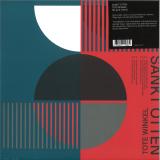
In spring 2022, Sankt Otten released their album “Symmetrie und Wahnsinn”, and now the next record is ready to enlighten our maltreated minds. “Tote Winkel” (Blind spots) is once again part of an album series with a geometric context, both creatively and musically.
Stephan Otten and Oliver Klemm made productive use of 2021, which has been decelerated to the maximum by Corona. For the first time, an external studio was booked (Mühle der Freundschaft, Bad Iburg) and the pool of analog synthesizers and other sound generators there was dusted off. Sankt Otten came up with the master plan to first free the spirit of 50 years of German electronic music trapped in the antiquated keyboards and oscillator housings, then to dismantle it, turn it inside out and reinterpret it. Echoes of music from Düssel- dorf are joined by sounds familiar from the Weserbergland, or mystical, sublime arcs of sound and, of course, the sequences typical of the Berlin School - whether side by side or interwoven. In a departure from the usual way of working, the majority of the tracks were created in the studio and in part from improvisations, which makes “Tote Winkel “ the most organic material we have heard from Sankt Otten to date.
New York-based Rafael Anton Irisarri mastered “Tote Winkel”, as he has done on productions by Biosphere, Ryuichi Sakamoto, Tycho, Terry Riley, Fennesz and many more. As part of the series of graphic covers, this extraordinary die-cut artwork was also designed by Daniel Castrejon. The vinyl version comes in a die-cut cover and colored vinyl, the CD in an elegant cardboard slipcase.
The Osnabrück duo Sankt Otten, founded in 1999, have been releasing on DENOVALI since 2009. “Tote Winkel” is their 14th album of timeless (instrumental) music. The band has dedicated itself to the holy trinity of Krautrock, Ambient and contemporary Elecronics.
Kulture Galerie releases its 3rd Digital Artefacts cassette tape: "Mediterranean Blue" by NYC's own Alien D. Alien D is back on Kulture Galerie. Prior to this, Daniel Creahan has been featured on labels such as Lillerne Tapes, Banlieue Records, and Theory Therapy, and now shares a 6 track EP called Mediterranean Blue that lands on Filippo MSM's tapes series Digital Artefacts, the label's more experimental output.
The work is something of a companion piece to his recent release on Theory Therapy, “For the Early Hours of the World in Bloom,” exploring similar states with a more hazy, fluid sensibility. The compositions here trace back to a week spent several years prior on the Puglia coastline, where, in the midst of a read through of Helene Cixious’s Tomb(e), he began compiling a series of works drawing the gleaming sun, swirling waves and jagged, rocky coastline of the region, mixing in fragments of slow, pulsing low end, wafting synth elements and a range of processed samples dwelling on states of transition, life and love. Waves and dripping water swirl around lilting saxophone, kick drums drown the mix in heavily side-chained throbs of bass, and breaks rush in and out of the mix, making for a series of recordings that seem to view the dancefloor as a dream, always front of mind but hazily remembered.
“I was obsessed with these balances between the light-washed, dusty landscape and these quiet modest homes dotting the hills, and all I could think about was the passage of time, falling in and out and back in love, and the slow drift of memory,” he says. “It was like waking up with a new thought.”
»Hug of Gravity« is the second solo album by Raphael Loher and his first for Hallow Ground. The Swiss pianist and composer uses piano preparations, tape machines, and digital means to forge an aesthetic of playful reduction and rhythmic abstraction. The source material for these four sprawling pieces was culled from recordings of the artist performing the album’s predecessor, 2022’s »Keemuun.« Loher used them in a painstaking two-part working process to create an album that is both a product of and an ode to transformation, exploring themes of alternative temporalities and spatialities. »Hug of Gravity« oscillates between experimental electronic music, ambient, and minimal music and calls to mind the work of artists like William Basinski, Linda Catlin Smith, or label mate Andrius Arutiunian.
Loher laid the foundation for »Hug of Gravity« in 2020 with ten solo performances at his studio, during which he presented the pieces from his debut album. For these intimate concerts, he prepared the piano with modelling clay in order to move beyond the well-tempered tuning that dominates most of Western music. He then used a consecutive three-month residency in the Blenio Valley to refine the recordings. »I cut up and rearranged the material, then transferred the results—around 30 pieces—to a varispeed tape machine and then back to the computer. After that was done, I cut them up and rearranged them again,« he laughs. By radically reworking the material, he created an album that eschews traditional notions of time and space.
Loher points out the influence that his surroundings had on him. »The process created the music—and the place was essential to the process.« he says. He wandered through the mountains for up to nine or ten hours a day, which gave him a sense of what he calls expanded temporality. »Time just felt longer, my experiences seemed more diverse and nuanced, and it was as if I perceived my environment more clearly,« he explains. This shift in Loher’s perception of time and space—the latter also expressed in the album’s title—influenced his work with the varispeed tape machine. It allowed him to change the pitch of different recordings while layering them to let interference patterns emerge and emphasise the emotional qualities of the unconventional tunings he had used.
In this way, Loher constructed numerous interlocking narrative arcs throughout »Hug of Gravity,« an album that is ever-changing; an exercise in calm ecstasy that provides its audience with the feeling of being removed from conventional time and space. This approach is also reflected in the artwork for »Hug of Gravity,« which is based on drawings Loher made during his residency at Blenio Valley. Their fine hand-drawn lines run in parallel and let incidental patterns emerge, an effect that is only multiplied when the six different drawings that accompany each vinyl copy of the album are overlapping, forming ever-new visual constellations.
US ambient powerhouse and Past Inside the Present label head Zake is one of the most prolific producers in the game. He puts out new music more often than most of us put out wheelie bins. That doesn't stop him from revising what has come before, as he does here. Wash Away was made with Lucy Gooch and Black Brunswicker back in 2020 and now gets a series of subtle edits before being dropped on heavyweight wax. It is a mirage of vocal whispers, soft drones, and mindless (in a good way) musical daydreaming marbled with acoustic strings and backed with signature tape hiss. Yet another crucial work from Zake and co.
2026 Repress
Self-sabotage can be a devious and deadly mechanism of the mind that creates obstacles on the path to one's goals. To tackle the problem, one needs to have a clear understanding and awareness of the causes, costs and the negative consequences it can bring; overcoming this process leads us to evolve towards new limits and boundaries.
- 1: At The End Of My Daze
- 2: The Wolf
- 3: Psychotic Reaction
- 4: A Sinner’s Fame
- 5: The Misery Shows (Act Ii)
- 6: R.i.p
- 7: Black Shapes Of Doom
- 8: Heaven On My Mind
- 9: E.n.d
- 10: All Is Forgiven
- 1: R.i.p
- 2: Black Shapes Of Doom
- 3: Psalm 9
- 4: The Wolf
- 5: At The End Of My Daze
- 6: Assassin
- 7: The Misery Shows (Act Ii)
- 8: Psychotic Reaction
- 9: Bastards Will Pay
- 10: The Tempter
- 11: All Is Forgiven
Trouble’s absolute classic: the legendary album from 1990 and the pinnacle of Trouble’s impressive career. Heavy Metal was never better than this! Includes a live bonus CD recorded in Dallas, Taxas (USA)! Trouble’s debut album did great things for Metal and remains one of the darkest, thrashiest Doom albums to date. A lot of things can change in six years, especially when you’re talking Metal and the dates are 1984 and 1990. The decade may have changed them, but not in a way that suggests decay or a decline in the quality of their resolve or their skill as musicians and performers. On the contrary, Trouble’s 1990 self-titled release is arguably their most mature, boasting a fleshed out sound with unparalleled songwriting, a great production, and the time-crafted vocals of Eric Wagner which had improved major in the years since their previous efforts. All of this culminates in what is my mind the most “complete” thing Trouble ever created. From the mid-paced chug of a killer opener in “At the End of My Daze” to the last notes of “All Is Forgiven”, I can’t see filler or anything resembling a weak link. The riffs here are some of the best ever written, by Trouble or anyone else; every song has a manically awesome main riff that demands a display of headbanging. Riffs are undoubtedly the point of focus here; they make the songs, and they’re a timeless variety of great. Also, the interplay between guitarists Bruce Franklin and Rick Wartell is some of the best lead work you will ever hear in Metal. Trouble basically reinvented themselves with this release, and while I think it was a fantastic rebirth, those who aren’t so keen on the laid back stoner vibe they chose to adopt may not see it as a rejuvenation, but a step back (they did go from doom and gloom to collectively embracing their inner acid dropping free love hippie, after all). But the Metal remained fully intact! And as I’ve said, I think this is Trouble at their best. This is originality and innovation at its best, it is supreme quality. A leader of bands paves the way and then steps aside to create something that will serve as an example of how to improve upon an established formula: that is, by doing it really damn well.
- A1: The Jungle
- A2: Love That Boy
- A3: House On Fire
- A4: Sacrifice
- B1: Get My Mind
- B2: Le Queens
- B3: In Your Eyes
- B4: Bold
Montreal indie rock trio Plants and Animals announce "The Jungle", their fifth studio album set to be released October 23rd via Secret City Records. Their shortest album yet and certainly their boldest, "The Jungle" is eight acts in a world full of noise. The album is auto-produced and was recorded at Mixart, their studio in Montreal. The band explains : "We started working on this a couple of years ago. Warren was afraid for a friend's health. He thought he was self-medicating too much and not taking care of himself. He couldn't let go of this image of an overworked dude swallowing too many sleeping pills and falling asleep with the stove on. So it began as the place next door, sometime before Greta Thunberg turned the expression into a rallying cry, where Earth is the house and the people are sleeping. It's terrifying, and on the whole we're not unlike this friend, are we?" "The Jungle" starts with electronic drums that sound like insects at night. A whole universe comes alive in the dark. It's beautiful, complex and unsettling. Systematic and chaotic. All instinct, no plan. Voices taunt,"yeah yeah yeah." This tangled time in which we find ourselves is reflected back in shadows. Every song is such a landscape. The first one grinds to a halt and you become a kid looking out a car window at the moon, wondering how it's still on your tail as you speed past a steady blur of trees. You watch a house go up in a yellow strobe that echoes the disco weirdness of Giorgio Moroder, Donna Summer and David Bowie. You get pummelled by a rhythm then set free by a sudden change of scenery_the wind stops, clarity returns. You're under a streetlight in Queens, soft-focus, slow motion, falling in love. You speak French now too, in case you didn't already. Bienvenue. These are personal experiences made in a volatile world, and they reflect that world right back at us, even by accident. There's one song Nic sings to his teenage son who was dealing with climate change anxiety and drifting into uncharted independence. The band carries it out slowly together into a sweet blue horizon. Warren wrote the words to another shortly after losing his father. It's about the things we inherit not necessarily being the things we want. In a broader sense, that's where a lot of people find themselves right now.
- 1: Kickstarter
- 2: Caught In The Action
- 3: Open Fire
- 4: Keep Rolling
- 5: Hit The Road
- 6: Avenger
- 7: Chained By Metal
- 8: Spitfire
- 9: Full Throttle
- 10: Strike At Night
- 11: Night Falls Down
The Swedish band Bullet got together in autumn 2001, with the aim of playing traditional heavy metal inspired by the late 1970s and early 1980s: solid, authentic and classic, with a contemporary and timeless touch. Seven years after their latest studio album, ‘Dust To Gold’ (2018), the musicians Dag “Hell” Hofer (vocals), Hampus Klang (guitar), Gustav Hector (bass), Gustav Hjortsjö (drums) and latest addition Freddie Johansson (guitar) are now back with a new album: ‘Kickstarter’ is scheduled for release on Steamhammer/SPV on 09 January 2026 and is set to prove that Bullet are determined to continue their almost 25-year career with the very kickstart referenced to by the album title. This of course also includes Bullet’s iconic tour bus, whose engine exploded after one of their most recent shows, forcing the musicians to embark on their return journey without their rolling accommodation. Naturally, this was the end neither of Bullet nor their battered vehicle – to the contrary: The group’s classic heavy metal spirit and their unwavering DIY mindset have proved stronger than ever. Having repaired the ageing bus with unwavering determination, oil-smeared hands and sweaty brows. Bullet are now ready to hit the road again, with ‘Kickstarter’ and the three lead singles/videos ‘Kickstarter’ (17 October 2025), ‘Keep Rolling’ (21 November 2025) and ‘Chained By Metal’ (19 December 2025) on board.
- Monolith
- Chasing My Mind
- Orpheo
- Memories Of Sweat
- Transform
- Aposate
- Abc City
- Stress
- Astray
- A Tower
- Fever
- You Are Ancient (Sweden's Pride)
Obwohl sie ständig zu arm sind, um abgezockte Biere in den letzten Kaschemmen zu trinken, fällt es HOLGRAMS aus Stockholm so gar nicht schwer, das Gift im Strahl auszukotzen. Ihr saures Aufstoßen geht wohl mehr auf das Unwohlsein zurück, das wohl eher von der Knechtschaft in schwedischen Lagerhäusern resultiert denn aus dem Alkoholmissbrauch, was es auch spannender macht, durch die Reste zu wühlen. Obwohl ihre Instrumente am untersten Rand des Existenzminimums vegetieren (und zusammen vielleicht ein Handvoll Kronen wert sind), strahlt aus HOLOGRAMS eine fast unverschämte Energie. Ihr Sound vermählt die Plackerei des täglichen Lebens mit der Lust auf etwas Besseres und erinnert dabei an die aggressive Katharsis des Punk sowie an den elektronischen Schimmer des New Wave der frühen 80er. Ihr Sound ist viel zu weitläufig für die staubigen Bürgersteige und die leeren Straßen von Stockholm, was doch die perfekte Einladung dazu ist, uns zusammen noch ein wenig mehr zu betrinken.
- K-Now Intro (Featuring Ali Shaheed Muhammad)
- Time Stopped
- Womack's Lament (Featuring Busta Rhymes)
- Panic Struck
- K-Now Interlude #1 (Featuring Ali Shaheed Muhammad)
- Another Part Of You (Featuring William Hart)
- All You Got Is Your Word
- There Is Only Now (Featuring Snoop Dogg)
- Meeting Of The Minds
- K-Now Interlude #2 (Featuring Ali Shaheed Muhammad)
- Miriam Got A Mickey
- Stone Cold (Featuring Scarub)
- The Synopsis
- Ghetto Superhero
- K-Now Reprise (Featuring Ali Shaheed Muhammad)
- Narrow Escape
- Finally Back
- The Last Act
- K-Now Outro (Featuring Ali Shaheed Muhammad)
The sixth album from legendary hip-hop group Souls of Mischief, There Is Only Now, is a unique cinematic 90s crime tale of love, loss, and revenge. A conceptual collaboration with producer Adrian Younge and the first release on his freshly launched Linear Labs Records label, There Is Only Now gets its inspiration from a near fatal incident involving group members A-Plus, Opio, Tajai, and Phesto early in their careers. Set in 1994, There Is Only Now serves as a bookend to two decades of music since the release of their seminal debut album, `93 Til Infinity. Souls of Mischief and Adrian Younge have created a hip-hop album like no other. The result of a special moment for all involved, There Is Only Now proves that after two decades in the rap game hip-hop's Fab Four remains committed to the expansion of their legacy as hip-hop innovators and pioneers. Enthält unbegrenztes Streaming von There Is Only Now über die kostenlose Bandcamp-App und außerdem den hochwertigen Download als MP3, FLAC und mehr.
- 1: What's Wrong?
- 2: Overkill
- 3: The Anatomy Of A School Shooting
- 4: Glenwood Projects (Feat. Uncle Howie, Necro & Goretex)
- 5: Peace Sells
- 6: Unstoppable
- 7: Death Smiles At Murder (Feat. Mr Hyde)
- 8: Chasing The Dragon (Feat. Necro)
- 9: Alien Workshop
- 10: Canarsie Artie's Brigade (Feat. Necro, Q-Unique & Goretex)
- 11: Porno Director (Feat. Goretex & Sabac Red)
- 12: American History X
- 13: Uncle Zowie
- 14: Legend Has It
- 15: The Final Scene
- 16: Chasing The Dragon (Moshpit Mix) (Feat. Necro)
Blue vinyl[36,09 €]
Twenty years ago, ILL BILL released “What’s Wrong With Bill?”, a raw, unfiltered snapshot of where his mind was at during a dark, creative and transformative time. Chaos and clarity in musical form, a record built from trauma, truth and the New York streets that raised him. He never imagined it would become what it did: a cult classic with a revered mystique that continues to be quoted and debated 20 years later. This album captured ILL BILL at his most urgent, most aggressive and most alert to the madness around him.
For the first time in two decades, “What’s Wrong With Bill?” is being reissued on 2LP vinyl, a complete capsule including an alternate variant cover, 20th anniversary commemorative OBI strip, and, for the first time ever, a cassette edition, alongside a remastered limited edition CD. This is more than nostalgia, it’s encapsulated arcana, proudly representative of an era when Hip Hop was dangerous, fearless and alive. This one is for the true believers who never forgot.
- Vinyl 1: Speedy
- Vinyl 2: Sacrifice
- Vinyl 3: Ampyre
Schon in den späten Achtzigern waren Teile von Ampyre in Gruppen wie Tindale Creek, Silk´n´Steel oder Dark Haze aktiv, die Veröffentlichungen vorweisen konnten. Mit Sängerin Elke Grötzinger, die auch heute noch erfolgreich mit FRONTROW WARRIOR die Bühnen rockt, hatte man dazu einen perfekten Fang gemacht. Somit hatte man im Raum Stuttgart direkt einen guten Start und volle Häuser, trotz starker Konkurrenz.
Für das im Marquee Studio produzierte 5-Track-Demo griff man tief in die Tasche, was zu einem dementsprechend professionell klingenden Ergebnis führte. Das musikalische Können und ein für diesen Stil perfektes Songwriting hätten eigentlich für den großen Knall sorgen müssen, doch 1991 änderte sich die musikalische Landschaft und auch der melodische Metal musste gegen Grunge, Crossover, sowie Thrash- und Death Metal antreten. Das Label Golden Core machte diese Aufnahmen erstmals zugänglich und die Reviews in Magazinen wie Rock Hard oder Break Out waren traumhaft. Aus der Schweiz stammten Sacrifice, die sich 1984 mit einer selbstproduzierten Single vorstellten und dann einen Deal mit dem GAMA Musikverlag bekamen. „On The Altar Of Rock“ erschien 1985 auf dem GAMA-Label Camel und platzierte die Band in der damaligen Heavyrock-Szene.
Die Mischung aus melodischem Hardrock und Heavy Metal macht den Reiz dieses Albums aus. Geschicktes Songwriting mit vielen Hooklines paart sich mit dem spielerischen Können.
Die Wiederauflage auf Golden Core enthält als Bonus die zwei raren Tracks der 12“ Single und ist remastert. Ende der Siebziger befanden sich The Teens auf dem Siegeszug und dominierten die Jugendhefte wie die Bravo. Natürlich sollte es nicht lange dauern, bis man Konkurrenz bekam. Speedy waren eine waschechte Band, die beim Musizieren in ihrem Proberaum entdeckt wurde. Kurze Zeit später wurde die erste Single „Willy Is Back“ von Didi Zill (Birth Control, The Nighthawks) produziert, der auch als Fotograf für die Bravo bekannt war. Man schaffte es ohne Umweg in die Kultsendung Ilya Richer´s Disco. Dies führte zur ersten und leider einzigen LP „Much Too Young To Rock´n´Roll“ und zur gleichnamigen Single mit dem Knaller „Fight Like A Fighter“ auf der B-Seite.
Beide Tracks schafften es erneut ins TV (eine Ferienshow mit Karl Dall und zum zweiten Mal die Sendung Disco) – das Thema Speedy brodelte! Leider entschieden sich die Eltern der minderjährigen Musiker gegen eine Tournee mit Def Leppard, was die Karriere beendete. Die Wiederauflage enthält als Zusatz auch die Songs, die es nur als Single gab.
This is the gloriously remastered version of an all time classic: Dj Excel's "Just When You Thought It Was Safe".
Originally releases in the very early 90's, it has been beautifully remastered and recut, alongside some absolutely devastating remixes from the likes of The Criminal Minds, Stu Keating, Abyss, and Dj Stephano, and it also includes the four bonus beats from the original pressing.
This version is the extensive Move-E Series 2 Double Pack, which comes on coloured vinyl, and with a ridiculously cool sleeve and label design plus poster!
Ranie Ribeiro's artistic journey has taken on new dimensions and disciplines. Formerly known by his DJ moniker D-Ribeiro (4Lux, Meda Fury), Ranie Ribeiro has solidified himself as one of the Netherlands' most unique harpists. Whereas his past releases could be defined by up-tempo, warm, and joyful beats, Ribeiro now presents his first full-length harp record, Contemplation--a delicate collection of unassuming harp compositions and improvisations. A record that has gone through multiple iterations, shapes and life-changes, Contemplation plays out like you're sitting in the room minding your own business as Ribeiro's playing fades in-and-out from the corner, accompanying your thoughts, your chores, your life as it all passes you by. In a musical world where over-processing and manipulation obfuscate intent and feeling; Contemplation is vulnerable. Putting his stake in the ground and claiming his artistic space, Ribeiro refuses to let insecurities stand in his way and his music comforts you so much it'll empower you to feel the same. Words by Gregory Markus