Death Is Not The End's mixtape-style selection of clips from tapes recorded live at soundsystems playing during London's Notting Hill Carnival between 1984 and 1988, originally broadcast on NTS Radio in August 2018, is the latest to be committed to cassette as part of their 10th anniversary series. Featuring sounds from the likes of Jamdown Rockers, Saxon, Java Nuclear Power, Killerwatt Turbotronic, Stereograph, Sir Coxsone, Volcano Express and more.
Audio sourced with the indefatigable efforts of the Who Cork The Dance crew - big thanks going out to Jayman, Ruff House, Keimo, Omar, Gee Wizz and the one Jah Humble.
quête:x one
In the heart of a post-apocalyptic city, Spacelunch was making his way through the ruins, wearing a heavy armour of metal plates and flickering circuitry. Cat settled on his shoulder, listening intently to every sound. This time, they weren't just looking for an artefact — their target was the Singularity Echo, a mysterious device created right before the catastrophe. Legend had it that the scientists of the past, sensing the impending collapse, had put all their accumulated experience and knowledge together to create it. It was said that one day “Echo” would awaken and allow descendants to touch the wisdom of the ancients, learn the secrets of forgotten technologies and, perhaps, avoid the fatal mistakes of the past.
— We’ve been wandering around for how long? — muttered Cat, looking around warily. — And nothing.
— Sitting up there complaining, aren’t you? — Spacelunch grinned, deftly bypassing the debris and intertwined roots that poked out from under the asphalt.
Suddenly, a glow flashed before them, gradually taking the form of a palm-sized transparent crystal. It floated in the air, surrounded by silver lining that wove into intricate patterns, like a network of ancient runes. The symbols on its facets, flickering, cast soft reflections on the debris around them. As the professor slowly reached out his hand, the crystal shone brighter, and the low whisper of distant voices cut through the silence. Their minds were enveloped by the echoes of past events, filling their minds with images of the vanished world.
The friends froze for a moment, overwhelmed by shock and a sense of profound change.
— Well, — said Cat, not hiding his surprise. — It seems we've gotten a little smarter.
— A little? Now we have what has been lost for an era.
— So, we have a new adventure ahead of us. Where do we start?
The ghost town, once seemingly lifeless, now seemed to come to life: every collapsed building and every corner sparked with traces and clues as if the world itself was holding its breath, waiting for a sign.
Scoville Records keeps the temperature rising with it's third release, this time welcoming in Melbourne's own Dashiell. Coming in hot with a 4 track EP that channels classic old-school tech house essence with a tribal progressive touch. This one is sure to bring extra spice to your record bag, handle responsibly.
- 01: Tafese Tesfaye - The Dove &Amp; The Pigeon
- 02: Yetemwork Mulat - Heathen &Amp; Earth
- 03: Alemu Aga - The World Is But A Place Of Survival
- 04: Sosena Gebre Eyesus - Save Us From Our Death
- 05: Abiy Seyoum - The Last Judgement
- 06: Tafese Tesfaye - You Who Take Good Care Of Me
- 07: Sosena Gebre Eyesus - When I Say Your Name
- 08: Akalu Yossef - Who Can Doubt
- 09: Abiy Seyoum - We Are All Mortals
- 10: Yetemwork Mulat - The Second Coming Of Christ
- 11: Akalu Yossef - Our Father
- 12: Alemu Aga - Song Of Praise Played With A Plectrum
LP 2x12"[28,36 €]
The begena is a large ten-stringed lyre which is part of the traditional Amharic heritage of Ethiopia. The Amharas, who have long formed the politically and culturally dominant people of Ethiopia, mainly inhabit the central and northern part of the country. In the majority, they follow the monophysite Orthodox Tewahido Church established in the early fourth century AD.
Music plays a very important part in the life of the church. Most of the liturgy is sung and, contrary to secular music, it is accompanied by percussion instruments only. The begena occupies a special place because it is the one melodic instrument exclusively dedicated to the spiritual repertory. Because of its mythical origin, it is highly respected. Tradition holds that the begena was given to king David by God, and brought to Ethiopia by Menelik I, together with the Ark of the Covenant. It has always been the instrument of kings and nobles. Played by pious men and women of letters, it never became widespread. But it never disappeared either, not even under the Derg regime (1974-1991) which had banned the instrument.
Among Amhara string instruments, the begena is the most carefully crafted, especially with regard to the ornately sculpted crossbar. Its ten gut strings are cleaned and twisted several times. The characteristic buzzing timbre equalled by no other Amhara instrument is due to the enzirotch, that is, small bits of leather placed between each string and the bridge. This plays an important part in the sound production by creating a brief contact between the string and the upper rim of the bridge, thus modifying the vibrating properties of the string. In this manner, the spectrum of the sound is considerably enhanced (up to over 10 kHz).
The begena is a very powerful instrument, it keeps the devil thirty steps away, and its presence in the home wards off malicious spirits. Priests and preachers recommend its presence, especially during Lent (Fassika Tsom) when the Orthodox Amharas ponder their sins and repent. Because of its spiritual import, the begena generates intense emotion. According to some musicians, playing the begena brings them into direct contact with God or the Virgin Mary. The religious role of the begena is underscored by the shape of the instrument, each part symbolises an important element of the faith. The crossbar for instance, which reaches across the entire width of the instrument, represents God who is above all things. The belly which "gives birth" to the sound represents the Virgin Mary, and the ten strings recall the Ten Commandments.
Recorded by Stéphanie Weisser in Addis Ababa, Ethiopia, March 2002-December 2005.
Mastered by Renaud Millet-Lacombe.
Issued under license from VDE-Gallo, Switzerland.
Rick Wade is one of Detroit and house music's most consistent performers. He is a master of crafting tools that never miss on the floor but also have the sort of character that means they endure across the ages and remain impervious to passing trends. Art Is The Place has his latest, and it opens with the angelic vocals of 'Level Up' over a whimsical groove, then 'Big Ha Blues' gets more deep and zoned out with pillowy pads and wet claps. 'Intrusive Emotions' has a more grinding low end but stays slow and is softened by jazz keys, then 'Bitter Sweet brings some dust and grit. Another faultless outing from Wade.
This album is not just a homage — it’s a gentle act of remembrance. A way of tuning in to what Lucier showed us: that listening is an art in itself. A meditation on resonance, memory, and the quiet power of pure sound. Or to quote Alvin Lucier himself: “I guess I’m trying to help people hold shells up to their ears, and listen to the ocean again.”
The influence of Alvin Lucier’s work on acoustic phenomena and the interplay between sound and space is difficult to overstate. His legacy continues to echo through the work of countless composers and sound artists today. Lucier’s music is marked by a sense of childlike wonder and sonic simplicity - shifting our perception from what we hear to how we listen.
At the heart of his compositions lies the sine wave: the purest, most elemental form of sound. Clarinetist Dries Tack pays tribute to this master of minimalism with an album centered around two works Lucier composed as intimate ‘In Memoriams’ for friends. Both pieces explore a single, elegant idea: the interaction between an instrumental tone and a sine wave.
Out of that interaction, ‘beatings’ emerge — a pulsating rhythm that accelerates or decelerates as the waves draw nearer or drift apart. Though built on the same concept, the two works are like mirrored reflections of one another: In Memoriam Jon Higgins, the sine wave glides in a slow glissando while the clarinet holds steady tones. In Memoriam Stuart Marshall, it’s the clarinet that dances around a fixed sine wave.
Dries Tack is a clarinetist specializing in contemporary performance practices. He performs with ensembles such as Nadar Ensemble, Curious Chamber Players, and Ensemble Fractales. As co-artistic director of the GLoW Collective, he explores collaborative practices across artistic disciplines in the broadest sense. In addition to his ensemble work, Dries curates solo projects that offer fresh perspectives on existing repertoire or give rise to entirely new works at the intersection of composition and improvisation.
** 1st TIME ON 45 + EXCLUSIVE B-SIDE! **
Most of you probably first heard about BAOBAB when they appeared on our PEACE CHANT compilation series (Vol.7).
BAOBAB was once described as "one of the most interesting rock-jazz groups on the Stuttgart scene". "Keine Nummer" was originally recorded and released in 1978. 44 years later the band came together in the studio to record an updated version which is exclusively available on this 45.
Limited to 333 hand-numbered copies!
During this summer’s European tour with Junior Dell & The D-Lites, we were honoured to share the stage at This Is Ska Festival in Germany with none other than The Pioneers.
After the show, fate had me driving Jackie and George back to the hotel. On the way, we got to reminiscing about our last collaboration — Jump Up!, released on Original Gravity Records in December 2023. Mid-conversation, Jackie casually said: “Hey Neil, I’m in England all of July, we could record something.”
I dropped the guys off, said goodnight, but as soon as my head hit the pillow, an idea sparked: wouldn’t it be cool to have them record Jackie Edwards’ northern soul classic I Feel So Bad — but reimagined in an early reggae style?
So in July, we set up a session at Farm Factory Studios in Welwyn Garden City. George and Jackie came down, and it was nothing short of magical to hear these legends harmonising together once again in the booth. The result captures that late-60s moment when soul and reggae collided on dancefloors, raw and full of energy.
To add another dimension, we also created a version as if it had traveled from Kingston to London. The “Boss” version imagines the raw Jamaican master — while the A-side reflects how Trojan Records might have “sweetened it up” with horns and strings for the UK pop market.
Two sides, one timeless tune — a tribute to both the grit and the gloss of reggae’s golden era.
Detroit's MotorCity Wine offers a uniquely histaminergic POV on dance music, doubling as a one-stop wine shop, record label and vinyl store, and in so doing highlighting a real economic reality: music often really does sound best when paired with powerful, sense-boggling beverages. Here they welcome local Eddie Logix for a thematic chuggers' chaiiwala, from the laggard and slap-happy homebrew 'Moonshine Mandala' to the background noisy, bustling B-side blear, 'Brooklyn Street Sunrise', which works street sounds and knowing urban chant-murmurs into a serious post-Afro stew.
A one-off 12” from New York’s early 80s boogie underground, Hustlin’ Time was the only single released under the name American Steel. Originally pressed in 1983 on the small but cult Silver Screen Records label, it’s become a rare find for collectors and a secret weapon for DJs in the know.
Built around a strutting bassline, tight drums, and soulful vocals, Hustlin’ Time captures the essence of the boogie sound at its peak, equal parts funk, disco and electro. The 12" delivers four distinct takes: the full vocal, a shorter edit, a stripped-back instrumental, and a Dub mix courtesy of Aldo Marin under his S.U.R.E. Shot alias. Marin would go on to become a fixture in NYC remix culture, and his early touch here brings a raw dancefloor edge.
A 140 gram pressing in 3mm spine black disco sleeve with labels and sticker designed by Bradley Pinkerton.
Fetter’s Body of Noise erupts at the threshold between ravey hypnosis and avant-pop experiment, slithering through the hinterlands of unconscious desire. Nine shape-shifting tracks conjure haunted landscapes where beauty refuses clarity and dancefloor logic warps underfoot. Vocals swoon, drift, and demand—stacking into fragments that multiply and weave through saturated pulses and shimmering, snarling synths.
Opening track "Like a Rose" traces a dreamer’s transition into the unstable physics of a perplexing but familiar dream world, where they gradually become lucid. “Beast” follows up humming with shadowed urgency, threading a path through self-sabotage and metamorphosis. “Spathiphyllums” drifts a while in a lush lostness, aching for something new before fracturing into wild, cathartic collapse. Side B’s “Do I Exist? (D.I.E)” and “The Longing” spiral into existential wonder, searching for a human origin story—both personal and collective—against a backdrop of uncertainty, while “Headache” thrusts forward as an absurd and insistent manifesto to stay the course and harness one’s own power within the madness.
Body of Noise is crafted not only for sweating bodies in motion, but for distorting time and opening psychic portals, where surrender becomes strategy and uncertainty transforms into ecstatic navigation. Rooted in all-hardware improvised production and shaped by Fetter’s years of boundary-blurring visual and performance art, their debut LP feels alive and in flux. Reminiscent of a spectral pop chorus trapped in a loop of broken machinery, or a lost broadcast from a dancefloor in a parallel realm, Body of Noise is a journey into chaos, transformation, and a bold refusal to be contained.
About Fetter:
Fetter makes clubby self-destructing noise pop to dance and weep to. Oscillating between ethereal and pounding, their all-hardware, largely improvised live sets take listeners through a foggy wilderness of saturated rhythms and menacing synth lines, a golden voice guiding the way through. Fetter is the stage moniker of multimedia artist Jess Tucker. Their performances take place in clubs as well as galleries, often incorporating video, installation, and interactive performance art elements to create other-worldly surrounds of mesmerizingly unhinged bodies and faces.
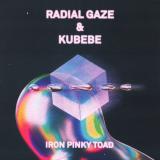
When Radial Gaze meets Nicola Kubebe, the result is Iron Pinky Toad — a title that sounds either like a secret kung-fu move or a lost cartoon book. But don’t be fooled — this one hits hard.
The long-awaited collab brings three original tracks — Phantom Limb, Lights of Phoenix and the title cut Iron Pinky Toad — that effortlessly bridge the gap between slow-burning tribal techno and the raw pulse of new beat nested into an early techno nutshell. Imagine dancing barefoot in a ritual under a disco eclipse — you’re getting close.
To seal the record, Playground Records boss Martin Noise steps in alongside rising sensation Anastasia Zems, pushing the release into full-blown dancefloor sorcery. The groove is deep, the bass is sweaty, and the toad… well, the toad is on fire !
Dropping Friday, July 18, 2025, via THISBE Recordings — available on vinyl and digital. Spin it, stream it, or whisper its name into the smoke at 3AM — either way, the dancefloor won’t know what hit it.
Let the amphibian groove begin.
Artwork by Christoffer Budtz
CLUBREMIX005 has landed ! The physical release of “Wuhuhuu” and “One Balloon”, featuring two standout remixes by none other than The Trip and BELLA.
The Trip injects their signature stripped-back effectiveness into “Wuhuhuu,” breathing new life into the track with a dubby yet bouncy bassline that just locks you in.
BELLA reimagines “One Balloon,” delivering a late-night groovy tool, with her recognisable touch, she captures the essences of the 90s, radiating nostalgia and dancefloor energy.
An exclusive collaboration lands on Drumcode, with Bart Skils linking up with rising German artist A.D.H.S for the divine ‘Can’t Hear You’. Fresh off the excellent ‘Torn Clouds’ single with Weska on Drumcode, Bart Skils is on-point as ever with his production output. The Dutchman has enjoyed a strong summer highlighted by Awakenings and a sunrise set at the iconic Fusion Festival. Meanwhile A.D.H.S is no stranger to Drumcode, having shared slick contributions to past A-Sides compilations including ‘Razor’ and ‘2Step’. He’s otherwise dropped strong releases on Exhale, Spannung and Electric Ballroom. “Can’t Hear You” was born during a Sri Lanka holiday after A.D.H.S injured his back and spent time sketching ideas on his phone. “I started playing around with samples on my phone and found this beautiful vocal and just started sketching some ideas. No pressure, just emotions,” A.D.H.S explains. “Back at the little jungle studio I had set up, I kept working on it – really taking the time to find the right chords to match what I was feeling at that moment. It’s a bit of an unusual track, and I had no intention of ever releasing it. It was just for this moment,” he shares. A.D.H.S begun testing an early version at open airs and festival, later uploading a teaser clip onto Instagram. When Skils heard the track’s unique vocal line, he was hooked. “It was a no-brainer for me to decide to work on the track with Bart, I’d been a big fan of his for years. He brought in his ideas, worked on the mix and arrangement, and together we shaped it into a version that we both absolutely love.
It’s one of those rare tracks that just capture a moment.” Indeed ‘Can’t Hear You’ is an emotional behemoth; one of those rare tracks that sounds genuinely unique and is simultaneously a banger and tear-jerker in one. “When I first heard the clip Michael (A.D.H.S.) shared of ‘Can’t Hear You,’ I was hooked by the infectious vocal. We decided to craft a full collab blending both our signature sounds, and the result is a rolling party weapon that’s become my go-to closing track,” shares Bart Skills.
Mark your calendar for February 14, 2025—CLUB U NITE RECORDS drops 'A Box of Goodies – Rare Edition'!
This EP delivers four rare gems straight from the 90s house vaults:
'The Nite' (1997) kicks things off with a deep house organ, disco vocal bits, and a deep deep bassline.
'End of Luv' (1999) takes you deeper, blending straight beats with melancholic vibes - perfect for sunset beaches or as closing track.
'Stompin’ Pumpin’' (1996) gets jazzy and funky with an addictive Rhodes loop that won’t quit. So good!
'I’m the One' (1996) nails it with a raw Chicago swing, fat minimal grooves, and a dope jazz-piano sample.
Four 90s killer tracks, three making their vinyl debut - get it before it’s gone!
Celestial Echo is here with one of the all time holy grail soul double siders. When we tell you a record will never leave your bag after buying it, this is exactly the record it applies to.
Originally released in 1970 and written, produced and arranged by the great Van McCoy, Washington D.C.’s Bobby Reed stepped up and delivered “The Time Is Right For Love” an incredible loved up stepper, and then “If I Don’t Love You”, a perfect compliment, another… loved up stepper.
This one isn’t a fresh find, or a new discovery - Just an essential, officially licensed reissue of an incredible slice of soul.
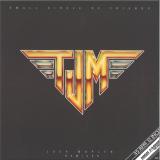
TJM’s Small Circle of Friends is considered one of the masterpieces of the Golden Era of Disco. Moplen takes TJM’s Small Circle of Friends and stretches it into a deep, hypnotic disco odyssey. Built on a chunky, vinyl-warm groove, the remix layers hi-hats, funk-soaked bass, and crisp claps over lush, orchestral strings and soulful vocal refrains.
Moplen’s trademark touch is all over this one, extended breakdowns, patient builds, and EQ sweeps that make the dancefloor hang on every bar. It’s the kind of track that keeps the energy grooving and sophisticated. A timeless, vinyl-ready rework for true disco connoisseurs.
After countless hours in the studio, we are proud to present EZ PC, a sonic journey infused with elements of funk, jazz and abstract soundscapes.
The record features the legendary Samuel Appapoulay, whose versatile musicianship adds depth and character throughout the project. This release also marks one of the first projects to showcase the collaboration between David and the Mauritian-born pianist.
To complete the experience, Tripmastaz delivers a remix that holds its own alongside the original, an absolute masterpiece that lifts the EP to an entirely new level.
Buckle up and enjoy the ride!
Fatboy Slim & Daniel Steinberg join forces with a plethora of producers on the Bus Stop Please remixes. The package is one for all shapes and sizes - from the world renowned hit-maker David Guetta, through to UK underground royalty Sally C, Scotlands deep house finest Hayley Zalassi, and enigmatic French trio PPJ.
It probably won't be a shock to many to find out that I am a massive fan of Soeneido & his music. His style varies between the ruff, the darkside, the mellow, the militant style, he can really nail so many different flavours of jungle & hardcore and I've been playing his music a lot in my DJ sets.
Earlier this year, completely out of the blue, he sent me a folder of like 15+ tracks he had done & I knew that there was going to be some heavy hitters in there. Surprisingly, there were more than enough tunes in there to compile a solo release on Future Retro London and it took me some time to work out which ones I wanted to have but I'm very happy with the end result that we were able to narrow it down to. I've been hammering these 4 tracks in my DJ sets, especially No Turning Back & Dark City, which may be my most played tracks for this year, so I'm glad to be able to have these out now, for everyone else to enjoy.
Big thanks to Soen for his fantastic tunes & to Stekker for his work on the a-side artwork.