(12" vinyl cut-out sleeve featuring the DIKI logo, coloured innersleeves, Pig&Dan remix) Early support from John Digweed, Kolsch, Pan-Pot, Nicole Moudaber, and more. Known as well for their acclaimed remix of the classic Apollo Vibes by Pole Folder & CP on Bedrock Records, Kayinda delivers a powerful and hypnotic track where progressive and melodic sounds intertwine, building an irresistible tension that captivates from the very first beat to the last.
Buscar:x tension
AnalyticTrail unveils the first chapter of its new series with Gems 0.1, a carefully curated snapshot of where the label's techno heart is today. Conceived by Markantonio and rooted in the Neapolitan school of groove, this collection focuses on functional power, hypnotic motion, and forward momentum across seven cuts split between vinyl and digital. On wax, the journey opens with Human Safari's Trap Door, mixing tight percussion with jazzy melodic touches. Lysander continues with Riot in Rio, bringing tribal rhythms and rolling basslines that push the dancefloor. KLBR's Thunder Drums hits hard with analog weight and crisp drums, while SYNDROM's Nikaia Nightfall closes the side with deep, hypnotic grooves and cinematic textures. The digital edition adds three more highlights: The Groove Room's Bloom delivers a dubby, pulsing journey; Cri Du Coeur's Safre builds raw warehouse tension with powerful hits and Omis (Italy) Collapse drives a stripped-back, high-intensity groove perfect for peak-time sets. With Gems 0.1, AnalyticTrail shows its formula in action: rooted in groove, focused on the dancefloor, and always looking toward the future.
Following up a string of releases on labels such as Mana, Sun Ark, Orange Milk Records and Abyss, Other People are honoured to present the new album Fobia by Argentinian musician and sound artist aylu, real name Ailin Grad. Inspired in part of Grad's many collaborative projects over the last few years, Fobia sees her collecting and rearranging the music and sounds fostered within these to create an intimate, spiritually charged album that turns personal struggle into collective resistance and resilience. What initially started as a way for Grad to process her own experiences with agora- and claustrophobia, and an attempt to navigate feelings of shame and a perceived demand to keep these feelings bottled up and hidden from the world, she began to realise how mental health struggles are not isolated incidents but part of broader systems of collective suffering and injustice. “It took a long time for me to discover that my issues were part of a system that produces these kinds of symptoms and that it takes a lot of courage to find a way around them. I have the feeling that more and more people suffer from these kind of things in some way or another, and what was at first taught as something you should be silent about and keep private, I discovered that the more you talk about it and share it with people you trust, the more you realise that it’s part of something much bigger.” This tension and constant pull between fear and joy, light and dark, is present throughout the album. From the strained breathing featured in opening track Yodo echoing the suffocating feeling from claustrophobia interspersed with the lighter textures of Obelisco Elysium and Prospero offering up a sense of relief, to the almost cacophonous, immersive soundscapes of El Sol Mal, mirroring the complex, often contradictory emotions when navigating mental health challenges. Fobia invites listeners to move through pain with honesty, finding strength in shared experiences.
A vault of deep pressure unlocked - The Hidden Files collects a set of heavyweight VIPs from The Untouchables, each a reimagined version ofpast dread-infused cuts. Typically crafted for - and reserved within - theirown DJ sets, these alternate versions are now unearthed for wider transmission. Stripped back, rebuilt, and submerged in new layers of sub-weight, they explore a more introspective energy. Tension, restraint, and meditative pressure - the Brussels duo reveals hidden forms with signature finesse.
C.A.R. (Choosing Acronyms Randomly) is the musical project of Chloé Raunet, a Canadian-born, London-based artist known for her icy synths, warm vocals, and left-field pop sensibility. Drawing from post-punk, electro, and experimental songwriting, she creates music that’s both emotionally charged and sonically adventurous.
Following a five-year hiatus, C.A.R. returns with Shyana, the first single from her long-awaited fourth album, Dance at Oscar’s. Produced by Nathan Ridley, the release marks a creative rebirth: a new label, a new live formation with Joni Green, and a sound pulsing with revitalised energy. After a pandemic-induced break to focus on filmmaking — and a period of burnout and disillusionment — Raunet was ready to walk away from music altogether. But a pair of carried-over festival dates and an impromptu onstage reunion with longtime friend Joni Green unexpectedly reignited the spark. What was meant to be a farewell became the start of something new.
Shyana is a shimmering slice of machine-funk — a warped and groovy tribute to Paul Anka, filtered through C.A.R.’s surreal pop lens. A meditation on teen hysteria, pop manufacture, and the strange alchemy of early fame, the track pulses with wonky elegance and strutting confidence. One of the most playful cuts from Dance at Oscar’s, it showcases Nathan Ridley’s tight, swaggering production while capturing the album’s embrace of movement, humour, and the weirdness of cultural nostalgia.
On the B-side, Cecilia Road offers a more reflective counterpoint — a nostalgic, synth-drenched ballad built around a call-and-response vocal, throbbing melodies, and emotional tension. Intimate yet expansive, it hints at vulnerability without losing the pulse.
Artwork by Chloé Raunet, Craig Richards and Oliver Hupfau.
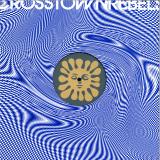
KinAhau returns to Crosstown Rebels with expansive new single ‘Under the Flowerpot’, featuring Luke Cusato. Backed by a cosmic, synth-driven remix from Perel, the release lands on the label. After debuting on the label with his remix of Airrica’s ‘Hi Speed Lover’ last year, surging wonderkid KinAhau steps forward with his first full solo release for Crosstown Rebels. ‘Under the Flowerpot’ captures a moment of raw honesty and transition for the young Mexican artist, revealing a more expansive, song-led direction in collaboration with UK vocalist Luke Cusato.
The single was born during a turbulent period, written in the wake of a panic attack shortly after relocating to Rome. That sense of fragility and release runs through the record, pairing Cusato’s stirring topline with KinAhau’s widescreen production to create a cut that blurs the lines between club energy and confessional songwriting. For the remix, Damian Lazarus welcomes Perel to Crosstown Rebels. A unique voice within the electronic landscape, crafting her own lane with a genre-blurring approach, her remix is chugging, synth-led, and infused with a signature retro-futurist touch, channeling cosmic energy and slow-burning tension for dancefloors that like things deep and driving.Now 22, KinAhau’s journey has already taken him from handing Solid Grooves founder Michael Bibi a USB disguised as a trash collector to playing at DC10, Fabric, Space Miami and Mayan Warrior. His breakthrough collaboration ‘Different Side’ with Bibi and Audio Bullys carried his name onto global stages, while his 2024 mixtape comprised of old demos, drafts and edits revealed a more confessional, unfiltered edge to his sound. Yet ‘Under the Flowerpot’ feels like a deeper statement, one rooted not in hype but in self-exploration.
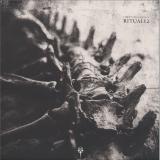
The Rituals series rises again, a fresh strike carved deep into black wax. RITUAL12 summons an international assembly of techno insurgents from the OMEN roster, each delivering their own sonic rite. Across two sides, the intent is absolute: raw, unfiltered power pulled from the shadows and unleashed on the dance floor.
RITUAL12 is not a compilation, it’s a convocation. Forged in analogue heat, drenched in distortion, and aimed directly at the heart of the floor, this record demands full surrender. Step in. There is no turning back.
SIDE A
Swarm Intelligence – Inexorable
Berlin’s Swarm Intelligence ignites the record with precision-tooled percussion and fractured basslines. Polyrhythmic tension winds tighter with every measure, industrial grit locking into a cybernetic march toward total hypnosis.
B.A.R.K – Shikijitsu
A bone-rattling invocation of distorted low-end and ceremonial drums. B.A.R.K drives forward like ancient machinery grinding to life, a Japanese primal energy sharpened to a deadly edge.
Axkan + Duellist – Resilence
Mexico meets Scotland for a brutalist assault: hammering kicks, serrated synth textures, and walls of analogue saturation. No safe passage here, only forward momentum into the heart of chaos.
SIDE B
EAS – Honored One
From Los Angeles, EAS delivers a tense, ritualistic construction where a subterranean EBM bassline pulses through metallic drones. Hypnotic, uneasy, and charged with controlled dissonance.
Ha†elove + Ogmah – Hanged Bodies
A dark ceremonial groove, heavy with ritual percussion and spectral synth chants. The layers rise to a fever pitch, blurring the line between transcendence and collapse.
Crystal Geometry + Axkan – Kratom
France’s Crystal Geometry joins Axkan for a militaristic strike of modular chaos and pummeling drums. EBM infused basslines drive beneath razor-sharp synth fire, rallying the midnight faithful to the front lines.
Next up on Bosconi, the ever-persistent Italian outpost helmed by DJ sorcerer Fabio della Torre, comes a bold new chapter from label mainstay Lapucci—a familiar name to heads who remember his trippy debut Levitated Sensor Detector (LSD).
With Level of Control, the Florence-based Burbi Dub dubplate conjurer delivers a four-track EP that travels across moody electronics, psychedelic grooves, and off-world rhythms.
Kicking off the A-side is “Radio Controller”, a dark and melodic new beat jam with deep ‘80s roots—think obscure synths, rolling drum-machine funk, and a haunting vocoder line that crackles like forgotten transmissions.
Next up, “Einstein”. This one’s a jacking electro-techno burner, all drive and tension—built for those peak-time moments where things feel like they could go off the rails. There’s a cinematic sense of anticipation here, a nod to the cosmic weight of relativity and dancefloor gravity.
Flip to the B-side for “Level of Reality”—a trance-soaked electro weapon, laced with a screaming guitar-like lead and a soaring, emotional melody. It’s peak-time power with sunrise sensitivity—equal parts rave and revelation.
Closing things out is “Irabijanti”, a stripped-back, hypnotic afterhours tool with a fresh, effortless groove. Subtle nods to Middle Eastern scales and rhythms give it a dreamlike, drifting feel—like getting lost in the dunes of some alien desert.
Another must-have from the Bosconi mothership—Lapucci pilots us further out, not with a bang but with a slow magnetic pull into somewhere weird, warm, and wired.
The black and white hoverbike flew out of the fog at breakneck speed and raced through the neon-lit urban jungle of the Havan metropolis. It manoeuvred steadily between the skyscrapers, trying to throw off the tail of the corporal's convoy, which was getting closer by the moment, preventing it from sneaking away with the seemingly easy-to-get Zero-G prototype. This weapon could create an anti-gravity field with a single shot and disable even the largest battle cruiser. That's why an elite squad of cyber-soldiers equipped with modified implants and gadgets was sent in pursuit not to allow them to ease off for a second.
With a sharp steering wheel jerk, Spacelunch turned off the main street and into a narrow alley. "Your turn!" – He shouted insistently over the engine's roar. Cat rose from the back seat, took aim, and deftly fired his blaster. In a pall of sparks and smoke, the pursuer's hoverbike spun out of control and crashed into the building. Gritting their teeth, the friends raced through the winding maze of obstacles and tight turns. All senses were heightened with excitement. They could see a gap ahead and a way out into the slums.
Suddenly, a heavily armed police drone blocked the road, aiming its red gun lights at them. Spacelunch decisively grabbed Cat and jumped into the so-fortunately spotted sewer manhole, barely managing to dodge the gunfire barrage. After landing in a pitch-dark narrow tunnel, they moved on, with every step feeling the growing tension in the air and realizing that they could be found out at any moment. The darkness seemed endless. The only consolation was that they had the prototype in their hands, and now all they had to do was get to the spaceship and get off this freaking planet.
C.A.R. (Choosing Acronyms Randomly) is the musical project of Chloé Raunet, a Canadian-born, London-based artist known for her icy synths, warm vocals, and left-field pop sensibility. Drawing from post-punk, electro, and experimental songwriting, she creates music that’s both emotionally charged and sonically adventurous.
Following a five-year hiatus, C.A.R. returns with Shyana, the first single from her long-awaited fourth album, Dance at Oscar’s. Produced by Nathan Ridley, the release marks a creative rebirth: a new label, a new live formation with Joni Green, and a sound pulsing with revitalised energy. After a pandemic-induced break to focus on filmmaking — and a period of burnout and disillusionment — Raunet was ready to walk away from music altogether. But a pair of carried-over festival dates and an impromptu onstage reunion with longtime friend Joni Green unexpectedly reignited the spark. What was meant to be a farewell became the start of something new.
Shyana is a shimmering slice of machine-funk — a warped and groovy tribute to Paul Anka, filtered through C.A.R.’s surreal pop lens. A meditation on teen hysteria, pop manufacture, and the strange alchemy of early fame, the track pulses with wonky elegance and strutting confidence. One of the most playful cuts from Dance at Oscar’s, it showcases Nathan Ridley’s tight, swaggering production while capturing the album’s embrace of movement, humour, and the weirdness of cultural nostalgia.
On the B-side, Cecilia Road offers a more reflective counterpoint — a nostalgic, synth-drenched ballad built around a call-and-response vocal, throbbing melodies, and emotional tension. Intimate yet expansive, it hints at vulnerability without losing the pulse.
Artwork by Chloé Raunet, Craig Richards and Oliver Hupfau.
MCRV017 – Transient States. Feedback is an evocative four-track compilation that captures the deep essence of dub techno—equally suited for the dancefloor and for immersive, focused listening. Label veterans Eric Louis, Genning, Osman Oz, SUBMINIMAL (with a Tvardovsky remix), and Etzu Mahkayah all contribute. From the very first listen, the EP draws in discerning ears with its richness and detail.
Each track unfolds smoothly, evoking deep emotional textures and building a sensuous, introspective atmosphere. The release moves from subtle cues to vast sonic terrains, weaving through warm harmonics and resonant low-end thumps that captivate the body as much as the mind.
These tracks are ideal for transitional moments in a DJ set, yet stand strong on their own. Whether elevating the narrative arc, introducing mid-set tension, or closing a journey with emotional depth, each piece functions as a zealous tool for navigating sensation—crafted not just for movement, but for lasting memory.
Transient States exudes quiet power beneath a deliberate veil of restraint. Emotionally charged, sonically rich, and full of nuance, this release is a standout addition to any selector’s arsenal.
Limited edition
Black Truffle is pleased to announce Melopea, presenting two new pieces highlighting the incredible voice of Amelia Cuni (1958-2024), the great Italian singer, based in Berlin in later life, whose mastery of the classical Indian dhrupad developed in parallel with a commitment to contemporary experimental approaches. After two stunning archival releases documenting traditional dhrupad performances in India in the 1990s (BT079 and BT092), the two side-long pieces here embody the freedom with which Cuni explored new contexts and settings for her singing.
Both make use of a long recording of Cuni singing the pentatonic Raag Bhoop (or Bhopali) made in 2012 by her partner Werner Durand in Berlin. ‘Melopea’ began from Cuni and Durand’s superimposition of this recording with violinist Silvia Tarozzi and cellist Deborah Walker’s performance of Éliane Radigue’s ‘Occam River II’. Inspired by the beauty of this chance encounter (and other experiments with non-synchronous collaboration during the pandemic years), Tarozzi and Walker recorded independently, without hearing Cuni’s voice but ‘having her present in memory’. Tarozzi and Walker’s bowed strings places Cuni’s magisterial performance in a new context, emphasising, as Radigue commented upon hearing the initial layering of her piece with Cuni’s voice, a shared ‘searching toward the partials, overtones, these natural constituents of acoustical sounds in their richness’. Beginning with whispered bowed harmonics, the violin and cello swap the stability of dhrupad’s traditional tanpura drone for a slowly evolving, uneasy web of harmonic interactions recalling some of Harley Gaber’s work, sometimes sitting on dissonances for long periods or allowing changing interference patterns to come to the fore. Primarily focusing on her lower register, Cuni’s performance demonstrates her mastery of microtonal pitch subtleties, elegant sweeping glissandi and meditatively unhurried pacing.
The continuation of the same recording by Cuni forms the foundation of ‘Bhoop-Murchana’, with Anthea Caddy on cello and Werner Durand on soprano saxophone. In contrast to the randomised layering of the first piece, here Durand and Caddy have carefully selected pitches based on the raag Cuni sings, using the ‘Murchana’ form, which uses the constituent notes of the raag as tonics of new raags, retaining the same interval structure. Both players who have developed tones of striking depth and harmonic purity on their instruments, Caddy and Durand’s patient long tones are simultaneously rigorously grounded in the physical properties of sound and possessed of an immaterial, floating quality. Combined with Cuni’s voice and, near the piece’s end, her contributions on hammered and plucked tanpura, the effect borders on miraculous. To surrender to this music is like slipping into an onsen pool, feeling the instantaneous release of every tension. Accompanied by liner notes from Durand, Tarozzi and Walker, Melopea is both a moving tribute to the profound art of Amelia Cuni and, for the uninitiated, a perfect introduction to it.
Swiss label keepitgoing. returns with La Buena Muerte, a three-tracker uniting Ricardo Villalobos & Washington Miranda, Siddhartha, and Wata with Jorge González of Los Updates — a cross-section of Chile’s most vital electronic voices brought together on one record.
The EP opens with Bajo Tierra – Mis Juguetes, a ten-minute drift of slow-burning minimalism where Villalobos’ elastic modular textures and patient rhythmic detail entwine with Miranda’s hypnotic vocal, processed and stretched into new shapes and forms — a continuation of the deep, organic dialogues the pair first explored on De Cada Uno in 2022. On the flip, Siddhartha – Poema 4 slides into minimal electro and broken beat territory, sparse yet restless. Razor-sharp drums and pulsing bass unfold through dynamic structures that thrives on tension and space where a menacing voice cuts through with insistence. Closing the record, Wata – El Soul de Los Que Sobran (feat. Jorge González) brings González’s unmistakable voice into Wata’s playful framework, a looser, rather light-hearted cut where percussion and gentle melodies expand the palette and connect the EP back to Chile’s rich electronic lineage.
With artwork by Damian Schopf, brother of Martin Schopf aka Dandy Jack, La Buena Muerte stands as a collective statement of Chilean experimentalism — free of borders, rooted in collaboration, and tuned for the floor.
- A1: Original Album Like Eating Glass
- A2: Helicopter
- A3: Positive Tension
- B1: Banquet
- B2: Blue Light
- B3: She’s Hearing Voices
- C1: This Modern Love
- C2: The Pioneers
- C3: Price Of Gasoline
- C4: So Here We Are
- D1: Luno
- D2: Plans
- D3: Compliments
- B-Sides | & Rarities A1 Little Thoughts
- A2: Skeleton
- A3: Storm And Stress
- A4: Always New Depths
- A5: Staying Fat
- A6: Tulips
- B1: Two More Years
- B2: She’s Hearing Voices
- B3: The Marshals Are Dead
- B4: The Answer
- B5: The Present
- B6: Every Time Is The Last Time
- C1: Live & Demos Bbc Peel Session: So Here We Are
- C2: Tulips
- C3: Luno
- C4: Compliments
- C5: Demos Banquet
- C6: This Modern Love
- D1: The Pioneers
- D2: So Here We Are
- D3: Helicopter
- D4: Price Of Gas
- D5: Skeleton
White Vinyl LP 2x12"[33,57 €]
Ltd. Boxset White Vinyl
Zum 20-jährigen Jubiläum ihres ikonischen Debütalbums Silent Alarm veröffentlichen Bloc Party drei limitierte Jubiläumsformate: eine 2LP auf weißem Vinyl mit dem original Album, eine 2CD Edition mit dem original Album und Bonus Discs, welche Demos, B-Sides und eine BBC Peel Session beinhalten. Außerdem ist ein 12-seitiges Booklet inkl. Lines Notes und einem Vorwort von Produzent Paul Epworth. Die Deluxe-Box umfasst alle oben erwähnte als 4LP Set. 2LP für das original Album und 2LP für die Bonustracks und Raritäten sowie Demos und Sessions. Wobei es hier ein 24-seitiges Booklet mit noch nie veröffentlichten Fotos der Band und exklusive Liner-Notes gibt. Ein Muss für Fans und Sammler gleichermaßen.
White Vinyl
u b2 She’s Hearing Voices Original Version
Today, Manchester’s Maruja announce their highly anticipated debut album ‘Pain to Power’, due for release by Music For Nations on 12th September and produced by Samuel W Jones, who the band worked with on their three EPs to date. The extraordinary eight track collection not only confirms the four piece as a creative force of nature but finds a deeply emotional and empathetic band concerned primarily with the power of community, both in the nuclear sense, as a tight knit creative unit, but also as a wider force for social and political change in the age of the individual.
Maruja believe passionately in the ability of art to empower, heal and unite and have created a body of work with ‘Pain to Power’ that they hope will offer both strength and an emotional release to anyone who is struggling with the impact of years of political turmoil and social isolation.
Proud to present you our third RETROFUTUR compilation, including 6 tracks by our most regular artists.
Endrik Schroeder opens the ball with the pure warehouse banger “Automated” ! The track’s sonic intensity never falters, driven by a relentless rhythmic structure and saturated synthetic textures. The modulated layers and the syncopated break recreate the visceral urgency worthy of the underground raves of the 90s.
With “Happy End,” Brandski distils a contagious euphoria, designed to set the dancefloor ablaze with collective joy. A leading figure of the Italian-French new wave, he creates a track as jubilant as it is unstoppable, where rhythmic mastery flirts with festive instinct. An invitation to luminous abandon: arms raised, shared smiles, communion guaranteed.
With “Eldorado” John Lord Fonda reaffirms his status as a key ambassador of French techno on the international scene. The track unfolds a relentless, extremely tense groove, where darkness becomes driving tension. A rigorous, almost martial sound signature, serving an uncompromising vision.
“White Light” by Panthera is a polished track that transports us on a euphoric journey. The heavy, incisive kick blends with atmospheric layers and heady arpeggios, creating a constant tension that culminates in thunderous drops. The whole thing is supported by a deep, vibrant bassline, typical of the 90s rave scene.
Once again, Berlin’s My Secret Playground stands out as the architect of a muscular German nu-disco, flirting with the boundaries of techno. “Don’t Panic” combines percussive pulses and dark tension, while distilling subtle reminiscences of the disco aesthetic. A masterful sonic hybrid, between retro hedonism and contemporary intensity.
Club Mayz delivers a masterful closing performance with “Tonight I Have To Hide”, an electro track fueled by the raw heritage of Detroit techno and the dark textures of EBM. The track combines dramatic tension and synthetic precision in a nocturnal and introspective aesthetic.
Step into the emotional landscapes of Saudade’s new EP Expensive Noise, a multi-textured journey where analog machines speak louder than words. Each track captures a different state of mind, blending depth and groove with raw, honest sound design. The EP opens with “Expensive Noise” — direct, grounded, and hypnotic. No detours, no hesitation — just raw analog power locking into a loop with magnetic tension. The groove builds steadily, shifting your state of mind as the rhythm takes hold. “Anyway” brings a dreamy, bittersweet touch. Exclusive to vinyl, this extended version unfolds like a teenage memory you never shared — warm, nostalgic, somewhere between electro and pop, glowing softly from within. “Colored Life” dives into detailed minimal deep house territory. Rounded and generous, its sound design sculpts soft clouds of melodies against crisp, syncopated snares — floating between dream and presence, like a cushion made of rhythm and light. “Porte de la Villette 45” echoes the EP’s birthplace — a raw area near the Parisian périphérique, where engines roar, people hustle, and concrete weighs heavy. Yet within this urban friction stands Studio Villette 45 — a funky, soulful shelter where the machines find their groove. The record closes on “Cœur” (heart in French) — a stripped-down, heartfelt outro. Just a Prophet 5 pad, no tricks. A moment of vulnerability, stillness, and truth — as if the music had finally dropped its armor. Between analog heat and emotional honesty, Expensive Noise is Saudade at his most sincere — building bridges between power and softness, body and soul, sound and silence.
Eclectic and genre-fluid, Whoosh is a masterful showcase of the expansive musical sensibilities of Vik Srinivasan—known as Vikmatic—and the finely tuned ear of co-producer and TSoNYC label head Danilo Braca. Drawing from a rich tapestry of sonic influences, the EP unfolds with effortless depth and elegance. Its title track opens with wistful spaciousness, unhurried in its approach, as layers of ambient texture float into view. Around the three-minute mark, a freeform trumpet—played by multi- instrumentalist, producer, and songwriter COULOU—enters like a gentle breeze, pairing seamlessly with a humblingly gorgeous vocal from indie pop artist Rén with the Mane. Her voice, set cool and weightless amid the atmospheric array, anchors the track in emotional resonance
In contrast, “Dream” quickens the pulse. It opens with a crisp hand drum before giving way to a forceful Italo rhythm and driving synths. The return of the meandering trumpet offers a warm counterbalance—a humanizing thread weaving through the escalating sonic tension.
“Jungle” follows with a playful sense of experimentation, placing the trumpet at center stage. It’s accompanied by a whimsically off-kilter selection of textures: crisp, deliberate percussion; a brooding electric guitar line courtesy of the ever-versatile Alvise Marino (aka Al-Veez); lush retro synth glides; and
The EP closes with “We Should Go,” where Rén with the Mane returns in more earthly form. Her vocals drift in and out between acid burbles and Italo arpeggiations, both intoxicating and charged with quiet urgency. It’s a fitting finale—elevated yet grounded, dreamy yet directive.
Across four free-flowing yet meticulously crafted tracks, Whoosh captures the essence of collaboration and creative freedom. It’s a transportive listen that resists genre boundaries, inviting the listener to drift, dance, and discover within its lush and unpredictable terrain.
Words by Mira Fahrenheit
Harap-Alb is the first full-length album by Articulat, following a trilogy of EPs (two released on vinyl) and previous appearances on Rotterdam’s Afrobotic Musicology label. This new project deepens Articulat’s commitment to narrative-rich electronic music — blending structure, rhythm, and texture to evoke both dancefloor tension and cinematic storytelling.
“This album began as a personal exploration—an attempt to deconstruct a story that has been familiar to me since childhood and reimagine it through sound. I first encountered Harap Alb as a crackling, timeworn radio play on vinyl, and its atmosphere has lingered with me ever since. This is my way of keeping that story alive—not by preserving it in amber but by passing it forward in a different form, hoping it resonates in a new way.”
Perhaps, years from now, someone will discover this record the same way I found the original. And in doing so, they too will add their own craft and love to the tale.
Based on the 1964 radio play adaptation by Vasile Mănuceanu
Original story: Povestea lui Harap Alb, written by Ion Creangă in 1877