Tucked in the heart of Koreatown, Los Angeles, lies The Libra Hotel—the titular architecture of Nick Malkin's new album and site of his musical and psychogeographic exploration. Unlike most musical "site-specific" studies, Malkin remains wholly ambivalent to the documentarian approach, instead sharpening an auteur-like focus on the site as a conceptual and highly expressive backdrop. The Libra is musically explored as a space that houses a noir fragmentation of identity—the exhausted trope of a complicated protagonist walking through rain-soaked street corners and fumy neon lights—where an inner monologue is rendered in both miniature and at a cosmic scale. Casting aside stifling tropes around field recording, ambient, and improvised music, Malkin's work finds its own unique fidelity and emotional core through the assembly and reassembly of memory. Nearly every sound on the album—from frayed saxophones, lambent pianos, and dissected jazz drum kits—are multiplied, shattered, and reconstituted into shapes that adorn The Libra in a motion-blurred fog. The narrative of the Hotel suddenly appears as if out of the mist, with intersecting characters interacting within its walls by happenstance. Adminst the languid set pieces, wraith-like sonic grains gravitate around wide subbass beams that give structural form to The Libra, a narrative tension like when a scene is shot from hundreds of different perspectives: an image both luminous and veiled.
Much like Frank Sinatra's own spatial residency immortalized on "Live at The Sands," "At The Libra Hotel" showcases an exuberant view of entertainment, hospitality, and a form of masculinity, one that can quickly detourn into darkness. Knowing this, Malkin extracts a melancholic core out of The Libra locale. The flickering shadows of American decadence are shown in their ephemeral honesty, lines that trace how even in everyday life virtue is tested, sanity is tested, even reality is tested within the confines of desire, within the night. The album is draped in fleeting textures, carefully arranged with a trance-like microtonality, the faint inflections and articulations of a jazz band cascading into dissipated stillness. Voicemails about changed locations and covert eavesdropping on guests' whispered conversations provide an atmosphere of missed connection and voyeurism—a purloined letter of desire receding into a vanishing point. Like the music itself, The Hotel, a chapel perilous at the intersection of desolation row, the center of it all, yet simultaneously at the edge of town, becomes a structure between libidinous virtuality and actuality—our inevitable half-light.
Ultimately, the pensive atmosphere of "At The Libra Hotel," powerfully asserts a plea for the kinds of intimacy only possible in transient spaces. Here, memory cascades into a force that feels like something supernatural, perhaps even religious, yet always subject to the infidelity of our imagination. Here, the album opens into its primary psychodrama, the transient nature of subjectivity itself and how this becomes fractured in the tumult between our commitments and desires. Within this nocturnal space, to quote Louise Bourgeois, "you pile up associations the way you pile up bricks. Memory itself is a form of architecture."
Suche:x tension
- A1: Daytime Tv (Rainy Miller Remix)
- A2: It’s Hard To Get To Know You (Space Afrika Ambiv)
- B1: Pigeon Flesh (Mobbs' Butcher Mix)
- B2: Love Like An Abscess (Aho Ssan Remix)
- C1: Nervous Energy (Teresa Winter Remix)
- C2: I Was Born By The Sea (Morgane Polanski Remix)
- D1: I Was Born By The Sea (Fila Brazillia Remix)
- D2: Dream About Yourself (Bonus)
Richie Culver had been waiting his whole life to record I was born by the sea. His debut album immediately and messily inscribed the artist into the canon of outsider music and experimental electronics, serving both as an arresting statement of intent and a painful reckoning with the difficult path that lead up to it, stealing one last glance back at a place he always knew he had to escape. Between grim lamentations, faded memories and anxiety attacks, all told with searing honesty and disarming openness, I was born by the sea excavates a space for hope, finding Culver digging through Humberside silt to find a world weary optimism, the raw material from which his visual and sound art is shaped. For this collection of expansions and inversions, Culver invites a collection of kindred spirits, contemporary inspirations and old heroes to wade into the salt water of his formative years spent living for impromptu raves and afterparties, connecting vivid memories of his birth place of Withernsea to artists hailing from as nearby as Preston and Bridlington, further afield, from Manchester and London, Berlin and Paris, before returning back to Hull, to where it all began.
For some, responding to I was born by the sea means diving even deeper into the record’s furthest reaches. Space Afrika clear away the pummelling loops of noise from ‘It’s hard to get to know you,’ revealing a cool and cavernous expanse in its wake. Distant chatter, previously heard as though through thin, plasterboard walls, now echoes from outside the maddening claustrophobia of the original’s Sisyphean sonics, illuminated as a dense storm cloud suspended amidst a more open scene, washed clean by a lighter rain, allowing the tender heart of the track to beat clear. London producer MOBBS stretches out ‘Pigeon Flesh’ into an epic, 10-minute, cold-sweat spiral, strung-out tension wrung from disconnected phone tones twisted in unexpected directions, snatches of Culver’s voice turned inside-out and deep fried bass threatening to tip the track over into oblivion, the build-and-release of a nervous breakdown experienced in real time. In an act of subversive self-reflection, Morgane Polanski switches one kind of ennui for another in her adaption of ‘I was born by the sea,’ swapping the sea for the city, English seaside towns in January for summer evenings in Paris and flashing lighthouses and sparkling oil rigs for the Eiffel Tower and the traffic around L’Arc de Triomphe. Even Culver finds time to revisit ‘Dream About Yourself,’ a track taken from his EP Post Traumatic Fantasy, breathing new words into its glacial drift, the half-remembered testimony of a shut-in: Woke up in the evening / Pray for me / Don’t trust anyone / Pray for algorithm. Reframed in a more melancholy light, the track’s reverberant keys even more clearly evoke a mournful nostalgia, fresh pain felt in old wounds.
Others find a parallel universe in Culver’s visceral world building. Rainy Miller flips the script with a scorched, avant-drill rework of ‘Daytime TV’, threading puncturing hi-hats and queasy low-end surge through the track’s steady ambient cascade, invoking the irresistible Preston beat magic of Miller’s own essential debut album, Desquamation. Aho Ssan melts away the crystalline textures of ‘Love Like an Abscess’ with the ominous crackle of a nascent fire, building through swathes of organic Max/MSP squelch and brittle, nails-down-chalkboard scrape, swelling and metastasising the original to spill over Culver’s desperate hymn to corporeal desire, at once flesh and not. Teresa Winter transports us an hour up the coast from Withernsea to her native Bridlington, replacing the sea wall of synthesis on ‘Nervous Energy’ with muffled ASMR murk and fever dream whispers, transforming Culver’s unflinching observations into a haunting call-and-response, filling in the blanks with her own eerie utterances, a fleeting conversation with a ghost. In a touching victory lap, Fila Brazillia, eccentric stalwarts of beloved ‘90s trip hop imprint Pork Recordings, whose performances at Hull institution The Lamp convinced a young Culver of the necessity to make his mark on club culture, resurface for their first remix in 20 years. Steve Cobby and David McSherry lead a low-slung, heartfelt stroll back through a suite of tracks from I was born by the sea, tracing a full circle saunter from Culver’s origins to his current musical practice, the sounds of his present repurposed by the sound of his youth. In a gesture that reflects the emotional complexity of the project, Fila Brazillia find joy at the end of Culver’s troubled reflection, picking out an undeniable groove in the stasis of feeling trapped in your hometown. Underlining Hull’s vital musical legacy, from Baby Mammoth to Throbbing Gristle, Cobby and McSherry demonstrate that, though there are certainly storms, by the sea there is also sun and through the fog, if you listen, you can hear a singular sound, a sound now carried by Richie Culver.
Participant is a record label and creative studio run by William Markarian-Martin and Richie Culver
Eaux proudly announces the second full length LP from Rrose, Please Touch, released on vinyl, CD, and digital download. The LP follows 2019's Hymn to Moisture in ways that are both subtle and striking: Please Touch further hones the artist's tensile sound while exploring new aesthetic vistas and basking in an undeniably erotic sense of play. Moving with undulating power, the album's nine tracks drift across tempos from a weightless 0 bpm to a crawling 100 to a lunging 140 and back, with a rich palette of sculpted noise and cross-talking microtones.
Rrose's compositional process, rooted in their studies with West Coast avant garde trailblazers at Mills College, centers on "seed" sounds being fed through elaborate webs of interrelated audio processing. The result is a world where changes in any one element have downstream implications for some or all the others. It's a rich interdependence that lets the tracks breathe, grow and mutate with uncanny organicism. Please Touch addresses in equal measure the perceptual and the corporeal: these are sounds that sink into the body, exhibiting a tactility that pushes, pulls, bends and yields with fearsome vibrancy.
The album splits its time between radical techno iterations and pieces which pare back the percussion, letting the synth textures uncurl in their own time and space. The quivering drone and rolling sub-bass of "Joy of the Worm'' set the tone for the record, while "Rib Cage," Spore" and "Spines " swing with stepping rhythmic underpinnings. Building with finely calibrated tension, they use their few elements to startling, snarling effect. "Pleasure Vessels" is a rare moment of becalmed introspection in Rrose's oeuvre, hinting at a melodic ambiance that is practically unseen in previous works. It glows with a soft, dawn-like light before dissolving into a tidal fizz. "The Illuminating Glass'' brings the tempo down to a languorous chug, nodding its way through a field of glistening chirps and leaden gasps. "Feeding Time," "Disappear" and album closer "Turning Blue'' meanwhile nod to the cerebral psychedelia of Rrose's forebears, with mesmeric, looping textures and long, magisterial tones not dissimilar to the spectral works of James Tenney (whose work Rrose regularly performs) and the deep listening pieces of Pauline Oliveros.
The title of the album refers playfully to the tactile quality of the music while hinting at a forbidden sensuality that is only permitted within the confines of this microcosm. The phrase is also another nod to Marcel Duchamp, who gave this title to a 1947 exhibition of Surrealist art. Across the nine tracks, Rrose follows the lead of the sound(s) rather than trying to impose on the flow of the sonic material. Each move changes the parameters of a track's evolution. Thus, a non-hierarchical, symbiotic relationship forms between the so-called "music-maker" and the music itself. Please Touch acts as a collection of limbs, organs, parasites, and growths which both devour each other and keep each other alive.
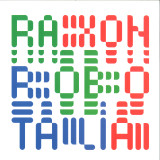
Next up is an overdue reunion with a familiar face. After his outstanding contribution to Cocoon Compilation S and his first solo EP on Cocoon Recordings, Raxon is back with a more than equally fascinating sound. The Egyptian-born and now Barcelona-based artist is back on it again, delivering two tracks that will take you on a journey through the depths of robotic soundscapes.
Intricate beats, hypnotic synthesizer melodies, deep bassline grooves, and distinctive EFX sounds create Raxon’s very special signature sound.
Straight drum programming paired with chirping percussions takes us away to embark on a travel through space and time while distinctive claps poke through a futuristic nebula of floating and shifting sequences. The twisted melody of “Robotalia” carries us to a parallel dimension of machine sound and if you listen closely, you can hear the robots’ screwing and sawing. Warping bleeps and mechanical effects complete the robotic feeling. Raxon’s understanding of structures and architectural abilities are reflected through the arrangement, slowly increasing to ecstasy.
“Kryptonite” scores with alien soundscapes. Stuttering vocals are the questions, while futuristic and dramatic chord stabs are the direct answer. A straight, radiant sound appears as an electronic trombone from outer space, offensively supporting the driving bassline. The symbiotic interplay between the euphoric synthesizer hook line and the relentless beat with pushing sharp hi-hats visualize powerful images in one's mind's eye. Suddenly the beat stagnates and results in a morphing break going head over heels developing a start-stop pitch effect that not only builds up tremendous tension but also bears an increased risk of melting your brain. We just love tape delay!
Marco Vella and Anth Wendt step up to International Feel with a five-track EP of Balearic-tinged bliss for their first collaborative release as Other Mother.
There’s definitely something in the air round the Adelaide Hills. Longtime friends Marco (aka Body Corp) and Anth (aka Oisima) finally got together in Anth’s studio after the pandemic and the result is Numero Uno an EP of laidback synth guitar and drum machine workouts mixing 303 riffs and sunsets for a supremely low-slung vibe.
After cruising around the Hills in the day the pair worked on tracks by night and their carefree days soaking up the sun shines through. Opening track About Time sets a steady pace with its lush delayed guitars slow-rising acid melody and hefty sub perfect for Sunday pub garden appreciation. A side closer Zwang! drops the tempo but brings the percussion into focus for another masterclass in tension and release with interwoven 303s and dub feedback.
Side B keeps the beach-side atmos flowing with guitar licks working around sumptuous synth chords for Anyway Music - a song that’s the ultimate soundtrack understated parts fitting together seamlessly in service to the feeling and belying the technique required. Lost In The Forest makes use of expansive ambient pads synth riffs and shakers to evoke a sense of wonder sunlight coming through the trees.
The EP concludes with Where’s The Fifty a dreamy piece of drum synth phrases and 303 interplay that perfectly characterizes Marco and Anth’s collaboration - two musicians and producers playing to serve the song. They write elements that combine for a harmonious whole greater than the sum of its parts. This is the underlying feel of Other Mother and Numero Uno - we’re all in this together - and by working collaboratively a brighter future might just be around the corner.
Repress! Essential garage Zamrock/soul/funk: the first official reissue of the celebrated band’s one and only album.
The musical style that became known as Zamrock came to embody the economic despair that
followed the 1973-1974 oil crisis, which flung Zambia into recession and exacerbated a wide
range of social tensions. Much of Zamrock also captured the controversy of wider politics in
Africa and the world. Perhaps the finest example of this is Black Power by The Peace.
The Boyfriends, from Kitwe’s Chamboli Mine Township, supplied the founding members for Zamrock’s most
famous band, WITCH, and kick started one of Zamrock’s best bands, Peace. Their sole Zamrock entry, Black
Power, recorded at Malachite Film Studio circa 1973/4 and issued circa 1975, sounds like nothing else in the
Zamrock canon: a lost message drifiting from the flower power era, imbued with a fiery Zambian voice.
Clear Vinyl
Cairo’s trip hop, illbient and club producer Hashem L Kelesh aka Dijit documents a decade of sprawling productions at his home studio, fuelled by the energies of his friends and collaborators.
Populated with the vocal presences of vocal spars Deedz, 7aleeb, and Lella, ‘The Room’ is a metaphoric synecdoche for Kelesh’s studio output between 2008-2019, featuring 9 tracks of lo-slung but levitating trip hop and illbient that overlaps his productions on the long sold-out ‘Hyperattention: Selected Digital Works Vol.1’ album, and augmented by a number of fiery percussive pieces and future folk works that give a wider frame of reference to his style.
While the album follows the smoke curl dynamic of his previous work, the glorious mesh of electro-chaabi breaks and Eno-esque ambient guitar licks on ‘Dreak’, and the heat-seeking street rave scenes of ‘Saga’ will no doubt disrupt your preconceptions, while his folk prayer-like ‘Loli’ reaffirms a knack for captivating downbeats. ‘Leban’ brings a chopped ’n screwed trip hop temporality, deploying laminar layers of male/female vocals that inevitably call to mind Tricky via Leila Arab, while ‘Hasheesh’ trades in red-seal levels of heads-down pressure shades away from Portishead or even Pessimist’s snapped productions.
Dijit smartly manages to keep it all just the right side of gloomy though, with the shatterproof tension between screwed vox and ascendant hyaline electronics on ‘Hamhama’, or likewise in the high-register piquancy and celestial chorales of ‘Dream of a bee’, while the upfront burst of drums in ‘Saga’ will bring heads to their feet.
Z Lovecraft AKA Rhythm Section International's Mali Baden-Powell, offers up four originals on the Utopia Club Tracks label that showcase the disco/house end of his varied output. 'Exotic Passage' coasts along serenely with gently slapped bongos and warm electric piano, definitely a weapon to have in one's warm up arsenal. 'Release (The Tension)' ups the heat a little with a busier bassline, filters and disco licks, before B-side opener 'Lust In Denial' comes with more jazz-slanted piano riffs and 'People Get Too Deep' closes proceedings with the most spacious and dubby arrangement of the quartet. Musically refreshing and understated but lively enough to move feet onto dancefloors, this is the business.
The label returns with a brand new Various Artists vinyl release, this time tapping two of the scene's staples and a couple of uprising talents, plus a collab between Room's very own Angioma and BLANKA.
Finely distorted kicks on "ANOTHER STAIN", by P.E.A.R.L., kick off the VA. With a constant yet evolving synth line, playful percussions that come and go and filter effects, the Spanish artists brings the dynamism to this piece. Maestro Jonas Kopp debuts on the imprint, delivering the acidic "Reversing The Poles". Jonas's shifting atmospheres and depth make this one a perfect tension builder for dancefloors.
On "Spare Matrix", Egotot and Franz Jager (who are no strangers to each other) team up again to present a track with elements from both artists. A rumbling low end, siren-like sounds and a constant uprising energy make this one an essential driving weapon. The deeper cut on the Various Artists, "Innapropiate content", is brought by Room founders Angioma and BLANKA, characterised by the pair's very own rolling rhythms and hypnotism that put an end to this superb 4-track compilation.
- 1: No Control
- 2: Intro
- 3: The March Of The Deviants
- 4: Last Gang Standing
- 5: Won't See The Sunrise Anymore
- 6: Cursed
- 7: Geisterfahrer
- 8: Für Immer
- 9: Wreckhouse Stomp
- 10: She's Evil
- 11: They Come To Take You Away
- 12: Nine Lives
- 13: Sex, Love, Blood 'N' Death
- 14: Am I Human
- 15: Devil's Tail
- 16: Back From The Morgue
- 17: Shitlist Bop
- 18: Kicked Down Low, Get Back Up
- 19: Burn And Rise
Red Vinyl[25,63 €]
Official reissue of the German psychobilly legend Mad Sin’s 2010 album Burn And Rise. Since their indestructible bandleader Köfte DeVille had gone through some major personal changes, which encouraged him to lose almost 40 kilo grams, the album title is more than adequate. 18 tracks titled like “Last Gang Standing”, “Geisterfahrer (Ghost rider)”, "Wreckhouse Stomp", "The March of the Deviants", "9 Lives" or "Shitlist Bop” promise tension and also a bunch of surprises. The typical Mad Sin mix of psychobilly, rockabilly, 50’s Rock’n’Roll, Country, Punk and Surf sounds fresher than ever before. Featured artists include Sucker (Oxymoron, Bad Co.), Jack Letten (Smoke Blow), Hank (The Boss Hoss) and Marlen (Bonzai Kitten). An outstanding record which gave the band once more the chance to show that they think outside the box and can do a lot more than “just” rockabilly.
- 1: No Control
- 2: Intro
- 3: The March Of The Deviants
- 4: Last Gang Standing
- 5: Won't See The Sunrise Anymore
- 6: Cursed
- 7: Geisterfahrer
- 8: Für Immer
- 9: Wreckhouse Stomp
- 10: She's Evil
- 11: They Come To Take You Away
- 12: Nine Lives
- 13: Sex, Love, Blood 'N' Death
- 14: Am I Human
- 15: Devil's Tail
- 16: Back From The Morgue
- 17: Shitlist Bop
- 18: Kicked Down Low, Get Back Up
- 19: Burn And Rise
Black Vinyl[23,95 €]
Official reissue of the German psychobilly legend Mad Sin’s 2010 album Burn And Rise. Since their indestructible bandleader Köfte DeVille had gone through some major personal changes, which encouraged him to lose almost 40 kilo grams, the album title is more than adequate. 18 tracks titled like “Last Gang Standing”, “Geisterfahrer (Ghost rider)”, "Wreckhouse Stomp", "The March of the Deviants", "9 Lives" or "Shitlist Bop” promise tension and also a bunch of surprises. The typical Mad Sin mix of psychobilly, rockabilly, 50’s Rock’n’Roll, Country, Punk and Surf sounds fresher than ever before. Featured artists include Sucker (Oxymoron, Bad Co.), Jack Letten (Smoke Blow), Hank (The Boss Hoss) and Marlen (Bonzai Kitten). An outstanding record which gave the band once more the chance to show that they think outside the box and can do a lot more than “just” rockabilly.
Portuguese maestro Lewis Fautzi drops his 2nd EP on Soma of 2020 with the State Of Pressure EP. As well as two top drawer originals from Lewis, the EP features two specially commissioned remixes from fellow Portuguese rising stars Nørbak & Temudo, both of whom have featured this year on Soma to high acclaim.
Title track State Of Pressure opens and doesn't mess about as thumping, driving drums lay the foundation before pure, hypnotic rhythms begin their descent delivering that typical Fautzi sound. Nørbak's remix of State Of Pressure takes note of the originals hypnotic vibe offering a deeper and more percussive driven affair. Epidemic Of Wellness has Fautzi working in darker elements and delivering more tension with his use of each particular strain of the track, pulsing and modulating perfectly in sync. Temudo closes out the EP with his remix of Epidemic Of Wellness. Always focussing on groove and momentum, Temudo goes sub heavy on his version but retains the dark tones of the original whilst almost adding an Electro-like flex on the groove.
Mastered By Conor Dalton @ Glowcast Mastering.
Anthony Linell puts a steely force at the foreground of his latest EP, Sheltering Skies. Blunt force tension builds, layer upon layer, as an anatomy of mechanistic torsion is worked in across an opening pair of tracks. Linell holds out the respite and oxygen for the EP's closer, undercut by aching feedback that just threatens to go again.
The fact that ATLASES from Finland sound different has its reasons. Besides the "normal instrumentation" of a metal band, the musicians from Pori also work with electronic drum pads and keyboards. Both are not just additional accessories, but an integral part of the musical self-image of this Nordic group. In addition, there is the creative demand to go further aesthetically and sonically than is usual in modern post-metal. In the cinematic soundscapes ATLASES are creating you can lose yourself completely. The third album "Between The Day & I" pushes this approach to the extreme. The dualism of beautiful, atmospheric euphony and abrupt brute force works fantastically and provides lasting impressions. The sextet from Pori sets tension arcs time and again, which lead deeper and deeper into a maelstrom of rapture, melancholy and emotional discharge. On the follow-up to their 2020 LIFEFORCE RECORDS debut, "Woe Portrait", ATLASES present themselves as resourceful songwriters who cultivate powerful contrasts beyond the usual conventions of post-metal and thus stand out. With "Between The Day & I", the Finns prove that modern post-metal can still be developed further, if the right attitude and the necessary daring meet forward-thinking creativity and an elevated level of ambition. The fact that the cover motif of the new ATLASES album evokes associations in the direction of the Mastodon classic "Remission" or "White Pony" of the mighty Deftones is a coincidence, but on closer reflection it fits pretty well.
zake's fruitful contributions as an artist to his own Past Inside The Present label continues on this new album Deep Into The Unknown We Shall Endlessly Roam. It is an assemblage of arrangements made using archaic tape machines such as a Sony M-570V microcassette voice recorder and obsolete VSC Soundpacer, all on analogue tape. Of course that lends the music a misty, grainy quality that defines much of zake's ambient. Here his loops and found sounds meld and melt to create vast open spaces that are pregnant with emotion and tension. It's another magical work of ambient art that, says the artist, "is dedicated to those who continue to yearn for greater understanding."
Wirski’s debut on MISBHV Recordings offers a nuanced narrative operating in its own genre of Eastern European rough-edged club melancholy.
MISBHV004 opens with Inside The Dark Echo – a claustrophobic, stifling, relentless, sensual dance with desire. Darkroom complexity with heavy surface tension built on an EBM undercurrent flirt with subtle psychedelia and traces of acid that slowly firm up their multi-layered grip through its running time of six and a half minutes.
Warszawa paints a stripped-back, tantalizing picture. Opening with a brutalist, militant drum programming and surprisingly spacious, warm bassline, its rigid rhythm, tightened up by a repetitive, cold breath mantra eventually opens up to bright, shimmering synth flickers evoking olibanum – the sacred scent of altar candles. Warszawa is looking at the multilayered melody of its landscape – from eerie Soc-realist blockhouses, through neon-lit, seedy strip clubs of the 90s to opulent sacral architecture.
Warm Waters Of Eternity subtly weave a cinematic, Carpenteresque soundscape with a sense of overpowering, ecstatic innocent euphoria that invokes a dream of an early 1990s rave deep in the dark woods of Poland.
Brussels-based producer Sagat’s highly anticipated debut album ‘Silver Lining’ lands on Vlek Records. Sagat takes us on a deep dive into a dense sonic universe: It’s bass music viewed from multiple vantage points, an explorative zoom onto contemporary dance music’s broad ranging cadences, paradoxically viewed from a distance. Silver lining bathes in cluttering rhythms that hover over corroded thumping grooves. Poly chrome synths emerge dramatically, interlocking with oddly timed techno syncopations. Yet all tracks are held together by firm, dubbed out beat repetitions and slabs of sub bass, not without a melodic sense of drama. Sagat’s disintegrated sound-design stands in between musical dichotomies, at once spaced-out, disorienting and emotive, but also explorative, colourful and full of tension. Moving, yet statuesquely standing idle. Silver Lining is an album longing for the dancefloor, but also about disconnection from it: A highly personal presentation of this producers’ singular take on bass oriented club music. From our standing point we love to see how Sagat’s music keeps evolving, toying with contemporary club music’s specific tropes, unbound by its normativeness. Silver lining is an album rich in contrast that works for personal listening experience as well as for the adventurous DJ with one foot firmly on the dancefloor, the other somewhere way out there.
Altered Circuits dives deeper in the world of playful and versatile club music with roots in the early 90's! There's an obvious parallel between Ildec's DJ performances and his own music.
Part of a scene with a focus on extended, broad-minded sets, the Ibiza-based artist lets his yearning to unearth and play obscure gems flood into his production process. The "Ahora Si EP" is testament to this adventurous spirit as it tackles a wide array of tempos, styles and moods.
Opener "El Principio" and closer "Grt Plschr" display Ildec's fondness of hazy, recondite atmospherics. With its sustained ambient chord, delay-washed newsreader samples and manipulated themes, the former sounds like a fever dream radio bulletin.
On the latter, a broody motif meanders alongside loosely played drums, while a buried bass guitar occasionally reveals itself. "El Break Del Dia" furtherly explores some of these elements, but this time with the dance floor front of mind.
Languidly morphing bass sequences and staccato synth salvos build up anticipation. When a slowly emerging, ceaselessly arpeggiating organ lead finally materialises, the track explodes. Natural flow is partly traded for sturdier form on the remainder of the EP. "El Break De La Noche" lets an ever-modulating lead groove alongside rigid, dry drum beats.
Descending tom fills, truncated squeaks and a top layer LFO gone haywire complete this sparse yet exciting cut. "La Nueva Version" has a similarly efficient bassline as its bedrock. An interplay of zaps, risers, transposed percussion, and other dusty cartridge samples pulls it left and right while subtle disorienting hints of speech thicken the mix.
On "Modificacion", Ildec moulds his take on progressive and tech house into its toughest shape. A druggy, bleepy lead twirls in and out of the track, carried by the road-tested combo of a taut drum pattern and a piercing backbeat bass. Ominous chords and equally menacing vocals mark its aim: to create tension in the club. It is a standout on a diverse, daring EP we are delighted to present as the fifth release on our label.
Ten years ago, Parish Bracha anonymously released his Disconscious album Hologram Plaza, significantly influencing the still nascent Vaporwave scene. He continued producing a number of disparate anonymous projects until Cascade II was released in 2020 on Arca's Mutant Mixtape.
Cascades of Refinement, which includes the single Cascade II, is Parish's debut album released under his own name and his focus on the dialogue between the digital and the organic continues. The techniques that defined his influential early sound have been refined into a flawless hybrid of analog and digital textures which give his post-minimalist compositions an unmistakably personal expressivity.
Classical instruments are mutilated and transmuted into razor-sharp shards of glass suspended on piano wire above warped opalescent metal while never losing sight of their tonal integrity. Much like the impartial juxtaposition Parish employs in his timbral exploration, each composition explores the concepts of beauty and gentleness through and with extremity, violence, and chaos as equal counterparts, with each successive piece refining and relieving the artificial tension between these states. Employing use of the Una Corda, prepared piano, bowed piano, plucked piano, harpsichord, church organ, untuned violin, voice, synthesizers, and resampled field recordings, Cascades of Refinement lies somewhere in the indefinite space between acoustic and electronic and is beholden to neither.
Parish's initial electroacoustic experiments with piano and strings were interrupted by the pandemic lockdown when he was limited to sampled instrumentation and digital processing available on a computer. Out of this necessity evolved an appreciation for the incidental nature of digitally sampled acoustic instrumentation and the unpredictability of its interaction with digital signal processing.
As work on Cascades of Refinement continued and acoustic recording was reintroduced, the focus turned to the tension between recorded and sampled instrumentation, with the goal of integrating the two into a singular indistinguishable material to be warped and shaped together. Each of the four pieces of the Cascade series explore this tension, successively integrating and collapsing their distinction with each piece.
The subtle artifacts of digital processing and incidental mechanical sounds of the acoustic are amplified and given presence alongside the tonal elements of each piece until a point of indivisibility is reached. The sound of a bow scraping along a string or a granular buffer freezing are neither discarded nor hidden, but selected as the ripest material to accompany and structure each composition. Cascades of Refinement is a dialogue between organic and digital, between the mercurial and infinitely reproducible, not as opposites, but as mereologically cohabiting counterparts with equal expressivity.
Tuff Culture displaying a love of original UKG, back from the Sunday session days of the genre's infancy. 'Day Dream' has masterfully dry drums and hits and a classic vocal sample that packs in the soul. Smart filters and effects build tension before the big drop, gun fingers and pinging bass all explode to life. Irresistible. On the flip, 'Perpetual Motion' is another stripped-back, scuffed-up, low-key but high-impact garage shuffler with plenty of pent-up energy and a wicked Erykah Badu sample.