Beyond their highly sought after 1978 album Festa Para Um Novo Rei - home to the mystical jazz-funk classic ‘Vidigal’ and released on Philips’ iconic Musica Popular Brasileira Contemporanea series (MPBC) - little is known about Marcos Resende & Index, even to aficionados of obscure Brazilian music. Far Out Recordings is immensely proud to present their previously unreleased self-titled debut album from 1976, contributing a crucial missing work from the glory days of progressive Brazilian instrumental music.
Born in Cachoeiro de Itapemirim, Brazil in 1947, Marcos Resende was a prodigious child who learned to play the accordion at the age of two, and the piano aged six. In spite of his immense musical potential, he travelled to Lisbon in the 60s to study medicine. Yet continuing to explore his musical passion on the side, he formed a trio which went on to open for Dexter Gordon at the Cascais Jazz Festival in 1971. From here he formed the electronic oriented prog-jazz group Status, who opened shows for the likes of Elton John, Phil Woods, Stan Getz, Art Blakey & The Jazz Messengers, but in spite of their relative live success they have no known recordings.
Now established as a highly regarded keyboardist, composer, and innovative electronic musician, Resende returned home to Brazil following Portugal’s Revolução dos Cravos in 1974. Inspired by US jazz and British progressive rock he’d experienced while residing in Europe, Resende went all out acquiring a keyboard arsenal to be reckoned with, which included the Prophet 5, Yamaha CP-708 and Mini Moog. Determined to integrate his newfound inspirations with Brazilian rhythms and jazz traditions, he formed a new quartet with Rubão Sabino (bass), Claudio Caribé (drums) and the late great Oberdan Magalhães, of Banda Black Rio and Cry Babies fame. Marcos Resende & Index recorded their self-titled debut at Sonoviso Studios with the legendary sound engineer Toninho Barbosa, known as the ‘Brazilian Rudy Van Gelder’ whose impressive resumé includes the era defining classics Light As A Feather by Azymuth, Previsão Do Tempo by Marcos Valle, and Quem É Quem by João Donato. Marcos Resende & Index fits perfectly amongst these masterpieces, sharing both the timeless ethereal qualities as well as the progressive and futuristic ideals of Light As A Feather in particular.
Поиск:ya ya
Все
- 1: Drum Song
- 2: Kai Kai As To (Rippling Lake)
- 3: Iso Kaari Irehte (Bear Trap Rhythm) (Feat. Umeko Ando)
- 4: Yaykatekar Dub (Love Dub)
- 5: Tonkori In The Moonlight
- 6: Afghan Herbal Garden
- 7: Iuta Upopo (Pestle Song) (Feat. Umeko Ando)
- 8: Cup Kamuy Ho (Wake Up Sun) (Feat. Umeko Ando)
- 9: Battaki (Grasshopper Dance) (Feat. Umeko Ando)
- 10: Oroho Raha (Mokor Mokor) (Sleep, Sleep) (Feat. Kila)
- 11: Wei Ne
Tender tonkori melodies, meditative dub excursions and hallowed folk vocals combine on Tonkori in the Moonlight, an 11-track collection of mostly traditional songs performed by indigenous Ainu musician OKI. Born on the Japanese island of Hokkaido in 1957, OKI's released his debut album in 1996 and since then he has recorded 11 studio albums both solo and with his Dub Ainu Band and toured internationally - from WOMAD in the UK to the John F.Kennedy Center in Washington DC via festival appearances in Singapore, Australia and across Europe. OKI is one of only a handful of musicians who play the tonkori, a five-stringed Ainu harp, which is both the pulse of this record and the force that unifies the disparate sounds he introduces such as reggae, dub, Irish folk, throat singing, African drumming and music from Central Asia.
Recorded in 2012 following their breakthrough LPs for Freestyle Records - and stored in The Apples vault maturing ever since!
It seemed like the band were a ways past due a return to the label, and what better way could there be than to release this powerful, uplifting & headbanging Blur cover.
Wherever you are and whoever you're with, whenever you feel like screaming on the edge of a cliff or to simply dance like the end of the world is coming (all imminently possible!) this one is for you. Backed up with the irresistible klezmer-funk energy of The Apples' 2009's take on The Power, because we just couldn't resist giving it another blast on wax.
Produced By Yonadav Halevy
Recorded, Mixed & Mastered By Uri "MIXMONSTER" Wertheim
Executive Producer: Erez Todres
Arthur Krasnobaev – Trumpet
Yaron Ouzana – Trombone
Oleg Naiman – Tenor & Soprano Saxophones
Yakir Sasson – Baritone Saxophone
Erez Todres – Turntables
Ofer Tal – Turntables
Alon Carmely – Double Bass
Yonadav Halevy – Drums
Uri "MIXMONSTER" Wertheim – Sound Console, Tapes, Effects
Recorded At Luna Studios, Tel Aviv With Roy Nadel, 2012.
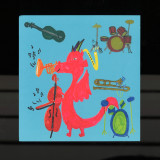
Art by The Bitterman Sisters. Thanks To Fada Zach Bar.
- A1: Nanbu Ushioi-Uta (Feat Kifu Mitsuhashi)
- A2: Isohama Bon-Uta (Feat Toshiko Yonekawa)
- A3: Hohai-Bushi (Feat Kifu Mitsuhashi)
- A4: Otemoyan (Feat Toshiko Yonekawa)
- A5: Aizu Bandaisan (Feat Kifu Mitsuhashi)
- B1: Saitaro-Bushi (Feat Toshiko Yonekawa)
- B2: Soma Nagareyama (Feat Kifu Mitsuhashi)
- B3: Yagi-Bushi (Feat Toshiko Yonekawa)
- B4: Asadoya Yunta (Feat Kifu Mitsuhashi)
- B5: Konpira Fune Fune (Feat Toshiko Yonekawa)
Following the already classic Wamono A to Z trilogy, 180g presents an exceptional collection of jazz funk / rare groove tunes recorded in the mid-seventies at the Nippon Columbia studios by three giants of Japanese music: arranger Kiyoshi Yamaya, koto legend Toshiko Yonekawa and shakuhachi master Kifu Mitsuhashi.
- 180g heavy vinyl pressing, reverse board jacket
- Fully licensed Nippon Columbia masters available for the first time outside of Japan
- Mastering and lacquer cut by Jukka Sarapää at Timmion Cutting Lab, Helsinki, Finland
- Artwork by Nker
---
Born in 1932 in Tokyo, Kiyoshi Yamaya started his musical career in 1953 when he played in various jazz bands in town. In 1957, Yamaya joined Nobuo Hara's famous jazz big band Sharps & Flats as a baritone saxophone player and started composing, arranging, and recording for them and other big bands. He became a key jazz figure in Japan in the sixties together with Norio Maeda and Keitaro Miho, both jazz pianists, composers and arrangers, by forming the Modern Jazz Three Association – which aimed at improving the level of Japanese jazz composition and arrangement. In the mid-seventies, his Contemporary Sound Orchestra explored jazz funk fusions with traditional Japanese melodies and instruments such as the shakuhachi, koto, biwa, and shamisen. These works were recorded for a series of panoramic Japanese albums released domestically on Denon and Nippon Columbia, from which the tracks on this compilation are taken from.
Toshiko Yonekawa, born 1913 in the city of Himeji, not so far from Osaka, is the eldest daughter of koto and shamisen master Kin'o Yonekawa. She started studying both instruments with her talented father from the age of 3, played in her first concert at 8, and was only 12 years old when she first appeared on national radio. Her unique style of koto playing is widely recognized due to the extreme accuracy of the intonation and rhythm, as well as the unequaled beauty of the instrument's sonority. After a life decorated with awards and prizes, Toshiko Yonekawa was named a Living National Treasure in 1996.
Born in Tokyo in 1950, Kifu Mitsuhashi is a great master of Koto style shakuhachi. After completing the NHK Hōgaku Training Program in 1972, Mitsuhashi became a member of Pro Musica Nipponia, a group of leading composers and top-ranking musicians devoted to performing a wide-ranging repertoire of classical and contemporary compositions from both Japan and the West – in which all music is performed by traditional Japanese musical instruments. Mitsuhashi has toured the world for hundreds of recitals, also as a soloist, and has performed his art with the greatest ensembles such as the BBC Symphony Orchestra and the Berliner Philharmoniker. In 2020, Kifu Mitsuhashi was awarded the Order of the Rising Sun.
---
All tracks selected and compiled by Greg Gouty and Maxime Brottes, with the assistance of Ryohei "Nitchiku-kun" Tanaka.
All tracks licensed by Nippon Columbia, Japan.
Mastering and lacquer cut by Jukka Sarapää at Timmion Cutting Lab, Helsinki, Finland.
Artwork by Nicolas Kerembellec (Nker.fr).
Proofreading by Brian Durr (Diskotopia).
Executive producers: Greg Gouty and Maxime Brottes.
180GWALP04 - Manufactured and distributed by 180g.
There’s an ancient Japanese legend in which a horde of demons, ghosts and other terrifying ghouls descend upon the sleeping villages once a year. Known as Hyakki Yagyō, or the Night Parade of One Hundred Demons, one version of the tale states that anyone who witnesses this otherworldly procession will die instantly—or be carried off by the creatures of the night. As a result, the villagers hide in their homes, lest they become victims of these supernatural invaders.
Such is the inspiration for the latest album from EARTHLESS. “My son is really into mythical creatures and old folk stories about monsters and ghosts,” bassist Mike Eginton explains. “We came across the ‘Night Parade of One Hundred Demons’ in a book of traditional Japanese ghost stories. I like the idea of people hiding and being able to hear the madness but not see it. It’s the fear of the unknown.”
Whereas 2018’s Black Heaven featured shorter songs and vocals from guitarist Isaiah Mitchell on much of the album—an unprecedented move for the San Diego power trio—their latest is a return to the epic instrumentals EARTHLESS made their unmistakable name on. Night Parade Of One Hundred Demons is comprised of two monster songs—the 41-minute, two-part title track and the 20-minute “Death To The Red Sun.”
The scenario that allowed for this kind of exploration was a stark contrast to that of Black Heaven. At that point, Mitchell was living in the Bay Area, which made it difficult for the band to get together and work on the type of long instrumental pieces they’re known for. But in March 2020, the guitarist moved back to San Diego. More specifically, he moved back the night the pandemic lockdown kicked in. Bad timing, perhaps—or maybe perfect timing.
Plus, they were all on the same page about not wanting to do another record with vocals. “In a way, I think this album was a reaction to our last record,” Eginton says. “Black Heaven was outside our comfort zone. I think it was a good record, but it was challenging to write songs in a more traditional verse-chorus-verse format. This one was more enjoyable. I’m sure we’ll do more vocal tracks in the future, but for the time being I see that album as a one-off.”
Given the record’s inspiration, it should come as no surprise that Night Parade of One Hundred Demons strikes a more sinister tone than the rest of the band’s catalogue. “It definitely has a darker, almost evil kind of vibe compared to stuff we’ve done in the past,” Rubalcaba says. “There’s more paranoia and noise, and some of Isaiah’s whammy-bar stuff kind of reminds me of these Jeff Hanneman moments in Reign In Blood, where it just seems like everything is going to hell. It’s pretty fun.”
Night Parade of One Hundred Demons was recorded in San Diego with Rubalcaba’s childhood friend Ben Moore, who’s worked with everyone from DIAMANDA GALAS and BURT BACHARACH to CEREMONY and HOT SNAKES. When Eginton wasn’t tracking his bass parts, he worked on the album’s incredible sleeve art. “He really dedicated himself to the project,” Rubalcaba says. “He’d be drawing in the studio with, like, a coal-miner’s lamp on his head while we were doing overdubs. He really knocked it out of the park.”
All told, Night Parade of One Hundred Demons isn’t just a return to the band’s traditional format—it’s a return to their very beginnings. “This album actually has the very first Earthless riff in it,” Eginton reveals. “We just recorded it 20 years after we wrote it. But we’re really happy with how this record came out. We feel it might be our finest to date.”
- 1: Drug Addiction
- 2: Cross Roads
- 3: The Last Backyard…
- 4: Right Foot Creep
- 5: Dirty Stick
- 6: Kacey Talk
- 7: My Window (Feat. Lil Wayne)
- 8: I’m Up
- 9: Off Season
- 10: All In
- 11: Dead Trollz
- 12: Fuck Ya!
- 13: Big Bankroll
- 14: Boom
- 15: Reaper’s Child
- 16: Murder Business
- 17: Sticks With Me
- 18: House Arrest Tingz
- 19: To My Lowest
- 20: Peace Hardly
- 21: Callin (Feat. Snoop Dogg)
Top, the chart-topping second studio album from the still rising, Multi-Platinum rap superstar YoungBoy Never Broke Again and featuring the hit singles ‘Callin (feat. Snoop Dogg)’, ‘Kacey Talk’ & ‘All In’, is out on vinyl on January 28th 2022.
With 76 total RIAA certifications and over 72.5M certified units under his belt thus far, YoungBoy Never Broke Again is without question among the landmark hip-hop artists of this or any era. 2020 and 2021 have both seen him become America’s #1 most video on demand streamed artist of any genre. His second studio Album, Top, is officially platinum certified after an explosive debut at #1 on the SoundScan/Billboard 200 upon its September 2020 release. YoungBoy was also last year’s #3 most audio on demand streamed artist industrywide and is currently #5 for 2021 thus far and it serves as a testament to his remarkable talent and versatility, showcasing the Baton Rouge, LA-native’s true heart & soul.
Following the immense critical acclaim of Siti Muharam's album 'Siti of Unguja', On The Corner release a limited run of 500 transparent vinyl. Crowned Album of the Year 2021 by Songlines, 'Siti of Unguja' was also selected The Guardian's Global Album of the Month, The Wire's No.1 Global Album and included in best albums of the year lists in NPR and The Vinyl Factory.
Siti of Unguja tells the story of pioneering women, of the ‘golden voice’ of Siti Muharam, heiress to the singular legacy of her great grandmother, the mother of taarab, Siti Binti Saad.
On the Corner teases this first taste of a landmark recording that the label embarked upon two years ago on Zanzibar. Siti of Unguja has a transformative atmosphere, brimming with romance, passion and protest.
Zanzibar is an Island archipelago that lies 6 degrees South of the equator and 30 miles off the East African coast out in the Indian Ocean. Known for its spices, traditional Dhow sailing boats and being a mercantile trading capital of Swahili culture.
The modern history of Zanzibar can be animated through the life and legacy of one artist, Siti binti Saad. Born in 1890 in the small fishing village of Fumba, on Unguja (Zanzibar’s largest island), she became the first Zanzibari recording artist and her recordings sold in tens of thousands across the swahili world.
Combo Chimbita unleash a primal roar of catharsis on their latest album,
IRE, channeling a burning spiritual awakening blazing through the world
and in their hearts
Rapturous cumbia, ancestral drumming, free jazz, electronic distortion and
wordless chants abound throughout IRÉ; a testament to the ever expanding
scope of Combo Chimbita's sonic palette and acts of resistance in realms both
spiritual and terrestrial.
The New York City- based quartet are tracing their roots back to Colombia and
even further to the precolonial continent of Abya Yala. Often described as tropical
futurists for their ambitious melange of ancestral musical traditions and cutting
edge experimentation, the creative unity of Carolina Oliveros (vocals,
guacharaca), Niño Lento es Fuego (guitar), Prince of Queens (bass, synthesizers)
and Dilemastronauta (drums) transcends common concepts of time and
nationality. By identifying as Abya-yalistas, the ensemble takes yet another step
towards unshackling their essence from the cruelty of conquest and the stifing
oppression of land borders.
- A1: Move D / Dman - Badboy (Remix For Mc Uproar)
- A2: Sinoesin - Demiconductor
- A3: Robi - Two Spheres
- B1: Dogpatrol - South Side Pool Hall
- B2: Retrogott - Suckerdeejayz
- B3: Форм - Dve Gory
- C1: Ron Trent - 25 Strings (Remix For Dve)
- C2: Am Kinem - 4 Ava
- C3: Paradise Grey - 873
- D1: Lowtec - Roaming The Street
- D2: Jürgen Ratan - Display
- D3: U-I - Noon At Lagoon
- E1: Lauer - Pioneer Housing Area
- E2: Andy Hart - Water
- E3: Tito Wun - Thewayo
- F1: Paingel - Blind Backen
- F2: Will Saul - Avalon
- F3: Jus-Ed - Cachupa (Original Mix)
- G1: Axel Boman - Don’t Breathe Yet
- G2: Damiano Von Erckert - Desert Scorpion
- H1: Cinthie - Ibiza Rave Tune 3000
- H2: Wolfey - Optimism Bias
AVA. Records celebrates its 10th anniversary with 52 artists. “10 Yahre” is a 4LP compilation housing 22 tracks, a printed 30 pages magazin and a mixed CD. All wrapped in a custom made silkscreen sleeve, also including a textile keychain and stickers. Sonically spanning from ambient to techno, 10 Yahre carries new and exclusive material, all woven around the label’s decade focus on dance floor culture, started 2011 in Cologne, Germany.
The 4LP vinyl includes music by: Am Kinem, Andy Hart, Axel Boman, Cinthie, Damiano von Erckert, Dman, Dogpatrol, форм, Jürgen Ratan, Jus-Ed, Lauer, Lowtec, Move D, Paingel, Paradise Grey, Retrogott, Robi, Ron Trent, Sinoesin, Tito Wun, U-I, Will Saul and Wolfey.
The mixed version of the entire compilation is contributed by Sally C.
The full color magazin and video includes works by: Alina Bader, Andy Kassier, Angel, Anna Beil, Ata Macias, Bailey Keogh, Damiano von Erckert, Dirk Jeans & Lou de Bètoly, Funkycan, Guido, Jana Marei, Jana Maria Dohmann, Joana Pratschke, Johannes Wohnseifer, Juri Bader, Kuchenbaum, Manuel Fischer, Maria Sécio, Martin Fengel & Public Possession, Mathias Schmitt, Maximilian Schweizer, Michael Satter, Naum Hirsl, Nicolas Wenz, Peter Wolff, Rein Vollenga, Rucksack Leer, Stelan Mergenthaler, Suzanne Caroline de Carrasco, Twit One and Yves Taron Harouche.
Compiled by Juri Bader and Damiano von Erckert, mastered by Enyang Urbiks. Design and concept by DVE 1989.
ACCIDENT IN HEAVEN was originally released in 1987 as a hand-made micro-edition of about 40 cassette tapes. It was only the third ever release on the short-lived now near legendary SDV label which had been established that same year by Konrad Kraft, Bernd Sevens and Dino Oon in Düsseldorf.
Finally finding a more substantial and appreciative audience on vinyl over 30 years after its original limited release, ACCIDENT IN HEAVEN is a strong testament to the explorative experiments of Detlef Funder a.k.a. Konrad Kraft, whose homebuilt studio sound attempted to bridge the clinical roughness of Severed Heads and the psychedelia of Coil with the density and force of industrial, post-punk and prototechno. Concurrent with his ever-expanding production skills, KONRAD KRAFT's sound work in the second half of the 80s stayed firmly rooted within a highly stylised underground spirit. Both his music and also the freshly launched SDV label first and foremost served as a medium for communication. The vital urgency of ACCIDENT IN HEAVEN underlines the record's core narrative which arguably sounds even more futuristic today than it did 30 years ago.
Hallmarks of ACCIDENT IN HEAVEN are an 8-track tape recorder, a Yamaha DX7 synth and a Roland 707 drum computer and the late 80s’ internationally ubiquitous shift from analogue to digital music production. Whilst its predecessor ARCTICA (another cassette-only release from 1986/87, previously reissued on TAL in 2018) was significantly more experimental and almost an in-between-states affair, ACCIDENT IN HEAVEN was the point at which Konrad Kraft really began to experiment with beat structures, sequenced synth pads and the framework of 'dance' music. However, the rhythmic elements are submerged so far beneath his expertly crafted drones it's almost impossible to label these sounds as “dancefloor oriented” work at all, as the tracks on the album joyfully disrespect the rules and boundaries of that or indeed any other genre.
ACCIDENT IN HEAVEN also epitomizes the decade's ending energy and sharp momentum with its successful merging of highly individual production and irresistible rhythm tracks.
The rich wealth of references is mirrored within the silhouettes and the graphics of the album’s unique artwork, which was created by Dino Oon. The new mastering has all sounds on ACCIDENT IN HEAVEN emerge in fresh shades and three dimensional plasticity, inviting the listener not to merely revisit the full palette of KONRAD KRAFT’s creation but offering an entirely new sound experience.
- A1: Bob Marley - Sun Is Shining
- A2: Lee "Scratch" Perry & The Upsetters - Soul Fire
- A3: Cornell Campbell - No Good Girl
- A4: Don Carlos - Rivers Of Babylon
- A5: Gregory Isaacs - Oh What A Feeling
- A6: The Wailers - I Shot The Sheriff (Instrumental)
- B1: Ini Kamoze - World A Music
- B2: Barrington Levy - Warm & Sunny Day
- B3: The Tamlins - Baltimore
- B4: Dennis Brown - Revolution
- B5: Sugar Minott - Rub A Dub Sounds
- B6: Horace Andy - Cus Cus
- C1: Freddy Mcgregor - Big Ship
- C2: Michael Rose - Artibella
- C3: Bob Marley & The Wailers - Soul Rebel
- C4: John Holt - I've Got To Get Away
- C5: Jimmy Riley - Sexual Healing
- C6: Yellowman - Zungguzungguguzungguzeng
- D1: Black Uhuru - Sinsemilla
- D2: Clint Eastwood - Love Story
- D3: Jackie Edwards - Let Me Go Girl
- D4: U-Brown - Tu-Sheng-Peng
- D5: Jackie Edwards - Angel Of Love
- D6: The Heptones - Island Woman
- E1: Dillinger - Cool Operator
- E2: Ricky Grant - Rocky Road
- E3: Marcia Griffiths - Come See About Me
- E4: Black Uhuru - I Love King Selassie
- E5: Chaka Demus & Pliers - Murder She Wrote
- E6: Sly & Robbie - Hot You're Hot
- F1: Max Romeo - Material Man
- F2: Wayne Smith - Under Me Sleng Teng
- F3: Derrick Morgan - Sensimella
- F4: Maxi Priest - Only A Smile
- F5: Alton Ellis - I'm Still In Love With You
- F6: Sly & Robbie - Night Nurse (Feat Simply Red)
- G1: Sister Nancy - Bam Bam
- G2: Beres Hammond & Zap Pow - Last War
- G3: Ranking Dread - Fattie Boom Boom
- G4: Mighty Diamonds - I Need A Roof
- G5: Capleton - That Day Will Come
- G6: Errol Dunkley - Ok Fred
- H1: Ken Boothe - Artibella
- H2: Eek-A-Mouse - Ganga Smuggling
- H3: John Holt - Police In Helicopter
- H4: Marcia Aitken - I'm Still In Love With You
- H5: Althea & Donna - Uptown Top Ranking
- H6: Johnny Osbourne - Jahoviah
- I1: Winston Mcanuff & Fixi - Garden Of Love
- I2: Gregory Isaacs - Babylon Too Rough
- I3: Matthew Mcanuff - Be Careful
- I4: Morgan Heritage - The Return
- I5: Inna De Yard - Let The Water Run Dry (Feat Ken Boothe)
- I6: Alborosie - No Cocaine
- J1: Alpha Blondy - Cocody Rock
- J2: Clinton Fearon - This Morning
- J3: Horace Andy - Ain't No Sunshine
- J4: Tom Fire - Brainwash (Feat Matthew Mcanuff)
- J5: Soom T - Politic Man
- J6: Biga Ranx - Liquid Sunshine
- A1: Black Hot Soup (Dj Shadow Remix)
- A2: Shanghai (The Scientist Remix)
- A3: Shanghai (Deaton Chris Anthony Remix)
- A4: Dreams (Yu Su Remix)
- A5: Blue Morpho (Donato Dozzy Remix)
- B1: Blue Morpho (Vril Remix)
- B2: Blue Morpho (Ciel Remix)
- B3: Blue Morpho (Zandoli Ii Remix)
- B4: Catching Smoke (Dām-Funk Remix)
- C1: Ya Love (The Flaming Lips Remix)
- C2: Ya Love (Geneva Jacuzzi Remix)
- C3: Ya Love (Héctor Oaks Remix)
- C4: 2.02 Killer Year (Bullant Remix)
- D1: Yours (Fred P Remix)
- D2: Butterfly 3000 (Terry Tracksuit Remix)
- D3: Neu Butterfly 3000 (Peaches Remix)
King Gizzard & The Lizard Wizard announce an album of remixes of tracks from ‘Butterfly 3000’, their second studio LP of 2021 alone. ‘Butterfly 3001’ features reworks courtesy of (among others) DJ Shadow, Donato Dozzy, The Scientist, DāM-FunK and The Flaming Lips!
"We’ve put off doing a remix album for a long time. Maybe it was conscious, maybe it wasn’t. But it’s happening now. That’s not to say that Butterfly 3000 makes the most sense to remix. It might seem like the obvious one, but it’s not. Yes it’s electronic. But so is a fridge. Have you tried to dance to Butterfly? It’s hard. It ties your shoelaces together. It’s duplicitous in it’s simplicity. But Butterfly 3001 expands on this. It also deviates and obliterates. We’re honoured to have such esteemed people go to work on these songs. We hope you love this album as much as we do. See you in Da Club!!!" - Joey Walke
Miles Kane is back with brand new album 'Change the Show', set for release on 21st January 2022 via BMG.
Following a chance “no frills session” with psych-rock duo Sunglasses For Jaws at the band’s Hackney studio, Miles’ fourth solo album ‘Change the Show’ really began to take shape. “I saw myself in their energy, but also their taste and their knowledge of music,” Miles explains. “It was the first time I’d felt old!”
Opening with the honest soft croon of ‘Tears are Falling’, the album is a joyous ride from start to finish and features a surprising, but spectacular appearance from Grammy-nominated singer Corinne Bailey Rae for a duet on ‘Nothing’s Ever Gonna Be Good Enough’. ‘Don’t Let It Get You Down’, the first track released from the record, is Miles Kane at his very best: energetic, infectious and full of swagger, the track opening with a sample from fellow Wirral alumnus Paul O’Grady. It's an album that best represents Miles himself: charmingly authentic, and like nothing else you'll hear in pop music today.
“This album was born out of an intense period of self-reflection; having all this unexpected time on my hands,” Miles said of the last 18 months. “I wrote songs about big highs, big lows, daydreams, true friends and deep feelings. I learnt to let the future unfold of its own accord, while staying true to myself and that has led to what feels to me like a really uplifting album!”
A record for fans both new and old, ‘Change the Show’ is the Miles Kane album we’ve all been waiting for. The apotheosis of his previous works, incorporating those classic rock and glam influences, but focusing more closely on Motown, soul, and Fifties R&B.
The ninth album in BBE Music's J Jazz Masterclass Series presents ‘At the Room 427’ by Koichi Matsukaze Trio Featuring Ryojiro Furusawa, a rarely heard exemplar of post-modal power bop and free jazz. Delivered by a trio playing with an intensity and energy that draws on classic Eric Dolphy and mid-era Coltrane but definitely with its own particular vibe, At the Room 427 is an exemplar of febrile improvised jazz that could only come from Japan. This deluxe reissue sees a welcome return to the J Jazz Masterclass series for saxophonist Koichi Matsukaze. Originally issued in 1976 on the cult ALM label, At the Room 427 is the debut album from one of the most exciting and forward-thinking instrumentalists to emerge in the mid 1970s. Matsukaze's distinctively angular, deconstructive style adds an unpredictable quality to the session that is balanced by the muscular bass of Koichi Yamazaki and the kinetic drumming of Ryojiro Furusawa, who provides a sound footing for Matuskaze’s fiery solos and free-form chemistry. The album opens with the epic Acoustic Chicken, a 20-minute tour de force of dynamic and explosive interplay. Featured on J Jazz: Deep Modern Jazz From Japan volume 3 and written by Furusawa, Acoustic Chicken's strong melody lines and scorching sax finely mesh with the driving rhythm section. Furusawa’s Elvin Jones-like rolls and batteries of percussion are underpinned by Yamazaki’s driving and rounded bass. At the Room 427 also includes a radical deconstruction of the Billie Holiday classic Lover Man and three more original compositions by Matsukaze. The album was recorded live in November 1975 before a small audience in – as the title states – Room 427, a classroom in Chuo University, the alma mater of both Matsukaze and Furusawa. However, despite the rudimentary surroundings, the recording by Yukio Kojima, founder of ALM, manages to give the listener the feeling of being in the room itself, up close to the band, bristling with an intense energy. This reissue of a long-lost rarity of post-bop/free playing maintains the exceptionally high standard set by the previous releases in the BBE Music J Jazz Masterclass Series. As with all releases in the series, At the Room 427 comes with full reproduction artwork and extra sleeve notes, with artist interviews and biographies. The J Jazz Masterclass Series is curated by Tony Higgins and Mike Peden for BBE Music.
Black Truffle is pleased to announce For McCoy, a new work by Eiko Ishibashi dedicated to the widely loved character of Jack McCoy, portrayed by Sam Waterston in Law & Order. Following on from Hyakki Yagyō (BT064), For McCoy finds Ishibashi further exploring the unique space she has carved out in recent years, bringing together musique concrète techniques, ECM-inspired jazz, lush layers of synths and hints of pop into immersive and affecting structures crafted in her home studio, aided by a group of close collaborators.
Beginning with overlapping layers of descending flute lines, the expansive ‘I Can Feel Guilty About Anything’ (whose two parts stretch out over more than thirty minutes) unfolds with a free-associative logic, embracing dreamlike transitions and unexpected cinematic cuts. As a hovering cloud of synthetic tones and multi-tracked voices fans out from the spare opening moments, Joe Talia’s skittering cymbals settle into a gently propulsive groove, soon joined by melodic fragments performed by Daisuke Fujiwara on multi-tracked saxophone. As the drums cede to field recordings and ominous synth figures, the uncommon meeting of saxophone and electroacoustic techniques call to mind the more spacious moments of Michel Redolfi and André Jaume’s Synclavier-propelled oddity Hardscore or the early work of Gilbert Artman’s Urban Sax. As the piece continues on the LP’s second side, distant dialogue rumbles beneath a surface of processed flutes, blurring into a cavernously reverberant backdrop for stark ascending lines performed by MIO.O on violin. Eventually, the piece settles into a gorgeous passage of abstracted dream pop, where Ishibashi’s multitracked vocal harmonies glide atop synth chords, errant pings and snatches of outdoor sound.
Fragments of melodic material reappear throughout the spacious opening piece, finally stepping to the forefront on the closing track, ‘Ask Me How I Sleep at Night’. Here, over a shuffling groove supplied by Jim O’Rourke on double bass and Tatsuhisa Yamamoto on drums, layers of flutes, saxophones and guitars sound out melodies whose combination of twisting irregularity and soulful immediacy calls up prime Keith Jarrett, while their closely voiced harmonies suggest Kenny Wheeler or even Wayne Shorter’s Atlantis. In a classical gesture of closure, the web of melodic lines eventually leads back to the descending flute figures with which the record began. Presented in an immersive, impeccably detailed mix by Jim O’Rourke and arriving in a sleeve featuring Ishibashi’s beautiful drawings of Jack McCoy, For McCoy is an essential release for anyone following the enchanted and unique path being forged by Eiko Ishibashi.
Seit über zwanzig Jahren sind THEODOR BASTARD für ihre Ausflüge in die Welt jenseits dieser Grenze bekannt. Die 2015er Neuauflage von 'Vetvi' der Band soll die Hörer in unerforschte und andere Welten entführen!
For fans of Heilung, Garmarna and Wardruna
Seit über zwanzig Jahren sind THEODOR BASTARD für ihre Ausflüge in die Welt jenseits dieser Grenze bekannt. Die 2015er Neuauflage von 'Vetvi' der Band soll die Hörer in unerforschte und andere Welten entführen!
For fans of Heilung, Garmarna and Wardruna
- A1: Willie Ninja - I’m Hot (Louie Vega & Josh Milan Remix)
- A2: Willie Ninja - I’m Hot (Expansions Nyc Dub)
- B1: Willie Ninja - Hot (Louie Vega’s Why Because I’m Hot Original Mix)
- C1: Ralph Falcon - Break You (Radio Slave Remix)
- D1: Ralph Falcon - Break You (Original Mix)
- E1: The Messenger - End This Hate (Tensnake Remix)
- E2: The Messenger - End This Hate (Todd Edwards Original Mix)
- F1: Beltram Presents Phuture Trax - Future Groove (Agent Orange Dj Rework)
- F2: Beltram Presents Phuture Trax - Future Groove (Maxed Out Original Mix)
- G1: Kim English - Unspeakable Joy (Dr Packer Remix)
- G2: Kim English - Unspeakable Joy (Maurice Joshua Original Mix)
- H1: Byron Stingily - You Make Me Feel Mighty Real (Kevin Mckay Remix)
- H2: Look Out - Let Your Body Go (Franky Rizardo Remix)
part 2[37,77 €]
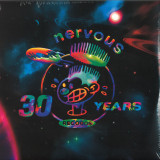
Nervous Records, the iconic label synonymous with the rise of house from the streets of New York City, will mark 30 years in the music industry by releasing the celebratory compilation LP ‘Nervous Records: 30 Years’ on October 1st (Part 1) and October 15th (Part 2).
Featuring original mixes of the label’s biggest tracks, plus remixes by some of its most celebrated acts, ‘Nervous Records: 30 Years’ is both a celebration of the past and of the future. Featuring a who’s who of electronic dance music, the long player sees names including Louie Vega, David Morales Darius Syrossian, Tensnake, Monki, Franky Rizardo, Danny Howard and more take on iconic Nervous cuts: ‘You Make Me Feel Mighty Real’, ‘Treat Me Right’, ‘Future Groove’, ‘Feel Like Singing’, ‘Get Up Everybody’, ‘Break You’, ‘Hot’, ‘End This Hate’, ‘Unspeakable Joy’, ‘Can Ya Tell Me’, ‘Jerk It’, ‘The Anthem’, ‘It Makes A Difference’, ‘Learn 2 Luv’ and ‘Don’t You Ever Give Up’.
The album marks one of the most enduring, extraordinary legacies to grace America’s illustrious music history, not just in electronica but far beyond. Founded in 1991 by Michael and his father Sam Weiss, and recognizable immediately by its distinctive character logo, the label grew rapidly, in no small part due to Michael Weiss’ practically unmatched passion for discovering new music.
“Louie Vega and Kenny Dope woke me at 4am on Tuesday night, Wednesday morning from their studio telling me they had something really different that I needed to hear,” Michael recollects. “I asked if they could play it over the phone. They said if I wanted to hear it I had to come to the studio. So of course I got myself up, got dressed and went there. That “really different track” ended up being ‘The Nervous Track’, a tune that became our signature release and was also highly instrumental in the emergency of London’s ‘Broken Beat’ movement.”
The label’s willingness to take chances on fresh sounds and innovative concepts rising up from the melting pot sidewalks of NYC ensured a body of work that has become a living musical history of the city. House cuts ‘Unspeakable Joy’ and ‘Nitelife’ (Kim English), ‘Get Up (Everybody)’ (Byron Stingily) and ‘Feel Like Singing’ (Sandy B) bump up against hip-hop anthems like ‘Who Got Da Props’ (Black Moon) and “Bucktown” (Smif-n-Wessun) and reggae cut ‘Take It Easy’ (Mad Lion); soulful flows from Mood II Swing (Kim English ‘Learn 2 Luv’, Loni Clark “Rushing”), Armand Van Helden (‘The Anthem’) and Nuyorican Soul (‘Mind Fluid’) sit alongside seminal techno singles like Winx’ ‘Don’t Laugh’. The young artists and producers who joined the Nervous Records’ family have gone on to become some of the most hallowed and celebrated dance acts of all time: Louie Vega, Kenny Dope, David Morales, Tony Humphries, Roger Sanchez, Armand Van Helden, Kerri Chandler, Kim English, Byron Stingily, Josh Wink, to name just a handful.
“We did a release with Josh Wink under his Winx alias entitled ‘Nervous Build-Up’,” Michael said. “It did well and it was obvious how talented Josh was. Subsequent to that release I was pretty persistent in asking him to continue to play me his new demos. During one phone conversation he said, “Mike I’m gonna play you something over the phone but don’t laugh when you hear it.” That demo ended up being ‘Don’t Laugh’, which became one of our biggest international hits and still to this day is one of America’s earliest and most impactful techno hits.”
As much a celebration of the label’s future as it is of their past, Nervous Records: 30 Years is but a marker in the imprints’ history, a clear sign of where they’ve been and also where they’re going. With 30 years behind them, the label’s determination to unearth new raw diamonds in the rough is as unwavering as ever.
“I’ve always been one to look at what others are doing (the industry at large) and think, “ok, are they doing this specific thing for a reason, or doing it because everyone else is doing the same thing” and make my decision based on that,” says Nervous Records’ General Manager Andrew Salsano. “In an age where data metrics and analytics reign supreme, I remain steadfast that they should be complementary to your decision and not the sole indicator to make one. So many songs today are written with 15 second hooks in mind for social media, and while there’s nothing wrong with that business model you will always be chasing the wave instead of carving out your own path and identity.
“My primary focus for the sound of the label has and will continue to revolve around signing good songs and music that has the ability to react at the street level first. The best results come from artists that are firstly given a bit of local love that grows into a global impact. Fresh ideas that express child-like curiosity and artists showing vulnerability in their music are also something I look for, artists and producers that are not making music with certain markets in mind, but rather their own style and signature that is unique but able to straddle the fine line of underground and overground.”
Still as raw, as underground and as finely tuned to the dance floor as they ever have been, perhaps the secret to the success - and the longevity - of Nervous Records has something to do with that hard, dogged, no-holds-barred NYC edge that runs through the veins of the label. With the next generation of producers rising from the clubs of New York, one thing is certain; Nervous Records will be there to find them, nurture them and bring them to the world at large, over the next decade and beyond.