Поиск:yam who

Стили
Все
Hamish Balfour - Running Colours

Pianist, drummer, composer and producer Hamish Balfour presents jazz funk, soul and electronic music, bridging the gap from classic Blue Note to Warp via Sonar Kollektiv on Running Colours, his electrifying debut album for London's Shapes of Rhythm Records.

Praised by Jazzwise for hissolo flourishes and sidestepping harmonies, Hamish Balfour should be a recognisable face to jazz addicts. The go-to keys player has performed and recorded alongside American jazz drumming legend Harvey Mason, Tenderlonious, The Temptations, Odyssey, Faze Action, Yolanda Charles' Project PH, Bassically, Nim Quartet and Yam Who. Popping up not only in the credits of many sought-after albums, but also Channel 4, ITV and BBCprogrammes for his compositions on various shows.

Over the course of eleven tracks, Balfour folds in and explores his influences, with a wide yet highly cohesive and strong palette of sounds, whilst interacting with high caliber guest vocalists such as spoken word artist and broken beat icon, Lyric L(Seiji,Nathan Haines), London Elektricity and Hospital Records' star vocalist Elsa Esmeralda, award-winning and chart-storming singer-songwriter Belle Humble (Freestylers, Paloma Faith) and soul and house mainstay Andre Espeut (Afriquoi,Simbad,Faze Action).

Responsible for all piano, synths, percussion and production on the album, Balfour's musicality shines through, a reminder of how overdue this debut album as leader is. However, in addition to the incredible vocalists, he's joined by some of the UK's finest jazz musicians: James Copus (trumpet), Pete Matin (bass), Laurie Lowe and Saleem Raman (drums) and Rob Updegraff (guitar).

Elsa Esmeralda implores us 'not to be afraid' on lead single and title track Running Colours. A perfect invitation to get stuck into this many layered album. Balfour compliments Esmeralda's soothing vocals with delicate piano intro before Lowe's bruk-easque drums and lead an irresistible groove bedded in warm synths and guitar licks.

Yes or No showcases Loose Lips legend Lyric L contemplating the uncertainty of love over a swinging mid-tempo jazz funk boogie groove propelled by tight drums and Hammond chords, closing with a flying trumpet solo from Copus, weaving around Balfour's nimble keys.

Wealth, featuring singer/songwriter Belle Humble, displays incredible depth and restraint. Humble delivers the enticing vocal with ease, as it slides over the intricate webs of jazz fusion and electronics.

Mogul is arguably Running Colours' curveball. An eastern-inspired whirlwind of all manner of synths and twisting drums which constantly morph throughout. Guitars and trumpets take turns to solo on a track that feels like a series of questions that we never quite get answers to.

Balfour's ability to merge free wheeling jazz and fusion with timeless electronic production and soulful compositions is also apparent on instrumental pieces such as Reflector 28. Here, we find the musicians upbeat, uplifting, progressive and playful, showcasing the keys whilst the bass underpins the groove.

South Of The Sun is Running Colours' laid-back moment with Roy Ayers-type vibrations as bass and drums sit in the pocket (at least to begin with), whilst a Rhodes weaves its magic. Like many of the album's tracks we take a few twists and turns before returning to our main feel-good motif.

Hamish's long awaited debut is sure to exceed the expectations of those who know him already, whilst introducing a whole new audience to his wealth of talent and originality.

нет на складе

Закажите сейчас, и мы закажем товар для вас у нашего поставщика.

17,61

Последний логин: 3 г. назад
Daniel Vangarde - Daniel Vangarde The Vaults - The Vaults Of Zagora Mastermind (1971 - 1984) 2x12"
 
20

Born Bangalter in 1947, Daniel Vangarde is a French songwriter and producer. In 1967, he met Jean Kluger who became his publisher. In the 1970s, their tandem stood out in those fields, for a plethora of popular French artists such as Petula Clark, Claude François, Joe Dassin, Dalida, Régine, Sheila and Ringo. 1975 saw the birth of Vangarde’s label, Zagora, and his first and only solo LP. Later on, Vangarde and Kluger were responsible for a number of hit songs by The Gibson Brothers, Ottawan and La Compagnie Créole. With or without Kluger, Vangarde also wrote and produced songs that remained underground, under several monikers (Starbow, Who’s Who, Soul Iberica Band, Yamasuki, Rocky & Vandella…) and for various artists. Let’s open these incredible cosmic disco funk vaults! Available on Double Vinyl (featuring 2 exclusive tracks) & CD .

Сделать предзаказ25.11.2022

он должен быть опубликован на 25.11.2022

30,21
Bitchin Bajas - Switched On Ra LP

It’s almost four years since their last opus - two years since the most-recent run
of live shows. Now, Bitchin Bajas return from whatever kind of rare ether they
occupy when they’re at home, bearing the riches of the whole cosmos in their
hands. And strictly OG as well - on cassette only.
 ‘Switched On Ra’ is the outcome of a typical Bajas exercise: pouring some out
for the pioneers that came before (as they’ve done with Bitchitronics and their
participation in the annual Chicago performance of ‘In C’ over the years). It’s a
nice way to get a flow - they play a little of themselves, then some for the
pioneers, then a little more for the band. Before long, they’re playing with the
inspirations twined, as they can only come from within.
 For ‘Switched On Ra’, this meant a deep delve into the song-book of one of their
soul-predecessors, Sun Ra, whose music is literally written in the Bajas DNA.
Digging into this music sounded wild on paper: the drone synth group taking on
the Arkestra harmonies and Ra’s loose grooves? The trick was to get that sense
of rhythm to translate across the spectrum from Ra to Bajas, in a way that
worked for them both.
 Their rearrangements of the tunes went good - up and down the EQ band, they
were finding the round sounds and jagged edges that brought Ra’s music into
their own thing. Then at the last minute, there was another twist - why not pay
tribute to the Queen herself, and think of the arrangements with a Wendy Carlos
vibe? A little side homage? After all, ‘Switched on Bach’ was visionary, bringing
analogue synths from the outside all the way into the mainstream in the late 60s -
and this take on Ra is meant to take him to new ears everywhere.
 Sun Ra of course was his own kind of original keyboard visionary, using electric
keyboards in the late 40s and 50s to fill a role in jazz that had traditionally been
played on acoustic piano only. Once he’d done so, he took his writing in
directions inspired by the electricity, places no one had thought to go before
then.
 Bitchin Bajas have been content to dominate in a microtonal world, usually
without a single chord to be found anywhere. But here, they step up righteously,
their vibe triangulated as they bring Ra’s music forward with some Wendy C
style, making an unexpected space for all to thrive. There’s a real feeling of joy
as these collected signals bounce off the tape and through the speakers into
your space.
 To get this unique colloid exactly right, Bitchin Bajas used nineteen different
keyboards. They abstained from deploying their arsenal of reed and woodwind
instruments: everything had to be on the keys. This meant Yamahas, Rolands,
Korgs, Casios, a MicroMoog and of course their trusty Ace Tone organ. They
even broke out the Crumar DS-2, to have some of Ra’s chosen tone in the mix.
Then Jayve Montgomery added an EWI as a solo voice on a few tunes, just to
get some air-blown signal (and a natural shout out to EWI master Marshall Allen)
in there, after all. It felt like somewhere in the universe, Ra was decreeing it.

Сделать предзаказ18.11.2022

он должен быть опубликован на 18.11.2022

37,77
THE RABBITS - THE RABBITS LP

The Rabbits

THE RABBITS LP

12inchMKY031
MESH-KEY
15.11.2022

Twisted and irreverent, The Rabbits combined ear-splitting guitar shrapnel with one of punk’s greatest-ever snot-nosed vocalists. With hints of PIL or Chrome, but beamed in from a parallel dimension and filtered through the warped lens of visionary loner Syoichi Miyazawa. First-ever vinyl release, fully remastered from the band’s original early ’80s cassette releases, and housed in a sturdy tip-on sleeve. Includes a double-sided, printed insert. Edition of 500

Singer-songwriter Syoichi Miyazawa’s tale is a confounding one.

He grew up in a small town in Yamagata Prefecture (in northern Japan), loved Dylan and The Beatles, and had very little exposure to, or interest in, underground music. And yet, shortly after 24-year-old Miyazawa arrived in Tokyo in 1978, he began performing solo shows at tiny clubs in the city, singing and playing guitar. His performances quicky devolved from brisk acoustic jaunts to lengthy, heavy dirges sung in a snot-nosed wail over a blown-out electric guitar detuned to produce a kind of sonic sludge.

At one of his earliest gigs, a mutual friend introduced him to Endo Michiro, who would soon become the legendary front man of Japanese punk icons The Stalin. It turned out Miyazawa and Endo had attended Yamagata University at the same time just a few years earlier, but hadn’t known each other at school. In Tokyo, they became fast friends, moved into the same apartment building, and for years were inseparable. Endo played guitar and drums on Miyazawa’s debut release, the “Christ Was Born in a Stable” flexi disc. But while Endo was social and outgoing, Miyazawa preferred to be alone, avoiding concerts unless he was performing.

Despite these antisocial tendencies, Miyazawa came to despise playing solo. In 1982, an eccentric high school student named Chika introduced herself at one of Miyazawa’s gigs, and Miyazawa asked if she’d play bass. She agreed and drafted two of her friends to play second guitar and drums. The Rabbits were born.

Miyazawa wrote the tunes, and had a clear vision for the group, but struggled to get the sound he wanted from the other members. His second guitarist was more of a fusion player, and Miyazawa took great pains to get him to tone down the shredding. The group quickly went through multiple line-up changes. Frustrated with the sound of their first proper recording (self-released as the “X1(x)” cassette), Miyazawa spent a full year mixing their second cassette, “Winter Songs,” on his own.

The hard work paid off — the sound of “Winter Songs” is striking, and unlike anything the band’s peers produced. There’s liberal use of delay on the vocals, giving the music a psychedelic feel, but the guitars are caustic, cutting through the mix like metal shrapnel. The rhythm section seems on the verge of teetering out of control throughout, an overdriven and pummeling current below abrasive slabs of guitar and vocals. Even at their most aggressive, though, The Rabbits had strong pop sensibilities, complete with cooing backing vocals and the occasional harmonica solo. Miyazawa delivers his borderline nonsensical lyrics with equal amounts of menace and gaiety, consistently riding that fine line as only a natural oddball can. At times, the band sounds like a distant cousin of PiL, Chrome or The Homosexuals, but beamed in from a parallel dimension and filtered through Miyazawa’s warped lens.

Although The Rabbits briskly sold all 500 copies of the "Winter Songs" tape, live audiences at the time seemed dumbfounded by the group, and would stare at them in silence. After two years together, The Rabbits called it quits in 1984.

When asked if any of the many legendary groups (Les Rallizes Desnudes, G.I.S.M., etc.) he shared stages with left an impression, Miyazawa recently revealed that he always left the venue as soon as he finished performing, so he never caught any of the other bands…

All of which is to say —

The Rabbits are one of the great punk bands of the early ’80s, but their leader had no interest in the punk scene and always thought he was making “normal” music. They rubbed shoulders with a slew of notable groups of the era, and their singer was best friends with arguably the most famous Japanese punk of all time, but Miyazawa shunned fraternization and purposefully distanced himself from his peers.

Could this be why so few underground music fans are familiar with the group, even in Japan? Why they seem to have been written out of the official history of Japanese punk? One can never know for sure, but Mesh-Key hopes to remedy this travesty by offering this compilation, the first-ever official LP by The Rabbits, to a new generation of punk and psychedelic music connoisseurs.
credits

Сделать предзаказ15.11.2022

он должен быть опубликован на 15.11.2022

27,10
Galvanica - Nightlights in Japan

Rare Italo disco pop project Galvanica gets a beautiful re-issue! This is what the label writes about the release; "Galvanica, a voice with unusual qualities, refined, balanced, also high-pitched, sensual, embellished by an orgasmic inspiration with fluid and spaced solo's in hypnotic rhythms that often change scenery. 'Nightlights in Japan': an extraordinary piece of pure and profound creativity where each version seems to have been built apart and where the West meets the East. A splendid interpreter for a truly stunning piece, as fresh and far-sighted as the day it was recorded in Calenzano at Studio Emme by Marzio Benelli with the Yamaha DX7 synth and Linn 9000 drum sequencer that are at the base of the piece, made and re-interpreted in the four original versions, all sung in the Eastern Asian pentatonic scale. 'Nightlights in Japan' was also written by Massimiliano Orfei, at the time collaborator in the advertising projects from label Smash One Music of Pino Toma, the producer who drew new inspiration to venture into the record market which in 1987 became every day more difficult and this song was considered out of fashion, even if each version of this song was expertly arranged by the talented Giorgio Costantini. We've clarified as to whom Galvanica's velopendulus belongs, in order to be able to rightly consider this artist as a contributive voice of disco music, despite being part of the "second wave" of the Italo-Disco scene, has strongly contributed to it as Otero, Belen Thomas, Angelby and previously with the disco-project Plustwo creating 'Melody' (which after 40 years gets a new extraordinary success with over 134 million plays on TikTok and around 18 million streaming). However, it's clear as day that the gorgeous artist behind Galvanica was Antonella Bianchi and that Giorgio Costantini was not only her producer and composer - as in 1985 for 'I Know', a sweet synth-pop ballad sung with her stage name 'Angel', but above all her ... 'guardian angel'. For many artists using a stage name is a custom. The absolute record of pseudonyms as a true equalizer of identity is held by Stendhal having used 350 throughout his career. This multifaceted artist who, until now has never used so many 'a.k.a.', in a wonderful game of musical mirrors, has represented an opportunity to challenge the market, a trait of non-acceptance of the role that the discography attributes to certain artists. So also Galvanica was an invitation to reflect, with a pinch of provocation, a behavior that Antonella Bianchi has in the DNA of her family. Ultimately, Best Record is not at all worried about the modernization that surrounds it, sure that 'Nightlights in Japan' will be one of the most coveted vinyl reissues in the second half of 2022.

нет на складе

Закажите сейчас, и мы закажем товар для вас у нашего поставщика.

14,92

Последний логин: 2 г. назад
The Lord + Petra Haden - Devotional LP

Devotional is a new collaborative album with Greg Anderson (sunn O))), Goatsnake, Engine Kid) + vocalist and violinist Petra Haden, who first worked with Anderson during his time in Goatsnake, as well as on the second SUNN O))) studio album, ØØ Void.

Сделать предзаказ21.10.2022

он должен быть опубликован на 21.10.2022

24,75
GBL SOUND SYSTEM - Ghibli Reggae 2

With arrangements from DUBFORCE’s Ippei Tatsuyama and vocals contributed by Kyoko Abe, these records will please both Studio Ghibli fans and reggae fans.

Songs from “My Neighbor Totoro”, “Nausicaa of the Valley of the Wind”, and “Princess Mononoke” are arranged

with a sense of fun that can only be found in reggae while still maintaining their distinct character. Enjoy the world of Ghibli reggae with full comfort

Сделать предзаказ21.10.2022

он должен быть опубликован на 21.10.2022

36,77
Colin Potter - Ago

Colin Potter

Ago

12inchBFE072
B.F.E Records
21.10.2022

An original and particular approach to rhythmic electronics, with an incredible sound, like in all of Potter's works. Six hypnotic tracks from Colin's archive of rarities, for the first time on vinyl, perfect to play really loud.

These six pieces were recorded between the late 80s & mid-90s at IC Studio, which was then located in Tollerton, North Yorkshire.

“I wanted to make some tracks which were much more rhythmic. By then the studio was a 16-track and I had acquired more equipment for making sounds and changing sounds. There was an Akai S950 sampler, an Emulator II, Roland TR727 and Yamaha RX11 digital drum machines, a Roland Juno 60, and some new effects processors. I even, briefly, used an Atari for MIDI sequencing, but using a computer in the studio felt a bit weird in those days. Ironic really, given the situation now. There were a lot of new methods to learn and the tracks on this album were the result of some of these experiments, during which I also found ways of integrating the old analog synths with the newer machines. Mixing was still done hands-on, in real-time, with alternative and often radically different takes being made of the same multitrack. Very different to the way things are done now. Better or worse? Who knows? But different.” - Colin Potter, IC Studio, London 2022.

Colin Potter is a sound engineer and musician currently based in London. He has worked within the fields of electronic and experimental music for over 40 years, collaborating with the likes of Current 93, The Hafler Trio, Organum, Andrew Chalk, and most notably as a key part of Nurse With Wound alongside Steven Stapleton. He started the esteemed ICR (Integrated Circuit Records – still active today) label in 1981 releasing a several wonderful home studio recordings of his own, as small run cassette releases.

Сделать предзаказ21.10.2022

он должен быть опубликован на 21.10.2022

20,97
Leda Maar - Stairway 13 LP (2x12")

Leda Maar

Stairway 13 LP (2x12")

2x12inchMANA015
MANA
19.10.2022

'Swooping, sub-heavy sci-fi from Riz Maslen. Leda Maar is a new moniker for the established artist who’s released a crop of downtempo and electronic music as Neotropic and Small Fish With Spine, as well as collaborated with the likes of Future Sound of London, filmmaker Andrew Kötting, and featured in PSP-era Grand Theft Auto soundtracks.

Mana’s long lasting love of Riz’s 1996 Laundrophonic EP, released under her Neotropic name, spurred this new release. That 12” was a deep and dark web of rhythm and ghostly urban found sound that one Discogs reviewer aptly named “coin-slot Dubstep”. With elements mostly sourced from tape recordings made in and of her local laundromat, it still stands out as a remarkably contemporary feeling work; more like a post-Fisher, post-hauntology observation of urban life from the last decade, taking the ambient temperature and undercurrent pressures of the 90s. Asking if she had anything in continuity with this slice of her discography, and describing our interest in her take on “space and bass”, Maslen returned to us with Stairway 13.

Heavy-lidded and ethereal in long form, the album’s balance of bass weight, mechanical metre, and darkly tinted new age feels like a cinematic re-approach to some of the textures, moods, and themes of Laundrophonic. Originally designed for an installation, Stairway 13 folds in her decades’ experience in sound design and theatre, along with shards and elements abstracted from her more recent folk-like music, zoning into a deep, retreated, altogether dreamlike and expansive atmosphere. The scale and soundscape is reminiscent of Geinoh Yamashirogumi and their Ecophony album series, resonating to similar frequencies and exploring themes of chaos and re-birth in feature-length form.

Stairway 13’s four parts spread and swoop as single extended sides across this double LP. Carried by waves of sub bass and heavenly chorus, and later punctuated with autonomic clicks of machinery, whirrs, and pulses - sometimes reminiscent of FSOL’s weirder and more clipped staccato sampling in sections of their cyberpunk ISDN - the work forms a gothic, otherworldly ambience. A subtle space opera.'

нет на складе

Закажите сейчас, и мы закажем товар для вас у нашего поставщика.

20,97

Последний логин: 3 г. назад
Lee Tracy & Isaac Manning - Is it What You Want

As the sun sets on a quaint East Nashville house, a young man bares a piece of his soul. Facing the camera, sporting a silky suit jacket/shirt/slacks/fingerless gloves ensemble that announces "singer" before he's even opened his mouth, Lee Tracy Johnson settles onto his stage, the front yard. He sways to the dirge-like drum machine pulse of a synth-soaked slow jam, extends his arms as if gaining his balance, and croons in affecting, fragile earnest, "I need your love… oh baby…"

Dogs in the yard next door begin barking. A mysterious cardboard robot figure, beamed in from galaxies unknown and affixed to a tree, is less vocal. Lee doesn't acknowledge either's presence. He's busy feeling it, arms and hands gesticulating. His voice rises in falsetto over the now-quiet dogs, over the ambient noise from the street that seeps into the handheld camcorder's microphone, over the recording of his own voice played back from a boombox off-camera. After six minutes the single, continuous shot ends. In this intimate creative universe there are no re-takes. There are many more music videos to shoot, and as Lee later puts it, "The first time you do it is actually the best. Because you can never get that again. You expressing yourself from within."

"I Need Your Love" dates from a lost heyday. From some time in the '80s or early '90s, when Lee Tracy (as he was known in performance) and his music partner/producer/manager Isaac Manning committed hours upon hours of their sonic and visual ideas to tape. Embracing drum machines and synthesizers – electronics that made their personal futurism palpable – they recorded exclusively at home, live in a room into a simple cassette deck. Soul, funk, electro and new wave informed their songs, yet Lee and Isaac eschewed the confinement of conventional categories and genres, preferring to let experimentation guide them.

"Anytime somebody put out a new record they had the same instruments or the same sound," explains Isaac. "So I basically wanted to find something that's really gonna stand out away from all of the rest of 'em." Their ethos meant that every idea they came up with was at least worth trying: echoed out half-rapped exhortations over frantic techno-style beats, gospel synth soul, modal electro-funk, oddball pop reinterpretations, emo AOR balladry, nods to Prince and the Fat Boys, or arrangements that might collapse mid-song into a mess of arcade game-ish blips before rallying to reach the finish line. All of it conjoined by consistent tape hiss, and most vitally, Lee's chameleonic voice, which managed to wildly shape shift and still evoke something sincere – whether toggling between falsetto and tenor exalting Jesus's return, or punctuating a melismatic romantic adlib with a succinct, "We all know how it feels to be alone."

"People think we went to a studio," says Isaac derisively. "We never went to no studio. We didn't have the money to go to no studio! We did this stuff at home. I shot videos in my front yard with whatever we could to get things together." Sometimes Isaac would just put on an instrumental record, be it "Planet Rock" or "Don't Cry For Me Argentina" (from Evita), press "record," and let Lee improvise over it, yielding peculiar love songs, would-be patriotic anthems, or Elvis Presley or Marilyn Monroe tributes. Technical limitations and a lack of professional polish never dissuaded them. They believed they were onto something.

"That struggle," Isaac says, "made that sound sound good to me."

In the parlance of modern music criticism Lee and Isaac's dizzying DIY efforts would inevitably be described as "outsider." But "outsider" carries the burden of untold additional layers of meaning if you're Black and from the South, creating on a budget, and trying to get someone, anyone within the country music capital of the world to take your vision seriously. "What category should we put it in?" Isaac asks rhetorically. "I don't know. All I know is feeling. I ain't gonna name it nothing. It's music. If it grabs your soul and touch your heart that's what it basically is supposed to do."

=

Born in 1963, the baby boy of nine siblings, Lee Tracy spent his earliest years living amidst the shotgun houses on Nashville's south side. "We was poor, man!" he says, recalling the outhouse his family used for a bathroom and the blocks of ice they kept in the kitchen to chill perishables. "But I actually don't think I really realized I was in poverty until I got grown and started thinking about it." Lee's mom worked at the Holiday Inn; his dad did whatever he had to do, from selling fruit from a horse drawn cart to bootlegging. "We didn't have much," Lee continues, "but my mother and my father got us the things we needed, the clothes on our back." By the end of the decade with the city's urban renewal programs razing entire neighborhoods to accommodate construction of the Interstate, the family moved to Edgehill Projects. Lee remembers music and art as a constant source of inspiration for he and his brothers and sisters – especially after seeing the Jackson 5 perform on Ed Sullivan. "As a small child I just knew that was what I wanted to do."

His older brother Don began musically mentoring him, introducing Lee to a variety of instruments and sounds. "He would never play one particular type of music, like R&B," says Lee. "I was surrounded by jazz, hard rock and roll, easy listening, gospel, reggae, country music; I mean I was a sponge absorbing all of that." Lee taught himself to play drums by beating on cardboard boxes, gaining a rep around the way for his timekeeping, and his singing voice. Emulating his favorites, Earth Wind & Fire and Cameo, he formed groups with other kids with era-evocative band names like Concept and TNT Connection, and emerged as the leader of disciplined rehearsals. "I made them practice," says Lee. "We practiced and practiced and practiced. Because I wanted that perfection." By high school the most accomplished of these bands would take top prize in a prominent local talent show. It was a big moment for Lee, and he felt ready to take things to the next level. But his band-mates had other ideas.

"I don't know what happened," he says, still miffed at the memory. "It must have blew they mind after we won and people started showing notice, because it's like everybody quit! I was like, where the hell did everybody go?" Lee had always made a point of interrogating prospective musicians about their intentions before joining his groups: were they really serious or just looking for a way to pick up girls? Now he understood even more the importance of finding a collaborator just as committed to the music as he was.

=

Isaac Manning had spent much of his life immersed in music and the arts – singing in the church choir with his family on Nashville's north side, writing, painting, dancing, and working various gigs within the entertainment industry. After serving in the armed forces, in the early '70s he ran The Teenage Place, a music and performance venue that catered to the local youth. But he was forced out of town when word of one of his recreational routines created a stir beyond the safe haven of his bohemian circles.

"I was growing marijuana," Isaac explains. "It wasn't no business, I was smoking it myself… I would put marijuana in scrambled eggs, cornbread and stuff." His weed use originated as a form of self-medication to combat severe tooth pain. But when he began sharing it with some of the other young people he hung out with, some of who just so happened to be the kids of Nashville politicians, the cops came calling. "When I got busted," he remembers, "they were talking about how they were gonna get rid of me because they didn't want me saying nothing about they children because of the politics and stuff. So I got my family, took two raggedy cars, and left Nashville and went to Vegas."

Out in the desert, Isaac happened to meet Chubby Checker of "The Twist" fame while the singer was gigging at The Flamingo. Impressed by Isaac's zeal, Checker invited him to go on the road with him as his tour manager/roadie/valet. The experience gave Isaac a window into a part of the entertainment world he'd never encountered – a glimpse of what a true pop act's audience looked like. "Chubby Checker, none of his shows were played for Black folks," he remembers. "All his gigs were done at high-class white people areas." Returning home after a few years with Chubby, Isaac was properly motivated to make it in Music City. He began writing songs and scouting around Nashville for local talent anywhere he could find it with an expressed goal: "Find someone who can deliver your songs the way you want 'em delivered and make people feel what you want them to feel."

One day while walking through Edgehill Projects Isaac heard someone playing the drums in a way that made him stop and take notice. "The music was so tight, just the drums made me feel like, oh I'm-a find this person," he recalls. "So I circled through the projects until I found who it was.

"That's how I met him – Lee Tracy. When I found him and he started singing and stuff, I said, ohhh, this is somebody different."

=

Theirs was a true complementary partnership: young Lee possessed the raw talent, the older Isaac the belief. "He's really the only one besides my brother and my family that really seen the potential in me," says Lee. "He made me see that I could do it."

Isaac long being a night owl, his house also made for a fertile collaborative environment – a space where there always seemed to be a new piece of his visual art on display: paintings, illustrations, and dolls and figures (including an enigmatic cardboard robot). Lee and Issac would hang out together and talk, listen to music, conjure ideas, and smoke the herb Isaac had resumed growing in his yard. "It got to where I could trust him, he could trust me," Isaac says of their bond. They also worked together for hours on drawings, spreading larges rolls of paper on the walls and sketching faces with abstract patterns and imagery: alien-like beings, tri-horned horse heads, inverted Janus-like characters where one visage blurred into the other.

Soon it became apparent that they didn't need other collaborators; self-sufficiency was the natural way forward. At Isaac's behest Lee, already fed up with dealing with band musicians, began playing around with a poly-sonic Yamaha keyboard at the local music store. "It had everything on it – trumpet, bass, drums, organ," remembers Lee. "And that's when I started recording my own stuff."

The technology afforded Lee the flexibility and independence he craved, setting him on a path other bedroom musicians and producers around the world were simultaneously following through the '80s into the early '90s. Saving up money from day jobs, he eventually supplemented the Yamaha Isaac had gotten him with Roland and Casio drum machines and a Moog. Lee was living in an apartment in Hillside at that point caring for his dad, who'd been partially paralyzed since early in life. In the evenings up in his second floor room, the music put him in a zone where he could tune out everything and lose himself in his ideas.

"Oh I loved it," he recalls. "I would really experiment with the instruments and use a lot of different sound effects. I was looking for something nobody else had. I wanted something totally different. And once I found the sound I was looking for, I would just smoke me a good joint and just let it go, hit the record button." More potent a creative stimulant than even Isaac's weed was the holistic flow and spontaneity of recording. Between sessions at Isaac's place and Lee's apartment, their volume of output quickly ballooned.

"We was always recording," says Lee. "That's why we have so much music. Even when I went to Isaac's and we start creating, I get home, my mind is racing, I gotta start creating, creating, creating. I remember there were times when I took a 90-minute tape from front to back and just filled it up."

"We never practiced," says Isaac. "See, that was just so odd about the whole thing. I could relate to him, and tell him about the songs I had ideas for and everything and stuff. And then he would bring it back or whatever, and we'd get together and put it down." Once the taskmaster hell bent on rehearsing, Lee had flipped a full 180. Perfection was no longer an aspiration, but the enemy of inspiration.

"I seen where practicing and practicing got me," says Lee. "A lot of musicians you get to playing and they gotta stop, they have to analyze the music. But while you analyzing you losing a lot of the greatness of what you creating. Stop analyzing what you play, just play! And it'll all take shape."

=

"I hope you understood the beginning of the record because this was invented from a dream I had today… (You tell me, I'll tell you, we'll figure it out together)" – Lee Tracy and Isaac Manning, "Hope You Understand"

Lee lets loose a maniacal cackle when he acknowledges that the material that he and Isaac recorded was by anyone's estimation pretty out there. It's the same laugh that commences "Hope You Understand" – a chaotic transmission that encapsulates the duality at the heart of their music: a stated desire to reach people and a compulsion to go as leftfield as they saw fit.

"We just did it," says Lee. "We cut the music on and cut loose. I don't sit around and write. I do it by listening, get a feeling, play the music, and the lyrics and stuff just come out of me."

The approach proved adaptable to interpreting other artists' material. While recording a cover of Whitney Houston's pop ballad "Saving All My Love For You," Lee played Whitney's version in his headphones as he laid down his own vocals – partially following the lyrics, partially using them as a departure point. The end result is barely recognizable compared with the original, Lee and Isaac having switched up the time signature and reinvented the melody along the way towards morphing a slick mainstream radio standard into something that sounds solely their own.

"I really used that song to get me started," says Lee. "Then I said, well I need something else, something is missing. Something just came over me. That's when I came up with 'Is It What You Want.'"

The song would become the centerpiece of Lee and Isaac's repertoire. Pushed along by a percolating metronomic Rhythm King style beat somewhere between a military march and a samba, "Is It What You Want" finds Lee pleading the sincerity of his commitment to a potential love interest embellished by vocal tics and hiccups subtlely reminiscent of his childhood hero MJ. Absent chord changes, only synth riffs gliding in and out like apparitions, the song achieves a lingering lo-fi power that leaves you feeling like it's still playing, somewhere, even after the fade out.

"I don't know, it's like a real spiritual song," Lee reflects. "But it's not just spiritual. To me the more I listen to it it's like about everything that you do in your everyday life, period. Is it what you want? Do you want a car or you don't want a car? Do you want Jesus or do you want the Devil? It's basically asking you the question. Can't nobody answer the question but you yourself."

In 1989 Lee won a lawsuit stemming from injuries sustained from a fight he'd gotten into. He took part of the settlement money and with Isaac pressed up "Saving All My Love For You" b/w "Is It What You Want" as a 45 single. Isaac christened the label One Chance Records. "Because that's all we wanted," he says with a laugh, "one chance."

Isaac sent the record out to radio stations and major labels, hoping for it to make enough noise to get picked up nationally. But the response he and Lee were hoping for never materialized. According to Isaac the closest the single got to getting played on the radio is when a disk jock from a local station made a highly unusual announcement on air: "The dude said on the radio, 107.5 – 'We are not gonna play 'Is It What You Want.' We cracked up! Wow, that's deep.

"It was a whole racist thing that was going on," he reflects. "So we just looked over and kept on going. That was it. That was about the way it goes… If you were Black and you were living in Nashville and stuff, that's the way you got treated." Isaac already knew as much from all the times he'd brought he and Lee's tapes (even their cache of country music tunes) over to Music Row to try to drum up interest to no avail.

"Isaac, he really worked his ass off," says Lee. "He probably been to every record place down on Music Row." Nashville's famed recording and music business corridor wasn't but a few blocks from where Lee grew up. Close enough, he remembers, for him to ride his bike along its back alleys and stumble upon the occasional random treasure, like a discarded box of harmonicas. Getting in through the front door, however, still felt a world away.

"I just don't think at the time our music fell into a category for them," he concedes. "It was before its time."

=

Lee stopped making music some time in the latter part of the '90s, around the time his mom passed away and life became increasingly tough to manage. "When my mother died I had a nervous breakdown," he says, "So I shut down for a long time. I was in such a sadness frame of mind. That's why nobody seen me. I had just disappeared off the map." He fell out of touch with Isaac, and in an indication of just how bad things had gotten for him, lost track of all the recordings they'd made together. Music became a distant memory.

Fortunately, Isaac kept the faith. In a self-published collection of his poetry – paeans to some of his favorite entertainment and public figures entitled Friends and Dick Clark – he'd written that he believed "music has a life of its own." But his prescience and presence of mind were truly manifested in the fact that he kept an archive of he and Lee's work. As perfectly imperfect as "Is It What You Want" now sounds in a post-Personal Space world, Lee and Isaac's lone official release was in fact just a taste. The bulk of the Is It What You Want album is culled from the pair's essentially unheard home recordings – complete songs, half-realized experiments, Isaac's blue monologues and pronouncements et al – compiled, mixed and programmed in the loose and impulsive creative spirit of their regular get-togethers from decades ago. The rest of us, it seems, may have finally caught up to them.

On the prospect of at long last reaching a wider audience, Isaac says simply, "I been trying for a long time, it feels good." Ever the survivor, he adds, "The only way I know how to make it to the top is to keep climbing. If one leg break on the ladder, hey, you gotta fix it and keep on going… That's where I be at. I'll kill death to make it out there."

For Lee it all feels akin to a personal resurrection: "It's like I was in a tomb and the tomb was opened and I'm back… Man, it feels so great. I feel like I'm gonna jump out of my skin." Success at this stage of his life, he realizes, probably means something different than what it did back when he was singing and dancing in Isaac's front yard. "What I really mean by 'making it,'" he explains isn't just the music being heard but, "the story being told."

Occasionally Lee will pull up "Is It What You Want" on YouTube on his phone, put on his headphones, and listen. He remembers the first time he heard his recorded voice. How surreal it was, how he thought to himself, "Is that really me?" What would he say to that younger version of himself now?

"I would probably tell myself, hang in there, don't give up. Keep striving for the goal. And everything will work out."

Despite what's printed on the record label, sometimes you do get more than one chance.

нет на складе

Закажите сейчас, и мы закажем товар для вас у нашего поставщика.

11,72

Последний логин: 3 г. назад
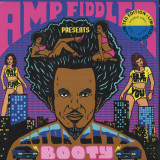
Amp Fiddler - Motor City Booty LP 2x12"

South Street delve into the The Sound Of Detroit from one of its unsung heroes, reissuing Amp Fiddler's 'Motor City Booty' LP on Yellow & Blue vinyl respectively. Coming straight off the D Funk assembly line, it's a full on dance floor affair from Motown to P-Funk, Techno and Neo Soul.

This 12 track album produced by Amp Fiddler & Yam Who? includes the massive 'Soul Fly' sounding like a Mark Ronson production had he been hanging out with George Clinton's Parlet followed by the bonafide P-Funk anthem 'Steppin' both featuring the stunning vocals by the Dames Brown girls.

Amp Fiddler is credited for taking both a young J Dilla and also Q-Tip under his wing teaching them his Akai MPC techniques, setting the path for some of Hip Hop's finest recordings which have defined the shape of things to come.

His musical collaborations & current duties include: Moodymann's musical maestro, keyboard wizard for Theo Parrish's live band, a longstanding Funkadelic member, co-writer for Sly & Robbie, Prince, Maxwell, Jamiroquai & Seal to name a few.

нет на складе

Закажите сейчас, и мы закажем товар для вас у нашего поставщика.

25,17

Последний логин: 4 мес. назад
The Lord + Petra Haden - Devotional LP

‘MOUNTAINOUS WHITE VINYL’ LIMITED TO 500 WORLDWIDE

Devotional is a new collaborative album with Greg Anderson (sunn O))), Goatsnake, Engine Kid) + vocalist and violinist Petra Haden, who first worked with Anderson during his time in Goatsnake, as well as on the second SUNN O))) studio album, ØØ Void.

Сделать предзаказ30.09.2022

он должен быть опубликован на 30.09.2022

23,99
Lee Tracy & Isaac Manning - Is it What You Want LP

As the sun sets on a quaint East Nashville house, a young man bares a piece of his soul. Facing the camera, sporting a silky suit jacket/shirt/slacks/fingerless gloves ensemble that announces "singer" before he's even opened his mouth, Lee Tracy Johnson settles onto his stage, the front yard. He sways to the dirge-like drum machine pulse of a synth-soaked slow jam, extends his arms as if gaining his balance, and croons in affecting, fragile earnest, "I need your love… oh baby…"

Dogs in the yard next door begin barking. A mysterious cardboard robot figure, beamed in from galaxies unknown and affixed to a tree, is less vocal. Lee doesn't acknowledge either's presence. He's busy feeling it, arms and hands gesticulating. His voice rises in falsetto over the now-quiet dogs, over the ambient noise from the street that seeps into the handheld camcorder's microphone, over the recording of his own voice played back from a boombox off-camera. After six minutes the single, continuous shot ends. In this intimate creative universe there are no re-takes. There are many more music videos to shoot, and as Lee later puts it, "The first time you do it is actually the best. Because you can never get that again. You expressing yourself from within."

"I Need Your Love" dates from a lost heyday. From some time in the '80s or early '90s, when Lee Tracy (as he was known in performance) and his music partner/producer/manager Isaac Manning committed hours upon hours of their sonic and visual ideas to tape. Embracing drum machines and synthesizers – electronics that made their personal futurism palpable – they recorded exclusively at home, live in a room into a simple cassette deck. Soul, funk, electro and new wave informed their songs, yet Lee and Isaac eschewed the confinement of conventional categories and genres, preferring to let experimentation guide them.

"Anytime somebody put out a new record they had the same instruments or the same sound," explains Isaac. "So I basically wanted to find something that's really gonna stand out away from all of the rest of 'em." Their ethos meant that every idea they came up with was at least worth trying: echoed out half-rapped exhortations over frantic techno-style beats, gospel synth soul, modal electro-funk, oddball pop reinterpretations, emo AOR balladry, nods to Prince and the Fat Boys, or arrangements that might collapse mid-song into a mess of arcade game-ish blips before rallying to reach the finish line. All of it conjoined by consistent tape hiss, and most vitally, Lee's chameleonic voice, which managed to wildly shape shift and still evoke something sincere – whether toggling between falsetto and tenor exalting Jesus's return, or punctuating a melismatic romantic adlib with a succinct, "We all know how it feels to be alone."

"People think we went to a studio," says Isaac derisively. "We never went to no studio. We didn't have the money to go to no studio! We did this stuff at home. I shot videos in my front yard with whatever we could to get things together." Sometimes Isaac would just put on an instrumental record, be it "Planet Rock" or "Don't Cry For Me Argentina" (from Evita), press "record," and let Lee improvise over it, yielding peculiar love songs, would-be patriotic anthems, or Elvis Presley or Marilyn Monroe tributes. Technical limitations and a lack of professional polish never dissuaded them. They believed they were onto something.

"That struggle," Isaac says, "made that sound sound good to me."

In the parlance of modern music criticism Lee and Isaac's dizzying DIY efforts would inevitably be described as "outsider." But "outsider" carries the burden of untold additional layers of meaning if you're Black and from the South, creating on a budget, and trying to get someone, anyone within the country music capital of the world to take your vision seriously. "What category should we put it in?" Isaac asks rhetorically. "I don't know. All I know is feeling. I ain't gonna name it nothing. It's music. If it grabs your soul and touch your heart that's what it basically is supposed to do."

=

Born in 1963, the baby boy of nine siblings, Lee Tracy spent his earliest years living amidst the shotgun houses on Nashville's south side. "We was poor, man!" he says, recalling the outhouse his family used for a bathroom and the blocks of ice they kept in the kitchen to chill perishables. "But I actually don't think I really realized I was in poverty until I got grown and started thinking about it." Lee's mom worked at the Holiday Inn; his dad did whatever he had to do, from selling fruit from a horse drawn cart to bootlegging. "We didn't have much," Lee continues, "but my mother and my father got us the things we needed, the clothes on our back." By the end of the decade with the city's urban renewal programs razing entire neighborhoods to accommodate construction of the Interstate, the family moved to Edgehill Projects. Lee remembers music and art as a constant source of inspiration for he and his brothers and sisters – especially after seeing the Jackson 5 perform on Ed Sullivan. "As a small child I just knew that was what I wanted to do."

His older brother Don began musically mentoring him, introducing Lee to a variety of instruments and sounds. "He would never play one particular type of music, like R&B," says Lee. "I was surrounded by jazz, hard rock and roll, easy listening, gospel, reggae, country music; I mean I was a sponge absorbing all of that." Lee taught himself to play drums by beating on cardboard boxes, gaining a rep around the way for his timekeeping, and his singing voice. Emulating his favorites, Earth Wind & Fire and Cameo, he formed groups with other kids with era-evocative band names like Concept and TNT Connection, and emerged as the leader of disciplined rehearsals. "I made them practice," says Lee. "We practiced and practiced and practiced. Because I wanted that perfection." By high school the most accomplished of these bands would take top prize in a prominent local talent show. It was a big moment for Lee, and he felt ready to take things to the next level. But his band-mates had other ideas.

"I don't know what happened," he says, still miffed at the memory. "It must have blew they mind after we won and people started showing notice, because it's like everybody quit! I was like, where the hell did everybody go?" Lee had always made a point of interrogating prospective musicians about their intentions before joining his groups: were they really serious or just looking for a way to pick up girls? Now he understood even more the importance of finding a collaborator just as committed to the music as he was.

=

Isaac Manning had spent much of his life immersed in music and the arts – singing in the church choir with his family on Nashville's north side, writing, painting, dancing, and working various gigs within the entertainment industry. After serving in the armed forces, in the early '70s he ran The Teenage Place, a music and performance venue that catered to the local youth. But he was forced out of town when word of one of his recreational routines created a stir beyond the safe haven of his bohemian circles.

"I was growing marijuana," Isaac explains. "It wasn't no business, I was smoking it myself… I would put marijuana in scrambled eggs, cornbread and stuff." His weed use originated as a form of self-medication to combat severe tooth pain. But when he began sharing it with some of the other young people he hung out with, some of who just so happened to be the kids of Nashville politicians, the cops came calling. "When I got busted," he remembers, "they were talking about how they were gonna get rid of me because they didn't want me saying nothing about they children because of the politics and stuff. So I got my family, took two raggedy cars, and left Nashville and went to Vegas."

Out in the desert, Isaac happened to meet Chubby Checker of "The Twist" fame while the singer was gigging at The Flamingo. Impressed by Isaac's zeal, Checker invited him to go on the road with him as his tour manager/roadie/valet. The experience gave Isaac a window into a part of the entertainment world he'd never encountered – a glimpse of what a true pop act's audience looked like. "Chubby Checker, none of his shows were played for Black folks," he remembers. "All his gigs were done at high-class white people areas." Returning home after a few years with Chubby, Isaac was properly motivated to make it in Music City. He began writing songs and scouting around Nashville for local talent anywhere he could find it with an expressed goal: "Find someone who can deliver your songs the way you want 'em delivered and make people feel what you want them to feel."

One day while walking through Edgehill Projects Isaac heard someone playing the drums in a way that made him stop and take notice. "The music was so tight, just the drums made me feel like, oh I'm-a find this person," he recalls. "So I circled through the projects until I found who it was.

"That's how I met him – Lee Tracy. When I found him and he started singing and stuff, I said, ohhh, this is somebody different."

=

Theirs was a true complementary partnership: young Lee possessed the raw talent, the older Isaac the belief. "He's really the only one besides my brother and my family that really seen the potential in me," says Lee. "He made me see that I could do it."

Isaac long being a night owl, his house also made for a fertile collaborative environment – a space where there always seemed to be a new piece of his visual art on display: paintings, illustrations, and dolls and figures (including an enigmatic cardboard robot). Lee and Issac would hang out together and talk, listen to music, conjure ideas, and smoke the herb Isaac had resumed growing in his yard. "It got to where I could trust him, he could trust me," Isaac says of their bond. They also worked together for hours on drawings, spreading larges rolls of paper on the walls and sketching faces with abstract patterns and imagery: alien-like beings, tri-horned horse heads, inverted Janus-like characters where one visage blurred into the other.

Soon it became apparent that they didn't need other collaborators; self-sufficiency was the natural way forward. At Isaac's behest Lee, already fed up with dealing with band musicians, began playing around with a poly-sonic Yamaha keyboard at the local music store. "It had everything on it – trumpet, bass, drums, organ," remembers Lee. "And that's when I started recording my own stuff."

The technology afforded Lee the flexibility and independence he craved, setting him on a path other bedroom musicians and producers around the world were simultaneously following through the '80s into the early '90s. Saving up money from day jobs, he eventually supplemented the Yamaha Isaac had gotten him with Roland and Casio drum machines and a Moog. Lee was living in an apartment in Hillside at that point caring for his dad, who'd been partially paralyzed since early in life. In the evenings up in his second floor room, the music put him in a zone where he could tune out everything and lose himself in his ideas.

"Oh I loved it," he recalls. "I would really experiment with the instruments and use a lot of different sound effects. I was looking for something nobody else had. I wanted something totally different. And once I found the sound I was looking for, I would just smoke me a good joint and just let it go, hit the record button." More potent a creative stimulant than even Isaac's weed was the holistic flow and spontaneity of recording. Between sessions at Isaac's place and Lee's apartment, their volume of output quickly ballooned.

"We was always recording," says Lee. "That's why we have so much music. Even when I went to Isaac's and we start creating, I get home, my mind is racing, I gotta start creating, creating, creating. I remember there were times when I took a 90-minute tape from front to back and just filled it up."

"We never practiced," says Isaac. "See, that was just so odd about the whole thing. I could relate to him, and tell him about the songs I had ideas for and everything and stuff. And then he would bring it back or whatever, and we'd get together and put it down." Once the taskmaster hell bent on rehearsing, Lee had flipped a full 180. Perfection was no longer an aspiration, but the enemy of inspiration.

"I seen where practicing and practicing got me," says Lee. "A lot of musicians you get to playing and they gotta stop, they have to analyze the music. But while you analyzing you losing a lot of the greatness of what you creating. Stop analyzing what you play, just play! And it'll all take shape."

=

"I hope you understood the beginning of the record because this was invented from a dream I had today… (You tell me, I'll tell you, we'll figure it out together)" – Lee Tracy and Isaac Manning, "Hope You Understand"

Lee lets loose a maniacal cackle when he acknowledges that the material that he and Isaac recorded was by anyone's estimation pretty out there. It's the same laugh that commences "Hope You Understand" – a chaotic transmission that encapsulates the duality at the heart of their music: a stated desire to reach people and a compulsion to go as leftfield as they saw fit.

"We just did it," says Lee. "We cut the music on and cut loose. I don't sit around and write. I do it by listening, get a feeling, play the music, and the lyrics and stuff just come out of me."

The approach proved adaptable to interpreting other artists' material. While recording a cover of Whitney Houston's pop ballad "Saving All My Love For You," Lee played Whitney's version in his headphones as he laid down his own vocals – partially following the lyrics, partially using them as a departure point. The end result is barely recognizable compared with the original, Lee and Isaac having switched up the time signature and reinvented the melody along the way towards morphing a slick mainstream radio standard into something that sounds solely their own.

"I really used that song to get me started," says Lee. "Then I said, well I need something else, something is missing. Something just came over me. That's when I came up with 'Is It What You Want.'"

The song would become the centerpiece of Lee and Isaac's repertoire. Pushed along by a percolating metronomic Rhythm King style beat somewhere between a military march and a samba, "Is It What You Want" finds Lee pleading the sincerity of his commitment to a potential love interest embellished by vocal tics and hiccups subtlely reminiscent of his childhood hero MJ. Absent chord changes, only synth riffs gliding in and out like apparitions, the song achieves a lingering lo-fi power that leaves you feeling like it's still playing, somewhere, even after the fade out.

"I don't know, it's like a real spiritual song," Lee reflects. "But it's not just spiritual. To me the more I listen to it it's like about everything that you do in your everyday life, period. Is it what you want? Do you want a car or you don't want a car? Do you want Jesus or do you want the Devil? It's basically asking you the question. Can't nobody answer the question but you yourself."

In 1989 Lee won a lawsuit stemming from injuries sustained from a fight he'd gotten into. He took part of the settlement money and with Isaac pressed up "Saving All My Love For You" b/w "Is It What You Want" as a 45 single. Isaac christened the label One Chance Records. "Because that's all we wanted," he says with a laugh, "one chance."

Isaac sent the record out to radio stations and major labels, hoping for it to make enough noise to get picked up nationally. But the response he and Lee were hoping for never materialized. According to Isaac the closest the single got to getting played on the radio is when a disk jock from a local station made a highly unusual announcement on air: "The dude said on the radio, 107.5 – 'We are not gonna play 'Is It What You Want.' We cracked up! Wow, that's deep.

"It was a whole racist thing that was going on," he reflects. "So we just looked over and kept on going. That was it. That was about the way it goes… If you were Black and you were living in Nashville and stuff, that's the way you got treated." Isaac already knew as much from all the times he'd brought he and Lee's tapes (even their cache of country music tunes) over to Music Row to try to drum up interest to no avail.

"Isaac, he really worked his ass off," says Lee. "He probably been to every record place down on Music Row." Nashville's famed recording and music business corridor wasn't but a few blocks from where Lee grew up. Close enough, he remembers, for him to ride his bike along its back alleys and stumble upon the occasional random treasure, like a discarded box of harmonicas. Getting in through the front door, however, still felt a world away.

"I just don't think at the time our music fell into a category for them," he concedes. "It was before its time."

=

Lee stopped making music some time in the latter part of the '90s, around the time his mom passed away and life became increasingly tough to manage. "When my mother died I had a nervous breakdown," he says, "So I shut down for a long time. I was in such a sadness frame of mind. That's why nobody seen me. I had just disappeared off the map." He fell out of touch with Isaac, and in an indication of just how bad things had gotten for him, lost track of all the recordings they'd made together. Music became a distant memory.

Fortunately, Isaac kept the faith. In a self-published collection of his poetry – paeans to some of his favorite entertainment and public figures entitled Friends and Dick Clark – he'd written that he believed "music has a life of its own." But his prescience and presence of mind were truly manifested in the fact that he kept an archive of he and Lee's work. As perfectly imperfect as "Is It What You Want" now sounds in a post-Personal Space world, Lee and Isaac's lone official release was in fact just a taste. The bulk of the Is It What You Want album is culled from the pair's essentially unheard home recordings – complete songs, half-realized experiments, Isaac's blue monologues and pronouncements et al – compiled, mixed and programmed in the loose and impulsive creative spirit of their regular get-togethers from decades ago. The rest of us, it seems, may have finally caught up to them.

On the prospect of at long last reaching a wider audience, Isaac says simply, "I been trying for a long time, it feels good." Ever the survivor, he adds, "The only way I know how to make it to the top is to keep climbing. If one leg break on the ladder, hey, you gotta fix it and keep on going… That's where I be at. I'll kill death to make it out there."

For Lee it all feels akin to a personal resurrection: "It's like I was in a tomb and the tomb was opened and I'm back… Man, it feels so great. I feel like I'm gonna jump out of my skin." Success at this stage of his life, he realizes, probably means something different than what it did back when he was singing and dancing in Isaac's front yard. "What I really mean by 'making it,'" he explains isn't just the music being heard but, "the story being told."

Occasionally Lee will pull up "Is It What You Want" on YouTube on his phone, put on his headphones, and listen. He remembers the first time he heard his recorded voice. How surreal it was, how he thought to himself, "Is that really me?" What would he say to that younger version of himself now?

"I would probably tell myself, hang in there, don't give up. Keep striving for the goal. And everything will work out."

Despite what's printed on the record label, sometimes you do get more than one chance.

нет на складе

Закажите сейчас, и мы закажем товар для вас у нашего поставщика.

23,49

Последний логин: 3 г. назад
Kid Who - Warez House EP

Kid Who

Warez House EP

12inchDS005
Dawn State
15.08.2022

UK label Dawn State continue their hot streak this summer with further eclectic moods for the dance floor and beyond. On the tools for the fifth outing on the label is KIDWHO, a blossoming talent who through the last years whilst enduring the pandemic found light by burying himself in his studio experiencing new creative flows. The “Warez House” EP varies in tastes, similar to the highs and lows of the times that just passed us by.

Diving into the deep end is the title track, “Warez House”, loopy and hypnotic, swaying between shades of low end leaned house and techno. Off kilter synths and pads maneuver their way around the driving force of the track. “It came together layer by layer, eventually turning into a dense (and at times, unruly!) groove. A final touch
of atmospherics from an old Roland ROMpler and the track was done - bar a generous helping hand in mixdown from Joel Kane (who also turned out a heads-down dub version which might make an appearance!).”

Leaning in a more hazy direction is the blissful cruiser, “Leploop Lagoon”, a deep and emotive vibe crafted especially for the early mornings. A sophisticated deep house energy from the talented producer. “‘Leploop Lagoon’ is the oldest track on the EP, a cleaned-up version of a rough jam I made around four years back. It takes its name from the Leploop, a quirky semi-modular analogue groovebox of sorts, hand-built in Italy. A very unique and unpredictable machine, it’s on bass duties here as well as providing some percussion sounds via the MPC sampler.”

On the flip side lies “Spectral Pattern”, and it packs a certain punch. The rolling arrangement converses in harmony with icy hi-hats that flash in and out teasing the energy, all of the elements having space to breathe and work their magic.“‘Spectral Pattern’ came together quickly one very productive weekend in the studio last year. It developed from the bass sequence, which comes from a Yamaha TG-33, an unassuming 80s digital synth known for its glassy mix of ROM samples and FM tones - very New Age sounding, or 90s computer game soundtracks. But when you strip it back to basics, it punches hard in the low-end.”

Slipping on to the B side is a five minute transcendental trip, offering yet another series of textures to this otherworldly EP. The final track “At Least We Hav Music” is an ethereal soundscape waiting to be explored, wandering amongst ambient realms throughout. “The label was keen to include an ambient track on the release, and I wanted to record something specially for them. At first I had in mind something droning and melancholic, but after a few experiments with cassette
loops and reverb pedals this was the one that stood out. It was recorded during one of the lockdowns, and I guess I needed to create something that sounded more hopeful than brooding. I messaged DS boss Tom Haus with a rough version, and we went on to have a grumble about the gloomy state of things, locked-down in our respective cities and missing friends, family, activities… At some point I wrote ‘at least we have music’ - and almost as soon as I had sent it I knew I had found the track’s title. I’m very lucky to have had my home studio as a refuge through the long months of lockdown, and I’m honoured to have the chance share some of my output from this period on this record.”
KIDWHO fitting the Dawn State ethos to a tee here as they set up shop for what looks to be another fantastic release. “Each of these tracks came about in quite different ways. Like many creative people, I had moments of struggle during the pandemic, where the lack of variety and day-to-day stimulation lead to periods of writer’s block, and so I used those times to focus on smaller, more manageable projects such as making synth patches, recording sounds and and throwing together short loops in my samplers for later use. A number of
these short loops eventually laid the foundations for title track ‘Warez House’. Big thanks to Dawn State, Joel Kane, El Choop and everyone else who has helped make this happen.” -

KIDWHO

нет на складе

Закажите сейчас, и мы закажем товар для вас у нашего поставщика.

11,72

Последний логин: 3 г. назад
Spacemoth - No Past No Future

Spacemoth

No Past No Future

12inchWIX08LP
Wax Nine
12.08.2022

As Spacemoth's Maryam Qudus was hard at work in her recording studio, synthesizers piled high, she found her mind in another place, hypnotized by the questions swirling inside her: “How could I ever face this world alone?” she wondered. “How long will I be able to stay in this place that I love?” Attempting to understand her position in the universe, the relationships that hold her together, and the climate crisis unfolding around her, she realized ruminating over these concerns was paradoxically taking her away from precious experiences. No Past No Future is the reckoning point between nostalgia and nihilism: the struggle to hang on to a moment as it warps in time.

Devotion to music has driven Qudus—a performer, composer, and producer based in the Bay Area—for as long as she can remember. At age twelve, she traded chores for guitar lessons; at sixteen, she took on after school jobs to pay for voice lessons. As a first-generation Afghan-American child of working-class immigrant parents, finding a place in music has been nothing short of a challenge for Qudus.

The bulk of performance on Spacemoth songs comes from Qudus herself, who favors vintage synths like the Yamaha CS-50 and Korg Polysix alongside fluttering tape manipulations; these create cosmic, lush soundbeds, drawing comparisons to beloved projects like Broadcast and Stereolab. On songs like “Waves Come Crashing,” a whirlwind of noise leads into darker, bass-heavy instrumentation as she confronts the inevitability of death: “These fears, they have taken our years,” she laments about the anxiety of mortality. On “Pipe and Pistol,” Qudus explores the experience of being an immigrant starting over in America. The song showcases punchy rhythms, reminiscent of Devo’s post-punk dynamism: “I see your face / my powers, they raise,” she sings with potency. Identifying cyclical habits inspired “Round In Loops,” which highlights patterns we endure in our lives and minds. “Boss is waiting / we run / love is fading / we run,” Qudus commands, encouraging escapism and a break to the cycle of mundanity.

Every track flows with Qudus’ low timbered vocals, in harmony with the watery, glowing synthesizers that anchor the album. The result is a record rich in intergalactic, avant-pop, radiating in astonishment at the vast, emotional landscape humans contain within ourselves, and in wonder at the preciousness of our time on earth.

Сделать предзаказ12.08.2022

он должен быть опубликован на 12.08.2022

19,54
Parallells - Ashes of Snow (The Rebirth Of The Phoenix)

Emerging Netherlands-based pairing Parallells will land on Damian Lazarus’ Crosstown Rebels imprint for the first time next month. Gifting us an emotive offering in Ashes of Snow (The Rebirth Of The Phoenix), it acts as a tribute to their favourite Portuguese beach club, Yamba, which was tragically destroyed by a fire last year.

The title track hits a wonderful sweet spot between electronic elements and organic instrumentals. It feels raw and authentic, blending saxophone segments, electric guitar tones and a jazzy-like backbone to form a cut that feels ripe for both sunrise or sunset. On The Banks of The River comes next, manifesting as a more toughened dance music number thanks to deep bass components whilst still retaining the boys’ natural sound. Rounding off proceedings is Clive Henry, who’s remix of Ashes of Snow flies the flag for contemporary minimal. Weighty kicks reside next to delicate hats before ethereal synths are brought in, creating a romanian-inspired piece that you can’t help but dance to.

Parallells are two Amsterdam-based brothers hailing from the south of France. Multi-instrumentalists, composers, producers and label owners (Klassified), their music cuts across electronica, electro-jazz and underground dance music. Their live, hybrid and DJ sets have graced some of the world’s most esteemed stages, including DGTL, Robot Heart, Mayan Warrior, The Gardens of Babylon, Wonderfruit and many more besides. Their music is also heavily influenced by world culture, a feat that led them to launch their video series concept A Day In. Through this, they immerse in diverse cultures around the world, capturing sounds from their day-to-day life and unfold the story through the medium of music. Clive Henry is a linchpin of house music as we know it today. Cutting his teeth as one half of the tribal house duo Peace Division, he has held a long-term residency at Circoloco, Ibiza and has racked up bookings at standout venues and festivals including Printworks and Houghton to name a few.

нет на складе

Закажите сейчас, и мы закажем товар для вас у нашего поставщика.

12,56

Последний логин: 3 г. назад
Jack Tennis - too Slow To Disco Edits 09 10"

Berlin producer Jack Tennis is the mastermind behind a lot of projects. He releases his own music under the name Hotlane (signed to Gomma Records) and spreads his Disco-Edits for UK’s influential Disco Label Midnight Riot (run by Yam Who!), Spa In Disco and Too Slow To Disco. He has an edit on every TSTD YACHT DISCO EDITS compilation so far, he was already part of TSTD EDITS 2 – Brasil with an edit, and last year he remixed SATIN JACKETS for TSTD NEO’s “The Sunset Manifesto” - compilation. The 4 tracks on this compilation are regular floor fillers in DJ Supermarkt’s DJ Sets, so it was time to give the ma proper vinyl release. Lots more to come!

нет на складе

Закажите сейчас, и мы закажем товар для вас у нашего поставщика.

11,35

Последний логин: 2 г. назад
A.B. CRENTSIL'S AHENFO BAND - OBI BAA WIASE

A.B. Crentsil is a heavyweight of Highlife music and the main vocalist of Sweet Talks, one of the most popular Ghanaian bands of the 1970’s. In 1992, musician Charles Amoah and producer Richie Osei Kuffour offered him the opportunity to explore a new popular sound: Bürger Highlife. Little did he know these studio sessions would give birth to the biggest song of his career.
Charles Amoah, who had released his Sweet Vibrations LP in 1984 to great acclaim, extensively toured in Europe with bands such as Black Earth and Saraba, was eager to bring a new sound to Crentsil, an artist he had admired for years. Throughout the 1980’s, Highlife had been changing pretty radically, following the same evolution as Congolese Soukous, Caribbean Zouk and most popular black music
genres of that era: Heavy use of drum machines, synths and digital technology was conveniently replacing big bands and expensive
analog studios and equipments. Mostly recorded, produced or mixed in Germany, this new breed of electric Highlife dubbed ‘Bürger Highlife’ could be defined as a fusion of Disco, Jazz, Funk and Pop with the popular Highlife beats, rhythms and lyrics.
According to A.B. Crentsil, the name was a reference to the ever present American cultural influence on Ghanaian musicians. Charles
Amoah has his own take: “I initially called this particular kind of Highlife ‘Ethno Pop’. Bürger is the German word for citizen, and that’s how Ghanaian musicians living and working in Germany were calling each other”.
The music for both “Obi Baa Wiase'' and “Sika Be Ba” was entirely composed and played by Charles Amoah, using minimal equipment: a
DX7 synth, a Korg M1, a Yamaha RX5 drum machine, and an Akai 1000 sampler. A.B. Crentsil provided the lyrics for both tunes on the spot. Obi Ba Wiase’s message is one of gratitude and faith: it says we should appreciate our life way more and follow the example of people who have a lot less but still praise God all day.
Charles remembers fondly Crentsil’s larger than life personality: "A.B. slept a lot, he really loved sleeping. His lack of punctuality was easily dismissed by his wonderful sense of humour and it wasn't uncommon to find musicians rolling with laughter on the studio floor."
Charles also remembers vividly the "Obi Baa Wiase" session: he could feel the magic in the air while working on the soon to be hit, and
knew something special was happening. A.B. asked for a break in the middle of the session, which Charles adamantly refused until the song was finished and the magic fully captured.
Success was not immediate, and Charles was first a little concerned by the lack of buzz following the immediate release of the Gyae Me
Life Ma Me album. But a few months down the line, the situation took a new turn. "Obi Baa Wiase" was making its way into radio playlists,
weddings and festive celebrations. It was covered by local bands, and soon most of Ghana and its European and American diasporas were hooked. It became A.B. Crentsil’s most requested song at live events for the following decades.
As producer Richie Moore wrote on the album back cover : "A perfect integration of two musical geniuses, the result of which are the
scintillating tracks of music on this record… so all you party fans go onto the floor and dance the body music"

нет на складе

Закажите сейчас, и мы закажем товар для вас у нашего поставщика.

15,92

Последний логин: 3 г. назад
Mermaid Chunky - Vest

Mermaid Chunky

Vest

12inchFAI022X
Faith And Industry
03.06.2022

''The acts Mermaid Chunky call to mind here tend to lean on a blithe naivete: Animal Collective, Peaking Lights, youthful Norfolkians Let’s Eat Grandma and fuckwitted freak-folkers Cocorosie. This isn’t a fashionable sound in 2020 – venture your own sociopolitical reasoning – and I reckon I’ve found the one record of its type I want to hear this year.''
Mermaid Chunky are an audiovisual duo made up of artists Freya Tate and Moina Moin. Bathing in milkmaid serenity and improvised chaos, the duo boast of pumping trance rhythms, sad Easter time chicks and seriously arousing sax solos. Much of their cultivation has come out of the mossy club culture of Stroud's SVA and London's Total Refreshment Centre, collaborating with the likes of Alabaster DePlume, Danalogue, Donna Thompson, Grove, Snapped Ankles (UK tour support) and Yama Warashi.

Their debut Faith and Industry album VEST (produced by Capitol K at Total Refreshment Centre), was birthed last year out of a history of improvised cheek and club dexterity forefronting their live shows and audiovisual solstice celebrations, recently captured by British Vogue's 2021 PRIDE series. Championing this action is the Mermaid Chunky Mothership, a gang of fellow artists and performers, often clad in nauseous satin frills, swamping the stage with french mime and slut drops (Roundhouse 2021, End Of the Road 2021, SVA Solstice always.) The MC gang just scoured their PRS Woman Make Music funding so who knows what they will be stirring up in the heat of summer soup 2022 (the most ducks in a year we will ever experience.) The only way for you to find out is to join the chunklett buffet and dip your wicked, webbed fingers into something mega.

Mermaid Chunky will perform Camp Bestival (Shropshire), Kite Festival (Oxford) and at Orbury Common’s PrahEP launch (a collaborative audiovisual May Day celebration) at the Brunel Goods Shed, SVA, Stroud 30th April - 1st May.
They will aslo be collaborating with Percolate Music on a series of London based audiovisual events this year focused on experimental, electronic womxn performers, visual artists and DJs. More special announcements to be revealed in the present future of your past.

Сделать предзаказ03.06.2022

он должен быть опубликован на 03.06.2022

17,44
Yama Warashi - Crispy Moon LP

Japanese artist Yama Warashi releases new album "Crispy Moon" via PRAH Recordings. The first material to come out of her relocation to London is a bold advancement of her sound. Much of the move and Yoshino's experiences of being in the capital have made their way into the themes of the record. There are new contributing members, including Cathy Lucas of Vanishing Twin (with whom Yama toured with in 2021), Aletta Verwoerd on drums and Mermaid Chunky's Moina Walker on sax. Compared to the more lo-fi, homespun feel of early releases such as Moon Zero and Moon Egg, there's larger brush strokes at play, a bigger sound and an understated but self-assured grandeur.

Сделать предзаказ27.05.2022

он должен быть опубликован на 27.05.2022

16,77
Продуктов на странице:
N/ABPM
Vinyl