Search:yes indeed

Styles
All
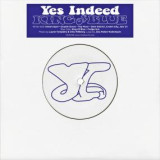
YES INDEED - KING OF BLUE LP

Yes Indeed

KING OF BLUE LP

12inchMEA050
Meakusma
01.04.2024

King Of Blue by Yes Indeed sees Laurie Tompkins and Otto Wilberg take their eclectic stance on cosmic jazz and electronics to further uncharted and dreamlike territory, encompassing a unique logic of what is harmoniously absurdist.

King of Blue by Yes Indeed sees members Laurie Tompkins and Otto Willberg further dive into their melismatic take on cosmic jazz and new electronics, by way of their highly eclectic and at times nonsensically sensical modus operandi. Their work is defined by an eloquent flurry of ideas, spheres, and signifiers, creating a musical universe of surprising longevity and depth. Treating musical convention with gentle disdain, Yes Indeed take on a variety of genres and moods and switch them around into a beautifully melismatic and dreamlike state of being. King Of Blue is a mini- album of fragmented beauty and warmth. It puts the illogical center stage and gives space to abruptly miniaturist musical ideas, allowing them to take on a meaning bigger than one would expect. It is cosmic music for modern times. A brazen descent into the execution of a fundamentally diversified musical stance.

'Yes Indeed' are Laurie Tompkins & Otto Willberg. Live, they play keys, bouncy bass and sing over tactile, emotive samples. Their music is epic and also somehow wrong, with space for delicacy, straight-up joy and soaring licks. Since 2022’s ‘Rotten Luck’ - their first proper album, on Bison - YI have played across the UK and Europe. Solo, Laurie co-ran the Slip label and has put out CDs on Entr’acte, 33-33 and Hyperdelia. Otto is a roaming bassist in groups like Historically Fucked and Abstract Concrete and his LP of “wildly singular, wickedly trippy and sensual set of fusion jams” (Boomkat) was recently out on Black Truffle.

pre-order now01.04.2024

expected to be published on 01.04.2024

12,56

Last In: 2026 years ago
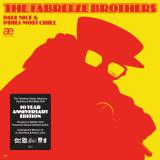
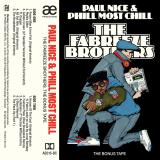
Paul Nice & Phill Most Chill - The Fabreeze Brothers (Tape)

Expanded Edition Double Cassette Box Set including main album and Bonus Cassette with unique download cards


AE Productions in association with Sure Shot Recordings and In Effect Recordings are pleased to announce a 10 Year Anniversary Edition of the critically acclaimed Phill Most Chill and Paul Nice album as the Fabreeze Brothers.

The hugely successful first edition which was pressed on colour vinyl and supplied in double fold out sleeve sold out in only 2 weeks from release date and then the 2nd pressing black vinyl edition sold out a little while later but has for years been out of print but is increasingly requested by shops, via email, social media, AE Productions website back in stock requests, etc…

As it has been 10 years since original release back in 2015 at the time of proceeding with manufacturing, it was the perfect opportunity to do a 3rd pressing to mark the anniversary but we had to pull out all the stops for a 3rd run of this incredible album and also make it subtly different again in packaging design from the 1st and 2nd pressings so that each has it’s own particular feel and quality.

With help from the original designer and all-round vinyl artwork supremo Mr Krum we have found some nice adjustments for the gatefold sleeve where the detail from the insert sheet found in the original issues is incorporated into the inside panels of the sleeve. We have also tweaked the hype sticker to mark the 10th Anniversary Edition and updated the vinyl labels so as to work better with the new Splatter vinyl which follows the original red and yellow vinyl but each splattered with the opposite colour.

For something a little extra we have compiled a Limited Expanded Edition Double Cassette Box Set that includes the original album and also a ‘Bonus Tape’ which features all of the remixes, alternate versions, Original Versions of album cuts and bonus tracks found on B-sides of the array of singles and we included for good measure 2 tracks that only appeared on the promotional only LP sampler that ended up being different on the final release. This is limited to cassette just for the non-vinyl heads as all of these tracks already appear on vinyl. The outer box is A5 card in black with gold foil Fabreeze Brothers logo and comes with discography booklet.

‘The Bonus Tape’ from the box set is also available as a standalone cassette release with alternate j-card art work so that it has it’s own flavour and so that anyone that purchased one of the original run of cassettes that sold out before we could even ship any copies, did not need to purchase the main album again unnecessarily and to make it noticeable from the Expanded Edition Box Set version.

This version also has an alternate shell design in keeping with the clear shell with dark liner that was commonplace back in the 90’s and the cassette geeks may note the red text on the spine as was also a common design back then – giving this a pseudonym of ‘the 90’s tape’ during the design process.

We couldn’t stop there so we also have an extremely low quantity Limited Edition Mini Disc version which is the main album plus 8 of the bonus tracks from The Bonus Tape – only missing the 2 least significant alternate versions but clocking in at just a few seconds under 80 minutes – the absolute maximum for the format! Mini Disc???!!! You’re probably asking – yes!

While looking into the cassette duplication options we realised that the duplicator also offers Mini Disc production so we thought that it may be worth doing a very small run just because not only are professionally manufactured Mini Disc’s rare in Hip Hop, they are rare within the entire music industry as they never really took off as a medium to purchase music but ended up as the choice for home recorded Walkman and car use. Indeed, AE boss Mr Fantastic still has his main machine, portable and old discs. Amazingly also, the sleeve artwork transferred brilliantly to the Mini Disc template. They are manufactured using high quality Sony discs using ATRAC 4.5 codec.

All releases are supplied with unique free download codes on cards that are included inside the packaging but also with the Expanded Edition cassette and Mini Disc having 2 cards – 1 for the main album and a 2nd card for ‘The Bonus Tape’. The free downloads are supplied direct from Phill Most Chill’s Bandcamp page keeping it independent.

pre-order now27.03.2026

expected to be published on 27.03.2026

38,87

Last In: 2026 years ago
Paul Nice & Phill Most Chill - The Fabreeze Brothers LP

AE Productions in association with Sure Shot Recordings and In Effect Recordings are pleased to announce a 10 Year Anniversary Edition of the critically acclaimed Phill Most Chill and Paul Nice album as the Fabreeze Brothers.

The hugely successful first edition which was pressed on colour vinyl and supplied in double fold out sleeve sold out in only 2 weeks from release date and then the 2nd pressing black vinyl edition sold out a little while later but has for years been out of print but is increasingly requested by shops, via email, social media, AE Productions website back in stock requests, etc…

As it has been 10 years since original release back in 2015 at the time of proceeding with manufacturing, it was the perfect opportunity to do a 3rd pressing to mark the anniversary but we had to pull out all the stops for a 3rd run of this incredible album and also make it subtly different again in packaging design from the 1st and 2nd pressings so that each has it’s own particular feel and quality.

With help from the original designer and all-round vinyl artwork supremo Mr Krum we have found some nice adjustments for the gatefold sleeve where the detail from the insert sheet found in the original issues is incorporated into the inside panels of the sleeve. We have also tweaked the hype sticker to mark the 10th Anniversary Edition and updated the vinyl labels so as to work better with the new Splatter vinyl which follows the original red and yellow vinyl but each splattered with the opposite colour.

For something a little extra we have compiled a Limited Expanded Edition Double Cassette Box Set that includes the original album and also a ‘Bonus Tape’ which features all of the remixes, alternate versions, Original Versions of album cuts and bonus tracks found on B-sides of the array of singles and we included for good measure 2 tracks that only appeared on the promotional only LP sampler that ended up being different on the final release. This is limited to cassette just for the non-vinyl heads as all of these tracks already appear on vinyl. The outer box is A5 card in black with gold foil Fabreeze Brothers logo and comes with discography booklet.

‘The Bonus Tape’ from the box set is also available as a standalone cassette release with alternate j-card art work so that it has it’s own flavour and so that anyone that purchased one of the original run of cassettes that sold out before we could even ship any copies, did not need to purchase the main album again unnecessarily and to make it noticeable from the Expanded Edition Box Set version.

This version also has an alternate shell design in keeping with the clear shell with dark liner that was commonplace back in the 90’s and the cassette geeks may note the red text on the spine as was also a common design back then – giving this a pseudonym of ‘the 90’s tape’ during the design process.

We couldn’t stop there so we also have an extremely low quantity Limited Edition Mini Disc version which is the main album plus 8 of the bonus tracks from The Bonus Tape – only missing the 2 least significant alternate versions but clocking in at just a few seconds under 80 minutes – the absolute maximum for the format! Mini Disc???!!! You’re probably asking – yes!

While looking into the cassette duplication options we realised that the duplicator also offers Mini Disc production so we thought that it may be worth doing a very small run just because not only are professionally manufactured Mini Disc’s rare in Hip Hop, they are rare within the entire music industry as they never really took off as a medium to purchase music but ended up as the choice for home recorded Walkman and car use. Indeed, AE boss Mr Fantastic still has his main machine, portable and old discs. Amazingly also, the sleeve artwork transferred brilliantly to the Mini Disc template. They are manufactured using high quality Sony discs using ATRAC 4.5 codec.

All releases are supplied with unique free download codes on cards that are included inside the packaging but also with the Expanded Edition cassette and Mini Disc having 2 cards – 1 for the main album and a 2nd card for ‘The Bonus Tape’. The free downloads are supplied direct from Phill Most Chill’s Bandcamp page keeping it independent.

pre-order now27.03.2026

expected to be published on 27.03.2026

29,20

Last In: 2026 years ago
Gap Mangione - Diana In The Autumn Wind (LP)

Gap Mangione's monumentally influential Diana In The Autumn Wind. AKA BEWITH200LP. And, without question, Be With's White Whale.

They said it could never be done. And with good reason.

We've spent the past 12 years trying to license this legendary 1968 recording from Gap and, after much work, it's finally here. Remarkably, this is the first ever vinyl reissue of Gap Mangione's Diana In The Autumn Wind, produced with the full and extensive participation of Gap. An exceedingly rare album, it's been coveted by funk, soul, jazz and hip-hop sample fiends for decades.

It's unarguably *the* most sought after album for J Dilla / Madlib sample collectors. It has also been brilliantly sampled by A Tribe Called Quest, Large Professor, Ghostface Killah, Kendrick Lamar and Talib Kweli.

But this record is so much more than a sample-spotters curio. It's solid gold throughout. Bursting with killer funky-jazz grooves and tracks adorned with warm electric piano, the release is notable for featuring some extremely significant players at the very outset of their careers; Tony Levin, at 21, whose superb playing on both acoustic and electric bass was the harmonic mainstay of the trio and Steve Gadd, at 23, one of the greatest drummers of his generation.

With acceptable copies of this holy grail changing hands for $400, to call this reissue "much-needed" underplays just how vital it is. Gap's story is told in his words alongside rare photos across a sumptuously designed 2-page insert and, to augment this deluxe edition further, its all wrapped up in a beautiful, no-expense-spared luxury tip-on sleeve, as per the original hens-teeth release. And, while we're talking packaging, just take a look at that cover - a work of art in and of itself.

The tracks are short but complex, with that extraordinary rhythm section backing the beautiful piano, organ and electric piano work of Gap. It's like the best ever library funk breaks record you never heard - but all your favourite golden age rap producers were all over it, long ago. It's a stunning blend of the vibrant, driving music of the Gap Mangione Trio coupled with the sensitive composition and superb orchestration of Gap's legendary brother, Chuck Mangione, who helmed an amalgam of seemingly disparate elements – rock, big band jazz, solo improvisation and "classical" music - into a spectacularly cohesive whole that has aged wonderfully well. As Gap himself notes in the liners, "with this group I was able to explore and add new and exciting elements from rock, Brazilian and then-current pop music."

Opener "Boy With Toys" triumphantly swaggers out the gate, all big band horns, flutes and dextrous organ work. The synthesis of everything going on is nothing short of stunning. When one wise YouTube commentator called this tune "old school superhero music", Gap agreed. Rap luminaries did, too, amongst them Talib Kweli, who rapped over DJ Scratch's chopped up intro for "Shock Body" on his Quality album back in 2002.

You've barely recovered from that incredibly affecting opener when you get hit over the head with the exquisite title-track. And now you see how two of the greatest beats of all time emerged from one single track produced nearly 50 years earlier. Unforgettably utilised by Dilla for Slum Village's heartbreakingly good "Fall In Love" and then Madlib for his "Official" beat for Dilla to rap over, on the Jaylib record. Regardless of the records it went on to spawn, this is just a staggering tune in its own right. Be beguiled by the flutes and the flutter tonguing, the counter-melody from the trombones, the soprano sax solo. All of it. Simply beautiful.

The questing organ and horn workout "Long Hair Soulful" deserves a lot more attention, overshadowed somewhat by the opening two monsters but no less fantastic. It swings, it grooves and Gadd and Levin truly cook. Up next, Gap's wonderfully percussive, mellifluously piano-heavy cover of "Yesterday" by some fellas called The Beatles. It's a subtly arresting gem. "The XIth Commandment" is damn fine, with thick, gorgeous electric piano and snappy drum work underpinning chaotic soundtracky horns. To close out the side, "St. Thomas" showcases the "fourth" member of the Gap Mangione Trio, conga drummer Dhui Mandingo. Having performed with the Trio since 1965, Dhui‘s African-based and jazz-latin-influenced style amazed listeners and its way to hear why.

Opening the B-Side, standard "You're Nobody Till Somebody Loves You" breezes along in the late-night jazz club fashion before things get super deep with the outstanding and - up to now - un-sampled "Pond With Swans". It's simply heavenly, and how its moody, melancholic intro has yet to be pilfered is anybody's guess. It oscillates between gentle, sombre movements and bombastic grooves, equally hypnotic and joyous. The rendition of "You Are My Sunshine" is yet another showcase for Gap's virtuoso playing and Gadd's mastery of the pocket. Indeed Gadd's drumming on "Free Again" is nothing short of neck-SNAPPING! Ghostface took it for not one but two "Iron's Theme" tracks across his seminal Supreme Clientele. It's got that Galt MacDermot "Coffee Cold" feel. Suuuuuper cool. The frantic "Dream On Little Dreamer" hurtles along and must've surely had the whole room absolutely swinging from the chandeliers back in Rochester in the late 60s. The album closes with the magnificent Graduate Medley, featuring memorable renditions of "Scarborough Fair", "The Sounds of Silence" and "Mrs. Robinson". The warm electric piano lines of the former were sampled by The Ummah (Dilla again!) for Tribe's "Pad & Pen" from their reappraised final album, The Love Movement, as well as by Large Professor on his much-loved "The LP (For My People)".

Under the watchful eye - and extremely attentive ears - of Gap Mangione himself, the audio for Diana In The Autumn Wind has been carefully remastered by Be With regular Simon Francis, with a few much needed tweaks here and there, according to the artist's wishes. At the prestigious Abbey Road Studios, Cicely Balston's expert skills have made sure nothing is lost in the cut whilst the records have been pressed to the highest possible standard at the always stellar Record Industry in Holland. The artwork restoration has taken place here at Be With HQ and has that drop-dead gorgeous cover artwork popping like new. Buy on sight!

pre-order now01.05.2026

expected to be published on 01.05.2026

32,73

Last In: 2026 years ago
Guilty Razors - Complete Recordings 1977 - 1978
  • A1: Hurts And Noises
  • A2: Wake Up
  • A3: I Don't Wanna Be A Rich
  • A4: Terrorist Bad Heart
  • A5: Provocate
  • A6: Lucifer Sam (Pink Floyd)
  • B1: Happy!?
  • B2: So Lazy
  • B3: I Feel Down
  • B4: Stupido
  • B5: Guilty
  • B6: Caroline Says (Loo Reed)

UILTY RAZORS, BONA FIDE PUNKS.


Writings on the topic that go off in all directions, mind-numbing lectures given by academics, and testimonies, most of them heavily doctored, from those who “lived through that era”: so many people today fantasize about the early days of punk in our country… This blessed moment when no one had yet thought of flaunting a ridiculous green mohawk, taking Sid Vicious as a hero, or – even worse – making the so-called alternative scene both festive and boorish. There was no such thing in 1976 or 1977, when it wasn’t easy to get hold of the first 45s by the Pistols or the Clash. Few people were aware of what was happening on the fringes of the fringes at the time. Malcolm McLaren was virtually unknown, and having short hair made you seem strange. Who knew then that rock music, which had taken a very bad turn since the early 1970s, would once again become an essential element of liberation? That, thanks to short and fast songs, it would once again rediscover that primitive, social side that was so hated by older generations? Who knew that, besides a few loners who read the music press (it was even better if they read it in English) and frequented the right record stores? Many of these formed bands, because it was impossible to do otherwise. We quickly went from listening to the Velvet Underground to trying to play the Stooges’ intros. It’s a somewhat collective story, even though there weren’t many people to start it.
The Guilty Razors were among those who took part in this initial upheaval in Paris. They were far from being the worst. They had something special and even released a single that was well above the national average. They also had enough songs to fill an album, the one you’re holding. In everyone’s opinion, they were definitely not among the punk impostors that followed in their wake. They were, at least, genuine and credible.

Guilty Razors, Parisian punk band (1975-1978). To understand something about their somewhat linear but very energetic sound, we might need to talk about the context in which it was born and, more broadly, recall the boredom (a theme that would become capital in punk songs) coupled with the desire to blow everything off, which were the basis for the formation of bands playing a rejuvenated rock music ; about the passion for a few records by the Kinks or the early Who, by the Stooges, by the Velvet mostly, which set you apart from the crowd.
And of course, we should remember this new wave, which was promoted by a few articles in the specialized press and some cutting-edge record stores, coming from New York or London, whose small but powerful influence could be felt in Paris and in a handful of isolated places in the provinces, lulled to sleep by so many appalling things, from Tangerine Dream to President Giscard d’Estaing...
In 1975-76, French music was, as almost always, in a sorry state ; it was still dominated by Johnny Hallyday and Sylvie Vartan. Local rock music was also rather bleak, apart from Bijou and Little Bob who tried to revive this small scene with poorly sound-engineered gigs played to almost no one.
In the working class suburbs at the time, it was mainly hard rock music played to 11 that helped people forget about their gruelling shifts at the factory. Here and there, on the outskirts of major cities, you still could find a few rockers with sideburns wearing black armbands since the death of Gene Vincent, but it wasn’t a proper mass movement, just a source of real danger to anyone they came across who wasn't like them. In August 1976, a festival unlike any other took place in Mont-de-Marsan – the First European Punk Festival as the poster said – with almost as many people on stage as in the audience. Yet, on that day, a quasi historical event happened, when, under the blazing afternoon sun, a band of unknowns called The Damned made an unprecedented noise in the arena, reminiscent of the chaotic Stooges in their early adolescence. They were the first genuine punk band to perform in our country: from then on, anything was possible, almost anything seemed permissible.

It makes sense that the four+1 members of Guilty Razors, who initially amplified acoustic guitars with crappy tape recorder microphones, would adopt punk music (pronounced paink in French) naturally and instinctively, since it combines liberating noise with speed of execution and – crucially – a very healthy sense of rebellion (the protesters of May 1968 proclaimed, and it was even a slogan, that they weren’t against old people, but against what had made them grow old. In the mid-1970s, it seemed normal and obvious that old people should now ALSO be targeted!!!).
At the time, the desire to fight back, and break down authority and apathy, was either red or black, often taking the form of leafleting, tumultuous general assemblies in the schoolyard, and massive or shabby demonstrations, most of the time overflowing with an exciting vitality that sometimes turned into fights with the riot police. Indeed, soon after the end of the Vietnam War and following Pinochet’s coup in Chile, all over France, Trotskyist and anarcho-libertarian fervour was firmly entrenched among parts of the educated youth population, who were equally rebellious and troublemakers whenever they had the chance. It should also be noted that when the single "Anarchy in the UK" was first heard, even though not many of us had access to it, both the title and its explosive sound immediately resonated with some of those troublemakers crying out for ANARCHY!!! Meanwhile, the left-wing majority still equated punks with reckless young neo-Nazis. Of course, the widely circulated photos in the mainstream press of Siouxsie Sioux with her swastikas didn’t necessarily help to win over the theorists of the Great Revolution. It took Joe Strummer to introduce The Clash as an anti-racist, anti-fascist and anti-ignorance band for the rejection of old-school revolutionaries to fade a little.

The Lycée Jean-Baptiste Say at Porte d’Auteuil, despite being located in the very posh and very exclusive 16th arrondissement of Paris, didn’t escape these "committed" upheavals, which doubled as the perfect outlet for the less timid members of this generation.
“Back then, politics were fun,” says Tristam Nada, who studied there and went on to become Guilty Razors’ frontman. “Jean-Baptiste was the leftist high-school in the neighbourhood. When the far right guys from the GUD came down there, the Communist League guys from elsewhere helped us fight them off.”
Anything that could challenge authority was fair game and of course, strikes for just about any reason would lead to increasingly frequent truancy (with a definitive farewell to education that would soon follow). Tristam Nada spent his 10th and 11th unfinished grades with José Perez, who had come from Spain, where his father, a janitor, had been sentenced to death by Franco. “José steered my tastes towards solid acts such as The Who. Like most teenagers, I had previously absorbed just about everything that came my way, from Yes to Led Zeppelin to Genesis. I was exploring… And then one day, he told me that he and his brother Carlos wanted to start a rock band.” The Perez brothers already played guitar. “Of course, they were Spanish!”, jokes their singer. “Then, somewhat reluctantly, José took up the bass and we were soon joined by Jano – who called himself Jano Homicid – who took up the rhythm guitar.” Several drummers would later join this core of not easily intimidated young guys who didn’t let adversity get the better of them.

The first rehearsals of the newly named Guilty Razors took place in the bedroom of a Perez aunt. There, the three rookies tried to cover a few standards, songs that often were an integral part of their lives. During a first, short gig, in front of a bewildered audience of tough old-school rockers, they launched into a clunky version of the Velvet Underground's “Heroin”. Challenge or recklessness? A bit of both, probably… And then, step by step, their limited repertoire expanded as they decided to write their own songs, sung in a not always very accurate or academic English, but who cared about proper grammar or the right vocabulary, since what truly mattered was to make the words sound as good as possible while playing very, very fast music? And spitting out those words in a language that left no doubt as to what it conveyed mattered as well.
Trying their hand a the kind of rock music disliked by most of the neighbourhood, making noise, being fiercely provocative: they still belonged to a tiny clique who, at this very moment, had chosen to impose this difference. And there were very few places in France or elsewhere, where one could witness the first stirrings of something that wasn’t a trend yet, let alone a movement.

In the provinces, in late 1976 or early 1977, there couldn’t be more than thirty record stores that were a bit more discerning than average, where you could hear this new kind of short-haired rock music called “punk”. The old clientele, who previously had no problem coming in to buy the latest McCartney or Aerosmith LP, now felt a little less comfortable there…
In Paris, these enlightened places were quite rare and often located nex to what would become the Forum des Halles, a big shopping mall. Between three aging sex workers, a couple of second-hand clothes shops, sellers of hippie paraphernalia and small fashion designers, the good word was loudly spread in two pioneering places – propagators of what was still only a new underground movement. Historically, the first one was the Open Market, a kind of poorly, but tastefully stocked cave. Speakers blasted out the sound of sixties garage bands from the Nuggets compilation (a crucial reference for José Perez) or the badly dressed English kids of Eddie and the Hot Rods. This black-painted den was opened a few years earlier by Marc Zermati, a character who wasn’t always in a sunny disposition, but always quite radical in his (good) choices and his opinions. He founded the independent label Skydog and was one of the promoters of the Mont-de-Marsan punk festivals. Not far from there was Harry Cover, another store more in tune with the new New York scene, which was amply covered in the house fanzine, Rock News (even though it was in it that the photos of the Sex Pistols were first published in France).
It was a favorite hang-out of the Perez brothers and Tristam Nada, as the latter explained. “It’s at Harry Cover’s that we first heard the Pistols and Clash’s 45s, and after that, we decided to start writing our first songs. If they could do it, so could we!”
The sonic shocks that were “Anarchy in the UK”, “White Riot” or the Buzzcocks’s EP, “Spiral Scratch” – which Guilty Razors' sound is reminiscent of – were soon to be amplified by an unparalleled visual shock. In April 1977, right after the release of their first LP, The Clash performed at the Palais des Glaces in Paris, during a punk night organised by Marc Zermati. For many who were there, it was the gig of a lifetime…
Of course, Guilty Razors and Tristam were in the audience: “That concert was fabulous… We Parisian punks were almost all dressed in black and white, with white shirts, skinny leather ties, bikers jackets or light jackets, etc. The Clash, on the other hand, wore colourful clothes. Well, the next day, at the Gibus, you’d spot everyone who had been at this concert, but they weren’t wearing anything black, they were all wearing colours.”

It makes sense to mention the Gibus club, as Guilty Razors often played there (sometimes in front of a hostile audience). It was also the only place in Paris that regularly scheduled new Parisian or Anglo-Saxon acts, such as Generation X, Siouxsie and the Banshees, the Slits, and Johnny Thunders who would become a kind of messed-up mascot for the venue. A little later, in 1978, the Rose Bonbon – formerly the Nashville – also attracted nightly owls in search of electric thrills… In 1977, the iconic but not necessarily excellent Asphalt Jungle often played at the Gibus, sometimes sharing the bill with Metal Urbain, the only band whose aura would later transcend the French borders (“I saw them as the French Sex Pistols,” said Geoff Travis, head of their British label Rough Trade). Already established in this small scene, Metal Urbain helped the young and restless Guilty Razors who had just arrived. Guitarist for Metal Urbain Hermann Schwartz remembers it: “They were younger than us, we were a bit like their mentors even if it’s too strong a word… At least they were credible. We thought they were good, and they had good songs which reminded of the Buzzcocks that I liked a lot. But at some point, they started hanging out with the Hells Angels. That’s when we stopped following them.”

The break-up was mutual, since, Guilty Razors, for their part, were shocked when they saw a fringe element of the audience at Metal Urbain concerts who repeatedly shouted “Sieg Heil” and gave Nazi salutes. These provocations, even still minor (the bulk of the skinhead crowd would later make their presence felt during concerts), weren’t really to the liking of the Perez brothers, whose anti-fascist convictions were firmly rooted. Some things are non-negotiable.
A few months earlier (in July 1978), Guilty Razors had nevertheless opened very successfully for Metal Urbain at the Bus Palladium, a more traditonally old-school rock night-club. But, as was sometimes the case back then, the night turned into a mass brawl when suburban rockers came to “beat up punks”.

Back then, Parisian nights weren’t always sweet and serene.

So, after opening as best as they could for The Jam (their sound having been ruined by the PA system), our local heroes were – once again – met outside by a horde of greasers out to get them. “Thankfully,” says Tristam, “we were with our roadies, motorless bikers who acted as a protective barrier. We were chased in the neighbouring streets and the whole thing ended in front of a bar, with the owner coming out with a rifle…”
Although Tristam and the Perez brothers narrowly escaped various, potentially bloody, incidents, they weren’t completely innocent of wrongdoing either. They still find amusing their mugging of two strangers in the street for example (“We were broke and we simply wanted to buy tickets for the Heartbreakers concert that night,” says Tristam). It so happened that their victims were two key figures in the rock business at the time: radio presenter Alain Manneval and music publisher Philippe Constantin. They filed a complaint and sought monetary compensation, but somehow the band’s manager, the skilful but very controversial Alexis, managed to get the complaint withdrawn and Guilty Razors ended up signing with Constantin with a substantial advance.

They also signed with Polydor and the label released in 1978 their only three-track 45, featuring “I Don't Wanna be A Rich”, “Hurts and Noises” and “Provocate” (songs that exuded perpetual rebellion and an unquenchable desire for “class” confrontation). It was a very good record, but due to a lack of promotion (radio stations didn’t play French artists singing in English), it didn’t sell very well. Only 800 copies were allegedly sold and the rest of the stock was pulped… Initially, the three tracks were to be included on a LP that never came to be, since they were dropped by Polydor (“Let’s say we sometimes caused a ruckus in their offices!” laughs Tristam.) In order to perfect the long-awaited LP, the band recorded demos of other tracks. There was a cover of Pink Floyd's “Lucifer Sam” from the Syd Barrett era – proof of an enduring love for the sixties’ greats –, “Wake Up” a hangover tale and “Bad Heart” about the Baader-Meinhof gang, whose actions had a profound impact on the era and on a generation seeking extreme dissent... On the album you’re now discovering, you can also hear five previously unreleased tracks recorded a bit later during an extended and freezing stay in Madrid, in a makeshift studio with the invaluable help of a drummer also acting as sound engineer. He was both an enthusiastic old hippie and a proper whizz at sound engineering. Here too, certain influences from the fifties and sixties (Link Wray, the Troggs) are more than obvious in the band’s music.

Shortly after a final stormy and rather barbaric (on the audience’s side) “Punk night” at the Olympia in June 1978, Tristam left the band ; his bandmates continued without him for a short while.

But like most pioneering punk bands of the era, Guilty Razors eventually split up for good after three years (besides once in Spain, they’d only played in Paris). The reason for ceasing business activities were more or less the same for everyone: there were no venues outside one’s small circuit to play this kind of rock music, which was still frightening, unknown, or of little interest to most people. The chances of recording an LP were virtually null, since major labels were only signing unoriginal but reassuring sub-Téléphone clones, and the smaller ones were only interested in progressive rock or French chanson for youth clubs. And what about self-production? No one in our small safety-pinned world had thought about it yet. There wasn’t enough money to embark on that sort of venture anyway.

So yes, the early days of punk in France were truly No Future!
pre-order now22.05.2026

expected to be published on 22.05.2026

21,43

Last In: 2026 years ago
Senses - Convex Reflex

Senses

Convex Reflex

12inchCRVT007
Curvature
17.10.2025

Returning to Curvature for his eagerly awaited second EP, Senses brings an impressively varied array of atmospheric jungle to the table, drawing from a multitude of influences across the musical spectrum with Convex Reflex.

A1 - Ratio
A break-laden intro lays the groundwork for a considered foray into the old-school - Senses flecking the mix liberally with synths and female vocal hits of yesteryear, before the welcome crunch of thunderous amens takes over. A cascade of rip-roaring edits
floods the track taking you on an epic ride through the ages, breaks chopped with riotous energy confirming this track as a perfect DJ tool for the dancefloor.

A2 - Sun Runner
Beautifully crisp drums open a DJ-friendly intro to Sun Runner, delightfully clear sounding with distinctive cymbals, a thick snare and subtle bongos. An airy soundscape soon washes into the mix with calming synths and flutes, creating a delicately jazzy blend of styles with soothing melodies contrasting perfectly with the breaks. More pronounced synthwork follows to spice things up as the bassline rumbles along below.

B1 - Spirit Vector
Dense atmospherics are the order of the day as Senses deploys Spirit Vector, opening with an array of synths and strings to create an intro reminiscent of Intense's work in the late 90's. Soon we are treated to a paradoxical assortment of heavy amens that work impeccably in the mix - thundering forth with pads soaring high and a heavy sub bass below. Various instrument samples litter the breakdown before a vocal sample declares "Yes". Yes indeed.

B2 - Still
Closing the EP in style, Still opens with sparse breaks, lightly building with extremely subtle apache breaks in the backdrop with sporadic keys and smooth pads. The drop arrives with warm, room-filling basslines and synths to elevate the atmosphere alongside luscious flute samples.Layers are added to the excellent breaks as Senses sprinkles instrument samples, keys and a classic female vocal, completing a joyous composition for Curvature.

Words by Chris Hayes (Spatial / Red Mist)

In Stock

On Stock and ready to ship

13,87
Jay Richford and Gary Stevan - Feelings LP

2025 Repress

More than once Jay Richford and Gary Stevan’s Feelings has been described as the greatest library record ever released. Of course Be With can’t be seen to be playing favourites, but we have to admit, it’s pretty good. Insanely rare and immensely sought-after, it’s a tough funk, street jazz masterpiece coveted for many years by collectors of all musical genres.

Since its original release on Italian label Carosello in 1974, Feelings has appeared on several labels with different sleeves and even under a different artist. Indeed cult library label Conroy put it out in one of their iconic red sleeves in 1976 and yes, Feelings has indeed had more than one modern re-issue since these “original” releases. But a record this special deserves to be kept in press and we think it deserves the Be With treatment.

No, Jay Richford and Gary Stevan aren’t two of the most Italian sounding names. As the story goes these were the pseudonyms adopted by Stefano Torossi and Giancarlo Gazzani who wrote the album but couldn’t use their real names on the original release for legal reasons. But Stefano Torossi himself later both clarified and confused the tale further by explaining that Feelings was the work of four people not just Gazzani and himself. Fellow composers and musicians Sandro Brugnolini and Puccio Roelens also worked on the album and as Torossi himself explained “we all worked together”, with all four gents “dividing the royalties in equal parts… that’s the story.” Right, so, with that all sorted out let’s get back to talking about the music. And what music it is.

Long hailed as a holy grail of library music, Feelings is the epitome of the sort of cinematic orchestral jazzy funk that is “that 70s library music sound”. Infectiously funky, deliciously melodic and with impeccible, elegant production, this record is the showcase for a stunning set of compositions and arrangements and with performances that are nothing short of virtuoso.

The record’s first side lifts off with “Flying High”, soaring brilliant and shimmering. Funk licks, menacing strings and swaggering horns combine for an ice-cold intro groove that Isaac Hayes would surely have envied, before the steady-paced drums deliver the slo-mo TKO. The string-drenched cop-funk of “Going Home” raises the tempo. All funky quick-fire bass lines and killer electric guitar soloing. A real thriller.

“Walking In The Dark” positively drips in blaxploitation-funk drama strings and horn struts, all laced with delicate drums, velvet piano and more filthy wah-wah. “Fighting For Life” is another funk-fuelled workout built around an effortlessly relentless drum track that refuses to give up until even the stiffest-necked head is nodding.

The loping, open drum break that guides the much-loved “Feeling Tense” through its early stages would be good enough on its own. The heavy bass gloss, swirling strings and ominous horns that follow take things to the next level.

The second side opens with another favourite “Running Fast”, and the track does precisely that. This is one fine rollicking chase theme underpinned by frenetic (yet funky) Fender Rhodes and skipping bass and drums. Those sweeping strings are a gorgeous extra. It’s a deliciously feel-good groove that sets the heart racing.

“Loving Tenderly” envelops us in warm, velvety night-time vibes with easy listening horns and slinky strings dialing up the seduction. Definitely one for the lithe lovers out there. The pace picks up on the electrifying “Fearing Much” where strings dart around deep bass, buzzing guitars and another funky drum break. The lush, melancholic “Being Friendly” is another easy beauty, all warm Rhodes and strings. Majestic stuff that puts an aural arm around you. The climactic “Having Fun” rides a pulsating, bass-heavy drum break with snatches of a funky guitar refrain, some luxurious keys, sweeping strings and triumphant horns. Sensational.

In Stock

On Stock and ready to ship

23,95
Various - ECHOES OF ITALY – THE BIRDS OF PARADISE – EARLY 90S HOUSE VIBES VOL.2 (2x12")

Googling “paradise house”, the first results to pop up are an endless list of European b&b’s with whitewashed lime façades, all of them promising “…an unmatched travel experience a few steps from the sea”. Next, a little further down, are the institutional websites of a few select semi-luxury retirement homes (no photos shown, but lots of stock images of smiling nurses with reassuring looks). To find the “paradise house” we’re after, we have to scroll even further down. Much further down.

It feels like yesterday, and at the same time it seems like a million years ago. The Eighties had just ended, and it was still unclear what to expect from the Nineties. Mobile phones that were not the size of a briefcase and did not cost as much as a car? A frightening economic crisis? The guitar-rock revival?! Certainly, the best place to observe that moment of transition was the dancefloor. Truly epochal transformations were happening there. From America, within a short distance one from the other, two revolutionary new musical styles had arrived: the first one sounded a bit like an “on a budget” version of the best Seventies disco-music – Philly sound made with a set of piano-bar keyboards! – the other was even more sparse, futuristic and extraterrestrial. It was a music with a quite distinct “physical” component, which at the same time, to be fully grasped, seemed to call for the knotty theories of certain French post-modern philosophers: Gilles Deleuze, Félix Guattari, Paul Virilio... Both those genres – we would learn shortly after – were born in the black communities of Chicago and Detroit, although listening to those vinyl 12” (often wrapped in generic white covers, and with little indication in the label) you could not easily guess whether behind them there was a black boy from somewhere in the Usa, or a girl from Berlin, or a pale kid from a Cornish coastal town.

Quickly, similar sounds began to show up from all corners of Europe. A thousand variations of the same intuition: leaner, less lean, happier, slightly less intoxicated, more broken, slower, faster, much faster... Boom! From the dancefloors – the London ones at least, whose chronicles we eagerly read every month in the pages of The Face and i-D – came tales of a new generation of clubbers who had completely stopped “dressing up” to go dancing; of hot tempered hooligans bursting into tears and hugging everyone under the strobe lights as the notes of Strings of Life rose up through the fumes of dry ice (certain “smiling” pills were also involved, sure). At this point, however, we must move on to Switzerland.

In Switzerland, in the quiet and diligent town of Lugano, between the 1980s and 1990s there was a club called “Morandi”. Its hot night was on Wednesdays, when the audience also came from Milan, Como, Varese and Zurich. Legend goes that, one night, none less than Prince and Sheila E were spotted hiding among the sofas, on a day-off of the Italian dates of the Nude Tour… The Wednesday resident and superstar was an Italian dj with an exotic name: Don Carlos. The soundtrack he devised was a mixture of Chicago, Detroit, the most progressive R&B and certain forgotten classics of old disco music: practically, what the Paradise Garage in New York might have sounded like had it not closed in 1987. In between, Don Carlos also managed to squeeze in some tracks he had worked on in his studio on Lago Maggiore. One in particular: a track that was rather slow compared to the BPM in fashion at the time, but which was a perfect bridge between house and R&B. The title was Alone: Don Carlos would explain years later that it had to be intended both in the English meaning of “by itself” and like the Italian word meaning “halo”. That wasn’t the only double entendre about the song, anyway. Its own very deep nature was, indeed, double. On the one hand, Alone was built around an angelic keyboard pattern and a romantic piano riff that took you straight to heaven; on the other, it showcased enough electronic squelches (plus a sax part that sounded like it had been dissolved by acid rain) to pigeonhole the tune into the “junk modernity” section, aka the hallmark of all the most innovative sounds of the time: music that sounded like it was hand-crafted from the scraps of glittering overground pop.

No one knows who was the first to call it “paradise house”, nor when it happened. Alternative definitions on the same topic one happened to hear included “ambient house”, “dream house”, “Mediterranean progressive”… but of course none were as good (and alluring) as “paradise house”. What is certain is that such inclination for sounds that were in equal measure angelic and neurotic, romantic and unaffective, quickly became the trademark of the second generation of Italian house. Music that seemed shyly equidistant from all the rhythmic and electronic revolutions that had happened up to that moment (“Music perfectly adept at going nowhere slowly” as noted by English journalist Craig McLean in a legendary field report for Blah Blah Blah magazine). Music that to a inattentive ear might have sounded as anonymous as a snapshot of a random group of passers-by at 10AM in the centre of any major city, but perfectly described the (slow) awakening in the real world after the universal love binge of the so-called Second Summer of Love.

For a brief but unforgettable season, in Italy “paradise house” was the official soundtrack of interminable weekends spent inside the car, darting from one club to another, cutting the peninsula from North to centre, from East to West coast in pursuit of the latest after-hours disco, trading kilometres per hour with beats per minute: practically, a new New Year’s Eve every Friday and Saturday night. This too was no small transformation, as well as a shock for an adult Italy that was encountering for the first time – thanks to its sons and daughters – the wild side of industrial modernity. The clubbers of the so-called “fuoriorario” scene were the balls gone mad in the pinball machine most feared by newspapers, magazines and TV pundits. What they did each and every weekend, apart from going crazy to the sound of the current white labels, was linking distant geographical points and non-places (thank you Marc Augé!) – old dance halls, farmhouses and business centres – transformed for one night into house music heaven. As Marco D’Eramo wrote in his 1995 essay on Chicago, Il maiale e il grattacielo: “Four-wheeled capitalism distorts our age-old image of the city, it allows the suburbs to be connected to each other, whereas before they were connected only by the centre (…) It makes possible a metropolitan area without a metropolis, without a city centre, without downtown. The periphery is no longer a periphery of any centre, but is self-centred”.

“Paradise house” perfectly understood all of this and turned it into a sort of cyber-blues that didn’t even need words, and unexpectedly brought back a drop of melancholic (post?)-humanity within a world that by then – as we would wholly realise in the decades to come – was fully inhuman and heartless. A world where we were all alone, and surrounded by a sinister yellowish halo, like a neon at the end of its life cycle. But, for one night at least, happy."

In Stock

On Stock and ready to ship

28,99
Tumblack - Tumblack LP

Tumblack

Tumblack LP

12inchBEWITH167LP
Be With Records
21.03.2025

There's iconic. Then there's *iconic*.

A MASSIVE speaker-smashing release, decades overdue. It's been bootlegged - shamefully so, many times over the years - but finally we present the first ever officially licensed reissue of this truly special Afro-disco-not-disco LP from 1979. A favourite of Harvey, Antal, Young Marco and, er, every great DJ to ever play deep records ever, basically. It's not hard to see - or, indeed, *feel* why.

Gem after gem of relentless, irresistibly funky gold, it's an incredibly revelatory album with endlessly complex drum patterns and basslines to dive into, throughout. Truly, this is uniquely FIRE music, unlike anything else you've ever heard, based on Gwo ka music from the gorgeous islands of Guadeloupe and Martinique. A thrilling synthesis of primal, hypnotic drums - the most tribal of percussive elements high in the mix throughout - with the loping synth pyrotechnics of, amongst a whole host of other greats, Wally Badarou and bass power of disco funk don Sauveur Mallia (Arpadys, Spatial & Co.)

Originally released on the seminal French label Barclay, you'd be hard pressed to even find an original copy in nice condition anywhere, let alone for a reasonable price, so it's high time an officially licensed, remastered reissue came around. It's just the latest in a long line of Be With reissues where the music sounds like the - drop-dead dazzling - cover. This here is a true drum attack. BUY ON SIGHT!

Tumblack was a short-lived project, produced and arranged by electronic wizard Yves Hayat and it can certainly be regarded as one of the first examples of Zouk, mixing powerful disco-funk arrangements with Gwo ka, traditional music from Guadeloupe. Gwo ka is an Antillean Creole term for "big drum". You can say that again! It refers to both a family of hand drums and the music played with them, which is a major part of Guadeloupean folk music.Whilst the first side is credited to the exceptional Tumblack band, the flip is given over to "Tumblack & Friends". These weren't just any old friends. Oh no, they were the absolute cream of the French scene (think Arpadys, Voyage, Le Club, Giant, CCPP, Synthesis, Swing Family) such as Sauveur Mallia, Wally Badarou, Marc Chantereau on percussion, Slim Pezin on guitar and Jean-Paul Batailley and Pierre Alain-Dahan handling drum duties.

The urgent, frantic "Fracas" gets things moving straight away with a cavalcade of drums and percussive funk before giving way to the stratospheric "Invocation", one of the album's many, many highlights. It's effectively one long heavenly drum break, a really hard, raw, tribal drum workout without a whole lot else going on - and all the better for it! One to make you sweat, no question. Up next, "Jubilé" is announced with a bellowing accapella voice, chanting the titular name before the heaviest of kicks smashes out your system and lulls you into an absolute state of bliss for nearly 6 minutes. Whoooooosh! Rounding out the sensational A-Side, "Vaudou" is a scratchy, funky patterned drum workout which - yep, yet again - absolutely slays your neck muscles, making them snap and contract in extraordinary fashion. TURN IT UP!

Ushering in the B-Side, the brief, fidgety, African chant-funk of "Parlement" segues seamlessly, beautifully into "Waka", an overwhelmingly rich gem of percussive funk. You do not want this to end, once it hits its stride. For maximum heavenly drum pleasure, you'd need to go a long way than the moment "Waka" feels like it's fading out before it kick-drum-blend into the mighty "Caraïba (Intro)". It's just staggeringly good. It's a minute-long layered drum prelude to the gigantic track which follows. Indeed, "Caraïba" is arguably the best loved and most well-known cut off the LP. And with good reason...featuring that Mallia bass, warm Rhodes and clavs, synth magic, memorably alto sax lines and, of course, tribal chanting.

Another mighty super-ahead-of-its-time classic, the bouncing bass heavy synth funk of "Chunga Funk" deploys Mallia and Wally Badarou (on Mini Moog) exceptionally well. I mean, come on, that bassline is just ridiculous. Try not to move to this one. This extraordinary record closes out with the more traditional Gwo ka sounds of "Bateau La Passé", the tribal chorus making the hairs on the back of your neck stand up.

Tumblack really is a gorgeous late-70s disco-not-disco essential. It's an absolute MONSTER that will completely blow you away; and, yes, it's as compelling and trance-inducing as the cover. The audio for Tumblack has been carefully remastered by Be With regular Simon Francis, ensuring it sounds better than ever. Cicely Balston's expert skills have made sure nothing is lost in the cut whilst the records have been pressed to the highest possible standard at Record Industry in Holland. The cover of Tumblack is so iconic and we sought special permission from original artist Hélène Majera to recreate this at Be With HQ. It absolutely zings off the print and serves as the perfect finishing touch to this long overdue re-issue.

In Stock

On Stock and ready to ship

26,85
Jeb Loy Nichols meets Gil Cang and the Ital Counselor All-Stars - Kinky Money Games

Always endeavoring to drop it a little way different, Ital Counselor Records once again stretch things in a forward direction while paying full and forceful tribute to that which has come before. This heartical 7" is a tribute to the late great Prince Lincoln Thompson in the form of a reimagined take on his composition "Kinky Money Game."

It is with great honor that ITAL COUNSELOR records has been able to work with two legends of the music business on this slab of plastic. Firstly, Jeb Loy Nichols comes with a storied history in music and the visual arts. He first came to ITAL COUNSELOR’s attention upon discovering the 1981 compilation, “Wild Paarty Sounds” via Cherry Red/On-U Sound. Later would be greater, with projects skirting the realms of country, soul, reggae, and leftfield. Bands like the Fellow Travelers, solo albums with Adrian Sherwood, and more recently writing songs for Horace Andy’s latest On-U album have all contributed to an impressive body of work.

Over the years when Jeb is not making music, he can be found writing books or churning out block prints of birds, leaves, pithy phrases, and the odd sleeve art for labels like Pressure Sounds, and, yes ITAL COUNSELOR. His sleeve work on this 7” indeed captures the essence of the music hiding under the cardboard exterior. Lo-fi, retro while poignantly on time. Social commentary manifested auditorily and visually.

Jeb’s reinterpretation of Thompson's original bubbles over a slow burning one drop built by none other than Studio One, Riz Records, and Tuff Scout Records alum Gil Cang. In yet another musical first brought to you by ITAL COUNSELOR, this piece of wax represents the only time Jeb and Gil have worked together. The results are a magical mix equally at home in the hands of a sound system operator unconstrained by the current ‘steppers’ norms as it is on a home stereo where one can deeply sit with the lyrics of depth and significance. An old time something feel for these nowadays times. An ITAL COUNSELOR Records essential.

Feel the vibes…

In Stock

On Stock and ready to ship

14,08
Solomun - Can't Stop

Solomun

Can't Stop

12inchRB129
Running Back
19.07.2024

Can't Stop .There seems no better way to describe the work, party and music ethic of Solomun. Carrying the mirror ball on his shoulders like Atlas, it is impossible to imagine the modern disco world without his dynamics. While his countless DJ sets give fresh impetus to the many shades of house, techno and their siblings, conversely they are a driving force behind his studio and remix excursions. Can't Stop provides an impressive insight into his musical universe.

Resulting from a rather casual after-dinner-listening-session during a car ride on Ibiza with a zesty Gerd Janson, who coaxed the title track out of Solomun making use of their friendship to full capacity, it is a triptych of direct, functional and free-spirited dance floor approach. After some back and forth in the search of the missing pieces to make it so, Solomun managed to deliver the perfect Running Back peak time record.

While Can't Stop channels UK dance music highs through German engineering values, which makes it perfect for dance hall and car rides (yes, indeed!) alike, its heavy dub is constructed with fearless techno DJs in mind who like new beat excerpts, rave stabs and a lot of bass in equal parts. Follow The Disco Ball leads us back to the aforementioned Greek titan and can be read as a love letter to the genre that can be found in its name. Catchy, compelling and cool, it is a masterclass in user-friendly, yet edgy arrangement and dancing shoe compatibility. We repeat: the perfect Running Back peak time record. Can't Stop, won't stop!


Short: Solomun on Running Back. Dance floor fanatics at work. A triptych of fun, friendship and functionality. Can't Stop channels UK dance music highs through German engineering values. Perfect for dance hall and car rides alike. Its heavy dub is constructed with fearless techno DJs in mind who like new beat excerpts, rave stabs and a lot of bass in equal parts. Follow The Disco Ball can be read as a love letter to the genre that is found in its name. Catchy, compelling and cool, it is a masterclass in user-friendly, yet edgy arrangement and dancing shoe compatibility. The perfect Running Back peak time record. Can't Stop, won't stop!

In Stock

On Stock and ready to ship

11,72
ANDROO - NS Kroo Session Dubplates

This is it. Poly dance theatre 006 arrives. Fresh arrival. For the 6th POLY DANCE THEATRE release, androo has decided to release exclusive dubplates from NS Kroo sound system (androo & baba). Yes. 2 tracks from the smoky, always intense and sometimes very special sessions of the NS Kroo sound system over the last 10 years. Exxxperienceee. Wave Dub style is a blend of synth wave, dub stepper and club elements. A side: Fast Dub, tribute to Kitachi, (Iration steppas). Indeed, NS Kroo didn't wait for the recent re-issues to play Kitachi tracks, and has been inspired by this vibe from the outset. Club meets Dub! Fast Dub is trance, it's raw, it's sporty, it's for the legs, it's good support (aducteurs), it's for nimble feet, it's a book whose last sentence ends on the first, it's repetition, it's different style, it's dance, it's wild, it's club rhythm, it's baba operator, it's androo selector, it's sound system vibes, it's NS Kroo in 2019, it's a discreet, slightly punkish non-chalance, it's distortion, it's "we don't give a fuck about codes", it's that and lots of other things... B side: Wave Dub Style Is Back. It's all in the title. This track is probably from 2014? Wave dub... A mix of new wave/synth pop and dub, with a club mix feel. Again, trance music, the kind you play when the night never ends to end, an epic end-of-session odyssey. Soft and strange synth with strong 808 rhythm. 2 mixes. 1st mix: pop synth experience. 2nd mix: raw trance club mix. Wave Dub Style Is Back was remastered by androo in 2023 with the support of poly dance theatre compagnie.

In Stock

On Stock and ready to ship

17,61
Taron-trekka - Black Magic

Black magic, what is that supposed to be A spell that seeks to do harm to others Usually yes, however Taron-Trekka are animated by the best intentions, rather aim for the magic of the night and as always want to merely destroy the dancefloors of this world in a symbolic way. In fact, nobody has comes to grief with the four tracks of their "Black Magic EP" (the last part of their "Magic" triology) - nevertheless, they possess a certain magic.

However, Taron-Trekka don't make jumbo jets disappear, they don't walk through the Chinese wall or initiate other cocky tricks à la Copperfield. They are more like thimbleriggers. Or card jugglers. You know, those guys who surprise you when you least reckon with it. Those who have already outsmarted your mind when you were still thinking that it was just about to really begin. Taron-Trekka have the groove and cast a net of loops, which magically creates a tremendous energy. Loops with which the smallest shift can open up worlds. Worlds, which admittedly appear accessible, but are hardly decipherable. This way, tools become magical tracks. Furthermore, house becomes a music, which brands itself to the last corners of a soul. Just like the trick that you haven't understood until today.

A1 Black Magic Taron-Trekka's ride through the night starts funky and dry with the title track of the EP. The effects bleep here and fade away there, however over distance a magical pull develops. A pull that can only be escaped from with great difficulty.

A2 Monofile Regarding "Monofile", Taron-Trekka conjures a groove as selfwilled as enchanting by initially making vocals and keys appear on a dead straight beat and then letting this very same one stumble over itself. At the right moment it engenders at least as much "Ohs" as "Ahs" in a club, you bet.

B1 Red From black to red, from night until morning. For exactly this moment "Red" was made, which brings every last person to the next afterhour with its swing and depth.

B2 Distance Entirely against its own title, "Distance" may indeed affect one deeply. Namely then, when one wants to delve into funk as subtle as extensive. That is Jan Jelinek at a gallop or SND with more punch. Both are fantastic

In Stock

On Stock and ready to ship

7,52
Michael Mayer - Speicher 137

Michael Mayer returns to the Speicher series for his first release since last year’s brain-bursting The Floor Is Lava album. And yes, the floor is indeed lava when Mayer is on peak form, as he is here, with three tracks that oscillate, effortlessly, between the twin poles of Mayer’s music: dancefloor detonation and heart-wrenching beauty. To be fair, there’s more of the former here, but there’s beauty in generous discipline, too, and the unrelenting “Cry Me A Raver” feels, somehow, like it brings together decades of Kompakt pleasure in six giddy minutes – disco-fied arpeggios, glistening and hand-burnished textures, abstruse patterns that fall in and out of step. “Don’t Sync With My Tag” stomps with destructive glee, a beat as undeniable as the shaker cross-rhythms are silkily sexy. There’s always been something practical, functional, and utilitarian about Speicher, but it doesn’t get more everyday DJ-life than this: Mayer tells us the title is “a super-annoying message that pops up every time you open Rekordbox. Nobody knows what it means. It’s a DJ mystery.” But who needs answers, anyway? By the time you’ve started to get close to solving the riddle, Mayer’s taken you to Detroit via Cologne with “It Isn’t What It Isn’t”, a little doffing of the cap to Rhythim Is Rhythim. “You’re May, I’m Mayer, I used to tell him,” Michael chuckles. This made one of our cats almost jump out of its skin, with its stealthy slyness – creeping, amorphous electro noise; percussives that just won’t quit; the whole thing flooded with twitchy strip-light energy and silver-machine flare- outs.

Speicher is as Speicher does, and this is a damn good one. Make Mine Mayer!

Michael Mayer returns to the Speicher series for his first release since last year’s brain-bursting The Floor Is Lava album. And yes, the floor is indeed lava when Mayer is on peak form, as he is here, with three tracks that oscillate, effortlessly, between the twin poles of Mayer’s music: dancefloor detonation and heart-wrenching beauty. To be fair, there’s more of the former here, but there’s beauty in generous discipline, too, and the unrelenting “Cry Me A Raver” feels, somehow, like it brings together decades of Kompakt pleasure in six giddy minutes – disco-fied arpeggios, glistening and hand-burnished textures, abstruse patterns that fall in and out of step. “Don’t Sync With My Tag” stomps with destructive glee, a beat as undeniable as the shaker cross-rhythms are silkily sexy. There’s always been something practical, functional, and utilitarian about Speicher, but it doesn’t get more everyday DJ-life than this: Mayer tells us the title is “a super-annoying message that pops up every time you open Rekordbox. Nobody knows what it means. It’s a DJ mystery.” But who needs answers, anyway? By the time you’ve started to get close to solving the riddle, Mayer’s taken you to Detroit via Cologne with “It Isn’t What It Isn’t”, a little doffing of the cap to Rhythim Is Rhythim. “You’re May, I’m Mayer, I used to tell him,” Michael chuckles. This made one of our cats almost jump out of its skin, with its stealthy slyness – creeping, amorphous electro noise; percussives that just won’t quit; the whole thing flooded with twitchy strip-light energy and silver-machine flare- outs.

Speicher is as Speicher does, and this is a damn good one. Make Mine Mayer!

out of Stock

Order now and we will order the item for you at our supplier.

11,72

Last In: 16 days ago
Anushka - Ancestry

Anushka

Ancestry

12inchBBE776ALP
BBE Music
05.09.2025
  • 1: You Don't Dream
  • 2: Overwhelmed
  • 3: Really (Nothing Is Cool)
  • 4: Keep Me In The Picture
  • 5: Wanna Dance
  • 6: Afternoon
  • 7: My Mother's Mother Feat. Jally Kebba Sussa
  • 8: Higher Ground
  • 9: Q&A
  • 10: Ancestry
  • 11: Magic
  • 12: Guided Feat. Ebi Soda
  • 13: Only Your Love

Anushka's third album Ancestry comes out on BBE Music as both digital and vinyl and represents a massive hitting of the duo's potential as songwriters, musicians and performers following their well received and critically acclaimed previous releases on Brownswood and Tru Thoughts respectively. Indeed Ancestry represents their best album to date and one which befits a release on one of the UK's (and the world's) premiere independent record labels. Anushka is the collaborative name for Victoria Port and Max Wheeler. The duo first met in the vibrant club, music and arts scenes in that creativity incubating south coast town that is Brighton.

With their first single, Yes Guess, gaining support from major broadcast influencers such as Gilles Peterson they released their debut album, Broken Circuit, in 2014. With major airplay support from Mary Anne Hobbs, Annie Mac, the aforementioned Gilles Peterson and others the second album Yemaya was released in 2021. On this second record they experimented with their sound, exploring darker and more complex songs and palettes. Both albums forged Anushka's sound and production values, combining a deep respect for the UK's electronic club culture mixed with Jazz and Soul. Now, with the release of Ancestry on BBE Music, the duo has created an album that furthers their sound, their songwriting, their arrangements and their production. Victoria's songwriting for Ancestry is influenced by her love of Ella Fitzgerald, Sampha, Jimmy Cliff and Georgia Anne Muldrow.

Max's approach to the production on Ancestry is driven by his own ancestral back catalogue of music from Moodymann and Theo Parrish and further back to Larry Heard, Wu Tang Clan and the 90's electronica of Tricky, Portishead and David Holmes. It definitely bears repeating that list of influences has resulted in Ancestry being Anushka's best album yet. Releasing on BBE Music, on both digital and vinyl formats, Ancestry is an album that is a must for lovers of the highly innovative, jazz and soul fuelled club sound that is part of the UK's contemporary music scene.

pre-order now05.09.2025

expected to be published on 05.09.2025

32,35

Last In: 2026 years ago
Lake of Tears - Greater Art
  • Under The Crescent
  • Eyes Of The Sky
  • Upon The
  • Highest Mountain
  • As Daylight Yields
  • Greater Art
  • Evil Inside
  • Netherworld
  • Tears

It was in such a dense and impenetrable darkness that Lake of Tears must have been
born.
And their debut album is immersed in this darkness. It was baptized "Greater Art" and
indeed the title sets the tone for what was to follow. Yes, it is a higher art, it was and is
something different. Although there are infuences from other Swedish bands of the
time, such as Tiamat, or even death metal elements, what is certain is that their doom
metal brought to the fore something new, fresh and completely innovative.
We won't go into the process of choosing any songs, as we've said it before, Lake of
Tears never included indifferent compositions on any album. However, we can't help
but make a small exception when talking about the magnifcent epic " Upon The
Highest Mountain ", which in itself would be an excellent reason to purchase the
album.
We are proud to release Lake of Tears ' debut on vinyl after 31 years. For the older
generation to remember and the younger generation to discover. Because what these
Swedes made here, three decades ago, stands as an immortal monument. Is it doom
metal? Does it have death metal infuences? Is it gothic metal? Yes, but it sounds a bit
different...Who really cares?
It was then that the magnifcent prologue was written, becoming the beginning of
everything that was to follow. And hold on... the epilogue hasn't been written yet...

pre-order now18.07.2025

expected to be published on 18.07.2025

27,27

Last In: 2026 years ago
Sage Martens - Chamber Music for Lawn Mowers (TAPE)

Stereogum: »Here’s a cool new musical project that feels both out-there and extremely mundane. In 2022, the great Colorado experimentalist M. Sage teamed up with Lieven Martens (Dolphins into the Future) under the name Sage Martens. Their album, »Riding Fences«, was an ambient classical exercise designed to explore the idea of ›Western‹ music. They’re back this year with another conceptual offering (...)«

»Chamber Music for Lawn Mowers« is the second album by Sage Martens. This time, Matthew Sage (RVNG, Fuubutsushi) and Lieven Martens (Edições CN, Dolphins into the Future) sing the lawn.

Did you know a clean-cut lawn is a desire we inherited from the British?

Yes, the British dumped this pleasure into our collective consciousness. Those humorless Victorians who enjoyed having their black pudding on the lawn. They came to this uninspired impression while mis-looking at Italian paintings. Yes indeed, while gazing at these paintings they mistook green lanes for green lawns. Thus it became hip. Every stuffed truffle commanded his gardener to cut the grass.

As a result, this Victorian lust for sterile gardens with pretty green lawns nudged our world into water spillage and pesticide clouds. This new priority produced exhaust clouds and prudish monocultural landscapes. Just by looking at Italian paintings.

As with most of Western history, the practice was exported to America and then turbocharged. By shearing clear the prolific brush of pastures, prairies, forests and glens, biodiversity becomes an aesthetic casualty with long-suffering ecological ripples. An inherited practice narrows the bandwidth of experience.

And so, the childhood habit of humming along in key to the drone of a gas-powered mower while trimming a suburban lawn extrapolates into something expanded — an unanswered question about the harmonics of landscape practices.

M. Sage: Bb clarinet, alto saxophone, sine wave, lawn mowing, processing L. Martens: computer, analog synthesis, digital processing With W. Van Gils: lawn mowing

pre-order now27.05.2025

expected to be published on 27.05.2025

15,08

Last In: 2026 years ago
Various - ECHOES OF ITALY - ARTISTS IN WONDERLAND – EARLY 90S HOUSE VIBES VOL.1 LP 2x12"

Volume 1 of this expertly curated project of 90s Italian House - put together by Don Carlos.

If Paradise was half as nice… by Fabio De Luca.

Googling “paradise house”, the first results to pop up are an endless list of European b&b’s with whitewashed lime façades, all of them promising “…an unmatched travel experience a few steps from the sea”. Next, a little further down, are the institutional websites of a few select semi-luxury retirement homes (no photos shown, but lots of stock images of smiling nurses with reassuring looks). To find the “paradise house” we’re after, we have to scroll even further down. Much further down.

It feels like yesterday, and at the same time it seems like a million years ago. The Eighties had just ended, and it was still unclear what to expect from the Nineties. Mobile phones that were not the size of a briefcase and did not cost as much as a car? A frightening economic crisis? The guitar-rock revival?! Certainly, the best place to observe that moment of transition was the dancefloor. Truly epochal transformations were happening there. From America, within a short distance one from the other, two revolutionary new musical styles had arrived: the first one sounded a bit like an “on a budget” version of the best Seventies disco-music – Philly sound made with a set of piano-bar keyboards! – the other was even more sparse, futuristic and extraterrestrial. It was a music with a quite distinct “physical” component, which at the same time, to be fully grasped, seemed to call for the knotty theories of certain French post-modern philosophers: Gilles Deleuze, Félix Guattari, Paul Virilio... Both those genres – we would learn shortly after – were born in the black communities of Chicago and Detroit, although listening to those vinyl 12” (often wrapped in generic white covers, and with little indication in the label) you could not easily guess whether behind them there was a black boy from somewhere in the Usa, or a girl from Berlin, or a pale kid from a Cornish coastal town.

Quickly, similar sounds began to show up from all corners of Europe. A thousand variations of the same intuition: leaner, less lean, happier, slightly less intoxicated, more broken, slower, faster, much faster... Boom! From the dancefloors – the London ones at least, whose chronicles we eagerly read every month in the pages of The Face and i-D – came tales of a new generation of clubbers who had completely stopped “dressing up” to go dancing; of hot tempered hooligans bursting into tears and hugging everyone under the strobe lights as the notes of Strings of Life rose up through the fumes of dry ice (certain “smiling” pills were also involved, sure). At this point, however, we must move on to Switzerland.

In Switzerland, in the quiet and diligent town of Lugano, between the 1980s and 1990s there was a club called “Morandi”. Its hot night was on Wednesdays, when the audience also came from Milan, Como, Varese and Zurich. Legend goes that, one night, none less than Prince and Sheila E were spotted hiding among the sofas, on a day-off of the Italian dates of the Nude Tour… The Wednesday resident and superstar was an Italian dj with an exotic name: Don Carlos. The soundtrack he devised was a mixture of Chicago, Detroit, the most progressive R&B and certain forgotten classics of old disco music: practically, what the Paradise Garage in New York might have sounded like had it not closed in 1987. In between, Don Carlos also managed to squeeze in some tracks he had worked on in his studio on Lago Maggiore. One in particular: a track that was rather slow compared to the BPM in fashion at the time, but which was a perfect bridge between house and R&B. The title was Alone: Don Carlos would explain years later that it had to be intended both in the English meaning of “by itself” and like the Italian word meaning “halo”. That wasn’t the only double entendre about the song, anyway. Its own very deep nature was, indeed, double. On the one hand, Alone was built around an angelic keyboard pattern and a romantic piano riff that took you straight to heaven; on the other, it showcased enough electronic squelches (plus a sax part that sounded like it had been dissolved by acid rain) to pigeonhole the tune into the “junk modernity” section, aka the hallmark of all the most innovative sounds of the time: music that sounded like it was hand-crafted from the scraps of glittering overground pop.

No one knows who was the first to call it “paradise house”, nor when it happened. Alternative definitions on the same topic one happened to hear included “ambient house”, “dream house”, “Mediterranean progressive”… but of course none were as good (and alluring) as “paradise house”. What is certain is that such inclination for sounds that were in equal measure angelic and neurotic, romantic and unaffective, quickly became the trademark of the second generation of Italian house. Music that seemed shyly equidistant from all the rhythmic and electronic revolutions that had happened up to that moment (“Music perfectly adept at going nowhere slowly” as noted by English journalist Craig McLean in a legendary field report for Blah Blah Blah magazine). Music that to a inattentive ear might have sounded as anonymous as a snapshot of a random group of passers-by at 10AM in the centre of any major city, but perfectly described the (slow) awakening in the real world after the universal love binge of the so-called Second Summer of Love.

For a brief but unforgettable season, in Italy “paradise house” was the official soundtrack of interminable weekends spent inside the car, darting from one club to another, cutting the peninsula from North to centre, from East to West coast in pursuit of the latest after-hours disco, trading kilometres per hour with beats per minute: practically, a new New Year’s Eve every Friday and Saturday night. This too was no small transformation, as well as a shock for an adult Italy that was encountering for the first time – thanks to its sons and daughters – the wild side of industrial modernity. The clubbers of the so-called “fuoriorario” scene were the balls gone mad in the pinball machine most feared by newspapers, magazines and TV pundits. What they did each and every weekend, apart from going crazy to the sound of the current white labels, was linking distant geographical points and non-places (thank you Marc Augé!) – old dance halls, farmhouses and business centres – transformed for one night into house music heaven. As Marco D’Eramo wrote in his 1995 essay on Chicago, Il maiale e il grattacielo: “Four-wheeled capitalism distorts our age-old image of the city, it allows the suburbs to be connected to each other, whereas before they were connected only by the centre (…) It makes possible a metropolitan area without a metropolis, without a city centre, without downtown. The periphery is no longer a periphery of any centre, but is self-centred”.

“Paradise house” perfectly understood all of this and turned it into a sort of cyber-blues that didn’t even need words, and unexpectedly brought back a drop of melancholic (post?)-humanity within a world that by then – as we would wholly realise in the decades to come – was fully inhuman and heartless. A world where we were all alone, and surrounded by a sinister yellowish halo, like a neon at the end of its life cycle. But, for one night at least, happy.

out of Stock

Order now and we will order the item for you at our supplier.

28,99

Last In: 5 months ago
Slum Village - F.U.N. (Colored Vinyl) (LP)
  • A1: Welcome (Feat. Brittney Carte)
  • A2: All Live (Feat. Abstract Orchestra)
  • A3: All Live Pt. 2 (Feat. Sango, Phat Kat, & Daru Jones)
  • A4: To The Disco (Feat. Abstract Orchestra)
  • A5: Yeah Yeah (Feat. Karriem Riggins)
  • A6: Just Like You (Feat. Larry June & The Dramatics)
  • A7: F.u.n
  • B1: Request (Feat. Abstract Orchestra & Earlly Mac)
  • B2: So Superb (Feat. Cordae & Earlly Mac)
  • B3: Keep Dreaming (Feat. Karriem Riggins & Fat Ray)
  • B4: Factor (Feat. Elijah Fox & Eric Roberson)
  • B5: Since 92 (Feat. Robert Glasper)

F.U.N. Is Now Available In A Limited Frosted Shadow Colored Vinyl Pressing!

The latest full length album from Detroit mainstays Slum Village, F.U.N., has now made its way to vinyl. The 12-track project is their first album in nearly ten years and includes fresh collaborations with Larry June, Cordae, Eric Roberson, Robert Glasper , Karriem Riggins, Abstract Orchestra, Sango, Phat Kat, Daru Jones, Earlly Mac, The Dramatics and more. 2015's critically acclaimed Yes! further cemented T3 and Young RJ's ability to effectively carry on the legacy of the seminal rap group, retaining its essence while evolving its sound with fresh new energy. However, with last year's sold out tour in Europe, and the release of the Larry June and The Dramatics-assisted "Just Like You", it was revealed that the duo was back in the lab together working on a new Slum Village album. F.U.N. finds Slum Village expanding on their signature certain sound, but still staying close to their hometown roots: Young RJ explains- “We wanted to just try something new, so we focused on making Disco-inspired music,” and T3 notes that the recording process all “began with collecting old Disco records.” For fans who wonder why the sonic shift, and why the long hiatus between proper albums, T3 says “Slum is still here. We’re still relevant and we’re still trying to push the envelope. Sometimes people put too many rules on music, and without sounding cliche, we wanted to just have fun with this album.” F.U.N., indeed.

pre-order now31.01.2025

expected to be published on 31.01.2025

30,50

Last In: 2026 years ago
Dubheart - Cool Under Pressure

*press Release From David Katz*

The Hardest Working Reggae Band In Southern England, Dubheart Is On A Mission To Spread Messages Of Peace, Love, Unity And Resistance Through A Heady Stew Of Contemporary Roots Reggae, Delivered On Live Instruments With A Hefty Dose Of Dub In The Mix. Cool Under Pressure, Their Latest Offering, Is The Band's Most Compelling Set To Date, A 'showcase'-style Album Where Every Vocal Track Is Followed By Its Dub Counterpart, And The Vital Contribution Of The Brassica Horns—from Rising London Ska Band Chainska Brassica—is Another Intriguing Element That Makes This Album Tougher Than The Rest.

Drawing On The Foundations Laid By Jamaican Stalwarts Such As Burning Spear, Dennis Brown And Culture, Dub Pioneers Like Scientist And Jah Shaka, Plus Newer Vanguards Such As Tarrus Riley, Grounation And Conscious Sounds, Dubheart Has Crafted A Distinctly Appealing Style That Is Very Much Their Own, Based On The Organic Presentation Of Their Musical Vision. Indeed, This Fully Self-contained Five-piece Is Firmly Engrained In The Neo-roots Movement Of The Present, With A Sound That Faces Ever Forwards.

The South Coast-based Band Was First Formed Back In 1999, And Slowly Built A Following Through Their Intense Live Performances, Which Always Harnessed A Live Dub Element. Their First Ep, the Solid Foundation Rhythm,' Issued On Their Own Karnatone Label In 2011 And Featuring Dub Mixes By Russ D Of The Disciples, Became A Regular Part Of Jah Shaka's Live Playlists. It Was Followed By The 7' 45, we Chant,' Featuring The Band's Charismatic Bristol-based Lead Singer, Tenja (who Originally Hails From France), The Track Becoming An Underground Anthem In Japan (via Rob Smith, Aka Rsd). Dubheart's First Album, Mental Slavery, Was Released In 2013, A Momentous Year That Also Saw The Band Win The European Reggae Contest Staged By Rototom Sunsplash, Leading To A European Tour With Festival Appearances At Summerjam (germany), Reggae Sun Ska (france), Overjam (slovenia), Sudoweste (portugal), United Islands (czech Republic) And The Sardinia Reggae Festival, As Well As Rototom In Spain. Then, In 2015, Karnatone Issued The Dub Companion To Mental Slavery, Mixed Down In A Heavy Dubwise Fashion By Drummer Gavin Sant, Otherwise Known As Fullness, The Band Was Then Invited To Participate In The Bbc Television Show, The Uk's Best Part-time Band, Leading To Their Ep Of Cover Tunes, 2016's full Time Pressure,' Again With Dub Versions From Fullness. part Of The Band's Appeal Lies In Its Tightness As A Recording And Performing Unit, When You See Them Live, You Understand That This Band Of Brothers Is On A Higher Mission, United In Their Wish To Use Music As A Means Of Upliftment. And That Sentiment Is Entirely Evident On Cool Under Pressure. The Melodic Bass Grooves Of Mark Shepherd Act As The Perfect Buffer To The Furious Rolls And Expressive Drum Patterns Of Fullness, David 'daddy U' Mountjoy Adds Scintillating Melodies On Keyboards, Including Some Delightful Wurlitzer Lines, And Richard Ramsey's Guitar Licks Tend Towards The Understated, Aside From The Occasional Solo Pyrotechnics, As Heard Here On rocky Road.' And On Songs Like can't Wait,' watcha Gonna Do' And The Title Track, The Brassica Horns Add Further Melodic Depth Through Fanfares Of Treble Brass Texture. with The Rhythms Laid Entirely Through Live Recording Sessions Cut At Fullness' Home Studio In Bournemouth (with Horn And Wurlitzer Overdubs Done Elsewhere), Cool Under Pressure Reveals Dubheart As A Band On The Rise, Heading For Unstoppable Heights.

The Dub Deconstructions On The Disc Allow The Listener To Hear The Exceptional Quality Of Their Playing, Emphasizing Each Member's Individual Talent, While The Lyrics Tackle Subjects We Can All Relate To, With watcha Gonna Do' Addressing Social Inequalities, can't Wait' Alluding To The Refugee Crisis, rocky Road' Imploring Everyone To Hold Strong In Trying Times, And rise Up' Calling For Direct Action Against The Unjust System That Rules Our Lands. Overall, The Outstanding Title Track cool Under Pressure' Really Sums Up The Band's Ethos: The System May Burden Us With The Stresses Of Censure And Control, But Our Obligation Is To Stay True To Ourselves And Resist. And The Music Can Help Us To Achieve This.

out of Stock

Order now and we will order the item for you at our supplier.

16,18

Last In: 4 years ago
Daniel Powter - DP LP

Daniel Powter

DP LP

12inchRLGM18181PMI
Rough Trade
15.01.2025

Had a bad day? Well, news of this 2005 smash album (also known as Daniel Powter) finally receiving a vinyl release should turn it around! Yes, it does indeed include the #1 hit "Bad Day," which is one of those songs that has so fully infiltrated pop culture that most people don't even know who the original artist was who sang it! But reissue of this record should remind them; it's a model of finely-crafted adult alternative pop, produced (but not overly polished) by Mitchell Froom. DP went Top Ten not just in the U.S., but in the U.K., Japan and of course it was a huge hit in Powter's native Canada.

pre-order now15.01.2025

expected to be published on 15.01.2025

44,75

Last In: 2026 years ago
Riders Of Rohan - With Hope Or Without

Crypt of the Wizard is proud to present With Hope or Without, a new mini-LP from Riders of Rohan, available now on vinyl and digital formats.

The singing Rohirrim hath returned on their continued quest through the nooks and crannies of Middle Earth to tell more tales of love, longing and derring-do. This time our heroes even hark back to an era far beyond the Third Age and the War of the Ring on occasion, delving into territory lesser known to the fairweather Tolkienistas. That is not to say we won’t run into some friendly faces. Indeed one familiar friend is well-met wandering free out on the borderlands in Ranger Song yearning for yesteryear, and for lost love with a great destiny ahead of him.

pre-order now15.11.2024

expected to be published on 15.11.2024

32,06

Last In: 2026 years ago
MAC DEMARCO - THIS OLD DOG (TAPE)

Before you ancients out there turn your heads and scoff at the premise of a twenty-something rock-and-roll goofball calling himself an old-anything, consider this: Mac DeMarco has spent the better part of his time thus far writing, recording, and releasing an album of his own music pretty much every calendar flip. This Old Dog makes for his fifth in just over half a decade_bringing the total to 3 LPs and 2 EPs. According to the DMV, DeMarco is 26. But in working-dog years, ol' Mac here could easily qualify for social security. To stay gold, turns out all he needed was some new tricks. It was a little space_in time, location, and method_that inspired DeMarco while making the record. Moving from his isolated Queens home to a house in Los Angeles helped give the somewhat transient Canada-native a base, and a few more months on his calendar to create did their job as well. Arriving in California with a grip of demos he'd written in New York, he realized after a few months of setting up his new shop_complete with a few new toys_that the gap was giving him perspective (insert tooth joke here). Right off the bat, from the pops and clicks of the CR-78 drum machine and acoustic strums on the album-opening "My Old Man," the synth-drenched beauty of the second track, "This Old Dog," it's clear that DeMarco's bag is filled with new tricks indeed. This Old Dog is rooted more in a synth-base than any of his previous releases, but he is careful not to let that tactic overshadow the other instruments and overall "unplugged" mood of the work: "This is my acoustic album, but it's not really an acoustic album at all. That's just what it feels like, mostly," says DeMarco. Despite the changes considered during the creation of This Old Dog, Mac DeMarco's mid-twenties masterpiece, it's clear that the engine that motors him is in no danger of slowing down.

pre-order now08.11.2024

expected to be published on 08.11.2024

14,08

Last In: 2026 years ago
Near Jazz Experience feat. Mike Garson - Character Actor EP

Alternative Jazz. This is a 5 track EP of brand new, previously unreleased material from The Near Jazz Experience (Terry Edwards, Mark Bedford and Simon Charterton). Whilst recording the new album Terry asked pianist Mike Garson (best known for his work with David Bowie, Nine Inch Nails, Smashing Pumpkins) - whom Terry has toured with if he'd like to play on a track. Mike said yes, recorded a stupendous solo for Character Actor at his home studio and sent it over. All in the space of 24 hours! On hearing the piano part NJE bassist Mark Bedford came up with the idea of having the piano mixed with the original track (as intended) but also using it as the basis for a completely new recording with the piano leading rather than complementing the band. Side 1 of the EP has these two very different versions from the same seed. Unidentical twins indeed. Side 2 of the EP contains 4 outliers from the album sessions. These aren't out-takes or unfinished pieces. They simply couldn't find a place for themselves within the album - along the lines of the tunes Tom Waits put together for his Orphans compilation of 2006. They are standalone tunes which have found a home together on this EP because in some way they all have filmic qualities. Side 1 contains 2 takes on Character Actor (the title being a nod to Cracked Actor, a tune on Aladdin Sane, the album that introduced Bowie fans to Mike Garson), and Side 2 has The Loping Four; Projector; MacGuffin and Lockstep, all titles which contain strong cinematic elements, MacGuffin in particular. It was Alfred Hitchcock's favourite word for a red herring in the plot. The musical cast on this release has a remarkable pedigree. The NJE consists of Terry Edwards (solo artist and session player with PJ Harvey, Franz Ferdinand, Siouxsie, Jimi Tenor, Piroshka, Tindersticks etc); Mark Bedford (Madness, Robert Wyatt, Robyn Hitchcock, Nightingales etc); Simon Charterton (The Higsons, Alex Harvey, Zook, Serious Drinking etc). Alongside featured guest Mike Garson there is an appearance by Oliver Cherer (Aircooled, Miki Berenyi Band) on keys and synth. This is an RSD exclusive, 500 copies on black vinyl in full colour sleeve which reflects the filmic quality of the recorded material. No download. The title track will appear on the next Near Jazz Experience studio album. The 4 additional tracks, however, will remain exclusive to Record Store Day.

pre-order now01.11.2024

expected to be published on 01.11.2024

19,96

Last In: 2026 years ago
Nightwish - Yesterwynde LP 2x12"

Nightwish

Yesterwynde LP 2x12"

2x12inch4065629725419
Nuclear Blast
20.09.2024
also available

White[36,93 €]


"They are the Finnish / Dutch / British troupe NIGHTWISH – one of the most fascinating rock bands of the last decades, whose enigmatic paths have proceeded from acoustic passages to symphonic heavy metal and from catchy folk to progressive majesty. If there is one trait the band has year after year, it might be this: expect something familiar but also expect the unexpected. NIGHTWISH has indeed broken all kinds of boundaries – never deliberately, but perfectly naturally.
Now guess what? NIGHTWISH's new studio album ""Yesterwynde"" – the band's tenth overall – is no exception to the rule. But it is more...

“""Yesterwynde"" took more time to make than any previous NIGHTWISH album”, nods keyboardist Tuomas Holopainen, who once again envisioned most of the material. ""The new album was intensively worked on for 3,5 years. My ambition and piety really skyrocketed, and I just couldn't let go of the creative process – and didn't want to. Along the way, ""Yesterwynde"" became both an exhilarating obsession and a comforting haven for me. All aspects of the making – compositions, lyrics, arrangements, cover art, videos, mixing and so on – were given more attention than ever before.""
The result? There's a fascinating, but inexplicable feeling that NIGHTWISH has once again been able to find unprecedented nuances, spices and perspectives in their new works – exactly: after a career of nine classic albums. """"Yesterwynde"" is an experience that takes time to digest. The gravid ingredients of the songs are easily recognizable, but beneath the surface lies a large number of intriguing details and features"", Holopainen describes.

""It's interesting – but not surprising – that ""Yesterwynde"" has attracted quite a variety of opinions. Some have stated that it is the most 'band' record to date. For some it appears to be the heaviest and most ominous NIGHTWISH release. It has also been called our most progressive album. And the list goes on.""
And what does Tuomas think of it himself?
""To me, ""Yesterwynde"" sounds, tastes and feels strongly like the true essence of NIGHTWISH – enriched with new moods and flavors.""

The lyrics of ""Yesterwynde"" deal with large-sized universal themes: memories, mortality, humanism, time and much more. ""The new album is the conclusion of the trilogy – textually it follows in the footsteps of its predecessors ""Endless Forms Most Beautiful"" and ""Human. :II: Nature."""", Holopainen says. ""At the same time, ""Yesterwynde"" is the band's most lyrically driven album: our music has never been so 'married' to the lyrics. So here's a tip: if something in the composition puzzles you, the words might clear it up.""
""For me, one of the key lines is 'we are because of a million loves' – taken from the song ""Perfume of the Timeless"". Each of us is part of an unbroken chain that stretches back billions of years. If even one of your ancestors had died too young – mauled by a cave bear, for example – during this incredibly long period of time, you would never have been born. In other words: our existence is such an unfathomable privilege!”

What does the term 'yesterwynde' mean?
""It describes a feeling that cannot be found in any human language. That's why we had to invent a whole new word. The album is supposed to open that feeling to the listener.""
Without taking anything away from the solid delivery of guitarist Emppu Vuorinen, drummer Kai Hahto, bassist Jukka Koskinen and multi-instrumentalist/singer Troy Donockley, it might be worth highlighting one fact: the performance of the eloquent storyteller Floor Jansen is once again unparalleled. It is simply breathtaking how the singer is able to make songs fly with her performance. ""Floor's second child was born just over a month ago, and we hadn't rehearsed together at all... So it was a little nerve-wracking to go to Floor's home studio for vocal recordings. Well, what happened? We had booked twelve working days and after six days everything was completed in style. Floor's preparedness for the sessions was something extreme!""

After the recordings and mixing process, there was one more working phase. Mastering. Could you possibly guess that no shortcuts were taken at this point either?
""The album was mastered seven times until we reached the finish line – one hundred percent satisfied!"", states Tuomas. ""When the record was eventually finished, a three-year, extremely inspiring adventure had come to an end. I felt very, very happy.""
NIGHTWISH's next steps are clear. And they are not the most common ones.
""NIGHTWISH will not go on a world tour this time. This was a decision made for personal reasons. But don't worry... Our contract with Nuclear Blast Records includes several albums, and there's plenty of motivation to create new music!""
May the dream continue...
"

pre-order now20.09.2024

expected to be published on 20.09.2024

27,86

Last In: 2026 years ago
Ian Carr’s Nucleus - Roots

Ian Carr’s Nucleus

Roots

12inchBEWITH102LP
Be With Records
20.09.2024

What an unbelievable record. From the wild cover to the iconic breakbeats, Roots from Ian Carr’s Nucleus is one of the dopest albums we know. This is seriously thick, funky-prog jazz-rock heaven. Originally released on Vertigo in 1973, other than a couple of versions at the time for other territories, Roots was never re-pressed since so it’s gone on to become another one of those impossible to find records.

Maybe it was a little too out there for the time, but it’s aged very, very well indeed and this Be With re-issue, re-mastered from the original analogue tapes, shows off just why this deserves to be back in press.

Genius trumpeter and visionary composer Ian Carr was one of the most respected British musicians of his era. He was a true pioneer and saw the potential in fusing the worlds of jazz with rock, just as Miles Davis and The Tony Williams Lifetime did in the US. In late 1969, following the demise of the Rendell-Carr quintet, and tiring of British jazz, Carr assembled the legendary Nucleus. Regarding music as a continuous process, Nucleus refused to “recognise rigid boundaries” and worked on delivering what they saw as a “total musical experience”. We can get behind that.

Under bandleader Carr, Nucleus existed as a fluid line-up of inventive, skilled musicians. This constant evolution and revolution was all part of the continuous musical exploration and discovery that took jazz to new levels.

Working together with producer Fritz Fryer and engineer Roger Wake, the seven compositions by Carr, Brian Smith and Dave MacRae that make up Roots flirt with perfection, and Nucleus at that time made up of the cream of 1970s UK jazz with Brian Smith on tenor saxophones and flutes, Dave MacRae on piano and electric piano, Jocelyn Pitchen on guitar, Roger Sutton on bass, both Clive Thacker and Aureo De Souza on drums and percussion, Joy Yates delivering the vocals and of course Carr on trumpet.

The spellbinding title track immediately renders the album indispensable. Riding the illest of loping breakbeats, “Roots” is low-slung, doped-out heist-funk. An absolute monster. If it sounds familiar then that’s likely down to it being sampled by Madlib for Lootpack and Quasimoto’s “Loop Digga”, as well as by a whole host of beat manipulators. “Roots” conjures prime instrumental hip-hop / beat music, only 20 years ahead of its time. Truly, these are the roots. Through sinuous bass, twinkling keys and a hypnotic guitar riff, a smoky brass motif weaves its way into a gloriously deep haze around Carr’s solos. “Roots” is over 9 minutes long, but there’s not a single wasted second, not surprising given that this is a condensed version of an originally 40 minute long commissioned composition.

The soothing vocal fusion delight of “Images” follows. Meticulously constructed, with gorgeous flute work from Brian Smith, with Joy Yates’ silky vocals and Dave MacRae’s Rhodes never sounding better. The cool, driving “Caliban” closes out the first side. Originally the third movement in a four part commission to celebrate Shakespeare’s birthday it stands up on its own, all robust rhythms and blended brass. Keyboard colour and Carr’s trumpet are splashed across the funk drums and basslines (and there’s even some bamboo flute). This really is fusion: the elements of jazz and rock coming together in beautifully synthesis.

Side two opens in riotous fashion with the short, thrilling samba of “Wapatiti”. Next up, “Capricorn” forms a smoothed-out, jazzy constellation. Mellow and dreamy, its twinkling percussion and languid horns slowly build the vibe before head-nod drums and a killer bassline enter the fray. With a distinct heaviness that Black Sabbath would’ve envied, “Odokamona” is a venomous slice of riff-soaked jazz metal (yes, you read that right), elevated by Carr’s wah-wah horns.

The album closes with MacRae’s exceptionally cosmic “Southern Roots and Celebration”. Very much in conversation with Weather Report, it opens as a languorous, spiritual jazz of chiming keys and serene guitar that turns slowly, gorgeously into a mid-paced, brass-laced banger. It’s another sure-fire party starter and the sound of the band having a righteous blast, building an ecstatic chaos that ends with Yates screaming.

And of course we need to talk about Keith Davis’ cover for Roots. Perhaps the coolest record cover of all time? Certainly one of the most bonkers. Just your run-of-the-mill high-gloss, acid-tinged airbrush dystopian/utopian living-room party scene. Consider this your chemical flashback trigger warning.

Front-and-centre the hip-to-death green robot holds court with their giant ball of yellow barbwire wool, hooked up to… something(?) being teased out from under the stairs (probably best not to ask). A thoroughly zoned-out, long-legged Pop Art party-goer lounges half-plugged in to the painting behind her as a pair of legs flail into shot from the the top of the stairs opposite. We won’t even begin to guess what the chap’s up to in the middle, but the view out of the windows is rather nice, and someone’s already got the hoover out ready to tidy up. All of the Nucleus sleeves are something special, but this particular one? Crikey.

This Be With edition of Roots has been re-mastered from the original Vertigo master tapes, Simon Francis’ mastering working together with Pete Norman’s cut to weave their usual magic with these wonderful recordings. The crazy cover has been restored at Be With HQ as the finishing touch to this long overdue re-issue.

out of Stock

Order now and we will order the item for you at our supplier.

20,71

Last In: 4 years ago
Nightwish - Yesterwynde LP 2x12"

Nightwish

Yesterwynde LP 2x12"

2x12inch4065629725440
Nuclear Blast
20.09.2024
also available

Black[27,86 €]


"They are the Finnish / Dutch / British troupe NIGHTWISH – one of the most fascinating rock bands of the last decades, whose enigmatic paths have proceeded from acoustic passages to symphonic heavy metal and from catchy folk to progressive majesty. If there is one trait the band has year after year, it might be this: expect something familiar but also expect the unexpected. NIGHTWISH has indeed broken all kinds of boundaries – never deliberately, but perfectly naturally.
Now guess what? NIGHTWISH's new studio album ""Yesterwynde"" – the band's tenth overall – is no exception to the rule. But it is more...

“""Yesterwynde"" took more time to make than any previous NIGHTWISH album”, nods keyboardist Tuomas Holopainen, who once again envisioned most of the material. ""The new album was intensively worked on for 3,5 years. My ambition and piety really skyrocketed, and I just couldn't let go of the creative process – and didn't want to. Along the way, ""Yesterwynde"" became both an exhilarating obsession and a comforting haven for me. All aspects of the making – compositions, lyrics, arrangements, cover art, videos, mixing and so on – were given more attention than ever before.""
The result? There's a fascinating, but inexplicable feeling that NIGHTWISH has once again been able to find unprecedented nuances, spices and perspectives in their new works – exactly: after a career of nine classic albums. """"Yesterwynde"" is an experience that takes time to digest. The gravid ingredients of the songs are easily recognizable, but beneath the surface lies a large number of intriguing details and features"", Holopainen describes.

""It's interesting – but not surprising – that ""Yesterwynde"" has attracted quite a variety of opinions. Some have stated that it is the most 'band' record to date. For some it appears to be the heaviest and most ominous NIGHTWISH release. It has also been called our most progressive album. And the list goes on.""
And what does Tuomas think of it himself?
""To me, ""Yesterwynde"" sounds, tastes and feels strongly like the true essence of NIGHTWISH – enriched with new moods and flavors.""

The lyrics of ""Yesterwynde"" deal with large-sized universal themes: memories, mortality, humanism, time and much more. ""The new album is the conclusion of the trilogy – textually it follows in the footsteps of its predecessors ""Endless Forms Most Beautiful"" and ""Human. :II: Nature."""", Holopainen says. ""At the same time, ""Yesterwynde"" is the band's most lyrically driven album: our music has never been so 'married' to the lyrics. So here's a tip: if something in the composition puzzles you, the words might clear it up.""
""For me, one of the key lines is 'we are because of a million loves' – taken from the song ""Perfume of the Timeless"". Each of us is part of an unbroken chain that stretches back billions of years. If even one of your ancestors had died too young – mauled by a cave bear, for example – during this incredibly long period of time, you would never have been born. In other words: our existence is such an unfathomable privilege!”

What does the term 'yesterwynde' mean?
""It describes a feeling that cannot be found in any human language. That's why we had to invent a whole new word. The album is supposed to open that feeling to the listener.""
Without taking anything away from the solid delivery of guitarist Emppu Vuorinen, drummer Kai Hahto, bassist Jukka Koskinen and multi-instrumentalist/singer Troy Donockley, it might be worth highlighting one fact: the performance of the eloquent storyteller Floor Jansen is once again unparalleled. It is simply breathtaking how the singer is able to make songs fly with her performance. ""Floor's second child was born just over a month ago, and we hadn't rehearsed together at all... So it was a little nerve-wracking to go to Floor's home studio for vocal recordings. Well, what happened? We had booked twelve working days and after six days everything was completed in style. Floor's preparedness for the sessions was something extreme!""

After the recordings and mixing process, there was one more working phase. Mastering. Could you possibly guess that no shortcuts were taken at this point either?
""The album was mastered seven times until we reached the finish line – one hundred percent satisfied!"", states Tuomas. ""When the record was eventually finished, a three-year, extremely inspiring adventure had come to an end. I felt very, very happy.""
NIGHTWISH's next steps are clear. And they are not the most common ones.
""NIGHTWISH will not go on a world tour this time. This was a decision made for personal reasons. But don't worry... Our contract with Nuclear Blast Records includes several albums, and there's plenty of motivation to create new music!""
May the dream continue...
"

pre-order now20.09.2024

expected to be published on 20.09.2024

36,93

Last In: 2026 years ago
Slum Village - F.U.N. LP

Slum Village

F.U.N. LP

12inchNMG578116LP
NE'ASTRA MUSIC GROUP
13.09.2024

The latest full length album from Detroit mainstays Slum Village, F.U.N., has now made its way to vinyl. The 12-track project is their first album in nearly ten years and includes fresh collaborations with Larry June, Cordae, Eric Roberson, Robert Glasper , Karriem Riggins, Abstract Orchestra, Sango, Phat Kat, Daru Jones, Earlly Mac, The Dramatics and more. 2015's critically acclaimed Yes! further cemented T3 and Young RJ's ability to effectively carry on the legacy of the seminal rap group, retaining its essence while evolving its sound with fresh new energy. However, with last year's sold out tour in Europe, and the release of the Larry June and The Dramatics-assisted "Just Like You", it was revealed that the duo was back in the lab together working on a new Slum Village album. F.U.N. finds Slum Village expanding on their signature certain sound, but still staying close to their hometown roots: Young RJ explains- “We wanted to just try something new, so we focused on making Disco-inspired music,” and T3 notes that the recording process all “began with collecting old Disco records.” For fans who wonder why the sonic shift, and why the long hiatus between proper albums, T3 says “Slum is still here. We’re still relevant and we’re still trying to push the envelope. Sometimes people put too many rules on music, and without sounding cliche, we wanted to just have fun with this album.” F.U.N., indeed.

pre-order now13.09.2024

expected to be published on 13.09.2024

25,17

Last In: 2026 years ago
THE SINGING LOINS - TWELVE

The Singing Loins

TWELVE

12inchDAMGOOD619
DAMAGED Goods
06.09.2024

A new album by Medway's premier alt-folk outfit The Singing Loins! Yes indeed. We caught up with Rob Shepherd to find out more about their brilliant new LP Twelve_ Q: "The new album is called Twelve. Could you settle an office debate - is it your 12th album or have you called it that because it has twelve songs on it? (We thought Here On Earth was your 12th but not according to Discogs. Also, our ability to count accurately has diminished over the years!)" A: "A bit of both. Course, there's the 12 songs, but then, depending on how you count, it's also our 12th album (from 91-98, there's the 1st 4 LPs that Damaged Goods collected together on The Complete & Utter - that's a comp though, so we can't count that eh - then there's At The Bridge with Billy, so that's 5_..we can skip Alive In Dunkerque as well cos it's a live album....then there was 2004-13 where we made four more with you, then in 2019 we got back together and made 13 Moon Songs From Merry Hell, released on the Vacilando 68 label...so that's 10_and then we did another record with Billy, The Fighting Temeraire_ so yeah, that makes this one number 12)." Q: "The album has features newly recorded versions of several Loins classics. Was it a difficult decision deciding which back catalogue songs to record?" A: "No, pretty easy - it's basically the 12 songs we enjoy playing the most with the current lineup. Saying that, it's been a bit of a meandering road getting to this point. Since Brod passed away, Arf & me have done few nights of Loins songs - and it's felt good - celebrating the songs we all wrote together - so that started the selection process. Oli, Arf's lad, joined us on percussion and then Rich, who Billy had introduced to us, joined on violin - then Chris came along to play the drums, so Oli switched to guitar - and through all that we were refining the set of songs, and we got a point where we felt that, yeah, we've sort of worked out how to do this (you know, respecting and celebrating our past, without coming on like a tribute band to ourselves), so it made sense to make the album - just to reflect where we'd arrived at....so we went into Jim's Ranscombe Studios and bashed them all out live in a couple of hours....no overdubs, no fussing over mistakes....just sing and play the songs as if it was a gig." Q: "It's been 33 years since the debut Loins' LP - How does it feel to be the elder statemen of Kent's alt-folk scene?" A: "Ha ha, are we? We don't know any other folk bands, alt or not, so it doesn't feel as though we're qualified to be the statesmen of anything! Elder, certainly, but statesmen? Nope." Q: "There's been plenty of gigs recently with more to come around the album's release, including some European dates. For people who've not seen you before what can they expect from a Loins gig?" A: "Yeah, as I said, now that we've worked out how to do this, and as we're having so much fun with it, we thought we'd get out & about. We're off to Serbia immediately after the album's release, so that'll be an adventure - Serbia was always special for us (Aleks, the promotor, took us out there to play seven or eight times in all) and we've stayed in touch over the years, so it'll be lovely to see everyone out there again. As for what can anyone expect when they see us? "Riotous fun filled joy" I've just been told, but best let everyone else be the judge of that!" Q: "The Singing Loins wouldn't have existed of course if it wasn't for Chris Broderick. Chris sadly passed in 2022. What would he have thought about the fact you're carrying on with the band and recording new music?" A: "Yeah_ he'd be happy. In the week before he passed away, he asked Arf & me over, basically to say goodbye and tie up any loose ends. And he told Arf that we should carry the Loins on. So yeah, I think he'd be pleased and proud that we're keeping the songs, and his words, alive."

pre-order now06.09.2024

expected to be published on 06.09.2024

18,70

Last In: 2026 years ago
MAC DEMARCO - THIS OLD DOG

LP im Klappcover! Es war der Abstand - der zeitliche, räumliche und methodische - der Mac DeMarco zu "This Old Dog", dem ersten Longplayer seit "Salad Days" von 2014, inspirierte. Mit einer Handvoll Demos in der Tasche, die er in New York geschrieben hatte, zog er von Queens nach Los Angeles und realisierte nach ein paar Monaten in der neuen Heimat, dass dieser Abstand ihm neue Perspektiven eröffnete. Mac DeMarco sagt: "I demoed a full album, and as I was moving to the West Coast I thought I'd get to finishing it quick. But then I realized that moving to a new city, and starting a new life takes time. Usually I just write, record, and put it out; no problem. But this time, I wrote them and they sat. When that happens, you really get to know the songs. It was a different vibe." Mit dem Poppen und Klicken der CR-78 und dem akustischen Geklimper des Album-Opener "My Old Man" sowie dem von Synthesizern durchzogenen zweiten Song "This Old Dog" wird schnell klar, dass Mac DeMarco diesmal tief in die Trickkiste gegriffen hat. Auf "This Old Dog" sind die Synthesizer stärker verwurzelt als auf seinen bisherigen Releases, aber trotzdem achtet DeMarco sorgfältig darauf, dass diese den Rest der Instrumente und den "unplugged"-Eindruck des Albums nicht überschatten. Oder wie er erklärt: "This is my acoustic album, but it's not really an acoustic album at all. That's just what it feels like, mostly. I'm Italian, so I guess this is an Italian rock record." ENG Gatefold LP! This Old Dog by Mac DeMarco (A.K.A. 26-year old McBriare Samuel Lanyon DeMarco) is his third album and first full-length since 2014's Salad Days. The album opener "My Old Man" and title track "This Old Dog" show a new sonic direction and a glimpse into the very personal nature of this record. It was a little space-in time, location (he moved from Queens to Los Angeles), and method-that inspired DeMarco while making This Old Dog. Arriving in California with a grip of demos he'd written in New York, he realized after a few months of setting up his new shop that the gap was giving him perspective. DeMarco says, "I demoed a full album, and as I was moving to the West Coast I thought I'd get to finishing it quickly. But then I realized that moving to a new city, and starting a new life takes time. Usually I just write, record, and put it out; no problem. But this time, I wrote them and they sat. When that happens, you really get to know the songs. It was a different vibe." DeMarco wrote some demos for "This Old Dog" on an acoustic guitar, an eye-opening method for him. "The majority of this album is acoustic guitar, synthesizer, some drum machine, and one song is electric guitar. So this is a new thing for me." And right from the offset, from the pops and clicks of the CR-78 and acoustic strums on the album-opening "My Old Man," and the synth-drenched beauty of the second track, "This Old Dog," it's clear that DeMarco's bag is filled with new tricks indeed. This Old Dog is rooted more in a synth-base than any of his previous releases, but he is careful not to let that tactic overshadow the other instruments and overall "unplugged" mood of the work. "This is my acoustic album, but it's not really an acoustic album at all. That's just what it feels like, mostly. I'm Italian, so I guess this is an Italian rock record."

out of Stock

Order now and we will order the item for you at our supplier.

22,27

Last In: 12 months ago
Vaughan Mason And Butch Dayo - Feel My Love

2024 Repress

If ever an album could transport you to the hazy sunshine and imagined halcyon paradise of Southern California in the mid-1980s, could capture the early evening warmth of hanging at an inclusive boogie jam as it approaches “magic hour” in Santa Ana or Anaheim, then it’s Vaughan Mason and Butch Dayo’s Feel My Love. A brilliantly produced deep slung, low rider funk classic originally released on Salsoul in 1983. It’s a masterpiece of “funk love music”.

Yes, this is indeed a perfectly formed five track “mini LP” of unparalleled heat, but there’s one song here that, above the rest, represents Orange County boogie-funk. A straight killer beloved by all that have had the pleasure of moving to it. A track that can fill up a dance floor within seconds of its starting. That song is the eternal title track, “Feel My Love”.

This is a work of art that made people fall in love with the funk. It transcends the limitations of genre. “Feel My Love”’s deceptive simplicity makes it perfect to drop during a house set, a classic funk party or at a west coast rap jam. It’s sexy, deeply emotional, melancholic, hopeful, passionate and just radiates so, so much raw energy. This is music.

The rest of the record is hardly filler though. Opener “Oh, Love” is a dizzying, emotional slow jam. With heaven-sent vocals riding gorgeous, sweeping keys that alternate between sweet twinkling lines and funk-fuelled stabbing. It’s sensational. A rollerskating jam named “Rollalong Songs” is an ultra-swish piece of dance floor dynamite. Its slick drums, staccato piano and neck snapping claps underscore Dayo’s buoyant vocals. It’s essentially “Bounce, Rock, Skate, Roll Part II”.

The flip begins with “Party On The Corner”. Smoother than silk vocals, day-glo synths, a bubbling bassline and guitar licks that surely received the Prince seal of approval. It’s another example of how Vaughan Mason and Butch Dayo flirt with perfection so routinely. The most majestic closer, the kaleidoscopic, cow-bell-assisted synth-funk heater “You Can Do It” is a proto-rap groover that truly smokes.

This prized LP is a stone cold jam and finding original copies on vinyl at affordable prices has been tough for years. Mastered brilliantly by Simon Francis, cut by Pete Norman and with lovingly reproduced artwork, this fresh Be With reissue ensures this legendary LP now sounds, looks and feels as sensational as it should.

out of Stock

Order now and we will order the item for you at our supplier.

23,40

Last In: 22 months ago
Cedar Walton - Mobius

Cedar Walton

Mobius

12inchBEWITH150LP
Be With Records
22.04.2024

Don't judge a book by its cover. Judge a record by its cover.

And, perhaps, its title.

Cedar Walton's Mobius is as outrageously, disorientatingly brilliant as the stunning jacket design, featuring the legendary jazz pianist morphing into a mobius strip, set against a beautiful sky filled with cumulus clouds. A proper jazz-funk fusion slapfest, Mobius is a stellar electric set from - essentially - one *hell* of a SUPERBAND.

Yes, in addition to Walton's Fender Rhodes wizardry, Mobius is elevated by Ryo Kawasaki's stinging electric guitar, pristinely clear vocals by Adrienne Albert and Lani Groves, rootsy percussion by Ray Mantilla and Omar Clay, alto and baritone from Charles Davis, trumpet from Roy Burrowes, Gordon Edwards on bass and Frank Foster's tenor sax. Oh and did we mention STEVE GADD ON DRUMS?!?!

Gem after gem of looping, bliss-inducing gold, it's an incredibly revelatory album. It presents a thrilling synthesis of R&B, funk, blues and hard bop (with a hint of rock), all driven by an idiosyncratic electronic keyboard. Walton, a giant in the jazz world, got quite the workout every time he played, from piano to arp synthesizer to clarinet to electric piano to mini-moog and back again.

Mobius was Cedar Walton's debut for RCA in 1975. The versatile artist confirmed his abilities as a player, composer, interpreter and arranger with this stunning record, and his own bright compositions offered a springboard for the improvisations of the different soloists. Coltrane's "Blue Trane" is the first classic to be given the funkafied Mobius treatment, Ryo Kawasaki let loose all over neck-snapping Gadd-drum gold before the horns take a fiery turn and subsequently give way to Cedar's virtuosity. A sparkling b-boy break version of Thelonious Monk's "Off Minor" (featuring an absolutely *fire* solo from Walton) really sets proceedings alight. Of the three original pieces, the shuffling, percussive power of "Soho" is just absolutely mind bending Latin-influenced jazzy soul whilst the mellow vibes of "The Maestro" bring elegant, sumptuous soul. And then there's the effortlessly funky "Road Island Red". Just too, too good.

Cedar Walton was born in Dallas, Texas, on January 17, 1934 and began his professional career in 1959 when he began touring for several years with the J.J. Johnson Quintet. He later joined the Art Farmer-Benny Golson Jazztet and then Art Blakey's Jazz Messengers. Pretty solid credentials, right? While based in New York City, Cedar played with such luminaries as Donald Byrd, Eddie Harris, Blue Mitchell, Kenny Dorham, Lee Morgan, Freddie Hubbard, Jimmy Heath and Milt Jackson. Without question, he was one of the most complete and gifted musicians of his time and Mobius provides proof of that. The fresh, danceable tracks, all firmly rooted in the living tradition of blues and gospel, are skilfully presented by a master who enjoyed keeping abreast of contemporary tastes and was always keen to renew his language.

As the album notes state: “Mobius, which is the theoretical shape of the infinite universe, makes use of the most modern recording techniques and synthesizers. We mastered and mixed so that it’s hotter than the competition, which should help radio play and in-store demonstration.” Indeed. Mobius is really gorgeous mid-70s fusion, ranging from the funky to the ecstatic. It's an absolute MONSTER that will completely blow you away; and, yes, it's as wild and hypnotic as the cover. The audio for Mobius has been carefully remastered by Be With regular Simon Francis, ensuring it sounds better than ever. Cicely Balston's expert skills have made sure nothing is lost in the cut whilst the records have been pressed to the highest possible standard at Record Industry in Holland. The original, iconic sleeve has been restored here at Be With HQ as the finishing touch to this long overdue re-issue.

out of Stock

Order now and we will order the item for you at our supplier.

24,79

Last In: 23 months ago
New Jackson - OOPS!... POP LP

New Jackson marks his long awaited follow-up to 2017’s From Night To Night with its successor OOPS!... POP for long-time collaborators Permanent Vacation. A concise triumph in techno pop, its 9 tracks elevate his signature electronic sounds into anthemic new heights.
David Kitt is a prolific sonic polymath who’s enjoyed a colourful career making whatever he likes.
While releasing music under a vast array of aliases and collaborations for close to two and a half decades, New Jackson has remained his irregular home since 2011 for when ‘at one with the machines’. It offers a kaleidoscopic window into his love of dance music, and on his debut album under the alias From Night To Night (released in 2017 on Dublin’s All City label) he unfurled his singular vision; a dilated suite of nocturnal soul coaxed from his beloved electronic equipment with songwriter’s nous, sonically etched as blunted whispers coalesced from the dusky billows of Dublin bay. Further EPs and singles followed, alongside a beloved live show he toured globally, plus detours with his critically-lauded Garies duo (with Lumigraph) and a David Kitt solo album.
In the time since his New Jackson debut, he’s slowly distilled his studio methodology to help mine the true core of his musical self. Within this experimentation, he has stumbled upon the bounty that is OOPS!... POP, his most direct and euphoric body of work to date. Recorded across the span of five years and three different countries, Kitt has managed to transform his beloved alias into a leaner beast, tightening the screws around arrangements and songwriting to inspire an album sonically effortless in demeanour and spontaneously playful in structure and form. Aided by a stacked cast of collaborators including Rita Lynn, Donnacha Costello, Riche “Jape” Egan, Yenkee, Kean Kavanagh, Margie Jean Lewis, Meg Cronin and Fehdah, it bears the hallmarks of the studio albums of yesteryear in its dynamism and gratification while drawing on his rich bouquet of influences across a century of recorded music.
Opener SI SI SI lulls you in with its smothered vocoder’d croons and patient groove, BURNT DEEP next yields a surprising deep house turn, lit gently with casual hedonism. LIKE rewires the playbook entirely, shuffling along its minimal 80’s boogie groove with a cheeky grin, before lead single OUT OF REACH further mines the golden pastures with its glorious stuttering techno power-pop fit with that anthemic chorus. DAY IN SHOCK digi-dubs around the wonderful vocal turn of Fehdah in purest heads-down manner, then THE OK HOLE and STROBE both descend the psychedelic wormhole of anaesthetised breaks and electro with its entranced dancefloor gaze. I WANNA BE ADORED, the Madchester anthem from The Stone Roses, is then surprisingly reimagined as a lost kraut-pop robo sung classic while WITH THE NIGHT AT OUR FEET is our climactic conclusion, a mechanised symphony of dual proportions; a humane core of angelic harmonies chugging along in electro rhythm before soaring strings take us on our way.
New Jackson’s oeuvre, indeed David Kitt’s musical world, is vast; OOPS!... POP then might just be his opus across it all, a towering achievement of soaring catharsis in melody and song that soundtracks the most direct transmissions from his heart to yours

out of Stock

Order now and we will order the item for you at our supplier.

15,55

Last In: 11 months ago
RAY CHARLES - THE SOUL LEGEND 3x12"

Ray Charles

THE SOUL LEGEND 3x12"

3x12inch3438136
Wagram
10.04.2024
 
42

Soul entwickelte sich gegen Ende der 1950er Jahre aus Rhythm"n"Blues, Gospel, Blues und Jazz. Im folgenden Jahrzehnt war Soul ein Synonym für schwarze Popmusik. Kennzeichnend dafür waren vor allem die Produktionen von Motown Records, zum Beispiel Diana Ross & The Supremes oder Sam Cooke. Seither sind herzergreifender Gesang und groovige Vibes die größten Stilmerkmale des Soul. Zu den weiteren Ikonen des Soul gehören Curtis Mayfield, James Brown, Aretha Franklin, Barry White, Sam Cooke, Al Green und viele mehr. Deren Erfolg ist eng mit dem Kampf der US-amerikanischen Bürgerrechtsbewegung gegen Rassentrennung und für Gleichberechtigung verbunden. 1969 benannte man die Rhythm"n"Blues- in Soul-Charts um. Der Soul-Orkan, der während der Sechziger in den Charts tobte, ebbte jedoch wieder ab, kam aber runderneuert in den 70ern als Phillysound wieder zu erneuten Hitparadenehren. 1982 änderte man die Chart-Bezeichnung von Soul in Black Music. Die vorliegende Kompilation vereint die legendären Stimmen des Soul mit ihren unvergesslichen Hits.

out of Stock

Order now and we will order the item for you at our supplier.

37,77

Last In: 11 months ago
MILES DAVIS - A Tribute To Jack Johnson LP

Miles Davis' A Tribute to Jack Johnson is the best jazz-rock record ever made. Equally inspired by the leader's desire to assemble the "greatest rock and roll band you have ever heard,” his adoration of Johnson, and Black Power politics, Davis created a hard-hitting set that surges with excitement, intensity, majesty, and power. Bridging the electric fusion he'd pursued on earlier efforts with a funkier, dirtier rhythmic approach, Davis zeroes in on concepts of spontaneity, freedom, and identity seldom achieved in the studio — and just as infrequently accepted by the mainstream.

Sourced from the original analog master tapes, pressed on MoFi SuperVinyl, and housed in a Stoughton jacket, Mobile Fidelity's 180g LP reissue brings it all to fore with startling realism. Benefitting from SuperVinyl’s nearly inaudible noise floor, superb groove definition, and clean, ultra-quiet surfaces, this 180g LP showcases everything — from the bold tonality of the headliner's white-hot trumpet solos to the decay of crashing cymbals, carry of wiry guitar notes, and echoes of the studio — in reference fashion.

Bristling with exuberance, Davis' high-register passages explode with authority and commanding presence. Around him, a barrage of urgent backbeats, knifing riffs, and supple bass lines emerge amidst black backgrounds. One of the most prominent differences long-time fans will notice is how much more aggressive, immediate, and vibrant the music sounds, with those aspects central to the composer's original desires.

Utilizing wah-wah and distortion, the go-to instrumentalist of the performances— guitarist John McLaughlin — attacks with a nasty edge, slashing style, and vicious streak that allows A Tribute to Jack Johnson< cross the until-then-impenetrable divide between rock and jazz. Davis puts both feet in the former camp and erases any gap. The stories of the record’s creation are nearly as legendary as the sounds within: Two sessions, multiple jams, different sets of musicians (several uncredited), and near-miraculous production perfectionism that made it all appear cohesive.

The least-well-known masterpiece of Davis' career, the 1971 record — seamlessly assembled and spliced together by producer Teo Macero — was a victim of limited record-label promotion. Audiences also didn’t immediately know what to make of its original cover art — faithfully replicated here. In addition, the powers that be at Columbia Records were directing the public’s attention to Miles at Fillmore, a completely different kind of album guided by two keyboardists. A Tribute to Jack Johnson practically lives in a different universe, one from the future. To many listeners who did manage to hear it — among them critic/musician Robert Quine, Stooges leader Iggy Pop, and renowned critic Robert Christgau — it surpassed everything that came before.

Indeed, Davis treated it as a personal manifesto: An opportunity to salute the Black championship boxer admired for his threatening image to the establishment and impeccable taste in clothes, cars, women and music. Davis explains in the liner notes his affinity for Johnson — a stance mirrored by the defiant music, which hits with a prize fighter's force and reflects the graceful elegance with which a pugilist navigates the ring — and closes the album with a Johnson quote read by Brock Peters.

Inspired not only by Johnson but by Jimi Hendrix and Sly Stone, Davis changed his approach and his band. He surrounds himself with a cadre of musicians in their 20s and, in the case of bassist Michael Henderson, a 19-year-old fresh from touring with Stevie Wonder. Henderson gives Davis what he requested: boogie-based grooves that don’t lose shape or direction. Soprano saxophonist Steve Grossman, drummer Billy Cobham, and organist Herbie Hancock adhere to a similar aesthetic that prizes brazenness, innovation, and energy.

In that vein, during a portion of “Yesternow,” Davis segues into a separate performance (which became known in its entirety as “Willie Nelson”) played by guitarists McLaughlin and Sonny Sharrock, bass clarinetist Bernie Maupin, keyboardist Chick Corea, bassist Dave Holland, and drummer Jack DeJohnette. Dig it!

Talking with jazz scholar Bill Milkowski — who himself noted how McLaughlin’s unrestrained style, decibel-forward volumes, and rapid-fire power chords engendered himself to the rock crowd at the same time that his harmonics and syncopation still definitely made him a jazz player — guitarist Henry Kaiser summed up part of the appeal of A Tribute to Jack Johnson as well as anyone, saying: “It’s a jazz record that way way more open than other jazz records at the time, but still not free jazz. McLaughlin’s rhythm guitar playing on ‘Right Off’ — the use of different chords in a rock shuffle than what anybody had used before — was revolutionary.”

And to think that’s just one aspect of a record that contains multitudes. “Never let them forget it.” Indeed.

pre-order now15.03.2024

expected to be published on 15.03.2024

75,21

Last In: 2026 years ago
Ron Carter featuring Eric Dolphy & Mal Waldron - Where? LP

Bass player Ron Carter’s debut album Where? features Eric Dolphy (clarinet, sax, flute) and Mal Waldron (piano). The album was originally released in 1961 having been recorded at Rudy Van Gelder Studios in New Jersey. This new edition of the album is released as part of the Original Jazz Classics Series and is pressed on 180-gram vinyl at RTI with all-analogue mastering from the original tapes by Kevin Gray at Cohearent Audio and presented in a Tip-On Jacket. US import.

pre-order now15.03.2024

expected to be published on 15.03.2024

33,40

Last In: 2026 years ago
Van Halen - Van Halen LP

Van Halen did more than announce to the world the earthshaking arrival of a revolutionary guitarist. Performed by an enterprising California quartet that took its name from two of its principal members, the 1978 debut ripped headlines away from punk, injected fresh energy into a then-moribund rock 'n' roll scene, reimagined how heavy music and throwback pop could coexist, and invited everyone to experience the top-down pleasures of a beach-front Saturday night every day of the week no matter where they lived. Painstakingly restored by Mobile Fidelity Sound Lab, and the first of a multi-album series in an exciting partnership between the famous reissue label and Van Halen, Van Halen delivers feel-good thrills and hormonally charged desires like never before.

Limited to 12,000 numbered copies, pressed on dead-quiet MoFi SuperVinyl at RTI, and mastered from the original analogue master tapes, Mobile Fidelity's ultra-hi-fi UltraDisc One-Step 180g 45RPM 2LP collector's edition pays tribute to the record's merit and allows fans to experience Van Halen's original blend of raw power, Hollywood flair, and vaudeville fun for generations to come. Playing with reference-setting sonics that elevate a 10-times-platinum landmark whose importance cannot be quantitatively measured, this definitive version provides a clear, clean, transparent, balanced, and turn-the-volume-up-to-11 view of an album that birthed entirely new styles. Since MoFi's unique SuperVinyl compound allows you to crank the decibels to your wildest desires without risking noise-floor interference, prepare to not only hear but feel Van Halen in your chest, no fifth-row concert seat necessary.

The premium packaging and gorgeous presentation of the UD1S Van Halen pressing befit its extremely select status. Housed in a deluxe box, it features special foil-stamped jackets and faithful-to-the-original graphics that illuminate the splendor of the recording. No expense has been spared. Aurally and visually, this UD1S reissue exists as a curatorial artefact meant to be preserved, touched, and examined. It is made for discerning listeners that prize sound quality and production, and who desire to fully immerse themselves in the art – and everything involved with the album, from the iconic cover art to the meticulous finishes and, yes, of course, Eddie Van Halen's pioneering fretwork and his brother Alex's double-bass percussion.

Indeed, could a piece of music that transformed how countless guitarists approached their instrument be more fittingly named than "Eruption"? Likely not, and in just 102 seconds, Eddie Van Halen rewrote, reimagined, and reconfigured a vocabulary last significantly updated a decade earlier by fellow six-string wizard Jimi Hendrix. Akin to the Washington State legend, Eddie Van Halen developed his own techniques and tones all the while making his seismic accomplishments seem effortless. Devoid of the pretence, ego, and showiness that infected many of his imitators, the Dutch native sticks to a straightforward approach that underlines the authority, prowess, and visionary scope of his playing and then-unheard-of finger-tapping skills. Throughout Van Halen, he establishes himself as an instant idol – a savant whose otherworldly combination of breadth, poise, feel, speed, force, and melody seems beamed in from another galaxy.

As does nearly every song on the record, whose cohesiveness and dynamic put into perspective the advanced chemistry and one-for-all spirit the youthful band had out of the gates. Having paid its dues for years in bars and clubs – going as far as recording a 24-track demo for Kiss bassist Gene Simmons at Village Recorders only to be spurned by management companies that felt its music wouldn't go anywhere – Van Halen finally got a deserved break when Warner Bros. executives signed the group in 1977. The subsequent recording sessions further testify on behalf of the band's synergy and alignment. Completed in just a few weeks with producer Ted Templeman, Van Halen was primarily cut live in the studio with minimal overdubs and edits. The explosiveness, energy, and electricity remain definitive, and as heard on this UD1S set, put the group on a private stage – humming amplifiers, Frankenstrat guitar, bright spotlights, sweaty headbands, and then some.

Van Halen yielded just one hit in the form of a Top 40 single (a breathless cover of the Kinks' "You Really Got Me") but practically every song on the revered LP has become a staple. Named the 202nd Greatest Album of All Time by Rolling Stone and considered by countless experts as one of the best debuts in history, the record displays what can happen with four distinct talents gel and strive for the same purposes. In Van Halen's case, the latter almost always involved partying, freedom, sex, and, in the immortal words of singer David Lee Roth, living "life like there's no tomorrow." The celebration manifests from the opening notes of the strutting "Runnin' with the Devil" – announced with the blare of droning car horns, Michael Anthony's robust bass line, and Alex Van Halen's thumping drumming – and continues through the conclusion of the white-hot "On Fire," goosed by Eddie Van Halen's race-track-ready lines, Roth's flamboyant deliveries, and the rhythm section's cat-like pounce.

Picking out individual highlights on Van Halen is akin to trying to count all the stars in a clear nighttime desert sky: There are far too many to identify, once you see one you notice another dozen you didn't spot before, and the cluster is best enjoyed as a whole. What's evident over repeat listens is the sheer diversity, a fact that's often overlooked: The high harmonies and background funk of "Jamie's Cryin'"; the insistent cane-and-a-tophat shuffle and doo-wop shoo-bop vocal break on "I'm the One"; the throwback acoustic blues that spreads into fast-paced, single-entendre wildfire on the Roth-led standout interpretation of John Brim's "Ice Cream Man." Like the man says, on Van Halen, all the flavours are guaranteed to satisfy.

More About Mobile Fidelity UltraDisc One-Step and Why It Is Superior


Instead of utilizing the industry-standard three-step lacquer process, Mobile Fidelity Sound Lab's new UltraDisc One-Step (UD1S) uses only one step, bypassing two processes of generational loss. While three-step processing is designed for optimum yield and efficiency, UD1S is created for the ultimate in sound quality. Just as Mobile Fidelity pioneered the UHQR (Ultra High-Quality Record) with JVC in the 1980s, UD1S again represents another state-of-the-art advance in the record-manufacturing process. MFSL engineers begin with the original master recordings, painstakingly transfer them to DSD 256, and meticulously cut a set of lacquers. These lacquers are used to create a very fragile, pristine UD1S stamper called a "convert." Delicate "converts" are then formed into the actual record stampers, producing a final product that literally and figuratively brings you closer to the music. By skipping the additional steps of pulling another positive and an additional negative, as done in the three-step process used in standard pressings, UD1S produces a final LP with the lowest noise floor possible today. The removal of the additional two steps of generational loss in the plating process reveals tremendous amounts of extra musical detail and dynamics, which are otherwise lost due to the standard copying process. Every conceivable aspect of vinyl production is optimized to produce the most perfect record album available today.

MoFi SuperVinyl


Developed by NEOTECH and RTI, MoFi SuperVinyl is the most exacting-to-specification vinyl compound ever devised. Analogue lovers have never seen (or heard) anything like it. Extraordinarily expensive and extremely painstaking to produce, the special proprietary compound addresses two specific areas of improvement: noise floor reduction and enhanced groove definition. The vinyl composition features a new carbonless dye (hold the disc up to the light and see) and produces the world's quietest surfaces. This high-definition formula also allows for the creation of cleaner grooves that are indistinguishable from the original lacquer. MoFi SuperVinyl provides the closest approximation of what the label's engineers hear in the mastering lab.

pre-order now22.12.2023

expected to be published on 22.12.2023

201,64

Last In: 2026 years ago
Barbara Moore - Vocal Shades And Tones (LP)

Vocal Shades And Tones is a miraculous leftfield library classic from the genius mind of celebrated UK composer/singer/vocal arranger Barbara Moore. It's a heavenly groove-based blend of jazz, Latin, soft-psych, folk-funk and gospel soul. Recorded for the legendary Music De Wolfe in 1972, it's an audacious start-to-finish listen, as dizzying as it is dazzling. It's a perfect snapshot of a musical era, supported by Moore's glorious vocal arrangements. Widely regarded among collectors, DJs, and lounge/easy-listening acolytes as an absolute essential it is viewed as the holy grail by many production music heads, rarely appearing for sale and disappearing in a flash when it does. Indeed, originals now go for over £300 and it's easy to see why. Just one of the reasons why this fresh Be With reissue, part of a wider De Wolfe reissue campaign, is so utterly crucial.

Racing out the gate, the driving "Hot Heels" is a bright, sophisticated scat groove which sounds Brazilian, richly produced as if coming by the hand of Arthur Verocai. Yes, *that* good. It's followed by "It's Gospel" which is, er, a wonderfully slow and deeply soulful gospel treasure. The appropriately monikered "Steam Heat" is a darker, breathy gem, one for salacious crates and one of the record's most infamous tracks. "Fly Away" is pastoral West Coast soft rock, very much in conversation with John Cameron and Keith Mansfield's epochal KPM recording, Voices In Harmony. "His Name Was" is a stop-you-dead-in-your-tracks Beach Boys accapella church-organ stunner, whilst "Swing Over" is another carefree, richly produced sun-dappled smasher. The gentle Bossa and sunshine soul of the aptly-titled "Touch Of Warmth" closes out a virtually perfect A-Side.

The B-Side opens with the easy grace and dramatic build of "Voice Force Nine". The jaunty "Very Fine Fellow" may be the only track to slightly grate so we advise heading to the slower, moody "Shades-Tones", eminently more compelling with sparkling, hypnotic piano throughout, underpinning the gorgeous wordless vocals. Just beautiful. It was sampled by Redman for his Method Man-featuring "Do What Ya Feel" on the great Muddy Waters. We're back in Brazilian territory with the cool, uptempo "I'm Feather" before swooning to the warm, relaxed "Drifting", another total highlight which was famously sampled by Koushik on his legendary remix of Madvillain's "America's Most Blunted (Doom's Verse)". The penultimate track, "Take Off" is a bright, organ lounge groove before this remarkable set is rounded out by the beaty "Fly Paradise". It's so so good, it sounds like Rotary Connection fronted by The Mamas & the Papas. As noted in a recent Guardian article on Moore's life, "there is a plushness and electricity in the tight vocal harmonies that spring out, sung with the precision of cathedral choristers decades before Auto-Tune." Amen.

In the 1960s, Barbara Moore was a member of Top of the Pops’ resident vocal-harmony group, The Ladybirds and sang backing vocals for Dusty Springfield’s TV show. Her own outfit, the Barbara Moore Singers, were regulars on TOTP, singing with Jimi Hendrix when he performed "Hey Joe" live in Lime Grove Studios. An important detail for Moore was the shepherd’s pie she bought Hendrix when she found him alone, looking emaciated, near the BBC canteen. By 1970, she was working as a session singer for De Wolfe and, by 1972, was composing her own tracks for De Wolfe and working within their tight creative strictures. Each short track had to evoke an obvious mood and theme, with no significant key or tempo changes. Her response, this very album, managed to stay between the lines while cohering as an overarching artistic masterpiece.

The audio for Vocal Shades And Tones has been carefully remastered by Be With regular Simon Francis, ensuring this release sounds better than ever. Cicely Balston's expert skills have made sure nothing is lost in the cut whilst the records have been pressed to the highest possible standard at Record Industry in Holland. The original, iconic sleeve has been restored here at Be With HQ as the finishing touch to this long overdue re-issue.

out of Stock

Order now and we will order the item for you at our supplier.

23,40

Last In: 2 years ago
Abstract Concrete - Abstract Concrete

Eight decades in and Charles Hayward (This Heat, Camberwell Now) isn’t slowing down, he’s picking up the pace. Following on from a sensational string of gigs and festival performances, his latest endeavour - Abstract Concrete - is now primed to release this astounding self-titled debut via state51 Conspiracy.

The band features the luminous cast of Agathe Max (Mésange, UKAEA) on viola, Otto Willberg (Yes Indeed, Historically Fucked) on bass, Roberto Sassi (Snorkel, Glenn Branca) on guitar, Yoni Silver (Hyperion Ensemble, Steve Noble) on keyboards and, of course, Charles himself on drums and vocals. With this undeniable experimental pedigree, it’ll likely come as one hell of a surprise that this group are now responsible for one of the most persuasive and hook-laden avant pop albums of the year.

pre-order now17.11.2023

expected to be published on 17.11.2023

29,79

Last In: 2026 years ago
Items per Page:
N/ABPM
Vinyl