Following the Kota Motomura and Exterior debuts earlier this year, it’s another first from Hobbes Music. Maastricht Research is a brand new project from Scottish artist Jonathan Hunter producing ambient/drone style material. Jonathan was part of the quartet behind the much-loved Slabs Of The Tabernacle parties at Glasgow's now-legendary La Cheetah club back in the late 00s/early 10s. He's also one half of The Three Lives, whose debut EP, Mud & Flame and follow-up Across & Beyond were released recently by Glasgow's Full Dose label.
Written and recorded over a number of years, whilst living in Amsterdam, Glasgow and Dublin, the Maastricht Research vibe is about as horizontal as it gets and is the perfect soundtrack to long, lazy days and balmy eves in the park, by the pool, in the bath etc! There are zero beats. It's proper ambient / drone music and could well have been beamed in from another dimension, planet or century altogether, including field recordings, atmospheric fx, lush and eerie pads, with the occasional snatch of a weird vocal and generally other-worldly sounds.
The record owes a debt to the likes of Manuel Gottsching, Cluster, Susumu Yokota, Detroit Escalator Company, Astral Industries and Alessandro Cortini, among others…
Mastered by Keith 'Radioactive Man' Tenniswood, Idle Animation will now be out at the end of October on extremely limited edition 12" vinyl, with CMYK printed labels, contained in a plain white sleeve with 3mm spine (reverse board for natural finish) including full colour artwork plus titles* printed using a Risograph on 135gsm ‘Context Natural’ A3 paper and finally all packaged in a polyurethane bag. *printed on the ‘Obi flap’ - excess paper folded around the spine.
"Loving it. Beautiful stuff here - all tracks doing it for me" ROLANDO (UR)
"This is great! Will use in on Ambient Flo" AUNTIE FLO
"Really diggin the MaastrichtResearch release" INTERGALACTIC GARY
"Love this, thanks for sending" DOMENIC (Sub Club)
"This sounds fantastic!" NICK CRADDOCK (Gateway To Zen)
"Really liking the sound of the record. Dublin air tugging on his emotive side by the sounds :)" JOHN HECKLE
"Mesmerizing music, something we all need to listen to because of so much chaos and stress in the world...with this, just sit back and zone out for a bit and regain balance...." DAN CURTIN
"This is nice music, thank you for sharing it with me. A3 is the one for me, really nice vibe" ARIO (Astral Industries)
"More emotive and soulful ambience and drone from this red hot label. Maastricht Research have been reviving the Poolside revellers at Pikes morning sessions this summer" DRIBBLER (Pikes, Café del Mar, Ibiza)
Search:yoko
Promise & Illusion is the first LP from Ecka Mordecai, following the release of her solo Critique + Prosper on Takuroku in 2020. Cello, voice, horsehair harp, violin and field recordings combine to spin narrative melody, rich intimacy and melancholic landscapes. Composed around an exploration of la charnière (from the French ‘hinge’), Promise & Illusion begins with the sound of footsteps and a door opening and closing repeatedly, unsure whether to let us into the mysterious interior beyond. We are reminded of the house of Penny Slinger in An Exorcism, an abandoned mansion of gothic hallways and inky corridors. “woe are we” twists violin and voice together into the sort of tension and high drama heard in “The Executioner” - Henning Christiansen’s soundtracks made for the films of his partner Ursula Reuter Christiansen in the 1970’s. Then things begin to soften, almost despite themselves. Distortion on ‘a unit has no unity’ can’t quite smother a rising tune on warped harp. The cello on ‘indigos’ - its voice pizzicato with a velvety sustain - brings comfort and clarity. Mordecai hums a line, feeling out the edges of a song in an intimate release of tension. We are across the threshold - into a romantic sort of nocturnal gloom that feels somewhat out of place in London’s experimental music scene. Trained on viola da gamba as part of a renaissance youth group in the historic midland town of Stafford, Mordecai went on to study performance art in Brighton, later graduating in sound art in London. She performed with David Toop and Rie Nakajima as part of Allan Kaprow’s Yard at the Hepworth Gallery, as well as performing scores by Yoko Ono and George Brecht solo at White Cube Gallery as part of Christian Marclay’s Liquids exhibition. Later, various moves across the north of England found her working with Andrew Chalk and Tom James Scott (forming the trio CIRCÆA), Miles Whittaker (of Demdike Stare) and performing alongside free improvisers. A myriad of influences have crossed her path, her work slowly taking shape across music concrète, improvisation and performance art. A more recent recording with Valerio Tricoli as ‘Mordecoli’ made during the development of Promise & Illusion found its final form as a cassette - a collage of sustained tones, ominous atmospheres and brief 4th wall dissolving vocal interaction. With both CIRCÆA and Mordecoli, Mordecai deals with landscapes - playing with the imaginary over the real and using improvisation as a useful way to dream. On Promise & Illusion, Mordecai sharpens her focus and pivots toward the interior over the exterior - the landscape becoming a personal, psychological one - both comforting and strange. Tracks 4, 5, 7 & 10 recorded and mixed by Adam Matschulat in December 2020. All others recorded and mixed by Ecka Mordecai. Mastered by Shaun Crook at Lockdown Studios, London. Artwork by Ecka Mordecai. Layout by Zofia Sobota.
Track list: 1 la charnière I 2 woe are we 3 a unit has no unity 4 indigos 5 study of a flame 6 la charnière II 7 promise & illusion 8 hush now you say 9 tempera 10 mistakes & continue
Remastered rarities by the late Susumu Yokota under his 246 and Prism monikers. Go Up was originally a defective release which has since been corrected and remastered and Vol 3 - 02 was not released. It also features a megamix of Ambient Love and Squeeze Up (which feature on Cosmic Soup 005) by Gene On Earth and a remix of Flare's Grip - Prism Remix by Matthew Herbert titled "Herbert's Make It Right Dub". Three legends on this EP. Superbly remastered and cut by Mike Grinser at Manmade in Berlin. Artwork by John Williams.
Saib is the prolific producer and guitarist whose insatiable desire to create comes from his childhood: passionate about Bossa Nova, Japanese Anime Soundtracks, Jazz as well as old school Hip-Hop, he draws his inspiration from composers and musicians such as Yoko Kanno, Joe Pass and Nujabes. Bathing in the cosmopolitan culture of Casablanca, a melting pot at the crossroads of the two African and European continents. This diversity is a constant in his music, where groove and melody are skillfully mixed in a style inspired by the classic hip-hop productions of the 90s. Hip Hop beats form the backbone of Saib’s musical palette, as his style skips from Jazz flavors to lounge experiments and to upbeat four on the floor grooves ... and sometimes within a single track.
Saib’s hyper-productivity has allowed him to release, over the last five years, seven albums and more than a dozen EPs and singles, including releases on labels such as Chillhop Music, Cold Busted, Majestic Casual and Blue Note Records. Saib’s tracks are a regular fixture on Editorial Playlists including Spotify’s “Jazz Vibes” (2 million Likes) and “lofi beats” and have accumulated more than 500 million plays on streaming platforms.
Saib’s new LP, “Unwind” maintains the stupendous head-nodding grooviness that listeners have come to love from the young producer with a healthy added dose of Tropical and Lounge/Bossa-jazz influence. Album and single artwork done by star-Moroccan photographer Ismail Zaidy (IG: @l4artiste) who has seen his work featured in GQ Middle East, Art Basel, BASE Milano, Vogue Arabia, and has done partnerships with The Sims and Adobe. LP design work done by Jakarta label mainstay, Robert Winter. “Unwind” also includes features by Rotterdam’s ØDYSSEE and legendary Hip-Hop MC Masta Ace. Jakarta is ecstatic to share such a career-defining work, arriving digitally and physically September 16th, 2022.
The albums 1st single, “Mushroom Samba” arrives Wednesday, June 29th along with the vinyl pre-order announcement. The track is deliciously groovy, and is a perfect example of the kind of sunny, jubilant grooves to be encountered on the LP. Saib takes the lofi-expertise he’s become known for since his 2015 debut and brings a freshness to the beat-genre. The song is perfect for the onset of summer and will have you humming along to the brass refrain by the songs end.
2nd single, “Pennywise,” will be released July 13 and features legendary Hip-Hop MC Masta Ace on the album’s only vocal track. The track is a surefire splash of hip-hop that’s both nostalgic and forward-moving. Ace sounds as fresh as ever, flowing over a head-bobbing beat with lush, tropical guitar inflections. While the beat brings to mind sandy shores and sun rays, Ace’s two verses invoke skyscrapers and boomboxes, making “Pennywise” a perfect track for your summer hip-hop fix.
Saib’s 3rd single is the stunning, swirling, and utterly smooth “Cosmic Dust” with Rotterdam producer ØDYSSEE arriving August 10. Keeping with the tropical essence, the track comes and goes like waves on a beach. Soft sounds flow like water before the drums and bass wash in, building to a saxophone and piano heavy crescendo. Like the tide, the beat recedes and the track ends as gently as it began, leaving you wanting to hear it all again.
Single 4, the moody “Suave” arrives August 24 and is bossa nova at its core. What starts off with a familiar Brazilian groove quickly takes a hip-hop turn, with a smooth bass drop and crisp drums layered over bossa nova keystrokes. Warm / timeless saxophone punctuate the track, providing a mellow break between basslines and closing out the end. “Suave” is a sunny and soul-soothing fusion of bossa nova, jazz, and hip-hop, perfect for closing out the summer with.
“Unwind” is a project steeped in the beats that keep you moving and grooving but with a sonic and visual aesthetic palette that goes deeper and groovier than the surface level lo-fi artists that have proliferated in the last 5 years. Ranging from FloFilz and eevee imbued vibrations to Jonwayne-styled beats, Saib brings forth a sonic spa session that invokes a state of calm that leaves you an uplifting and energetic plateau. Dig it.
Vessels promise an escape from responsibilities towards the landscape, they facilitate our avoidance of conscientiously feeling our attachment to the mainland. The visual nothingness of deep water and clean horizons fools the brain and delivers a treacherous feeling of independence.
We ignore the truths expressed by landscapes, so we mould them into urban projects for our strange desires. We clean up the irrationalities by which nature constructs itself. Then we look up to the skies, where the abstractions we have to draw in our minds should reside and inspire us.
We peer into the various shades of blue above the waters, the emptiness guarantees possibilities of our abstractions becoming realities. The apathetic stare into neat, straight horizons transforms our ancestral landscape into dirt and danger, when looking back to it.
To be on a ship under quarantine, is an upside down experience, for the promised escape has turned into a forced paralysis. The Lima flag (? - ? ?, in morse code), presented on the outer sleeve of this record, indirectly demands of all passengers to stay aboard and contemplate their escape from the land they now desire to return to.
These four piano pieces could be considered as a classical sonata (allegroadagio-scherzo-rondo). In a recital they are accompanied by four video pieces by artist Karl Van Welden. We picked the videos out of his extensive archive, choosing images intuitively while listening to the piano music. The theme of ships relating to quarantine thus came unannounced but of course, we were in the middle of the pandemic at the time.
Solastalgia was already waiting as a title for the new album before march 2020. I first came across the word in Underland, a book by Robert Macfarlane (2019). He defines the word as "The unhappiness of people whose landscapes are being transformed about them by forces beyond their control". These forces and this unhappiness are, I believe, what constitutes the modern human. Solastalgia, about the music We haven't found them yet, the words to talk to each other about the worrying signs of climate change. Feeling worried when walking on autumn leaves in the beginning of August should be completely normal. But how do we communicate about it? We don't want to be just the next hysterical doomer.
With this music I try to focus on the climate pain itself, gently inviting the listener to investigate their latent feelings of unease and growing concerns about the environment. As in real life, we circumvent the real issues because they are just too big, there are no words, no expressions yet.
This album tries, in four different attempts, to carve out a path towards communicating about a deeper pain that eventually will connect us all. My general method is to start with a comforting melody, full of fake nostalgia, which, after changing gear to autodestruct mode, morphs into a painful question mark.
The first part sets off with an idyllic melody, accompanied by repeated notes, as a far, muted echo of an alarm. The melody starts to explain itself painfully into a dissonant whirlwind in the high register, sounding not unlike Ravel's Gaspard de la Nuit bravura. In the second piece a warm Beatles like melody (And I love her) gets confronted with the weird hippie mantra of a later Lennon song War is over, if you want it. Sentences get reduced to syllables and result in lonely notes that crash and shiver under the burden of too much meaning. Like Shostakovich's latest work, the Sonata for viola and piano.
The descending melody of Bach's Erbarme dich, Mein Gott is echoed in the upper and lower voicings of the third piece, juxtaposed to a typical, threatening Ennio Morricone Western dotted rhythm accompaniment. This rhythm eventually evolves into citing the 1972 Captain Beefheart early ecological warning song Blabber and Smoke (there's a big pane/pain in your window, it's gonna hang you all,... dangle you all). Towards the middle of the piece, the music explodes and the three layers get dispersed all over the keyboard in a virtuosic maelstrom towards another painful question mark. The bitter answer is going back to business with a barely noticeable citation of the first notes of the RZA's Liquid Swords album.
The final piece is some kind of mantra, the same 7/4 pulse all throughout the piece. The dampers of all A's and B's on the keyboard are released by the middle pedal, thus sustaining an ever present resonance. Melodic cells alternate in shifting quantifications with small, bell like percussive cluster playing. While composing this piece an image crept up: walking out of the church on Sunday morning, tolling bells enthusiastically moderating the churchgoers' small talk in the local dialect. Apparently I have tried to evoke this kind of conversation, but injecting it with fictitious alarming conversation topics, the contemporary.
Frederik Croene (August '22)
- A1: Home Maker
- A2: Nbpq (Topless)
- A3: Is This Real? (Can You Hear Yourself?)
- A4: Ciara
- A5: Selfish Soul
- B1: Loyal (Edd)
- B2: Omg Britt
- B3: Chevys10
- B4: Copycat (Broken Notions)
- C1: It's Already Done
- C2: Flue
- C3: Tdly (Homegrown Land)
- C4: Do Your Thing (Refreshing Springs)
- C5: Freakalizer
- D1: Homesick (Gorgeous & Arrogant)
- D2: Milk Me
- D3: Yellow Brick Road
- D4: #513
Orange Vinyl[30,46 €]
Die Violinistin, Sängerin, Songwriterin und Produzentin Sudan Archives ist zurück mit ihrem zweiten Album Natural Brown Prom Queen, dem Nachfolger ihres erfolgreichen Debüts Athena.
Mit seinen 18 epischen und ambitionierten Tracks zeigt Natural Brown Prom Queen eine neue Seite von Sudan Archives: Brittney Parks oder Britt, das Mädchen von nebenan. Und erkundet Themen wie Rasse, Weiblichkeit und Familie.
Enthalten auf dem Album sind auch die Singles "Home Maker" und "Selfish Soul".
Erst kürzlich konnte Sudan Archives mit zwei Coverversionen von sich reden machen. Dem Song Heart, erschienen auf Neneh Cherrys Cover-Album The Versions, und Dogtown, zu hören auf Ocean Child: Songs of Yoko Ono (beide 2022).
2LP - schwarzes Standard-Vinyl
- A1: Home Maker
- A2: Nbpq (Topless)
- A3: Is This Real? (Can You Hear Yourself?)
- A4: Ciara
- A5: Selfish Soul
- B1: Loyal (Edd)
- B2: Omg Britt
- B3: Chevys10
- B4: Copycat (Broken Notions)
- C1: It's Already Done
- C2: Flue
- C3: Tdly (Homegrown Land)
- C4: Do Your Thing (Refreshing Springs)
- C5: Freakalizer
- D1: Homesick (Gorgeous & Arrogant)
- D2: Milk Me
- D3: Yellow Brick Road
- D4: #513
Black Vinyl[29,79 €]
Die Violinistin, Sängerin, Songwriterin und Produzentin Sudan Archives ist zurück mit ihrem zweiten Album Natural Brown Prom Queen, dem Nachfolger ihres erfolgreichen Debüts Athena.
Mit seinen 18 epischen und ambitionierten Tracks zeigt Natural Brown Prom Queen eine neue Seite von Sudan Archives: Brittney Parks oder Britt, das Mädchen von nebenan. Und erkundet Themen wie Rasse, Weiblichkeit und Familie.
Enthalten auf dem Album sind auch die Singles "Home Maker" und "Selfish Soul".
Erst kürzlich konnte Sudan Archives mit zwei Coverversionen von sich reden machen. Dem Song Heart, erschienen auf Neneh Cherrys Cover-Album The Versions, und Dogtown, zu hören auf Ocean Child: Songs of Yoko Ono (beide 2022).
2LP - schwarzes Standard-Vinyl
Three albums in the novelty has worn off, but Dengue Fever has smartly
chosen to keep evolving - Venus on Earth is at once the band's most
accessible and most varied release
A recap: when first heard from in 2003 on their self- titled debut, Dengue Fever
was like no other band, fronted by a Cambodian-born woman, Chhom Nimol, who
paid homage to that Asian nation's pre-Pol Pot cheesy psychedelic-cum-loungesurf-garage pop sound of the '60s/early '70s. For Venus on Earth, the mainstream
beckons, or comes as close to beckoning as it's ever going to for a band as nonmainstream as Dengue Fever. Nimol's vocals are as beguiling as ever, Ethan
Holtzman's Farfisa organ still swirls, Zac Holtzman's guitars still chime and chunk,
and Paul Dreux Smith's drums clang happily along. With horns provided by David
Ralicke and bass from Senon Gaius Williams, Dengue Fever has softened some
of the rougher edges, injected some serious soul, and added more swing to their
thing. "Oceans of Venus" could be an outtake from the first B-52's album, "Clipped
Wings" a lost Blondie tune, and "Woman in the Shoes" is just one of the most
cuddly pop songs in ages. The groovelicious Nimol- Zac Holtzman duet "Tiger
Phone Card," a tale of a long distance Phnom Penh- NYC romance, is the pop
smash Yoko Ono might have had in an alternate universe. Drenched in reverb,
soaked in sweat, marinated in some phantom historical moment yet tethered to
the now, Dengue Fever is more innovative and resourceful than 99-percent of the
bands that receive 99 times the publicity.
Under the name Delicate Steve, guitarist extrodinaire Steve Marion has
spent the better part of the last decade establishing himself as one of the
most wildly innovative and widely revered players in the game.He's
recorded with Paul Simon, been sampled by Kanye West, toured in the
Black Keys, and released four critically acclaimed albums of genrebending instrumental music
He's your favorite musician's favorite musician, a virtuoso songwriter, producer,
and performer who occupies a lane entirely his own in the modern indie
landscape, but he's never liked the sound of the electric guitar? "I've tried
everything under the sun to get away from it," he explains. "Until now."Written and
recorded on a white 1966 Fender Stratocaster that reignited his love for the
instrument, Delicate Steve's warm and captivating new album, After Hours, marks
a first for Marion, an earnest, easygoing collection that revels in the simple joys of
plugging in and playing. The songs are sweet and breezy here, pairing vintage
soul grooves with mesmerizing, wordless melodies, and Marion's production work
is subtle and restrained, stepping back in all the right places to let the album's
masterful performances speak for themselves. In another first, Marion teamed up
with outside musicians on the record, bringing in renowned bassist Shahzad
Ismaily (Yoko Ono, Marc Ribot) and famed Brazilian percussionist Mauro Refosco
(David Byrne, Atoms For Peace) to help flesh out the arrangements and stretch
his sonic boundaries.
The result is a dreamy, introspective album built for late night comedowns and
deep dive soul searching, a cinematic, escapist fantasy for the wee hours of the
morning that draws on everything from Bill Withers and Sly Stone to Pharoah
Sanders and Salvador Dali as it explores memory and nostalgia, instinct and
intuition, serenity and transcendence.
Tape
Charlemagne Palestine (born Charles Martin ni 1947 in Brooklyn, New York) wrote intense, ritualistic music in the 1970s, intended by the composer to rub against audiences' expectations of what is beautiful and meaningful in music. A composer-performer, he always performed his own works as soloist. His earliest works were compositions for carillon and electronic drones, and he is best known for his intensely performed piano works. He also performs as a vocalist. Palestine's performance style is ritualistic; he generally surrounds himself (and his piano) with stuffed animals, smokes large numbers of kretek (Indonesian clove cigarettes) and drinks cognac.
Oren Ambarchi (born 1969 in Australia) is a composer and multi-instrumentalist with longstanding interests in transcending conventional instrumental approaches. His work focuses mainly on the exploration of the guitar, "re-routing the instrument into a zone of alien abstraction where it's no longer easily identifiable as itself. Instead, it's a laboratory for extended sonic investigation". (The Wire, UK).
Oren Ambarchi's works are hesitant and tense extended songforms located in the cracks between several schools: modern electronics and processing; laminal improvisation and minimalism; hushed, pensive songwriting; the deceptive simplicity and temporal suspensions of composers such as Morton Feldman and Alvin Lucier; and the physicality of rock music, slowed down and stripped back to its bare bones, abstracted and replaced with pure signal.
From the late 90's his experiments in guitar abstraction and extended technique have led to a more personal and unique sound-world incorporating a broader palette of instruments and sensibilities. On releases such as Grapes From The Estate and In The Pendulum's Embrace Ambarchi has employed glass harmonica, strings, bells, piano, drums and percussion, creating fragile textures as light as air which tenuously coexist with the deep, wall-shaking bass tones derived from his guitar.
Ambarchi works with simple constructs and parameters; exploring one idea over an extended duration and patiently teasing every nuance and implication from each texture; the phenomena of sum and difference tones; carefully tended arrangements that unravel gently; unprepossessing melodies that slowly work their way through various permutations; resulting in an otherworldly, cumulative impact of patiently unfolding compositions.
Ambarchi has performed and recorded with a diverse array of artists such as Fennesz, Otomo Yoshihide, Pimmon, Keiji Haino, John Zorn, Rizili, Voice Crack, Jim O'Rourke, Keith Rowe, Phill Niblock, Dave Grohl, Gunter Muller, Evan Parker, z'ev, Toshimaru Nakamura, Peter Rehberg, Merzbow, Kassel Jaeger, Anthony Pateras, Crys Cole, Giuseppe Ielasi, Judith Hamann, Sunn 0))), James Rushford, Stephen O'Malley and many more.
For 10 years together with Robbie Avenaim, Ambarchi was the co-organiser of the What Is Music? festival, Australia's premier annual showcase of local and international experimental music. Ambarchi now curates the Maximum Arousal series at The Toff In Town in Melbourne and has recently co-produced an Australian television series on experimental music called Subsonics. Ambarchi co-curated the sound program for the 2008 Yokohama Triennale. Ambarchi has released numerous recordings for international labels such as Touch, Southern Lord, Table Of The Elements and Tzadik.
Belgian drummer Eric Thielemans is one of the most idiosyncratic figures in Belgian music, someone who not only demonstrates that special musicians always seek out (and find) their own place, but above all that they always remain students of the art of questioning and listening. No musician better illustrates the difference between playing music and playing with music than percussionist Eric Thielemans. He gets to the heart of the matter with an at times extremely minimalist approach, but on the other hand he frequently relies on a range of objects beyond the regular drum kit: a drum placed on its side, a bicycle wheel with a bow, hands and the body.
Tape
Charlemagne Palestine (born Charles Martin ni 1947 in Brooklyn, New York) wrote intense, ritualistic music in the 1970s, intended by the composer to rub against audiences' expectations of what is beautiful and meaningful in music. A composer-performer, he always performed his own works as soloist. His earliest works were compositions for carillon and electronic drones, and he is best known for his intensely performed piano works. He also performs as a vocalist. Palestine's performance style is ritualistic; he generally surrounds himself (and his piano) with stuffed animals, smokes large numbers of kretek (Indonesian clove cigarettes) and drinks cognac.
Oren Ambarchi (born 1969 in Australia) is a composer and multi-instrumentalist with longstanding interests in transcending conventional instrumental approaches. His work focuses mainly on the exploration of the guitar, "re-routing the instrument into a zone of alien abstraction where it's no longer easily identifiable as itself. Instead, it's a laboratory for extended sonic investigation". (The Wire, UK).
Oren Ambarchi's works are hesitant and tense extended songforms located in the cracks between several schools: modern electronics and processing; laminal improvisation and minimalism; hushed, pensive songwriting; the deceptive simplicity and temporal suspensions of composers such as Morton Feldman and Alvin Lucier; and the physicality of rock music, slowed down and stripped back to its bare bones, abstracted and replaced with pure signal.
From the late 90's his experiments in guitar abstraction and extended technique have led to a more personal and unique sound-world incorporating a broader palette of instruments and sensibilities. On releases such as Grapes From The Estate and In The Pendulum's Embrace Ambarchi has employed glass harmonica, strings, bells, piano, drums and percussion, creating fragile textures as light as air which tenuously coexist with the deep, wall-shaking bass tones derived from his guitar.
Ambarchi works with simple constructs and parameters; exploring one idea over an extended duration and patiently teasing every nuance and implication from each texture; the phenomena of sum and difference tones; carefully tended arrangements that unravel gently; unprepossessing melodies that slowly work their way through various permutations; resulting in an otherworldly, cumulative impact of patiently unfolding compositions.
Ambarchi has performed and recorded with a diverse array of artists such as Fennesz, Otomo Yoshihide, Pimmon, Keiji Haino, John Zorn, Rizili, Voice Crack, Jim O'Rourke, Keith Rowe, Phill Niblock, Dave Grohl, Gunter Muller, Evan Parker, z'ev, Toshimaru Nakamura, Peter Rehberg, Merzbow, Kassel Jaeger, Anthony Pateras, Crys Cole, Giuseppe Ielasi, Judith Hamann, Sunn 0))), James Rushford, Stephen O'Malley and many more.
For 10 years together with Robbie Avenaim, Ambarchi was the co-organiser of the What Is Music? festival, Australia's premier annual showcase of local and international experimental music. Ambarchi now curates the Maximum Arousal series at The Toff In Town in Melbourne and has recently co-produced an Australian television series on experimental music called Subsonics. Ambarchi co-curated the sound program for the 2008 Yokohama Triennale. Ambarchi has released numerous recordings for international labels such as Touch, Southern Lord, Table Of The Elements and Tzadik.
Belgian drummer Eric Thielemans is one of the most idiosyncratic figures in Belgian music, someone who not only demonstrates that special musicians always seek out (and find) their own place, but above all that they always remain students of the art of questioning and listening. No musician better illustrates the difference between playing music and playing with music than percussionist Eric Thielemans. He gets to the heart of the matter with an at times extremely minimalist approach, but on the other hand he frequently relies on a range of objects beyond the regular drum kit: a drum placed on its side, a bicycle wheel with a bow, hands and the body.
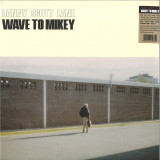
Wave to Mikey, the fourth album from the Los Angeles-based actor, musician and photographer Danny Lane is a nocturnal, neon-lit ode to the friendships that shape us. “I made this album for my friend Mikey from back home,” Danny explains. “We were pretty much inseparable for a large part of our lives, and our musical and social minds were always in sync in a special way. Then with age, we drifted apart, especially since I moved to Los Angeles. This album is just a little wave hello to an old friend and a kindred spirit.”
Equal parts avant-garde composition, instrumental city-pop, ambient, Kankyō Ongaku (environmental music) and Fourth World music, Wave to Mikey is an impressionistic and reflective cycle of eleven richly detailed memory portraits. Throughout the album, the influence of Jon Hassell, Arthur Russell, Hiroshi Yoshimura and Yellow Magic Orchestra hangs in the air like late-night mist, adding character but never overshadowing the rhythmic ambience of Danny’s musical visions.
Wave To Mikey began as a series of sketches on analog synthesisers, guitar, sample and found percussion sketches, initially recorded in Danny’s home studio. Once he’d located the vibe, Danny called on his friends E Talley II, Solange collaborator John Carroll Kirby and Destroyer session musician Joseph Shabason, who respectively added flute, spiritual synth textures and saxophone to the record.
For Glossy Mistakes founder Mario G.R., who originally discovered Danny through his photography, Wave To Mikey captures a vivid feeling of melancholy and peace. “He's able to encapsulate emotions in a very straightforward way, either in his portrait or songs,” Mario says. “I think that's a kind of virtue or skill given to talented artists, no matter the field.”
Born and raised in Staten Island, New York, Danny began playing music with his friends when he was thirteen, before putting that passion on pause to study Fine Arts (Theatre) at Rider University in Lawrence Township in pursuit of an acting career. Acting led him to photography, after playing a photographer in a film, he was inspired to pursue the medium. Danny began shooting photos on film for magazines and lifestyle brands, spent a stint living in New York’s Chinatown neighbourhood, and eventually relocated to Los Angeles in 2017.
Four years ago, Danny started recording and releasing music under his own name, leading to the trilogy of releases that preceded Wave To Mikey, How To Empty A Cup (2019), Memory Record (2019) and CAPUT (2021). Over the course of these releases, he’s revealed himself to be a sophisticated composer and producer with a studied ear from years spent digging through record bins for ambient, experimental, new age, jazz and electronica records from around the globe, with a particular emphasis on Japan.
“Music is something that’s always been involuntary for me,” Danny reflects. “It’s unconditional, always there. It’s something I just have to do. I’ve taken breaks and it’s always gloomy when I’m not playing. I just want to get better and better and understand more and more.”
Here at Glossy Mistakes, Wave To Mikey marks our second contemporary album release, following on from Evenings by Japanese composer Metoronori. We’re proud to be able to present Danny, Metoronori and other modern musicians' work alongside reissues of classic works from Stevia aka Susumu Yokota, Akira Ito, Yuji Toriyama & Ken Morimura, and Takashi Kokubo.
Mastered by Damian Schwartz, Wave To Mikey will be released on Vinyl LP Glossy Mistakes on June 27 2022. Besides the regular black vinyl, a limited clear vinyl will be available in an edition of 100 copies. Both editions come packaged with original cover art photography shot by Danny.
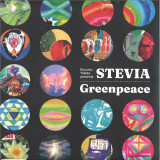
In 1997 and 1998, the late great Japanese composer, producer, and DJ Susumu Yokota released two of the most eclectic albums of his decades-long career, Fruits of The Room and Greenpeace. Recorded under his Stevia alias for Tokyo Techno pioneer DJ Miku’s Newstage Records/NS-COM, they were Yokota-san’s homage to the foundational days of club music in Japan.
This year, Glossy Mistakes are proud to present the first official vinyl editions of Fruits of The Room and Greenpeace, originally released on CD during the golden days of the format. Packaged in reimagined cover artwork created by the celebrated Japanese visual artist Masaho Anotani, these two albums perfectly capture the diversity at the heart of Yokota-san’s oeuvre. Across Greenpeace sees Yokota-san conjuring up a heady concoction of dusty loops, sampledelic breaks, kraut-rock and psychedelic downbeat. A remarkable listening experience based on the inspired era of a genius.
When Yokota-san wrote and produced the music on Fruits of The Room and Greenpeace in 1997, he was reflecting on the broader culture that surrounded dance music in Japan in the early to mid-nineties. It was an era when the psychedelic culture of late sixties America, the afterglow of UK acid house/rave, the new age movement and cyberpunk dovetailed together. Within DJ Miku and Yokota-san’s social circles, the thinking of Timothy Leary, Ram Dass, Allen Ginsberg, Jack Kerouac and William S. Burroughs electrified the air.
By 1996, the moment, brilliant and blinding as it was, was over. “We all felt that the rave scene fizzled out,” DJ Miku says. As he puts it, there was a collective feeling around him that it had all become too much. From the calm that followed, DJ Miku, Yokota-san and their open-eared peers made the decision to switch tracks and start from scratch. DJ Miku believes that with his Stevia releases, Fruits of The Room and Greenpeace, Yokota-san wanted to express the sweet and sour nature of the passing of those wild early days and his wish for true peace. “At the time, we saw eye-to-eye, with an implicit understanding of each other,” he explains. “Even now, twenty-five years later, I am confident it was like that.”
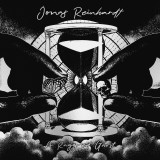
"A Ragged Ghost" is the eighth full-length album from electronic producer Jonas Reinhardt. Following albums on Kranky, Not Not Fun, Constellation Tatsu, and more, his debut release for Trouble In Mind brings together 11 new pieces that explore themes of life & death, netherworlds, and the liminal spaces in between. Taken together as a single narrative, the album offers a stirring exploration of mortality and immortality in what Reinhardt describes as 'a dance of religious syncretism, navigating spaces between the living and the dead'. "A Ragged Ghost" finds him synthesizing influences organically from familiar teutonic strains to the intense austerity of early 21st century electronic pioneers such as Biosphere and Susumu Yokota. A whisper of the Italo-disco-esque romps of Jonas' 2012's "Foam Fangs" EP & 2013's "Mask of The Maker" LP merge with his more kosmische leanings into a sinister, slightly funky, but also studious suite that at times feels like a lost sound library record from the KPM archives. Openers "Ape & The Universal Axis" and "In Lotto Commodore" decidedly sound like a selection from a lost film score while others like the bubbling "Sly Tomb" recall the works of Roedelius or Vangelis' serene soundscapes. Meanwhile, fans of the electro-ambience of Manuel Göttsching's strobe-light, proto-house (on his seminal "E2-E4") or the pulsing insistence of John Carpenter's visceral non-horror scores (i.e. "Escape From New York" or "Assault on Precinct 13") will find a lot to love about songs like "Tumb Tumb" and "Wretched Orchestra of Armistice".
Precious Metals are excited to announce "Chaos Butterfly", the debut album from the Vietnamese-Canadian electronic music producer, vocalist and filmmaker, x/o. “Chaos Butterfly” is an epic tale of catharsis and self-actualization explored through metamorphosis. It is a free-falling kaleidoscopic journey into a beautiful nightmare, both cataclysmic and tender. Expanding on the themes present in their first EP “Cocoon Egg”, the album builds a parallel world from a different perspective. “Chaos Butterfly” tells a loose narrative about an anti-hero navigating trauma through whirlwinds of grief and anger; a vengeful spirit who finds true strength in inner healing and forgiveness. An allegory for transcending societal concepts of gender, “Chaos Butterfly” is a journey of self-acceptance and reflection of x/o’s own path towards their non-binary identity. Throughout the voyage, x/o pulls apart and collides masculine and feminine tropes both theoretically and musically by utilising contrasts between soft and hard, internal and external, calmness and anger, loud and quiet. This system of symbolism and influences reveal a pattern that is the overarching theme of duality. Colliding disparate but interconnected influences, x/o references Playstation 2’s Final Fantasy X world-building, Fight Club, the half-yoma warriors in the anime Claymore, as well as the real legends of the Vietnamese Trưng Sisters. Musically, “Chaos Butterfly” resists easy categorisation, playfully fusing moments of reversed breakbeat, with elements of solemn ambience, distorted metal, and trip-hop catharsis, with inspiration from artists such as Yoko Kanno, to Bone Thugs-n-Harmony as well as Deftones, Massive Attack, Orbital, and Aaliyah. The album journey begins with opener “Chrysalis Wrath”, a prologue to the story, and emblematic of the metamorphosis of the album. A soft and unassuming exterior to the hard shell and bone that lies beneath. Delicately cascading melodies and disembodied vocals are torn asunder by a brooding, ominous synth, punctuated by blasts of percussion, like dark clouds forming on the horizon, the egg cracks; a foretelling of what is to come and a reference to what has been. This is followed by “Red Alert,” the first single from the release, which blends airy melancholic vocals with a flurry of drum breaks and synths plucks, an ambitious and cinematic exploration of intuition against recurring trauma. Melodies drifting and out of focus under the swirling vocal, like the blur of neon street lights reflecting in a rain-soaked cityscape. It’s a liminal poem about listening to your inner voice to protect you from harm. Duality is never more apparent than on “Promise : Armour” delicate piano melodies drift and settle like snowfall before crushing blows of hardstyle kicks blast through the ether, as their soulful, but anguished vocal harmony is overcome by a demonic refrain “Cross your heart, don’t cross me”. x/o is a founding member of s.M.i.L.e, a trail-blazing collective of like-minded artists in Vancouver pushing the boundaries of club experimentation, showcasing artists such as Actress, Hitmakerchinx, Mechatok, Nídia, and Shygirl. This is an album that reaches dizzying heights, and in 2022 we expect x/o to do the exact same.
- A1: Amputation
- A2: War On Peace
- A3: All Things Pass
- A4: Always Sad
- B1: Song For A Secret
- B2: The Two Of Us
- B3: Los Feliz (Blues & Green) (Blues & Green)
- C1: Mood Rider
- C2: Presidici (Et Chapaquisitch) (Et Chapaquisitch)
- C3: Get On Home
- C4: Facing Up To The Facts
- D1: Simian Split
- D2: Black & Blues
- D3: Can't Stop The Rock
Clear vinyl[33,07 €]
Originally released in 2017 on the band's own label Artificial Plastic and now being reissued by Fuzz Club Records, 'Damage And Joy' is the seventh studio album from Scottish alt-rock legends The Jesus and Mary Chain. The long-awaited follow-up to 1998's 'Munki', 'Damage And Joy' was the band's first studio album in nearly two decades and contained brand new material alongside reimagined versions of songs that had been released in various forms by the Reid brothers in between the Mary Chain's 1999 break-up and 2007 reunion. Co-produced by Youth (Killing Joke) and featuring the lead singles 'Amputation' and 'All Things Pass', 'Damage & Joy' also featured guest appearances from Scottish singer-songwriter Isobel Campbell ('The Two of Us', 'Song For A Secret') and American alt-pop star Sky Ferreira ('Black And Blues'). 'Damage And Joy' is now being given a deluxe, expanded vinyl reissue. The double LP is reissued on both black and coloured 180g vinyl with remastered audio by Pete Maher (U2, The Rolling Stones, Jack White, Liam Gallagher), a heavy tip-on-printed gatefold sleeve, printed inner-sleeves and a 16-page booklet, plus bonus tracks and an alternative track-order. Included in this reissue and available on vinyl for the very first time is 'Ono Yoko' (originally only available on the Japanese CD version of the album), as well as alternative versions of 'The Two Of Us' featuring Sky Ferreira and 'Black And Blues' featuring Isobel Campbell.
- A1: Amputation
- A2: War On Peace
- A3: All Things Pass
- A4: Always Sad
- B1: Song For A Secret
- B2: The Two Of Us
- B3: Los Feliz (Blues & Green) (Blues & Green)
- C1: Mood Rider
- C2: Presidici (Et Chapaquisitch) (Et Chapaquisitch)
- C3: Get On Home
- C4: Facing Up To The Facts
- D1: Simian Split
- D2: Black & Blues
- D3: Can't Stop The Rock
Black vinyl[31,72 €]
Originally released in 2017 on the band's own label Artificial Plastic and now being reissued by Fuzz Club Records, 'Damage And Joy' is the seventh studio album from Scottish alt-rock legends The Jesus and Mary Chain. The long-awaited follow-up to 1998's 'Munki', 'Damage And Joy' was the band's first studio album in nearly two decades and contained brand new material alongside reimagined versions of songs that had been released in various forms by the Reid brothers in between the Mary Chain's 1999 break-up and 2007 reunion. Co-produced by Youth (Killing Joke) and featuring the lead singles 'Amputation' and 'All Things Pass', 'Damage & Joy' also featured guest appearances from Scottish singer-songwriter Isobel Campbell ('The Two of Us', 'Song For A Secret') and American alt-pop star Sky Ferreira ('Black And Blues'). 'Damage And Joy' is now being given a deluxe, expanded vinyl reissue. The double LP is reissued on both black and coloured 180g vinyl with remastered audio by Pete Maher (U2, The Rolling Stones, Jack White, Liam Gallagher), a heavy tip-on-printed gatefold sleeve, printed inner-sleeves and a 16-page booklet, plus bonus tracks and an alternative track-order. Included in this reissue and available on vinyl for the very first time is 'Ono Yoko' (originally only available on the Japanese CD version of the album), as well as alternative versions of 'The Two Of Us' featuring Sky Ferreira and 'Black And Blues' featuring Isobel Campbell.
Spectacular live recording from 1986 of two seminal figures of the Japanese avantgarde - Akira Sakata on saxophone and Takeo Moriyama on drums.
Mitochondria captures the reunion of the two free jazz masters, who started playing together in the Yosuke Yamashita Trio in 1972 until 1975. For both, the experience with the trio was an important step in the development of their own career and musicianship. The recordings are a remarkable performance in which each successfully highlights the essential elements of his playing while giving of room for the other musician.
Recorded at Kashiwa Church Chiba Pref. In Japan on 24 May 1986 by Yukio Tezuka on Sony stereo cassette recorder.
Mixed by Jim O’Rourke, Mastered by Martin Siewert. Graphic design/cover photo by Lasse Marhaug.
Liner notes by Kazue Yokoi.
- A1: Long Long Silk Bridge
- A2: Purple Rose Minuet
- A3: Traveler In The Wonderland
- A4: Song Of The Sleeping Forest
- A5: The Plateau Which The Zephyr Of Flora Occupies
- A6: Fairy Dance Of Twinkle & Shadow
- B1: Flaming Love & Destiny
- B2: The Dying Black Swan
- B3: Blue Sky & Yellow Sunflower
- B4: Capriccio & The Innovative Composer
- B5: I Close The Door Upon Myself
- B6: Symbol Of Life, Love & Aesthetics
- B7: Music From The Lake Surface
“A lush, ornate, and elegant celebration of the oft-maligned pleasure of pure surface-level beauty”. Pitchfork
London independent imprint Lo Recordings are excited to announce that they will release a vinyl version of the ‘Symbol’ album by the late Japanese electronic pioneer Susumu Yokota on the 8th of April 2022.
Originally released in 2004, the special limited edition reissue comes in a newly designed and beautifully packaged gatefold sleeve with liner notes by Ben Eshmade and Tsutomu Noda.
The prolific Yokota rightly saw this album as his masterwork. An incredible kaleidoscopic patchwork of samples from classical recordings by the likes of John Cage, Meredith Monk, Prokofiev, Debussy, Ravel and Tchaikovsky are brought together and lovingly transformed in Yokota’s inimitable style to create what Pitchfork described as an "ecstasy album”
Each track is a firework of temporality, as ideas collide and briefly hold together in the fragile moment before decaying and decomposing. Sampling, the re-imagining of music, is very much the instrument of Yokota. Within the restricted seconds of a digital sample you hear a recording from a certain time, you hear the room, you hear the dust on the cello bow, and you can just about sense what the musician was feeling that day.
Spectacular live recording from 1986 of two seminal figures of the Japanese avantgarde - Akira Sakata on saxophone and Takeo Moriyama on drums. Mitochondria captures the reunion of the two free jazz masters, who started playing together in the Yosuke Yamashita Trio in 1972 until 1975. For both, the experience with the trio was an important step in the development of their own career and musicianship. The recordings are a remarkable performance in which each successfully highlights the essential elements of his playing while giving of room for the other musician. Recorded at Kashiwa Church Chiba Pref. In Japan on 24 May 1986 by Yukio Tezuka on Sony stereo cassette recorder. Mixed by Jim O'Rourke, Mastered by Martin Siewert. Graphic design/cover photo by Lasse Marhaug. Liner notes by Kazue Yokoi
Screen Time is a series of instrumental guitar pieces recorded during the summer of 2020 as the world confronted the pandemic shutdown and as the people of good conscious stood up against the oppression of racist police oppression and murder. How much screen time does a parent allow a child? How much screen time does a child need to realise a world which has the means to coexist as a community in shared exchange?
The cover image of Screen Time is of a youngster curled into a book, the pages vibratory with text radiating through the skin, blood and bone – an aspect entirely missing from digital media, though the actuality of transparency in our daily lives through streaming etc we can only hope leads to the awareness of fairness.
Screen Time is in reflection to dream time, a state of meditation, hypnagogia and pillow talk.
Thurston Moore born 1958, moved to NYC 1976, started Sonic Youth 1980, edited the fanzines KILLER, Sonic Death, and Ecstatic Peace Poetry Journal, started Ecstatic Peace records + tapes label, senior editor of Ecstatic Peace Library, and Flowers & Cream, edited books at Rizzoli and Abrams, on faculty at the Naropa University summer writing program since 2011, published through various imprints, worked collaboratively with Yoko Ono, Merce Cunningham, Cecil Taylor, Rhys Chatham, Lydia Lunch, John Zorn, Takehisa Kosugi and Glenn Branca, composed music for films by Olivier Assayas, Gus Van Sant, and Allison Anders, records and tours both solo, with various ensembles and with his own band, resides everywhere.
Mastered by Lasse Marhaug for Southern Lord.
Following Chari Chari and Rui Maia's albums, Organic Series releases another collection of beautiful music by funcionário, artistic alias of multitalented Pedro Tavares.
"Lisbon Dreams" is a conceptual album shaped by Pedro that evoques his travels between Setúbal and Lisbon, while studying Fine Arts at the portuguese capital city.
Music wise, "Lisbon Dreams" represents an unfolding new world, full of overwhelming feelings translated into musical landscapes and possibly inspired by contemporary producers like Nuno Canavarro or Susumu Yokota.
But when Pedro talks about his album he likes to quote John Cage: don't try to create and analyze at the same time. They're different processes.
- For fans of Susumu Yokota or Nuno Canavarro
John Carroll Kirby brings his talents as a composer
and producer to film scoring. His vivid imagination,
dreamy compositions and knack for storytelling with
instrumental music make for a perfect match with
comic book writer, artist and filmmaker Dash Shaw’s
vibrant, fantastical animated feature.
Kirby’s score is at once deeply evocative and
mysterious, evoking nostalgia, wide-eyed innocence,
and ethereal otherworldliness. As with all of Kirby’s
music, the score resists easy genre classification,
melding together sounds from new age, exotica, library
music and the sweeter side of electronic music.
‘Cryptozoo: Original Motion Picture Soundtrack’
features the voice of Kacy Hill.
Artwork by the film’s director, Dash Shaw.
‘Cryptozoo’ won the NEXT Innovator Award at
Sundance, premiered internationally at the 2021
Berlinale, and was bought by Magnolia Pictures.
The film is currently streaming on MUBI UK and
Ireland as a MUBI Release and will be on the platform
for several months.
‘Cryptozoo: Original Motion Picture Soundtrack’ is
Kirby’s latest album following the release of his
electronic-jazz album ‘Septet’ in June 2021. He will be
touring the UK and Europe in March 2022.
For fans of Bibio, Tangerine Dream, Susumu Yokota,
Laraaji, Joanna Brouk.
Support from AV Club, New York Times, The Guardian,
Cinemacy, Collider, The Wire, BBC 6 Music, triple j
and KCRW, among others.
Die 2007 gegründete deutsche Heavy-Metal-Formation KISSIN DYNAMITE hat sich mehr als nur einen
Namen in der Szene gemacht: Mit sechs Studioalben und diversen Chart Erfolgen (#7 in den GERAlbumcharts mit dem 2018er Full-Length Ecstasy) etablierte die Band ihren Trademark-Stil - geprägt
von modernen Sounds, wuchtigen Hymnen und eingängigen Hooks, gepaart mit 80er-Jahre-StadionrockAttitüde und einem außergewöhnlichen Look. Nun steht die Kombo in den Startlöchern bereit, ihr Napalm
Records-Debüt Not The End Of The Road zu veröffentlichen und mit 12 kraftvollen Tracks den Weg des
Metal im Jahr 2022 zu ebnen.
Produziert, aufgenommen und gemischt wurde das neue Studioalbum von Sänger Hannes Braun selbst, der
auch schon mit Bands wie SANTIANO, THE KELLY FAMILY oder BEYOND THE BLACK gearbeitet hat.
Das Mastering übernahm Jacob Hansen in den Hansen Studios, der Grammy Award nominierte Produzent
ist bekannt für seine Arbeit mit Bands wie VOLBEAT und vielen mehr.
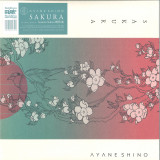
This is a love-filled tribute to the late japanese techno and ambient pioneer SUSUMU YOKOTA. In 2021, talented classical guitarist AYANE SHINO discovered his impressive works and recorded cover version of tracks from his acclaimed SAKURA album. Those new contemporary musical pieces will please his ever growing fanbase as well as listeners beyond the electronic music scene.
With the release of Sweet Inspirations At Muon, the first appearance on vinyl of Tori Kudo’s mythical early ‘80s primitive rock gang Sweet Inspirations, another piece of the seemingly endless puzzle of the Japanese underground has fallen into place. Recorded some time in 1982 at Yokohama venue Muon – precise details are sketchy – we’re now given another chance to discover what was going on in Kudo’s mind just before he formed the group he is now best known for, the ragtag gang of pro and amateur musicians that was Maher Shalal Hash Baz.
Sweet Inspirations were one of several groups formed by Kudo around this time. He’d already released the visionary naïve-art album, Tenno, in collaboration with Reiko Omura, in 1980, and a trip to New York the following year led to the recording of Atlantic City, under the name La Consumption 4. Returning to Japan, Kudo first formed Guys’N’Dolls with Jun Yoshiwara (bass) and Kiyoaki Iwamoto (drums); Yoshiwara carried over into Sweet Inspirations, who existed for a few years, their membership, at various times, featuring Asahito Nanjo (High Rise etc.), Jutok Kaneko (Kousokuya), Yoshio Kuge (Les Rallizes Denudes etc.), 3C123 and many more.
The material here was originally released, without permission, by the Cragale label on CD-R in 2000. It was one of a sudden wave of archival CD-Rs that Cragale pumped out that year of material recorded at Muon, which was owned by Kohei Iehara, who co-founded Cragale with Tamotsu Hongo. In the context of the recent unleashing of material from the Kudo archives – the 9CD At Goodman set, the reissue of the first two Maher Shalal Hash Baz cassettes and the Noise LP, and the tantalising glimpses of other historical gems via Tori’s own Bandcamp page – hearing Sweet Inspirations with such clarity fills in a significant piece of the puzzle; here is Kudo, just before Maher, channelling the rough conceptualism of Red Krayola and the glinting, staggered rhythms of Syd Barrett into extended blooms of ragged glory, sketching out future classics like “Manson Girls”; A bonus CD includes a cover of a song by legendary South Korean rock group San Ul Lim.
Bill Gage is a quasi-famous singer with a raw, rock ’n’ roll voice.
Cheater Slicks are an infamous, raw, rock ’n’ roll band. Put the two
together and the resulting album is a stream-of-conscious stew of
wild, fuzz-drenched rock ’n’ roll!
Some history: both Cheater Slicks and Bill Gage’s band BILL
began in Boston in 1987, and it was sometime around then that Gage
first sang with Tom and David Shannon playing guitars, in Gage’s
bedroom in Laconia, New Hampshire. It was an intense and primal
sound that was not forgotten by those involved.
Gage’s singing has been compared to Captain Beefheart, David
Thomas, Damo Suzuki, and Yoko Ono. However, Gage clearly has his
own sound, which includes guttural yells, sweet crooning, and bluesy
meanderings—all seemingly told from a tarpaper shack porch under
the oceans of Mars.
Cheater Slicks have from the start been a brain-melting rock ‘n’ roll
dream / nightmare of a band. Steeped in the wild guitar interplay and
pounding drums of classic noisy underground rock groups (Cramps,
Scientists, Velvet Underground), they have created their own unique
and ever-evolving style that has only gotten deeper and sharper over
the years.
In spring 2018, when Cheater Slicks were presented with the idea
of a collaborative record with Gage, they wasted no time, and began
writing and arranging new songs for the project. Gage traveled to
Columbus to record at the legendary Musicol studios in November of
that year. It was a great session and came together as if it were always
meant to be. After thirty years of performing, is the world finally ready
for Bill Gage—accompanied by the seismic Cheater Slicks?
All profits from this record will benefit the Arts Resources programs
of the National Association for Down Syndrome.
- 1: Fuenarinu
- 2: Kaendaiko
- 3: Tsubakishishaku No Yuigon
- 4: Tengindoujiken
- 5: Kindaichikousuke Nishie Yuku
- 6: Ougonno Furuuto (Flute)
- 7: Yubi
- 8: A=X, B=X A=B
- 9: Chi To Suna
- 10: Tabiyukumonoyo
- 11: Akuma Fuewo Fukite Owaru
We've got a bit of an obsession with Hozan Yamamoto here at Mr Bongo! A legend of Japanese jazz, he is rightly regarded as a true master and was recognised as a "living national treasure" by the Japanese government in 2002. Over five decades he pushed the genre into new directions, absorbing fusion, funk, spiritual jazz and many other sounds, resulting in a discography studded with gems of rare beauty. Exploring his back catalogue has taken us on an engrossing journey that now sees us reissuing another work from this ground-breaking musician.
Though not translating perfectly into English 'Akuma Ga Kitarite Fue Wo Fuku', (kitarite has not been a modern expression in Japanese) roughly means 'The Devil Comes Playing The Flute' / 'The Devil Is Coming While Blowing The Whistle' or 'Devils Flute’. It is the original soundtrack to Kôsei Saitô’s 1979 mystery and suspense movie, ‘Devil’s Flute’. The film is based on a story by the famous author, Seishi Yokomizo, and is centred around a much-loved fictional Japanese detective, Kosuke Kindaichi. A Japanese Sherlock Holmes that has been popular for generations.
Hozan Yamamoto was invited to compose the soundtrack directly by the producer of the film, Haruki Kadokawa. Mr Kadokawa also hired keyboard player and producer Yu Imai as assistant producer on the project, resulting in a stunning cosmic, breaks and beats-laden, funk, disco soundtrack extravaganza.
When it comes to the soundtrack and the technology of the time, Hozan Yamamoto and Yu Imai got inventive, tripped out, funked up, and experimented, creating a quirky soundtrack masterpiece that needed to be heard more outside of Japan. Differing from the more traditional Japanese music orientation of some of his other albums such as 'Beautiful Bamboo-Flute' (also released on Mr Bongo) the album showcases a number of genres, from lush atmospheric incidental music to disco and funk grooves, experimental nuggets, drum and flute workouts, to neo-classical and more.
A special record that showcases the further depths of this wonderful musician's talents.
- A1: Rehearsing Heat (Feat Galina Juritz &Amp; Kevin Cahill)
- A2: Puffin&Apos;S Choice (Feat Mr Beatnick)
- A3: Topple A River (Feat Best Available Technology)
- A4: If I Am Dizzy I Will Call It Rapture (Feat Cara Stacey &Amp; Beat Keller)
- B1: Roméo Wept (Feat Galina Juritz)
- B2: Atoll (Feat Kevin Cahill &Amp; Yaaard)
- B3: Rude Stone
Kit Records founder and NTS resident host Richard Greenan returns with his first solo record in six years. "Rehearsing Heat" paints layers of ornamental pop, rumblingly playful hip-hop, widescreen swathes of drone and beyond - with a wide cast of friends and collaborators taken along for the ride.
Recommended if you like Rachel's, Susumu Yokota, Colleen.
The principles of the inclusive band "21 downbeat": Intoxication and ecstasy, or thump and confetti! Beyond the usual boundaries and ideas, the band members create their very own sound from their own texts and poems by contemporary authors. Perhaps the musicians can be called Satyroi, cheerful demons in the wake of Dionysus, who is difficult to tame and for whom our current limits and ideas do not play a role. At appearances at Mensch Meier, the canteen at Berghain and at the Fusion Festival, the band has already put on spectacular stage shows that caused euphoria right down to the last row.
The now appearing debut ep "Shower" contains 4 pieces. Energetic percussion meets a rough synthesizer sound, the vocals are mostly polyphonic, clear and straightforward. All lyrics of the EP are based on poems by the award-winning author Yoko Tawada.
- A1: Soichi Terada - Saturday Love Sunday
- A2: Shinichiro Yokota - Do It Again
- A3: Soichi Terada - Sun Showered
- B1: Soichi Terada & Manabu Nagayama - Low Tension (Alternative Version)
- B2: Soichi Terada - Hohai Beats
- B3: Soichi Terada - Good Morning
- C1: Soichi Terada - Cpm
- C2: Soichi Terada - Rising Sun Up
- C3: Shinichiro Yokota - We Came Together
- D1: Soichi Terada - Voices From Beyond
- D2: Soichi Terada - Purple Haze (Edit)
- D3: Soichi Terada - Binary Rondo
Compiled by Hunee, 'Sounds from the Far East' features eccentric and highly sought after material by legendary Japanese house producer Soichi Terada and fellow producer Shinichiro Yokota!
Soichi Terada is an adventurous music multi-talent and over all a good sport. Born in the Sixties, Terada majored in computer science and electronic organ; not being able to find a label for his eccentric compositions, he founded Far East Recording soon after his graduation, in 1989.
"Sounds From The Far East" shines new light on Soichi Terada's label and work, and consists of material that was originally released in the early Nineties. Next to Terada's music, Hunee also selected a few tracks by fellow artist Shinichiro Yokota, included in this compilation, and the incredible Paradise Garage gem that is 'Sunshower', by Terada and Nami Shimada.
- A1: Wolfgang Dauner - Output
- A2: My Solid Ground - The Executioner
- A3: Association Pc - Scorpion
- B1: Fritz Muller - Fritz Muller Traum
- B2: Exmagma - It's So Nice
- B3: Anima-Sound - It Loves Want To Have Done It
- C1: Tomorrow's Gift - Jazzi Jazzi
- C2: Out Of Focus - See How A White Negro Flies
- C3: Brainstorm - Snakeskin Tango
- C4: Thirsty Moon - Big City
- D1: Gomorrha - Trauma
- D2: Brainticket - Black Sand
With his ongoing commitment to like-minded archivist label Finders Keepers Records, industrial music pioneer Steven Stapleton further entrusts us to lift the veil and expose “the right tracks” from his uber-legendary and oft misinterpreted psych/prog/punk peculiarity shopping list known as The Nurse With Wound List.
Following the critically lauded first instalment and it’s exclusively French tracklisting both parties now combine their vinyl-vulturous penchants to bring you the next ‘Strain Crack & Break’ edition which consists of twelve lesser-known German records that played a hugely important part in the initial foundations of the list which began to unfold when Stapleton was just thirteen years old.
From the perspective of a schoolboy Amon Düül (ONE) victim, at the start of a journey that commenced before phrases like kosmische and the xeno-ignant Krautrock tag had become mag hack currency, this compendium is devoid of the tropes that united what many would accurately argue to be the greatest progressive pop bands in Europe
(namely CAN, Neu! and Kraftwerk) and rather shatters the ingredients across a ground zero landscape for both inquisitive fans and socially rehabbing musos to begin to assemble a unique self-styled identity. If Krautrock was the music that journalist told us lurked behind schlager (German pop) in the 1970s, then this record includes the music that skulked behind Krautrock and perhaps refused to polish its backhanded name belt.
Including lesser-known artists like the late Wolfgang Dauner, whose career proceeded and outlived the kosmische movement while consistently informing and outsmarting them whenever they got stuck in their metronomic ruts, or how about Fritz Müller, the man who
was to Kraftwerk what Stuart Sutcliffe was to The Beatles but had more in common with Yoko and quite rightly couldn’t give a stuff about the Fab Four’s Hamburg roots.
Elsewhere we have a plethora of German bands made for German audiences as they try and shed secondhand flower power Americanisms and feel the benefits of much harder drugs and the realisations of difficult second album budgets while Kommune 1
newsflashes wipe smiles from everybody’s faces and replace them with opioid chic or acid-sarcastic grins. Bonzo Cockettes show us their Big Muffs and drummers ask for extra mics while Conny Plank goes for parliamentary office and gives babies good firm handshakes for the camera.
‘Strain Crack & Break: Volume Two’ is the sound of Steve Stapleton’s sponge-like mind and the dividends of anyone who was brave enough to even peek inside those brick-thick gatefold covers never mind drop the needle.
Over forty years since Nurse With Wound’s first album was released, Finders Keepers Records and Steve Stapleton take connoisseurs of our kind of music back to the disused elevator shaft towards ground zero. Arriving at the same checkout from different departments, Finders Keepers and Nurse With Wound continue to sing from the same hymnal with this ongoing collaborative attempt to officially, authentically and legally compile the best tracks from Steve’s list, where many overzealous erds have faltered (or simply, got the wrong end of the stick).
After ‘Strain Crack & Break: Volume One’ merely scratched the surface of this DIY dossier of elongated punk-prog peculiarities, this second lavish metallic gatefold double vinyl compendium drives a much deeper groove which, in accordance with Steve’s wishes, focusses exclusively on individual tracks of German origin - the country whose music forged the prototype of the NWW inventory in the form of his secondary school vinyl wantlist in the early 1970s, comprised of disassembled free jazz, unshowered stoner psych, hypnotic prog, deranged monk funk and fuzzed out Deutschmark bin bonzo beats.
- Mother
- Hold On
- I Found Out
- Working Class Hero
- Isolation
- Remember
- Love
- Well Well Well
- Look At Me
- God
- My Mummy’s Dead
- Mother / Take 61
- Hold On / Take 2
- I Found Out / Take 1
- Working Class Hero / Take 1
- Isolation / Take 23
- Remember / Rehearsal 1
- Love / Take 8
- Well Well Well / Take 2
- Look At Me / Take 2
- God / Take 27
- My Mummy’s Dead / Take 2
John Lennon’s classic debut solo album, featuring John Lennon, Ringo Starr, Klaus Voormann, Billy Preston & Phil Spector. Completely remixed from the original multitracks at Abbey Road Studios by triple GRAMMY Award winning engineer Paul Hicks, overseen by producer Yoko Ono Lennon.
2LP gatefold edition includes a second LP of outtakes.
All mastered at half-speed, pressed on 180gm vinyl, with a booklet and WAR IS OVER! poster.
- A1: Intro
- A2: Say The Name
- A3: 96 Neve Campbell (Feat Cam & China)
- A4: Something Underneath
- B1: Make Them Dead
- B2: She Bad
- B3: Pain Everyday (With Michael Esposito)
- C1: Check The Lock
- C2: Looking Like Meat (Feat Ho99O9)
- C3: Eaten Alive (With Jeff Parker & Ted Byrnes)
- D1: Body For The Pile (With Sickness)
- D2: Enlacing
- D3: Secret Piece (Composed By Yoko Ono)
In the horror genre, sequels are perfunctory. As the insufferable film bro Randy explains in Scream 2, "There are certain rules that one must abide by in order to create a successful sequel. Number one: the body count is always bigger. Number two: the death scenes are always much more elaborate-more blood, more gore. Carnage candy. And number three: never, ever, under any circumstances, assume the killer is dead." Last Halloween, Los Angeles experimental rap mainstays Clipping ended their three-year silence with the horrorcore-inspired album There Existed an Addiction to Blood. This October, rapper Daveed Diggs, and producers Jonathan Snipes and William Hutson return with an even higher body count, more elaborate kills, and monsters that just won't stay dead. Visions of Bodies Being Burned is less a sequel than it is the second half of a planned diptych. It turns out, Clipping took to the thematic material of horrorcore like vampires to grave soil. Before the release of There Existed an Addiction to Blood, Clipping and Sub Pop Records divided the material up into two albums, designed to be released only months apart. However, a global pandemic and multiple cancelled tours pushed the release of the project's "part two" until the following Halloween season. Visions of Bodies Being Burned contains sixteen more scary stories disguised as rap songs, incorporating as much influence from Ernest Dickerson, Clive Barker, and Shirley Jackson as it does from Three 6 Mafia, Bone Thugs-N-Harmony, and Brotha Lynch Hung. Clipping's angular, shattered interpretations of existing musical styles are always deferential, driven by fandom for the object of study rather than disdain for it. Clipping reimagine horrorcore-the purposely absurdist hip-hop subgenre that flourished in the 1990s-the way Jordan Peele does horror cinema: by twisting beloved tropes to make explicit their own radical politics of monstrosity, fear, and the uncanny. The album features a host of collaborators: Inglewood's Cam & China, fellow noise-rap pioneers Ho99o9, Tortoise guitar genius Jeff Parker, and experimental LA drummer Ted Byrnes. The final track, "Secret Piece," is a performance of a Yoko Ono text score from 1953 that instructs the players to "Decide on one note that you want to play/Play it with the following accompaniment: the woods from 5am to 8am in summer," and features nearly all of the musicians who appeared on both albums. Since their last album, Daveed Diggs-the group's Tony and Grammy Award-winning rapper-has starred in the TNT science fiction series, Snowpiercer, voiced a character in Pixar's Soul, and portrayed Frederick Douglass in Showtime's The Good Lord Bird. Writer Rivers Solomon's novella based on Clipping's Hugo-nominated song "The Deep" has been nominated for the Nebula, Hugo, and Locus Awards, and won the Lambda Literary Award for best LGBTQ SF/Fantasy/Horror novel. Clipping's song "Chapter 319"-a tribute to George Floyd (AKA Big Floyd) the former DJ-Screw affiliated rapper who was murdered by police officers in May of 2020-was released on Bandcamp on June 19th and raised over $20,000 for racial justice charities. A clip of the song also became a popular meme on TikTok, generating over 50,000 videos in which teenagers rapped the song's lyrics ("Donald Trump is a white supremacist, full stop_") directly into the frowning faces of their conservative parents. The band also contributed a Skinny Puppy-esque rework of J-Kwon's "Tipsy" to Save Stereogum: An '00s Covers Comp.
- A1: Instant Karma! (We All Shine On) (We All Shine On)
- A2: Cold Turkey
- A3: Isolation
- A4: Power To The People
- B1: Imagine
- B2: Jealous Guy
- B3: Gimme Some Truth
- B4: Come Together (Live)
- B5: #9 Dream
- C1: Mind Games
- C2: Whatever Gets You Thru The Night
- C3: Stand By Me
- C4: (Just Like) Starting Over (Just Like)
- C5: Beautiful Boy (Darling Boy) (Darling Boy)
- D1: Watching The Wheels
- D2: Woman
- D3: Grow Old With Me
- D4: Happy Xmas (War Is Over) (War Is Over)
- D5: Give Peace A Chance
John Winston Ono Lennon would have been 80 on October 9th 2020. In celebration of his life and the incredible pleasure his music has brought to millions in his lifetime, a new Best Of will be released. A multi-format collection, entitled GIMME SOME TRUTH., this set has been personally curated by the Lennon estate and mixes the biggest hits like the classic and timeless “Imagine” with campaigning songs such as “Give Peace A Chance” and the evergreen classics like “Happy Christmas (War Is Over)” and is culled from all of his solo albums including the posthumous “Milk And Honey”.
John Lennon is simply one of the most recognised and respected musicians of the modern era. As one half of perhaps the most successful songwriting partnerships of all time he deserves his place in history. That this partnership was with Paul McCartney in The Beatles means that he is also one of the most successful recording artists in history. With every succeeding generation falling for their genius, their legend continues to grow and they dominate the pop landscape.
Their split in 1970 allowed each of the band members, by now literally some of the most famous people on the planet, to find their own voice as solo artists and to grow beyond the confines of the band. For John Lennon, this meant throwing himself headlong into life with his new wife, Yoko Ono and eventually a new life in New York City.
Being a solo artist meant that he could delve deep within himself and realise music that was both deeply personal and challenging and which sometimes required a commitment from the audience too. His songs during his solo career mixed accessible pop melodies with sometimes stark and heart-rending simplicity and all points inbetween. His lyrics ranged from deep introspection and self-analysis to subjects that were more concerned with politics (of self, of relationships, of the campaign for peace, of the place of mankind as well as global politics). After a first rush of creativity, he took a step back from the limelight to care for his son, Sean, at home in New York, but when he was ready he returned to recording with one of his most successful and impactful albums. Double Fantasy, preceded by the single (Just Like) Starting Over had been released the month before his life was tragically cut short on 8th December 1980. But this album joins the rest of his solo canon as testament to one of the truly great and truly iconoclastic musicians and personalities of the era.
- A1: Intro
- A2: Say The Name
- A3: 96 Neve Campbell (Feat. Cam & China)
- A4: Something Underneath
- A5: Make Them Dead
- A6: She Bad
- A7: Pain Everyday (With Michael Esposito)
- B1: Check The Lock
- B2: Looking Like Meat (Feat. Ho99O9)
- B3: Eaten Alive (With Jeff Parker & Ted Byrnes)
- B4: Body For The Pile (With Sickness)
- B5: Enlacing
- B6: Secret Piece
In the horror genre, sequels are perfunctory. As the insufferable film bro Randy explains in Scream 2, "There are certain rules that one must abide by in order to create a successful sequel. Number one: the body count is always bigger. Number two: the death scenes are always much more elaborate-more blood, more gore. Carnage candy. And number three: never, ever, under any circumstances, assume the killer is dead." Last Halloween, Los Angeles experimental rap mainstays Clipping ended their three-year silence with the horrorcore-inspired album There Existed an Addiction to Blood. This October, rapper Daveed Diggs, and producers Jonathan Snipes and William Hutson return with an even higher body count, more elaborate kills, and monsters that just won't stay dead. Visions of Bodies Being Burned is less a sequel than it is the second half of a planned diptych. It turns out, Clipping took to the thematic material of horrorcore like vampires to grave soil. Before the release of There Existed an Addiction to Blood, Clipping and Sub Pop Records divided the material up into two albums, designed to be released only months apart. However, a global pandemic and multiple cancelled tours pushed the release of the project's "part two" until the following Halloween season. Visions of Bodies Being Burned contains sixteen more scary stories disguised as rap songs, incorporating as much influence from Ernest Dickerson, Clive Barker, and Shirley Jackson as it does from Three 6 Mafia, Bone Thugs-N-Harmony, and Brotha Lynch Hung. Clipping's angular, shattered interpretations of existing musical styles are always deferential, driven by fandom for the object of study rather than disdain for it. Clipping reimagine horrorcore-the purposely absurdist hip-hop subgenre that flourished in the 1990s-the way Jordan Peele does horror cinema: by twisting beloved tropes to make explicit their own radical politics of monstrosity, fear, and the uncanny. The album features a host of collaborators: Inglewood's Cam & China, fellow noise-rap pioneers Ho99o9, Tortoise guitar genius Jeff Parker, and experimental LA drummer Ted Byrnes. The final track, "Secret Piece," is a performance of a Yoko Ono text score from 1953 that instructs the players to "Decide on one note that you want to play/Play it with the following accompaniment: the woods from 5am to 8am in summer," and features nearly all of the musicians who appeared on both albums. Since their last album, Daveed Diggs-the group's Tony and Grammy Award-winning rapper-has starred in the TNT science fiction series, Snowpiercer, voiced a character in Pixar's Soul, and portrayed Frederick Douglass in Showtime's The Good Lord Bird. Writer Rivers Solomon's novella based on Clipping's Hugo-nominated song "The Deep" has been nominated for the Nebula, Hugo, and Locus Awards, and won the Lambda Literary Award for best LGBTQ SF/Fantasy/Horror novel. Clipping's song "Chapter 319"-a tribute to George Floyd (AKA Big Floyd) the former DJ-Screw affiliated rapper who was murdered by police officers in May of 2020-was released on Bandcamp on June 19th and raised over $20,000 for racial justice charities. A clip of the song also became a popular meme on TikTok, generating over 50,000 videos in which teenagers rapped the song's lyrics ("Donald Trump is a white supremacist, full stop_") directly into the frowning faces of their conservative parents. The band also contributed a Skinny Puppy-esque rework of J-Kwon's "Tipsy" to Save Stereogum: An '00s Covers Comp.
Hotly tipped newcomer Yulia Niko joins the Watergate collective, delivering an exciting label debut to mark the occasion. The Russian-born, Berlin-based artist has piqued the ears of heads with quality releases on Crosstown Rebels, Get Physical and her own TochnoTechno imprint. She steps up for Watergate Records with an inspiring maiden EP, augmented by remixes from YokoO and Francesco Mami. ‘Manifesto’ is the intriguing opener, as intergalactic synths rub shoulders with a chugging groove for an ultra-cool finish. ‘Passion’ is heavy on vibes, pairing an enchanting vocal with a colourful bed of percussion. YokoO contributes a subterranean ‘Defragmentation’ remix of ‘Manifesto’ on the minimal tip, before adding some warmth to the palette teaming up with Francesco Mami for a ‘Vegas Mix’ primed for the afterhours with its deep grooves and shuffling beats. ‘Hurts So Slow’ reinforces Niko’s versatility, imbuing a dusty house vibe primed for late night sessions.