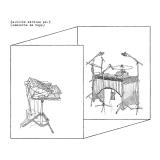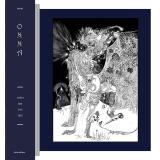
Since the late 1960s, jazz drummer Takeo Moriyama has been a dominant force in the free jazz scene, initially with the Yosuke Yamashita Trio, and more recently, collaborating with the KYOTO JAZZ SEXTET, earning respect from past to present. Recorded in 1980 with his quartet featuring Fumio Itabashi, this album is renowned for being the first to include the emotionally rich Japanese masterpiece "Watarase". Other highlights include the spirited "Exchange" and the beautifully poignant "Goodbye". Each track is a standout, offering a grand-scale performance where tranquility and movement organically intertwine, making it one of the top albums in the history of Japanese jazz.
Takeo Moriyama (Drums)
Yoshio Kuniyasu (Tenor & Soprano Sax)
Fumio Itabashi (Piano)
Hideaki Mochizuki (Bass)
Koichi Matsukaze (Alto & Tenor Sax, Flute)
Cerca:yosh
- A1: Ryuhyo / Sailing Ice
- B1: Olive's Step
Following last year’s CD release that generated tremendous response, Days of Delight is proud to present the analog edition of a long-hidden treasure from Three Blind Mice.
Motohiko Hino Quartet + 2 – Flying Clouds (recorded in 1976).
Just three months after the legendary album Ryuhyo (Drift Ice) was captured in Nemuro, Hokkaido, this fiery performance was recorded with the addition of Yuji Imamura, expanding the group into a sextet.
The source is a newly digitized transfer from the original 2-inch master tape. Supervised by TBM founder Takeshi Fujii and track-downed by Yoshihiko Kannari—the “guardian of the TBM sound” who also engineered the original live recording—this release faithfully revives the sound of Three Blind Mice nearly half a century later.
A rare document that vividly conveys the intensity of Japanese jazz at its peak in the 1970s.
Isao Suzuki Quartet + 1 – Blue Road (recorded in 1975).
A month after the recording of his masterpiece Orang-Utan, Suzuki and his fellow musicians delivered this powerful performance at the “5 Days in Jazz 1975” festival—a rare document of the group in its prime.
The source comes from a newly digitized transfer of the original 2-inch master tape. Supervised by TBM founder Takeshi Fujii and track-downed by Yoshihiko Kannari—the “guardian of the TBM sound” who also engineered the original live recording—this release faithfully revives the sound of Three Blind Mice nearly half a century later.
An invaluable record that vividly captures the raw energy of Japanese jazz at its peak in the 1970s.
- A1: The Loving Touch
- A2: Softly As In A Morning Sunrise
- A3: Blues For Edith
- A4: Cleopatra's Dream
- B1: Misty
- B2: Summertime
- B3: Last Tango In Paris
Hiroki Tamaki (vocals, violin, mandolin, A.Piano, strings ensemble, Oberheim, vocoder) / Eiji Shimamura (drums) / Yuichi Tokashiki (drums) / Akira Okazawa (bass) /
Kenji Takamizu (bass) / Ken Watanabe (bass) / Ken Yajima (E.Guitar) / Fujimaru Yoshino (E.Guitar) / Toshiaki Fuefuki (A.Guitar) / Koichi Tani (A.Guitar) / Yonosuke Segami (percussion) /
Fumitaka Anzai (A&E.Piano, synthesizer) / Keiko Yamakawa (Harp)
A psychedelic spiritual trip led by multiple vocals and synthesizers
A musical picture scroll of ecstasy depicting a world of harmony on a celestial scale
Violinist, composer and arranger Hiroki Tamaki was inspired by the lectures of Indian religious philosopher Bakwan Shree Rajneesh to create a magnificent musical picture scroll.
Tamaki's own vocals are layered on top of each other, and the music is mysterious and harmonious, woven together by synthesizers by Fumitaka Anzai (TPO, Urusei Yatsura music director).
Includes the progressive rock approach of "Poem of Mahamudra" and "Meditation," as well as "River" and "Beautiful Song," which were selected for "Nippon Acid Folk 1970-1980"
(Time Capsule) and are being re-evaluated as hidden gems of acid folk.
Wewantsounds is delighted to announce the release of Akiko Yano"s cult 1979 album 7 O"Clock in Tokyo, recorded live in September 1978 at a pivotal moment in Japanese music history, just as Yellow Magic Orchestra was about to take the world by storm (Yano would tour the world with the group in 1979). Featuring a very funky Yano performance accompanied by Haruomi Hosono, Ryuichi Sakamoto and Yukihiro Takahashi, plus Tatsuro Yamashita and Minako Yoshida, the album is presented outside Japan for the first time, with remastered audio, original artwork, and a four-page insert including new liner notes by Paul Bowler.
- A1: On The Way To You (Pwt72 Music And Dance Always Save Our Life)
- A2: The Fact That I Met That One Friend (Pwt39 We're Here)
- A3: Where Will We Go? Feat. Yusuke Shima (Pwt126 Where Will We Go?)

- A4: The Wind Blows On Penelope (Pwt47 You're My Alter Ego)
- A5: You Unparalleled (Pwt88 Looking For Yourself In Music)
- B1: Next Door To John Smile (Pwt126 Where Will We Go?)
- B2: We'll Always Be On Your Side (Pwt109 We'll Be Always On Your Side)
- B3: Keep Playing (Pwt39 We're Here)
- B4: Spot Light (Pwt138 3X3)
- B5: The End Opens Up New Possibilities (Pwt109 We'll Be Always On Your Side)
- B6: You Always Say "Yes" (Pwt47 You're My Alter Ego
Celebrating their 10th anniversary, piano trio Alter Ego presents their first-ever best-of LP featuring their signature ballads!
Alter Ego, a piano trio from the Setouchi region, has captivated listeners with their lyrical melodies.
This first-ever best-of LP features a carefully curated selection of the finest ballads they've crafted over the past decade.
This album was remastered at Alchemy Studio, a studio essential to Alter Ego's music.
The album features 11 tracks, including (2) "Meeting That One Friend," a tale of a special encounter; (3) "Where Will We Go?", a jazz waltz depicting the emotions felt at
a crossroads in life; (4) "The Wind Blows on Penelope," which depicts the flow of people connected to the coffee shop "Penelope," which is considered the origin of
pianist Hitoshi Ogata's career; and (10) "The End Opens Up New Possibilities," a song written at a time when parting with a loved one can also be a moment when a new
door opens. Music nurtured over time will gently reach your heart and leave a deep impression.
Selected by Yoshikazu Ogata & Keisuke Taniguchi
Coloured[76,43 €]
Black[56,26 €]
EN/JP liner notes by Doran and a hyper-realistic cover by Japanese visual artist/graphic designer Kai Yoshizawa using 3DCG software.
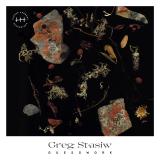
"8 Automated Works", the first full release by Componium Ensemble, an "indeterminate chamber music" ensemble helmed by Spencer Doran of Visible Cloaks. The project is inspired by the long history of automated musical instruments, beginning with the ancient Greek Archimedes and further developed by the Banū Mūsā brothers in 9th century Baghdad, who "first perfected the concept of a programmable, automated musician: a mechanically controlled flute which used hydraulic water pressure and a system of arrangeable punchcards using a visionary proto-MIDI structure", as Doran explains in the liner notes. This mechanical music-making was extended a millennium later with the use of aleatoric principles by the European Dietrich Nikolaus Winkel, inventor of the self-composing Componium mechanical music system. Doran continues this lineage further, using the possibilities of digital technology and its ability to automate a huge range of virtual instruments and introduce aleatoric elements, moving beyond human impulses and limitations, allowing "new shapes to emerge". Dedicated also to Noah Creshevsky, pioneer of what can be considered cyber-human music, Componium Ensemble features a wide and intriguing range of instruments including prepared piano, bowed harpsichord, celesta, bass clarinet, flute, cello, Balinese tingklik, and more, often in multiple groupings. Despite this variety of instrumentation and the seemingly formidable theoretical underpinnings, the music is very accessible and attractive, spacious and fresh, with a light touch and a sophisticated melodic sense which will appeal to pop fans as well as classical/contemporary music listeners. The album is mixed by longtime collaborator Joe Williams (Motion Graphics, Lifted) and available in 10-inch vinyl, ,
- Afternoon
- Celadon
- Tsukumogami (Sensu)
- Book Of Changes
- Supercore
- Acorns
- Soseol
- Alcoyana-Capri
- Scene For A Wooden Room
- Sondol Baram
- Barjees
- Naming The Cloud (Version 2)
Modern ambient minimalism with early music/baroque influences. Minimal and nuanced, Diary of a Candle is a consoling, melodic suite from acclaimed experimental composer, musician, and producer Faten Kanaan. On this album Faten uses counterpoint as a narrative tool to create music that is mysterious, smudgy, and deeply melodic. From the repetitive structures of modern minimalism and early music/baroque influences - to more languid textural ebbs and tides, there's a warmth in her use of synthesizers that gives her work a curiously timeless feel. Composing intuitively, her music creates its own world - one that isn't easily categorised. Diary of a Candle is punctuated with tender woodwinds and richly-layered strings, touched by the hazy atmospheres of 1970s/1980s films. Its understated heart-on sleeve romanticism follows the rhythm of nature: it bends in the breeze, drifts through the air, and settles on the ground. The ambiance is not an escapism, but the re-focusing of a lens through which humans are no longer the protagonists. Instead, a landscape's intimate details become the central figures. With the sparseness of Hiroshi Yoshimura's 1982 album 'Music for Nine Post Cards' as a starting-point influence, Faten's music exudes a wistful yet hopeful sentiment, honouring moments of beauty in the world around us. Some of the album titles are inspired by East-Asian rites and folkloric superstitions, often related to nature. All music written performed and mixed by Faten Kanaan. Mastered by Heba Kadry(Björk, Bon Iver, John Cale, Ryuichi Sakamoto, Deerhunter, Cate Le Bon, & many more). For fans of Kali Malone, Steve Reich, William Basinski, Sarah Davachi, Stars Of The Lid, , Mary Lattimore and Oneohtrix Point Never.
- A1: Furo 風呂 02 45
- A2: Setagaya Samba 02 22
- A3: Taito City Hideout (Feat. Takuya Kuroda) 02 38
- A4: Kimochi Ii 気持ちいい 02 25
- A5: Yoinokuchi 宵の口 02 45
- A6: 6F Encounters 02 24
- A7: Yokohama Yard (Feat. Tajima Hal & Lidly) 02 17
- A8: Inemuri 居眠り 01 40
- B1: 20Today (Feat. 12Vince) 02 07
- B2: Kaki 柿 02 05
- B3: Ma 間 02 36
- B4: Atélier (Feat. Matt Wilde & Toshiki Soejima) 03 01
- B5: Insomnia (Feat. Nao Yoshioka) 02 59
- B6: Yōkai 妖怪 01 08
- B7: Forest Crab (Feat. Budamunk) 02 25
- B8: Sunken Stones 01 44 Video
Based in the North of England, Ancient Infinity Orchestra is a joyous large ensemble that has communal music-making at the heart of everything they do. And that includes the melodies that flow out of their new album It"s Always About Love which blossom with uplifting improvised contributions that circle around bandleader Ozzy Moysey"s beautiful songs; generous sonic gifts of healing and repair.
"Back in print with a brand new 2024 cut by Carl Saff at Saff Mastering, pressed on striking Transparent GOLD colored vinyl and topped off with a collectible “Footlong” OBI. NPR calls “Angherr Shisspa” a “vital reissue of a punk-prog opus”.
Japan's Koenjihyakkei blend progressive rock, jazz fusion, symphonic rock and neoclassicism with the energy of hardcore punk, the volume of metal and the attitude of rock in opposition.
Tatsuya Yoshida’s (of the renowned bass and drum duo RUINS), progressive rock powerhouse is Area and ELP at their most excessive; Deus Ex Machina with tempo changes multiplied by 100; and Magma at their orff-ian choral, fusion jazz, overcharged gospel peak.
“Angherr Shisspa”, the band’s landmark fourth album explodes with glittery keyboard lines, speedy bass/drum workouts, emotive reed respites, and operatic female vocals that take the listener from sheer exuberance to absolute apocalypse... all performed with superhuman technique in confoundingly catchy, complex arrangements.
“...towers over most modern progressive rock because of an attention to detail and an almost overwhelming force of conviction. No irony here: this rocks with the teeth and heart to cut through scenes and the ""overground"" like a knife."" - PITCHFORK"
Still Forms in Air is the debut album by Italian composer Francesca Marongiu under her own name. It draws inspiration from mid-1980s Japanese ambient music — Hiroshi Yoshimura, Satoshi Ashikawa, Takashi Kokubo — and, more subtly, from Italian experimental echoes rooted in both personal and cultural memory.
The album unfolds like suspended time, like architecture that quietly bears witness to the shifts that have shaped our cities and the ways we live in them. These tracks reflect an emotional and urban landscape, shaped by a gaze cast upon the mid-1980s and early ’90s — a time of subtle yet lasting changes in the form and meaning of shared space. That period marked a delicate turning point, later described as les années d’hiver: the slow onset of fragmentation beneath a surface of creative openness.
Still Forms in Air doesn’t dwell in nostalgia (though it draws from it), but reimagines that duality through a contemporary lens. Its sound blends memory and presence, layering ambient textures with a refined spatial sensitivity. It is a dialogue across decades — clear-eyed, affectionate, and quietly luminous.
Written, arranged and recorded by Francesca Marongiu in Rome and Pistoia between May 2024 and March 2025.
Francesca Marongiu: electronics, synthesizers, vocals, sound objects.
Antonio Gallucci: wind arrangements on track 1 and 4, bass and sound objects on track 3, drums on track 3 and 4.
Mixed by Francesca Marongiu and Antonio Gallucci. Mastered by Antonio Gallucci at Mercurial Mastering in Pistoia. Artist photo by Elisabetta Scarpini. Artwork by Daniel Castrejón.
- A1: Cha Cha Cha (Akemi Ishii)
- A2: Chance (Taeko Onuki)
- A3: Summer Lover (Mariya Takeuchi)
- A4: Lips, Speak Passionately Of You (Machiko Watanabe)
- A5: Black Moon (Rajie)
- B1: Violet September Love (Ippudo)
- B2: Silver Rain (Noriko Miyamoto)
- B3: Tokyo Tower In The Palm Of Your Hand (Yumi Matsutoya)
- B4: Saturday Night Paradise (Epo)
Hitomi Toi's famous cover album "YOUR TIME Route #1", released in 2012, is being reissued on a colored LP for the first time in 13 years.
Produced by Kunimondo Takiguchi (Ryusenkei) as a sister album to the summer classic "CITY DIVE", it covers a number of famous Japanese pop songs, mainly from the early 1980s.
Included are Yuming's "Tenohira no Tokyo Tower" from the 1981 classic "Sakuya Oimasho", Takeuchi Mariya's "Natsu no Koibito" with lyrics and music by Yamashita Tatsuro,
Miyamoto Noriko's "SILVER RAIN", and the radio song "Black Moon" by Kisugi Etsuko and Minami Yoshitaka.
The selection of songs is also amazing, capturing the atmosphere of that era, including EPO's "Saturday Night Paradise," the ending theme of "Oretachi Hyokinzoku" and Akemi Ishii's "CHA CHA CHA" the theme song of "Nanjou ni Natsu Monogatari"
The music that sparkled in the streets back then is revived.
- A1: Makafushigi Adventure! / Hiroki Takahashi (Lyrics: Yuriko Mori, Music: Takeshi Ike, Arrangement: Kohei Tanaka)
- A2: Tabidachi
- A3: Makafushigi Adventure!
- A4: Sexy Gal Bulma
- A5: Dragon Ball No Nazo
- A6: Funky Kamesennin
- A7: Daikouya
- B1: Youkai Shutsugen
- B2: Yashin
- B3: Kiken Ga Ippai
- B4: Shenron Shutsugen
- B5: Pilaf To Sono Buka
- B6: Yasei No Shounen
- B7: Romantic Ageru Yo / Ushio Hashimoto (Lyrics: Tatemi Yoshida, Music: Takeshi Ike, Arrangement: Kohei Tanaka)
Pressed and printed in Japan
Japanese OBI and original booklet reproduction
Original released 1986
For Dragon Ball fans and vinyl collector’s alike
The opening theme "Makafushigi Adventure!" (sung by Hiroki Takahashi) and the ending theme "Romantic Ageru yo" (sung by Ushio Hashimoto) from the TV anime "Dragon Ball" that began airing in 1986, as well as the soundtrack by Shunsuke Kikuchi, have been reissued on LP!
Having crested the west coast modular-ambient wave in just a few releases - including 2018's Sharing Waves on the influential LA experimental imprint Leaving Records - Sean Hellfritsch has swapped the mossy analog synth improvisations of his prior output for refined melodic arrangements dressed in sprightly dawn-of-digital textures. Big Earth Energy plumbs the depths of Hellfritsch's multimedia mind and naturalist heart, spinning an impressionistic narrative world off of cultural touchstones like the PC game MYST, and the work of Studio Ghibli composer Joe Hisaishi. Inspired by the aforementioned, and guided by Hellfritsch's experience as an animator and filmmaker, Big Earth Energy is the soundtrack to a hypothetical video game with a pointedly ecological premise, and a twist of psychedelic charm. In Hellfritsch's imagined virtual journey, the player assumes the perspective of a treefrog sixty-five-million years ago, hopping epochs with each new level, forming a comprehensive picture of the massive changes the planet has gone through over the eons. The ultimate goal of the game is not to amass resources, defeat enemies, or gain power, but to fully witness the unfolding of one of the biggest systems of energy imaginable - or as the album's creator puts it - "to explore the incomprehensibly vast energetic expression and mystery that is Earth." Big Earth Energy is steeped in exploratory RPG intrigue, possibility, and contemplation, lovingly overlaid with Miyazaki-an sentiments and aesthetics. The through-composed, organic, meandering synthesis heard on previous Cool Maritime albums has been fully replaced by meticulous polygonal arrangements that recall the computerized sheen of late 80s work by composers like Hiroshi Yoshimura, and Yoichiro Yoshikawa - using true-to-period gear no less. Even given its referentiality, Big Earth Energy comes off as forward-facing where so much reminiscent music remains fixed to a bygone moment in pop culture. Hellfritsch has created a musical world where the endless verdancy of the biosphere finds its parallel in the golden age of early 1990s video games, and late 80s Japanese environmental music, all while pointing to a hopeful planetary and artistic future that vindicates the motives of all of these muses.
- A1: Force Of Nature– Just Forget
- A2: Force Of Nature– Nightshift
- A3: Force Of Nature– 日出ズルStyle; Featuring, Lyrics By – S-Word, Suiken; Music By – Force Of Nature; Recorded By – Takashi "Blueberry" Murakami*
- A4: Force Of Nature– The Stroll
- A5: Force Of Nature– Death Wish
- A6: Force Of Nature– Set It Off
- A7: Force Of Nature– The Million Way Of Drum
- A8: Fat Jon– Bracelet
- A9: Fat Jon– In Position
- A10: Fat Jon– Night Out
- A11: Fat Jon– Not Quite Seleah
- A12: Fat Jon– Labyrinth Statistic
- A13: Fat Jon– Here And There
- B1: Nujabes– A Space In Air In Space In Air (Interlude)
- B2: Nujabes– Sanctuary Ship
- B3: Nujabes– Haiku (Interlude)
- B4: Nujabes– Tsurugi No Mai
- B5: Nujabes– Dead Season
- B6: Nujabes– Decade (Interlude)
- B7: Nujabes– World Without Words
- B8: Nujabes– Kodama (Interlude)
- B9: Nujabes– Silver Morning
- B10: Minmi– Who's Theme; Lyrics By, Music By
[w] B10 Minmi– Who's Theme; Lyrics By, Music By [Melody], Producer – Minmi; Recorded By – Yoshitaka Ishigaki; Vibraphone – Katori, Yoshihiko*
- A3: お花畑にて = In The Flower Garden; Written-By
- A5: 対クッパ戦 = Battling Bowser; Written-By
- A7: Super Pipe House = Super Mario House; Written-By
- B7: ごきげんスター = Irrepressible Star; Written-By
- C5: ねぇねぇジーノごっこしようよ = Play "Save The World" With Me!; Written-By
- D1: 土管からコンニチハ = Greetings From The Pipes; Written-By
- E1: Long Long Ago… = Long, Long Ago...; Written-By
- E2: ちょっとドキドキ = A Little Anxious; Written-By
- F2: 対 クリスタラー戦 = Battling Culex; Written-By
- F3: クリスタラー戦での勝利 = Victory Over Culex; Written-By
- F4: クリスタラーの会話 = Conversation With Culex; Written-By
- G5: オノレンジャー参上 = The Axem Rangers Bust In; Written-By
- G6: クッパ城(其ノ弐) = Bowser's Keep (Second Visit); Written-By
- H5: お・し・ま・い・! = The End!; Written-By
- A1: 楽しい冒険 愉快な冒険 = Fun Adventure, Cheerful Adventure
- A2: Let's Try = Let's Try!; Written-By
- A4: クッパ城(其ノ壱) = Bowser's Keep (First Visit)
- A6: 剣は降り星は散る = The Sword That Scattered The Stars
- A8: どこに行きますか? = Where To?
- A9: 道中は危険がいっぱい = Danger Abounds On The Journey; Kinopio Side
- B1: 対モンスター戦 = Battling Monsters
- B2: 勝利!! = Victory!
- B3: Hello, Happy Kingdom
- B4: 説明しますっ! = Let Me Explain!
- B5: 新しい仲間 = A New Friend
- B6: まだまだ道中は危険がいっぱい = Danger Aplenty On The Journey
- B8: 対 ちょっぴり強いモンスター戦 = Battling Strongish Monsters
- B9: 武器たちがやってきた! = The Weapons Show Up
- B10: 対 武器ボス戦 = Battling A Weapon Boss
- B11: スターピース入手 = Got A Star Piece!
- B12: ダンジョンはモンスターがいっぱい = Monsters Abound In The Dungeon; Mallow Side
- C1: ワイン川を行こう = Let's Take The Midas River
- C2: おじいちゃんと愉快なオタマ達 = Grandpa And The Upbeat Tadpoles
- C3: ショック! = Shock!
- C4: かなしいうた = Elegy
- C6: ジーノの目覚め = Geno's Awakening
- C7: 森のキノコにご用心 = Beware Of The Forest Mushrooms
- C8: Rose Town; Kaeru Sennin Side
- D2: Welcome! Yo'ster Island!! = Welcome To Yo'ster Isle!
- D3: かけっこしようよ = Let's Race
- D4: 働きモグラは良いモグラ = A Working Mole Is A Happy Mole
- D5: Docaty Mountain Railroad = Moleville Mountain Rail
- D6: ここはブッキータワーでございます = This Is Booster Tower
- D7: そしてわたしの名はブッキー = And That Makes Me Booster!; Geno Side
- E3: 坂道 = The Hill
- E4: メリー・マリーの鐘が鳴る = The Bell Rings Out At Marrymore
- E5: 祝いのメロディ = Melody Of Celebration
- E6: 星の光の花咲く丘で = Where Flowers Bloom Under Starlight
- E7: 沈没船 = The Sunken Ship
- E8: お買い物ならリップルタウンへどうぞ = Shopping At Seaside Town; Peach Side
- F1: 僕らの楽園~モンスタウン~ = Monstro Town, Our Paradise
- F5: 貴方と作るキノコフスキー名曲の時間 = A Masterpiece Composed With Toadofsky; Koopa Side
- G1: フカフカしましょ! = Let's Get Fluffy!
- G2: マルガリ・マルガリータ = Valen-Valentina
- G3: ドドが来たっ!! = Dodo Has Arrived!
- G4: バーレル火山 = Barrel Volcano
- G7: 武器工場 = The Factory; Yoshi Side
- H1: 対 カジオー戦 = Battling Smithy
- H2: 対 変身好きのカジオー戦 = Battling Smithy's Many Forms
- H3: さよならジーノ…~星の窓から見る夢は = Farewell, Geno... / The Wishes From The Stars
- H4: 楽しいパレード 愉快なパレード~そしてパレードは行ってしまった… = Fun Parade, Cheerful Parade / There Goes The Parade
b A2 Let's Try = Let's Try!; Written-By [Original Score Written By] – Koji Kondo
[c] A3 お花畑にて = In The Flower Garden; Written-By [Original Score Written By] – Koji Kondo
[e] A5 対クッパ戦 = Battling Bowser; Written-By [Original Score Written By] – Koji Kondo
[g] A7 Super Pipe House = Super Mario House; Written-By [Original Score Written By] – Koji Kondo
[p] B7 ごきげんスター = Irrepressible Star; Written-By [Original Score Written By] – Koji Kondo
[z] C5 ねぇねぇジーノごっこしようよ = Play "Save The World" With Me!; Written-By [Original Score Written By] – Koji Kondo
[xd] D1 土管からコンニチハ = Greetings From The Pipes; Written-By [Original Score Written By] – Koji Kondo
[xk] E1 Long Long Ago… = Long, Long Ago...; Written-By [Original Score Written By] – Koji Kondo
[xl] E2 ちょっとドキドキ = A Little Anxious; Written-By [Original Score Written By] – Koji Kondo
[xt] F2 対 クリスタラー戦 = Battling Culex; Written-By [Original Score Written By] – Nobuo Uematsu
[xu] F3 クリスタラー戦での勝利 = Victory Over Culex; Written-By [Original Score Written By] – Nobuo Uematsu
[xv] F4 クリスタラーの会話 = Conversation With Culex; Written-By [Original Score Written By] – Nobuo Uematsu
[yb] G5 オノレンジャー参上 = The Axem Rangers Bust In; Written-By [Original Score Written By] – Koji Kondo
[yc] G6 クッパ城(其ノ弐) = Bowser's Keep (Second Visit); Written-By [Original Score Written By] – Koji Kondo
[yi] H5 お・し・ま・い・! = The End!; Written-By [Original Score Written By] – Koji Kondo
[b] A2 Let's Try = Let's Try!; Written-By [Original Score Written By] – Koji Kondo
[c] A3 お花畑にて = In The Flower Garden; Written-By [Original Score Written By] – Koji Kondo
[e] A5 対クッパ戦 = Battling Bowser; Written-By [Original Score Written By] – Koji Kondo
[g] A7 Super Pipe House = Super Mario House; Written-By [Original Score Written By] – Koji Kondo
[p] B7 ごきげんスター = Irrepressible Star; Written-By [Original Score Written By] – Koji Kondo
[z] C5 ねぇねぇジーノごっこしようよ = Play "Save The World" With Me!; Written-By [Original Score Written By] – Koji Kondo
[xd] D1 土管からコンニチハ = Greetings From The Pipes; Written-By [Original Score Written By] – Koji Kondo
[xk] E1 Long Long Ago… = Long, Long Ago...; Written-By [Original Score Written By] – Koji Kondo
[xl] E2 ちょっとドキドキ = A Little Anxious; Written-By [Original Score Written By] – Koji Kondo
[xt] F2 対 クリスタラー戦 = Battling Culex; Written-By [Original Score Written By] – Nobuo Uematsu
[xu] F3 クリスタラー戦での勝利 = Victory Over Culex; Written-By [Original Score Written By] – Nobuo Uematsu
[xv] F4 クリスタラーの会話 = Conversation With Culex; Written-By [Original Score Written By] – Nobuo Uematsu
[yb] G5 オノレンジャー参上 = The Axem Rangers Bust In; Written-By [Original Score Written By] – Koji Kondo
[yc] G6 クッパ城(其ノ弐) = Bowser's Keep (Second Visit); Written-By [Original Score Written By] – Koji Kondo
[yi] H5 お・し・ま・い・! = The End!; Written-By [Original Score Written By] – Koji Kondo
- A1: Das Neue Japanische Elektronische Volkslied, Percussion – Tatsuro Yamashita, Synthesizer – Hideki Matsutake; Synthesizer, Piano, Marimba – Ryuichi Sakamoto
- A2: Plastic Bamboo; Percussion – Shigeya Hamaguchi*; Synthesizer – Hideki Matsutake; Synthesizer, Piano, Marimba – Ryuichi Sakamoto
- B1: Thousand Knives; Guitar – Kazumi Watanabe; Percussion – Haruomi Hosono; Synthesizer – Hideki Matsutake ;Synthesizer, Drums – Shigeya Hamaguchi*; Synthesizer; Piano, Marimba – Ryuichi Sakamoto
- B2: Tokyo Joe; Bass – Rei Ohara*; Drums, Vocals – Yukihiro Takahashi; Guitar, Vocals – Kazumi Watanabe; Keyboards, Synthesizer – Ryuichi Sakamoto; Percussion – Shigeya Hamaguchi*, Pecker
- B3: E-Day Project; Bass – Rei Ohara*; Drums – Yukihiro Takahashi; Electric Piano, Synthesizer – Ryuichi Sakamoto; Guitar – Kazumi Watanabe; Percussion – Pecker; Piano – Akiko Yano
- C1: Kylyn; Bass – Rei Ohara*; Drums – Yukihiro Takahashi; Electric Piano – Akiko Yano; Guitar – Kazumi Watanabe; Percussion – Pecker; Piano, Synthesizer – Ryuichi Sakamoto
- C2: 在広東少年; Alto Saxophone, Soprano Saxophone, Chorus – Toshiyuki Honda; Bass, Chorus – Rei Ohara*; Drums – Shuichi Murakami; Guitar – Kazumi Watanabe; Keyboards, Vocals – Akiko Yano; Percussion, Vocals – Pecker; Piano, Synthesizer, Chorus – Ryuichi Sakamoto; Tenor Saxophone, Chorus – Yasuaki Shimizu; Trombone, Chorus – Shigeharu Mukai
- C3: I'll Be There; Bass – Rei Ohara*; Drums – Yukihiro Takahashi; Electric Piano, Vocals – Akiko Yano; Guitar – Kazumi Watanabe; Percussion – Pecker; Piano, Synthesizer – Ryuichi Sakamoto
- D1: ぼくのかけら; Arranged By – Yoshiharu Kawaguchi; Performer – Danceries, Ryuichi Sakamoto
- D2: Grasshoppers; Piano – Yuji Takahashi; Piano, Synthesizer, Marimba – Ryuichi Sakamoto; Synthesizer – Hideki Matsutake
- D3: Mother Terra; Bass – Rei Ohara*; Drums – Yukihiro Takahashi; Electric Piano, Synthesizer – Ryuichi Sakamoto; Guitar – Kazumi Watanabe; Percussion – Pecker
- D4: The End Of Asia; Guitar – Kazumi Watanabe; Piano, Synthesizer, Marimba – Ryuichi Sakamoto; Synthesizer – Hideki Matsutake
- Kyrie Ii
- Semblance Of Dualism
- Low Of Solipsism Ii
- Death Note Theme ~Intrumental~
- Tactics Of The Absolute
- Kyrie For Ochestra
- Air
- Light Lights Up Light For Piano
- Dark Light
- L’s Barrier
- Throbbing
- Uneasiness
- Air Of Tension
- Higuchi
- Shiver B
- Conference Room Of Yotsuba Murders
- Anger
- The World Of Death Gods B
- L’s Friend
- Misa’s Theme A
- Misa’s Theme B
- Intro
- Sakura Tv
- The Reasoning
- The Secret
- The Sound Of Hands On The Clock
- Suspicious
- Yotsuba Group
volume III[34,66 €]
Light Yagami, a gifted young student, one day picks up the "Death Note", a notebook previously kept by a shinigami (God of death), Ryuk, who apparently was bored in his world. Just write the name of a person in this notebook, and this one dies (according to certain conditions that the shinigami will explain to Light during their meeting). Thus, with the "Death Note" in hand, Light decides to rid the planet of all criminals to make it a just world, a perfect world. However, who is he to judge people? He therefore becomes the worst wanted criminal on the whole planet.. Two composers and arrangers composed for this work: Hideki TANIUCHI (HAJIME NO IPPO, NANA) and Yoshihisa HIRANO (FINAL FANTASY, HUNTER X HUNTER).
- A1: Death Image
- A2: L
- A3: L’s Past
- A4: Near’s Theme
- A5: Mello
- A6: Mello 2
- A7: Action
- B1: L’s Ideology
- B2: Mello’s Theme
- B3: Confronting
- B4: Near
- B5: Misa
- B6: Misa’s Video
- B7: Misa’s Loneliness
- C1: Light Has Returned
- C2: Doubt
- C3: Tactics
- C4: Near 2
- C5: Light’s Performance
- C6: Misa’s Feelings
- C7: Father’s Death
- D1: Misa’s Song (Orchestra Version)
- D2: Mikami Concertino
- D3: Trifling Stuff
- D6: Misa’s Song
- D7: Coda – Death Note
- D4: Toward The Climax
- D5: Misa’s Song (Piano Solo)
volume II[35,50 €]
Light Yagami, a gifted young student, one day picks up the "Death Note", a notebook previously kept by a shinigami (God of death), Ryuk, who apparently was bored in his world. Just write the name of a person in this notebook, and this one dies (according to certain conditions that the shinigami will explain to Light during their meeting). Thus, with the "Death Note" in hand, Light decides to rid the planet of all criminals to make it a just world, a perfect world. However, who is he to judge people? He therefore becomes the worst wanted criminal on the whole planet.. Two composers and arrangers composed for this work: Hideki TANIUCHI (HAJIME NO IPPO, NANA) and Yoshihisa HIRANO (FINAL FANTASY, HUNTER X HUNTER).
- A1: Prologue -Determination
- A2: Let's Play A Game God
- A3: If, I Win
- A4: A Cruel Question
- A5: Fallen Confession
- A6: Oh!!!
- A7: A Sign Of The Great War
- A8: Now, Let The Games Begin
- A9: Please Let Me Stay With You Forever
- B1: The True Target
- B2: Good Evening, Scrap
- B3: Really, I Love You
- B4: Stale Mate -Final Battle
- B5: Let's Play Again ~The Light Of A New World
Welcome to the ancient Disboard where the 10 rules of the game did not yet exist. War consumes the world, splits the heavens, destroys the stars and even threatens the human race. In the midst of this chaos, a young man named Riku tries to lead humanity towards a tomorrow he firmly believes in. One day, in the ruins of an Elven city, he finds Schwi, an "ex-machina" android who wishes to understand the heart of Man. Their meeting will change the course of history...
Music composed by Yoshiaki Fujisawa, arranger and composer. He is a member of the group Franz Maxwell I. He worked on the anime of LoveLive!, Issekai Cheat Magician and GATE.
He knew, through his music, to transport us in the universe at the origin of this "Issekai" to make us feel all the emotion of a meeting between two completely different beings.
- Apartment Life
- The Machinist
- The Men Are Fighting
- Lakeland
- Seven And Seven
- Over & Over, Pt. 1
- Bells And Bells
Fit for Consequences: Original Recordings, 1984–1987 is the first ever archival release from Repetition Repetition, the “two-man electric minimalist band” consisting of Ruben Garcia and Steve Caton hailing from Los Angeles in the mid 1980’s. Repetition Repetition’s unique blend of cosmic art-rock minimalism / maximalism was self-released across a series of cassettes produced in micro editions, and while garnering the attention and participation of luminaries such as Harold Budd, remained under the radar during the band’s existence. Fit for Consequences: Original Recordings, 1984–1987 collects select material from across the duo’s catalog.
It was over a plate of Mexican breakfast food when Ruben Garcia and Steve Caton first told Harold Budd of Repetition Repetition and the worlds they intended to explore by respective way of synthesizers and guitars --- a rendezvous instigated by the former’s fan mail to the legendary composer. If the upstarts entered this restaurant from a one-way street of admiration, they would leave with not only Budd’s interest but, sometime later, a blessing in the wake of many hours shared by the three in Garcia’s Los Angeles home recording studio: “This is going to be difficult, but God help them, I think they’re great,” noted Budd in a USC lecture in 1985. Now several degrees removed from prior rock music aspirations, the real game was afoot.
Between 1984 and 1988, Repetition Repetition operated within something akin to the underground of the experimental underground, although even that designation perhaps overstates the case. The duo’s sparse output consisted of three cassettes self-released on Garcia’s Third Stone Music label: Repetition Repetition (1985), Lakeland (1987), and The Machinist (1987). Their songs would also be included during this period on Trance Port Tapes’ vital scene-scanning compilations assembled by A Produce. Live performances occurred with similar infrequency, but Garcia and Caton counted converts in quality over quantity, numbering among them the aforementioned Budd, a Chambers Brother, and, judging by a memorably drop-jawed reaction following a rare Repetition Repetition gig, Jackson Browne.
Likewise, critical support materialized in the form of KCRW deejays Brent Wilcox and Dean Suzuki, whose steady airplay positioned Repetition Repetition’s music amidst fearless company like Jon Hassell, Hiroshi Yoshimura, and Richard Horowitz. Yet, to hear fellow Trance Port featured players like Tom Recchion and Bruce Licher of Savage Republic tell it, Garcia and Caton moved as ghosts --- a notion more vexingly endorsed by the silence of record companies that failed to come knocking --- and therein lies an overarching truth to the work itself.
Journey to the heart of Repetition Repetition and one discovers a collective ear impossibly attuned to the hypnotic possibilities of stylistic convergence, the resulting music possessed of seamless multimodalities which beckon to a glimmering plane of the disembodied. Where Caton sought his artistic fixes at an intersection of popular genres, Garcia zoned in on the sonically spare, drawing from the same wellspring as the Enos and Rileys of his personal avant-garde pantheon, and in their coming together the two tapped into a deeper cosmic source. Synthetic walls of keyboard sound in forever states of reprise met waves of shimmering --- and at times even punishing --- guitar in reply, their soundscapes hovering convincingly between, as suggested in fittingly dualistic fashion in a press kit assembled by Garcia, such disparate sensations as bird flight in one song and oil drilling in the next.
But don’t call it a push-pull dynamic, as this was a creative partnership founded upon fluidity and organicism by way of, naturally, repetition. In contrast to, say, the Bressonian ideal of repetitive motion as a great stripping away, the concept in the hands of Garcia and Caton equated to ascendancy via continuous unfolding, a maximal route to minimalism. To be sure, their recording philosophy morphed over the course of the act’s short history, and what started as a process defined by consistent in-person interplay developed into a more isolated method formulated by Garcia, who eventually took to his own one-man bedroom-studio sessions in order to fully chart any and all potential ostinato-loaded paths which he could travel down, the Tascam-captured resonances subsequently provided to Caton as blueprints from which to take flight himself, adding layer upon layer of steel to the proceedings.
If the practice and execution changed, however, the evidence certainly didn’t rest in the results: The seamlessness remained, and, despite the brevity of their time together, so has Repetition Repetition. With this finely calibrated collection of songs in Fit for Consequences: Original Recordings, 1984–1987, Freedom To Spend sees to it that the private worlds of Garcia and Caton can now be visited by all rather than just the count-‘em-on-both-hands lucky few whose musical endeavors or collector vocations carried them into this once-distant dimension.
Repetition Repetition’s Fit for Consequences: Original Recordings, 1984–1987 will be released on Freedom To Spend in vinyl and digital editions on May 30, 2025. The collection includes extensive liner notes from Bill Perrine, and wil be offered alongside Over & Over, a supplemental collection of music available exclusively as a mail order cassette from Freedom To Spend and RVNG Intl.
Ambient explorers SWIMS unpeel another heady debut, with the maiden effort by Korean artist Soo Kyung Kim, also known as soo:k. The curtain raises on Orchadia with an elysian glow: electro-acoustic compositions painting a golden topography of impossible fruit and uncanny astronomy.
soo:k's utopic brushwork finds obvious comparisons in the work of Hiroshi Yoshimura, and his meditations on the glacial pace of hidden, verdant spaces. Frida Kahlo's portraits of everyday life, intertwined with pain and magic symbology, also resonate in the album's exploration of fleeting moments.
Dissonance and experimentation take hold as the record progresses, Soo's Edenic vision creaking open to reveal ripe, fetid spaces between ribs of earth. Recommended if you like Ulla, Kara-Lis Coverdale, Visible Cloaks, Perila...
Originally released in 1987 on a private cassette - this is the first vinyl release of the absolute gem. Comes with obi strip.
Masahiro Sugaya is a Japanese composer with a prolific career in music for film, television, and the performing arts. Renowned for crafting soundscapes that invite deep contemplation, his music blends synthesizers, field recordings, and traditional Japanese instruments, achieving a delicate balance between minimalism, ambient, and folk influences.
In addition to his experimental compositions, Sugaya has been a pivotal figure in Japanese television and cinema. He collaborated with NHK, Japan’s national broadcaster, creating soundtracks for documentaries and educational programs that explored both the everyday and the extraordinary. His ability to translate emotions and landscapes into sound has made him stand out in projects that connect the visual and the musical.
In cinema, Sugaya worked as an arranger for GONTITI, the iconic Japanese guitar duo, and contributed to soundtracks for renowned directors such as Hirokazu Koreeda. His work captures the stillness and subtleties of everyday life, resonating deeply with audiences.
The Pocket of Fever, originally conceived in 1987 as a soundtrack for Pappa Tarahumara’s avant-garde dance company, merges traditional Japanese elements with modern compositional techniques, reflecting the fluid and dreamlike choreography. The album shifts between nostalgia, as in Green of the Future, and the poetic hypnosis of Conversation with the Wind. These pieces invite the listener to explore deeply evocative and intimate sonic landscapes.
Now available for the first time on vinyl, this album was originally released solely on cassette and has been carefully remastered to preserve its delicate textures and vibrant sound. Presented in a limited edition, The Pocket of Fever remains essential for fans of ambient and experimental music. Inspired by figures such as Hiroshi Yoshimura, Midori Takada, and Brian Eno, this timeless masterpiece invites introspection and the appreciation of its serene beauty.
- H3: @Rt$ W3Re M3@Nt T0 F7¥
- Lithonia
- Survive Feat. Chlöe
- Steps Beach
- Talk My Shit Feat. Amaarae & Flo Milli
- Got To Be
- Real Love
- In The Night Feat. Jorja Smith & Amaarae
- Yoshinoya
- Can You Feel Me Feat. Legend
- No Excuses
- Cruisin' Feat. Yeat
- We Are God
- Running Around Feat. Fousheé
- Dadvocate
- Happy Survival Feat. Khruangbin
- A Place Where Love Goes
It is with a certain sadness for his fans across mediums that Donald Glover has declared Bando Stone and the New World the last Childish Gambino album. The ostensible soundtrack to a feature-length movie of the same name, the hour-long project includes snippets of dialogue that hint at the film’s apocalyptic subject matter. The fact that the soundtrack is preceding the actual film is part of Glover’s strategy: He wants listeners to work to figure out what they’re listening to. “The soundtrack forces the audience to participate in a way that I don't feel like most things force you to participate,” he says. “It forces you to have an imagination. I already see people being like, 'This is very cinematic, this must be the part that... This feels like a credit sequence.' A lot of stuff feels flat because it's not asking you to participate. Art used to be you had to participate on some level and have some sort of thought process on it. You can't just be like, 'Oh, this is mid.'” Even without the benefit of the full visuals, these 17 tracks make for a satisfying swan song that synthesizes what came before with fresher ideas gleaned from the threshold of finality.
- 01: Summer In Shibuya
- 02: Opening Credits
- 03: Thank You Kirin Kiki
- 04: Thank You Hiroshi Yoshimura
- 05: Closing Credits
Rindert Lammers' debut album is a heartfelt exploration of gratitude, blending personal narratives with cinematic imagery in a serene and soulful ambient jazz style. Inspired by Japanese cinema and the raw authenticity of YouTube confessions, the album captures a mood of introspection and appreciation. Central to the album is the track "Thank You, Kirin Kiki," which draws from a powerful scene in the film Shopliers. Lammers explains "It's one of my favorites. The Japanese actress Kirin Kiki plays the grandmother of a ‘chosen family’, all of whom have fled or lost their own families in some way. In this scene, one of her last scenes before her (real) death, Kirin Kiki (the grandmother) looks at her family and says, 'Thank You!' twice towards the children and the sea. Kirin Kiki improvised these words on the spot, and it's such a poignant moment in the film, but also indicative of her impending death. I found the gratitude so moving it fit perfectly with the gratitude I found in the voice clip from "Thank You Hiroshi Yoshimura. "The fourth song, "Thank You Hiroshi Yoshimura," opens with a voice clip that acts almost as the protagonist of a film, reflecting on a turbulent time of sleeping in parks and on the streets. This voiceover was inspired by a comment on a Hiroshi Yoshimura video on YouTube that began, “This album reminds me of...” Lammers noticed the deeply personal responses le on these videos, so he recorded various similar YouTube comments from people around the world, initially intending to set them to music. Though much of this idea evolved, this particular voice clip remained a central influence, ultimately inspiring a cinematic journey within the album. "Summer in Shibuya" sets the scene as a trailer, "Opening Credits" introduces the narrative, and "Closing Credits" gently brings it to a close. While there’s a Japanese and Tokyo theme running through the tracks, Lammers doesn’t view the album as a tribute to Japan or Tokyo specifically—he’s never visited and admits to knowing only fragments of the culture. Yet he's drawn to Japanese environmental music and is an avid Murakami reader, seeing Japan as a powerful, visual inspiration in his mind’s eye. In a way, the album is also his “thank you” to the beautiful art that Japan has shared with the world.
The debut album from Mark Millington introduces the UK saxophonist through effervescent jazz arrangements.
Percussive, energetic but anchored in a strong melodic sense that secures these songs in the memory long after you hear them.
The album features five original compositions that journey from the uplifting celebratory sounds of Matilda’s Dance to the sentimentality of ballads like Truth Be Told. These beautiful new songs are joined by a brilliant re-imagining of the Becky Hill classic Overdrive.
Accompanied by Addison Frei on piano, Jackson Potter on guitar, Yoshi Waki on bass and Brian Karl on drums, the album also features guests Ruta Sipola on Flute, Ernesto Marichales (Jordan Rakei) on percussion and Nick Walters on trumpet.
- Also available on black vinyl - First ever official reissue - Produced in full cooperation with Hiroshi Yoshimura's estate - Liner notes by contemporary music writer and professor Junichi Konuma - Remastered from original sources by John Baldwin - First time on vinyl, cassette, and streaming - 2xLP vinyl housed in gatefold jacket - Discs cut at 45 rpm for optimal sound quality // Following their 2024 reissue of Hiroshi Yoshimura's classic album, Surround, Temporal Drift proudly presents the first-ever reissue of FLORA, Yoshimura's underappreciated ambient classic. FLORA was originally recorded and completed in 1987, and remained unreleased until 2006, nearly three years after Yoshimura's passing in 2003. The album is chronologically and stylistically a follow-up to his acclaimed 1986 works GREEN and SURROUND, wherein Yoshimura continues to play with the ambience of sound and the sound of ambience, underscoring his mastery in the field of environmental music. Yoshimura's other recorded works include Music For Nine Post Cards (1982), originally produced to be played back inside a museum space, and Pier & Loft (1983), commissioned as accompaniment to a contemporary fashion show.
- LITA Exclusive pressed on Sky Blue colored vinyl - First ever official reissue - Produced in full cooperation with Hiroshi Yoshimura's estate - Liner notes by contemporary music writer and professor Junichi Konuma - Remastered from original sources by John Baldwin - First time on vinyl, cassette, and streaming - 2xLP vinyl housed in gatefold jacket - Discs cut at 45 rpm for optimal sound quality // Following their 2024 reissue of Hiroshi Yoshimura's classic album, Surround, Temporal Drift proudly presents the first-ever reissue of FLORA, Yoshimura's underappreciated ambient classic. FLORA was originally recorded and completed in 1987, and remained unreleased until 2006, nearly three years after Yoshimura's passing in 2003. The album is chronologically and stylistically a follow-up to his acclaimed 1986 works GREEN and SURROUND, wherein Yoshimura continues to play with the ambience of sound and the sound of ambience, underscoring his mastery in the field of environmental music. Yoshimura's other recorded works include Music For Nine Post Cards (1982), originally produced to be played back inside a museum space, and Pier & Loft (1983), commissioned as accompaniment to a contemporary fashion show.
After humble lo-fi beginnings in the Australian Art-Pop Underground, Donny Benet has expanded his cult-like following across the Globe with a resonant Array of danceable Repertoire dealing with Love- and Affection. New album "Mr Experience" marks a new chapter, informed by a wealth of musical- and personal development.
For Mr Experience, Donny envisioned a Soundtrack to a Dinner-Party- Set in the late 1980's. While his earlier Recordings drew Inspiration from DIY Pop Conspirators such as Ariel Pink & John Maus, Donny channelled the Stylings of Bryan Ferry & Hiroshi Yoshimura as the Impetus for new Material, evident on the Intimacy found on ‘Girl Of My Dreams’ and it's lush production- with a soothing whistle-along Chorus for good Measure!
Sincerity has been a key component of Donny Benet’s output since the beginning. His songs deal with genuine Emotion served on a kitsch Platter. An alter-ego manifested in the beginning of the 2010's, Donny has blurred the Lines of Artifice to create a back- Catalogue that can embrace- and challenge, often simultaneously, - the notion of Irony in Art.
"Mr Experience" moves further away from ironic Notions as Donny explores lyrical- and musical themes which embody Observations of Maturation in his audience, his tightknit musical Community- and himself. While ‘mature’ is a term that often rings hollow as an album descriptor, the term couldn’t be more apt for Mr Experience.
Previous album The Don was created with the luxury of time. The phenomenal Response to that Album across Europe- and the United States - fuelled by accompanying Music Videos clocking in Views in the Millions- meant that there were scant Windows of Opportunity to write- and record a follow-up.
With a legacy in Sydney’s music community, working with Sarah Blasko, and tightknik collaborators Jack Ladder & Kirin J Callinan, Donny Benet is accustomed to collaboration on the Stage- and in the Studio, mostnotably on the 2014 full-length release Weekend At Donny’s.
“There is such immense talent evident in every aspect of the Donny Bene experience - the vision of the character, the steadfast adherence his narrative and the musicality of Benet himself all combine to makesomething truly genius.” - Double J, Australin.
“Donny Benet makes feminine music for everybody” - Vice, Netherlands.
“The Don does not sound like amusical copying machine”. - 3voor12 National, Netherlands.
“The set was punctuated with virtuosic solos and exquisite harmonies, and added another layer of genius to the show.
We almost couldn’t handle it... Donny for president!" - Indie Berlin.
“Everyone loves Donny Benet” - Feature in Gonzai, France.
“Phenomenal Australian Showman... Offers Top-Class Dance Music with Virtuose-Bass Guitar- and Keyboard Parts & incredible Sound-Colour feel.” - Podujatie.sk, Slovakia.
Donny has toured Europe five times since the start of 2018 and has played in the UK, Austria, Germany, Slovakia, France, Netherlands, Spain, Portugal, Belgium, Denmark, Switzerland, Czech Republic, Greece and Sweden. The Don will revisit Europe twice in 2020, once for his own headline shows in May then back again in August for festivals!
- A1: Yousui Inoue - Umi He Kinasai 5 29
- A2: Keiko Nosaka / George Murasaki - Oritatamu Umi 5 17
- A3: Higurashi - Natsuno Kowareru Koro 3 56
- B1: Blue - Mangrove 6 45
- B2: Rehabilual - Yaponesia Sakura 5 07
- B3: Sachiko Kanenobu - Asano Hitoshizuku 4 36
- C1: E S.island - Yumefurin 3 47
- C2: Akiko Kanazawa - Esashi Oiwake(Maeuta) (Virtual Reality Mix) 5 53
- C3: Voice From Asia - Sweet Ong Choh 4 43
- D1: Nami Hotatsu - Asa Hikari Ame Yume 1 53
- D2: Nav Katza - Heaven Electric 5 26
- D3: Naomi Akimoto - Tennessee Waltz 3 01
compiled by tsunaki kadowaki
artwork by yoshirotten
mastering by kuniyuki takahashi
Tsunaki Kadowaki, a staff member at Kyoto’s record store Meditations, the supervisor of "New Age Music Disc Guide", and the founder of Sad Disco, curates the fourth installment of "Midnight in Tokyo" themed around Ambient Kayō.
The Midnight in Tokyo series by Studio Mule focuses on Japanese music, serving as a soundtrack for Tokyo nights—whether for home listening, club play, or as a driving BGM, transcending location and space. After a six-year hiatus, the fourth volume takes "Ambient Kayō" as its new perspective, compiling genre-defying tracks released between 1977 and 1999 to explore the intersection of Japanese ambient and pop music.
For this long-awaited fourth installment, selections were made regardless of record label status (major or independent), era, format (vinyl or CD), original release price, or prior reissues. Instead, the focus was on music that deeply moves the listener, is open-minded and evocative, brims with inspiration and spiritual insight, and embodies the "utagokoro" (singing heart) of Japanese artists.
Opening the compilation is "Umi e Kinasai" by Yōsui Inoue, a legendary Japanese singer-songwriter whose works have recently gained renewed interest as hidden gems of Walearic and ambient pop
Composed and arranged by Katsu Hoshi—who is also known for his arrangements on Inoue’s masterpiece Ice World—the track features renowned players such as Masayoshi Takanaka, Hiroki Inui, and Shigeru Inoue. The song embodies a yearning for Balearic horizons, tinged with youthful vibrancy and sentimentality.
Next, "Oritatamu Umi", compiled from Keiko Nosaka, a 20-string koto player, and George Murasaki, a pioneer of Okinawan rock, is an instrumental track from their album "Niraikanai Requiem 1945". As the title suggests, it carries themes of requiem and remembrance, conveying poetic lyricism even without words. Blending Ryukyuan/Okinawan harmonies and indigenous elements, it unfolds as an intimate and nostalgic piece of progressive rock.
Also featured is "Natsu no Kowareru Koro" by Higurashi, a folk-rock band led by Seiichi Takeda, formerly a guitarist of The Remainders of The Clover, the predecessor of RC Succession. Like the opening track "Umi e Kinasai", this song was also produced by Katsu Hoshi. It stands as a folk/new music piece that takes a step into an "otherworldly" realm, recommended for fans of Twin Cosmos and Masumi Hara.
From the enigmatic Blue, the only work left by the mysterious composer S.R. Kinoshita, comes "Mangrove", a hidden treasure of Japan's ambient/new age scene from the CD era. With an oriental and enigmatic atmosphere, the track evokes a mystical world of deep, uncharted jungles, unfolding as an otherworldly New Age Kayō.
"Yaponesia Sakura", selected from Rehabilual’s sole album New Child, is a masterpiece of Japanese new age music. Produced by Swami Dhyan Akamo, a disciple of Indian meditation teacher Osho and a renowned balafon player, the track features Michio Ogawa (Chakra) and Atsuo Fujimoto (Colored Music). Their collective artistry creates an exquisite spiritual ambient pop sound.
"Asa no Hitoshizuku", the opening folk song from Sachiko Kanenobu’s album Sachiko, is also included. Known for her legendary folk album Misora, produced by Haruomi Hosono, Kanenobu’s fourth album after resuming her career was inspired by her experiences living in San Francisco and revolves around the theme of "love." This track carries the same intimate poetic world as Misora, imbued with a pure, crystalline innocence.
From the synth-pop band E.S. Island, known for the Haruomi Hosono-produced *Teku Teku Mami", comes "Yume Fūrin ", selected from their long-lost new age classic Nanpū from Hachijo. Created while the band’s core duo was living in Hachijō Island, the album aimed to sonically capture "the high and happy vibrations of everyday island life." This track offers a dynamic, tribal-infused New Age Kayō experience.
Dubbed "the world's first Min’yō House Mix" "Esashi Oiwake (Maeuta) " comes from Kanazawa Akiko HOUSE MIX Ⅰ, a collaboration between Japanese house music pioneer Soichi Terada and Akiko Kanazawa, a renowned min’yō singer. Through the prism of club music, Hokkaido's Esashi Oiwake, one of Japan’s most iconic folk songs, is transformed into a futuristic ambient pop piece with intricate sound design.
The compilation also includes "Sweet Ong Choh", a track from Voice From Asia, a group active between 1989 and 1992 featuring vocal artist Shizuru Ohtaka. Taken from their imaginative minimal work Voice From Asia, released under Aoyama Spiral’s music label Newsic, the song presents a tranquil, tribal-minimal soundscape enriched by ethnic instruments.
Hailed by Haruomi Hosono as having “a shaman residing in her voice,” singer-songwriter Nami Hōdatsu also appears in the selection. Known for her collaborations with Henry Kawahara, her debut album featured "Asa-Hikari-Ame-Yume", a track that now stands as a precursor to modern vocaloid/synthesized vocal music—a hidden gem of post-choir aesthetics that deserves rediscovery.
Likewise, "Tennessee Waltz", from Naomi Akimoto’s album One Night Stand, supported by members of Mariah, serves as another early prototype of vocaloid/synthesized vocal music. The track weaves fragmented vocal samples, pastoral yet sweetly minimal synth sounds, and mechanical beats into a strikingly unconventional piece in the history of Japanese music.
Closing the compilation is "Heaven Electric", a track from Nav Katze’s album Gentle & Elegance, which featured remixes by Autechre, Seefeel, and Sun Electric. Merging elements of IDM, ambient techno, and chillout, the song embodies an optimism reminiscent of space music while seamlessly blending a mystical Japanese aesthetic—an ambient pop masterpiece.
---
The album presents 12 exquisite pop tracks infused with an ambient feeling, resonating deeply with the evolving landscape of the mid-2020s—a time of post-hyperpop and Y2K revival.
Tsunaki Kadowaki (Compiler)
Born in 1993 in Yonago, Tottori, Tsunaki Kadowaki is a staff member and buyer at Kyoto’s Meditations record store. He is the editor of New Age Music Disc Guide (DU BOOKS) and a contributor to Music Magazine, Record Collectors' Magazine, ele-king, and more. Kadowaki has written liner notes for multiple Japanese releases (Brian Eno, Masahiro Sugaya etc.) and runs the Sad Disco music label under Disk Union. He also curates Spotify’s official New Age Music playlist and performed as a DJ at YCAM’s Audio Base Camp #3 in 2024.
『オシレーション・サーキット』で知られる巨匠=磯田健一郎が、Apollon レーベルに残した90'sの傑作群から珠玉の楽曲をチョイス、現代的手法で再録したジャパニーズ・アンビエント/ニューエイジ至高の逸品!
Kenichiro Isoda, known for his work on "Oscilation Circuit - Serie Reflexion 1", has selected some of his best tracks from the Apollon label's 90's masterpieces and re-recorded them with a modern approach to create a superb Japanese ambient/new age album!
In addition to his own performance, he added the performance of saxophone master Masashi Oshiro, as well as his own field recordings of natural sounds.
The result is a collection of four supreme compositions, each with a texture that melts gently into the ears of all who hear it.
Newly remastered for vinyl by Yoshiharu Takeda.
- A1: Buzz - Garasumado
- A2: Mami Ayukawa - Sabita Gambler
- A3: Johnny Yoshinaga - The Rain
- A4: Keiko Toda - Fade In
- A5: Koji Kobayashi - Bokura No Date
- B1: Yuko Imai - Hotel Twilight 4 49
- B2: Kumiko Sawada - Your Love&Apos;S Away
- B3: Masatoshi Kanno - Day By Day
- B4: Yuji Mitsuya - After Five At Café-Bar
- B5: Fujimaru Band - Paper Machine
A deep and mysterious groove that makes you hesitate to give in to it. Kiyoshi Sugimoto is a guitarist who has sharply shot through the heart of the times. This is the highest point of his achievement.
Kiyoshi Sugimoto is a guitarist that Terumasa Hino longed for and Akira Ishikawa fell in love with. His cutting-edge and diverse sound has always been at the forefront of modern jazz and jazz rock, and has sharply shot through the heart of the times. There is no doubt that this work, "Babylonia Wind", captures one of the pinnacles of his musical expression. Hideo Ichikawa's electric piano spreads like a ripple, Yoshio Ikeda's rich yet restrained bass, Motohiko Hino's drums with good grain and strong propulsion, Takao Uematsu's saxophone that combines wildness and luster, and Sugimoto's sharp guitar that flashes. From the deep sea-like "Babylonia Wind" to the delicate and fleeting "Hieroglyph", when you listen to the whole album, you will be astonished by the variety of expression and awed by the depth of the groove.