As it often happens, while Richie Weeks and Jerome Derradji were working on Volume 3 of the Love Magician Archives, Richie uncovered a couple more unreleased Jammers tracks that never saw release on Salsoul. He believes these songs were intended for a second Jammers album that, sadly, never materialized.
So here you go—two absolute stormers of NYC Boogie and post-disco madness. All the usual suspects are on the tracks, delivering that signature sound. What can we say but: thank you, Richie, for giving us even more heat to play out!
Search:you are
2026 Repress
French DJ/producer Mathys Lenne's artistic vision is rooted in his deep connection to rhythm. Telling stories with his sounds while drawing inspiration from poetry and cinema and blending hypnotic textures with raw intensity, his music is widely supported across the scene via labels like Mord, Hayes and more. Across five vinyl cuts and three digital bonuses, the four-deck wizard keeps it deeply atmospheric with his label debut on SHDW's Mutual Rytm imprint, combining elements of psychedelic rock, unique voice samples and saturated synths to create a sound that feels immersive and unrestrained in contrast to the fast-paced, visceral techno he has become known for.
'Detlev' opens up with hefty kicks that demand you quicken your step, while industrial effects and creepy design brings the detail that makes the track pop. The classy 'Natural Born Killers' rides on firm kicks with loopy percussive details tightly coiled, ensuring you are forever on edge as the drums march on. 'Choose Your Pill' is a stripped-back and pulsing deep techno cut with deft synths that peel off the groove, before 'Untidy Echo' delivers a cavernous sound with sparse hits and low-end rumbles that place you in the centre of an underground cavern. 'Enfer ou Ciel' featuring D.E.S brings a sense of melancholy in the occasional string sounds and watery droplets that float over more frictionless, meditative beats - while the trio of digital bonus cuts brings moody subterranean rollers ranging
from snaking and dubby to more drum-led and eerie tones.
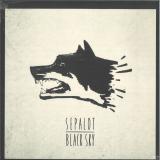
On this album the former "Chasing Clouds" have accumilated into the eponymous "Black Sky"; these drifting soundclouds have swallowed a bulk of Sepalot´s sunny nature; his trademark relaxed attitude gave way to instrumental melancholy and pugnacity. "Before I started recording I listened to lots of The Doors songs. I found the suicidal aspect in their music very exciting. I totally inhaled it." Sepalot reports. "The breakage, the grid, the dirt - that was my inspiration. I was thirsty for the energy of pureness." In order to capture this roughness Sepalots first production steps were drafting soundsketches - often more than 100 in a row. This is then is followed by a sorting procees with many drafts going immediately into the trashcan. The survivors create the first basic draft.
There is something waiting in the wings. Don´t fear the storm, come outside with us... "Black Sky" is here.
Clemens Brentano: "These sounds are a wonderfull living breath of darkness"
SuckaSide know how to drop red-hot edits that perfectly balance club-ready grooves with catchy samples from contemporary chart greats from across a range of styles. This time they bring some fresh amapiano and Afrohouse versions on their latest 45rpm. 'Pink + White' (remix) is first and has a mid-tempo sway with heartfelt and tender piano chords and a vulnerable vocal, all serving to get you in a smoochy mood. On the flip are more bubbly beats and jazzy chords, lounge vibes and Percy r&b vocal samples courtesy of 'What Do You Say' (remix). It's an intimate sound for low-lit clubs when the air is thick with romantic tension.
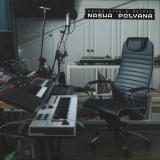
We present an EP from two house masters Artem Stan & Matpri on Analog Concept records.
This record was born like in the classic 90s from jam sessions in the studio, when musicians caught the groove and connected their deep universes, showing true love for house music. Everything is combined here - the sound of drum machines 909 and not only, atmospheric acid impulses of 303, classic pads that paint these paintings bright and filled with deep meaning, as well as much more. Amazing two sides and four compositions, each with its own story.
The Midnight Seduction track opens the telling of these stories on side A. From the first seconds, immersing in the atmosphere of synthesizer temptation, the analog bass line combined with the default drum section and elements of bright metal claps quickly gain the necessary energy and immerse in the images of a closed nightclub with long corridors and hidden dance floors. The light plume of the classic M1 organ and the accentuating Acid lead maintain balance. Secret nocturnal seduction, light ecstasy and an atmosphere of love.
French Kiss - everything is great here, as soon as you listen to the harmony of accordion-like synthesizers and deeply addictive pads, you are instantly transported to the image of Parisian streets. Elements of bells, a rhythm section filled with unpredictable percussion, acid inclusions and an unexpected immersion into a broken beat in the middle of the composition, a real deep French kiss.
Matpri is known for its sophisticated approach to music and is rightfully the guru of micro and minimal house. Having created the maximum sound quality of the rhythm section and the deep bass that was addictive from the first seconds, mixing old-school vibe, while not losing touch with his minimalistic sound image, he filled the House Template track with the smallest details and percussion, which is confidently based on the B-side.
Four certainly high-quality compositions were created in the studio of Artem Stan in the mountains of Krasnaya Polyana and one of the tracks on the B-side - "Nasha Polyana" - is dedicated to this location, it conveys a certain playful atmosphere of a mountain village with a vibe of complete freedom and daily carefree. A complete release with decent house music.
Gatefold Sleeve
M’Bamina – African Roll (1975)
The story of an album born between Africa, Italy, and the nightclub culture of the 1970s
In the heart of 1970s Italy — a country undergoing profound social change and a music scene just beginning to open itself to distant sounds and cultures — an extraordinary, almost improbable story took shape. It is the story of a group of young African musicians who found their way to Europe, of a Turin nightclub that became a crossroads for communities and experimenters, and of an album which, released in small numbers and largely unnoticed at the time, is now considered a rare jewel of Afro-fusion.
The band called themselves M’Bamina — an ensemble of musicians from Congo, Cameroon, and Benin, who arrived in Italy in the early Seventies. Settling between northern Italy and the Pavia area, they began performing in small clubs and community events, bringing with them a vibrant rhythmic heritage: African polyrhythms, call-and-response vocals, funk-infused bass lines, and Caribbean or Afro-Latin colours absorbed along their musical journeys. Their raw, contagious energy on stage quickly drew attention.
Meanwhile, in Turin, another story was unfolding. There was a venue becoming almost legendary: Voom Voom, one of the city’s liveliest nightclubs, run by Ivo Lunardi. The club attracted an eclectic crowd — students, artists, foreigners, night owls — and Lunardi quickly understood that the dancefloor wasn’t just a place for music, but a melting pot for a new kind of cultural energy. Out of this vibrant atmosphere came his idea: to turn the club’s name into a small independent record label, Voom Voom Music, capable of capturing the spirit of those years and giving voice to unconventional projects.
When Lunardi heard M’Bamina, he immediately sensed that this was the sound he had been searching for: fresh, different from anything circulating in Italy at the time, and capable of blending African tradition with funk and European sensibility. He brought them into the studio.
Production was handled by Lunardi along with Christian Carbaza Michel, while the engineering was entrusted to Danilo Pennone, a young sound technician with a sharp, intuitive ear.
The recording sessions — held in Turin in 1975 — produced a remarkably warm and direct sound. The music feels almost live: grooves rooted in African tradition, but open to funk-rock structures and modern arrangements. It is a natural fusion, never forced. Tracks move between tribal rhythms, funk basslines, light electric guitars, congas and Afro-Latin percussion, with call-and-response vocals and melodies that echo both Congolese tradition and the lineage of Latin jazz. Not by chance, one of the album’s most striking tracks, Watchiwara, reinterprets a Latin standard through M’Bamina’s own rhythmic language.
The album was titled African Roll — a name that was already a statement of intention. It is African music that “rolls,” that moves, adapts, transforms within a new geographic and cultural setting. It is not strictly Afrobeat, nor Congolese rumba, nor Western funk: it is a spontaneous, hybrid blend, shaped more by lived experience than by any calculated aesthetic program.
When African Roll was released, the world around it barely noticed. Distribution was limited, and 1970s Italy had yet to develop a cultural framework for receiving such music. The national music press rarely paid attention to African or “world” productions. The album slipped into silence — though the band’s own story did not.
M’Bamina continued performing across Europe and Africa, even sharing a stage in Cameroon with none other than Manu Dibango. By the late Seventies, they moved to Paris, signed with Fiesta/Decca, and recorded a second LP, Experimental (1978). Meanwhile, the peculiar record they had made in Turin began to resurface quietly among vinyl collectors, Afro-funk enthusiasts, and DJs hunting for forgotten grooves.
That is when the album’s fate began to shift.
Over the decades, African Roll emerged as an almost unique document: a snapshot of an intercultural Italy before the word “intercultural” even existed, a fragment of migrant history, a spontaneous experiment in musical fusion born far from major industry circuits but rich in authenticity. Original copies began commanding high prices on the collector’s market, and the album became recognized as one of the hidden classics of European Afro-fusion from the 1970s.
Today, more than fifty years later, this reissue finally restores visibility and dignity to a project that deserves to be heard, studied, and celebrated. It is not simply an album: it is the testimony of a rare cultural encounter, born in an Italy unaware of how fertile such exchanges would one day become.
It is the story of a visionary producer, an extraordinary band, and a fleeting moment in which music, migration, and nightlife came together to create something genuinely new.
African Roll is — now more than ever — the sound of a bridge: between continents, between eras, between cultures. A record that, after rolling far and wide, has finally come home.
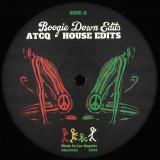
After the massive success of Vol 1 Boogie Down Edits are back with Vol 2 keeping the same winning formula with another group of Hip Hop legends ATCQ. re-inventing some of their best-loved hip-hop cuts as party-starting house jams. Wisely, they've chosen to retain many of the key musical ingredients of their source material, subtly shifting the grooves to aid slick mixing and peak-time joy.
Limited Pressing get your orders in fast.
"Over the past three decades, Philipp Lauer has produced an incredible body of work, deploying a myriad of aliases, both as a solo artist and as a part of collaborative projects. From his hardware-steeped Frankfurt studio Pyramide 2, he has built this catalogue through original material and remix commissions, taking on the full spectrum of electronic music while retaining an unmistakable signature. He combines a hands-on approach to rhythm and composition with a DIY MO and a love of big hooks. The level of expertise at hand seems to facilitate a playfulness that subtly permeates all layers of his work. He's a pop melody natural who just so happens to love fiddling with synthesizers, drum machines, and effects an equal amount. All of these qualities are exemplified on "Embalmed In Martino": Lauer's four-track ode to the Belgian Martino sauce, a spicy tomato-based condiment, and arguably the essential ingredient to top off the namesake raw meat sandwich. On "Embalmed", which makes use of instrumentation that would fit right in on an early eighties Manchester cut, and "Martino", where a sturdy, electroclash flavored arp bass provides the stamina, a slew of big and small riffs easily work their way in, thirsting for our ears. On the other side, "Transactional" combines Miami basslines and similarly electro-fundamental twinkling synth work with a flanger-laced 4/4 beat, while "Don't You Know" features soaring synthwave patterns and the only vocal samples on the EP. Both sport rich arrangements as well, right down to the cowbell overdubs. Lauer's often lauded for his "summery sound". In this light ALT026 lands right on time - yet we might disagree here, as it's suited for all seasons, and all terrains, both the shiny festival grounds and the dim-lit club floors."
UK Balearic boss Pete Herbert has been dropping sounds inspired by his worldly travels for years and now gems from the last 20 years all make it on to this essential long player. These are all sounds for sunny spots, watery retreats and beach bliss-outs with Pete's signature touch everywhere. 'Back To Bahia' is a bubbly and loose house sound, 'Later That Night' has an edge that makes is suited to sundown dancing and 'South Seas' is a horizontal escape, while 'Legzira Sunrise' is dubby downtempo with tender chords that sink you in deep. This is the sort of record that elevates your collection with magical tunes for many different moments.
2026 Repress
Georgian powerhouse Yanamaste drops long-anticipated new EP on Mutual Rytm.
In-demand DJ/producer Yanamaste is a resident at Georgia's renowned Khidi Club and a key part of Amsterdam's Vault Sessions crew. His unique sound and fresh creative approach result in raw and visceral techno, reflecting his passion for pushing boundaries and showcased perfectly via his 'Dance' EP on Vault last year. Now, he returns with an EP born out of the creative process behind his live set with a debut appearance on SHDW's Mutual Rytm, 'Evil' - a collection of heavily-requested tracks that have already made an impact after featuring in his Boiler Room and Stone Techno Festival livestream.
'Evil' kicks things off with perfectly rubbery, funky drum patterns and an urgent sense of movement that sweeps you off your feet. 'Lahante' is more percussive, with busy snares riding the rolling, forceful drums and stark synths arresting your attention. 'Dragonfly' is perfectly reduced via minimal drums intertwined with thunderous effects and ghoulish energy, while 'Modulation Detected' has a more cosmic feel as it journeys into the future with whispered spoken words and synths searching across the face of the groove. Last but not least is the irresistible broken beat goodness of 'Walking On Mars', with its swinging kicks and vast bassline spraying about the mix beneath hypnotic melodic patterns.
Two superb bonus cuts, 'Ohohoi' and 'Pwiu', are also provided for digital buyers, bringing further gems loaded with moody depths and compelling rhythms.
illo.trio are representatives of the contemporary jazz scene who have already made their mark on numerous stages through other the world. Seamlessly blending elements of different styles, the musicians reinterpret familiar forms in fresh ways, filling them with unconventional meanings and stepping beyond the boundaries of expectation.
The new album is titled Wandering. It brings together 10 compositions that invite each listener to embark on a search for meaning and answers to essential questions.
This is a multifaceted journey where dramatic episodes coexist with retro-wave vibes, intimate chamber lyricism shifts into psychedelic phantasmagorias, and the trio's concise acoustic sound is interwoven with rich electronic textures and experimental effects.
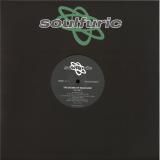
- A1: Donna Allen ‘He Is The Joy’ (B’s Special Edit)
- A2: Urban Blues Project Presents Mother Of Pearl Featuring Pearl Mae ‘Your Heaven (I Can Feel It)’ (Micky More & Andy Tee Remix)
- B1: Urban Blues Project Featuring Bobby Pruitt ‘We Are One’ (Jazz-N-Groove Hands Up Vocal)
- B2: Gabriel Rene Featuring J Soul ‘Spirit’ (Emmaculate Remix)
The Sound Of Soulfuric Vol. 2 continues the label’s reputation for vocal-led, groove-driven house music, bringing together strong vocals, solid songwriting and modern club-ready production across four DJ-focused cuts.
This is a release designed for dancefloor use. Whether it’s a vocal room, a terrace set or a packed house floor, every track is built to maintain momentum and keep the room moving.
Featuring voices from Donna Allen, Pearl Mae, Bobby Pruitt and J. Soul, this EP blends classic soulful house roots with current, punchy remixes, making it highly playable in today’s sets while still appealing to long-time Soulfuric fans.
Another Squid inks its way into existence. The new project from northern operator
Accented Measures, whose synth tower stacks taller than the horizon it’s aimed at. A self
made groove patroller, Aqua Surf releases four well swung jewels of power, an ode to
motion, pressure, and late night systems thinking.
Each track is cut from the same cloth but bent at a slightly different curve, offering a
focused glimpse into the Aqua Surf orbit. You’ll find heavy nods to the Quasimidi
classics, early Korg rompers, quirky Roland workstations and lost dub style vocal
fragments strung throughout the EPs play through. Ultimately, the record is a multi
planetary trip built on MPC sequences, where swing does the steering and texture does
the talking.
Functional but curious, these are tracks designed to travel through rooms, through
bodies, through time slots where the lights stay low and the floor stays sweaty.
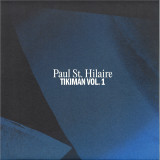
For the first time in more than a decade, Paul St. Hilaire (AKA Tikiman) presents a solo album – 100% Tiki.
Over his 30-plus year career, St. Hilaire has become one of dance music’s quietly legendary figures. Born and raised in Dominica, he moved to Berlin in 1994 and has lent both his voice and his musicianship to some of the most iconic electronic music from the German capital – and beyond. Renowned for his collaborations with Moritz von Oswald and Mark Ernestus (AKA Rhythm & Sound), he has also appeared on records with Deadbeat, Rhauder, Larry Heard aka Mr. Fingers and Stereotyp (G-Stone Recordings), amongst others.
However, few know the extent of St. Hilaire’s compositional and technical mastery. From his home studio in Kreuzberg, which includes an extensive collection of vintage hardware, self-built instruments and notebooks scribbled with endless lyrics, he has created a vast archive of material spanning ambient dub, avant-jazz, lush techno and lovers rock.
Tikiman Vol. 1 is a heady, downtempo tour de force of patois metaphors on education, displacement and personal vs. global histories, as is evident on slippy album opener “Bedroom in My Bag”: Mister, mister / Where are you going? / I’m heading for a faraway land / What are you having in the bag in your hand? / Help us to understand / He said, I’ve got my bedroom in my bag.
Overall, the album’s lyrics reflect on life between Berlin and Dominica, specifically St. Hilaire’s hometown of Grand Bay, where he has worked with various musicians famous for the island’s different genres of carnival music. St. Hilaire himself always favoured the island’s more “discrete” music, developing a sonic synergy between two different geographical strains of groove and minimalism, and combining them with foundational Caribbean mixing techniques, which provide the basis for his songwriting and distinct
baritone.
Tikiman Vol.1 offers a rare insight into St. Hilaire’s complex artistry, from the eyes-down grooves of “Little Way” and the guitar-heavy digi dancehall experiment “Keep Safe,” to the subtle hypnosis of “Ten to One” and the softly crashing synth waves of closer “Three And A Half”, evoking not only beaches but also coasts and borders. It’s a fitting expression of both the breadth of St. Hilaire’s work, as well as his history as one of the few black, Berlin-based artists who, despite remaining largely overlooked, has influenced the city’s electronic music culture since its beginnings.
Credits
Written & Produced by Paul St. Hilaire
Mastered by Stefan Betke
Artwork by Grant Gibson
Kynant Records was founded in 2015 by Richard Akingbehin, a British-Nigerian radio programmer (Refuge Worldwide), music writer and DJ. Originally specialising in deep techno and featuring artists such as Cio D’Or, Terrence Dixon and Donato Dozzy, Kynant has since launched a sub-label Kynant EX which focuses on ambient, dub and experimental electronics.
At the core of the creative process behind “HPC” and “Bor3d” lies meta-irony, a quality that permeates much of today’s digital content landscape.
Both tracks are a deliberate attempt to push the sound toward a barely perceptible absurdity and ironic unseriousness in their interpretation of well-familiar styles of dance club music. It is a play with form, expectation, and recognizability — balancing sincerity with sarcastic exaggeration.
Okay
Okay is built around interruption. Voices, fragments of dialogue, yawns, irritation — people seem to step inside the track uninvited. Someone is bored, someone is annoyed, someone tries to stop the flow entirely. Just like in real life, the process is constantly disrupted. The track reflects the experience of being surrounded by opinions, noise, and skepticism — especially the kind that will never be convinced, no matter what you do. “Okay” becomes a quiet, ironic response to this pressure: not agreement, not approval, but endurance. The track continues anyway.
Tripatura
Tripatura is a fictional creature — a warped echo of cryptid mythology. In this narrative, Tripatura doesn’t simply exist, it hunts. Once it finds you, it drags you into an endless trip with no exit point. Time stretches, perception blurs, and the track itself becomes the trap. Its prolonged, unresolved ending mirrors the experience of being stuck inside a loop that refuses closure. Tripatura doesn’t rush. It lingers, slowly pulling you deeper, until the trip no longer feels temporary.
This is another big moment for us, and if you have read the story on how the Psychology EP came to be, you will know that we spent a long time trying to track Dimension with the Fozbee & Cooz brothers.
This is my era of music, these are the tunes that I was raving to once I first got my driving license in 90/91. Its a style of music that has influenced pretty much my whole musical career. I find it fascinating that this music was basically by hip hop heads who only a year or two before would of discovered rave. A truly unique musical style and culture that could of only come out of the UK.
Check the soundfiles below and take yourself back to an illegal rave in a secret woodland in Wiltshire in 1991 where ravers, b-boys, hippies and new age travellers all partied together.
2026 Repress
since his first ep tips' on luciano's label cadenza in 2007 producer and dj petre inspirescu emerged into one of the key figures of the romanian electronic music scene.
so far he released music on labels such as vinyl club, lick my deck or amphia. together with his buddies rhadoo and raresh he also launched in 2007 the label (a:rpia:r) - a platform where he, his two friends and many producers from romania and abroad released detailed grooving house and techno, that stands out with delicate structures and one-of-a-kind grooves.
both of his more dance floor oriented solo albums intr-o seara organica...' and gradina onirica for (a:rpia:r) are enlarged with melodies, sounds and harmonies that go beyond the usual characteristics of a dance album.
furthermore his love for classic musicians like mily alexejewitsch balakirev, alexander porfiryevich borodin or or nicolai andrejewitsch rimsky-korsakow can be felt in the album padurea de aur (opus 2 in re major) and two more eps that he released under the alias pensemble on the romanian label yojik concon in order to unite classical spheres with analogue electronic music production.
in february 2013 he also released his highly acclaimed fabric mix cd that only features dance floor leaning music produced by himself. with talking waters' he published in late 2014 his first 12inch on mule musiq that is now followed by the full-length album vin ploile' which he produced without the intention to entertain with easy to hook up rhythms, melodies and harmonies.
even tough he established himself as a internationally playing house dj that regularly performs at all major clubs, festivals and other party destinations around the globe: as a musician petre inspirescu always tries to enter new territories to explore with a heartfelt human touch the infinite space of sound.
for his latest album the man that originally comes from the eastern romanian town braila stepped away from his former experiments of melting classical spheres with electronic music. instead the 36-years old man from bucharest only used some piano, string and wind instrument elements and analogue electronics to arrange a gracefully deep ocean of sound.
all slow grooving tracks spread the atmosphere of live improvised sessions that are edited, tweaked and mixed to perfection. in-the-moment moods of strange and unusual analogue synth sounds groove in a fluid quality with subliminal bass shapes, latinate percussions, jazz rhythms and acoustic melodies.
together they create a gaseous kinetic atmosphere full of tangible rhythm patterns, delicate chords and ghostly modular synth pads - all mixed subtle to create space for the tones between the tones.
you can call it a hypnotic after hour album for after hours that are dedicated to a deep listening experience. you can tag his arrangements as brilliantly textured and musically super-charged ambient, which goes beyond the usual definition of the genre.
all nine suspenseful compositions seduce with a deep melodic sensibility, harmonic adventures and an overall rhythmic ambiance of freshness and laidback enthusiasm. together they represent a challenging auditory experience that will resonate in your mind long after the music has finished.
Felipe Gordon is back on Shall Not Fade with his new album Tezeta and f*ck is it special.
Felipe Gordon is SNF label mainstay... (we released his triple repressed debut album "A Landscape Onomatopeya" in 2022 as well as 7 x 12" EPs on SNF over the years plus an extra 12" on Lost Palms)... so given his consistent and exceptional output on our record label you'd probably forgive some complacency with this write up, you might even afford us license to assume we're preaching to the choir and allow us to rest easy knowing that at this stage Felipe Gordon's records sell themselves.... Well none of those things are happening here because when an artist makes a record this complete, this good, you have to try to find the words. You use words like "timeless", "complete and "special". Words that can carry the weight. Because when you've listened to an album dozens of times, and not once, in any part, on any listen in any way has it fatigued you, you need to say. When a record felt so wonderfully familiar from the first listen and just kept on giving you the same feels ever since, you need to say. When a record makes you think about you how you feel about certain Air & St Germain albums (even when you know what it means to put that in a press release), you need to say. So here we are, saying these things.. Tezeta is a special record, one that exists in the rarefied air. A proper album. A record that every time you press play you will immediately remember why you own it and why you love it. A record that your subconscious will know so well that if shuffle is on you will know in an instant. An album that when it's in your collection and the first track starts you get a twinge of annoyance because you didn't listen again sooner and when the final track stops you stop too.
Given paint and a canvas we can most of us paint a picture, but only those that are gifted can paint something that makes us feel. Tezeta makes you feel. Feel familiarity when it's playing, yearning when its not, and absence when it ends. This alone would be enough to make the argument as to why this album is special and justify the gushing opening paragraph of this press release. But we're not done yet.
We don't really have a word in english for what Felipe Gordon has created with this album and how it makes you feel. "Tezeta" that word.
Tezeta is a one of four musical modes within the traditional Ethiopian modal music system known as Qiñit. Mulatu Astatke, the father of Ethio-jazz, frequently uses this mode, often translating it as "nostalgia" or "longing". Gordon says Mulatu's own tezeta recordings convey to him "feelings of melancholy and longing from a point of affection". This is exactly the feeling Gordon has captured. It is what he has woven through every recording on this album. Tezeta is the prime ingredient. It's the base note in recipe, it's sprinkled over the signature jazz-sampled house tracks. It powers the vast array of synthesizers Gordon deploys. It underpins the explorations into trip-hop. It's present in Gordon's varied vocal deliveries and it tunes his guitar. It's in the running order. It's the flow. Tezeta is tezeta in electronic music form, with 4/4, breakbeats, samples and synths.
Gordon says a big part of what differentiates this album from from his previous albums is that is was recorded in a period where he allowed himself to create music without the constraints of time or self-pressure which coincided with a moment of heavy personal growth which allowed him to reflect deeply on his work.
There is a word in Portuguese "Saudade" that Gordon says has a similar meaning to Tezeta - Saudade is defined as a deep, sometimes bittersweet, longing or nostalgia for someone or something that is absent or lost. But here at SNF we think that in Tezeta nothing has been lost. Quite the opposite. Through Felipe Gordon's artistic explorations we have all gained something very special indeed.