
pre-order now13.10.2023
expected to be published on 13.10.2023
23,11 €
expected to be published on 13.10.2023

Detroit producer Sheefy McFly delivers his first release outside the US, featuring vocals from DJ Mo’Betta, Bevlove, Lola Damone, Tiptonaires and Etherpussy.
Aside from producing, Sheefy runs the Ghettotechtopia party series in Detroit, has previously worked with Amp Fiddler for a release on Moodymann's Mahogani Records and has remixed and released for AUX88.
As a visual artist, he creates colourful murals all over Detroit, inspired by the Motor City's musical history like the "Detroit Never Left" mural featured on the sleeve.
On Stock and ready to ship
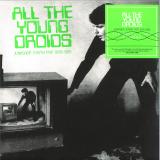
2025 REPRESS ON TRANSPARENT GREEN VINYL
Compiled by Philip King “And then came the rise of synth pop : blokes with dodgy haircuts hunched over keyboard-operated machines stuffed with wires and do-it-yourself tone oscillators making sounds like a brood of geese passing gas in a wind tunnel. Whoopee! This is the way the ‘70s ended : not with a blood-curdling bang bang but with a cheap, synthesized, emasculating whimper.” NICK KENT, NME. All The Young Droids: Junkshop Synth Pop 1978-1985 is a new compilation that charts the underbelly of the epoch-defining sound of the synthesiser in 80s popular music. Compiled by Philip King (previously seen compiling All The Young Droogs, Glitterbest and Boobs - The Junkshop Glam Discotheque), the music here connects the dots between DIY synth enthusiasts grappling with new, cheap synthesisers at the tail-end of punk and wannabe, jobbing songwriters enthral to the new music pioneered by Gary Numan, Depeche Mode and Daniel Miller’s Mute Records. Featuring rare tracks of auto-didactic progressive pop music, proto-techno punk, shoot-for-the-stars-land-in-the-gutter chart flops and heralded, underground synth classics, School Daze paints a picture of beautiful failure. Complete with extensive sleeve notes written by King and never before seen imagery, all 24 tracks were remastered by RPM in-house engineer Simon Murphy, many from vinyl copies due to lost master tapes. The story told on All The Young Droids is one of the dawning opportunity presented by both the emergence to the market of cheaper analog synthesisers and the distribution networks plus indie labels that exploded with the advent of punk music in 1976. While the music that sprouted out all over the globe in the wake of these factors was decried as fake, plastic, a refutation of punk’s guitar-led revolution, it’s telling that much of the music on All The Young Droids.. was created in bedrooms, ramshackle studios and home-made set ups with often borrowed equipment. In the era of record labels jumping to capitalise on the success of The Sex Pistols, The Clash (both on major labels, of course) these artists struggled to stand out from a new gold-rush with next to no budget or PR team. With radio and labels desperate for the new Yazoo, what resulted was a testament to necessity being the mother of invention. At the time, the synthesiser was the music of the future, a shiny new machine that could paint like an orchestra with a single finger and a 4-track. In the hands of Manchester avant-pranksters Gerry & The Holograms it’s a pulsing, sardonic weapon.. the only instrument on the Messthetics classic lampooning of New Wave fashion. In Hamburg, a 16 year old Andreas Dorau used it to write and record (with his female classmates on vocals) a global smash in Fred Vom Jupiter (later licensed to Mute Records). The hard-to-find English version (Fred From Jupiter, natch) is included here. Many artists with alreadystoried careers caught the bug and recorded synthesiser-fuelled peons to space, computers, the future and, of course, love-interests. Harry Kakoulli, late of Squeeze, recorded a solo album in 1979 that included the incredible power-synth-pop smash-that-never-smashed I’m On A Rocket. Similarly, Ian North of Neo and American Power Pop stalwarts Milk ’n’ Cookies bought a Korg MS20 and used a tape machine to record We’re Not Lonely, an absolute lost-classic of minimal synth pop. We’re Not Lonely also features on the Junkshop Synth Pop sampler 7” twinned with John Howard unreleased track You Will See, released April 12th 2025. There are plenty of compilation debuts in evidence. Sole Sister were a mysterious trio who were featured on the Scaling Triangles compilation of female-fronted, queer-adjacent post-punk / underground music that also featured The Petticoats. Selwin Image were from San Francisco and featured members of the recently defunct power pop/punk group The Pushups. Their stupidly catchy The Unknown fizzes with New Wave energy - think XTC to Sparks but remains unreleased until now. Dream Unit’s A Drop In The Ocean is an early synth wave cut, positively teaming with Joy Division instrumentation, previously only released on a long-forgotten and super rare, self-released EP. Incandescent Luminaire’s Famous Names belies an archetypal struggle of a small-town trying to make it in a cruel industry but is a thrilling New Romantic-Synth Wave cross over with a OMD gloominess that’s a joy to hear. Feminist Minimal Wave track I Am A Time Bomb by performance artist Peta Lilly and Michael Chance is a revelation destined for new found cult status. It was released on 7” and lost until now. The flipside to the subterranean, never-made-it synth pop mentioned above are the ambitious, even fruity attempts at success that have a perennial elegance to their confidence. New Jersey-ite Billy London (real name Ed Barth) tried to cash in on the synth boom with Woman, released by a major label, a lurching new wave track built on the Louie Louie rhythm and a wonderfully camp Lou Reedstyle sleazy vocal before exploding in the synthesised chorus. The song bombed but with a chorus like this, you have to wonder why? Ex-Glitter Band member John Springate’s My Life is truly epic, with doomed chord progressions and massive sounding drums turning into at least 3 different songs in the course of the track. Before you wonder what’s going on the song resolves with a glorious return to the main refrain. The dry-ice-dressed dance floor is well catered for too. Design’s Premonition and Vision’s Lucifer’s Friend are stone-cold minimal synth bangers, well loved but given a new lease of life here. The Warlord’s The Ultimate Warlord was released in 1978, a homespun proto Hi NRG banger that was later re-recorded by The Immortals in Canada who had a club hit with it. One-man- band Disco Volante’s No Motion was re-issued by Synth wave label Medical in 2012 but makes its first vinyl compilation appearance here. Close your eyes and you can imagine what Lawrence of Felt would have sounded like with some cheap Korgs a little earlier in his career. Gibraltar-based trio The Microbes imagined a computer programming people to dance - how prescient - and ended up with a propulsive, robo-funk track with splendid rubbery bass playing over a tectonic drum machine. Previously picked up by Belgian label Stroom TV, Dee Jay Bert & Eagle’s heavily Euro-accented I Am Your Master demands the listener to “come to paradise!” In a frankly terrifying manner. All The Young Droids is the first compilation to peel away from the narrative that dour, Minimal Synth and Cold Wave were the only musical children of the first rush of synth pop. Philip King and School Daze Records describe a much more complicated world: along with the austere, Brutalist children of Daniel Miller (who produced Alan Burnham’s Bowie-Low-influenced Science Fiction here) was a plethora of desperate cash-ins, accidental mainstream hits, ambitious pop dramas and major label punts that went nowhere. Crucially, the compilation blurs the line between junk and treasure. What if the two things are interchangeable. What if it’s all science fiction?
On Stock and ready to ship

Norman Connors' Mr. C is a masterclass in sophisticated modern funk and boogie-infused soul that was way ahead of its time. Originally released in 1981, the album finds the renowned jazz drummer/producer at a creative crossroads, boldly diving deep into street-level boogie-funk without losing his soulful, jazzy touch. What once might have puzzled jazz purists now delights soul/funk aficionados; it has quietly become a cult favourite and now, nearly 45 years later, Mr. C sounds fresher than ever. Brimming with infectious heavy funk, lush arrangements and soul-stirring performances, it's an album that flirts with perfection, ensuring its enduring significance in the boogie/jazz-funk-soul canon.
From its opening moments, Mr. C makes one thing clear: this is Norman Connors at his funkiest. The majority of the album is a straight-up party: think dancefloor-ready beats complemented by punchy horn riffs and slick early-80s boogie vibes. There’s heavy use of synths and drum-machines, demonstrating Connors' gleeful embrace of contemporary funk trends. Each track shines in uniquely thrilling fashion, showcasing Connors’ versatility and happy knack for blending genres whilst crafting unforgettable melodies.
Irresistible thumper “She’s Gone” opens the album with a dyno-Rhodes electric piano groove and a seriously thick boogie-funk rhythm. Lush string accents and horn stabs weave through the funky bassline, while the vocals (handled by a young Beau Williams) soar with gospel-tinged emotion. Over four decades later, it endures as a masterpiece. Living up to its name, the shimmering “Party Town” brings deep Electro-Funk Energy by layering bubbling synth bass and shiny lead synth lines. The groove is downright addictive, a brisk, brass-kissed jam that implores you to move. Up next, the sophisticated funk of “Keep Doin’ It” is a low-slung post-disco glider, propelled by a sleek vibe, leaning into the late-night boogie sound. Funky guitar, tight drumming (with Connors’ jazz-honed chops in the pocket) and smooth vocals urge you to “keep doin'” whatever it is that's working. “Stay with Me” works a bit of island flavour into the mix, riding a thick Caribbean groove complete with tropical percussion and an upbeat tempo that could almost be calypsoul. The fusion of Caribbean rhythm elements into an R&B context demonstrates Connors’ willingness to experiment with global sounds while keeping things soulful and danceable.
Side B opens with the sassy funk-deluxe workout, "Anyway You Want" dripping with that soulful strut. Bringing a real quiet storm swagger, “Sing a Love Song” slows the tempo ever so slightly into a sexy, swaying jazz-funk gem, featuring a young Glenn Jones on lead vocals. The arrangement is elegant, built on warm keys and an undeniable groove. The celestial “Love’s In Your Corner” is all about soulful uplift. Featuring the legendary Jean Carn's powerhouse vocals soaring over a brass-kissed driving funk, it's an R&B burner. The refined, jazzy instrumental “Mr. C” is a slinky, smooth, funk-filled mid-tempo groove, with sax and warm keys gliding effortlessly. Connors combines jazzy arrangements into the post-disco/boogie framework one last time, and the result is sublime. It’s sophisticated and cool and, as a finale, “Mr. C” wraps up the album in classy style.
On release, Mr. C flew under the radar but time has been exceptionally kind to this record. DJs, collectors and soul connoisseurs alike have since rediscovered its magic. As ever, this crucial reissue has been lovingly remastered by Simon Francis, cut by engineer of the year Cicely Balston at Abbey Road Studios and pressed to perfection by Record Industry in Holland. Norman Connors was something truly extra. He was a visionary. And Mr. C is proof.
On Stock and ready to ship

2025 Repress
DJ Quik is a giant of West Coast hip-hop. With 1995’s Safe + Sound, he scaled new levels of musical magnificence with his signature new age P-Funk/laconic G-Funk. A quintessential, sun-scorched LA album, this is pretty much essential. Typical for mid-90s albums the original vinyl copies are now rare so here’s the Be With re-issue, complete with “Tanqueray”, the hidden track from the original CD release.
A preternaturally gifted producer/rapper, DJ Quik has produced scores of LA gangsta rap classics. He’s released platinum and gold records of his own, as well as helped craft them for the likes of Tupac, Snoop Dogg, and Dr Dre. Quik has always been quirkier and more interesting than his gangsta rap peers, both musically and lyrically. An old-school funk producer at heart, he’s also incredibly nice on the mic. His raps often deal in boasts, jokes and good times but also cover his beefs, his trials and his trauma. Partying and pain, all mixed up. DJing and producing hype beat tapes from age 14, Quik’s tracks blended the languid funk and rubbery synths of Zapp and George Clinton with a gangsta aesthetic, creating a more danceable foil to Compton’s more typical nihilistic hedonism. Ultimately, his records sound custom engineered to drift out over sun-soaked barbecues.
By the time of his third album DJ Quik was a household name on the West Coast - California’s premier rapper/producer not named Andre Young. Released on Profile in 1995, Safe + Sound was certified gold. Less reliant on samples and more focused on live instruments, it elevated him from producer to fully-fledged composer. This sound — the quick, winding basslines, tinny high hats, smooth instrumental solos, soulful pipes, and Roger Troutman’s talkbox — defined him. This is an album of full-blown masterpieces. Rich soundscapes and masterfully arranged orchestrations with dense layers of sounds, intricate rhythms, and well-balanced songwriting.
The first track proper, “Get At Me” samples Cameo whilst Quik takes aim at the Judases in his life, the horn-laced chorus providing a triumphant feel. On the horizontal “Diggin’ U Out”, the soulful electric piano of Warryn Campbell lays a relaxed groove for Quik to talk over about one of his favourite topics: sex. Title track “Safe + Sound” chronicles Quik’s formative years over a slick instrumental. The moody bass locks a laidback infectious groove, the hook is catchy and Quik’s delivery is in fine form. On the uber-chilled “Somethin’ 4 Tha Mood”, Quik cooks up a breezy, feel good track of sparkly keyboards, syncopated claps, shuffling hi-hats, woozy synths and a floating two-minute flute solo courtesy of Robert “Fonksta” Bacon. Analysing the highs and lows of an average day in the hood, it echoes Cube’s “It Was a Good Day”.
“It’z Your Fantasy” is a silky smooth soundtrack to Quik’s detailed retelling of a sexcapade with a young lady and whilst “Tha Ho In You” is musically perfect for that midsummer family BBQ, its lyrical content is unsurprisingly decidedly less family-friendly. A real highlight, the infamous “Dollaz + Sense” is one of the most ruthless diss tracks of all time. The brutal lyrics ride a laidback West Coast beat, flipping a sample from Young & Company’s “I Like (What You’re Doing To Me)” as Quik fires lyrical shots at his arch Compton nemesis, MC Eiht. On the loping, hazy “Let You Havit”, Quik is again in gangsta mode, with more bars of barbs aimed at Eiht, rhyming over sun-kissed synthy-rollerskate funk.
Some of the finest tracks on Safe + Sound are those designed to de-stress. The evocative “Summer Breeze” is a classic warm-weather jam, anchored by a twangy funk guitar, breezy string arrangement, and a soulful hook delivered by Dionne Knighton. Quik’s nostalgic lyrics are not far from DJ Jazzy Jeff & The Fresh Prince’s “Summertime”, reminiscing over barbecues at the park, young love, and the brevity of halcyon youth. The relaxed and jazzy “Quik’s Groove III” is another highlight, as bass, guitar, piano and flute combine to create a smooth, soulful instrumental.
The swaggering “Shack Up”-sampling “Sucka Free” features a cameo from Playa Hamm, all funky braggadocio and over much too quikly (pun thoroughly intended). The jazz-flavoured “Keep Tha ‘P’ In It”, again featuring Playa Hamm but this time extending the cameo invitations to Hi-C, 2nd II None and Kam, is pure laidback P-Funk. The deep bass and industrial drums make sure the groove hits hard.
“Tanqueray” was originally a hidden track on the CD version of the album, but it’s too good to hide. This wild party samples Brass Construction’s gigantic “Get Up To Get Down” and soars in its drunk-ebullience. An apt way to close this party-driven set.
This 2022 Be With double LP re-issue has been mastered for vinyl by Simon Francis, cut by Pete Norman and pressed at Record Industry. Unusual for the time, Safe + Sound was originally pressed as a double, so all that was missing was the CD’s hidden bonus track “Tanqueray”, so we’ve fixed that. The original vinyl release never got a picture sleeve, so we’ve recreated the original’s promo-style silver-sticker and plain black jacket. A subtle cover for a wonderfully unsubtle record.
On Stock and ready to ship

Mr. K’s series of edits on Most Excellent Unlimited is nothing if not eclectic, and utilitarian — as befits a veteran DJ of Danny Krivit’s stature. For our latest, Krivit pulls two disparate gems out of his bag of tricks and fits them neatly on a single 7-inch piece of vinyl.
In 1972 Ralph Bakshi’s landmark underground animated film Fritz the Cat was released, featuring a soundtrack performed by an all-star cast of San Francisco area musicians associated with the Berkeley-based Fantasy label. Perhaps Fantasy’s biggest artist was the vibes player Cal Tjader, who debuted in 1955 and was still going strong when songs were gathered for the movie’s soundtrack nearly twenty years later. Rather than simply using one of his older, already-recorded tunes, Tjader laid down a completely new version of his earlier hit record “Mamblues.” This time however, he swapped his standard latin percussion accompaniment for a can’t-miss rhythm section of Bernard Purdie, Chuck Rainey, and Arthur Adams. The result was a searing funk workout that took the latin jazz classic to new heights. Mr. K subtly warms this one up by adding a hint of reverb and bringing the tempo down a notch, pushing things from frenetic to funky, and firmly into friendly mixing territory for the DJs.
For our flip side, we turn to an unsung jewel amongst Philadelphia’s many contributions to disco music. Executive Suite released a series of singles in ’74 and ’75 that were recorded at the famed Sigma Sound Studios and had ties to a number of better known disco luminaries, among them the holy trinity of Baker-Harris-Young and, on “You Believed In Me,” the mighty Patrick Adams. Along with his longtime associate Stan Lucas, Adams garnished the vocal quartet’s composition with a driving arrangement and epic, soaring strings. The combined effect produced a vibrant, uplifting club cut that echoes the positive spirit of Curtis Mayfield’s “Move On Up” while being altogether its own thing. For our latest release Mr. K focuses solely on Adams’s instrumental section, returning repeatedly to that addictive string riff and creating a propulsive rhythm track that just doesn’t quit. And we don’t want it to!
As always, these connoisseur’s choice cuts have been remastered and pressed to Most Excellent Unlimited’s standards, and are primed and ready on 7-inch for DJs and home listeners alike.
On Stock and ready to ship

Italian DJ and producer Francis De Simone debuts on Lee Foss and Jamie Jones' label Hot Creations with London Bass. Having built a solid back catalogue in recent years, his first Hot Creations release embodies the dynamic sound of the Palermo-born artist, channelling chunky tech house and disco-flavoured melodies.
De Simone explains his creative thinking behind the EP. "These tracks fully express my devotion to music. I ranged a lot, trying to remember an 80's sound up to a more raw and synthetic groove with Latin vocals to embrace the different ethnic groups." Reflecting his thoughts to a tee, the title track rumbles with a massive bassline and chopped-up vocals that add an instant burst of energy. Things get weird on Saludos A Todos, as thumping kickdrums collide with a trippy melody and even trippier vocals, creating a wavey atmosphere. The ideal club curveball. On Off White, De Simone delivers a pacey number packed with burbling beats and clicky percussion, complemented by dreamy vocals. The hint is in the name on closing track, This Is Undergound. A big room delight, De Simone drops a stripped-back banger, where the lyrics do the talking in tandem with a driving bassline. An excellent addition to the Hot Creations discography.
Based in Palermo, Italy, Francis De Simone stems from a family of musicians. Having played the drums from age two, the versatile artist can make anything from rock, pop and jazz, but these days, De Simone pens electronic music. His father worked as a bouncer for various local discos and exposed De Simone to dance music from a young age, later inspiring him to produce house and techno with an uplifting tint. Releases on Glasgow Underground, LW Recordings and REALM Records have helped shape the profile of this flourishing artist, with plenty more to come further down the line.
On Stock and ready to ship

FanFar'On : 'Musician and born in the south of France, Fabien Gienero is the first artist signed of FanFar’on Records, he has delivered a three tracks ep include a Silat Beksi remix. Into the music world, the magic happened when you can navigate & collaborate through different vibes. Already supported by people like Chez Damier or Ben Vedren, the young producer located in Paris now has shown his skills & brought different types of vibe, you will first notice the typical groove coming from a bass player, injecting his musical & funky background with "Nice After", and "Milode" which is more on a Rominimal vibe and also different.
And let the Fanfare begin!'
Big support by:
Raresh, Vlad Caia, Jennifer Loveless, Francois K, Thor, DJ Autumn, Per Hammar, Andrey Pushkarev, Tobi Neumenn, Jorge Savoretti, Rossko, Satoshi Tomiie, Rich NxT, Enzo Siragusa, Julietta, OHM, Terry Francis, Ilario Alicante, Mr. V, Dubtil, Okain...
On Stock and ready to ship

Recorded live at the Jazz Cafe 19/03/2018
In 1982, Bukky's path led him to London, where he became one of the forerunners in the Acid Jazz scene. A young A&R man named Gilles Peterson signed him to the newly formed Acid Jazz label and his first release "Rejoice In Righteousness" went straight to the heart of the Acid Jazz world, reaching number 1 in the rhythm and blues, dance and jazz charts. The follow-up album "River Nile" led to a nomination at the US African Music Awards in New York. There he became acquainted with the legendary, late tenor saxophonist Joe Henderson who invited Bukky to his home in San Francisco.
On Stock and ready to ship

Geometrik Records is delighted to once again play a part in the exclusive recovery of Marcelo Expósito's previously unpublished work, which had been lost since its original creation in the 1980s. Marcelo Expósito is one of Spain's most internationally renowned contemporary artists, whose work is regularly exhibited across Europe and Latin America. He began his career at a very young age during the era of sound experimentation that flourished in the wake of so-called industrial culture, which found particularly fertile ground in Spain. As co-editor of legendary publications such as the fanzine Experiencias (1983) and, above all, the cassette-fanzine publisher Necronomicón (1983-1987), which operated on an international scale, Marcelo Expósito has, in recent years, been reconstructing those of his sound experiments that had been lost for decades. The album we are now presenting brings together material previously released on cassettes as EGK023 in a very limited edition. These tracks have now been remastered and expanded to complete this record, which noise musician Mattin has described as "secret recordings that constitute a gem from the rich Spanish underground of the 1980s". In the words of Luis Alvarado, editor of the Peruvian label Buh Records, this album allows us to appreciate how "Expósito developed a style of his own that understood sound as a malleable material open to chance. The recordings gathered on The Lost Tapes reveal an artist who moves as much through territories of unsettling textures and atmospheres as through zones of abstraction and radical noise". Influenced by the early work of figures such as Maurizio Bianchi, Nurse With Wound, and La Otra Cara de un Jardín, the release of this album provides a key piece in reconstructing the genealogical puzzle of Spanish experimental music. This carefully curated edition-in Spanish and English-includes a lengthy essay by Marcelo Expósito on the creative processes behind his work and the historical context of the industrial culture of the 1970s and 1980s, as well as extensive liner notes contributed by Vittore Baroni, editor of the legendary Italian label Trax; Francisco Felipe, co-founder of the Ars Sonora programme on Radio Clásica (Radio Nacional de España) and one of the most active names on the Spanish experimental scene of the 1980s; Mattin and Susana López (Susan Drone), key figures in the sound experimentation of the generation that emerged in the 2000s; as well as the aforementioned Luis Alvarado.
expected to be published on 21.08.2026

The epitome of a modern artist, Jana Bahrich does most things herself, no matter how painstaking - writing, producing, directing, often hand painting t-shirts the day of shows when the band have run out of merch. This has helped give her band Francis of Delirium a unique identity, with her rock confessionals breathing a new life in to the genre and her paintings creating a striking design aesthetic. Released as she was finishing high school, 2020’s single 'Quit Fucking Around’ was a great introduction and it remains one of her most enduring songs.
Shortly after it’s release, she signed to artist-first indie Dalliance Recordings (Gia Margaret, HighSchool, lilo) and three EPs - All Change (2020), Wading (2021), The Funhouse (2022) and a striking debut album - Lighthouse (2024) - on and Jana has Francis of Delirium flying. While the EP’s fizzed with promise, her debut album Lighthouse landed its punches. Seeking a more vulnerable and open sonic palette, she wove in pop elements to create anthems that celebrated heartbreak and love. Lead singles ‘Real Love’ and ‘First Touch’ were the first tracks she made with an outsider - working with GRAMMY winning producer Catherine Marks (boygenius, The Killers, Wolf Alice) - while the rest of the album was produced by Jana herself and day one collaborator Chris Hewett. The critics were impressed too - “Bahrich’s choruses, almost every one, are lumpin-your-throat gorgeous.” NME; “Jana Bahrich seems too young for this tremendous debut’s ambitious anthems.” Uncut; “A rewarding experience that captures a talented, young artist at the crossroads between adolescence and adulthood." Paste. Live, Francis of Delirium are Jana (guitar and vocals), Jeff Hennico (bass) and Denis Schumacher (drums). Together, their brilliant quiet-loud dynamic and tight interplay only elevate her songs and over the last 5 years, they’ve toured across Europe and North America, playing headline shows, festivals and tours with the likes of Blondshell, Briston Maroney, The Districts, Horsegirl and Soccer Mommy. They’ve also supported The 1975, Alanis Morissette, DIIV and Wolf Alice.
Last summer saw a memorable UK tour with Bôa, the 90s band resurrected by a huge TikTok moment for their track ‘Duvet’. There was a real sense of excitement for these shows with young crowds snaking outside every venue hours before doors and bringing the sort of energy Jana thrives on, she road tested new material to an overwhelmingly positive response, giving her the impetus to go and finish album two. An artist who seeks to connect with her listener on a deeper level, it’s no surprise then that she’s made hope and inner strength central themes on her new album, Run, Run Pure Beauty. Jana says the title track is “an imagining of the world after it has been destroyed by humans and technology. Thrashing against what humans have left behind, ultimately the pure beauty of nature wins out.”
Wanting to bring different perspectives into her songwriting with this record - informed by both her travels and the tumultuous times we find ourselves in - she’s also brought about a progression in her sound with these new songs somehow sounding larger, with undeniable harmonies and more orchestration. Featuring the singles ‘Little Black Dress’ and ‘It’s a Beautiful Life’, Run, Run Pure Beauty serves as an excavation of hope in bleak times. Produced by Jana and Chris, and mixed by Nicolas Vernhes (Deerhunter, Dirty Projectors, Silver Jews, Wild Nothing), its eleven songs of discovery, despair and perseverance ultimately serve as a mirror on its creator and is a brilliant next installment in the Francis of Delirium arc.
expected to be published on 29.05.2026

Francis Ford Coppola’s coming-of-age drama The Outsiders (1983) adapted S.E. Hinton’s successful 1967 novel of the same name, using a young cast of rising stars (C. Thomas Howell, Tom Cruise, Matt Dillon, Rob Lowe, Emilio Estevez, Patrick Swayze, Ralph Macchio and Diane Lane) many of whom came to be known as the Brat Pack, defining a genre of 80’s films. The plot focuses on the rivalry between two gangs of teenagers in Tulsa, Oklahoma, one poor (Greasers), the other wealthier (Socs).
Coppola’s ambition was to achieve the widescreen scope ‘of a teen Gone with the Wind’, and he asked his father, Carmine Coppola, to score the soundtrack. The result is epic and romantic, a return to a golden age of Hollywood film composing which suits the stylised and epic cinematography, becoming darker as the characters fulfil their tragic destinies. Stevie Wonder co-wrote and performed the song that plays over the credits, ‘Stay Gold’, which is included on this release.
The inner sleeves feature extensive notes by Daniel Schweiger on the history of the film, the soundtrack and an insight into the Coppola father and son partnership.
expected to be published on 22.05.2026
Francis of Delirium is the moniker of 22-year old, Luxembourg-based Jana Bahrich. The young artist’s incredible journey up until this point has seen her release 3 critically acclaimed EPs, ‘All Change’, 'Wading’ and ‘The Funhouse’. With praise so far from the likes of Stereogum, FADER, Pitchfork, Line of Best Fit, 6 Music, Radio 1, KEXP and NPR to name but a few, Francis of Delirium is on the precipice of something extremely exciting with debut album ‘Lighthouse’.
The announcement of ‘Lighthouse’ comes following a busy year of touring with the likes of Soccer Mommy, Briston Maroney, Horsegirl, The Districts and hitting Eurosonic, Iceland Airwaves and Tree Fort Fest, as well as opening for The 1975 & Kings of Leon.
Production duties on ‘Lighthouse’ were shared by Catherine Marks (Boygenius, Wolf Alice) and Jana Bahrich/Chris Hewitt. ‘Lighthouse’ was mixed by Jolyon Thomas (U2, Royal Blood).
expected to be published on 20.03.2026

John Pizzarelli returns with one of his finest albums yet, Dear Mr. Bennett—a heartfelt tribute to the legendary Tony Bennett, whom he knew personally. The cover even features artwork drawn by Mr. Bennett himself. A celebrated name in jazz, Pizzarelli has collaborated with music’s biggest stars and toured for years with Frank Sinatra. This release follows his acclaimed tributes Dear Mr. Sinatra, Dear Mr. McCartney, and Dear Mr. Cole.
This will be a two-project series based on the music of Tony Bennett. John is a well-known artist in the Jazz space and a staple in the NY scene. His father was a renowned studio musician and go-to person for years. Tony Bennett came to a show of John's and sketched a picture of him performing on a napkin during the show. That picture will serve as the cover of the album.
expected to be published on 06.03.2026

The journey through French-speaking pop archives continues with this fifth volume, packed with fuzz, gimmicks, and dissent. Far from the charts, the selected tracks display a great creative freedom, often backed by corrosive humor. Welcome to the surprising, kaleidoscopic, and colorful world of the late sixties and early seventies, Wizzz!
Born in Montauban, Robert Pico stumbled into music by chance when he met René Vaneste, then artistic director at Pathé-Marconi. René brought him to Paris to record his first 45 RPM EP in 1964. A year later, Pierre Perret introduced him to Vogue, where he recorded his second album with Claude Nougaro’s orchestra. Sylvie Vartan then introduced him to RCA, where he recorded four singles, including the astonishing "Chien Fidèle," a track backed by a hair-rising fuzz guitar. Alongside his solo career, he also composed for other artists like Alain Delon (the song was recorded but remains unreleased), Magali Noël, Bourvil, and Georges Guétary. In the Paris of the sixties, he mingled with Mireille Darc, Elsa Martinelli, Marie Laforêt, France Gall, Françoise Hardy, Petula Clark, Régine, Dani, Serge Gainsbourg, Joe Dassin, Franck Fernandel, Charles Level, and Roland Vincent. Despite his efforts and winning a Grand Prix Sacem for his final record, Robert Pico didn’t achieve the expected success in show business and decided to leave Paris and return to the Southwest, where he devoted himself to writing. He is the author of 23 books (including Delon et Compagnie, Jean-Marc Savary Editions 2025, a memoir about his youth and his many encounters). Today, he is relieved to never have become a celebrity and devotes himself to his work with passion.
In 1969, the Franco-Italian movie Erotissimo was released, directed by Gérard Pirès (who later directed Taxi in 1998, written and produced by Luc Besson). This pop comedy features Annie Girardot, Jean Yanne, Francis Blanche, Serge Gainsbourg, Nicole Croisille, Jacques Martin, and Patrick Topaloff. The soundtrack was written by Michel Polnareff and William Sheller, with lyrics by Jean-Lou Dabadie. "La Femme Faux-cils," performed by Annie Girardot. It recounts the feelings of a rich CEO's wife who seeks to develop her sex appeal under the influence of advertisement and magazines. Groovy, sparkling and light, this track, with ITS lush arrangements humorously critiques consumer society and feminine beauty standards.
“Je suis l’Etat” (1967) is the flagship track of the first EP by singer-songwriter Spauv Georges, aka Georges Larriaga, better known as Jim Larriaga (1941-2022). Born into a family of bakers, the young man was initially planning to become a hairdresser when he discovered English-speaking music through Elvis Presley and the Beatles. After this revelation, he decided he would become a songwriter and gave himself five years to succeed. He recorded his first two EP’s independently for RCA under the pseudonym Spauv Georges; meaning “that poor George”, a nickname given to him by the mother of her friend Jean-Pierre Prévotat (future drummer of the Players, Triangle, or Johnny Hallyday). Portraying a depressed and eccentric young man, Spauv Georges created corrosive and amusing songs that didn’t reach a wide audience, despite a TV appearance with Jean-Christophe Averty.
Supported by his loyal friend and fellow songwriter Jean-Max Rivière, Georges Larriaga met the future singer Carlos in the early '70s, then Sylvie Vartan’s assistant. He wrote songs for Carlos, including the popular "La vie est belle," "Y’a des indiens partout," and "La cantine", which went onto become a huge hit in 1972. He also composed for Claude François (“Anne-Marie”, 1971), Charlotte Julian (“Fleur de province”, 1972), helped launch child singer Roméo (who sold 4 million records), and later wrote the hit "Pas besoin d’éducation sexuelle" (1975) for the young Julie Bataille. In 1971, Jim recorded an album for Disc'Az: “L’univers étrange et fou de Jim Larriaga”, which featured pop gems like “La maison de mon père”.
The story of the song "Zoé" began when Pierre Dorsay, artistic director at Vogue Records, asked Swiss singer and musician Pierre Alain to write a song for a new female singer. The inspiration came when he realized that Zoé (the artist's name) was also the name of France's first atomic battery, created in 1948, which consisted of uranium oxide immersed in heavy water! The lyrics reflect a bubbling energy that must be handled with caution, while the instrumentation echoes this atomic theme, notably with the use of a theremin.
Zoé’s career lasted only as long as a single 45 RPM, but it seems Christine Fontane was the vocalist behind this pseudonym, who is known for several EPs, a good "popcorn" album in 1964, and a handful of children’s singles in the '70s. Regardless, the photograph on the cover is of a different girl entirely.
Later, Pierre Alain continued his career, writing songs for himself, Marie Laforêt, Danièle Licari, Alice Dona, Arlette Zola (3rd place in Eurovision 1982), and achieving multiple gold and platinum records in Canada. Also an inventor with several patents, president of the Romande Academy, and head of the French Alliance in Geneva, he now composes atonal music, books, and poetry. Moreover, he is also the host of "Les Mardis de Pierre Alain" at "Le P'tit Music'Hohl" in Geneva.
Filled with oriental choruses and fuzz guitar, "Fou" is from Jacques Da Sylva's only EP released by Vogue in 1967. Despite the quality of this recording, all traces of this singer disappear after this first effort.
Valentin is a baroque pop singer born in Belgium. He is the songwriter and composer of most of the tracks on his three singles released in the late 60s in Canada. A legend says that he reincarnated himself as Jacky Valentin during the 1970s for a rock'n'roll revival career in Belgium, but his older brother sadly debunked this story. Valentin's first two singles were arranged by Claude Rogen, a Parisian session pianist who had come to Canada to promote the song “Mister A Gogo”, a cover of David Bowie’s “Laughing Gnome”, adapted by singer Delphine, his wife at the time. Far from his usual network, Claude Rogen arranged music for Polydor, including the arrangements for “Je suis un vagabond” in 1969, a jerk tune with string arrangements and a furious optimism.
Jacques Malia wrote, composed, and recorded his only 45 EP for Festival in 1966. “Histoire de gitan” is an incredible beat track with bohemian scat that tells the story of a gypsy musician who came to Paris to make it in the Music-Hall, to no avail. The hero of the song and its author probably shared a similar fate, as Jacques Malia faded into anonymity after this remarkable attempt.
Bernard Jamet recorded two EPs for Barclay in the late sixties and co-wrote several songs with Christine Pilzer, Pascal Danel, and prolific songwriters Michel Delancray and Mya Simile. The track “Raison Légale” (1968), his masterpiece, immerses the listener in a courtroom right when a murderer is being judged, with jerk rhythm and free arrangements. A unique, paranoid, judicial, and psychedelic oddity.
Jean-Pierre Lebrot-Millers started his career in show business in 1967 as a singer and songwriter for the Philips label. After three singles, he wrote several songs of a new kind with his friend Pierre Halioche, in the midst of the sexual liberation movement and the democratization of drugs. With provocative lyrics, “Les filles du hasard” and “Barbara au Chapeau Rose” were released on a Philips singles in 1968. The character of Barbara was inspired by a queen of Parisian nightlife during the psychedelic years: model Charlotte Martin, who dated Eric Clapton from 1965 to 1968, then Jimmy Page from 1970 to 1983. Jean-Claude Petit’s arrangements, with a table-filled intro, soul brass, and Hendrixian guitar, emphasize the flamboyance of a hedonistic and sexy character, whose dog is named Junkie because “Junkie est un nom exquis”! The track was recorded live in three takes with a full orchestra.
Upon its release, the record was censored by Europe 1 and RTL due to its references to drug use. Jean-Pierre Lebrot was then banned from the airwaves and later dismissed by his record label. He changed his artist name to Jean-Pierre Millers, while his companion Pierre Halioche became D. Dolby for a new dreamy composition, “Chilla”, which Jean-Pierre produced himself with arrangements by Jean Musy. Once again, the song was immediately censored everywhere. After this setback, he decided to stop singing and started taking on odd jobs to support his Swedish wife and their son until the day he met Jean-Pierre Martin, then production manager at Decca, who had worked with Manu Dibango. Martin offered Jean-Pierre Lebrot-Millers, then employed at Rank Xerox, the position of artistic director at Decca. He accepted and became, a year later, promotion director (radio, press, TV). He worked on Julio Iglesias’s first album for Decca, which became a massive hit and allowed him to meet Claude Carrère. The latter asked him to write new songs and find their performers, much like a “talent scout.” It’s through him that Jean-Pierre discovered Julie Pietri and Corinne Hermès. He composed “Ma Pompadour” for Ringo, Sheila’s husband, and took the microphone again for the syncope hit “Rendez-Vous” in 1982.
That same year, Jean-Pierre Lebrot-Millers tried to release a track for which he had heavily gone into debt: “Si la vie est un cadeau”. Having recorded it in London, he presented it to numerous professionals, all of whom refused to get involved. The same thing happened with Antenne 2 and the Sacem when he proposed the song as France’s entry for Eurovision. He then met Haïm Saban, who was producing cartoon soundtracks and had just launched the Goldorak theme song. Saban, having listened to the song, declared it had the potential to become a hit. He sent Jean-Pierre and Corinne Hermès to meet the CEO of the Luxembourg radio and television network. The latter received them, asked to hear a verse and chorus a cappella in his office, and immediately hired them to represent Luxembourg at Eurovision 1983. They reworked the arrangements and recorded a new version with Haïm Saban as co-producer. The song ended up winning Eurovision 1983, a great comeback for our hero. He continued producing and hung out with the band Nacash in Belgium when a couple came to introduce their daughter for an impromptu audition in a hotel room. The girl sang “Les démons de minuit” while dancing to a radio cassette. Impressed, he had her take singing lessons for a year and composed a song for her (for which he had the melody and title, but no lyrics). This required him to go on the hunt for a lyricist, who ended up being Guy Carlier. They recorded the song, which was initially a ballad, at Bernard Estardy’s CBE studio, and gave the singer a new name: Melody. They showed the song around their industry network without success. Later, Estardy called Jean-Pierre to suggest changing the rhythm and making it pop-rock. Orlando, Dalida’s brother, liked the result and decided to co-produce the track. “Y’a pas que les grands qui rêvent » became a classic hit. The song has since been covered by Juliette Armanet (as a ballad, like the original) and Valentina.
Born into an aristocratic Breton family, Hervé Mettais-Cartier worked as a DJ at Queen Kiss, a nightclub in Poitiers, where he formed the band Les Concentrés with Michel (an actor) and Christian (a radio technician). Together, they created a repertoire of whimsical songs (“Ma bique est morte”, “J’suis un salaud”, “Fils de dégénéré”...) that they performed on stage dressed in white (in homage to “concentrated milk”). They performed at Bliboquet and Olympia in 1968 for the 10th edition of the “Relais de la chanson Française” organized by L’Humanité-Dimanche and Nous les Garçons et les Filles, sponsored by Pepsi Cola. Winners in the author-composer category, alongside Danish singer Dorte, their visibility allowed them to record a 45, and appear on television in Jean-Christophe Averty’s show. The A-side of the disc features Bruno le ravageur, a casatchok dedicated to Bruno Caquatrix, the director of Olympia, nicknamed in the song “Coq Atroce” or “croque-actrices”. The B-side is dedicated to “Fils de dégénéré”, a quirky tribute to Hervé's aristocratic roots, mixing absurdity with sophisticated vocal harmonies.
After Les Concentrés, Hervé Mettais-Cartier formed the duo La Paire et sa Bêtise with his friend Olivier Robert. They performed in Parisian cabarets and toured with Pierre Vassiliu. In the late 1970s, Hervé began a solo career. He recorded two albums for the Motors label in 1978 and 1979, which did not achieve their anticipated success due to lack of promotion. In 1980, he met Bernadette, with whom he started a family and created a “Chansons à voir” (songs to see) show that he performed until his death at the end of 2024.
Publicité comes from the final EP by the Missiles (Ducretet Thomson, 1966), a disc that also includes “La (nouvelle) guerre de cent ans”, featured on Volume 4 of our Wizzz! series. Please refer to the booklet for the story of the band.
“He’s 1.82 meters tall, 28 years old, weighs 135 kg, is black and Belgian”: this is the description of singer Hegesippe on the back of his sole single (Decca, 1967). He appears on the album cover wearing a Greek toga, like a hippie gag – we are at the end of the year 1967. In “Le crédo d’Hegesippe”, this former bodyguard of Antoine and the Charlots plays the delightful card of the thick brute converted to Flower-Power and non-violence, with arrangements by Jean-Daniel Mercier, aka Paul Mille.
“Ethéro-disco” was released on a promotional record for clients of the Maréchal company (Liège, Belgium) for the New Year 1979. Over a funky rhythm, celebrity impersonations (Brigitte Bardot, Jacques Dutronc, Fernandel…) deliver an enigmatic text about pharmaceutical products like ether, bismuth, and aspartate. The track was composed by Dan Sarravah (responsible for Joanna's “Hold-up inusité” featured on Wizzz! Volume 3) and Tony Talado, who was also a singer (one 45 in 1967), songwriter (with over a dozen credits between 1964 and 1985 in various styles from surf music to disco), author (Devenez Végétarien, Dricot Editions, 1985), ad designer, and psychologist.
Décollez-les is on the A-side of Mamlouk's only single, a pseudonym for Marsel Hurten, who is known for his work on several EPs in the late sixties, as well as composing music for Hervé Vilard’s “Capri, c’est fini”, Claude Channes' “La Haine”, Annie Philippe’s “On m’a toujours dit”, and Nancy Holloway’s “Panne de Cœur”.
This strange song, with Afrobeat horns and absurd dialogues between a chef and his kitchen staff, is the result of a collaboration between Marsel Hurten and one of his neighbors, a photographer from Pavillon-sous-Bois (93), where the musician settled after returning from the Algerian War. A music video was shot to promote the record.
Marsel Hurten was born in Tourcoing (59) into a musical family. At a young age, he joined the brass band founded by his grandfather, playing the piston before studying trumpet at the conservatory, as well as teaching himself how to play the guitar. As an orchestra musician, he toured in France, Belgium, Germany, and England. He released a series of solo 45’s between 1965 and 1968 for the DMF and Az labels before stopping recording to focus on working for other artists (Gilles Olivier, Noëlle Cordier…).
“L’amour nu” (Vogue, 1971) is the work of the short-lived Belgian band Mozaïque. The track, written by singer Jacques Albin, closely resembles another of his compositions, “Carré Blanc”, which he recorded in 1969 for Disc’AZ.
Represented by the Lumi Son micro-label based in Marignane (Côte d'Azur), Jean-Marc Garrigues released two 45 RPMs in the late sixties, defending the French jerk sound. The song “Je dis Non” is a short, joyful ode to youth, pop music, and rebellion.
Songwriter and performer Jacques Penuel released three singles. The first one, “Astronef 328” (Fontana, 1969), features a dizzying series of chords punctuated by sound effects, a sci-fi story, and arrangements by Jean-Claude Vannier.
We would like to sincerely thank Pierre Alain, Moon Blaha, Marsel Hurten, Bastien Larriaga, Jean-Pierre Lebrot-Millers, Bernadette Mettais-Cartier, Robert Pico, Olivier Robert, Claude Rogen, Micky Segura.
Order now and we will order the item for you at our supplier.

This is the first new Andy Boay album since 2013’s In The Light. I recorded it in January 2024 to a Yamaha MT8X 8-track cassette recorder in my room at the New York Center for Creativity & Dance in the East Village of Manhattan.
I mixed it in June 2024 with Joe Santarpia and Roberto Pagano at the Idiot Room in San Francisco. The three songs on Side A (“HBM,” “If I Ever Come Off,” and “You’re In The Air Now”) were initially arranged over several live performances using a multi-track looper. When I then sat down to track them to my tape machine, I meticulously sang and played out all repeating parts, layering and ping-pong-bouncing each doubled take to another tape-track. In this way I hoped to maintain the hypnotic quality of the looped parts while keeping them organic, singular, and fleeting. Side B is a triptych of more carefully arranged pop songs: a tremolo & mod-delay elegy to youth called “Careless,” bookended by two variations on the same theme — the stark, mellotron prayer of “One & One” and the lonesome after-hours funk of “I Want More”. The line “You took that walk for the two of us” has a dual meaning. In 2011, my friend Spencer Gilley took a long walk through Montreal while listening to demos I’d recorded.
He described the experience to me as magical, ecstatic, inspiring. His encouragement from that moment still echoes every time I sit down to write or record. Less than a year later, I met Florida musician Thomas Fekete. We formed a deep, brief friendship that lasted until his death in 2016. Thom entered my life during a chaotic time and helped me find direction and courage. He took me on a tour that shifted the course of my life. We bonded over surviving cancer as young men, Florida’s noise scene, and the strange lives we led as touring guitarists (he in Surfer Blood, me in Mac DeMarco’s band). Thom could always warmly anticipate all of my joy, humor, and curiosity—and all of my pain, anxiety, and fear. In this way, it felt like he was also taking that walk for the two of us—gently guiding me down a path he had already traveled. Andy Boay (Andy White) began playing and recording music as a teen in Orlando during the early 2000s, exploring noise, psych, and pop in bands and solo projects.
He has played in the duo Tonstartssbandht with his brother Edwin since 2007. He spent six years playing guitar in the touring band for Mac DeMarco. Andy Boay’s music taps the euphoric and the sorrowful, both onstage amongst friends and strangers, and tracking alone at his 8-track in the studio. These days he lives and works in the East Village neighborhood of New York City.
expected to be published on 19.12.2025

INTEMPORARY AND INDETRONABLE FRENCH COLD WAVE CLASSIC in a SPECIAL EDITION to celebrate the 40th anniversary of this mythical album.
This edition includes a 45T with 2 previously unreleased tracks, available nowhere else.
Thierry Müller, who initiated the RUTH project, is not at his first try when the album POLAROÏD/ROMAN/PHOTO including the eponymous track is released in 1985. His older brother Patrick along with one of their cousins make his musical education and he quickly becomes familiar with contemporary and experimental music. He starts quite early to tinker sounds on old tape recorders by himself but it is in 1977 that Thierry launches with some friends his first group, ARCANE, while studying at the School of Applied Arts. Their sound is weird, a mixture of saturated scratches and feedback tapes: there is no discographic or scenic testimony of this experience.
Alongside ARCANE, Thierry is already working solo on his ILITCH project / concept, an experimental and innovative work, whose first album Periodmindtrouble is released in 1978 on the Oxigène label. Despite insubstantial sales, this album brings Thierry recognition and success in the very elitist circles of experimental and underground music.
ILITCH’s musical bias was too narrow for Thierry’s ceaseless experimental curiosity, parallel to these activities, he therefore develops a Punk project called RUTH ELLYERI with the author, actress and photographer Murielle Huster. The title is an anagram of Thierry Müller (the complete name is Ruth M. Ellyeri). The character is meant to impersonate one of his schizophrenic facets and allows him to extend his field of expressions to musical styles differing from those in ILITCH.
From this work, the very cult punk piece Mescalito emerges, song that can be found on the mythical but unfortunately very rare compilation 125g de 33 1/3 tours (1979) of the Oxigène label (first “french punk” sampler). At the end of 1978, he meets Philippe Doray at the Oxigene office. Doray is another big name of French experimental music. Thierry moves to his home near Rouen, a remote farmhouse with a music studio made of odds and ends.
They work on their respective creations but meet from time to time on experimentations in common, including CRASH (a tribute to JG Ballard) As early as 1982, a first version of the track Polaroïd/Roman/Photo is out under the name of the project RUTH. “I wanted to write a piece to make the girls dance and make fun of the boys. I plugged a small handmade clock on my Farfisa organ as a sequencer. I had a small Roland synth-guitar, I put the organ in it and that’s how it started.” Philippe is quite amused by the idea of working on a more Pop project and offers to write the text. Thierry works on other tracks for the future LP and asks some friends to write other texts : Edouard Nono, visual artist, writes the lyrics of Mots, Frédérique Lapierre those of Misty Mouse and Tu m’ennuies . It is her voice you hear on these 2 tracks and on the first version of Polaroïd/Roman/Photo. Later, Thierry settles down in the Anagramme recording studio to carry out acoustic sound recordings. But when the sessions are over, the 2 musicians are not too happy with the results of Polaroïd/Roman/Photo: according to them, they lack “flamboyance”. They decide then to record a new female voice with a professional singer and the sound engeneer Patrick Chevalot offers to mix the track in the Synthesis studio “so that it blows out”.
With his tape ready and the help of Jacques Pasquier (S.C.O.P.A. / Invisible records where Ilitch’s second album, 10 Suicides, is released) he starts to contact record companies. “I visited almost all the major record companies and was thrown out every time. Only at RCA’s I found someone interested in my music. It was Francis Fottorino who had signed Kas Product but when it reached the the big boss, no way! Philippe Constantin from Virgin records raised some hope but in vain.
The album was finally released in 1985 with Paris Album, a small independant label.” The album barely sells 50 copies in 1985, despite the eponymous title as a potential success. « In 2004, 2 DJs Marc Colin and Ivan Smagghe discover the track Polaroïd/Roman/Photo and decide to exhume it from oblvion. They release it on a compilation called So Young but so cold (Tigersushi) and then with Born Bad records on the BIPPP compilation in 2008. Thanks to them, the track and the album start a new life.
Alongside his activity as graphic designer, Thierry Müller carries on producing music under his name, those of ILITCH and RUTH for his own creations and various collaborations.
Order now and we will order the item for you at our supplier.

Compiled by Philip King
“And then came the rise of synth pop : blokes with dodgy haircuts hunched over keyboard-operated
machines stuffed with wires and do-it-yourself tone oscillators making sounds like a brood of geese
passing gas in a wind tunnel. Whoopee! This is the way the ‘70s ended : not with a blood-curdling bang
bang but with a cheap, synthesized, emasculating whimper.”
NICK KENT, NME.
All The Young Droids: Junkshop Synth Pop 1978-1985 is a new compilation that charts the
underbelly of the epoch-defining sound of the synthesiser in 80s popular music. Compiled by Philip
King (previously seen compiling All The Young Droogs, Glitterbest and Boobs - The Junkshop
Glam Discotheque), the music here connects the dots between DIY synth enthusiasts grappling with
new, cheap synthesisers at the tail-end of punk and wannabe, jobbing songwriters enthral to the new
music pioneered by Gary Numan, Depeche Mode and Daniel Miller’s Mute Records. Featuring rare
tracks of auto-didactic progressive pop music, proto-techno punk, shoot-for-the-stars-land-in-the-gutter
chart flops and heralded, underground synth classics, School Daze paints a picture of beautiful failure.
Complete with extensive sleeve notes written by King and never before seen imagery, all 24 tracks
were remastered by RPM in-house engineer Simon Murphy, many from vinyl copies due to lost master
tapes. The story told on All The Young Droids is one of the dawning opportunity presented by both the
emergence to the market of cheaper analog synthesisers and the distribution networks plus indie labels
that exploded with the advent of punk music in 1976. While the music that sprouted out all over the
globe in the wake of these factors was decried as fake, plastic, a refutation of punk’s guitar-led
revolution, it’s telling that much of the music on All The Young Droids.. was created in bedrooms,
ramshackle studios and home-made set ups with often borrowed equipment. In the era of record labels
jumping to capitalise on the success of The Sex Pistols, The Clash (both on major labels, of course)
these artists struggled to stand out from a new gold-rush with next to no budget or PR team. With radio
and labels desperate for the new Yazoo, what resulted was a testament to necessity being the mother
of invention.
At the time, the synthesiser was the music of the future, a shiny new machine that could paint like an
orchestra with a single finger and a 4-track. In the hands of Manchester avant-pranksters Gerry & The
Holograms it’s a pulsing, sardonic weapon.. the only instrument on the Messthetics classic lampooning
of New Wave fashion. In Hamburg, a 16 year old Andreas Dorau used it to write and record (with his
female classmates on vocals) a global smash in Fred Vom Jupiter (later licensed to Mute Records).
The hard-to-find English version (Fred From Jupiter, natch) is included here. Many artists with alreadystoried careers caught the bug and recorded synthesiser-fuelled peons to space, computers, the future
and, of course, love-interests. Harry Kakoulli, late of Squeeze, recorded a solo album in 1979 that
included the incredible power-synth-pop smash-that-never-smashed I’m On A Rocket. Similarly, Ian
North of Neo and American Power Pop stalwarts Milk ’n’ Cookies bought a Korg MS20 and used a
tape machine to record We’re Not Lonely, an absolute lost-classic of minimal synth pop. We’re Not
Lonely also features on the Junkshop Synth Pop sampler 7” twinned with John Howard unreleased
track You Will See, released April 12th 2025.
There are plenty of compilation debuts in evidence. Sole Sister were a mysterious trio who were
featured on the Scaling Triangles compilation of female-fronted, queer-adjacent post-punk /
underground music that also featured The Petticoats. Selwin Image were from San Francisco and
featured members of the recently defunct power pop/punk group The Pushups. Their stupidly catchy
The Unknown fizzes with New Wave energy - think XTC to Sparks but remains unreleased until now.
Dream Unit’s A Drop In The Ocean is an early synth wave cut, positively teaming with Joy Division
instrumentation, previously only released on a long-forgotten and super rare, self-released EP.
Incandescent Luminaire’s Famous Names belies an archetypal struggle of a small-town trying to
make it in a cruel industry but is a thrilling New Romantic-Synth Wave cross over with a OMD
gloominess that’s a joy to hear. Feminist Minimal Wave track I Am A Time Bomb by performance artist
Peta Lilly and Michael Chance is a revelation destined for new found cult status. It was released on 7”
and lost until now.
The flipside to the subterranean, never-made-it synth pop mentioned above are the ambitious, even
fruity attempts at success that have a perennial elegance to their confidence. New Jersey-ite Billy
London (real name Ed Barth) tried to cash in on the synth boom with Woman, released by a major
label, a lurching new wave track built on the Louie Louie rhythm and a wonderfully camp Lou Reedstyle sleazy vocal before exploding in the synthesised chorus. The song bombed but with a chorus like
this, you have to wonder why? Ex-Glitter Band member John Springate’s My Life is truly epic, with
doomed chord progressions and massive sounding drums turning into at least 3 different songs in the
course of the track. Before you wonder what’s going on the song resolves with a glorious return to the
main refrain.
The dry-ice-dressed dance floor is well catered for too. Design’s Premonition and Vision’s Lucifer’s
Friend are stone-cold minimal synth bangers, well loved but given a new lease of life here. The
Warlord’s The Ultimate Warlord was released in 1978, a homespun proto Hi NRG banger that was
later re-recorded by The Immortals in Canada who had a club hit with it. One-man- band Disco
Volante’s No Motion was re-issued by Synth wave label Medical in 2012 but makes its first vinyl
compilation appearance here. Close your eyes and you can imagine what Lawrence of Felt would have
sounded like with some cheap Korgs a little earlier in his career. Gibraltar-based trio The Microbes
imagined a computer programming people to dance - how prescient - and ended up with a propulsive,
robo-funk track with splendid rubbery bass playing over a tectonic drum machine. Previously picked up
by Belgian label Stroom TV, Dee Jay Bert & Eagle’s heavily Euro-accented I Am Your Master
demands the listener to “come to paradise!” In a frankly terrifying manner.
All The Young Droids is the first compilation to peel away from the narrative that dour, Minimal Synth
and Cold Wave were the only musical children of the first rush of synth pop. Philip King and School
Daze Records describe a much more complicated world: along with the austere, Brutalist children of
Daniel Miller (who produced Alan Burnham’s Bowie-Low-influenced Science Fiction here) was a
plethora of desperate cash-ins, accidental mainstream hits, ambitious pop dramas and major label
punts that went nowhere. Crucially, the compilation blurs the line between junk and treasure. What if the
two things are interchangeable. What if it’s all science fiction?
Order now and we will order the item for you at our supplier.

"World of Pooh immensely brightened the dark corners of San Francisco, California during the years 1983-1990, with their most recognized guise being the MMF trio that existed & thrived during the years 1986-1990. This is the lineup you’ll hear documented on this exceptional collection of 45s, compilation tracks and assorted ephemera. The band has ranged from being a footnote for some (“is that the band Barbara Manning was once in?”) to a fondly-regarded memory for others (“the Land of Thirst album is a forgotten classic”) to a turnstile, door-opening band for still others — like me. They arrived in my life as they were slowly exiting theirs, and I eagerly attended a half-dozen shows of theirs circa 1989-90 around San Francisco moments after I moved there. They were instantly my favorite local band, one I was instantly duty-bound to see whenever & wherever they played. Their jagged and discombobulated take on underground pop music was exceptionally fertile, feral and fetching, and it served as a personal gateway drug that flowered my own appreciation for many different kinds of subtle musical tension.
I also spent at least five glorious years watching Jay Paget, who drummed for World of Pooh and later the Thinking Fellers Union Local 282, ply his rhythmic trade with much aplomb. He was always a steady hand behind the musical wheel of innovative bands who often threatened to careen off course. And I’ll admit to an untoward admiration of (and fascination with) World of Pooh founder, guitarist and singer Brandan Kearney from the moment I met the guy. Not only was he exceptionally friendly and welcoming to a carpetbagging interloper quickly trying to horn in on his scene (me), he was at once one of the most quick-witted, self-deprecating, highly intelligent & musically conversant people I’d ever met. Everything he and his band were doing, along with the mind-boggling DIY gunk he was pushing through his record label, Nuf Sed, and via his multiple other bands (among them: Caroliner & Archipelago Brewing Company, with several more to follow), made me extremely curious and not a tiny bit jealous about these wiser, weirder and musically more daring freaks who were making art, love & war in the relatively grittier & non-gentrified San Francisco of the day.
What I’ve learned in the 35 years since the band broke up is just how highly regarded they were (and remain) by not only those who saw them, but by a now-considerably larger group of humans who’ve subsequently heard & loved their records. I know that their place in the late 1980s was a small but special one, and I’ve seen plenty of online clamoring for more, more, more about this ephemeral and poorly-documented band. And rightly, here it is, lovingly assembled: their two hard-to-come-by 45s, a handful of comp tracks, and a quartet of phenomenal songs just coming to light for the first time, including that Half Japanese cover that dimly existed in my memory as a live song they naturally pulled off with sangfroid, from a time and space when we were all a little younger. - Jay Hinman"
expected to be published on 10.07.2025

REPRESS
New Delhi-based Peter Cat Recording Co. will release their debut album, ‘Bismillah’ on June 14, 2019 via French independent label Panache Records. Debut UK live shows are soon also to be announced by the band.
Peter Cat Recording Co. could almost have a question mark on the end of its name. Not least as founder & frontman Suryakant Sawhney refuses to explain where that name really comes from or what it means (perhaps a reference to the Tokyo jazz club owned by Haruki Murakami), but also since the very existence of the band itself raises a raft of questions. When was the last time we fell for an indie rock band for the right reasons? Not because the band in question nostalgically imitate a perceived ‘golden age’ but because they innately embody the fundamentals of such music: fantasy, sincerity and the freedom to make music without rules or career aspi- rations. And when was the last time this kind of band sounded like Sinatra, Barry White, the sweetest doo-wop, humid fanfares and a psychedelic wedding band, all at once? And all of this coming from India?
In truth, the story of Peter Cat Recording Co. was written within the triangle of San Francisco, Delhi and Paris.
In the first of these cities, Sawhney (a native of Delhi) pitched up to study film-making. More distracted by the city’s peaking live scene of the early noughties, this is where he started to make music and to sketch out an idea for the band.“
The people I lived with supported my idea of writing music, they introduced me to great mu-
sic. There used to be a great garage scene in San Francisco, like The Oh Sees also Ty Seagall, Mikal Conin, all those bands. This is a world I had never seen in my entire life. A big inspiration from San Francisco was that you could record yourself. You don’t need to be in a studio and spend a lot of money to make an album. You can do it”.
At the end of the 2000s, Suryakant returned home to New Delhi, and started his band for real, more or less the same band that plays today. “I wasn’t so concerned about will we be performing, will we be the greatest band, will we be trendy. I just wanted to make something that was consequential and important for us, I think. Something which would last, something people could listen to and be like « this is life changing ». It was for the sake of beauty”.
For the first few years and in India alone, this is exactly what Peter Cat Recording Co. did, in total indifference to the rest of the world. This was until young Parisian label Panache stumbled across the band online via Vice’s THUMP subsidiary, stupefied by the band’s cosmic video for seven-minutes-and-counting track, ‘Love De- mons’. And so in spring of 2018, ‘Portrait Of A Time: 2010-2016’ was released on Panache - making the first international release from Peter Cat Recording Co., bizarrely enough, an anthology of re-mastered, hidden gems from the band’s ramshackle back catalogue, previously recorded in Suryakant’s own living room. With Peter Cat’s off-kilter charm hitherto unheard of beyond the fringes of India, the release provided a gateway op-
Whilst the title track found its way onto Tracks Of The Year lists at the Guardian & NME, it was tricky for new PCRC enthusiasts to get a firm grip on the startling push/pull between the immediate, uncanny music this release gathered, and the cultural backdrop of New Delhi at which it was so startlingly at odds.
Opportunity for a wider fanbase to fall in love with their cloud-like, drunken songs for the first time.
If discovering your favourite new band via a ‘Best Of’ feels a curious premise, then ‘Bismillah’ does more than hint towards the promise of Peter Cat Recording Co’s future. Blending gypsy jazz, psychedelic cabaret, space disco, bossa supernova, Bollywood and uneasy listening with kaleidoscopic ease, in many senses, the band’s knack hasn’t altered. Always different, paradoxical, unpredictable yet somehow familiar. The new album opens to the strains of bird chatter, the whisper of a city’s soundscape and the first few notes from an instrument which seem to be calling us to the departure lounge, a fore-shadow of the flight ‘Bismillah’ launches its listener
on. Suryakant sings with the detached, rueful elegance of Sinatra marooned on a desert island, whilst his band create small space-time capsules which navigate their way through genres and eras – including the future – and between nostalgia and eccentricity.
Peter Cat recently trailed ‘Bismillah’ with the release of ‘Floated By’, an appositely titled musing on failure & missed opportunities, punctuated by the fulsome brass section which weaves through so much of the album.
The languid, blue quality to the track is offset by the attendant music video, created with footage shot, implau- sibly enough, at Suryakant’s own marriage ceremony (needless to say, the wedding band hired for the day was of course, Peter Cat Recording Co.) Sawhney dryly notes; “Hopefully it’s not a many-a-times-in-a-lifetime event. You can’t fake that set, those people actually having a good time, being really emotional and intense.” ‘Bismillah’’s colour-drenched album cover also captures Suryakant’s father-in-law making his wedding toast on that same day - a nod back towards the cover of ‘Portrait Of A Time’, itself a black & white image taken at the wedding ceremony of Suryakant’s own father.
A stumbling but gracious collection of songs rooted in a kind of drunken soul music, the melancholy nature of some of the songs on ‘Bismillah’ renders them almost liquid, before they develop into more dance-like shapes. Suryakant’s rangy voice swoops from the falsetto glide of ‘I’m This’ to the beat-up baritone blown along by the warm breeze of ‘Soulless Friends’. The elliptical structure of album opener ‘Where The Money Flows’ also al-
lows for the use of brief bursts of autotune effect on his vocal without feeling incongruous, whilst the desultory lyrics of ‘Heera’ (a Hindi word for diamond) - sharing something with the Morricone school of grand storytelling - have an emotional weight that would impress even coming from a native English speaker. Perhaps the most gleefully unpredictable moment on ‘Bismillah’ comes with the illusory, vocal loops on the intro to ‘Memory Box’, errupting into 8 exhilarating minutes worth of unbridled, string-backed disco joy. A cat might have nine lives, but on ‘Bismillah’ and beyond, Peter Cat Recording Co. are hinting towards an un- knowable multitude of dimensions. Throw them all together, and it equates less to a listening experience and more to an out-of-body experience.
Peter Cat Recording Co. are: Suryakant Sawhney (vocals/guitar/organ), Dhruv Bhola (bass), Kartik S Pillai (organ/guitar/electronics), Rohit Gupta (horns), Karan Singh (drums)
Order now and we will order the item for you at our supplier.
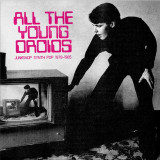
Compiled by Philip King
“And then came the rise of synth pop : blokes with dodgy haircuts hunched over keyboard-operated
machines stuffed with wires and do-it-yourself tone oscillators making sounds like a brood of geese
passing gas in a wind tunnel. Whoopee! This is the way the ‘70s ended : not with a blood-curdling bang
bang but with a cheap, synthesized, emasculating whimper.”
NICK KENT, NME.
All The Young Droids: Junkshop Synth Pop 1978-1985 is a new compilation that charts the
underbelly of the epoch-defining sound of the synthesiser in 80s popular music. Compiled by Philip
King (previously seen compiling All The Young Droogs, Glitterbest and Boobs - The Junkshop
Glam Discotheque), the music here connects the dots between DIY synth enthusiasts grappling with
new, cheap synthesisers at the tail-end of punk and wannabe, jobbing songwriters enthral to the new
music pioneered by Gary Numan, Depeche Mode and Daniel Miller’s Mute Records. Featuring rare
tracks of auto-didactic progressive pop music, proto-techno punk, shoot-for-the-stars-land-in-the-gutter
chart flops and heralded, underground synth classics, School Daze paints a picture of beautiful failure.
Complete with extensive sleeve notes written by King and never before seen imagery, all 24 tracks
were remastered by RPM in-house engineer Simon Murphy, many from vinyl copies due to lost master
tapes. The story told on All The Young Droids is one of the dawning opportunity presented by both the
emergence to the market of cheaper analog synthesisers and the distribution networks plus indie labels
that exploded with the advent of punk music in 1976. While the music that sprouted out all over the
globe in the wake of these factors was decried as fake, plastic, a refutation of punk’s guitar-led
revolution, it’s telling that much of the music on All The Young Droids.. was created in bedrooms,
ramshackle studios and home-made set ups with often borrowed equipment. In the era of record labels
jumping to capitalise on the success of The Sex Pistols, The Clash (both on major labels, of course)
these artists struggled to stand out from a new gold-rush with next to no budget or PR team. With radio
and labels desperate for the new Yazoo, what resulted was a testament to necessity being the mother
of invention.
At the time, the synthesiser was the music of the future, a shiny new machine that could paint like an
orchestra with a single finger and a 4-track. In the hands of Manchester avant-pranksters Gerry & The
Holograms it’s a pulsing, sardonic weapon.. the only instrument on the Messthetics classic lampooning
of New Wave fashion. In Hamburg, a 16 year old Andreas Dorau used it to write and record (with his
female classmates on vocals) a global smash in Fred Vom Jupiter (later licensed to Mute Records).
The hard-to-find English version (Fred From Jupiter, natch) is included here. Many artists with alreadystoried careers caught the bug and recorded synthesiser-fuelled peons to space, computers, the future
and, of course, love-interests. Harry Kakoulli, late of Squeeze, recorded a solo album in 1979 that
included the incredible power-synth-pop smash-that-never-smashed I’m On A Rocket. Similarly, Ian
North of Neo and American Power Pop stalwarts Milk ’n’ Cookies bought a Korg MS20 and used a
tape machine to record We’re Not Lonely, an absolute lost-classic of minimal synth pop. We’re Not
Lonely also features on the Junkshop Synth Pop sampler 7” twinned with John Howard unreleased
track You Will See, released April 12th 2025.
There are plenty of compilation debuts in evidence. Sole Sister were a mysterious trio who were
featured on the Scaling Triangles compilation of female-fronted, queer-adjacent post-punk /
underground music that also featured The Petticoats. Selwin Image were from San Francisco and
featured members of the recently defunct power pop/punk group The Pushups. Their stupidly catchy
The Unknown fizzes with New Wave energy - think XTC to Sparks but remains unreleased until now.
Dream Unit’s A Drop In The Ocean is an early synth wave cut, positively teaming with Joy Division
instrumentation, previously only released on a long-forgotten and super rare, self-released EP.
Incandescent Luminaire’s Famous Names belies an archetypal struggle of a small-town trying to
make it in a cruel industry but is a thrilling New Romantic-Synth Wave cross over with a OMD
gloominess that’s a joy to hear. Feminist Minimal Wave track I Am A Time Bomb by performance artist
Peta Lilly and Michael Chance is a revelation destined for new found cult status. It was released on 7”
and lost until now.
The flipside to the subterranean, never-made-it synth pop mentioned above are the ambitious, even
fruity attempts at success that have a perennial elegance to their confidence. New Jersey-ite Billy
London (real name Ed Barth) tried to cash in on the synth boom with Woman, released by a major
label, a lurching new wave track built on the Louie Louie rhythm and a wonderfully camp Lou Reedstyle sleazy vocal before exploding in the synthesised chorus. The song bombed but with a chorus like
this, you have to wonder why? Ex-Glitter Band member John Springate’s My Life is truly epic, with
doomed chord progressions and massive sounding drums turning into at least 3 different songs in the
course of the track. Before you wonder what’s going on the song resolves with a glorious return to the
main refrain.
The dry-ice-dressed dance floor is well catered for too. Design’s Premonition and Vision’s Lucifer’s
Friend are stone-cold minimal synth bangers, well loved but given a new lease of life here. The
Warlord’s The Ultimate Warlord was released in 1978, a homespun proto Hi NRG banger that was
later re-recorded by The Immortals in Canada who had a club hit with it. One-man- band Disco
Volante’s No Motion was re-issued by Synth wave label Medical in 2012 but makes its first vinyl
compilation appearance here. Close your eyes and you can imagine what Lawrence of Felt would have
sounded like with some cheap Korgs a little earlier in his career. Gibraltar-based trio The Microbes
imagined a computer programming people to dance - how prescient - and ended up with a propulsive,
robo-funk track with splendid rubbery bass playing over a tectonic drum machine. Previously picked up
by Belgian label Stroom TV, Dee Jay Bert & Eagle’s heavily Euro-accented I Am Your Master
demands the listener to “come to paradise!” In a frankly terrifying manner.
All The Young Droids is the first compilation to peel away from the narrative that dour, Minimal Synth
and Cold Wave were the only musical children of the first rush of synth pop. Philip King and School
Daze Records describe a much more complicated world: along with the austere, Brutalist children of
Daniel Miller (who produced Alan Burnham’s Bowie-Low-influenced Science Fiction here) was a
plethora of desperate cash-ins, accidental mainstream hits, ambitious pop dramas and major label
punts that went nowhere. Crucially, the compilation blurs the line between junk and treasure. What if the
two things are interchangeable. What if it’s all science fiction?
Order now and we will order the item for you at our supplier.
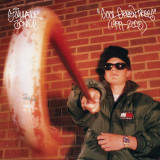
"Chasing the funky symphonies that filled my head and my dreams..."
December 25th, 2023 - an Instagram post. Stimulator Jones shared half a dozen FIRE tracks from his beat tape archive. We were immediately drawn to the rough hewn boom bap.
"I'd release that", Rob commented.
Hours of material was shared and the result is this: Cool Green Trees (1999-2005). A collection of beats and loops Stimulator Jones created between the ages of 14-20 at home in his basement, bedroom and computer room in Roanoke, Virginia.
You will not believe the profound soulful genius contained within these naive schoolboy melodies.
December 25th, 1998 - 25 years ago to the day and his much-coveted Yamaha SU10 sampler was finally bestowed upon young Stimmy AKA Sam Lunsford: "I immediately hooked up a CD Walkman to the input jack and looped the beginning two bars of Grover Washington Jr.'s "Mercy Mercy Me". I don't know what exactly was so thrilling about hearing two measures of music repeating over and over but it was so infectious and hypnotizing and enthralling to me. I'll never forget that ecstatic rush of making my first loop - an uncontrollable, gleeful smile plastered all over my face." When you hear the pocket breakbeat symphonies featured here on Cool Green Trees, you'll feel the same sense of frisson.
In the wake of his Stones Throw breakthrough - Exotic Worlds & Master Treasures - Stimulator Jones was pegged by many as a 90s throwback artist. However, he literally IS a 90s artist. He's been recording music most of his life and he's now 40. He created the bulk of Cool Green Trees as a teenager. Everything before 2004 was recorded when Sam was still in school. He was in 8th grade when he made the 1999 tracks - he didn't even have his learner's permit. This album is a snapshot of a young man in a simpler time. Things were still mysterious back then and he was flying blind, relying on his ears and having to figure things out for himself: "I had no road map for becoming a beatmaker. I have been collecting music since I was a kid, I am a lifelong digger and seeker of cool and interesting sounds. I was there in the golden age of Hip Hop, and while I may have been a suburban white kid in Roanoke, Virginia, I was tuned in and I bought so many classic albums when they came out. I was attracted to Hip Hop because of the musical and poetic quality. I was hypnotized by the rhythms, partially because I was a drummer. I didn't brag about collecting my breakbeat records or making beats - it was something I did in isolation. It wasn't something I generally wanted to bring attention to and it didn't really score me any cool points. I certainly wasn't flexing on social media about it."
Hell, he can do that now!
Opener "Pharoah Jones" was inspired by Yesterday's New Quintet and Madlib's ability to capture that classic 70s sound whilst playing all the instruments. Sam created this one stoned afternoon by laying down a 2 bar loop and a shaker loop on his Yamaha SU700 sampler. He hung a microphone from the ceiling and played his Yamaha Stage Custom drum kit over the top before adding ender Rhodes and playing his dad's Selmer tenor sax through an Electro Harmonix Memory Man echo pedal. Yes! Up next, "Ghost Gospel" utilises a dope loop from a gospel record and adds some soul-funk drums overtop, whilst working that filter knob. Says Sam: "The loop reminded me of something Ghostface would rap over. The sample was in 3/4 waltz time but I flipped it for a 4/4 groove, a technique I picked up from RZA. "Ill Feeling" uses sped-up pieces from a dusty old funk record and putting them over a classic NOLA drum loop; gain chopping up a slow, bluesy 3/4 time signature and bending it to a 4/4 groove. Classy shit. "Capital Punishment" features drums tapped in live, inspired by MF Doom's Special Herbs series. "Do Not Adjust" consists loops found on a compilation of 70s French music at Happy's Flea Market, a classic Roanoke digging spot.
The sublime, evocative title track, "Cool Green Trees" was created when Sam was still living at home. He dumped samples off his SU10 into the family desktop and arranged them in a demo version of Pro Tools: "This track was sort of my ode to the DJ Shadow style of sample based production. Super spacey, slow, and moody. The heavily filtered drums were inspired by Alec Empire's 'Low on Ice' album. I later added some scratches and sounds from a Spider Man storybook record." "Chill Scratch" snags the final bit of a bossanova record and pairs it with a drum loop before adding experimental scratching run through an Electro Harmonix Memory Man echo pedal. "Poisonous Fumes" was made using a sampler, mixer and a turntable; a kind of mixtape beat collage with added scratches and sounds from various records. Using dialogue from superhero records was a nod to Madlib. "Welcome Aboard The Starship" is dark, downtempo trip-hop with a spooky bent. Sam paired a slow, hard drum loop with a guitar sample grabbed off a psychedelic rock record. To finish, he added various backwards sounds and weird atmospheric effects and a little scratching. Swoon.
Side B opens with "Keep On Runnin", made on a borrowed Roland SP202 sampler. Having always loved the sound of the Lo-Fi filter on those machines, reminiscent of the Emu SP1200, Sam always imagined Del or another of the Hieroglyphics crew rapping over this beat. You can certainly hear why. "Sounds Impossible" sees Sam experimenting with layering multiple kick samples at different volumes to create patterns similar to those heard by Showbiz and Lord Finesse during their God-level 1995 period. "Painted Faces" was made by chopping up a REDACTED record which he had gotten from Happy's Flea Market and paired it with a REDACTED drum loop. By the time Sam recorded "The Knew Style", he had acquired a shitty old 1960s portable turntable off eBay. It didn't function properly when he bought it but his brother opened it up, cleaned it out and got it working: "I remember he told me that there was a bunch of sand inside of it when he opened it up, as if its previous owner had taken it to the beach. I would take that turntable on my Happy's Flea Market digs so I could preview records...that's how I found this loop."
"Chicken Wing Blues Sauce" loops up a classic blues joint and pairs it with some REDACTED drums. A bit of filtering and arranging et voilà! "Kool Breeze", from 1999, is one of Sam's oldest surviving beats, as is "Sexx Bullets". The Roots sampled the same record, leaving Sam frustrated yet vindicated. "Soul Child" was an early SU10 creation, looping a dusty old Soul Children 45 and pairing it with 70s rock drum loops to great effect. "Take Off Runnin" was another loop found digging with a portable turntable. Paired with some boom bap drums it makes for a hypnotic head-nod groove. "Centurian" was intended to be a little beat interlude a la Pete Rock. The sample is from a sun-dappled soft-psych record and it's paired with a Robin Trower drum loop that just happens to fit perfectly. Sometimes you slap things together kind of haphazardly and magic happens. "Bozack" was the first beat Sam made using Pro Tools, his first foray into using chopped sounds instead of loops, an exciting new world. "Church" is beat interlude using a Phil Upchurch loop with the "Long Red" drums - a favourite break of Dilla et al. Sam was really on a tear in late 2004, probably because he was unemployed and phoneless and able to just make beats all day. He made "Splash One" on a borrowed Yamaha SU700 and again was experimenting with tapping the drums in live with his fingers, instead of using a loop or sequenced pattern. Channeling 9th Wonder, Sam used a water splash sound effect from a Batman record as a percussive element, hence the title (also a 13th Floor Elevators reference). The main loop is a backwards portion of one of his favourite Roy Ayers songs.
"Hank" is another fun little beat interlude thing, created on a borrowed Roland SP202 sampler with the fantastic Lo-Fi effect that resembled the Emu SP1200 at a fraction of the price. "73 goatee", from 99, is another of his oldest surviving beats, created in his bedroom with his Yamaha SU10 and his brother's Vestax MR-300 4-track recorder: "This one will always feel special. I can remember having a feeling all the way back then on the night that I created it that this was a solid beat with a catchy loop. There was something in the Fender Rhodes melody that resonated with me emotionally, and I had never heard a producer sample that portion before. I felt like I had found my own unique sound, my own unique loop. It came from an Ahmad Jamal '73. I actually even recorded myself rapping and scratching over this beat way back then, I still have that version in all its imperfect sloppy glory."
Sam explains just how much these tracks mean to him: "They all have immense historical and sentimental value and I'm proud of them. These beats come from an innocent, simple time when I was just figuring out how to craft these sounds. They're something very personal to me. They are the initial part of a journey that I really was taking *alone*. There was no YouTube. I couldn't Google shit. I didn't even know any other beatmakers, producers or DJs in my town that could teach me anything. It was always just me, alone, in a room with some equipment - chasing the funky symphonies that filled my head and my dreams. What I was doing wasn't cool. Most of my peers thought I was a weirdo and couldn't care less. Creating these sounds was an anti-social endeavour. In a sense, I felt like it was me against the world, and all I had to instruct and assist me were the recordings produced by my heroes - RZA, DJ Premier, Erick Sermon, Beatminerz, Showbiz, Diamond D, Beatnuts, Prince Paul, The Bomb Squad, Pete Rock, Q-Tip, E-Swift, Mista Lawnge, DJ Shadow, Cut Chemist, Peanut Butter Wolf, El-P and so many more...I dedicate this collection to them, and to my older brother Joe who has always been a musical and technical guiding light for me.
This was a time before every kid was a self-described producer and beatmaker, before everyone had a DAW, before Kanye and "chipmunk soul", before Red Bull beat battles, before there was any social media beyond chat rooms and AOL Instant Messenger, before Soundcloud, before SP-404 mania, before lo-fi beats to study to, before Splice, before targeted ads for MIDI chord packs, etc. In 99 when I told people that I had a sampler and made beats I was mostly met with bewildered confusion and indifference. Kids and adults alike would wonder why I got this weird machine for Christmas instead of something worthwhile like a Playstation or a mountain bike or even a guitar for that matter because at least that could be used to make "real music". Back then, sampling was still not widely respected as an art form - it was seen as lazy, talentless and unoriginal at best and outright criminal theft at worst. I had gotten respect for playing drums and guitar and things of that nature but this was a step in the wrong direction in the eyes of many."
The cover photo is a picture of Sam standing on his back porch in the latter part of 1998, just before he got his first sampler. He was 13 years old, in 8th grade. His dad took the picture with his 35mm film camera: "I actually wanted to be pointing my dad's .22 pistol at the camera lens but he wouldn't let me. He gave me an old walking cane to use instead. The Tommy Hilfiger puffer jacket came from the lost and found at William Fleming High School where my mom worked as a secretary. I was thrilled when she brought it home because we never spent money on expensive name brand clothing like that - we were for the most part strictly a sale rack, bargain bin, thrift store, yard sale, flea market kind of family when it came to clothes. My watch is some cheap off-brand fake gold department store watch." Mastering for this vinyl edition was overseen by Be With regular Simon Francis and it was cut by the esteemed Cicely Balston at Abbey Road Studios to be pressed in the Netherlands by Record Industry.
Order now and we will order the item for you at our supplier.

When the trio of Sontag Shogun gathered at Laura Naukkarinen's home on the Finnish island of Kimitoön in the summer of 2019, they had not the slightest inkling that the world was about to change irretrievably with the onset of a long-predicted pandemic the following year. By the time their collaborative album, Valo Siroutuu ("The Light Scatters"), was released nearly two years later, the intimate and reflective nature of the work they had created together had taken on new meaning, resonating powerfully (and quietly) with a world in which the proverbial cracks in the wall only seem to be widening.
Päiväkahvit completes the story that began with Valo Siroutuu, featuring 9 songs from the original sessions as well as 4 interpretive reworks courtesy of Amulets, Fadi Tabbal, Post-Dukes, and Jeremy Young. Available digitally and in a one-time vinyl pressing of 300 copies, the album flows seamlessly from beginning to end, incorporating field recordings, tape, sublime vocal melodies, and a host of acoustic and electronic instruments. Richly textured and immersive, Päiväkahvit positively crackles with warmth and a sense of creative embrace.
"We invite the listener into the sauna, out to the garden and onto the trampoline, to sit by the water’s edge and to take a coffee in the waning afternoon light, and to stay as long as they like." – Jesse Perlstein
Lau Nau, aka Laura Naukkarinen, is a Finnish composer whose music is imbued with an idiosyncratic, finely honed sound world. Her palette consists of acoustic instruments, singing voice, modular synthesisers, reel-to-reel tape recorders and field recordings. To date Lau Nau has released ten albums on record labels in Europe, the USA and Japan and a large number of collaborative releases. Lau Nau is known for her music to films and multi channel sound installations. She was awarded the Finnish State Prize for the Performing Arts 2021 as a sound designer. She has toured abroad for over 20 years, playing in venues such as Super Deluxe in Tokyo, the Lab & Castro Theatre in San Francisco and Blank Forms & Issue Project Room in New York.
Sontag Shogun is a collaborative trio that makes use of analog sound treatments and nostalgic solo piano compositions in harmony to depict abstract places in our memory. Textures built from organic materials such as sand, slate, boiling water, brush and dried leaves, both produced live in performance and recorded to weathered 1/4" tape warm up the space between lush piano themes. All of which is abstracted coolly in the reflective digital space of treated vocals and a live-processed feed from the piano. Bringing us back, like a faded passing scent or any natural emotive trigger, but to where? The wordless journey there will inevitably be more revealing than the destination itself.
expected to be published on 20.06.2025

The debut recording by The Ancients, the intergenerational coalition of Isaiah Collier, William Hooker, & William Parker formed by parker to play concerts in conjunction with the milford graves mind body deal exhibition at the institute of contemporary art los angeles & now a working group. across x2LPs of side-length long-form improvised sets recorded at 2220 arts & archives in LA & the chapel in San Francisco, The Ancients bring the free jazz trio languages first explored by the Cecil Taylor Unit & Ornette Coleman’s -Golden Circle- band (expanded upon in later eras by Sam Rivers' Trio & Parker’s collective trios with Charles Gayle/Graves & Peter Brötzmann/Hamid Drake) into their own unique & scintillating realms of expression.
As we tumble further into the throes of history’s tides, people of hope & creativity rely on the works of our great artists to lift our spirits & focus our resolve. -ascension- was recorded less than a year after the passage of the civil rights act & four months after the assassination of Malcolm X. -journey in satchidananda- was recorded the month reagan was re-elected governor of California. M’boom made its debut recording weeks after the watergate scandal broke & a couple months after the wounded knee occupation ended. The music of the ancients builds on these great musical legacies. it resounds with the pride of survival & the joys of making & sharing music. It delivers to us hope & balm. something real in you, real in history, & real in the music is shared, right on time.
When Eremite records commenced operations during the 1990s free jazz resurgence, heavyweight freedom-seeking tenor saxophonists such as Fred Anderson, Peter Brötzmann, Charles Gayle, Kidd Jordan, & David S. Ware were at the height of their powers. Isaiah Collier’s tenor playing in the ancients is bracing testimony that the wellspring lives on. to hear the young chicago firebrand blowing freely with veteran improvisers in an entirely open-form group music is a revelatory study of his vast talent, personal voice, & the intensity of his expression —as well as a bold complement to his composition-based albums as a bandleader (including -the almighty-, a new york times' best albums of 2024 selection).
I've admired drummer William hooker since first encountering his music in a hartford ct city park, early ‘90s (on a double bill with Jerry González & Fort Apache Band). From the man himself right off the bandstand i bought his even-then rare 1st recording, the 1976 self-released x2LP opus -is eternal life- (reissued 2019 by superior viaduct). An imposing force on his instrument & an intrepid DIY cat, Hooker’s been exuberantly swinging in&out of free time for 50+ years. informed by the innovations of Sunny Murray & Tony Williams yet entirely himself, there is no other term for it than “pure hooker.” at age 78, with the ancients & everywhere else, THE HOOK is in peak form.
With a discography approaching 600 entries & 50+ years working across the musical maps, including in the history-defining bands of Don Cherry, Cecil Taylor, Bill Dixon, Peter Brötzmann, in his own wondrous ensembles from small group to orchestra to opera, a bastion of compassionate leadership & a poetic champion of his musical community, in tireless service to what he rather egolessly refers to as “the tone world”, multi-instrumentalist, improviser & composer william parker is a living hero of the grassroots & the black mystery musics, not to mention one of the great bassists in the history of jazz. To quote George Clinton, conquering the stumbling blocks comes easier when the conqueror is in tune with the infinite.
Live to 2-track concert recordings by Bryce Gonzales, Highland Dynamics. Mastered by Joe Lizzi, Queens, NY.
Order now and we will order the item for you at our supplier.

In their new album Bagola, Trio Da Kali present newly composed songs accompanied on balafon and ngoniba, that provide a rich accompaniment to the spectacular voice of Hawa Kasse Mady Diabaté. She inherits her singing style from her father, the late Kasse Mady Diabaté, who was widely recognized as one of Africa"s all-time greatest singers and won a Grammy nomination in 2004. Hawa"s voice has an exquisite purity and expressiveness, with a wide emotional range. She is equally at home in the lively, 9/8 rhythms of the title track Bagola, a light-hearted critique of men in Malian society, to the soulful Orpaillage, a song that laments the destruction of land from gold-panning. Orpaillage was in fact composed on the spot in the studio, reflecting the creative chemistry between these three musicians. The musical director of the trio is balafon (xylophone) player Lassana Diabaté, born in Guinea into a well-known family of balafon musicians. His remarkable dexterity on the balafon earned him a place in Toumani Diabaté"s Symmetric Orchestra, and later on in the group Afrocubism (featuring Eliades Ochoa). He has collaborated with many musicians, including bluesman Taj Mahal on the album Kulanjan. With two balafons of 22 rosewood keys each, tuned to play chromatic scales, Lassana Diabaté achieves a perfect balance of rhythm, melody, harmony and virtuosic embellishment. David Harrington, leader of Kronos Quartet, compares him to none other than JS Bach. Underpinning the balafon with compulsive groove, is the large ngoniba, played with brilliant musicality by Madou Kouyaté (son of Bassekou Kouyaté and member of his group Ngoniba). Madou, the youngest member of Trio Da Kali, also adds rich harmonies with his deep breathy voice to the songs. Trio Da Kali were founded in 2013 under the initiative of the Aga Khan Music Programme, with the help of three-times Grammy-nominated music producer Lucy Durán. The Trio first rose to international fame with their sublime album Ladilikan (World Circuit Records 2017), featuring an unprecedented and multi-award-winning collaboration with Kronos Quartet, the legendary classical string quartet from San Francisco. Bagola is a showcase of Trio Da Kali"s entrancing and unique sound, only equaled by their magical performances on stage.
expected to be published on 28.03.2025

"The Beatles spread the use of electric guitars all through the world, and Bolivia was no exception. “The British Invasion” hit a politically convulsed country, and it fell upon a rich multi-cultural scene that was further expanded when the psychedelic counterculture youth movements coming from San Francisco also took the hearts of the country’s youngsters.
It was a big mixture of influences thrown in a cauldron that saw a link between the LSD drenched hippie generation and the country’s native ancestors. Bolivians were not new to mind-expanding experiences, the acid experiences promoted in the USA by Ken Kesey and Timothy Leary found their local counterpart in the old indigenous traditions of using plants such as the ayahuasca to open their doors of perception.
On this compilation you will find some of the more interesting young bands from a 1960s Bolivia bringing the sounds of a new generation and marrying them with the rich musical background of the country. The garage-sounding psychedelic beat made by these young musicians would soon open new horizons, and Bolivia would soon see how traditional sounds, like their local version of the cumbia, would evolve in a similar way as it would do in the neighboring country of Perú."
expected to be published on 21.03.2025

There's iconic. Then there's *iconic*.
A MASSIVE speaker-smashing release, decades overdue. It's been bootlegged - shamefully so, many times over the years - but finally we present the first ever officially licensed reissue of this truly special Afro-disco-not-disco LP from 1979. A favourite of Harvey, Antal, Young Marco and, er, every great DJ to ever play deep records ever, basically. It's not hard to see - or, indeed, *feel* why.
Gem after gem of relentless, irresistibly funky gold, it's an incredibly revelatory album with endlessly complex drum patterns and basslines to dive into, throughout. Truly, this is uniquely FIRE music, unlike anything else you've ever heard, based on Gwo ka music from the gorgeous islands of Guadeloupe and Martinique. A thrilling synthesis of primal, hypnotic drums - the most tribal of percussive elements high in the mix throughout - with the loping synth pyrotechnics of, amongst a whole host of other greats, Wally Badarou and bass power of disco funk don Sauveur Mallia (Arpadys, Spatial & Co.)
Originally released on the seminal French label Barclay, you'd be hard pressed to even find an original copy in nice condition anywhere, let alone for a reasonable price, so it's high time an officially licensed, remastered reissue came around. It's just the latest in a long line of Be With reissues where the music sounds like the - drop-dead dazzling - cover. This here is a true drum attack. BUY ON SIGHT!
Tumblack was a short-lived project, produced and arranged by electronic wizard Yves Hayat and it can certainly be regarded as one of the first examples of Zouk, mixing powerful disco-funk arrangements with Gwo ka, traditional music from Guadeloupe. Gwo ka is an Antillean Creole term for "big drum". You can say that again! It refers to both a family of hand drums and the music played with them, which is a major part of Guadeloupean folk music.Whilst the first side is credited to the exceptional Tumblack band, the flip is given over to "Tumblack & Friends". These weren't just any old friends. Oh no, they were the absolute cream of the French scene (think Arpadys, Voyage, Le Club, Giant, CCPP, Synthesis, Swing Family) such as Sauveur Mallia, Wally Badarou, Marc Chantereau on percussion, Slim Pezin on guitar and Jean-Paul Batailley and Pierre Alain-Dahan handling drum duties.
The urgent, frantic "Fracas" gets things moving straight away with a cavalcade of drums and percussive funk before giving way to the stratospheric "Invocation", one of the album's many, many highlights. It's effectively one long heavenly drum break, a really hard, raw, tribal drum workout without a whole lot else going on - and all the better for it! One to make you sweat, no question. Up next, "Jubilé" is announced with a bellowing accapella voice, chanting the titular name before the heaviest of kicks smashes out your system and lulls you into an absolute state of bliss for nearly 6 minutes. Whoooooosh! Rounding out the sensational A-Side, "Vaudou" is a scratchy, funky patterned drum workout which - yep, yet again - absolutely slays your neck muscles, making them snap and contract in extraordinary fashion. TURN IT UP!
Ushering in the B-Side, the brief, fidgety, African chant-funk of "Parlement" segues seamlessly, beautifully into "Waka", an overwhelmingly rich gem of percussive funk. You do not want this to end, once it hits its stride. For maximum heavenly drum pleasure, you'd need to go a long way than the moment "Waka" feels like it's fading out before it kick-drum-blend into the mighty "Caraïba (Intro)". It's just staggeringly good. It's a minute-long layered drum prelude to the gigantic track which follows. Indeed, "Caraïba" is arguably the best loved and most well-known cut off the LP. And with good reason...featuring that Mallia bass, warm Rhodes and clavs, synth magic, memorably alto sax lines and, of course, tribal chanting.
Another mighty super-ahead-of-its-time classic, the bouncing bass heavy synth funk of "Chunga Funk" deploys Mallia and Wally Badarou (on Mini Moog) exceptionally well. I mean, come on, that bassline is just ridiculous. Try not to move to this one. This extraordinary record closes out with the more traditional Gwo ka sounds of "Bateau La Passé", the tribal chorus making the hairs on the back of your neck stand up.
Tumblack really is a gorgeous late-70s disco-not-disco essential. It's an absolute MONSTER that will completely blow you away; and, yes, it's as compelling and trance-inducing as the cover. The audio for Tumblack has been carefully remastered by Be With regular Simon Francis, ensuring it sounds better than ever. Cicely Balston's expert skills have made sure nothing is lost in the cut whilst the records have been pressed to the highest possible standard at Record Industry in Holland. The cover of Tumblack is so iconic and we sought special permission from original artist Hélène Majera to recreate this at Be With HQ. It absolutely zings off the print and serves as the perfect finishing touch to this long overdue re-issue.
Order now and we will order the item for you at our supplier.

Liner Notes Shawn Pittman 'My Journey' Since releasing my first album in
1998, I have been on a road with many twists and turns and some interesting
stops along the way - Like the title song of this album 'My Journey' reveals,
"if I played on the streets, or on the biggest stage..." I think of high points like
getting a standing ovation and an encore as the opening act at The Fillmore in
San Francisco
Opening up for B.B. King for two nights in Houston at The House of Blues. Playing the
Chicago Blues Festival and having hundreds of people standing in line for an
autographed CD. Playing with the Muddy Waters band at Antone's in Austin and doing
a duo with James Cotton. Being a guest front man with Double Trouble in Minneapolis
and many more special moments. There were also gigs where I played for tips on the
street (mainly 6th street in Austin) and played at a shark auction on a pier in Bordeaux
(the auctioneer would interrupt the song and speak in very fast French!). I played 3
nights a week on the Riverwalk in San Antonio for people throwing wadded up napkins
at me and yelling "Play something we've heard!"
During this journey you meet people along the way that can see something in you that
maybe you can't even see yourself. I have been fortunate enough to meet many
people like that that have encouraged me to continue to use the gift that God gave
me. Erkan Ozdemir is one of those people. We started doing tours together around
2011 and I have had the privilege of sharing the band stand with him many times in
Europe and even in the USA. He is a great bass player and has raised up some
amazing young men as well as musicians, Kenan and Levent. You may know them as
the Ozdemirs. I am kind of like the "American cousin" to them as I have seen them
grow up and felt like family. This is the second time we have teamed up on a record.
The first was 'Make it Right' with Levent on drums and Erkan on bass. We have a great
chemistry live and in the studio.
I think this album might just be my favorite one of them all! Hope you enjoy!
expected to be published on 14.03.2025

Music To Varnish Owls By. Does Geoff Bastow have a claim for the best album title of all time? It's certainly up there. It's also one of the hardest to find library funk records. But don't let the eye-catching name fool you into thinking this isn't serious business.
As a key member of Giorgio Moroder's team, the legendary Geoff Bastow shouldn't need any introduction. You'll be familiar with his singular brilliance as the brains behind the much-sampled boogie/disco classics "You Don't Like My Music (Hupendi Muziki Wangu?!)" and "Don't Stop", released by his group, K.I.D.
But 1975's Music To Varnish Owls By is where it all began for our hero.
It's packed with incredibly soulful, soothing music that - despite being utilised a few times by Knxwledge - remains still largely un-mined. So, beat-makers, get cracking. And instead of that hyper-rare original, spend that £300 on something else.
Born in 1949, Bastow was a Munich-based English songwriter and record producer. Originally working as a guitarist and pianist in dance bands around his home county of Yorkshire, he moved to London in the early 1970s and then Munich in around 1976. He was one of the main architects of the Munich disco sound of electronic innovator Giorgio Moroder and also released heaps of killer library records for legendary labels like Bruton (with brother Trevor), Impress, JW Music Library and the Munich-based Sonoton between the 1970s-2000s. Bastow died tragically young, in Berlin, Germany on 16 March 2007, at the age of just 57. But he left behind a truly incredible electronic music legacy. He deserves to be much better known and this reissue should bring him to a fair few more ears. Let's see why...
Light-hearted opener "The Rough With The Smooth" contains a killer open drum break and is basically guitar-drenched flute-laced piano-funk. However, the first genuine highlight, "Beautiful People", is just majestic. Reflective, pastoral and silky smooth - as the title suggests, it's just straight beautiful; a chiming, deeply soulful instrumental that has to be heard to be believed. Sampled by Knxwledge but nobody else of note, which is crazy. Slo-mo soul beat "Tumbleweed" is another stone cold track just desperate to be laced by a skilled MC. Laconic, lysergic funk with nostalgic overtones, the guitar is prominent but the flute and glock really elevate it to perfection.
"Bits And Bats" is clav-enhanced Blaxploitation-esque street-funk with tough bass and crunchy drums that, despite its hardness, manages to flirt with breeziness. All in all, sumptuous, pounding wah-wah brilliance. Another huge one, up next. The insistent piano-funk head-nodder "A Change Of Pace" is a total sleuth-funk jammer, with a wonderfully soft snare and more hypnotic, melancholic flute lines. Man, we'd love to hear Alchemist chop this up. It even sounds a bit like Bastow was keeping things thoro with this one. Closing out Side A, the bright and breezy Bossa of "Janelle" makes it a perfect run of six untouchable gems. As elegant as it is sleazy, it sounds like it could've been on the classic KPM greensleeve, Piano Viberations.
Side B opens with the Ramsey Lewis-inspired "Time And A Half", a deceptively simple bass, drums and piano workout, decorated with stylish percussion with some great chord changes and hints of drama via a great bass solo. The heavy "Supersplash" is a doped-out drama suite with fuzzy wah-wah guitars, electric piano and glock. "Fillet Of Soul" is a catchy wah-wah propelled shuffle with piano and vibes, super dynamic but also incredibly chill.
"Well Above Average" is exactly that, a funky instrumental that serves as a straight ahead guitar-soul workout. Oozing bass-driven class, it gets better with every listen. Some open drums for your delectation, too. The fuzzy clav-and-vibes funk of "The Clan" - also understandably sampled by Knxwledge - is a monster head-nod slow jam whilst, seeing us out, the uber-relaxed "Sing Song" rounds things off in bright fashion with its slow but insistent clav, electric piano and glock greatness. Swoon.
As ever, the audio for Music To Varnish Owls By has been carefully remastered by Be With regular Simon Francis, ensuring it sounds better than ever. Cicely Balston's expert skills have made sure nothing is lost in the cut whilst the records have been pressed to the highest possible standard at Record Industry in Holland. The original, iconic sleeve has been restored here at Be With HQ as the finishing touch to this long overdue re-issue.
Order now and we will order the item for you at our supplier.

In 1997 a CD compilation called Calambre Techno was released in Spain which included a track called Utopia. Its producers were two Spanish brothers who had been making electronic music since 1991 under the name INTRO. The track of the compilation was a remix of the original included in the Ep Intro - @Utopia from 1994. @UtopiaRemix is a simple but perfect Techno-Trance anthem, Retro-Psychedelic but futuristic, one of those timeless tracks that always sound original despite its 30 years. Now UFC is proud to re-issue this techno-trance gem on vinyl as its eighth release accompanied by remixes from current producers of different visions.
About the remixes; The duo The MFA give us their '94 On The Floor Remix', a perfect “hit” to hear at dawn where they perfectly combine IDM, Indie-House and Experimentalism. Spanish producer Promising/Youngster presents 'Electric Shock Remix', a titanic version of the original remix where powerful Electro rhythms collide with Experimental and Futuristic IDM.
In the case of Brassica we left the way free to experiment with the original remix and he gives us his 'Psytalo Remix', a perfect fusion of Techno, Breaks and Psychedelia, originality in its purest form as this producer has accustomed us to in all his productions. To close the Ep, we find 'FutureCosmicalAscension Mix' by R.I.P. Bestia, truly a different version that is difficult to include in a specific style where the main melody is progressively guided towards a state of euphoria.
Original Track Produced by Intro: Francisco & Nacho Sotomayor. Liscensed with permission of Absolute Ambient (ES) 1994
Order now and we will order the item for you at our supplier.

Born in Aldershot on 11 September 1947, Catley's family moved to the Tile Cross area of Birmingham when he was young. He went on to attend the nearby Central Grammar School for Boys (Birmingham) and left to start an apprenticeship at the GPO before deciding on a musical career shortly after meeting similarly minded individuals at college. Whilst at college he joined several bands, such as The Smokestacks (Jeff Clark-guitar, Ron Savage-guitar, Derek Danks-bass & Brian Worrell-drums, Life and Clearwater). His first professional band was when he joined local outfit The Capitol Systems. The initial line-up was Bob Catley (vocals) Paul Sargent (guitar) Paul Whitehouse (bass), Dave Bailey (keyboards) and Bob Moore (drums). Shortly afterward they changed their name to Paradox, inspired by a science-fiction novel. A one-off deal was arranged with Mercury after Paradox had come to the attention of Francis Rossi and Rick Parfitt. The tracks were "Ever Since I Can Remember", backed with "Goodbye Mary". In addition, they recorded "Mary Colinto" and "Somebody Save Me". All of these songs were written by Dave Morgan. Paradox played festivals in the Netherlands and Italy before splitting up upon their return to the UK in 1970. Formed in 1972, Magnum throughout the next 16 years consisted mainly of Bob Catley on vocals and Tony Clarkin on guitar. Magnum began as the house band at Birmingham's famous Rum Runner night club (later the home of Duran Duran). They began to develop their own style by playing Clarkin's songs at a residency at The Railway Inn, in Birmingham's Curzon Street, in 1976. Joining Clarkin and Catley were drummer Kex Gorin and bassist Dave Morgan (later a member of ELO). Their most notable success during these early years was the Jeff Glixman produced Chase The Dragon (1982) which reached No. 17 in the UK, and included several songs that would be mainstays of the band's live set, notably ‘Soldier of the Line’, ‘Sacred Hour’ and ‘The Spirit’. Their breakthrough album came in 1985 with On a Storyteller's Night which featured the single ‘Just Like an Arrow’. This success continued in the following years with the Roger Taylor (Queen) produced Vigilante in 1986, the top 5 album Wings of Heaven in 1988, and the Keith Olsen produced Goodnight L.A. reaching No. 9 in the UK album charts in 1990. Subsequently, Clarkin decided to maintain a tighter control, and after their initial mainstream success, the band lost their major label backing and returned to a more personal level of production. This finally found the band splitting and the formation of Hard Rain in 1995, which saw Clarkin pursue a more Pop orientated direction with a band that included Sue McCloskey on lead vocals. This new direction didn’t sit well with Catley, and after a headline performance at The Gods in the late 90s, a conversation with Bruce Mee of Now & Then Records saw Catley agree with a decision which eventually led to his debut solo album, ‘The Tower’. This release was completely written by Gary Hughes of Ten, with the writing completely decided to be in the vein of classic Magnum. The album itself was recorded by various members of Ten, including the amazing Vinny Burns (Dare) on guitar. On release, the many positive reviews concluded that the release of ‘The Tower’ had succeeded beyond its wildest imagination…..and Bob Catley’s solo career had been launched with amazing success!! With a lyrical intricacy and majestic pomp, songs like ‘Far Away, ‘Fear of the Dark, ‘Madrigal’ and ‘Deep Winter’ take you back to that glorious period of Magnum between ‘Chase The Dragon’ and ‘Wings Of Heaven’ whilst hard melodic rockers such as ‘Scream’, ‘Dreams’ and title track ‘The Tower’ show just what Magnum would have sounded like if they’d gone a little bit harder. Another absolutely brilliant album that totally deserves to be filed alongside those mid-period Magnum classics.
expected to be published on 20.09.2024

Dark Entries and Honey Soundsystem Records have teamed up once more to release the final volume of gay porn soundtracks by San Francisco-based musician and producer, Patrick Cowley. One of the most revolutionary and influential figures in the canon of disco, Cowley created his own brand of Hi-NRG dance music, The San Francisco Sound.' Born in Buffalo, NY on October 19, 1950, Patrick moved to San Francisco in 1971 to study at the City College of San Francisco. He founded the Electronic Music Lab at the school, where he would make experimental soundtracks by blending various types of music and adapting them to the synthesizer.
By the mid-70's, Patrick's synthesis techniques landed him a job composing and producing songs for disco superstar Sylvester, including hits like You Make Me Feel (Mighty Real)', Dance Disco Heat' and Stars.' This helped Patrick obtain more work as a remixer and producer. His 18-minute long remix of Donna Summer's I Feel Love' and his production work with edgy New Wave band Indoor Life were both of particular note. By 1981, Patrick had released a string of dance 12 singles, like Menergy' and Megatron Man'. He also had founded Megatone Records, the label upon which he released his debut album, Menergy'. Around this time Patrick was hospitalized and diagnosed with an unknown illness: that which would later be called AIDS. Throughout 1982, he recorded two more Hi-NRG hits, Do You Wanna Funk' for Sylvester, and Right On Target' for Paul Parker, as well as a second solo album Mind Warp'. On November 12, 1982, he passed away.
In 1979 Patrick was contacted by John Coletti, owner of famed gay porn company Fox Studio in Los Angeles. Patrick jumped on this offer and sent reels of his college compositions from the 70s to John in LA. Coletti then used a variable speed oscillator to adjust the pitch and speed of Patrick's songs in-sync with the film scenes. The result was the VHS collections Muscle Up' and School Daze' released in 1979 and 1980. Afternooners' is the third collection of Cowley's instrumental songs, recorded in May 1982. These recordings were culled from two 23-minute reels in the Fox Studio vaults. All songs were originally untitled, so we've used the titles from Fox Studio's 8mm film loops. This compilation also includes three bonus tracks found in the archives of fellow Megatone Records recording artist Paul Parker and the attic of teenage friend Lily Bartels. Influenced by Tomita, Wendy Carlos, and Giorgio Moroder, Patrick crafted a singular sound from his collection of synthesizers, percussion, modified guitars, and hand-built equipment. The listener enters a world of forbidden vices, evocative of Patrick's time spent in the bathhouses of San Francisco. The songs on Afternooners' reflect the advances of the equipment available at the onset of the 1980s. Cowley's unadulterated electronic forms are stripped down and dubbed up. Lush electronic percussion, soaring synthesizer riffs and low slung funk grooves comingle on these magnificent soundscapes.
Featuring 70 minutes of music never before released on vinyl. All songs have been remastered by George Horn at Fantasy Studios in Berkeley, CA. The vinyl is housed in a gatefold jacket designed by Berlin-based artist Gwenael Rattke, featuring black and white photos of Patrick in his studio that opens to a full color array of x-rated scenes from the Fox Studio vaults. Included is a fold-out poster featuring a handmade collage using photography and xeroxed graphics of classic gay porn imagery and an essay from Drew Daniel of Matmos. For Patrick's 67th birthday, Dark Entries and Honey Soundsystem Records present a glimpse into the futuristic world of a young genius. These recordings shed a new light on the experimental side of a disco legend who was taken too soon.
Order now and we will order the item for you at our supplier.

San Francisco psych-pop legend announces new album, “La Fleur” out June 7th, 2024. Between outside musical projects, pushing past 50 years old and becoming a father for the first time, San Francisco psych-pop legend Kelley Stoltz has spent the past two years steadily writing and recording his 18th album, “La Fleur”. The dazzling 12 song collection will be released in June by Agitated in Europe/UK and Dandy Boy Records in the USA. “La Fleur'' finds Stoltz once again playing nearly all of the instruments on the album- though a new friendship with pop guru Jason Falkner has led to Falkner appearing on two songs, “Hide In A Song” and “Make Believer” respectively. There’s the requisite 60’s meets 80’s pop rock confections that Stoltz favors with a new focus on out front vocals and perhaps a bit shinier production. Pandemic era blues, politics and fatherhood are lyrical touchstones throughout. The album’s first single “Reni’s Car” is the jangle rock lead single based on an actual event of Kelley riding around Manchester in the Stone Roses drummer's car. The accompanying music video was shot (partially) on location. “About Time” marries Twin Peaks synths to Fleetwood Mac and Avalon era Roxy Music in a cautionary tale to Stoltz's young daughter. “Human Events” puts revolutionary prose to a Moody Blues strum that floats off into Osees territory …and do I hear a nod to Gershwin in there? During the 2010’s Kelley played live as a sideman with Rodriguez and Echo & the Bunnymen, as the 2020’s dawned he was invited to support Pavement on their big reunion tour. He’s also been heard playing drums live with Robyn Hitchcock as well as adding sitar to Hitchcock's last two albums. In 2022, Stoltz was championed with a live appearance on Marc Riley’s BBC6 show. As producer, he has recorded the new album by Brigid Dawson formerly of the Ohsees. In my ears, Stoltz rarely does any wrong, and these comparisons are only just that little fruit to get you curious- he is still one of a kind. An under the radar hero to a few, and still after all these great songs, deserving of more. Climb on the bandwagon - as ever it’s quite pleasing here. - GEORGE CLOUD San Francisco, CA 2024
expected to be published on 07.06.2024

San Francisco psych-pop legend announces new album, “La Fleur” out June 7th, 2024. Between outside musical projects, pushing past 50 years old and becoming a father for the first time, San Francisco psych-pop legend Kelley Stoltz has spent the past two years steadily writing and recording his 18th album, “La Fleur”. The dazzling 12 song collection will be released in June by Agitated in Europe/UK and Dandy Boy Records in the USA. “La Fleur'' finds Stoltz once again playing nearly all of the instruments on the album- though a new friendship with pop guru Jason Falkner has led to Falkner appearing on two songs, “Hide In A Song” and “Make Believer” respectively. There’s the requisite 60’s meets 80’s pop rock confections that Stoltz favors with a new focus on out front vocals and perhaps a bit shinier production. Pandemic era blues, politics and fatherhood are lyrical touchstones throughout. The album’s first single “Reni’s Car” is the jangle rock lead single based on an actual event of Kelley riding around Manchester in the Stone Roses drummer's car. The accompanying music video was shot (partially) on location. “About Time” marries Twin Peaks synths to Fleetwood Mac and Avalon era Roxy Music in a cautionary tale to Stoltz's young daughter. “Human Events” puts revolutionary prose to a Moody Blues strum that floats off into Osees territory …and do I hear a nod to Gershwin in there? During the 2010’s Kelley played live as a sideman with Rodriguez and Echo & the Bunnymen, as the 2020’s dawned he was invited to support Pavement on their big reunion tour. He’s also been heard playing drums live with Robyn Hitchcock as well as adding sitar to Hitchcock's last two albums. In 2022, Stoltz was championed with a live appearance on Marc Riley’s BBC6 show. As producer, he has recorded the new album by Brigid Dawson formerly of the Ohsees. In my ears, Stoltz rarely does any wrong, and these comparisons are only just that little fruit to get you curious- he is still one of a kind. An under the radar hero to a few, and still after all these great songs, deserving of more. Climb on the bandwagon - as ever it’s quite pleasing here. - GEORGE CLOUD San Francisco, CA 2024
expected to be published on 07.06.2024

Warehouse Find!
Seems like something's going on across the pond at the moment with seemingly blossoming, or at least rejuvenated scenes in the United States and Canada. Our last handful of releases on Freerange have included artists from Montreal, Tujuana, Pittsburgh and Chicago and we're about to add Los Angeles to the list with this new one from Justin Jay and Ulf Bonde. The young producers have been steadily building steam with a number of fine releases the last couple of years
and we welcome them to Freerange for their debut EP entitled Indecision. The title track sets the mood with a low-slung, super-deep house groove complete
with an intimate vocal and a charming simplicity which contributes to the powerful end result. Elements come into focus then disappear in a fog of reverb whilst playful guitar picks add a live jammed feel to the loping groove giving things a Bob Moses/Francis Harris kind of vibe. Next up is Justin's own Dub version which steers a similar course but focuses on
a more floor-friendly arrangement and minimal vocals.
Flipping over we have Giegling and White regular Edward taking the reigns and working his magic on an incredible, epic remix of Indecision. Those who follow his every move as we do here at Freerange might have some idea of what to expect.
The result is a glorious, almost ten minute long fusion of ambient, dub techno and deep, sub-aquatic house to lose your marbles to. It's fairly pointless trying to describe the delicate twists, turns and subtle details that make up this piece, suffice to say, it's the kind of track that makes you feel warm and fuzzy inside.
Closing the digital release we have a bonus track in the form of I See You. Once again, Justin and Ulf have created a heady mix of delicate vocals, dubby atmospherics and a crisp beats which drive the groove along perfectly.
Order now and we will order the item for you at our supplier.
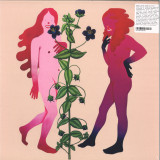
A humanity-reminding suite of miracle moments, Someone Like Me unites a geographically unbound cast of real people in pursuit of a meaningful connection. Taping their lived experience in economic studios in quiet English counties, Pacific Northwest woodland retreats and the big city bustle of Sydney and Los Angeles, these kindred spirits rendered sheer beauty in the process. Custom pressed folk songs of love, loss and the lord saviour.
Illuminating minor works from seasoned players such as former Syndicate Of Sound chart-topper Sharkey and late-era Canned Heat lynchpin James Thornbury, the collection simultaneously honours the fleeting amateurism of hobby musicians. With their one shot at tangible vinyl, freshman Lynne Ann Kingan realised her loose bubblegum rocker on campus time, while U.S. Navy recruit Fred Potts cut his unconditionally serene ballad remotely stationed on a Spanish naval base. Spartan production continues to reign with Jon Betmead’s hair-raising gospel, howling into infinite space, and Goldrust’s stripped back garden hymn.
Throughout the hour-long reflection, faith has an intermittent yet revelatory presence, most overtly with the divine choral soul of Seventh-day Adventist quartet Remnant. More subtly, Gary Ramey and Jim Kennedy both turned to song in their spiritual quests, offering their all to a universal power. An irrefutable compilation cornerstone, the National Office For Black Catholics showcased Charles Murphy’s lionhearted account of the Black experience at a 1971 concert. Five years earlier, high school seniors The Superwomen would use their hauntingly angelic harmonies to address racial inequity with a breathless take on ‘Lowlands’.
Reaching the furthest corners, Someone Like Me secures the inaugural licence of three homespun masterpieces. Discovered by fluke in the digital haystacks of Youtube and Soundcloud, Jim Huxley’s bedroom pop earworm melds peacefully into Charlie Webster’s synthesized reverie. Meanwhile, Hollywood’s John Agostino introduces us to the bizarre world of tax scam records, with the artist only now learning that his tender psych-folk demos were leaked via a 1977 bootleg.
Compiled and lovingly restored by armchair digger Mikey Young (Eddy Current Suppression Ring/The Green Child), Someone Like Me pays due service to seventeen rarefied journals of truth and devotion. Adorned with visual artist Chris Fallon’s figure and flora dream extractions, the uniting songbook is further detailed by expansive track-by-track liner notes and a forward from San Franciscan poet Rod Roland.
Order now and we will order the item for you at our supplier.

Happy 20th birthday to Family Album, the third recording of Faun Fables and the first one released on Drag City. These songs belong to sons and daughters, entwined and orphaned, domesticated and feral; to all the family vines unraveling from a ball of yarn. In this family album, runaways graze the wild together, a mother finds her courage playing the piano, dogs become thieves and wolves, and a son is taken too soon. Fourteen-year-old nymphs sit dangerously at the crossroads, a younger brother tries to find his place, packs of girls defeat fear with a march, and the nightly adventures of the household mouse are spied upon. Dawn McCarthy"s creative background was forged in oral tradition amidst a large musical family in Spokane, Washington; studying piano, music theater, rock bands, guitar, folklore and ethnomusicology. Dawn cut her teeth as a singer and performer with various bands and cabarets in Madison, Wisconsin and New York City, most notably as yodeler with the Bindlestiff Family Cirkus, whom inspired her to want a gypsy life with a kindred spirit someday. Her focus took a pivotal turn in that direction in 1997 with a solo quest through the UK and Ireland and their bardic traditions; singing songs in clubs and homes, all the while undergoing a pastoral, psychological experience with the land. Upon her return to the States, a fateful meeting with Oakland, CA born-and-raised Nils Frykdahl (Sleepytime Gorilla Museum) moved McCarthy back to the West to begin a new creative collaboration in the thriving hills and art community of the San Francisco Bay Area. Since 1999, Faun Fables have released six albums and performed their animist, otherworldly folk music across North America and Europe, with shows in Australia, New Zealand and Israel, as well. Dawn"s writing and voice (described by The New Yorker as "one of the more compelling instruments in contemporary music") opens hearts and minds with a whisper to a rallying battle cry, further animated by Frykdahl"s adventurous musicality and vocals. Dawn has written musical theater performed by the Idyllwild Arts Academy, among others, and has lent her vocals to Bonnie "Prince" Billy on The Letting Go and What the Brothers Sang. In 2022, Faun Fables debuted their family band, joined onstage by their daughters with vocals, percussion, keyboard and dance.
expected to be published on 26.04.2024

Los Angeles duo crushed announce their signing to Ghostly International and the first vinyl pressing of their 2023 debut EP, extra life. A love letter to `90s radio, the first collaboration from musicians Bre Morell and Shaun Durkan finds them tuning a shared taste for maximalist dream pop. Open-hearted hooks and melodic riffs move through a haze of breakbeats, spliced sound design, and distortion. Faithful yet fluid in its channeling of golden age alt-rock, Britpop, trip-hop, and electronica, there's a refreshing freedom to the sound, which quickly resonated with fans and critics upon initial release. Pitchfork called it "effortless, widescreen dream pop that's serene without being sentimental," and NPR cited its "deep sense of place and time." The music also struck Ghostly, and the first measure for crushed and their new label home is to give extra life a wider physical release paired with remixes from band favorites Real Lies and DJ Python. The story of crushed is written across midnight transmissions. In the early 2010s, Morell, who fronts the band Temple of Angels (Run For Cover Records), hosted a graveyard shift college radio show and used to play music from Durkan's former band Weekend (Slumberland Records). In 2020, Durkan, having focused on production work (Tamaryn, Young Prisms) following Weekend's run as a formidable shoegaze act, hosted a late-night program on a community radio station in San Francisco. Driving one day, he heard Temple of Angels by chance and was immediately drawn to Morell's voice. He added a song that night to his on-air tracklist. Morell saw it and reached out to thank him and point to that connection made a decade earlier. The exchange sparked a long-distance project. First, they filled an audible moodboard with `90s classics from the likes of Natalie Imbruglia, Sneaker Pimps, and The Sundays. Songs that transported them back to places of comfort and discovery; Morell's memories of a metallic, lavender boombox that dispatched past sounds from a world beyond her Houston suburbia, and Durkan, in his mom's car on the way to band practice. These touchpoints provided a palette for crushed to experiment without expectations, purely for the fun of it. A creative intimacy emerged; stepping outside the reverb walls of her full band, Morell embraced more clarity and a range of emotions in her vocals, while Durkan looked inward as a producer, collaging fragments from their everyday lives: voice memos, piano recordings, even the panting of Morell's late dog on "milksugar." The wistful ballad embodies extra life's feeling as a whole. "I am home again," sings Morell; her refrain cycles above a drum machine beat as Durkan colors their universe with star-lit strums, synth swells, and the crackle of fireworks in the distance. Elsewhere, the duo's uptempo mode is equally effective, like the super-charged duet "coil" or the propulsive opener "waterlily," which sets a cinematic tone for the set. Bold, bright, and replayable, extra life presents crushed as a project of immense promise, two artists unlocking something special within themselves, a space to hold both melancholy and bliss. Durkan adds, "To me, extra life is true and pure - in a way I haven't felt about music in a really really long time."
expected to be published on 15.03.2024
If I Could Only Remember My Name was the debut solo record from David Crosby. Recorded in 1970 after the passing of his girlfriend Christine and released in February of 1971, the album explores themes including loss and disorientation. The album features a who's who of contributors from the San Francisco Bay area including Paul Kantner and Grace Slick of Jefferson Airplane, Jerry Garcia of the Grateful Dead, and Santana, and his cohort from Los Angeles including Graham Nash, Neil Young, and Joni Mitchell.
The album has attained a cult status throughout the last 50 years, hailed for its spooky, psychedelic, and truly unique sounds.
AllMusic gave the album 4.5 stars, with reviewer Stanton Swihart writing: "With his ringing, velvety voice — the epitome of hippie crooning — and inspired songwriting, he turns If I Could Only Remember My Name into a one-shot wonder of dreamy but ominous California ambience."
All the hallmarks of a top-notch Analogue Productions reissue are here for you to savor: Mastered directly from the original master tape by Bernie Grundman and cut at 45 RPM. Pressed on 180-gram vinyl at Quality Record Pressings, and housed in tip-on old style gatefold double pocket jackets with film lamination by Stoughton Printing.
expected to be published on 29.02.2024

2023 Repress
Frank Maston’s Tulips is a sample-ready film score to the best 70s movie never made. Originally a super-limited self-release on his Phonoscope label in late 2017, Tulips has already become incredibly sought-after. Be With were introduced to Maston by mutual friends Aquarium Drunkard and it didn’t take long before we decided this modern classic deserved a reissue.
Inspired by the deep-grooving soundtracks of Italian cinema - think Morricone, Umiliani and Alessandroni - Maston conceived the entire Tulips project as a continuation of these revered works. Frank designed the artwork and made two 16mm films to accompany the music: “It wasn’t just the LP… it was kind of a whole vibe I was trying to create. Not really trying to emulate the things that influenced me but more trying to make something that could sit alongside those records on a shelf. I’m still very proud of the project.”
There’s a distinct library music feel too, with wiry organ, spacey keyboards and loping 60s guitar hinting at KPM and DeWolfe. Like the best library music, Tulips creates a cinematic universe through sound alone, evoking moving images in the listener’s technicolour imagination. It turns out that was accidentally on purpose: “I was discovering a lot of library music for the first time… listening to a composer’s entire catalog or finding all this obscure stuff. I wasn’t entirely conscious of the influence until I started making this music and realized I was channeling the vibe. That’s when I began focusing more on weaving melodic themes throughout the record to make it function more like a soundtrack”.
Tulips was recorded between 2015 and 2017 in a small studio in a village called Zwaag in Holland, during downtime from Frank’s touring duties with Jacco Gardner’s band. “Tulips” comes from the title of the very first demo he made in Holland, it was the first thing that came to mind. Makes sense.
Recording in Europe with some very European influences in mind, Frank wanted to eschew any American influences. But we can still feel the studio wizardry of the likes of Brian Wilson and Harry Nilsson in there somewhere. A psychedelic bedroom-pop song-cycle, full of hypnotic hooks and dusty drums, Tulips manages to sound charmingly homemade yet wholly widescreen.
Dreamy opener “Swans” is an exquisite soul instrumental and recalls the soft-psych of Koushik, which Be With loves of course. Tropicalia influences abound in the cool and breezy “New Danger” and the KPM-references are loud and proud on the lush organ pop of “Old Habits”. Fast-paced “Chase Theme No. 1” manages to be both tense and laid back, decorated by acid-drenched spaghetti Western guitars. The glorious Gainsbourg-esque melancholia of “Infinite Bliss” is all gauzy flutes and happy-sad vocalizing and the title is almost perfect: it’s bliss, no question; *if only* it went on forever. Side A closes with “Evening”, a subtle bossa nova beat thing. Gorgeous.
Side B opens with the heat-shimmer guitars of “Rain Dance”, evoking an unreleased Byrds or Buffalo Springfield backing track. Yes, it’s that good. “Sure Thing” is music to accompany an elevator ride you never want to end, but in a good way! The ornate “Garçon Manqué” is as beautiful as the instrumentals on Pet Sounds (think “Let’s Go Away For A While”) and the wistful “Turning In” starts like a stroll in the park before Maston introduces a scorched-Earth guitar solo that would startle if it wasn’t so pitch-perfect. “Chase Theme No. 2” is a briefer, more keening counterpart to what we hear on side A. The head-nod bass-drums-keys funk of “Hues” rounds out this staggeringly assured set; still opening each phrase with a plaintive strum, but using vibrato and heavy reverb to accent the electric organ melody. Sublime.
All these top drawer musical references might sound like just more of the usual release notes hyperbole, but there’s a reason that this still-young LP already changes hands for big money. It really is that good. Of course that first pressing didn’t hang around for long and Frank’s regularly been asked about a re-press pretty much ever since.
Re-issuing Tulips on Be With made sense to Frank “because the record would fit in so well with the catalogue”. Having already delved into the archives of KPM and Themes, and beginning to do the same with Coloursound and Selected Sounds, the collaboration “just makes sense and seems inevitable”. We agree.
Frank wasn’t sure a record of instrumentals with obscure soundtrack references would be an easy sell when it was originally released, and was surprised when Tulips turned out to be exactly what some people wanted to hear. We reckon its timeless beauty ensures that it’ll *always* have an audience.
The record was originally cut to be played at 45rpm, a technical quirk that grants the home listener the opportunity to go deeper, for longer. Played at 33rpm, the more languid unfurling of the tracks proves just as wonderful a trip. As a psilocybin-soaked case study from Aquarium Drunkard back in January of 2019 describes, some of the songs sound as if they were intended to be heard that way. The slower speed allowing the listener to step inside and perhaps even “crack the code” of the music’s meaning.
Mastered for this vinyl reissue by Simon Francis and featuring alternative burnt orange artwork from Maston himself, this Be With pressing is limited to just 500 copies. Hypnagogic it may be, but please don’t sleep.
Order now and we will order the item for you at our supplier.