Поиск:young jesus

Стили
Все
GRUPO PAN - PAN LP

Grupo Pan

PAN LP

12inchVAMPI263
Vampisoul
30.09.2022

First time reissue of one of the essential and most sought-after Venezuelan rock albums, originally released in 1970, along the lines of what other artists such as Santana or El Chicano were doing from the United States in those same years. Grupo Pan was led by Carlos "Nené" Quintero, former member of Los Dementes, Ray Pérez's group, and through this record he aims to retain the rhythmic strength and brass arrangements typical of salsa, but also explore other sounds based on powerful guitars. This reissue includes original artwork, liner notes and exclusive photos. 180g vinyl Grupo Pan was formed in 1970 in the popular Caracas neighborhood of Marín at the initiative of Carlos "Nené" Quintero together with his brother Jesús "Chú" Quintero. His experience as a professional musician as part of Los Dementes, Ray Pérez's group, would allow him to retain the rhythmic strength and brass arrangements typical of salsa, but also explore other sounds based on powerful guitars. The band would be completed with Alfredo Padilla (percussion), David Azuaje and Carlos Guerra (trombones), Henry Camba (trumpet) and Rubén "Micho" Correa (electric guitar), already with a solid reputation as a guitarist after years playing in rock bands. Nené Quintero would resume contact with his acquaintance Mario Tepedino, at that time artistic director of 2001 Juvenil, a Venezuelan tv show focused on the promotion of young musical values, who would offer them to appear on said program. Through the popularity provided by their frequent television appearances, they were offered the opportunity to record an album. In December 1970 their first and only LP would release, recorded at the Fidelis studios in Caracas and produced by Mario Tepedino. It was published by Souvenir, a label responsible for the release of many other essential Venezuelan rock albums, such as the highly sought-after records by The Love Depression or Ladies W.C. "Pan" successes in overcoming through its grooves the eternal rivalry between the followers of the hard rock sounds and those who, on the contrary, were devotees of salsa. All the songs on the album are written by "Nené" Quintero himself and remain as fundamental milestones in the history of Venezuelan rock. The album would contribute to the birth of a new paradigm of Latin rock, along the lines of what other artists such as Santana or El Chicano were doing from the United States in those same years. After this Souvenir release, the band would also record two singles on another label called Promus. Grupo Pan would remain active until 1973 when the band members would follow different paths. "Pan", their only LP, has become one of the essential and most sought-after Venezuelan albums, and we are pleased to now be able to present the first-time reissue, including liner notes and exclusive photos.

Сделать предзаказ30.09.2022

он должен быть опубликован на 30.09.2022

24,58

Последний логин: 2026 г. назад
Television Personalities - And Don’t The Kids Just Love It

LP black vinyl repress with download card included. CD is available and in stock now (FIRECD289). Ahead of its time, ‘And Don’t The Kids Just Love It’ was Television Personalities’ influential debut album released in 1981 and features ‘I Know Where Syd Barrett Lives’. The legendary lo-fi release sees them produce British inspired 60s pop and post-punk that captured the period and ‘sounds remarkably prescient’ (Pitchfork’s Best 100 albums of the 1980s). With the formidable Daniel Treacy at its core, Television Personalities remain one of new wave’s longest serving and seminal artists with a career spanning over three decades. The indie visionaries directly influenced virtually every major pop uprising of the period including artists as diverse as The Jesus and Mary Chain, Pavement and Creation’s Alan McGee. “They provided the inspiration and motivation for me to start the label.” Alan McGee, Creation Records. “A remarkably influential album that holds up extremely well.” Allmusic. Track Listing 1 This Angry Silence 2 The Glittering Prizes 3 World Of Pauline Lewis 4 A Family Affair 5 Silly Girl 6 Diary Of A Young Man 7 Geoffrey Ingram 8 I Know Where Syd Barrett Lives 9 Jackanory Stories 10 Parties In Chelsea 11 La Grande Illusion 12 A Picture Of Dorian Gray 13 The Crying Room 14 Look Back In Anger

Сделать предзаказ29.09.2022

он должен быть опубликован на 29.09.2022

22,27

Последний логин: 2026 г. назад
Lee Tracy & Isaac Manning - Is it What You Want LP

As the sun sets on a quaint East Nashville house, a young man bares a piece of his soul. Facing the camera, sporting a silky suit jacket/shirt/slacks/fingerless gloves ensemble that announces "singer" before he's even opened his mouth, Lee Tracy Johnson settles onto his stage, the front yard. He sways to the dirge-like drum machine pulse of a synth-soaked slow jam, extends his arms as if gaining his balance, and croons in affecting, fragile earnest, "I need your love… oh baby…"

Dogs in the yard next door begin barking. A mysterious cardboard robot figure, beamed in from galaxies unknown and affixed to a tree, is less vocal. Lee doesn't acknowledge either's presence. He's busy feeling it, arms and hands gesticulating. His voice rises in falsetto over the now-quiet dogs, over the ambient noise from the street that seeps into the handheld camcorder's microphone, over the recording of his own voice played back from a boombox off-camera. After six minutes the single, continuous shot ends. In this intimate creative universe there are no re-takes. There are many more music videos to shoot, and as Lee later puts it, "The first time you do it is actually the best. Because you can never get that again. You expressing yourself from within."

"I Need Your Love" dates from a lost heyday. From some time in the '80s or early '90s, when Lee Tracy (as he was known in performance) and his music partner/producer/manager Isaac Manning committed hours upon hours of their sonic and visual ideas to tape. Embracing drum machines and synthesizers – electronics that made their personal futurism palpable – they recorded exclusively at home, live in a room into a simple cassette deck. Soul, funk, electro and new wave informed their songs, yet Lee and Isaac eschewed the confinement of conventional categories and genres, preferring to let experimentation guide them.

"Anytime somebody put out a new record they had the same instruments or the same sound," explains Isaac. "So I basically wanted to find something that's really gonna stand out away from all of the rest of 'em." Their ethos meant that every idea they came up with was at least worth trying: echoed out half-rapped exhortations over frantic techno-style beats, gospel synth soul, modal electro-funk, oddball pop reinterpretations, emo AOR balladry, nods to Prince and the Fat Boys, or arrangements that might collapse mid-song into a mess of arcade game-ish blips before rallying to reach the finish line. All of it conjoined by consistent tape hiss, and most vitally, Lee's chameleonic voice, which managed to wildly shape shift and still evoke something sincere – whether toggling between falsetto and tenor exalting Jesus's return, or punctuating a melismatic romantic adlib with a succinct, "We all know how it feels to be alone."

"People think we went to a studio," says Isaac derisively. "We never went to no studio. We didn't have the money to go to no studio! We did this stuff at home. I shot videos in my front yard with whatever we could to get things together." Sometimes Isaac would just put on an instrumental record, be it "Planet Rock" or "Don't Cry For Me Argentina" (from Evita), press "record," and let Lee improvise over it, yielding peculiar love songs, would-be patriotic anthems, or Elvis Presley or Marilyn Monroe tributes. Technical limitations and a lack of professional polish never dissuaded them. They believed they were onto something.

"That struggle," Isaac says, "made that sound sound good to me."

In the parlance of modern music criticism Lee and Isaac's dizzying DIY efforts would inevitably be described as "outsider." But "outsider" carries the burden of untold additional layers of meaning if you're Black and from the South, creating on a budget, and trying to get someone, anyone within the country music capital of the world to take your vision seriously. "What category should we put it in?" Isaac asks rhetorically. "I don't know. All I know is feeling. I ain't gonna name it nothing. It's music. If it grabs your soul and touch your heart that's what it basically is supposed to do."

=

Born in 1963, the baby boy of nine siblings, Lee Tracy spent his earliest years living amidst the shotgun houses on Nashville's south side. "We was poor, man!" he says, recalling the outhouse his family used for a bathroom and the blocks of ice they kept in the kitchen to chill perishables. "But I actually don't think I really realized I was in poverty until I got grown and started thinking about it." Lee's mom worked at the Holiday Inn; his dad did whatever he had to do, from selling fruit from a horse drawn cart to bootlegging. "We didn't have much," Lee continues, "but my mother and my father got us the things we needed, the clothes on our back." By the end of the decade with the city's urban renewal programs razing entire neighborhoods to accommodate construction of the Interstate, the family moved to Edgehill Projects. Lee remembers music and art as a constant source of inspiration for he and his brothers and sisters – especially after seeing the Jackson 5 perform on Ed Sullivan. "As a small child I just knew that was what I wanted to do."

His older brother Don began musically mentoring him, introducing Lee to a variety of instruments and sounds. "He would never play one particular type of music, like R&B," says Lee. "I was surrounded by jazz, hard rock and roll, easy listening, gospel, reggae, country music; I mean I was a sponge absorbing all of that." Lee taught himself to play drums by beating on cardboard boxes, gaining a rep around the way for his timekeeping, and his singing voice. Emulating his favorites, Earth Wind & Fire and Cameo, he formed groups with other kids with era-evocative band names like Concept and TNT Connection, and emerged as the leader of disciplined rehearsals. "I made them practice," says Lee. "We practiced and practiced and practiced. Because I wanted that perfection." By high school the most accomplished of these bands would take top prize in a prominent local talent show. It was a big moment for Lee, and he felt ready to take things to the next level. But his band-mates had other ideas.

"I don't know what happened," he says, still miffed at the memory. "It must have blew they mind after we won and people started showing notice, because it's like everybody quit! I was like, where the hell did everybody go?" Lee had always made a point of interrogating prospective musicians about their intentions before joining his groups: were they really serious or just looking for a way to pick up girls? Now he understood even more the importance of finding a collaborator just as committed to the music as he was.

=

Isaac Manning had spent much of his life immersed in music and the arts – singing in the church choir with his family on Nashville's north side, writing, painting, dancing, and working various gigs within the entertainment industry. After serving in the armed forces, in the early '70s he ran The Teenage Place, a music and performance venue that catered to the local youth. But he was forced out of town when word of one of his recreational routines created a stir beyond the safe haven of his bohemian circles.

"I was growing marijuana," Isaac explains. "It wasn't no business, I was smoking it myself… I would put marijuana in scrambled eggs, cornbread and stuff." His weed use originated as a form of self-medication to combat severe tooth pain. But when he began sharing it with some of the other young people he hung out with, some of who just so happened to be the kids of Nashville politicians, the cops came calling. "When I got busted," he remembers, "they were talking about how they were gonna get rid of me because they didn't want me saying nothing about they children because of the politics and stuff. So I got my family, took two raggedy cars, and left Nashville and went to Vegas."

Out in the desert, Isaac happened to meet Chubby Checker of "The Twist" fame while the singer was gigging at The Flamingo. Impressed by Isaac's zeal, Checker invited him to go on the road with him as his tour manager/roadie/valet. The experience gave Isaac a window into a part of the entertainment world he'd never encountered – a glimpse of what a true pop act's audience looked like. "Chubby Checker, none of his shows were played for Black folks," he remembers. "All his gigs were done at high-class white people areas." Returning home after a few years with Chubby, Isaac was properly motivated to make it in Music City. He began writing songs and scouting around Nashville for local talent anywhere he could find it with an expressed goal: "Find someone who can deliver your songs the way you want 'em delivered and make people feel what you want them to feel."

One day while walking through Edgehill Projects Isaac heard someone playing the drums in a way that made him stop and take notice. "The music was so tight, just the drums made me feel like, oh I'm-a find this person," he recalls. "So I circled through the projects until I found who it was.

"That's how I met him – Lee Tracy. When I found him and he started singing and stuff, I said, ohhh, this is somebody different."

=

Theirs was a true complementary partnership: young Lee possessed the raw talent, the older Isaac the belief. "He's really the only one besides my brother and my family that really seen the potential in me," says Lee. "He made me see that I could do it."

Isaac long being a night owl, his house also made for a fertile collaborative environment – a space where there always seemed to be a new piece of his visual art on display: paintings, illustrations, and dolls and figures (including an enigmatic cardboard robot). Lee and Issac would hang out together and talk, listen to music, conjure ideas, and smoke the herb Isaac had resumed growing in his yard. "It got to where I could trust him, he could trust me," Isaac says of their bond. They also worked together for hours on drawings, spreading larges rolls of paper on the walls and sketching faces with abstract patterns and imagery: alien-like beings, tri-horned horse heads, inverted Janus-like characters where one visage blurred into the other.

Soon it became apparent that they didn't need other collaborators; self-sufficiency was the natural way forward. At Isaac's behest Lee, already fed up with dealing with band musicians, began playing around with a poly-sonic Yamaha keyboard at the local music store. "It had everything on it – trumpet, bass, drums, organ," remembers Lee. "And that's when I started recording my own stuff."

The technology afforded Lee the flexibility and independence he craved, setting him on a path other bedroom musicians and producers around the world were simultaneously following through the '80s into the early '90s. Saving up money from day jobs, he eventually supplemented the Yamaha Isaac had gotten him with Roland and Casio drum machines and a Moog. Lee was living in an apartment in Hillside at that point caring for his dad, who'd been partially paralyzed since early in life. In the evenings up in his second floor room, the music put him in a zone where he could tune out everything and lose himself in his ideas.

"Oh I loved it," he recalls. "I would really experiment with the instruments and use a lot of different sound effects. I was looking for something nobody else had. I wanted something totally different. And once I found the sound I was looking for, I would just smoke me a good joint and just let it go, hit the record button." More potent a creative stimulant than even Isaac's weed was the holistic flow and spontaneity of recording. Between sessions at Isaac's place and Lee's apartment, their volume of output quickly ballooned.

"We was always recording," says Lee. "That's why we have so much music. Even when I went to Isaac's and we start creating, I get home, my mind is racing, I gotta start creating, creating, creating. I remember there were times when I took a 90-minute tape from front to back and just filled it up."

"We never practiced," says Isaac. "See, that was just so odd about the whole thing. I could relate to him, and tell him about the songs I had ideas for and everything and stuff. And then he would bring it back or whatever, and we'd get together and put it down." Once the taskmaster hell bent on rehearsing, Lee had flipped a full 180. Perfection was no longer an aspiration, but the enemy of inspiration.

"I seen where practicing and practicing got me," says Lee. "A lot of musicians you get to playing and they gotta stop, they have to analyze the music. But while you analyzing you losing a lot of the greatness of what you creating. Stop analyzing what you play, just play! And it'll all take shape."

=

"I hope you understood the beginning of the record because this was invented from a dream I had today… (You tell me, I'll tell you, we'll figure it out together)" – Lee Tracy and Isaac Manning, "Hope You Understand"

Lee lets loose a maniacal cackle when he acknowledges that the material that he and Isaac recorded was by anyone's estimation pretty out there. It's the same laugh that commences "Hope You Understand" – a chaotic transmission that encapsulates the duality at the heart of their music: a stated desire to reach people and a compulsion to go as leftfield as they saw fit.

"We just did it," says Lee. "We cut the music on and cut loose. I don't sit around and write. I do it by listening, get a feeling, play the music, and the lyrics and stuff just come out of me."

The approach proved adaptable to interpreting other artists' material. While recording a cover of Whitney Houston's pop ballad "Saving All My Love For You," Lee played Whitney's version in his headphones as he laid down his own vocals – partially following the lyrics, partially using them as a departure point. The end result is barely recognizable compared with the original, Lee and Isaac having switched up the time signature and reinvented the melody along the way towards morphing a slick mainstream radio standard into something that sounds solely their own.

"I really used that song to get me started," says Lee. "Then I said, well I need something else, something is missing. Something just came over me. That's when I came up with 'Is It What You Want.'"

The song would become the centerpiece of Lee and Isaac's repertoire. Pushed along by a percolating metronomic Rhythm King style beat somewhere between a military march and a samba, "Is It What You Want" finds Lee pleading the sincerity of his commitment to a potential love interest embellished by vocal tics and hiccups subtlely reminiscent of his childhood hero MJ. Absent chord changes, only synth riffs gliding in and out like apparitions, the song achieves a lingering lo-fi power that leaves you feeling like it's still playing, somewhere, even after the fade out.

"I don't know, it's like a real spiritual song," Lee reflects. "But it's not just spiritual. To me the more I listen to it it's like about everything that you do in your everyday life, period. Is it what you want? Do you want a car or you don't want a car? Do you want Jesus or do you want the Devil? It's basically asking you the question. Can't nobody answer the question but you yourself."

In 1989 Lee won a lawsuit stemming from injuries sustained from a fight he'd gotten into. He took part of the settlement money and with Isaac pressed up "Saving All My Love For You" b/w "Is It What You Want" as a 45 single. Isaac christened the label One Chance Records. "Because that's all we wanted," he says with a laugh, "one chance."

Isaac sent the record out to radio stations and major labels, hoping for it to make enough noise to get picked up nationally. But the response he and Lee were hoping for never materialized. According to Isaac the closest the single got to getting played on the radio is when a disk jock from a local station made a highly unusual announcement on air: "The dude said on the radio, 107.5 – 'We are not gonna play 'Is It What You Want.' We cracked up! Wow, that's deep.

"It was a whole racist thing that was going on," he reflects. "So we just looked over and kept on going. That was it. That was about the way it goes… If you were Black and you were living in Nashville and stuff, that's the way you got treated." Isaac already knew as much from all the times he'd brought he and Lee's tapes (even their cache of country music tunes) over to Music Row to try to drum up interest to no avail.

"Isaac, he really worked his ass off," says Lee. "He probably been to every record place down on Music Row." Nashville's famed recording and music business corridor wasn't but a few blocks from where Lee grew up. Close enough, he remembers, for him to ride his bike along its back alleys and stumble upon the occasional random treasure, like a discarded box of harmonicas. Getting in through the front door, however, still felt a world away.

"I just don't think at the time our music fell into a category for them," he concedes. "It was before its time."

=

Lee stopped making music some time in the latter part of the '90s, around the time his mom passed away and life became increasingly tough to manage. "When my mother died I had a nervous breakdown," he says, "So I shut down for a long time. I was in such a sadness frame of mind. That's why nobody seen me. I had just disappeared off the map." He fell out of touch with Isaac, and in an indication of just how bad things had gotten for him, lost track of all the recordings they'd made together. Music became a distant memory.

Fortunately, Isaac kept the faith. In a self-published collection of his poetry – paeans to some of his favorite entertainment and public figures entitled Friends and Dick Clark – he'd written that he believed "music has a life of its own." But his prescience and presence of mind were truly manifested in the fact that he kept an archive of he and Lee's work. As perfectly imperfect as "Is It What You Want" now sounds in a post-Personal Space world, Lee and Isaac's lone official release was in fact just a taste. The bulk of the Is It What You Want album is culled from the pair's essentially unheard home recordings – complete songs, half-realized experiments, Isaac's blue monologues and pronouncements et al – compiled, mixed and programmed in the loose and impulsive creative spirit of their regular get-togethers from decades ago. The rest of us, it seems, may have finally caught up to them.

On the prospect of at long last reaching a wider audience, Isaac says simply, "I been trying for a long time, it feels good." Ever the survivor, he adds, "The only way I know how to make it to the top is to keep climbing. If one leg break on the ladder, hey, you gotta fix it and keep on going… That's where I be at. I'll kill death to make it out there."

For Lee it all feels akin to a personal resurrection: "It's like I was in a tomb and the tomb was opened and I'm back… Man, it feels so great. I feel like I'm gonna jump out of my skin." Success at this stage of his life, he realizes, probably means something different than what it did back when he was singing and dancing in Isaac's front yard. "What I really mean by 'making it,'" he explains isn't just the music being heard but, "the story being told."

Occasionally Lee will pull up "Is It What You Want" on YouTube on his phone, put on his headphones, and listen. He remembers the first time he heard his recorded voice. How surreal it was, how he thought to himself, "Is that really me?" What would he say to that younger version of himself now?

"I would probably tell myself, hang in there, don't give up. Keep striving for the goal. And everything will work out."

Despite what's printed on the record label, sometimes you do get more than one chance.

нет на складе

Закажите сейчас, и мы закажем товар для вас у нашего поставщика.

23,49

Последний логин: 3 г. назад
RADIO DIASPORA - NEGRO HUMOR LP

Radio Diaspora works on the concept of cultural identity, which is flexible and dynamic. This provocation is generated by referring to all African ancestry moved by the diaspora and its sonorous, vocal, polyrhythmic, and polyphonic codes - all the ancestral heritage that has spread throughout the world following expropriations, genocide, and slavery - sampling and amplifying references that become triggers of energetic approaches. A heavy core of representations and senses aims to exorcize through noise and strangeness all secular violence against people of the African diaspora. In the title song of this album, 'Negro Humor', the respected Brazilian actor Grande Otelo highlights the contradiction of the clown, which awakens joy in everyone but is a sorrowful, lonely figure, ridiculing himself and putting himself in the most embarrassing situations. Relieved, loud laughter echoes in the audience because it is not the target of ridicule. In 'Despacho', Radio Diaspora explores the dichotomy of society by introducing a speech by Brazilian lawyer Hédio Silva Júnior specialised in Afro-Brazilian religion. He questions a rule under discussion in Brazil's Congress that would prohibit the use of chickens in Candomblé and Umbanda rituals. Silva Júnior points out that everyone takes a stand to protect the rights of animals, but the same cannot be said of the defense of young black people and outlying societies. The track 'Meia-Noite' evokes a celebrated point of Umbanda, an Afro-Brazilian religious syncretic cult, permeated by free jazz and electronic atmospheres developed by the duo. The other songs on the album are divided into two parts. They feature the voices of North American icons of the black struggle for civil rights: The tracks 'A.H.M. Al-Shabazz 1 and 2', amid sonic dissonances, use extracts from speeches by the American leader Malcolm X, and in 'Muhammad Ali 1 and 2' we hear quotes from famous interviews given by the boxer and activist. Ali ironizes the questions he asked his mother as a child, why all good and positive things are associated with white. "Mother, how come is everything white? Why is Jesus white with blonde hair and blue eyes? Angels are white, the Pope, Mary, and even the angels. When we die, will we go to heaven? She said naturally we go to heaven. So, I said, what happened to all the black angels they took from the pictures." His Inquiry, however, is seen as a joke by the white audience present at the TV show, which laughs off Ali's scathing criticism. Radio Diaspora uses art as an instinctive force to reject submission to traditions and culture as taming. Music is the weapon. "The (album) sound means to exorcise racism out of our minds and make us ready to act". - Rômulo Alexis

Сделать предзаказ26.08.2022

он должен быть опубликован на 26.08.2022

29,79

Последний логин: 2026 г. назад
Strapping Young Lad - Heavy as a Really Heavy thing

Strapping Young Lad was a Canadian extreme metal band formed by Devin Townsend in Vancouver in 1994. The band started as a one-man studio project; Devin Townsend played most of the instruments on the 1995 debut album, Heavy as a Really Heavy Thing. By 1997, he had recruited permanent members; this line-up, which consisted of Townsend on vocals and guitar, Jed Simon on guitar, Byron Stroud on bass, and Gene Hoglan on drums, lasted until the band's dissolution. Strapping Young Lad's music was characterized by the use of polyrhythmic guitar riffing and drumming, blast beats and wall of sound production. band leader Devin Townsend was also noted for his eccentric appearance and on-stage behaviour, which greatly contributed to the band's intense live performances. The band gained critical success and a growing underground fan base from their 1997 album City. After a hiatus between 1999 and 2002, the band released three more albums, reaching their commercial peak with the 2006 effort, The New Black. Townsend disbanded Strapping Young Lad in May 2007, announcing his decision to retreat from public view while continuing to record solo albums. Listenable has been delighted to reissue All Strapping Young Lad Legendary studio albums on De Luxe Limited Edition Vinyls. A brand new vinyl master has been made for each album. This is the last one of the series and what an incredible debut album , Sheer Madness ! Grab it now !.Strapping Young Lad was a Canadian extreme metal band formed by Devin Townsend in Vancouver in 1994. The band started as a one-man studio project; Devin Townsend played most of the instruments on the 1995 debut album, Heavy as a Really Heavy Thing. By 1997, he had recruited permanent members; this line-up, which consisted of Townsend on vocals and guitar, Jed Simon on guitar, Byron Stroud on bass, and Gene Hoglan on drums, lasted until the band's dissolution. Strapping Young Lad's music was characterized by the use of polyrhythmic guitar riffing and drumming, blast beats and wall of sound production. band leader Devin Townsend was also noted for his eccentric appearance and on-stage behaviour, which greatly contributed to the band's intense live performances.

Сделать предзаказ19.08.2022

он должен быть опубликован на 19.08.2022

28,15

Последний логин: 2026 г. назад
Phill Reynolds - A Ride

Phill Reynolds

A Ride

12inchBR012/022
BRONSON RECORDINGS
22.07.2022

A Ride is the new dark alt-country concept album on the road by Phill Reynolds, to be released on June 17th, 2022 by Bronson Recordings; Like all the best concept albums, A Ride takes you on a journey. This one concerns the last three days of an American runaway’s life. Part road-trip, part engrossing mystery, part search for redemption, it’s the fictional tale of a troubled man whose past comes back to haunt him. Via eleven intimate, chronologically-sequenced songs, we travel with him. There are epiphanies and dream sequences, drunken dive-bar nights and chats with Jesus and Lucifer. As the narrator battles with his dark side, it is ultimately we, the listeners, who must weigh-up and flesh-out his story. According to its creator Phill Reynolds, AKA Italian alt-country singer-songwriter Silva Martino Cantele, the key to The Ride’s mystery might lie within its fifth song, A Clockwork Dream. “That’s where we discover that, because of some kind of courtroom trial, the narrator has lost someone who was very important to him”, Reynolds explains. “But we never find out her name or her relationship to the main character. Is she a blood relative? Is she his wife or someone else?”. The origins of A Ride go back to 2015. On tour in the US, Reynolds took in the shifting landscapes, the people he met and their stories. All of this fed into the album he recorded at the all-analogue TUP Studio in Brescia, near Milan. Reynolds played almost all of the instruments himself and co-produced A Ride with long-term collaborator Bruno Barcella. If A Clockwork Dream features a full band arrangement – “I think of it as the kind of thing Neil Young & Crazy Horse might do on a Sunday morning”, says Reynolds – other songs are sparer, more intimate. Banjo, Fender Rhodes, harmonica and glistening slide guitar all feature as Reynolds delivers haunting confessionals such as Run, Run Away and The Fault Is Mine, songs likely to appeal to fans of artists such as Damien Jurado, Strand Of Oaks or For Emma, Forever Ago-era Bon Iver. Intricate, rapid-fire fingerpicking on the first single This Isn’t Me and The Call of The Dark demonstrates Reynolds’ dexterity, while his voice is a rich, fully-lived in instrument seasoned with the salt of experience,and strengthened by the 120 or so gigs a year he used to do before COVID took his one-man show off the road. Long an inhabitant of picturesque Italian towns in the Vicenza province, Phill Reynolds was born in Marostica and currently lives in Zugliano. He was only five when The Beach Boys’ Barbara Ann worked its magic upon him via the radio. Later a fan of ‘90s Californian punk bands, Reynolds was writing and performing in his own post-hardcore bands by 13, but didn’t make it to the nearest big city, Milan, until he was 19. Bands still matter deeply to him. But his love for folk music has deepened over the last decade or so, hence his solo act alter-ego. Where did the name Phill Reynolds come from? “Everybody asks me this,” he smiles. “Especially in the UK. The truth is I needed an alternative name for a gig I was doing, and at the time I was in love with the music of Phil Ochs and Malvina Reynolds. Malvina Ochs didn’t sound too good to me, so I became Phill Reynolds, and I like that, because it sounds like a normal person”. The esteemed Italian label Bronson Recordings will release his fourth solo album A Ride on June 17th, 2022, on CD, vinyl and digital. A Ride is the most ambitious and fully-realised Phill Reynolds album to date. He was assisted by Stefano Pilia (lead guitar on Dive Bar Oblivion), IOSONOUNCANE (backing vocals, synth, bass and field recordings on World On Fire), and C+C=Maxigross (bass, drums and backing vocals on In The Dark). The record’s story is a dark one, but not one without hope. “Every end is a new beginning”, says Reynolds. “One of the main themes here is that life can be a sort of trap unless you recognise your own demons and try to deal with him. So we must be prepared and try to live well”.

Сделать предзаказ22.07.2022

он должен быть опубликован на 22.07.2022

27,10

Последний логин: 2026 г. назад
Tia Blake And Her Folk-Group - Folksongs & Ballads

Folksongs and Ballads by Tia Blake & Her Folk-Group, is more than just a “lost classic”. As clear and honest as can be, Folksongs and Ballads is a magnetic record, a refuge like only Nick Drake, Nico, and a few others have been able to create. A graceful, delicately minimalist approach to classic Appalachian and British folk songs.The perfect balance between melancholy and daydream. Originally released only in France in 1971, Ici Bientôt is very pleased to present the first-ever reissue on vinyl.

When she recorded her only album, Tia Blake was nineteen years old and had just arrived in Paris a year and a half beforehand. She spent most of her time at Disco’Thé, a record shop in the Latin Quarter, a free space, peaceful and inspiring, a hub for students as well as the local artistic community.

There, Tia would occasionally sing—when she managed to overcome her shyness. Two young guitarists who were passionate fans of folk music and regulars at the shop began to accompany her, forming “Her Folk Group.” One year later, they cut 11 tracks at Pierre Barouh’s Studios Saravah.

Folksongs and Ballads is composed of traditional tunes that have been covered many times, but they’re not the best-known folk standards. A collection of stories ranging from the Middle Ages to the 1960s, bringing together sublimely doleful ballads, lamentations for a lost lover, and an unexpected, brilliant version of the road anthem “Plastic Jesus.”

Tia Blake's haunting, unaffected voice captivates and comforts us, wrapping us in its cool embrace. Meanwhile, the tasteful, stripped-down, mellow acoustic arrangements provided by the guitarists, reminiscent of Bert Jansch and John Renbourn, occasionally supported by a kena flute, have created the space Tia Blake needed to reinvent these traditional songs.

Folksongs and Ballads is a timeless record, deep and unique, a longtime companion for repeated listening, in the vein of works by Sibylle Baier, Bridget St. John and Vashti Bunyan.

нет на складе

Закажите сейчас, и мы закажем товар для вас у нашего поставщика.

22,65

Последний логин: 3 г. назад
Doctors Of Madness - Dark Times

RIYL: Velvet Underground, Lou Reed, Nick Cave, Patti Smith, Leonard Cohen, Iggy Pop, Radiohead & Tom Waits. "If you have never heard the Doctors of Madness, you should. Musically they are the Velvet Underground, New York Dolls with shades of glam, hippie, prog and punk all rolled into one, yet are still totally original. Vastly underrated, they should have been huge. Pure genius" Vic Reeves…. The DOM are “the missing link between David Bowie & The Sex Pistols” (The Guardian May 2017). Exploding onto the music scene in 1975 with their theatrical, William Burroughs-inspired Sci-fi nightmare, they were misunderstood by many, but those who knew understood the importance of the band’s dangerous, uncompromising approach to lyrics, to music and to performance. Among the many fans of the band were acts as diverse as The Damned, Vic Reeves, Joe Elliott of Def Leppard, Spiritualized, Julian Cope, The Adverts, The Skids and Simple Minds. The Sex Pistols supported them, so did The Jam & Joy Division. They were the first to combine the avant-garde approach of The Velvet Underground with a distinctly European aesthetic. The blue hair, exotic stage-names, the lyrical themes of urban decay, political propaganda, mind control and madness were all taken up by the punk bands who followed in their wake. The DOM were trailblazers, pioneers, adventurers…pushing the boundaries of rock music and theatre to see how far it would go before it bust. What happened after them was due, in no small part, to what they achieved in 3 short years. They may not have been Jesus Christ, but they were, arguably, John the Baptist!!! Now, 40 years after they imploded, they are back…with an album seething with lyrical anger and passion. It is the most potent and incisive musical dissection of modern life and contemporary politics released the decade. With tracks titles like “So Many ways To Hurt You”, “Sour Hour”, “Make It Stop!” and the ground-breaking sonic assault of the title track “Dark Times”, Richard “Kid” Strange proves once again that he has his finger firmly on the pulse of our times, just as he had when he founded the band in 1974. Produced by John Leckie (Radiohead, Stone Roses, Pink Floyd), the new album, Dark Times, features contributions from Joe Elliott (Def Leppard), Sarah Jane Morris (Communards), Terry Edwards (PJ Harvey, Nick Cave etc), Steve ‘Boltz’ Bolton (The Who, Scott Walker) and the young protest singer Lily Bud, alongside the current thrilling and thunderous DOM rhythm section of Susumu Ukei (bass guitar) & Mackii Ukei (drums) of the Japanese extreme glam-metal band Sister Paul, and Dylan O Bates (violin and keyboards). Julian Cope, another rock star who, like Strange, found the confines of music too tight for his ambition, his energy and his imagination, was blown away when he first heard the songs, declaring, “These Dark Times are enormously informing: the RULES OF THE FUTURE are indeed being forged right now”. Top producer Martyn Ware (Human League/Heaven 17) said the album “…reminds me of Iggy Pop’s Kill City album – love it.” and Biba Kopf (The Wire) declared, “Still listening to new DOM album with immense interest and pleasure”. The first single, Make It Stop!, is an impassioned howl against the global drift to right wing extremism and persecution of minorities, and is already a live showstopper for the band. It features the thrilling cross-generational combination of Def Leppard’s Joe Elliott and Lily Bud on backing vocals. In the period since the last DOM gig in 1978, Richard has written a memoir, collaborated on a cantata with internationally celebrated composer Gavin Bryars, worked as an actor on films with Tim Burton, Martin Scorsese, Harmony Korine & Jack Nicholson, toured the world in a Russian version of Hamlet with James Nesbitt as his grave-digging co-star, played Glastonbury, sung baritone in the British premiere of Frank Zappa’s200 Motels at the Royal Festival Hall, directed a multi-media evening celebrating the life and work of William Burroughs, won Best Art Film Prize at the Portobello Film Festival last year, had his own live talk show, worked with Tom Waits and Marianne Faithfull on the William Burroughs/Robert Wilson stage play The Black Rider, curated events for the Tate Gallery, and sung Walt Disney songs with Jarvis Cocker.

Сделать предзаказ13.05.2022

он должен быть опубликован на 13.05.2022

15,92

Последний логин: 2026 г. назад
William The Conqueror - Maverick Thinker

Green coloured vinyl edition of William The Conqueror’s
‘Maverick Thinker’ album from last year, released to
coincide with the band’s upcoming tour and book
publication.
 William The Conqueror have paid their damn dues. Like
the sportsman cutting chipped teeth in the lower leagues
before shooting to the very top, this band have lugged all
the amps, placated the in-house sound guy for an easier
life, their nails dirty, their hair unkempt. Enough.
 Except it’s never enough, because despite their slinky,
swampy, razor-sharp, blues-drenched, guitar thrashed
alt. rock songs that form new album ‘Maverick Thinker’
and suggest that the door is opening for bigger rooms
and broader audiences, it’s those sticky basement bar
stages where the songs have always shed a skin and
come alive. The record put the three piece behind the
glass at Sound City Studios in LA, treading the same
carpet as the likes of Nirvana, Johnny Cash, Neil Young,
and Fleetwood Mac and they might well have inhaled
the spirit of them all.
 William The Conqueror’s protagonist is Ruarri Joseph,
who knows his way around a melody and a verse.
Joseph’s wryness suggests life just ain’t plain sailin’ and
he fizzes that sigh and lament into something that
breathes heavy with heart and with soul.
 LP in a gatefold sleeve with printed inner sleeve and
digital download card.

Сделать предзаказ18.03.2022

он должен быть опубликован на 18.03.2022

72,40

Последний логин: 2026 г. назад
Various - Lost In Translation (OST) LP
нет на складе

Закажите сейчас, и мы закажем товар для вас у нашего поставщика.

22,65

Последний логин: 12 мес. назад
Fred Mcdowell - The Alan Lomax Recordings

Black Vinyl LP with double-sided insert with historical information. Released in collaboration with the Alan Lomax Archive. First pressing 2011, second pressing 2021
These are the first recordings made of Fred McDowell—before the folk festivals and blues clubs, before “Mississippi” was inserted in front of his name, before the Rolling Stones covered his “You Got To Move.” They’re the sound of the music McDowell played on his porch, at picnics, and juke joints; with his friends and family; occasionally for money but always for pleasure. Remastered from 24-bit digital transfers of Alan Lomax’s original tapes, and annotated by Arhoolie Records’ Adam Machado and the Alan Lomax Archive’s Nathan Salsburg, they are an illustration of the mind-blowing revelation that was Fred McDowell.
On the first day of fall, 1959, in Como, Mississippi, a farmer named Fred McDowell emerged from the woods and ambled over to his neighbor Lonnie Young’s front porch with a guitar in hand. Alan Lomax and Shirley Collins were there recording the Young brothers’ fife and drum ensemble, as well as the raggy old country dance music of their neighbors, the Pratcher brothers, and they had no idea what to expect from this slight man in overalls. They certainly didn’t expect that Fred would soon become internationally known as one of the most original, talented, and affecting country bluesmen ever recorded.

Сделать предзаказ24.09.2021

он должен быть опубликован на 24.09.2021

22,48

Последний логин: 2026 г. назад
Ramírez Exposure - Exit Times LP

"These Exit Times" is the name of a newsletter sent by an environmental organisation advocating the extinction of the human race as a solution to save the planet. When Victor Ramirez first came across the group on the internet a couple of years ago, it brought a smile to his face. But after some pondering on the subject, he decided that "Exit Times" would be the name of his sensational third album as Ramirez Exposure.

The record started to take shape in early 2020, after a musical hiatus that had lasted a year. It had been somewhat of a dark period, and Victor felt it was time to go back to recording songs. It would be the first time he would be doing so at home. He had managed to set up a small studio that would allow him to make some proper recordings, and without having to use a computer. He'd also started a new job, as an orderly in a hospital, which gave him time to record and cash to pay the rent.

Victor was ready to take on the task of making the album with the help—albeit from a distance, this time—of Ken Stringfellow (Posies, Big Star) and Brian Young (Jesus & Mary Chain, Ivy, Fountains of Wayne), both regular accomplices of the Valencian in production and instrumentation. Working with the two of them feels very natural for him, even though they are in three different countries.

Looking back, it seemed as if he'd prepared himself for what was coming.

And so, the pandemic happened, and Victor found himself turning the ideas he had outlined on his phone into the songs for Exit Times. He was in a good place, personally and, despite the situation, he was happy to be able to contribute to society through his job at the hospital and, after coming home, to concentrate on his music and isolate himself from everything else.

Gradually, the sketches turned into luminous songs, with bright harmonies and lyrics that exude a fine irony. Victor admits that he strives to be a good pessimist every day, and the songs reveal a way of understanding life that relativises almost everything in order to stick with what's really important. This subtle sense of humour in the lyrics, like the luminosity of his music, is vintage Ramirez, and is present throughout the album, and even on the cover. The artwork is a painting by German painter Angela Dalinger, depicting Victor himself, their dog, Colombo, and some meaningful objects. The vinyl record featured is George Harrison's Brainwashed.

Exit Times is a shiny collection of songs with a universal vocation, bathed in sunshine pop with touches of new psychedelia. All simmered under the Mediterranean sun—the same sun that illuminates the entire planet.

нет на складе

Закажите сейчас, и мы закажем товар для вас у нашего поставщика.

21,81

Последний логин: 4 г. назад
Vaccines - What Did You Expect From The Vaccines

What Did You Expect from The Vaccines? is the debut studio album by English indie rock band The Vaccines. It was released on 11 March
2011, entering the UK Albums Chart at #4 and going on to become the biggest-selling debut by a band in 2011.

The Vaccines were formed in West London in 2010 by Justin Hayward- Young (lead vocals, guitar), Freddie Cowan (lead guitar, vocals), Árni Árnason (bass, vocals) and Pete Robertson (drums, vocals). The band have released four studio albums and have sold more than two million records worldwide. They have performed at the world’s biggest festivals and toured with acts such as The Rolling Stones, Arcade Fire, Arctic Monkeys, The Stone Roses, Red Hot Chili Peppers, Imagine Dragons and Muse.


RELEASE: 25-6-2021

What Did You Expect from The Vaccines? drew comparisons to The Ramones and The Jesus and Mary Chain and contains 6 singles; “Wreckin’ Bar”, “Post-Break-Up Sex”, “If You Wanna”, “All In White”, “Nørgaard” and “Wetsuit”.

The 10th anniversary edition on black vinyl contains an exclusive, brand new insert + a free download coupon for the original album + unreleased What Did You Expect From The Vaccines? Demos album.

Сделать предзаказ25.06.2021

он должен быть опубликован на 25.06.2021

28,53

Последний логин: 2026 г. назад
Outer Space - Not Even Light / Dead Planet

Outer Space, the 6-piece band from Barcelona is back with two original tracks, totally fresh and raw from the depths of the galaxy.

Dead Planet is a slow burnin' theme featuring Catalan guest singer Gemma Humet. A stunning young voice with an already extensive career that will transport you to the streets of Addis Abeba. On the flipside, Not Even Light, another original song where you can taste the distinctive flavour of Mulatu Astatke with extra added soulful grooves. On both tracks special guest percussionist Jesús Campos joins them with his fiery hands.

Once again, Outer Space bring you their characteristic approach to Ethiojazz that will strip paint off the walls.

нет на складе

Закажите сейчас, и мы закажем товар для вас у нашего поставщика.

9,29

Последний логин: 4 г. назад
William The Conqueror - Maverick Thinker

William The Conqueror have paid their damn dues.
Like the sportsman cutting chipped teeth in the
lower leagues before shooting to the very top, this
band have lugged all the amps, placated the inhouse sound guy for an easier life, their nails dirty,
their hair unkempt. Enough.
Except it’s never enough, because despite their
slinky, swampy, razor-sharp, blues-drenched, guitar
thrashed alt. rock songs that form new album
‘Maverick Thinker’ and suggest that the door is
opening for bigger rooms and broader audiences,
it’s those sticky basement bar stages where the
songs have always shed a skin and come alive.
The record put the three piece behind the glass at
Sound City Studios in LA, treading the same carpet
as the likes of Nirvana, Johnny Cash, Neil Young,
and Fleetwood Mac and they might well have
inhaled the spirit of them all.
William The Conqueror’s protagonist is Ruarri
Joseph who knows his way around a melody and a
verse. Joseph’s wryness suggests life just ain’t
plain sailin’ and he fizzes that sigh and lament into
something that breathes heavy with heart and with
soul.
Vinyl format comes in a gatefold sleeve with
printed inner sleeve and digital download card.

Сделать предзаказ05.03.2021

он должен быть опубликован на 05.03.2021

22,65

Последний логин: 2026 г. назад
Hyas - …Who Likes To Party…

French young talent Hyas is up next on Chat Noir Rec. for the first solo record of the label. Our naughty cat is now at the club meeting some friends, ready to enjoy a big night out. Hyas provides the soundtrack of this night with a strong 4-tracker which features his influences : house, acid and a pinch of UKG. French producer & DJ, Hyas is also the co-founder of the Bardouin Music imprint dedicated to acid sounds and just released a split EP with Sentiments on his famous Light On Earth label, he is definetely an artist to watch out and we are thrilled to welcome him for his first solo EP on vinyl.

нет на складе

Закажите сейчас, и мы закажем товар для вас у нашего поставщика.

10,04

Последний логин: 15 мес. назад
Bélver Yin - Luz Bel

Bélver Yin

Luz Bel

12inchES016
Efficient Space
27.07.2020

Bélver Yin's soul mining odysseys have been unjustly overlooked for three decades. An anomaly in the Spanish alt-pop scene, their forlorn instrumentals and ethereal romanticism would have struck a chord in the British league of Felt, The Chameleons, Cocteau Twins and Dif Juz, leaving their 1991 debut Luz Bel deserving of reappraisal.

While coining their band name from a Jesús Ferrero novel and quoting Laozi philosophy on album sleeves, Bélver Yin create illuminating textures that unlock a wordless language of memory and adolescent emotion. Formed in Salamanca by self-taught musicians Pedro Ortega Sánchez and José María Martín, the guitar-bass duo spent two years crafting their divine interplay with interim drummers before submitting a demo to Noisex Music, their only attempt at label courting. The phone rang mere days later with owner and producer Bernar Marks (The Dust Sessions) offering to cut an album and the band ventured to Valencia with cloud-touching optimism soon after.

Championed by local press, the release fell short of expectation, fueling the mythology of a vanished band known only to the initiated. Varying lineups would, however, continue to work in the shadows under Pedro's direction, recording two spatially arranged follow-ups at their own pace in 1996 and 2005.

A glorious debut that undeniably set a high watermark, Luz Bel is finally available again, faithfully remastered by Mikey Young and featuring bilingual liner notes from John Gómez, the authoritative ear behind Outro Tempo.

нет на складе

Закажите сейчас, и мы закажем товар для вас у нашего поставщика.

18,45

Последний логин: 5 г. назад
Trembling Bells Featuring Bonnie 'prince' Billy - The Marble Downs

Alt. folker Will Oldham - better known as Bonnie 'Prince' Billy - is set to drop a joint record with gently psychedelic crew Trembling Bells

Just four years after their debut album Carbeth, Trembling Bells are amassing a formidable body of work at a startling velocity. Just twelve months after the release of their critically acclaimed third album The Constant Pageant, the Glasgow quartet return to share the billing with a similarly restless creative spirit. A few thousand miles separate Will Oldham and Trembling Bells' drummer and principal songwriter Alex Neilson, but their stories intersect as far back as 2005, when the young Leeds-raised Neilson found himself playing drums on Alasdair Roberts' No Earthly Man, with Oldham producing. In time, a friendship between mentor and student became one between two kindred musicians. Neilson augmented his work with free-psych-drone practitioners Directing Hand by playing with the Bonnie 'Prince' Billy band. The drummer's eagerness to experience new epiphanies yielded unforgettable memories. In Big Sur, he recalls, 'we took mushrooms at midnight, then visited a natural hot spring built into the dramatic cliffs overlooking the Pacific Ocean. The stars were as vivid as frozen fireworks.' All of which is worth dwelling on, because without that background of mutual openness and empathy, it's hard to imagine The Marble Downs existing.

Neilson recalls a conversation about a 'collaboration' in the summer of 2010, though stresses that it 'was nothing too formal at first'. By the end of that year, a limited-edition seven-inch New Year's Eve Is The Loneliest Night of the Year showed what an inspired match the vocals of Trembling Bells singer Lavinia Blackwall and Will Oldham made. The cut-glass precision of the classically-trained student of medieval music and the worldly, careworn tones of Oldham created an unlikely chemistry. It must have seemed that way to Neilson too. He set about assembling a cache of songs with the purpose of further harnessing that chemistry. The result is an album that has, once again, redrafted the boundaries of what Trembling Bells can achieve together. Indeed, genre-lines aren't terribly helpful this time around. Yes, Trembling Bells' love affair with traditional music remains a constant — most emphatically so on the unaccompanied Blackwall/Oldham two-hander, My Husband's Got No Courage In Him. Then there is Blackwall's musical setting of Dorothy Parker's poem Excursion Into Assonance — and the thorough-going new-found classicism of Neilson's increasingly assured songwriting. Albeit delivered with Trembling Bells' rain-lashed sense of abandon, Love Is A Velvet Noose sounds like a standard of sorts — a warped consequence of Neilson's increasing fascination with the songbooks of Cole Porter and Hoagy Carmichael. 'I'm not saying I stand any chance of emulating them,' he adds, 'but the appreciation is definitely there.'

The knowledge that Oldham and Blackwall would be sharing centre-stage on The Marble Downs gave Neilson extra impetus to flex his songwriting muscles. I Can Tell You're Leaving finds both vocalists on irresistible form, dissecting their dying relationship with no heed to the other's feelings. 'You treat me like a child,' sings Oldham. 'I need a man,' she responds, barely catching breath. 'Now like Merle Haggard, you'll see the fighting side of me,' he later promises. 'I guess that's one of the lighter moments on the album,' ponders Neilson, 'I was trying to get a Planet Waves-era Bob Dylan feel there, with the piano and walking bassline.'

Here and elsewhere, the band — Blackwall, Neilson, bassist Simon Shaw and guitarist Mike Hastings — has never sounded more psychically attuned to one-other. On the slow-reveal sonic establishing shot of I Made A Date (With An Open Vein), two minutes of manic modal chaos elapses before Oldham takes the narrative reins of a majestic call-and-response folk-rock epic. The electrifying free-folk portent of Riding — a revival of the Palace Brothers classic — is no less compelling, calling to mind the words of broadcaster Stuart Maconie when he praised Trembling Bells for their ability to invoke simultaneously 'the charm of folk music and the power of rock.' Ditto Ain't Nothing Wrong With A Little Longing, in which Neilson slams down a four-to-the-floor beat over a synergy of demonic krautrock keys and a dialogue between Oldham and Blackwall that scales Nancy & Lee levels of romantic intrigue.

With nine songs gone and one remaining, the album's sonic undulations find an arresting denouement in the form of an inspired cover. Adapted from Robin Gibb's 1970 solo masterpiece Robin's Reign, Lord Bless All sees Trembling Bells tease out the hymnal qualities of Gibb's original with a slow volcanic upswell which — on four minutes — explodes into heavy psychedelic technicolour. What pleases Alex Neilson when he listens back is 'a sense of a common vocabulary and identity being forged.' If, by that, he means that there isn't another band on the planet that quite sounds like Trembling Bells, it would be hard to disagree. The evidence is right here.

'I didn't know anything about Trembling Bells. I just heard them and was knocked out. I instantly became a fan.' Paul Weller

'Trembling Bells are my kind of band.' Joe Boyd

"Jesus fucking shit! These jamz claw so hard at the tatties below methinks the Lord misnamed them, having intended to say Trembling BALLS." Will Oldham

'A poetic incantation of British identity far brighter than Michael Gove's GCSE syllabus.' Stewart Lee

'This time, I'm attempting to reclaim the art of songwriting from the charity shop bargain bin.' Alex Neilson

нет на складе

Закажите сейчас, и мы закажем товар для вас у нашего поставщика.

9,03

Последний логин: 7 г. назад
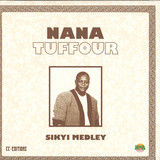
Nana Tuffour - Sikyi Medley

Nana Tuffour

Sikyi Medley

12inchKALITA12006/CC12001
Kalita
23.10.2018

Kalita Records and CC:EDITIONS (a new venture by
Australia's CC:DISCO) jointly announce a 12' EP
comprised of four of Nana Tuffour's greatest electronic
burger highlife tracks, accompanied by interview-based liner
notes. Here, in partnership with Nana, we select two highly
sought-after songs from his 1993 release 'Genesis', namely
'Sikyi Medley' and 'M'Anu Me Ho', and pair them his with two
lesser known yet equally deserving tracks 'Asamando' and
'Jesus' from his 1997 CD-only release 'Highlife Tropicana'.
Hailing from Kumasi, the capital of the Ashanti region in Ghana,
Nana Tuffour is by far one of the most important exponents of
modern highlife music. He studied piano at college and cut his
teeth in the '70s as an organist and vocalist for the incomparable
Kyeremanteng Atwede and Dr. K Gyasi's Noble Kings Band.
Fast forward to 1981 and Ghana was at the apex of its golden age
of music. This era was brought to an abrupt end by political
upheaval when the military took over the government and as a
result a restrictive dusk to dawn curfew was imposed between
1982 and 1984. This resulted in a total obliteration of the country's
night life, and Nana just like many other prominent musicians
including Pat Thomas and George Darko left Ghana for greener
pastures, the most popular destinations being Nigeria and
Germany. The Rheinklang Studio in Düsseldorf run by a young
inimitable German sound engineer Bodo Staiger and another
'exiled' Ghanaian musician Charles Amoah played a crucial role
for those musicians who had chosen Germany. This studio
became the focal point for Ghanaian musicians and the birthplace
of a new sound, now known as 'Burger highlife' - traditional
Ghanaian highlife infused with the more up to date electronic and
disco sounds of the West. It is arguable that Nana has played a
crucial role in Burger highlife and developing the sound of
traditional Ghanaian highlife more widely to what it is today, with
his innovative use of electronic accompaniment pushing its
boundaries to its creative extremes.
It is Burger highlife's transcendence of traditional musical
boundaries that helps make it so accessible to listeners,
appealing not only to Ghanaians back home but now highly
regarded and sought-after by those in the West interested in
more occidental disco and electronic sounds. We hope that you
enjoy the four songs offered here, each chosen to demonstrate
Nana's singular influence on the development of Burger highlife.

нет на складе

Закажите сейчас, и мы закажем товар для вас у нашего поставщика.

13,24

Последний логин: 6 г. назад
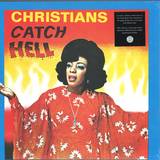
Christians Catch Hell - Gospel Roots, 1976-79
 
18

Utterly magnificent, sublimely soulful survey of the Gospel Roots label, subsidiary of the mighty TK Records at the height of the Miami Sound. Beautifully presented... the LPs with a 12"-square, full-colour, sixteen-page album of photos and original artwork. Check!!
A&R was co-ordinated by Gospel legends Ira Tucker — from the Dixie Hummingbirds — and Ralph Bass, veteran producer with Savoy, King and Chess. The label was run by Timmy Thomas, who had recently smashed with Why Can't We Live Together, for another TK spin-off, Glades. Operations were overseen by Henry Stone himself, unlikely King of Disco, who had recorded a young Ray Charles, and pushed forward James Brown. They drew in artists from all over the US, from St. Louis, Columbus, Memphis, Brooklyn, Cabrini Green in Chicago: unknowns like Camille Doughty, reluctant to jeopardise her job at GM ('Generous Motors') in Detroit, and huge-sellers like the revered Brooklyn All Stars, who started out on Peacock in 1958.

Choral belters, deep ballads, harmony quartets, epic city-blues, gritty funk, powerhouse female soul... Killer-diller Philly like a scorching version of Harold Melvin & The Blue Notes' Wake Up Everybody, and Jean Austin's raw Spirit Free, co-written by Ronnie Dyson, produced by Jesse James at Future Gold. Chicago Sound like The Fantastic Family Aires — named after the family's furniture store on North Cicero, but reminiscent of the Staple Singers at their best — through to the full-blown glory of The Fountain Of Life Joy Choir, led by Marvin Yancy from The Independents, and featuring Natalie Cole... Singers like Versie Mae Gibson, from the Jordans, by rights up there with Irma, Etta and Ree... Bangers 100%-guaranteed to find their way into Theo Parrish sets, and mortal delirium for the prissiest of soul and gospel purists.

нет на складе

Закажите сейчас, и мы закажем товар для вас у нашего поставщика.

24,50

Последний логин: 10 г. назад
Продуктов на странице:
N/ABPM
Vinyl