black vinyl in mirrorboard gatefold jacket with die-cut! Much like the New Orleans-born artist who created it, Second Line is an unapologetic genre bender that pushes boundaries, expands possibilities, and shatters expectations. It's more than just an album: Second Line is a cohesive sensory experience that questions traditional ideas of sound, production, and visual aesthetics as they relate to music. Its interlocking parts tell an epic story about the quest for artistic expression, with Dawn describing her project as "a movement to bring pioneering Black women in electronic music to the forefront." She elaborates: "You never see women appreciated as producers and artists alike _ especially Black women in the electronic space. The time is now for us to start recognizing their talent, not only in electronic music but in all genres. I wanna be the reason why a young Black girl from the South can be whoever she wants to be musically, visually, and artistically." Second Line cuts to the chase with its opening suite of dancefloor bangers, immediately displaying Dawn's mastery of layered production and melodic hooks. Second Line treats Louisiana Creole culture, New Orleans bounce, and Southern Swag as elemental, allowing Dawn to weave in and out of house, footwork, R&B, and more. As she says, "I am the genre." The story of Second Line centers on Dawn's persona King Creole, assassin of stereotypes, a Black girl from the South at a crossroads in her artistic career. To move forward, she decides to look back, but where previous album New Breed took influence from her father, Second Line is illuminated by Dawn's mother. Her proud repeated proclamation of "I'm a Creole Girl" introduces the ecstatic dancehall pop of "Jacuzzi," and later, on the cinematic album centerpiece "Mornin | Streetlights," she answers Dawn's question of how many times she has been in love. Intimate conversations like this between the two are interlaced throughout Second Line, giving credence to how the protagonist came to be, and direction to build a lane forward. It's no surprise that King Creole's story parallels Dawn Richard's. As a founding member of Danity Kane, and later with Diddy's Dirty Money, Dawn was able to explore the ins and outs of commercial pop music. As a solo artist, she opted to selfrelease her music. Over the span of five critically acclaimed full-length albums, Dawn has made the message clear that she will not bow down or bend to industry norms. All the while, she's built her resume with enough extracurriculars to make your head spin: Cheerleader for the New Orleans Hornets? Check. Animator for Adult Swim? Check. Owner-operator of a vegan pop-up food truck? Check. Martial arts expert? Check! Second Line embodies the heritage of soul music and the roots of New Orleans, all surrounded by the influences of electronic futurism. "The definition of a Second Line in New Orleans is a celebration of someone's homecoming," says Dawn. "In death and in life, we celebrate the impact of a person's legacy through dance and music. I'm celebrating the death of old views in the industry. The death of boxes and limits. I'm celebrating the homecoming of the Future. The homecoming to the new wave of artists. The emergence of all the King Creoles to come." Dawn Richard is bold, confident, purposeful, and a King throughout Second Line. Are you ready to dance?
quête:young money
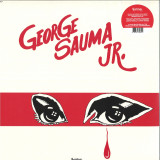
Favorite Recordings proudly presents an exclusive eponymous LP by Brazilian singer and composer George Sauma Jr., originally produced in 1985. Imagine a never-marketed release on which you’d hear not only the beautiful and genuine George’s songs but also the work from two figures of the Brazilian Music Golden Age: Arthur Verocai and Junior Mendes! A much-needed album for all Brazilian connoisseurs.
Back in the days, George Sauma Jr. was a young artist from Rio de Janeiro, learning on his side how to play chords and compose songs since he was 10. Still at the university, he’s influenced by Brazilian artists like Cassiano or Tim Maia, deeply fascinated by the arrangements and the “levada” (the groove) of all these new Brazilian songs. Simple and romantic music that resonated to his soul and creativity.
Around 1985, the story took an unexpected turn. George tells: “Dna Deyse Lucidy, the mother of Junior Mendes was a candidate for deputy and went to my father’s company to advertise. When I saw her, I shouted, “I’m a big fan of your son!” ” Of course, she could not praise more the work of her son. On her advises, George went to his studio on Rua Siqueria Campos at Copacabana. Junior loved the project and sent him to Arthur Verocai to improve the arrangements. Without money, the decision was taken to record everything at Junior Mendes’ studio on an 8-channel mixer. It was a small set-up but the emotions were there! George surely had other plans for some of his songs but without the budget, they ended up doing everything the best they could. And they did very fine with a top-notch team of musicians: Paulo Black on Drums, Arthur Verocai on Guitar, Ricardo Do Canto on Bass and Helvius Vilela on Keyboards.
Leaving the studio with the tapes, George tried to knock doors of international labels, but none did even dare to give him an answer. With less than 1000 copies pressed back in the days and without any distributor or label behind him, he went with proud to record stores, but received nothing than a strong reality check regarding the difficulties for a young Brazilian artist to achieve something on the saturated market of the 80s. Even for free, record stores didn’t want it. In the end, he ended up giving copies to friends and families, knowing deep inside that the songs were good! George tells: “I decided to leave, calm and conscious. I’ve still made three more albums, however on tapes, as it was more affordable. This time, just for my pleasure…”.
Thirty-five years after, it’s with great emotion that this first album by George Sauma Jr. is now made available as Vinyl LP with its original offset printed innersleeve & CD
- A1: Top Of The Pops
- A2: Time Will Tell
- A3: Punk A Go Go
- A4: Disco Zombies
- A5: Tv Screen Existence
- B1: Drums Over London
- B2: Heartbeats Love
- B3: Here Come The Buts
- B4: Mary Millington
- B5: Where Have You Been Lately, Tony Hateley?
- C1: The Year Of The Sex Olympics
- C2: Target Practice
- C3: New Scars
- C4: Greenland
- C5: Paint It Red
- D1: Night Of The Big Heat
- D2: Lho
- D3: Paint It Red #2
- D4: Lenin’s Tomb 5 Hit
It was 1977, there may well have been “knives in West 11”, but at a student’s hall of residence in Leicester, a packed room of cross legged intellectuals were about to witness the debut of The Disco Zombies; Andy Ross on vocals and guitar, Geoff Dodimead on bass, Johnny ‘Guitar’ Hawkins on guitar and Andy Fullerton on drums. They were loud, fast and they had some witty one-liners.
The four-piece became five with the addition of Dave Henderson from The Blazers, a chirpy power pop punk quintet, who were part of a burgeoning scene in the city that included The Foamettes, Dead Fly Syndrome, Wendy Tunes, The RTRs, Robin Banks And The Payrolls and many more. Wine bars, canteens and bowling alleys in pubs were the home of this phenomenon until Subway Sect and The Lou’s arrived for The Great Unknown Tour. They needed a local band for support and the Disco Zombies obliged.
Record Shop owner - and now Mayor Of Mablethorpe - Carl Tebbutt was keen to ride the punk rollercoaster and decided to launch Uptwon Records with a Disco Zombies EP. Recorded in Chester in one four hour session, it included The Blazers’ ‘Top Of The Pops’ and Andy’s ‘Time Will Tell’, ‘Punk A Go Go’ and ‘Disco Zombies’.
Carl had done a deal with a one-stop music production company who went bust almost immediately and the record was shelved. Unperturbed the band pressed on and recorded a session at the local radio station, ‘TV Screen Existence’ being the only track that survived. A tour of Leicester – five pubs in five days – was the end of that era and the band without Johnny ‘Guitar’ who had another year to do at Uni, relocated to London taking with them The Foamettes’ guitarist Steve Gerrard who wisely returned to Leicester and become part of The Bomb Party. Steve was replaced by Mark Sutherland in what was to become the recognised line up of The Disco Zombies for several years, playing lots of London gigs from The Hope And Anchor to The Moonlight Club, North London Poly to the Scala.
By 1978, there was an eruption of small DIY indie labels and Andy Ross launched South Circular Records to release the band’s debut single, ‘Drums Over London’ - an ironic stab at people’s hostility to the arrival of other cultures, a piss-take of Spear And Jackson-wielding Tory attitudes. John Peel played it regularly until Rock Against Racism complained even though Peel explained that it was actually supporting their views. Ho hum. South Circular wasn’t to last but Dave Henderson launched Dining Out. Dave and Andy journeyed to Ipswich to record the debut EP from the Peel-approved Adicts, the plan being to follow it with a Disco Zombies’ single and regain momentum. ‘Here Comes The Buts’ was the second Dining Out release, featuring the breakthrough Dr Boss drum machine; it was greeted with great enthusiasm in some quarters, although strangely it was likened to The Cramps meets Neil Young in NME.
Dining Out was always just one step ahead of going out of business and even though the follow up had been recorded - ‘The Year Of The Sex Olympics’, backed with ‘Target Practice’ and ‘New Scars’ – it never saw the light of day as the money finally ran out.
Somehow, Dining Out had a second lease of life and Andy wanted to record a new track for a new release amid 45s from The Sinatras, New Age and Spit Like Paint. By now, the Zombies had been through their dark post punk phase and ‘Where Have You Been Lately Tony Hateley’ was a clever upbeat anthem which told the tale of the nomadic footballer. The test pressing gained many Peel minutes but by the time it was ready to release, the band had finally split up. It eventually saw the light of day on the Cordelia label’s ‘Obscure Independent Classics’ album. Very fitting.
So, it was 1980: Mark Sutherland opened a studio in Bow, Dod got a day job, Andy Fullerton already had one. Andy and Dave went a bit experimental in Club Tango; Andy eventually discovering Blur for Food which he started with The Teardrop Explodes’ David Balfe, while Dave flirted with Worldbackwards.
In 2011, the drum machine line up descended on Mark’s studio, rehearsing for a show at the Bull And Gate. They recorded two of their lengthier tracks – ‘Night Of The Big Heat’ and ‘LHO’ powered by a waning Dr Rhythm – these were pressed as an extremely limited edition ten-inch. A few years later Andy Fullerton returned to the fold recording three more originals ‘Hit’, ‘Lenin’s Tomb’ and ‘Paint It Red’ for an even more limited edition ten-inch in 2018 and a show in October that year at The Dublin Castle.
Since then, meandering lunchtime discussions in restaurants that were popular in the ‘70s (Joe Allen, Café De Pacifico, etc) have led to arguments about the lost tracks – ‘Man From UNCLE’, ‘I Need You Like I Need VD’, ‘Throwaway Line’, ‘I Thought You Were Only Joking’, ‘London Nights’, ‘Cosmetics For China’, ‘When Doo Wop Hit Hampstead’. It’s only a matter of time. Until then.....
- A1: Stolen Hours
- B1: Love And Desire
PATRICE YVONNE HOLLOWAY was born in Los Angeles and is perhaps best known as the younger sister of Motown’s Brenda Holloway, the darling of the Northern Soul scene, particularly in recent years. Patrice also signed to Motown and recorded an unreleased version of “The Touch Of Venus” made famous by Edna Wright (aka Sandy Wynns).
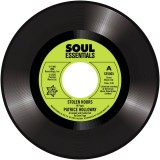
In the mid-sixties Patrice signed to Capitol records and recorded “STOLEN HOURS”, arranged by the great Gene Page and written and produced by his brother Billy Page – she was only 15 years old at the time. It failed to hit Stateside but some thirty years later it became a Northern Soul anthem of the nineties, although it was originally played in the early days of Wigan Casino.
Our chosen flip-side, the follow-up single, “LOVE AND DESIRE”, was also penned, produced and arranged by the Page brothers. It failed to even get a commercial release in the U.S. although it was released in the U.K. and commands big money in today’s collectors market. Her final 45 for Capitol came in 1972 and was a credible version of the Sam Nesbit classic “Black Mother Goose”. Sadly, ill health, forced Patrice to step back from performing and she died before her time of a heart attack in 2006.
Patrice was also known as ‘Valerie’, singer with the animated girl-band Josie And The Pussycats produced by Hanna-Barbera and aired on CBS in 1971. She would beome the first black character to regularly appear on U.S. commercial TV.
Award-winning bassist Daniel Casimir and vocalist Tess Hirst release their debut album via pioneering London-based record labe Jazz re:freshed. Following the success of Daniel Casimir's critically acclaimed debut EP 'Escapee' which featured Hirst on vocals and fellow rising stars on the scene Moses Boyd, Joe Armon-Jones and Shirley Tetteh, this album - 'These Days' is inspired by the duo's London surroundings, delivering thought-provoking lyricism, neo-soul and modern jazz
Casimir, a former Birmingham Conservatoire student, has collaborated with Julian Joseph, Jason Rebello, Benet McLean, Lonnie Liston Smith, Nathan Facey, Shane Forbes, Chihiro Yamanaka, Ashley Henry, David Lyttle, Nubya Garcia, The Tracey Quintet (Meantime Jubilation), Tom Harrison (Unfolding In Tempo), Jasmine Power (Stories And Rhymes), Camilla George and Art Blakey Jazz Messenger saxophonist, Jean Toussaint.
Named Young Jazz Musician of the Year by the Musicians' Company in 2016, Casimir has received plaudits for his arrangements and recital, while Hirst has made a name for herself with her vocals on the jazz circuit having moved between London, Leeds and LA to hone her craft. What sets Hirst apart as a musician is not only the originality of her music but her perspective of herself as an artist. She is an Ethnomusicology Graduate of SOAS and her writing style walks us through her upbringing in West London and down the halls of academia
Casimir and Hirst fuse traditional jazz sounds into beautiful compositions, narrating their way through a political and cultural landscape across these twelve tracks. The frenzied groove heavy'Security' addresses the need to trust one another and how we protect ourselves personally, while the rich atmospherics of 'Freedom' combined with Hirst's vocals, explore liberation and the rejection of duty - from a female perspective.
At the heart of 'These Days', Casimir plays with a passion and power that resonates throughout each composition. His knack for complex chord changes are highlighted in 'What Did I Do', bringing an energy and enthusiasm to the track while Hirst decries our changing capital. Elsewhere, references to John Agard's poem 'Listen Mr. Oxford Don' in 'The Magic Money Tree', explore the past and its relevance to now while a re-imagining of Charles Mingus' 'Fables Of Faubus' further ensures this theme remains central to the essence of the album.
Daniel Casimir and Tess Hirst have already received radio support from BBC Radio 3, BBC Music Introducing and Jazz FM, along with coverage in the London Evening Standard and Jazzwise Magazine
'Don't Let Them' interpolates elements of 'Fables Of Faubus' written by Charles Mingus (c) 1959. Published by Jazz Workshop Inc. Administered by BMG Rights Management (UK) Ltd. Used by permission. All rights reserved.
- A1: They’re Back Again, Here They Come
- A2: I’ve Forgot My Number (Now I’m Telling You My Name)
- A3: All We Want Is Your Money
- A4: Can’t Sleep At Night
- A5: It’s The Only Way To Live (Die)
- A6: Stay Inside
- B1: Looking At You
- B2: Frivolous Disguises
- B3: Run
- B4: After All
- B5: Don’t
- B6: Screaming Dreaming
- C1: You Were So Young
- C2: Damage Your Health
- C3: Miranda
- C4: Media Menia
- C5: Surrender
- C6: Valium World
- D1: Can’t Sleep At Night (John Peel Session)
- D2: Frivolous Disguises (John Peel Session)
- D3: It’s The Only Way To Live (Die) (John Peel Session)
- D4: Valium World (John Peel Session)
180g Gatefold Double Vinyl with poster, sticker & badge
It was at the tale end of what would later be loosely termed ‘The Seventies’, in Lincoln, Merry England, that three teenagers formed, the consequencies of ther actions are captured here.
“You Were So Young” consists of everything that The Cigarettes ever recorded in what was their two year life span. From the very beginnings in the rehearsal room through to tracks recorded for an unreleased third single. It includes the two singles and their ip sides, some tracks that were included on a local compilation album, and their solitary John Peel session along with a handful that never found their way onto a record.
Their debut single ‘They’re Back Again, Here They Come’ , exchanges hands from upwards of £100 and ‘You Were So Young’ has been viewed on Youtube over 1.3m times.
The CD booklet and vinyl inner sleeves include an in depth interview with Rob and Steve, answering pretty much all there is to know about The Cigarettes
Over the years The Cigarettes have gained a wealth of interest, leaving many to scratch their heads and wonder how they slipped under the radar for so long.
Primarily based in Leeds, The Lewis Express is comprised of many of the musicians that have graced previous ATA releases: George Cooper, Piano (Abstract Orchestra) Neil Innes, Bass (The Sorcerers, The Magnificent Tape Band, Tony Burkill), Sam Hobbs, Drums (Dread Supreme, Tony Burkill, Matthew Bourne) and Pete Williams, Percussion (The Sorcerers, The Magnificent Tape Band, Tony Burkill).Recorded over an intense two-day session, 'Clap Your Hands' is heavily influenced by the classic soul jazz recordings of The Young Holt Trio / Young Holt Unlimited, and Ramsey Lewis, from who this group take their name. As with many of the classic Ramsey Lewis cuts this album was recorded live, capturing the rich inter-relationship between the players and leaving in some of that chunky room noise.
'Clap your hands' builds on the template set by their eponymous debut album and further explores the 60's soul-jazz of Ramsey lewis, Young-Holt and Ray Charles as well as the latin boogaloo of Eddie Cano and Pete Terrace. The band's intention was to produce an album of dancefloor friendly, uplifting, funky soul-jazz with a stripped back line up of Piano, Bass, Drums and Percussion. Ranging from the mod-jazz of 'Stomp Your Feet' (a Ramsey-esque groover that's just made-to-measure for dancers) and 'Out From The Rock' (Funky drums and plenty of blues-dipped soul from the Piano) to the driving boogaloo of title track 'Clap Your Hands' and the Ellignton-esque 'Moola Umemo' (Remeniscent of Ellington's 'Money Jungle'). Each track is, in it's own way, aimed squarley at the dancefloor and sure to go down well with both DJs and listeners alike.
"Clap Your Hands" is certainly a more contained album from The Lewis Express, whose debut moved around different camps. It's a tighter, more focussed record that wears it's inspiration proudly on it's sleeve.
Radio support expected from Gilles Peterson (BBC6 Music, Worldwide Fm), Craig Charles (BBC6 Music, Radio 2), Jamie Cullum (Radio 2) and Huey Morgan (BBC6 Music).
After the 002 from Christian Lisco we are super excited to present you two young talent, Dj Lettuce and Dj Unrefined.
They have already had the opportunity to show themselves to the public by releasing on labels like Quality Vibe Records, Chineurs De House, Howl.
In the sweltering North-Eastern Brazilian state of Pernambuco lies the coastal city of Recife, where Amaro Freitas is pioneering the new sound of Brazilian jazz. For the prodigious young pianist, the spirit of his hometown runs deep. From the Afro-Brazilian maracatu born on the sugar plantations of slavery, to the high intensity carnival rhythms of frevo and baião, Amaro's heavily percussive approach to jazz is as indebted to these Pernambuco traditions as it is to Coltrane, Parker and Monk.
As with many of the greats before him, Amaro began playing piano in church aged 12, under the instruction of his father, leader of the church band. As his natural talents became obvious, the young prodigy quickly outgrew his father's instruction. He won a place at the prestigious Conservatório Pernambucano de Música but had to drop out as his family could not spare the money for the bus fare. Undeterred, Amaro gigged in bands at weddings and worked in a call centre to fund his tuition. The transformative moment came at age 15 when Amaro stumbled across a DVD of Chick Corea concert, 'he completely blew my mind, I'd never seen anything like it but I knew that's what I wanted to do with a piano'.
Despite not actually owning a piano, Amaro devoted himself to studying day and night - he would practice on imaginary keys in his bedroom, until eventually striking a deal with a local restaurant to practice before opening hours. By the age of 22 Amaro was one of the most sought-after musicians in Recife and resident pianist at the legendary jazz bar Mingus. It was during this time he met and begun collaborating with bassist Jean Elton and the pair went in search of a drummer. 'We kept hearing about this crazy kid who was playing in 7/8 or 6/4, we knew we had to meet him'. Hugo Medeiros joined, and the Amaro Freitas Trio was born.
'I want to show the simplicity of music, to break the stigma that the piano is for a particular social class. Yes, it's a difficult instrument, which many people do not have access to, but with it you can express everything.'
Following his critically acclaimed debut album Sangue Negro (black blood), the title of his sophomore release Rasif is a colloquial spelling of Amaro's home town. A love letter to his native northeast, Amaro explores its traditional rhythms through the jazz idiom, employing complex mathematical patterns reminiscent of some of the most challenging works by fellow Brazilian masters Hermeto Pascoal, Egberto Gismonti and Moacir Santos.
Preferring to see the piano as a though it were a drum with 88 unique tones, Amaro's intelligence and emotion intertwine on every track, from album opener 'Dona Eni': a scorching reconstruction of the baião rhythmic structure, played in seven measures instead of two, to the serene homage to the coastal reef and its ecosystems on the title track 'Rasif'. 'Aurora' is a suite of three parts, representing the sun's journey from the light and soft of the rise, to the aggressive dissonance at its midday zenith and descending chromatic cadences as the sun sets.
Due for an Autumn release on Far Out Recordings, Rasif sees Amaro Freitas take a deserved step onto the world stage. Having already made a name for himself in Brazil, Amaro and his phenomenal band will embark on their first European tour later this year.
Amaro Freitas - Piano
Hugo Medeiros - Drums & Percussion
Jean Elton - Double Bass
Henrique Albino - Baritone Sax, Flutes & Clarinet
All compositions by Amaro Freitas
Produced by Amaro Freitas
Recorded by Bruno Giorgi @ Carranca Studio, Recife, Brazil
Mixed and mastered by Bruno Giorgi @ Quarto Studio, Rio de Janeiro, Brazil
Executive producer and management: Laercio Costa
- A1: The Devonns - Come Back
- A10: Diplomats Of Solid Sound - Hurt Me So (Feat The Diplomettes)
- A11: The Crabs Corporation - The Sort
- A12: Dojo Cuts - You Don't Know Me (Feat Roxie Ray)
- A13: The Hook & Slingers - Top Dog
- A14: The Faithful Brothers - One More Time
- A15: Hannah Williams & The Affirmations - Late Nights & Heartbreak
- A2: The Tibbs - This Strange Effect
- A3: Marta Ren & The Groovelvets - I'm Not Your Regular Woman
- A4: Third Coast Kings - Love You Back
- A5: Baby Charles - This Time
- A6: Calibro 35 - Psycheground
- A7: Martha High - Don't Throw Your Love In The Garbage Can
- A8: Tanika Charles - Money
- A9: The New Mastersounds - Idle Time (Lack Of Afro Remix)
Record Kicks Celebrates 15 Years In The Business With A Collection Full Of Exclusive New Singles. Available In Ltd Edition Double Clear Vinyl Lp, Cd And Digital Download. Side By Side With Similar Outfits Like Daptone, Truth And Soul, Freestyle Or Timmion, Under Its Motto "the Explosive Sound From Today's Scene" Milan-based Independent Label Record Kicks Has Been Pitching The Contemporary Funk & Soul Scene Since Day One.
With Over 200 Releases Under The Belt, Rk Has Released Bands From All Over The Globe And Earnedthe Support Of Vip Fans Such As Kenny Dope, Jamie Cullum, Craig Charles And Not Least Jay-z, Thanks To Which The Label Has Recently Received A Grammy Nomination For Hov's Use Of Hannah Williams' "late Nights And Heartbreak" As Backdrop For His "4:44". The New Instalment "record Kicks 15th" Coming Out Next May 18th On Double Clear Lp, Cd And Digital Download, Celebrates 15 Years In The Business With A Collection Full Of Exclusive New Tracks And The Very Best Of It's Roster.
The Album Kicks Off With Rk's Latest And Youngest Signing:
From Chicago, Heavily Inspired By The Impressions And Leroy Hutson, We Are Proud To Present You "the Devonns" With Their Super Soulful Debut Single "come Back", An Appetizer Of Their Debut Full Length Expected To Land On Rk Next Autumn. Another New Signing To The Label Is Men Of North Country's (acid Jazz Records) Side Project "the Faithful Brothers", Here With Their New Single "one More Time".
Other Exclusive Tracks Of The Comp Are "this Strange Effect", A Coverup Of The Hooverphonic's Single From 1998 Brought To You By Dutch Northern Soul Disciples The Tibbs, "love You Back" From Detroit Deep Funk Outfit Third Coast Kings, "the Sort" By The Buenos Aires Mod Reggae Kings The Crabs Corporation, "top Dog" By British Funk Combo The Hook & Slingers And Straight From Down Under "you Don't Know Me" By The Always Great Dojo Cuts.
Along With These New Exclusive Cuts, Dig On Some Label's News Singles And Heavyweight Classics Such As Dj Shadow's "this Time" Taken From Baby Charles Debut Lp, "don't Throw Your Love In The Garbage Can" By James Brown's Original Funk Diva Martha High Feat Japanese Funk Ambassadors Osaka Monaurail, "psycheground" The Brand New Afro-funk Single By Calibro 35 And Then Portuguese Tnt Dynamite Marta Ren & The Groovelvets, Toronto Soul Queen Tanika Charles, Uk Funk Ambassadors The New Mastersounds, The Diplomats Of Solid Sound And The Already Mentioned "late Nights & Heartbreak" By Hannah Williams & The Affirmations.
Music has always coursed through Roman Lindau's blood. Even if he weren't the accomplished producer and respected DJ he is today, the German audiophile would still be spending all his money on the stuff; giving over all his time to the art form. ''I'm a music junkie. I need music to live'' he states matter-of-factly. ''For me it's the elixir of life.''
Good job, then, that he gets to spend his ..
Roman Lindau is a German techno DJ, artists and producer, as well as being a core member of the infamous Fachwerk Records from Berlin.
Music has always coursed through Roman's veins ever since he was a young boy so it is no suprise that he became the accomplished producer and highly respected DJ that he is today.
In the late 2000´s Lindau became active in the Berlin electronic music scene, beginning to play music in clubs as well as producing his own music. The first track he released in 2008 on his home label Fachwerk Records appeared in one the world famous Berghain Mix Compilations, mixed by Len Faki. Following from this Berghain invited Roman to contribute an exclusive Track for Ben Klock´s Berghain Mix in 2009. After this success the gates opened for him to play regularly as a DJ at Berghain.
At the same time he continued to work on music for Fachwerk Records. He produced dance floor smashers like ´Crasse´ in 2011 and ´Rave on´ in 2014, which were charted by the likes of Ben Klock, Sven Väth & Chris Liebing, afirming his deserved place amongst the techno elite.
More recently in 2015 the well known Victor Calderone from NYC invited Roman to release on his label Matter+.
The reason why Roman is such a great DJ is because of the fact he knows what the people want! ''I love to dance and that's very important: as DJ you need to feel what the crowd want so you can help them to party and have fun.'' Combining a varied selection of raw house and techno in his sets, recent bookings have taken Roman across the world; from the hallowed techno Mecca that is Berghain to dark underground clubs as part of the recent Fachwerk label tour. He has performed at every legendary Berlin venue, past and present from Tresor to Berghain, and it is this that gives Roman the edge above the rest. If you can do it there, you can do it anywhere! From 2014 Till the closing he was a resident DJ at Stattbad, one of Berlins findest adress for Electronic Music.
- A1: Love Is The Key (Feat. The Viceroys)
- A2: Let The Water Run Dry (Feat. Ken Boothe)
- A3: Slaving (Feat. Lloyd Parks)
- A4: Black To I Roots (Feat. Kush Mcanuff)
- B1: Youthman (Feat. Cedric Myton)
- B2: Crime (Feat. Var)
- B3: Jah Power, Jah Glory (Feat. Kiddus I)
- C1: Artibella (Feat. Ken Boothe)
- C2: Sign Of The Times (Feat. Steve Newland)
- C4: Secret (Feat. Winston Mcanuff)
- D1: Stone (Feat. Derajah)
- D2: Money For Jam (Feat. Lloyd Parks)
- D3: Thanks & Praises (Feat. Bo-Pee)
INNA DE YARD bring to life the unique and original passion of singing with acoustic reggae music.
Several iconic figures from Bob Marley's island and spirited young musicians are gathered on the terrace of a house, in the hills of Kingston, to bring the essence of their musical culture back to life. United in the same place, and united in time, because they have recorded an original album in just four days.
They are Ken Boothe, Cedric Myton from the Congos, Lloyd Parks, Derajah, Var, Kiddus I, Steve Newland, Bo Pee, Kush & Winston McAnuff.
You've never heard a Jamaican sound like this before.
Local Talk is proud to welcome back Marcel Lune for the release of his album Astral Palms.On this album Marcel continues to explore his fascination for melodies and composition and has created something that is wonderfully refined and thrillingly accessible.Listening to Astral Palms some may hear the influence from such great artists as Floating Points and Local Talk very own Crackazat. What Marcel is doing is fusing the two and adding his twist with enough originality to stand out from the rest.
From the opening track and throughout the album, you get the idea of this young genius' musical universe - music that aims to both soothe the senses and move the feet.
Astral Palms is not only offering a unique twist on melodious and rhythmic house music, it also highlights Marcel Lune' growth as an artist.
Music has always coursed through Roman Lindau's blood. Even if he weren't the accomplished producer and respected DJ he is today, the German audiophile would still be spending all his money on the stuff; giving over all his time to the art form. ''I'm a music junkie. I need music to live'' he states matter-of-factly. ''For me it's the elixir of life.''
Good job, then, that he gets to spend his ..
Roman Lindau is a German techno DJ, artists and producer, as well as being a core member of the infamous Fachwerk Records from Berlin.
Music has always coursed through Roman's veins ever since he was a young boy so it is no suprise that he became the accomplished producer and highly respected DJ that he is today.
In the late 2000´s Lindau became active in the Berlin electronic music scene, beginning to play music in clubs as well as producing his own music.
The first track he released in 2008 on his home label Fachwerk Records appeared in one the world famous Berghain Mix Compilations, mixed by Len Faki.
Following from this Berghain invited Roman to contribute an exclusive Track for Ben Klock´s Berghain Mix in 2009. After this success the gates opened for him to play regularly as a DJ at Berghain.
At the same time he continued to work on music for Fachwerk Records. He produced dance floor smashers like ´Crasse´ in 2011 and ´Rave on´ in 2014, which were charted by the likes of Ben Klock, Sven Väth & Chris Liebing, afirming his deserved place amongst the techno elite.
More recently in 2015 the well known Victor Calderone from NYC invited Roman to release on his label Matter+.
The reason why Roman is such a great DJ is because of the fact he knows what the people want! ''I love to dance and that's very important: as DJ you need to feel what the crowd want so you can help them to party and have fun.''
Combining a varied selection of raw house and techno in his sets, recent bookings have taken Roman across the world; from the hallowed techno Mecca that is Berghain to dark underground clubs as part of the recent Fachwerk label tour.
He has performed at every legendary Berlin venue, past and present from Tresor to Berghain, and it is this that gives Roman the edge above the rest. If you can do it there, you can do it anywhere!
From 2014 Till the closing he was a resident DJ at Stattbad, one of Berlins findest adress for Electronic Music.
In 1997, a quiet, unassuming man of 59 years old named Victor Tavares - better know as Bitori - walks into a studio for the very first time to record a masterpiece which many Cabo Verdean consider to be the best Funaná album ever made. Bitori´s musical adventure had begun long before this point. It was 1954 when he embarked on a journey across the seas to the island of Sao Tomé & Principe. The young man´s hope was to return to Cabo Verde with an accordion.
Following two years of hard labour Bitori had succeeded in saving enough money to acquire what was to become his most valued possession, his cherished instrument. The two month journey back to Santiago, his island of birth, proved time enough to master it. Self taught, Bitori developed his own style, an infectious blaze, that quickly caught the attention of the older generation. Before long Bitori was being asked to share his musical talents, igniting the local festivities around Praia with his music.
But not everybody welcomed the rural accordion-based sound. Perceived as a symbol of the struggle for Cape Verdean independence and frowned upon as music of uneducated peasants, Funaná was prohibited by the Portuguese colonial rulers. Performing it in public or in urban centres had serious consequences - often jail time and torture awaited musicians that were caught in the act'. In light of such persecution the genre of Funaná began to slowly disappear.
In 1975 Cabo Verde achieved independence from Portuguese colonial rule. Along with Cabo Verde's independence came a lifting of the ban placed on Funaná. The musical repercussions in Cabo Verde were plenty - many upcoming artists embraced Funaná, translating and adapting its musical form in new ways. It was not to be until the mid-1990's, however, that Funaná in its traditional form was actually recorded. It was a young singer from Tarafal, Chando Graciosa, who was to play a key role in this event. Upon hearing Bitori, Graciosa immediately felt drawn to Bitori's unique playing style - a raw and passionate sound accompanied by honest lyrics that reflected the harsh reality of the Cabo Verdean working class. He eagerly approached Bitori suggesting they join forces and travel overseas with the objective of taking Funaná beyond its rural roots. The two of them, with others in tow, achieved their goal and travelled to Europe, introducing a receptive European audience to the vibrant energy of Funaná.
Eventually Bitori returned to his beloved Cabo Verde. Graciosa opted to settle in Rotterdam in order to pursue his career - he vowed, however, to bring Bitori across to Holland at a later date to record an album.
In 1997 the time was ripe to immortalise the sound Bitori had shaped over a time span of four decades. Built around a formidable rhythm section, formed of drummer Grace Evora and bass player Danilo Tavares, "Bitori Nha Bibinha" was recorded. The recording catapulted Chando Graciosa to stardom, making him Cabo Verde´s No.1 interpreter of Funaná.
The success in Cabo Verde was phenomenal and Funaná rapidly gained the recognition it deserved, especially in urban dance clubs. Bitori´s songs quickly became standards - classics known and loved throughout the country. The musical success, however, was solely limited to the Cabo Verdean islands - until now!
Analog Africa is proud to contribute to the worldwide promotion of Funaná - the once forbidden sound of the Cabo Verde archipelago - by releasing a worldwide re-issue of Bitori and Chando Graciosa´s legendary recording.
The release will herald Bitori´s first European tour taking place during the summer of 2016. Watch this space! And listen!
- A1: I Won't Follow You (Feat. Nieve)
- A2: Luck Turns (Feat. Blezz)
- A3: Pause (Feat. Akin Yai)
- A4: Summer Rain (Feat. Chima Anya)
- B1: Outside
- B2: Sunrise 2 Sunset (Feat. Internal Quest & Dj Venum)
- B3: What A Dream Remix (Feat. Nieve)
- B4: The Seance (Feat. Croosh)
- C1: Ride With Us (Feat. Noah King)
- C2: After The Rain
- C3: Woke Up Making Money (Feat. Declaime)
- C4: For My People (Feat. Awon)
- D1: The Picture (Feat. The 49Ers & Nina Kanda)
- D2: Seashore
- D3: Sky High (Feat. Chima Anya)
- D4: Keep It Real (Feat. Hydroponikz)
- D5: Gonna Get It (Feat. Nieve)
Here we are, finally ! After numerous months of hard work,
today is the release day of " Good Vibes "
from SoulChef on Délicieuse Records !
This is definitely a 2.0 project : a beatmaker based in New-Zealand, a french label, some french scratches, some english, north american, swedish emcees, etc. it's a countless number of emails that allowed us to release this beautiful project that you can listen today.
We're so f****g happy to finally be here ! This album sounds old-school, but it's message and conception are definitely modern. Enjoy, Love is the Message !
Soulchef revives with Good Vibes the original spirit of Hip Hop.
The New Zealand beatmaker gives new life to this still living memory that we're honouring on Delicieuse Musique since our inception. Taking us back to our classics, Soulchef shines a new and personal light on hip hop : the result is positive, groovy and true to its initial roots.
Good Vibes is the result of an exchange of more than 18 months between the producer, the label and various rappers. The album is a mapping of a league that helds the oldschool hip-hop standard : there can be found a whole bunch of more or less notorious MCs on it from Declaime to Croosh, a young talent spotted on Soundcloud.
Gathered around the unifying aura of Soulchef, Delicieuse Records decided to step out of its usual field, offering to its public its first Hip Hop release.
This is the story of C POWERS. To understand OYSTERS, you must understand the man behind it all...
THE UNITED STATES TERRITORY OF GUAM, ca. 1989
Abandoned at the island nation's only beachfront techno club as an infant, young Christoph (C POWERS) was adopted by the club's owner, Geraldo Powers. During Geraldo's time as a naval officer, he traveled the world throughout rave's formative years, secretly going to the underground parties when arriving to European ports after having originally fallen in love with early house music as a teenager in his native Chicago via roller-rink parties and the legendary Music Box headed by Ron Hardy. Rear Admiral Geraldo, outed as a gay homosexual during the discriminatory days of Ronald Reagan's U.S. military, was forced to retire, but spared a dishonorable discharge thanks to his roster of medals earning during his exemplary leadership for the invasion of Grenada in 1983.
Throughout his three year stay at the local naval base, the now 30-something Gerry Powers had been struck by the natural beauty and unsettling mysticism of Guam and its peoples and made the choice to permanently set up shop on the island after his unexpected retirement. Taking his partner and newly-crowned Supreme Butch Queen of the New York vogue circuit--Amadeus Lector--with him and financed with $6669.69 in prize money, the new era of DAS POUNDHAUS LTD. was to begin.
In 1990, Gerry founded the notorious Guamanian club DAS POUNDHAUS (the name of which was strongly influenced by a two-week long ecstasy and Polish speed-fueled bender during 1989's inaugural Love Parade in West Berlin). Located inside a decrepit lighthouse originally built during Spain's reign over the island, the club played host to a steady stream of closeted, Pacific-touring U.S. military personnel and later, the party-craving barons of the dot com bubble. Outed in private usenet circles for its off-the-charts hedonism, the club's infamous parties would inevitably lead to its perilous demise, and the eventual deportation of Gerry Powers and his family to the mainland.
But there was one thing that could never be taken away from them...
...synesthesia...
You see, young Christoph was diagnosed with the "disorder" as a pre-teen after having been exposed to nearly a decade of DAS POUNDHAUS first-hand and at such a young age. The youngster was like a fish in water during his childhood in Guam, but when the family was deported in 1999, he began to show signs of anxiety and depression. His ability to hear colors and see sounds had simply turned into a stream of incomprehensible, uncontrolled static. He was now a pariah among his peers. Shunned and admonished. Assigned to sit by himself during school lunch. One of "those" kids.
By this time, his two dads' relationship was on the rocks and would quickly unravel. Amadeus, frustrated with Gerry's incessant ramblings about bunkering in Montana because of the Clinton-Illuminati conspiracy to enslave the middle-class, decided to leave Gerry in an attempt to become a backup dancer for Madonna during her "Drowned World Tour" in 2001 (which would have provided a significant sum of financial security to the family, considering their life savings had been destroyed thanks to the toppling of the NASDAQ from its peak of 5048 in March of 2000--and thanks to those dot com baron stock tips, the Powers were all-in). However, Amadeus' unflinchingly "authentic" vogue style was considered obsolete, and he would go to die in a Reno Motel 6, a victim of drug abuse and that kind of thing apparently.
>>>>Fast-forward to the year2012ish>>>>
Lee Perry's time at WIRL Records, later to be renamed Dynamic Sounds Studios, was a very productive time
in his career. A run of great singles and the shaping of a new sound, the beginning of what we know today as
Reggae .
Lee Perry (b. Rainford Hugh Perry, 28 March 1936, Hanover,Jamaica) began his entry into the music business at
the age of 16.Moving up to Kingston Town and working around various Sound Systems, before finding
employment at Coxonne Dodd's Studio One set up, in the late 50's early 1960's. Perry started out as a record
scout, organising sessions and supervising auditions at Dodd's record shop on Orange Street. Helping to make
hits for Delroy Wilson ( 'Joe Liges','Spit In The Sky') and the Maytals, which would lead to his own vocal records
released through Studio One.The musical backing for which, came from legendary Studio One house band The
Skatalites. Another important relationship for Perry, his first recordings with Bob Marley came in the form of
the Wailers, also providing backing, alongside the Soulettes who featured Rita Marley. Cutting such tunes as
'Chicken Scratch' around 1965/1966. This tune was also to provide him with one of his future nicknames
'Scratch'. A dispute over credits and money saw Perry leave Studio One and work with various producers
including Clancy Eccles and J. J. Johnson, before arriving at the door of producer Joe Gibbs in 1967. Here he
would write songs and produce hits for artists such as, Errol Dunkley and the Pioneers. A tune cut during his
time with Gibbs, voiced a snipe at fellow employee Dodd, a trademark that would become an outlet for his
frustrations in the business.This particular tune 'The Upsetter' would also provide another moniker and a name
for his label 'Upsetter'. Again lack of musical credit and financial reward saw Perry move on this time to WIRL
(West Indies Records Limited) Records, working alongside manager Clifford Rae, who would provide studio
time and pay for pressings in return for helping to promote and distribute WIRL product, which Perry would
carry out on his trusted Honda 50 motorcycle around Kingston town.
This period at WIRL saw some inspired work from Perry. 'Run For Cover' was another musical blow to a
previous employer, Coxonne Dodd and featured the Sensations on backing vocals and Lynn Taitt's guitar
picking skills. 'People Funny Boy' was a massive hit for Perry going on to sell over 60,000 copies. Joe Gibbs
would be at the end of this musical attack. Perry had felt Joe Gibbs had turned his back on him, after he had
provided hits for groups like, The Pioneers amongst others. The song would be one of the first records to
feature a New Beat (Reggae) inspired by the sounds coming out of a Pocomania Church, Perry had heard one
night.The congregation inside, wailed in a more slower way than the current musical style of the time Ska!. Perry
worked up this new style with Clancy Eccles, who would come under attack himself in 'You Crummy'. Their
closeness, which as detailed in that song would find them, 'Even shared the same Gal' but 'Now it's plain to see we
reached the end'. 'Set Them Free' was an answer record to Prince Buster's 'Judge Dread' (which had
featured Perry on it) a plea to the Judges in Jamaica that handed out extremely harsh sentences to the young
offenders of the time. The track was cut on the same rhythm as 'Run For Cover' . 'Django Shoots First'
inspired by the Spaghetti Western film of the same name, features Sir Lord Comic. One of the early DJ's who
used a jive talking style over rhythms. 'Night Doctor' was a hit instrumental that featured the organ talents
of Ansel Collins, that really push the tune along. 'Something You Got' was a cover of an USA R& B track by
Chris Kenner and 'Wind Up Girl' was cut at the same session. 'Water Pump' was a rude style track that
was cut later and originally released in 1974.As was 'People Sokup Boy' a later version of 'People Funny Boy'.
'Labrish' which means idol talk and gossip, was one of the first great talk over tunes that features Lee Perry
and producer Bunny 'Striker' Lee talking about the Political situation in Jamaica at the time and their own
financial situation and stories of various comrades.The track was originally released in 1973.
Bunny Lee would play a major part in lee Perry's career around this time and they were very close, often
sharing sessions and rhythms. Ironically it would be Bunny Lee that took over Perry's roll at WIRL and become
responsible for the labels products in years to come. Clifford Rae who give control to Bunny for a lot of the
WIRL product and even gave him his shop 101 Orange Street. So here we have a collection of music born out
of a time spent at WIRL Records and providing an important chapter in Lee Perry's career and indeed to the
story of Reggae itself.
Hope you enjoy the set.