imited dark green vinyl
With Jazz Is Dead Series 2, Younge and Muhammad have once again, together with a roster of world-renowned legends, crate digger patron saints, and an exciting vanguard of young talent, delivered another unimpeachable collection of fresh and captivating recordings inspired by jazz's past, present, and future. There are names that some may already be familiar with, such as Lonnie Liston Smith, Jean Carne, and Tony Allen, and those less so, like Henry Franklin, Phil Ranelin, Wendell Harrison, Garrett
Saracho, & Katalyst. What unites each new collaborator is their unbent dedication to remaining original, preserving their creativity, and sharing it with the world.
Поиск:younge
Все
Born in Los Angeles to fourth generation Angelenos, Garrett’s childhood was surrounded by music. The afternoons spent at his uncle’s boxing gym in Montebello introduced him to jazz, and the restaurants he worked in as a teenager exposed him to stars such as Cal Tjader and Eddie Cano. In 1973, Garrett re-emerged in the scene rejuvenated and recalibrated releasing “En Medio” - a singular vision, a multi-genre blend of Latin rhythm, headhunter-inflicted funk, and Arkestra jazz, one that could have only come from LA. Today, Garrett is ready to meet his fans, and make many more, as he wraps up his entry in the Jazz Is Dead series and records new music for the first time in decades.
Orange Vinyl
Born in Los Angeles to fourth generation Angelenos, Garrett’s childhood was surrounded by music. The afternoons spent at his uncle’s boxing gym in Montebello introduced him to jazz, and the restaurants he worked in as a teenager exposed him to stars such as Cal Tjader and Eddie Cano. In 1973, Garrett re-emerged in the scene rejuvenated and recalibrated releasing “En Medio” - a singular vision, a multi-genre blend of Latin rhythm, headhunter-inflicted funk, and Arkestra jazz, one that could have only come from LA. Today, Garrett is ready to meet his fans, and make many more, as he wraps up his entry in the Jazz Is Dead series and records new music for the first time in decades.
With Jazz Is Dead Series 2, Younge and Muhammad have once again, together with a roster of world-renowned legends, crate digger patron saints, and an exciting vanguard of young talent, delivered another unimpeachable collection of fresh and captivating recordings inspired by jazz's past, present, and future. There are names that some may already be familiar with, such as Lonnie Liston Smith, Jean Carne, and Tony Allen, and those less so, like Henry Franklin, Phil Ranelin, Wendell Harrison, Garrett Saracho, & Katalyst. What unites each new collaborator is their unbent dedication to remaining original, preserving their creativity, and sharing it with the world.
Founded in 2014, Katalyst Collective has never been one for labels. Rather than strictly a live act, they've acted as an incubator for a fresh crop of local talent, helping hone the voices and talents of individual members, while collectively advancing like a phalanx. Each 'Kat' writes their own solo material, and everyone contributes and works together on each project, feeding off the communal energy. Leading to the group's upping collaboration for Jazz Is Dead, Katalyst has poised themselves as the next breakout stars of Los Angeles' rapidly expanding Jazz universe - a small army of creative firebrands, each burning more brightly together.
Purple Vinyl
Founded in 2014, Katalyst Collective has never been one for labels. Rather than strictly a live act, they've acted as an incubator for a fresh crop of local talent, helping hone the voices and talents of individual members, while collectively advancing like a phalanx. Each 'Kat' writes their own solo material, and everyone contributes and works together on each project, feeding off the communal energy. Leading to the group's upping collaboration for Jazz Is Dead, Katalyst has poised themselves as the next breakout stars of Los Angeles' rapidly expanding Jazz universe - a small army of creative firebrands, each burning more brightly together.
Jean Carne JID012 is twelfth installation in the Jazz Is Dead catalog. This album features seven original songs by Adrian Younge, Ali Shaheed Muhammad and the incomparable Jean Carne, who first came to life for many hip hop heads after being famously sampled by Brand Nubian. Jean Carne JID012 allows Carne the space to showcase her shape shifting vocal abilities. Arrangements crafted by Younge and Muhammad are reminiscent of Carne's 1970s collaborators: her then-husband Doug Carn (Black Jazz Records), Mtume (Third Street Records) and songwriting duo Gamble and Huff (Philly International). All songs produced by Adrian Younge & Ali Shaheed Muhammad. Recorded and mixed by Adrian Younge at Linear Labs, the preeminent analog studio of Los Angeles, CA.
For decades, the voice of Jean Carne has been a crucial part of the American musical landscape, tying together generations of Jazz, Gospel, and R&B artists. Many will recognize Carne from her output in the early 1970s, alongside her then-husband Doug Carn, for the lauded Black Jazz label. As a solo artist, backing vocalist, and vocal coach, she has contributed to and collaborated with the likes of Norman Connors, Doug Carn, Dexter Wansel, Phyllis Hyman, Lonnie Liston Smith, Michael Jackson, and many more. At 74, she shows no signs of slowing down. Her latest collaboration with Ali Shaheed Muhammad and Adrian Younge is a clear demonstration of the continuous referencing of the past to illuminate the future.
- A1: Marcos Valle - Gotta Love Again (Kaidi Tatham Remix)
- A2: Roy Ayers - Soulful & Unique (Pink Siifu Remix)
- B1: Brian Jackson - Nacy Wilson (Feat Ahya Simone & Dez Andres - Shigeto Remix)
- B2: Azymuth - Quite Storm (Akili Remix)
- C1: Gary Bartz - Soulsea (Cut Chemist Remix)
- C2: Doug Carn - Windfall (Natureboy Flako Remix)
- C3: The Midnight Hour - Jazz Is Dead (Georgia Anne Muldrow Geemix)
- C4: Joao Donato - Desejo De Amor (Akili Remix)
- D1: Joao Donato - Liaisons (Dibiase Remix)
- D2: Azymuth - Rendor Do Samba (Dj Spinna Remix)
As the final chapter in the initial run of Jazz Is Dead releases, Remixes JID010 continues the creative catharsis of an exhilarating new chapter in jazz music. Adrian Younge & Ali Shaheed Muhammad tapped nine iconic creators to reimagine their personal favorites from Jazz Is Dead’s catalogue to-date, who created striking new versions by Cut Chemist, DJ Spinna, Georgie Anne Muldrow, Akili, Shigeto, Pink Siiffu, Dibiase, Natureboy Flako, and Kaidi Tathum. It’s a family affair.
- A1: Marcos Valle - Gotta Love Again (Kaidi Tatham Remix)
- A2: Roy Ayers - Soulful & Unique (Pink Siifu Remix)
- B1: Brian Jackson - Nacy Wilson (Feat Ahya Simone & Dez Andres - Shigeto Remix)
- B2: Azymuth - Quite Storm (Akili Remix)
- C1: Gary Bartz - Soulsea (Cut Chemist Remix)
- C2: Doug Carn - Windfall (Natureboy Flako Remix)
- C3: The Midnight Hour - Jazz Is Dead (Georgia Anne Muldrow Geemix)
- C4: Joao Donato - Desejo De Amor (Akili Remix)
- D1: Joao Donato - Liaisons (Dibiase Remix)
- D2: Azymuth - Rendor Do Samba (Dj Spinna Remix)
As the final chapter in the initial run of Jazz Is Dead releases, Remixes JID010 continues the creative catharsis of an exhilarating new chapter in jazz music. Adrian Younge & Ali Shaheed Muhammad tapped nine iconic creators to reimagine their personal favorites from Jazz Is Dead’s catalogue to-date, who created striking new versions by Cut Chemist, DJ Spinna, Georgie Anne Muldrow, Akili, Shigeto, Pink Siiffu, Dibiase, Natureboy Flako, and Kaidi Tathum. It’s a family affair.
- A1: Hey Lover Feat. Roy Ayers (Instrumental)
- A2: Oi Feat. Marcos Valle (Instrumental)
- A3: Visions Of Love Feat. Gary Bartz (Instrumental)
- A4: Aquarius (Why Do You Cry) Feat. Joao Donato (Instrument
- A5: Soulful And Unique Feat. Roy Ayers (Instrumental)
- A6: Isso É Que Eu Sei Feat. Marcos Valle (Instrumental)
- A7: Nao Negue Seu Coracao Feat. Joao Donato (Instrumental)
- A8: Sunflowers Feat. Roy Ayers (Instrumental)
- A9: Queira Bem Feat. Marcos Valle (Instrumental)
- B1: Day By Day Feat. Gary Bartz (Instrumental)
- B2: Gotta Love Again Feat. Marcos Valle (Instrumental)
- B3: Forever More Feat. Joao Donato (Instrumental)
- B4: Synchronized Vibration Feat. Roy Ayers (Instrumental)
- B5: Viajando Por Ai Feat. Marcos Valle (Instrumental)
- B6: Gravity Feat. Roy Ayers (Instrumental)
- B7: Nao Saia Da Praca Feat. Marcos Valle (Instrumental)
- B8: Beauty Feat. Joao Donato (Instrumental)
- B9: African Sounds Feat. Roy Ayers (Instrumental)
- B10: A Gente Volta Amanha Feat. Marcos Valle (Instrumental)
Ali Shaheed Muhammad and Adrian Younge are best known for their collaborations with vocalists and MCs, but these two multi-instrumentalists and producers excel in their ability to conjure musical moods with or without vocal accompaniment. Similarly, the musical legends that these two handpicked to collaborate with across this series are all jazz legends equally at home crafting unadorned compositions as they are collaborating with vocalists. This collection presents exclusive instrumental versions of songs originally released on the Jazz Is Dead albums; Roy Ayers JID002, Marcos Valle JID003, Gary Bartz JID006, and Joao Donato JID007. More than the previous eight Jazz Is Dead releases Instrumentals JID009 delivers on Adrian and Ali's original promise of showcasing the music made with their heroes, laying bare the inspired compositions created when different generations of musicians come together to collaborate in the studio. For nearly all of these songs, Adrian and Ali began with sketches and elements of songs that they developed alongside the featured musicians live in Adrian Younge's Linear Labs studio located in the Highland Park neighborhood of Los Angeles.
One happy thing to be grateful for during otherwise trying times is finally getting to hear and enjoy new work by a man whose music is familiar to millions even if his name is less so. Indeed, Gil Scott-Heron continues to cast such a wide shadow that even many of his biggest fans often seem to forget that there's another name next to his on the bulk of his albums, the name of a man teamed up with Gil as a teenager and proceeded to ride out the decade as his writing partner, keyboardist, arranger, and bandleader for their Midnight Band. That man's name is Brian Jackson. His considerable backlog of unheard material reveals a stillenergetic and still-vital icon of the music wing of the Black Liberation movement. Prepare to hear from a musician whose work has contributed to the enhancement of all our lives in some form or another with the latest installment of the Ali Shaheed Muhammad and Adrian Younge's Jazz Is Dead series.
LTD GREEN VINYL
Where's Joao Donato? It's a frequently asked question, referring simultaneously to the physical location and the musical moment he inhabits. A sampling of some of his more descriptive song titles suggests Donato's comfort with musical hybrids: "Bluchanga," "Sambolero," and "Sambongo," to name just a few. Lacking a formal genre for his style of music, Donato's is a distinct sound, immediately recognizable from the first few bars of any of his compositions. He was funky back when "funk" was a bad word (listen to either of his 1960s Brazilian LPs, Sambou, Sambou and The New Sound if Brasil, for proof). His compositions are deceptively simple, while his arrangements are harmonically complex, revealing their intricate details upon repeat listening. Today, Donato brings this flavor, now near synonymous with his name, to a new album in the Jazz Is Dead series with Adrian Younge and Ali Shaheed Muhammad: Joao Donato JID007. "Donato is one of the greatest Brazilian composers from that golden era. His signature style, simple melodies combined with colorful chordal progressions, establishes a new lane for Jazz Is Dead," explains Younge. "Joao is one of the most innovative Brazilian jazz composers of the last century. Creating with and learning from this maestro was one of the greatest experiences of my career."
- A1: Revisionist History
- A2: The American Negro
- A3: The Black Broadcast
- A4: Revolutionize
- A5: Double Consciousness
- A6: Watch The Children
- A7: Dying On The Run
- A8: Intransigence Of The Blind
- A9: James Mincey Jr
- A10: Disadvantaged Without A Title
- A11: Mama (You Will Make It)
- A12: The Black Queen
- A13: Margaret Garner
- A14: Race Is A Fallacy
- B1: Light On The Horizon
- B2: A Symphony For Sahara
- B3: America Is Listening
- B4: The March On America
- B5: Paradox Of The Positive
- B6: The Death March
- B7: Black Lives Matter
- B8: Rotten Roses
- B9: Jim Crow's Dance
- B10: Patriotic Portraits
- B11: George Stinney Jr
- B12: Sullen Countenance
The American Negro is an unapologetic critique, detailing the systemic & malevolent psychology that afflicts people of color. It should be evident that any examination of black music is an examination of the relationship between black & white America. This relationship has shaped the cultural evolution of the world and its negative roots run deep into our psyche. With an elaborate orchestral and soulful display, The American Negro re-invents the black native tongue: a politically conscious LP with a prescription to eradicate hate in America. "The American Negro is the most important creative accomplishment of my life. This project dissects the chemistry behind blind racism, using music as the medium to restore dignity and self-worth to my people": Adrian Younge is a multi-instrumentalist, film composer and producer with an analog studio and record store in Los Angeles. He is a member of The Midnight Hour and has produced for entertainment greats ranging from Jay Z, Kendrick Lamar and Wu Tang Clan. He's composed for television shows such as Marvel's Luke Cage (with Ali Shaheed Muhammad), and films including Black Dynamite. He owns the boutique record label, Linear Labs, and is co-owner of Jazz Is Dead. When he's not working on scores for major studios or networks, he's making albums that speak to his own artistry. For The American Negro, Younge not only wrote, but played every instrument of the album's rhythm section; he also orchestrated a 30-piece orchestra and recorded them in his analog studio.
In February 2018, Roy Ayers performed four sold out shows in Los Angeles as part of the Jazz Is Dead Black History Month series. It wasn"t until 2020 that fans of Ayers discovered that in addition to those shows, the legendary vibraphone player had also recorded an entire album of new material with Adrian Younge and Ali Shaheed Muhammad.
Among the heroes and innovators of 70s spiritual/progressive/funk/jazz, Doug Carn has always flown a little under the radar. He has long plied his trade with patience and dedication, releasing absolutely stunning albums that are cherished by cognoscenti but lesser known even to the jazz mainstream, even as his influence can be detected among his colleagues. Carn"s newest project, his entry in the Jazz Is Dead album series helmed by Adrian Younge and Ali Shaheed Muhammad, takes his unique and timeless art and places it within the context of a musical culture that has always taken cues from his "70s classics. There"s no mistaking the musical mind that created legendary albums like Infant Eyes and Adam"s Apple, but the encounter of that with the distinctive jazz-hip hop-funk-noir that is the Younge/Muhammad/JID trademark creates something worthy of comparison to Carn"s past work but which could only have been made right now.
INDIE EXCLUSIVE, LTD PURPLE VINYL! Among the heroes and innovators of 70s spiritual/progressive/funk/jazz, Doug Carn has always flown a little under the radar. He has long plied his trade with patience and dedication, releasing absolutely stunning albums that are cherished by cognoscenti but lesser known even to the jazz mainstream, even as his influence can be detected among his colleagues. Carn's newest project, his entry in the Jazz Is Dead album series helmed by Adrian Younge and Ali Shaheed Muhammad, takes his unique and timeless art and places it within the context of a musical culture that has always taken cues from his '70s classics. There's no mistaking the musical mind that created legendary albums like Infant Eyes and Adam's Apple, but the encounter of that with the distinctive jazz-hip hop-funk-noir that is the Younge/Muhammad/JID trademark creates something worthy of comparison to Carn's past work but which could only have been made right now.
Adrian Younge presents Jack Waterson is an ode to the mind-expanding albums of the psychedelic `60s. Both colorful and dark, the album forces listeners to get lost in the impressionistic worlds of prog, krautrock, mellotrons, and fuzzed soundscapes. Laced with hip hop breaks and acid rock, their intention is to subvert the designation of what is black vs. white music. Recorded and mixed by Adrian Younge at Linear Labs, the preeminent analog studio of Los Angeles, CA.
Original[21,22 €]
Adrian Younge Presents: Voices of Gemma is yet another achievement in Younge's continued exploration of songwriting and composition. Imagine if David Axelrod and Charles Stepney came together to record a psychedelic album with the vocalists from Sesame Street and Electric Company. Voices of Gemma features vocalists, Brooke de Rosa, a favorite of Younge's who sings on his Something About April, Ghostface Killah and Souls of Mischief projects, and another special voice, the classically trained Rebecca Englehardt. Recorded and mixed by Adrian Younge at Linear Labs, the preeminent analog studio of Los Angeles, CA.
Adrian Younge Presents The Electronique Void: Black Noise is Younge's first and only electronic album. An album that represents Younge's take on what Black electronic music would sound like in `72. Narrated by Jack Waterson, long a guitarist in Younge's band. Recorded and mixed by Adrian Younge at Linear Labs, the preeminent analog studio of Los Angeles, CA.
In the years since the release of Adrian Younge's Something About April, he has been coined America's black genius: the evocation of analog vestige in a digital era. His majestic music has garnered him reverence, likened to Ennio Morricone's best work and the Beatles' tenacity to create new sounds. Fortuitously, Something About April has made an indelible impression on modern vinyl heads and producers alike, being sampled by DJ Premier, Jay-Z, Common, 50 Cent and more. The Something About April brand is an axiom to the modern 'Breakbeat' and Linear Labs is happy to announce its successor: Something About April II. Recorded with Younge's collection of rare instruments, Something About April II advances his musical paradigm with enterprising concepts and grander compositions — it synthesizes the boundaries between dark American soul and classic European cinema. With effervescent conviction, Younge executes with an array of entrancing vocalists: Laetitia Sadier (Stereolab) and Bilal perform duets on 'Step Beyond' and 'La Ballade,' reminiscent of Serge Gainsborg and Jane Birkin; Raphael Saadiq blends 'Black Jazz' vocals with psychedelic soul on 'Magic Music;' Israeli star, Karolina, delivers haunting chants over concertos like 'Hear my love' and 'Winter is Here;' Loren Oden croons as if the apparent ghost of Donnie Hathaway created one last love song, 'Sandrine.' Younge is the experimental spirit of the modernist vanguard, looking at the past to create the future. What this album extrapolates, from vinyl culture, will become further magnified by its sampling down the line. Something About April II will replace the former as a holy grail for producers and collectors alike.
- Rala-Bucho
- Canarin Da Alemanha
- Menina Do Toror
- T Com Medo Por Qu?
- Bacax
- Quixod
- Um Abraço No Adrian
- Nunca Mais Feat. Loren Odeon
- Loca Pasin Feat. Loren Odeon
GREEN VINYL[26,01 €]
Antônio Carlos & Jocafi, das legendäre Duo aus Bahia, dessen Musik seit über fünf Jahrzehnten den Soul Brasiliens verkörpert, kehrt mit einer kühnen neuen Zusammenarbeit zurück: Jazz Is Dead 026. Beto Barreto von Baiana System stellte Adrian Younge und Ali Shaheed Muhammad vor, und die Begegnung war sofort von Magie geprägt. ,Als wir uns zum ersten Mal trafen, war es wie bei einer Familie", erinnern sie sich. Diese Verbundenheit veranlasste Younge und Muhammad, das Duo nach Los Angeles einzuladen, wo sie eine Handvoll Ideen mitbrachten und vor Ort neue Songs schufen - ein intuitiver, improvisatorischer Prozess, der die Philosophie von Jazz Is Dead ausmacht. Mit dieser Veröffentlichung bekräftigen Antônio Carlos & Jocafi ihre kreative Vitalität und bringen gleichzeitig einer neuen Generation ihren zeitlosen bahianischen Geist näher. ,Adrians Liebe zu Brasilien ist größer als die vieler Brasilianer", sagen sie und betonen, wie aufmerksam er zuhört, studiert und die Rhythmen, Geschichten und Gefühle ihrer Kultur vermittelt. Das Ergebnis ist ein Album, das eine Brücke zwischen dem Mercado Modelo in Salvador und der globalen Bühne schlägt und die folkloristischen Traditionen Bahias mit der analogen Seele von Jazz Is Dead verwebt.
Heavy, reminiscent of a release from the nineties, Younger Than Me pulls us through interdimensional soundscapes on his debut to the label — a wormhole morphing from ultra-emotive breakbeat and hallucinatory progressions into full-blown, boisterous acid techno at its very best. A producer with an endless catalogue of releases, notably on incredible labels including Jennifer Cardini’s Dischi Autunno, now steps up on Neptune Discs with his Vaco Loco EP. The Berlin-based, Italy-born producer is joined by Byron Yeates and label regular Biodive on the B-side, each taking turns remixing A3, Aargh!!!, pulling it in different direction — one leaning into trippy trance atmospheres, the other exploring a more immersive progressive terrain.
- 01: Father And Son
- 02: Traces Of Brown Rice
- 03: Love Train
- 04: Right Here Right Now
- 05: Do It (Again) – For Sofia Jernberg
2ND LP PRESSING
Cosmic Ear is a new group bringing together Christer Bothén, Mats Gustafsson, Goran Kajfeš, Kansan Zetterberg and Juan Romero. Their debut album TRACES is released by We Jazz Records on 23rd of May, 2025. Including 6 deep cuts, TRACES is an album that sees Cosmic Ear tracking down the "traces" of the legendary Don Cherry's legacy while paving their own way in contemporary creative music expression.
Christer Bothén, a collaborator with Don Cherry during his Swedish period in the 1970s, brings depth to the history of the band, while his bandmates each belong at the top of the game in Scandinavian jazz. Their music is meditative and deep, much recommended for fans of the likes of Don Cherry, Alice Coltrane, and Pharoah. That being said, listeners should approach Cosmic Ear only with openness and curiosity, without set stylistic boundaries, as it's the group's natural flow and togetherness that brings their music into a fresh territory of their own.
As John Corbett writes in his liner notes:
"The Cosmic Ear. Five souls, sometimes six, on the same road. The pied piper path of Mr. Cherry. Christer Bothén, one of Cherry's main collaborators in his Swedish period and one of the most beautiful bass clarinetists on planet earth, together with next-gen saxophonist Mats Gustafsson, who has carried so many torches in Cherry's procession, and younger Swedish stars trumpeter Goran Kajfes, bassist Kansan Zetterberg, and percussionist Juan Romero. Together a tempo is set, a path is charted. There are global grooves. A berimbau, a karignan (metal scraper from Guinea), donso n'goni. There are ET grooves. Synth, live-electronics, slide flute. The globe is a glove, a hand warmer that radiates with extraterrestrial power, returning the fingers to their place at the center of the galaxy; the Cherry path is a balm that restores essential moisture to the lips that blow life back into the megacosm. Let us all praise warm fingers and moist mouths."
The long-awaited reissue of Toba makes it clear, once and for all, to fans and industry insiders that disco music produced in Italy between the late 70s and early 80s had no chance of success. What was disparagingly called "spaghetti disco", considered a poor imitation of real American disco music, only good for Japanese cartoons. This was the main reason that prompted Italians to record their songs abroad, as Fratelli La Bionda with their pseudonym D.D.Sound in Munich. Luigi Figini, with "Supercool" and "Percussion Sundance" by Edo Martin and Pino Santapaga (the same as "Step By Step" by Koxo), claimed that Kash was a one-off Swedish disco project, a lie that came to light when an Italian test pressing from the previous year, made by GDB, was posted !!! Amin-Peck followed the trend of passing off their songs as foreign music on the intuition of their Roman producers. So ''Love Disgrace'' was released on 7'' by a label called Connection, which never really existed, created for the purpose by Giancarlo Meo, confident that this would bring success to the Bolognese duo who were already creating 'proto Italo-Disco tracks' with a new-wave trend. To make the whole operation seem real, the London agency Ellie Jay Ltd. was involved, contacting Andy Fernbach of Jacobs Studios Ltd. The vinyl was also produced in the UK, otherwise the deception would have been discovered, then imported to Italy by Best Record. Italo-Disco was officially born after this, in 1982, not before! Everything makes sense now ! Real events that actually happened and purely invented names and anecdotes. Just think, even the image of Tony Balch used for the cover of Toba was taken from Grand Theft's 1978 album "Have You Seen This Band?" and reproduced on the new redesigned cover, as were the heads of the other musicians. The idea of a real band called Toba had finally come to fruition and would lead to a second sensational success the following year. Now it all makes sense! Facts and anecdotes that really happened and names and circumstances that are purely fictional. Finally, everything adds up! Real things and invented names of musicians and collaborators. It's important to clarify what we've said above, but we haven't talked about "Make Your Mind Up" and "Don't Take It" and the two masterful remixes performed by Dave Mathmos. In short: with the original versions we'll make Italo-Disco purists happy, with the remix versions we'll please new younger followers with more modern sounds and versions more in line with today's tastes and trends.
7 Inch Purple Vinyl in Picture Sleeve
‘Red Moon’ is Alannah’s second solo single and marks her first ever physical vinyl release. The song reflects on growth, misdirection and self-reconnection, told through a woman looking back at her younger self. Written on a quiet beach in the Algarve, under a striking red moon, the moment became the catalyst for the lyrics, carrying a deep, spiritual stillness into the music. Alannah is a 23-year-old singer-songwriter whose sound blends RnB, jazz and hip-hop with soulful, storytelling vocals. Influenced by artists such as Sarah Vaughan and Billie Holiday, she views songwriting as a form of emotional release and shared healing. With performances at iconic venues including Ronnie Scott’s and Pizza Express Jazz Club, her voice carries a timeless energy, full of heart, vulnerability, and quiet power. Stanley Hood’s remix reimagines ‘Red Moon’ into a moody Deep House cut. Alannah’s layered vocals float over warm keys, late-night percussion, and thick, club-ready production, shifting the emotional core towards the dancefloor while preserving the intimacy of the lyrics. Supported across specialist radio and tastemaker sets. Released as a Record Store Day exclusive on coloured 7" vinyl with full picture artwork. Strictly limited run. When it’s gone, it’s gone.
Tip on sleeve.
Latin Grammy-Winning Producer Pupillo Unites Global
Artists on his new album
Co-produced by Mario Caldato Jr. (Beastie Boys), featuring collaborations with Rodrigo
Amarante, Carminho, Adrian Younge, Gaslamp Killer, Cut Chemist, Hervé Salters, and more
Drummer, percussionist and producer Pupillo, one of the most influential figures in Brazilian
music and a four-time Latin Grammy winner, releases his first original album through the Los
Angeles–based label Amor in Sound. The record brings together an impressive and diverse
group of collaborators from Brazil and abroad. Amor in Sound is run by Samantha Caldato,
the project’s executive producer and creative director, and Mario Caldato Jr. (Beastie Boys),
who co-produced the album alongside Pupillo. The project was developed in a free,
experimental environment, allowing the artist to explore the many rhythmic and sonic
territories that have shaped his career — from Northeastern Brazilian traditions to jazz, hip
hop, and cinematic soundscapes. Listen here.
The album features special appearances by Brazilian artists such as Céu, Rodrigo Amarante,
Agnes Nunes, Amaro Freitas, Davi Moraes, Alberto Continentino and Pedro Martins,
alongside a strong roster of international collaborators, including Carminho, Gaslamp Killer,
Loren Oden, Adrian Younge, Cut Chemist and Hervé Salters (known for his work with
General Elektriks). The album’s 12 tracks were further enriched by contributions from
Jeremy Gustin, Roberto Schilling, and other musicians who make Amor in Sound Studios in
Los Angeles a place of creative exchange.
Beyond his work as the drummer of Nação Zumbi, Pupillo has built a prolific career as a
producer and collaborator with some of the most important names in Brazilian music,
including Gal Costa, Nando Reis, Erasmo Carlos, Céu, and Otto, helping to shape the sound
of multiple generations. This trajectory has earned him four Latin Grammy Awards.
From Pernambuco, Pupillo is also an acclaimed composer for cinema, having written
soundtracks for films such as Arido Movie and Blue Blood (directed by Lirio Ferreira), The
Assailant (directed by João Daniel Tikhomiroff), among others. This cinematic sensibility
permeates the album, which unfolds like a film, moving through richly textured soundscapes
that cross continents and musical traditions.
Out of Buenos Aires, Argentina the ever-consistent Manuel Sahagun comes
correct for Sounds of Style Records with our 6th release titled “Feed The
Flame EP”.
With excellent releases on Freerange, Pomme Fritte and Fortunea we are
excited to welcome Manuel to the team!
We start off with a jam that's funky and moving titled “Stressed Out’ that’ll give
the heads something to think about while the dance floor boogie’s. Next up is
“1000 Shamans” with a nice spoken word over a funky chugger that will turn
out the heads whether its early in the night or full-on boogie till the sun comes
up.
The B side starts off with our title track “Feed The Flame” which gets to the
feels of classic House music that we love so much! We round out the ep with
“Younger Brother” that ties a catchy spoken word over solid chord work and
bumping low-end to round out this quality record!
Already getting play by DJ Sneak, Toomy Disco, Jay West, DJ Dazy, Mateo
Dufour, Cory Wells, Sound Process & more.
Up next, we have Eddie Leader ”Need To Pivot EP” that is due out January 30th!
- A1: Mary Janes
- A2: Audrey Hepburn
- A3: Say My Name In Your Sleep
- A4: Old Fashioned
- A5: Houses
- A6: Kingmaker (With Julia Michaels)
- A7: Vampire Time
- A8: My Regards
- B1: You You You
- B2: If You Let Me (With Marcus Mumford)
- B3: Flat Earther
- B4: Questions
- B5: Girl’s Just Flying
- B6: You Then Me Now
- B7: Nothing Like Being In Love
Chart topping British singer-songwriter Maisie Peters returns with much anticipated third studio album ‘Florescence’, co-produced with 2x Grammy Winner Ian Fitchuck with collaborators including Marcus Mumford and Julia Michaels. Florescence reflects on how the right love can help heal the wrong ones. It’s an album about perspective, self-realisation, healing, and ultimately, learning how to flourish. This lands as Maisie’s first new LP since she became the youngest solo British female artist in almost a decade to land a UK No.1 album with ‘The Good Witch’ back in 2023. Since then, she’s had the A-list co-signs via Phoebe Bridgers, Sam Smith and Olivia Rodrigo. She’s had a fiercely devoted fandom flock to headline tours around the world. And she’s played shows from Wembley Arena, to Glastonbury, to stadium slots with Taylor Swift and Coldplay.
“Florescence means ‘the process of flowering, of developing richly and fully’ and to me, this album describes exactly that. These 15 tracks depict a blossoming of myself from ages 23 to 25 and a blossoming of a true real love that anchors both me and this record. It tells the story of the last few long winters, with all of their villains and thorns, heartbreaks and rains, and it leads you, by the end, into a perfect English spring, into the hope and catharsis that comes when the first wildflower blooms. It’s a true representation of healing, of finding hope and peace and strength not just in somebody else, but in yourself. It is clear skies, cherry pits on the grass, windows flung open - it is Sussex country roads and London corner shop wine that leaves a stain when you kiss. It is the feeling of flying, then falling, then flying again. It is knowing that there was a point to all the sadness of before, and the point is the woman you see in this mirror now, and the person you see by her side. Love is weaved into every strand of every song on this album and for good reason - love is timeless, love is pure, love is organic and simple and effortless and real. I hope you find this album to be that as well.”
Der aus Wyoming stammende Troubadour Jeb Loy Nichols kehrt mit ,This House is Empty Without You" zu Timmion Records zurück, einer zeitlosen Sammlung von Songs mit Soul-Wurzeln, die Wärme, Weisheit und stille Intensität ausstrahlen. Erneut unterstützt von Timmions Hausband Cold Diamond & Mink, liefert Jeb ein Album in voller Länge, das sich nahtlos in die Reihe der besten Veröffentlichungen des Labels einreiht - geprägt von den Traditionen des Southern Soul, aber getragen von seiner unverwechselbaren Stimme und seinem lyrischen Touch.Vom sanft dahinschreitenden Opener ,First Night Away from Home" bis zum Schlussstück ,Time On My Hands" entfaltet sich das Album wie ein gutes Sommerbuch, das man am besten mit einer warmen Brise im Gesicht genießt. Nichols hat die Fähigkeit, alles mühelos klingen zu lassen - als würde er nur für Sie singen, von der Veranda oder aus dem Hinterzimmer -, aber wenn man genau hinhört, entdeckt man Songwriting voller Tiefe, subtil arrangiert mit Orgelklängen, knackigen Drums und tiefen Grooves.Neben dem luftigen Midtempo-Romantikstück ,Here With You" gehören zu den weiteren Höhepunkten der rootsige Southern Shuffle ,Good Morning Monday", das herzergreifende ,Coming Home Love" und ,Step In", ein sanfter Groove über Wiederentdeckung und Wiedersehen. Zusammen mit Nichols - und Emilia Sisco, deren gospelartige Hintergrundharmonien mehrere Titel zieren - haben sie ein Album geschaffen, das sich an klassischen Einflüssen orientiert, aber unverkennbar persönlich und präsent klingt. ,This House is Empty Without You" ist eine Meisterklasse in zurückhaltendem Soul und beweist, dass Jeb Loy Nichols nicht nur immer noch da ist - er wächst weiter, strahlt und findet neue Wege, die Wahrheit zu sagen.
- A1: Hurts And Noises
- A2: Wake Up
- A3: I Don't Wanna Be A Rich
- A4: Terrorist Bad Heart
- A5: Provocate
- A6: Lucifer Sam (Pink Floyd)
- B1: Happy!?
- B2: So Lazy
- B3: I Feel Down
- B4: Stupido
- B5: Guilty
- B6: Caroline Says (Loo Reed)
UILTY RAZORS, BONA FIDE PUNKS.
Writings on the topic that go off in all directions, mind-numbing lectures given by academics, and testimonies, most of them heavily doctored, from those who “lived through that era”: so many people today fantasize about the early days of punk in our country… This blessed moment when no one had yet thought of flaunting a ridiculous green mohawk, taking Sid Vicious as a hero, or – even worse – making the so-called alternative scene both festive and boorish. There was no such thing in 1976 or 1977, when it wasn’t easy to get hold of the first 45s by the Pistols or the Clash. Few people were aware of what was happening on the fringes of the fringes at the time. Malcolm McLaren was virtually unknown, and having short hair made you seem strange. Who knew then that rock music, which had taken a very bad turn since the early 1970s, would once again become an essential element of liberation? That, thanks to short and fast songs, it would once again rediscover that primitive, social side that was so hated by older generations? Who knew that, besides a few loners who read the music press (it was even better if they read it in English) and frequented the right record stores? Many of these formed bands, because it was impossible to do otherwise. We quickly went from listening to the Velvet Underground to trying to play the Stooges’ intros. It’s a somewhat collective story, even though there weren’t many people to start it.
The Guilty Razors were among those who took part in this initial upheaval in Paris. They were far from being the worst. They had something special and even released a single that was well above the national average. They also had enough songs to fill an album, the one you’re holding. In everyone’s opinion, they were definitely not among the punk impostors that followed in their wake. They were, at least, genuine and credible.
Guilty Razors, Parisian punk band (1975-1978). To understand something about their somewhat linear but very energetic sound, we might need to talk about the context in which it was born and, more broadly, recall the boredom (a theme that would become capital in punk songs) coupled with the desire to blow everything off, which were the basis for the formation of bands playing a rejuvenated rock music ; about the passion for a few records by the Kinks or the early Who, by the Stooges, by the Velvet mostly, which set you apart from the crowd.
And of course, we should remember this new wave, which was promoted by a few articles in the specialized press and some cutting-edge record stores, coming from New York or London, whose small but powerful influence could be felt in Paris and in a handful of isolated places in the provinces, lulled to sleep by so many appalling things, from Tangerine Dream to President Giscard d’Estaing...
In 1975-76, French music was, as almost always, in a sorry state ; it was still dominated by Johnny Hallyday and Sylvie Vartan. Local rock music was also rather bleak, apart from Bijou and Little Bob who tried to revive this small scene with poorly sound-engineered gigs played to almost no one.
In the working class suburbs at the time, it was mainly hard rock music played to 11 that helped people forget about their gruelling shifts at the factory. Here and there, on the outskirts of major cities, you still could find a few rockers with sideburns wearing black armbands since the death of Gene Vincent, but it wasn’t a proper mass movement, just a source of real danger to anyone they came across who wasn't like them. In August 1976, a festival unlike any other took place in Mont-de-Marsan – the First European Punk Festival as the poster said – with almost as many people on stage as in the audience. Yet, on that day, a quasi historical event happened, when, under the blazing afternoon sun, a band of unknowns called The Damned made an unprecedented noise in the arena, reminiscent of the chaotic Stooges in their early adolescence. They were the first genuine punk band to perform in our country: from then on, anything was possible, almost anything seemed permissible.
It makes sense that the four+1 members of Guilty Razors, who initially amplified acoustic guitars with crappy tape recorder microphones, would adopt punk music (pronounced paink in French) naturally and instinctively, since it combines liberating noise with speed of execution and – crucially – a very healthy sense of rebellion (the protesters of May 1968 proclaimed, and it was even a slogan, that they weren’t against old people, but against what had made them grow old. In the mid-1970s, it seemed normal and obvious that old people should now ALSO be targeted!!!).
At the time, the desire to fight back, and break down authority and apathy, was either red or black, often taking the form of leafleting, tumultuous general assemblies in the schoolyard, and massive or shabby demonstrations, most of the time overflowing with an exciting vitality that sometimes turned into fights with the riot police. Indeed, soon after the end of the Vietnam War and following Pinochet’s coup in Chile, all over France, Trotskyist and anarcho-libertarian fervour was firmly entrenched among parts of the educated youth population, who were equally rebellious and troublemakers whenever they had the chance. It should also be noted that when the single "Anarchy in the UK" was first heard, even though not many of us had access to it, both the title and its explosive sound immediately resonated with some of those troublemakers crying out for ANARCHY!!! Meanwhile, the left-wing majority still equated punks with reckless young neo-Nazis. Of course, the widely circulated photos in the mainstream press of Siouxsie Sioux with her swastikas didn’t necessarily help to win over the theorists of the Great Revolution. It took Joe Strummer to introduce The Clash as an anti-racist, anti-fascist and anti-ignorance band for the rejection of old-school revolutionaries to fade a little.
The Lycée Jean-Baptiste Say at Porte d’Auteuil, despite being located in the very posh and very exclusive 16th arrondissement of Paris, didn’t escape these "committed" upheavals, which doubled as the perfect outlet for the less timid members of this generation.
“Back then, politics were fun,” says Tristam Nada, who studied there and went on to become Guilty Razors’ frontman. “Jean-Baptiste was the leftist high-school in the neighbourhood. When the far right guys from the GUD came down there, the Communist League guys from elsewhere helped us fight them off.”
Anything that could challenge authority was fair game and of course, strikes for just about any reason would lead to increasingly frequent truancy (with a definitive farewell to education that would soon follow). Tristam Nada spent his 10th and 11th unfinished grades with José Perez, who had come from Spain, where his father, a janitor, had been sentenced to death by Franco. “José steered my tastes towards solid acts such as The Who. Like most teenagers, I had previously absorbed just about everything that came my way, from Yes to Led Zeppelin to Genesis. I was exploring… And then one day, he told me that he and his brother Carlos wanted to start a rock band.” The Perez brothers already played guitar. “Of course, they were Spanish!”, jokes their singer. “Then, somewhat reluctantly, José took up the bass and we were soon joined by Jano – who called himself Jano Homicid – who took up the rhythm guitar.” Several drummers would later join this core of not easily intimidated young guys who didn’t let adversity get the better of them.
The first rehearsals of the newly named Guilty Razors took place in the bedroom of a Perez aunt. There, the three rookies tried to cover a few standards, songs that often were an integral part of their lives. During a first, short gig, in front of a bewildered audience of tough old-school rockers, they launched into a clunky version of the Velvet Underground's “Heroin”. Challenge or recklessness? A bit of both, probably… And then, step by step, their limited repertoire expanded as they decided to write their own songs, sung in a not always very accurate or academic English, but who cared about proper grammar or the right vocabulary, since what truly mattered was to make the words sound as good as possible while playing very, very fast music? And spitting out those words in a language that left no doubt as to what it conveyed mattered as well.
Trying their hand a the kind of rock music disliked by most of the neighbourhood, making noise, being fiercely provocative: they still belonged to a tiny clique who, at this very moment, had chosen to impose this difference. And there were very few places in France or elsewhere, where one could witness the first stirrings of something that wasn’t a trend yet, let alone a movement.
In the provinces, in late 1976 or early 1977, there couldn’t be more than thirty record stores that were a bit more discerning than average, where you could hear this new kind of short-haired rock music called “punk”. The old clientele, who previously had no problem coming in to buy the latest McCartney or Aerosmith LP, now felt a little less comfortable there…
In Paris, these enlightened places were quite rare and often located nex to what would become the Forum des Halles, a big shopping mall. Between three aging sex workers, a couple of second-hand clothes shops, sellers of hippie paraphernalia and small fashion designers, the good word was loudly spread in two pioneering places – propagators of what was still only a new underground movement. Historically, the first one was the Open Market, a kind of poorly, but tastefully stocked cave. Speakers blasted out the sound of sixties garage bands from the Nuggets compilation (a crucial reference for José Perez) or the badly dressed English kids of Eddie and the Hot Rods. This black-painted den was opened a few years earlier by Marc Zermati, a character who wasn’t always in a sunny disposition, but always quite radical in his (good) choices and his opinions. He founded the independent label Skydog and was one of the promoters of the Mont-de-Marsan punk festivals. Not far from there was Harry Cover, another store more in tune with the new New York scene, which was amply covered in the house fanzine, Rock News (even though it was in it that the photos of the Sex Pistols were first published in France).
It was a favorite hang-out of the Perez brothers and Tristam Nada, as the latter explained. “It’s at Harry Cover’s that we first heard the Pistols and Clash’s 45s, and after that, we decided to start writing our first songs. If they could do it, so could we!”
The sonic shocks that were “Anarchy in the UK”, “White Riot” or the Buzzcocks’s EP, “Spiral Scratch” – which Guilty Razors' sound is reminiscent of – were soon to be amplified by an unparalleled visual shock. In April 1977, right after the release of their first LP, The Clash performed at the Palais des Glaces in Paris, during a punk night organised by Marc Zermati. For many who were there, it was the gig of a lifetime…
Of course, Guilty Razors and Tristam were in the audience: “That concert was fabulous… We Parisian punks were almost all dressed in black and white, with white shirts, skinny leather ties, bikers jackets or light jackets, etc. The Clash, on the other hand, wore colourful clothes. Well, the next day, at the Gibus, you’d spot everyone who had been at this concert, but they weren’t wearing anything black, they were all wearing colours.”
It makes sense to mention the Gibus club, as Guilty Razors often played there (sometimes in front of a hostile audience). It was also the only place in Paris that regularly scheduled new Parisian or Anglo-Saxon acts, such as Generation X, Siouxsie and the Banshees, the Slits, and Johnny Thunders who would become a kind of messed-up mascot for the venue. A little later, in 1978, the Rose Bonbon – formerly the Nashville – also attracted nightly owls in search of electric thrills… In 1977, the iconic but not necessarily excellent Asphalt Jungle often played at the Gibus, sometimes sharing the bill with Metal Urbain, the only band whose aura would later transcend the French borders (“I saw them as the French Sex Pistols,” said Geoff Travis, head of their British label Rough Trade). Already established in this small scene, Metal Urbain helped the young and restless Guilty Razors who had just arrived. Guitarist for Metal Urbain Hermann Schwartz remembers it: “They were younger than us, we were a bit like their mentors even if it’s too strong a word… At least they were credible. We thought they were good, and they had good songs which reminded of the Buzzcocks that I liked a lot. But at some point, they started hanging out with the Hells Angels. That’s when we stopped following them.”
The break-up was mutual, since, Guilty Razors, for their part, were shocked when they saw a fringe element of the audience at Metal Urbain concerts who repeatedly shouted “Sieg Heil” and gave Nazi salutes. These provocations, even still minor (the bulk of the skinhead crowd would later make their presence felt during concerts), weren’t really to the liking of the Perez brothers, whose anti-fascist convictions were firmly rooted. Some things are non-negotiable.
A few months earlier (in July 1978), Guilty Razors had nevertheless opened very successfully for Metal Urbain at the Bus Palladium, a more traditonally old-school rock night-club. But, as was sometimes the case back then, the night turned into a mass brawl when suburban rockers came to “beat up punks”.
Back then, Parisian nights weren’t always sweet and serene.
So, after opening as best as they could for The Jam (their sound having been ruined by the PA system), our local heroes were – once again – met outside by a horde of greasers out to get them. “Thankfully,” says Tristam, “we were with our roadies, motorless bikers who acted as a protective barrier. We were chased in the neighbouring streets and the whole thing ended in front of a bar, with the owner coming out with a rifle…”
Although Tristam and the Perez brothers narrowly escaped various, potentially bloody, incidents, they weren’t completely innocent of wrongdoing either. They still find amusing their mugging of two strangers in the street for example (“We were broke and we simply wanted to buy tickets for the Heartbreakers concert that night,” says Tristam). It so happened that their victims were two key figures in the rock business at the time: radio presenter Alain Manneval and music publisher Philippe Constantin. They filed a complaint and sought monetary compensation, but somehow the band’s manager, the skilful but very controversial Alexis, managed to get the complaint withdrawn and Guilty Razors ended up signing with Constantin with a substantial advance.
They also signed with Polydor and the label released in 1978 their only three-track 45, featuring “I Don't Wanna be A Rich”, “Hurts and Noises” and “Provocate” (songs that exuded perpetual rebellion and an unquenchable desire for “class” confrontation). It was a very good record, but due to a lack of promotion (radio stations didn’t play French artists singing in English), it didn’t sell very well. Only 800 copies were allegedly sold and the rest of the stock was pulped… Initially, the three tracks were to be included on a LP that never came to be, since they were dropped by Polydor (“Let’s say we sometimes caused a ruckus in their offices!” laughs Tristam.) In order to perfect the long-awaited LP, the band recorded demos of other tracks. There was a cover of Pink Floyd's “Lucifer Sam” from the Syd Barrett era – proof of an enduring love for the sixties’ greats –, “Wake Up” a hangover tale and “Bad Heart” about the Baader-Meinhof gang, whose actions had a profound impact on the era and on a generation seeking extreme dissent... On the album you’re now discovering, you can also hear five previously unreleased tracks recorded a bit later during an extended and freezing stay in Madrid, in a makeshift studio with the invaluable help of a drummer also acting as sound engineer. He was both an enthusiastic old hippie and a proper whizz at sound engineering. Here too, certain influences from the fifties and sixties (Link Wray, the Troggs) are more than obvious in the band’s music.
Shortly after a final stormy and rather barbaric (on the audience’s side) “Punk night” at the Olympia in June 1978, Tristam left the band ; his bandmates continued without him for a short while.
But like most pioneering punk bands of the era, Guilty Razors eventually split up for good after three years (besides once in Spain, they’d only played in Paris). The reason for ceasing business activities were more or less the same for everyone: there were no venues outside one’s small circuit to play this kind of rock music, which was still frightening, unknown, or of little interest to most people. The chances of recording an LP were virtually null, since major labels were only signing unoriginal but reassuring sub-Téléphone clones, and the smaller ones were only interested in progressive rock or French chanson for youth clubs. And what about self-production? No one in our small safety-pinned world had thought about it yet. There wasn’t enough money to embark on that sort of venture anyway.
So yes, the early days of punk in France were truly No Future!
- 1: Say It With Your Chest
- 2: Elsewhere (Feat. Meshell Ndegeocello & Georgia Anne Muldrow)
- 3: Withness
- 4: Hollyweird
- 5: Skinfolk
- 6: For The Congo
- 7: I Came To The Poem
- 8: To Sister (Feat. Ganavya & Brandee Younger)
- 9: I Know That I Don't Know
- 10: Working Class Musicians
- 11: Love Is A Choosing (Feat. Mereba)
- 12: Song Of Myself
- 13: Melting Clocks (Feat. Mick Jenkins & Vic Mensa)
- 14: Every Media Minute
- 15: Indigo
aja monet ist eine surrealistische Blues-Dichterin, Musikerin und Bandleaderin, deren Werk fließend zwischen Poesie, Musik und politischem Ausdruck wechselt. Aus der Spoken-Word-Szene der Lower East Side in New York City hervorgegangen, wurde sie die jüngste Gewinnerin des Nuyorican Grand Slam Poetry-Titels, bevor sie ihr Schaffen auf genreübergreifende musikalische Darbietungen ausweitete, die ihre Wurzeln im Jazz, Blues und experimentellen Sound haben. Ihr Debüt-Poetry-Album ,when the poems do what they do" wurde 2024 für einen Grammy Award in der Kategorie ,Best Spoken Word Poetry Album" nominiert und etablierte Monetas als einzigartige Stimme in der zeitgenössischen schwarzen Musik- und Performance-Szene. Das Projekt verbindet Poesie mit Live-Instrumentierung und Improvisation und erkundet Themen wie Widerstand, Liebe und Freude durch einen kollaborativen, ensembleorientierten Ansatz. Als tourende Bandleaderin ist sie weltweit bei großen Festivals und in bedeutenden Veranstaltungsorten aufgetreten, darunter das Newport Jazz Festival, das North Sea Jazz Festival, das Montreal Jazz Festival, das Guggenheim, das Lincoln Center, das Barbican Centre und die Fremantle Biennale. Neben ihrer musikalischen Arbeit ist monet eine gefeierte Dichterin und Autorin. Ihr erster vollständiger Gedichtband, ,my mother was a freedom fighter" (2017), wurde für den NAACP Image Award in der Kategorie Poesie nominiert. Ihr jüngstes Buch, ,florida water", erschienen bei Haymarket Books, schöpft aus mehreren Jahren des Lebens und der Organisationsarbeit in Südflorida und setzt ihre Auseinandersetzung mit Ort, Bewegung und kollektivem Gedächtnis fort. Zu ihren Auszeichnungen zählen der Marjory Stoneman Douglas Award für Poesie, der Nelson Mandela Changemaker Award, der Harry Belafonte Voices for Social Justice Award, der EBONY 100 Artist in Residence Award sowie der Malcolm X & Dr. Betty Shabazz Vanguard Award. Zudem ist sie künstlerische Kreativdirektorin von V-Day, der globalen Bewegung zur Beendigung von Gewalt gegen Frauen und Mädchen, und Schöpferin von VOICES, einem Hörspiel aus dem Jahr 2022, das die Geschichten schwarzer Frauen in der Diaspora und auf dem afrikanischen Kontinent in den Vordergrund rückt. aja monet's zweites Studioalbum, ,the color of rain", wird im Mai 2026 bei drink sum wtr erscheinen.
Over the past decade, East London artist Kojey Radical has cemented himself as one of the most creative and unique voices in British music. His debut album Reason to Smile (2022) was released to critical acclaim, and saw him emerge as one of the defining voices in UK culture. Now, the 32-year-old readies to release his second album Don’t Look Down.
“I wanted to make this album more personal and more honest,” he says, “we have to be able to accept that the messenger has flaws and all.
16-tracks long, Don’t Look Down, set for release on 19th September 2025, is a musically rich and deeply introspective reflection on the shifting tides, lows and joys that have passed through his life since his emergence into the public eye.
Sonically, the album provides the most experimental and eclectic music of his career, with influences ranging from golden age Hip Hop to disco, grime to Indie, Jazz to Ska. Together, these strings combine to give a pertinent insight into Kojey’s inner world, and a timestamp documenting the feelings, emotions and experiences that arise when many reach the milestone of their 30s.
“When you’re younger, certain ages seem so grown,” he says, “you feel like you’re supposed to have your life together and all figured out by 30. Then especially when you're in the spotlight you feel extra pressure to have it figured out because so many people are looking towards you.”
Don’t Look Down follows debut album Reason to Smile (2022). A critical success, it landed at No.11 on the UK Album Charts and was nominated for the Mercury Prize as well as two MOBO Awards. In the following year came a nomination for Best New Artist at 2023 BRIT Awards and Best Contemporary Song at the Ivor Novello Awards. He toured across the UK, as well as hitting the festival circuit.
This sense of growth was not limited to music. Kojey was tapped by the British Fashion Council to host the 2023 and 2024 editions of The Fashion Awards as his stock in music and wider culture continued to rise.
The album he says, is a reflection of “the experiences I’ve had over the past few years. That shaped the direction I took going forward. It’s given me the opportunity to tell new stories from newer perspectives. It was liberating, and it was very necessary to keep me in love with the process and to keep making music.”
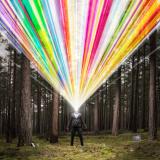
The result is his most innovative album yet, a project where a sense of profound personal interrogation and introspection dance in union with the rich musical tapestry. Don’t Look Down is a story of purpose lost and then found, of what happens in the aftermath of achieving your childhood dreams, and the ranging flux of emotions that rise to the surface once the music stop
- A1: Poetic Sands (Interlude) - Brian Jackson Feat. Wes Felton
- A2: It's Your World - Brian Jackson Feat. Raheem Devaughn, J. Ivy
- A3: We Almost Lost Detroit - Brian Jackson Feat. Moodymann
- B1: The Bottle - Brian Jackson Feat. Omar
- B2: Peace Go With You Brother - Brian Jackson Feat. Raheem Devaughn
- B3: Beautiful Dame - Brian Jackson Feat. Raquel Ra Brown
- C1: Lady Day & John Coltrane - Brian Jackson Feat. Rahsaan Patterson
- C2: The Revolution Will Not Be Televised - Brian Jackson Feat. Black Thought
- C3: Addiction (Interlude) - Brian Jackson Feat. Raquel Ra Brown
- D1: Home Is Where The Hatred Is - Brian Jackson Feat. Lisa Fischer
- D2: Madison Avenue - Brian Jackson Feat. Raheem Devaughn
- E1: Is That Jazz? - Brian Jackson Feat. Rahsaan Patterson
- E2: More Than Ever (Interlude) - Brian Jackson Feat. Raquel Ra Brown
- E3: Now More Than Ever
- E4: Home Is Where The Hatred Is
- F1: Moonshine (Live) - Brian Jackson Feat. Carl Cornwell
- F2: Racetrack In France - Brian Jackson Feat. Josh Milan, J. Ivy, Moodymann
- F3: Winter In America - Brian Jackson Feat. Rich Medina
- F4: New York City
Produced by Masters At Work (Kenny Dope and Louie Vega).
'Collaboration is stimulating, it's in my blood.' Thus speaks Brian Jackson and his philosophy for making music and it's indeed collaboration that runs through this amazing album of reimagined and revisited songs from his artistic past. Featuring artists such as Black Thought, Rahsaan Patterson, Josh Milan, Moodymann, Omar, J. Ivy and others and being produced by Masters At Work, Now More Than Ever takes the enduring classic tracks that Brian made with Gil Scott-Heron and places them in the now over nineteen tracks and across a triple vinyl LP or double CD.
Songs such as Lady Day & John Coltrane, The Revolution Will Not Be Televised, Home Is Where The Hatred Is, Winter In America, The Bottle and more soundtracked a generational movement of Black Consciousness in the 70s and 80s. As Brian says, 'This album is one way to connect to what we were about in the 70s; we were about change and this is part of the lineage of resistance. These tracks mark a period of time when resistance was essential and now a younger generation has picked them up.'
'As young men in their twenties we (Brian and Gil) just wrote about what we saw and were feeling and people interpreted these songs in ways we never thought about but as Sly stone said the song comes from me but it's for you.' This statement from Brian perfectly sums up the collaborative nature of Now More Than Ever and the relevance of these songs in a contemporary perspective can be perfectly summed up by the songs themselves. The formidable stable of artists contributing to each track and the excellent production from Louie Vega and Kenny 'Dope' Gonzalez make this album an event in itself. However, these songs are there to be enjoyed as a canon or as individual masterpieces, whether on the dancefloor or on a home system. ‘Now More Than Ever’ just has to be in everybody’s music collection.