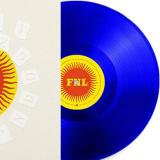
LINKIN PARK—Mike Shinoda, Brad Delson, Phoenix, Joe Hahn, alongside new members Emily Armstrong of critically acclaimed band Dead Sara as co-vocalist and Colin Brittain songwriter/producer for G Flip, Illenium, One OK Rock as drummer—share their first brand new music in seven years.
The iconic band shared a new single “The Emptiness Machine,” which is also the herald for the arrival of LINKIN PARK’s first album since 2017, FROM ZERO, on November 15.
About the new era, Shinoda stated, “Before LINKIN PARK, our first band name was Xero. This album title refers to both this humble beginning and the journey we’re currently undertaking. Sonically and emotionally, it is about past, present, and future—embracing our signature sound, but new and full of life. It was made with a deep appreciation for our new and longtime bandmates, our friends, our family, and our fans. We are proud of what LINKIN PARK has become over the years, and excited about the journey ahead.”
Right out of the gate, “The Emptiness Machine” channels the DNA of LINKIN PARK, harnessing the band’s explosive energy and retaining the hallmarks of their instantly identifiable and inimitable sound. A chameleonic and catchy anthem, Shinoda’s hypnotic melodies hand off to Armstrong’s blistering chorus, over distorted riffs and head-nodding drums.
Ultimately, with FROM ZERO, the band is looking to harness the purest energy of their past, present, and future. The new era has officially begun.
Suche:z id
Digital Finesse proudly presents Dischetto I, the debut album from Blinkduus Dischetto. This is a cathartic exploration, a raw, unfiltered ride from childhood to grown-man status.
Dischetto blends French Touch, IDM, and experimental sounds like a master alchemist, turning chaos into art to express the pain, the joy, the discoveries, and loss of innocence that come with the journey. Whether he's deep into Legend of Foresia with Barry White on repeat or just shaking off life’s small distractions, Dischetto is always in his zone, breaking new ground. This album is his journey—a sonic mission to claim that dischetto d'oro, Pioneer 10 lost-in-space style.
"Cadair Idris is one of the Southernly peaks of Eryri (Snowdonia). It sits magnificently at the head of the Tal-y-Llyn pass, and above Dolgellau to the North, with its craggy slopes rising above the tree-line towards the mystical clouds that so o�ften shroud its summit. This mountain is rich with mythology and legend; meaning 'Chair of Idris', it takes its name from the mythical giant king 'Idris Gawr' who was once said to sit atop the mountain and marvel at the heavens. The lake found at the centre of the seat is said to be bottomless, and the surrounding slopes to be the hunting grounds of the Welsh king of the underworld, Gwyn ap Nudd and his Cŵn Annwn. But one of the most intriguing legends owes its existence to the great bardic heritage of Wales. This legend comes as a warning to any wandering soul that might find themselves upon the mountain's slopes at night, for anyone that spends the night on the mountain will come down either a madman or a poet.’"
Cadair Idris by Awen Ensemble, released 12 April 2024, includes the following tracks: "UNSETTLED", "IONAWR", "IF I FALL", "UPON LEAVING THE DREAM" and more.
This version of Cadair Idris comes as a 1xLP.
Moodena’s London-based imprint Tropical Disco’s latest offering is a shimmering journey into the heart of the underground, blending nu-disco, classic house, and contemporary electronic funk in a way that feels both nostalgic and totally fresh. Featuring four standout tracks from Vagabundo Club Social, Scruscru, Da Lukas, and Fun Kool feat. vocals from Bcleo and Anna Dee Tee, — the EP is a testament to the evolving sound of the dancefloor, where groove meets grit, and melody flirts with sultry rhythm. This release channels the spirit of sweaty basement parties, neon-soaked nights, and a collective desire to get lost in the music.
Opening the record is Colombian duo Vagabundo Club Social, presenting Latin-soaked funk colliding with shimmering brass instrumentation, creating a deep, rolling pulse that invites movement from the first beat. 'Zumba Z' is a track that feels right at home in a DJ’s warm-up set or closing down an all-nighter, with a hypnotic flow and vocals that seep into your bones.
Scruscru’s story pushes things deeper into late-night, cosmic territory. 'Konyaalti' is a lush, sun-drenched production, utilising sublime sax, Scruscru delivers a cut that's both playful and distinctly driving.
Da Lukas adds a sophisticated touch, remixing Rosario Cristofaro, and taking you on a slick ride that leans into Italo-disco influences. Swooning synths and crisp percussion form the backbone while gliding melodies create a sense of elevation. It’s elegant yet laced with energy, ideal for a peak-time set where the vibe is euphoric but refined.
Rounding off the release is veteran DJ and producer Gerardo Cinquegrana, whose playful Fun Kool moniker belies the serious funk he delivers in his production. German-born, and now Italy-based, Fun Kool’s sharp, syncopated rhythms and sexy vocal lines from Anna Dee Tee bring an irresistible groove to the forefront, with the kind of bassline that takes over your entire body and mind.
Altogether, 'Tropical Disco Volume 28' encompasses a record that’s both familiar and exploratory—rooted in the timeless grooves of disco and house but pushing forward into new musical territory and picking up sonics from different continents along the way. Whether you’re looking for late-night celestial cosmosis, sophisticated Italo-inspired dubs, or straight-up, no-nonsense funk, this release has something for every dance floor.
in the middle of it we instantiate false aralia: a series of recordings growing in all directions, cataloging the work of a group of north american collaborators centered around the studio practices of izaak schlossman (of aught, s transporter, loveshadow etc.) and facilitated by brian foote (of peak oil, kranky, etc.). with this outlet we hope to provide useful tools for dance and avenues for intentional listening.
the first release, ‘zero key’, explores valences of an idea as it slips, as would a thought or a cloud, into something else entirely across its four tracks of recursive microhouse rhythms and hallucinated dub spatializations. foregrounding its most melodic state, its most percussive, and two points between, the versions cut an indeterminate and continuous process into discrete objects that invite repurposing, layering, and other nonlinear methods of evaluation. played through, it may be interpreted as an emerging, or a coming-to-light, as a soft vocal figure develops a tougher rhythmic architecture that eventually occludes its prior form entirely. each of zero key’s facets spurs a parallel investigation into its internal logic of patterning and form.
Inquiri and bvdub's superb new collaboration A Life In Setting Suns on the excellent Past Inside The Present label run by zake reflects a deep-rooted connection to the golden era of electronic music in the 90s. Their project mirrors the layered experiences of rave culture and blends some nostalgia for that with distinct musical identities. Inquiri brings the energy of main rooms where trance-induced emotional highs, while bvdub represents the ambient, early morning deep house scenes. Their friendship and collaboration transcend time and geography and so together they explore the timeless, hypnotic soundscapes that defined the era and in doing so create a harmonious fusion of past influences that resonate deeply.
Michael Mayer albums don’t come round too often, which is one of many reasons why his fourth collection, The Floor Is Lava, is a genuine event. It’s been eight years since his last one, the collaborative & released on !K7; its predecessors, Mantasy (2012) and Touch (2004), took their sweet time, too. It’s no real surprise, given the many hats Mayer wears – globetrotting DJ, revered remixer, inveterate collaborator, and boss of both Kompakt and Imara – that his solo productions are relatively sparing. But this also speaks to their quality: Mayer’s name on a record sleeve is a sign of quality, of music that’s both looking to the future and calling back to the past, that balances the imperatives of the dancefloor and the loungeroom, that’s as exploratory as it is functional.
On The Floor Is Lava, Mayer seems to be taking the temperature of both the music that surrounds him (past and present), and the ides of the industry he works within. There’s that iconic album title, for a start. “The album’s mindset,” he says, reflecting on those four words together. For Mayer, it’s partly a critique of the way the industry boxes in both producer and listener, focuses them on genre, on market, on the next new thing: “Being a free minded spirit that transcends genres has become an uphill battle.” A battle worth fighting, though, and with The Floor Is Lava, the result is an album that’s varied, quixotic, idiosyncratic, charming, and deeply, addictively listenable.
Throughout, Mayer finds thrills in exploration and juxtaposition, allowing unexpected things to blossom and giving them their life, their platform, throwing the listener exciting curveballs: “It’s a DJ album by a DJ that’s easily bored.” Either easily bored, or endlessly curious, The Floor Is Lava is rich with ideas. It opens with “The Problem”, which looks back to look forward, embracing the rickety way early house productions threw samples together with gleeful abandon. Mayer mentions Pal Joey, and the scene around Rockers Hi-Fi and their Different Drummer imprint, as reference points, and you can hear that freewheeling spirit throughout.
It’s followed by “Vagus”, a slinky, sensual minimal house number that Mayer describes as his “musical catnip”. The flow of these two opening cuts defines the dynamic of The Floor Is Lava, defining the dialectical drive at its core: thesis and antithesis leads to synthesis, but with a welcome prickliness that means you’re always excited, always engaged. It’s also productive in the way it derives energy from rubbing genres and sounds against each other, in unexpected ways, for maximum musical frisson. There’s psychedelic techno on “Feuerstuhl”, more minimal techno with “Ardor” (Mayer mentions ‘Immer 1’ era 90s minimal as inspiration), slippery, Shepard-tone breakbeat through “Sycophant”, a lovely, lush vocal turn on the poppy “The Solution”.
The album closes with the melancholy “Süßer Schlaf”, where Mayer sets a poem by Goethe to one of his most haunted, moving pieces of music yet, in abstract tribute to a lost friend. It’s one of the most affecting moments on The Floor Is Lava. There’s also an update on 2020’s wild Brainwave Technology EP, with the surrealist glitter-stomp of “Brainwave 2.0” (check out those handclaps!),where Mayer’s thinking about the socio-political precipice of the now: “I’m reading with great interest about this whole complex of how humanity is about to cross so many lines and the implications that the resulting financial and educational inequality will bring.”
That’s The Floor Is Lava: then and now, brainwaves and nerve structures, problems and solutions, genres on fire; the real, the unreal, and the surreal. An album for the easily bored and the endlessly curious. Mayer has the last word, telling us all you need to know about the album’s spirit: “Burning for the cause, being zealous, being addicted to the heat of the night, the exuberant powers of music.”
Michael Mayer veröffentlicht nicht oft Alben, was einer von vielen Gründen ist, warum ‘The Floor Is Lava’ ein echtes Ereignis ist. Es sind acht Jahre vergangen seit seinem letzten Werk, dem Kollaborationsalbum &, das auf !K7 erschien; seine Vorgänger, Mantasy (2012) und Touch (2004), ließen ebenfalls auf sich warten. Es überrascht nicht wirklich, da Mayer viele Rollen gleichzeitig erfüllt – weltreisender DJ, vielbeschäftigter Remixer, unermüdlicher Kollaborateur und Chef von sowohl Kompakt als auch Imara – weshalb seine Solo-Produktionen eher sparsam ausfallen. Doch das spricht auch für deren Qualität: Ein Album mit Mayers Namen auf dem Cover steht für Qualität, für Musik, die sowohl in die Zukunft blickt als auch auf die Vergangenheit verweist, die das Gleichgewicht zwischen den Anforderungen des Dancefloors und des Wohnzimmers hält, die genauso erforschend wie funktional ist.
Auf The Floor Is Lava scheint Mayer sowohl die Musik um ihn herum (vergangen und gegenwärtig) als auch die Strömungen der Branche, in der er arbeitet, zu reflektieren. Da wäre zunächst der ikonische Albumtitel. „Die Grundhaltung des Albums“, sagt er, drückt sich in diesen vier Worte aus. Für Mayer ist es teilweise eine Kritik daran, wie die Industrie sowohl Produzenten als auch Hörer in Schubladen steckt, sie auf Genres, auf den Markt und auf das nächste große Ding fokussiert: „Ein freier Geist zu sein, der Genres überschreitet, ist zu einem steinigen Weg geworden.“ Ein Kampf, der sich jedoch lohnt, und mit The Floor Is Lava ist das Ergebnis ein Album, das vielfältig, eigenwillig, charmant und tiefsinnig, aber auch süchtig machend ist.
Im gesamten Album findet Mayer Freude an der Erforschung und Gegenüberstellung von Stilen, lässt unerwartete Dinge erblühen und gibt ihnen Raum, überrascht den Hörer mit spannenden Wendungen: „Es ist ein DJ-Album von einem DJ, der sich schnell langweilt.“ Entweder langweilt er sich schnell oder er ist unendlich neugierig – The Floor Is Lava ist reich an Ideen. Es beginnt mit „The Problem“, das in die Vergangenheit blickt, um nach vorne zu schauen, und die wilde Art, wie frühe House-Produktionen Samples mit fröhlicher Unbekümmertheit zusammenwarfen, aufgreift. Mayer nennt Pal Joey und die Szene um Rockers Hi-Fi und ihr Label Different Drummer als Referenzpunkte, und dieser freie Geist zieht sich durch das gesamte Album.
Es folgt „Vagus“, eine sinnliche Minimal-House-Nummer, die Mayer als seine „musikalische Katzenminze“ beschreibt. Der Fluss dieser beiden Eröffnungstracks definiert die Dynamik von The Floor Is Lava und den dialektischen Antrieb im Kern: These und Antithese führen zu einer Synthese, jedoch mit einer willkommenen Schärfe, die dafür sorgt, dass man immer aufgeregt und engagiert bleibt. Zudem gewinnt das Album Energie, indem es Genres und Klänge auf unerwartete Weise aneinanderreibt, um maximalen musikalischen Nervenkitzel zu erzeugen. Es gibt psychedelischen Techno in „Feuerstuhl“, mehr Minimal Techno mit „Ardor“ (Mayer erwähnt ‘Immer’ Ära Minimal als Bezugspunkt), gleitenden Shepard-Ton-Breakbeat in „Sycophant“ und einen lieblichen, üppigen Vocal-Auftritt im poppigen „The Solution“.
Das Album schließt mit dem melancholischen „Süßer Schlaf“, in dem Mayer ein Gedicht von Goethe vertont und eine seiner bisher eindringlichsten und bewegendsten musikalischen Kompositionen schafft, als abstrakten Tribut an eine verschiedene Freundin. Es ist einer der ergreifendsten Momente auf The Floor Is Lava. Ebenfalls gibt es ein Update der wilden Brainwave Technology-EP von 2020, mit dem surrealistischen Glitzer-Stampfer „Brainwave 2.0“ (hör dir diese Handclaps an!), in dem Mayer über den sozio-politischen Abgrund der Gegenwart nachdenkt: „Ich lese mit großem Interesse über diesen ganzen Komplex, wie die Menschheit dabei ist, so viele Grenzen zu überschreiten und welche Auswirkungen die daraus resultierende finanzielle und bildungstechnische Ungleichheit haben wird.“
Das ist The Floor Is Lava: Damals und heute, Gehirnwellen und Nervengeflechte, Probleme und Lösungen, brennende Genres; das Reale, das Unreale und das Surreale. Ein Album für die schnell Gelangweilten und die unendlich Neugierigen. Mayer hat das letzte Wort und sagt uns alles, was wir über den Geist des Albums wissen müssen: „Brennen für die Sache, leidenschaftlich sein, süchtig nach der Hitze der Nacht, den überschwänglichen Kräften der Musik.“
On his latest full-length, Low End Activist swerves towards weightless grime and suspended hardcore miniatures to tell a very personal story. The UK-rooted producer continues his habit of zeroing in on a distinct approach for each release, leaving a logical breadcrumb trail of soundsystem science in his wake as he channels decades of bass absorption into 14 atmospheric cuts that prize patience and precision over obvious club functionality.
Municipal Dreams plays out as a semi-autobiographical tour through the Blackbird Leys estate that the Activist grew up on. It’s a lived reflection on inequality and the ripple effect it has in working class communities, using the sonic palette to set the mood and scattering pointed samples throughout to spell out the story.
In sampling the exhaust of a stolen Subaru Impreza, ‘TWOC’ looks back to the recreational car theft which was standard entertainment for the kids in his community. There’s an underlying idea that this ‘council estate sport’ wouldn’t have been so prevalent if there were public services and opportunities presented to the scores of disaffected youth looking for somewhere to direct their energy and frustration.
In ‘Just A Number (Institutionalised)’ LEA alludes to the shattered juvenile detention system, growing up seeing friends and family members locked up at ease with little to no support on being released back into society, just meant that the same cycles of behaviour would play out over and over.
‘Violence’ samples from a short film shot by the drama division of the Blackbird Leys Youth Club to evoke the physical threat which formed a background hum to life on the estate. The industrial mechanics of the local car factory, which served an integral role as a workplace for many in the community, gets sampled in ‘They Only Come Out At Night’ while the ‘Everyone I look up to are either junkies or criminals’ sample in ‘Broke’ looks to a lack of positive role models.
Municipal Dreams isn’t a one-note indictment of life on the estate, ‘Innocence’ captures the simplicity of a child at birth before their environment has time to shape them. The Hope interludes cut through the grim honesty of the longer tracks while a subtle thread of wry humour finds its way into some of the talking heads cutting through the signature LEA murk.
But honesty is the operative word here, and the message feels all the more meaningful at a time when the UK’s social divisions are laid bare in the wake of a devastating stretch of austerity. Returning to Blackbird Leys to shoot images for the photo-zine and album cover, the Activist found the local community centre being demolished. The local pub stands derelict, its faded Welcome sign a grimly ironic portent of the options facing children of the estate in the wider world.
Funnelling his memories, hopes and fears into a singular twist on the bass weight tradition, LEA captures evocative scenes that land somewhere between kitchen sink realism and rave futurism.
In July 2019, eleven years after Jay-Z became the first hip-hop artist to headline Glastonbury, Stormzy became the first English rapper to follow suit. Wearing a customised stab-proof vest designed by Banksy, the South London rapper delivered an explosive performance and finished by thanking the “legends for paving the way,” name-checking Wiley, Dizzee Rascal, and Giggs. Despite how unlikely it seemed for decades, UK rap was now firmly a part of pop music and the greater hip-hop canon.
Rich, nuanced, and often misunderstood, the history of UK rap is a story of music that refused to stand still. Factoring in socioeconomics, gender, identity, music industry disruption, and innovation, What Do You Call It? charts the artform’s first four decades, beginning when rap landed on our island in the early 1980s. Shaped by sound system culture, inspired by punk, and accelerated by rave, it has evolved from Britcore, UK hip-hop, and trip-hop of the late twentieth century to garage, grime, and drill.
Through cultural theory, historical research, and original interviews with key figures and collaborators in the UK rap scene, from pioneers like Malcolm McLaren, Soul II Soul, Tricky, Roots Manuva, and Roll Deep to modern artists like Dave, CASISDEAD, Little Simz, Loyle Carner, and Skengdo x AM, adds a rich human dimension to the UK rap story — one that helped change British music and culture forever.
“A long overdue exploration of rap music in the UK and its longstanding – albeit overlooked – legacy and influence. In an era when UK rappers dominate the charts, star in major movies and TV shows and front huge advertising campaigns for multi-national corporations, Kane traces back the arduous journey from maligned sub-culture to celebrated mascot of neoliberal capitalism.” Jehst
“David Kane writes with a deft touch and possesses a disarming and deeply insightful interview style. Sparking life, humour, and sorrow across every page of more than three decades of UK rap history.” Charlie Dark MBE
“Kane builds bridges in a rich musical universe full of heroes and villains—and plot twists. With an inimitable style, he merges culture high and low to bring new meaning to the music. What Do You Call It? is a landmark tome for UK rap music.” Brian DiGenti, Wax Poetics
“A mind rich in ideas” Stanley Ledbetter, The New Yorker
Wellington, New Zealand-based producer, drummer and band leader Cory Champion aka Borrowed CS delivers his second release on Planet Trip Records ~ Rise N Shine EP, expanding the infectious outsider boogie sound he explored on ‘Mystic Shuffle’ (off 2020’s Balance/Ascend EP) into a six-song suite of neon-lit machine funk, mutant post-disco and uptempo future soul. Draped in synthesisers that sparkle and glitter like summer sunlight hitting the harbour waters, the programmed Roland TR-606 drums and keyboard bass on these club tracks absolutely snap, wobble and groove.
From the space-aged melodies and throwback electro bounce of ‘All My People’ (featuring the pioneering British electronic soul vocalist Steve Spacek) to the dialled-in dancefloor weaponry of the title track and ‘Potplant’, the A-side of Rise n Shine unfolds like Friday night at a 1980s roller disco. On the flip, Champion reconnects with the idiosyncratic Māori singer-songwriter Mara TK to pen another golden-voiced chapter in the hi-tek South Pacific future soul story with ‘Hearsay’ before diving into some deep mid-tempo body music on ‘Subsonix’ and ‘Mystic Dream’. One for the dancefloor dreamers, Rise n Shine, will be available in 12” vinyl (limited to 300 copies) and digital versions.
Grammy Award-winning band Phoenix returns with their next full length, Alpha Zulu, due out 11/4/2022. This follows their 2020 single "Identical,'' which went #1 at AAA radio, from the Motion Picture "On The Rocks". The project was recorded during the height of the pandemic in Paris, at the iconic Louvre museum. Phoenix are set to perform at festivals like Primavera Sound (Barcelona), We Love Green (Paris) and Austin City Limits (Texas) and will embark on a full headline tour in the US, UK, and EU in Sept 2022. The band has seen over 1.5B+ streams across their catalog, and have previously headlined Coachella, Governors Ball, Primavera Sound, Austin City Limits, and more. They've performed on Saturday Night Live, The Tonight Show with Jimmy Fallon, amongst others.
DJ Support: Louie Vega, Ralf Gum, Jihad Muhammad, Zepherin Saint, Mr. V, Doug Gomez DjPope, DJ Beloved & Brutha Basil to name a few.
Sean McCabe’s Good Vibrations Music label opens the vault doors for a peek inside some of its closely guarded & much-loved releases courtesy of this special limited edition 12 inch. Featuring 4 new to vinyl releases & including a raft of luminary names from across the soulful spectrum this is sure to be a be a hot fave with long standing fans of the label.
Glenn Underground’s Jazz-Funk fuelled rework of 'This Place' kicks things off and needs no introduction… heavily supported & much loved through the soulful circles & beyond with the likes of Louie Vega, Dave Lee, Jimpster, Jamie 3:26 & Fred Everything (to name a few!) all loudly banging the drum – people have been clamouring for this to be on vinyl. You spoke, we listened!
Up next is 'Modulate', a collaborative force of the highest order between Sean & long-time friend Black Sonix. Expertly fuzzying the lines across Deep, Soulful & House is somewhat of a speciality for the duo respectively and there’s bags of all 3 intertwined throughout alongside a hefty sprinkling of sun-kissed, Latino-inspired pianos.
'Still Standing Here' kicks things off on the B-side and begin in March 2022 as vocalist Madeeha recorded an accapella vocal idea in a phone voice message, quietly singing into her phone to avoid waking the neighbours. She sent the idea to drum & bass producer from Bristol, DJ Mixjah, who then approached friend Sean McCabe with the idea. Together they produced a hypnotic afro-tinged soulful backing track to fit with the voice message, with an intention to re-record it in a studio environment. Sean and Mixjah soon realised that the music they had created blended perfectly with the sincerity, intimacy & rawness of Madeeha's heartfelt performance in the original voice message and decided to stick with it. A firm fave for Atjazz, Crackazat , DJ Spen & Emmaculate.
Wrapping things up is 'You Don’t Know', a slick & energetic dancefloor bubbler from London based producer/DJ ‘David Bailey’ and Canadian soulful songstress ‘MissFly’. David Bailey is a firm favourite amongst the London house music community. He’s produced standout releases on labels such as Idris Elba's 7wallace, Makin Moves, Good Vibrations Music, Rhemi Music & Unquantize. MissFly is known for her soulful serenades and ability to write songs 'on the fly' in the studio. She has carved out an impressive discography on soulful house nuggets such as '1972,' 'Wanna Love You' and 'Thankful'
2024 Repress
Thomas Fehlmann remains as one of the most endearing and respected artists on Kompakt. He has inspired generations of fans and musicians over the course of his 30+ year career. From his early days as part of the legendary band Palais Schaumburg, and the pioneering Detroit/Berlin act 3mb (With Juan Atkins and Moritz Von Oswald), to his longstanding membership with The Orb, combined with his contributions as a solo artist to esteemed imprints R&S, Plug Research and of course Kompakt, where we have proudly released two full length solo albums: Visions Of Blah (Kompakt CD 20/Kompakt 67) and Honigpumpe (Kompakt CD 59 / Kompakt 157), his musical works have been prolific, not to mention four singles and a full serving of tracks found on our Pop Ambient and Total collections. Now, after 3 years, Fehlmann returns with 'Gute Luft'…
'Gute Luft' is the result of months of work scoring the hit German TV film 24h Berlin - the longest documentary film in history which featured 80 camera teams following the lives of berliners over a 24 hour period. Obviously a huge challenge for Fehlmann, beyond the scope of the project and hours of music involved in a 24 hour film, there was dealing with the decision making process that went with working with such a large production team. As he shared scoring duties with another musician (separately), inevitably a lot of his music ended up not making the final cut. 'Gute Luft' is about re-tweaking and editing material from the countless hours of recording he had created. In a sense, 'Gute Luft' is Fehlmann's ideal soundtrack to the 24h Berlin documentary.
“while scoring the film and subsequently shaping it into a album, i found myself questioning what holds it all together in Berlin. I figured that 'Air', the good old 'Berliner Luft', is something that is guaranteed to touch everyone and everything in the city. Also with that Berlin is very green, the combination with the unavoidable city dirt makes for a distinctive blend which seems to infuse its vibrant scene unknowingly with a constructive drive. Besides that, 'Gute Luft' was also the title of a song from my old band Palais Schaumburg, of which I have very fond memories. Also (as he says with a wink) “Gut” is one word I have a profound relation to…”
Fans shall rejoice as Thomas Fehlmann doesn't feer far from his signature path of trailblazing the finer links of classic Detroit House and Techno with the submerged beauty of Berlin Dub. One will immediately recognize the classic scoring techniques Fehlmann brings to 'Gute Luft' - various themes and sounds resonate in various forms and versions throughout the tracks. As Thomas states, “There are also More Subtle Connections That Should Give An Overall Feel To The Score. I Also Brought In Elements From Tunes From My Previous Albums In recognition of the fact that I often feel that there would be so many more ways to explore and experiment with certain ideas than just on a single track”. Fehlmann clearly succeeds in synergizing the best of the past 20 years of Berlin's expansive history of electronic and dance music with 'Gute Luft'. A recreational album in every way in which he hopes will make you “Feel at peace with you and your environment, inspire you to lush, imaginative dinners, make babies, or just walk your own way with open eyes”. Well put Thomas!
This is a re-release of " Gute Luft " orginally released in 2010 on Kompakt.
Thomas Fehlmann ist nach wie vor einer der liebenswertesten und gleichzeitig angesehensten Künstler bei Kompakt. Im Laufe seiner über 30-jährigen Karriere hat er Generationen von Fans und Musikern inspiriert. Von seinen frühen Tagen als Teil der legendären Band Palais Schaumburg und dem bahnbrechenden Detroit/Berlin Act 3MB (mit Juan Atkins und Moritz von Oswald), bis hin zu seiner langjährigen Mitgliedschaft bei The Orb, kombiniert mit seinen Arbeiten als Solokünstler für Imprints wie R&S, Plug Research und natürlich Kompakt: Sein musikalisches Gesamtwerk ist beeindruckend. Wir sind stolz, bereits zwei seiner Soloalben veröffentlicht zu haben: “Visions Of Blah“ (KOM CD 20/KOM 67) und “Honigpumpe“ (KOM CD 59 / KOM 157). Ganz zu schweigen von vier Singles und jeder Menge Tracks, die sich auf diversen Pop Ambient- und Total-Sammlungen finden lassen. Jetzt, nach drei Jahren, kehrt Fehlmann mit “Gute Luft“ zurück ...
“Gute Luft“ ist das Ergebnis monatelanger Arbeit für den deutschen Fernsehfilm “24h Berlin - Ein Tag im Leben“ - der wohl längste Dokumentarfilm der Geschichte. 80 Kamerateams verfolgen das Leben der Berliner*innen über einen Zeitraum von 24 Stunden. Die größte Herausforderung stellte für Fehlmann dabei nicht die Komposition für einen solchen Film dar; vielmehr waren es die Entscheidungsprozesse im großen Produktionsteam, die ihm die meiste Arbeit abrangen. Da er sich die Aufgabe mit einem anderen Musiker teilte, endete es unweigerlich so, dass einige seiner Tracks nicht in den Final Cut kamen. Bei “Gute Luft“ ging es nun darum, Material aus den unzähligen Stunden an Aufnahmen neu zu bearbeiten und zu editieren. In gewissem Sinne ist “Gute Luft“ Fehlmanns eigentlicher Soundtrack zum 24-Stunden-Dokumentarfilm.
"Während ich den Film vertonte und anschließend zu einem Album geformt habe, habe ich mich gefragt, was hier in Berlin alles zusammenhält. Ich habe mir gedacht, dass 'Luft', die gute alte Berliner Luft, etwas ist, das garantiert jeden und alles in der Stadt berührt. Die Tatsache, dass Berlin sehr grün ist; gleichzeitig die Kombination mit dem unvermeidlichen Dreck einer solchen Stadt – das ergibt eine unverwechselbare Mischung, die ihrer lebendigen Szene unterbewusst einen bestimmten Drive zu verleihen scheint. 'Gute Luft' war übrigens auch der Titel eines Liedes meiner alten Band Palais Schaumburg, an das ich mich sehr gerne erinnere. Außerdem (das sagt er mit einem Augenzwinkern) ist ‚Gut‘ ein Wort, zu dem ich eine enge Beziehung habe ..."
Seine Fans können sich freuen, denn Thomas Fehlmann entfernt sich nicht weit von seinem charakteristischen Sound, mit dem er die feinen Verbindungen von klassischem Detroit House und Techno mit der versunkenen Schönheit des Berliner Dubs aufspürt. Man wird sofort klassische Soundtrack-Techniken erkennen, die Fehlmann auf “Gute Luft“ verwendet - bestimmte Themen und Sounds durchziehen in unterschiedlichen Formen und Versionen die einzelnen Tracks. Thomas sagt dazu: "Es gibt subtile Verbindungen, die der Erzählung ein zusammenhängendes Gefühl geben sollten. Ich habe Melodie-Fragmente aus früheren Alben einbezogen, um der Tatsache Rechnung zu tragen, dass ich oft das Gefühl habe, es gäbe so viele weitere Möglichkeiten, bestimmte Ideen weiterzuverfolgen und mit ihnen zu experimentieren, als nur in einem einzigen Track.” Fehlmann gelingt es hier, das Beste aus den vergangenen 20 Jahren Berliner Elektronik- und Tanzmusik-Geschichte zu bündeln. Ein wohltuendes Album in jeder Hinsicht, von dem er sich selbst erhofft, dass es seinen Hörer*innen "ein Gefühl des Friedens mit sich selbst und ihrer Umgebung vermittelt, sie zu phantasievollen Abendessen inspiriert, zum Babys machen oder sie einfach nur mit offenen Augen Ihren eigenen Weg gehen lässt." Gut gesagt, Thomas!
Dies ist die Wiederveröffentlichung von “Gute Luft“, erstmals erschienen 2010 auf Kompakt.
It's difficult to ''label'' the songs of this authoritative and necessary official reissue (after the shameful fake of 10 years ago). ''Zombi'' and ''In the Land of the Zombi'' are two electro disco-funks from 1979, therefore from three years before was born the ''Italo-Disco'' style, certainly more powerful, aggressive and more electronic than the ''Made in Italy'' disco style of the 2nd half of the 70s (Fratelli La Bionda, Pino Presti, Claudio Simonetti, Celso Valli and others.). The creation of the original 7" by Salvatore Ida, great musician and bandleader - to whom this excellent reissue is dedicated - was a sort of game for the authors of the two pieces: Federico Ida and Massimo Ida, were protagonists 4 years before of the Italian progressive rock scene with the sister Silvana Ida, Marcello Surace and Franco Vinci thanks to the immeasurable and acclaimed album ''Apoteosi''. So The Zombies were destined to pair with another easy '79 joke by the Ida brothers: ''Let's Go'' and ''Mustang'' by Sandwich, also reissued on 12inch by Best Record Italy. The Zombies comes out with the original artwork of the time, but in a full embossed picture sleeve and released in the classic black vinyl and on red vinyl with black shades (limited edition with red copies numbered manually (1/250: 2/250 and so on...) What else to add except that: the two long versions of ''Zombi'' and ''In the Land of the Zombi'' were re-edited by Massimo Berardi, always diligent and active, as well as tidy and aware of where he was putting his hands, are fundamental in order to complete this 12" fully remastered by Dom Scuteri.
Make The Ting is a project born out of my writing on creativity that lives online as post it style notes known as the ‘Yellow Squares’ found across Instagram and Twitter. The first square was posted on July 31st 2021, as covid-19 restrictions were lifting in the UK and I was thinking about what the music scenes and wider creative communities are after 18 months of lockdown. The idea’s developed into lectures presenting them in real life, but the platform felt right to explore my own creativity more broadly to challenge my own ideas in real time. My history as a DJ, Label Owner and Promoter in the Grime scene wasn’t at the forefront of these ideas, but I wanted to reconnect back to the ecosystem that inspired and gave me a creative career in the first place. Blay Vision’s ‘Cammy Riddim’ in the summer of 2022 inspired an idea to translate the ideas in the squares into song form. I approached Grime MC Jammz about the idea, and the first song ‘Yellow Square’ was done with the core principles that I had written about so far. 6 months passed, and while on a Muay Thai retreat in Thailand in February 2023 I thought about expanding the musical side of the Yellow Squares further. I text Jammz about turning this idea into an album, that we make as quickly as possible using my writing as a guide, and his voice and creativity to turn them into songs. We gave ourselves two weeks, set up a shared notes in iPhone did two zoom meetings, one phone call, exchanged messages on iMessage and he wrote 7 songs in a week, then recorded them all in one day at Ten 87 Studios in Tottenham, London. Jammz wrote all of the songs to one of his own beats, then we selected the final instrumentals we liked that we thought fit the ideas from both our camps the day before recording. The speed forced our hands creatively and it would have been a completely different project if we worked on it for months. Time is the creative director. Albums don’t have to be blockbuster projects with big budgets and huge campaigns behind them. Albums are just collections of ideas. Removing the pressure of trying to make a perfect one meant it got done and released with the least stress possible. Even the business of the album took 5 mins to handle. An equal revenue split on each song between me, Jammz, and the producer. Everyone gets paid quarterly into their own account automatically by our distributor. On announcement of the album in March 2023, we released the acapellas, for people to do their own versions, before most of the original songs had been heard by anyone. We encouraged people to Remix The Ting, and I did custom artwork for everyone that sent me a complete remix before the album came out on the 30th June 2023. The front covers are drawn individually by me. I wanted to make the record an extension of what I do with the yellow squares themselves and capture the energy of where my head is at in 2023. If it’s blank, it’s space for you to draw your own yellow square. Maybe what you think about the album, what it’s inspired for you, or just a snapshot of where your creative brain is at on the day you are picking up this record. This could be the first of many albums, this could be a one off. Nobody knows what is going to happen next. It all may make sense in the end – Elijah
Warriors Of The Dystotheque begann als Onlineprojekt des irischen DJs Jonny Mac gestartet und ist nun zur vollständigen Band gereift, die sich zum ersten Mal im wirklichen Leben traf und ein Album mit kontrastierenden Sounds, Ideen und Einflüssen aufnahm. Aufwachsen in Nordirland, die 90er Rave-Tage, Leben im sonnigen Florida, ein Mashup aus Live- und elektronischer Musik, Freundschaft und Verlust, Ibizas Sonnenlicht und dunkle Wolkennächte, Verzweiflung und Erleuchtung, die Kraft der Musik, sich aufzurichten und Freude und Harmonie zu schaffen. Jonny Mac: "Es fühlt sich an, als hätten wir die Punkte auf diesem Album verbunden, es klingt mehr nach einem Zusammenkommen der Band als nach einem Onlineprojekt. It's a beautiful thing." Lp mit 12x12" Artprint.
Los Angeles-based video artist and producer Laskfar Vortok makes his first appearance in the EVAR catalogue with "Erbsat Esrhosc." An unusual title that reflects the artist's interest in the bizarre, whether he's making music or producing videos and visuals, "Erbsat Esrhosc" bristles with erratic patterns, anarchic atmospheres and glitchy soundscapes. The Mexican-born talent explores ideas based on the hypothetical concept of a planetwide city, otherwise known as an ecumenopolis, weaving such ideas against a cinematic backdrop, nodding to his long-running love for cinema. Across the five-track EP, he also draws inspiration from the heated and hectic energy of L.A, where he's resided most of his life.
Produced in memoriam of Michael Gregory Harrison, aka Bad Timing, and following a period of introspection and creative and personal challenges, Laskfar Vortok began work on "Erbsat Esrhosc" in 2018. The EP honours Michael's brilliance as an artist and a friend;the title being an anagram of a phrase that they shared between them.
"Eclipse" opens the EP on a haunting note. A spidery melody and chilling pads punctuate the witchy soundscape before syncopated sequences collide with snafued textures, signifying a sharp left turn into breakcore. With its nebulous atmosphere, this track offers the first glimpse into the concept of an ecumenopolis. On "Hyperdrive", frenetic percussion dominates while zappy noises and a doomsday melody slink in and out of earshot. Bursts of broken wub exacerbate the uneasy mood while cinematic, almost ethereal chords twinkle in the background.
"Base" offers a moment to recover one's brain cells after the nosedive into the near future. A lugging kickdrum and broken, woody percussions swirl around the troposphere while creepy pads convey a sinister aura. "Mutation" catapults us back into chaos with claustrophobic polyrhythmic structures, smatterings of kickdrums, and a sporadic mad-scientist-type synthline, adding a jittery layer. An unexpectedly orchestral outro completes the bizarre nature of the track.
Closing out on "Send Off", Laskfar Vortok blends freezing-cold chords with snaggy synth notes and a tangle of drum constellations tied up with a gossamer melody and splattered across an eerie terrain.
Using Bitwig Studio, orcλ, TidalCycles and Renoise as his modus operandi, Laskfar Vortok produces a trip that intrigues but disturbs, serving a shimmering yet terrifying squint into a technoid-led utopia. And we're only just getting started.
- A1: Srirajah Sound System - Si Phan Don Lovers Rock
- A2: Perikas - Laberinto
- A3: Mac Thornhill - No Way To Control It
- A4: King B. - Love Is Crazy
- B1: L'innovateur Djoe Ahmed Et Le Zoukabyle - Amek Amek
- B2: Champagn’ - Bel Ti Négress
- B3: Androo - Lyriso
- B4: Hidrogenesse - La Carta Era Muy Larga (Dub)
- C1: Kajou - Tet Chajé
- C2: Conjunto Baluartes - Nira Gongo
- C3: Landshark - Tie Me Up - The Nas T Version Instrumental
- C4: Pellegrin El Kady - Selva De Carnaval
- D1: Lee Jackson - Call On Me
- D2: Lta - What Comes To Ya?
- D3: Urban Volcano - Ame No Uta (Rain Song)
Cream[27,31 €]
To celebrate 10 years of one of London’s most loved underground club nights, Tangent, Mr Bongo are thrilled to launch this new compilation series. Crafted by its two residents, John Gómez and Nick the Record, it aims to transmit a taste of Tangent’s spirit. A party rooted in inclusivity and open-mindedness, whose name captures the spontaneous switches in musical direction that are a defining element of their nights. For the compilation, the pair have cherry-picked a selection of their prized, rare and dancefloor-ready tracks from around the globe, that have soundtracked the past decade of parties.
Friends for close to 20 years, music lovers, record obsessives and internationally renowned DJs in their own right, John and Nick have two lifetimes worth of musical knowledge to draw from. John a long-standing NTS Radio resident and compiler for Music From Memory. Nick one of the UK’s go-to record dealers, resident DJ since the ‘90s at one of Japan’s pioneering parties, Life Force, and co-captain / co-edit-expert of Record Mission with Dan Tyler (Idjut Boys).
In 2014, the pair decided to bring some of Life Force’s grassroots principles to the UK, whilst channelling underground clubbing institution Plastic People’s meticulous attitude to sound. Tangent grew from being a small gathering of friends, to an established fixture in London’s nightlife, whilst always maintaining a strict no guest DJ policy. “As London’s clubs have become increasingly reliant on international guests, we wanted to emphasize the importance of a club night growing through its residents”, John and Nick reflect. With 10 years of the duo at the helm, an intimate connection between DJ and dancefloor has been built, allowing for freedom of expression on both sides of the decks.
Tangent reaches around the globe and across different eras to make connections that stimulate emotional reverberations in the unfamiliar. Where the blissfully Balearic ‘Laberinto’ by Miguel Perikás, goes hand-in-hand with the Cameroonian hip-house of King B.’s ‘Love is Crazy’. The thundering ‘Amek Amek’ by L'Innovateur Djoe Ahmed et le Zoukabyle, rubs shoulders with the soulful Caribbean-influenced touch of Champagn’s ‘Bel Ti Négress’. And Pellegrin El Kady’s afro-cosmic ‘Seiva de Carnaval’, crosses paths with Kajou’s Kompa disco anthem ‘Tet Chajé’.
Tangent’s longevity is in part down to it having always embraced contemporary sounds. The sub-rattling bass of Srirajah Sound System’s stunning Molam dub stepper ‘Si Phan Don Lovers Rock’ and the slow, woozy mantra of leftfield dancehall explorer Androo’s ‘Lyriso’, are two shining examples.
This compilation represents an ongoing dialogue between past and present, transporting listeners to the heart of a pure musical experience, where open minds and open hearts are eager to follow the tangent.
Classic South African house / Kwaito album on vinyl for the first time.
Originally released on CD in 1995, this album which is associated with the birth of South African street music genre – ‘Kwaito’ and dance/dress style ‘Pantsula’ is now remastered for vinyl from the original tapes – resulting in the best sounding version of the recording to date.
Regarded as one of the earliest full length Kwaito albums, ‘Sigiya Ngengoma’ was released just one year into South Africa’s new democracy in 1995. Characterised by ‘mid-tempo’ beats, heavy bass hooks, adapted breakdancing and vocals in informal Zulu and other South African languages; ‘Sigiya Ngengoma’ would form a critical part of the South African street music movement that now has its own fashion, crews and dance style.
It helped post-democratic South Africa define its own musical identity and would pave the way for other Kwaito releases that ultimately led to the emergence of Amapiano years later.
Despite recent speculation and curious confirmations of an association with the pivotal Production House from those close to the source, the identity of those behind this mysteriously initialled 1991 breakbeat hardcore banger has remained a closely guarded secret for over thirty years. Despite not having a follow-up and not benefitting from the hype of big name credentials to justify inflated asking prices it has remained in high demand for over three decades as a constant in informed record bags and on discerning wantlists. It will come as little surprise to many then to find out that it is in fact the work of none other than House Crew stalwarts Floyd Dyce and MC Juice. The missing jewel in Dyce’s Production House crown, this sole FZ outing was released on one of a handful of short-lived Production House sub-labels that served as platforms for Dyce’s prodigious output, and can now take its rightful place alongside his other production and writing credits with the likes of Acen, The House Crew, Brothers Grimm, DMS and Baby D. Available once again on 12” black vinyl and licensed with the full-cooperation of Dyce himself it has been faithfully remastered from the original studio source material with the lacquer cut by Beau Thomas.
Die Record Box Advanced bietet dank der abgeschrägten Seiten, einen besonders schnellen und leichten Zugriff auf bis zu 110 Schallplatten. Sie ist ideal für Plattenläden und DJs, die sich beim Mixen direkt aus ihren Record Boxen bedienen. Die übersichtliche Aufbewahrungslösung ist aus solidem MDF-Holz gefertigt und ist in unbehandeltem beigem Holz und mit schwarzem oder weißem Shrink-Wrap Finish erhältlich.
Features
* für bis zu 110 Platten im 12" Format
* abgeschrägte Seiten für besonders leichten Zugriff
* optisch abgestimmt auf die Glorious Mix Station und Mix Extension
* erhältlich in unbehandeltem beigem Holz, mit oder weißem Shrink-Wrap Finish
technische Daten
* Material: MDF-Holz
* Maße: 350 x 265 x 340 mm
* Gewicht: 4,2 kg
DirtybLends 13 comes from these 2 misfits that split the 4th edition on the label which is Zodiac and The Jak..Zodiac kicks off the a-side with a Thanksgivin beat...food is served and your stone cold munching.
Fuk Christopher Columbo and the pilgrims. It's all about eating p@#$$.
Stuff your gullet with this heat and be thankful..
The flip side of this disc come from the leader of the the klan as “Itz In Ur Mind” is created strictly for Ron Hardy as this is the 3rd conceptual idea to follow “Hardy’s Haunted Box” from the 2nd edition of dirtybLends.
London outfit Kassian continue their broadly- evolving yet highly detailed journey through and beyond sound towards something ever more expansive. Their second release for !K7 Records comes in the wake of creating a dedicated hardware-forward studio in a Northeast London container complex, where they have the freedom to interlink their machines. This renewed focus brought them to Supercontinent EP, named for the ancient geological era when Africa and South America were joined as Pangea.
A reformulation of rhythmic ideas inspired by South= African Amapiano and South American Baile Funk governs the two hemispheres of the record. The pair examine and deconstruct dancefloor material, eschewing 4/4 for interlocking shaker patterns, searing acid lines, cracking breakbeats, and vocal samples in Zulu and Brazil Portuguese.
The immediacy of the restless rhythm and bass-led funk of “Yena” (the word Yena translates to ‘he/him /man’)forms a sweet spot where double-time and half-time can coexist. “Yami” (‘mine’ in Zulu) is a slinkier proposition which sheds prominent percussion in favour of a weighty, fluid, acid-informed bassline undulating from below.
An ascending percussive riff marks the arrival of “Pulgueiro”, followed closely by break beats and the nostalgia of distinctly British acid electro; it is an intentionally future-forward retelling of a vintage sound, replete with a mind-melt breakdown of rave pads.
A dubbed-out groove dominates the bottom-heavy “Sistema” – a groovy, steady roller that chugs and propels and chugs with head-nod hypnotism through an intricately minimalistic approach.
Die Record Box Advanced bietet dank der abgeschrägten Seiten, einen besonders schnellen und leichten Zugriff auf bis zu 110 Schallplatten. Sie ist ideal für Plattenläden und DJs, die sich beim Mixen direkt aus ihren Record Boxen bedienen. Die übersichtliche Aufbewahrungslösung ist aus solidem MDF-Holz gefertigt und ist in unbehandeltem beigem Holz und mit schwarzem oder weißem Shrink-Wrap Finish erhältlich.
Features
* für bis zu 110 Platten im 12" Format
* abgeschrägte Seiten für besonders leichten Zugriff
* optisch abgestimmt auf die Glorious Mix Station und Mix Extension
* erhältlich in unbehandeltem beigem Holz, mit oder weißem Shrink-Wrap Finish
technische Daten
* Material: MDF-Holz
* Maße: 350 x 265 x 340 mm
* Gewicht: 4,2 kg
Ukrainian vinyl label ARTREFORM significantly raises the stakes as its important anniversary (a soon-to-be-released 50th record) is gradually approaching. ARR048 is a double record, including three original tracks by Romanian producer Funky Trip and four Barac, Petit Batou, Lorgu, and Lukea remixes. ARTREFORM's founder, Kyiv DJ and sound producer JOSS, obviously trusts and bets on Funky Trip's talents, and this bet looks set to play out big time. Nicolae Catalin Cimpoier (Funky Trip's actual name) is a notable representative of the new
wave of the Romanian electronic scene that catapulted many stars to global fame. Thanks to a series of successful releases on Rawax Music and Stamp Records Paris, this Bucharest musician perfected his recognizable sound of crystal-clear minimal house, embellished with warm emotions and exquisite, shimmering melodies. Now it's high time Funky Trip transitioned to vinyl!
The second part of ARTREFORM's latest double vinyl release captures a new Romanian electronic scene star, Funky Trip, presenting a track called "Magic Woman." Just like femme fatale encounters often tend to, this occasion leaves one too many questions unanswered. Funky Trip's signature minimal house maintains tension through a looped leitmotif while the rhythm section and spacious ambient pads gradually trick the listener in. "Magic Woman" has the appeal of an ideal "second track" in the mix, the one intriguing enough yet leaving space for further narrative development. Funky Trip's delivery is delightfully contrasted by a beautiful remix by Lorgu that brings to the table an atmospheric, groovy house with many small nuances. The next track, "Les Voix," is another collaboration with Mia Zedan and a perfect specimen of ARTREFORM's sound pedigree: a powerful bass line coupled with an energetic and inventive tech house beat. However, its full depth of immersion takes effect via a remix by Lucas Morello, known as Lukea. His sci-fi-infused vibes of cosmic alienation and observation elevate this remix to the adornment of this Romanian-French-Ukrainian fruitful
creative collaboration.
Early support: Barac, NTFO, Lukea, Sam Farsio.
Stolen Goods Records announce Pergola's cinematic techno 'Zed' EP, featuring a remix from indie-dance legend CURSES.
Exploring hypnotic, emotionally charged melodies and vast techno breakdowns, the title track opens up the EP with a strong sense of mystery. Suspenseful strings build in anticipation as the bassline filters in intensity, this deep space offenng is the perfect example of a tune fit for the club as well as headphone-listening.
'Freak' is a beautifully intense piece featuring soft synths marked by subtle scratches, a feel-good vocal and the catchy strum of a quitar. '"Zed' is then given the CURSES treatment, the Optimo Music, Bordello a Parigi and Correspondant artist amplifies its retro feel resulting in nine minutes of pure dark disco hedonism. Closing out the release is an ambient collaboration between Pergola and Luigi Sambuy, 'Tunnel' is an ode to the early days of IDM through to the '70s.
*"Zed' marks the third release on Lele Sacchi & Asian Fake's Stolen Goods Records and follows up their widely acclaimed 'Volume 0' compilation as well as the recent collaborative EP between Black Loops & Innocent Soul. Since its launch last summer, the label has seen the support of artists like Dixon, Sasha, DJ Seinfeld and DJ Sneak and has garnered plays on prestigious stations like NTS and BBC Radio 1. The imprint continues its strong start to the year with three new tracks from the hyper-talented Pergola: a newcomer to the scene whos aready listed on labels such as Multinotes, Sementa ano Adriatiques Siamese, the latter which saw/ him reach number one on Beatport's Electronica chart.
Remarkable warm IDM mini-album by Shlomo, Peligre and Katu.
Heels & Souls Recordings roll into reissue number eight with a double dose of early '90s UK street soul magic, splitting the sides between two sought-after cuts from Elaine Vassell and 3rd Zone.
Step back to 1993, house music has hit, UK Soul is in full flow and its rawer, DIY street soul sibling is making its mark across the UK’s underground. Fuelled by accessible, affordable production gear and ignited through enthusiasm and an influx of ideas and sounds, two acts drew inspiration from a melting pot of genres they were exposed to, providing their take on soul as they saw it.
Up first, Elaine Vassell - ‘Never Give Up’. A rough breakbeat-driven, mid-tempo groover from a North West London production triple threat, made up of Longsy D, Pinky and Murray. Utilising Pinky’s home studio with its DX7, Juno 106, LinnDrum and 808, they masterminded a track that sits at the intersection between soulful house, hip hop and R&B. Its crunching drum loop, chest-rattling low-end and serene synth lines, lay the foundation for Elaine’s powerful yet emotive voice to take centre stage. ‘Never Give Up’ should have been a future classic, but never quite found its feet.
On the flip side another 1993 gem, as Sansel Ali and twin brothers Mark and Stephen Anglin joined forces to form 3rd Zone. Conceived in Mark’s makeshift bedroom studio, the trio laid down their first foray into recorded music, ‘You Stole My Heart’. Originally promoed as a limited whitelabel in 1991, it officially landed on the group's one and only EP ‘No Real Reason' in '93.
Armed with a handful of synth modules, a drum machine and a Korg M1, Mark, Stephen and Sansel hit with a tough but tender, underground triumph. Part dance, part romance, layering synth strings, chunky breaks and M1 stabs underneath Sansel’s heartstrung vocals and Stephen’s hip house rap interlude, it provides another perfect example of house seen through the street soul prism.
Two timeless tracks that fly the flag for the fact that big studios and big budgets aren't necessary to create songs that really resonate. Each side also contains an alternate version, with the A housing a beatless reprise of ‘Never Give Up’ and the B a tougher, bassier remix of ‘You Stole My Heart’.
Licensed from Pinky Music and 3rd Zone respectively and remastered from the original DATs by Justin Drake.
Meis heeft geleefd, en daar deelt zij met haar debuutalbum het eerste echte deel van. Na het uitbrengen van haar EP 'Een' werd het soloproject van Aysha de Groot omschreven als 'betoverend, met kleine liedjes over grote onderwerpen.'
In het nieuwe hyper-persoonlijke 'Zwart/Wit' zoekt ze daarin nog verder de grenzen op. 'Hoe oncomfortabel en toch troostend kan ik deze plaat maken?' aldus de Groot. Het kenmerkende, warme, intieme, maar toch schurende geluid waar Meis zichzelf mee op de kaart heeft gezet, is nu nóg directer komt nóg dichterbij en klinkt nóg rauwer.
In 'Zwart/Wit', doet de Groot een boekje open over een periode van ziekte, trauma, herstel, kracht en de zoektocht naar zelfliefde. Het conceptuele album vertelt één verhaal. Geopereerd worden, een totale maagresectie, uit voorzorg. Niet jong ziek willen worden zoals haar moeder en oma voor haar, maar wel moeten leren leven zonder maag. De twee weken die Meis in het ziekenhuis heeft moeten doorbrengen waren zwaar en traumatisch. Om de tijd door te komen, heeft zij een dagboek aan teksten geschreven, die later uitgewerkt zijn tot dit album. Ze pakt 3 periodes: Het toeleven naar de operatie, de periode in het ziekenhuis zelf en het herstel daarna. 'Zwart/Wit' bestaat uit 11 tracks, deels licht, positief en hoopvol, deels donker, zwaar en een stuk harder. Zowel tekstueel als productioneel speelt Meis met het zwart en het wit. Samen met producer en muzikant Nicky Hustinx dook zij in het afgelegen Den Dolder de studio in, om de songs uit te bouwen. Geïnspireerd door de directheid van Phoebe Bridgers, de intieme vocalen van Dodie, het rauwe geluid van Big Thief en de donkere en minimalistische producties van James Blake, heeft Meis de ideale manier gevonden om haar verhaal te vertellen, volledig in haar eigen stijl. Het is geen popmuziek, maar toch is haar muziek herkenbaar, maar weet je niet precies met wie ze te vergelijken valt.
Like a phoenix from the ashes, or Ukrainian culture after centuries of demolition, the Kyiv based label Noneside Records is experiencing its revival and rebirth. After all, «Nothing will stop an idea whose time has come» - these words of chief Stepan Bandera make it clear to everyone: if you really burn with sincere emotion for your dream - no difficulties will stop you on the way to its realization.
Five unique tracks from Slava Los, Yevhenii Loi, Lostlojic, Luschn and aqua. - is a tech house with elements of trance with soul and passion from musicians who write music despite the war. Visualization of the whole action on the record is the picture «The hug» by the Lviv artist Oles Derega.
Slava Los makes his debut on vinyl with the beautiful track «Snus» - old school trance in the best traditions. The author now defends the borders in the ranks of the Armed Forces of Ukraine, so he decided to fulfill his old dream about the vinyl. Yevgeny Loi is also currently in the military, but this did not prevent him from making a new version of «Bounce» - a trance for a slow, erotic dance mood. Lostlojic, who is also the art director of the project, recalls the important message of «Send Me F16» in the uncompromising track of the same name, or rather in its VIP version created especially for the release.
Known to vinyl collectors for releases on Deeptrax and Infinite Pleasure. Luschn, a Kyiv legend and mega productive musician, known to tech house maniacs for his releases on Vector.Kyiv and Noneside, invites you to have fun and crazy dances with friends to his rehearsed «Ostinato Transdanz». Newbie aqua. has a unique recognizable style, where the rhythm is constantly changing in each track, nostalgic for the favorite place of childhood - near the Hydroelectric Station in Zaporizhzhia, crazy beats and steppe motifs in the track «H.E.S.».
There are two versions of the vinyl - classic black and triple-color limited Indie Shop edition.
Both have special insert inside with the bands bio and photos.
Generacja JAZZ is a project showing a fragment of the new wave of Polish jazz, treading its own path, creating, touring and jamming across Europe. Borders don't exist - especially musical - the new generation is engaging with nightclubs, festivals and playlists. The time has now come to show its broader perspective. We created a project which involves a handful of groups that have already racked up debut albums and festival wins, as they set out on their musical odyssey. The groups also have other things in common, like their passion, originality and, for the needs of the project, age - all the artists during the recording of this album were under 30 years old. This is the new generation - the Jazz Generation.
For the Jazz Generation record we invited five bands who had already released debut albums: Immortal Onion, Klawo, Rejoin, Twoosty Mayonez and USO 9001. We also reserved two spots on the compilation for the winners of our open call competition, whereby on the basis of the jury's choice (jury: Monika Borzym, Paulina Przybysz, Envee, Wojtek Mazolewski i Marcin Groh Grośkiewicz) we met the winning bands: Kosmos and quietet.
The sleeve artist is Kornelia Nowak, who won our open call for young designers and graphic artists. Here once again we could rely on the opinion of a prestigious jury comprised of: Beata Śliwińska Barrakuz, Bovska, Maciej Animisiewasz Grochot, Grzegorz Forin Piwnicki i Marcin Groh Grośkiewicz.
Generacja JAZZ LP is also a start of the new imprint - U JAZZ ME, which will be focused on jazz from Poland.
And here are the bands from the album:
1. Immortal Onion - A band from the Tri-City playing a broad spectrum of instrumental music.
Band members: Wojtek Warmijak (percussion), Tomir Śpiołek (piano, synths), Ziemowit Klimek (Upright Bass, synths).
The band Immortal Onion has already established itself as one of the most interesting projects of the new wave of Polish jazz, and is consistently being labelled as such abroad. After two well received albums ("Ocelot of Salvation" (2017) and"XD Experience Design" (2020) U Know Me Records) they released their third album "Screens" in 2022, which was recorded with the well known Tri-City composer and saxophonist - Michał Jan Ciesielski.
The inspiration behind the band's formation were such artists as: Esbjörn Svensson, Hiromi Uehara, Tigran Hamasyan and Tosin Abasi.
The group's guiding principle from the very beginning was the fusion of often disparate musical styles, which bore "post instrumental aggressive gay pop". Despite the stylistic discrepancies, between which they swim, the group has forged its own identifiable language, characterised by complicated rhythmical structures, energetic riffs and trance beats with lyrical melodies.
The trio has performed its original material at many venues and festivals around Europe and Asia.
2. Klawo - seven adventurous adventurers from Gdańsk, who were brought together by their love for music, halvah and throwing Frisbee. Their self-named début album, released in 2022 on the local label Coastline Northern Cuts, is an amalgam of the inspirations of each of the team members and played backwards contains tips on how to reach the Kashubian pyramids. After a win at the international competition Jazz in the Park, held in Cluj-Napoca in Romania, the band began work on their second album. Meanwhile, they were also travelling the length and breadth of Poland on a mission to infect people with the idea of Baltic Funk.
3. Kosmos is a Łódż based jazz quintet. It was formed in 2020 by Pianist Stanisław Szmigero, Saxophonist Iwo Tylman and Trumpeter Jan Ostalski. However, it wasn't until 2022 that Kosmos found its true form when Kamil Gużniczak (Upright bass) and Kacper Kuta (Percussion) joined the line-up.
Their compositions are influenced by Polish yass bands, electronic music and hip-hop. Kosmos music is a mix of lyricism, space, intensity and elements of experiment.
The band members are all eccentric characters possessing different means of musical expression - looking at them, one could even argue they are a group of oddballs. Despite this, for reasons unbeknownst to themselves, the members of Kosmos complement each other on stage and form a unified artistic vision of the world around them.
Kosmos officially released their début single "Ja" in June 2023. They regularly play concerts across Poland and recently were selected as distinguished artists at JAZZiNSPIRACJE (JAZZiNSPIRATION) - a competition held during the 13th Lublin Jazz Festival.
4. Quietet (formed at the beginning of 2023) is the result of meetings between five talented musicians with a deep passion for musical creation. Its sound is a unique blend of Jazz and classical music with a hint of hard rock. The band is inspired by the Scandinavian approach to making music, which brings a characteristic atmosphere and melodies to their work. Their music captivates listeners with its originality, refined improvisations and flawless technique. Both classical and modern musical trends feed their inspiration when creating passionate and emotional compositions.
Their works are full of sound experimentation, which equally surprise and expose new musical horizons. Through their compositions, "Quietet" aims to share their emotions evoked during performances, creating a musical journey that affects and inspires.
5. Connecting jazz with electronic music in fresh interpretations, six young musicians make up the group Rejoin. The group re-formed in 2020 after a four-year break, playing their debut concert at Lotos Jazz Festival Bielska Zadymka Jazzowa. The musicians in Rejoin have performed alongside such artists as: Urszula Dudziak, Krystyna Prońko, Marcin Masecki, Szczyl, Kuba Więcek and Paulina Przybysz.
Most of the members of Rejoin are students from the Katowice Music Academy, where they also develop their own projects. Rejoin was a recipient of the Fabryki Norblin Music Masterclass Foundation scholarship.
6. Twoosty Mayonez is something your grandad would listen to with his younger sister. The non-standard approach to jazz alongside a pursuit of strange sounds, culminated in the conceptual album entitled "Carmin". The material was created by Bartosz Wolerta (percussion) and Dominik Kaniewski (bass guitar/synths). "Triceradiplodocus" tells the story of a mechanical dinosaur that lives on the yet undiscovered planet Carmin.
Reverse board tip on with silver pantone print. The first ever reissue of Dorothy Carter's 1978 folk/psych/drone masterpiece. A truly unique album in Dorothy's catalog of otherwise traditional psaltery folk music, Waillee Waillee's essence sits in the confluence of Dorothy's mastery of the dulcimer; its shimmering notes fully enmeshed with the tremulous, cavernous drones of Bob Rutman's bowed steel cello. The core of this album, Dorothy's only with a full band, lies in the contradiction of traditional psych-folk idioms and the minimal avant-garde, referencing Henry Flynt and Laraaji as much as Karen Dalton. This LP version includes 12 page booklet with unpublished manuscripts, drawings, photographs, and songbooks of the songs from the album, as well as extended liner notes from friends and family of Dorothy Carter, including notable musicians such as Laraaji, Bob Rutman, and Alexander Hacke (of Einstürzende Neubauten). Drops soon - a joint release between Palto Flats & Putojefe Records.
Dorothy Carter was many things - a virtuoso player, storyteller, historian of Celtic and Appalachian folk music, avid lifelong busker, avant-garde musician, and itinerant troubadour, laying a framework for music that existed both within and outside of standard folk idioms - never better represented than on her 1978 masterwork, Waillee Waillee. Underscored by Bob Rutman’s cavernous bowing of the steel cello, the richness of Waillee Waillee’s sound produces an album unlike any other in her discography. In particular, its two side-ending pieces, “Summer Rhapsody” and “Tree of Life,’’ glide with the shimmering filigree of hammered dulcimer and Dorothy Carter’s ephemeral voice floating over Rutman’s droning buzz of the steel cello. The elements of these two tracks suggest something akin to a transcendental Appalachian raga or whirling cosmic folk music, an effortless combination that serves to add additional substance to the remaining tracks on the album.
The title track is one of her most enduring compositions, often performed in stripped down versions throughout her career, and one of her sole recordings featuring a full band, with the contrapuntal interplay of tremulous flute, vibrating steel cello, bass and drums. Lyrically and tonally, her voice would never sound as stirring and refi ned as on this, her most outwardly accessible song.
She counted musical colleagues as diverse as Constance Demby, Einstürzende Neubauten and Laraaji, as well as her lifelong artistic partner and friend Bob Rutman, whose imprint is felt throughout the grooves of this record. The master tapes for this recording were fortuitously discovered in Rutman’s Berlin studio, many, many years later. As recounted in Laraaji’s contribution to the liner notes, Dorothy was “someone who really influenced my early zither exploration and vocabulary and inspired my shift toward hammered zither performance and recording,” after encountering him busking on the sidewalk one day in the 1970s. Later, when living in Berlin in the early 1990s, Dorothy would begin work on manuscripts detailing the history of the dulcimer family and providing extensive sheet music, selected material of which is reproduced in the twelve page booklet included with this release. Dorothy would find later success touring and performing in the late 90s with the ensemble Mediæval Bæbes, which she led with British musician Katherine Blake, playing a prominent role on their first four albums.
- A1: Alice Smith - Love Endeavor (Maurice Fulton Remix)
- A2: Rick Wilhite - Ruby Nights (Gilb'r Solo Flight Remix)
- B1: The Detroit Experiment - Think Twice
- B2: Zomby - Tarantula
- C1: Langenberg - Times (Manuel Tur's Ground Glass Reflex)
- C2: Carl Craig - Sandstorms ( 2011 Version)
- D1: Lil Silva - Seasons
- D2: Dj Spen Presents Dj Technic - Gabryelle (D-Malice Re-Fix)
- D3: Kingdom - Stalker Ha
- E1: Mala - Lean Forward
- E2: Martyn - Vancouver
- F1: Joy Orbison - Hyph Mngo
- F2: Pearson Sound - Stifle
- G1: Baron Zen - Burn Rubber (Dâm-Funk Remix)
- G2: Wajeed - Tron
- G3: Flying Lotus - Melt!
- G4: 00Genesis - No Shoes Trampoline
- G5: Dorian Concept - The Fucking Formula
- H1: Azymuth - Morning (Manha)
- H2: K. Frimpong & His Cubano Fiestas - Kyenkyen Bi Adi M'awu
WAREHOUSE FIND
Deviation Classics celebrates the legacy of the legendary London club night and record label created by Benji B and Judah in 2007. Famously "one of London's most aurally audacious nights”, Benji B’s Deviation is a name synonymous with music and at the forefront of London’s culture scene and within music internationally.
The collector’s box will include four 12” vinyl including 20 carefully selected tracks, many of which have previously been unavailable on vinyl or hard to find and all capturing those key moments from the past 13 years. The compilation will also be accompanied by an exclusive mix curated by founder Benji B marking the end of this chapter for Deviation, the mix will be available to purchase on CD and streamed or downloaded on Bandcamp and all major digital platforms.
Spanning all genres of music, the compilation comprises tracks from Moodymann, James Blake, Joy Orbison and Flying Lotus and many more from across Deviation’s impressive roster of guests. Though several of the tracks went on to become hits, all of them became part of Deviation’s regular playlist and are now considered to be part of the Deviation DNA - a club night that has its own sound, its own hits and its own classics. The tracks highlight how the best club residencies can hone and shape their own identity, where reactions from the dance floor can influence which tracks make it into the resident sets to become future classics, and how a single tune can conjure the nostalgia of an era, venue, place and time.
Including regular staples from Benji B’s resident sets, the DJ comments: “This album showcases the tunes that got the biggest reactions month after month, drawn from my sets at Deviation over the years. They would not only be my choice, but also the choice of the Deviation regulars. Not all of these were necessarily big tunes outside of the club night – some would go on to be, but some could be 12-inch B-sides, album cuts or unreleased dubplates that went off when dropped for the very first time, and then became our own classics: all certified Deviation anthems in their own way”
What you do is a fundamental question. But it's how you do something that ultimately determines the effect." — Julian Sartorius
With 'RLLRLRLLRRLRLRLRLLRLRLR', Swiss drummer and sound artist Julian Sartorius presents his third album in three years. Together with 'Ensemble This | Ensemble That' Sartorius has created a mesmerizing 39-minute percussion album that conclusively expands his artistic output. For the first time, an ensemble plays an idea conceived by Sartorius, while he assumes the role of an interactive conductor, manipulating the sounds made.
Sartorius is known for his fluid and versatile solo performances in which he continually modulates the sound of his instruments, adding objects and progressively unfolding his sound world. The idea of expanding this practice was already gestating when the 'Ensemble This | Ensemble That' invited him for a collaboration. Together with the drummers and percussionists Brian Archinal, Victor Barceló, Miguel Angel Garcia Martin and Bastian Pfefferli the concept was further explored, elaborated upon in detail, and finally realized.
'RLLRLRLLRRLRLRLRLLRLRLR' is both title and score for the ensemble's four percussionists. The pattern, consisting of 23 individual beats, is played continuously by the ensemble while Sartorius gradually makes alterations to the instruments played. The result is a piece that has a sustained rhythmic flow yet is perpetually changing. Sartorius' interventions and the precise musicality of the ensemble allows the listener to discover an expansive array of moods and intensities.
The album is structurally recursive but develops an almost mystical magnetism through an odyssey of diverse musical landscapes. Sartorius explains: "It amazes me deeply how much the sentiment can change based on a musical mood - this sense of curiosity is made audible with this album." The album recording itself is designed as an endless loop: at the end of the recording, the ensemble's sound has returned to its starting point, thereby completing an endless, self-contained cycle, with no beginning or end. In this way, Sartorius also echoes his 2021 album 'Locked Grooves'.
Julian Sartorius' precise and multi-layered rhythmical patterns are keen excursions into the hidden tones of found objects and prepared instruments, bridging the gap between organic timbres and the vocabulary of (experimental) electronic music. He has released numerous solo albums, creates audiovisual art works, collaborates with musicians, writers, and artists, and performs live in intimate venues and on festival stages.
Ensemble This | Ensemble That (ET|ET) have established themselves not only as interpreters of contemporary music, but also as collaborators to a wide range of artists including projects like Zimoun, Myriam Bleu, Strotter Inst., Lê Quan Ninh, Marko Ciciliani, Jürg Frey, and Michael Maierhof, amongst others.
Joshua Kit Clayton released very inspiring music during the late 90’s. Forward-thinking minimal-dub-techno that influenced many artists and labels such as Vertical Forms and Scape. Joshua later designed the MSP/MAX program that is used by artists like Aphex Twin and Autechre and a major influence on the IDM, Minimal Techno sounding music.
This closing chapter of the Kit Clayton’s Retrospective trilogy featuring rarities like Sliding Window and Zepto among new and unreleased tracks. Big with fans of Basic Channel, Porter Ricks and Aphex Twin. Vinyl Only.
Joshua later designed the MSP/MAX program that is used by artists like Aphex Twin and Autechre and a major influence on the IDM, Minimal Techno sounding music.
- A1: Tina Turner - The Best (Extended Mighty Mix)
- A2: John Waite - Missing You (Extended Version)
- A3: Billy Idol - Eyes Without A Face (Full-Length Version)
- B1: Greg Kihn Band - Jeopardy (Dance Mix)
- B2: Huey Lewis & The News - I Want A New Drug (Extended Version)
- B3: Rick Springfield - Human Touch (Extended Mix)
- C1: Fine Young Cannibals - Suspicious Minds (Suspicious Mix)
- C2: Zz Top - Viva Las Vegas (Remix)
- C3: Cher - Skin Deep (Extended Dance Mix)
- D1: Bananarama - Shy Boy (Don’t It Make You Feel Good) (U.s. Extended Version)
- D2: Baltimora - Tarzan Boy (Extended Dance Version)
- D3: Falco - Junge Roemer (Specially Remixed 12” Version)
- E1: Peter Schilling - Major Tom (Coming Home) (Special Extended Version)
- E2: Camouflage - The Great Commandment (U.s. 12” Mix)
- E3: Wang Chung - Don’t Let Go (Extended Remix)
- F1: Visage - Fade To Grey (U.s. 12” Version)
- F2: Soft Cell - Insecure…Me? (U.s. Extended Version)
- F3: Bill Nelson - Acceleration (Long Version)
- G1: Abc - The Look Of Love (Part 3 - Dance Version)
- G2: Cabaret Voltaire - Crackdown (12” Version)
- G3: Blancmange - Blind Vision (Extended Version)
- H1: Level 42 - The Chinese Way (New York Remix)
- H2: I-Level - Give Me (U.s. Remix)
- H3: The Quick - Zulu (12” Mix)
- J2: Fantasy - You’re Too Late (12” Extended Mix)
- J3: North End - Kind Of Life (Kind Of Love) (12” Vocal)
- K1: Ms. Sharon Ridley - Changin’ (Full-Length Version)
- K2: Melba Moore - You Stepped Into My Life (John Luongo Remix)
- K3: Patti Labelle - Music Is My Way Of Life (John Luongo Remix)
- L1: Jackie Moore - This Time Baby Special (Special 12 Version)
- L2: Marilyn Mccoo & Billy Davis Jr. - Shine On Silver Moon (12” Mix)
- L3: Dan Hartman Featuring Loleatta Holloway - Relight My Fire (The Historical 1979 Remix)
- I1: Gladys Knight & The Pips - Save The Overtime (For Me) (12” Mix)
- I2: Kc & The Sunshine Band - Give It Up (12” Version)
- I3: A Taste Of Honey - Boogie Oogie Oogie (New Boogie Mix)
- J1: Serge Ponsar - Out In The Night (12” Version)
• Following on from the highly successful first two editions
of Dance Masters featuring the classics mixes from
maestros Shep Pettibone and Arthur Baker the spotlight
turns to another remix legend, John Luongo.
• Boston born, John is one of the truly legendary DJ's and
remixers of the Disco era. John got his break at Epic by
overdubbing percussion from salt shakers and spoons
onto a promo and then passing them back the tape. This
resulted in him being flown to New York, and put in a
studio (of his choice) to mix and produce Melba Moore`s
“You Stepped Into My Life”. From this point everything he
touched was a hit. He went onto remix Disco classics by
Jackie Moore – “This Time Baby”, Dan Hartman “Vertigo
/ Relight My Fire” and Patti Labelle “Music Is My Way Of
Life”.
• John, however was not afraid of remixing artists that
didn’t fit into the disco genre and this attitude is borne out
by the tracklisting of this compilation on which Gladys
Knight and The Pips rub shoulders with ZZ Top and Billy
Idol, and Baltimora appears alongside Bill Nelson and ILevel.
• “…if you played this whole thing, just put it on and
didn’t tell anyone it was me, they’d say ‘boy, what a great
group of songs this is!’” - John Luongo
• The collection is housed in a beautiful lift-off-lid box, with
a 16 page booklet featuring foreword by Arthur Baker, an
in-depth essay written by Alexis Petridis (Rock and Pop
reviewer for The Guardian) and complete with rare photos
from John’s personal collection plus a limited signed insert.
• All tracks remastered by Nick Robbins at Sound
Mastering.
• A 43-track 4CD edition is also available, along with a 2LP
vinyl edition featuring 16 highlights.
On March 26, 2015, a surprising announcement sent shockwaves through the Belgian music scene. Noe?mie Wolfs declared her departure from Hooverphonic, the band she had fronted as the lead singer for over five years. She described it as the end of an incredible chapter in her life and expressed her desire to forge her own musical path, which she did by releasing her critically acclaimed debut album "Hunt You" a year later.
In February 2020, the long-anticipated second solo album by Noe?mie arrived, titled "Lonely Boy's Paradise," brimming with melancholic hues. Taking her time to craft and record this album, Noe?mie delivered a collection of songs that resonated even more deeply with her. At the production helm was Yello Staelens (also known as Yong Yello). With "Lonely Boy's Paradise," her confidence grew, allowing her to embrace risk and unconventional ideas. However, the international lockdown soon threw a spanner in the works, as the society shut down a day after her celebrated sold-out release show at the Ancienne Belgique. Rather than sit by, she therefore retreated to her home studio to work on new music.
Making music from the heart has always been in the DNA of Belgian singer Noémie Wolfs and yet this time it is a tad different as she's gearing up to release her third album, "Wild At Heart," in November. This time around, she joined forces again with her partner in crime, Simon Casier (of Balthazar and Zimmerman), to write and produce the album in their home studio. Despite being in the business for years, the upcoming project also immediately presented a challenge for her because this time she was involved both as a writer, but more importantly as a producer, giving the album an even more personal touch. Everything was done from an emotion or a vision, you notice and hear the love for enchanting arrangements immediately.
The ten tracks on "Wild At Heart" promise a distinct sound, enriched with meticulous attention to detail. The melodies are interwoven with dreamy, melancholic strings and an array of synths, revealing a new facet of Noémie's musical evolution. The new sound of Noémie evolved from a hip-hop-oriented use of samples on her second album "Lonely Boys Paradise" to a more electronic approach, where danceable beats with analog synths join forces with big orchestrated strings to capture the different facets of a love story.
"Strings are actually very hopeful or often form a warm blanket for many people, but can also be very frightening, oppressive, dark, and sad. It might even be my favourite instrument, which is why I definitely wanted to use them on this album. Sometimes you can even hear 42 violins at the same time, with which we wanted to capture the grandeur of Hollywood," she says about including strings.
The upcoming album is not a sonic continuation of her previous albums, but a deliberate exploration of what has always inspired her. "Wild At Heart" tells the story of two lovers who cannot live with each other, but also cannot live without each other. The dramaturgy of the album also reflects itself musically, which is immediately evident with the first single "Lonely Heart". In almost eight minutes, you feel the matchless passion in her music and her voice remains the narrative thread that makes you forget time and space around you for a moment. Noémie Wolfs' new music is therefore the perfect way to take a break from the daily grind and digs deep into all forms of romance.
"Wild At Heart" is Noémie Wolfs' reintroduction and her most personal project so far. For dreamers, lovers, and travelers.
'Bruno & The Birds' is an album by Jullian Gomes that dives into the depths of the internal battles we face and the courage required to break free from our comfort zones. With forward thinking production and introspective messages in the music, the album takes listeners on a transformative journey of self-discovery. Throughout the album, Jullian Gomes skilfully weaves a narrative centred around the character, Bruno, who serves as a metaphor for the struggles and conflicts we encounter within ourselves. The songs delve into the inner demons that individuals face, representing the personal challenges and doubts that affect us all. The album is thought-provoking and emotive, resonating with the universal themes of self-doubt, fear, and the quest for personal growth.
With its dynamic soundscapes and diverse musical influences, 'Bruno & The Bird' invites listeners to embark on their own introspective voyage. Jullian Gomes combines elements of electronic soul and jazz, and pushes the ideas of traditional house music, creating a rich and immersive sonic experience.
The album features the likes of Jordan Arts, Sio, Kuniyuki Takahashi, Sabrina Chyld, Dwson, NLite, Robin Fassie & KJM Cornetist which all add their unique touch to this soul-stirring album.
- A1: The Mechanical Man - The Magic Number 5 32
- A2: Minimono - Grit Wave 5 14
- A3: Lucretio - Gradius 4 14
- B1: Queen Of Coins - Genesis 5 43
- B2: Miguel Herrnandez - Bad Renaissance 5 29
- B3: Twovi - Galassia Cosmica 4 57
- C1: Data Memory Access - Controller 6 14
- C2: Passarani - Bungy Bungy Bungy 4 52
- C3: Dj Rou - Milky Way 4 43
- D1: Lapucci - One 1St 5 18
- D2: Alexander Robotnick - It's So Easy 5 00
- D3: Feel Fly - Peach 5 36
The Stallions compilations have become a benchmark of Bosconi's position as one of the leading house and techno labels operating out of Italy. This third instalment marks a shift in sound which also comes full circle to the music that first inspired founder Fabio Della Torre as a DJ and producer around the turn of the millennium, when punchy electro production was driving European house and techno into new zones.
All the artists featured on Vol. III are Italian, holding true to Bosconi's commitment to supporting local talent from Florence and across the country. Amongst the familiar faces is Della Torre's own Minimono collaboration with Ennio Colaci, which indulges a proudly manic palette of tweaked bleeps and dirty low-end. Elsewhere, recent additions to the Bosconi fold include veritable legends Alexander Robotnick and Marco Passarani, who infuse their unpredictable approaches to electro-techno and italo disco with ear-snagging synth-pop and driving analogue box jams respectively to create vibrant, impassioned dancefloor monsters.
The Mechanical Man is an alias from Nicola Altieri, who leans in on a classic Italo arpeggio to create a seductive club sound which builds on his recent Bosconi EXV EP, while Cixxx J switches from the mood of his own Bosconi appearance for a new alias Queen Of Coins and a pivot towards heads-down electro-techno-trance with a whiff of International Deejay Gigolos. Lapucci builds on the promise of his 2021 Bosconi 12" with a sentimental fusion track which lands somewhere between old school Italo house, the snappy pulse of EBM and crisp 00s-era electro house. Meanwhile modern day Italian techno legend Lucretio of The Analogue Cops makes his first appearance on Bosconi with the playful video game stylings of 'Gradius'.
A great deal of space on Vol. III is given over to emergent talent, ranging from Miguel Herr's twitchy detroitian synth-pop braindance and Twovi's vocoder-charged electro funk to DJ Rou's jacking ghetto house flavour. Giammarco Orsini and Jacopo Latini appear as Data Memory Access and deliver an emotive, punchy strain of machine soul. Feel Fly rounds the compilation off in bombastic style with an epic, cinematic workout which draws on Moroder-inspired drama without losing the forthright peak-time focus which binds the whole collection together.
Even the artwork on Vol. III serves as an opportunity to celebrate Italian creativity, as pioneering crypto artist Niro Perrone builds on his accomplished work in the field of NFTs and a background in music production to respond intuitively to the vibrant, synthetic sound of the compilation. For all the futurism in the music though, there remains a strong sense of human feeling which has marked Bosconi out since the beginning. The label remains as inspired and inspiring as ever, celebrating the fertile crossover when people manipulate technology to express themselves in an honest, playful way. Independent of wider trends or fashions, Bosconi remains true to its own idiosyncratic passions, and so Bosconi Stallions Vol. III stands proud as a compilation like no other.
I Talk To Water, the fifth album for Kompakt by Danish producer Kölsch, is the artist’s most personal statement yet. While all the trademarks that make his music so popular and powerful are still present – lush, melodic techno; swooping, trance-like figures; sensuous, shivery texturology – I Talk To Water is also a deep and intimate rapprochement with family and history, a beautiful, finely detailed document of loss and memory, and a tracing of the long, unbroken thread of grief that runs through our lives once we’ve lost those we loved.
The emotional core of I Talk To Water, then, is a cache of recordings by Kölsch’s father, Patrick Reilly, who passed away in 2003 from brain cancer. With time rendered elastic by the pandemic and its associated lockdowns, its sudden, alienating shifts in everyday living, Kölsch found himself reflecting on his father’s passing and ongoing spiritual presence, thinking about how best to memorialise such a significant figure in his own life. Those recordings opened a gateway, of sorts, for Kölsch to move through – a way to bring past and present together and entwine them in a sensitive, poetic manner.
Kölsch’s father was a musician – “touring in the sixties and seventies, in the Middle East especially, he was doing the whole hippy trail, playing guitar, and wrote some songs over the years,” he recalls. “But all in all, he decided to focus on family rather than pursue a musical career.” Reilly kept playing and writing music over the years, though Kölsch hadn’t listened to the material for some time: “I’d never had the guts to listen to it, because I just felt too fragile listening to his voice. It’s such a tough thing to go through.”
During the pandemic, though, Kölsch listened through the fragmented body of work that his father had produced over the years. “I decided I’m gonna finally release my dad’s music twenty years after his passing,” he reflects. “This whole album is about the process of loss, and for me it’s been one of my main driving forces in my musical life, the whole emotional aspect of whatever I’ve done has been based in that feeling that he’s not there anymore.”
Recordings of Reilly appear on three songs across I Talk To Water. His guitars drift pensively across “Grape”, offering a lush thread of melody that Kölsch wraps with clicking, driftwood rhythms and droning, melancholy bass. “Tell Me” is a lovely three-minute art song, a sadly beautiful reflection, minimally adorned with gentle keys and a muted pulse. And on the closing “It Ends Where It Began”, Kölsch lets his father’s acoustic guitar take centre stage for a lament that’s unexpectedly folksy, a guitar soli dream, which Reilly originally recorded in 1996. “He actually recorded it for my first album that never came out,” Kölsch reveals, “and I had it sitting around forever. That is purely him.”
These three imagined collaborations between father and son are poised and delicate. But their relationship also marks the gorgeous music Kölsch has made across the rest of I Talk To Water, from the itchy yet lush “Pet Sound” (titled in tribute to one of Reilly’s favourite albums), the flickering synths and yearning vocal samples that slide through “Khenpo”, the ecstatic shuddering that marks “Only Get Better”, or “Implant”’s slow-motion pans and subtle reveals.
There’s also the title song, where Kölsch is joined by guest Perry Farrell (Jane’s Addiction, Porno For Pyros), singing a mantra for internal reflection: “I talk to water / Searching for myself / Looking for answers / Oceans of you.” Farrell’s appearance brings another timbre, another spirit to the album, aligning neatly with his recent interest in electronic music. “He was completely taken by this idea of talking to water,” Kölsch says, thinking about the ways we collectively lean towards the natural world as a comfort and a listener, a guide through mourning, a way to map out the terrain of the heart. This mapping is something that Kölsch has proven remarkably adept at through the years; dance music for both body and mind, but also both for the here-and-now, and for the hereafter.
“I Talk To Water”, das fünfte Album des dänischen Produzenten Kölsch für Kompakt, ist zweifellos das persönlichste Statement des Künstlers bislang. Während alle Markenzeichen, die seine Musik so beliebt und kraftvoll machen, immer noch präsent sind – üppige, melodische Techno-Tracks; schwebende, tranceartige Elemente; sinnliche, fiebrige Texturen – ist “I Talk To Water” auch eine tiefe und intime Annäherung an Familie und Geschichte. Es ist ein wunderschönes, fein ausgearbeitetes Dokument des Verlusts und der Erinnerung, und es verfolgt den langen, ungebrochenen Faden der Trauer, der durch unser Leben läuft, sobald wir diejenigen verloren haben, die wir liebten.
Der emotionale Kern von “I Talk To Water” besteht aus Aufnahmen von Kölschs Vater, Patrick Reilly, der 2003 an Hirnkrebs verstarb. Durch die Pandemie und ihre damit verbundenen Lockdowns, die plötzlichen, entfremdenden Veränderungen im Alltag, fand Kölsch sich in Gedanken an den Tod seines Vaters und seine fortwährende spirituelle Präsenz wieder. Er überlegte, wie er eine so bedeutende Figur in seinem eigenen Leben am besten verewigen könnte. Diese Aufnahmen öffneten ihm sozusagen ein Portal, um Vergangenheit und Gegenwart miteinander zu verbinden und sie auf sensible und poetische Weise zu verweben.
Kölschs Vater war Musiker – “er tourte in den sechziger und siebziger Jahren, vor allem im Nahen Osten, auf dem Hippie Trail, spielte Gitarre und schrieb im Laufe der Jahre einige Songs”, erinnert sich Kölsch. “Aber alles in allem entschied er sich, sich auf die Familie zu konzentrieren, anstatt eine musikalische Karriere zu verfolgen.” Reilly spielte und schrieb jedoch im Laufe der Jahre weiterhin Musik, obwohl Kölsch das Material lange Zeit nicht angehört hatte: “Ich hatte nie den Mut, es anzuhören, weil ich mich einfach zu zerbrechlich fühlte, seine Stimme anzuhören. Es ist so schwer, das durchzustehen.”
Während der Pandemie hörte sich Kölsch jedoch durch das fragmentierte Werk, das sein Vater im Laufe der Jahre produziert hatte. “Ich beschloss, die Musik meines Vaters zwanzig Jahre nach seinem Tod endlich zu veröffentlichen”, reflektiert er. “Dieses ganze Album handelt von dem Verlustprozess, welcher für mich generell eine der Hauptantriebskräfte in meinem musikalischen Leben ist. Der ganze emotionale Aspekt von dem, was ich getan habe, basierte auf dem Gefühl, dass er nicht mehr da ist.”
Auf “I Talk To Water” sind Aufnahmen von Reilly in drei Songs zu hören. Seine Gitarren ziehen nachdenklich durch “Grape”, bieten einen üppigen Melodiefaden, den Kölsch mit klickenden, treibenden Rhythmen und dröhnendem, melancholischem Bass umwickelt. “Tell Me” ist ein schönes dreiminütiges Kunstlied, eine traurig-schöne Reflexion, minimal geschmückt mit sanften Tasten und einem gedämpften Puls. Und auf dem Abschlusstrack “It Ends Where It Began” lässt Kölsch die akustische Gitarre seines Vaters im Mittelpunkt stehen, ein überraschend folkiger Klagegesang, den Reilly ursprünglich 1996 aufgenommen hatte. “Er hat es tatsächlich für mein erstes Album aufgenommen, das nie veröffentlicht wurde”, enthüllt Kölsch, “und ich hatte es ewig liegen.”
Diese drei erdachten Kollaborationen zwischen Vater und Sohn sind ausgewogen und zart. Aber ihre Beziehung prägt auch die wunderschöne Musik, die Kölsch im Rest von “I Talk To Water” geschaffen hat, angefangen bei dem nervösen, aber üppigen “Pet Sound” (benannt als Hommage an eines von Reillys Lieblingsalben), den flimmernden Synthesizern und sehnsüchtigen Vocal-Samples in “Khenpo”, den ekstatischen Erschütterungen in “Only Get Better” oder den langsamen Schwenks und subtilen Enthüllungen in “Implant”.
Es gibt auch den Titelsong, in dem Kölsch von Gast Perry Farrell (Jane’s Addiction, Porno For Pyros) begleitet wird, der ein Mantra für die innere Reflexion singt: “I talk to water / Searching for myself / Looking for answers / Oceans of you.” Farrells Auftritt bringt eine weitere Klangfarbe, einen weiteren Geist in das Album, der gut zu seinem jüngsten Interesse an elektronischer Musik passt. “Er war völlig fasziniert von der Idee, mit Wasser zu sprechen”, sagt Kölsch und denkt darüber nach, wie wir kollektiv zur Natur als Trost, Zuhörer, Führer durch die Trauer neigen, um die Gelände des Herzens zu kartieren. Diese Kartierung ist etwas, in dem Kölsch im Laufe der Jahre erstaunlich geschickt war; Tanzmusik für Körper und Geist, sowohl für das Hier und Jetzt, als auch für das Leben danach.