After The First Wave Of Artists That Have Broken The Ice With Their Way Of Combining Contemporary Symphonic Music With Electronica And Jazz On The European Side (olafur Arnalds, Nils Frahm, Max Richter) - Now There Is A New Generation Of Young Musician Breaking Boundaries On A New Level. Especially In Germany There Is A New Wave Of Artists That Bring The Thing On A Whole New Level. These 20 - 25 Year Old People Don't Just Imitate What The Bigger Names In The Scene (the Fathers) Have Done But Develop The Style To A Totally Different Level And Add New Ideas Instead Of Just Copying What The Older Guys Did. This New Wave Of Artists Have A Huge Musical Knowledge, Have Studied At The Best Music Academies, Learned To Play "classical" Instruments And Know How To Improvise On A Very High Level. They Have Been Raised In 2 Different World: Studied The History Of (contemporary) Classical Music And Also Been Influenced By What's Happening In Electronica Evolution Of The Last 25 Years. Ralph Heidel Is One Of These New Kids In The German Scene. Coming From Munich, The 25 Year Old Extremely Talented Musician Studied Saxophone And Composition At The Munich Academy Of Music (known For Being The Best Music School In Germany. Think Julliard Or Berklee). He Graduated In 2018.leering Everything About The Music Of 20th Century Composers (charles Ives, Alfred Schnittke, Giöyrgi Ligeti Etc). At The Same Time He Grow Up With The Music Of Electronic Producers Like Alvo Noto, Boards Of Canada, Jon Hopkins, Jan Jelinek, Four Tet Since Early Days. And: He Comes From A Jazz Musicians Family And Has Grown Up By Listening To The Jazz Collection Of His Father. Studied Saxophone Since Age Of 12 With A Big Passion For The More Advanced Jazz. In His Own Music All This Comes Together. "moments Of Resonance" Are Seven Compositions Full Of Brilliant Little Ideas, Harmonic Complexity, Unheard Music Surprises, Clever Citations, Dramatic Evolutions, Big Explosive Moments, Meditative Moments And Euphoric High Points. This Album Is An Extremely Emotional Work Of Art For Strings, Saxophone, Drums, Bass And Electronics. Ralph Heidel And His 7 Piece Ensemble Homo Ludens Connect Contemporary Chamber Music With Electronica, Ambient, Post Rock And Avant-garde Jazz. On A Highest Possible Musical Level - Without Getting Too Abstract And Incomprehensible. Everything Is Composed And Improvised. Nothing Is Sampled. You Find Wild Punk-jazz Parts That Recall John Zorn Or Mahavishnu Orchestra And Romantic Passages That Make You Think About European Impressionistic Composers Like Ravel Or Debussy. But Nothing Is Imitated, Everything Gets Broken Up Through An Expressive New Way Of Using Harmonization And Melodic Composing. Sometimes The Band Flies Through An Ambient And Drone Universe But One Moment Later The Music Evolves Into An Explosive, Impossible To Describe Musical Moment. One Of Heidel's Biggest Ability Is To Melt Electronic And Organic Elements Into A New Unheard Sound.
Search:z people
An exploration of traditional Chadian music with an electronic twist...
Chad is in many ways a blind spot on the map of today's global musical conversation. Overlooked, misunderstood and misrepresented, outside observers rarely concede the country an autonomous voice over its past, present and future. N'Djamena, the dusty capital of Chad with its well-kept stories of boundary-breaking musical collaborations and thirst for experimentation is a city that reflects the country's diversity: the arid North, bordering the Sahara, where nomadic tribes revere the endless desert with their handcrafted instruments. The lush tropical South, where the frenetic drumming of local initiation ceremonies blends with sounds of neighboring Congo and Cameroon. Right in the middle: N'Djamena, a forgotten melting pot of cultures and peoples bursting with unrecorded stories of life at the margins of the world's attention.
Tackling this view is precisely one of the aims of Pulo NDJ. In May 2018, Nickodemus accepted an invitation from Hape Collective to travel to N'Djamena to teach a group of young adults DJ'ing and electronic music production, which resulted in the encounter between and a group of talented artists from Cameroon, Chad, Congo and Togo. After a weeklong series of listening to original songs & demos, the recordings continued in a pop-up studio created by DJ Buosis & Nickodemus which culimated in Desert To Douala, an album featuring 11 songs, all originally written and recorded in N'Djamena.
The project found its inspiration in the city's un-narrated diversity and seeks to explore the possibilities offered by technology to demonstrate how the country's rich heritage connects with existing musical conversations. It strives to create bridges in a world of walls. It has been a yearlong creative process that built friendships and fostered understanding among people united by a passion for music and creation.
Jakarta/Indonesia based DJ/Producer/Akamady Records boss Gerhan Ferdinal & friend's project "KOMODO" made 2x floor killer tunes. Many people have been waiting for this 12" since Ene boss CHIDA played "Night Time" at his Boiler Room show in 2014. And "Make It Scream" is massive & heavy killer tune too. Underground music/party scene in East South Asia has grown up so fast these years. and still there are many great artists world unknown. Ene planning to release more Asian artist, new stuff from friends in the world in 2019.
Private Selection's first full length LP comes in blistering form from Santiago Leyba. Recorded in L.A. and his hometown of Albuquerque, New Mexico, the songs on 'Western Vices' are a reaction to some of the bleaker circumstances that exist in these places. Not unlike Santiago's past work, this music reflects the paranoid and altered states that some people live in as a result of their surroundings. It lies in contrast to escapism and revels in dreadful realities to bring to life a highly rhythmic, woozy and disenchanted collection of tracks. The 12 songs are named after characters, landmarks and phrases associated with L.A. and Albuquerque, acting as reference points for the dialogue of sounds that hold them together.
Santiago Leyba has been producing music as a solo artist and in collaborative affairs since 2010. Raised in New Mexico, he currently lives and works in New York City. Leyba has recorded and performed most recently as Santiago (Unknown Precept, Private Selection Records), Western Versions (Pastel Voids), and U.S. Hard (Pastel Voids, Blankstairs).
From the artist --
"Western Vices is meant to be listened to at high volumes."
Gregorio Gomez aka Gladkazuka is a mythical figure from Medelli´n's underground nightlife, contributing since pre - smartphone ages with energetic live sets to the celebration of life in the convulsive surrounding of the Colombian city. After playing and touring alongside Matias Aguayo with 'The Desdemonas' and contributing with the club smash hits 'Ihr Euer' and 'Futuro Chaos' to the 'Solidarity Forever' series on Co´meme - Gladkazuka is back with a full EP in which highly emotive and sensual electro dance fantasies culminate to 'The Drop'. Gomez' creations are nocturnal and lush, utopian and melancholic - underground dance pop that would be mainstream in a better world.
However these songs were created in a place where an unseen destruction of nature is taking place, and - in mids of times of supposed peace agreements - social leaders are being assassinated under the eyes of a new right wing government. Meanwhile the societies are fragmented towards a growing individualism and competition, exchanging dignity for an ideal of consumerism.
In this chaos, music becomes the celebration of life.
'Naturalia', the first track of the EP reflects this with its lushness and its jungle - like humid warmth, 'Flancing' with its happy flying fishes and 'El Coral' with its jittering electric eels.
'The Drop' is decontextualized Electro and New Wave - echoes of The Cure and The Other People Place dissolving into utopian dreaming, longing for better times, like vampire bats, hanging in their caves, waiting for the night to come.
Laid back and chilled out, Andrew never lets anything or anyone bother him. He has an air of mystique about him which others often envy.
(Andrea Solitario) ANDREW SOUL Andrew from his real name, Soul as the part where his inspiration come from, is a native italian producer born in 1986.
Music has been the first and everlasting love for this guy who soon came into his city's underground scene: he was 15 years old when he walked into a club for the first time. Then everything came by itself: a fusion of house and techno, the passion for the acidized sounds filled his mind and his heart.
But listening wasn't enough: the love for the music was to much for not to create something.
So Andrew started a path made by wicked grooves, dropping acid synths and emotional vibes, huge baseline, soulfoul vocals, roland tr-707 on the drums: these featuring characterize at best Andrew's sound.
The love for the analog sound push him over the years to purchase some vintage drum machine and keyboards, to make his sound as better as he can, and to add to his sound some cool old flavour.
Having DJd for years in his native Italy, Andrew turned his hand to production a few years back and promptly set about making some of the most emotive and engaging analogue house and techno around.
Vinyl collector, record lover, for him there's nothing better than watching a wax riding a turntable and listen the music that come from it.
As an eclectic artist, in his sets, Andrew likes to mix from deep to techno, through the house, but people never know what to expect from his large underground music knowledge; old, classic, brand new tunes and own productions makes his set really sophisticated and different each time.
After working on music collaborations for several years, with some friends , early 2011 was time to start sharing solo productions with his first release on Paulatine Records, wellknowed Uner's label. 4 tracks that take attention of many wellknowed djs, like X-Press2 that played the tracks at MOS and on their radioshow, Adam Port who said "Finally something different..." and many others..
Then two vinyl release: first one on the great Barcelona based Kiara Records "Too Much Love Will Kill You", Julien Chaptal on remix, and second one on the New York based imprint Stranjjur Inc, on remix Kris Wadsworth and Baldo; "Close To You" placed 29th on RA Chart.
A great tune with the close friend Frank Naht alongside a remix for Fabio Monesi on friend's label Blackrose Records, and an EP on Espai Music to follow.
End of 2012 was good: EP come out on the Defected's sub label "Tenth Circle"
November 2012 was also time for releasing on Safari Numerique with David Labeji on remix, and the track "No Way" played by Richie Hawtin.
2013 full of work and innovation, with 2 remixes on italian Moan Rec for Meeph, and U.S. based Undulate Recordings for Frank Nath, a really deep EP on his new family Popcorn Records, and jacking mode on for the new release on Safari Numerique.
2014 starts with a vinyl only release on Popcorn Records Ltd, special collaboration with Peter JD and remixes from Amir Alexander and Franco Cinelli.
The path is long and Andrew's research is still long way to end...
Available on vinyl for the first time in 40 years, Outernational Sounds is proud to present a masterpiece from the Los Angeles jazz underground - Horace Tapscott's burning, spiritualised 1978 set, The Call.
One of the unsung giants of jazz music, the composer, bandleader, arranger, pianist and community activist Horace Tapscott was the undisputed keystone in the grassroots Los Angeles jazz scene. Throughout the 1960s and 1970s, his radical community arts and music formations the UGMA (Underground Musicians Association, later changed to UGMAA - Union of God's Musicians and Artists Ascension), and his protean big band, the Pan Afrikan Peoples Arkestra, were at the epicentre of music, culture and politics in the Los Angeles area.
From their 1960s base at the Watt's Happening Coffee House on 103rd St, to their decade-plus- long 1970s residency at the Immanuel United Church of Christ on 85thE St and Holmes Ave, Tapscott's groups were the beating heart of underground music in LA. Hundreds of musicians passed through and played their part. Major figures in LA jazz such as Arthur Blythe, Azar Lawrence, Jimmy Woods, John Carter, Bobby Bradford, Sonny Criss, Ndugu Chancler and dozens of others all paid dues or just got down with Tapscott, not to mention the core Arkestra regulars who have since become celebrated names - Nate Morgan, Jesse Sharps, Adele Sebastian, Dadisi Komolafe, Gary Bias, to mention only a few.
Tapscott and the Arkestra were down on the ground - playing fundraisers in park and street, organising teach-ins and workshops for young and old, mixing it with radical theatre groups, firebrand poets, political radicals, Black separatists, community groups and churches. They lived communally, and built an ark for the Black arts in the heart of the city. But as a result of this grassroots community focus and Tapscott's antipathy to the music industry, the Arkestra didn't record for nearly two decades. That only changed when long-time jazz fan Tom Albach started Nimbus Records. The label was initiated specifically in order to document Tapscott and his circle, and the first three records showcased Horace and the Arkestra.
The Call was put together from two studio sessions in April 1978, one at Hollywood Sage and Sound, one at United Western - the latter session had the addition of a string section, who can be heard on the moody Cal Massey composition 'Nakatini Suite' and Jesse Sharps' swinging modal trip, 'Peyote Song No. III', with its swirling soprano solo. In keeping with the communal nature of the Arkestra, the other two compositions, 'The Call' and 'Quagmire Manor at Five A.M.' are also by Arkestra members. But at the centre of the music is the builder of the Ark, the visionary whose original call to action started a movement whose legacy continues to this day - Horace Tapscott.
Heed The Call!
Taken from band's second full album "Reggaelation Rock" - Black Dragon River is the exotic instumental fusion by Japanese 9piece Afro/Caribbean band Reggaelation IndependAnce and legendary Tonkori, invented by Ainu people from Hokkaido, performer Oki.
"Departing from Tokyo, going to the World via Jamaica"
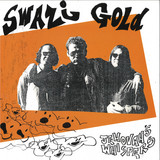
Swazi Gold have created a debut album that shimmers like the coast. There are six songs, two created by each member; through pure collaboration and participation. Swazi Gold are a true democracy.
Formed by the chief songwriters from Melbourne bands Crepes, Dreamin' Wild and Sagamore, this new band brings old friends together. Chris Jennings and Sam Cooper grew up in the Victorian coastal towns of Barwon Heads and Ocean Grove, while TimKarmouche was an inland man, hailing from Ballarat in the state's north-west
"We've been playing together for so long; in different mediums and in different bands. We've played our own key roles, but now we know what each other wants. Swazi Gold shows off our relationship from over the years, which is really cool," says guitarist and bassist Jennings.
Swazi Gold's other guitarist and bass player, Cooper, has a theory about the unifying power of their regional origins:
"It's this kind of small town thing where you strive to be different and creative. Because you're more isolated, you focus on your creativity and align yourself to similar people. I think growing up down the coast has meant I've continued to be drawn to people from other isolated places," he says.
It's this togetherness that's at the heart of Swazi Gold's debut album,Jehovah's Whispers.Recorded in a single weekend in 2017 at the Cooper's family home in Ocean Grove (affectionately termed the "Cooper Ranch")Jehovah's Whisperscaptures a musical intimacy and deep friendship between the three members.
"The bond with all the tracks on the album isn't necessarily lyrical, but it's 100% sonic. The simplicity of the instruments we use and the set-up we have is what's really rad," says Jennings.
"It's a fantasy of what we imagined Jehovah might be whispering in your ear," he adds, grinning.
Drawing from their collective love of African music, American funk, and quirky, melody-driven pop music, the album explores the space between conventional genres and styles of production.
"Using drum machines has made the song-writing process a lot quicker and opened up a whole new avenue stylistically.
- A1: Main Title (Theme From "Game Of Thrones")
- A2: Goodbye Brother
- A3: Season 1 Finale
- A4: Warrior Of Light
- A5: Winterfell
- A6: Mother Of Dragons
- A7: A Lannister Always Pays His Debts
- B1: Dracarys
- B2: Mhysa
- B3: Two Swords
- B4: You Are No Son Of Mine
- B5: The Children
- C1: Blood Of The Dragon
- C2: Dance Of Dragons
- C3: Atonement
- C4: Son Of The Harpy
- C5: Khaleesi
- D1: Light Of The Seven
- D2: Winter Has Come
- D3: Hear Me Roar
- D4: The Winds Of Winter
BONE COLOURED VINYL[32,31 €]
In 2011 composer Ramin Djawadi was first asked to score a new TV series called Game of Thrones. In its first season much of the music was written for a small string ensemble, and filled out with synthetic pads and percussion. Over the course of the next six seasons the music budget got bigger and bigger to match the ever-increasing viewing figures the show was enjoying. This release celebrates the rich tapestry of music over the six series with the full firepower of an 80-piece symphony orchestra and choir.
Game of Thrones really is a television phenomenon. HBO's epic small screen adaptation of George R.R. Martin's series of fantasy tomes continues to draw in record audiences around the world and shows no signs of slowing down. Indeed some 8.9m people tuned in to the Season Six finale in the US and with repeats, recordings and on-demand viewings taken into consideration, it is estimated that Game of Thrones enjoys an average of 23m viewers per instalment. With a whopping thirty-eight Emmy Awards (and counting), this series remains the darling of prime-time pay TV.
With so much music created for the sixty episodes so far broadcast, this album can of course only take in so much. The particular cues and themes it does highlight, though, lend themselves beautifully to this symphonic re-imagining.
Fresh of their most busy year actively djing in Milan and across Europe, Ayce Bio, Turenne and Borbo are ready to launch a new Ep: One track each + a Remix by Bologna's finest producer and vinyl collector DJ Rou.
Mixed and mastered by Reel Mastering, distributed by Rubadub Uk.
Funclab records runs a monthly show on Rocket Radio and a club night at Apollo club, inviting al- ways different dj's and producers to share the decks with them, among others they played with San Proper, Boo Williams, Eclair Fifi and Pangea.
After the first release 'House al dente', they spent one month during the summer touring with a van around Europe to promote the vinyl, going to their favourite radios and vinyl stores to bring it personally, ending at Barrakud festival in Croatia in front of two thousand people with a dj set and set design.
The collective is the real strength behind the newborn record label, collaborating with a lot of local producers they're always working on new things, in the next few months they are going to release also a various and other two eps.
A1 AYCE BIO - COME IN TO GET HER
909 patterns and jazz funk chops with crispy bass cuts, let your children know who play funk.
A2 AYCE BIO - COME IN TO GET HER (DJ ROU REMIX)
Bass infused remix from Bolo's finest producer and collector.
B1 BORBO - STUNTMAN MIKE
Deep atmosphere, '70s hypnotic rhodes with lofi-esque drums and vocal cuts from Grindhouse.
B2 TURENNE - REALLY COOL
Funk/Soul samples with groovy drums and a really cool vocal.
Inconspicuous French duo Nummer (made up of Silvère Letellier and Emmanuel Corre AKA E-Talking, best known for their work with Going Good) deliver a stunning five track EP laced with supersonic, hypnotic and funky fresh space oddities for people of the new age! A revitalising take on classic deep house and IDM styles, Space Oddities Volume 1 is infused with strong doses of organic percussion, odd samples and blissful melodies. Get up and move or sit back and experience the curious world of Nummer, in what could be their most exciting offering to date.
Cologne is Danny Lane and Vasilios Manoudakis - a photographer and a ship captain who make songs together. Vasilios works as a boats captain in New York while Danny stays landlocked, producing tracks and hustling work as a photographer/actor in Los Angeles.
The two communicate with one another through music, sending loops and snippets from wherever they happen to be, independently writing pieces of songs that smoothly snap into
place. Throughout this, the two share a thing for synths and classic pop, creating songs that are warm, relaxed, and inescapably catchy. Though their influences range from 80s dance music to minimal house and ambient music, they see Cologne as something new and have a very pure idea of success: If people like it, we are happy. Vinyl tastes better...
Johnny's disk record is an independent jazz label run by the owner of jazz cafe kaiunbashi no johnny located in rikuzentakata city in iwate prefecture, japan.
the legendary label released a string of albums of high quality but down-to-earth music, spanning from modern jazz, avant-garde jazz to left-field pop. albums such as 'farewell my johnny / left alone' and 'aya's samba' has reached cult status among fans as some of the best works to come out of the japanese jazz scene.
following a cult classic jazz fusion album on bourbon records, king kong paradise delivered an album of alternative, left-field balearic rock that was way ahead of its time.
an anomaly that sticks out in johnny's disk's catalogue, the rare record may appeal more to new wave, reggae and rock fans than jazz heads—in fact, i wouldn't be surprised if people like dj harvey or theo parrish dropped this oddity in their sets.
if you dig the kind of weirdness that's being reissued by music from memory, you might find this record intriguing.
" I used to live in rue de Clignancourt, and remember as a kid going to the 14th of July West Indian ball organized by my father rue André Del Sartre in Montmartre every year. There I would meet, among others, saxophonist Robert Mavounzy. Sticking to the area, my older brother had a band and often played at the famous venue La Cigale, where even Henri Salvador joined him for a jam from time to time."Since childhood Serge Fabriano bathed in music, to-ing and fro-ing between his native Guadeloupe and Paris where he grew up. He attended the music conservatory, learnt how to play bass, met and played with many musicians and was ultimately angling for a career as a music teacher. But Serge had wanderlust; he lived to meet new people and was passionate about travel.Thus, it was in a squat located rue de Flandres in the 19th district of Paris that Serge Fabriano met by chance zarb player Djamchid Chemirami, one of Iran's greatest percussionists, who invited him to the Arts Festival of Shiraz-Persepolis. After a month-long motorcycle journey, he and his guitar teacher, Roger Bénichou, arrived in Tehran. Sadly their guitars didn't survive the journey. It was there that he met, among others, Woody Shaw, Max Roach and his wife Abbey Lincoln. Serge also formed a friendship with saxophonist Gary Bartz and stayed on a month playing with the cream of the musicians who'd attended to the Festival.During the mid-70's, he alternated between teaching classes and live gigs, and performed in Germany with a funk band comprised of ex-GIs from the US Army. He also met the members of Chick Corea's group, Return to Forever, and especially Stanley Clarke who became a great source of inspiration to him.From 1978 onwards, Serge Fabriano put aside teaching and devoted more time to music. He became a musician's musician, doing studio recordings with rock bands. He also played with members of the Caribbean diaspora, which included the great drummer Marcel Lollia (known as Velo), Patrick Jean-Marie, Guy Conquette, Winston Berkley, Mino CineluDuring the "Ayatollah Comédie" musical comedy tour organized by the Journal Liberation, Serge met actor Pierre Clémenti (Il Gattopardo, Belle De Jour, The Conformist). This was a game-changer : "I was trying to record my first record. Clémenti suggested the Studio Beaubourg in Paris. "The group Fabriano Fuzion - Fabriano Unit Zion - was born.The band brought together some of the Caribbean's most inspired musicians: Martinican-born Mario Canonge on the piano (his first appearance on an album), Alain-Jean Marie on the synthesizer, Edouard and Pierre Labor on saxophones, Claude Vamur (Kassav ') on the drums, singer/percussionists Marie-Reine Lamoureux and Marie-Céline Lafontaine, percussionists Roger Raspail, Sully Cally and Hector Ficadière (Tumblack, Vent Levé) on Ka percussions.It is precisely the Gwo Ka - this ancestral 'root' music deeply embedded in the heart of the Guadeloupe musician - which constitutes the rhythmic backbone of this first opus. The Gwo Ka, the jazz, the poetry and the spiritual vibe are gathered here to form a splendid album; one of the true masterpieces to emerge from the French West Indies.Rarely will a band have borne its name so well than Fabriano Fuzion - its music is a multiple and collective work in which each element brings its identity and its richness, conferring to this major work a truly fusional dimension.
Rian Treanor will release his anticipated debut album 'ATAXIA' on Planet Mu this March. The striking full-length follows singles for The Death Of Rave and Warp's Arcola imprint as well as live sets at Boilerroom x Genelec, Nyege Nyege festival, tours in India and various high profile EU shows.
The title 'ATAXIA' means 'the loss of full control of bodily movements' and relates to Rian's music which is 'intended to make people's bodies move in unpredictable ways.' He adds 'the angles in the letters, the phonetics seem to mirror the geometry and idiosyncratic patterns in the music.' Rian explains that components of the tracks were made by generating a series of irregular events and re-structuring them, or by destabilising a pattern that is constant.
When asked how the album compares with his previous releases, he says 'My earlier EPs share a similar interest in angular and asymmetrical rhythms that are designed for club sound systems,' adding 'they were more improvised, focusing on sequencing and pattern modulation, using standard drum sounds and synthesiser patches. ATAXIA is more focused and stricter, it's more co-ordinated in terms of the track selection and the rhythmic structures. I spent more time refining the synthesis and sound design, pushing it further than the previous releases.' He expresses an interest in exploring opposites in his music: 'fluidity and syncopation,' 'systematic and unpredictability,' 'reduction and extremity,' 'irregular symmetry,' 'easy listening and brutal'.
There's clear a conceptual backdrop, but the music itself is not overthought. There's an immediate joy to much of the album - check out ATAXIA_D3 with its wonderful cut-ups and modulations of the phrase 'people don't understand people.'
The roots of Rian's playful sound are directly linked to his love of the music he grew up with. Coming from Sheffield, you can hear elements of industrial, synth-pop, bleep, extreme computer music and speed garage at play. From Cabaret Voltaire to Warp and beyond; the sound of his city has been, and is, an integral part of his musical development and is still a direct influence.
Last year, he noted in an interview that "I'm not a computer programmer, I'm not an articulate person in that kind of way. I'm a visual artist." Now he elaborates 'I meant more that I'm a visual thinker.' Drawing and visual art have been a fundamental part of his life 'since I was a child. I got really into graffiti as a teenager and around the same time I got into mixing and these both developed together.' You can sense the mind of a visual artist at work in his music which is also reflected in the artwork he created for this project.
As well as his visual art, installations and multichannel sound works he is involved in numerous collaborations such as with composer Nakul Krishnamurthy exploring the common ground between Indian classical music and electronic music and his work with improv saxophonist Karl D'Silva, plus his time studying with Lupo at Dubplates and Mastering in Berlin (who taught him the 'importance of reduction') have all helped shape and push his sound into other unique and adventurous zones. Treanor is developing on different levels and in different forms all at the same time, re-imagining the intersection of club culture, experimental art and computer music, presenting an insightful and compelling musical world of fractured and interlocking components.
Caetano Veloso's seminal first '68 Tropicalia monster in MONO, must have or what...
First Authorized North American Vinyl Issue of Caetano Veloso Courtesy of Third Man Records!
IN VERY RARE MONO VERSION
Caetano Veloso's self-titled debut solo album is one of the most important and influential Brazilian (and, dare we say, South American) albums of all time. With the release of this seminal album, Veloso would become the leading voice of Tropicália. The songs on this album immediately connected with people. "Alegria, Algeria" was his breakout hit that gained traction as a hymn for liberty advocates, juxtaposing images of Coca Cola, guerrilla groups, bombs and Brigitte Bardot as part of the everyday experience. The album's first song "Tropicália" was an anthem for the whole movement; it's a fragmented allegory, a structure borrowed from friends in the concrete poetry scene, touching on divergent cultural symbols, events, allusions and idioms, nimbly representing and critiquing the many contradictions in the new Brazilian dictatorship.
"Superbacana" (translated as "Supergroovy") follows a hyperbolic superhero's use of technology to fight a gang of cowboys led by the money-hungry Uncle Scrooge, serving as allusions to American imperialism and greed felt in their country, all in the rapid-fire structure of a comic book. The subtext in all these songs, which the dictatorship would not immediately catch, were that these repressed but glaring contradictions, not the bountiful sunny paradise that the military regime was pushing, were the true national identity. Unfortunately, these cleverly veiled jabs in Veloso and his contemporaries' bodies of work gained greater and greater exposure as the movement became more and more popular, leading to the arrest, imprisonment and forced exile of Veloso and many of his cohort. Despite these difficulties, the Tropicalists continued creating in exile, strongly influencing artists both at home and abroad.
This is the first authorized North American vinyl issue of Caetano Veloso. Whether you're a longtime fan or first-time listener, Third Man Records could not be more proud to spread the compelling story of this album, this artist and the Tropicália movement.
A prodigious guitarist at an early age, Willie George Hale earned the nickname "Little Beaver" from friends in family in Arkansas, remarking on his prominent teeth. Over the years Hale would make a name for himself as a reliable session guitarist, appearing on recordings by Betty Wright, Al Kooper, and Blowfly, and gradually developing his own distinct, rhythmic style of blues guitar playing. As the mid-70s approached Hale would embark on his own solo career, cutting albums and singles with Florida's TK Records, working alongside famed musicians like Jaco Pastorius, Benny Latimore, and Timmy Thomas. His career effectively ended in the 1980s with TK's collapse, but he would find new life in 2003 after performing on several Joss Stone albums, and his works would be sampled in hip-hop tunes by the likes of Jay-Z, Slum Village, and People Under The Stairs. Not long after his solo debut in 1972, Hale released the sophomore album Black Rhapsody, which did away with the vocals so Hale could put his own blues guitar chops at the front. Black Rhapsody featured a slew of original deep funk jams from Hale, as well as his own soulful spins on songs by Al Green, The Temptations, The Jackson 5, and even George Gershwin. A rare gem of 70s funk, famously featuring the track "A Tribute To Wes", which beatsmith J Dilla would sample to great effect on the Slum Village track "Conant Gardens."
PAUL LABRECQUE (SUNBURNED HAND OF THE MAN) and GHAZI BARAKAT (PHAROAH CHROMIUM) present two epic cosmic, dystopian tracks where guitars, synths and traditional instruments blend into an anarchic sound system.
After excessive years in rock bands like THE GOLDEN SHOWERS or his solo project BOY FROM BRAZIL, time had come for the German-Palestinian artist GHAZI BARAKAT to develop a new aesthetic - the birth of his alias PHAROAH CHROMIUM where BARAKAT creates "meta-music for meta-people in a meta-world", or in other words:a mutoid blend of post-krautrock, psychedelism, free jazz, ancient rituals, science fiction and electronics. So far the Berlin based sonic performer released a couple of solo albums on labels like GRAUTAG or TAPEWORM and a triple LP with krautrock legend GÜNTER SCHICKERT. For his latest output he decided to simply use his civilian name BARAKAT, as does PAUL LaBRECQUE (SUNBURNED HAND OF THE MAN) who contributesguitar and synthesizer to the two side-long tracks. "Jajouka Pipe Dream" is a clear reference to the MASTER MUSICIANS OF JAJOUKA, with lots of flutes and percussion, a very rhythmical, ritualistic track, while "Planet R-101" turns out a spacey trip with elements of krautrock and Kosmische Musik / Berliner Schule.
What may sound contradictionary on paper functions perfectly on LP - freeform / free-floating music, absorbing and integrating a wide range of influences and inspirations, sounds and styles - and highly psychedelic!
Credits:
Ghazi Barakat: guembri, moog synthesizer, beats, Rauschpfeife
Paul LaBrecque: guitar, synthesizer
Mastered and cut by Rashad Becker at D&M, Berlin
Artwork + photography: Nicolas Moulin