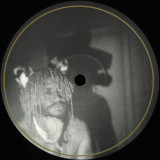
Gold Black Marble version....
Co-founder and label custodian Zanias makes her debut on Fleisch with a journey through climate catastrophe. Composed in Berlin and mixed in Queensland with the smell of bushfire smoke in the air, she addresses the primary anxiety of our time with four tracks designed to draw the body into movement and the mind into action. Body music elements are wrought with mournful melodies and studded with samples recorded from the fast-disappearing natural world, while her voice guides the way through the darkness.
Поиск:za za
Все
Ein einzigartiger Künstler an einem legendären Ort: Tripping with Nils Frahm dokumentiert seine transzendentalen Liveshows in der geschichtsträchtigen Kulisse des Funkhaus Berlin. Gleich vier Shows im Funkhaus Berlin gaben den Auftakt zu Nils Frahms ambitionierter All Melody Tournee Anfang 2018, die sein gleichnamiges und allseits gepriesenes Studioalbum in den nächsten zwei Jahren auf die Bühnen dieser Welt brachte. In den folgenden über 180 ausverkauften Shows war der Ausnahmekünstler unter anderem im Sydney Opera House, in der Disney Hall in Los Angeles, im Barbican in London, in der Elbphilharmonie sowie auf zahlreichen großen Festivalbühnen zu Gast. Dennoch blieben Frahm die Konzerte im ehrwürdigen und für seine großartige Akustik gerühmten Saal 1 im Funkhaus Berlin in,mm besonderer Erinnerung.
Als Frahm ein knappes Jahr später zu vier weiteren Konzerten im Funkhaus einlud, waren die Tickets binnen Stunden vergriffen. Frahms langjähriger Freund und Filmemacher Benoit Toulemonde, der unter bereits für die Film-Konzertserie La Blogothèque mit zahlreichen weltbekannten Künstler-innen und Bands zusammenarbeitete, hielt die Abende an diesem geschichtsträchtigen Ort mit einem siebenköpfigen Kamera-Team fest.
Tripping with Nils Frahm ist ein Dokument Frahms vielfach gepriesener Fähigkeiten als Komponist und passionierter Live- Musiker sowie der besonderen Stimmung und Atmosphäre seiner legendären Funkhaus-Shows. Ein außergewöhnlicher musikalischer Trip — exklusiv und intim, roh und direkt.
"It was about time to document my concerts in picture and sound, trying to freeze a moment of this period where my team and I were nomads, using any method of travel to play yet another show the next day. Maybe tonight is the night where everything works out perfectly and things fall into place? Normally things go wrong with concerts, but by combining our favorite moments of four performances, we were able to achieve what I was trying to do in
these two years of touring: getting it right! When you hear the applause on the end of the film you should know that I was smiling happily, being a tad proud and feeling blessed to share these moments with you.
Much love, Nils"
NEP was a loose multimedia collective formed in 1982 Zagreb, ex-Yugoslavia. The founder Dejan Krsic collaborated with various artists in a quest of re-thinking the stale concepts of art history, position of the author and the barriers between pop and elitist high culture. Heavily influenced by Walter Benjamin and Andy Warhol in theory and Brian Eno and Kraftwerk in music, Krsic created NEP as an umbrella term (meaning Nova Evropa or New Europe) of diverse rule-breaking activities, covering graphic design, music, photography, video, news-media and theoretical work. Musically NEP focused on experiments in ambient and tape-music, self-released and hard to find compilation tapes like "The Cassette Played Poptones" (1988). Deeply immersed in pop-culture, politics and art theory Krsic's search for perfect pop music with cutting critical edge peaked in 1989, the year 'Decadance' track was conceived in studio. Fox & His Friends published the single in 2017 with Snuffo Remix on B-side. It received rave reviews in music press like MixMag and DJ Mag and it is still played on dance-floors around the world. But the story around the NEP is musically (as well as artistically) much wider: for the first time Fox & His Friends team compiles best cuts from unreleased and rare NEP tapes, covering the period from 1985 to 1989 on POP NOT POP abum. Dejan Krsic is now famous graphic designer and art historian in Croatia. Other collaborators include Laibach and Borghesia photographer Jane Stravs, artist and TV director Gordana Brzovic, Jovan Culibrk, now Bishop at The Serbian Orthodox Church and Anja Rupel, singer of cult Yugoslavian synth-pop group Videosex as well as the other members of Videosex, Iztok Turk and Janez Krizaj who produced some of the tracks. Other collaborators were talented producers Robert Logozar and Davor Daga Devcic, singers Linda Cooper, Natalija, Alexx Kovacs... The list of collaborations is long. Some of the memorable moments on POP NOT POP album are early demo version of Decadance 'How Do I Dance To This Music?' with blue movies samples and drum machine experiments like early Cabaret Voltaire, then Krsic's reinterpretation of legendary Kraftwerk's Trans Europe Express anthem as 'Transcendance', or 'Radical Chic', where Dejan himself and Anja Rupel from Videosex make lovely couple of dandy-esque fashionistas, singing chart-friendly radio synthpop tune that contrasts the A-side (The 'NOT POP' side) - full of experiments, dark wave and industrial nods to Test Department and Cabs. B-side is 'THE POP' side that will surprise most of the NEP followers from their early experimental cassette days. Sunny, danceable, joyfull pop that reveals the many faces of NEP. As Kraftwerk today is more of a concept than a band, NEP does the same by re-writing its products (musical, graphical, theoretical, activist) and constantly puts them in permanent state of change or re-mix. In the future, only NEP logo will be enough to consider something an art piece, and NEP will be everybody who wants to, as their Art Manifest claims. Until that day comes, 'POP NOT POP' is a document of how the vivid and creative were art-scenes in socialist Yugoslavia. Some of the graphic work, cut-ups from theory and Manifesto are also included on this LP, designed by Dejan Krsic aka NEP himself. This release is made from the original master tapes and published for the first time on vinyl.
Kiwi Jr. is a phenomenal "rock" and/or "punk" and/or "indie-rock" (whichever you like more) band from Canada, made up of Jeremy Gaudet (mic, guitar), Brohan Moore (drums), Mike Walker (bass), and Brian Murphy (guitar). Cooler Returns is their second album, and their first for Sub Pop. Despite being a snapshot of the pandemic-infused beginnings of this decade, Cooler Returns is truly a whole lot of fun. RIYL indie-pop from down under, things that are smart/exuberant/catchy all at once. Buildings burning in every direction; macabre unknowns in your friendly neighbor's basement; undecided voters sharpening their pencils: under pressure we could call Kiwi Jr.'s Cooler Returns "timely." But what year is it, again? On Cooler Returns, Kiwi Jr. cycle through the recent zigs & looming zags of the new decade, squinting anew at New Year's parties forgotten and under-investigated small town diner fires, piecing together low-stakes conspiracy theories on what's coming down the pike in 2021. Put together like a thousand-piece puzzle, assembled in flow state through the first dull stretch of quarantine, sanitized singer shuffling to sanitized studio by streetcar, masked like it's the kind of work where getting recognized means getting killed, Cooler Returns materializes as a sprawling survey from the first few bites of the terrible twenties, an investigative exposé of recent history buried under the headlines & ancient kings buried under parking lots. Not so long since their debut Football Money in archaeological time, unending gray eons later in the dog years of quaran-time, spiritually antipodean Canadians Kiwi Jr return to disseminate this year's annual report to the shareholders, burying the incriminating numbers in the endless appendices of a longform narrative record, a 3,000 word tract for stakeholders to pore over. These stories - memories of Augusts past, unrepressed & transcribed fast - go down easier thanks to meaningful changes enacted in 2019's KiwiCares Pledge: delivering on a promise to transition from Crunchy to Smooth by 2021, the caveman chug of Football Money has been steamed & pressed with the purifying air of a saloon piano - operated with bow-tie untied - and a spring green side-salad of tentatively up-tempo organ taps & freshly fluted harmonica. A chronically detuned spin of the dial through swivel-chair distractions & WFH daydreams, an immersive ctrl-tab deluge cycling through popular listicle distractions like the unentombing of Richard III, or the deja vu destruction of the Glasgow School of Art, Kiwi Jr. sing this song to an indoor audience, crisscrossing canceled, every other prestige distraction source wrung dry, only songwriting remaining to deliver engrossing tales to the populace, just how I imagine it worked in the old days. Fixing loose ingredients into a sturdy whip, Kiwi Jr. beam in live from the 9-5, striding into 2021 with a mastered brainwave that comes equally from the back room of the record store as the penalty box. And how do we, left holding this box of deliberate entanglements, sign off to those as yet uninitiated, undecided, uncertain, unseen, absent return coordinates - Best Wishes, Warm Regards, Good Luck? Cooler Returns, Cooler Returns, C o o l e r R e t u r n s ! Cooler Returns was produced by Kiwi Jr., mixed and engineered by Graham Walsh (METZ, Bully) in Toronto, and mastered by Phillip Shaw Bova at Bova Labs in Ottawa, Ontario.
LTD. LOSER EDITION
Kiwi Jr. is a phenomenal "rock" and/or "punk" and/or "indie-rock" (whichever you like more) band from Canada, made up of Jeremy Gaudet (mic, guitar), Brohan Moore (drums), Mike Walker (bass), and Brian Murphy (guitar). Cooler Returns is their second album, and their first for Sub Pop. Despite being a snapshot of the pandemic-infused beginnings of this decade, Cooler Returns is truly a whole lot of fun. RIYL indie-pop from down under, things that are smart/exuberant/catchy all at once. Buildings burning in every direction; macabre unknowns in your friendly neighbor's basement; undecided voters sharpening their pencils: under pressure we could call Kiwi Jr.'s Cooler Returns "timely." But what year is it, again? On Cooler Returns, Kiwi Jr. cycle through the recent zigs & looming zags of the new decade, squinting anew at New Year's parties forgotten and under-investigated small town diner fires, piecing together low-stakes conspiracy theories on what's coming down the pike in 2021. Put together like a thousand-piece puzzle, assembled in flow state through the first dull stretch of quarantine, sanitized singer shuffling to sanitized studio by streetcar, masked like it's the kind of work where getting recognized means getting killed, Cooler Returns materializes as a sprawling survey from the first few bites of the terrible twenties, an investigative exposé of recent history buried under the headlines & ancient kings buried under parking lots. Not so long since their debut Football Money in archaeological time, unending gray eons later in the dog years of quaran-time, spiritually antipodean Canadians Kiwi Jr return to disseminate this year's annual report to the shareholders, burying the incriminating numbers in the endless appendices of a longform narrative record, a 3,000 word tract for stakeholders to pore over. These stories - memories of Augusts past, unrepressed & transcribed fast - go down easier thanks to meaningful changes enacted in 2019's KiwiCares Pledge: delivering on a promise to transition from Crunchy to Smooth by 2021, the caveman chug of Football Money has been steamed & pressed with the purifying air of a saloon piano - operated with bow-tie untied - and a spring green side-salad of tentatively up-tempo organ taps & freshly fluted harmonica. A chronically detuned spin of the dial through swivel-chair distractions & WFH daydreams, an immersive ctrl-tab deluge cycling through popular listicle distractions like the unentombing of Richard III, or the deja vu destruction of the Glasgow School of Art, Kiwi Jr. sing this song to an indoor audience, crisscrossing canceled, every other prestige distraction source wrung dry, only songwriting remaining to deliver engrossing tales to the populace, just how I imagine it worked in the old days. Fixing loose ingredients into a sturdy whip, Kiwi Jr. beam in live from the 9-5, striding into 2021 with a mastered brainwave that comes equally from the back room of the record store as the penalty box. And how do we, left holding this box of deliberate entanglements, sign off to those as yet uninitiated, undecided, uncertain, unseen, absent return coordinates - Best Wishes, Warm Regards, Good Luck? Cooler Returns, Cooler Returns, C o o l e r R e t u r n s ! Cooler Returns was produced by Kiwi Jr., mixed and engineered by Graham Walsh (METZ, Bully) in Toronto, and mastered by Phillip Shaw Bova at Bova Labs in Ottawa, Ontario.
In a time where everyone from Whitney Houston to Frank Zappa have been re-created in hologram form, where Grimes recently suggested in an interview that “we were at the end of human art”; there could scarcely be a better time for genre-shifting Leeds-based six-piece Team Picture to bring forth the thrillingly expansive synth-pop opus of their debut album The Menace of Mechanical Music.
Inspired by an early 20th century essay under the same name by American marching band leader John Philip Sousa, Team Picture take a look at the automation of creativity on this, their first record with a fully settled line up. Themes centre around the value of creative identity in an automated age, the increasingly disposable nature of art and where that leaves its creators. At twelve songs split into a three-part suite; The Menace of Mechanical Music is emphatically maximalist.
Tracks like the breathy, twinkling Flowerpots, Electric Beds and Handsome Machines’ Icarus-like striving for the sun are an antidote to a music world awash with digital production manipulation and songs written to algorithm. In debating the loosening of the human grip on creativity, Team Picture have poured every last drop of emotion into the recording process.
The group’s now trademark three-way vocal delivery and blurring of textures takes on new structure and purpose. They’ve always had a self-awareness to themselves, too. Initially grouped in with the guitar psych crowd, thanks to their fledgling repeato-rock, they were quick to disassociate themselves from that on 2018's mini-album Recital. With The Menace of Mechanical Music, they expand their sound further still, pirouetting from the likes of Sleeptype Auction – which glimmers like a late 80’s 4AD artefact – through various FX-laden dreamscapes, to the squelchy post-punk of closer Quit Reading. Yet the group were as much influenced by the work of the Early Netherlandish painter Hieronymus Bosch, and his triptych The Garden of Earthly Delights, as they were music touchstones ranging from Kate Bush, Cass McCombs and The Cure.
It’s Sousa words that resonate most deeply within the record however: “The fears of Sousa echo the fears of today's musician,” says Lewis of the late band leader’s 1907 text. “The re-appropriation of funds and support that the artist needs to survive, the gradual erosion of musicianship and self-improvement, that art will become disposable, and that our cultural identity will disappear.”
Recorded with producer Matt Peel (W.H Lung, Eagulls), half the group were unemployed during the session and a daily routine would see them undertake universal credit meetings and job interviews in the morning, before heading to the studio to work into the night. “It was an anxious process but an enjoyable one” says the band’s guitarist Josh Lewis. Indeed, beyond the increasingly golden gated idea of ‘making it’ as an artist, this new album is simply about surviving as one.
Sousa’s vision of a society that had deferred to automation, where babies were rocked to sleep by wheels and pulleys, and people no longer played piano with their own hands. Well over 100 years later and on the precipice of a technological shift never seen before, The Menace of Mechanical Music is the most human response that Team Picture could have given.
THERION have always been a band that have challenged themselves to explore new paths, while remaining true to their musical core values. For their 17th studio album, mastermind Christofer Johnsson and his collaborator Thomas Vikström have created something that has been previously unthinkable to the guitarist and the singer. "We have done the only thing that was left of all the different angles to explore", explains Christofer. "We have decided to give the people what they kept asking for. 'Leviathan' is the first album that we have deliberately packed with THERION hit songs."
True to the Swede's words, the album opens with the catchy and swift tune 'The Leaf Of The Oak Of Far' featuring female and male antiphonal singing as well as a choir that seems to have evolved straight out of THERION's breakthrough full-length "Theli" (1996). This is immediately followed by the obvious highlight 'Tuonela', in which Christofer cleverly underscores this hit-track's Finnish vibe by employing NIGHTWISH’s "metal voice" Marko Hietala. Next up in this parade of future fan-favourites is the title track 'Leviathan' that offers classic THERION material with operatic female vocals and a massive choir.
Christofer Johnsson's passion for classic voices, choirs, and orchestral elements as well as his penchant for epic melodies in combination with rock and metal shines clearly through the following sing-along ballad 'Die Wellen Der Zeit', which indicates another nod to German romantic composer Richard Wagner. "Ever since 'Theli', Wagner has been and will always be at the core of THERION", emphasises Christofer. "When we started to combine metal and opera, it was something new and original. Today, symphonic metal has long been a firmly established genre."
When THERION came into being in 1988 by changing name from the already existing band BLITZKRIEG, which was founded a year earlier, Christofer had rather taken inspiration from SLAYER's "Reign In Blood" among other classic metal albums. At the beginning, the Swedes were firmly rooted in death metal, a genre which they helped to define, as witnessed by their debut album "Of Darkness...." (1991). Yet even back then, there were hints of "something else" lurking beneath the rough surface.
The use of female vocals is another core ingredient of THERION today, which developed gradually. CELTIC FROST had basically introduced the female element to extreme metal on "To Mega Therion" in 1985. THERION began with both a female and male vocalist emulating a church like choir already in their sophomore full-length 'Beyond Sanctorum' (1992). With Symphony "Masses: Ho Drakon Ho Megas" (1993) and "Lepaca Kliffoth" (1995), Christofer continued to developed his trademark sound by gradually drifting towards cleaner vocals and more keyboards. With "Theli", the Swedes had firmly established a reputation of pushing the boundaries of metal in the 90s – among such acts as their compatriots TIAMAT, THE GATHERING, and MOONSPELL that were often referred to as "gothic metal" at the time.
THERION continued to break new ground leaving inspiration for others to follow in their wake: On "A'arab Zaraq - Lucid Dreaming" (1997), Christofer further explored the use of Near Eastern music in metal which he had already begun in 1992, while "Secret Of The Runes" (2001) dared to have Swedish lyrics in some songs. While critics were left confused and fans challenged, THERION were often ahead of their times and vindicated in hindsight. Even the band's 25th anniversary excursion "Les Fleurs Du Mal" has by now overcome the initial shock the album caused and is only beaten in terms of streaming by the classic "Vovin" (1998).
When Christofer faced the question of where to go next after the dramatic "Beloved Antichrist" (2018) had finally fulfilled his musical mission, his answer is "Leviathan" named after a giant sea monster from Judeo-Christian myth that has roots in Babylonic lore: THERION have created a giant hit album – and for the first time in the history of the Swedes, their fans are not asked to explore something new, but simply to lean back and enjoy the best from their band!
- 01: Cuore Nero - Samurai
- 02: S.u.b.u.r.r.a. - Manfredi &Amp; Cinaglia
- 03: S.u.b.u.r.r.a. Theme Song
- 04: Fiore Dell&Apos;Infame - Angelica &Amp; Nadia
- 05: La Giostra - Anacleti&Apos;S Groove
- 06: É Ora Di Andare - Spadino
- 07: Scivola Via - Aureliano
- 08: Su Di Me - Cinaglia
- 09: É Ora Di Andare (F.f. Rmx)
- 10: Overture
Netflix's acclaimed series Suburra: Blood on Rome (available in over 190 countries) focuses on the deep connections between politics and organised crime in the Italian capital. The soundtrack to the third and final season was written, produced and performed by Roman rapper and songwriter PIOTTA, whose "7 Vizi Capitale" was already the theme song for seasons 1 and 2. His music beautifully complements the gripping plot and the characters' journey, capturing the atmosphere of a side of Rome unknown to many. The vinyl LP contains 10 previously unreleased tracks, including 2 instrumentals and a remix; the CD features 3 bonus tracks.
With 9 albums under his belt, Tommaso Zanello, also known as PIOTTA, is one of the pioneers of Italian hip hop. Active on the Roman rap scene since the mid-90s, he earned national fame with his award-winning single "Supercafone" (1998), which was later used by Sky Japan as a theme song for the Italian football championship. He can boast collaborations with hip hop legend Afrika Bambaataa and English musician Captain Sensible and has toured the United States with the Vans Warped Tour.
- A1: Too Bad Part 1
- A2: Dust My Broom
- A3: Unfair Lovers
- A4: Key To The Highway
- A5: Vacation From The Blues
- A6: Steak House Rock
- A7: Letter Missin' Blues
- A8: Ain't Doin' Too Bad
- B1: Blue Coat Man
- B2: The Train Is Coming
- B3: Save Her, Doctor
- B4: Rack 'Em Back
- B5: Too Bad Part 2
- B6: The Big Bell
- B7: Pinetop's Boogie Woogie
- B8: Night Time Is The Right Time
This album from the late 60's features Eddie Boyd backed by some of the best British blues musicians of the time. Player on this album include John Mayall, Tony McPhee, Peter Green, John McVie (Peter and John later known for their involvement with Fleetwood Mac) and Aynsley Dunbar - one of rock's most definitive drummers having played with John Mayall's Bluesbreakers, the Jeff Beck Group, Frank Zappa, and Journey before joining Jefferson Starship for three albums. The album was produced by the legendary Mike Vernon.
Sabaturin is Charles-Émile Beullac (Galerie Stratique, Canada) and Simon Crab (Bourbonese Qualk, United Kingdom). In the spirit of old school tape exchanges that resulted in musical collaborations developed over long periods of time but informed by the infinitely easier processes of the digital age, "Kenemglev" was assembled without the musicians ever meeting.
The title "Kenemglev" means "consensus" in Breton, something which quite naturally had to be achieved between both musicians. The other consensus was a sort of virtual middle ground symbolized by the Breton language, particular to a geographical area (Brittany) that both agreed would stand for a neutral meeting point between their respective native languages and, consequently, cultures. All titles are Breton words and the name Sabaturin ("standing on one feet", "to be off-balance") expresses mainly Charles' excitement: "Simon's bold approach has been some kind of a shock therapy for my music".
The sleeve was designed by Simon Crab, using a Chladni pattern simulation based on specific pitches. Looking like stained glass, it sort of reflects the way the music is presented: although including 9 titles, the album's tracklist flows uninterrupted on each side of the vinyl, semi-mixed, blended.
Detailed electronic ambience, glitches, loops and tiny details are augmented by a sort of signature rhythmic grid we recognize from "My Government Is My Soul"-era Bourbonese Qualk. It never settles into a formula and so the music remains loose, as much Mille Plateaux as classic 80s industrial shortwave-sampling or dub, rolled into one same entity, touching base with the gorgeous glitch dub "Morgouskus". This concludes a gentle and discreet album that doesn't require the validation of being associated with any of the current keywords in the electronic music scene.
- A1: Laila Biali - Let's Dance
- A2: Cinzia Bavelloni - Lady Stardust
- A3: Bojan Z - Ashes To Ashes
- A4: Caecilie Norby - Andy Warhol (Feat Leszek Mozdzer)
- A5: Yelloworld - The Jean Genie
- A6: Eric Le Lann - Life On Mars? (Feat Paul Lay & Sylvian Romano & Donald Kontomanou)
- A7: Miriam Aida - The Man Who Sold The World
- A8: Grazzia Giu - Space Odditiy
- A9: Pierre-Jean Gaucher - Aladdin Sane
- A10: Federica Zammarchi - Lady Grinning Soul
- A11: Jen Chapin & Rosetta Trio - Starman
- A12: Delta Saxophone Quartet - Heroes
- A13: Yelloworld - Moonage Daydream
- A14: Cinzia Bavelloni - Dj
- A15: Franck Wolf - Space Oddity
- A16: The Puppini Sisters - Changes
- A17: Mike Garson - Let's Dance
- A18: Keren Ann - Life On Mars? (Bonus Track)
To commemorate the 5 years of the disappearance of the true music Genius DAVID BOWIE, the jazz scene pays tribute to the legendary artist Including: Keren Ann • The Puppini Sisters • Mike Garson • Bojan Z • Delta Saxophone Quartet Jen Chapen & Rosetta Trio • Caecilie Norby • Franck Wolf •Yelloworld • Eric Le Lann...
Section of the Tracklisting was made by Jazz Magazine’s journalist Lionel Eskenazi
coloured vinyl
Fractions return to Fleisch for a third time with their debut LP, unleashing eight tracks of highly effective techno-infused body music inspired by the melodrama of French films such as La Haine and Irreversible. With a palette of modernized 90s rave elements they transport the listener on a cinematic ride of contrasts between the explosive and the soothing, through violence and action to love and hope. Featuring Zanias on Track A4
Once upon a time “Miss Onion” made her way to Zanzibar, in search of real traditional African music.
Luckily, she got in touch with an Italian collective of people called Uhuru Republic, who were traveling throughout Kenya and Tanzania and collaborating with many local musicians, in studios and on stage.
One evening they were recording the Qanun, the main instrument in the Swahili culture, and Miss Onion participated the whole intensive session of music and Konyagi (the local most famous super alcoholic drink). She fell in love immediately with the Afro-Bass gem that was born, and decided to bring it back to Europe. Like this Miss Onion turned this particular piece into a sweet memory from a splendid trip to the heart of Africa.
We immediately shared Miss Onion’s love for this real tribal music experience called “Konyagi a Gogo”, fusing African instruments with electronic sounds and orchestral elements.
For the remix we put the stems in the expert hands of Rafael Aragon who greatly managed to give it an “even more clubbing” spin.
The result is a tasty 7” inches called “Veggie Tales Vol. 3”!!
We’ll hope you enjoy as much as we did.
Buon appetito!
Floating Points remixt „Fair Chance“ (feat. Ty Dolla $ign & Lil B) aus Thundercats aktuellem Album „It Is What It Is“, das Anfang April bei Brainfeeder erschien!
Im April, als sich die Welt in einer Spirale von COVID-19-Kontaktbeschränkungen befand, veröffentlichte Thundercat sein plötzlich so treffend betiteltes Album, „It Is What It Is“, mit musikalischen Beiträgen von u.a. Flying Lotus, Childish Gambino, Kamasi Washington, Steve Lacy, Steve Arrington, BADBADNOTGOOD, Louis Cole, Zack Fox, Ty Dolla $ign und Lil B. Das letztgenannte Paar waren zu Gast auf der Single „Fair Chance“, ein Lied, das eine eher düstere Seite des Albums widerspiegelt und ausdrücklich dem Gedenken an Mac Miller gewidmet war, der 2018 auf tragische Weise verstarb. Jetzt ist der vielgeachtete britische Produzent Floating Points an der Reihe, seinen Ansatz an „Fair Chance“ zu teilen und die Ballade mit einer fabelhaften Überarbeitung auf die Tanzfläche zu bringen, die an klassischen four-to-the-floor UK Garage erinnert.
Azumah was the coming together of a group of talented young dancer-musicians from Soweto (South Africa) with musician and instrument-maker Smiles Mandla Makama of eSwatini (formerly Swaziland). Long Time Ago is the surprising and enticing, resultant album from 1985, recorded in the house of theatre stalwarts Des and Dawn Lindberg in Johannesburg.
Produced by David Marks (3rd Ear Music, Hidden Years Music Archive Project), Des Lindberg and Smiles Makama, this album takes us back to a priceless musical moment in the dark and wild eighties of apartheid South Africa. Smiles Makama is a gifted and visionary music-maker. He was born in South Africa but grew up in eSwatini, the small kingdom enveloped by South Africa and Mozambique on each side. He tells the story of the process leading to the recording of this remarkable album: “I was invited from Swaziland by a Soweto-based group, Azumah. … One of the members knew that there was a wizard in the mountains in Swaziland, building instruments. As I was in the mountains in my hut and then I saw people arrive. They found me. It all started there.”
Instead of simplistic images of a generic ‘Africanness’ or ‘South Africanness’ and pictures of constructed and exotic ethnic identity, a contemporary, fresh listen to this album encourages an appreciation of the composition and musical skill at play in this music. Few people speak about the individual innovation and experimentation involved in the creation of this music (or the music of Amampondo for instance). “Woza Moya” sticks out as a dark and melancholy creation, different tonally to what has come before, evoking the work of Naná Vasconelos or Don Cherry. One thing that remains the same decades later is that encouraging deeper listening to the sounds of the mbira, the nyunga-nyunga, the uhadi or makhoyane bows is still challenging. Discouraging the superficial, short-lived acknowledgement of this ‘unchanging’, ‘African cultural expression’ is the everlasting hurdle. This is made so much easier by albums like Long Time Ago: when artists create music to be loved and entangled with, to be challenged by, derived from the musical roots and structures of these instruments and then expanded upon with creative freedom, risk, humour and funk.
Azumah did this in 1985 and we have this album again today, newly released, to remind us of that moment and the moments since when musicians have urned inward and done similar. As Smiles has it: “Indigenous music doesn’t fade out. It’s just waiting to be discovered, all the time.”
Memento’s label honcho Idriss D is back at the production duties with
a mesmerising super single featuring a shattering remix by the
Norwegian infamous wonder known as Dj Sotofett.
“Lunatic” symbolises Idriss D natural inclination for an incessant
sonic exploration, which on this esoteric cur, has brought him to the
darkest and the most hectic jungle territories; drawing from the early
nineties British tradition but with a long sight into the contemporary
climate, these heavy rattling beats and scattered vocals will simply
leave you speechless.
On the flip side , Dj Sotofett is just condensed cutting edge music
technology wisdom; the straight deep beat and the charming arpeggios transform the original mayhem into a late night anthem.
The splendid picture on the release cover has been taken by Ismail
Zaidy of L4artiste, which is also responsible for the astonishing
video teaser, while the artwork has been as usual an graphic affair of Boogie.
Light Blue Marbled Vinyl
Memento’s label honcho Idriss D is back at the production duties with
a mesmerising super single featuring a shattering remix by the
Norwegian infamous wonder known as Dj Sotofett.
“Lunatic” symbolises Idriss D natural inclination for an incessant
sonic exploration, which on this esoteric cur, has brought him to the
darkest and the most hectic jungle territories; drawing from the early
nineties British tradition but with a long sight into the contemporary
climate, these heavy rattling beats and scattered vocals will simply
leave you speechless.
On the flip side , Dj Sotofett is just condensed cutting edge music
technology wisdom; the straight deep beat and the charming arpeggios transform the original mayhem into a late night anthem.
The splendid picture on the release cover has been taken by Ismail
Zaidy of L4artiste, which is also responsible for the astonishing
video teaser, while the artwork has been as usual an graphic affair of Boogie.
- A1: Frank Wiedemann - Dream Hoarding
- A2: Sainte Vie - Hibernation
- A3: Mano Le Tough - Oblivion
- B1: Marc Piñol - Sooner
- B2: Adana Twins -Shadow Of Doubt
- B3: Axel Boman - Anywhere In The World
- C1: Echonomist - Cecil
- C2: Perel - Der Abend Birgt Keine Ruh
- C3: Michael Mayer - Hamstring
- D1: Rebolledo - Twenty Tears
- D2: Frank Wiedemann - Peter Pan Me
- D3: Robag Wruhme - If You Leave
“We have always been very fortunate to meet and know many talented producers. In recent years, we have been exploring those relationships with different remixes and collaborations, and every time something exciting came out. That’s why we started our Synchronicity project. To challenge ourselves making inspiring, fun and beautiful music.‘Synchronicity’ means "the simultaneous occurrence of events which appear significantly related but have no discernible causal connection. This very well describes how our path led to the place we are now – somewhere between the club and indie scenes.” – WhoMadeWho
KOMPAKT welcomes back Copenhagen’s WhoMadeWho. Tomas Barfod’s penchant for electronic music poetically juxtaposed with Tomas Høffding and Jeppe Kjellberg’s respective backgrounds in rock and jazz, gives their music an electrifying combination of sounds, merging a variety of influences to produce a unique sonic fingerprint that is emotive, irresistible and immensely satisfying.
Though we both have yet to strike a note together since the release of their 2012 full length “Brighter” (KOM 254), WhoMadeWho have been remarkably productive. With two full lengths, a DJ mix for Watergate’s series and releasing two of 2019’s most played out club tracks together with Rampa (Innervisions) and Artbat (Watergate Records), the trio have found themselves diving more and more into the world of electronic music, tapping into their goldmine of connections within the scene to spearhead an array of collaborations.
Synchronicity is all about ‘meaningful coincidences’ – bringing interpretation to bear on connections that have no actual causal relationship. It’s a canny concept to pin onto Copenhagen trio WhoMadeWho’s latest album, which sees them return to Kompakt for the first time since 2012’s Brighter.
This re-established connection helps us to understand the synchronicity at play, the way that the WhoMadeWho core ave built an album around collaboration with friends and peers, much as Kompakt is all about cross-connections and family. On Synchronicity, WhoMadeWho call on friends old and new – Michael Mayer, Echonomist, Adana Twins, Alex Boman, Robag Wruhme, Frank Wiedemann, Sainte Vie, Mano Le Tough, Marc Piñol, Rebolledo, and Perel is the cast list; WhoMadeWho direct the material, shaping it into one lovingly flowing gem of dance-pop glory.
There’s something particularly generous about hearing an album as all-inclusive and open-hearted as Synchronicity in the midst of the profound social and cultural shifts we’re currently experiencing. While some songs on Synchronicity were recorded together, in real time, such as the collaborations with Adana Twins and Rebolledo, most of them have taken place via long distance, thanks to the pandemic lockdown. But you don’t need to know who was where to understand either the magnesium-flare melancholy of “Sooner”, recorded with Piñol, which has you holding your breath with the gentle thrill of the song’s lush melody, or the stomping strut of the following Adana Twins collaboration, “Shadow Of Doubt”.
Elsewhere, there’s the stentorian robot voice at the heart of “Hamstring”, where they’re joined by Michael Mayer; the lustrous headsoak of “Twenty Tears”, a tender intervention by Rebolledo; the strip-light, slow-motion disco strut of “Cecil”, produced alongside Echonomist; or the glittering, arpeggio dreamwork that Perel helps sculpt into shape on “Der Abend birgt keine Ruh.”… Really, there’s so much to celebrate here, a panoply of pleasures. From pop revelations to dancefloor delirium to slow-burning brooders, Synchronicity is just that; a space for the joys of the unexpected to collide, and to be given meaning by their coincidental co-existence in WhoMadeWho’s beautiful world.
"Wir hatten immer schon das Glück, viele talentierte Produzenten kennenzulernen. In den letzten Jahren haben wir diese Beziehungen durch verschiedene Remixe und Kollaborationen vertieft und jedes Mal kam etwas Aufregendes dabei heraus. Aus diesem Grund haben wir unser Synchronicity-Projekt gestartet: um uns selbst herauszufordern inspirierte, lustige und schöne Musik zu machen. “Synchronizität” bedeutet das gleichzeitige Auftreten von Ereignissen, die scheinbar in einem signifikanten Zusammenhang stehen, aber keinen erkennbaren kausalen Zusammenhang haben. Das beschreibt sehr gut, wie unser Weg zu dem Ort geführt hat, an dem wir jetzt sind - irgendwo zwischen der Club- und der Indie-Szene". – WhoMadeWho
KOMPAKT freut sich über Rückkehr der Kopenhagener Band WhoMadeWho. Tomas Barfods Vorliebe für elektronische Musik im poetischen Kontrast zu Tomas Høffding und Jeppe Kjellbergs jeweiligem Hintergrund im Rock und Jazz macht ihre Musik zu einem elektrisierenden Konglomerat, in das verschiedene Einflüsse zu einem einzigartigen klanglichen Fingerabdruck verschmelzen: gefühlvoll, unwiderstehlich und immens befriedigend.
Obwohl wir seit der Veröffentlichung von "Brighter" (KOM 254) in 2012 keine gemeinsamen Dinger gedreht haben, waren WhoMadeWho in der Zwischenzeit bemerkenswert produktiv. Mit zwei Full-Length-Alben, einem DJ-Mix für die Watergate-Reihe und der Veröffentlichung von zwei der meistgespielten Clubtracks aus dem Jahr 2019 zusammen mit Rampa (Innervisions) und Artbat (Watergate Records), taucht das Trio mehr und mehr in die Welt der elektronischen Musik ein. Für ihre Kollaborationen greifen WhoMadeWho immer wieder auf ihre Goldgrube an Bekanntschaften innerhalb der Szene zurück.
Bei “Synchronicity” geht es um "sinnvolle Zufälle" - also um die Interpretation von Verbindungen, die keinen tatsächlichen Kausalzusammenhang haben. Es ist ein ausgeklügeltes Konzept, das dem neuesten Album des Kopenhagener Trios WhoMadeWho anheftet: Diese wieder hergestellte Verbindung hilft uns, die Synchronizität im Spiel zu verstehen; die Art und Weise, wie WhoMadeWho ein Album um die Zusammenarbeit mit Freunden und Gleichgesinnten herum aufgebaut hat: schließlich geht es auch bei Kompakt um Querverbindungen und Familie. Auf Synchronicity richten sich WhoMadeWho an alte und neue Freunde: Michael Mayer, Echonomist, Adana Twins, Axel Boman, Robag Wruhme, Frank Wiedemann, Terr, Sainte Vie, Mano Le Tough, Marc Piñol, Rebolledo und Perel stehen auf der Liste. Das Trio führt Regie und sorgt für den Feinschliff. Das Ergebnis: ein echtes Juwel aus Dance, Pop und Glorie.
Inmitten der tiefgreifenden sozialen und kulturellen Veränderungen, die wir derzeit erleben, ist es etwas Besonderes, ein Album zu hören, das so offenherzig ist wie “Synchronicity”. Zwar wurden einige Songs gemeinsam und in Echtzeit aufgenommen – etwa die Kollaboration mit den Adana Twins und Rebolledo – die meisten Sessions fanden aufgrund der Pandemie jedoch über größere Entfernungen statt. Letztlich muss man aber gar nicht wissen wer wo war, um die Melancholie von "Sooner" mit Marc Piñol zu verstehen und im sanften melodischen Rausch des Liedes den Atem anzuhalten. Auch die eher brachiale Energie der darauf folgenden Adana-Twins-Kollaboration , "Shadow Of Doubt" vermittelt sich eingehend über die soziale Distanz hinweg.
An anderer Stelle ertönt die schallende Roboterstimme im Herzen von "Hamstring", wo sich Michael Mayer zu ihnen gesellt; die schimmernden "Twenty Tears", einer zärtlichen Intervention von Rebolledo; der Zeitlupen- Disco-Nummer "Cecil", die zusammen mit Echonomist produziert wurde; oder der glitzernde Arpeggio-Traum, den Perel in "Der Abend birgt keine Ruh" in Form bringt.. Ja, es gibt tatsächlich einiges zu feiern: Von Pop-Enthüllungen über Dancefloor-Delirium bis hin zu Stücken, die sich ihre Zeit nehmen - Synchronicity bietet Platz für all das; das Album spendet Raum, in dem die Freuden des Unerwarteten aufeinanderprallen und durch ihr zufälliges Nebeneinander in der Welt von WhoMadeWho Sinn ergeben.