Bristol multi-instrumentalist, producer and nature freak Will Yates offers a new record from his Memotone alias, an expansive, hypothetical revue titled How Was Your Life?
Launching from terrains recognizable to fans of Will’s extensive, restless discography, How Was Your Life? packs up his penchant for baroque druid folk, homespun electronics and weightless woodwinds and explodes them into glistening, fractal star dust.
Instigated by the purchase of an antiquated Y2K era guitar synthesizer, the record was produced over the first half of 2022, in a large part a result of in-studio improvisation and carved by equipment that offered both possibilities and parameters that Will relished and explored to the nth degree. The Roland GR33 not only provided sublime guitar sounds but also empowered the guitar to convincingly mimic fretless bass, tabla and a vast percussive array, also summoning an artillery of uniquely outre atmospheres over the course of the record. The resulting concoction sounds familiar yet subtly, unshakeably otherworldly, shaping up as perhaps the most honed, energized and beatific Memotone album to date.
Paradise Drips gently lifts off with wobbly guitar, randomized sequences and unidentifiable percussive elements situating us somewhere in an unearthly realm, before Open World zaps the serotonin receptors and gushes with ecstatic warmth, it’s quietly insistent soft disco shuffle and levitational fretless driving towards a totally blissed and very soft “drop”. Forest Zone sees Memotone deep in the green, with a loose, propulsive groove and dancing flutes stumbling into a medieval ritual in the clearing halfway through, and Glow In The Dark deftly bounces between spacey ambience and an undulating no wave vamp. Carved By The Moon is a delightfully melted classical cut, while Canteen Sandwich offers the record’s most explicitly nod to modernity in the form of a nimble drum workout with samurai synths and melodic percussion that heaves towards a genuine peak. Lonehead immediately backs right off, viscerally melancholic clarinet and bubbling fx making for the records most hefty introspective moment, before Walking Backwards simmers all the way down on an wistful arpeggio, rooting back in earthly reality with charmed rhythms and jazzy tunings. Catharsis complete, Memotone is onto the next incarnation.
Will Yates has been making music as Memotone since 2010, releasing music on labels like Black Acre, Disktopia and Accidental Meetings, also releasing music as O.G. Jigg and Half Nelson. He’s worked as a producer, session musician and live performer on a broad spectrum of projects, and recently provided source sounds that made up Batu’s “Opal” on Timedance.
How Was Your Life? was written, produced and mixed by Will Yates. It was mastered by Chris Wang. Art and design by Hugo Bernier.
Buscar:zap
Altered Circuits dives deeper in the world of playful and versatile club music with roots in the early 90's! There's an obvious parallel between Ildec's DJ performances and his own music.
Part of a scene with a focus on extended, broad-minded sets, the Ibiza-based artist lets his yearning to unearth and play obscure gems flood into his production process. The "Ahora Si EP" is testament to this adventurous spirit as it tackles a wide array of tempos, styles and moods.
Opener "El Principio" and closer "Grt Plschr" display Ildec's fondness of hazy, recondite atmospherics. With its sustained ambient chord, delay-washed newsreader samples and manipulated themes, the former sounds like a fever dream radio bulletin.
On the latter, a broody motif meanders alongside loosely played drums, while a buried bass guitar occasionally reveals itself. "El Break Del Dia" furtherly explores some of these elements, but this time with the dance floor front of mind.
Languidly morphing bass sequences and staccato synth salvos build up anticipation. When a slowly emerging, ceaselessly arpeggiating organ lead finally materialises, the track explodes. Natural flow is partly traded for sturdier form on the remainder of the EP. "El Break De La Noche" lets an ever-modulating lead groove alongside rigid, dry drum beats.
Descending tom fills, truncated squeaks and a top layer LFO gone haywire complete this sparse yet exciting cut. "La Nueva Version" has a similarly efficient bassline as its bedrock. An interplay of zaps, risers, transposed percussion, and other dusty cartridge samples pulls it left and right while subtle disorienting hints of speech thicken the mix.
On "Modificacion", Ildec moulds his take on progressive and tech house into its toughest shape. A druggy, bleepy lead twirls in and out of the track, carried by the road-tested combo of a taut drum pattern and a piercing backbeat bass. Ominous chords and equally menacing vocals mark its aim: to create tension in the club. It is a standout on a diverse, daring EP we are delighted to present as the fifth release on our label.
When David Drucker of Painted Faces begins to write and record, every dumb sign, bad horror movie, seemingly innocuous turn of phrase, petty embarrassment, transcendent joke, and musical
influence are drawn together like iron filings to a magnet.
What results is a document of a particular point in time for the artist. There are infectiously haunting hooks and raw atonal passages, cheap synths (and as time goes on less cheap ones), simple but effective chords, ramshackle percussion (a plastic toy maraca passed among audience members that refuses to die), and a host of other elements that all add up to something very special and deeply personal.
It’s a portrait of the artist as a freak.
On his latest album, Normal Street, the story continues. The title track opens with a nebulous cloud of beeps and squeals which slowly give way to more solid melodic form. Drucker, always searching for ever
freakier and liberated pastures, walks a particularly unique line between unpredictably risky experimentation and skillful songcraft. It’s this interplay hat makes Painted Faces truly original and exciting.
What “works” is totally relative, and through his long honed practice of trying things, he has created his own sonic vocabulary.
Normal Street is a fractured collection of songs, sounds, ideas, sometimes brief and other times delicately sustained; its stream of consciousness mischievousness bringing to mind Zappa and the
Mothers filtered through the angst of bedroom pop and tape label minimalism.
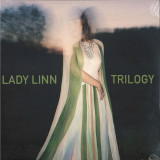
It is no longer a secret that Lady Linn has a very rich and unique voice with a versatility that is second to none, ensuring that she is right at home in a myriad of styles.
She proved exactly that in her new 'trilogy', a series of three E.P.'s - 'I'm Fine', 'Sea of Trees' & 'Nocturne'- each one telling its own unique story, and now bundled on the album 'Trilogy'.
The common thread throughout the album is her affinity with jazz, soul and dance, but also lyrically, various themes return: the tenderness within family life, melancholy, nature, and the magic of the dance floor.
There is also a clear evolution with the arrangements going from a sober, stripped-down quasi-electronic sound of the JX-03 on 'I'm fine' (with contributions from Gustaph, Gregory Frateur and producer Frederik Segers) to dreamy and warm analog synths by producer Joris Caluwaerts on 'Sea of Trees', to an organic, energetic sixties sound on 'Nocturne' with starring role for her partner and bass player Filip Vandebril and partners in crime: The Magnificent Seven, arranger Frederik Heirman and producer Jan Chantrain.
In addition to a selection of the three EPs, 'Trilogy' also includes the extra song 'Hurricane', one of Linn's personal favorites, recorded at Daft Studios with The Magnificent Seven:
'I had just watched a documentary on Laurel Canyon (on the topic of Los Angeles - the epicentre of the 'counter culture' or better 'hippie culture' - in the late 60's and early 70's and the habitat of The Mamas and the Papas, Frank Zappa, Jim Morrison, etc.) which fed my fascination for the 60's that I already had thanks to my parents. The way in which music was created and recorded in that era is a dream for every musician, me included. With the surplus in time due to the lack of gigs during the pandemic the time was right to follow my dream and record in the Daft Studios with my own band. I felt a bit like Carol King behind my piano, but I was also inspired by Joni Mitchell.'
A quote from the lyrics of 'Hurricane': 'I wanna feel the wind like the birds outside/Dive like a seagull, enter the water from flight/Into the deep I slide'.
'A very personal song about losing yourself and the longing for freedom. I composed this one specifically with 60's songs in mind, with loads of modulations and pretty complex chords.'
Lady Linn wrote a versatile trilogy, inspired by a diverse set of influences that had her digging in music history in a very original and contemporary way. She also made her mark on the sound of the productions. On both 'I'm Fine' and 'Nocturne' she was co-producer.
Das Album Zappa ’80: Mudd Club/Munich kombiniert zwei historische Auftritte der Band aus dem Frühjahr/Sommer 1980. Der erste stammt von einem Auftritt in FZs Lieblings-Nachtclub in NYC - dem berühmten Mudd Club. Die Aufnahme basiert auf einem hochauflösenden Transfer des OriginalMasterbands. Die zweite Aufnahme entstand in der Olympiahalle in München und ist die erste LiveStereoaufnahme von Zappa, die direkt digitalisiert wurde. Das Mastering stammt von Bernie Grundman, 2022. Fotografien und Memoiren sind von George Alper, mit Linernotes von Arthur Barrow, Steve Vai, Vaultmeister Joe Travers.
Liverpool-born drummer Aynsley Dunbar was one of the most respected musicians on the international rock scene of the late ‘60s. His work with trailblazers such as John Mayall, David Bowie, Lou Reed and Frank Zappa, with whom he had a lengthy association, have assured his place in history. But Dunbar also laid down a marker as a bandleader in his own right. His debut album, Doctor Dunbar’s Prescription was a confident set of electric blues that was full of snappy tunes and high energy riffing. Recorded in 1971, Blue Whale is considerably more experimental, though. It is really a case of Dunbar drifting towards a hybrid of progressive rock and pyschedelia not far removed from Zappa’s surreally comic, bitingly sardonic world. And indeed the cover of his seminal ‘Willie The Pimp’ is one of the highlights of the set. Accompanied by excellent rhythm section players and soloists such as guitarists Ivan Zagni and Roger Sutton, bassist Peter Friedberg, pianist-organist Tommy Eyre, and vocalist Paul Williams, Dunbar hit a creative peak here that is emphatically maintained elsewhere on the album, which has mostly long pieces full of notable light and shade. This newly re-mastered version of Blue Whale puts one of the highpoints of Aynsley Dunbar’s illustrious career back under the spotlight. He was rightly inducted into the Rock & Roll Hall Of Fame in 2017 and there could be no more fitting example of his achievement than an album that sounds impressively fresh 50 years after it was made.
Nearly five years on from their acclaimed debut, Bennett Wilson Poole reveal the follow up. It's been a long time coming, but...
That eponymous first album was only ever intended as a one-off collaborative project — a serendipitous series of events which began with a late evening session where the trio wrote ‘Hate Won't Win’. A response to the murder of MP Jo Cox, it was something of a fresh take on Crosby Stills Nash and Young’s classic protest song ‘Ohio’. The release saw Bennett Wilson Poole embraced by the Americana community, playing live on the Andrew Marr show and crowned as ‘UK Artist of the Year’ at the 2019 UK Americana Awards, in front of a watching crowd including Graham Nash himself.
The new album came together in similar fashion; Robin (Bennett) and Danny (Wilson) started writing new songs late into the night whilst on tour to promote the first record — a tour which unfolded from a three-night residency in a London pub into a year-long odyssey culminating in a headline show in Hall One at King’s Place — and before they knew it, there were enough songs to begin recording an unplanned second album.
Where the first record drank deep from 70s US west coast folk-rock, the second has been heavily spiked with 1960s British psychedelia, even featuring a cover by legendary counterculture artist John Hurford (whose credits include 60s artwork for Oz Magazine and International Times).*
Tony Poole’s meticulous and inspired production has spun Robin and Danny’s fresh batch of songs into a delicate web of musical delight. Fans of the ‘spot the reference’ game Tony started on the first record won’t be disappointed this time either, as there are plenty more to be found here.
As with the first album, the lyrics don’t shy away from current affairs – by the end of that year of touring, the band were already playing “I Wanna Love You (But I Can’t Right Now)”, reflecting on the state of US politics, yet optimistic that the problems are only temporary.
Many of the tracks on the new album feature live rhythm section Fin Kenny (drums) and Joe Bennett (bass) for the first time on a BWP record.
The title of the album comes from the lyrics of ‘Help Me See My Way’, the first single, a prayer for strength in difficult times, the trippy animated video for which was originally issued during lockdown. The dreamy positivity of the line "I saw a star behind your eyes" is tempered with the plea "don't let it die away", a message which feels as important as ever two years on.
All three collaborators have had critical acclaim in their own right. Danny Wilson’s credentials go back to his days in Grand Drive with brother Julian, and his consistent high calibre output with his Champions of the World led them to sweeping the board at the first UK Americana Awards with Album, Artist and Song of the year awards richly deserved; Tony Poole’s Starry Eyed and Laughing were hailed as “the English Byrds” on the back of their two CBS-released albums in the mid-seventies and he has since built an enviable reputation as producer and engineer; Robin Bennett has been relentlessly turning out timeless songs from his Oxfordshire base in bands from Goldrush to The Dreaming Spires
- A1: Model | Minority (Live From Unlimited Nation Summer 2020)
- A2: Wake Up Thoughts
- B1: Lust In The Times Of Love
- C1: The Cliff Of Cancun (Live From Unlimited Nation Summer 2020)
- C2: Lando’s Revenge (Try Me)
- D1: End Of Times
- D2: Tandem Beat 2
- E1: Black Poetry
- E2: Sweet Children (Live From Unlimited Nation Summer 2020)
- E3: Southside Sue
- F1: Shake Ya Body *Cover*
- F2: The Savage Lurks
- G1: Lend Me An Ear
- G2: 1000 Truths
- H1: Little Kenny Broooke
- H2: The Things We Do For Affection
4x LP and Zine (ft. photos, historical text and track narrations by the artist) set. Nation bring it.
An essential delve in to the retrospective works of SSPS. Limited edition. No repress. HUGE TIP ON THIS!
" You can't fake the funk, as they say and SSPS is pure funk embodied in all he does, the man oozes the funk 24-7!
One of my earliest encounters with SSPS was at one of the infamous Rubulad parties out in Brooklyn....
the man was decked out extravagantly...a cross between Blowfly and some futuristic being zapped
down to earth directly from the P-Funk mothership. Who was this masked man?
The disco vampire, was beating fast disco tracks relentlessly while slamming in his 707 over the records in real time...
not an easy feat, the beauty of the imperfections making it that much more exciting hearing the gallop and wild energy
he was bringing to the crowd, we were eating it up. This is SSPS, fearless in his approach and execution,
a modernist looking to the future but rooted in the past, an artist committed to his art...
all presented with unhinged emotion. It's all or nothing...everything on the table....do or die...the true epitome of style!!!!
Declaring someone a "cult figure" or a "legend" is a huge weight to carry and is often a term that is carelessly thrown around,
but those of us who have dwelled in this "underground" over the last 30 years can say with confidence that SSPS is just that
to many of us, no questions asked, it's not up for debate.
Now, many years later we see the culmination of his electronic works from 2002-2021 committed to record in this 4xlp,
16 track boxed set (plus 45 page booklet) titled SSPS, "The Life and Times of GiGi Black" thus solidifying
Mr. Nicholson's place in the secret world of dance not dance music.
The only way to describe this offering is "full spectrum electronic musical madness" not to be categorized,
never to be pigeonholed, full of surprises and straight from the gut with a direct hit to the heart.
We could go on about the production processes, about his Furr City studio space or his cross country excursions
for work with a truck packed with paintings (but also his music equipment) plugging in and recording during his
pit stops in Motel 6's across the US. But again it doesn't do justice to simply have a small peek inside the man's mind...
the music is beyond the mind. The process is the process and nothing has or can stand in the way of what the SSPS
has done in his long musical life. Punk Rock, Hardcore, House, No-Wave, Industrial, Jakbeat/Slow-Beat and Noise.
it's all there for the taking, it's all intertwined. If you want it, you will find it within SSPS's works.
Nicholson's path is the embodiment of true culture within "dance music" cultivated from years of learning, experimenting,
and pushing the limits with total commitment and immersion. "The Life and Times of GiGi Black" is true life experience,
it is a reflection of someone delving deep into his craft and presenting it with care in opposition to the fast, disposable,
self gratifying click bait culture we see dominating the pages today. The proof is here, drop the needle, enter the world of SSPS.
n G2 1000 Truths Balearic Inaugural Mix
After Patrick Campbell-Lyons and Alex Spyropoulos dissolved their partnership, they both went separate ways in the music scene. Campbell-Lyons began work on the Local Anaesthetic songs while going through a series of personal matters which ended up being reflected in the tone of the album. He did release it under the Nirvana name in 1971, but what we have here is a totally different thing. He decided to break with what had been doing up to that moment, and came up with an experimental progressive rock album that was perfectly suited for the Vertigo label through which it was released. Musically, it has been compared to "something Frank Zappa could have done". It was not inspired by Zappa, but it certainly explored similar boundaries as he may have done in his works, often moving away from that pop sensitivity that had characterized Nirvana's previous outings. A unique sounding piece in their catalogue.
And although being so far from what was the Nirvana sound, we have another excellent LP here that has become a most sought after piece among collectors. Pianist/keyboardist Patrick Joseph "Pete" Kelly helped Campbell-Lyons complete the LP, which also featured collaborations by Jon Field, with whom Campbell-Lyons had the pre-Nirvana band Second Thoughts and who would later go to form The Tomcats, July and Jade Warrior - Jade Warrior's Tony Duhig had also played in Second Thoughts. Some brass arrangements are thrown in, but the orchestra is gone in favour of a harder free form, prog-rock sound.
The Wah Wah reissue is housed in the original gatefold sleeve and features one bonus track with the 1971 single version of TheSaddest Day Of My Life. It's the first ever official vinyl reissue since 1971. 500 copies only!
- 1: Free Cocaine
- 2: Dead Brides In White
- 3: Let's Get Pregnant
- 4: Fukking Life
- 5: Eat You To Survive
- 6: She's Dead
- 7: I'm In A Head
- 8: Nobody Likes Me
- 9: Hurricane Fighter Plane
- 10: Lesbian Nun
- 11: I Wanna Kill Your Boyfriend
- 12: Sit On My Face
- 13: That's Rock N' Roll
- 14: I'm A Man
- 15: Strange Movies
- 16: Motherfukker
- 17: She's Dead
- 18: Fukkhead
- 19: Fuck So Good
- 20: Real Creepy
- 21: Hate Street
- 22: Crawl
- 23: I'm Not Talking
- 24: Zap Gun
- 25: Don't Feel Alright
- 26: The Creep
- 27: Andy's Poem
- 28: Fukking Life
- 29: Sit On My Face
- 30: I Wanna Kill Your Boyfriend (Alternative Version)
- 31: Fukkhead
Originally Released in 1999, this much sought after package is back with new art and a suave ass gatefold jacket! Beginning their career as a Midwestern garage band, the Dwarves made an abrupt change once they moved to San Francisco, maintaining their recklessness, but getting faster and faster. Free Cocaine traces the arc of that development, collecting singles, demo tracks, and other sessions from that time period, beginning with the Lucifer's Crank EP, and progressing onward. Most early tracks betray tremendous musical inadequacies -- at this point, the Dwarves were hardly the polished pop-punkers they would become by the time they signed to Epitaph. Nonetheless, even this raw material has plenty of catchiness, playing ability issues aside. The album also collects compilation cuts like "Lesbian Nun" from the Amrep compilation Dope, Guns, and Fucking in the Streets and singles all the way up through the late '90s on Man's Ruin. Though known primarily for their hard-living, and reckless violence at shows, with most sets clocking in under 20 minutes, the Dwarves, at this juncture, were the best in the underground rock world at what they did: cooking up fast-as-hell, catchy, raunchy hardcore punk. (allmusic). Mixing Lucifer's Crank, Toolin' For a Warm Teabag and other early Dwarves singles, EPs and unreleased tracks this is the noise rock Dwarves at their most untamed. Zero production value, maximum profanity. Hits include Eat You To Survive, Fucking Life and Dead Brides in White.
- A1: Didja Get Any Onya
- A2: Directly From My Heart To You
- A3: Prelude To The Afternoon Of A Sexually Aroused Gas Mask
- A4: Toads Of The Short Forest
- A5: Get A Little
- B1: Eric Dolphy Memorial Barbecue
- B2: Dwarf Nebula Processional March & Dwarf Nebula
- B3: My Guitar Wants To Kill Your Mama
- B4: Oh No
- B5: The Orange County Lumber Truck
- B6: Weasels Ripped My Flesh
After Prette (pronounced as ‘pret’ which means fun in Dutch) successfully launched a stage to perform art, it only felt natural to also launch a platform to release art.
Prettemusic is an independent imprint that releases limited vinyl records.
Prettemusic hits the ground running with its first release – a stunning four-track debut EP from head honcho Koperblond. Koperblond (real name Wouter Beek) delivers a mix of Arabic hip-shaking and emotional trance euphoria to evoke intense dance floor ecstasy.
The opening track is ‘Kunti’, an Italo disco destroyer with a bold Bollywood spirit that will lure you in and awaken those hips. Next up is a remake of the brave starter – this new cocktail with hints of the original track has a high-energy zap-crazed feel and a groovy-moving non-stop sound. Two 100% floor fillers, guaranteed to raise the roof of your nearest discotheque!
On the flip side ‘I Want Your Love’ – an emotional love story with a journey through the track that feels like a taste of real love. From happiness and grief to hope and hopelessness, it bursts loudly and with great force. It is a true reminder that love will save the day. Multi-instrumentalist DJ and producer Rose Ringed reinterprets this ode to love using his typical sound palette. The result is a big room banger ready to be served alongside fireworks and CO2 cannons. It is Rose Ringed’s first vinyl outing following releases on his label, Closed Eyes Records, and Solomun’s world-famous Diynamic.
This Prettemusic release comes on exclusive Koperblond-coloured (copper blond in Dutch) vinyl alongside a unique two-front artwork from abstract painter Harry Markusse and fine-art photographer Pieter Bas Bouwman.
- A1: Last Flight To Reggae City (Tommy Mccook & Stranger Cole)
- A2: Peoples Choice (Winston Williams)
- A3: The Avengers (Tommy Mccook)
- A4: It’s Reggae Time (D Tony Lee)
- A5: Peyton Place (D Tony Lee & Roland Alphonso)
- A6: Zapatoo The Tiger (Roland Alphonso)
- A7: Drums Of Fu Manchu (Headley Bennett)
- B1: One Thousand Tons Of Megaton (Roland Alphonso)
- B2: Red Gal Ring (D Tony Lee & Roland Alphonso)
- B3: Music House (Roland Alphonso)
- B4: Gits Brown (Lennox Brown)
- B5: Peanut Vendor (Tommy Mccook)
- B6: Daydream (Bunny Lee Allstars)
- B7: Annie Pama (Bunny Lee All Stars)
• Bunny Lee was the first to actually use reggae in the title of a record with ‘It’s Reggae Time’ Striker’s propensity for creating hit records during this period was unmatched and he was awarded the prestigious “title of Jamaican Producer Of The Year in 1969, 1970, 1971 & 1972” the years covered by this new Boss Reggae focused compilation.
• Striker’s complete mastery of the new reggae rhythms and “versioning them over” are showcased on this release with the emphasis placed on the outstanding contribution of the cream of Kingston’s session musicians
Before Mahjun (of which Souffle Continu reissued, in 2016, the two albums released on Saravah), there was... Maajun. Five musicians (Jean-Pierre Arnoux, Cyril and Jean-Louis Lefebvre, Alain Roux and Roger Scaglia) and three times as many instruments at the service of an electric-poetic guerrilla group moulded from folk and blues. The group’s unique album, “Vivre la Mort du Vieux Monde” evokes an (imaginary) association of Frank Zappa and Jacques Higelin, of Sonny Sharrock and the Art Ensemble Of Chicago. Under these conditions, Long Live Death!
“The most French of all the French groups, determined to take Maurice Chevalier’s place in American hearts.” This was how Rock&Folk presented Mahjun in 1977. So be it. But when “Vivre la Mort du Vieux Monde”, was issued, it was 1971, and the name, though the same group, was still spelled Maajun. So, let’s look back at the story.
At the end of the sixties, five blues fans decided to form a French group ready to break down the barriers: Jean-Pierre Arnoux (drums, vibraphone, saxophone), Cyril Lefebvre (guitar, organ), Jean-Louis Lefebvre (bass, violin, guitar, vocals), Alain Roux (saxophone, flute, harmonica, vocals) and Roger Scaglia (guitar, vocals). This was Maajun, and Vivre la mort du vieux monde would be their only album, but which would (nevertheless) be followed by those of Mahjun created later by Lefebvre (Jean-Louis) and Arnoux.
Recorded for the Vogue label, “Vivre la Mort du Vieux Monde” would disturb a number of people. This is mostly due to the lyrics, many of which were written by Gérald Escot-Bocanegra, who, while summoning the spirit of Lautréamont and Rimbaud, turned the Maajun musicians on to rock and free jazz. Add a bit of politics into the mix, and the release of the album was delayed for several months. But then, wasn’t it worth waiting for?
Because “Vivre la Mort du Vieux Monde”, a real concept-album, is an important and iconoclastic statement made directly in the face of (francophone) dreamers of all countries. Over heavy guitar riffs, psychedelic interludes or fantasy-fuelled digressions, Maajun built mazes on the advice of alchemists known only to themselves before heading off on a long march on the “cracking walls”. It was an ambitious project, but Maajun could handle it, going so far as to proclaim: “Tomorrow will be a huge party!” But as we can see “tomorrow”, is now!
If, among the Afro-Peruvian music groups that have emerged in recent years, there is one that has dared to take the sound to new dimensions, it is Perkutao. Heirs to the best Afro-Peruvian tradition, they have been able to integrate Afro-Cuban elements and various contemporary popular styles, which they play with amazing with speed and precision. "Mis ancestros", is their debut album for Buh Records. Perkutao is an Afro-Peruvian percussion ensemble founded in 2005, directed by Percy Chinchilla, musician, percussionist, zapateador and teacher of young generations of percussionists. "Mis Ancestros" (My ancestors) is their first record under the production of Manongo Mujica and is the fourth title of the collection "Perspectivas de la Música Afroperuana" (Perspectives on Afro-Peruvian Music). Chinchilla shares the artistic direction of Perkutao with William Nicasio 'Makarito', another outstanding percussionist. Both grew up in the famous Callejón del Buque, in the district of La Victoria, a spot preferred by bohemians and known by local music partying -jaranas criollas. Both were also formed in Perú Negro, an emblematic Afro-Peruvian ensemble, and both carry in their blood the cult of percussion and Afro tradition. Chinchilla comes from a family of Afro-Peruvian musicians including Caitro Soto and Ronaldo Campos. And Makarito is the son of Macario Nicasio and grandson of El Niño, legendary Cuban percussionist in charge of introducing congas and bongo to Afro-Peruvian rhythms. Perkutao arose precisely from the merging of these traditions, Afro-Peruvian, Afro-Cuban and Caribbean music, and have become one of the most sought-after percussion ensembles due to the intensity of their sound and their powerful performances that include stage movements and surprising acrobatic skills. In addition to Chinchilla and Makarito, the ensemble is completed by Edu Campos, Andree Liendo and Víctor Sánchez Pitín. "I follow in the footsteps of my ancestors, to the beat of the cajita, the quijada and the cajón, to the rhythm of a zamacueca, a festejo and a good landó". This is an excerpt of the lyrics of "Poema", the opening track of the album, the rhythmic base accompanies Chinchilla's voice and then increases in a crescendo that announces the paths to be explored by Perkutao. "Azañero Colorao", "Trucutum Kiti Pa" and "Cancha con Sabor", composed based on minor percussion (cajita, quijada), zapateo and cajón, respectively, are compositions that serve as an introduction, a tribute to the essential instruments of the Afro-Peruvian tradition. The last one in particular already defines Perkutao's style: a trepidant and orgiastic rhythm, hypnotic and hard hitting, Dionysian and cathartic. With "Madre Africa" and "Al Tayta Bukense", for djembes and congas, respectively, we find Perkutao retaking the Afro-Cuban heritage embedded to the Afro-Peruvian sounds, abakuá and festejo. "Lloraré", a version of a famous Cuban song, mirror the ensemble's fascination with Caribbean music (salsa is another genre cultivated by its members). "Mis ancestros" is an album about a tradition, but it is also a renewal. Perkutao opens a new direction for Afro-Peruvian music, its sound is an evocation and the here and now, it is deep-rooted but freely flowing percussion. Perkutao are Percy Chinchilla, William Nicasio "Makarito", Edu Campos, Andree Liendo y Víctor Sánchez Pitín. Produced by Manongo Mujica y Daniel Mujica. Recorded and mixed by Juan José Salazar at La Encía del Leopardo Estudio, Chorrillos, Lima, Perú. Mastered by Mario Breuer en Sensei Mastering, Córdoba, Argentina. Cover and Design by Yerko Zlatar.
Although Los Hermanos Ballumbrosio are one of the most emblematic groups of Afro-Peruvian music, no single recording has been able to portray the essence of the group... Until now. "Homenaje a El Carmen" ("Homage to El Carmen"), their debut album for Buh Records, sets the record straight: it captures the true spirit of the musical tradition of El Carmen, a city located a few miles to the south of Lima that is home to the largest black community in Peru. Songs based on percussion and zapateo bring back the memories and experiences of a culture that has produced one of the greatest treasures of Peruvian music. "Homage to El Carmen", the third volume of the series "Perspectives on Afro-Peruvian Music", signals the return of the group to the recording studio, and also to the sources of rhythms such as festejo and panalivio, which they interpret with cajón, quijada (jawbone), congas, bongo and batá. The result is a distillation and a testimony of the memories and experiences that portray the cultural universe of El Carmen. We have access to a selection of traditional songs that are heard during the festivities, such as "Guanchivalito", which is played during the Yunza Negra, a ceremony in which a willow tree is cut to bring benefits to the community. "Panalivio " and "Serrana Vieja" are two traditional Christmas carols that are played in the "Hatajo de Negritos" and which reflect the syncretic character of the Afro-Peruvian culture. These songs speak of the difficulties of rural life, but they also serve as a vehicle to demonstrate the Ballumbrosio brother's mastery in the art of zapateo, a dance that is accompanied by violin and bells. The classic "La Esquina de El Carmen" is perhaps the song that best expresses the erotic character of festejo, also known as baile de cintura (waist dance). "Homage to El Carmen" is the highly anticipated return of the Ballumbrosio brothers to the recording studio. They have become indisputable references of Afro-Peruvian music and have displayed their sound and dances around the world. It was time for an album that portrays the essence of the group: a collective spirit, where the tutelary image of Amador Ballumbrosio always shines, and which traces a history from Africa to El Carmen. This album is published in vinyl format in a limited edition of 300 copies. Include 8 full-page booklet with liner notes in Spanish and English. Produced by Manongo Mujica and Daniel Mujica. Cover by Yerko Zlatar.
A new entity has made musical contact with Shipwrec. Alpha Vistor. The newly minted moniker of musician and sound designer Ivan Zapico, this four tracker debut is steeped in the traditions of electro. In the ghostly "Ciudad Fantasma" threats lurk in the murky shadows of basslines and beats, an unsettling atmosphere of menace penetrating speakers from the outset. Clinical percussion and an overarching unease introduce "20202020." Dark undercurrents of melody brood below shimmering glass chords in this foreboding work. The flip comes to life with "Malos Tiempos para la Guerra," an ominous prescience coming to bear in the track title. A hi-hat haze is broken by sweetened strings, a kick drum maintaining the intensity. When a snare arrives, it is accompanied by greasy acid basslines; brightness countered with shadow. The final encounter comes with "Templo de Cova." A soaked beat surfaces amid stabbing sythlines and twilight tones that break to triumphal highs, a reflective culmination to this ruminative record.