
nicht am Lager
Bestelle jetzt und wir bestellen den Artikel für dich beim Lieferanten.
Last In: vor 11 Monaten
23,95 €
Bestelle jetzt und wir bestellen den Artikel für dich beim Lieferanten.

Three years after the platinum Effet Miroir (Mirror Effect), Zaz is about to release her fifth album. A record she began making during the spring 2020 lockdown.
After a frenzied decade of sold-out concerts, awards and prestigious collaborations (Quincy Jones, Charles Aznavour), it was after her last world tour which ended in the United States that Zaz refocused herself. For this album, recorded between Provence (Southern France), Brussels and Amsterdam’s area, Zaz worked with Dutch producer REYN (Vanessa Paradis, Stephan Eicher, Benjamin Biolay, Gaëtan Roussel…). “Imagine a world in tune with you”, advises Zaz in the first single. “When you see the state the world is in, it saddens me. What are we going to leave for our children?", asks the artist, who has always held deeply ingrained questions of education and environment. “It's sad, scary. But ‘Imagine’ is a song of hope", she explains, putting things into perspective.
erscheint voraussichtlich am 05.11.2021

Bei uns am Lager und sofort versandfertig

The short, mysterious career of the female French duo Deux Filles is bookended by tragedy. Gemini Forque and Claudine Coule met as teenagers at a holiday pilgrimage to Lourdes, during which Coule's mother died of an incurable lung disease and Forque's mother was killed and her father paralyzed in an auto accident. The two teens bonded over their shared grief and worked through their bereavement with music. However, after recording two critically acclaimed albums and playing throughout Europe and North America, Forque and Coule disappeared without a trace in North Africa in 1984 during a trip to visit Algiers. The short and terribly unhappy lives of Forque and Coule are at the root of the small but fervent cult following the mysterious duo have gained since their disappearance, not least because the placid, largely instrumental music on the duo's albums betrays no hint of the sorrow that framed their personal lives.
This would be a terribly sad story if a word of it were true. In reality, Deux Filles were Simon Fisher Turner, former child star/teen idol and future soundtrack composer, and his mate Colin Lloyd Tucker. Turner and Tucker left an early incarnation of The The in 1981 to pursue another musical direction. Turner claims that the idea of Deux Filles came to him in a dream, and he and Tucker strictly maintained the fiction throughout the duo's career. Not only did they pose in drag for the album covers, the duo once even played live without the audience realizing that the tragic French girls on-stage were actually a pair of blokes from south London. Deux Filles released two albums through Turner and Tucker's Papier Mache label, 1982's Silence & Wisdom' and 1983's Double Happiness'. Both albums are included here and blend watery piano, occasionally ghostly vocals, sheets of synthesizers, heavily processed guitars and the barest minimum of percussion. Drifting and wistful, they're a pair of lost ambient gems from a time when the genre had yet to mature, an excellent example of post-Eno, pre-Orb ambient music.
All songs have been remastered for vinyl by George Horn at Fantasy Studios in Berkeley. The vinyl comes housed in gatefold sleeve with original front covers of both albums, and a centerfold of archive images and the original liner notes. Each LP includes a sticker of the Lino cuts by Adrian Gill that was included with the original pressing.
"Like an early French film soundtrack with melodramatic overtones, the sound is jagged and disjointed but never harsh. Lilting guitars and ample use of echo smack of Vini Reilly, relying on the hypnotic qualities of the sound rather than abrasive noise" (Sounds, 03/1983)
Bei uns am Lager und sofort versandfertig
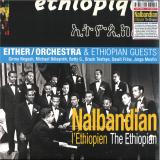
The Éthiopiques series returns! Essential archive recordings from an extremely fruitful period in Ethiopian music.
Before “Swinging Addis” took over the world, there was Moussié Nerses Nalbandian — the Armenian-born composer who shaped modern Ethiopian music. Mentor, arranger, and pioneer, he laid the foundations of Ethio-jazz.
This Éthiopiques volume revives his forgotten legacy, recorded live by Either/ Orchestra First issue ever with new exclusive photos and in depth liner 8-page insert.
“Ethiopian jazzmen are the best musicians that we have seen so far in Africa.
They really are promising handlers of jazz instruments.”
Wilbur De Paris
(1959, after a concert in Addis Ababa)
አዲስ፡ዘመን። *Addis zèmèn* **A new era.**
The time is the mid-1950s and early 1960s, just before "Swinging Addis" bloomed – or rather boomed – onto the scene. Brass instruments are still dominant, but the advent of the electric guitar, and the very first electronic organs, are just around the corner. Rock’n'Roll, R’n’B, Soul and the Twist have not yet barged their way in. Addis Ababa is steeped in the big band atmosphere of the post-war era, with Glenn Miller's *In the* *Mood* as its world-wide theme song, neck and neck with the Latin craze that was in vogue at the same period. Life has become enjoyable once again, with the return of peace after the terrible Italian Fascist invasion of Ethiopia (1935-1941). The redeployment of modern music is part and parcel of the postwar reconstruction. *Addis zèmèn* – a new era – is the watchword of the postwar period, just as it was all across war-torn Europe.
The generation who were the young parents of baby boomers** were the first to enjoy this musical renaissance, before the baby boomers themselves took over and forever super-charged the soundtrack of the final days of imperial reign. Music is Ethiopia's most popular art form, and very often serves as the best barometer for the upsurge of energy that is critical for reconstruction. Whether it be jazz in Saint-Germain-des-Prés or the *zazous* who revolutionised both jazz and French *chanson* after the *Libération*, be it Madrid's post-Franco Movida, or Dada, the Surrealists and *les années folles* that followed World War I, the periods just after mourning and hardship always give rise to brighter and more tuneful tomorrows. Addis Ababa, as the country's capital, and the epicentre of change, was no exception to this vital rule.
**Two generations of Nalbandian musicians**
Nersès Nalbandian belonged to a family of Armenian exiles, who had moved to Ethiopia in the mid-1920s. The uncle Kevork arrived along with the fabled "*Arba Lidjotch*", the** "*40 Kids*", young Armenian orphans and musicians that the Ras Tafari had recruited when he visited Jerusalem in 1924, intending to turn their brass band into the official imperial band. If Kevork Nalbandian was the one who first opened the way of modernism, pushing innovation so far as to invent musical theatre, it was his nephew Nersès who would go on to become, from the 1940s and until his death in 1977, a pivotal figure of modern Ethiopian music and of the heights it. Going all the way back to the 1950s. Nothing less. And it is Nersès who is largely to thank for the brassy colours that so greatly contributed to the international renown of Ethiopian groove. While the younger generations today venture timidly into the genealogy of their country's modern music, often losing their way amidst a distinctly xenophobic historiographical complacency, many survivors of the imperial period are still around to bear witness and pay tribute to the essential role that "Moussié Nersès" played in the rise of Abyssinia's musical modernity.
Given the year of his birth (15 March 1915), no one knows for sure if Nersès Nalbandian was born in Aintab, today Gaziantep (Turkiye/former Ottoman Empire) or on the other side of the border in Alep, Syria... What is certain is that his family, like the entire Armenian community, was amongst the victims of the genocide perpetrated by the Turks. Alep, the place of safety – today in ruins.
Before Nersès then, there was uncle Kevork (1887-1963). For a quarter of a century, he was a whirlwind of activity in music teaching and theatrical innovation. *Guèbrè Mariam le Gondaré* (የጎንደሬ ገብረ ማርያም አጥቶ ማግኘት, 1926 EC=1934) is his most famous creation. This play included "ten Ethiopian songs" — a totally innovative approach. According to his autobiographical notes, preserved by the Nalbandian family, Kevork indicates that he composed some 50 such pieces over the course of his career. This shows just how much he understood, very early on, the critical importance of song as Ethiopia's crowning artistic form. Indeed, for Ethiopian listeners, the most important thing is the lyrics, with all their multifarious mischief, far more than a strong melody, sophisticated arrangements or even an exceptional voice. (This is also why Ethiopians by and large, and beginning with the artists and producers themselves, believed for a long time — and wrongly — that their music could not possibly be exported, and could never win over audiences abroad, who did not speak the country's languages).
Last but not least, one of Kevork's major contributions remains composing Ethiopia's first national anthem – with lyrics by Yoftahé Negussié.
Nersès Nalbandian moved to Ethiopia at the end of the 1930s, at the behest of his ground-breaking uncle. Proficient in many instruments (pretty much everything but the drums), conductor, choir director, composer, arranger, adapter, creator, piano tuner, purveyor of rented pianos,... he was above all an energetic and influential teacher. From 1946 onwards, thanks to Kevork's connexion, Nersès was appointed musical director of the Addis Ababa Municipality Band. In just a few years, Nersès transformed it into the first truly modern ensemble, thanks to the quality of his teaching, his choice of repertoire, and the sophistication of his arrangements. It was this group that would go on to become the orchestra of the Haile Selassie Theatre shortly after its inauguration in 1955, which was a major celebration of the Emperor's jubilee, marking the 25th anniversary of his on-again-off-again reign.
At some point or other in his long career, Nersès Nalbandian had a hand in the creation of just about every institutional band (Municipality Band, Police Orchestra, Imperial Bodyguard Band, Army Band, Yared Music School…), but it was with the Haile Selassie Theatre – today the National Theatre – that his abilities were most on display, up until his death in 1977. To this must be added the development of choral singing in Ethiopia, hitherto unknown, and a sort of secret garden dedicated to the memory of Armenian sacred music, and brought together in two thick, unpublished volumes. Shortly before his death (November 13, 1977), he was appointed to lead the impressive Ethiopian delegation at Festac in Lagos, Nigeria (January-February 1977).
His status as a stateless foreigner regularly excluded him from the most senior positions, in spite of the respect he commanded (and commands to this day) from the musicians of his era. Naturally gifted and largely self-taught, Nerses was tirelessly curious about new musical developments, drawing inspiration from the very first imported records, and especially from listening intensely to the musical programmes broadcast over short-wave radio – BBC *First*. A prolific composer and arranger, he was constantly mindful of formalising and integrating Ethiopian parameters (specific “musical modes”, pentatonic scale, and the dominance of ternary rhythms) into his “modernisation” of the musical culture, rather than trying to over-westernise it. It even seems very probable that *Moussié* Nerses made a decisive contribution to the development of tighter music-teaching methods, in order to revitalise musical education during this period of prodigious cultural ferment. Flying in the face of all the historiographical and musicological evidence, it is taken as sacrosanct dogma that the four musical modes or chords officially recognised today, the *qǝñǝt* or *qiñit* (ቅኝት), are every bit as millennial as Ethiopia itself. It would appear however that some streamlining of these chords actually took place in around 1960. It was only from this time onward that music teaching was structured around these four fundamental musical modes and chords: *Ambassel*, *Bati*, *Tezeta* and *Antchi Hoyé*. A historical and musical “details” that is, apparently, difficult to swallow, especially if that should honour a *foreigner*. Modern Ethiopian music has Nersès to thank for many of its standards and, to this day, it is not unusual for the National Radio to broadcast thunderous oldies that bear unmistakable traces of his outrageously groovy touch.
Bei uns am Lager und sofort versandfertig

Bei uns am Lager und sofort versandfertig

Marie-Pierre Rixain and David Fenech form an unexpected and captivating duo, pushing the boundaries of alternative music. Together, they embark on an unclassifiable sonic journey, blending industrial downtempo, steady kicks, cold percussion, field recordings, and electric guitar feedback. Their music, often dark, carries flashes of warmth inspired by British dub—like an imaginary collaboration between The Bug and This Heat. At times, it echoes the world of La Perversita by Hector Zazou & Co.
Their debut album, Insane Ghosts, due out in spring 2025 on the Parisian label Hublotone, was recorded in 2024 in the intimate privacy of the bedroom. Mixed by David Fenech, it also benefits from the participation of Alexandre Berly (La Mverte) on the track ‘Toi en Moi’, adding a sub and experimental touch. The mastering was handled by the legendary Noel Summerville, whose sonic signature graces iconic albums by The Clash, My Bloody Valentine, Kraftwerk, Aphex Twin, and Nick Cave and the Bad Seeds.
The album cover features a striking work by French photographer and filmmaker Antoine d’Agata (Magnum Photos). His poetic and abstract image adds another layer to Insane Ghosts, a project already shaping up to be a must-have for fans of introspective, dark and cold music. Like if Lost in Highway from David Lynch had a new soundtrack.
Bei uns am Lager und sofort versandfertig

La Monte Young was a primary influence on Minimalism, the Fluxus movement and performance art through his legendary compositions of extended time durations and the development of just intonation and rational number based tuning systems. With wife and collaborator, artist Marian Zazeela, they would formulate the composite sound environments of the Dream House. Seeing reissue for the first time since its initial 1969 release, Young and Zazeela's first full-length album is often referred to as »The Black Record« due to Zazeela's stunning cover design, complete with the composer's liner notes in elegant hand-lettered script.
Bei uns am Lager und sofort versandfertig
Manchmal reicht ein Sommer, um zu zeigen, wohin die Reise geht. Fruchtiger Beigeschmack haben ihren nicht nur angekündigt, sie bespielen ihn gerade und begeistern dabei: 300.000 Streams in nur acht Wochen, zehntausende neue Fans auf den sozialen Netzwerken, ein ausverkauftes Releasekonzert, eine Zusatzshow mit Milla im September, die ebenfalls fast ausverkauft ist, ein Support-Slot vor 6.000 Menschen bei ZAZ in München, viele Festivals - und mittendrin "Löschzug", den die TAZ zum "linken Sommerhit des Jahres" erklärt hat. Auf den Socials wird das Trio gerade zur Band, über die man spricht, bevor man sie überhaupt gehört hat. Klare Haltung, großartige Songs, eine Band, die Musikfans begeistert, weil sie so ein wohltuender Gegenentwurf zum sonst vorherrschenden oder zumindest gefühlten Sound-Einheitsbrei im Netz darstellt. Jetzt kommt das Debüt, das all das einfängt: "Fast schon gut ist nicht schlecht" - die Debüt-EP von Fruchtiger Beigeschmack, erscheint bei superpolrecords. Ein Titel mit Understatement, der genau das Gegenteil meint. Fünf Songs, die Indie-Songwriting und Jazz-Offenheit zusammenbringen, ohne sich in Genreschubladen zu verlieren. Die wirbelnde Frontfrau Milena vorne, mit Texten, die nicht ausweichen und längst nicht nur der GenZ aus dem Herzen sprechen. Levi und Felix, die dem Ganzen Raum und Reibung geben, vorgetragen mit unbändiger Spielfreude, die sowohl auf Platte, aber vor allem live zündet. Das ist keine Band, die auf den Durchbruch wartet - sie ist bereits mittendrin, und die Zahlen sprechen für sich: Hunderttausende Streams, ausverkaufte Shows, ein Sommerhit im Feuilleton. "Fast schon gut ist nicht schlecht" ist der Beweis auf Vinyl - das Debüt einer Band, die längst mehr ist als ein Geheimtipp. Diese Zeit braucht einfach einen fruchtigen Beigeschmack.
erscheint voraussichtlich am 25.09.2026

Independent Belgian artist of Congolese descent MAHINA explores an eclectic voice where soul, Afrocentric melodies, R&B, reggae , and both acoustic and electronic sounds intertwine, carried by percussion. ZAZA is MAHINA's long-awaited debut EP.
Moving between deep introspection, spiritual messages, and enchanting harmonies, Mahina embodies a new voice - both innovative and singular. Her ambition is clear: to make listeners feel, heal, resonate, and find a space where music becomes a language of truth and elevation.
Alongside her music, Mahina has performed in the critically acclaimed theater production Dear Winnie (KVS & NNT) and appeared on screen in the short film Le retour des femmes colibris by visual artist Patricia Kaersenhout.
Zaza is much more then just an EP, it is an inner quest, a journey through love, faith, vulnarability and resilience. Through an eclectic sound palette : soul, Afro-rhythmic, R&B, reggae, acoustic and electronic. Mahina offers a unique identity, both intimate and universal.
This adventure is conceived as a breath, a space where emotions and spirituality meet. Balancing fragility and strength, softness and intensity, Mahina unfolds a sincere and captivating voice that seeks to make listeners feel, heal and resonate.
erscheint voraussichtlich am 28.08.2026
erscheint voraussichtlich am 21.08.2026

A Pico is a bus/truck/jeep transformed into a rolling sound system.
It's a very popular caribean/south and center american way to make a carnival or a party, or a birthday, a wedding... whatever.
The music they play is defenitely banging, and minimal home made... Those trucks are full painted and the Pico : it also a way to name a street-art style.
DISTROPIKO is a project born from the encounter between traveling producer Luca Zod, visual artist and DJ Nicho Line, and Bari-based writer PERK aka Maffia of the UG crew. Their Apulian roots and respective influences—tropical wave, tribal imagery, and urban-funky aesthetics—merge in a dystopian sonic journey toward an urban tropical, where a piko de sonido spreads a new psychedelic vibe ready to shake the dance floor. Studio production is being handled by the historic Quadraro Basement studio in Rome.
Bestelle jetzt und wir bestellen den Artikel für dich beim Lieferanten.

The mysterious Witness of Venus takes command of the Zazù spacecraft and continues his cosmic exploration. With Lost & Found, he drifts into a dreamlike sound world inspired by a specific sound of the trance and techno of the 1990s — the one that evokes wonder without excess.
As the label’s second release, Lost & Found is a gentle tribute to a timeless spirit of dance music, where the dancefloor becomes a place not only to move, but to dream.
Bestelle jetzt und wir bestellen den Artikel für dich beim Lieferanten.

The label ORED Recordings was founded in 2013 by Circassian friends and fellow musicians Bulat Khalilov and Timur Kodzoko, in order to start an activity which is dedicated to documenting and preserving the traditional and post-traditional music of the North Caucasus. Khalilov and Kodzoko, were just as excited about this music as it sounded like a force that transcends borders and in which time dissolves and community becomes the only compass.
Through hundreds of field recordings, which have been made at communal gatherings, local festivities or family meetings, the label has captured a wide range of individual voices and their unique acoustic manifestations. All recordings on this album capture the raw expressiveness of the mountainside villages. Music performances being played by people who dedicate their love to music and an additional willingness to share intimate emotions.
Whereas most academic ethnomusicologists travel around the world in order to study foreign cultures, Bulat Khalilov and Timur Kodzoko were fascinated by what they just heard in the familiar regions of their then home town Nalchik. In resolute contrast to Russian academic circles, they soon developed a DIY Punk ethos for their far reaching work, beginning to formulate their own language in the field of ethnomusicology and to push the traditions forward.
However, the label’s work goes far beyond mere preservation. »We started traveling around the North Caucasus and did recordings with people from many different ethnic groups. In the North Caucasus, our work had a political dimension because there used to be (and still are) a lot of conflicts between different ethnic groups. We quickly understood that our work is not just about music and art,« states Bulat Khalilov.
The work of the label aims to reflect not only the great music of the Caucasus and its various communities but also to tell the stories behind it. They are stories of struggle, of independence, of working with historical memory in the present times of the 21st century.
Since Bulat Khalilov and Timur Kodzoko are now based at the University of Göttingen, we were able to meet each other many times and to eventually exchange ideas which resulted in the release of this collection of recordings. The compilation »Music from the Caucasus« provides a first introduction to the comprehensive work of ORED Recordings. For this collaborative release on TAL the recordings are being made accessible for the first time ever on vinyl, CD and various digital formats, all coming with extensive liner notes and yet unpublished photographs.
Bulat Khalilov and Stefan Schneider, November 2025
erscheint voraussichtlich am 30.01.2026

Mit "Al Mast" legt Adir Jan sein zweites Album vor - fünf Jahre nach dem gefeierten Debüt "Leyla". Der Berliner Singer-Songwriter mit kurdischen Wurzeln bleibt seinem Stil treu: "Cosmopolitan Kurdesque" nennt er die einzigartige Mischung aus orientalischer Tradition, psychedelischem Rock, Indie-Pop und poetischer Bardenkultur. Seine Lieder - gesungen in Zaza, Kurmancî, Türkisch und weiteren Sprachen - erzählen von queerer Liebe, Schmerz, Lust und gesellschaftlicher Rebellion. "Al Mast" ist ein musikalischer Aufschrei gegen Homophobie, Rassismus und Krieg - getragen von Adir Jans klarer Stimme und begleitet von Instrumenten wie Tembûr, Violine, Kanun und E-Gitarre. Die Songs sind bittersüß, treibend und melancholisch - eine Einladung zum Träumen, Tanzen und Nachdenken. Adir Jan schafft mit "Al Mast" ein transkulturelles Klanguniversum, das Brücken schlägt zwischen Morgenland und Abendland, zwischen Tradition und Moderne, zwischen Herzen und Seelen.
erscheint voraussichtlich am 21.11.2025

erscheint voraussichtlich am 03.10.2025

In Guadeloupe, many people think that jazz and ka music are like a ring and a finger. To some extent, the same could be said about so called Latin music and the music played in the French West Indies.
Both aesthetics were born in the Caribbean and bear so many connections that they can easily be considered cousins. In constant dialogue, there are lots of examples of their fruitful alliance and have been for a while. The English country dance that used to be practiced in European lounges came to be called kadrille in Martinique and contradanza in Cuba. They both featured additional percussion instruments inherited from the transatlantic deportation. Drawing from shared feelings about the same traumatized identity – later to be creolized – it would be hard not to assume that they were meant to inspire each other. The golden age of the orchestras that graced the Pigalle nights during the interwar period further proves the point. As soon as the 1930s, Havana-born Don Barreto naturally mixed danzón and biguine music in a combo based at Melody's Bar. In the following decade, Félix Valvert, a conductor who was born and raised in Basse-Terre in Guadelupe, also worked wonders in Montparnasse with La Coupole, which was an orchestra made up of eclectic musicians. Afro- Caribbean performers of various origins were often hired on rhythm and brass sections in jazz bands, which used to enliven the typical French balls of the capital. In the 1930s and onwards, Rico’s Creole Band was one of them.
Martinican violinist-clarinettist Ernest Léardée, who would become the king of biguine music as well as the main figure of French Uncle Ben's TV commercials (a dark stigma of post-colonial stereotypes), had musicians from the whole Caribbean sphere play at his Bal Blomet – and they all enchanted "ces Zazous-là" (according the words of Léardée's biguine-calypso piece). In les Antilles (French for French West Indies), music history started to speed up in the 1950s, when trade expanded and radio stations grew bigger. The Guadelupean and Martiniquais youth tuned in their old galena radio sets to South American and Caribbean music. As for the women traders, les pacotilleuses, they bought and sold goods across different islands (the "passing of items through various hands" was thought to be most pleasurable) and brought back countless sounds in their luggage. Such was the case of Madame Balthazar, who once returned from Puerto Rico with the first 45rpm and 33rpm to ever enter Martinique.
Out of this adventure was created the famous Martinican label La Maison des Merengues, a music business she opened and undertook with her husband and which proved to be a major landmark. At the end of the 1950s, in Puerto Rico, Marius Cultier competed in the Piano International Contest playing a version of Monk's Round 'Midnight. He won the first prize and this distinction foreshadowed everything that was to come. Cultier, the heretic Monk of jazz, was quickly praised for writing superb melodies, always tinged with a twist that conferred a unique sound to his music. It didn't take long for the gifted self-taught musician to get to play with Los Cubanos, making a name for himself thanks to his impressive maestria on merengues.
The rest is history. Besides, in the late 1950s, Frantz Charles-Denis, born into the upper middle class in Saint-Pierre and better known by his first name Francisco, went back home after working at La Cabane Cubaine – a club located rue Fontaine where he had caught the Latin fever. Francisco's music was therefore heavily marked by his Cuban cousins' influence, which gave the combos he led a specific style and also led to renewal. Things were swinging hard in La Savane, located in the main square in Fort-de-France. He set up the Shango club close by and tested out the biguine lélé there, a new music formula spiced up with Latin rhythms. Soon afterwards, fate had him fly to Puerto Rico and Venezuela.
As for percussionist Henri Guédon (percussions were only a part of his many talents), he was born in Fort-de-France in May 22nd 1944, the day marking the celebration of the abolition of slavery. As an old man, he could remember that in " his father's Teppaz, a lot of hectic 6/8 music was constantly playing...". In the opening lines of his Lettre à Dizzy, a small illustrated collection of writings published by Del Arco, he highlighted the huge impact that cubop had on him as a teenage boy, around 1960. He eventually turned out to be the lider maximo in La Contesta, a big band steeped in Latin jazz. He was also the one who originated the word zouk to describe music which brought the sound of the New York barrio to Paris. It was the culmination of a journey that started in Sainte-Marie: "a mythical place for bélé, the equivalent of Cuban guaguancó". In the early 1960s, the tertiary economy developed to the detriment of agriculture. Yet rural life was where roots music emerged in Martinique and in Guadeloupe.
Record companies played a major part in the process of Latin versions sweeping across the islands – before reaching everywhere else. Producer Célini, boss of the great Aux Ondes label, and Marcel Mavounzy, both the head of Émeraude records - a firm which was founded in 1953 - as well as the brother of famous saxophonist Robert Mavounzy, were big names to bear in mind. Although there were many of them - all of whom are featured on this record - Henri Debs was definitely the major figure in the recording adventure. He proved to be so influential that he even got compared to Berry Gordy. In the mid 1950s, when he acquired his first Teppaz, he worked on his first compositions: a bolero and a chachacha. Then, he became the one man who made people discover Caribbean music, from calypso to merengue. He was among the first ones to rush out to San Juan, Puerto Rico, to buy records and distribute them through a store run by one of his brothers in Fort-de-France. He had members of the Fania All Star come and perform there, which he was madly proud about. He was also the first one to pay attention to Haitian music, such as compas direct and various other rhythms which would soon flood the market. As a result, many of the combos hitting his legendary studio would end up boosted by widespread "Afro-Latin" rhythms. However, he never denied his identity: gwo ka drums were given a major role, although they were instruments which had long been banned from the "official" music spheres. The present selection bears witness to such a creative swarming. Here are fourteen tracks of untimely yet unprecedented cross-fertilization: all types of music rooted in the Creole archipelago have found their way, whatsoever, to the tracklisting. Whether originating from the city or being more rural, they all go back to what Edouard Glissant, in an interview about the place of West Indian music in the Afro-American scope, called "the trace of singing, the one which got erased by slavery." "It is so in jazz, but also in reggae, calypso, biguine, salsa... This trace also manifests through the drums, whether Guadelupean, Dominican, Jamaican or Cuban... None of them being quite the same. They all point to the idea of a trace, seeking it out and connecting to each other through it. This is the hallmark of the African diaspora: its ability to create something new, in relation to itself, out of a trace. It may be the memory of a rhythm, the crafting of a drum, a means of expression which doesn't resort to an old language but to the modalities of it." The opening track features one of the emblematic orchestras of this aesthetic identity, criscrossing many music types from the archipelago. The 1974 Ray Barretto guajira – Ray Barretto was a major New York drummer influenced by Charlie Parker and Chano Pozzo – is magnificently performed by Malavoi, a legendary Fayolais group (i.e from Fort-de-France). Additionally, the compilation ends on a piece by Los Martiniqueños de Francisco. It symbolically closes the circle as it is a genuine potomitan of Martinique culture which also functions as a tireless campaigner for Afro-Caribbean music. Practicing the danmyé rounds (a kind of capoeiria) to the rhythm of the bèlè drum, it delivers a terrific Caterete, a kind of champeta of Afro- Colombian obedience which was originally composed by Colombian Fabián Ramón Veloz Fernández for the group Wgenda Kenya. The icing on the cake is Brazilian Marku Ribas, who found refuge in Martinique in the early 1970s, bringing his singing to the last trance-inducing track. These two "versions" convey the whole tone of a selection composed of rarities and classics of the tropicalized genre, swarming with tonic accents and convoluted rhythms. It is the sort of cocktail that the West Indians never failed to spice up with their own ingredients. For instance, the Los Caraïbes cover of Dónde, a famous Cuban theme composed by producer Ernesto Duarte Brito, has a typical violin and features renowned Martinique singer Joby Valente and his piquant voice.
The track used to be – or so we think – their only existing 45rpm. The meaningful Amor en chachachá by L'Ensemble Tropicana, a band which included Haitian musicians among whom was composer and leader Michel Desgrotte, also recalls how Latin music was pervasive in the tropics in the mid-1960s. They were the ones keeping people dancing at Le Cocoteraie in Guadelupe and La Bananeraie in Martinique. Around the same time, another "foreign" band, Congolese Freddy Mars N'Kounkou's Ryco Jazz, achieved some success on both islands by covering Latin jazz classics – such as their adaptation of Wachi Wara, a "soul sauce" by Dizzy Gillespie and Chano Pozo whose interweaving of strings and percussions can have anyone hit the dancefloor. How can you resist Dap Pinian indeed, a powerful guaguancó by Eugene Balthazar, performed by the Tropicana Orchestra and published by the Martinique-founded La Maison des Merengues? It also acts as a symbol of the maelstrom at work. Going by the name Paco et L'orchestre Cachunga, Roger Jaffory used to play guaguancó too: his Fania-inspired Oye mi consejo is one example of his style. Baila!!!!! Dancing was also one of the Kings' focus points. Oriza is a Puerto Rican bomba and a "classic" originally composed by Nuevayorquino trumpeter Ernie Agosto, which reserves major space for brasses, giving it a special sheen.
Emerging from the New York barrios crucible was also La Perfecta, a Martinique group originating from Trinidad, whose name directly references the totemic Eddie Palmieri figure as well as his own band, also called La Perfecta. Here they borrow Toumbadora from Colombian producer and composer Efraín Lancheros and interpret it by emphasizing percussions, which set fire to the track even more than the wind instruments. The same goes for Martinique's Super Jaguars, who use Tatalibaba – a composition by Cuban guitarist Florencio "Picolo" Santana which was made famous by Celia Cruz & La Sonora Matencera – as a pretext for sending their cadences into a frenzy. In a more typically salsa vein, the Super Combo, a famous Guadelupean orchestra from Pointe-Noire that was formed around the Desplan family and had Roger Plonquitte and Elie Bianay on board, adapt Serana, a theme by Roberto Angleró Pepín, a Puerto Rican composer, singer and musician also known for his song Soy Boricua. Here again, their vision comes close to surpassing the original. In the 1970s, L'Ensemble Abricot provided a handful of tracks of different syles, hence reaching the pinnacle of the art of achieving variety and giving pleasure. They played boleros, biguines, compas direct, guaguancó and even a good old boogaloo - the type they wanted to keep close to their hearts for ever, "pour toujours", as they sang along together in one of their songs. Léon Bertide's Martinican ensemble excelled at the boogaloo which had been composed by Puerto Rican saxophonist Hector Santos for the legendary El Gran Combo.
Three years later, in 1972, Henri Guédon, with the help of Paul Rosine on the vibraphone, tackled the Bilongo made famous by Eddie Palmieri. Such a classic!!!!! And so were the Aiglons, the band from Guadelupe: choosing to execute Pensando en tí, a composition by Dominican Aniceto Batista, on a cooler tempo than the original, they noticeably used a wonderfully (un)tuned keyboard in place of the accordion. On the high-value collectible single – the first one released by Les Aiglons under the Duli Disc label – there is a sticker classifying the track under the generic name "Afro". Now that is what we call a symbol. Jacques Denis
Bestelle jetzt und wir bestellen den Artikel für dich beim Lieferanten.

The duo Spill Gold blends drums, synths and vocals into a sonic journey that invites listeners to explore realms of energy exchange. Nina de Jong on drums and Rosa Ronsdorf on vocals and synths joined forces in a collaboration that transcends genres. The music of Spill Gold serves as a woven tapestry of (unheard) voices, inviting you to lean in. The result is a fusion of psychedelic echoes, danceable rhythms, and intricate percussive layers. Their newest album is a result of a need for hope that longs for an anti-anthropocentric and non-patriarchal world. The duo's compositions navigate through cyclical patterns, echoing snakes biting their own skin, volcano's starting to errupt, witches fingers that crumble towers and birds of steel and feather. They invite you into a world where the concept of 'the first' or 'the best' fades away and to join them on their musical journey with no clear beginning or end.
Bestelle jetzt und wir bestellen den Artikel für dich beim Lieferanten.

6LP Box Set, 24-page booklet & Original programme housed in a hardboard box. Across two nights in August 1970, these were the first concerts Ra and the Arkestra had performed outside North America and formed part of a stellar festival line-up alongside Albert Ayler, Cecil Taylor, LaMonte Young and Marian Zazeela.
erscheint voraussichtlich am 30.05.2025

erscheint voraussichtlich am 31.03.2025

To celebrate the debut release on his own label, Hindwood extols the power of intuition, which has served as his guiding force since his childhood.
Fueled by love and a deep connection to the cosmos, he blossomed as an artist, attracting a circle of talented artists into his orbit, such as Brique and Local DJ. This EP is a sonic journey through his inner awareness and the web of cause and effect: an exploration of the invisible threads that bind us all together.
#1 “Guts’ feeling”, is resonating with the heartbeat of the universe and the pulse of ancestral memory, use of tribal sounds and deep bass. Through this track, he conjures a world of duality, where the darkness and the light coexist in perfect equilibrium, revealing the beauty of both.
#2 On “Third eye awakening”, he draws on the primal energy of deep, trance-like, and energetic soundscapes, and weaves a sonic tapestry that transports the listener to a realm of heightened awareness and connection.. The whispers of his soul and the song of the earth, intertwined in a harmonious dialogue that speaks to the deepest part of his being.
#3 Captivated by the mystical powers of Third Eye Awakening, Brique delivers a hypnotic remix. Appropriating the distinctive vocals and pads of the original track, he has fashioned an ode to never-ending nights animated by his own hazy memories of losing oneself on the dance floor. The deep and organic bass combined with the looping and trance-inducing acid will shake listeners to their core.”
#4 The local dj remix finishes the EP with a more atmospheric allure of dub. With a deep, throbbing bassline that anchors the groove local dj sets the pace, inviting movement and dancefloor immersion where elements evolve all along the track and keep the listener engaged from start to finish.
Bestelle jetzt und wir bestellen den Artikel für dich beim Lieferanten.

Collected by Charles Aznavour is a wonderful collection of hits and classics by the French chansonnier, that touches your soul at every moment. It’s an overview of his work during the sixties, seventies and duets with Johnny Hallyday on “Il Faut Savoir” and with Frank Sinatra “Young At Heart”. Also his English versions of “How Sad Venice Can Be”, “The Old Fashioned Way”, “She” and four more English songs are included on this deluxe Trifold 3LP album.
In the early 1950s a man of short stature attempts to win over his audience. With a hoarse voice he delivers songs that do not catch on. People jeer at him. Tomatoes fly through the air. The Frenchman with Armenian roots slinks off the stage, but does not quit. Ironically, the song that makes him a household name is the song in which he recalls his agonising trial. The audience reacted indifferently when Charles Aznavour decided to try out his new song on stage. But when he went on to greet the audience for one final time they all stood and gave him a thundering standing ovation.
In the sixties, hits and classics succeed one another. Nobody is bothered any more by his husky voice, by his small stature or his rugged characterful face. The croony “For Me Formidable” (1963), the heart breaking “Et Pourtant” (1963) and the nostalgic “Hier Encore” (1964) confirm his standing as a fan favourite. “La Bohème” (1965) and “Emmenez-moi” (1967) turn Aznavour into a superstar. In “La Bohème”, there are impressionist painters strolling in the shadows of the Sacré-Coeur, the compelling “Comme Ils Dissent” (1972) is the first chanson after Vichy France to overtly endorse homo sexuality and in the present “France Of La Manif Pour Tous” (the movement that opposes gay marriage), does it again to sound particularly topical. “Camarade” (1977) was about the nomenklatura, the ruling elite in the Soviet Union and is a social and historical topic. “Avec Un Brin De Nostalgie” is an Aznavour grand cru, maybe even the best he has made over the last thirty years.
Charles Aznavour Collected is available as a limited pressing of 1000 individually numbered copies on gold vinyl. The package includes a 4-page booklet with liner notes and photos.
Bestelle jetzt und wir bestellen den Artikel für dich beim Lieferanten.

Jorge Ben is surely one of the world’s greatest all-round musical artists. He is internationally renowned and vastly influential as a vocalist, musician, performer and phenomenal songwriter. Famed for penning ‘Taj Mahal’, which was the source for Rod Stewart’s ‘Do You Think I’m Sexy?’, and also ‘Mas Que Nada’, one of Brazil’s most iconic anthems, Jorge Ben is a powerful musical force. A simple glance at his impressive back catalogue reveals a master of his craft, with a depth and quality that is seldom paralleled.
For 'Tudo Ben' we take a side-step, focusing on Jorge Ben’s songs that have been performed by other artists. Complied by Mr Bongo, Greg Caz and Sean Marquand, this collection features the Brazilian legends Elza Soares, Claudette Soares, and Wilson Simonal, alongside prodigious artists such as Marijô, Os Brazoes, and Doris Monteiro to name but a few. The selection covers a wide range of genres including samba, bossa nova, MPB and batacuda workouts. Many of the songs featured have become staples in Mr Bongo DJ sets over the years and are some of our most loved classics. As with many of history’s great songwriters, Jorge Ben’s songs transcend genres and styles, they can be covered and reinterpreted, yet the quality of the writing holds up to the standard of the original.
In the dark days of the mid to late 2000s when the end of vinyl seemed inevitable, Mr Bongo released 'Tudo Ben' on CD only. Years later, we finally get to put this right and present it for the first time on vinyl with alternative artwork by Mr Krum.
Bestelle jetzt und wir bestellen den Artikel für dich beim Lieferanten.

Pascal Obispo, französischer Singer-Songwriter aus Bergerac, begann 1988 ber der New-Wave-Band Senso als Bassist und übernahm später die Rolle des Leadsängers. Sein erstes Soloalbum, Le Long du Fleuve, erschien 1990 und wurde mit den Mitgliedern von Senso aufgenommen. Das Album blieb von den Kritikern weitgehend unbeachtet, aber es verhalf Pascal Obispo zu einem Plattenvertrag mit Epic, wo 1992 Plus Que Tout au Monde erschien. Mit dem Titeltrack und anderen Singles wie Tu vas me manquer" festigte er seinen Status als einer der am schnellsten aufsteigenden Stars der französischen Popmusik. Diesem Erfolg ließ er 1994 Un Jour Comme Aujourd'hui folgen, das Platz 17 der französischen Charts erreichte und mit Platin ausgezeichnet wurde. Sowohl Superflu (1996) als auch Soledad (1999) erreichten in Frankreich Platz 2, und das Live-Album Live 98 (1998) brachte ihm seine erste Nummer-1-Platte ein. In den folgenden Jahren wiederholte Pascal Obispo dieses Kunststück noch einige Male mit den Alben Studio Fan - Live Fan (2004), Les Fleurs du Bien (2006), Millésimes (2013) und Billet de Femme (2016). France, sein elftes Album, erschien 2021 und verfehlte nur knapp den Spitzenplatz der Albumcharts und landete auf Platz 2. Das neue Album L'Archipel des Séquelles besteht aus unveröffentlichten Songs von Pascal Obispo - aufgenommen und abgemischt von seinem treuen Begleiter Youri Benaïs in seinen Pariser Studios. Dieses Konzeptalbum mit intimen, akustischen, jazzbeeinflussten Liebesliedern wurde erneut von seinen beiden New-Wave-Jazz-Freunden Fred Nardin und Max Pinto produziert und basiert ausschließlich auf Begegnungen mit Künstlerinnen mit inspirierenden Stimmen: Da wären Zazie, mit der Obisipo seit ,Les meilleurs ennemis" nicht mehr gesungen hatte, mit einem Lied, das sie gemeinsam geschrieben und nie aufgenommen hatten, Carla Bruni, die zwei Songs beisteuert, Elodie Frégé, mit der er bereits auf ihrem Album ,Le grand amour" gemeinsam aufgenommen hat. Oder Nolwenn Leroy, für die er seine allererste Single ,Cassé" produziert hat. Anne Sila, die grandiose Interpretin der Maria in seinem Musical über Jesus von Nazareth. Sharon Laloum, die Interpretin der Myriam in der neuen Version der Zehn Gebote, und nicht zu vergessen sind Isabelle Boulay, die große Künstlerin aus Quebec, für die er bereits Lieder geschrieben hat, und Nawel Ben Kraïem, die junge tunesische Künstlerin, mit der er an seinem ersten Musikprojekt gearbeitet hat. Der Rest des Albums wurde gemeinsam mit Pierre-Dominique Burgaud geschrieben. Mit dem Album ,L'archipel des Séquelles" setzt Pascal Obispo seine Suche nach Schönheit und Stille fort. Als CD oder farbiges Vinyl.
erscheint voraussichtlich am 15.11.2024

Bestelle jetzt und wir bestellen den Artikel für dich beim Lieferanten.

Hassan Abou Alam is next to step up to the unconventional Nerve Collect label with six tracks of futuristic club-ready chaos. The finely crafted EP arrives in August and comes on 12" vinyl and via all digital platforms.
Hassan Abou Alam has established himself as one of Egypt's most innovative underground musicians over the last 10+ years. His music is a meeting of disparate worlds - organic and synthetic designs, digital and analogue tools, the traditional and the futuristic, and it has come on the likes of YUKU, Rhythm Section, Banoffee Pies and Casa Voyager. His versatile sound pulls apart existing genres and reconstructs them as something entirely new.
Opener '3asabi' is a stylish sonic assault with thumping rhythms and trippy oscillations that will get any dance floor bouncing. It's fun yet functional, serious yet seductive and 'Basha' Ft. ZIAD ZAZA, Ismail Nosrat & Aly B is another kinetic fusion of hand claps and complex drum funk, Egyptian vocal gymnastics and punchy bass. 'Ghalat' has lurching drums and plunging bass driving on beneath mangled synths, odd vocalisations and percussive splatters drawn from a unique sound palette. The drilling low ends of 'Khalsana' Ft ZIAD ZAZA are offset by fluttering percussive details up top while spare but booming kicks shake every bone in your body and the bassline devastates.
There is no let up on 'Mesh Mafhoom' which is a ritualistic workout with moments of melancholic synth soul shining through the jumble of tin-pot percussion and crashing hits. Closer 'Zein' is more body-popping brilliance that channels ancient spirits into warped synths and rhythms so complex they melt the mind.
Hassan Abou Alam's blurring of the lines between the real and the imagined is second to none on this EP. It's a sub-heavy mix of the human voice, machine-made sounds and inventive rhythms that make for something new, weird and wonderful.
Bestelle jetzt und wir bestellen den Artikel für dich beim Lieferanten.

Paddy and Al from the English indie space/trance/techno/noise-rock band GNOD have a new thing going called Born In A Headlock. It’s heavy experimental stuff; noisy, blackened, mechanical and sometimes even melodic avant-garde post-punk, or something like that, with a violent, dark & maximized post-lofi-ness vibe along it.
erscheint voraussichtlich am 31.05.2024

Le jazz homme is the 2nd album of Black To Comm related entity Mouchoir Ètanche. This time heavily influenced by French Jazz (?) as well as the usual suspects: Nurse With Wound, Luc Ferrari, JG Ballard, Surrealism. The human entity has finally been replaced.
"Program music, instrumental music that carries some extramusical meaning, some “program” of literary idea, legend, scenic description, or personal drama. It is contrasted with so-called absolute, or abstract, music, in which artistic interest is supposedly confined to abstract constructions in sound. It has been stated that the concept of program music does not represent a genre in itself but rather is present in varying degrees in different works of music." (Encyclopædia Britannica)
Prompt 1: Pascal Comelade's toy piano falling down the stairs , Hector Zazou pushing from behind, laughing
Prompt 2: Cool jazz played on antique mellotron, low in fidelity, and sad, Glenn Miller‘s grandma crying silently
Prompt 3: A hippie commune version of jazz as played by a cheap computer fed by Chat GPT with medieval buisine fanfare information and samples, trained on the entire Amon Düül II history, heavily looped yet unsynchronized
Prompt: 4: Same, but flutes and synths and trance and chants
Prompt 5: French female artist philosophizes about Shirley Temple, mysterious atmosphere, insensitive homme laughing nervously, heavily looped, hynotic 18th century orgue de salon underneath
Prompt 6: Cool jazz, Echoplex, strange rhythm, Blue Note daydreaming
Prompt 7: Hammond jazz with fake Cyro Baptista loop, Madagascar indri indri lemurs chanting fake sax solos in Malagasy language, electronic bells
Prompt 8: German jazz and artificial prayers, and Shirley Temple returning, with defect Publison recorded at GRM, destroying the voice recording
Prompt 9: Andrei Tarkovsky's moustache meets Johann Sebastian Bach's wig, a well gently lapping in the background, fifths, car crashing into a poor violent onsen geisha
Marc Richter records as Black To Comm for Thrill Jockey and under the Mouchoir Ètanche and Jemh Circs monikers (and solo) for his own Cellule 75 imprint. He collaborated with visual artists such as Ho Tzu Nyen, Jan van Hasselt and Mike Kelley. He also produces soundtracks and acousmatic multichannel installations for institutions such as INA GRM Paris, ZKM Karlsruhe and Kunstverein Hamburg.
erscheint voraussichtlich am 15.03.2024

For a long time, the music of Congo-born Bony Bikaye had to be sought in the purgatory of "world music", where diamonds in the rough cohabited with bland nightmares of white dudes who froze rumba like fish sticks. Worse, they did put it on the menu, when so many longed to move on. Take Bikaye, who grew up listening to modern european music, digs Krautrock, struggles with tradition, obviously looking for trouble in the genre. In Brussels, he recorded a few albums with CY1 (Loizillon/Micheli), and brilliant defectors from Aksak Maboul, produced by Hector Zazou. Now it's up to french trio TONN3RR3 to take up the torch and build this project that proudly brags: "It's a bomb". Thought up at home by Guillaume Gilles (compo/keyboards), the album was finished at One Two Pass It studio, with Olivier Viadero and Gae"lle Salomon on percussion, Yoann Dubaud (machines & bass) and Guillaume Loizillon (synth of CY1 fame, and matchmaker of this affair). It's a deeply musical record, crafted by no-attitude reference players with nothing left to prove, and you can hear it. Floats well above the fray. "Keba na butu", beware. Indeed : beyond the simple pleasures of soukouss, or the rumba guitar riff that spins like a merry-go-round that skipped technical inspection, lie lush orchestrations. Freestyle, synthetic : something old, something new, something what-the- fuck-is-that-now. There's straight, there's syncopated, there's 808 and knee-jerk inducing bass patterns_with a vision. BIKAY3 plays his voice more than ever. His crazy vibrato has improved like hard liquor over the years. In "Zela" and "Balobi" in particular, he puts it to good use with flamboyant, Screamin' Jay Hawkins-style antics. He can also resort to pure storytelling : "La fore^t et les dieux", is a French-spoken excursion into the wild, moving along in grasslands of synths and percussion with TONN3RR3. A tale of gods and spirits, plain and simple. Nicole Mitchell brings the occasional flute in "Akei" for this trip in the bush of ghosts where lingala and kikongo rub with English and French. They saved "It's a bomb" for the end, a bastardized rumba, with rimshots that slap like a cool hand on willing skin. We're living in a golden age of reissues coming out in droves and satisfying our desire to catch up on our neighbors' musical heritage, but let's not miss the boat : it's now or never to listen to the music of the living. - Halory Goerger
erscheint voraussichtlich am 01.03.2024

erscheint voraussichtlich am 15.01.2024

Flutist, vocalist and composer, Naissam Jalal has created a unique and vibrant musical jazz which fuses compositions of great melodic richness, undulating grooves, Middle Eastern music, and a certain modal lyricism evoking in turn the nomadi Lateef, Don Cherry, and the mystical jazz of John Coltrane Naissam Jalal - fute, vocals, nay, daf Clement Petit - Cello, backing vocals Claude Tchamitchian - double bass Zaza Desiderio - drums Recorded at Studio Gil Evens, Amiens, France 2023
erscheint voraussichtlich am 05.12.2023

2023 REPRESS - Rare Brazilian Bossa Nova - Latin album - Comes with insert/liner notes & packaged in a gatefold jacket - 180g TANGERINE COLORED vinyl limited to 500 copies w/obi strip // Marcos Valle needs little introduction, born in Rio de Janeiro in 1943, Mr. Valle is an award-winning/chart-hitting Brazilian singer, songwriter and record producer. He was raised on a staple diet of classical, Brazilian popular music and North American jazz. Marcos Valle grew up to be one of the most influential & innovating musicians of the Bossa nova period and is regarded as one of the greatest Brazilian artists of all time. He has recorded albums for North American labels such as EMI, Warner Brothers & Verve_cementing his career with a series of tight musical workouts moving seamlessly between funk, samba, soundtracks, soul, jazz, dance and rock. Valle contributed to some of the most important recordings by artists including Sarah Vaughan, Frank Sinatra, Sergio Mendes, Leon Ware, Chicago and Airto Moreira. Mr. Valle's work has been sampled/remixed by major artists from the likes of Jay-Z, Kanye West & Madlib.One of Valle's favorite bands to frequently collaborate with was no doubt Azymuth, who took their name from a Valle song!Azymuth (Bertrami-Malheiros-Conti) started their individual careers in the 1960s in the emergent Bossa nova and jazz scene of Rio, living in the same bohemian block in Copacabana and playing in small bars as session musicians under various other names.It was the early 1970s when Azymuth really began to cause a stir and Marcos Valle invited them to record on a soundtrack LP he was doing. The unique Azymuth sound was now born: a mix of electronic music, samba, funk and jazz that they defined as MPB-jazz (MPB stands for Musica Popular Brasileira). Over the decades Azymuth released extremely successful albums (selling millions of copies) on labels such as Polydor, Som Livre and Atlantic. Hitting the charts on multiple occasions, Azymuth played at the Monterrey and Montreux jazz festivals and at venues around the globe.The band has worked with legendary musicians from Joe Henderson to Stevie Wonder and they've also been remixed/sampled by artists such as Flying Lotus, will.i.am, MF DOOM and Peanut Butter Wolf. Their unique brand of fusion-music has influenced three generations of musicians, DJs, and producers. Music journalists across the spectrum from mainstream to underground, celebrated these raw yet wildly imaginative and musically accomplished tracks that were a revelation of jazz, funk and disco, with some even stating that the roots of EDM were on display in their early recordings.On the album we are presenting you (Brazil by Music - Fly Cruzeiro) the listener is getting yet another fantastic early Valle/Azymuth collaboration. Released in 1972, this rare album was pressed and gifted to customers of the `Cruzeiro' airline company. This promotional record came as no surprise because the connection between Cruzeiro Airlines and Valle was very tight (Valle's father was the manager and his brother was a co-pilot there).Next to the Valle/Azymuth material present, other songs include some of the all-time best Brazilian standards originally written by renowned artists such as Jorge Ben & Antonio Carlos Jobim. Take a flight with us through this fantastic album and into some of the best Jazz, Funk & Bossa Nova the Brazilian musical landscape has to offer.Tidal Waves Music now proudly presents the first ever vinyl reissue of `Fly Cruzeiro' since its release in 1972 (only 500 copies were pressed upon its original release in 1972).
erscheint voraussichtlich am 01.12.2023

Der belgische Barock-Folk-Dichter Loverman veröffentlicht sein Debütalbum "Lovesongs". Alle Songs wurden von Loverman geschrieben und von Pieterjan Maertens und Jo Francken produziert, die vor allem für ihre Arbeit mit Tamino und Zaz bekannt sind. Die Liebe ist das zentrale Motiv des Albums und schwingt in jedem der 11 Songs mit - eine warme, intime und offene Atmosphäre durchdringt die ganze Platte.
erscheint voraussichtlich am 17.11.2023

Sounds While Waiting documents the latest organ works by composer and musician Ellen Arkbro – following her phenomenal debut, 2017's For Organ And Brass, and the more recent CHORDS. Recorded at a centuries-old church in Unnaryd, Sweden in June 2020, these pieces reveal the enchanting qualities of sustained harmonic sound, how patterns of listening dissolve and emerge as textured space. On opening track "Changes," long radiant tones ebb and flow like divine breaths, while "Leaving Dreaming" builds with dynamic tension to unlock a subtle, otherworldly ambience.
As the composer states in the sleeve notes, "These recordings are traces of something I have come to love to do in large resonant spaces, which is to set up sustained chords on multiple organs and then move slowly through the sound. The instruments are usually far apart, which makes for the emergence of large fields of continuous change, spaces of harmonicity that can be passed through layer by layer and which contain within them points of both clarity and overwhelming complexity. The organ pipes are tuned and retuned, though sometimes I leave them just as they are. What I'm searching for is the moment when a particular kind of sounding texturality is revealed – it is rough, focused and yet strangely transparent."
Arkbro composes for acoustic instruments, for synthetic sound and for combinations of both, including music for orchestra and smaller chamber ensembles and large scale installation works. She currently performs in Catherine Christer Hennix's Kamigaku ensemble, and she previously studied with La Monte Young and Marian Zazeela. Recommended for fans of Sarah Davachi, Eliane Radigue and Charlemagne Palestine.
Bestelle jetzt und wir bestellen den Artikel für dich beim Lieferanten.

'22 years after "2", Florent Pagny signs his return with the album called "2bis", where he performs duets of his own hits and standards of French song. “savoir Aimer”, “Bienvenue Chez Moi”, “Chanter”, “Je Te Promets”, “Jolie Môme...”, this opus is like a large table, where friends are invited, from Slimane to Patrick Bruel and Pascal Obispo, from Anne Sila to Amel Bent and Zazie. 20 titles all duets, beautifully reinterpreted.Reviews and Ads – R2, Mojo and London Macadam
erscheint voraussichtlich am 15.09.2023

Gilberto With Turrentine is an album by Brazilian samba and bossa nova singer Astrud Gilberto and American saxophonist Stanley Turrentine. It features performances recorded in 1971, originally released at CTI Records by Creed Taylor. The album can be described as a blend of jazz, pop, and tropicalia. It was arranged by Eumir Deodato and features appearances by A-list jazz performers including Airto Moreira, Ron Carter, Sam Brown, Hubert Laws, and Toots Thielemans.
Astrud Gilberto gained international fame in the mid-1960s following her recording of the famous bossa nova song "The Girl from Ipanema", while Stanley Turrentine was known for his distinctive work as a jazz musician and his earthy blues style.
Gilberto With Turrentine is available as a limited edition of 1500 individually numbered copies on translucent green coloured vinyl, housed in a gatefold sleeve.
erscheint voraussichtlich am 08.09.2023

erscheint voraussichtlich am 01.09.2023

The Bad Guys is a 2022 animation feature film by DreamWorks Animation. Directed by Pierre Perifel, the film stars Sam Rockwell, Richard Ayoade, Zazie Beetz, Alex Borstein and Awkwafina amongst others. The story follows a notorious fun-loving criminal animal crew. After a heist has gone wrong, the pack agree to become model citizens - or at least try to.
The score was composed by Daniel Pemberton who is known for composing the score to Spider-Man: Into the Spider-Verse (2018) and its sequel Spider-Man: Across the Spider-Verse (2023). He has also composed the soundtrack for King Arthur: Legend of the Sword (2017) and The Man From U.N.C.L.E. (2015). Besides the original score, this soundtrack also features the songs "Good Tonight" feat. Anthony Ramos, "Feelin' Alright" by Elle King and "Brand New Day" by The Heavy.
The Bad Guys is available as a limited edition of 500 individually numbered copies on yellow & orange marbled vinyl and includes a 4-page booklet with liner notes by Daniel Pemberton and Pierre Perifel.
erscheint voraussichtlich am 01.09.2023

Hi Scores is beyond excited to present SSR Records: In Retrospect. This 2LP compilation album presented in a beautiful gatefold sleeve and through all digital platforms, wishes to highlight the immense and hard to grasp legacy of the Brussels based label. SSR Records was founded in 1988 by Marc Hollander as a sub label of his Crammed Discs and spanned the nascent years of house, acid, rave, trance, new beat, hip-hop, future jazz and broken beat, collaborating internationally and racking up close to 200 releases until it was put to sleep in 2002. Far ahead of their time, SSR Records released music of both European and North American artists that hadn’t broken through yet, such as those collected on this compilation: Move D, Nu Era, Gemini, Bjørn Torske, Glenn Underground or Matthew Herbert.
SSR Records was run by Crammed Discs chief Marc Hollander and Minimal Compact singer Samy Birnbach aka DJ Morpheus. SSR Records: In Retrospect comes with extended liner notes, exploring the pivotal milestones in the history of the adventurous label and zooming in on the origins of all records featured on the compilation.
All nine tracks on SSR Records: In Retrospect were selected by Hi Scores’s head honcho Kong DJ and have been remastered. Created between 1990 and 1996 and in the at the time pioneering spheres of house, breakbeat, electro and trance music, these treasures from the vast SSR catalog today stand as a stunning testimony to a truly remarkable and timeless musical legacy. Kong DJ: ‘While collaborating with Crammed Discs on the releases of Aksak Maboul in 2016 and Zazou / Bikaye in 2018 on Ensemble, I began to grasp the impressive catalog of the label and its sub labels, including SSR. Surprised by the tiny footprint SSR had left on the world wide web - often the case for labels ceased before the internet revolution - I wrote an article for British website The Vinyl Factory.
This would later prove to be the first step towards this compilation album, collecting favorites from the label as a kid in a giant candy store.’
Bestelle jetzt und wir bestellen den Artikel für dich beim Lieferanten.

When I first heard Natalie Rose LeBrecht's time-suspending, air-ionizing music, more than twenty years ago, I thought "this kid is on to something." She's been proving that thought right ever since. Her recordings, from the teenage 4-track tapes she made as Greenpot Bluepot to the recent albums under her own name, have been fascinating dispatches from her progressively deeper dives into her gorgeous, weird, wildly idiomatic aesthetic. Holy Prana Open Game is a jewel of intensely personal cosmic music, created through a remarkable process of openness, craftiness, addition and subtraction. It belongs to a tradition of albums that document a rich, meditative sound as it rises up to join the world outside its creators' minds: Alice Coltrane's Universal Consciousness, Harmonia's Musik von Harmonia, Philip Glass's North Star, Talk Talk's Laughing Stock.
"Meditative" is specifically the idea here: Holy Prana Open Game had its origins in the fourteen days LeBrecht spent silently meditating in her home's small music room in the summer of 2019. "I came out of that bursting with the will to create new music," she says, and she created it sound-first. LeBrecht taught herself to program an analog synthesizer's timbres from scratch, and built a new set of glacial, heady compositions out of them, eventually singing to accompany the keyboard parts she was playing.
Then she closed her eyes at her computer, "let my mind be clear and open, imagined light pouring down through me, and began auto-writing to my memory of the music playing through my mind. Most of the lyrics emerged this way, and then I used my conscious mind to refine them a bit at the end." One other song came along with LeBrecht's new pieces, a cover that seems wildly unlikely from the outside and makes total sense in its context: it's a version of Atoms for Peace's "Amok" (which had been created by improvisation and editing, too), mutated into her own idiolect.
In early March of 2020, LeBrecht recorded Holy Prana Open Game's analog synth parts with Martin Bisi at his studio in Brooklyn--and then the world shut down. As you may have gathered, LeBrecht is very much a spiritual, head-in-the-stars type. She is also extremely hardcore, and if making the art she wants to make means doing things the hard way, she cracks her knuckles and gets down to it. Within weeks, she had taught herself how to record, mix and edit with a digital audio workstation. She recorded her vocal parts (sometimes multi-tracked into a radiant choir) at home, assembled a rough mix of the album, and sent it off to her collaborators.
LeBrecht spent some years studying with and assisting La Monte Young and Marian Zazeela at their legendary sound-and-light installation, the Dream House. As with their work, her singular, precisely focused vision is shored up by its openness to artistic voices beyond her own. For Holy Prana Open Game, she worked with the Australian guitarist Mick Turner and drummer Jim White (both of Dirty Three, the Tren Brothers and innumerable other projects), as well as woodwind player David Lackner, a longtime presence on her recordings.
Turner and White have been playing together in one context or another since 1985; in the summer of 2020, they were only blocks from each other in Melbourne, Australia, whose strict lockdown meant they couldn't meet up to record together. So both of them, as well as Lackner, recorded their improvisational additions to LeBrecht's rough mixes individually, often without hearing each other's contributions. "I had asked them to play as much as they could on each track," she says, "and told them that I would edit it all down in post, so I had a lot of source material of theirs to work with."
LeBrecht arranged and edited the recordings from all four of their homes to flow together like breath across the duration of her suite. Prana, one of the album's central conceits, is in fact the Sanskrit word for breath, with the connotation of the breath of life. Like LeBrecht's music, prana flows at its own pace, and demands stillness to take in fully--but it's also subtly playful and surprising, a force that can be as light as air or as immersive as the atmosphere itself.
erscheint voraussichtlich am 23.06.2023
