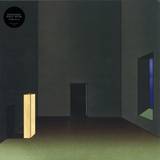
You could think of the collection of tracks here as a library record of sorts, and each track inhabits its own universe. Tropical fits various moods and situations, and it could soundtrack any number of activities at home or on a dancefloor - whether real, imaginary, or hallucinated. Strangely enough, it sounds like it could have been constructed from obscure Italian library breaks, when instead every instrument has been played and panned, several times over, across magnetic tape.
The genesis of many of these tracks began when CV Vision moved to Berlin in 2014. His flat had a small chamber where he could fit a drum set, so he treated the walls with foam, and in true DIY style, dived headfirst into recording these tracks. It was the natural next step on an audio adventure that first began when CV Vision picked up the guitar in his teens, and a couple years later started recording with friends in his home town of Bayreuth. Fast forward ten years and here is his debut - a culmination of practising chops and learning instruments, mastering recording techniques and fine-tuning the CV Vision sound.
It’s a sound that condenses elements of acid rock, psych soul, library funk and new wave oddities into a movie soundtrack for your mind. It’s a journey from ‘60s west coast LSD-drenched excursions to ‘80s synth and post-punk mutations. Tropical is a plunge into another time, another music you can simply swim around in and explore.
Side A opens up with Tropical Tune In, which rides in on a clave and a warm wind, blowing a distinctly herbal aroma and recalling exotica dons like Les Baxter and Martin Denny. Following on with the aural equivalent of a sea breeze through your mind, Spaziergang am Meer blows away the cobwebs and conjures some nice library moments like Stringtronics or F eelings . Next, Ba_c_k(Lava) bounces out of a cold wave post-punk melting pot and crashes through the speakers like a blazed Zebedee, with some sweet eastern synths for added flavour, before the rolling bass licks of Der Böse Schamane take us into another dimension, landing somewhere between a psych rock freak out and a Black Ark dub session. Mr Maze channels the arpeggiators of synth outsiders like Mort Garson and Bruce Haack, creating a glorious interlock of robotic electronics and freakbeat vocals. The side comes to a close with the guitars of Der Strand (außer Rand und Band) letting loose like syrupy springs, and setting a languid mood like the bedroom scene in Bedazzled (1967 version). Side B kicks off with Parallel Universum, which comes through like a woozy krautrock workout, all ducking synths with big chord shifts to create an epic deranged beehive of a soundtrack. Im Land der Ameisen evokes the spirit if not the sound of White Rabbit, when logic and proportion have fallen sloppy dead, before waking up and wandering through the side alleys of Marrakech with the West Coast Pop Art Ensemble and the Electric Prunes, as Ritual (No. 4) blares out the speakers of passing tuk tuks. Ein Wasserfall plumbs the deep synth depths, like Raymond Scott in scuba gear, modular rack strapped to his back delivering oxygen as he swims between connector cables and seaweed forests through a watery underworld. Banana King sounds like a lost soundtrack to Donkey Kong or Mario Cart, if the cart radio was tuned into a synth
documentary hosted by James Pants, while Das Kloster am Berg takes the baton from Brenda Ray and her Naffi cohorts, all dubbed-out niceness and post punk swagger. The LP closes out with Tropical Drop Out, a dreamscape rather than a wake up call, coaxing you deeper into the trek across the desert of your mind.
And that’s Tropical in its essence: capsules from another time, snapshots of another sound, messages from another mind - all in the service of inducing the visions in your head.
written by Max Cole
Search:zeb
Limited Gold Vinyl Pressing!
Out of the ashes of Raceway Recordings and Racetrax, rises the new label from Sterling Moss - Rebeltek. With well over 100 tracks out on vinyl, Sterling decided it was time to start his own 12inch project again, so 2014 sees rise to the Rebeltek Alliance - an infusion of stomping 303 inspired Techno beats, soon to hit the streets.
Having played in every continent on earth and with releases on over 50 different record labels, Sterling is using his vast musical knowledge gained through his travels and productions to harness an energy for Rebeltek that is both unique and compelling, whilst retaining an counter-culture attitude direct from London town that will drive the label forward.
The debut track 'Don't Fuck Around' has been road tested at the massive UK Techno event 'London Underground United' and subsequently received extremely positive attention. This special first release will be available on limited edition gold vinyl and will be sure to be a collector's item for years to come.
REBELS FOR LIFE
Recumbent Speech, Ezra Feinberg’s second album, opens with a lament. Named for the Robert Frost poem, “Acquainted with the Night” was written during one of the many devastating spectacles of injustice under our current regime. Repeating flutes and synths beam out of a low-end darkness, reflecting a collective sense of loss and alienation. Rising slowly, thickening with guitars and strings, “Acquainted with the Night” lifts off, and so too does the album from there. The second track, “Letter to my Mind,'' features the dynamic interplay of Feinberg's guitar with the loose and playful drumming of Tortoise's John McEntire, both pushing and pulling atop a looping bass figure. "Palms Up" begins with a lockstep pulse recalling early Terry Riley before jumping into an Ashra-like jam with Afrobeat accents. Side B opens with "Ovation," a tryptic with McEntire on drums which sets a wide lens onto a sweeping landscape, with soaring flutes, wordless vocals, and a hypnotic bassline played on a humming fretless that recalls classic ECM jazz-fusion. The piece plunges into an ambient, interior space before reemerging with a guitar solo fried through an old Space Echo effects processor, conjuring lidded Pompeii-era Pink Floyd. The album's title-track finale, "Recumbent Speech," features the magical pedal steel of Chuck Johnson. Unwinding atop a Balearic analog synth pattern, Feinberg stretches textures of Fender Rhodes and acoustic guitar around Johnson’s lyrical steel, with nods to Japanese ambient legend Hiroshi Yoshimura, as well as Cluster & Eno. Recumbent Speech refers to the possibilities, pleasures, fears, and fantasies that occur the moment the noise dies down, when we are recumbent, in repose but still awake, still speaking, and still aware of ourselves as part of the maddening world. Ezra Feinberg is a guitarist, composer, and psychoanalyst living in Jackson Heights, NY. Feinberg was the founding member of the San Francisco psychedelic rock collective Citay, releasing albums on Important Records and Dead Oceans throughout the 2000s. After relocating to NYC, he issued his first solo record, Pentimento and Others, on his imprint Related States and on cassette on Stimulus Progression in 2018. The release, his first since Citay folded in 2012, earned praise from numerous music outlets including Paste Magazine, The Wire, Stereogum, Vice, and Aquarium Drunkard. In recent years, Feinberg has performed and toured near and far with Jefre Cantu-Ledesma, Steve Gunn, Alexander Turnquist, Cruel Diagonals, Daniel Carter, Jonas Reinhardt, Christopher Tignor, Kath Bloom, Robbie Lee, High Aura’d, Glasser, Ava Mendoza, Buck Curran, Real Estate, and many others, and has ongoing studio collaborations with Jefre Cantu-Ledesma and Arp, contributing both guitar and songwriting to the last Arp album Zebra.
In 2016, talented artist Paul Cut released his first vinyl with Popcorn Records: the Basement Jam EP.
This album foresaw the rise of the young producer, who has since piled up project on top of project, and record on top of record. One of the driving forces behind the D.KO label, and a (literal) key player of the Secret Value Orchestra band, Paul has also thrived on collaborations. Whether with Chez Damier, Jef K, Flabaire… They all fall under the spell of the young pianist’s skill, who has become in just a few years one of the leading figures of French house.
In 2019, Paul joined house legend Larry Heard for his world tour, and multiplied appearances at famed festivals such as Glastonbury, Dimensions, DGTL or Printworks. In 2020 Popcorn Records is turning 10. And to mark the occasion, Paul is coming back to his beloved label to unveil his first album. More than a year of thought and work went into “Le Bal des Douaniers”. An album composed of 10 titles, which all reflect fragments of Paul Cut’s influences.
Masks is New York duo comprised of Max Ravitz aka Patricia (L.I.E.S, Opal Tapes, Ghostly) and Alexis Georgopoulos aka Arp (RVNG Intl, Mexican Summer, DFA, Smalltown Supersound). The aptly titled EP2 is (yes, you guessed it!) their second release, preceded by their Opal Tapes debut Food Plus Drug (II) — which gained support from Legowelt, Mount Kimbie and Boomkat — and a compilation appearance on esteemed Beats In Space 15 year anniversary 3xLP.
On paper, it might strike one as a strange duo. Ravitz’s work leans heavily on house and techno, but his recent work has been focused towards emotive melodies of IDM. And Georgopoulos has been busy creating minimalistic classical music for RVNG and most recently made waves with his critically-acclaimed album Zebra, which combined elements of 4th World and cosmic jazz.
All the tracks making up EP2 were made as live performances. No overdubs. Nothing "in the box". Just classic hardware and a strong vibe.
Opener "In This Room" is the sound of a NY summer sunset, pivoting on a hypnotic rotation of orange-hued chords. "Emotional Response" displays a different side of the group. Combining a 909 with a piano tug, it could provide that perfect soundtrack to a cathartic cry on the dancefloor.
On the flip side, "In Another Room" is dreamy techno par excellence, before sliding into an acid chugg for the ages. Bookworms smears the sun of "In This Room" into a 4am whirl, all purple lights and mountains of fog.
The cover artwork features the artwork of Sanou Oumar, a recent emigrant from Burkina Faso, West Africa. He graduated from the University of Ouagadougou in 2007 and moved to the United States to seek asylum in 2015. He currently lives in the Bronx and works in Harlem, New York. In 2018, Oumar had his first two-person exhibition (with Matt Paweski) at Gordon Robichaux in New York, and in 2019 (with Elisabeth Kley) at South Willard in Los Angeles, curated by Matt Connors.
- A1: Noel Kelehan Quintet - Spon Song
- A2: John Wadham - Floatin
- A3: Louis Stewart - Araby
- B1: Joe O'donnell - Caravan
- B2: Taste - On The Boards
- B3: Granny's Intentions - Nutmeg, Bitter-Sweet
- B4: Mellow Candle - Lonely Man
- C1: Sonny Condell - Red Sail
- C2: Supply, Demand & Curve - When You're By Yourself
- C3: Rosemarie Taylor - Mister Sleep
- C4: Apartment - Weekend
- D1: The Plattermen - Africah Wah Wah
- D2: Jonathan Kelly's Outside - Misery
- D3: Dr. Strangely Strange - Mary Malone Of Moscow
- D4: Stacc - Holy Smoke
- D5: Zebra - Silent Partners
'Buntús Rince' translates from Irish as 'basic rhythms', and this new compilation explores how Irish musicians were influenced by strands of different genres of music from around the world, merging them to create their own unique sounds. The compilation features some of the most innovative and talented figures in the history of Irish music and includes rare Irish jazz, fusion and folk outliers from the 1970s and early 1980s from musicians relatively unknown outside of Ireland.
Often regarded as a musical backwater, the 1970s finally saw Ireland begin to make its mark on international music. The nature of this feat is all the more commendable, considering how isolated and conservative the country still was in the middle of the last century. The emergence of acts like Skid Row, Thin Lizzy and Van Morrison instilled in budding young Irish musicians the belief to dream big.
Unlike many other European countries, Ireland had not benefited from the cultural impact of immigration. Pioneering Irish musicians did not have access to the type of vibrant music scenes ubiquitous to most European cities at that time. With no talented players or even in some cases recordings of the music, they had to cultivate and invent their own small scenes.
A jazz scene had begun to blossom in Dublin in the late 1950s. Self-taught players like Noel Kelehan and Louis Stewart emerged as the Irish standard-bearers. Their level of musicianship saw them play with some of the world's most renowned artists. The 1960s would see the emergence of the 'beat' scene in Ireland, with groups like Granny's Intentions, Taste and Eire Apparent finally challenging the hegemony of Irish Showbands. Change was in the air.
The late 1960s also saw many Irish emigrants returning home, bringing with them inspiration from the new styles and sounds of London and further afield. The arrival in the late 1960s of pirate radio stations like Radio Caroline, new music magazines and the availability of music on vinyl meant that different genres were now becoming more accessible. The musical landscape of the country began to transform and evolve, influencing a new generation of musicians in the process.
The 1970s saw advancements in studio technology. 8-track studios began appearing in Dublin, offering more opportunities for groups to record singles and albums. Synthesizers and other instruments were also becoming easier to acquire as the younger generation turned to electric jazz and fusion music.
While the level of musicianship was high, the levels of opportunities in Ireland were still very limited. Many groups and solo musicians had to emigrate to try and succeed.
Thankfully for those who remained, this new emerging scene didn't go totally unnoticed and local labels began to take a chance on more obscure Irish groups. Labels like Mulligan and also producers like John D'Ardis and Terri Hooley championed and documented music from the Irish underground of the 1970s.
Their valuable work is a common thread which connects many of the tracks on this compilation. From the soaring flute playing of Brian Dunning, to the swinging piano of Noel Kelehan and the sonic force of Jolyon Jackson's synthesizers; 'Buntús Rince' lifts the lid on a vastly underappreciated period of Irish music history.
One for the collectors.
Developer is back on Juxta Position's Failsafe imprint once more with 4 fresh cuts of techno, displaying a deeper side to his unique take on the style. 'Get this' is most reminiscent of the sound he is most known and loved for, with it's booming drums and strange wavetable voices, but 'Ethnic Identity' breaks away from more his usual template with it's organic sounding loops and dramatic strings. Likewise, mood setter 'Over Nepal', lays down an intense vibe whilst ep closer 'Zebra' pairs up a memorable melodic pattern with his more usual driving percussion. Developer once again displays his broad influences and unique production style, whilst pushing the sound of contemporary techno forward. PLAY LOUD!
Emotional Response is delighted to announce Foreign Affairs - a limited edition special remix 7-inch single featuring reworks from Alexis Georgopoulos & Jefre Cantu-Ledesma's "Fragments of A Season" album by Woo and Felicia Atkinson.
Last year's ""Fragments of A Season"" represented a unique chapter in both artist's canon. Georgopoulos, who released the Arp album "Zebra" in June this year and Cantu-Ledesma, who released "On The Echoing Green" in October 2017 - both on Mexican Summer and to critical acclaim - wanted to stretch out and create a discrete work. A peripheral listen to "Fragments" revealed a resonant album of delicate, ambient vignettes, suggesting a Balearic take on Vini Reilly, Young Marble Giants and other poetically-minded, minimalistic post-punk era bands.
The Brothers Ives aka Woo were a major influence on the album's makers and so AG and JCL are thrilled they've submitted a beautiful reworking of the album's "Marine". Whereas the original sounded like Marine Girls and The Gist getting together for a nice beach day jam, Woo's rework transforms it into pulsating track of glistening proportions. Percolating synths, some guitar and clarinet - the true classic, idiosyncratic Woo-ification - creates a woozy, romantic, impossible to categorize slice of Balearic meets dub atmospherics.
If "Marine" is all midday sun, intoxicating and potently optimistic, Atkinson's remake represents the literal and figurative flip, bringing out the overcast dreaminess to "Cleo". Sounding like an outtake from a Rohmer film, or perhaps Cocteau Twins and Broadcast having a picnic in Biarritz, the version veers between abstraction, celluloid ambiguity and suggested narrative. Atkinson's reworking adds poetry of the tune (quite literally!) with her soft vocal under-gliding to perfection. Representing a temporary idyll, a meeting point where cobblestone streets lead to the sea. At nightfall, a discotheque heard in the distance. The morning mist burns off. Only such memories remain.
Never released before: on the occasion of the 60th anniversary of the GRM, the composer François Bayle introduces us to some of his unpublished archives:
"Electrucs !" (1974) composed on a 1970's Synthi AKS synthesizer like an imaginary oundtrack
Black To Comm's Marc Richter returns under his Jemh Circs guise for a 2nd album of sonic abstractions. In contrast to Black To Comm's analogue tape and vinyl based sound, in Jemh Circs he works with digital sources by primarily sampling modern Pop Music (and various other oddities) on YouTube (et al.) and sending chunks of it through a variety of arcane transformations and mutations.Using similar esoteric methods as on his 2016 debut album but with very different results the record deconstructs the hypermodern sound of Pop Music with a Post Punk attitude, energy and primitivism. Richter's combining disparate elements that shouldn't really work together but somehow all the chaos is making strange sense creating a collection of oddly diverging sonic vignettes with a surreal and anarchic spirit. This is music deeply rooted in the present but still difficult to pinpoint to a certain year or style."(untitled) Kingdom" converts a seemingly one-dimensional concept into a complex puzzle of ideas, sounds and narratives, completely assimilating the original sources and transforming them into novel entities with an unexpected melodic and rhythmic quality.Some press clips for previous releases:The overall effect is quite remarkable. Each track is like a hologram of pop music itself, a tiny part that reflects the whole. You almost feel that you could open them out and re-create entire popular music cultures. We'll be grateful for that when the next solar storm fries all of our hard drives. (Ian Sherred / The Sound Projector) In that way Jemh Circs is a record about process - not just how Richter loops and distorts and mutates his samples, but how the sounds of pop music create a particular sonic signature, one that gets more interesting the farther they're pulled from their original context. (Marc Masters / The Out Door) Recycling random audio off YouTube, Jemh Circs' process couldn't be less sentimental, but the results turn out to be sneakily emotive. (Philip Sherburne / Pitchfork)
7"
* A welcome reissue of a UK dub favourite dating from 1995.
* Features the voice and some fine bongo work from the man like Bongo Zebby alongside the Dub Crusaders collective.
* This originally appeared on the Jah Works LP `Universal Spirit Warrior, but has been long since deleted.
* `Drum Talk' is a wild dub cut to `Readings from the Book of Life'
* Mixed and produced by Rej Forte.
'Subclubsciously' takes you on a trip through She's Drunk's subconscious mind which pushes him to elevate production accidents into obsessive club gimmicks and delusional rhythms. Coming back from a Europe Tour with 'Zebra Katz' he finished his debut EP for Through My Speakers where he is opening up to new musical horizons, letting melodies and emotions flow into his produc-tions. Particularly noteworthy is the collaboration with the highly talented South African artist Sho Madjozi on 'Amadoda", where she's spitting fire in Tsonga. - already played by Sarah Farina, Neana (Night Slugs), Addison Groove, Skinny Macho (Boiler Room), Strip Steve - airplay on Radar Radio, NTS Radio
In 2005, a new zoo opened in Lausanne, Switzerland. Its wild animals have been going bananas in their quest to create a more dancefloor-friendly world. Now released, the zoo residents can be tracked by their heavy funk smells. Follow their scent past retro-psychedelia and turn left after organic garage.
"Released!" is the debut album by Kind & Kinky Zoo. It is a collection of brand new tracks, early singles as well as remixes and features a guest apperance by rapper Afu-Ra.
Kind & Kinky Zoo are:
Flute : Olivier Bill
Bass & Fuzz: Pierre-Henri Beyrière
Keys : Marc Siegenthaler
Drums & Percussions: Sylvain Rütti
Zeb Wayne returns with a majestic and scintillating song titled 'Wulfman', featuring a trio of top tier remixers including Alva Noto, Calibre and Radio Slave.
Following the release of 'Float' on Rekids last year, 'Wulfman' is a beautiful song that demonstrates how musically versed Wayne is as a producer, blending a serene vocal by Ziwi, with intricate sounds to create a truly beautiful song from start to finish.
Alva Noto, who composed the film score for The Revenant alongside Ryuichi Sakamoto, as well as being the co-founder of esteemed minimal imprint Raster Noton, is the first of three heavyweight remixers. The renowned German producer employs his signature elements of grit, static and glitch resulting in an inimitable melancholic cut.
Well respected for traversing numerous electronic music sub-genres, as evident in his recent album on Craig Richards' The Nothing Special, Calibre ups the energy in his remix using sultry synths, syncopated percussion and mesmerising effects.
Concluding the colossal package, Rekids founder Radio Slave creates a club-ready reinterpretation of his own, complete with fine-tuned kicks, looped vocals and a heady bassline.
- A1: Intense Kiss
- A2: The Son With The Father´s Gun (Feat Ria, Ryan Roush & Cheney)
- A3: Breathe (Feat Kash)
- A4: I Saw You (Feat Hokhok)
- A5: F R.e.e. (Feat. Zebulon & Ryan Roush)
- B1: That´s Me (Trippin´) (Feat Jim Hast)
- B2: Despertar (Feat Fábel)
- B3: Avalanche (Feat Hokhok)
- B4: Baztan (A Tony Phillips Poem)
- B5: Sous Les Étoiles
We can attest 'Despertar' is one of the most intriguing and beautiful albums to emerge from the Spanish's electronic music scene in 2017. A celebrated debut by the artist Piek, emerged from the most versatile musical scene, not in vain he creates inspired by the magic of great names such as Sigur Ros, Moderat or Bonobo.'Despertar' is the title chosen for the debut LP of this producer and dedicated music lover from Pamplona
Frans de Waard (born 1965) has been producing music since 1984. First as Kapotte Muziek (a group that fully concentrates on recycling through musique concrete), but throughout the years, he also worked as Beequeen (with Freek Kinkelaar), Goem (with Roel Meelkop & Peter Duimelinks), Zebra (with Roel Meelkop) and various solo projects. Frans de Waard also founded Korm Plastics, Bake Records, My Own Little Label and co-founded Audio.nl and Plinkity Plonk Records. He worked for Staalplaat from 1992 to 2003 and in 2016 published his auto-biography on that subject.
He performed concerts in Europe, UK, USA, Canada, Japan, Russia and also played improvised music with artists like Steven Wilson, Sindre Bjerga, Jos Smolders, Giuseppe Ielasi, Howard Stelzer, Radboud Mens and many others.
When an 8 year old kid asks for a drum machine and Atari 500 computer with the intention of starting his own band, you know his future does not lie anywhere but in music. Introducing: Jeroen Hofer aka Melon. Not your average human being. Something that becomes obvious the second he enters the room - a beaming, larger than life personality that cannot possibly be ignored. Flair and charisma have never hurt anyone in this business. Melon is a natural artist, over the last few years, he has managed to create a high production profile. Nitzi' on Innervisions and Spring' on his own Ratiomusic' imprint are incredibly subtle and timeless masterpieces, while his work under his Je Dàvu moniker, such as his infamous re-edit of INXS's I Need You Tonight' and I Zebra' on Platzhirsch, showcases a more rocking side of his repertoire. In this EP he has worked with D.O.C. label mastermind Gui Boratto, their new EP sports music for the dance floor, full of groove, lush harmonies and organic undertones. Engineered to perfection by label head GUI BORATTO, it's an exciting step for the imprint and the project alike.
- A1: Abayomy - Obatala (Pd)
- A2: Zebrabeat_Zebrabeat Afro - Amazônia Orquestra (Zebrabeat)
- A3: Burro Morto - Lúcifer Colômbia (Daniel Jesi/Burro Morto)
- A4: Ive Seixas - Cervejas Populares (Ive Seixas)
- B1: Iconili - O Rei De Tupanga (Iconili)
- B2: Zulumbi - Zulumbi (Rodrigo Brandão / Lúcio Maia / Pg / Dengue)
- B3: Passo Torto - Faria Lima Pra Cá (Kiko Dinucci / Rodrigo Campos)
- B4: André Sampaio E Os Afromandinga - Ecos De Niafunke (André Sampaio)
- B5: Fabrício - Feito Tamborim, Pará Céu (Fabrício.)
Over the past few decades, there has been a seismic shift in Brazil's musical landscape. A plethora of varying musical undergrounds has developed across the nation. While Rio and São Paulo have been overwhelmed with networks of talented musicians for a long time, creative life is now bursting all over the country. Amplificador exists to document and propagate the wonderfully diverse music currently blossoming from Brazil's vivacious and geographically varied musical undergrounds. Presenting an up-to date insight into Brazilian music, this compilation draws together some of the components of 'Novíssima Música Brasileira' (brand new Brazilian music), ranging from afro-grooves to rock, to modern samba and MPB. The music reaches back across Brazil's incredibly rich musical and cultural traditions, while also taking in influence from other movements around the globe.
Having begun life in 2012 as a Brazilian music blog run by Marcelo Monteiro, Eduardo Rodrigues, Mateus Campos, and Ricardo Calazans, the aim of Amplificador is to document and propel to wider audiences, Brazilian music of the '00s and '10s generation. This is a task made more significant by obvious changes in the way music is consumed. 'People are no longer obliged to listen to what the radio and TV are presenting. There is a whole new generation that wants to listen to new bands and new sounds and we try to connect those bands with other bands, producers, fans and even the mainstream.' These changes in technology and the way music is discovered and shared have developed parallel to the proliferation of these emerging scenes. The ostensible decentralization of the music industry means the promoting and filtering work of journalists and blogs, like Amplificador, have become increasingly important, as people try to keep up with the tsunami of new music and media flooding the country on a daily basis.
Marcelo uses the example of the Mangue Beat movement to explain a trend in contemporary Brazilian music that looks both inwards, to Brazil's own musical traditions and outwards, to movements around the world to create a novel, localised identity: 'The 90's Pernambuco art-social movement was inspired by Coco, Maracatu and Forró all mixed with modern riffs and grooves. The mythical
revolutionary Chico Science, his Nação Zumbi, Mundo Livre, Siba, and many others do this blend perfectly. There are also the references to the older generations and masters - Gil, Caetano, Luiz Gonzaga, João Gilberto, Tim Maia, Jorge Benjor - as a constant inspiration for all bands.' This is very much the case for the Brazilian artists of today.
Music is unquestionably informed by place. Brazil has always been famed for its regional differences in this sense. Indeed there are still pronounced variations between the scenes of Rio, Sao Paulo, Natal, Goiânia, Belo Horizonte and Belém for example, there are also great divergences within cities and while technology has brought changes to the way musical influences are shared, there are cultural differences, rooted in folkloric traditions, that aren't going away. Expressing his appreciation for this fact, while highlighting the potential of Brazil's spread of musical flavours, Marcelo explains that 'what we have now is new ingredients to make an even better mixture.'
This compilation heavily features music from a scene in Brazil's current musical make-up, which draws inspiration from African music, particularly Afro-beat music. Abayomy Afrobeat Orchestra from Rio formed because of their shared love of the music of Fela Kuti, uniting initially in 2009 for a jam session in his honour. But what sets Abayomy apart from other groups of a similar nature, is the fact that their sound also brings with it the songs and rhythms of candomblé. In this sense, Abayomy was the first band of its kind. The thirteen members of the orchestra have a palpable current of Rio's musical heritage - its rhythms and culture - running through them. So while their sound is distinctly African, it is also inherently Brazilian. Similarly, Zebrabeat Afro-Amazônia Orquestra draw upon traditional guitarradas and carimbos from the state of Pará and fuse these with the poly-rhythms of Afrobeat to create another regional hybrid, which stays true to both its Amazonian and African roots, yet which results in a very fresh, Brazilian sound. From Belo Horizonte (capital of Minas Gerais), Iconilli are another key band on Brazil's Afro-groove scene. With influences as varied as funk, jazz and psychedelic rock, congado, mining harmonies, maracatu, coco, ijexá, carimbó, Iconilli somehow manage to balance all of these sounds in such a way that makes it impossible to pin them down. From the Northeastern city of Joao Pessao, Parayba, Burro Morto's pshychadelic afro sound leans more towards rock and funk influences, with hint of regional Brazilian rhythms such as frevo and forro. They add another flavour to the Brazilian afro-groove scene: just one of the many exciting facets of Novíssima Música Brasileira.
While African-inspired music features heavily on the compilation, it is just one of the many styles within. Ive Seixas has a fresh approach to MPB, based on traditional rhythms and instrumentation, punctuated by a pop sensibility, coupled with a powerful female vocal. As an artist she is a product of a 'Do It Yourself' outlook to creativity, taken from her love of rock growing up. In 2013 she embarked on a project of street performance: wandering, like a lonely troubadour with just her guitar. Ive and her project began to gain notoriety and shortly after, her first EP was recorded, featuring some important names of South Rio's underground scene. 'Cervejas Populares' taken from the EP, is a beautiful, sombre piece of modern Brazilian pop, with a traditional samba rhythm. Another artist of the new MPB scene is Fabricio, from the city of Vitoria, who's 'Feito Tamborim' melds rock and funk and is also clearly reminiscent of the old Brazilian masters. It's an appreciation for the national musical heritage, alongside a keen ear for melody and an acceptance of foreign influences that results in these promising new sounds of Brazilian MPB.
Sao Paulo's super group of the underground 'Passo Torto' have been at the helm of an emerging scene in the city: an innovative approach to samba which draws in and experiments with afro grooves, jazz melodies and rock structures. Their sound is naturally very Brazilian, but the nylon twang of Faira Lima Pra Ca, interspersed with ominous strings and light rolling percussion, seems reminiscent of Captain Beefheart or Tom Waits, as the band lament their frustrations with their native city through their music.
The Future of Novíssima Música Brasileira looks very bright. The main challenge (and purpose of this album) is to get the music beyond Brazil's underground and into view of international audiences. In the last 10 years this goal has become somewhat more attainable, as the Brazilian government has begun to see the internationalisation of the nation's culture as a strategic objective, with public projects gaining increased investment and backing. The continuing project of Amplificador is to reinforce this international bridge by writing, filtering and promoting the scene as a whole. There is a wealth of great music currently blooming in Brazil and using new media tools, Marcelo and the team, alongside many others, will passionately continue to get the voices of Brazil's underground heard.