Vielen erscheint Istanbul als ein von Mythen und Traditionen umrankter Sehnsuchtsort, andere betrachten es als Symbol für wirtschaftlichen Fortschritt. Seit den Gezi Park-Protesten 2013 sieht Westeuropa in der pittoresken Metropole am Bosporus mehr als die Hagia Sofia und andere Kulturdenkmäler. Der Gitarrist Erkin Cavus verbrachte viele Jahre seines Lebens in der riesigen, hochverdichteten und oft hektischen Stadt. Hier hat er Karriere gemacht, an der Seite berühmter Künstler gespielt, ehe er vor rund vier Jahren nach Deutschland zog. Nun setzt Cavus, zusammen mit Reentko Dirks, dem historischen Istanbul ein klingendes Denkmal. Inspiriert von Bildern des berühmten Fotografen Ara Güler (1928-2018), der als einfühlsamer und detailverliebter Beobachter zum Chronisten des Lebens seiner Heimatstadt wurde. Seine Aufnahmen des mittlerweile verblassten, teils unwiederbringlich zerstörten Istanbul und der ehedem höchst unterschiedlichen Stadtteile hängen längst in Museen. Bei der Entwicklung des Repertoires für Istanbul 1900 hat sich das Duo bewusst Zeit genommen. Der stärkste kompositorische "Flow" entwickelte sich in den Wochen vor dem Studiotermin. Die individuelle Form der Stücke, die absichtsvoll konkrete Jazz- wie traditionellen Bezüge vermeidet, "hat sich ungeplant entwickelt", so Istanbul 1900 ist eine atmosphärische Hommage, die mitunter nachdenklich klingt, dann wieder zarte Leichtigkeit suggeriert. Angesichts des Themas Vergänglichkeit und des Umstands, dass Erkin Cavus seiner Heimatstadt nicht ganz freiwillig Adieu sagen musste, ist ein Hauch Melancholie sicher keine Überraschung. Gleichwohl vermeiden die beiden Musiker jedes dramatische Pathos. Ihre Töne zeichnen, ganz im Geist der Schwarzweißa-Fotos Ara Gülers, feine Schattierungen. Selbst wenn sie in "Moda" schwungvoll das Nachtleben der großstädtischen Bohème oder in "Pera" die Dynamik in Straßencafés und -kneipen nach Feierabend imaginieren. Insgesamt entwickelt Istanbul 1900 einen sehr eigenen, subtilen Zauber, den man so nur selten erlebt. Ganz wie die Stadt, die an der Schnittstelle von Orient und Okzident Welten verbindet.
Cerca:zer
Charbel Haber is Lebanese musician, performer, visual artist and composer from Beirut. His work has seen him collaborate with artists from a wide range of disciplines - film, video art, visual art, theatre, dance - both in Lebanon and abroad.
As a solo artist and as a member of post-punk band Scrambled Eggs, he has composed music for directors Khalil Joreige and Joana Hadjithomas, Ghassan Salhab, Mohamad Malas, video artists Lamia Joreige and Akram Zaatari, Maqamat dance company and playwrights Rabih Mroueh and Lina Saneh, to name but a few. His prolific and collaborative career includes free improv group Johnny Kafta Anti-Vegetarian Orchestra, psychedelic Arabic music ensembles Malayeen and Orchestra Omar, cold wave band The Bunny Tylers and minimal ambient duo Good Luck In Death. He is the founder of Those Kids Must Choke and co-founder of Johnny Kafta's Kids Menu - two experimental record labels - and he has recorded and collaborated with notable artists from the fields of free rock and improv such as Oiseaux-Tempête, Radwan Moumneh, Tarek Atoui, Jean Francois Pauvros, The Ex, Michael Zerang, Mats Gustafson, Eddie Prevost, Xavier Charles and Tony Buck.
And once again, here I am telling you to go look for the truth and its beauty in the words of dead poets, in the little tales of ravaged cities, in aborted dreams, in the melancholy of the ruins of tomorrow, in meaningless plastic totems, in the enigmatic end of restless fools.
I'll be here long after you all disappear.
These are the first and last sentences from Charbel Haber's latest offering, A Common Misunderstanding of the Speed of Light: a multi-media musing on the chronic and the chronological, the subversive nature of time. This combination of a record and book observes the slow passing of life and the illusion of retrogradation in his every day. Simply by documenting - via image, text and tune - Haber assigns value to everything that is cast in amber by this project. There's an acceptance and appreciation of the destitution he witnesses, it is an homage given in overlapping forms.
ACMOTSOL has two parts. The book, hardcover in an embossed orange, features photographs and texts taken from Haber's personal digital diary spanning from 2020 to the start of 2022. Broken into six chapters - named for the six tracks on the record - the entries are an artist's log of sorts during a peculiar period of global hyper stagnation and navigating the aftermath of the Beirut explosions. The 96 pages highlight Haber's interest in decay, negative space and the temporality of the human condition. Instead of presenting the images and texts as they were originally paired online, they're reordered and recontextualized in the book. New connections are formed, as tenuous and fleeting as the content they surround. The images interrupt the texts in many instances, forcing pauses and inviting distraction.
At the center of the book is a sudden burst of orange pages, with stylized pluckings of the text framing a QR-code that grants access to the record. With the brilliant orange covers and matching innards, pregnant with the music at the core, it's almost as if these central pages act as a way to turn the book inside out. There, the book's purpose is altered, fixated on a mirror image of itself. It forms a self-completing arc for the project, a loop.
ACMOTSO's second half is that mirrored album. Six tracks totalling just under 52 minutes. The music could be a continuation of his solo albums Of Palm Trees and Decompositions (2016) and It Ended Up Being a Good Day Mr. Allende (2012), an exploration into the expansiveness of seemingly simple loops of a lilting guitar. Careful electronic effects add dimensions or reground the listener. There's a swelling of sound, the illusion of the push of space before it retracts back into itself or fades into the distance. Much like the images and texts the music complements, the songs challenge the purity of cycles. Endings are beginnings, beginnings are endings or is everything just the middle? Haber is quietly and elegantly grappling with the troublesome act of place-making. In music, in words and in visual storytelling.
ACMOTSOL is a work that can be calming or disorienting, depending on what is requested of it. Similar to the way loops and cycles can signify both meditation and mania. The tendrils of Haber's past - his home of Beirut, fictional and real characters encountered, authors read, films watched, composers listened, walks taken - knit themselves together for a presentation of our immediate present. An evidence of a happening. A considered project of time.
All photographs, texts and music by Charbel Haber. Album mixed by Radwan Ghazi Moumneh. Design by Maziyar Pahlevan. Printed by Albe De Coker in Belgium.
This dual-part project will be released on XX XXX 2022 on 'Other People.'
Description by Nereya Otieno.
Für Fans von: Absu, Melechesh, Moonspell, Rotting Christ, Nile.
Unheiliger Black Metal aus dem Heiligen Land, durchtränkt von nahöstlichen Klängen und Mystik! Eine Beschwörung der Jahrtausende alten
Finsternis!
Die fünfköpfige Black/Death-Metal-Band Arallu stammt aus der israelischen Siedlung Ma'ale Adummim in Israel und ist seit fünfundzwanzig
Jahren im Metal-Underground unterwegs.
Der Name Arallu stammt aus der mesopotamischen Mythologie und bezeichnet das Reich der Unterwelt, das von der Göttin Ereshkigal und dem
Gott Nergal regiert wird und in dem die Toten gerichtet werden. Die Musik von Arallu dreht sich um die traditionellen, altorientalischen Melodien
der Landsleute Melechesh, die Hochgeschwindigkeits-Wildheit von Bands wie Angelcorpse und Absu, und dem atmosphärischen Gefühl legendärer Acts wie den zuvor erwähnten Melechesh und Absu.
Im Jahr 2019 hat die Band das Album "En Olam" veröffentlicht, und dieses Werk hat Arralus bereits bekanntes Talent in der Underground-Extrem-Metal-Gemeinde gefestigt. "Death Covenant" ist das siebte Full-Length-Studioalbum der Band und bietet dem Hörer eine atemberaubende
Mischung aus okkultem Black Metal und alten sumerischen und nahöstlichen Klängen. Die Riffs, die hier zu finden sind, werden die Hörer mit
ihrer Raserei von melodischen Tremolo-Riffs, die mit einigen unheimlichen Folk-Instrumenten verwoben sind, zufriedenstellen. Die Elemente in
der Gitarrenabteilung, die mit einigen Folkinstrumenten wie einer Saz und einer Darbuka vermischt sind, zeigen, wie die Band den Metal erfolgreich auf seinen Kern reduziert und das verleiht dem Gesamtergebnis von Arallus Musik einen zusätzlichen Punch und eine gewisse Schwere im
unteren Bereich. Er liegt im Grunde genommen gleichmäßig unter den Gitarren und unterstützt sie mit einigen dicken Linien, die den Streichern
ein tieferes Gefühl verleihen und den Tracks eine bedrohliche Atmosphäre verleihen. Auch die Schlagzeugsektion fesselt die Aufmerksamkeit des
Publikums mit einer Vielzahl von zerstörerisch stampfenden Kontrabässen bis hin zu orientalischem Tribal-Drumming, das viel dazu beiträgt, dass
die Atmosphäre intakt zu halten. Die Platte ist voll von hohen, durchdringenden Schreien und Kreischen, die eine dunkle und raue Klanglandschaft schaffen. Diese bösartigen Schreie werden manchmal mit unheimlichen Backing Vocals, die die Brutalität extremer Death- und Black-Metal-Musik mit den alten nahöstlichen Skalen des Materials verbinden. "Death Covenant" zeigt auch die bisher stärkste Produktion der Band in den
fünfundzwanzig Jahren ihres Bestehens.
Mit "Death Covenant" haben Arallu ein bedrohliches und atmosphärisches Biest in diesem Metal-Stil geschaffen. Die Israelis haben ein grausames
Album vorgelegt, das kaum mit seinen Vorgängern vergleichbar ist.
Finnish metalheads have always been puzzled by the question of which is our country's first heavy metal band. Svart Records gives the answer. It's Hard Rock Sallinen, which was founded in 1974, and so far we haven't found an older Finnish metal band. If you have better information, you can contact the history and UFO department of our record company. In any case, the band's founder and bass singer Seppo Sallinen says he is looking into the band's background. -"Even though Hard Rock Sallinen was our country's first heavy band, it wasn't my first band. I already played with my nephew Juke Salline in various gigs in Ostrobothnia, covering Led Zeppelin, Cream and other contemporaries with the band Jew's Harp", When Hard Rock Sallinen was founded, the source of inspiration for the line-up moved to the heavier department, when Rainbow, Deep Purple, Uriah Heep, Mountain, Aerosmith and Cactus were selected as influences. The band started with the name Sallinen, but the words hard and rock were soon added to the name. This was simply due to the fact that the band was mistaken for a hit band based on the name at early gigs. After facing an aggressive and drunken crowd, the band changed into Hard Rock Sallis to make a clear difference to the music taste of the trampers. It took a long time before the band signed their first recording contract, when in the early 1980s the Finnish Zero Records signed the band. The debut album Heavy Metal Symphony began to take shape quickly and the album recorded at Esko "Suikki" Jääskä's Botnia Sound Studio still evokes emotions in its creators. -"Contemporary critics and the public liked the record, musically it is on point, but of course the overall sound is a product of its time. Of course, it's great that the album is being re-released after 40 years, because the original edition has become a valuable collector's rarity", Seppo Sallinen says about his feelings. Why then did Hard Rock Sallinen stop already in 1984? The background is a familiar story: the band worked excellently, but in Finland at that time there were no managers, proper gig sellers or really any infrastructure that could have pushed heavy rock forward. The result was only frustration and the band simply disappeared from the world map.
Laila Sakini's new album 'Paloma' arrives via Modern Love and is her most striking and ambiguous to date - a pointed and timely meditation on hope and hierarchies that riffs on Zbigniew Preisner's magical "The Double Life of Veronique" score and enduring outsider music tome "The Langley Schools Music Project". Subtly transcendent, fathoms-deep music.
When Laila Sakini's debut album ‘Vivienne’ arrived in 2020, it felt like the record we were waiting for to map out our tangled reactions to an uninvited reality. Never self-consciously strange, it revealed itself slowly and cautiously, like a shadow in the corner of the eye, or an alchemical symbol in a bowl of alphabet spaghetti. This time around Sakini has worked her unique world-building to an even finer point, forming six tracks around a theme that's so close to our heart it's almost beating in time. Initially inspired by Krzysztof Kieślowski's 1991 arthouse classic "The Double Life of Veronique", the cult Polish director's enduring modern fairytale that serves as a cosmic rumination on identity and choice. Detailing two identical women - both singers, both in love - the film lets one live as the other dies, forcing us to consider the implications of art and endurance in the face of life's myriad challenges.
Sakini takes Polish composer Zbigniew Preisner's influential score for the film and uses it as a jumping-off point for ‘Paloma’, bending the more grandiose moments into baroque awkwardness on opening track 'Fluer D'Oranger' and evoking the mood of scene-setting cues 'Weronika' and 'Véronique' on the recorder-led 'The Light That Flickers In The Mirror'. And while Preisner's score zeroed in on the musical virtuosity of the film's lead characters, Sakini reinterprets that as a metaphor for self-discovery. Playing piano, violin, glockenspiel, timbale, recorder, and occasionally singing, Sakini captures a mood of innocence that immediately transports the listener back to simpler times. Her music isn't self-consciously simplistic, but forcing herself to interface with instruments impulsively rather than studiously, her sounds are all heart, no filigree.
In spirit, it reminds us of cult Canadian album "The Langley Schools Music Project", a collection of 1970s recordings of school kids singing rudimentary renditions of pop songs in a school gymnasium. That album's genius was in the bottling of hope and innocence: the feeling of joy from hearing and wholesomely interacting with music that's known and loved without a sense of hierarchy or desire for cultural clout. Sakini subtly subverts this by evoking the amateur spirit in the most bewitching way; instead of sourcing her ideas from Bowie, Fleetwood Mac and the Beach Boys, her stock is the established art canon, and by reforming those sounds she makes an insightful comment on intellectualism and access. European classical music is all too often trapped behind the frosted glass of respectability and assumed skill - craft replaces spirit, and technique replaces soul. By approaching these gestures from a different angle, Sakini softens the edges sonically and intellectually, finding music that bubbles with emotion, and most strikingly - hope.
Her choice of instruments and the way she interacts with them allows us to feel as if we're not only listening but contributing. It's a bottom-up way of absorbing art that's traditionally been top-down, and a reminder that we're all part of the experience, whether we're humming along to the remnants of a theme as it dribbles out of an ear in the shower, or dreaming of spotlights in a parallel life that may or may not be real. Sakini's music is nostalgic in a sense, but nowhere near the buttered popcorn and high-fructose candy migraine of the Netflix/Spotify algorithm generation of regurgitated churn. She makes sounds that remind us of what time and experience may have stolen from us, and how we might recover it.
Visitor Kane, a band always in search of new ground, has gone through some changes over the last 5 years. Releasing their first album “Easy Concern” as a two piece, an album that dove into new wave sounds, with synths, drum machines and a crooning voice, soon became a fully electrified band, transforming into a classic rock and roll outfit. Their second full length “Change of Heart” showcased a sonic turn. Drum machines and synths were replaced by acoustic guitars, old Casio organs and drums, making the album sound substantially different from its predecessor. Now after 4 years, they are ready for new adventures, and it comes in the form of a new album titled “At Issue” out on November 11th, 2022. The album is a humble look into different aspects of interaction within the boundaries of society. Patrick from Visitor Kane elaborates; “At issue is me trying to describe the world and its affairs through abstraction. It’s tough to understand so it seemed fitting to do so. It being hard to fathom means that it can come across as a bit pessimistic, although it’s something I try hard not to be, because there’s a bright side to almost anything. The title for me represents it very well with its dualistic nature. On one side it’s analogue as hell, but on the the other, it’s all about ones and zeroes...” ‘At Issue’ will be available on vinyl and digitally on November 11th via Part Time Records.
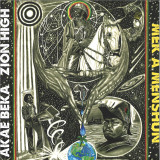
Akae Beka's inimitable style of rich, deep, multi-layered songwriting, uncompromising devotion to RasTafari and soulful healing melodies developed over decades performing with St. Croix based band Midnite and countless recordings. At the point of his untimely passing in 2019, he had released over 70LP's. He is without a doubt one of the most prolific reggae artists ever known.
The stellar production trinity that is Zion I Kings have been involved collectively and individually in creating some of the most highly regarded contributions to the vast Akae Beka catalogue. The timeless songs of 'Mek A Menshun' amply reward the listener who can penetrate into the mystical musical realms of Rastafari. Longtime fans of Midnite and Akae Beka will note that Vaughn Benjamin's singing on 'Mek a Menshun' reached new heights of melodic delivery and emotional intensity. Coupled with his always poetic and insightful lyrics, these 10 original songs rank among his best recordings to date. The title track 'Mek A Menshun' includes vocals by Protoje Grammy (R)-nominated artist.
Mek A Menshun features the stellar musicianship of the ZIK distinguished in typical fashion by the rock-solid drumming of Lloyd "Junior" Richards. On this album, his playing is complemented by Aston Barrett Jr. ("By Day", "Only Now") and Kirk Bennett ( "Kagm Mystory", "Mek A Menshun"). The signature stylings of the other core ZIK musicians are augmented by horns (Andrew "Drew Keys" Stoch -trombone, Donald "Jahbless" Toney -saxophone), flute- Sheldon "Attiba" Bernard, kette- Andrew "Bassie" Campbell, and the guitar of Chet Samuel. ZIK guitarist Andrew "Moon" Bain contributes a string arrangement on "Only Now". Throughout the album, Laurent "Tippy I" Alfred's spot-on organ shuffle bubbles the rhythm forward. Many of the 'Mek A Menshun' tracks were among the last recordings done by the veteran engineer Gary Woung.
Originally released digitally and on CD, this LP is now being released for the first time on as a 12" vinyl LP courtesy of Before Zero Records.
Horse Lords return with Comradely Objects, an alloy of erudite influences and approaches given frenetic gravity in pursuit of a united musical and political vision. The band's fifth album doesn't document a new utopia, so much as limn a thrilling portrait of revolution underway. Comradely Objects adheres to the essential instrumental sound documented on the previous four albums and four mixtapes by the quartet of Andrew Bernstein (saxophone, percussion, electronics), Max Eilbacher (bass, electronics), Owen Gardner (guitar, electronics), and Sam Haberman (drums). But the album refocuses that sound, pulling the disparate strands of the band's restless musical purview tightly around propulsive, rhythmic grids. Comradely Objects ripples, drones, chugs, and soars with a new abandon and steely control. This transformation came, in part, due to circumstance. Sidelined from touring their early 2020 album The Common Task in a world turned upside down, Horse Lords promptly returned to their Baltimore practice space and began piecing together the music that became Comradely Objects (Bernstein, Eilbacher, and Gardner have since relocated to Germany). Removed from their tried and true method of refining new music on the road, the quartet invested less energy ensuring live playability and more rehearsing and recording. The deliberate writing and tracking process, a rarity since the band's earliest days, led to a collection of pieces that signal a new peak of creativity and musical heft without devolving into studio sprawl or frippery. Comradely Objects reflects familiar elements of Horse Lords' established palette_the mantra-like repetition of minimalism and global traditional musics, complex counterpoint, the subtleties of microtonality, a breadth of timbres and textures drawn from all across the avant-garde_with some standout stylistic innovations. At different moments, the album veers closer to free jazz than anything else in the band's catalog, channels spectral electroacoustic tones, and throbs with unexpected yet felicitous synth. While these new elements are evidence of additional studio time and care, Comradely Objects retains the dizzying obsessive rhythmic energy that galvanizes the best moments of the band. Music for people who like Mdou Moctar, This Heat!, Battles, Ndagga Rhythm Force, Can, Captain Beefheart, Art Ensemble of Chicago, LaMonte Young.
- A1: An Zéro
- A2: 54 Zeppelin
- A3: Le Cascadeur Fleuriste, Pt I
- A4: Le Cascadeur Fleuriste, Pt Ii
- A5: Damoiselle Pouly
- A6: 92 Ans
- A7: Le Cascadeur Fleuriste, Pt Iii
- A8: Mr Potato
- B1: Otite (Feat Flupke)
- B2: Nous Sommes
- B3: À La Recherche Du Temps Perdu
- B4: Back To Up (Feat Quelle Chris)
- B5: Les Fils Du Temps
- B6: 100 Ans
Recorded during the tour following their debut LP Burn'IN, prolific French quartet NCY Milky Band present their second album of hybrid jazz, inviting us in a cinematic, melodic and poignant universe.
These 14 tracks, including two collaborations with Detroit rapper Quelle Chris and French producer FLUPKE, reflect sonic photographs of everyday moments with a psychedelic sound that pushes jazz out of its comfort zone.
1999, drei Jahre nach dem Erfolgsalbum "Synkronized", kehrten Jamiroquai, angeführt von Jay Kay und dem Keyboarder Tobby Smith, mit einem Longplayer zurück, das noch mehr Hits wie "Little L", "You Give Me Something" und das geniale "Love Foolosophy" enthielt. Doppel-LP aus schwarzem Vinyl, Cover aufklappbar, bedruckte Innenhüllen. Jamiroquai feiert 2022 sein 30-jähriges Jubiläum!En 1999, trois ans après le raz de marée "Synkronized", Jamiroquai emmené par Jay Kay et le clavier Tobby Smith, reviennent avec un album qui aligne encore les tubes comme «Little L», «You Give Me Something», l'imparable «Love Foolosophy». Double LP vinyle noir, pochette ouvrante, sous pochettes imprimées. Jamiroquai fête ses 30 ans en 2022 !
- 1: Enfant De La Rue (Feat. Grand Corps Malade)
- 1: 2 Où Est-Ce Que Tu Vas ?
- 1: 3 Religion
- 1: 4 Beau Continent (Feat. Dub Inc)
- 1: 5 I Can Hear (Feat. Winston Mcanuff)
- 1: 6 Braquage De Pouvoir
- 1: 7 Ça Va Aller
- 1: 8 Don't Worry (Feat. Amadou & Mariam)
- 1: 9 Farana
- 1: 0 Gouvernement 20 Ans
- 1: Massa
- 1: 2 Le Peuple A Le Pouvoir
- 1: 3 Colonisé
Der sich über mehr als drei Jahrzehnte erstreckende musikalische Erfolg von Tiken Jah Fakoly ist auf vier Eckpfeilern begründet, deren Fundament für seinen klaren und kompromisslosen Reggae steht und sich ebenso klar und unmissverständlich in den Texten des beliebten afrikanischen Musikers widerspiegelt. Sei es als Verteidiger der Unterdrückten oder als steter Daumen in der Wunde der von ihm benannten Tyrannen. Schon zu Beginn der 90er Jahre, mit seiner ersten Band 'Djélys" in Odienné, einer Stadt im Nordwesten der Elfenbeinküste, fiel Tiken Jah mit seiner tiefen, eindringlichen Stimme auf. Ein großer Erfolg und der erste der starken Eckpfeiler war jedoch sein in Abidjan entstandenes Debut Album unter seinem Namen, 'Mangercratie" (1999). Es erschütterte sowohl die lokale Reggae-Szene, vor allem aber auch die Machthaber, die dekadente Oberschicht, die "alten Fressäcke", wie er sie betitelte, die die Zeichen der Zeit ignorierten und sich an die Macht klammerten. Den zweiten Grundstein legte er in Paris, dem zentralen Nerv Frankreichs, mit seinem dritten Album 'Françafrique" (2002), einem Begriff, der informell für das - wie Tiken Jah in seinen Texten anprangerte - antiquierte politische System Frankreichs und dessen mafiöse Strukturen steht. Im selben Jahr wurde sein Land, die Elfenbeinküste, von einem Bürgerkrieg zerrissen. Seine Landsleute hatten "den Verstand verloren", wie er es schon zuvor in einem seiner Liedtexte prophezeit hatte. Fakoly suchte Unterschlupf in Bamako, ohne sich jedoch wie ein Flüchtling zu fühlen, denn "Africa is united", Afrika ist vereint, wie er schon immer verkündet hatte. In Bamako legte er mit dem treffend benannten 'L"Africain" (seinem fünften Album, 2007) den dritten Eckpfeiler, gefolgt von dem vierten Eckpfeiler, dem großartigen 'African Revolution" (2010), seinem siebten Album, welches das endgültige Fundament bildete: Ein revolutionärer Schrei, ein direkter politischer Aufruf, der sich in den bloßen, schlichten Reggae-Rhythmen entlädt, unangekündigt und dafür umso schöner und machtvoller. Sein elftes und neuestes Album 'Braquage de pouvoir" (Raub der Macht) setzt diesen Weg fort. Das Album trifft den Nerv auf den Punkt, denn es begnügt sich nicht damit, Tiken Jahs musikalische und politische Errungenschaften zusammenzufassen, sondern offenbart in Gänze das Wesen des fakolianischen Stils - ein Adjektiv, das wir zu erfinden wagen, so wie Tiken Jah Fakoly es wagte, diese starken Pfeiler zu erschaffen.
Tape
Subterranean hip hop group Grand Mantis is a collaborative effort by lyricist/Producer Yikes The Zero, vocal baritone Osevere, DJ Skipmode, and guitarist Thaddeus Cole-Pepper. Dark distorted psychedelic strings, turntable wizardry, and sinister flows woven by two very distinct wordsmiths. The debut album "Fangs" lies somewhere in between a vivid hypnotic soundscape and a loud rebellious unapologetic warning of things to come.
Following the Kota Motomura and Exterior debuts earlier this year, it’s another first from Hobbes Music. Maastricht Research is a brand new project from Scottish artist Jonathan Hunter producing ambient/drone style material. Jonathan was part of the quartet behind the much-loved Slabs Of The Tabernacle parties at Glasgow's now-legendary La Cheetah club back in the late 00s/early 10s. He's also one half of The Three Lives, whose debut EP, Mud & Flame and follow-up Across & Beyond were released recently by Glasgow's Full Dose label.
Written and recorded over a number of years, whilst living in Amsterdam, Glasgow and Dublin, the Maastricht Research vibe is about as horizontal as it gets and is the perfect soundtrack to long, lazy days and balmy eves in the park, by the pool, in the bath etc! There are zero beats. It's proper ambient / drone music and could well have been beamed in from another dimension, planet or century altogether, including field recordings, atmospheric fx, lush and eerie pads, with the occasional snatch of a weird vocal and generally other-worldly sounds.
The record owes a debt to the likes of Manuel Gottsching, Cluster, Susumu Yokota, Detroit Escalator Company, Astral Industries and Alessandro Cortini, among others…
Mastered by Keith 'Radioactive Man' Tenniswood, Idle Animation will now be out at the end of October on extremely limited edition 12" vinyl, with CMYK printed labels, contained in a plain white sleeve with 3mm spine (reverse board for natural finish) including full colour artwork plus titles* printed using a Risograph on 135gsm ‘Context Natural’ A3 paper and finally all packaged in a polyurethane bag. *printed on the ‘Obi flap’ - excess paper folded around the spine.
"Loving it. Beautiful stuff here - all tracks doing it for me" ROLANDO (UR)
"This is great! Will use in on Ambient Flo" AUNTIE FLO
"Really diggin the MaastrichtResearch release" INTERGALACTIC GARY
"Love this, thanks for sending" DOMENIC (Sub Club)
"This sounds fantastic!" NICK CRADDOCK (Gateway To Zen)
"Really liking the sound of the record. Dublin air tugging on his emotive side by the sounds :)" JOHN HECKLE
"Mesmerizing music, something we all need to listen to because of so much chaos and stress in the world...with this, just sit back and zone out for a bit and regain balance...." DAN CURTIN
"This is nice music, thank you for sharing it with me. A3 is the one for me, really nice vibe" ARIO (Astral Industries)
"More emotive and soulful ambience and drone from this red hot label. Maastricht Research have been reviving the Poolside revellers at Pikes morning sessions this summer" DRIBBLER (Pikes, Café del Mar, Ibiza)
Originally released in 1965 and unavailable on vinyl since 1967, Frost and
Fire, A Calendar Of Ritual and Magical Songs,was the debut album from
the then new group on the folk scene
Originally from Hull, two sisters, Norma and Elaine (or 'Lal'), their brother, Mike
and cousin, John Harrison, had been singing family songs all their lives and as a
new folk group had been attracting attention for their powerful and exciting
performances. They were taken into the studio by Bill Leader to record an album
for Topic Records and what came out of the sessions was incredible. Frost and
Fire was essentially a concept album, the songs following the passage of the
year. It's effect was seismic, standing the folk scene on it's head and influencing
not just folkies but the ever growing and eclectic rock scene as well, particularly
Traffic whose magnificent "John Barleycorn Must Die" came directly from Frost
and Fire.
Sympathetically and carefully re- mastered from the original master and cut at
45rpm for optimal quality, the resulting sound on this new release of Frost and
Fire is nothing short of a revelation. Belying it's years, the power and sonority of
he voices hits the listener just as hard now as it did in 1965.
Ground Zero for anyone discovering English folk song and culture" - Tradfolk.co
RESTLESS SPIRITs zweites Album, "Blood of the Old Gods", wurde vom bekannten US-Metal-Blog Invisible Oranges als "eine turboaufgeladene, allumfassende Extrapolation von Sabbath-Doom mit einem fiesen Charakter und einem absoluten Monopol auf rechtschaffene Riffs in allen Tempi, Formen und Größen" gelobt. Das US-Trio wagte auf diesem Album das Experiment, eine zusammenhängende Erzählung über die 39 Minuten alles zertrümmernde Schwere zu legen. Mit dem passenden Artwork des berühmten Pulp-Malers Frank Frazetta verwebt "Blood of the Old Gods" erhabene Klanglandschaften und eindringliche Momente zu einem bleibenden Eindruck. RESTLESS SPIRIT wurden erst im Jahr 2018 gegründet, doch das Trio aus Long Island, New York hat bereits zwei Alben und vier EPs auf dem Buckel. Obwohl sie Einflüsse von BLACK SABBATH über TYPE O NEGATIVE bis hin zu THE SWORD nennen, bahnte sich die Band ihren eigenen Weg durch den Untergrund der US Metal Szene. Mit wüsten Riffs, die sich in den Ohren wurmen, fühlen sich RESTLESS SPIRIT sowohl im Stoner Metal, aber auch in Doom und Sludge wohl. Dabei tauscht das Trio die strenge Gitarren-Fuzz-Diät gegen einen sehr abwechslungsreichen, melodischen Ansatz ein. Die Band konnte mit "Blood of the Old Gods" mittlerweile mehrmals auf Tour gehen und wird im Winter 2022/23 erneut auf den Bühnen stehen. RESTLESS SPIRIT arbeiten derzeit bereits hart an ihrem dritten Album, das im Jahr 2023 weltweit über Magnetic Eye Records erscheinen soll.
Tape
NOTHING MORE kehren mit ihrem langerwarteten siebten Studioalbum SPIRITS zurück, das am 14. Oktober erscheinen wird. SPIRITS enthält 13 Songs, die musikalisch zu den bis dato fokussiertesten, abenteuerlichsten und intensivsten Werken der Band zählen, wobei introspektive, philosophische Texte mit ungeschminkten, wuchtigen Hymnen vereint werden. Hierzu zählen die bereits erschienenen Auskopplungen "TURN IT UP LIKE", sowie die neue Single "TIRED OF WINNING", die sich aktuell in den Top 10 der Billboard Active Rock Charts befindet. Seit ihrem Debüt im Jahr 2003 haben NOTHING MORE mit den beiden #1-Singles "This is the Time (Ballast)" und "Go To War" Rock-Radio-Chartgeschichte geschrieben und haben mittlerweile bereits sieben Active Rock Radio Top-10-Singles in ihrem Repertoire. "SPIRITS" ist ein weiterer Beweis für ihre Kompetenz im Rock-Genre und darüber hinaus. Es dokumentiert die stürmische Zeit, die die Welt in den letzten zwei Jahren erlebt hat und fängt Themen wie Verzweiflung durch Isolation, die Spirale von Drogenmissbrauch, den Schmerz zerbrochener Beziehungen und das Überleben in der Selbstständigkeit ein, während es die Mission von NOTHING MORE zusammenfasst: Reflektieren, Provozieren, Inspirieren.
The Imperial Wonders are one of the finest vocal groups to come out of Cleveland Ohio. "Work of Art" has been remixed by Opolopo, Daft Funk, Pagger and Leo Zero from the original 80s multitrack tapes. Opolopo produces one of his trade marked boogie sensations that is exactly how the band had wanted it to sound in the first place, some proper 80s boogie vibe. New boys Pagger swaggers the groove with ease and panache. Daft Funk house it up some with deepness personified grooves. Leo Zero with some help from Des Morgan flips the song with a spaced out dub that rocks. One not to be missed.