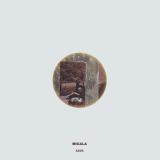
in the middle of it we instantiate false aralia: a series of recordings growing in all directions, cataloging the work of a group of north american collaborators centered around the studio practices of izaak schlossman (of aught, s transporter, loveshadow etc.) and facilitated by brian foote (of peak oil, kranky, etc.). with this outlet we hope to provide useful tools for dance and avenues for intentional listening.
the first release, ‘zero key’, explores valences of an idea as it slips, as would a thought or a cloud, into something else entirely across its four tracks of recursive microhouse rhythms and hallucinated dub spatializations. foregrounding its most melodic state, its most percussive, and two points between, the versions cut an indeterminate and continuous process into discrete objects that invite repurposing, layering, and other nonlinear methods of evaluation. played through, it may be interpreted as an emerging, or a coming-to-light, as a soft vocal figure develops a tougher rhythmic architecture that eventually occludes its prior form entirely. each of zero key’s facets spurs a parallel investigation into its internal logic of patterning and form.
Search:zero key
Underwater techno. That could be "leaning over backwards" in just two words. Tobias Freund's debut album for Ostgut Ton also serves as the longplayer introduction for his tobias. moniker, gives a fascinating and profound insight into his special world of music and sound science. Being a part of the music business since 1980, you could easily fill books with his works and creations
- 1: You Always Had A Way With Words
- 2: Zero Sum
- 3: Cycles
- 4 05: 00
- 5: Fading Out
- 6: Sea Swell
- 7: The Stray
- 8: Don't Find Me
- 9: The Underside
Lush in strings and pedal steel, the nine-track 'How I Became A Wave' album features contributions from some of Ireland's most accomplished musicians, headed up by Pat Carey, and featuring string and piano arrangements by Cormac McCarthy (RT Concert Orchestra). 'How I Became A Wave' will be available as a limited edition 12" gatefold vinyl that brings together music and visual art, featuring cover artwork based on the original oil painting 'Towards Pabaigh' by Scottish artist Ellis O'Connor, design by West Cork creative Megan Clancy, insert image by Cork- based artist Leslie Allen Spillane, and handwritten liner notes and lyrics from Pat Carey, who steers How I Became A Wave as a collaborative, multidisciplinary project. Pat Carey says: "At the heart of How I Became A Wave is a sense of collaboration - of connection between artists. Inviting artists of different disciplines into the creative process has been key to the journey. Understanding how other people see, hear and feel my work has been enlightening, affirming and vital, making sure that what we have created is a living body of work that I hope will continue to be expressed in changing ways."
I wrote this album in prison. I went to the music room every week to play on their keyboards. I studied different styles of beat patterns and sound recording to be a recording engineer. I wanted to create this new sound, so I took go-go, hip-hop, house, and drum and bass to blend up a new pattern of beats with a DJ sway. So I rapped on it. I need a perfect mix sound so I used a reverb gate, small room because I was in a small room. I used my moms blankets to trap the sound waves in the room. I use a digital mic from radio shack and was rapping with a blanket over my head to trap the sound waves. I played my keys in F flat to deepen the tone. I put tom toms on it to fill the spaces with handclaps to have that snap. Then I put a reverb gate on every instrument to get the lo-fi audio sound. I mastered it with all knobs on zero. Equalizer on zero. I mastered my own sound by tweeking and listening with cheap headphones. So that's why I call myself Mix-0-Rap because I master my mix and DJ rap style with a touch go-go rapping. Thank you for supporting me and my music, I hope you enjoy this.
REPRESS ALERT! Long out of press and with copies regularly changing hands for close to £100 on the second-hand market, Air Miles are proud to present a limited repress of their inaugural release, “An Ode To Midnight EP’ by Jeigo.
The tone is set from the off with the eponymously named first track of the release ‘an Ode to midnight’. The tracks mellow break beat feel is met by warm rushing pads, ebbing and flowing between textures of the night before last.
Floor focussed, zero fussing ‘Wing Systems’ carries the front side at an orbital trajectory. No time for an intro, the drums jolt you into alertness, the wobbly bass perfectly counterpointed by gated, washing keys.
‘Lime Hawk’, melancholic euphoria brings the release back to the conscious. It’s structure toy-fully crescendos and builds, all while the Balearic synth peaks with the sub line keeping you grounded throughout.
Rounding off the record is ‘By My Side’ meandering the record into slightly darker territories. The shifting keys wash over, the siren call vocals penetrate and the thudding kick punches through, anchoring the track as an emotionally driven, cerebral affair.
Beautiful soulful album by George Smallwood - including original material from home sessions prior to George's 1980 self- released LP. The rest, a sampling from the Smallwood mind's library of classic song writers. Huge tip!
"Recorded Live in Hyattsville, MD 1975-2015. George really had no interest in releasing this record. 'Seeing Is believing, they don't need records, trust me I did that, today they getting it live.' So this record is that, live tapes from the house, recorded on a government issued cassette recorder from National Library Service for the Blind. George calls these his practice tapes for songwriting, and performance warm-up, and never beyond his ears were they intended to travel. 'You just got to see me live if you want to really see me.. so when we get there just plug me in, and point me at that crowd' Last time I saw George they had him wired to the club system. He unplugs his Yamaha keyboard, licks the tip of the power cord and taps a beat on it, finally plugging in, synth lights up, tones all at zero, beats at zero. Then he builds from there, counting blind through a preset one hunderd factory tones and rhythm patterns. 'I gotta start off at zero, and go from there.' After the Marshmellow Band disperesed, he got this Yamaha keyboard, same one he's been playing since 1990, endless scrolling over the same presets, trying to make them fit, tempo down, tapping while telling the story and asking if that feels right to you. 'This always gonna be different live.'
Andrew Morgan (Peoples Potential Unlimited)
Next up on Fluid Electronics, Irish producer Derek Carr joins up the fold with his “Harvest Time EP”, featuring Dutch techno staple Deniro on remix duty. Carr’s style, stretching from low-slung techno to squelchy electro, via breaks and chiselled IDM, teleports us to a zero-G headspace where shape and substance merge into an effervescing and highly stimulating maelstrom of sound. The very idea of self-reflexive dance music.
Fusing sino-flavoured harmonics with a straight out hi-tech edge, the lead single “Harvest Time” is the perfect balance between body and soul music, as it elegantly bridges the gap between that sense of weightless vaporousness and a more tactile punch. Pace itself feels relative. In the hands of Deniro, the track hatches into an eerily haunting piece of cinematic electronics, stressing further on the contrasting batucada-esque rhythms and slo-scudding synth tapestry.
The Italo-indebted “Dust Yourself Down” takes Moroder on a ride by the seashore, all arps and heavily processed keys blazing. Dipped in acid, “Rhea” pulls out a cascade of pretty aggro snares, prismatic bleeps, bloops, and a healthy dose of post-trancey waves crashing against a glassy sound design.
Lucy Duncombe and Feronia Wennborg compose a modern symphony for virtual choir on 'Joy, Oh I Missed You', muddling sound poetry with Nuno Canavarro and ‘Systemische'-style machine-damaged surrealism. Like a mashup of Lee Gamble's 'Models', Akira Rabelais' 'Spellewauerynsherde' and Robert Ashley's timeless 'Automatic Writing’ screwed to perfection.
Duncombe and Wennborg have been chewing over ‘Joy, Oh I Missed You’ for four long years, working their process until they were "queasily intimate" with their arsenal of artificial voice tools. Tracing the history of the technology, from voice synthesisers and chatbots to AI voice analysis tools, the duo experiment relentlessly to develop a digital-age response to IRL extended vocal technique - think François Dufrêne, Yoko Ono or Phew. Less interested in replicating human sounds exactly, they instead test how various tools might cough up their own idiosyncratic tics as they stretch and stutter through attempts to mimic their "fleshware" counterparts.
Duncombe's got prior form here, most recently re-synthesising her voice on the brilliantly oily 'Sunset, She Exclaims' 45 for Modern Love, following a stunner for 12th Isle in 2021. Wennborg brings along experience from her tenure as one half of microsound duo soft tissue, whose 2022 LP 'hi leaves' (Students of Decay) was a haptic treasure. These approaches mesh remarkably well on their first collaborative full-length, with Duncombe's eerie bio-electronic incantations providing the ideal foil for Wennborg's carbonated hardware processes. It's not completely clear where the human voice ends and the zeroes and ones begin on 'Your Lips, Covering Your Teeth', as rolling cyborg syllables tumble over OS-startup womps and surprisingly svelte outcroppings of glassy, synthetic glitches. The music is surprisingly mannered, a sonic reflection of the cover, where a mouth is pixellated until only colour swatches remain. Duncombe and Wennborg trace the gradual erosion of their voices, leaning into the chaos as their various tools veer off into unique patterns of failure.
What sounds like a far-off, ghosted folk rendition (we're reminded of the Icelandic laments that Rabelais chewed up on 'Spellewauerynsherde') is offset by gnarled, bitcrushed machine faults and pneumatic lip smacks on the brilliant 'Residue', and on 'Brushed My Hair', the duo massage the voice until it sounds like a flute. Assembling stutters and barks and sighs into a celestial chorus alongside time-stretched moans, they create a levitational atmosphere on 'Smell It', freezing the energy from bizarre pitch steps to configure a zonked vocal ensemble.
'Joy, Oh I Missed You’ is an album that, like its source material, constantly morphs, testing the boundaries of its concept repeatedly without bubbling over into conceptual goo. In fact, it's remarkably euphonious, even at its most theoretically abrasive; Duncombe and Wennborg wring out uniquely angelic formations through a process of trial and error that packs a surprising, hefty emotional punch.
‘selfsame’, the second 12” on false aralia, mirrors the structure of companion release ‘zero key’ in presenting an iterative exploration of versioning itself, unspooling a line of flight through four ascending rhythmic configurations. the objects at the center remain hard to glimpse: holographic percussion, snatches of breath, contorted blue chords, and roiling subs phase in and out of perception, interlocking, dissipating and reappearing as familiar silhouettes. the slow and quick domains of rhythm superimpose and bifurcate, perpetually just out of grasp, only visible in mutual reflection. the apparent solidity of the structure dissolves into a froth of microscopic activity upon close inspection.
Archeo Recordings is a record label. Old, lost, obscure and forgotten gems and a boundless focus on the new Balearic scene for a wider audience of collectors, DJs and music lovers. All releases are limited edition. This release is a Limited Edition EP (250 on black vinyl). New life and an expanded treatment of Quiroga's epic Electronic/Future Jazz/House Snaporaz (Really Swing 2020), from none other than L.U.C.A. (AR029). Archeo delights us with this luscious and limited release featuring Quiroga's sleek jazz-house UFO "Snaporaz". This edition includes an exclusive extended version, a brand-new cut from the Neapolitan groover, and a completely cosmic overhaul from the mighty L.U.C.A. Operating at the nexus of future jazz, beatific electronics and deft house, Quiroga (Walter Del Vecchio to his nearest and dearest) has carved his own irresistible niche over the past two decades, gracing countless labels with nuanced body movers and forging his impressive Really Swing imprint, the original home to this melodic masterpiece. Tucked away on Del Vecchio's 2020 EP "Chords and Desire", the sunny and sultry Snaporaz fell foul of our communal pandemic preoccupation, missing out on the widespread acclaim, appreciation and ass-shaking it so richly deserves. Archeo steps in as patron, giving this Rhodes-led jazz-house heater the full 12" treatment it was born for. On the A1, Quiroga's extends the ecstasy of "Snaporaz", stretching its original elements into a loosely grooving, dopamine-deep delight. Sunkissed keys and tender pads ride the rhythm of a bubbling bassline while the sophisticated percussion snaps, crackles and pops in the background - the perfect environment for the P&P leadline to flourish. If that wasn't enough to have you slipping straight into your party pumps, Walter makes the most of the extra runtime with a HOT hand drum freakout down the final stretch, adding the most enticing icing to an already heady cake. A comparative cooldown follows in A2 offering "Escorpião", a fusion-tinged flirtation for aperitivo everywhere. Cutting back on the kick to save space for the swing, Quiroga leads us through a sublime sequence of hooks, riffs and solos, without ever overwhelming the ears but keeping the groove alive. It's a dizzying delight from start to finish and features one of the finest keytar and cowbell interplays you're likely to hear. The B-side belongs to the frankly legendary Francesco de Bellis, a house, disco, Italo and electro hero, appearing here under his deliciously downbeat alias L.U.C.A. Imbuing Quiroga's original with the atmospheric stylings of his Edizioni Mondo oeuvre, the Roman producer delivers a radical rework, slowing the tempo by 20 bpm and translating those jazzy tones into a drifting new age dancer for the cosmic crowd. Zero gravity rhythms meet mystical melodies uptown as the house hippies get down. Lest we overlook the batshit brilliance of the drum programming, L.U.C.A. caps it off with a bonus beats version sure to delight DJs and dancers alike in its otherworldly oddness.
2024 Repress
Perc Trax unleashes its first release of 2021 with the latest in its white label remix series which has already given us Tymon's thunderous remix of Perc's Hyperlink and the diverse remixes of RVDE's 90s Hammer. For this instalment Perc Trax favourites Ghost In The Machine, Scalameriya and Furfriend team up with debutant EAS and label boss Perc for three remixes that aim directly at the dance floor.
First up Perc shows his love of working with vocals taking a firm grip of Furfriend's infamous 'Fist Fuck' to serve up a sweaty 4/4 pounder.
Next Scalameriya moulds 'Zero', one of the highlights from Ghost In The Machines 2020 debut album, into a showcase of sound design and raw kick drum efficiency.
Lastly LA's EAS updates 'Dumpster' from Perc's breakout 2014 album 'The Power & The Glory', opening his Perc Trax account with a hard driving remix that has already been a key part of Perc's pre pandemic sets around the world.
- A1: David Holmes & Raven Violet - It’s Over If We Run Out Of Love (Hardway Bros Live At The Ssl Dub)
- A2: Unloved - Mother’s Been A Bad Girl (Horse Meat Disco Remix)
- A3: Pip Blom - Keep It Together (Ludwig A F. Under Pressure Mix)
- B1: Confidence Man - Holiday (Erol Alkan Ooo Remix)
- B2: Toy - You Won’t Be The Same (Dan Carey Dub)
- C1: Audiobooks - The Doll (Bruise Remix)
- C2: The Orielles - The Room (Shy One Remix)
- C3: Eyes Of Others - Once Twice Thrice (The Orielles Remix)
- D1: Fever The Ghost - Source (Leo Zero Dub)
- D2: Working Men’s Club - The Last One (Forgemasters Remix)
Heavenly Recordings release the next two volumes in their series of remixed classics and unreleased versions. ‘Heavenly Remixes 7 & 8’ sees the label going back into the archive, as well as picking off some more recent remixes, and both albums primarily feature either previously unreleased versions or re-workings available for the first time on vinyl and CD.
Heavenly have always seen immense value in the remix, a value way beyond what it might bring commercially. Since their first release in 1990 (where Andrew Weatherall overhauled a one-off single by club kids Sly and Lovechild) Heavenly remixes have been carefully curated and treated as a key part of the A&R process. It’s an opportunity to view an artist through a different prism, to play out a musical ‘what if’ scenario. It’s the kind of exploration that’s happened consistently through the thirty plus years the label has released music.
The ‘Heavenly remixes’ series continues to showcase the very best remixes, versions, meditations, re-rubs and dubs from all around the world of artists right across the roster of the country’s most exciting record label. In most cases, the albums offer the first physical release for a remix, elevating them from streaming playlists to their rightful, spiritual home on super heavy vinyl (or shiny, super-packed compact disc).
‘Heavenly remixes 7’ heads to Belfast, where David Holmes - a producer who first appeared on Heavenly in 1994 amping up the acid on Saint Etienne’s ‘Like A Motorway’ - appears as solo artist and as one third of Unloved, who get a lift right to the heart of a Vauxhall sweatbox by Horse Meat Disco. It draws a line between Amsterdam and Frankfurt as Ludwig A.F. amps up the electronics on Pip Blom’s ‘Keep It Together’. It stops off in a south London studio where super producer Dan Carey plays the desk with Toy, then relocates LA psych rock band Fever The Ghost to an Ibizan shoreline as the sun sets on the horizon. It cements Sheffield’s reputation as the home of modern British techno with the return of true originators Forgemasters. And it pitches up in front of a renegade soundsystem late night at Glastonbury as Erol Alkan’s mighty rework of Con Man gets its third rewind of the night.
‘Heavenly remixes 8’ opens with Space Afrika’s lush, ambient reimagining of the Orielles’ ‘BEAM/S’ before Justin Robertson stretches Amber Arcades’ ‘Turning Light’ into eight minutes of electronic dub. Elsewhere, Baxter Dury’s peerless ‘Miami’ becomes a string-laden electro skank in the hands of French producer Pilooski; Edinburgh’s bedroom techno genius Eyes of Others’ ‘Safehouse’ turns into an East End bathhouse courtesy of disco deviants Decius; Ashley Beedle’s Black Science Orchestra turns Unloved’s heartworn torch song into seven minutes of glimmering dreamlike percussive house and Katy J. Pearson’s freak flag is flown high thanks to The Umlauts’ throbbing filtered electro mix. It ends similarly to how it began as TONE takes
Fran Lobo’s ‘All I Want’ on a gorgeous slow motion spacewalk.
re:discovery records is proud to release for the first time, a vinyl edition of 'Two Zeroes' by Grain for it's 25th anniversary.
Grain was a west coast project that emerged out of the psychedelic music and art scenes in Los Angeles in the early 1990s. After a few of their tracks were featured on the key chill out compilations United State of Ambience 1&2 and Excursions in Ambience
and many local live performances, they released two ep's on local labels. Shortly after in 1998, 'Two Zeroes' the full length project appeared. A west coast chill out classic that unfortunately did not get much disribution outside the west coast let alone to the world.
To classify this album is very hard. Think early Jammin Unit with a touch of the Orb and dash of west coast breakbeat and chill out styles and you still can't fully pin it down. A unique album that sonically, was leaps and bounds ahead of most albums in this style thanks to sound designer, audio instalation architect, scientist and artist Jimmy Johnson along with illustrator and fellow sonic artist Peter Ehrlich. Featured on double vinyl with updated artwork by the original designer, Kevin Hanley and presented on beautiful gatefold with a shimmering silver vinyl to match. This could be one of the discoveries of the year for those that have never heard this album. Dare to Dream with us.
- A1: Damian Lazarus X Jem Cooke - Into The Sun (Major League Djz Remix)
- A2: Jamie Jones - Paradise 2011 (Art Department Remix)
- B1: Pier Bucci - Hey Consuelo (Dennis Cruz Remix)
- B2: Audiojack X Jem Cooke - Feels Good (Michael Mayer Remix)
- C1: Made By Pete X Zoe Kypri - Horizons (Black Coffee Remix)
- C2: Adam Ten & Yamagucci - The K Dance
- D1: Maceo Plex - Together (2011 Mix)
- D2: Guti & Dubshape - Every Cow Has A Bird (Tibi Dabo Remix)
Damian Lazarus celebrates 20 Years of his world-renowned Crosstown Rebels imprint with a special album project of unreleased cuts and fresh remixes, featuring material from Black Coffee, Maceo Plex, Art Department, Dennis Cruz and many more.
Undeniably one of the most influential record labels within underground dance music, releasing material from Laurent Garnier, Krust and Mathew Jonson to Rósìn Murphy, Deniz Kurtel, Francesca Lombardo and Jennifer Cardini while playing a pivotal part in the careers of artists like Maceo Plex, Jamie Jones, Art Department and Seth Troxler, Crosstown Rebels stands today as a hub and platform for flourishing projects across the electronic spectrum, including via sub-label Rebellion and across a long list of showcases across the globe. More than just your everyday label, the Crosstown Rebels legacy has grown alongside its founder in equal measure, with head honcho Damian Lazarus continually showcasing, championing and spotlighting artists from across the globe who share his radiant, experimental vision for house music and beyond. Ringing in a major milestone in style, 2023 will see the biggest twelve months to date as Lazarus and Crosstown mark the 20th Anniversary of the label with a series of projects set to be unveiled in the lead-up to summer, with ‘CR20 The Album’ set for release on 12th May 2023.
“20 years ago, I dreamed a dream of creating a family of like-minded, crazy individuals from all corners of the planet - releasing music to the world and making people dance. That dream was Crosstown Rebels, and this year we are 20. Over these years, I have forged beautiful friendships, discovered very talented artists and tried my best to help, advise and support some of the most colourful characters in dance music. Crosstown Rebels is more than a record label, it is family.
So 2023 will mark the label’s 20th Anniversary. This is an opportunity for the Crosstown Rebels family, a global community of artists, DJs and creatives, and the label’s myriad of followers to celebrate this momentous milestone. There will be parties and events around the world. A killer compilation of exclusives and special remixes, a beautiful coffee table book, a short film, and a special launch event are planned to bring together the sights and sounds of the label’s unique and influential history. There’s lots to share, announce and reminisce. 20 years young.” - Damian Lazarus.
Comprised of six stellar, high-profile remixes of releases from the label’s catalogue, alongside two previously unreleased original gems, the eight-track package is a rich and exemplary showcase of the far-reaching corners of the Crosstown Rebels sound and also its globally connected family of artists and close friends.
Opening the package, Lazarus’ own 2020 collaboration ‘Into The Sun’ with regular Crosstown vocalist Jem Cooke is given a cosmic rework by Johannesburg’s Major League DJz, while Jamie Jones’ slick ‘Paradise 2011’ is stripped back and given a new lease of life by the hypnotic and heady sounds of Art Department. Opening the B-Side, Dennis Cruz brings his percussive Latin-infused signature sound palette to Chilean musician and producer Pier Bucci’s ‘Hay Consuelo’, before Audiojack’s ‘Feel Good’, another standout collaboration alongside Cooke, is taken into synth-led territories as Michael Mayer reaches for an evolving bed of captivating tones.
The second half of the project brings more excellently remixed material, both new and old, with GRAMMY-winning DJ/producer Black Coffee turning his hand to the label’s first release of 2023 in Made By Pete and Zoe Kypri’s emotive ‘Horizon Red’, unveiling reworked melodies and sparkling keys as he delivers an interpretation of a track which has featured as a staple in his sets. Next, the project welcomes Adam Ten & Yamagucci’s playful yet off-kilter and wonky ‘The K Dance’ which unveils itself as a production perfect for those late night hours and early afters, before Ellum boss Maceo Plex’s ‘Together (2011 Mix)’ brings another lost production to the mix with a driving and zipping ride through sugary synths and soaring leads. To close, Tibi Dabo turns his attention to Guti & Dubshape’s absorbing ‘Every Cow Has A Bird’, delivering a nimble minimal-led trip through lush pads and crisp percussion to round things out in style.
Alongside the album, the 20 Year celebrations will also welcome a 192-page hardback book, ’20 Years Of Magic, Madness and Music’, with words from renowned journalist and key underground music player Joe Muggs, and a feature-length documentary directed by acclaimed director David Terranova.
Crosstown has become known globally for throwing some of the world’s best parties, from the wondrous cultural journey of Day Zero Tulum to longstanding Music Week marathon Get Lost Miami. This ethos of creating magical dancefloor moments spills into the label’s 20 year celebration with its worldwide Get Lost tour, launched with Get Lost Miami, and followed by Bali, Tokyo, Ibiza, Dubai, Istanbul, Rome, Paris, London, Berlin and more, plus a special to-be-announced London showcase.
Flautist Johanna Orellana teams up with Carmen Villain for a collection of horizontal, pastoral field recordings and close mic-ed flute sounds that zero in on the instrument’s unstable resonance and levitational magic. There’s no cringe virtuoso business or fourth world firewalking here - just sonic purity, sublime minimalism and the precise capture of time, place and poetry.
You might have come across Johanna Orellana before if you’ve listened to Carmen Villain’s music (or seen her perform live), and Villain appears here in a producer’s role, using her engineering expertise to impart a level of restraint and sonic fidelity that’s quite startling. There are only really two central elements to the album: environmental recordings and flute. There’s no psychedelic delay, no cavernous reverb; no audible treatments at all - Orellana and Villain instead force us to consider the flute and its musical lineage.
‘El Jardín I’ introduces the instrument as a physical conduit; Orellana allows her breath to distort the sound - the padded pat pat of the keys forms a kind of rhythm, closely recorded so it’s amplified and jarring, linking to primal wind instruments like conch shells, bamboo flutes and wooden whistles. Recalling the way in which Debit interfaced with the ancient world using AI- assisted tech on last year’s ‘The Long Count’, Orellana uses a comparatively modern contemporary transverse flute, an instrument with roots that stretch back through the baroque era, into Medieval Europe, back to the Byzantine era and into Asia. The component that connects the instruments and eras is breath, and its amplification and modification through differently shaped pipes and vessels.
Orellana lets the environment sing: insects, rushing water and zephyr-like winds form a stage that presents her mortal energy, suggesting a harmony between our use of breath and its environmental ubiquitousness. Her technique is steeped in folk history and decouples itself from expectation by rooting itself in nature. It allows her to bridge the gap between equal temperament and less ordered (less commercially-focused) microtonality without overstating the concept. Other sounds waft in from the sidelines; what might be an Indian bansuri, stray notes, a gust of air.
There’s a link to the foundational new age recordings that Joanna Brouk made with Maggi Payne back in 1980, but Orelanna also absorbs the outdoor folk magic of Fonal or Stroom, and the improvisational grist of Bendik Giske or legendary US horn duo Nmperign.
The continued relevance of the work of Akae Beka is forceful on the movingly topical Rastafari statement Imandment To Heart. Taken from 2021’s album Polarities and produced by Zion I Kings with Tippy I at the helm, the track presents a striking contrast: an uplifting major-key Rub A Dub rhythm, powered by renowned Jamaican drummer Kirk Bennett, sets the stage for scathing lyrics linking “chaos theory,” refugee crossings, and prophetic judgment. Vaughn Benjamin calls for a moral law “written upon the inward part” amidst global turmoil. Released on 7” vinyl for the first time by Before Zero Records, the single is backed by a B-side dub sculpted sonically by Laurent “Tippy I” Alfred at his Holy Mountain Studio in St Croix.
The much-missed Vaughn Benjamin reminds us why his approach to reggae lyricism remains peerless with “Charges,” a standout track from the Polarities LP released on 7” vinyl for the first time. Arriving amidst an era of global economic shifts, the release feels forcefully timely. Genius metaphorical wordplay and wide-ranging subjects are distilled into a cohesive whole as the global economy and its entrapping neo-colonial rules come under the microscope. Produced by Zion I Kings with Tippy I at the helm, the track is anchored by the rock-solid drumming of Lloyd “Junior” Richards and the propulsive bass of David “JAH David” Goldfine. This release features a previously unheard B-side dub, giving space to the celestial synth work of the late Andrew “Drew Keys” Stoch. This series honours both the vocal and version culture of the reggae sound system and the profound lyricism of Vaughn Benjamin.
- 1: Timeless
- 2: Peony Garden
- 3: Marrow
- 4: Moonflower
- 5: Linen
- 6: Boy Beneath
- 7: Mirrors
Intricate structures with an intertwining of spontaneity and randomness, meeting the diverse genre influences of the band members from mediaeval music to shoegaze to noise. That is Unravel, the new album, and first in six years, from Czech band Manon Meurt.
"Unravel reflects the different stages of dissociation, a person's thoughts, observations - whether of the environment or of oneself - and admiration for the beauty and cruelty that nature mirrors," multi-instrumentalist and lyricist Kateřina Elznicová says of the album.
Produced by Eddie Stevens (Freakpower, Zero 7, Moloko, Roisin Murphy) the album was pieced together from recorded fragments, meticulously pieced together. The title Unravel refers to the development of the band, unravelling what they are to find the full potential of their music as well as uncovering the layered nature of the songs and emotions.
"Eddie Stevens’ approach to recording was a big surprise. We understood that there was no one right version of the songs. Each of our themes carries a certain energy that can manifest and blossom in many ways. Compared to previous records, the vision of each member was much more evident, while we learned not to cling to our individual ideas of a signifying break or a nu-metal bounce at the end of an ambient song. The main thing was a common concept," adds keyboardist David Tichý on creating the seven songs on the record.
Abum producer Eddie Stevens describes the collaboration, “Each album is an adventure. You do some preparation, check the route over and over, prepare for any eventuality that your packing space and imagination will allow, plan some places to stop and rest en route, places to eat, sleep, then consider the challenges - the ice wall, the summit, even just finding your way in foreign land. But despite all that planning, you can never really say for sure what’s going to happen, what unexpected path you might take, what strangers might invite you in for a cup of tea and to what ends. So it was making Unravel with Manon Meurt and engineer and studio owner Lukas Martinek at Svárov studios and of course back home in the relative safety of my studio. Musicians who quickly became friends showed me more than I showed them, people with ideas, with creativity seeping from their pores. Music making the right way: no blinkers, no walls, no preconceptions, no barriers, no rules. What a pleasure, and what a magical, technicoloured,
kaleidoscopic album we’ve made together, “
The combination of industrial material with plant motifs in the work Untitled_1 by Ukrainian artist Liza Libenko, which adorns the cover of Unravel, strongly attracted the band. After all, floral motifs have always been close to Manon Meurt's music. Libenko, a student of the Academy of Fine Arts and a finalist of the prestigious Austrian Strabag Artaward International Prize, has recently been working on overcoming the narrative boundaries of the canvas, the paintings "attack"the viewer. Sunflowers are a powerful symbol of life and the sun; in Libenko's paintings they are black and burnt, serving as an allegory for contemporary conditions. The work was photographed by photographer and artist Marcel Rozhoň, and the final processing of the Unravel album was done by graphic artist Zuzana Malá.
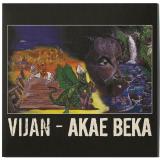
Vijan, originally released in 2003 by I Grade Records, is a seminal release from the “golden era” of St. Croix roots reggae, now available for the first time on 12” vinyl courtesy of Before Zero Records.
Produced by the legendary combination of Vaughn Benjamin and Laurent “Tippy I” Alfred, Vijan balances the raw, spiritual intensity of Vaughn’s songwriting with the sophisticated, melodic arrangements that became the hallmark of the I Grade sound.
This album features an incredible lineup of musicians who helped shape the sound of Virgin Islands reggae. The production credits boast the textured guitar layers of Tuff Lion , the deep, driving bass of Kenyatta Itola , and the rhythmic precision of Dion “Bosie” Hopkins. Uniquely, this album also showcases Vaughn Benjamin’s versatility as a multi-instrumentalist, contributing drums, bass, and keys on standout tracks like “All Ye Naashan” and “Thanks for Life”.
Akae Beka’s inimitable style of rich, deep, multi-layered songwriting and uncompromising devotion to RasTafari is on full display here. At the point of his untimely passing in 2019, Vaughn Benjamin had released over 70 albums, solidifying his place as one of the most prolific reggae artists ever known. Vijan remains
a glowing highlight in this expansive catalogue, capturing a specific moment of creative brilliance in the early 2000s.
The vinyl reissue allows listeners to engage with the album’s analogue richness and features the striking original artwork by Marcus Wilson, presented here as a 12” square masterpiece.
The new album by the collective that for
over 25 years has been among the most
representative names of the Italian dance
and electronic scene worldwide.
“BLOOOM”, this is the title of the new release,
will be available in all traditional stores and
on digital platforms starting January 16.
Set against the soundscapes that have become
the Planet Funk trademark, the lyrics by Dan
Black attempt to give voice to a fragile and
contradictory condition of our time: an
intensified sensitivity that, instead of
turning into openness and connection, often
becomes emotional overload. A generation
constantly overwhelmed by excessive stimuli,
relentless information, anxieties, and fears,
called upon to find its way in a world thaoffers neither pauses nor silence. In this paradox, sensitivity is no longer just a natural gift, but
a daily effort: staying open and receptive without being overwhelmed, trying to preserve a human and
vulnerable gaze in order, despite everything, to fully appreciate life and the present moment.
The single’s artwork—like that of the album—curated by Nationhood, visually conveys this tension: the
distant sirens of a city that amplifies feelings of disorientation and loneliness even when we are
surrounded by thousands of people.
“BLOOOM”, preceded by the single “FEEL EVERYTHING”, arrives at the end of an intense, creative year
full of music, which saw Alex Neri (DJ, keyboards, synthesizers), Marco Baroni (keyboards, piano,
programming), Dan Black (vocals and guitar), and Alex Uhlmann (vocals and guitar) engaged between
studio work, collaborations, and live performances in Italy and abroad. A journey that today
transforms into new energy, into an even more open vision oriented toward the future.
Exactly one year ago, PLANET FUNK released “Nights in White Satin”, a single that reached the top
positions of the radio charts and launched a season rich in concerts and DJ sets in Italy and around
the world. The subsequent “I Get a Rush”, the collaboration with Alfa and Manu Chao on the remix of
their hit “A me mi piace”, and the track “È Naturale” together with Francesca Michielin, confirmed
Planet Funk’s ability to renew themselves and engage with different musical worlds while always
remaining true to their own identity.
Throughout this journey, music has inevitably intertwined with life. The memory of Sergio Della Monica
and Domenico “Gigi” Canu, pillars and founding souls of the PLANET FUNK project, is a living part of
this new chapter. Their vision, creative spirit, and way of understanding music continue to be a
constant guide, a deep root from which new ideas and new directions can grow.
“BLOOOM” is also this: a personal and artistic blossoming that, starting from the legacy left by
Sergio and Gigi, transforms into a living process of growth, metamorphosis, and discovery. An album
that does not look back with nostalgia, but forward with awareness, momentum, and a desire for
renewal.
Founded in 1999, for over 25 years PLANET FUNK have represented one of the most important, solid, and
influential realities in the international electronic music scene. Born from the meeting of Souled
Out! (Domenico “GG” Canu and Sergio Della Monica) and Kamasutra (Marco Baroni and Alex Neri), and
following their debut with “Non Zero Sumness” in 2002 (a gold record and a turning point for the
band), PLANET FUNK have managed to reinvent themselves over time while maintaining a unique sonic
identity. This has led them to collaborate with internationally renowned artists, deliver iconic
performances around the world, create soundtracks and international advertising campaigns, and
continue to demonstrate constant creative vitality
- A1: Poison Ivy
- B1: Forget About
Her natural command on stage, paired with a voice that feels quietly seasoned, has made her one of the most exciting young live musicians emerging from the region. Now, with her first release, a double single featuring the raw, one-take folk recording 'Poison Ivy' and the dreamlike, psychedelic shimmer of 'Forget About' -- Grant introduces the full spectrum of her sound. One track close to the bone, the other lost in a dream, both unmistakably hers. 'Poison Ivy' was recorded when Grant was just 16, in a spontaneous midnight session after finally playing her songs to her dad. With only one microphone, no click, and a single take, the track became a time capsule of her earliest songwriting voice -- fragile, real, and impossible to recreate.
Now featuring Dan Bridgewood-Hill's evocative violin, it stands as a folk recording filled with warmth, instinct and unfiltered emotion. "I tried re-recording it," she says, "but nothing touched the magic of that first take." In contrast, 'Forget About' showcases Grant's emerging production instincts. Influenced by Zero 7, the song began as a kitchen jam before evolving into a lush mix of psychedelic keys, airy electronics and indie- rock textures. Self- recorded in Logic, the track reveals a new dimension to her writing, cinematic and rhythmically hypnotic
2025 repress.
Rhythm Section International proudly presents it's 8th offering from local boys Chaos in the CBD. Born in New Zealand, but based in Peckham for the last few years (literally just around the corner from Henry Wu and Bradley Zero), these brothers have made a real mark on the scene here in London town and with their latest set of productions are set to take this message further afield.
Having already released internationally on labels such as ClekClekBoom (Paris), Hot Haus (London) and Amadeus (Montreal), the duo's approach to production has matured immeasurably in the last year, as is evident in the restrained potency and poetic subtlety on the 4 tracks across this accomplished EP, Midnight in Peckham.
Taking it's title from the locale the boys have come to know as home, the record channels a delicate late night energy - equally indebted to the hypnotic incantations of Ron Trent as it is to the hazy suburban atmospheres of Burial. These 4 classic cuts pay homage to deep house in it's truest sense - at once sublime, melancholy and meditative . Chaos in the CBD have clearly taken their cue from the mid-west masters of the genre but have not been afraid to let their own influences and environ creep in, and in doing so have created something that is unmistakablely London and infact, timeless.
- A1: Take 5
- A2: Weight Of Air
- A3: Funky Munky
- A4: A Change Is On Its Way
- A5: Yeah Man
- B1: Tour De World
- B2: Wishful Thinking
- B3: Shall We Take A Trip
- B4: Who's To Blame
- B5: Practise Makes Perfect
- Following Record Store 2024 Exclusive numbered yellow LP reissue for the first time since release , the album now back on CD too and as Solid Green Vinyl
- Northside were key players in the 'Madchester' / baggy / indie-rave scene of the early 90s
- Top 20 album produced by The Lightning Seeds' Ian Broudie (Echo & The Bunnymen, Shack, The Coral, Texas)
- Featuring the indie dancefloor fillers 'Take 5', 'Shall We Take A Trip' and 'My Rising Star'
- Vinyl cut from the original Factory Records masters
- Restored artwork by Central Station Design
- Expanded CD edition features 6 bonus tracks : rarities, single edits & 2 remixes by The Reflex & Leo Zero
For his last solo record ‘Through a Room’, Bill Nace shifted his usual saturated guitar sound and added tapes, hurdy gurdy, doughnut pipe, bird calls and the mysterious Japanese taishōgoto. Setting up for the final night of his three day residency at OTO with only the taishōgoto soundchecked, Nace hoped that Parker would arrive with his small soprano as its opposite. “I’ve been interested in state change, you know, playing until there’s a shift in time.” Known for his development of multiphonics to produce a constantly shifting pattern, Evan Parker has evolved an instantly recognizable sound - his work the soprano most distinct. Happily, it was the soprano Evan brought with him and as soon as the two start to play they entwine - taking off in a double helix of keys and reed primed for endless reconfiguration. Space warps under the velocity of playing, the pitch rising unrelentingly. It felt like unending lift off in the room, sheer energy until the last note makes remember your feet have been on the floor the whole time. Total time bending shredding.
–
"They had never played together before. They had never even met each other before this springtime 2024 concert at London’s Café Oto.
Evan Parker, circular breathing maestro of the saxophone, a legend in the universe that is Free Improvisation since the late 1960s and Bill Nace, one of the most intriguing experimental “noise” guitarists of the 1990s/2000s underground scene.
For those of us who have been enamored by the live and documented work of both these gents, this Café Oto duo was a must-hear event. It could have gone anywhere musically and that would have been totally fine. Particularly with Evan having a history of being thrown into a variety of challenging collaborations throughout his career, employing the learned elegance of trust in his own sensitivity to listening, responding, leading, following, sparring, intertwining, dialoguing, creating in the instant and, essentially, dignifying the non-hierarchical grace of chance.
The aesthetics of socialist consideration in Evan Parker’s playing, in his community of expanded and personal technique, for a younger player such as Bill Nace, strikes an exemplary model. This notion of respect would be entirely the reason Nace, when offered a residency at the most critical “new music” room in England, would request to play in duo with Parker.
Bill Nace came to prominence mostly during the apex of experimental music activity in and around Western Massachusetts in the early days of the aughts, with a focus on visual art and free improvisation guitar action. He could be found in the daytime hours, his head hanging down over a notepad, penning fine-tuned illustrations and abstract line drawings, while in the evenings he’d be attending any number of basement noise gigs, many of which he’d be participating in. His guitar style came across as being informed as much as by the physicality of his writing utensils in friction to the page as it was to his hearing and redefining of radical recordings ranging anywhere from the Black Unity Group to Black Flag.
Utilizing various metal files and other small cylindrical objects Bill would allow his guitar and amplifier to be in tandem with the improvisatory movements of his body as the instrument balanced, intentionally and, at times, precariously, upon his lap. The performances came across thrilling and daring and they would be mostly in the context of venues nothing more than a low-ceilinged damp and dank New England basement, a clutch of people hanging onto rusty pipes or sitting up on dilapidated washer/dryer machines, the shards of Bill’s “file guitar” sounds ringing out like the most alive music on Earth.
By the time Bill reached Café Oto in early 2024 he had relocated to Philadelphia all the while releasing a succession of collaborative LPs on his Open Mouth label to present his developing progression of solo and collaborative work. He also would find himself considerably engaged with playing the electric taishōgoto, a keyboard-activated string instrument from Japan which can exist as a one, two, four, five, or six string oblong sound object. Bill’s approach to the taishōgoto would not be too unlike his approach to the traditional electric guitar, though no outboard implements such as files, sticks, and rocks are utilized. The similarity would lie wholly with Bill’s full immersion of high velocity action-playing where, with the taishōgoto, an electric drone beauty occurs. The flurry of sonics and resultant harmonics emanating from the amplifier (which Bill opts to dial into with borderline loud-as fuck volume settings) furthers the meta-mantra properties of the instrument in an astounding display of drone dynamism.
This sound world of Bill’s two-stringed taishōgoto on this Café Oto night worked beautifully with Evan Parker’s improvisatory saxophone conceptions. The duology achieved instant lift off at ground zero only to find it’s eventual finale as if it were organically ordained. Time seemingly morphed from its ancient human construct of control, rendered inconsequential to the torrential transcendence of the room wildly activated by the magic resonance of the multi-directional pan-spatial sonance of the music as if it were some beatific blessing. It was one of those nights where art as a liberating force of spirit gifted the listeners with an offering of exaltation and joy. It was entirely mystical and mind blowing. A night of Total Music."
Thurston Moore, London, 2025
Acclaimed electronic musicians, producers and sound architects Max Cooper and Rob Clouth team up for a new collaborative EP; a dark, playful four-track dive into ambient, breakbeat and techno’s subconscious flow, featuring a standout vocal performance from South London rapper FLOHIO.
Recorded over a series of spontaneous London sessions, “8 Billion Realities” channels years of creative exchange between two of the genre’s most quietly innovative artists and is a result of a decision between the longtime friends to refrain from conceptual overthinking in favour of instinct and joy.
As long-time admirers of each other’s audio/visual work, Cooper and Clouth collaborated in London together after both emerging from intense, idea-heavy album cycles. What followed was a series of exploratory sessions, half-improvised, half-built around half-formed thoughts.
The result is a club-ready EP that feels alive and human: imperfect and hypnotically rich.
“Rob Clouth has been one of my favourite electronic music producers since I first heard his work in 2011,” says Cooper. “His work is more full of ideas and structure than anyone else.” “We were both coming from extensive conceptual studio albums and both in the mood for simplifying things and having some fun with the music, so that’s what we did”.
For Clouth, no stranger to Max Coopers Mesh label having previously released an array of EP’s plus his 2020 debut album “Zero Point” this record marks a new chapter, both creatively and personally.“Something pretty new for me is collaborating,” he says. “You kind of have to when to stop, because if you develop an idea all the way to its endpoint, the other person has nowhere to jump in.”
The first “A Moment Set Aside” began as a break from another idea, a live, unplanned improvisation based around arps and ambience. “The track was written in about as long as it took to play it,” says Cooper. “It was pulled from a 1 hour recording session, more or less as you hear it… the energy and excitement grew as the unplanned moment bore some magic.”
“The lesson being that sometimes it’s helpful to set aside a moment without forcing results, and let the subconscious have something to say.” What followed was darker, heavier. “Asymptote” is detuned techno. Subversive and euphoric in its descent. “We found a sort of brain mangling, half consonant, half wandering detuned techno pulse, which we started chatting about being a sort of pit of spiralling body parts we were falling into,” says Cooper. “It was a lot of fun to work on and let loose with bigger kicks than I usually ever get to unleash.”
Then came “8 Billion Realities”, featuring a standout rap performance from FLOHIO; an emerging figure in the UK grime and rap scene. The track was inspired by conversations about algorithmic echo chambers and hyper-personalised online worlds. Frantic, direct, and South London to the core, FLOHIO brings this tension to life. Her sharp, intense flow cuts through distortion and rhythm, landing the track somewhere between chaos and control instantly making it one of the most striking moments in either artist’s catalogue. “A different reality for all 8 billion of us,” says Cooper. “We weren’t sure if it would work… but there was something about the energy of the percussive idea and the story which felt like it might fit.” “Then FLOHIO had a play with it and straight off the bat absolutely killed it, not just with the lyrics and energy, but the harmonising too, it was a beautiful process.”
The final piece on the EP “Candeleda” originated from Clouth’s solo experiments with a live rig made entirely of vocals and keys, using his self-developed “cheatbox” system. “He put forward a beautiful stumbling melodic sequence which we bounced back and forth adding harmonies and synth layers,” says Cooper. “It rounds off a collection covering some of the breadth of music that we both love.”
Repress!
200 COPIES ONLY
Nils Frahm has unexpectedly confirmed details of a new collection of solo piano music, his first album since 2022’s three-hour Music For Animals. Day will be released by LEITER on March 1st, 2024, and it will be available on limited edition vinyl as well as via all digital platforms. Recorded in the summer of 2022 in complete solitude and away from his studio at Berlin’s famed Funkhaus complex, it is preceded by a single, ‘Butter Notes’, out on January 19. Day may come as a surprise to those who, over the last decade, have watched Frahm shift slowly away from the piano compositions with which he first made his name in favour of a nonetheless still-distinctive approach that’s considerably more instrumentally complex and intricately arranged. In addition, in 2021, having spent the early part of the pandemic arranging his archives, he released the 80 minute, 23-track Old Friends New Friends, a compilation of previously unreleased piano music intended to enable him to ”start over” with a clean slate. Judging from the extended, ambient nature of Music For Animals, it proved a successful gambit, but Frahm has never been able to resist returning to his first love, and those who enjoyed earlier acclaimed albums like The Bells, Felt and Screws will once again revel in Day’s familiar, personal style. Day, which contains six tracks, three over the six-minute mark, is the first in a pair of albums Frahm has lined up for 2024. In keeping with their nature, however, he won’t be making a song and dance about the release. Instead, he’ll resume his ongoing world tour, which has already included fifteen sold-out dates at Berlin’s Funkhaus as well as a show at Athen’s Acropolis. It will continue with shows all over the world, among them several sold-out dates at London’s Barbican in July 2024, where he previously curated a weekend of music, film and art, Possibly Colliding, in 2016. The album is best enjoyed in the manner in which it was recorded, in the intimacy of a peaceful, cosy room. There are muffled pedal creaks on the cyclical, quietly jazzy ‘You Name It’ and, during the palliative ripples of ‘Butter Notes’’ arpeggios, the sound of dogs barking in the streets outside. The compassionate, hesitant ‘Tuesdays’ and emotionally ambiguous ‘Towards Zero’ linger with the poignant persistence of Harold Budd’s earliest work, while ‘Hands On’ is a sometimes brighter, airier tune that sets its own, deliberate pace, and, as he has on occasions before, ‘Changes’ sees Frahm employing elements of his instrument’s construction in a ‘prepared piano’ fashion. Characterised by its confidential mood, Day confirms that, while Frahm is arguably now best known for elaborate, celebratory concerts calling upon an arsenal of pianos, organs, keyboards, synths, even a glass harmonica, he’s still a prolific master of affecting simplicity, tenderness and romance.
Transparent green vinyl. After an uncomfortably long five-year hiatus-likely spent arguing about time signatures, chord progressions, and who forgot to bring snacks to rehearsals-Glutton is finally back. The beloved (by at least a few people) trio is ready to unleash their questionable wisdom upon an unsuspecting world with their upcoming album: "Skiva heter Vishnu!" On their latest outing, Glutton boldly ditches vocals (likely realizing that nobody was really listening to their lyrics anyway) and commits fully to an instrumental format. This time around, it's only guitar, bass, and drums-because who needs keyboards or vocalists when you have enough distortion pedals and élan? Guitarist Eirik Orevik Aadland (Spurv), bassist Ola Mile Bruland (Actionfredag, Jordsjo), and drummer Jonas Eide Hollund (Mt. Mélodie) clearly didn't bother to consider commercial viability while crafting this sonic oddity, delivering tracks like "Hallux Valgus," "Orkensur," and "Rematusenogennatt" with absurd seriousness and delightfully misplaced confidence. Expect a reckless fusion of punk attitude, jazz complexity, and prog rock pretentiousness, presented with complete sincerity and zero self-awareness (well, almost zero). Each track is carefully constructed to give the illusion of a band deeply serious about their art, while simultaneously admitting that they may have no idea what they're doing. Whether you're a sophisticated music connoisseur with an ear for complexity, or just someone who enjoys pretending to appreciate weird music, Glutton's latest record promises to be precisely the type of organized hotchpotch you didn't realize your life was lacking. "Skiva heter Vishnu!" - because of course it does.
Tom Esselle, staple of the South London music scene, hits his stride on Rhythm Section release Revolutions and Evolutions. Building on the success of his previous releases (Lou’s Groove on Rhythm Section’s Shouts 2021 compilation, Praise Bes EP on Wolf Music in 2022), his latest EP further showcases the breadth of his sound. Drawing on influences from across the house music spectrum and honing skills developed in the studio with Chaos In The CBD, Revolutions & Evolutions delivers a sound that looks boldly to the future while remaining firmly grounded in the classics.
The A-side is primed for peak dance floor action: Baddies features a mid-2000s RnB vocal that did serious damage when Bradley Zero played it at Circoloco last summer, while Plaything, a big-room tech-house banger, echoes Moon Harbour's tougher catalogue, or a skunked-out Gavin Herlihy.
The B-side is a slice of sunshine with One Of These Days, an uplifting daytime house track featuring a deft keys solo from Dave Koor (Albert’s Favourites, The Expansions, Modified Man). Harmonise rounds off the EP: a smoky, dreamy groover to warm up the party or lock it in during the early hours.
Tom has been producing music since 2010, patiently refining his sound. His 2015 debut, the choppy drum workout Until She Spoke on Wholemeal Music, became a quiet underground success played by luminaries like Ruf Dug and Gilles Peterson, and remains a staple in many a record bag to this day. His productions have also found their way into the collections of DJs from Moxie to Mr Scruff and Osunlade to DJ Harvey
- Ramping
- Cross-Temporal Sync
- Mosh
- Particles
- The Cyclical Culture
- The Violet Lux
- The Alignment Movement
- Zero-Ones
- Countdown
- Reclaimers
- Quantum Modern
PHASE SHIFTING INDEX is a time capsule record of Jeremy Shaw's vast original artwork that includes audio excerpts, voiceover passages and music composed by There in Spirit and Konrad Black. Shaw's seven-channel video, sound and light installation-that premiered at Centre Pompidou in 2020-uses science fiction, documentary, visual effects and synchronisation to induce an ecstatic experience in narrative temporality. Each video details the belief systems of one of seven fictional subcultural groups spread across time that aspire to induce parallel realities that could redirect the evolution of the human species through embodied forms of ritual, ideology and movement. The vinyl release serves as a gathering of the piece's key audio elements, focussing on their importance to the engineering of the artwork and their stand-alone listening qualities. Side A of the record follows the dramaturgy of the artwork in full-swing, including audio segments from four of its five distinct chapters. Written by long time collaborators Konrad Black and Jeremy Shaw together as There in Spirit, "Cross- Temporal Sync" soundtracks the strobing peak of the installation at the moment when all seven disparate videos fall into a unified choreography in which every person on every screen performs the same ecstatic series of slow-motion movements. The pulsing, hypnotic dirge aligns with the locked choreography in mood and action, caught somewhere between ecstatic trance and somatic takeover. A steady sub line, clipped stabs and a swooping choral gasp harmonise with the dancers movements onscreen while restrained filters open slowly to reveal a submerged melody that builds in intensity towards the chaotic rupture of Black's "Mosh". Here the score breaks into digital shards as heard through analog bodies colliding and pixelating into each other. The dancers eventual dissolution into "Particles" sounds like the field recording of a disembodied neural cosmos. The B-side of the record contains a narrative outline edit of the artwork comprised of music, excerpts and pieces of narration from each video. Listeners can follow along in an accompanying thirty-six page booklet of full-bleed film stills documenting each of the seven groups as they move through the five chapter dramaturgy. Composer Konrad Black's authentically backwards-glancing production and sound design is as disparate as the groups represented on screen. From the bespoke-16mm-tribal-techno of "The Cyclical Culture" and retro-cyber-funk of the "Zero-Ones," to the VHSdark- wave of "The Violet Lux" and skewed vocal/piano minimalism of the "Quantum Modern," each group exists in its own custom-made world out-of-time. The record ends where it began, with the full sequence of "Ramping" playing out as each subcultural world begins to lose control, galvanise, sync, rupture, atomise and scatter throughout the universe, only to loop back into another inevitable beginning. Phase Shifting Index premiered at Centre Pompidou, Paris, in 2020 and has since been exhibited in nine international venues including ARoS, Denmark, MONA, Tasmania, MAC, Montreal and Hamburger Bahnhof, Berlin
Twenty-four years on from its original release, Monolake's seminal Gravity receives its first vinyl pressing courtesy of Field Records. Occupying its own space at the intersection of dub techno, minimal and electronica, it's an ageless album of staggering vision and technological prowess which has matured into an all-time pillar of electronic music. This edition, remastered by the album's key architect Robert Henke, follows on from the recent reissue of Monolake's first album, Hongkong.
Arriving just after the turn of the millennium, Gravity marked a turning point for Monolake. With co-founder Gerhard Behles moving on to other ventures, Henke produced most of the album solo and journeyed deeper into spatial exploration and the dub-informed principles that underpinned their project from the start. Minimalism and negative space run through the whole record, from the keen slithers of percussion pinging through lattices of delay to the hypnotising pulse of subliminal basslines anchoring the tracks. Gravity is a record which hangs on techno's linearity as a form of meditation, but the crystalline clarity of the mix allows every micro-fluctuation in rhythm and sound to cut through.
Compared to a lot of overly sterile digital music released in the early 2000s, Gravity endures thanks to the warmth and texture Henke elicited from his processes — even when leaning into none-more-digital effects like bit reduction. He described the ninth-floor view over Berlin from his studio at night as a key influence on the sound of the record, but the space Gravity shapes out feels thrillingly implacable. Unbound by the standard conventions of time and space, Gravity stands proud as a true original and finally gets the ceremonious vinyl pressing it so richly deserves.
- A1: Searchin' Ft. Jem Cooke
- A2: Falling Down - Totally Enormous Estinct Dinosaurs & A-Trak
- B1: Y Don't U
- C1: Alive Ft. Bloom Twins
- C2: R U Dreaming? Ft. Mathew Jonson
- D1: So Low Ft. Zoe Kypri
- D2: La Hija De Juan Simon Ft. Mëstiza
- E1: Warrior Dance Ft. Jojo Abot
- F1: Sunrise Generation Ft. Fink
- F2: Force Ft. Jojo Abot
Audio alchemist Damian Lazarus continues to redefine the boundaries of electronic music with his fifth studio album, ‘Magickal’.
Renowned for his unparalleled ability to craft transformative sonic journeys, Damian Lazarus is a master of rhythm, melody, and vibration—a true pioneer among his generation’s visionary artists. Damian’s broad depth of experience encompasses a variety of disciplines: tastemaker, selector, label owner, A&R and a Grammy-nominated artist in his own right - each informed by his unique ear for sound. He is chief wizard of the hugely influential and culture-defining Crosstown Rebels label, a globally renowned DJ with a penchant for exotic outdoor locations and a highly regarded recording artist with four albums and a plethora of solo cuts, collaborations and remixes in his sprawling discography.
With his fifth album, ‘Magickal’, Damian steps into his next evolutionary phase, combining his newly found sobriety with a more mature outlook while still pushing boundaries and creating unforgettable moments. At the root of it all is the magical power of togetherness and human connection that only music can facilitate. Driven by this core ethos, Damian continues on his mission to share his heartfelt music, taking the dance floor into unexplored realms of experience, facilitating moments of transcendence, bliss and pure, unadulterated magic.
Damian Lazarus, the avant-garde architect of spiritually nourishing sounds, is joined by a stellar lineup of collaborators on his latest excursion. It’s imaginative and mystical, rhythmically captivating and daring in its own way, as is typical of Damian’s approach. Taking consideration of his past, the album references his previous work to create a tapestry of compositions that tap into the energy of key moments from his discography. Drawing on his existing catalogue creates cohesive through lines and thematically serves as a continuation of previous stories. November’s single, ‘Sunrise Generation’, for instance, works as a companion to ‘Vermillion’, which was recorded by Damian with his band The Ancient Moons and vocalist Moses Sumney back in 2015. ‘Sunrise Generation’, featuring the beautiful vocals of Fink, was Damian’s first major release since his Grammy-nominated 2021 collaboration ‘Don’t Be Afraid’ with Diplo and Jungle, and continues to take inspiration from global gatherings at solstice and those moments of collective awe at sunrise.
Indeed, the album’s themes of mental elevation and psychedelic sonic journeys are evident throughout. Damian channels this energy through tracks like the soulful ‘So Low’, featuring the incredible Zoe Kypri, and the luminous ‘Searchin’, with Jem Cooke, whose collaboration with Damian dates back to ‘Flourish’ (2020) and lead single ‘Into The Sun’. Uplifting is the operative word here, as Damian aims straight for our hearts and inner selves, stripping away the layers to take us on a trip inwards, and out into the ether all at once. There’s a clear nod to Damian’s appreciation of amapiano when he teams up with Ghanaian interdisciplinary healer Jojo Abot on ‘Warrior Dance’. Old friend and inspirer Mathew Jonson brings his virtuoso touch to ‘Are You Dreaming?’, while TEED and A-Trak form an awesome alliance for ‘Falling Down’ with its heartrending vocals. ‘Alive’ features the Bloom Twins, and also additional production from acclaimed producer Mark Ralph, who incidentally worked on Damian’s debut album ‘Smoke The Monster Out’ in 2009 and forms another throughline to the past. ‘Alive’ blends pop sensibilities and song structure with Damian’s inimitable sound - and could become one of Damian’s biggest moments to date. ‘La Hija De Juan Simon’ delves into the Latin energy synonymous with vibrancy and self-expression as Damian teams up with acclaimed Spanish flamenco-influenced duo Mëstiza. On a solo tip, he rolls out with the eight-minute-plus soulful funk flex ‘Why Don’t U’.
In a suitably aligned instance of serendipity, the arrival of ‘Magickal’ comes at a pivotal period in Damian’s life, just as it has been with previous album concepts. Albums made and released during big shifts in his life speak to the correlation between growth, personal evolution, creativity, catharsis and sharing that process musically. The last album ‘Flourish’, for instance, was recorded and released in the space of a few months during the first summer of the global pandemic. As a result, there’s a kind of vulnerability in the music, a subtle story that’s being told with emotional touchpoints that will be relevant to anyone listening. The universal human experience and spectrum of emotions are things almost everyone can relate to. With the enhanced clarity of his sobriety, Damian’s compositions embody the uplifting nature of simply being alive, connected and unified in our love for music and one another.
Day Zero, Damian’s iconic annual festival, is intrinsically linked to ‘Magickal’. It’s the setting for his imagination when producing the music, it’s the launchpad for each year’s kaleidoscopic adventures around the world, and this year’s edition will be the backdrop to the release of ‘Magickal’. As the pinnacle of Damian’s annual experiences, Day Zero marks a vital milestone for his artistry, an extension of his inner realm, carefully curated and created for his global family of lovers and dancers to revel in the awe-inspiring beauty of Mother Nature. Central to the ethos of Day Zero is its sustainability practices and deep consideration for the locality within which it is held. Connections with local elders embolden its depth, cultivating a strongly aligned purpose with the ritual, customs and energy of the land and its people.
‘Magickal’ will be released in the same week as Day Zero, tying the two projects together in a neat dovetail. 12 years since it started, Day Zero continues to play a significant role in the music Damian makes, curates and plays. For him, it’s the epitome of his vision: a stunning natural setting, the very best party people from around the world, an unparalleled lineup of friends and family, high production values, eco-centric policies and music from another dimension. With these interdimensional transmissions, Damian channels his inner alchemist, which, in turn, permeates into the vibrational framework of ‘Magickal’.
Never one to adhere to convention, Damian has opted for a disruptive album release. ‘Magickal’ is to be kept under wraps and then announced and released on Crosstown Rebels on 8th January 2025, bypassing the modern trend of prolonged single drops and ‘tombstone’ album releases. ‘Magickal’ is the embodiment of Damian and his intentional, against-the-grain approach and reinforces the album as a complete artistic statement, offering listeners the full cohesive experience from the very beginning. This is a return to the album as the pinnacle moment and not the afterthought. Singles, edits and remixes will follow the ‘Magickal album’ release, and, of course, there will be a world tour to promote the album (including Glastonbury and Coachella) and a chance to present the album in exciting, innovative and unique ways.
Forever dreaming, a sincere student of magic, new and old, social sorcerer, lover of nature and master of musical wizardry, Damian Lazarus is a potent force. With ‘Magickal’, he reaffirms his place as one of electronic music’s most influential figures, taking listeners on a profound journey into sound, spirit, and connection.
Sagacious reggae lyricist Vaughn Benjamin’s words are particularly cutting during Sow And The Reap, the final recording of Vaughns immense catalog of works with I Grade Records. Produced by Zion I Kings, and taken from 2021’s album Polarities, Sow And The Reap folds topics of political dominance, mass migration, and injustice into a thought provokingly coherent whole. The song brims with Vaughn’s characteristic dual-meaning word-play, using evocative metaphors of nature and agriculture to illuminate global policy. Sow And The Reap’s timeless lyrical principles are matched by its inexorable reggae rhythm, featuring hefty programmed drums by Romain “Teflon Zincfence” Arnett, and sombre trombone and space age synth, both supplied by much missed multi-instrumentalist Drew Keys. Backed by its correspondingly haunting dub.
This series honours both the vocal and version culture of the reggae sound system and the profound lyricism of Vaughn Benjamin. We have consistently received two requests in relation to releasing the LPs: "Can we have dub versions?" and "Where can we read the lyrics?" Our response is the 'Akae Beka - vocal, version and word-sound collection.' Before Zero Records worked with Tippy I Grade to mix a series of dub mixes from a carefully curated selection of his extensive works with Vaughn Benjamin. The vocal and corresponding dub mixes were then cut to wax by Lewis Hopkin of Star Delta and wrapped in a collage made of Ras Marcus's artworks, which he crafted for various LP covers of Vaughn's works throughout the years with the lyrics transcribed and printed on the rear of each sleeve.
- Don't Start Me To Talkin
- Cross My Heart
- All My Love In Vain
- The Key (To Your Door)
- Keep It To Yourself
- Dissatisfied
- Your Imagination
- Nine Below Zero
- Fattening Frogs For Snakes
- Wake Up Baby
- Your Funeral And My Trial / 99
- I Don't Know
- Let Me Explain
- Lonesome Cabin
- Help Me
- Stop Right Now
Sonny Boy Williamson (Alex Miller 1912 - 1965) was one of the most inspiring
harmonica players in blues history. Though he took his name from another well-known
harmonica player, no one really sounded like him. Williamson developed his own
signature harmonica style, always showing a metronome like timing and an endlessly
inventive technique.
This release consists of Sonny Boy's complete debut LP, Down And Out Blues ,
originally released in 1959 on the Chess Records subsidiary label, Checker. Featuring
Muddy Waters, Jimmy Rogers, Willie Dixon, and Otis Spann, among others.
Sonny Boy Williamson toured England with American Folk Blues Festival in 1963 and
1965 and appeared on the iconic tv music show Ready Steady Go (8 January 1965)
backed by UK band,The T-Bones with Gary Farr.
- A1: Frankenstein’s Wife
- A2: Left On Mars
- A3: Proud Whore
- A4: Two Soldiers
- B1: Dragon Must Die
- B2: The Devil You Know
- B3: Rebel Of The North
- C1: Impatient Zero
- C2: Tammikuu
- C3: Roses From The Deep
- D1: Impatient Zero (Edit)
- D2: Frankenstein’s Wife (Live At Utrecht 2024)
- D3: Left On Mars (Live At Utrecht 2024)
Oxblood Vinyl
If you’ve followed the global shenanigans of heavier music over the past decades, you know the name Marko Hietala.
And if you don’t, I strongly suggest you go back down the dark rabbit hole and do your homework again. There is no doubt about it: Marko Hietala has been synonymous with quality for more than four decades. Hietala has not only shaped, but also defined the sound of harder rock, as a founding member of the heavy metal band Tarot, as an essential member of the supergroup Sinergy (next to extreme talents such as Alexi Laiho) or as one of the key figures of world’s biggest symphonic metal band Nightwish. Needless to say, his thunderous bass lines and rich vocals have been echoed in the world’s most famous venues, such as Wembley Arena and legendary festivals like Rock in Rio.
However, despite all the achievements, new conquests are coming at a steady pace... Just recently, Marko Hietala has appeared in a starring role in the TV series Vain elämää, which has gathered millions of viewers in Finland.
When it comes to an endlessly talented artist with a strong musical flame in his heart, an eponymous album is always just a matter of time. In the case of Marko Hietala, it took a while, but better late than never: his long-awaited first solo debut, Mustan sydämen rovio, finally arrived to grace the spring of 2019 (later reissued in English as Pyre of the Black Heart) Guess what? Marko Hietala’s musical and lyrical tide has not dried up and the well-received debut is getting the company it deserves. To be released in February 2025, “Roses from the Deep” follows the adventurous path of its predecessor, but perhaps with even greater ambition.
“Sometime in 2017-18, Nightwish took a break – first for about 20 years – and I decided to spend my time working on my first solo album”, I’ve come up with all kinds of ideas over the years, and it was time to get them out of my system. When I set my sight on the album, I didn’t limit myself in any way. If the idea felt good, it was good...” Hietala recalls.
Recorded in 1997, Mountain Top features the commanding vocals of Tony Roots, backed by the legendary Firehouse Crew and produced by the visionary Fada Waz (Clifton Carnegie). This record’s release was driven by the people, evidenced and encouraged by the countless wheel-ups and sing-alongs during King Original’s international tour dates over the last three years whenever this seminal recording was dropped in the set.
Tony Roots, known for his cultural and spiritual themes, delivers a powerful vocal performance, reminding us that life’s most important journey is overcoming obstacles to find ‘Jah Love on the Mountain Top.’ This message is as relevant in today’s fast-paced, easy-come-easy-go consumer culture as it was when recorded three decades ago.
The Firehouse Crew renowned for their work with iconic acts like Luciano and Sizzla—shine brightly on this riddim, with the MPC drum machine-centered sound of 90s Jamaican roots reggae. An up-tempo 4/4 steppers beat layered with rich analogue textures and soulful instrumentation defines this timeless recording.
The first of many collaborations between Studio 55, Before Zero Records, and Footsie, the King Original legacy continues into the future, honouring the enduring contributions of Fada Waz and his collaborators.
Clifton Carnegie aka Ras Wazair aka Fada Waz - Clifton Carnegie, known as Ras Wazair, founded King Original Sound System in 1973, establishing it as East London’s foremost reggae sound. Operating under his Studio 55 moniker, he collaborated with legends like Johnny Osbourne, Barry Brown, Michael Prophet, Cornell Campbell, and Frankie Paul through imprints such as Original Sounds, Studio 55, and Original International. A mentor to many of the UK’s top sound systems and a key figure in London’s RasTafari community, Ras Wazair’s connections with prominent Jamaican artists, bands, and producers like Fattis Burrell ensured that Jamaican music remained an influential force in the UK sound system scene.
King Original
Founded in 1973 by Fada Waz, King Original Sound System shaped East London’s reggae scene for over two decades. Fada Waz and his son Footsie—a UK Grime pioneer who in later years expanded the legacy through his KO LP series and sold-out King Original mixed-genre events at London’s top venues—worked together until Footsie assumed full control following Fada Waz’s passing in 2021. Having worked with artists such as Dizzee Rascal, Arctic Monkeys, The Prodigy, D-Double E, Wiley, and Skepta, Footsie’s dedication to King Original has reinvigorated the legacy that underpins all UK bass music—the reggae sound system. Joining Footsie is his brother, Wazair’s last born Ras D also Jah Model, and long-time collaborator Sir Spyro, producer of two UK number-one hits with Stormzy and son of UK reggae stalwart Nerious Joseph. Armed with cutting-edge QSS sound system technology, King Original continues to set trends, shaping the future of UK bass music.
Tony Roots
Hailing from Manchester, Jamaica, in the 1980s, Tony Roots emerged alongside iconic figures like Garnet Silk and Tony Rebel. While his peers remained in Jamaica, Tony moved to the UK, where he went on to release ten albums and numerous singles, including hits like Grow Your Natty Dread Locks and Hola Zion. A steadfast champion of Rastafari, Tony has collaborated with legends such as the Firehouse Crew, earning worldwide respect and a devoted following within both the reggae community and the UK sound system scene.
The Firehouse Crew
Formed in 1986, The Firehouse Crew became a cornerstone of the 1990s roots-reggae revival. Initially associated with King Tubby’s Firehouse label before establishing their own, the band rose to prominence through collaborations with producer Philip “Fattis” Burrell at Xterminator Records. Their contributions to timeless albums like Luciano’s Where There is Life highlight their extraordinary musicianship. Over the years, The Firehouse Crew has backed iconic artists such as Sizzla, Buju Banton, and Beres Hammond, cementing their legacy as masters of roots reggae.
On alene et, Michaela Turcerová, a Copenhagen-based, Slovakia born musician, takes minutiae — the tiniest scrapes and breathiest hums — and distorts them into sprawling, collaged webs that barely resemble the instrument in its natural state. Each shard, when pieced together, makes a rhythmic, undulating sound born from the subtlest motions.
Alene et marks Turcerová’s debut as a soloist, putting a spotlight on the exploratory approach she has developed on her own and across a variety of collaborations. She has long studied the quiet excavation of her instrument, pulling it apart to find a new vocabulary. To develop this language, she unearths shards of sound from the instrument, muting it or bringing out its scratchiness and grittiness. Primarily working with open-ended scores and improvisation, she is inspired by various percussive music, looking to deep sonic awareness to guide her. As a soloist, her music harkens to the abstracted electronics present across the Editions Mego catalog or the distorted ruminations of Nyege Nyege tapes. And no matter where she goes, she is constantly in the pursuit of the unknown — the hidden elements of music that come to life through experimentation and listening.
With alene et, Turcerová presents her singular language on the saxophone to the fullest. To make this music, she placed many microphones close to her instrument, zeroing in to each sound and examining it from multiple different angles. She emphasizes the percussive possibilities of her instrument, puzzle-piecing each note into pulsating webs. Each track highlights a different side of the saxophone — the bristling distortion and amplification of a column of air as it blows through her saxophone’s body, the trickling tapping of the keys as she places her fingers onto them.
At its core, alene et presents Turcerová’s curiosity. The saxophone lives many different lives within her hands, shapeshifting through the uncovering of its possibilities. She shows us how the instrument is an ever-changing entity, a distorted and blown out drone with a thousand shards poking out from inside of it. But more than just a showcase of an individual instrument, alene et feels like a statement of the act of exploration. Turcerová is an excavator, always looking for new worlds hidden within her saxophone, and leaving room for more to come alive with each listen.
Sasu Ripatti presents the fourth volume in his "Dancefloor Classics" series with five 10" releases coming throughout 2023. Music for imaginary dancefloors, released on Ripatti's own label "Rajaton".

”Look up, into the light” she said, while the camera shutter clicked. ”Like this? Does it look holy?” His neck felt stiff. Her reply: ”Yes, just like that. What do you mean holy? Like religious? ”No, more like trying to look very far, somewhere beyond what we can see.” ”Okay, stand still, I’m going to come close to you now. The light hits your face great.” click, click, click.
He noticed her fingernails. They were not polished. Natural. Even somewhat rugged, as if something wore out the fingers slightly. What had these hands held besides the camera? What made the edges of her fingernails drift off?
He thought it’s weird to look straight into the camera. The photographer had closed her left eye, the one not looking into the lens. Then it opened, she looked up, perusing the surroundings, then she closed her eye again, then looked up, closed, looking up, very quickly. It all seemed very professional. Maybe she calculated the light, making sure it’s close to perfect. ”What will these photos look like?” – the thought popped into his head briefly. It was liberating to think it wouldn’t matter.
”What’s that song playing?” he asked. ”Wait a sec, Ol’ Dirty Bastard?” she replied. ”Oh yeah, right. But the sample?” ”Hey, could you look up again, like that. No, lower.”
New directions: ”Look out from the window, turn left.” ”My left or yours?” ”Yours, I always try to think from the direction of my model.” How professional! This is a good shoot, so natural. Should I worry about how the photos look like? No, I don’t want to. His thoughts bounced around. What would the story be like? It’s a big newspaper, everyone will read it. Maybe someone drinks coffee and eats a stroopwafel while they do it. Will they place the waffle on top of the mug for a brief while, so that it gets hot and the syrup melts a little? Then it feels wet, and you can bend the cookie.
She broke his train of thought off midway through: ”Now turn right, but look left, and slightly up, but don’t turn your face right.” ”Umm, like this? Sounds like a set of pilates instructions.” she laughed ”You do pilates?” ”Yeah, it’s hard sometimes. Have you tried?” ”No”, she said. ”I’m not good for sports that are done in groups.” ”Yeah, but in pilates you can just be inside your mind, drowning in your private thoughts.”
”What are you thinking in pilates?” she asked, taking more photos. ”Well, mostly just which way is right. And which left.” click, click.
Q&A with Sasu Ripatti:
1) Tell us something about the EP series ”Dancefloor Classics”, what’s the idea and what can we expect?
I’ve been slowly writing these sort of dance music pieces and finally curated them together for a conceptual release. I like to create music for a dancefloor that exists only in my imagination and doesn’t try to suck up to the standardized reality.
2) Your vinyl format is 10” which is quite special (as opposed to LP / 12”). Why did you choose it?
It’s my favourite format, absolutely. The size is perfect, and you can make it sound really good @ 45 rpm. And you still can make great artwork.
3) You seem interested in sampling/repurposing, what does it mean to you as an artist to approach something already existing from a new angle? How does the source material inform you about the approach to take?
I guess i could flip it around and just say I’ve outgrown synths or electronic sounds to a great extend, and having gotten rid off all my synths already good while ago I’ve used samples as my main source material a lot. It’s obvious on this series that i’ve sampled existing music, but I also sample instruments and things in the studio and resample my own library that I have built over the years, it’s quite large. To me the end result matters, not so much how I get there. Once I have something on my keyboard and play around, it’s all an instrument, though with sampling other music it becomes a really interesting and complex one as you’re possibly playing rhythm, but also harmonic content and maybe hooks or whatever, all at once.
I never sample premeditadedly, like listening to records and looking for that mindblowing 3 sec part. I just throw the cards in the air and see what lands where, just full intuition and hopefully zero mind involved, playing tons of stuff, trying things, just recording hours of stuff. Then comes the interesting part to listen to hours of mostly crazy stuff and finding that mindblowing 3 sec part.
4) What is your relationship with the dancefloor (conceptually and/or in experiences / as a performer)?
Very complicated. I have never really felt comfortable on a dancefloor but have always wanted to. There’s something in club music, in theory, that really speaks to me. It has never really materialized for me – speaking mainly from a performer’s point of view who goes to check on a dancefloor for a moment after a concert. I never have DJ’d or felt much interest towards it. But again, I love the idea and concept of DJing. As well as producing music for imaginary DJs. Lately, as in the past 10+ years, I haven’t even performed in any sort of club spaces. So my relationship to the dancefloor is quite removed and reduced, but there’s quite a bit of passion and interest left.
All tracks composed and produced by Sasu Ripatti.
Artwork & photography by Marc Hohmann.
Mastering by Stephan Mathieu for Schwebung Mastering.
Vinyl cut by SST Brueggemann.
Publishing by WARP Music Ltd.
- A1: Dreaming Of Mars
- A2: Deep Star Deception
- A3: Cryogenic Dream
- A4: Super Ultra Spaceman Theme
- A5: The Future 1995
- A6: Portal To A World Of Sand
- A7: Mysterious Forces From Beyond
- A8: Charting A Course To Elsewhere
- B1: My Zero G Love
- B2: Message From Planet Xs
- B3: Planet Of The Pterodactyls
- B4: Downtown Lost In The City Of Lizards
- B5: Electric Sheep
- B6: Theme From Constellation 7
- B7: Beyond The Known Universe
- B8: Secrets Of The Cosmos
The follow up album to 2019's Dusted Jazz Volume 3. Pressed on 180 gram, White & Orange Marbled Vinyl. Jenova 7 emerges once again as a beacon of auditory innovation with his latest opus, Lost Sci-Fi Movie Themes. Released under the banner of Cold Busted, this collection of 16 tracks serves as a time machine, whisking listeners away on a journey through dimensions both familiar and uncharted since his last foray with 2019's Dusted Jazz Vol. 3. Jenova 7 has meticulously crafted an album that resonates with the essence of ‘90s trip hop nostalgia while propelling us into the cosmos of futuristic soundscapes. The album's standout tracks—“The Future 1995,” “My Zero G Love,” and “Downtown Lost In The City Of Lizards”—are masterclasses in genre-blending and atmospheric storytelling. "The Future 1995" envelops one in a nebula of boom-bap beats, cosmic sound effects, and b-movie vibes, creating a sonic experience that feels like intercepting radio signals from a distant, funk-infused galaxy. Meanwhile, “My Zero G Love” floats the listener through the velvety darkness of space with its sexy lounge feel, portamento synth lines, and the undeniable funk that glimmers under starlight—evoking the sensation of grooving in weightlessness. Then, there's “Downtown Lost In The City Of Lizards,” a track that saunters through the urban jungle with sparkling keys, evocative guitar spurts, and strutting jazz bass, painting a picture as vivid and surreal as its title suggests. Jenova 7's skill lies in his ability to fuse moody, jazz-inflected samples with grooves that draw one into a distinctly atmospheric sound—a cinematic journey through time, space, and emotion. His tracks are experiences, wrapping the listener in a cocoon of vibrant soundscapes that are both introspective and expansive. Lost Sci-Fi Movie Themes is an invitation to explore the unknown, to lose oneself in the depths of imagination and emerge on the other side transformed. For DJs looking to transport their audience to another dimension and for music fans yearning for a taste of nostalgia wrapped in the allure of the future, Jenova 7's latest release is a must-discover treasure. Dive in and let the odyssey begin
HIGHLIGHTS Originally released in 1980, this was Stiv Bators' first solo album. Now reissued with 2 bonus tracks, not available on the original version, a slightly different picture on the cover (the actual unfiltered photo as used on the 1980 issue) and a booklet with extensive liner notes and photos. Bators was the man who destroyed Rocket from the Tombs, from which he hijacked half the members to found one of the most influential American punk bands to have existed, The Dead Boys. Stiv had turned in his broken teeth for a more power pop oriented solo career. This is not an album recorded by a has-been former punk idealist; instead it's a true step forward into another unknown arena packing all the glare and attitude that remained from the last. The music is more similar to 60's power pop than the vicious punk rock that Bators became known for originally, while a member of The Dead Boys. New generations continue to discover it. It still holds up very well and sounds as fresh and vibrant as ever. DESCRIPTION On August 11th of 1980, Stiv Bators, David Quinton Steinberg, George Cabaniss and Frank Secich flew to Vancouver, in British Columbia, Canada. They were there to do the West Coast leg of the "URGH! A Music War" tour. On the bill of the tour were Pere Ubu, Magazine, the Members, and they were billed as Stiv Bators and the Dead Boys or just the Dead Boys. After the tour they were supposed to embark on a 6-week tour of Australia, New Zealand, and the Far East. During the beginning of the Urgh Tour the Australian Tour was abruptly canceled. Greg Shaw who owned Bomp Records decided that since the band were already going to be in California that they should do Stiv's solo album which they had planned to do after returning from Down Under. So, Bators and the rest of the group set up camp at the infamous Tropicana Motel in West Hollywood and Greg booked them into Perspective Studios in Sun Valley, CA. Before going into Perspective, they went into Andy Chappel's Stone Fox rehearsal studio in North Hollywood, CA for a few days to rehearse the songs and arrange them for the album. "We had 'Evil Boy' (Zero-Secich), David Quinton's 'Make Up Your Mind' and my song 'A Million Miles Away'. We also rearranged mine and Stiv's 'The Last Year' changing the key from D to F# and making it much easier to sing in a power pop vein. In addition, we had 'Swinging A Go-Go' another great contribution by George Cabaniss. Stiv and I had written two more for the album 'Ready Anytime' and the album closer 'I Wanna Forget You (Just the Way You Are)'. We also had a moody dark instrumental (written by Cabaniss-Quinton-Secich) that we were playing around with for some time. Stiv was supposed to write lyrics for it, but he never got around to it, so we left it as an instrumental. It had a great vibe and reminded me of the John Cassavetes 1956 film "Crime in The Streets" and was thus christened that. The last song we picked for the LP was 'I Had Too Much To Dream (Last Night)' which was the one cover we did that suited Stiv's voice perfectly. After a few days of rehearsing at Stone Fox, we went into Perspective Studio in Sun Valley, California. Greg hired Thom Wilson (who would later become a famous punk rock producer of Offspring, Iggy Pop, Dead Kennedys, T.S.O.L., Bad Religion and many others). Stiv co-produced with Thom and Andy Chappel and Thom did the engineering." Frank Secich recalls. In September, after the "Disconnected" mixing sessions, Stiv went to Baltimore to film "Polyester" with Movie Director John Waters and actors Tab Hunter and Divine. Stiv then went to the UK to record with the Wanderers doing their LP "Only Lovers Left Alive". He wanted to have both bands going simultaneously but logistically and practically they all knew that could never work. The "Disconnected" Band would do one last tour to support the album release of "Disconnected". The LP was released by Bomp Records on Monday December 08th, 1980. Later that night, John Lennon was murdered in New York City. So many of the principal characters involved in the creation of "Disconnected" have passed on. Stiv Bators (June 3rd, 1990), Greg Shaw (October 2nd, 2004), Thom Wilson (February 8th, 2015), and George Cabaniss (July 17th, 2020). But "Disconnected" lives on and on and has left quite a legacy for itself. There have been over 100 cover versions internationally of the songs from "Disconnected" and it has been in print and reissued in various forms in many countries around the world. New generations continue to discover it. It still holds up very well and sounds as fresh and vibrant as ever.
IMOGEN presents WIGS002 - a four track EP celebrating the women of Wigs, featuring Grace Dahl, NVST, Rebecca Alle Paine and IMOGEN.
WIGS002 kicks off with heavy breaks and kick drums bringing a rough hardcore vibe to IMOGEN’s latest single ‘SHOUTOUT 2 LDN’, premiered by radio legend Mary Anne Hobbs on her Radio 6 show.
IMOGEN samples a vocal from her favourite 90s MC Alex Pearce, adopting the same “zero f***s attitude” of the early 2000s techno scene. She combines this with squelching reese basses and slick programmed breaks to bring the same energy of early warehouse parties to the dancefloors of today.
Next up, Grace Dahl departs from her usual rolling techno style with electro banger ‘I Like Em Sexy’. A fast-paced distorted vocal slides its way through the drums into an epic breakdown before an unexpected 4/4 drop. IMOGEN and Dahl’s musical chemistry shone in their B2B on the Wigs NTS show, making this the perfect A-side combo of the EP.
Upcoming Italian DJ and producer Rebecca Alle Paine keeps up the EP’s high energy with the perfect DJ tool of rolling 909 drums. Hardgroove is having its resurgence right now and Rebecca is a leading light in the genre currently flooding the scene. Wigs isn’t the only label to pick up on Rebecca’s driving style - she recently released an album on hardgroove legend Ben Sims’ label as well as featuring on Freddy K’s KEY. It is clear Rebecca is one to watch for 2024.
NVST closes off the EP in a mind bending Aphex Twin-style crescendo. ‘A Face Has No Voice’ is an eight minute long saga boasting her skill as a multiverse producer. It follows a journey through dub, breaks and IDM. WIGS002 showcases the true diversity of the next generation of musicians, and that one piece of music can traverse many genres.
Wigs kicked off as a project aimed to offer a new approach to party series and workshops with an emphasis on community, bringing like minded ravers together to build a platform for the next generation of artists and party goers. As well as a residency at Tresor Berlin, Wigs has hosted sold out parties across Europe bringing names such as Daria Kolosova, Dr Rubinstein Salome and more. After the success of WIGS001, Wigs is proving itself to be a staple sound in dance music right now.