Salt Peter, by Ruby (AKA Lesley Rankine), was originally released in 1995 to critical acclaim under the trip-hop and electronica tags,
quickly becoming the soundtrack to many a student, clubber and vinyl junkie’s life.
Roll on 25 years to find Rankine & her brother, Scott Firth (bassist with PIL) in Covid lockdown together following the death of their mother. What else would they do but make some music?
So, while noodling around with some ideas one night, Rankine remade one of her old Salt Peter songs and was so pleased with the result she decided to do the whole album.
Rather than simply remixing or remastering the original album she decided to rebuild it from the ground up with completely new production, arrangements and vocals.
With Scott’s additional production, engineering and mixing, Salt Peter 25 is a completely different album from the original, but still with Rankine’s distinctive vocals
and her ear for the quirky and the dark. With densely textured sounds and uncompromising arrangements, Salt Peter has matured into an exciting new and unique animal.
Salt Peter 25 is a deeply personal album, created during a very difficult time and so the cover, fittingly, features a striking photo of Lesley and Scotts’ mother,
as well as other family photos, again echoing the aesthetics of the original album.
Now released on delicious orange double vinyl with a beautiful gatefold sleeve, featuring additional art by Toronto based designer, Henry Faber.
Поиск:10 record cover
Все
- Super 8 - Live At Abbey Road
- Shadow Of A Doubt - Live At Abbey Road
- Cutting Room Floor - Live At Abbey Road
- Headspace - Live At Abbey Road
- Forest Fires - Live At Abbey Road
- Kids - Live At Abbey Road
- Skywriter - Live At Abbey Road
- Your Money Or Your Life - Live At Abbey Road
- You Can't Always Get What You Want - Live At Abbey Road
- Feel Alive - Live At Abbey Road
The album was recorded completely live in Studio Two at the legendary Abbey Road Studios and features live versions of songs from Yearbook and Lifeline, as well as brand new track Headspace and an irresistible cover of the Rolling Stones' classic You Can't Always Get What You Want.
A wild and funky collection of Afro grooves that was ahead of its time in 1977 and has become a collector’s item in recent years, especially due to the growing international interest in Colombian picó sound system culture. Fruko and his studio bands Wganda Kenya and Kammpala Grupo treat us to a diverse set of African and Caribbean styles, laced with crazy synths, psychedelic guitar and infectious pan-African polyrhythms. By the time Discos Fuentes released the album “Wganda Kenya Kammpala Grupo” in 1977, Wganda Kenya’s discography was expanding with many 45 singles and appearances in various artists collections. The group’s 1975 debut record “África 5.000” was a full length LP in the U.S. and a various artists compilation in Colombia, which was followed by the self-titled long player the following year. However, Kammpala Grupo, which shared the album’s title and was credited to three songs on the record, had never appeared before, yet was basically the same studio group as Wganda Kenya. Most likely the creation of this short-lived studio band was just a ploy by the label to make it seem like there were more groups playing the type of exotic afro tracks favored by the picotero DJs of Colombia’s Caribbean coast (especially in Barranquilla and Cartagena). 1974 Discos Fuentes’ management had sent musician, band leader and producer Julio Ernesto “Fruko” Estrada to the coast on an A&R mission to discover what people were dancing to in the verbenas (communal open air neighborhood parties) run by the owners of picó sound systems (decorated mobile DJ rigs). Always game for an adventure, Fruko was tasked with bringing some popular examples of these esoteric, hard-to-find African, French and Dutch Antillean records back to Medellín to serve as inspiration (or to outright copy) so that the label could enter into the growing regional market and spread its popularity to the interior of Colombia and other Latin American countries via its own studio creation, Wganda Kenya. Fuentes was always returning to exploit the rich African-rooted culture of the coast as it had with the cumbia and other regional genres before, so in a way it was not surprising that they were attuned to this particular niche phenomenon from a marginalized sector of the population. The most popular genres with the champeta dancers in the 70’s and 80’s were styles like Congolese rumba, highlife, afrobeat, juju, mbaqanga and soukous as well as the music of Haiti, Guadeloupe, Martinique, Curaçao and Dominica, all of which were fiercely guarded by the DJs who had managed to acquire them often through extreme means of travel, barter and intense digging. The record kicks off with the joyful ‘El Gallo Africano’ which features exquisite interplay between Sepúlveda’s highlife style guitar and an authentic-sounding African style saxophone, perhaps played by Carlos Piña. In reality it was ‘Go Call Police Chief’ by prolific Nigerian highlife guitarist Chief Oliver Sunday Akanite, aka Oliver De Coque. Next up is Kammpala Grupo’s ‘La Yuca Rayá’ (‘Grated Yuca’), written by Isaac Villanueva in a style he termed son haitiano which sounds much more like Zimbabwe Shona mbira music. Wganda Kenya’s ‘Caimito’ (star apple, a type of tropical fruit), on the other hand, is actually a cover of a relatively well-known Haitian merengue song. Kammpala Grupo then takes us from the French Antilles to the multi-cultural discotheques of Paris, where a cover version of Black Soul’s Afro-boogie anthem ‘Black Soul Music’ is retooled and renamed ‘King Kong’, perhaps in a nod to the 1976 remake of the monster flick of the same name. Side two introduces us to the infectious merengue rebita of Angola via ‘La riphyta’ with “Paparí”, aka Mariano Sepúlveda, doing the vocals and faithfully replicating the Angolan guitar style. ‘La Trompeta Loca’ (‘The Crazy Trumpet’), probably the nuttiest track on the album, is an ingenious cover of ‘Ye Gbawa Oo Baba (Tribute To Nigeria)’ by Joe Mensah of Ghana. As with all their covers of African tunes, this rendition tightens up the original with some pop sheen, more consistent drumming and higher production values, remaking it into a powerful slow-burning dance floor filler. This is followed by one of the most powerfully original songs to come out of the entire Wganda Kenya project, Mike Char’s reggae anthem ‘El Nativo’ with Joe Arroyo on vocals. The record ends on a more authentically Caribbean sounding note with the instrumental ‘El testamento’, a cheerful islands banger with bright brass, syncopated calypso beats and chunky cuatro guitar (or ukulele). The original was in the mento genre and titled ‘Sweet meat’, written and recorded by Jamaican trumpeter Bobby Ellis. First time reissue. 180g vinyl.
A kind of hush pervades throughout Standards Vol VI, the latest release by The National Jazz Trio of Scotland, the ironically named project helmed by Falkirk’s musical polymath, Bill Wells, that is neither a trio, nor a jazz band. If this collection of ten covers probably comes closest to the latter in its late night renditions of actual standards, the presence of long-term NJToS member and collaborator Aby Vulliamy as the record’s lone vocalist adds to its solitary air. This follows Standards Vol IV (2018), which featured fellow NJToS co-founder Kate Sugden as primary vocalist, while Gerard Black, a member of the group since 2016, took centre stage in similar fashion on Standards Vol V (2019). Wells has long been a fan of Vulliamy, both of her work as a viola player with numerous collaborators, and as a singer.
Vulliamy played viola on Everything’s Getting Older, Wells’ 2011 collaboration with Arab Strap vocalist Aidan Moffat. Wells went on to play melodica on Vulliamy’s solo record, Spin Cycle, released on Karaoke Kalk in 2018. With the intent of producing the saddest heartbreak record ever made, Wells sourced a back catalogue of miniature epics, reinterpreting each tale of everyday yearning to make a canon of melancholy loungecore designed for nights in alone, if not always lonely. Beyond the concept of isolation behind Standards Vol VI, practical concerns added to the affair, with Wells recording backing tracks at home in Glasgow, while Vulliamy added her voice from her home in Yorkshire. The result on Standards Vol VI is a thing of quiet beauty that sees Wells and Vulliamy reimagine a panoply of pop classics in their own aloof sounding image.
Shades of Margo Guryan and Claudine Longet abound in Vulliamy’s delivery over Wells’ woozy, low-slung guitar and piano, with samples culled from a session with Teenage Fanclub’s Norman Blake. Little electronic percussive clicks and hisses lend things an even more otherworldly air on a record bookended by opener, Donovan’s proto hippy classic, Catch the Wind, and Dixieland miniature, Careless Love. The eight points in between take in a first half led by The Beatles’ normally jaunty We Can Work it Out, flipping the loveable mop-tops’ perky optimism for something more soul searching. This is followed by I Wish You Love, Albert Beach’s English language version of French songwriter Charles Trenet’s evergreen, Que reste-t-il de nos amours. The Bee Gees lost classic, To Love Somebody, is up next, with more impossible to answer questions coming in Why Can’t I?
The latter is a Rodgers and Hart composition that first appeared in the duo’s 1930 Broadway musical, Spring is Here, in which the show’s two heroines commiserate each other over their shared loneliness. Wells stumbled on the song in a tatty Rodgers and Hart songbook, which, like its subjects, had been left on the shelf before he and Vulliamy brought it in from the cold. The second half of Standards Vol VI leads with Matchmaker, Matchmaker, Jerry Bock and Sheldon Harnick’s much covered evocation of a pre dating app era from their 1964 hit musical, Fiddler on the Roof. This is followed by Billy Rose and Dave Dreyer’s showbiz staple (with Al Jolson also taking a credit), Me and My Shadow. While made famous by showbiz double acts ranging from Frank and Sammy to Robbie and Jonathan, here it flies decidedly solo. Johnny Mercer and Hoagy Carmichael’s Skylark comes next, a song inspired by Mercer’s yearning for Judy Garland. We hear ya, bub. The most downbeat take on Bacharach and David’s The Look of Love you’re ever likely to hear comes next, ushering in the short farewell of Careless Love, before the lights are turned out forever. Yeah, well. Whatever gets you through the night…
From Elvis in Memphis retains the distinction of being the most cohesive, passionate, mature, and emotionally invested record Elvis Presley ever made. Named one of the 500 Greatest Albums of All Time by Rolling Stone, the white-soul landmark features backing by "The "Memphis Boys" and teems with rhythm-heavy country, gospel, R&B, and blues. Lauded for its natural, open sonics, the 1969 set now comes across with remarkable clarity, presence, and warmth courtesy of a premium restoration befitting a king.
Mastered from the original master tapes, pressed on MoFi SuperVinyl at RTI, and strictly limited to 10,000 numbered copies, Mobile Fidelity's UltraDisc One-Step 180g 45RPM 2LP box set of From Elvis in Memphis unearths the ravishing inner detail, sticky rhythms, and brilliant arrangements of Chips Moman's inspired production. In short, this unparalleled reissue unlocks the spirit and gestalt of the recording and takes you inside American Sound Studio. It also brings you up close and personal with Presley's singing – widely considered by many to represent the finest of his career – located dead-centre amidst the instrumental hurricane. Equally impressive are the contributions of the aforementioned Boys, and how their Southern-brewed playing – a balance of leisure with swiftness, grandiosity with concision, freedom with control – dovetails with Presley's vernacular.
The lavish packaging and gorgeous presentation of the UD1S From Elvis in Memphis pressing befit its extremely select status. Housed in a deluxe box, it features special foil-stamped jackets and faithful-to-the-original graphics that illuminate the splendor of the recording. No expense has been spared. Aurally and visually, this UD1S reissue exists as a curatorial artifact meant to be preserved, pored over, touched, and examined. It is made for discerning listeners that prize sound quality and production, and who desire to fully immerse themselves in the art – and everything involved with the album, from the images to the finishes.
Sharing much in common with the full, rich, orchestrated Stax Records sound, From Elvis in Memphis oozes with choice nuances and distinctive flourishes that on this ultra-hi-fi edition not only arise with previously unheard transparency and sharpness, but complement and serve the whole. Take the specific tonalities and blending of violas, cellos, and horns that communicate mood and serve as counterpoints. Or lively performances of the backing quintet, and how the piano and Hammond organ trace the lines of the melodies and Presley's lead. Listen to the uplifting support provided by the cadre of backing vocalists (more than a dozen credited), unrivalled in Presley's canon and a precursor to the approach he'd soon adopt in Las Vegas.
Of course, From Elvis in Memphis precedes the icon's transition into his glitzy jumpsuit phase – and follows his merciful move away from the hoary soundtrack work that consumed nearly a decade of his creative life and prompted a rebirth that began in 1968. As the bridge between eras, the record seizes on Presley's rejuvenated attitude and commitment to quality, facets that drip from the fervency with which he delivers every word. For the same reasons, and for the fact it traces back to Presley's original roots and hip-shaking guise, the album further remains a cornerstone of American music history.
Writing about the work's 40th anniversary for Rolling Stone, James Hunter correctly observed: "From Elvis in Memphis represented the full-on immersion in the Memphis idea of Elvis Presley, the American singer second only to Frank Sinatra for the ability to conjure a particular sonic universe with his merest vocal utterance. And from the album's first song, in which a bluesy Elvis espies a woman 'Wearin' That Loved On Look,' to its last, in which a more straight-up-pop Elvis regrets the injustices of life 'In the Ghetto,' his fully engaged, newly energized voice finds its most logical album setting in years."
Incredibly, Presley and company completed more than two dozen cuts for From Elvis in Memphis. One, "Suspicious Minds," turned into the vocalist's final chart-topping single and lingers as one of his most beloved rock n' roll numbers. Even though it never formally appeared on the record, the non-album song is included here as a bonus track and attains newfound depth, energy, and swagger. Coupled with the other dozen tracks – including the sultry "Power of My Love," balladic take of Dallas Frazier's "True Love Travels on a Gravel Road," and driving cover of Hank Snow's I'm Moving On" – it makes for the finest Elvis listening experience available.
Nothing compares to Lewis Taylor and nobody crafts a "B-Side" quite like him. Indeed, his long deleted B-Sides are the stuff of legend. So, gathered together for the first time on one slice of wax, we present The Damn Rest: an album's worth of B-Sides from the era of the 1996 Lewis Taylor ("Damn") album. More off-the-wall and abstract than the album proper, these rare, underheard tracks burst with Lewis's uncompromising genius. A lot more experimental, the music is still drop dead beautiful. The Damn Rest is the essential bridge between Lewis Taylor and Lewis II.
Lewis Taylor's self-titled masterpiece from 1996 was to be originally called Damn. You can see the word right there on the from cover. However, concerns over distribution in the US scuppered this desired title. When thinking about what to call this collection of essential B-Sides from the era of that first album, we thought The Damn Rest would be appropriate. But these tracks aren't simply throwaways or outtakes, as Lewis himself states: "each little group were recorded specifically for the release of each 'single'." These B-Sides were simply the next thing to happen after self-titled, and before Lewis II. In other words, you need this!
The collection opens with "Asleep When You Come", the A2 on the original "Lucky" 12". It's a slow-mo string-drenched soul offering, cast in cinematic soft-focus with a vocal performance from the heavens set against wonky, shuffling drums and delicate instrumental flourishes. Beautiful. Also from the "Lucky" single, "You Got Me Thinking" may actually be Lewis' funkiest moment and is definitely one of our favourites, a great, gently psychedelic funky club track, that's for sure. Next, the gorgeous, meandering "I Dream The Better Dream" is just sheer, metronomic bliss, with shades of Stevie Wonder. Just ask D’Angelo, who included the track on his Feverish Phantasmagoria show for Sonos. Not only a celebrity-fan-favourite, it's Lewis's, too: "My favourite has always been this track. In my fantasy it’s what early Soft Machine would’ve sounded like if Marvin Gaye was their lead singer."
As we move to the B-sides from the "Whoever" single, the first to feature is "Pie In The Electric Sky / If I Lay Down". It's a brilliantly sprawling classic. A head-nod funk workout in two parts; part psychedelic heavy soul jam, part breezy Marvin-esque near-instrumental of the deeply lush variety. It needs to be heard to be believed. Astonishing! Flip over for "Waves", a shimmering, dramatic, sweeping string-led fan favourite. The climax of the song is just too stunning for words. It's followed by the deep wyrd-soul of "Trip So Heavy" the final, dizzying track from the "Whoever" single and another celestial funk delight featuring strings, organ, twisted bass and heavy drums. From the "Bittersweet" 12", "A Little Bit Tasty" is a building, schizophrenic soul-jazz epic that starts out with Lewis performing a call and (distant) response with himself over a gentle mid-90s drum loop before snatches of heavy, crunching metal guitars blast apart the otherwise neat song structure. Ultimately, it's unarguable that The Damn Rest is worth it for the inclusion of the jaw-dropping "Lewis III" alone. A dazzlingly lush and stunningly sophisticated prog/soul hybrid that owes as much to "Pet Sounds" as "What's Going On" with arrangements that grow and unfold in layers. Just sparkling.
A compilation like this feels like one of those promo-only rarities they used to give out to a select few back in the good old days, so when it came to the artwork it only made sense to follow what Cally Callomon (head of Island’s art department) had done for the singles and promos back in the 90s. He even did us some fresh scribbles of “The Damn Rest” to match his handwriting that’s all over the first album and its singles. We hope you like it as much as the music contained within. Simon Francis’s vinyl mastering ensures these classic recordings sound as great as they deserve to. The record has been cut by Cicely Balston at Air Studios and pressed at Record Industry. We've lost Prince. We still have Lewis.
Niemand hätte im Jahr 2023 damit gerechnet, dass beim Keep It True Festival die ganze Halle den Refrain von „Somewhere Up In The Mountains“, die heute sehr rare Single aus dem Jahr 1981, mitsingt und dann auch noch ein neues, quasi erstes Album erscheint! Gute Zeiten für NWOBHM Fans!
MARQUIS DE SADE aus London wurden 1979 gegründet neben der heute unbezahlbaren 7“ Single „Somewhere Up In The Mountains/Black Angel“ gab es 1981 auch noch ein Tape mit vier Songs. Bassist Pete Gordelier ging in Folge zu Angel Witch und ist auf diversen Alben zu hören. Keyboarder San Remo startete 1982 mit Sanctus, deren gesammelte Werke (zwei Tapes) 2015 bei High Roller veröffentlicht wurden.
2005 wurden die Aufnahmen von MARQUIS DE SADE (Single und Tape) als Bootleg veröffentlicht. High Roller Records folgten schließlich 2012 mit einer offiziellen Version auf CD und LP. 2015 coverten Roxxcalibur den Song „Somewhere Up In The Mountains“ auf ihrem dritten, erfolgreichen Album „Gems Of The NWOBHM“ und verhalfen dem Titel zu zusätzlicher Popularität. Diese Umstände führten schließlich 2019 zur Reunion von MARQUIS DE SADE, nach einem Todesfall nun zu fünft mit drei Originalmitgliedern. Alte und
neue Ideen wurden ausgearbeitet und man nahm nach all den Jahren endlich das erste Album „Chapter II“ auf. Zeitgleich konnte man nach Corona die ersten erfolgreichen Clubshows spielen und schließlich, im April 2023, der Ritterschlag auf dem renommierten Szenefestival Keep It True bei Tauberbischofsheim.
„Chapter II“ ist nicht nur ein Fest für NWOBHM Fans und Liebhabern von britischem Heavyrock im Allgemeinen, sondern weist auch epische und pompöse Elemente der Marke Magnum auf. Die natürlich gehaltene Produktion, getrennt für CD und Vinyl gemastert, sorgt für ein authentisches und dennoch druckvolles Hörerlebnis.
Nobody would have expected in 2023 that at the „Keep It True Festival“ the whole hall sings along the chorus of „Somewhere Up In The Mountains“, the now very rare single from 1981, and then also a new, practically first album is released! Good times for NWOBHM fans!
MARQUIS DE SADE from London were founded in 1979 and besides the today priceless 7“ single „Somewhere Up In The Mountains/Black Angel“ there was also a tape with four songs in 1981. Bassist Pete Gordelier subsequently joined Angel Witch and can be heard on several albums. Keyboardist San Remo started Sanctus in 1982, whose collected works (two tapes) were released by High Roller in 2015.
In 2005, the recordings of MARQUIS DE SADE (single and tape) were released as a bootleg. High Roller Records finally followed up in 2012 with an official version on CD and LP. In 2015, Roxxcalibur covered the song „Somewhere Up In The Mountains“ on their third successful album „Gems Of The NWOBHM“ and helped the track gain additional popularity.
These circumstances finally led to the reunion of MARQUIS DE SADE in 2019, now with five original members after a death. Old and new ideas were worked out and they finally recorded the first album „Chapter II“ after all these years. At the same time they were able to play the first successful club shows after Corona and finally, in April 2023, the accolade at the renowned scene festival Keep It True near Tauberbischofsheim.
„Chapter II“ is not only a feast for NWOBHM fans and lovers of British heavy rock in general, but also features epic and pompous elements of the Magnum brand. The naturally kept production, mastered separately for CD and vinyl, makes for an authentic yet powerful listening experience.
Die US-Hardrock Spezialisten Throw The Fight melden sich mit ihrem fünften Studioalbum "Strangeworld", produziert von Josh Gilbert und Joseph McQueen (As I Lay Dying, Bad Wolves, Light The Torch, Upon a Burning Body), zurück. "'Strangeworld' refers to the odd state of the world we have all been living through these past few years," erzählt die Band. "Sometimes we can feel like we aren't on the same planet. It's a strange world, but through music and art, we can express emotions we feel and deal with daily."
Mit über 50.000 verkauften Alben, mehr als 700.000 monatlichen Spotify-Hörern und über 100 Millionen Streams, können Throw The Fight bereits beeindruckende Zahlen vorweisen. Vor allem Live erwachen Throw The Fight wirklich zum Leben. Das Quartett hat bereits unzählige Kilometer auf der Straße zurückgelegt, um sich eine treue Fanschar zu erspielen. Throw The Fight begleiteten unter anderem Bullet For My Valentine und Black Veil Brides auf der Monster Energy Outbreak Tour und tourten als direkter Support für All That Remains durch Kanada. Darüber hinaus spielte der Vierer
mit Bands wie Avenged Sevenfold, Papa Roach, Nonpoint, The Red Jumpsuit Apparatus und vielen mehr und überzeugte auf Festivals wie der Vans Warped Tour, dem Rock Fest oder Rock USA.
- Kontrole
- En Toen Was Er Niets Meer
- Twijfels
- ??? (Aka Ik Wil Eruit)
- Pijn
- They Wanted Us Away
- Sick In Your Mind
- The Scream
- He Lives In His Dreams
- If There Is Something
- Neo I (Rise And Fall)
- Neo Ii (I Wanna Be On My Own)
- Neo Vii (Lean On Me)
- I'm Not Afraid Of You
- The Last Time
- I Lost Control Again
- My Night
- Neo Iii (Living On The Edge)
De Brassers were one of the most notorious bands in the Belgian new wave/punk history. With their no nonsense attitude they scared the shit out of the local catholic community of Hamont. De Brassers were a local mixture of the Sex Pistols (in the lowest gear) and Joy Division (they always performed a cover version of Joy Division’s Shadowplay), combining a criticism of bureaucracy and politics with experiences of psychological and existential tensions. The doomed sound they produced tells a lot about the dark atmosphere of the late seventies and early eighties: the fear of atomic bombs, cold war pessimism, police violence against squatters, the first cases of AIDS, and the grim years of Reagan & Thatcher.
This compilation takes you back to that time. All tracks from their first 7″ "En Toen Was Er Niets Meer” & their self-titled 12″, plus rare & unreleased tracks taken from various live performances & the cassette “Levend”. If you’re in for a raw slice of Belgian history let de Brassers immerse you in a cold wave of punk.
- 1: Find Yourself (Ft. K.o
- 2: Wake Up (Ft. Chuuweee & Bob Styles)
- 3: Everything (Ft. Derek Minor)
- 4: How Many More (Ft. Lando Chill)
- 5: Aquimibee (Ft. Michael Christmas)
- 6: Eastside With Love (Ft. Kadence / J Rolla / Td Badazz / Marvaluzz Thug / Grand National)
- 7: Moozie (Ft. Psyrotiual)
- 8: Lnb
- 9: Melody Lingers On (Ft. First Verse)
- 10: Duke Lucky (Ft. Krum)
- 11: Trouble (Ft. Runt & Ronni Wit Tha K)
- 12: Whatever Happens, Happens (Ft. Dewey Binns)
- 13: The Burden
- 14: Black Star (Ft. Scoopay)
- 15: Indulgence (Ft. Boldy James)
- 16: Wishing (Ft. Blu)
- 17: Savior
- 18: Key Of Life (Ft. Murs & Yah Ra)
- 19: Angels (Ft. Mistah F.a.b.)
- 20: All We Know (Ft. M1 Platoon)
- 21: Blessings (Ft. Che Noir & John Gives)
- 22: Enough
Jabee's Am I Good Enough is the prolific OKC hip-hop artist’s most ambitious project to date. Several years in the making, Am I Good Enough compiles four EPs of brand-new music (22 tracks total), each recorded entirely with a different producer. The resulting four EPs each could stand alone as powerful individual works, but combine to make one of the most remarkable and compelling artistic statements of Jabee’s career. Am: produced by Derek Minor I: produced by Blu Good: produced by Conductor Williams Enough: produced by Havoc (of Mobb Deep). Am I Good Enough is available on 2xLP, housed in a gatefold jacket with inner sleeves showcasing each of the four EP’s individual covers.
Tucked in the heart of Koreatown, Los Angeles, lies The Libra Hotel—the titular architecture of Nick Malkin's new album and site of his musical and psychogeographic exploration. Unlike most musical "site-specific" studies, Malkin remains wholly ambivalent to the documentarian approach, instead sharpening an auteur-like focus on the site as a conceptual and highly expressive backdrop. The Libra is musically explored as a space that houses a noir fragmentation of identity—the exhausted trope of a complicated protagonist walking through rain-soaked street corners and fumy neon lights—where an inner monologue is rendered in both miniature and at a cosmic scale. Casting aside stifling tropes around field recording, ambient, and improvised music, Malkin's work finds its own unique fidelity and emotional core through the assembly and reassembly of memory. Nearly every sound on the album—from frayed saxophones, lambent pianos, and dissected jazz drum kits—are multiplied, shattered, and reconstituted into shapes that adorn The Libra in a motion-blurred fog. The narrative of the Hotel suddenly appears as if out of the mist, with intersecting characters interacting within its walls by happenstance. Adminst the languid set pieces, wraith-like sonic grains gravitate around wide subbass beams that give structural form to The Libra, a narrative tension like when a scene is shot from hundreds of different perspectives: an image both luminous and veiled.
Much like Frank Sinatra's own spatial residency immortalized on "Live at The Sands," "At The Libra Hotel" showcases an exuberant view of entertainment, hospitality, and a form of masculinity, one that can quickly detourn into darkness. Knowing this, Malkin extracts a melancholic core out of The Libra locale. The flickering shadows of American decadence are shown in their ephemeral honesty, lines that trace how even in everyday life virtue is tested, sanity is tested, even reality is tested within the confines of desire, within the night. The album is draped in fleeting textures, carefully arranged with a trance-like microtonality, the faint inflections and articulations of a jazz band cascading into dissipated stillness. Voicemails about changed locations and covert eavesdropping on guests' whispered conversations provide an atmosphere of missed connection and voyeurism—a purloined letter of desire receding into a vanishing point. Like the music itself, The Hotel, a chapel perilous at the intersection of desolation row, the center of it all, yet simultaneously at the edge of town, becomes a structure between libidinous virtuality and actuality—our inevitable half-light.
Ultimately, the pensive atmosphere of "At The Libra Hotel," powerfully asserts a plea for the kinds of intimacy only possible in transient spaces. Here, memory cascades into a force that feels like something supernatural, perhaps even religious, yet always subject to the infidelity of our imagination. Here, the album opens into its primary psychodrama, the transient nature of subjectivity itself and how this becomes fractured in the tumult between our commitments and desires. Within this nocturnal space, to quote Louise Bourgeois, "you pile up associations the way you pile up bricks. Memory itself is a form of architecture."
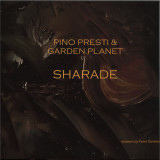
Beautiful release coming from Italy drawing inspiration from the intense colors of the works of the painter Tania Cantone on this work of love; "Sharade" by Pino Presti & Garden Planet. Mediterranean and Balearic lushness from the talented Pino Presti, and the eclectic keyboardist Claudio Calzolari, his son Andrea Calzolari, bass player Andrea Verardi and the organist Guido Mazzella. All together they created that magic, that long-forgotten, set aside, almost hidden atmosphere, which covers various genres such as lounge, future jazz, bossa-nova, ambient, which obviously includes chillout and downtempo vibes from the hot summer nights in the Mediterranean. So much vibes on this one release coming from the Italian friends of BEST Record! Recommened!
Sunna Margrét releases 'Five Songs for Swimming' out on No Salad Records. It is the first release since her award winning EP 'Art of History' that won the annual Kraumur award in 2019 and was twice nominated at the Iceland Music Awards for best song and best album of the year.
'Five Songs for Swimming' includes 5 original songs and a cover. They follow a continuous thread of water and flow and yet Sunna Margre?t keeps close to her influences of bizarre human interactions, present in her lyrics throughout the EP and borrowing the words of New York legends the Feelies on the last song 'When To Go' cover.
It is safe to say that the new release comes to life after loss occurs. This composition of music and lyrics is written in memory of Sunna Margre?t's grandmother, Unnur A?gu?stsdo?ttir, who passed away in February 2021. She was a swimmer in her early life, a champion in Iceland in the 40's, as well as a soprano singer, teacher, bird lover and lifelong inspiration.
- A1: Dixie Chicken (2023 Remaster)
- A2: Two Trains (2023 Remaster)
- A3: Roll Um Easy (2023 Remaster)
- A4: On Your Way Down (2023 Remaster)
- A5: Kiss It Off (2023 Remaster)
- B1: Fool Yourself (2023 Remaster)
- B2: Walkin’ All Night (2023 Remaster)
- B3: Fat Man In The Bathtub (2023 Remaster)
- B4: Juliette (2023 Remaster)
- B5: Lafayette Railroad (2023 Remaster)
- C1: Two Trains (Demo)
- C2: Fat Man In The Bathtub (Demo)
- C3: Walkin’ All Night (Alternate Version)*
- C4: Roll Um Easy (Alternate Version)*
- C5: On Your Way Down (Alternate Version)*
- D1: Eldorado Slim
- D2: Juliette (Alternate Version)*
- D3: Hi Roller (Ace In The Hole)
- D4: Dixie Chicken (Alternate Version)*
- E1: Two Trains (Live At Paul’s Mall, Boston, Ma 4/1/73)*
- E2: Got No Shadow (Live At Paul’s Mall, Boston, Ma 4/1/73)*
- E3: On Your Way Down (Live At Paul’s Mall, Boston, Ma 4/1/73)*
- F1: Walkin’ All Night (Live At Paul’s Mall, Boston, Ma 4/1/73)*
- F2: Fat Man In The Bathtub (Live At Paul’s Mall, Boston, Ma 4/1/73)*
- F3: Willin’ (Live At Paul’s Mall, Boston, Ma 4/1/73)*
- F4: A Apolitical Blues (Live At Paul’s Mall, Boston, Ma 4/1/73)*
Little Feat is the quintessential “cult” band. Started by Lowell George, 1972’s Sailin’ Shoes captures these musical rebels at one of their early peaks. The songs on Sailin’ Shoes are a masterful collage of inventive narrative, resplendent in countercultural irony and romance. Featuring the classic tracks “Willin’” (covered by Linda Rondstadt and many others), “Easy to Slip” (originally written for the Doobie Brothers) and the title track, it’s an album whose status has grown immeasurably, making it one of the most acclaimed releases of its era. With 1973’s Dixie Chicken, Little Feat found its signature sound as a band, producing a seductive, laid-back, funky record made up of what is arguably Lowell George's best-ever set of songs. With tracks that sound easy but are quite sophisticated, fans will enjoy hits like the rolling "Two Trains," the deeply soulful and funny "Fat Man in the Bathtub" and the country-funkified title track (which was covered nearly as frequently as "Willin'"). These deluxe editions include the original albums remastered and recut from the original tapes, alongside previously unreleased studio outtakes and demos, and complete unreleased live shows. It’s a treasure trove of material for their feverish fan base, and the first ever deep dive into one of the most influential bands from the 70’s Warner catalog.
[a] A1. DIXIE CHICKEN (2023 REMASTER) [3:55]
[b] A2. TWO TRAINS (2023 REMASTER) [3:06]
[c] A3. ROLL UM EASY (2023 REMASTER) [2:30]
[d] A4. ON YOUR WAY DOWN (2023 REMASTER) [5:31]
[e] A5. KISS IT OFF (2023 REMASTER) [2:56]
[f] B1. FOOL YOURSELF (2023 REMASTER) [3:10]
[g] B2. WALKIN’ ALL NIGHT (2023 REMASTER) [3:35]
[h] B3. FAT MAN IN THE BATHTUB (2023 REMASTER) [4:29]
[i] B4. JULIETTE (2023 REMASTER) [3:20]
[j] B5. LAFAYETTE RAILROAD (2023 REMASTER) [3:40]
[k] C1. TWO TRAINS (DEMO) [3:19]
[l] C2. FAT MAN IN THE BATHTUB (DEMO) [3:56]
[m] C3. WALKIN’ ALL NIGHT (ALTERNATE VERSION)* [3:40]
[n] C4. ROLL UM EASY (ALTERNATE VERSION)* [2:36]
[o] C5. ON YOUR WAY DOWN (ALTERNATE VERSION)* [5:57]
[p] D1. ELDORADO SLIM [4:42]
[q] D2. JULIETTE (ALTERNATE VERSION)* [3:34]
[r] D3. HI ROLLER (ACE IN THE HOLE) [3:27]
[s] D4. DIXIE CHICKEN (ALTERNATE VERSION)* [4:06]
[t] E1. TWO TRAINS (LIVE AT PAUL’S MALL, BOSTON, MA 4/1/73)* [3:23]
[u] E2. GOT NO SHADOW (LIVE AT PAUL’S MALL, BOSTON, MA 4/1/73)* [6:35]
[v] E3. ON YOUR WAY DOWN (LIVE AT PAUL’S MALL, BOSTON, MA 4/1/73)* [6:26]
[w] F1. WALKIN’ ALL NIGHT (LIVE AT PAUL’S MALL, BOSTON, MA 4/1/73)*[3:34]
[x] F2. FAT MAN IN THE BATHTUB (LIVE AT PAUL’S MALL, BOSTON, MA 4/1/73)* [5:31]
[y] F3. WILLIN’ (LIVE AT PAUL’S MALL, BOSTON, MA 4/1/73)* [4:31]
[z] F4. A APOLITICAL BLUES (LIVE AT PAUL’S MALL, BOSTON, MA 4/1/73)* [3:33]
- A1: Easy To Slip (2023 Remaster)
- A2: Cold, Cold Cold (2023 Remaster)
- A3: Trouble (2023 Remaster)
- A4: Tripe Face Boogie (2023 Remaster)
- A5: Willin’ (2023 Remaster)
- A6: A Apolitical Blues (2023 Remaster)
- B1: Sailin’ Shoes (2023 Remaster)
- B2: Teenage Nervous Breakdown (2023 Remaster)
- B3: Got No Shadow (2023 Remaster)
- B4: Cat Fever (2023 Remaster)
- B5: Texas Rose Cafe (2023 Remaster)
- C1: Sailin’ Shoes (Demo)*
- C2: Easy To Fall (Easy To Slip)
- C3: Texas Rose Café (Demo For Doobie Bros.)
- C4: Cold, Cold, Cold (Alternate Version)*
- C5: Roto/Tone
- D1: A Apolitical Blues (Alternate Version)*
- D2: Boogie – Tripe Face Boogie
- D3: Trouble (Alternate Version)*
- D4: Doriville
- D5: Willin’ (Alternate Version)*
- D6: Easy To Slip (Mono Single Version)
- E1: Tripe Face Boogie (Live At The Palladium, Los Angeles, Ca 8/28/71)*
- E2: Hamburger Midnight (Live At The Palladium, Los Angeles, Ca 8/28/71)*
- E3: Cat Fever (Live At The Palladium, Los Angeles, Ca 8/28/71)*
- E4: Willin’ (Live At The Palladium, Los Angeles, Ca 8/28/71)*
- E5: Strawberry Flats (Live At The Palladium, Los Angeles, Ca 8/28/71)*
- F1: Got No Shadow (Live At The Palladium, Los Angeles, Ca 8/28/71)*
- F2: Texas Rose Café (Live At The Palladium, Los Angeles, Ca 8/28/71)*
- F3: Snakes On Everything (Live At The Palladium, Los Angeles, Ca 8/28/71)*
- F4: Hot Rod (Eldorado Slim)
- F5: Teenage Nervous Breakdown (Live At The Palladium, Los Angeles, Ca 8/28/71)*
Little Feat is the quintessential “cult” band. Started by Lowell George, 1972’s Sailin’ Shoes captures these musical rebels at one of their early peaks. The songs on Sailin’ Shoes are a masterful collage of inventive narrative, resplendent in countercultural irony and romance. Featuring the classic tracks “Willin’” (covered by Linda Rondstadt and many others), “Easy to Slip” (originally written for the Doobie Brothers) and the title track, it’s an album whose status has grown immeasurably, making it one of the most acclaimed releases of its era. With 1973’s Dixie Chicken, Little Feat found its signature sound as a band, producing a seductive, laid-back, funky record made up of what is arguably Lowell George's best-ever set of songs. With tracks that sound easy but are quite sophisticated, fans will enjoy hits like the rolling "Two Trains," the deeply soulful and funny "Fat Man in the Bathtub" and the country-funkified title track (which was covered nearly as frequently as "Willin'"). These deluxe editions include the original albums remastered and recut from the original tapes, alongside previously unreleased studio outtakes and demos, and complete unreleased live shows. It’s a treasure trove of material for their feverish fan base, and the first ever deep dive into one of the most influential bands from the 70’s Warner catalog.
[a] A1. EASY TO SLIP (2023 REMASTER) [3:19]
[b] A2. COLD, COLD COLD (2023 REMASTER) [3:58]
[c] A3. TROUBLE (2023 REMASTER) [2:15]
[d] A4. TRIPE FACE BOOGIE (2023 REMASTER) [3:14]
[e] A5. WILLIN’ (2023 REMASTER) [2:54]
[f] A6. A APOLITICAL BLUES (2023 REMASTER) [3:25]
[g] B1. SAILIN’ SHOES (2023 REMASTER) [2:49]
[h] B2. TEENAGE NERVOUS BREAKDOWN (2023 REMASTER) [2:10]
[i] B3. GOT NO SHADOW (2023 REMASTER) [5:05]
[j] B4. CAT FEVER (2023 REMASTER) [4:35]
[k] B5. TEXAS ROSE CAFE (2023 REMASTER) [3:43]
[l] C1. SAILIN’ SHOES (DEMO)* [2:57]
[m] C2. EASY TO FALL (EASY TO SLIP) [DEMO FOR DOOBIE BROS.] [2:41]
[n] C3. TEXAS ROSE CAFÉ (DEMO FOR DOOBIE BROS.) [3:24]
[o] C4. COLD, COLD, COLD (ALTERNATE VERSION)* [4:17]
[p] C5. ROTO/TONE [4:07]
[q] D1. A APOLITICAL BLUES (ALTERNATE VERSION)* [3:46]
[r] D2. BOOGIE – TRIPE FACE BOOGIE [3:58]
[s] D3. TROUBLE (ALTERNATE VERSION)* [2:23]
[t] D4. DORIVILLE [2:44]
[u] D5. WILLIN’ (ALTERNATE VERSION)* [3:00]
[w] E1. TRIPE FACE BOOGIE (LIVE AT THE PALLADIUM, LOS ANGELES, CA 8/28/71)* [4:30]
[x] E2. HAMBURGER MIDNIGHT (LIVE AT THE PALLADIUM, LOS ANGELES, CA 8/28/71)* [3:41]
[y] E3. CAT FEVER (LIVE AT THE PALLADIUM, LOS ANGELES, CA 8/28/71)*[5:19]
[z] E4. WILLIN’ (LIVE AT THE PALLADIUM, LOS ANGELES, CA 8/28/71)* [4:06]
[xa] E5. STRAWBERRY FLATS (LIVE AT THE PALLADIUM, LOS ANGELES, CA 8/28/71)* [3:11]
[xb] F1. GOT NO SHADOW (LIVE AT THE PALLADIUM, LOS ANGELES, CA 8/28/71)* [5:08]
[xc] F2. TEXAS ROSE CAFÉ (LIVE AT THE PALLADIUM, LOS ANGELES, CA 8/28/71)* [4:05]
[xd] F3. SNAKES ON EVERYTHING (LIVE AT THE PALLADIUM, LOS ANGELES, CA 8/28/71)* [4:18]
[xe] F4. HOT ROD (ELDORADO SLIM) [LIVE AT THE PALLADIUM, LOS ANGELES, CA 8/28/71]* [5:08]
- 1: Libertude
- 2: 100-99 (Ft. Goldlink)
- 3: Memo Of Hate
- 4: Downtown Fred
- 5: Old Man
- 6: Home Again
- 7: I Got You
- 8: Darlin
- 9: 5. Thoughtful Distress (Ft. Matt Helders & Steve Stevens)
- 1: Fast Kitten
- 2: Caught By Night
- 3: I'd Never Leave
- 4: Dead Air
- 5: One Chance
- 6: Never Stop
- 7: False Alarm
- 8: 13. Remember (Ft. Rainsford)
- 9: 818
- 10: 19. Alright Tomorrow (Ft. Rainsford)
Yellow/Green/Black[28,57 €]
Pop/rock singer, songwriter, and guitarist Albert Hammond Jr. is the lead & rhythm guitarist and songwriting member of the GRAMMY® and BRIT Awards-winning band The Strokes. He has released 4 solo albums to date, most recently the acclaimed “Francis Trouble” in 2018 which spawned the radio single “Far Away Truths”. In the 4 years, since then, The Strokes released their US Top 10 charting GRAMMY® nominated rock record “The New Abnormal” and toured the world extensively. Albert also began the songwriting process for his 5th solo album “Melodies on Hiatus”, a 19-track album, crafted in a most experimental style. Albert teamed up with his writing partner, Canadian songwriter, and poet Simon Wilcox (whom he never met during the process) and had lengthy conversations via the telephone; Simon would jot down notes from Albert’s stream of consciousness, and draft the lyrics on her typewriter, and drop them into his letterbox! Albert then added the lyrics to the melodies he had already crafted. The songwriting process became a long distant “anonymous love affair of ideas & lyrics.” The album covers themes of childhood, surviving adolescence, adulthood, vulnerability, fame, relationship with self and others, and is Albert’s “deconstructed broken down ego reaction” to “Francis Trouble.” The album also features songs with GoldLink, Matt Helders (of the Arctic Monkeys), Steve Stevens and Rainsford, and was mixed by Tony Hoffer (known for his work with Beck, Air, M83, The Kooks, Fitz and the Tantrums, Metric, Chromeo, etc.) and mastered by Dave Cooley at Elysian Masters (Paramore, Spoon, Tame Impala, Jimmy Eat World, Peanut Butter Wolfe).
- 1: Little Plastic Castle (2023 Remaster)
- 2: Fuel (03 Remaster)
- 3: Gravel (202 Remaster)
- 4: As Is (2023 Remaster)
- 5: Two Little Girls (2023 Remaster)
- 6: Deep Dish (2023 Remaster)
- 7: Loom (2023 Remaster)
- 8: Pixie (2023 Remaster)
- 9: Swan Dive (2023 Remaster)
- 10: Glass House (2023 Remaster)
- 11: Independence Day (2023 Remaster)
- 12: Pulse (2023 Remaster)
- 13: Gravel (Bed Tracks)
- 14: As Is (Bed Tracks)
- 15: Two Little Girls (Bed Tracks)
Orange Vinyl[39,92 €]
Twenty-five years later, Little Plastic Castle feels like a greatest hits collection. Her highest charting release on Billboard (peaking at #22) and containing her third Grammy nomination for Best Rock Performance - Female (“Glass House”), Ani DiFranco’s ninth studio album shows the Little Folksinger grappling with her independent career bubbling up into the mainstream — dissection of her fashion choices, a new expanded listenership encroaching on the die-hards, examination of what it means to sell out — encapsulated in singalongs so indelible that they’re staples of her live set decades later. This 25th Anniversary Edition sees a new remaster by Heba Kadry, the addition of three bonus tracks mixed by Tchad Blake, and a new CD package and first-time release on vinyl (2 LP). To make Little Plastic Castle, Ani returned to one of her favorite places to record in that era—the live-in studio the Congress House in Austin, Texas. In this relaxed setting she commented, "This album seemed to happen more organically than earlier studio releases." Ani is joined by drummer Andy Stochansky and bassist Jason Mercer who played with her on her 1997 tours, as well as bassist Sara Lee who toured with Ani in 1996. LPC also prominently features outside musicians including drummer Jerry Marotta (Peter Gabriel, Indigo Girls), a horn section composed of three Austin session musicians who add flavor to "Little Plastic Castle" and "Deep Dish," and trumpeter Jon Hassell (Brian Eno, Talking Heads) providing the sustained subtle solo on the 14-minute final track "Pulse." The three bonus tracks are recordings of Ani playing with the rhythm section of Sara Lee and Jerry Marotta, a trio that never reassembled after their single day of tracking. Though Ani described it as “the most light-hearted album I’ve made in a long time,” this record covers a wide range of topics — the impermanence of existence ("Fuel"), mutual respect ("Pixie"), forgiveness ("As Is"), drugs (“Two Little Girls”) — and emotions.
- 1: Little Plastic Castle (2023 Remaster)
- 2: Fuel (03 Remaster)
- 3: Gravel (202 Remaster)
- 4: As Is (2023 Remaster)
- 5: Two Little Girls (2023 Remaster)
- 6: Deep Dish (2023 Remaster)
- 7: Loom (2023 Remaster)
- 8: Pixie (2023 Remaster)
- 9: Swan Dive (2023 Remaster)
- 10: Glass House (2023 Remaster)
- 11: Independence Day (2023 Remaster)
- 12: Pulse (2023 Remaster)
- 13: Gravel (Bed Tracks)
- 14: As Is (Bed Tracks)
- 15: Two Little Girls (Bed Tracks)
Black Vinyl[39,92 €]
Twenty-five years later, Little Plastic Castle feels like a greatest hits collection. Her highest charting release on Billboard (peaking at #22) and containing her third Grammy nomination for Best Rock Performance - Female (“Glass House”), Ani DiFranco’s ninth studio album shows the Little Folksinger grappling with her independent career bubbling up into the mainstream — dissection of her fashion choices, a new expanded listenership encroaching on the die-hards, examination of what it means to sell out — encapsulated in singalongs so indelible that they’re staples of her live set decades later. This 25th Anniversary Edition sees a new remaster by Heba Kadry, the addition of three bonus tracks mixed by Tchad Blake, and a new CD package and first-time release on vinyl (2 LP). To make Little Plastic Castle, Ani returned to one of her favorite places to record in that era—the live-in studio the Congress House in Austin, Texas. In this relaxed setting she commented, "This album seemed to happen more organically than earlier studio releases." Ani is joined by drummer Andy Stochansky and bassist Jason Mercer who played with her on her 1997 tours, as well as bassist Sara Lee who toured with Ani in 1996. LPC also prominently features outside musicians including drummer Jerry Marotta (Peter Gabriel, Indigo Girls), a horn section composed of three Austin session musicians who add flavor to "Little Plastic Castle" and "Deep Dish," and trumpeter Jon Hassell (Brian Eno, Talking Heads) providing the sustained subtle solo on the 14-minute final track "Pulse." The three bonus tracks are recordings of Ani playing with the rhythm section of Sara Lee and Jerry Marotta, a trio that never reassembled after their single day of tracking. Though Ani described it as “the most light-hearted album I’ve made in a long time,” this record covers a wide range of topics — the impermanence of existence ("Fuel"), mutual respect ("Pixie"), forgiveness ("As Is"), drugs (“Two Little Girls”) — and emotions.
DeathCollector started as a way of filling time during Covid lockdowns. Guitarist Mick Carey (Zealot Cult/Brigante) and drummer Andy Whale (Bolt Thrower/Darkened) kept busy working on classic & current metal covers with friends, which were shared across social media. After deciding to work on original material, vocalist Kieran Scott(Ashen Crown/Grimorte) and bassist Lee Cummings(Severe Lacerations/Bloodshed) came on board and DeathCollector was born. On the buzz surrounding the debut EP “Times Up”, DeathCollector was signed to Prosthetic Records, and work started on the debut full length album “Death’s Toll” started to take shape "The idea behind the band is to make honest straight forward music we like,its a mixture of Death Metal/Hardcore and Punk, the later of which has always been at the root of Death Metal music in the UK"
- 1: Home
- 2: Prana 10:9
- 3: Holy 0:58
- 4: Amok
- 5: Open
- 6: Game Over
When I first heard Natalie Rose LeBrecht's time-suspending, air-ionizing music, more than twenty years ago, I thought "this kid is on to something." She's been proving that thought right ever since. Her recordings, from the teenage 4-track tapes she made as Greenpot Bluepot to the recent albums under her own name, have been fascinating dispatches from her progressively deeper dives into her gorgeous, weird, wildly idiomatic aesthetic. Holy Prana Open Game is a jewel of intensely personal cosmic music, created through a remarkable process of openness, craftiness, addition and subtraction. It belongs to a tradition of albums that document a rich, meditative sound as it rises up to join the world outside its creators' minds: Alice Coltrane's Universal Consciousness, Harmonia's Musik von Harmonia, Philip Glass's North Star, Talk Talk's Laughing Stock.
"Meditative" is specifically the idea here: Holy Prana Open Game had its origins in the fourteen days LeBrecht spent silently meditating in her home's small music room in the summer of 2019. "I came out of that bursting with the will to create new music," she says, and she created it sound-first. LeBrecht taught herself to program an analog synthesizer's timbres from scratch, and built a new set of glacial, heady compositions out of them, eventually singing to accompany the keyboard parts she was playing.
Then she closed her eyes at her computer, "let my mind be clear and open, imagined light pouring down through me, and began auto-writing to my memory of the music playing through my mind. Most of the lyrics emerged this way, and then I used my conscious mind to refine them a bit at the end." One other song came along with LeBrecht's new pieces, a cover that seems wildly unlikely from the outside and makes total sense in its context: it's a version of Atoms for Peace's "Amok" (which had been created by improvisation and editing, too), mutated into her own idiolect.
In early March of 2020, LeBrecht recorded Holy Prana Open Game's analog synth parts with Martin Bisi at his studio in Brooklyn--and then the world shut down. As you may have gathered, LeBrecht is very much a spiritual, head-in-the-stars type. She is also extremely hardcore, and if making the art she wants to make means doing things the hard way, she cracks her knuckles and gets down to it. Within weeks, she had taught herself how to record, mix and edit with a digital audio workstation. She recorded her vocal parts (sometimes multi-tracked into a radiant choir) at home, assembled a rough mix of the album, and sent it off to her collaborators.
LeBrecht spent some years studying with and assisting La Monte Young and Marian Zazeela at their legendary sound-and-light installation, the Dream House. As with their work, her singular, precisely focused vision is shored up by its openness to artistic voices beyond her own. For Holy Prana Open Game, she worked with the Australian guitarist Mick Turner and drummer Jim White (both of Dirty Three, the Tren Brothers and innumerable other projects), as well as woodwind player David Lackner, a longtime presence on her recordings.
Turner and White have been playing together in one context or another since 1985; in the summer of 2020, they were only blocks from each other in Melbourne, Australia, whose strict lockdown meant they couldn't meet up to record together. So both of them, as well as Lackner, recorded their improvisational additions to LeBrecht's rough mixes individually, often without hearing each other's contributions. "I had asked them to play as much as they could on each track," she says, "and told them that I would edit it all down in post, so I had a lot of source material of theirs to work with."
LeBrecht arranged and edited the recordings from all four of their homes to flow together like breath across the duration of her suite. Prana, one of the album's central conceits, is in fact the Sanskrit word for breath, with the connotation of the breath of life. Like LeBrecht's music, prana flows at its own pace, and demands stillness to take in fully--but it's also subtly playful and surprising, a force that can be as light as air or as immersive as the atmosphere itself.