Dark Entries again shines a spotlight on bathhouse disco don Patrick Cowley with a newly remastered release of Kickin’ In. Although Cowley tragically passed from AIDS-related illness in 1982, he left an extensive archive of unreleased tapes, many of which Dark Entries has had the honor of releasing. While working as a lighting technician at The City, SF’s disco cabaret, Cowley saw rising star Frank Loverde perform. Cowley asked Loverde to contribute vocals to some material in progress, and Frank, Linda Imperial, and Peggy Gibbons joined Cowley in the studio. The resulting songs included “Kickin’ In,” a 9-minute cybernetic disco stormer that taps into the essence of Cowley’s hi-NRG sound: equal parts spaced out and zoned in on the dancefloor. In May 1978 Cowley joined Loverde on stage at The City to perform “Kickin’ In” as they opened for disco diva Sylvester.
“Kickin’ In” was initially released in 2015 via Honey Soundsystem who found the tapes in the basement of Megatone Records owner John Hedges. This newly remastered version was made possible due to the discovery of the original multi-track recordings of "Kickin’ In," allowing for a fresh mixdown by Jim Hopkins as well as the creation of a new instrumental version. Also included are two impeccably sleazy Cowley jams recorded in 1980, “Thief of Love” and “Make It Come Loose.” Cowley narrates excerpts from his erotic journals on these raunchy slow-burners, capturing the vibe of SF’s leather bars and backrooms. “Thief of Love” features frequent Cowley collaborator Paul Parker on background vocals. This reissue of Kickin’ In includes features an illustration by Gwenaël Rattke that originally appeared Cowley’s erotic journal, Mechanical Fantasy Box, as well as a postcard with lyrics. “Patrick parted the veil and entered a dark world of forbidden vices, wondrous musical panoramas and bold, strident, hopeful possibilities. Patrick brought the future to us and laid it at our feet.” – David Diebold, Tribal Rites
Pinwheel Dewdrop / Blue Vinyl, limited to 200 copies. BANE's legendary album "Don't Wait Up" is getting the deluxe treatment from End Hits Records for its 10th anniversary! Released in the spring of 2014 as End Hits No. 10, it marked the beginning of the end for the iconic hardcore band. Initially, the band intended to record a final 7" to support a two-year-long farewell tour around the globe. However, they were eventually convinced by the label to record and release a full album instead. Upon release, "Don't Wait Up" was an instant success among supporters and critics alike. BANE embarked on a successful final tour and then called it quits. "Don't Wait Up" became a holy grail for vinyl collectors in the meantime. But the stars aligned, and much to the delight of hardcore enthusiasts around the world, the band came back together to tour again. To celebrate this landmark release and the return of BANE as a live band, End Hits Records is releasing an extraordinarily packed re-release of this classic album. The packaging features a deluxe gatefold sleeve with die cuts and is enhanced with layers of glow-in-the-dark lacquer. The ultra-limited anniversary reissue is available now from End Hits Records.
Zum 50.-jährigen Jubiläum der Band erscheint am 2. September das Album „The Best Of Roxy Music”, welches 8 ihrer Studioalben enthält.
Diese Sammlung wird zum ersten Mal auf Vinyl veröffentlicht und enthält alle klassischen Singles wie ”More Than This”, ”Jealous Guy”, ”Love Is The Drug” und ”Virginia Plain”. „The Best Of Roxy Music“
wurde von Miles Showell in den Abbey Road Studios in half speed neu geschnitten und enthält ein neues überarbeitetes Artwork, komplett mit einem glänzenden Laminat-Gatefold-Finish.
out of Stock
Last delivered 2 years ago available to reorder, subject to availability
Comparsa is the third studio release by the musical group Deep Forest. The group consists of the duo Michel Sanchez and Éric Mouquet and are known by composing a style of world music, mixing ethnic with electronic sounds and beats. Comparsa features a pronounced focus on Latin and Caribbean grooves, provided by musicians from Cuba, Belize, Mexico and Madagascar, among other places. It became #8 French export album of 1998 and was certified Platinum by SNEP Export Awards, with more than 500,000 albums sold outside France.
Immerse yourself in a unique narrative experience, embarking on a vibrant journey that will awaken your senses and evoke warm memories.
Play as Mimi, exploring the precious recollections of your childhood and the times shared with your late grandmother. As past meets present, confront your adult choices with fond childhood memories to uncover lost family secrets.
For the OST, SUPERNAIVE brothers oscillates between melancholy and wonder. They build a strong narrative throughout the songs, taking the listener by the hand to discover their unique poetic universe.
Previously Unreleased Recording. Limited to 1200 copies on transparent cherry vinyl. Tip-on jacket, Download code. Insert featuring LP sized original art by Grungie O'Muck. Includes the original recording of Richard Tucker's "Are You Leaving For The Country", later covered by Karen Dalton, and the only song co-written by Karen & Richard, "Sleeping In The Garden". "Richard, Cam & Bert seem to have grasped The Great Harmony. That is, ensemble singing that is at once sweet, precise, funky and a bit sardonic..." -Mike Jahn / New York Times (1970) "For a few years in the late sixties and early seventies Richard Cam & Bert ruled MacDougal St. walking a fine line between the increasingly commercialized demands created by groups like Crosby Stills and Nash and the fierce integrity of earlier folk performers, the generation to which Richard belonged. They managed this with great aplomb, producing original tunes of great integrity and obvious folkloric origins, as well as those which expressed the anarchic omnipresent psychedelia of the moment. They also never abandoned the idea of including some traditional material in their performances. But for the usual random application of luck they could have been very big." - Grungie O'Muck / Artist, Bluesman, Cover artist for their first album and contributor to this one. Richard Tucker, Campbell Bruce, and Bert Lee coalesced as a trio in the spring of 1968, and by the end of that year had become regular performers at fabled Greenwich Village nightspots - The Gaslight, The Bag I'm In, Cafe Feenjon, among others. But mostly they were street singers, busking regularly in Central Park. Their only LP, Limited Edition, was released in 1970, and sold mainly at gigs and on the street. Somewhere in The Stars compiles earlier, previously unreleased recordings, when all three members were signed with Peer-Southern Music publishers as writers and began using their studio to make demos and experiment musically. Beautifully recorded by house engineer Charlie Mack (supervised by Jimmy Ienner), the demos capture a back room casualness and rustic, homespun quality. For me, listening to their songs and harmonies is like entering a world you always hoped existed but had never experienced. Some of the songs were re-recorded the following year for Limited Edition, but many are heard here for the first time. Among them is the original demo for Richard Tucker's song, "Are You Leaving For The Country", which Karen Dalton covered on her seminal 1971 release, In My Own Time. Richard and Karen were husband and wife for much of the 1960s, performing as a duo (initially as a trio with Tim Hardin), and navigating their time on the Village scene while alternating living in a small mining town outside Boulder, Co. before splitting up in 1967. Also making its debut, is the only song Richard and Karen ever wrote together, the haunting "Sleeping In The Garden". Also contains two epic songs by Cam "One Of These First Nights", and "Stockholm") not on their LP, but staples of their live performances, and noted in a gig review by The New York Times, and in a column by future A&R hero, Karin Berg, who was an early champion. Another rarity is the only cover of "Sweet Mama" by Fred Neil we've ever heard. Campell Bruce came to New York in 1967 as lead singer with a band from Washington, DC, The Natty Bumpo. They'd recently signed a record deal with Phillips, but were falling apart. Cam landed in the Village with an acoustic guitar and first started playing and singing in the basket houses, and shortly thereafter at The Gaslight, as the "Cam Bruce Trio" (which included Collin Walcott). After opening for Mose Allison, Cam's hero, the trio went their separate ways, and Cam returned to regular solo gigs at The Flamenco, and the basket houses on Bleecker. Richard and Cam met up on that scene and quickly found a musical kinship as well as becoming best pals. Bert Lee arrived in New York as a runaway the following winter, and began playing and sleeping wherever he could. His sometime accompanist, Ron Price, introduced Bert to Richard and Cam just as Bert's own songs were garnering attention from publishers. According to Bert, "I arrived on the New York scene during a time of great change, and it was the notion of change that influenced me. All around me I saw there were two sorts of songwriters, on the one hand dedicated to the traditions that had inspired them, folk, jazz, the American songbook. On the other hand were songwriters influenced by the wave of experimentation that The Beatles were the perfect example of. Mixing genres, writing lyrics that weren't just about ordinary love and loss. Richard Tucker was a country blues player, with a relaxed and melodic approach to the craft. Cam wrote something more akin to soul songs, with a hint of jazz in the changes. I was writing tunes that sometimes drew on classical structures with a tendency toward what I suppose would be known as prog-rock. But I was rather adamant about not being pinned down stylistically, and so I would write, for example, a song based on some complex classical chord structure, and then go right ahead and write a simple folk song, like Evelyn. Our band was popular locally, and it was this variety that made it distinct." Delmore is excited to present this unearthed treasure, fifteen years in the making. In the words of Richard Tucker, "Tap on your knee, roll on the floor; if you aint free, what's it all for?" "The trio's singing, playing, and writing have all withstood the test of time. Believe me, because I was there. In 1969 R,C&B, myself, Charles John Quarto, David Bromberg, Ron Price, and Keith Sykes were just a few of that year's crop of song-slingers. We were young turks back then, out on the prowl in New York's Greenwich Village for record deals, gigs, and beautiful young women to sleep with and maybe even write a song about. I've lost the names and numbers of those lovelies and I'm not sure what happened to Ron Price, but Richard, Cam, and Bert are back! - Loudon Wainwright lll
There are ghosts all across AVANTI, the debut album from Malice K. At points it's howling and unhinged, a grungy layer atop a lush foundation of melodic capital-s Songwriting, but in other moments it dissolves into a gentle, wistful haunting. Malice K's songs are blunt, uncomplicated and unflinching as he probes the interiority of memories, of mistakes - saturated with an innate intensity that sucks you into his gnarled and visceral world, so barbed it could draw blood. Malice K is helmed by visual artist and songwriter Alex Konschuh, New York-based but born and raised in Olympia, Washington. Following a stint living in Los Angeles, where he became a member of the artist collective Death Proof Inc., a trip to New York resulted in him simply never leaving the city. A period of chaos ensued, Malice K exhausted and unmoored and ultimately, unwell. The record is unpredictable across its 11 songs. The album opens with a jarring scream on "Halloween," Malice K's breathless vocals buried beneath a grungy, roving Nineties riff. The track emanates a manic energy, enveloping. It's a fitting entrypoint for the record, and for the vividness of Malice K. The snarling and obsessive "You're My Girl" has a swaggering paranoia: "I got so high I thought my hand touching my hand was your hand." But AVANTI exists in quieter moments too; "Radio," with its fluttering morose cello, moves at an almost glacial pace comparatively. The aching wistfulness of "The Old House" is an album stand-out, anchored in an acoustic guitar, an uneasy lullaby that never quite settles into itself: "I think to myself I got the things that I wanted, but I can't help think there's something else that I forgot to do." A recent press interview called Malice K a shapeshifter, but he's not amorphous in that way. He's decisive and intense, more concerned with carving his own path, and building his own world. Every part of Malice K is distinctly himself: from his sweaty high-octane shows to the high-flash high-contrast photos; from his gnarled and unsettling illustrations to the studio recordings that vacillate between grief and tenderness, there's an exceptional ferocity across everything Malice K touches. AVANTI feels lived in, like peering into an abandoned house through a window smeared with grimy fingerprints, relics of a life well-lived scattered inside - despite being a debut, there's the sense that Malice K arrived fully-realized, imperfections and all.
There are ghosts all across AVANTI, the debut album from Malice K. At points it's howling and unhinged, a grungy layer atop a lush foundation of melodic capital-s Songwriting, but in other moments it dissolves into a gentle, wistful haunting. Malice K's songs are blunt, uncomplicated and unflinching as he probes the interiority of memories, of mistakes - saturated with an innate intensity that sucks you into his gnarled and visceral world, so barbed it could draw blood. Malice K is helmed by visual artist and songwriter Alex Konschuh, New York-based but born and raised in Olympia, Washington. Following a stint living in Los Angeles, where he became a member of the artist collective Death Proof Inc., a trip to New York resulted in him simply never leaving the city. A period of chaos ensued, Malice K exhausted and unmoored and ultimately, unwell. The record is unpredictable across its 11 songs. The album opens with a jarring scream on "Halloween," Malice K's breathless vocals buried beneath a grungy, roving Nineties riff. The track emanates a manic energy, enveloping. It's a fitting entrypoint for the record, and for the vividness of Malice K. The snarling and obsessive "You're My Girl" has a swaggering paranoia: "I got so high I thought my hand touching my hand was your hand." But AVANTI exists in quieter moments too; "Radio," with its fluttering morose cello, moves at an almost glacial pace comparatively. The aching wistfulness of "The Old House" is an album stand-out, anchored in an acoustic guitar, an uneasy lullaby that never quite settles into itself: "I think to myself I got the things that I wanted, but I can't help think there's something else that I forgot to do." A recent press interview called Malice K a shapeshifter, but he's not amorphous in that way. He's decisive and intense, more concerned with carving his own path, and building his own world. Every part of Malice K is distinctly himself: from his sweaty high-octane shows to the high-flash high-contrast photos; from his gnarled and unsettling illustrations to the studio recordings that vacillate between grief and tenderness, there's an exceptional ferocity across everything Malice K touches. AVANTI feels lived in, like peering into an abandoned house through a window smeared with grimy fingerprints, relics of a life well-lived scattered inside - despite being a debut, there's the sense that Malice K arrived fully-realized, imperfections and all.
The latest full-length from Kishi Bashi, Kantos is a work of exquisite duality: a party album about the possible end of humanity as we know it, at turns deeply unsettling and sublimely joyful. In a sonic departure from the symphonic folk of his critically lauded 2019 LP Omoiyari - a career-defining body of work born from his intensive meditation on the mass incarceration of Japanese-Americans during World War II - the Seattle-born singer/songwriter/producer's fifth studio album encompasses everything from Brazilian jazz and '70s funk to orchestral rock and city pop (a Japanese genre that peaked in the mid-'80s). Informed by an equally kaleidoscopic mix of inspirations - the cult-classic sci-fi novel series Hyperion Cantos, the writings of 18th century enlightenment philosopher Immanuel Kant, a revelatory trip to ancient ruins on the island of Crete - Kantos ultimately serves as an unbridled exaltation of the human spirit and all its wild complexities. During the earliest stages of creating songs for the album, Ishibashi's main intent was to return to his highly eclectic musical roots, in part by tapping into his jazz background and by delving into the dance-rock-leaning sensibilities he previously embraced as co-founder of Brooklyn-bred indie band Jupiter One. But not too long into the songwriting process, he stumbled upon an AI-equipped website capable of composing catchy song hooks based on a prompt - a turn of events that quickly catalyzed the existential inquiry at the heart of Kantos. Although his ruminations on AI, transhumanism, and humanity's troubled fate indelibly guided the making of Kantos, Ishibashi nonetheless views the album as "less of a warning about this kind of hubris but more a celebration of the very characteristics that make us human: desire, passion, empathy, and love." "If there's anything I want people to come away with when they hear this record, it's a feeling of excitement about the possibilities of human-created art," he says. "Even as we're learning more about all the amazing things AI can do, I think humans will always be one step ahead in terms of our creativity and innovation. There's still no limit to what we have to offer."
‘The Oakland band’s wide-ranging debut is a whirlwind of biting critique, nervy post-punk guitars, and absurdist humor. Rarely does a first record speak with such a trenchant voice.’ 7.5 PITCHFORK
‘Post-punk lovers have a new act to follow" - PASTE
Fake Fruit’s visceral indie rock operates so firmly in the present that it’s transportive and unmooring. The Oakland trio’s songs careen with volatile energy and lead singer Ham D’Amato’s lyrics are enveloped with acerbic humor and resonant perceptiveness. Though their new LP Mucho Mistrust is a sly reference to a beloved Blondie lyric, the title encapsulates both the anxieties of daily life, a bloodless music industry, and global capitalism as well as the clear-eyed skepticism needed to rebel against it. Across 12 propulsively unpredictable tracks, the album is both their most collaborative and most immediate yet.
Following the 2021 release of Fake Fruit’s self-titled debut LP, the band’s personal lives hit a turbulent and transformational period. “There were big life changes and I was so close to boiling over,” says D’Amato. “I left a bad relationship, entered a more stable and loving one, got diagnosed with alopecia, and I'm turning 30 soon too.” This personal upheaval was channeled into the explosive lead single “Mucho Mistrust.” The track is simultaneously disorienting and direct, with clanging guitars from Alex Post, off-kilter drums from Miles MacDiarmid, and D’Amato snarling, “How you gonna blame me / when you could’ve done something about it / it’s not right / How you gonna marinate me / in shitty things overnight.” She explains, “This song was a snapshot of how I got through a difficult year.”
Recorded live at the Bay Area’s Atomic Garden studio with producer Jack Shirley (Deafheaven, Home Is Where), the band’s palpable ferocity shines throughout the record. Single “Más o Menos” is searing punk, with buzzsaw guitars and surging bass. It’s a clenched-fist song, one where D’Amato sings, “I decided to assert myself / After I lost all my sense of self.” Later in the track, D’Amato, who is Chicana, sings in Spanish, “¡No me hables! / ¡No escuchare!” While some of these songs deal in heartbreak, they are charged with way bigger themes. “There's also wanting to break up with capitalism and feeling upset about things politically,” says D’Amato.
For the band, these themes are personal. “I'm managing us while I'm in between changing diapers in my day job as a nanny,” says D’Amato. “Everyone in the band still believes in it and is motivated to keep wading through the bullshit.” On this album, they had no choice but to bet on themselves and each other. No track broadcasts their evolution better than the single “Cause of Death,” which morphs from a gorgeous sax-laden banger to something cathartic and anthemic.
As adventurous and righteous as Mucho Mistrust gets, there’s still an inviting core that never takes itself too seriously. From the ripping “Cause of Death,” which self-deprecatingly takes aim at anxiety and indecision, to the searing title track, Fake Fruit imbue their songs with humor and heart. “Our band is fun,” says D’Amato. “My number one coping mechanism for all of life is to joke about it. Even when the album talks about serious things, I am proud of how funny it can be.”
The musical "Young, Gifted and Broke", written by Weldon Irvine as writer, musical director, and full lyricist/composer, was originally released in 1977. The musical was inspired by the Black Civil Rights anthem "Young, Gifted and Black," which Weldon wrote with Nina Shimone. The recording session brought together a group of talented musicians, including Marcus Miller, whose name had not yet reached international prominence, to breathe new life into Weldon's distinctive inserts. The recordings were discovered in the early 2010s and released on CD in 2012, and P-VINE is proud to be the first in the world to release them on vinyl!
The year 2020 sure wasn't the most ideal time to form a band, especially for a group of musicians who never played together before. But for New York rock quintet GIFT, this strangest of periods was the auspicious backdrop for a bold new sound - a dizzying blend of early shoegaze, classic `90s alternative rock and even modern pop. Indeed, that GIFT emerged somewhat fully formed on their 2022 debut album Momentary Presence was a testament to the creative possibilities laying deep within. Now, Illuminator, their Aug. 23 debut album for revered New York independent label Captured Tracks, is the long-awaited payoff of GIFT's ever-growing musical and human chemistry. And while nods are apparent to label forerunners such as Beach Fossils, DIIV and Wild Nothing, GIFT are shepherding those elements into wondrous new vessels for the present moment - sleek, often danceable and frequently mesmerizing. GIFT - vocalist/guitarist TJ Freda, multi-instrumentalists Jessica Gurewitz and Justin Hrabovsky, drummer Gabe Camarano and bassist Kallan Campbell - are firmly enmeshed in the New York scene as talent buyers, photographers, DJs, audio engineers, art directors and, in the case of Campbell, an owner of the beloved Brooklyn DIY venue Alphaville. GIFT introduced Illuminator with "Wish Me Away," their first new song in the 18 months since the debut. With its earworm guitar lines, propulsive rhythms, riveting vocals and mind-expanding aural flourishes, "Wish Me Away" is the perfect sonic springboard from Momentary Presence to where GIFT are going next. It's also a potent reminder that you can still preserve that twinkle in your eye even when you feel like everything's slipping away. On songs such as "Light Runner", "Going In Circles" and "Destination Illumination," Freda demonstrates a newfound confidence and versatility, embracing pop music as a vehicle. The relentless, often painful dance of love has never sounded as exhilarating as on "Going in Circles," while the strident tone poem "Water in My Lungs" conjures the unreal feeling of watching a romantic partner both figuratively and literally fade from view. "This album has a lot of themes of going fast, time passing and things changing," Freda says. Throughout, Freda and company thankfully do much of the hard work for us: falling in love, heartbreak. Watching events and moments go by like cars on the highway. People you once knew coming in and out. Grieving the loss of different phases. Watching everything happen simultaneously. For these and many other reasons, Illuminator, friends, will be the soundtrack to the throughline of your life.
Gilligan Moss - das aus Brooklyn stammende Duo, bestehend aus den Kindesfreunden Ben und Evan - ist mit seinem neuen Album “Speak Across Time” zurück auf ODESZA’s Foreign Family Collective!
Auf „Speaking Across Time“ kapselt jeder der zwölf Tracks des Albums persönliche Momente durch eine Linse der Zeitlosigkeit ein. 90er-Jahre-Rave, Old Country, 70er-Jahre-Soul, Honky-Tonk-Piano-House und sogar ein Sample des Dichters und langjährigen Mentors, David Mason, kollidieren unter Gilligan Moss' gekonnter Einbindung von Samples und moderner Tanzmusikproduktion.
Die Band arbeitete mit der bildenden Künstlerin, Orly Anan, in Mexiko-Stadt zusammen, um farbenfrohe Kostüme und Masken für das Single- und Album-Artwork zu kreieren. Das Kunstwerk ist eine Erkundung von Dualität, Spaltung, Zwillingsschaft und Zusammengehörigkeit. Orly war von entscheidender Bedeutung für diese Aufgabe.
Das Duo trat bereits auf namhaften Festivals wie Coachella, Pitchfork Paris und Electric Forest auf und spielte im Vorprogramm von u.a. Glass Animals, Toro Y Moi, Tourist, Chromeo, ODESZA, Elderbrook und vielen mehr.
Maggie Antone ist die neue timme im Alt-Country: Nachdem ihr Cover von Tyler Childers "Lady May" über eine Million Likes bei TikTok sammelte,
begann sie, an ihrem Debütalbum zu arbeiten.
Antones kommendes Album Rhinestoned mit zehn Songs ist ein überzeugender Beweis dafür, dass die aus Virginia stammende Sängerin das nächste
große Ding im Country sein könnte. Das Album, das auf ihrem eigenen Label Love Big via Thirty Tigers erscheint, baut auf dem durchschlagenden
Erfolg ihrer Debütsingle "Suburban Outlaw" auf. Auch wenn ihre Stimme einen in ihren Bann zieht, so ist es doch die Verletzlichkeit ihres
Songwritings, die einen immer wieder zurückkommen lässt.
Originally released in 1996 as a limited fan-club pressing for Rockathon, Guided By Voices’ Tonics And Twisted Chasers has always existed as an anomaly in Robert Pollard’s vast discography. In many ways, the album serves as the tail of a creative comet that in just two years included the “classic line-up” trilogy of Bee Thousand, Alien Lanes, Under the Bushes, Under the Stars and countless singles that crammed endless hooks in their grooves. In the intervening space, Tonics And Twisted Chasers has taken on a mythic status. It’s arguably Pollard’s strangest, gnarliest, most enlightened record and also the fans first chance to see the stitches that bind his galaxy of songs. It’s like peering at the caliber inside a watch, responsible for making the whole enterprise tick. This nineteen-song collaboration with guitarist Tobin Sprout could be interpreted as spontaneous sketches, late-night improvisations, ideas that blossomed later in the timeline (“Knock ’Em Flyin’” and “Key Losers”), but as with anything in Pollard’s orbit, its intention is clear when heard as a cohesive whole. The Pollard tenet that “less is more” is on full display here. The songs rarely creep past ninety seconds and coalesce much like Pollard’s collage-styled visual art. Arena anthems in miniature (“158 Years Of Beautiful Sex”) bash up against eerie piano laments (“Universal Nurse Finger”) without any time to breathe, acoustic lullabies that sound like a Midwestern summer’s twilight (“Look It’s Baseball”) segue into monochromatic post-rock (“Maxwell Jump”). The euphoric joy and obtuse melancholy in Pollard’s voice is so palpable on the album’s standout, “Dayton, Ohio 19 Something & 5” (which has since become a live staple), that it’s impossible to find a more autobiographical yarn in his catalog. The album’s closest analog is 1993’s Vampire On Titus, as it contains that album’s prickly, dark and shimmering obfuscation that only reveals its beauty after repeated listens. Tonics And Twisted Chasers maintains the lore because the melodies are so strong. Using a primitive drum machine, Radio Shack effects, minimal instrumentation and the DIY spirit that guided them in the first place, Pollard and Sprout constructed a masterpiece of pop that could only come from a basement in north Dayton, Ohio. Anyone in that hallowed era who happened upon it, kept it as a secret.
Originally released in 1996 as a limited fan-club pressing for Rockathon, Guided By Voices’ Tonics And Twisted Chasers has always existed as an anomaly in Robert Pollard’s vast discography. In many ways, the album serves as the tail of a creative comet that in just two years included the “classic line-up” trilogy of Bee Thousand, Alien Lanes, Under the Bushes, Under the Stars and countless singles that crammed endless hooks in their grooves. In the intervening space, Tonics And Twisted Chasers has taken on a mythic status. It’s arguably Pollard’s strangest, gnarliest, most enlightened record and also the fans first chance to see the stitches that bind his galaxy of songs. It’s like peering at the caliber inside a watch, responsible for making the whole enterprise tick. This nineteen-song collaboration with guitarist Tobin Sprout could be interpreted as spontaneous sketches, late-night improvisations, ideas that blossomed later in the timeline (“Knock ’Em Flyin’” and “Key Losers”), but as with anything in Pollard’s orbit, its intention is clear when heard as a cohesive whole. The Pollard tenet that “less is more” is on full display here. The songs rarely creep past ninety seconds and coalesce much like Pollard’s collage-styled visual art. Arena anthems in miniature (“158 Years Of Beautiful Sex”) bash up against eerie piano laments (“Universal Nurse Finger”) without any time to breathe, acoustic lullabies that sound like a Midwestern summer’s twilight (“Look It’s Baseball”) segue into monochromatic post-rock (“Maxwell Jump”). The euphoric joy and obtuse melancholy in Pollard’s voice is so palpable on the album’s standout, “Dayton, Ohio 19 Something & 5” (which has since become a live staple), that it’s impossible to find a more autobiographical yarn in his catalog. The album’s closest analog is 1993’s Vampire On Titus, as it contains that album’s prickly, dark and shimmering obfuscation that only reveals its beauty after repeated listens. Tonics And Twisted Chasers maintains the lore because the melodies are so strong. Using a primitive drum machine, Radio Shack effects, minimal instrumentation and the DIY spirit that guided them in the first place, Pollard and Sprout constructed a masterpiece of pop that could only come from a basement in north Dayton, Ohio. Anyone in that hallowed era who happened upon it, kept it as a secret.
Das Sony Classical Debütalbum "Solos" von Grammy-Gewinner Bryce Dessner ist eine Sammlung unbegleiteter Instrumentalwerke, die der Komponist und Gitarrist für befreundete klassische Musiker:Innen geschrieben hat. Darunter die Cellistin Anastasia Kobekina, der Geiger Pekka Kuusisto, die Pianistin Katia Labèque, die Harfenistin Lavinia Meijer, die Bratschistin Nadia Sirota und der Schlagzeuger Colin Currie. Bryce Dessner selbst ist an der Gitarre zu erleben. Bryce Dessner erklärt seine Kompositionen auf "Solos" wie folgt: "Ein Solostück zu schreiben ist für mich immer eine große Herausforderung und Freude, da man sich ganz auf Persönlichkeit und das Talent des Spielers sowie die Körperlichkeit und Resonanz des Soloinstruments einstellen muss. Die Stücke auf dem Album habe ich für Violine, Bratsche, Cello, Harfe, Schlagzeug, Gitarre und Klavier geschrieben, und sie repräsentieren viele Jahre meines kompositorischen Prozesses. Als ich zu komponieren begann, schrieb ich hauptsächlich Solostücke für mich selbst. Ich habe unbegleitete Instrumentalmusik schon immer geliebt, einschließlich der Solosuiten für Laute und Cello von Bach und der Lautenfantasien von John Dowland aus der Renaissance, die ich früher selbst auf der klassischen Gitarre spielte. Meine Kompositionen für 'Solos' habe ich im Sinne von Gedichten geschrieben, bei denen die musikalische Sprache selbst die Form und die Entwicklung bestimmt - ähnlich einem Shakespeare-Monolog. Diese konzentrierte Kompositionsarbeit bot mir die Gelegenheit, meine Beziehung zu den Instrumenten tiefer zu erforschen. Zudem reflektieren die Kompositionen auch die engen Freundschaften, die ich mit den unglaublichen Musikern, die sie spielen, entwickelt habe. Katia, Pekka, Anastasia, Nadia, Lavinia und Colin sind allesamt außergewöhnliche Künstler."
Das unerbittliche Debütalbum von EDGE OF SANITY, "Nothing But Death Remains", ist 33 Jahre nach seiner Entstehung wieder zu haben. Aus der Feder von Songwriter/Frontmann/Produzent Dan Swanö (Bloodbath, Dissection, Incantation) kriecht "Nothing But Death Remains" in drei Formen bedrohlich ans Licht: als remasterte Original-Albumversion (LP, CD, Digital), als spezieller 2024-Remix (CD Bonus und Digital) und als eine nie zuvor veröffentlichte Rough-Mix-Version von 1991 in alternativer Reihenfolge (CD Bonus). Das 1991 erstmals veröffentlichte Death-Thrash-Meisterwerk von EDGE OF SANITY enthält die brutalen Angriffe von "Human Aberration", "The Dead", "Immortal Souls" und das unnachahmliche "Tales...". Erhältlich als Limited Deluxe 2CD Jewelcase mit O-Card und in 180g Vinyl, finden langjährige Fans und neue Anhänger von EDGE OF SANITY "Nothing But Death Remains" in seinen ultimativen Konfigurationen.
Nach 24 Jahren wird NIGHTINGALEs bahnbrechendes drittes Album "I" nun von Songwriter/Frontmann/Produzent Dan Swanö (Opeth, Katatonia, Oceans Of Slumber, etc.) remastered. Erstmals im Jahr 2000 veröffentlicht, wird diese Wiederveröffentlichung als Limited Deluxe 2CD Jewelcase mit O-Card (inkl. 7 Bonustracks sowie weiteren 18 Bonustracks auf der zweiten Disc) und zum ersten Mal überhaupt auch auf Vinyl erscheinen. "I" enthält einige von NIGHTINGALEs bekanntesten Songs, darunter "Alonely", "Scarred for Life", "The Game" und "I Return". Die Hinzufügung von zwei Coversongs - rockige Interpretationen von Uriah Heeps "Stealin'" und "From a Dry Camel" von der obskuren amerikanischen Hardrock-Band Dust - sowie einige andere seltene Ausschnitte, Rough Mixes, Remixe und Live-Tracks machen die Deluxe 2CD von NIGHTINGALEs "I" zu einem absoluten Superlativ für langjährige Fans und neue Anhänger.
Thrasher is the soundtrack to a virtual reality video game about a creature that has a life cycle that traverses different psychedelic realities. Thrasher was composed and performed by Brian Gibson, bassist of Lightning Bolt. It is the follow up to the acclaimed best-selling game and soundtrack Thumper. The central character in Thrasher is a giant centipede like creature, so Gibson employed a lot of melodic sequences that resonated well with its segments moving through space. The soundtrack has the drive you might expect knowing Gibson"s work in Lightning Bolt combined with complex melodic structures that are absolutely irresistible. In addition to bucking the hyperreality trend in gameplay, Gibson"s DIY ethos and warehouse culture roots permeate the entire soundtrack. He says it best: "Thumper has that combination of psychedelic and iconic that takes me back to the Fort Thunder days. Thrasher is a further exploration into some of those motifs." We recommend that you play this record VERY loudly.
Thrasher is the soundtrack to a virtual reality video game about a creature that has a life cycle that traverses different psychedelic realities. Thrasher was composed and performed by Brian Gibson, bassist of Lightning Bolt. It is the follow up to the acclaimed best-selling game and soundtrack Thumper. The central character in Thrasher is a giant centipede like creature, so Gibson employed a lot of melodic sequences that resonated well with its segments moving through space. The soundtrack has the drive you might expect knowing Gibson"s work in Lightning Bolt combined with complex melodic structures that are absolutely irresistible. In addition to bucking the hyperreality trend in gameplay, Gibson"s DIY ethos and warehouse culture roots permeate the entire soundtrack. He says it best: "Thumper has that combination of psychedelic and iconic that takes me back to the Fort Thunder days. Thrasher is a further exploration into some of those motifs." We recommend that you play this record VERY loudly.
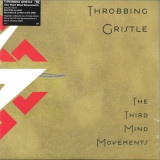
Mute veröffentlichen am 23. August das Album 'The Third Mind Movements' der britischen Avantgarde-Helden Throbbing Gristle erstmals offiziell auf CD und LP.
Die 1975 gegründete Band Throbbing Gristle, bestehend aus Chris Carter, Peter 'Sleazy' Christopherson (1955-2010), Cosey Fanni Tutti und Genesis Breyer P-Orridge (1950-2020), löste das gescheiterte Versprechen des Punk ein, extreme Kultur als Mittel zur Sabotage von Kontrollsystemen zu erforschen. Ihr Einfluss auf Musik, Kultur und Kunst ist unermesslich und bis heute spürbar.
'The Third Mind Movements' von Throbbing Gristle erschien zunächst als exklusive Veröffentlichung, die nur auf der letzten Amerikatournee der Band im Jahr 2009 erhältlich war, bevor sich die Band 2010 wieder trennte. Das Album ist eine Reise durch manipulierte, zeitlich gestreckte und verzerrte Samples, mit rhythmischen Breakbeats und hypnotischen Elektronikschwingungen.
out of Stock
Last delivered 20 months ago available to reorder, subject to availability
The third studio album "Pyramid" by The Alan Parsons Project was originally released in May 1978. As with other APP albums, the focus was on very high-quality studio sound production. "Pyramid" was a worldwide hit, achieving platinum and gold status in numerous territories including the USA, Germany and Canada. Limited edition 180g Heavyweight Clear Vinyl LP Half speed remastered by Miles Showell at Abbey Road studios.
Leif Maine and Jackson Mathod are thrilled to announce the August release of their album, "Volte-Face", with a single of the same name. This collaboration marks a bold new chapter in contemporary jazz, blending traditional and modern elements with great artistry and a willingness to explore many genres on one project.
"Volte-Face"is a sonic journey that showcases Maine's innovative compositions and Mathod's masterful trumpet performances. The album features a rich tapestry of sounds, from soulful melodies to intricate improvisations, capturing the essence of their dynamic synergy. Each track is meticulously crafted, promising an immersive listening experience for audiophiles and jazz enthusiasts alike.
Volte Face, the single, features rapper and Washington DC transplant (born and raised in NY), J Scienide. J has been around the great in underground Hip Hop. He shared a manager with the late and great MF DOOM, released and recorded with D-Styles from the World Famous Beat Junkies/ Invisibl Skratch Piklz, worked with super producer Daringer (Griselda Records/Action Bronson). He is regularly supported by FunkMaster Flex, Peter Rosenberg, Dj Premier, Dj House Shoes, Statik Selektah and many more.
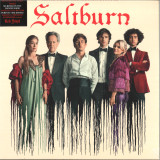
Motion picture soundtrack to the critically acclaimed 2023 black comedy starring Barry Keoghan, Jacob Elordi and Rosamund Pike. Includes the huge resurgent hits Murder on the Dancefloor by Sophie Ellis-Bextor and Perfect (Exceeder) by Mason vs Princess Superstar.
Saltburn is the 2023 black comedy psychological thriller film written, directed, and co-produced by Emerald Fennell. The film stars a student (Barry Keoghan) at Oxford University, who finds himself drawn into the world of a charming and aristocratic classmate (Jacob Elordi), who invites him to his eccentric family’s sprawling estate for a summer never to be forgotten. The film became one of the most-streamed films upon its streaming release on Amazon Prime Video in December 2023. It received critical acclaim and several accolades, including nominations for two Golden Globe Awards and five BAFTA Awards.
out of Stock
Last delivered 2 years ago available to reorder, subject to availability
2022 entstand Dimbild als halbakustisches Nebenprojekt des renommierten Musikers Vintersorg, das die folkige Seite seiner Reise in vollem Umfang
einbezieht und die intensiven Metal-Kompositionen des Hauptacts außen vor lässt. Es ist etwas, das seit Jahren wächst, aber im Jahr 2022 nahm es
seine eigene Form an. In Abkehr von der unerbittlichen Energie des Metal verfolgt Dimbild einen gedämpfteren und introspektiveren Ansatz beim
Musikmachen. Das Projekt ermöglichte es Vintersorg, eine andere Facette seines künstlerischen Ausdrucks zu erforschen und tiefer in die Gefilde der
Folk- und Akustikmusik einzutauchen, in die ein Hauch von Melancholie eingeflochten ist. Die Musik von Dimbild, die sich von der Natur, der
Mythologie und existenziellen Themen inspirieren lässt, entführt den Hörer in eine andere Welt, in der sich Emotionen mit den Klängen von
Akustikgitarren, Perkussion und dem markanten Gesang von Vintersorg vermischen.