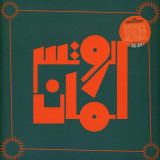
Available on vinyl for the first time in 10 years, with new cover design by Tim Rutilli Califone's earliest roots lie in the band Red Red Meat, from whence came Califone's founding members Tim Rutili and Ben Massarella and its longtime producer Brian Deck. The band's first release was a self-titled EP on Flydaddy in 1998, followed later by the full-length debut, Roomsound, in 2001 (later reissued on Thrill Jockey) and eventually the band's Thrill Jockey debut, Quicksand/ Cradlesnakes in 2003. After touring for the release of Roomsound, Califone had little time off to take in the impact of the music they were creating. In three years, they recorded four albums (two instrumental, two song-based including Heron King Blues) and toured heavily in between with Wilco, Modest Mouse, The Sea and Cake and others. After the tour for Heron King Blues in 2004, Califone finally took a breath and came back together in late 2005 to begin recordings. They worked on it in chunks at 4Deuces Studio in Chicago with Brian Deck, in Long Beach and Phoenix with Michael Krassner, and at home in Los Angeles and Chicago until May 2006. The time away and each member's individual work naturally brought new elements into the sound of Califone's music. Both Rutili's and Becker's soundtrack work are more atmospheric, however the challenge of enhancing a scene of film without cluttering it or overwhelming it informed their approach to the new recording. Similarly, the burglary of Califone's equipment during the band's last tour (including guitars, banjo, a 1917 violin, bells and more) altered the sound as they had to find new gear on a tight budget. The instruments are new partners, new sounds that forced them to stretch in new directions. Limitations, obstructions and darkness, and the new possibilities they illuminate; roots and crowns. "In that way", says Rutili, "this album is a conscious and resolved thing. It fully realizes ideas we touched on in the past and where we come from as a band, and takes us into our next phase of life."
Cerca:11 off
Available on vinyl for the first time in 10 years, with new cover design by Tim Rutilli Califone's earliest roots lie in the band Red Red Meat, from whence came Califone's founding members Tim Rutili and Ben Massarella and its longtime producer Brian Deck. The band's first release was a self-titled EP on Flydaddy in 1998, followed later by the full-length debut, Roomsound, in 2001 (later reissued on Thrill Jockey) and eventually the band's Thrill Jockey debut, Quicksand/ Cradlesnakes in 2003. After touring for the release of Roomsound, Califone had little time off to take in the impact of the music they were creating. In three years, they recorded four albums (two instrumental, two song-based including Heron King Blues) and toured heavily in between with Wilco, Modest Mouse, The Sea and Cake and others. After the tour for Heron King Blues in 2004, Califone finally took a breath and came back together in late 2005 to begin recordings. They worked on it in chunks at 4Deuces Studio in Chicago with Brian Deck, in Long Beach and Phoenix with Michael Krassner, and at home in Los Angeles and Chicago until May 2006. The time away and each member's individual work naturally brought new elements into the sound of Califone's music. Both Rutili's and Becker's soundtrack work are more atmospheric, however the challenge of enhancing a scene of film without cluttering it or overwhelming it informed their approach to the new recording. Similarly, the burglary of Califone's equipment during the band's last tour (including guitars, banjo, a 1917 violin, bells and more) altered the sound as they had to find new gear on a tight budget. The instruments are new partners, new sounds that forced them to stretch in new directions. Limitations, obstructions and darkness, and the new possibilities they illuminate; roots and crowns. "In that way", says Rutili, "this album is a conscious and resolved thing. It fully realizes ideas we touched on in the past and where we come from as a band, and takes us into our next phase of life."
- 1: Descending In E
- 2: Never Again
- 3: Bet I Can
- 4: Hunted Down
- 5: What You See And What You Say
- 6: Obstinate
- 7: Nobody But Me
- 8: All Revved Up
- 9: Leave Me Alone
- 10: Novelty Item
- 11: I Can’t Take You Anywhere…
- 12: Don’t Call Me Honey
- 13: Drink More Brew
- 14: Suburbia Bop
- 15: Terrorist Valentine
- 16: Stupid Lawn Ornaments
- 17: Why Do You Exist
- 18: Jeff Goes Off!
The Catatonics were Syracuse and Central New York’s first hardcore punk band. (Non-Returnable.)
Besides pioneering the original 1981/1982 Syracuse Hardcore scene, their classic Hunted Down EP/7" is considered one of the first hardcore thrash/metal crossover releases, right up there with COC or DRI and remains a sought after (and pricey) collectors item 30+ years after it's release.
Often compared to Jerry's Kids, SSD, Negative Approach and even Slayer, The Catatonics weren't followers or imitators, more like period contemporaries. Although the wait has been decades in the making, Southern Lord will be reissuing Hunted Down as a 12” vinyl release with bonus tracks.
Legendary American musician Brian Jackson announces his first solo album in over 20 years,
‘This Is Brian Jackson’, produced by Phenomenal Handclap Band founder Daniel Collás and
released on BBE Music.
Brian Jackson earned mythic status among music fans thanks to his pioneering work with Gil
Scott-Heron in the 70’s, where his flute and electric piano performances on ‘Pieces of a Man’
and ‘Winter In America’ virtually defined the sound of an era. From the 80s onwards he went
on to record with Kool & The Gang, Will Downing (whose debut album he produced), Roy
Ayers and Gwen Guthrie among many others, and while many veteran musicians tend to
stick with the sounds they know best at some point in their careers, Jackson remains an
unusually adventurous, vital and broad-minded artist to this day.
When the Phenomenal Handclap Band’s Daniel Collás first met Brian Jackson at a
performance in New York, right off the bat he said “I think I could produce you”. “I wasn’t
sure why he thought that,” says Jackson “but I considered it a challenge to find out. Turns
out that he was right.”
Early on in their friendship, Brian mentioned that he’d embarked on a solo project right
around the time he recorded ‘Bridges’ with Gil Scott-Heron in 1976. There were even some
unfinished demos, but the album had never materialised. Daniel leapt on the idea, asking
“what would a Brian Jackson album sound like if the 21st century Brian were to complete
that 1976 album today?” Completed in a series of twice weekly sessions over 11 months in
Daniel’s Williamsburg studio, ‘This Is Brian Jackson’ provides the answer.
“We sketched out musical ideas, drank way too much coffee, consumed way too many
tacos and sampled perhaps a few too many exotic whiskeys while talking about things that
were important to both of us personally. The lyrics for the songs are a result of those
conversations” says Jackson.
Contributors to the album range from Jackson’s guitarist, bassist and longtime friend Binky
Brice (Billy Ocean, Evelyn Champagne King, Roy Ayers), Collás’s occasional writing partner
Morgan Phalen, Latin Grammy-winning flautist Domenica Fossati, drummers Moussa Fadera
and Caito Sanchez, and Phenomenal Handclap Bandmates Juliet Swango and Monika
Heidemann.
And the music? Vintage, soul-stirring Brian Jackson, with the great man’s warm vocals,
distinctive flute and lyrical keys taking centre stage. The songwriting feels timeless, the
arrangement effortless, the production human and analogue. From golden-era soul-funk
opener ‘All Talk’, through soaring Afrobeat-inspired dreamscape ‘Mami Wata’ to compact
groover ‘Little Orphan Boy’ which closes the album, ‘This Is Brian Jackson’ is simply some of
the veteran artist’s best work yet, subtly and lovingly framed by Daniel Collás.
- 01: Intro (Dateline Ii)
- 02: Hometune
- 03: Vaders
- 04: Morning Papers
- 05: Dateline Iii
- 06: Tasty Leather Jackets
- 07: All Over London
- 08: Rolls Royce &Amp; A Big House
- 09: Beauty Contest
- 10: Dinner &Amp; Dance
- 11: Warehouse Experience
- 12: Rhythms Of The Universe
- 13: Roller Skating Session
- 14: Dedications
- 15: Lazerdrome
- 16: Heathens
- 17: Champagne Raffle
- 18: Legal Pulse
- 19: Opposite The Fridge
- 20: Wicked Entertainment
- 21: South East Fourteen
- 22: Kebab House
- 23: Monster Soundsystem
- 24: Family Fun Day
- 29: Big Roadblock
- 30: The Beginning
- 31: Dress To Impress
- 32: Fabulous Riches
- 33: Christmas Hardcore Bash
- 34: Soul &Amp; Reggae Alldayer
- 35: Spp
- 36: Come Get It
- 37: Reggae Awards
- 38: Nye &Apos;93
- 39: 100% Niceness Guaranteed
- 40: Spin Offs
- 25: La Plaza
- 26: Stunning Dimension
- 27: Redemption
- 28: Independence Celebration Dance
LP[11,35 €]
Sunny Ozuna is a living legend and a man worthy of praise on many levels. In the Texas and Latin Music pantheon, few have been at it longer and are more revered by their fans and peers than Sunny is. He became a star right out of high school in the late `50s and hasn't looked back in the seven decades since. Among countless other honors and notable achievements, Sunny was the first Latino artist to appear on Dick Clark's "American Bandstand" (in 1963). He penned "Smile Now, Cry Later," a hit for him and The Sunliners, which along with the theater masks that grace the album's cover, became staples in the Chicano Soul and Lowrider Soul cultures. We have been fans of Sunny & The Sunliners' music for a long time. We first got in touch with Sunny to try to reissue some of his records in 2013 but we didn't sign a deal until 2015. It took a trip to San Antonio and then two years of steady phone calls before they decided "if you have been chasing us for this long, you must be serious." With Sunny's blessing we started getting everything mastered, scanned, and planned. First we released 2017's Mr Brown Eyed Soul Vol. 1 compilation that put rare 7" sides next to some of his biggest hits and mixed in some choice album cuts for good measure. In the wake of that, we released three of Sunny's full lengths with their original track lists and art: Smile Now, Cry Later, Little Brown Eyed Soul, and The Missing Link - all of which were Record Store Day releases that raised money for the victims of 2017's Hurricane Harvey. For the 7" collectors, we reissued 45s, making some very hard to come by sides widely available again and pressing some tunes on the format for the first time. In 2020, as an homage to Sunny, we released Dear Sunny... a compilation of Big Crown artists covering Sunny & The Sunliners songs. Through all of this we were able to do what we set out to do: get Sunny's music to a new audience of people and make it all accessible and available again to his existing fanbase. Sunny still keeps a busy schedule and loves performing as much as he did as a teenager. His music and the music that it directly influenced are seeing a resurgence in popularity in the last few years. With any luck at all, our efforts played some small part in that, and on that note, we present Mr Brown Eyed Soul Vol. 2 - another compilation curated by us, where we dig a little deeper into Sunny's catalog and pull some lesser known gems that hold court with his hits. Hats off again to Mr Brown Eyed Soul himself, San Antonio's own, Sunny Ozuna, we are sure you will enjoy the music.
- 1: Connais Tu L'animal Qui Inventa Le Calcul Integral?
- 2: Evariste Aux Fans
- 3: Les Pommes De Lune
- 4: La Chasse Au Boson Intermédiaire
- 5: Dans La Lune
- 6: La Faute À Nanterre
- 7: Ma Mie
- 8: Wo I Nee
- 9: Si J'ai Les Cheveux Longs C'est Pour Pas M'enrhumer, Atchoum!
- 10: La Révolution
- 11: Je Ne Pense Qu'a Ça
- 12: Je Chante Pour Vous Faire Marcher
- 13: Je Ne Suis Pas Simple
- 14: Si Les Étoiles Pouvaient Parler
Évariste is one of the rare specimens of artist-cum-scientists. Among his kind stand others like Pierre Schaeffer, a Polytechnique graduate (an engineer but also the father of musique concrète) and the eccentric Boby Lapointe (graduate of the École centrale and inventor of the Bibi-binaire system, patented in 1968). Évariste's songwriting, joyful and full of energy (albeit extremely critical), shrouds an original tragedy: born in 1943 among résistants, Joël Sternheimer (aka Évariste) grew up without a father, lost to Auschwitz. Although he makes little reference to Jewish culture in his music, his origins leave their mark: in 1974, he sings a Hebrew song on television. In 1966, the young Joël sports Princeton's colourful paraphernalia - that's because he's freshly returning from the US, where he was sent to pursue his research on "particle mass and the interpretation of observed regularities, such as the effects of a wave" (will understand who may). When he gets there the country's in the midst of the Vietnam War. With McNamara keen to find an alternative to the nuclear weapon and calling upon the country's biggest brains to undertake the task, there's a "fund shift" within the university - a diplomatic way to give notice to whoever may not be disposed to follow the government's scheme. Joël, who's under the supervision of a rebellious physician, is dismissed. He regardless keeps following the prestigious seminaries of the Institute for Advanced Study, chaired by Oppenheimer, inventor of the atomic bomb. Likely inspired by the hippie movement and music, Joël buys a guitar and starts playing in Washington Square - after all, Bob Dylan himself started there. He blithely skips Oppenheimer and receives a warm (though surprised) welcome from a crowd thoroughly unfamiliar with French. When the ageing physicist questions him about his decreasing attendance, Joël explains how drawn he is to music, and how he thinks it could help him in self-financing his research. Évariste recalls seeing the sickened man, his face torn by remorse, lighten up to his words and say: "What's keeping you - go for it! If I was still young that's exactly what I'd do." The student takes these words as a testimony from his professor - and it's enough to convince him . And so he takes the leap during the Christmas vacations he spends in Paris. A journalist friend he often sees around the Sorbonne introduces him to the artistic director of Disques AZ. The latter passes the tapes on to the label's boss, Lucien Morisse, also program manager on Europe N°1. Morisse is blown away - and signs him onto the label right away. Michel Colombier, arranger for Serge Gainsbourg and co-author of "Psyché Rock", with Pierre Henry, contributes some of his original ideas to the 7 inch "E=mc2": Évariste's preoccupation with the percussion sound on the track "Le calcul intégral" is that it goes "poom poom" and not "tock tock" - Colombier is aware of the issue and records Évariste's guitar like a percussion in an isolated booth. The organist Eddy Louis, who is to participate, in 1969, to the success of Claude Nougaro's "Paris mai", also appears on the record. It's 1966 and the Antoine phenomenon (signed on Vogue) storms through France. The two singers share similarities: Antoine is an engineer of the École centrale, gifted with a great originality in his song-writing. A godsend for the two labels who turn this resemblance into a commercial strategy, setting them out as rivals. To this day though, Évariste still denies what was little more than slushy tabloïd gossip. Success comes around swiftly and in 1967 Évariste launches into a second 7 inch, "Wo I nee", again arranged by Michel Colombier. Quantum mechanics fans finally get their anthem with "La Chasse Au Boson Intermédiaire" (or the "Intermediary Boson Pursuit"). To sum up what's a boson, say he's a close pal of the meson, photon and other gluons. A few months later, it's May 68 and everything's turned upside down. Évariste writes a series of songs inspired by the events, which he immediately submits to Lucien Morisse. When the man behind "Salut les copains", once married to Dalida, hears the song "La révolution" - a father and son dialogue - he can't take any more: AZ simply cannot release this. But there and then Lucien Morisse makes a gesture which will remain engraved in French music's history: sorry to be unable to officially stand by the singer, he encourages him to self-produce the record, but with his tacit support. He calls the pressing factory and asks they apply the same rate for Évariste as they would for AZ. The singer and his musicians use the same studio as for the previous record, all of them playing for free awaiting a return on investment. Évariste keeps singing at the Sorbonne with "Jussieu's gang" and "the young Renaud" he nicknames "le p'tit gavroche" (or "street urchin"). Renaud volunteers to type the lyrics of the song "La révolution" so that the chorus can be sung and recorded. A boy in the group is related to Wolinski and introduces them. The two get along so well that Wolinski ends up drawing the cover for the record "La révolution", for free. The self-released 7 inch "La révolution / La faute à Nanterre" is sold under the table and door-to-door for half the price of a standard record, on and around the boulevard Saint-Michel; and it runs out fast. In the end, there will be 6 releases of the record, and 25000 copies sold. When the theatre director Claude Confortès decides to adapt Wolinski's drawing series titled "Je ne veux pas mourir idiot" ("I don't want to die a fool"), he asks Évariste to write the original soundtrack. His friend, now cartoonist for Hara-Kiri Hebdo, often promotes him in accordance with a principle dear to him by virtue of which he gives a special place to his friends. Dominique Grange (writer of the song "Nous sommes les nouveaux partisans") soon joins the team. After 150 performances, Évariste leaves his place to Dominique Maurin (brother of Patrick Dewaere). Évariste composes the songs for Claude Confortès' next play, "Je ne pense qu'à ça" ("That's all I think about"), co-wrote with Wolinski in 1969. The comedians of the play record the songs on a 7 inch, with a cover signed, again, by Wolinski. In 1971, French television produces the documentary "Évariste et les 7 dimensions", but doesn't air it. Indeed, the scientific sub-comity of the programming comity (sic) censors the show. The given justification is that "Évariste dangerously mixed science with science-fiction, numerology and other non-scientific disciplines". The underlying motive might have been a will to censor the singer-mathematician's political discourse. In the documentary and among other things, Évariste discusses hierarchy, alienation and revolution. Half a century later the documentary remains invisible, though some excerpts resurfaced in 1992 in the cult show "L'oeil du cyclone", on Canal +. Though flourishing, Évariste's career is nearing its end. 1970 is the beginning of a decade in the course of which he is to make a decisive discovery in the musical and scientific domains. Following this breakthrough, he moves away from self-produced music and gaucho magazines to focus on science. He keeps Oppenheimer's encouraging words in mind, now freely pursuing his research thanks to the sales of his records. Joël realises that when decoding protein sequences, one finds musical sequences recognisable to humans. He names them "proteodies". If, when listening to a proteody, one responds by being so sensitive as to finding it beautiful, then it reveals a deficiency of the related protein - and this peculiar music may be the cure. We could trace back the music history in light of proteins lacking in a given artist, or within a public's majority. You always thought these hysterical groupies who'd throw their underwear with passion and faint in the pit had miraculously appeared because they had never heard anything as wonderful as the Beatles? Make no mistake! For Évariste, it all boils down to an intro's protein content. Indeed, the beginning of their first hit "Love Me Do" corresponds to dopamine, the neurotransmitter linked to compulsive buying. An intro like this could only unleash the fervour of groupies, victims of fashion and biology. Évariste's success is such that the income from his sales gives him the autonomy to which he had aspired when confiding to Oppenheimer. It made it possible for him to pursue his research without any institutional constraints. He now devotes himself to his proteodies, sat in the offices of the European University for Research, just around the corner from the Sorbonne he knew so well. Évariste is no more. Joël regained control of this strange and comical beast.
- 1: Into The Light (Edit Version)
- 2: Saiyidi Dub
- 3: Tribal Dervish Union Of Souls
- 4: Arab Quarter
- 5: Arid Land
- 6: Mother Of Nature
- 7: Tribute To Hasni
- 8: Ancient Vibrations
- 9: Spirit Of The Nile
- 10: Canaanite Call
- 11: Serengeti
Deluxe double 12'' vinyl housed in a 2 pantone sleeve Including insert with liner notes Akuphone is pleased to present the first compilation dedicated to musician John Bolloten, aka The Rootsman. As a precocious punk, he formed his first band, State Oppression, in his teens. Yet he is best known for his dub music, a genre that gave him international recognition. Largely influenced by the rhythms of North Africa and the Middle East, he built his musical identity around samples from these regional repertoires. His encounter with Bryn Jones - better known as Muslimgauze - further defined his artistic path. This selection offers an overview of his work from 1996 to 1998, a prolific period when Into The Light, 52 Days To Timbuktu, Union Of Souls (with Celtarabia) and Distant Voices (with Pachakuti) were released. A visionary production that predicted today's growing international predilection for the musical heritage of the MENA regions. The compilation is enriched with an explanatory preface by Mabrouk Hosni Ibn Aleya and illustrated with rare archival photos- all of which are contained in a superb jacket designed by the artist Ghiya Haydar.
- 1: Dark Day Road
- 2: I Need Help Feat. Sick Jacken
- 3: Waging War Feat. Rite Hook
- 4: Murdered Tonight
- 5: Stay True
- 6: Blind Feat. Q-Unique & Sadie Vada
- 7: Crispy Innovators Feat.vinnie Paz
- 8: Archie Bunker Feat. Nems
- 9: High Times Feat. Sick Jacken
- 10: America Feat.apathy
- 11: Now Or Never Feat. Skam2? & Rite Hook
- 12: To Thine Own Self Be True Feat. Rite Hook
Repressed
It's been four-years since La Coka Nostra released their sophomore album, Masters Of The Dark Arts, (the groups first project without Everlast was also their most critically acclaimed project - featured collaborations with Vinnie Paz, Sean Price & production from DJ Premier and Statik Selektah) and the music industry has changed considerably in that time. However, a few things still remain constant; La Coka Nostra will always be as their aptly-titled 2009 debut verified, A Brand You Can Trust, and the group will continue to dazzle their rapid fan-base with sold out shows around the globe with their rau-cous live performances. Always known for tackling controversial topic matter, the group’s new album, To Thine Own Self Be True, finds them once again in torchbearing mode, addressing subjects that most artists shy away from.“This album was created during a time of unique and individual transformation for each member of the group” ILL Bill stated. “Speaking for myself, it’s been a heavy last couple of years.It’s definitely the most personal record we’ve made under the La Coka banner and while we’re still making music that’s hard as fuck, there’s a maturity to this latest batch of songs that makes it different from a lot of the older stuff. I notice the biggest reactions come from the songs our listeners can personally relate to and we needed to make a record like this right now, not only for the fans, but for ourselves. I got alot off my chest on this one. Making music can be extremely therapeutic and making To Thine Own Self Be True was a rebirth and a re-ignition for me.” Slaine had a similar take on the projects thera-peutic manifestation “You don’t put as many years in the game as we have without having ups and downs. We all have gone through struggle and adversity—personally and professionally”Slaine la-mented. “This album was recorded as I walked out of a very dark time toward a place of truth and understanding. Music has been how I feed my family, my plane ticket around the world and a place I’ve built real friendships; but at the very core it’s a tool I use to get through life.This album is a moment in time. It is visceral and real.” While DJ Lethal continues to oversee the production end ofToThine Own Self Be True, the group also enlisted Statik Selektah, Marco Polo, Salam Wreck (D-12, Obie Trice, Proof, B-Real, Tha Dogg Pound) & ChumZilla (from the Demigodz) and get vocal contributions from extended family members such as Vinnie Paz, Apathy, Q-Unique, Sick Jacken, SKAM2? & Rite Hook.
Legwork is back with a new single from our favourite cosmic crusader, Brother Nebula.
The A-side consists of a tape-crushed lysergic stormer, on which the Brother helps us to be mindful, and a couple of useful DJ tools from the same session. The B-side starts with a broken affair with pensive chords floating around bleeps and sounds of the universe, and finishes with a dubbed-out version of the previously-released and extremely well-received S.I.S. featuring San Francisco stalwart Solar.
Daje Funk Records makes a triumphant return with the latest instalment to the spectacular ‘Slam Dunk’ series bringing you the Slam Dunk EP3.
First up on the A-Side of this stellar four tracker is Strange, with the acid laced disco burner, ‘Keep On’. From the intro of delicious 120bpm beats with added ‘Bongonaise’, the cleanest of guitar riffs leads to a hot disco bass with stabs of Rhodes keys lovingly applied. Just when you think you have it all worked out, the acid rug pull is a masterstroke. ‘Keep On’ has a classic (but often elusive) disco vibe with a wickedly acidic twist. ‘Strange’ will rule the summer, guaranteed. Any questions?
For A2, the considerable production chops of Ezirk are on full display with ‘Erotik’ - an 80s funk inspired taxi ride through rush hour traffic to the best cocktail bar on the planet. It’s infectious, demanding fist bumps and virtual high fives. It’s a melody that sets all the possibilities of a great night out through wielding the ultimate synth power. And that breezy sax? Heaven. Put the needle down and let it take you!
On the B Side, we start with label co-owner and master of the groove, De Gama and his carefully crafted ‘Higher’. The tempo is dropped right down here, with De Gama showing his darker and funkier side. Like a joint Gil Scott Heron and Robert Plant fever dream, ‘Higher’ is an intricate lecture in immaculate beats, unimaginable concepts and chord progressions. Serious grooves. Very serious.
Rounding things off on the B Side and closing the EP is ‘R.O.C.K.’ by Hungary’s The Magic Track. These boys know how to deliver a chugger from the MT workshop. You expect them to lure you in, and ‘R.O.C.K.’ does just that. One minute you’re in church, the next in a heaving club with retro beats, thumping bass and driving piano filling the air. The Magic Track are selling magic dreams and you’re buying. The whole bag.
The Slam Dunk EP 3 slam dunks with such force it shatters the backboard. Get it in your record boxes for the summer, and let it stay there!
100 copies only
Apron Records has been instrumental in shaping the current landscape of contemporary electronic music coming out of the U.K. since 2014. After almost a decade of pushing their unique vision has made the Apron Records imprint one of the most in-demand labels in most independent record stores. Now more than 45 releases deep in their journey, Apron Records have teamed up with Patta Soundsystem to work on their first various artists release and to celebrate this monumental milestone, both camps have collaborated to create a clothing capsule to accompany this release. After working with the artist formerly known as Funkineven on ‘The Wave’ late last year, it was only right to showcase the diverse talents behind this movement.
Sharing a drawing board with Patta for the first time with Apron Records, together they have created a Trucker Cap and a Graphic T-Shirt that echo the racing theme of the whole project. Better Together is the slogan that runs throughout the entire collaboration, stressing how unity makes us stronger as individuals. Artwork for the record has been provided by Amsterdam based artist Jim Klok. His unique Acetone printing technique has now been immortalised on this LP, juxtaposing vintage cars with checkered racing flags to create a dynamic cover that would be right at home in a picture frame as well as a record bin.
System Olympia’s ‘Passi Mai’ is a beautiful 80’s inspired driving riddim layered with her own vocals that wouldn’t be out of place in an arcade or a sticky nightclub floor. Followed up by ‘Leven’ by Brassfoot, we get a wobbler from the NTS regular. Layed with Jamaican vocal samples and audacious arpeggiated bleeps, Leven is a soulful approach to techno tropes that have been bouncing around Brassfoot’s head. Shamos’ 737363 is a cryptic masterpiece. With dreamy pads as a backdrop for shuffling drum beats, euphoric sweeps and dynamically designed synthesis, this closes off the themes explored in the first half of the record.
Side B kicks off with J M S Khosah’s contribution to the record titled ‘Lessons’ which is a dancefloor filler, adorned with glamorous percussion, vocal samples and syncopated stabs ontop of a driving 4x4 kick pattern. Kicking things into 6th gear is a club-ready production from London's most soulful selector Shy One. Groovy basslines and a 2-step riddim make ‘Candy Floss’ an ode to the grimey and the glittery sides of London nightlife. This project champions one of the people that have been pivotal in the success of the label, Steven Julien whose track E46 is an emotional journey through his synth-laden East London studio. Bookending the project are two compositions from Compton’s-own AshTreJinkins. Showcasing his abilities to approach the project from both an ambient and a pure beat-making perspective in order to hold the whole project together.
"Soundmusication" ist das dritte und letzte Album des jamaikanischen Tenor-Saxophonisten Fitz Gore, eine weitere seltene und schöne spirituelle Jazz-LP aus den späten 1970ern. "Fitz hatte einen sehr tiefgründigen Glauben an die richtige Musik, die die Welt verändern und einen wirklichen Zustand des Friedens schaffen kann, weil sie die Gefühle und Handlungen der Menschen hin zur spirituellen Wahrheit bewegt. Er war überzeugt, daß Musik die heilende Kraft der Welt besitzt" (Ulrich Kurth). Fitz spielt mit Lukoki Mampasi am E-Piano, Obama Ngomo am Bass, Emmanuel Dipanda am Schlagzeug oder Gil Nguema an der Gitarre. Sie öffnen eine imaginäre Tür und ermöglichen ihrem Leader so die erstaunlichsten Dinge auf seinem Instrument. Erste Wiederveröffentlichung, neu gemastert in 2022, mit Original-Artworks und dem Bonustrack "Gisela (Lion Rock)".
Naomi Alligator is fed up. She’s sick of trying to make relationships work that have already run their course, and tired of sitting in a wintry apartment waiting for her life to kick into gear. On »Double Knot«, the modern folk singer/songwriter from Virginia attempts to unwind her life from all that is holding her back. In a way, it’s a coming-of-age record about shedding what no longer serves you and, ultimately, finding something like deliverance.
On the opening track, “Seasick,” Naomi Alligator is already in the midst of a sort of awakening. Right off the bat, she sings, “I don’t know what’s happened to me / It’s like I turned 16 / It’s like I grew to be 6-feet tall.” This is the announcement of a wide-eyed artist coming out of hibernation and into their own. Still, Naomi’s vocals ache with guilt and longing, belying the track’s playful catchiness. Longing for what? Maybe attention from a crush, but mostly a sunnier place to call home.
Naomi Alligator began writing Double Knot while living in Philadelphia during the height of the pandemic and the deterioration of a longterm romance. “I scream: How’d the hell I end up here? / I’m 1-inch tall, it’s crystal clear,” she chants on “Neighborhood Freak,” returning to height and size as an emotional barometer. When asked though, Naomi rejects the notion that Double Knot is a breakup album, or autobiographical at all. Moreso, she says, it’s a personal reckoning in which, “the minute before you make a big decision, you tally up the reasons why you don’t want to do what you’re doing anymore.”
That desire to turn the page expands to the production of the album as well. Naomi Alligator generally houses her narratives in beds of minimal, home-tracked instrumentation—influenced by the stripped-down poeticism of Joan Baez and Liz Phair’s Girly-Sound tapes. Double Knot finds Naomi continuing to hone the winning combination of guitar and banjo she established on 2021’s Concession Stand Girl EP. For Double Knot though, Naomi wanted a fuller, more dynamic sound: more instruments, more harmonies, more layering, more, more, more. Inspired by the impressionistic melodies of Animal Collective and MGMT, Naomi peppers in computer-generated synths throughout the album, most notably on the song “Burn Out.” These electronic flourishes augment the more grounding string instruments, arriving somewhere more ethereal than Naomi’s earlier work while still maintaining her warm songwriting.
If anything, Double Knot is a reminder that you can always pack up your bags, try something new, and change your life. As for Naomi Alligator herself? She moved west, to California.
- 1: Shimmy She Wobble
- 2: Bounceball
- 3: Short?Nin? / Henduck 4. Too Slow
- 5: Shimmy She Wobble
- 6: Station Blues 7. Shake ?Em
- 8: My Babe 9. Boogie
- 10: How Many Mo? Years
- 11: Roll & Tumble
- 12: 2-Stepping Place
- 13: Granny, Do Your Dog Bite?
- 14: Shimmy She Wobble
- 15: Glory, Glory, Hallelujah!
- 16: Memory Of A Goat Picnic
The trance blues stylings of Otha Turner and his Rising
Star Fife And Drum Band should be a music classification
unto itself, a whole new primitive take on drum and
bass. This music is the oldest still-practiced post-colonial
American music, and Turner was one of its greatest artists
of the 20th century. Blowing the cane fife with a band
of drummers as back up, The Rising Star Fife And Drum
band was legendary in the hills of Tate County, Mississippi,
where they would perform during the yearly goat picnics
on Turner’s farm. These tracks were recorded by Luther
Dickinson during such picnics and released when Turner
was ninety years old. Everybody Hollerin’ Goat shows
first hand the hypnotic and rhythmic style of fife and drum
music at its best—raw and beautiful.
It is every bit as essential a document of America’s folkmusic
heritage as anything Harry Smith or Alan Lomax ever
offered up for posterity. Turner’s band included some of his
children and grandchildren that have gone on to continue
the fife and drum tradition since his death in 2003.
This first ever vinyl release of Everybody Hollerin’ Goat
contains a whole side of unreleased recordings from one
night of the picnic and is intended to bring the experience
of hollerin’ for goat in Senatobia, Mississippi to the living
room. Dancing around the plants is recommended (but
don’t eat the pickled eggs). The entire album is remastered
by legend Gary Hobish.
Taking direction from both the cinematic song stylings of sardonic yet
unfettered troubadours like Randy Newman, Brian Wilson, and Harry
Nilsson and the "visual scoring" of indie pop song placement in 21stcentury films, Best Move's music suggests the sound of a decade of
winding, disparate avenues finally convening in a perfect center
The Sacramento-based trio is composed of Kris Anaya, Joseph Davancens, and
Fernando Olivia. Anaya, a talented songwriter with a penchant for wry, offbeat
guitar-based folk-pop songs, and Davancens, who holds higher education degrees
in avant- garde composition and jazz double bass, formed the electronic act
Doombird together in 2016, but in 2019 the pair gravitated back to what they
consider more natural inclinations: organic instruments, earnest songwriting, and
a more true-to-themselves direction. Adding Oliva, Best Move was born. Many of
Best Move's songs maintain an intentionally similar sonic feel. Guitars strum and
piano twinkles while a layer of manipulated or synthesized instruments spread a
hazy overtone on top of it all, and steady yet minimal drums keep things moving.
Lyrically, the standards prevail - love, loss, friendship, searching for purpose - but
the themes bubble under the surface of a sea of metaphor, leaving the listener to
decipher the message in their own way. Anaya calls the sound a "thank you to the
past," and while a warm, familiar tone echoes throughout the band's universe,
something unmistakably modern remains.
Even in its moodiest, most downbeat moments there's a spark of energy
that bursts out of A Face In Your Life, the new album from Pet Fox.Where
past efforts played around with after-the-fact layering of instrumentation,
the band's third full-length comes alive in the moment
Tracked live in one room, without the use of a metronome, the ten songs that
unravel across the album capture Theo Hartlett (Guitar/ Vocals), Morgan Luzzi
(Bass), and Jesse Weiss (Drums) in their rawest, most immediate form. Touching
upon notions of anxiety and self-doubt, A Face In Your Life travails the depths of
these themes while also offering little snippets of hope and guidance along the
way. Indeed, the album's sprawling opening track 'Settle Even' is billed as a selfhelp pamphlet, a reminder to the band themselves and those listening that there
will always be people in the world looking out for us, even when that feels like an
impossible feat. An inspired collection of riffs that twists and turns into varying
shapes throughout, Pet Fox never outstay their welcome in the half-an-hour or of
A Face In Your Life but do more than enough to make the kind of impression that
leaves you wanting to journey back through the shadows, to unpick the little knots
of the ideas they're exploring here. It was brought to life by just three people in
one room but it lends itself to something way beyond that; the never- ending
search for coping mechanisms in the messiest of worlds.
Lisbon’s Larry Quest joins the Pleasure of Love crew with an impressive sonic journey of all things house, balearic, and tribal.
After releases on Delusions of Grandeur and Log Records, Quest delivers his most refined EP yet, harnessing his knack for live/analog synthesis & soulful, hypnotic grooves.
'Blue Tide' leads off the EP with a wave of pads and deep sax soulfulness before giving way to a bubbly, modular groove. 'Hold Function' finds LQ exploring a tribal, almost trance-y take on Detroit techno/house foundation. And on the title track the producer eases into a throwback mid-90s house vibe with bursts of M1 organ and Rhodes stabs.
SIT, Atree, Andy Catana & Elias and a guy - who does not want to show off - representing the 11 years Do Easy Records compilation. We did not want to do 10 years like everybody else, so we did a 11 years one, which comes out two years late - Do Easy. Thanks to all artists for amazing 20 releases.