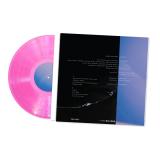
Vom "Klassik-Star der Gen Z" zum Pianisten der Stunde: Louis Philippson "My Way"Nur sieben Monate nach seinem Debüt "Exposition" beleuchtet "My Way" die rasante Entwicklung des jungen Pianisten, Social-Media-Stars und Moderators Louis Philippson vom "Klassik-Star der Gen Z" (Süddeutsche Zeitung) zu einem der Pianisten der Stunde. Vom britischen Sender Classic FM wurde Louis als einziger deutscher Künstler in die "Top 30 artists under 30 in 2025" aufgenommen, während BR-Klassik erklärte: "mit Louis Philippson hat die klassische Musik einen neuen Rockstar gefunden." Auch auf den 12 restlos ausverkauften Konzerten seiner Debüt-Tour im Mai 2025 und bei den Arena Shows der "Night of the Proms" im Winter 2024 begeisterte er tausende Menschen für die Klassik auf seine eigene Weise. Daran knüpft Louis Philippson mit seinem Album "My Way" an. Aufgenommen mit dem MDR Sinfonieorchester unter der Leitung von Dirigent Ben Palmer, verbindet es neue Originalkompositionen mit neuen Bearbeitungen bekannter Themen aus der Klassik oder Filmmusik für Solo Piano sowie Piano und Orchester. Zu den neuen Werken zählen unter anderem der virale Hit "Beethoven Virus" für Klavier und Orchester, "Show Waltz" für Klavier und Orchester, "Supernova" für Klavier, Sopran und Orchester, sowie mehrere Solostücke für Klavier. Unter den neu interpretierten Klassikern finden sich das mitreißende Medley "Dancing Bee" für Klavier und Orchester, "Cornfield Chase" für Klavier und kleines Ensemble, sowie eine Bearbeitung von Themen aus den Vierjahreszeiten mit dem Titel "Vivaldi Storm". Key Dates: • 6th June: German public broadcaster MDR broadcasting a studio concert featuring the MDR Radio Symphony Orchestra (reach 1 Mio)Pre-oder start and 1. Single "Für Elise"• 23rd July: German public broadcaster ARD "3nach9" talk show (reach 1 Mio)• 11th Sept: German public broadcaster TV gala ARD Deutscher Radiopreis - 2 performances live (reach 1 Mio +)• 12th Sept: German public broadcaster TV gala MDR Goldene Henne - Performance (reach 2 Mio)Album Release • September: pitch for ClassicFM Gala London • 26th Sept. German public broadcaster MDR Riverboat Talkshow (reach 2 Mio)• October - November: Concerts in GSA in venues up to 3,000 cap (e.g. Hamburg CCH / München Prinzregententheater / Düsseldorf Tonhalle etc.)• 6th Dec: German public broadcaster ARD charity show Ein Herz für Kinder (reach 3 Mio)• Dec: concert at Royal Albert Hall London • Spring 2026: Europa-Tour mit Konzerten in Paris, Benelux, Polen, Spanien usw.In the making: documentary about his life similar to Anastasia Kobekina
quête:12 ensemble
In the smoggy orange light of a new millennium, the young Deb Demure would take the bus, once a week, from his home in crumbling Hollywood to his grandmother's apartment, nestled in the pastel pristineness of Beverly Hills. During these visits, Deb couldn't help but notice the disconnect between the glow of his grandmother's temple, and the downtrodden, alienated figures that populated the seats of the mass transit that took him there. Week after week, he would observe these characters: fading B-movie starlets, leisure-suited alcoholics and forgotten civil servants. But one fateful commute home, as the twilight waned to the purple Los Angeles night, he realized these figures were not as lost as they appeared - there was a nobility in their failure, reflective of the dignity of the city's vanishing golden era. They were survivors, in need of a voice: a spokesperson for every color of hope and hopelessness, transcendent of gender and time; Drab Majesty became Deb's musical podium for this undertaking. Raised in a music-centric household, Deb would find the time to teach himself to play his father's right-handed guitar upside down and left-handed; an unorthodox fashion from where his earliest understanding of chords and harmony were conceived. Exploring the bins of discarded vinyl in his neighborhood thrift stores, his toolkit expanded with the subterranean sonic gems of the recent past. Influences range from the virtuosic arpeggiated guitar work of Felt's Maurice Deebank and the grittier pop progressions of Red Lorry Yellow Lorry's Chris Reed as well as Steve Severin from Siouxsie and The Banshees. He also studied the harmonic oscillations and utilization of the occult power of vibratory frequency present in New Age sounds of Greek artist, IASOS. In terms of orchestration, he consciously culls from the seaside maximalism of Martin Dupont and mechanized grooves of early Depeche Mode. Like a dualistic pendulum, his vocals swing from a preistly baritone to a choir boy's falsetto reflecting the sepulchral ambiance of church visits with his grandmother. Currently the drummer for Los Angeles lo-fi rock ensemble Marriages and having honed an unorthodox home recording style, Deb sources his sounds from a repository of "mid-fi" synthesizers and other lesser-quality instruments. Following the release of his debut cassette EP, "Unarian Dances", he also shared a split 12" with synth pop forefathers, Eleven Pond. During the Spring of 2015, Drab Majesty signed with Dais Records and released his first single, Unknown to the I, as a introduction for his first initial foray into the album format, romantically titled Careless. Written over the course of 2 years, "Careless" is a compendium of songs that have outlasted a malicious burglary of his studio, his struggles with substance addiction, and most recently, the death of his beloved grandmother.
Recital presents a new double album of rarely heard Robert Ashley compositions performed by baritone singer Thomas Buckner.
“(Robert Ashley) turned speech into music” - Alvin Lucier.
In the 1960s, Robert Ashley pioneered the American avant garde with the ONCE Group and festivals, before irrefutably changing the face of American opera later in the 20th century. Buckner, in addition to running the fabulous 1750 Arch record label in the 1970s and 80s, is a noted baritone who has collaborated for decades with the likes of Roscoe Mitchell, Annea Lockwood, and the late Noah Creshevsky, amongst countless others.
The title of the album, Spontaneous Musical Invention, refers to Ashley’s method of instructing the singer to do what he called “spontaneous musical invention based on the declamation of the text.” A vocal practice that Thomas Buckner perfected over the 33 years that he collaborated with Ashley. First performing in Ashley’s 1984 opera Atalanta (Acts of God), Buckner continued on as an integral performer in the ensemble until Ashley’s death in 2014.
The album is composed of two halves, the first is a new rendering of Ashley’s second opera Atalanta (Acts of God). Robert Ashley wrote about ten hours of music for the opera Atalanta, divided into three acts: ‘Max', for the surrealist artist Max Ernst; ‘Willard', for the composer’s uncle, Willard Reynolds, a great story teller; and ‘Bud', for Bud Powell, the great jazz pianist and composer. One is invited to construct a version using any material from these ten hours. Over the years they worked together, Thomas Buckner commissioned three reworkings of arias from Atalanta that he could perform in concert: the ‘Odalisque' aria from Max, 'The Mystery of the River' from ‘Willard', & 'The Producer Speaks' from ‘Bud'. So this first section of the album is one of many possible versions of Atalanta, albeit in strikingly different versions from the originals.
The second section of the album is dubbed Occasional Pieces, and holds two unpublished Ashley works. ‘When Famous Last Words Fail You' & 'World War III Just the Highlights' are not from any Ashley opera. However, each is highly dramatic and theatrical. They were written as standalone pieces for Thomas Buckner. Buckner’s distinct vocal cadence projects the sharp wit and wry storytelling of Ashley’s librettos.
A portion of the record was recorded live at Roulette in Brooklyn, NY, at an intimate memorial concert held for Robert Ashley in 2014. Spontaneous Musical Invention, in essence, functions as a tribute to both exceptional artists, and to their decades of collaboration.
Vinyl edition comes with a 24 page 12” x 8.5” booklet of Ashley librettos, scores, & program notes, with an introduction by Alvin Lucier.
- A1: Stardust
- A2: Unidentified
- B1: Round About Midnight
- B2: Walkin
- B3: If I Were A Bell
- C1: Fran Dance (Put Your Little Foot Right Out)
- C2: Two Bass Hit
- D1: So What
- D2: All Of You
- D3: The Theme
In December 2024, The Lost Recordings released the first volume of this legendary concert, recorded on October 11, 1960, at the Olympia by Miles Davis and his quartet, joined by saxophonist Sonny Stitt. Alongside pianist Wynton Kelly, bassist Paul Chambers, and drummer Jimmy Cobb, they formed an ensemble of exceptional musicality.
Now comes the second part of this remarkable concert.
In 1960, Miles returned to Paris for the fourth time in 12 years. Just months earlier, he had performed there with John Coltrane in a turbulent concert, marking the end of their collaboration. In October, at the Olympia, he rediscovered a stage he loved in a city he had fallen for back in 1949. "I loved being in Paris, I loved the way I was treated there," he would later say.
Since 1949, his music had evolved. From his immersion in Parkerian bebop to his collaboration with Gil Evans, he refined his style, developing a more spacious jazz inspired by Ahmad Jamal and enriched by his classical training. The soundtrack of Elevator to the Gallows in 1957 was a turning point, foreshadowing the pinnacle of Kind of Blue in 1959.
From the opening notes of Stardust, a previously unreleased piece, Miles sets the tone—seduction and lyricism. With a track attributed to Sonny Stitt, the swing settles in. The atmosphere intensifies with ‘Round Midnight, followed by Walking, where Stitt and Davis engage in a masterful exchange. If I Were a Bell and Fran Dance offer a more introspective moment before Two Bass Hit reignites the energy. The concert reaches its peak with So What and All of You, as Miles captivates the audience until the final notes of The Theme.
Our quest to recover the full concert began in 2022 when a friend sent us a photo of magnetic tapes in Brittany. A label reading "Miles Davis – Olympia 1960" caught our attention. After two years of research spanning France, the United States, and Stockholm, we are proud to present, for the first time, the complete version of this legendary concert.
The strength of Fan Club Orchestra's (FCO) trajectory lies in their nebulous, collaborative, and experimental nature, always with Laurent Baudoux at the centre. With its roots in the DIY impulses of the Brussels art and music scene of the late nineties, Baudoux rallied together a revolving cast of players with an unconventional ensemble of instruments to explore melancholic psychedelia that touched on drone and minimalism as readily as it carved minor pop hits from cracked electronics. Performances were often highly improvisational, aided by the barely controlled chaos that guest collaborators—such as American artist Mike Kelley—would inject into an appearance.
FCO self-released two albums in the early 2000s before finding a home with Sonig, where they released several more records up until their last with the label in 2013. This was a fitting frame as Sonig, like FCO, channelled the fervour and formalism of the experimental music history of the Rhineland, which includes Kraftwerk, krautrock, and key early electronic music studios.
Following an eleven year hiatus, Laurent Baudoux reassembled the group in 2024 and presented a new album with the esteemed Glaswegian label 12th Isle late in that same year. Building on the strength of the new iteration, and with the aim of reappraising some of the rich yet oblique history of the group through this new lens, FCO have remastered and reissued their 2013 album, 'An Insane Portrait'.
The recordings were originally commissioned in 2009 for Fabrizio Terranova's film 'Josée Andrei, An Insane Portrait' about the truly remarkable figure Josée Andrei. Shot in San Francisco, the film is an intimate portrait of Andre. Blind from birth, she is a witch, painter, photographer, tarot reader, and psychology and modern literature graduate.
'An Insane Portrait' captures a stripped-back FCO, with Baudoux working solely with original FCO member Ann Appermans. The configuration of Baudoux's electronics and Appermans' bass guitar yield a tender and preciously melodic suite of instrumentals.
Originally released on vinyl by Sonig in 2013, the remaster will again be presented by the label in a limited cassette edition and in digital formats, each featuring a bonus track that was not included in its original release.
The strength of Fan Club Orchestra's (FCO) trajectory lies in their nebulous, collaborative, and experimental nature, always with Laurent Baudoux at the centre. With its roots in the DIY impulses of the Brussels art and music scene of the late nineties, Baudoux rallied together a revolving cast of players with an unconventional ensemble of instruments to explore melancholic psychedelia that touched on drone and minimalism as readily as it carved minor pop hits from cracked electronics. Performances were often highly improvisational, aided by the barely controlled chaos that guest collaborators—such as American artist Mike Kelley—would inject into an appearance.
FCO self-released two albums in the early 2000s before finding a home with Sonig, where they released several more records up until their last with the label in 2013. This was a fitting frame as Sonig, like FCO, channelled the fervour and formalism of the experimental music history of the Rhineland, which includes Kraftwerk, krautrock, and key early electronic music studios.
Following an eleven year hiatus, Laurent Baudoux reassembled the group in 2024 and presented a new album with the esteemed Glaswegian label 12th Isle late in that same year. Building on the strength of the new iteration, and with the aim of reappraising some of the rich yet oblique history of the group through this new lens, FCO have remastered and reissued their 2013 album, 'An Insane Portrait'.
The recordings were originally commissioned in 2009 for Fabrizio Terranova's film 'Josée Andrei, An Insane Portrait' about the truly remarkable figure Josée Andrei. Shot in San Francisco, the film is an intimate portrait of Andre. Blind from birth, she is a witch, painter, photographer, tarot reader, and psychology and modern literature graduate.
'An Insane Portrait' captures a stripped-back FCO, with Baudoux working solely with original FCO member Ann Appermans. The configuration of Baudoux's electronics and Appermans' bass guitar yield a tender and preciously melodic suite of instrumentals.
Originally released on vinyl by Sonig in 2013, the remaster will again be presented by the label in a limited cassette edition and in digital formats, each featuring a bonus track that was not included in its original release.
Das Album City Life des legendären Jazz-Funk-Ensembles The Blackbyrds, das in den Billboard Jazz
Charts ganz oben stand, wird von Jazz Dispensary Top Shelf neu aufgelegt! Mit „Happy Music“ und
„Rock Creek Park“, das von AllMusic als „einer der Höhepunkte des 70er-Jahre-Jazz-Funk“ beschrieben
und von Künstlern wie De La Soul und Nas gesampelt wurde, befindet sich die Band auf dem Höhepunkt
ihrer Hitmacherkunst. Von den Originalbändern (AAA) von Kevin Gray geschnitten, auf 180-Gramm-Vinyl
bei RTI gepresst und in einem Klappcover verpackt
As part of the Acoustic Sounds series, three of Diana Krall’s most beloved albums will be reissued on vinyl throughout the year, with the first, her dazzling Grammy-winning 2001 album, The Look of Love, to bow May 31st. The record boasts such standouts as “S’ Wonderful”, “Cry Me A River”, and her bewitching take on the Burt Bacharach-penned title track. Krall’s 1999 album — celebrating its 25th anniversary this year — When I Look In Your Eyes, will follow July 5th with her 1996 LP, All For You: A Dedication To The Nat King Cole Trio, to come September 27th. The two-time Grammy-winning album, which was also nominated for Album of the Year, When I Look In Your Eyes, features Krall and her excellent ensemble performing a sultry set of updated standards, including highlights like “Let’s Fall In Love”, “I’ve Got You Under My Skin” and “Let’s Face The Music and Dance”. All For You: A Dedication To The Nat King Cole Trio is a superb salute to the mighty Nat King Cole Trio with Krall putting her unique spin on 12 of Cole’s classic cuts like “Frim Fram Sauce”, “Boulevard of Broken Dreams”, “You Call It Madness” and “Hit That Jive Jack”. The albums will be mastered by Bernie Grundman from the original tapes and pressed on 2-LP black vinyl.
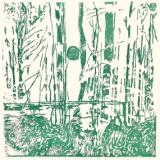
- A1: Music With Changing Parts (1) 13'17
- B1: Music With Changing Parts (2) 13'56
- C1: Music With Changing Parts (3) 13'56
- D 1: Music With Changing Parts (4) 13'45
Founding work of minimalism, Music with Changing Parts is a piece with free instrumentation.The musicians choose which part to play among the 8 staves of the score. At each indicated cue, the musicians can change part, which produces an abrupt change of instrumentation. While the music is based on a melodic material limited to a few notes that are repeated in patterns that expand or contract, the changes in orchestration refresh the listening experience by producing sonic contrasts. These techniques at work
in Music with Changing Parts , written in 1970, will lead Philip Glass to renew his language and move from the monochromatic works that precede it to more dramatic works such as music in 12 parts and especially the opera Einstein on the Beach. When Philip Glass began rehearsing the piece, he was surprised to hear long notes when everything was written in eighth notes. After making sure that none of the musicians were playing held notes, he realized that the fact that the same notes were played by all the instruments in the ensemble produced, through a psycho-acoustic effect, a harmonic substrate of resonant frequencies. He then decided to add to
the score the possibility of playing long notes to reinforce this effect
- A1: Equinox (Jon Lawton Remix)
- A2: After The Silence (Dorothy Bird Remix)
- B1: Avatars (The Orchestra Of The Northern Territories Remix)
- B2: Voices (Blood Of Achilles Remix)
‘Devotion to a Noble Ideal’ is the first EP release on vinyl from The Revolutionary Army of the Infant Jesus. Part retrospective and part reimagining of their work – the EP contains 4 tracks, each produced in collaboration with a different creative partner, offering a sometimes radical reinterpretation of three previous works as well as one new piece. It is a startling body of material from the Liverpool based art house collective that, nearly 40 years since its inception, continues to evolve. Formed in Liverpool in 1985, the Revolutionary Army of the Infant Jesus is a unique experimental ensemble whose work goes beyond music. Their mesmerising recorded material is influenced by diverse cultural perspectives and stimulates a deeply personal and subjective awakening. Ethereal vocals, ambient compositions, chants, acoustic instrumentation and field recordings generate beautiful and emotionally intense soundscapes. Includes a double sided 12” insert of illustrations by Mr John Varley, Mr Prince and Miss Macfarlane from the publication THOUGHT-FORMS by Annie Besant and C.W. Leadbeater
- 01: I Think I Just Died A Lil Bit
- 02: Buzz 1
- 03: Cosas Mueren
- 04: Going Back Home On Street View
- 05: Buzz 2
- 06: Twerk Class (Radio Mix)
- 07: Buzz 3
- 08: There`s Still Fun Stuff To Do
- 09: In This Together
- 10: Buzz 4
- 11: 60° Easy Care
- 12: 143
- 13: Buzz 5
- 14: Tuesday Gossip
- 15: Buzz 6
- 16: I`ll Wait For You In The Mcdonalds Car Park
"The album was created in this back and forth of snapshots - we made most of the decisions impulsively without much questioning. That takes a lot of trust." — Violeta García & Hora Lunga
"I'll Wait For You In The Car Park", the first full length collaboration between Argentinian cellist, improviser and composer Violeta García and Swiss musician and composer Hora Lunga, is a work of extremes. Drawing from the realities of life on two continents, and embodying moods ranging from stoic desire to violent bursts, the album enciphers so-called ordinary moments from everyday life into an alluring collection of musical scenes. Seemingly inconspicuous moments are condensed into a tale of synchronicity: colliding time zones and seasons, metropolitan rhythms raining down onto a glacier's ice field, exploring places through street view, the serendipity of loitering at a kiosk. As such, "I'll Wait For You In The Car Park" brings documentary film essays to mind that carefully observe the private and everyday occurrences.
Violeta García and Hora Lunga crossed paths by chance in 2023 and began discussing and sharing music shortly afterwards. What started as a loose exchange of ideas, sending back and forth sketches and demos between South America and Europe, grew into several studio sessions in 2024. Being sucked into a "quite extraordinary flow", the two musicians recorded, arranged and intervened on a level playing field, using the studio as a playground to record musical layers and interweave them with field recordings and audio notes gathered over the course of a year. Speaking a kindred musical language, they quickly realized how their ideas clung to each other like two familiar souls, complementing, intertwining and merging. From gauzy and eerie textures, musical miniatures floating through time, howling and screaming strings, to tumbling and thundering basses – the sound of the ordinary shapes a body that vibrates, writhes and breathes.
Violeta García is a cellist, improviser and composer from Buenos Aires, Argentina. Based in Spain, she tours a lot with her band Blanco Teta. She is a performer in many art forms, including free improvisation, contemporary and trans-media experimental repertoire in violoncello and electronics and collaborations with dancers, film makers and visual artists. After years of studying classical and popular music on violoncello and, later, contemporary composition and improvisation, Violeta has developed her own musical voice needed to emerge beyond outside specific genres.
Throughout Swiss composer and musician Hora Lunga's work, the focus lies is on exploring boundaries, both musically and in terms of performance and content. Above all, genre designations lose all meaning, as the music always takes place within a dramaturgically conceived overall framework. In recent years, his projects have ranged from pop music productions to experimental works and sound performances, as well astheatre and film productions. His ensemble WIRREN consists of up to fifteen performers.
- The Olive Branch
- Peace River Crossing
- We Belong To Each Other
- Mountain Of Companions
- Elements Of Harmony
- The White Flag
- Change
- Civilian Casualties
- Who Are You?
- Harmonic Allusions
"Movements of Air" is the highly anticipated fifth album from Daniel Herskedal's acclaimed trio, featuring Eyolf Dale on piano and Helge Andreas Norbakken on drums and percussion. Marking his tenth remarkable release with Edition Records, this album seamlessly bridges his foundational trio debut, "Slow Eastbound Train," with previous masterpieces like "The Roc" and "Voyage."
Over the past decade, Daniel Herskedal has consistently pushed the boundaries of the tuba, crafting music that is both profoundly introspective and expansively cinematic. At its core, "Movements of Air" delves into themes of hope, the pursuit of a better future, and the very essence of musical creation. With masterful performances from all members and intricate compositions, Herskedal navigates the delicate balance between good and evil, war and peace. Tracks such as "The Olive Branch" and "Peace River Crossing" showcase his ability to create emotionally resonant soundscapes, while pieces like "Elements of Harmony" and "Harmonic Allusions" highlight his innovative approach to harmony and texture.
This album stands as a testament to Herskedal's extraordinary talent, transcending the traditional limits of his instrument to deliver music that is both emotionally compelling and artistically groundbreaking.
Daniel Herskedal's exceptional achievements further underscore his artistic prowess and versatility. His notable arrangement of"San Francisco (Be Sure to Wear Flowers in Your Hair)" for the 2019 film "The Last Black Man in San Francisco," produced by Brad Pitt, was later featured in Coca Cola's global 'Open Like Never Before' advertising campaign. His extensive collaborations include performances with prestigious ensembles such as the BBC Concert Orchestra, the Royal Norwegian Navy Band, and the Russian Patriarchate Choir of Moscow. His collaborative project with Marja Mortensson won the Norwegian Grammy in 2019, and in 2021,he secured The Ambies Award for Best Original Score and Music Supervision for the podcast "9/12." Additionally, his work with artists like Keaton Henson and Emilie Nicolas on their album "Out of the Fog" further highlights his versatility and collaborative spirit.
Transport yourself to the vibrant streets of Havana with the Buena Vista Social Club's eponymous album, a captivating journey into the heart of Cuban music! Recorded in 1996 by acclaimed producer Ry Cooder, this timeless masterpiece celebrates the rich tapestry of Afro-Cuban rhythms and soulful melodies that have enchanted audiences for generations.
Buena Vista Social Club is both the name given to this extraordinary group of musicians and the album, recorded in just seven days in 1996 in Havana's 1950s vintage EGREM studios. From the infectious energy of "Chan Chan" to the heartfelt nostalgia of "Dos Gardenias," each track immerses listeners in the intoxicating blend of son, bolero, and guajira styles. Led by legendary musicians such as Ibrahim Ferrer, Compay Segundo, and Omara Portuondo, the Buena Vista Social Club ensemble delivers performances that are as exuberant as they are intimate, capturing the essence of a bygone era while igniting a passion for Cuban music that knows no bounds.
The acclaim of the original album has elevated the artists (including Ibrahim Ferrer, Rubén González and Omara Portuondo) to superstar status, inspired an award-winning film by Wim Wenders, and has contributed to popularizing Cuba's rich musical heritage. Produced by Ry Cooder for World Circuit, the timeless quality of the music and the sheer verve of the veteran performers have ensured that this will go down as one of the landmark recordings of the 20th century.
This 45 RPM Analogue Productions reissue pressed by Quality Record Pressings on four dead-silent LPs makes every note a transcendent experience. Meticulously crafted using the finest materials and exacting standards, this reissue pays homage to the golden age of vinyl, capturing the warmth and depth of the original recording in stunning detail. The package includes a 12-page booklet with lyrics and stunning studio images, topped off by a tip-on old style gatefold double pocket jacket made by Stoughton Printing.
Embark on a musical odyssey filled with warmth, joy, and the irresistible allure of Havana nights!
- A1: Makin' Moves
- A2: Las Olas
- A3: The Grifter
- A4: Mother Earth
- A5: Freddie
- B1: Don't Trip
- B2: The Alliance
- B3: The Lemon Groove
- B4: Gemini
- B5: Contemplation
- B6: Corporatocracy
MAROON VINYL[23,49 €]
Im Lateinischen bedeutet das Wort Gemini "zwei zusammen" oder "Zwillinge". Astrologisch gesehen sind Zwillinge unter anderem dafür bekannt, dass sie neugierig und vielseitig sind. Für die 9-köpfige (meist) instrumentale Combo The Sure Fire Soul Ensemble aus San Diego waren Jazz und Funk schon immer die beiden Genres, die sie konsequent und effektiv miteinander verschmolzen haben und die das Fundament ihres Sounds bilden. Mit ihrer stilistischen Neugier und Vielseitigkeit haben sie dieses Fundament auf ihrem neuen 11-Song-Longplayer für Colemine Records weiter ausgebaut. Aufgenommen zwischen Ende 2021 und Anfang 2024 im The Kitchen II in ihrer Heimat Lemon Grove, Kalifornien, lenken SFSE ihre ,introspektive Partymusik" in neue klangliche Gefilde. Während ihr Breakbeat-lastiger Funk-Soul-Jazz immer noch der Eckpfeiler ihres Sounds ist, wie er in Stücken wie ,Makin' Moves", ,TheGrifter" und ,Don't Trip" zum Ausdruck kommt, haben sie begonnen, mehr und mehr Einflüsse von Library-Musik-Labels wie KPM Music, spirituell orientierten Jazz-Labels wie Tribe & Black Jazz Records und exotisch angehauchten Jazz-Künstlern wie Cal Tjader und Dorothy Ashby aufzunehmen. Jetzt lehnen sie sich mehr an den ,introspektiven" Teil ihres Sounds an, insbesondere bei ,Mother Earth", ,Freddie" und dem Titeltrack, und beschwören die Geister von Freddie Hubbard, Phil Ranelin, Wendell Harrison, Bubbha Thomas, Chester Thompson und sogar Cannonball Adderley in seiner kopflastigsten und kosmischsten Zeit herauf (hören Sie sich Adderleys Alben ,Soul Zodiac" und ,Soul of The Bible" als Referenz an). ,Corporatocracy" geht noch einen Schritt weiter mit einem ausgedehnten Tabla-Solo, das auf der perkussiven Welle reitet, bevor es in seinen funkgetriebenen, modalen Vibe übergeht. In der aktuellen Besetzung mit Tim Felten an den Tasten, Jake Najor am Schlagzeug, Omar Lopez am Bass, Kiko Cornejo Jr. an Conga/Percussion, Aquiles ,Lito" Magana an der Gitarre, Wili Fleming an der Posaune, Sheryll Felten an der Percussion, und Jesse Audelo und Travis Klein am Saxophon und an der Flöte. SFSE bleibt dem Funk treu, traut sich aber auch, neue Wege zu gehen, die sie bisher noch nicht beschritten haben, und betritt damit faszinierendes Neuland in ihrem Gesamtsound.
Vier Stücke des estnischen Komponisten Arvo Pärt, eines Pioniers des ,heiligen Minimalismus". Im Mittelpunkt des Albums steht eine bisher unveröffentlichte Interpretation von ,Silentium", dem zweiten Satz von Pärts berühmtestem Concerto "Tabula Rasa", gespielt vom Kammerorchester A Far Cry aus Boston. Die Gruppe spielt ,Silentium" in fast der Hälfte der Geschwindigkeit der bekanntesten Version, die 1984 bei ECM veröffentlicht wurde. Das Stück, das für seine heilende Wirkung auf Sterbende bekannt ist und oft in Palliativeinrichtungen verwendet wird (ein Patient bezeichnete es als ,Engelsmusik"), ist bei halber Geschwindigkeit atemberaubend und scheint die Zeit selbst zum Stillstand zu bringen. Das Album enthält einige der beeindruckendsten Interpretationen von Pärts Musik, die je aufgenommen wurden. ,Vater Unser (Arr. für Posaune & Streicherensemble)" ist irgendwie warm und streng zugleich. Ein Miniatur-Epos. Pianist Marcel Worm's Soloversion von ,Variationen zur Gesundung von Arinuschka" ist so schön, das man kaum Worte dafür findet. ,Fratres for Strings and Percussion" ist eines der berühmtesten Werke von Arvo Pärt. Diese Version des Orchesters der Ungarischen Staatsoper ist ikonisch, voller Emotionen, an der Grenze zum Romantischen, aber nie kippend. Pärts Herangehensweise an die Musik und das Leben ist so spärlich wie die Kompositionen, die er schafft. Er sagte einmal: ,Ich habe nichts zu sagen... Die Musik sagt, was ich zu sagen habe. Und es ist gefährlich, irgendetwas zu sagen, denn wenn ich es bereits mit Worten gesagt habe, bleibt vielleicht nichts mehr für meine Musik übrig." Silentium setzt die Faszination von Mississippi Records für diesen großen zeitgenössischen Komponisten fort. Hochwertiges, schweres Vinyl, gepresst bei Smashed Plastic in Chicago, präsentiert in einem luxuriösen Reverse-Board-Jacket mit einem Artwork von Pärts heilig-minimalem Zeitgenossen Eduard Steinberg.
Demonstrating the poignant power of experience + human connection + innate musicality + operating in the present moment, Jeff Mills' Spiral Deluxe collective unveil their second album - The Love Pretender. Driven by the free expression and creativity of improvised performance, Spiral Deluxe is an electronic jazz fusion project comprised electronic music visionary Jeff, along with legendary keyboardist Gerald Mitchell (Underground Resistance/ Los Hermanos), Japanese rocker Yumiko Ohno (Buffalo Daughter/Cornelius) on Moog synthesizer and the Japanese bassist, adopted New Yorker, Kenji "Jino" Hino - son of Terumasa Hino, the world famous jazz trumpeter. Together, the four key players formed a band centred around completely improvised journeys through sound.
During their unrestrained performances, what Jeff describes as sonic "conversations" arose between the musicians, as they each contributed to full-length live shows, and studio sessions. Within the boundless parameters of freeform spontaneity, they developed an unspoken understanding of one another, finding balance and poise within the unplanned performances. The resulting recordings have been used for three releases so far: Two EPs, Kobe Session (2016) and Tathata (2017), and their debut album Voodoo Magic in 2018. With The Love Pretender, we're presented with another stunning collection of "tracks" extracted from one long improv session.
With each musician proficient in their specialism and, of course, an all-out music lover, the communication between the group members became almost telepathic. Very little preparation was needed, and their performances flowed naturally and organically. This can be heard, and felt, throughout The Love Pretender. Tracks like 'The Soloist' evolve effortlessly, each new shift subtly influenced by one of the musicians nudging the conversation into a different phase, and the rest responding accordingly, or vice versa. It's music that embodies the true nature of mindfulness and letting go of fear. In their unstructured, liberated cocoon the artists thrive and create musical moments that have, fortunately, been captured for us all to immerse ourselves in. Jazzy notes fill the air, combined with electronic bass, synthesised beats, sparkling keys and an all-round warm and welcoming atmosphere, with the slight edge you can only get from improvised performance.
Sylvain Luc's posthumous appearance on the album is of significance too. The French guitarist died in March 2024 at the age of 59. His natural flair adds another dimension to the album, bringing a touch of that laid back 1980s American California Coast feeling to tracks such as 'Society's Man'. These contributions to the LP, recorded separately, add character - a final sprinkling of humanity to complement the aliveness and presence of this body of work. Three other musicians also added their creative energy to the project. They were; TOKU, a Japanese jazz musician who specialises in wind instruments, especially the cornet, trumpet and flugel horn. And there's Masa Shimizu, who also has wide-ranging with the guitar, as well as being a producer.
Themes on the album include the optimism one can have by simply trusting the process and trusting that everything will work out in the end. By playing together in the way they do, Spiral Deluxe place their trust in the mystery of what will happen next. Getting comfortable with not knowing is key to a sense of peace with regard to the future and this energy is vital to their collective musical output. By embracing the notion of the unknown, you become an eternal optimist, living in the moment, rather than projecting into the future. This cultivates excitement, an antidote to anxiety.
Meanwhile, the title alludes to the shifts and changes that have occurred in today's society, whereby it's possible to achieve success through pretending. The superficiality, and falsehood, that can often be presented via social media, can lead to questions about what's real and what's not. From AI to the fake personas that populate the dominant platforms, The Love Pretender speaks to a process that is symbolic of the time we're living in. Behaviour that has become acceptable in today's world, which may not have been as welcomed a few decades ago. But this is part of the cycle of life...
Jeff's intention with this music is to present it in high-fidelity, to be listened to over and over and over again. In post-recording he worked for hours to ensure the audio quality was as high as it could be. The goal is to create music that people can live with their entire lives, from his solo work to these masterful improvisations. Music that comes to life, music that has a voice we can replicate with our own vocals. Expressive, unstructured, and alive...
With The Love Pretender Jeff Mills continues his mission to experiment with music outside the bounds of what is typically expected. It's freeing, enlivening, vibrant and uniquely human. As ever, Jeff's visionary outlook and bold approach to musical performance and recording has produced a body of work that epitomises his often revolutionary capabilities. There's no pretending here, just pure unadulterated sonic transmissions from a wonderfully daring, inspiring and optimistic ensemble...
- 1: R&P
- 2: Levels (Feat. Bilal & Igmar)
- 3: Speak No Evil (Feat. Myron Walden)
- 4: Words I Manifest (Feat. Raydar Ellis & Sean Jones)
- 5: One Of A Kind (Feat. Ben Williams And Nicholas Payton)
- 6: The Coming
- 7: Infant Eyes (Feat. Jean Baylor & Marcus Strickland)
- 8: Thelonious (Feat. Nicholas Payton)
- 9: Thelonius (Feat. Talib Kweli)
- 10: Lonius
- 11: Mark’s Hope (Feat. Mark Whitfield)
- 12: Fortress Of Hope (Feat. Mark Whitfield)
- 13: Angst (Feat. Igmar & Marcus Strickland)
- 14: To Kinda Lounge Around (Feat. Raydar Ellis, Terrace Martin & Nicholas Payton)
- 15: Runnin Outa Time (Feat. Igmar & Marc Cary)
- 16: Play It Back (Feat. Dr. Lonnie Smith, Cory Henry & Grégoire Maret)
When the late Jazz impresario and trailblazer Meghan Stabile first launched the Revivalist platform and Revive Da Live concert series in NYC, the goal was to bridge the gap between younger Hip-Hop audiences and traditional Jazz purists. Born from this vision in 2010 was the Revive Big Band, an inventive 20+ piece ensemble led by artistic director, trumpeter, and composer Igmar Thomas. Merging tradition with groundbreaking creativity since its inception, the multi-generational band’s world-class cadre of musicians unites for Like A Tree It Grows. As the Revive Big Band’s official full-length debut, this album represents not only a 14-year timeline of the Revive collective’s journey, but also a deeper tribute to the Black American Music lineage. It’s a celebration of community that uses the timeless power of music to tell a story of cultural legacy, innovation, and artistic collaboration. From original compositions like “R&P” and “The Coming”, to reinterpretations of classic records paying homage to musical legends (e.g. Wayne Shorter, Dizzy Gillespie, etc.) Like A Tree It Grows showcases Thomas’ intricate arrangements that blend Jazz, Hip-Hop, Soul, and a range of genres from the lineage of Black American music. With guest features from Talib Kweli, Dr. Lonnie Smith, Terrace Martin, Jean Baylor, Bilal, and more, the album provides a bridge between past and future, inviting listeners to explore the roots of Black music while reimagining its possibilities.
- A1: Oaagaada - Moon Water
- A2: Kemppainen, Tammi, Tolvi - Free-Zing
- A3: Tauna Niingungo, Tatasomba - Koshi Gambo
- A4: Mush Tone Ensemble - Ain't No Answer
- A5: Sarkkola & Tammi - Wavesphere I
- B1: Fågelbörs - Nette Or Nette
- B2: Joronen & Sarkkola - Live From The Joint
- B3: Sarkkola & Tammi - Wavesphere Ii
- B4: Jooklo Sextet - One More Freaky Tune
- B5: Pascal & Baya Race - Doll No Sleep
UK/ARG/JP ensemble Findom aka Financial Domination specialise in a hybrid of no wave, jazz & punk. From members of King Krule, Kuunatic, Nabihah Iqbal...
Findom know a thing about Britain’s death drive. They know that morbid fascinations of bad faith, morose binds and slow crawls have led us here. Their debut tape confronts the conceit of class deterioration, clashing together energies of No Wave, Jazz, Dub and Goth into a work that, through part satire and part protest, has the hooks to fight back. We are left with five tracks self-described as anti-jazz with an overarching structure that feels like a Killing Joke inspired noir thriller, where moments of dark aggression are sonically punctuated by open stretches of rhythmic disorientation.
Soolmaan is a sextet led by Belgian oud player and composer Tristan Driessens, accompanied by Nathan Daems, Christos Barbas, Annemie Osborne, Andrea Piccioni, and Levent Yildirim. Together, they create sound tableaus that float freely between the Bosphorus and India, with flute, sax, ney, cello, piano and tamburello igniting an imaginary folklore infected by jazz. Releasing their second album ‘Kashgul’ on the 24th of January with Zephyrus Records. (Vinyl / CD)
Driessens began his career immersed in the classical music of the Ottoman court, founding the Lâmekân Ensemble in 2011. After training under oud virtuoso Necati Çelik in Istanbul, he returned to Belgium in 2016 to form Soolmaan, an ensemble that reflects his multi-faceted identity. Rooted in Eastern modal traditions, Soolmaan’s music bridges jazz, folk, and classical influences, creating a unique and contemporary sound.
Their 2017 debut album, ‘Letters to Handenberg’, was described as "oriental chamber jazz," with Istanbul serving as a common thread. With Kashgul, their latest release, Soolmaan explores Ottoman makam, Indian raga and Anatolian halk muzigi, blending these traditions with a contemporary modal language. Created during Driessens' artist residency at the Concertgebouw of Bruges, the album features original compositions alongside reimagined works by Ravi Shankar, Amjad Ali Khan, and Art Pepper.
With improvisation as a connecting factor, Soolmaan’s music invites listeners into rich, boundary-crossing soundscapes where tradition and innovation meet. Kashgul exemplifies the ensemble’s ability to craft an immersive musical experience that resonates deeply with diverse audiences.
Upcoming concerts
December 8, 2024
Begijnhofkerk, Sint Truiden, BE
December 12, 2024
De Bijloke, Ghent, BE
December 14, 2024
De Bijloke, Ghent, BE
- 01: Broken Steps / Tokyo Ch 1
- 02: Rebirth - Reboot / Tokyo Ch 2
- 03: Wired Grace / Tokyo Ch 3
- 04: Steel And Skin / Tokyo Ch 4
- 05: Legacy In Limbo / Tokyo Ch 5
- 06: Beyond / Tokyo Ch 6
- 07: System Error / New York Ch 1
- 08: The Dream&Apos;S Underbelly / New York Ch 2
- 09: Home Across Borders / New York Ch 3
- 10: Caught In A Paradox / New York Ch 4
- 11: Dilemma / New York Ch 5
- 12: Downfall / New York Ch 6
- 13: The Breaking Point / New York Ch 7
- 14: Guarding The Blue / Lagos Ch 1
- 15: Oceans In Translation / Lagos Ch 2
- 16: Political Obstruction / Lagos Ch 3
- 17: Inventing Change / Lagos Ch 4
- 18: The Plastic Purge / Lagos Ch 5
- 19: Seeds Of Tomorrow / Rio Ch 1
- 20: Fading Futures / Rio Ch 2
- 21: Something New / Rio Ch 3
- 22: Whistle Against The Storm / Rio Ch 4
- 23: We Are Human / Rio Ch 5
GC'mon Tigre announces their new instrumental project, Instrumental Ensemble - Soundtrack for Imaginary Movie Vol 1. This album offers an alternate view of cinematic music: a soundtrack composed for a fictional film using a challenging and inventive method. This project investigates an alternative approach in which music shapes and guides visual storytelling. It's the first in a series of albums dedicated to as-yet-unmade films, enabling listeners to explore music as a key component in cinematic narrative. The original story that inspired this music was created in partnership with a large language model, which was taught and instructed in substance and style to best fit the project's artistic concept. C'mon Tigre works with AI to achieve collaborative harmony while contemplating on the unavoidable future ahead. Each track on the album depicts a scene, delivering stories about humans juggling personal issues and contacts with advanced technology. The end result is a story told by sound and text, designed to immerse listeners in a multisensory universe.
Black Truffle is thrilled to begin 2025 with a rare solo release from Konrad Sprenger, alias of elusive Berlin composer-producer-instrument builder Jörg Hiller. A prolific collaborator, Sprenger has worked extensively with icons of American minimalism such as Ellen Fullman (with whom her recorded the gloriously eccentric song album Ort) and Arnold Dreyblatt (as a core member of the Orchestra of Excited Strings since 2009), as well as releasing their music on his impeccably curated label, Choose. As an instrument builder and installation artist, he has overseen the creation of a computer-controlled multi-channel electric guitar and, with Phillip Sollmann, a modular pipe organ system designed to be reconfigured from space to space.
In much of Hiller’s work, a scientific approach to acoustic phenomena co-exists with a pop sensibility and a sly sense of humour. Nowhere is this unique combination more in evidence than in his slim body of solo work, beginning with the startling diversity of instrumentation and compositional approaches heard on the short pieces of Miniaturen (2006) and Versprochen (2009), followed by the more single-minded exploration of the computer-controlled electric guitar on Stack Music (2017). Set brings together these various strands of Sprenger’s work into a wildly infectious, playful epic, performed by the composer and the mysterious Ensemble Risonanze Moderne. On the LP’s second side, we are also treated to a guest appearance from longtime collaborator Oren Ambarchi, on whose recent solo releases Simian Angel and Shebang Sprenger has made key production contributions. Ambarchi’s signature stuttering, swirling harmonics weave through a sparkling assemblage of electric guitars, acoustic instruments, percussion and electronics—though, given the deft use that much of Sprenger’s recent production work makes of midi-controlled sampled instrumentation, it’s anyone’s guess where the acoustic ends and the digital begins here.
As soon as the needle drops on the first side, we are inside a musical world that Set will inhabit for its 33 minutes: sparkling guitar harmonics and palm-muted notes, tuned percussion, crisp electronic drum hits, flashes of horns, and untraceable bursts of synthetic sound are arranged into a skittering polyrhythmic framework calling up the detail-rich percussive constructions of contemporary techno filtered through the pointillism of the post-serialist European avant-garde. Behind this shifting mist of particulate sound, winds and strings sound out held chords, reminiscent of Arthur Russell’s Tower of Meaning in their epic yet seemingly aimless drift. The relationship between elements is mysterious, appearing both carefully considered and almost random. Though never straying too far from where it begins, as the piece moves along, it spotlights increasingly bizarre instrument choices (shakuhachi and steel drums, anyone?) as well as momentary liftoffs into motorik propulsion. Set is a fascinating, mercurial thing: at once propulsive and fragmented, essentially static in form yet ever-changing in detail, unabashedly egghead in its construction yet sure to get the feet tapping.
- 1: Steps On The Globe
- 2: The Choice (Featuring Mike Stern)
- 3: Prairie Morning
- 4: Neo (Featuring Randy Brecker
- 5: Love And Nothing Less (Featuring Lalah Hathaway)
- 6: Luminescence (Featuring Kirk Whalum)
- 7: Rosso Cantabile
- 8: Legend Of Yaguarón
- 9: Mossy Mountain
- 10: Blue Water
- 11: Euphoria (Featuring Joel Ross)
- 12: New Passage
Euphoria, Keiko's most inspired release yet, elevates the artist to new heights. Featuring a full string orchestra and horn ensemble, performances that transcend musical genres and stellar, Grammy-winning special guests, Euphoria transcends musical genres while still maintaining Keiko's classic listener-friendly sound!! The first single, "Steps On The Globe," will be released to contemporary jazz radio. Other highlights include "Love and Nothing Less," Keiko's passionate collaboration with R&B icon Lalah Hathaway, the deeply moving "New Passage" and many more superb originals
Carrying on a string of stunning archival releases from major figures of Indian classical tradition (including releases from members of the Dagar family and Amelia Cuni), Black Truffle is pleased to announce an unheard recording from tabla master Kamalesh Maitra (1924-2005). For over fifty years, Maitra devoted himself to the rare tabla tarang, a set of between ten and sixteen hand drums tuned to the notes of the raga to be performed. While the tabla tarang has its origins in the late 19th century, Maitra was the first to recognise its potential as a solo concert instrument, using the set of tuned drums to perform full-length raags. Seated behind a semi-circular array of drums, Maitra produced stunning waves of melodic improvisation enlivened with the rhythmic invention of a master percussionist.
Across his career, Maitra performed in ensembles led by Ravi Shankar, collaborated with George Harrison, and led his own East-West fusion group, the Ragatala Ensemble. However, it is in the solo setting that his remarkable artistry and the otherworldly timbral qualities of the tabla tarang are most strikingly on display. Recorded during the same 1985 Berlin sessions that produced Maitra’s self-released solo LP Tabla Tarang: Ragas on Drums, on Raag Kirwani on Tabla Tarang we are treated to Maitra stretching out for over forty minutes on the late night Raag Kirwani, accompanied by Laura Patchen on tabla and Mila Morgenstern and Marina Kitsos on tanpura. The performance begins with the traditional free-floating exposition section, where Maitra’s spacious melodic improvisation at times almost resembles a plucked string instrument (like the sarod, which Maitra also played). For the listener unaccustomed to the tabla tarang, the sound of these microtonally inflected melodic patterns played on drums has a magic quality. As Maitra begins to imply the rhythmic cycles more strongly, Patchen joins on tabla, beginning half an hour of rhythmic-melodic exploration, where virtuosity sits side by side with delicacy and meditative attention. Accompanied by beautiful archival images and extensive liner notes from Laura Patchen, for many listeners Raag Kirwani on Tabla Tarang will be the perfect introduction to the magical world of Kamalesh Maitra, released to coincide with the hundredth anniversary of the master musician’s birth.
Released on 15th November via Polydor Records, “Small Changes” is the eagerly anticipated follow-up to Michael’s eponymous third LP, the Mercury Prize winning, and Grammy Award nominated “KIWANUKA”.
“Small Changes” was produced alongside Danger Mouse and Inflo, the team behind the globally acclaimed “KIWANUKA” and its equally acclaimed predecessor, “Love & Hate”. The new record was recorded between London and Los Angeles. The core trio made up of Kiwanuka and his trusty co-producers expanded into a wish-list ensemble that featured legendary bassist Pino Palladino (D’Angelo, John Mayer, Beyoncé) and Jimmy Jam of the iconic Jam and Lewis songwriting and production duo (Janet Jackson, Prince, SOS Band).
A welcome return for one of Britain’s most talented of songwriters, most recognisable of vocalists, and most virtuosic of guitarists.
Art by YOUT and photography by Marco Grey.
180g heavyweight black vinyl in gatefold sleeve. Includes full size 12pg lyric booklet.
New Heavy Hitters album on 180g Double LP vinyl. Blue chip ensemble casting, winging improvisations that are solidly rooted in the blues, original compositions that add much to the ever-expanding repertoire of the modern jazz canon!
These are the components that you look for in ANY recording and they're all available in abundance on That's What's Up by the Heavy Hitters.
Recorded at the same Feb. 12, 1964 New York concert that yielded the more balladic album My Funny Valentine, Four & More
showcases the Miles Davis quintet at their blistering best. The great trumpeter and bandleader (1926-1991), and his stellar group, which was less than a year old at the time of this recording, mostly essayed tempos that ranged from Indianapolis 500 to Bonneville Salt Flats.
Offering a well-balanced, albeit reconfigured, repertoire featuring the familiar hard-bop strains of “Four” and “Walkin’,” newer, original free bop compositions like “Joshua” and “Seven Steps To Heaven,” and the standard “There Is No Greater Love,” which the ensemble
performed relatively infrequently and is the only tune herein not taken at a supersonic pace, the quintet electrified a sold out Philharmonic Hall.
Spurred on consistently by the mercurial rhythm section of pianist Herbie Hancock (23 years old at the time), bassist Ron Carter (then 26), and especially by the cross rhythms of 18-year old genius drummer Tony Williams, Davis’ work, particularly in the upper register, was seldom more commanding. As for his front line partner, tenor saxophonist George Coleman, Davis would write in his autobiography that he “played better that night than I ever heard him play.”
Four & More is available on black vinyl and comes in a sleeve finished with linen laminate.
Re-mastered from original mono master tapes.
Limited edition 1000 copies.
180 gr vinyl pressed by Pallas in Germany.
Deluxe high-gloss flipback album jacket.
Facsimile reissue using the original cover art.
Double insert using an original photo by JP Leloir from 1955.
Each record has been visually checked to prevent defects.
Recorded December 27 and 29, 1955 at the Pathé Magellan studio, Paris.
Original LP issue: Barclay 84.023.
After hitting Paris in 1950, saxophonist Bobby Jaspar enthralled jazz fans and jazzmen alike with his smooth, elegant playing, with the lyricism of his tranquil phrases heavily influenced by Stan Getz in particular. So when Jaspar began regularly performing with a small ensemble at the Club St-Germain five years later, he adopted the same instrumentation as that of his idol’s illustrious quintet, with Sacha Distel on guitar and René Urtreger on piano in the roles of Jimmy Raney and Al Haig, respectively.
Contrary to what its title might suggest, ‘Modern Jazz au Club St-Germain’ was actually recorded in the studio. It features compositions by Milt Jackson, Dizzy Gillespie and Miles Davis along with a handful of standards, in which the angular aridity of bebop gives way to the generous and yet sensitive idiom of cool jazz.
Jaspar’s premature death in 1963 robbed the jazz world of a promising talent; this record is among his best efforts as a leader. Bobby Jaspar is in top form here !!!
Text – Pierre de Chocqueuse
Bobby Jaspar (Tenor Saxophone & Flute)
Sacha Distel (Guitar)
René Urtreger (Piano)
Benoit Quersin (Bass)
Jean-Louis Viale (Drums)
Peni Candra Rini (she/her), the Indonesian composer and performer whose musical practice encompasses a wide range of traditional and experimental Javanese styles, announces her new album Wulansih (July 12, 2024) via New Amsterdam Records. Kronos Quartet's David Harrington, a frequent collaborator of Rini, recently called her “one of the world's greatest singers”, and on Wulansih she places her voice in conversation with a wide array of experimental and traditional musicians, including Andy McGraw, Lester St. Louis, Shahzad Ismaily, John Priestley, Curt Sydnor, and many others. Produced by Ismaily at New York's Figure 8 Recording, Wulansih creates a world all its own.
The 8 songs on Wulansih exert a deep sense of spiritual calm and act as, in Rini’s words, “a reminder that you are still human, listening to expressions of other humans.” Her music is deeply inspired by the poetry of Rumi and Hafez, Wayang Kulit (Indonesian shadow play), and Serat, the tradition of Sufi thought in Central Javanese court poetry. Rini says that Wulansih aims to “express my inner feelings, my soul, to provide inspiration to younger Indonesian composers, and to introduce Indonesian new compositions to new global audiences.”
Wulansih is a small encyclopedia of Indonesian music. Rini explains: “The album mixes a wide range of materials, including traditional Javanese gamelan singing, Balinese chant, stringband music of the 1960s, and intercultural improvisations, bringing them all together through my contemporary compositional approach. We created experimental ensembles, and even experimental instruments and tunings to create an album that, whatever you think of it, sounds like nothing else.”
Rini’s lyrics are poems, strongly inspired by Javanese Sufism, with a deep emphasis on love and the inner self. Estu explores the idea of “love as a sacrifice; it takes a commitment to put one’s heart in the right place. It requires the seriousness of an artist,” while Warahsih explores how “always through understanding and sincerity, teaching Love to those who study the ways of life, through the ages.”
The music on Wulansih transforms these poems of love and compassion into open and lush sonic spaces that are crafted using synthesizers, traditional Indonesian instruments, Rini’s wide vocal range, guitars, and Ismaily’s production.
- A1: 24 03 (Studio 1, Warsaw)
- A2: Thin Line (Studio 1, Warsaw)
- A3: Dancing With Ghosts (Studio 1, Warsaw)
- B1: The Boat (Studio 1, Warsaw)
- B2: It Comes In Waves (Studio 1, Warsaw)
- C1: Don't Break My Heart (Studio 1, Warsaw)
- C2: Komeda (Studio 1, Warsaw)
- D1: Utrata (Studio 1, Warsaw)
- D2: Nostalgia (Roundhouse, London)
This album is about memories. About a feeling of nostalgia and longing, both beautifully comforting and devastating. It is an attempt to transform an unspoken sensation of the past to a solid object serving the future, an urge to remember and hold onto moments that we can't keep forever. On the 6th of October 2023, the release date of her third solo album ‘Ghosts’, Hania performed a very special album release concert with a string ensemble in a uniquely special location - Witold Lutosławski's Concert Studio at the Polish Radio in Warsaw. Over the years, the spaces of Polish Radio have become an important part of Hania’s life - both privately and professionally.
Visiting for the first time as a student of Chopin University of Music and returning to make her first recordings in late 2018, just before the release of the debut album ‘Esja’. It was also in these studios that Hania recorded her Live from Studio 2 video and EP. But whereas that featured a much-loved solo performance, for this very special recording from the larger Studio 1, Hania is joined by her regular collaborator Ziemowit Klimek on double bass and moog as well as a luxurious eight-piece string ensemble featuring Karolina Gutowska violin Jan Pietkiewicz violin Marta Piórkowska violin, Paweł Czarny viola, Tomasz Rosiński viola, Dobrawa Czocher cello, Marianna Sikorska cello, Mateusz Błaszczak cello.
Beautifully mixed by Greg Freeman in Berlin the music takes on a new life as Hania’s ethereal vocals, beautiful playing and exhilarating compositions are brought fully to life by the beautiful sweeping strings of the expanded ensemble. The concert is included here in its entirety with the addition of one beautiful extra performance – the title track ‘Nostalgia’ a beautiful interpretation of a much-loved piece from the Ghosts album taken from her concert at the Roundhouse in London. In addition the LP features a beautiful 16 page booklet of photographs of the Polish radio studios taken by Hania herself and featuring her thoughts on the recording, studios and the compositions themselves and the CD includes the photos in a beautiful glued in 12 page booklet.
It is with great pleasure that we announce Mitchum Yacoub's debut album Living High in the Brass Empire_ a showcase in unique stylings of tropical funk, afrobeat, cumbia, and soul; a musical patchwork threaded by a heavy, hypnotic rhythm section and powerfully vibrant horn lines. What sounds like a 12-piece ensemble was actually mostly recorded and performed by Yacoub at his home in San Diego, featuring a few close friends from local groups Sure Fire Soul Ensemble and Boostive. The horn section is comprised of Travis Klein, Bradley Nash, and Wesley Etienne (featuring Todd Simon on "Los Muñequitos"), each with distinguished performances that send the music to higher heights. Nuanced vocalist Divina Jasso lends humanity and introspection throughout the head-nodding soul sounds of "Never Knew", latin dance anthem "Cumbia Divina", and the syncopated funk of "Empire". You'll hear rhythms from Colombia, folkloric percussion of Cuba, interlocking grooves à la Fela Kuti, 70's r&b influence, and something in between it all. Drawing many inspirations into a refreshing and unified record, we think you'll enjoy Living High in the Brass Empire.
crys cole returns to Black Truffle with Making Conversation, her third solo release for the label. After the intimate song-like constructions of Other Meetings (BT096), Making Conversation documents a different facet of cole’s work, presenting three rigorously conceptualised commissioned pieces, each of which extend her signature approach to highly amplified small sounds into new directions.
The side-long title piece is a stereo version of an 8-channel sound installation exhibited in 2023 at the Tabakalera Art Center in Donostia / San Sebastian, Spain. The piece uses a multitude of instrumental, vocal, concrete and electronic sounds to evoke the soundscapes cole encountered during nocturnal listening session in Bali, Indonesia in 2018 and 2019. In this world of night sounds, she explains, she ‘observed the complex interplay between amphibian, lizard, bird and insect communication, domestic animals (roosters, dogs), man-made sounds (airplanes, vehicles, conversations and evening activities) and sounds that were difficult to place’. Drawing on field recordings as memory aids (but including none in the finished piece), cole’s piece uncannily reproduces the spatiality and pacing of environmental sound without attempting strictly to replicate it. We hear insect-like twittering and birdsong fragments, resonant thuds and distant roars, furtive crunches and taps, muffled breath and metallic scrapes. While at times it can be difficult to imagine the source of these sounds, at other points they are clearly instrumental or electronic in origin; in its placement and layering, though, the whole assemblage suggests the glorious, unthinking richness of a non-musical sound environment. Suggesting at once the electronic gardens of Rolf Julius and the little instrument expanses of classic AACM, the piece is a brilliant enactment of the Cagean drive to ‘imitate nature in her manner of operation’.
‘Valid ForeverrRrrRRrrr… (pt. 1)’ began as cole’s contribution to an Issue Project Room commission to realise a score from Alison Knowles and Annea Lockwood’s Women's Work, a 1975 collection of text and conceptual scores by women artists and composers. cole’s piece begins from Beth Anderson’s Valid for Life, a complex arrangement of the letter R in various typefaces. Where the composer suggests a realisation on a trio of acoustic instruments (playing rolls with velvet beaters), cole translates the piece into her characteristic sound and object language as a trio of rolling sounds on ‘two large similar paper things and one 5-pin bowling ball’. Rolling from one side of the stereo field to the other, the bowling ball’s uneven movement is the heart of this immersive textural array, created with the simplest materials, which generates phantom sensations of pitch and phasing effects solely through amplified friction.
On ‘Valid ForeverrRrrRRrrr… (pt. 2)’, cole makes a first foray in translating her signature approach into conventional instrumental sounds, here in the form of a transcription for MIDI percussion ensemble. The result is refreshingly puzzling, comparable perhaps only to the sparsest moments of Keiji Haino’s classic “C’est parfait…” Accompanied with extensive liner notes, photographic documentation and a download code, Making Conversation is an exciting next step in cole’s work, extending her signature concerns in new sonic and conceptual directions.
In this electrifying 2024, we're buzzing with excitement as we celebrate 40 years of Flexi, the record emporium that's weathered countless storms amidst the ever-shifting tides of the music industry, catering to vinyl aficionados across the ages. Alongside the raves and swag, no doubt, there's a killer compilation dropping on the indie label "Flexi Cuts," dubbed evocatively as "Musica Solida" spread across 3 or perhaps 4 12-inch samplers, boasting a carefully curated selection of singles from cherished Flexi-affiliated artists and producers. The vision? To cultivate a virtuous movement of sublime tunes, echoing the fervor and zeal to persist within the realm of quality that Flexi embodies within the Italian scene, alongside kindred spirits... despite the daunting challenges of the market in recent years.
Musica Solida # 1 showcases
DJ Rocca: One of the most solid producers on the panorama, a respected maestro of the clubbing scene in Italy and worldwide.
Club Soda: Live electronic ensemble, still dreamin' from their latest EP 'Basso e Batteria', which packs an unreleased track recorded directly from their house-flavoured jam sessions.
Lex (Athens) & Locke : A Greek producer who is well established in today's dance house scene, with quality-vibey releases and a very nice and classy and groovy sound. We will definitely hear from him in the future!
Hiroyuki Kato: Emerging Osaka-based multi-instrumentalist makes his debut with a very punchy and catchy track!
The Mechanical Man (feat. Bob Vito) : Neapolitan super producer. Raw-sounding, gritty, powerful and never dull, a pleasure to have him with us.
The record will be released in about 200 vinyl copies no more.
Packaged in the classic discobag 2- holes, with a distinctive letterpress print in a beautiful silver cover.
Compiled by Simone Guerra aka Relative
Mastered by Francesco Brini (except track B1, Mastered by Marco Spaventi)
Distributed by Rubadub, Glasgow
Pressed by Desslab
Design by GLZ
Composer and musician Daniel Rafet Grima, offers a thematic release via Research Records titled 'You Are In the Embrace of The History'.
The double A side nods to ambient music, jazz and devotional musics in its arrangement and lyricism; penned as an act of faith in something other.
Research Records' 12" vinyl release of 'You Are In the Embrace of The History' will feature B side reworks by Iti (UK) and Kuniyuki Takahashi (Japan).
Rafet studied music from a young age. Tertiary education brought about further teachings in jazz. Growing up in the family village of Miniara (North Lebanon) saw to an inquiry into maqamat and traditional arabic musics post study. After composing for multiple ensembles and performing in various projects over the years, Rafet settles into his own artistry with this debut.
Previously Unreleased Recording. Limited to 1200 copies on transparent cherry vinyl. Tip-on jacket, Download code. Insert featuring LP sized original art by Grungie O'Muck. Includes the original recording of Richard Tucker's "Are You Leaving For The Country", later covered by Karen Dalton, and the only song co-written by Karen & Richard, "Sleeping In The Garden". "Richard, Cam & Bert seem to have grasped The Great Harmony. That is, ensemble singing that is at once sweet, precise, funky and a bit sardonic..." -Mike Jahn / New York Times (1970) "For a few years in the late sixties and early seventies Richard Cam & Bert ruled MacDougal St. walking a fine line between the increasingly commercialized demands created by groups like Crosby Stills and Nash and the fierce integrity of earlier folk performers, the generation to which Richard belonged. They managed this with great aplomb, producing original tunes of great integrity and obvious folkloric origins, as well as those which expressed the anarchic omnipresent psychedelia of the moment. They also never abandoned the idea of including some traditional material in their performances. But for the usual random application of luck they could have been very big." - Grungie O'Muck / Artist, Bluesman, Cover artist for their first album and contributor to this one. Richard Tucker, Campbell Bruce, and Bert Lee coalesced as a trio in the spring of 1968, and by the end of that year had become regular performers at fabled Greenwich Village nightspots - The Gaslight, The Bag I'm In, Cafe Feenjon, among others. But mostly they were street singers, busking regularly in Central Park. Their only LP, Limited Edition, was released in 1970, and sold mainly at gigs and on the street. Somewhere in The Stars compiles earlier, previously unreleased recordings, when all three members were signed with Peer-Southern Music publishers as writers and began using their studio to make demos and experiment musically. Beautifully recorded by house engineer Charlie Mack (supervised by Jimmy Ienner), the demos capture a back room casualness and rustic, homespun quality. For me, listening to their songs and harmonies is like entering a world you always hoped existed but had never experienced. Some of the songs were re-recorded the following year for Limited Edition, but many are heard here for the first time. Among them is the original demo for Richard Tucker's song, "Are You Leaving For The Country", which Karen Dalton covered on her seminal 1971 release, In My Own Time. Richard and Karen were husband and wife for much of the 1960s, performing as a duo (initially as a trio with Tim Hardin), and navigating their time on the Village scene while alternating living in a small mining town outside Boulder, Co. before splitting up in 1967. Also making its debut, is the only song Richard and Karen ever wrote together, the haunting "Sleeping In The Garden". Also contains two epic songs by Cam "One Of These First Nights", and "Stockholm") not on their LP, but staples of their live performances, and noted in a gig review by The New York Times, and in a column by future A&R hero, Karin Berg, who was an early champion. Another rarity is the only cover of "Sweet Mama" by Fred Neil we've ever heard. Campell Bruce came to New York in 1967 as lead singer with a band from Washington, DC, The Natty Bumpo. They'd recently signed a record deal with Phillips, but were falling apart. Cam landed in the Village with an acoustic guitar and first started playing and singing in the basket houses, and shortly thereafter at The Gaslight, as the "Cam Bruce Trio" (which included Collin Walcott). After opening for Mose Allison, Cam's hero, the trio went their separate ways, and Cam returned to regular solo gigs at The Flamenco, and the basket houses on Bleecker. Richard and Cam met up on that scene and quickly found a musical kinship as well as becoming best pals. Bert Lee arrived in New York as a runaway the following winter, and began playing and sleeping wherever he could. His sometime accompanist, Ron Price, introduced Bert to Richard and Cam just as Bert's own songs were garnering attention from publishers. According to Bert, "I arrived on the New York scene during a time of great change, and it was the notion of change that influenced me. All around me I saw there were two sorts of songwriters, on the one hand dedicated to the traditions that had inspired them, folk, jazz, the American songbook. On the other hand were songwriters influenced by the wave of experimentation that The Beatles were the perfect example of. Mixing genres, writing lyrics that weren't just about ordinary love and loss. Richard Tucker was a country blues player, with a relaxed and melodic approach to the craft. Cam wrote something more akin to soul songs, with a hint of jazz in the changes. I was writing tunes that sometimes drew on classical structures with a tendency toward what I suppose would be known as prog-rock. But I was rather adamant about not being pinned down stylistically, and so I would write, for example, a song based on some complex classical chord structure, and then go right ahead and write a simple folk song, like Evelyn. Our band was popular locally, and it was this variety that made it distinct." Delmore is excited to present this unearthed treasure, fifteen years in the making. In the words of Richard Tucker, "Tap on your knee, roll on the floor; if you aint free, what's it all for?" "The trio's singing, playing, and writing have all withstood the test of time. Believe me, because I was there. In 1969 R,C&B, myself, Charles John Quarto, David Bromberg, Ron Price, and Keith Sykes were just a few of that year's crop of song-slingers. We were young turks back then, out on the prowl in New York's Greenwich Village for record deals, gigs, and beautiful young women to sleep with and maybe even write a song about. I've lost the names and numbers of those lovelies and I'm not sure what happened to Ron Price, but Richard, Cam, and Bert are back! - Loudon Wainwright lll
Handling the Undead, the Original Motion Picture Soundtrack, is the latest in composer Peter Raeburn’s long and multi award-winning body of work. The music scores director Thea Hvistendahl’s extraordinary film. We are taken on an emotional journey experiencing grief, devastation, hope, the unknown and acceptance .Recorded at Soundtree Studios in London and Los Angeles and featuring members of Europe’s renowned 12 Ensemble, Peter Raeburn’s score offers unique textures and virtuosic performances amongst the ever-growing and transcendent sense of life and death that the score, as a whole, brings to the film. Raeburn’s score for Handling the Undead was awarded the World Cinema Dramatic Special Jury Award for Original Music at the 2024 Sundance Film Festival, and has been nominated for Best Score at Norway's Amanda Awards.
Released in 1971 on Impulse and recorded with two different ensembles, Thembi marked a departure from the slowly developing, side-long, mantra-like grooves Sanders had been pursuing for much of his solo career. Instead, it offers an intriguingly wide range of relatively concise ideas resulting in something of an anomaly in Sanders' prime period. This Verve By Request title is pressed on 180-gram vinyl at Third Man in Detroit.