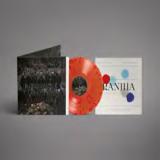
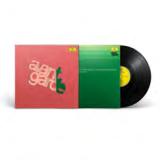
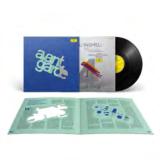
Black Truffle is thrilled to announce a reissue of Chico Mello and Helinho Brandão’s self-titled release from 1984, the first return to vinyl of this classic of Brazilian experimental music with its original cover art and complete track listing. An under-recognised figure whose work inhabits a singular terrain where radical new music techniques and music theatre meet musica popular brasileira, Mello has lived and worked in Berlin since the late 1980s. A student of Dieter Schnebel, Mello played in the 90s iteration of Arnold Dreyblatt’s Orchestra of Excited Strings alongside compatriot Silvia Ocougne, with whom he produced a radical and hilarious deconstruction of MPB classics on Musica Brasileira De(s)composta (an early and rather atypical release on Edition Wandelweiser).
On this release, his only recording predating his move to Europe, Mello works with the alto saxophonist Helinho Brandão, who appears to be otherwise unknown outside Brazil. The record’s six tracks range from solo saxophone improvisation to densely layered ensemble works bridging minimalism, acoustic sound art and a plaintive melodic sensibility that calls up Edu Lobo or Milton Nascimento. Beginning with a dramatic, dissonant wind and string surge from which emerge ominously pounding piano chords, opener ‘Água’ slowly builds in intensity, a halo of clustered vocal harmonies gradually closing in on Brandão’s squealing sax until the piece opens up to reveal a gorgeous passage of melodic singing. The piano accompaniment reduces to tolling bass notes as the voice begins a repeated incantation, suggesting a ritualistic atmosphere reminiscent of parts of Xenakis’ setting of Oresteia. Dissonant, sawing tremolos on the strings climb to a crescendo before disappearing into the sounds of water being poured and splashed into metal vessels, presented not as a field recording but as a percussive element performed by the ensemble. A child’s voice then appears, singing to piano accompaniment the same melody heard earlier in the piece. After a brief solo alto improvisation from Brandão, working with the guttural pops and fleeting melodic gestures of Braxton or Roscoe Mitchell, the remainder of the first side is dedicated to the leisurely unfolding of ‘Baiando’ over the course of twelve minutes. A trio for Brandão on soprano saxophone, Mello on a very period-appropriate phased nylon string guitar and Edu Dequech on bongos, the performance eases its way hypnotically through subtle variations on a set of rhythmic and melodic patterns, almost derailed at points by Brandão’s wild forays into extended technique but held together by Mello’s droning guitar notes.
The second side opens with another multi-part epic for a larger ensemble, ‘Matraca’, which makes use of strings, electric guitars and a wide range of South American percussion instruments. Rasping violin harmonics hover as drum hits, repeated guitar notes and triangle accompany a slowly descending bass glissando. A sudden change in direction introduces a thrumming, incessantly repeated bowed bass tone, beginning a series of episodes of minimalist phasing and pattern variation, the combinations of electric guitars and orchestral instruments giving the ensemble an ad hoc charm like the early Penguin Café Orchestra but with more percussive drive. Eventually the piece is overrun by a cacophony of the titular matracas (a kind of ratchet/cog rattle). Following a lyrical trio improvisation by Mello, Brandão and Gerson Kornin on bass, the final ‘Danca’ focuses entirely on Mello’s layered acoustic guitars and vocals, using this restricted palette to build up a haunting piece of almost orchestral density, reminiscent of the 70s work of Egberto Gismonti in how it thickens a folkish ambience with harmonic sophistication.
Arriving in a starkly beautiful gatefold sleeve and sounding better than ever in its new remaster, one might call the stunning music contained on Chico Mello/Helinho Brandão ahead of its time. But what (other than some of Mello’s own work) produced in the years since its initial release has really touched the organic fusion of minimalism, free improvisation, radical instrumental technique and popular song achieved here? Forty years after its first release, Chico Mello/Helinho Brandão remains music of the future.
Search:12 ensemble
An elaborate, authoritative acoustic re-imagining of Taylor Deupree’s seminal electronic album Stil. (2002), Sti.ll is the result of a multi-year collaboration between Deupree and arranger/producer Joseph Branciforte to bring Deupree’s explorations of extreme repetition and stillness into the world of notated chamber music. Clarinet, vibraphone, cello, double bass, flute, and percussion stand in for the digital loops and granular processing of Deupree’s original, with meticulously notated arrangements preserving the all rhythmic, formal, and textural complexity of these compositions. Transcribed and arranged by Greyfade’s Joseph Branciforte and performed by an ensemble of notable New York creative musicians — Madison Greenstone, Ben Monder, Laura Cocks, Christopher Gross, and Sam Minaie, alongside Branciforte and Deupree themselves — Sti.ll is a landmark recording situated between the electronic and acoustic worlds.
PATRICK HIGGINS is an American composer, guitarist, and producer from New York City, known for his work in experimental and contemporary classical music. Higgins plays guitar and composes in the band Zs, described by The New York Times as "one of the strongest avant-garde bands in New York." Heralded as a "formidable concert music composer" (Boston Globe) and "one of the most gifted guitarists working today" (The Quietus), Higgins has received attention for bridging traditions including baroque chamber music, contemporary noise, electronics and 20th century minimalism. His work has been performed in over 25 countries internationally, and he has composed works for some of the world's leading ensembles, ranging from chamber orchestra works, percussion cycles, and string quartets to smaller ensembles and soloists. He has scored works for television, museum exhibitions, and films both short-form and feature-length. Since 2013, he has operated Future-Past Studios, a recording studio in upstate NY.
He recently had a solo exhibition of artworks and sheet music, as well as two world premiers, at The Clark Museum in MA, USA. In 2019, he was a curator and headliner of the Le Guess Who festival in Holland. Higgins has performed and presented works at many of the world's largest festivals and venues across the past 12 years, including The Broad Museum (LA), The Warhol Museum, SF MOMA, Unsound Festival (Poland), Pioneer Works (NYC), Monom Berlin, Sony Ginza Park (Tokyo), ReWire (Holland), Cleveland MOCA, ICA Boston, Teatro Carignano (Torino IT), Sacrum Profanum (Kracow), Merriweather Post Pavillion, Donau Festival (Austria), Paula Cooper Gallery (NYC), Club Unit (Tokyo), Shakespeare Theater (Gdansk), The Netherlands Philharmonic Orchestra and many more.
Im Januar wurde bekannt, dass Thom Yorke den Soundtrack für Daniele Luchettis Film "Confidenza“ komponiert hat, eine Adaption des italienischen Dramas, das auf dem gleichnamigen Roman von Domenico Starnone basiert. Der Film feierte seine Premiere auf dem Internationalen Filmfestival in Rotterdam und wird am 24. April in die italienischen Kinos kommen. Produziert wurde der Film von Indiana Production und Vision Distribution, der Vertrieb erfolgt durch Vision Distribution. Erscheinen wird der Soundtrack am 26. April zuerst digital. Am 12. Juli folgt die Veröffentlichung auf Vinyl und CD. Schon heute erscheint das Musikvideo zur Single "Knife Edge" mit Elio Germano und Federica Rosellini in den Hauptrollen, das eine neu geschnittene Sequenz aus dem Film sowie einen B-Seiten-Track mit dem Titel "Prize Giving" enthält. Der Intro-Track "The Big City" wurde von Yorke im Februar in seiner Playlist für BBC 6 angeteasert.
"Confidenza“ folgt auf Yorkes vorherigen Score zum "Suspiria“-Remake. Dafür erhielt Yorke eine GRAMMY-Nominierung für den besten Song für visuelle Medien erhielt. Produziert von Sam Petts-Davies (Suspiria, The Smile Wall Of Eyes), arbeiten Petts-Davies und Yorke bei "Confidenza“ erneut mit dem London Contemporary Orchestra und einem Jazz-Ensemble zusammen, zu dem auch Robert Stillman und sein Bandkollege von The Smile, Tom Skinner, gehören. 2019 steuerte Yorke Musik zu Edward Nortons "Motherless Brooklyn“ bei und 2022 schrieb er zwei Songs für das Serienfinale von "Peaky Blinders“.
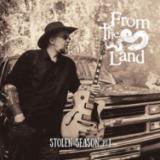
Zuletzt war Yorke mit The Smile (Tom Skinner, Jonny Greenwood, Thom Yorke) auf Tour, die im Januar ihr zweites Studioalbum "Wall Of Eyes“ veröffentlichten,
das auf das 2022 erschienene Debütalbum "A Light For Attracting Attention“ folgt.
Der italienische Pianist Giovanni Guidi widmet sich auf A New Day wieder gänzlich dem frei fließende Zusammenspiel mit seinen Kollegen Thomas Morgan und João Lobo – die musikalische Partnerschaft des Trios reicht inzwischen bereits über ein Jahrzehnt zurück – und baut dabei die instrumentale Bandbreite der Gruppe mit der idiosynkratrischen Tenorstimme des amerikanischen axofonisten James Brandon Lewis aus, der hier sein ECM-Debüt gibt. Mit Brandon Lewis erweitern sich nicht nur die Möglichkeiten des Ensembles,
es erschließen sich auch neue Idiome und frische Perspektiven, die von nuancierter Kommunikation und Lewis’ unverkennbarem, selbstbewusstem Ton gezeichnet sind. Das Album wurde im August 2023 in den Studios La Buissonne, Südfrankreich, aufgenommen und von Manfred Eicher produziert.
Im Januar wurde bekannt, dass Thom Yorke den Soundtrack für Daniele Luchettis Film "Confidenza“ komponiert hat, eine Adaption des italienischen Dramas, das auf dem gleichnamigen Roman von Domenico Starnone basiert. Der Film feierte seine Premiere auf dem Internationalen Filmfestival in Rotterdam und wird am 24. April in die italienischen Kinos kommen. Produziert wurde der Film von Indiana Production und Vision Distribution, der Vertrieb erfolgt durch Vision Distribution. Erscheinen wird der Soundtrack am 26. April zuerst digital. Am 12. Juli folgt die Veröffentlichung auf Vinyl und CD. Schon heute erscheint das Musikvideo zur Single "Knife Edge" mit Elio Germano und Federica Rosellini in den Hauptrollen, das eine neu geschnittene Sequenz aus dem Film sowie einen B-Seiten-Track mit dem Titel "Prize Giving" enthält. Der Intro-Track "The Big City" wurde von Yorke im Februar in seiner Playlist für BBC 6 angeteasert.
"Confidenza“ folgt auf Yorkes vorherigen Score zum "Suspiria“-Remake. Dafür erhielt Yorke eine GRAMMY-Nominierung für den besten Song für visuelle Medien erhielt. Produziert von Sam Petts-Davies (Suspiria, The Smile Wall Of Eyes), arbeiten Petts-Davies und Yorke bei "Confidenza“ erneut mit dem London Contemporary Orchestra und einem Jazz-Ensemble zusammen, zu dem auch Robert Stillman und sein Bandkollege von The Smile, Tom Skinner, gehören. 2019 steuerte Yorke Musik zu Edward Nortons "Motherless Brooklyn“ bei und 2022 schrieb er zwei Songs für das Serienfinale von "Peaky Blinders“.
Zuletzt war Yorke mit The Smile (Tom Skinner, Jonny Greenwood, Thom Yorke) auf Tour, die im Januar ihr zweites Studioalbum "Wall Of Eyes“ veröffentlichten,
das auf das 2022 erschienene Debütalbum "A Light For Attracting Attention“ folgt.
The large and humanistic ensemble Black Lives , led by bassist Reggie Washington (brother of drummer Kenny Washington) and his wife Stefany Calembert, is working to fulfil a dream - some would say a utopia - that is as much musical as it is social. Musicians from the U.S., Africa, the Caribbean, and Europe are united by a common language in their fight for equality and justice. It's about the future of our societies, which are lost in the excesses of all-consuming materialism and mistrust of others. A natural convergence of musical and cultural aesthetics - jazz, soul, funk, hip hop, blues - is shaping a declaration of love and an act of resistance. Hearts beat fast and fists are raised high! The watchwords call for a world of unity, peace, and freedom. It's a strong belief in tomorrow. 'If you unite and struggle, it's possible to change.'
- A1: Prologue
- A2: Prologue, Scene 1: Blake In The Wilderness
- A3: Prologue, Scene 2: Home
- A4: Prologue, Scene 3: Wisdom Of Birds
- A5: Act 1, Scene 1: Trip Calls
- A6: Act 1, Scene 2: A Package
- A7: Act 1, Scene 3: Blake Listens To Opera
- B1: Act 1, Scene 4: Confusiona1. Confusion
- B2: Act 1, Scene 5: Friberg And Friberg
- B3: Act 1, Scene 6: He Said
- B4: Act 1, Scene 7: Chorus Of Things
- B5: Act 1, Scene 8: The Magician Story
- C1: Act 2, Scene 1: Trip Calls Again
- C2: Act 2, Scene 2: His Understudy
- C3: Act 2, Scene 3: The Party
- C4: Act 2, Scene 4: The Super-Fan
- C5: Act 2, Scene 5: Blake Cleans The Stage
- C6: Act 3, Scene 1: Blake In The Wilderness
- C7: Act 3, Scene 2: Trip Calls Again Again
- C8: Act 3, Scene 3: P.i. In The Wilderness
- C9: Act 3, Scene 4: The Magic Trick
- D1: Act 3, Scene 5: Intervention
- D2: Act 3, Scene 6: Abandoning Blake
- D3: Act 3, Scene 7: Voyage
- D4: Act 3, Scene 8: Death Part I
- D5: Act 3, Scene 8B: Death Part Ii
Oliver Leiths von der Kritik gefeierte Kammeroper "Last Days", basierend auf dem Gus Van Sants Kultfilm "Last Days", feierte im Oktober 2022 in einer ausverkauften Aufführungsreihe im Londoner Royal Opera House Premiere. Mit der bewährten Starbesetzung in ihren ursprünglichen Rollen entstand nun diese 90-minütige Studioaufnahme, auf der das 12-köpfige Ensemble unter der Leitung von Jack Sheen den Anker von Leiths straff ausgearbeiteter und zutiefst fantasievoller Partitur darstellt.
- "Oliver Leith's score is a sonic tapestry interweaving delicate instrumental effects, 'found' sounds, and a cappella vocal timbres." - The Independent
- "Leith's score, brilliantly rendered by 12 Ensemble under Jack Sheen, is starkly original." - Bachtrack
- "Jack Sheen conducted the slick 12 Ensemble… balancing the push-pull sternness and rapture of a score that surely has a real future ahead." - Opera
- A1: I Don't Wanna
- A2: 394
- A3: Nothing True
- A4: Second Chance
- A5: Sneakyville
- A6: Amazing Grace
- A7: Belt
- B1: Hate Your Friends
- B2: Don't Tell Yourself It's Ok
- B3: Uhhh
- B4: Fed Up
- B5: Rat Velvet
- B6: Fucked Up
- C1: Mod Lang (From 'Crawling From Within' Compilation)
- C2: Buried Alive
- C3: Gotta Stop
- C4: Sad Girl (From 'Crawling From Within' Compilation)
- C5: Belt
- C6: 394
- C7: Falling
- C8: Don't Tell Yourself
- C9: Uhhh
- C10: Amazing Grace
- C11: Rat Velve
- C14: I Like To
- C15: So I Fucked Up
- C16: Sick Of You
- C17: Hate Your Friends
- C12: Second Chance
- C13: Sneakyville
Repress!
Note - Sleeve says contains a bonus CD, these represses do not have a bonus CD, they have a download card.
Hate Your Friends is the 1987 debut album by the Lemonheads, one of only three full-length releases to feature the original band line- up of Evan Dando, Ben Deily, and Jesse Peretz. The album showcases a hardcore-punk-to-pop-rock sound and sensibility as playfully fierce as it is surprising…especially to listeners who know the band only from their better-known major label recordings of the 1990s. The roots of Hate Your Friends begin with the genesis of the band itself: when high school friends Ben Deily and Evan Dando—inspired by a shared love of the 70’s absurdist comedy troupe the Firesign Theatre, literature, and punk rock—began playing their own songs together in 1985. Dando and Deily first started out as a two-piece ensemble: swapping back and forth between a shared Guild guitar (and a crappy amp) and vocal mic, and pounding a drum kit “borrowed” from the high school jazz band. With the addition of classmate and friend Jesse Peretz on bass, the two-man outfit quickly became a power trio. With a handful of original songs, a passionate love for their favourite bands—from Husker-Du, the Replacements, Black Flag and the Germs, to the Saints, Wire and ‘77 UK punk—and a tiny recording budget, the Lemonheads set about their first studio session within days of their high school graduation in June of 1986. During that summer, a significant amount of what would become the band’s debut album was recorded in Brookline, Massachusetts, with Deily and Dando sharing vocal, guitar and drumming duties. Above and beyond bass, Jesse proved pivotal as the band’s manager, booker and tireless promoter—helping arrange for the Lemonheads self-released debut EP, Laughing all the way to the cleaners, later that summer, and shortly thereafter helping establish the relationship with Curtis Casella of TAANG! records that paved the way to full-length LP Hate Your Friends. Finally, with the addition of full-time (and fairly short-lived) drummer Doug Trachten, the last songs of Hate Your Friends were recorded in the winter of 1986-7. BONUS TRACKS: This Fire Records re-issue features bonus tracks including 12 never-before-released live tracks from a 1987 radio session, rare tracks from the early compilation Crawling From Within, and additional tracks not included on the original release of Hate Your Friends (“Buried Alive” and “Gotta Stop”).
January 2023, Dorset. Snow is piled at the door, icy roads are closed, and Emily Cross is in a coffin. Not a setting typical for a rebirth. But for Loma, this is where they bring their band back from the brink. "It's like a demon enters the room, whenever we get together", writer, singer and instrumentalist Cross says of the struggle to bring new Loma music into the world. Following the release of their 2020 second album Don't Shy Away, Loma's three members were cast around the globe and the band-not for the first time-entered a deep sleep. Multi-instrumentalist and recording engineer Dan Duszynski remained in his studio in Don't Shy Away's central Texas heart, but Cross, a UK citizen, moved to Dorset, and writer and instrumentalist Jonathan Meiburg left the US for Germany to research a book. In the pandemic years, even being in the same room was impossible, and attempts to start a new record faltered. The following winter, in an attempt to salvage the record and the band, Cross suggested they regroup in the UK, in the tiny stone house-once a coffin-maker's workshop-where she works as an end-of-life doula. With minimal recording gear and few instruments, Loma turned two whitewashed rooms into a makeshift studio, using a padded coffin as a vocal booth. It was a turning point. They scrapped much of what they'd made, letting a new place set a new course. The one-lane roads, hedgerows and dark skies of Dorset gave the new songs an ineffable but unmistakable Englishness. The band used the ruin of a 12th-century chapel as a reverb chamber-surprising hillwalkers who peeked in to find them singing to no one-and the sounds of Cross's chilly workshop wormed their way into the recording: a leaky pipe, a drummer's brushes on a metal lampshade, the voices left on an ancient answering machine. What emerged was How Will I Live Without A Body?: a gorgeous, unique, and oddly comforting album about partnership, loss, regeneration, and fighting the feeling that we're all in this alone. Many of its songs have a feeling of restless motion; faceless characters drift through meetings and partings, tangling together and slipping away. "I Swallowed A Stone" is like a nightmare with a happy ending; "How It Starts" and "Broken Doorbell" reflect on the challenge (and necessity) of wrestling with agoraphobia. Though the record nods to the trio's separate lives- a German percussion ensemble, a pair of Texan owls, and the surf at Chesil Beach make guest appearances-the core of Loma's sound remains intact: earthy, organic and deeply human, anchored by Cross's cool, clear voice. Loma's previous album, Don't Shy Away, was galvanized by the unexpected encouragement and contributions of Brian Eno. This time, they found inspiration in another hero, Laurie Anderson, who offered a chance to work with an AI trained on her entire body of work. Meiburg sent her a photo from his book-in-progress about the once and future life of Antarctica; Anderson's AI responded with two haunting poems. "We used parts of them in a few songs," he says. "And then Dan noticed that one of its lines, 'How will I live without a body?' would be a perfect name for the album, since we nearly lost sight of each other in the recording process." In the end, Loma's efforts to reconnect with one another are the album's central focus: what do you owe a shared past, when everyone and everything has changed? "Making this record tested us all," says Duszynski. "I think that feeling was alchemized through the music." Alchemized, because How Will I Live Without A Body? is by no means a stressed-out record: an undercurrent of deep calm runs through it. But maybe 'relaxed' isn't the right word. It's more like a feeling of relief, of making it through a tough journey together.
Hailing from Toronto, the dynamic indie rock quintet, Good Kid, comprises lead vocalist Nick Frost, drummer Jon Kereliuk, bassist Michael Kozakov, and guitarists David Wood and Jacob Tsafatinos, who thrives as a vibrant community fueled by the boundless enthusiasm of its listeners. Their eclectic blend of J-rock, indie-rock and pop-punk resonates with high-energy riffs, catchy melodies and clever lyricism.
A jack-of-all-trades ensemble - musicians, programmers and storytellers, Good Kid has carved a unique path for their audience to follow suit. Good Kid's fanbase is not just passive listeners; they are a passionate community, actively contributing to the band's universe. Through platforms like Discord and Iwitch, as well as their strong social media presence, fans create art, animation, videos and covers, reflecting their profound connection to the music. The band's journey is marked by streaming successes with the release of "From the Start" on November 10th, 2023, hitting 1 million streams in just 24 hours, accumulating several million streams and counting. Their reach extends to leading YouTube and Iwitch accounts in the gaming space, aligning them with top content creators
and gamers. Their energetic performances have not only led to two-sold out headline US tours in 2022, but have included supporting sold-out UK and EU tours, as well as a nationwide run on Portugal the Man's Canada tour.
Black Truffle is pleased to announce Resonant Trees, the first vinyl release from French composer-performer Léo Dupleix. An active member of the international community of younger musicians working with just intonation, Dupleix has composed works for solo instrumentalists and ensembles in Europe and Japan, as well as performing extensively on harpsichord, piano and electronics. His music is distinguished by a formal clarity and elegance of surface, gently shaping pure intervals into delicate melodic patterns and shimmering harmonic planes.
Resonant Trees presents two side-long pieces for harpsichord and ensemble, both setting slowly repeating patterns played on harpsichord and guitar within an environment of sustained tones. Dupleix performs on a French double manual harpsichord (tuned to a just intonation scheme of his own devising) and Prophet synthesizer, joined by Juliette Adam (bass clarinet), Johanna Bartz (traverso flute), Cyprien Busolini (viola), Fredrik Rasten (6- and 12-string guitars), and Mara Winter (traverso flute). The harpsichord begins Resonant Tree I alone, slowly sounding out a series of arpeggiated chords that emphasise the unique (and for unaccustomed listeners, sometimes unsettling) harmonic and timbral qualities of justly tuned intervals. Long tones from synthesiser, bass clarinet, viola and Baroque traverso flutes slowly creep into the spaces between the arpeggiated chords, joined after several minutes by delicate patterns of harmonics played by Rasten on acoustic guitars.
On Resonant Tree II, a similar structure and ensemble (without the flutes) are used with quite different results. We again hear only the harpsichord at first, but this time playing a series of flowing melodic lines, each of which is repeated several times. Joined again by long tones from the ensemble, here the viola is particularly prominent and its interplay with the harpsichord creates fascinating acoustic effects. In both pieces, repetition gives the music a static, stable quality while, at the same time, the exact shape of the repeating patterns remains difficult to grasp. As Dupleix writes, these pieces dream of music as ‘space and a sound that one could grasp in one’s hand.’ As the near-static quality of the repetitions and long tones with little incident make these two stretches of musical time feel like spaces for the listener to inhabit, the small variations on a narrow range of related material act like a three-dimensional object whose each facet is examined in turn. At once austere and seductive, Resonant Trees takes its place beside the work of contemporaries like Catherine Lamb, while also calling up the languorous melodic world of Mamoru Fujieda, the dignified melancholy of Satoshi Ashikawa’s classic Still Way and the espaliered chamber atmospherics of the Obscure catalogue.
José James - the forward-looking, genre-defying Jazz singer for the hip-hop generation - has done it again. “1978” (his 12th studio album since 2008’s “The Dreamer'') announces an instant classic, combining James’ deep love of jazz and hip-hop with songwriting and production nods to R&B heroes Quincy Jones, Michael Jackson and Leon Ware. Produced by James and featuring an all-star ensemble including Grammy nominees Pedrito Martinez (Camilla Cabello, Eric Clapton), Marcus Machado (Daniel Ceasar, Pharoahe Monch), Jharis Yokley (Sleigh Bells, My Brightest Diamond) Chad Selph (Bilal, FREELANCE) and David Ginyard (Solange, Blood Orange), “1978” pulsates with the socially conscious feel-good vibes of Marvin Gaye, Prince and Stevie Wonder. James also skillfully explores the boundaries of Black music, featuring Brazilian rising star and recent Latin Grammy nominee Xênia França as well as Congolese-Belgian rapper/filmmaker Baloji.
Leading Danish trombonist Lis Wessberg is grounded by the concept that a strong melody, and a rich sound are the two most important elements in composition and performance.A continuation of the refined contemporary answer to the"Cool Jazz" sound she"s been cultivating for the past 30 years, her sophomore album"Twain Walking" is set to release on April 12th onApril Records. With more than50 album credits to her name, and having performed and toured with renowned artists including Marilyn Mazur, Fredrik Lundin, Joyce Moreno, Kid Creole & The Coconuts, Ernie Wilkins Almost Big Band feat. Randy Brecker, and more, 2021 saw the release of her debut album "Yellow Maps"to critical acclaim from all around Europe. Diving deep into the personal exploration of her creative roots, "Twain Walking"hails from the warm vitality of New Orleans jazz, to the reflective hum of the ECM sound, and the boundary pushing songwriting of Radiohead. With a respectful nod to her influences such as Miles Davis, Curtis Fuller, Danish Erling Kroner, and Palle Mikkelborg, Wessberg operates within thetraditions they established. However, resisting producing a mere echo of the past, she cultivates her owndistinctaesthetic inspired in equal parts by her heroes as well as contemporary zeitgeist. Led by Wessberg"s dynamic trombone playing, her breathlike approach to the instrument mimics a lamenting human voice singing intricately lyrical melodies. Rock inspired drum grooves, thick synth timbres, and cavernous reverbs craft an expansive and dream-like contemporary soundworld in which Wessberg"s thoughtfully crafted compositions can unfold. From spacious,Nordic ballads todance floor psychedelia, the ensemble tackle all ten varied compositions with confidence, maturity, and a dedicated sense of self-expression. Featuring Estonian rising star Karmen Roivassepp on vocals, her effortless soloisticcontributions explore lyrical themes of recognising the beauty in love in life, elevating the record"s melancholic and reflective tone.
A quietly influential figure among electronic and experimental circles since the late 90s, Berlin based sound artist Hanno Leichtmann has been developing a sprawling and idiosyncratic vision both as a creator and curator.
With a keen sense for charting new territories, Leichtmann's work spawns a multitude of languages that go from deli-cate ambient excursions to techno explorations or abstract sceneries on numerous sound installations, releases on such esteemed labels like Entr'acte or The Tapeworm and collaborations with artists like Valerio Tricoli or Jan Jelinek. A reflection of his keen sense of discovery.
Centered around the Villa Aurora Organ, an intriguing and mostly unknown instrument built in 1928/29 by the Artcraft Organ Company in Santa Monica, California, 'Outerlands' presents a deeply personal approach to the instrument's particular properties, very much in line with Discrepant's ethos. Consisting of a pipe organ, a wall mounted marimba and a two octave tubular bells/chimes ensemble, remotely controllable by MIDI, the Villa Aurora Organ's rich palette of sounds is translated into 12 short tracks capable of conveying the mesmerising spirits of minimalism, exotica and de-votional music.
Starting with the ecstatic sound of the pipe organ, 'Lucero' sets up the hypnotic mood for 'Outerland's excursions through moments of spiralling repetition - 'Tramonto' -, blissful contemplation - 'Sunset' or 'Notteargenta' - or underly-ing tension - ‘Coperto’. 'Espera' amps up the unease, with queasy organ tones lurking beneath marimba harmonic motifs that wouldn't sound out of of place on some survival horror movie, while 'Miramar' or 'Revello' bring an uncanny sense of familiarity through its repetitive melodies.
Drifting seamlessly through a variety of moods that somehow feel connected - the outerlands are within you, if you allow yourself to let go.
- 1: Night In Tunisia
- 2: You're My Thrill
- 3: My Reverie
- 4: Stella My Starlight
- 5: Round Midnite
- 6: Jersey Bounce
- 7: Signing Off
- 8: Cry Me A River
- 9: This Year's Kisses
- 10: Good Morning Heartache
- 11: (I Was) Born To Be Blue
- 12: Clap Hands, Here Comes Charlie!
- 13: Spring Can Really Hang You Up The Most
- 14: Music Goes 'Round And 'Round
"Back in the 1990s original Verve pressings of this record were hot items pushed into prominence in great part by write-ups in The Absolute Sound, particularly by my friend Frank Doris. I found a few, and even a few in pretty good condition, but none of them begin to compare to this double 45 RPM set that offers more of everything, particularly transparency and instrumental separation. ...Ella's on a microphone with a slightly rising high end but if it sounds icy, don't blame the recording or the mastering. It's your system. If it's well-balanced and your cartridge is a good tracker, the vocal transparency and clarity are spooky and the sibilant articulation is precise. These double LPs cut at Sterling Sound use the original tapes, not copies of the original tapes and the clarity and transparency coupled with QRP's drop-dead silent pressings are remarkable. The original pre-MGM buyout LP has a pleasingly nostalgic quality and the added warmth produces a bit more room sound, but in my opinion it can't compare to this reissue unless you like hearing things through rose-tinted loudspeakers. Elegantly produced, arranged and recorded and easy to recommend ..." Music = 9/11; Sound = 9/11 - Michael Fremer, February 15, 2013.
Fourteen numbers from the heyday of swing, composed sometime between 1930 and 1945 - played and sung time and time again in ballrooms, or on the radio to advertise biscuits or war bonds, were recorded by Ella in completely new and personal interpretations in 1961. No one should be put off by the rather unfortunate cover. Clap Hands... is absolutely top notch as regards musicality, perfect recording quality, superb accompaniment by a small ensemble, with room for improvisations; it offers a wonderful opportunity to discover something new in these evergreens, despite the occasionally banal lyrics. The songs of this recording conjure up bygone days, with listeners in the 21st century being offered a highly personal homage to one of the most successful periods in the 100-year history of jazz.
- A1: Spirit Of The Immortal Joy (Feat Alabaster Deplume & Yama Warashi)
- A2: Many Flowers (Feat Ermhoi & Joseph Wallace)
- A3: Holidays On Earth (Feat Hungerhill & Donna Thompson)
- A4: Karaoke Dream (Feat Yama Warashi)
- A5: Ectoplasm
- A6: Atom Dance
- A7: Jaw Spinner (Feat Hungerhill & Joseph Wallace)
- B1: Fog (Feat Julia Shortreed & Hungerhill)
- B2: Sunbeams
- B3: All Of Me (Feat Momoko Gill)
- B4: Quicksand (Feat Julia Shortreed)
- B5: Ununited
4 years after their groundbreaking debut album “Happily Confused”, Ghost In The Tapes return with a new full-length, “Holidays on Earth”.
This new LP sonically expands multilingual hip-hop and rap towards spiritual jazz and uplifting electronica. Still following the same process of creation through international collaborations, they gathered 26 musicians and vocalists from all around the world, including Alabaster DePlume, Matt Gedrych (Neue Grafik Ensemble), Danalogue, Marysia Osuchowska (Levitation Orchestra), Susumu Mukai (Zongamin, Floating Points), Phil FMU (Vanishing Twin, Broadcast), The Brothers Nylon, Louis Treffel (NCY Milky Band), amongst many others.
“Holidays on Earth” contains 13 new tracks that push the boundaries of hip-hop and jazz hybrids, 12 of which will be released on a limited edition of 300 LPs shaped by US designer Ruff Mercy (Nas, Thom Yorke, J Dilla, Nightmares On Wax…), via BMM Records on April 5th.
"As Bill Orcutt’s most mature and exhilarating LP to date, Music for Four Guitars was a slab of undeniable Apollonian beauty. Its approachability and obvious novelty landed it not only on the year- end lists of every key-pushing codger in the underground in 2022, but also on NPR in the form of the Bill Orcutt Guitar Quartet, an ensemble assembled to perform this music and featuring Wendy Eisenberg, Ava Mendoza, and Shane Parish in addition to Orcutt. But while their Tiny Desk Concert gave a whiff of the quartet’s easy intimacy, the sterile confines of the virtual recital medium still left a puzzle unsolved: how might these brutally mannered bricks of minimalist counterpoint sound on a stage in front of actual breathing bodies?" "This was the question foremost in my mind when I first saw the quartet in San Francisco a few months before this double live LP was recorded. I was already familiar with the prowess of Eisenberg and Mendoza, two of the most technically intimidating shredders to blast out of the noise/improv underground, and knew Parish as the mastermind behind the epic translation of Orcutt's quartet recordings into a fully notated score. I was ready to be 'blown away'—and I most assuredly was. The quartet navigated Orcutt's jaggedly spiraling right angles into the shining core of the compositions with joyous ease, faithful to the originals in nearly every way (though their tempos were slightly ramped up, Blakey style, to communicate their breathless rush). The renditions were flawless, stellar and inspiring. I had expected nothing less." "Which leads us to this album, Four Guitars Live, recorded in November of 2023 at Le Guess Who? festival during the quartet’s first European tour. The true essence of this set is not simply in its faithfulness to the source compositions, but in the group's easy familiarity (no doubt the result of weeks on the road) and the generosity of their improvisations, both collective and solo. Orcutt, clearly cognizant of both the caliber of his collaborators and the singularity of their voices, has given everyone room to stretch out, and all have delivered some of their most moving passages to date." "One of this record's great thrills for me is imagining a listener, perhaps unfamiliar with the outer limits of contemporary guitar improvisation (or the Tzadik catalog), slammed into catatonia by Mendoza's liquefying lines on Out of the corner of the eye, then revived and healed by the languid, breathy lines of Parish's unaccompanied, spaced-out breakdown of the track's main theme, finally only to be crushed by Eisenberg’s staggering extended solo on Only at dusk (somehow channeling both Eugene Chadbourne and Buck Dharma)." "There's another peak, which begins at the end of side B, in Orcutt's own languid solo, encapsulating the flowing focus of his recent solo LPs, and serving as an introduction to the next side's ensemble tour de force, the psychic heart of the album, On the horizon: its melodic core passing first to Orcutt, launching into a sublime solo turn by Eisenberg, a duo of Parish and Mendoza, before parachuting back into the ensemble for a smashup rendition of Barely visible and Glimpsed while driving (renamed Barely driving) knitted together with an softly bubbling ensemble improvisation. The transfer is orchestrated yet seamless, its tonal form undeniable even in the presence of obvious dissonance." "The breadth of Four Guitars Live gives lie to the false notion that agile, polytonal improv is necessarily without soul, is necessarily inaccessible. Rather, Four Guitars posits a human avant-garde music that the most conservative will recognize as virtuosic and revel in its classic intervals, boiling counterpoint, and precisely- layered facets. Even the rockers in your life might dig it, so why not pass it on?"—Tom Carter
- 1: Big Hitters Feat: Armand Schaubroeck (Rock Version)
- 2: Roma
- 3: Everybody's Ill (At The Moment) Part 1
- 4: Everybody's Ill (At The Moment) Part 2
- 5: Moving On
- 6: Nobody Likes Me Feat: Jessica Winter
- 7: Make Luv (I Like To Party)
- 8: Alpha Business
- 9: These Hands Aka Danny Knife Feat: Peter Doherty
- 10: Sort It Out Down There
- 11: Wimpy (Album Version)
- 12: Two Kinds Of Music
- 13: Big Hitters (Reprise)
Arctic Moss Vinyl[25,17 €]
PREGOBLIN II is a strange name for a debut album. For the artist who created it, Alex Sebley aka PREGOBLIN, its astonishingly heartfelt and brilliantly catchy assemblage of songs is the culmination of a tortuous genesis period. Its release finally, he hopes, will usher in a fresh, more positive chapter for him, a sequel to all the misery and bullshit up to this point – hence the title. The creative journey to this point has been labyrinthine and frequently painful. As far back as the early ’10s, Sebley was registering his embryonic talent alongside Lias and Nathan Saoudi in The Saudis, the chaotic pre-Fat White Family ensemble where he played guitar and co-authored raw, post-punk material including FWF’s breakthrough tune ‘Touch The Leather’. PREGOBLIN receive a healthy 50,000 plays a month on Spotify. Previous singles include: Combustion which to date has amassed 2.2M streams and was dubbed ‘Single of the year’ last year in The Quietus. Other PREGOBLIN songs include Anna (flowers Won’t Grow), Love Letters, Snakes & Oranges and Wimpy & Wimpy Love with the Pop Group. “PREGOBLIN II’s genre-straddling dexterity and melodic riches mark it out as a loser classic fit to rank alongside Beck and Daniel Johnston. The tunes are memorable and the execution’s forward-facing and inspired” ★★★★ MOJO MAGAZINE // Live Shows February: 2nd Friday London - Amp Studios (with Harry Merry) 17th Saturday Leicester - Academy 2 (with Pip Blom) 19th Monday Cambridge - Junction 2 (with Pip Blom) 20th Tuesday Brighton - Chalk (with Pip Blom) 21st Wednesday London - Heaven (with Pip Blom) 24th Saturday Bristol - Simple Things Festival 25th Sunday Milton Keynes - MK11 (with the Libertines)
- 1: Big Hitters Feat: Armand Schaubroeck (Rock Version)
- 2: Roma
- 3: Everybody's Ill (At The Moment) Part 1
- 4: Everybody's Ill (At The Moment) Part 2
- 5: Moving On
- 6: Nobody Likes Me Feat: Jessica Winter
- 7: Make Luv (I Like To Party)
- 8: Alpha Business
- 9: These Hands Aka Danny Knife Feat: Peter Doherty
- 10: Sort It Out Down There
- 11: Wimpy (Album Version)
- 12: Two Kinds Of Music
- 13: Big Hitters (Reprise)
Linen White Vinyl[25,17 €]
PREGOBLIN II is a strange name for a debut album. For the artist who created it, Alex Sebley aka PREGOBLIN, its astonishingly heartfelt and brilliantly catchy assemblage of songs is the culmination of a tortuous genesis period. Its release finally, he hopes, will usher in a fresh, more positive chapter for him, a sequel to all the misery and bullshit up to this point – hence the title. The creative journey to this point has been labyrinthine and frequently painful. As far back as the early ’10s, Sebley was registering his embryonic talent alongside Lias and Nathan Saoudi in The Saudis, the chaotic pre-Fat White Family ensemble where he played guitar and co-authored raw, post-punk material including FWF’s breakthrough tune ‘Touch The Leather’. PREGOBLIN receive a healthy 50,000 plays a month on Spotify. Previous singles include: Combustion which to date has amassed 2.2M streams and was dubbed ‘Single of the year’ last year in The Quietus. Other PREGOBLIN songs include Anna (flowers Won’t Grow), Love Letters, Snakes & Oranges and Wimpy & Wimpy Love with the Pop Group. “PREGOBLIN II’s genre-straddling dexterity and melodic riches mark it out as a loser classic fit to rank alongside Beck and Daniel Johnston. The tunes are memorable and the execution’s forward-facing and inspired” ★★★★ MOJO MAGAZINE // Live Shows February: 2nd Friday London - Amp Studios (with Harry Merry) 17th Saturday Leicester - Academy 2 (with Pip Blom) 19th Monday Cambridge - Junction 2 (with Pip Blom) 20th Tuesday Brighton - Chalk (with Pip Blom) 21st Wednesday London - Heaven (with Pip Blom) 24th Saturday Bristol - Simple Things Festival 25th Sunday Milton Keynes - MK11 (with the Libertines)
- A1: Jimetta Rose & The Voices Of Creation - Let The Sunshine In
- A2: Yellowtail Feat. Mark Murphy - Seasons In My Mind (Patchworks Version)
- A3: Organic Pulse Ensemble - Formative Stages
- B1: Nicola Conte Feat. Zara Mcfarlane - Freedom & Progress
- B2: Raffy Bushman - For Horace
- B3: Azar Azar - Subway
- C1: Francesco Sotgiu - Afro Blue
- C2: Tino Contreras - Naboró
- C3: Mary Ancheta Quartet - Envoy
- D1: Malcolm Strachan - Cut To The Chase
- D2: Mama Terra - Ruptura
- D3: Anthony Joseph - Who Will Save The World?
‘THE CONGREGATION - Jazz Alliance International’ compilation is the latest offering from Mono Jazz label. Compiled by Massimiliano ‘Jazzcat’ Conti - a DJ, broadcaster and internationally respected
selector with over 150,000 followers on Mixcloud - and featuring liner notes by Paul Bradshaw (from the iconic ‘Straight no Chaser’ magazine), ‘THE CONGREGATION’ is an innovative, largely
contemporary selection of tracks that they feel is representative of the current era - a true manifesto of the international jazz scene of the present days.
The release was received with great enthusiasm by some of the leading DJs and music critics of the scene – from the UK, to Germany, to Japan – getting early radio support by Patrick Forge (NTS), Colin
Curtis (Hitmix Radio), Kevin Beadle (TWR), Rainer Trüby (Compost Records), Shuya Okino (Kyoto Jazz Massive), Raffaele Costantino (Rai Radio 2), Ilya Rasskazov (Headz.FM), Michael Rütten (Soul Searching), David Patterson (JFSR), Simon Harrison (Basic Soul) & more.
Built around a near mythical, unreleased song by Japanese producer Yellowtail featuring legendary beat generation jazz singer Mark Murphy, the selection of tunes contained in this album ventures far and wide. Soulful offerings by Anthony Joseph and Jimetta Rose & The Voices of Creation, percussive and spiritual renditions by the likes of Malcolm Strachan, Right Tempo’s own Francesco Sotgiu and Nicola Conte, Latin-flavoured explorations by Mexican giant Tino
Contreras and Acid Jazz’s signed Mama Terra and a hip-hop spiced cut by Portuguese producer Azar Azar are some of the many moods that can be found in ‘THE CONGREGATION’
Inveterate, known for championing transformative sounds, is thrilled to announce the launch of its maiden Various Artist compilation, "Incurables 001".
"Incurables" isn't just a title; it's a testament. It epitomizes the label's and its artists' relentless pursuit to push creativity's boundaries. The term captures the insatiable, 'incurable' passion for genuine music and its inherent message.
The compilation boasts an ensemble of prodigious talents, with contributions from artists such as Cressida, S Ruston, Ôtone, Znzl, Giordano, and Rommek. Together, they've crafted a compilation that is not just a collection of tracks but a synergistic blend of sonic narratives.
Curated by Tapefeed, each track on "Incurables 001" functions as a piece of a larger puzzle, resulting in a cohesive and impactful auditory journey that is sure to captivate listeners.
Der großartigen Sängerin Billie Holiday nähert man sich immer sehr respektvoll, behutsam ihrem tragischen Leben gegenüber, aber auch voller Bewunderung der fantastischen Musik, die sie erschaffen hat. Die aktuelle Analogue Productions/Verve Edition in 45rpm, verteilt auf zwei super sauber gepressten Vinyl-Scheiben, unterstreicht dies akustisch mehr als deutlich. Dabei ist die Tatsache, dass die Aufnahmen in Mono sind, ein soundtechnischer Haupt-Gewinn. Der Klang gewinnt dadurch definitiv an Intensität, Tiefe und Druck. Die Scheibe erschien erstmals 1955. Eine geniale Band bannte damals 12 wunderbare Lieder auf die analogen Studiobänder. Neben Sängerin Billie Holiday agieren noch die Schlagzeuger Larry Bunker und Alvin Stoller, Harry „Sweets“ Edison an der Trompete, Barney Kessel an der Gitarre, Jimmy Rowles am Piano und Ben Webster am Saxophon. Den Bass teilen sich Red Mitchell und Joe Mondragon. Der Opener „Do NothingTill You Hear From Me“ ist maximal fesselnd. Holidays Stimme erfüllt den ganzen Hörraum. Kessel spielt dazu wunderschön bluesig-trockene und wohlklingende blue notes. Websters Saxophon ist so unendlich präsent, dass man unschwer meinen könnte, man säße inmitten des Ensembles. Mit Swing und Maxi-Groove kommt „But Not For Me“. Jazz as Jazz can! Herrlich perlen die Klavierfiguren von Rowles. Der Kontrabass kommt dabei so unendlich druckvoll und dynamisch. Das muss man hören, fühlen und spüren. Holidays Stimme hat dabei soviel Klangfarbe, dass man nur noch Schwärmen kann. Die zwei 180 Gramm schweren LPs kommen im ästhetisch gestalteten Klappcover. Dieser audiophile Edelstein gehört in jede gut sortierte Schallplattensammlung, und zwar definitiv schrankenlos Genre-übergreifend. wb
We Release JAZZ is so happy to announce the fourth Bruno Spoerri release in the WRWTFWW discography, this time focusing on the Swiss legend’s unheard jazz catalogue. The pristine 6-track album Musiques Légères (1976-1982) is available as a limited edition half speed mastered biovinyl LP housed in a heavy 350gsm sleeve with superb design by Nicolas Eigenheer and the classic WRJ obi.
Swiss jazz and electronic music pioneer Bruno Spoerri unveils a treasure trove of never-before-released songs in this rare archival collection recorded between 1976 and 1982 that includes collaborations with the fabled Radio Suisse Romande-backed music ensemble GIR (Groupe Instrumental Romand) which featured the crème de la crème of Helvetic forward thinking musicians with an international reputation. The super team of instrumentalists / composers represented Swiss national radio in endeavors that spanned a vast array of music genres such a jazz, pop, experimental music, or what they referred to as “musiques légères” (light music), their very own brand of jazz and funk infused easy listening. One notable member of GIR was drummer extraordinaire Stuff Combe that We Release JAZZ collectors will know from his Stuff Combe 5 + Percussion LP.
Musique Légères (1976-1982) offers a marvelous blend of easy listening jazz, joyful synth improvisations, and soulful funk ballads, a testament to Bruno Spoerri’s multifaceted talents and ability to approach various genres while keeping his very personal and very magical touch. Among the hidden gems on the carefully curated collection is the immensely catchy "Prince Karl", an undeniable hit that truly deserves to be heard.
This is the fourth Bruno Spoerri release from WRWTFWW, following the synth heavy and galactic Voice of Taurus and The Sound of the UFOs, and the compilation of unreleased experimental tracks Rare & Unreleased 1971-1998.
Musiques Légères (1976-1982) is pressed on biovinyl, a sustainable alternative to traditional vinyl. Biovinyl replaces petroleum in S-PVC by recycling used cooking oil or industrial waste gases, resulting in 100% CO2 savings in bio-based S-PVC production. Furthermore, it is 100% recyclable and reusable, embracing the circular economy ideology.
After two years and a half, Pietro Santangelo (formerly Nu Genea sax player) and his PS5 ensemble are back to Hyperjazz Records with a brand new album: Echologia.
'Echologia' draws inspiration from the idea of natural biodiversity as an expression of contamination, coexistence and balance. In the same way as the biological agents contribute to the life of a certain ecosystem, seemingly distant musical languages act as elements of balance in a fertile and blooming musical system. Multiculturalism becomes coexistence.
As in the previous 'Unconscious Collective' (Hyperjazz, 2021), suggestive saxophones textures interwine on a solid rhythmic equilibrium and move naturally along an imaginary line highlighting the ancestral connection between Africa and Mediterranean Sea. On the background, the tribute to the earlier Jamaican dub masters with a strong use of vintage echoes in the mixing phase.
Album cover by Sabrina Cirillo is inspired by the myth of the nymph Echo, the Oread condemned by Juno to be able to express herself by repeating only the last words of theinterlocutor, who died of pain due to the impossibility of communicating her love to Narcissus.
ITALIAN LIBRARY GEM RE-IMAGINED BY BEATMAKER KORALLE AND RAPPER ILLA J
Four Flies is proud to present a new installment in the RELOVED series, 'New Levels / Chartreuse', with an original track from late-70s Italian ensemble Modern Sound Quartet and a rework from producer and beatmaker Koralle featuring iconic rapper Illa J.
In keeping with the aim of the series, which is to put a modern and urban spin on tunes from Italian golden age soundtracks and library music, Koralle has used the unique jazz-funk sound of the original sample to create a smooth and stylish hip-hop beat to which Illa J adds irresistible swag and coolness. More than a remix, 'New Levels' is a new composition that takes 'Chartreuse' into the world of contemporary hip-hop and rap.
Lorenzo Nada, aka Koralle, is a musician, beatmaker and producer from Bologna, Italy. Nada is best known for his project Godblesscomputers, which kicked off a couple of years ago while he was living in Berlin. After releasing four albums/EPs and touring Europe with a four-piece band, Nada is heading into a new direction as Koralle. Firmly rooted in hip-hop, Koralle is taking his jazz crates and field recordings to the studio. Equipped with an array of synths, Rhodes and bass, he creates deeply textured tracks that touch mind, body and soul. "Each beat is like an object found at the bottom of the sea," says Koralle to describe his music. And adds: "The samples emerge from the depths of my record collection and find a new meaning, transformed, like corals from the bottom of the ocean."
Rapping on Koralle's beat is Detroit artist Illa J. Raised in a musical family (his father played piano, his mother sang, and his older brother is the late hip-hop producer J Dilla), he grew up surrounded by jazz, gospel and soul, before building a name for himself as a rapper with a distinctive flow and timbre, but also as a singer and songwriter. Illa J has said of his approach to lyric writing that "the melody comes first, then I bring the words in, even when I'm rapping, you know rhythmically. I'm a singer, so melody comes first, but in terms of the subject matter, the music tells you."
The Modern Sound Quartet was an ensemble led by Milanese pianist and composer Oscar Rocchi. It included Rocchi on keys, Andrea Surdi on drums, Ernesto Verardi on guitars, and Luigi Cappellotto on bass. 'Chartreuse' (written by Cappellotto) comes from their 1976 library LP Cocktail Bar – a collection of jazz-funk/jazz-rock/fusion tunes, each named after a famous spirit. While little known to the general public, Cocktail Bar is highly sought after by diggers, DJs and beatmakers.
'New Levels / Chartreuse' is the fifth release in the RELOVED series, following Jolly Mare's retouch of Piero Umiliani's 'Discomania' (12"), Free The Robots' rework Gianni Safred's 'Autumn 2001' (7"), Dengue Dengue Dengue's remix of Giuliano Sorgini's 'Oasi Nella Giungla' (7"), and Fratelli Malibu's reversioning of Alessandro Alessandroni's 'Tema di Susie' (12"). The 7" releases are co-curated by fellow independent label Little Beat More.
In den letzten fünf Jahren hat sich Kenny Beats zu einer der wichtigsten Persönlichkeiten im Rap entwickelt. Er hat karrierebestimmende Musik für Leute wie NBA Youngboy, FKA twigs, Dominic Fike, Rico Nasty, Freddie Gibbs und Vince Staples produziert, absurden christlichen Rap mit dem Komiker Zack Fox gemacht und Agit-Punk für IDLES aus Bristol aufgenommen. Er hat auch neu definiert, was es heute bedeutet, ein Produzent zu sein, indem er eine Generation von Heim-Beatbastlern durch seine verschiedenen Tutorial-Livestreams und die episodische Produktionsserie "The Cave" angeleitet hat. "LOUIE" ist Kennys allererste Veröffentlichung als Solokünstler. Er schöpft aus der reichen, soulgetränkten Tradition von Ausreißern wie J.Dilla, Madlib und D"Angelo, um zum ersten Mal Themen seiner eigenen Familie, Kindheit und Erziehung zu erkunden. "LOUIE" ist eine Hommage an Kennys Beziehung zur Musik insgesamt und bietet mit einem Ensemble von Kollaborateuren und Musikern von Mac De Marco bis Thundercat ein neuartiges Produzentenalbum, das seiner eigenen, immer noch wachsenden Stimme ganz neue Schichten hinzufügt.
We Release Jazz is sooooo happy to announce the release of a very limited edition double LP for Boillat Thérace Quintet’s 1974 Montreux Jazz Festival performance, with 3 bonus studio tracks! This gem from the Geneva, Switzerland band follows the acclaimed WRJ reissue of their self-titled album (1974) and My Greatest Love (1975), their full-length with Benny Bailey. The 300-copies-only white sleeved DLP comes with the classic obi and features fully remastered audiophile-ready recordings.
Captured live at Montreux Jazz Festival, July 3rd 1974, this rare audio treat features Boillat Thérace Quintet fan-favorites including their infamous homages to Swiss Marmite ("Cenovis"), and Geneva's public transport line Tram 12 ("1224"), as well as remarkable renditions of timeless jazz numbers by Freddie Hubbard ("Straight Life" and "Backlash") and Chick Corea ("Spain").
Additionally, the double LP offers 3 bonus songs taken from the ensemble’s sessions for their self-titled debut: superb takes on Herbie Hancock’s "Dolphin Dance", Wayne Shorter’s "Adam’s Apple", and Claude Engel’s "5th of July, Dulong Street".
All in all it’s a beautiful soul-jazz/modal fest full of flair and heart, one that perfectly encapsulates the vibrant and inventive Swiss jazz scene of the 1970s. A must have for fans and collectors.
This new album from We Release Jazz follows the label’s celebrated releases of the Ryo Fukui catalogue (Scenery, Mellow Dream, A Letter from Slowboat, Ryo Fukui in New York, My Favorite Tune), Hiroshi Suzuki’s seminal Cat album, and Le Cercle Rouge soundtrack by Eric Demarsan among other jazz wonders.
Tenor saxophonist Ben Webster (born Kansas City, 1909) needs little introduction, Webster is regarded as one of the three foremost swing era tenor saxophonists - the two others being Coleman Hawkins and Lester Young. His ballad playing and sound inspired such later fellow saxophonists as Archie Shepp, Sonny Rollins and John Coltrane. Webster became famous for his unique sound, quick tempos, his solos that contained great virile rhythmic momentum, a rasping timbre and an almost brutal aggressiveness filled with growl, while his ballad playing was breathy, tender and sensual. The list of his collaborations is long, Ben Webster worked, recorded and played with legends from the likes of Art Tatum, Count Basie, Cab Calloway, Roy Eldridge and Dexter Gordon_but a dream came true when he was offered a permanent job in Duke Ellington's orchestra where his personal style matured. Webster stayed with Ellington until 1943, after which he formed his own groups and played with other small ensembles. From 1952 on he spent his time between Los Angeles and New York playing, freelancing and recording with a variety of soloists, among them high-profile singers like Billie Holiday, Ella Fitzgerald, Carmen McRae and Frank Sinatra. Despite excellent reviews of his albums, it was difficult for Webster to find steady work in the US during the early 1960's, and when in 1964 he got offered to play for a month in London he accepted and sailed to England. Webster never returned to the United States. In Europe he found plenty of work, playing residences in Scandinavia, settled in Amsterdam (1966-69) and then in Copenhagen (where he even has a street named after him). He toured frequently, playing in clubs and at big festivals with local bands or with visiting American musicians. Ben Webster suffered a stroke in Amsterdam in September 1973 following a performance in Leiden and died on September 20. Even when his health started to decline during his last years, his playing never did. To the last day Webster played with passion and intensity, delivering weight on every note. Webster is the subject of two renowned documentaries and two extensive biographies have been published about his legacy. Responsible for a plethora of excellent recordings he remains THE best-selling tenor saxophonist in jazz. Ben Webster was one of those unique jazz musicians whose presence came through on every recording (He recorded for prestigious labels including Verve, Impulse!, Prestige, Reprise, Blue Note_and countless others. On the album we are proudly presenting you today (Wayfaring Stranger recorded in 1970 by the NPS Radio network in The Netherlands) you will find mind-blowing high-quality Dutch sessions that were left dormant on a shelf and weren't commercially released for over 30 years! On 'Wayfaring Stranger' the listener is treated to no less than nine sublime tracks that document Webster's trademark relaxed-swinging but imaginative playing style that never gets boring. The album features an all-star line-up from the likes of Rob Langereis (Toots Thielemans), John Engels (Chet Baker, Dizzy Gillespie) and Cees Slinger (Dexter Gordon, Slide Hampton). Expect a 61-year-old Ben Webster in excellent form giving a warm, dusky, gritty yet funky performance where he delivers everything from up-tempo material, 12-bar blues jams to soulful expressive ballads. Webster's quartet is in constant musical dialog with each other, creating a unique back and forth between musicians at the top of their game. Tidal Waves Music now proudly presents the FIRST EVER vinyl release of this fantastic album (originally released as a limited Compact Disc edition back in 2000). This unique record comes as a deluxe 180g DOUBLE vinyl edition (strictly limited to 1000 copies) with obi strip.
- A1: String Quartet No. 5 I
- A2: String Quartet No. 5 Ii
- A3: String Quartet No. 5 Iii
- A4: String Quartet No. 5 Iv
- A5: String Quartet No. 5 V
- B1: String Quartet No. 4 (Buczak) I
- B2: String Quartet No. 4 (Buczak) Ii
- B3: String Quartet No. 4 (Buczak) Iii
- C1: String Quartet No. 2 (Company) I
- C2: String Quartet No. 2 (Company) Ii
- C3: String Quartet No. 2 (Company) Iii
- C4: String Quartet No. 2 (Company) Iv
- D1: String Quartet No. 3 (Mishima) 1957 – Award Montage
- D2: String Quartet No. 3 (Mishima) November 25 – Ichigaya
- D3: String Quartet No. 3 (Mishima) 1934 – Grandmother And Kimitake
- D4: String Quartet No. 3 (Mishima) 1962 – Body Building
- D5: String Quartet No. 3 (Mishima) Blood Oath
- D6: String Quartet No. 3 (Mishima) Mishima/Closing
When Kronos plays a piece, they become fellow composers, true collaborators. Without them, we wouldn’t have the kind of string quartet playing that we find around us today. There are two kinds of string quartet playing: the ‘Before Kronos’ and the ‘After Kronos’.” – Philip Glass
‘Kronos Quartet has broken the boundaries of what string quartets can do.’ – New York Times
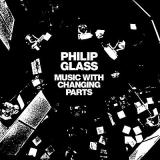
Nonesuch releases Kronos Quartet’s acclaimed album Kronos Quartet Performs Philip Glass on vinyl for the first time to coincide with Kronos Quartet: Five Decades, a year-long celebration marking the quartet’s 50th anniversary. Originally released in 1995, the album features David Harrington (violin), John Sherba, (violin), Hank Dutt (viola) and Joan Jeanrenaud (cello) performing Quartet No. 2 (Company) (1983), No. 3 (Mishima) (1985), No. 4 (Buczak) (1990), and No. 5 (1991), the first piece Glass wrote especially for Kronos. Recorded at Skywalker Sound in California, the album was produced by Judith Sherman, Kurt Munkacsi and Philip Glass. The cover art features Francesco Clemente’s painting The Four Corners (1985). At the time of the album’s release, the New York Times said, ‘It contains some of Glass's best music since Koyaanisqatsi. His ear for sumptuous string sonorities is undeniable,’ while the Washington Post called it ‘An ideal combination of composer and performers.’ It was a top 10 hit on Billboard’s Top Classical Albums, and spent 12 weeks on Billboard’s Classical chart.
In his original liner note, critic Mark Swed wrote, ‘Glass’ string quartets may contain his most intimate music. They are works through which a very public composer, perhaps the most important opera reformer of our age and a longstanding collaborator in large-scale music theater, holds up a mirror to himself and his way of composing. “In an odd way,” Glass explains, “string quartets have always functioned like that for composers. I don’t really know why, but it’s almost impossible to get away from it. It’s the way composers of the past have thought and that’s no less true for me. It’s almost as if we say we’re going to write a string quartet, we take a deep breath, and we wade in to try to write the most serious, significant piece that we can.” Glass says that as he sat down to write String Quartet No. 5, he had discovered that perhaps not taking a serious tone might be the most serious way to deal with it. “I was thinking that I had really gone beyond the need to write a serious string quartet and that I could write a quartet that is about musicality, which in a certain way is the most serious subject.”’
Glass’ first numbered quartet was written in 1966; however, he did not return to the string quartet medium until 1983, when he provided incidental music for a dramatization of Samuel Beckett’s prose poem, Company. During those 17 years, Glass had formed an ensemble and developed his style in a series of increasingly elaborate pieces for it. String Quartet No. 3 is also adapted to dramatic music, this time from his score to the 1985 Paul Schrader film, Mishima. It was with the music of Mishima that Kronos became associated with Glass, recording the string quartet sections of the soundtrack and subsequently working extensively with the composer on all five of his numbered quartets. Kronos also gave the first concert performances of Company and Mishima. String Quartet No. 4 was composed in remembrance of the artist Brian Buczak, who died of AIDS in 1988.
As Kronos’ anniversary season continues with further concerts around the world, Nonesuch will reissue Black Angels on vinyl on February 16. First released in 1990, the award-winning album includes George Crumb’s title piece, which inspired David Harrington to found the quartet. Called ‘an unusually elevated and searing Vietnam War protest’ by the New York Times, it sets a dark, powerful tone for this collection, which addresses the political/physical/spiritual consequences of war. Also featured are works by Charles Ives, István Márta, Thomas Tallis, and Dmitri Shostakovich. ‘Stylishly packaged, intelligently programmed, superbly recorded and brilliantly performed,’ proclaimed Gramophone. ‘In short, very much the sort of disc we’ve come to expect from the talented and imaginative Kronos Quartet.’ The Evening Standard included it among its ‘100 Definitive Classical Albums of the 20th Century’.
Born in Baltimore, Maryland, in 1937, Philip Glass is a graduate of the University of Chicago and the Juilliard School. By 1974, he had created a large collection of music for The Philip Glass Ensemble. The period culminated in the landmark opera, Einstein on the Beach. Since Einstein, Glass’s repertoire has grown to include music for opera, dance, theatre, orchestra, and film. His scores have received Academy Award nominations (including Kundun and The Hours, as well as Notes on a Scandal) and a Golden Globe (The Truman Show). Recent works include his memoir, Words Without Music, his first Piano Sonata, opera Circus Days and Nights, and Symphony No. 14. Glass received the Praemium Imperiale in 2012, the US National Medal of the Arts from President Barack Obama in 2016, and 41st Kennedy Center Honors in 2018.
Nonesuch’s relationship with Glass began in 1985, with the release of the score for Paul Schrader’s Mishima featuring Kronos Quartet. Over the years other Glass works on Nonesuch have included Einstein on the Beach (1993), Kronos Quartet Performs Philip Glass (1995), Music in Twelve Parts (1996), Glass Box (2008), as well as the soundtracks for Powaqqatsi (1988), Kundun (1997), Koyaanisqatsi (1998), and The Hours (2002), amongst others.
For 50 years, San Francisco’s Kronos Quartet – David Harrington (violin), John Sherba (violin), Hank Dutt (viola), and Paul Wiancko (cello) – has challenged and reimagined what a string quartet can be. Founded at a time when the form was largely centred on long-established, Western European traditions, Kronos has been at the forefront of revolutionizing the string quartet into a living art form that responds to the people and issues of our time. In the process, Kronos has become one of the most celebrated and influential groups of our era, performing thousands of concerts worldwide, releasing more than 70 recordings of extraordinary breadth and creativity, and collaborating with many of the world’s most accomplished composers and performers. Through its nonprofit organization, Kronos Performing Arts Association, Kronos has commissioned more than 1,000 works and arrangements for string quartet – including the Kronos Fifty for the Future library of free, educational repertoire. Kronos has received more than 40 awards, including three Grammy Awards and the Polar Music, Avery Fisher, and Edison Klassiek Oeuvre Prizes.
Kronos is prolific and wide-ranging on recordings. The ensemble’s expansive discography on Nonesuch includes three Grammy-winning albums: Terry Riley’s Sun Rings (2019), Landfall with Laurie Anderson (2018), and Alban Berg’s Lyric Suite featuring soprano Dawn Upshaw (2003); the 40th-anniversary boxed set Kronos Explorer Series; Nuevo (2002), a Grammy- and Latin Grammy–nominated celebration of Mexican culture; Pieces of Africa (1992), a showcase of African-born composers that simultaneously topped Billboard’s Classical and World Music charts; and Folk Songs (2017), Nonesuch’s 50th album with Kronos, which featured Sam Amidon, Olivia Chaney, Rhiannon Giddens, and Natalie Merchant singing traditional folk songs.
What are the differences and similarities between human and artificial sound, between oscillations generated by vocal cords and synthesizer voices, voltage amplified by speakers? On Silencio, his latest album for Tresor Records, Moritz von Oswald works with a 16-voice choir to explore this concept.
Drawing from the ensemble works of long-standing inspirations Edgard Varèse, György Ligeti and Iannis Xenakis, von Oswald and Vocalconsort Berlin delve into the space between sounds, creating a deeply textured collection that shifts between light & ethereal and
dark & dissonant.
As masterfully demonstrated in the early work of von Oswald and Mark Ernestus’ influential Basic Channel project, repetition and reduction are key elements here, much in the tradition of techno and minimalism. The vast dynamism of the human voice adds to the
profound weight of electronics while offering up a rhythmic source and sonic noise palette unexplored in von Oswald’s repertoire. In Silencio, von Oswald dredges a dank murk, pulling clouds over a distant pulse. It hangs, ready to take on new forms.
The compositions were written in von Oswald’s Berlin studio on classic synthesizers, such as the EMS VCS3 & AKS, Prophet V, Oberheim 4-Voice and the Moog Model 15. These abstract recordings were transcribed to sheet music for choir by Berlin-based Finnish composer and pianist, Jarkko Riihimäki and performed by Vocalconsort Berlin in Ölberg church in the city’s Kreuzberg district, only few metres down the road from where Dubplates & Mastering and Hard Wax opened their doors for music enthusiasts for many years so long. The recordings of the choral versions were then incorporated into the synthesized parts of the album and brought into anew electronic context; in Silencio, the focus is not on using one means to imitate the other, but to sonically discuss the tensions and harmonies between the two worlds and create a dialogue between them.
The relationship between von Oswald and Tresor Records goes back thirty years, all the way to Blake Baxter’s Dream Sequence in 1991 - which von Oswald engineered alongside Thomas Fehlmann. The collaboration with Fehlmann lived on, seeing the duo team up as 3MB with Eddie Fowlkes or Juan Atkins. More recently, the Detroit-Berlin connection continued as Juan Atkins & Moritz von Oswald present Borderland.
For von Oswald, Tresor Records and also the participating guest musicians of the choir, this release brings together audiences from other musical areas, cross-pollinating; Silencio is an album that stands for itself beyond the musical genre boundaries.
Bread & Souls is an ensemble of musicians, singers, DJs, producers and, most of all, long term friends: a globally-spread family re-gathered by Franco Fusari – entrepreneur, music lover and dreamer.
“Find the Beauty” on 7″ is the project preview (which precedes the release of the whole project late 2023), featuring Detroit-based Paul Randolph on vocals, the amazing Tommaso Cappellato on drums, Marcus Machado on guitar and Taku Hirano on percussion, all directed by eclectic project leader and producer Mark de Clive-Lowe, a pianist and true electronic-jazz pioneer.
The complete Bread & Souls project will be released as 4×12” EPs, with original music produced by Mark de Clive-Lowe and featuring Tommaso Cappellato, Bembé Segué, Vanessa Freeman, Paul Randolph, Rich Medina, and many more; remixes from: Mr. Scruff with Kaidi Tatham, Domu, Volcov, LTJ Xperience, Alex Attias and G&D.
12” black vinyl, standard sleeve, limited to 500 copies, download card included. The long sold-out ‘Random Acts of Total Control’ EP by French outfit Unschooling is now being reissued by London-based label and promoters Bad Vibrations. The five-track EP was originally released in 2021 and deals in an energetic, lo-fi post-punk that revels in calculated discord. Their chaotic ensemble of complex mathy guitar lines, dissatisfied vocals and twitchy rhythm sections have drawn comparisons to such contemporaries as Omni, Crack Cloud and Women, but all wrapped up in a Contortions-esque No Wave spontaneity. Unschooling emerged with their self-released nine-song ‘Defensive Designs’ cassette in 2019 which made a splash in the French indie scene (and is now also being reissued on vinyl for the first time by Bad Vibrations). Its follow-up, the ‘Random Acts of Total Control’ EP, solidified their reputation further afield and established them as one of the most exciting new acts in the current school of post-punk revivalists. The band have since toured heavily around UK and Europe and appeared at Great Escape, Green Man, Wide Awake, Le Printemps De Bourges, Levitation France, Dot to Dot and more. Tracklist: 1) More Is More 2) Boo Boo Dragon 3) Social Chameleon 4) No Shoes 5) NYE
The follow-up to his acclaimed Constellation debut Third Album released in lockdown spring 2020, Markus Floats returns with Fourth Album, pushing the Montréal-based artist's distinct abstract electronic compositions into newly evocative terrain (while preserving his record-titling literalism). Faced with another couple of years spent unexpectedly, though not unfamiliarly, secluded and studio-bound, working on both paintings and music, Floats emerged by the end of 2022 with a set of tracks "about 60% finished" and a determined desire to throw off the shackles of distancing and isolation. "I had always thought about Markus Floats as a solo project but I am wrong about that. Fourth Album is about asking for help, inviting in, and making a home. It's about trust, exploration, and the effort of letting go."Sharing his in-progress recordings with a trio of close friends and collaborators from the powerhouse free music ensemble Egyptian Cotton Arkestra, each of these players then spent a day improvising to the tracks at Montréal's Hotel2Tango studio. With violin by Ari Swan, saxophone and mbira by James Goddard, and guitar and drums by Lucas Huang, Floats stitched their extemporized instruments back into his compositional process. The result is a fluid, lustrous, dynamic expansion of his sound and structure that continues to strike the ineffable balance of abstraction and soulfulness rightly highlighted and celebrated in the critical response to Third Album. Fourth Album sustains much of that previous work's enchanting equanimity, while inviting a bit more restlessness, accident and grit, with the incorporation of acoustic instruments and improvisation melding Floats' own background in Electroacoustic Studies and Jazz Performance more than ever before.Signature avant-electronic explorations of arpeggiated and timbral transformation, subtle shifts in harmonic consonance and dissonance, and a through-composed praxis that draws coterminously upon free jazz, musique concrète and modern Minimalism, all continue to shape Fourth Album to great effect. But an additional palette of sonic and gestural raw material is now also decidedly "out-of-the-box", charting a wider range of gestures, textures and temporalities. Fourth Album complexifies and intensifies across its 12 tracks, thematizing dualities and introducing new elements of play and accident, even a sort of looseness here and there, as it conjures communal expressivity within shorter, still scrupulous formal structures. Fourth Album also for the first time includes spoken word as a recorded element, previously only (and always) a feature of Markus Floats live performances. The album's final track samples the poet and activist Fred Moten, closing with these words: "What we've been trying to figure out how to get to is how we are when we get together to try to figure it out." This koan of socially-engaged process and creation/advancement of meaning through praxis and immanence reflects the unique fusion of intangible materiality and affective sensibility at work in Markus Floats music, unfolding in new depths and currents with Fourth Album.
- 01: Jean-Marie Tjibaou - Discours Melanesia 2000 (Kanaki 1974)
- 02: Joby Bernabé - La Logique Du Pourrissement (Madinina 1985)
- 03: Lena Lesca - Aux Tortionnaires (France 1978)
- 04: Alfred Panou & Art Ensemble Of Chicago - Je Suis Un Sauvage (Benin &Amp; Usa 1970)
- 05: Léon Gontran Damas - Il Est Des Nuits (Guyane 1988)
- 06: Slimane Azem & Cheikh Nourredine - La Carte De Résidence (El Djazair 1979)
- 07: Manno Charlemagne - Le Mal Du Pays (Ayiti 1984)
- 08: Guy Cornely - Où Sont Donc Les Tam Tam ? (Karukera 1969)
- 09: Groupement Culturel Renault - Cadences 1 (France 1973)
- 10: Colette Magny - La Pieuvre (France 1969)
- 11: Salah Sadaoui - Déménagement (El Djazair 1985)
- 12: Võ Nguyên Giáp - Rien & Est Plus Précieux` Entretien À Alger (Vietnam 1976)
- 13: Les Colombes De La Révolution - Hommage À Mohamed Maïga (Burkina Faso 1985)
- 14: Hô Chi Minh - ` Arbitrer Le Conflit `(Vietnam 1964)
- 15: Peloquin & Sauvageau - Monsieur L& Indien (Quebec 1972)
- 16: Francis Bebey - On Les Aime Bien (Kamerun 1979)
- 17: Léon Gontran Damas - Blanchi (Guyane 1988)
- 18: Groupement Culturel Renault - Cadences 2 (France 1973)
- 19: Pierre Akendengue - Le Trottoir D&Apos;En Face (Gabon 74)
- 20: Eugène Mona - Pitié (Madinina 1970)
- 21: Dane Belany - Complexium - After Aimé Césaire (France &Amp; Usa 1975)
- 22: Troupe El Assifa - Extrait De Ça Travaille, Ça Travaille, Et Ça Ferme Sa Gueule (Maurice 1975)
- 23: Dansons Avec Les Travailleurs Immigrés - Versailles (France &Amp; Tunisie 1971)
- 24: Abdoulaye Cissé - Les Vautours (Burkina Faso 1978)
- A1: Tower Of Meaning I
- A2: Tower Of Meaning Ii
- A3: Tower Of Meaning Iii
- A4: Tower Of Meaning Iv
- A5: Corky I / White Jet Set Smoke Trail I
- A6: Consideration
- B1: Tower Of Meaning V
- B2: Tower Of Meaning Vi
- B3: Tower Of Meaning Vii
- B4: Tower Of Meaning Viii
- B5: Tower Of Meaning Ix / Corky Ii
- C1: Tower Of Meaning X
- C2: Give It To The Sky
- D1: Tower Of Meaning Xi
- D2: Tower Of Meaning Xii
- D3: Corky Iii / Tower Of Meaning Xiii
- D4: White Jet Set Smoke Trail Ii
Black vinyl[26,01 €]
Im Herbst 2023 erscheint bei Erased Tapes das Album Give It to
the Sky: Arthur Russell"s Tower of Meaning Expanded. Bei der
vom Komponisten und Producer Peter Broderick und dem 12-
köpfigen Ensemble 0 aus Frankreich aufgenommenen Version,
handelt es sich um eine erweiterte Neuinterpretation von Arthur
Russells minimalistischer Orchesterkomposition "Tower of
Meaning", die erstmals im Jahr 1983 veröffentlicht wurde. "Give
It to the Sky.." vereint zudem auch unveröffentlichte Stücke von
Russell, die überarbeitet und neu aufgenommen wurden. Mit
ihrer umwerfenden, insgesamt 80 Minuten langen Hommage
hauchen Broderick und Ensemble 0 dem "Tower of Meaning"
neues Leben ein und verknüpfen diesen minimalistischen
Meilenstein mit etlichen verlorenen Songideen aus Russells
Nachlass. Das komplette Album, das so gut wie ohne Overdubs
auskommt, wurde live in einem kleinen Theater im Südwesten
Frankreichs eingespielt. Gewiss war Russell nie ein Freund
endgültiger Versionen. Er dachte kontinuierlich über die
Möglichkeiten eines Stücks nach und fragte sich, was es sonst
noch alles sein oder werden könnte. "Give it to the Sky" knüpft
ganz klar an diese Herangehensweise an, indem es "Tower of
Meaning" als grobes Framework nutzt, um darauf aufzubauen,
diesen atmenden Kern nach oben und nach außen zu erweitern
- und insgesamt etwas entstehen zu lassen, das man ganz klar
in Russells wundersam-paradoxer Welt verorten kann. Auch
"Give it to the Sky" kann somit keineswegs als letztes Wort oder
ultimative Interpretation gedacht sein. Broderick und Ensemble
0 sind längst darüber im Austausch, welche Formen es auf der
Bühne annehmen oder wohin es sonst führen könnte.
- 1: Tower Of Meaning I
- 1: 2Tower Of Meaning Ii
- 1: 3Tower Of Meaning Iii
- 1: 4Tower Of Meaning Iv
- 1: 5Corky I / White Jet Set Smoke Trail I
- 1: 6Consideration
- 1: 7Tower Of Meaning V
- 1: 8Tower Of Meaning Vi
- 1: 9Tower Of Meaning Vii
- 1: 0Tower Of Meaning Viii
- 1: Tower Of Meaning Ix / Corky Ii
- 2: 1Tower Of Meaning X
- 2: Give It To The Sky
- 2: 3Tower Of Meaning Xi
Clear vinyl[25,17 €]
Im Herbst 2023 erscheint bei Erased Tapes das Album Give It to
the Sky: Arthur Russell"s Tower of Meaning Expanded. Bei der
vom Komponisten und Producer Peter Broderick und dem 12-
köpfigen Ensemble 0 aus Frankreich aufgenommenen Version,
handelt es sich um eine erweiterte Neuinterpretation von Arthur
Russells minimalistischer Orchesterkomposition "Tower of
Meaning", die erstmals im Jahr 1983 veröffentlicht wurde. "Give
It to the Sky.." vereint zudem auch unveröffentlichte Stücke von
Russell, die überarbeitet und neu aufgenommen wurden. Mit
ihrer umwerfenden, insgesamt 80 Minuten langen Hommage
hauchen Broderick und Ensemble 0 dem "Tower of Meaning"
neues Leben ein und verknüpfen diesen minimalistischen
Meilenstein mit etlichen verlorenen Songideen aus Russells
Nachlass. Das komplette Album, das so gut wie ohne Overdubs
auskommt, wurde live in einem kleinen Theater im Südwesten
Frankreichs eingespielt. Gewiss war Russell nie ein Freund
endgültiger Versionen. Er dachte kontinuierlich über die
Möglichkeiten eines Stücks nach und fragte sich, was es sonst
noch alles sein oder werden könnte. "Give it to the Sky" knüpft
ganz klar an diese Herangehensweise an, indem es "Tower of
Meaning" als grobes Framework nutzt, um darauf aufzubauen,
diesen atmenden Kern nach oben und nach außen zu erweitern
- und insgesamt etwas entstehen zu lassen, das man ganz klar
in Russells wundersam-paradoxer Welt verorten kann. Auch
"Give it to the Sky" kann somit keineswegs als letztes Wort oder
ultimative Interpretation gedacht sein. Broderick und Ensemble
0 sind längst darüber im Austausch, welche Formen es auf der
Bühne annehmen oder wohin es sonst führen könnte.
Another dream coming true! One of Giuliano Sorgini's finest and most sought-after titles is finally available as an official LP reissue – the first ever – remastered from the original tapes.
Originally released in 1971on the small library music imprint FAMA, which operated as a sub-label of RCA Italy, the record contains the original music written for Scappo per cantare, a small, pseudo-psychedelic 'musicarello' (musical comedy film) broadcast on RAI television and starring, among others, Italian singers Gianni Morandi and Mauro Lusini.
The only credited album artist is Sorgini, but it's impossible not to perceive, in this record, the hand of his close friend and colleague Alessandro Alessandroni.
This should not come as a surprise. In the early 70s, the two composers and multi-instrumentalists had a fruitful collaboration that saw them, under the monikers Braen (Alessandroni) and Raskovich (Sorgini), produce an abundance of works together, most of which have now gained the recognition they deserve. These include, among others, two 7" singles from their band The Pawnshop, three records in the series Alle sorgenti delle civiltà (Folkmusic), the crime/noir library albums Quarta pagina (Usignolo) and Inchiesta giudiziaria (Octopus Records), as well as the LP Tempo Libero (Panda Records), which was released shortly after the record presented here and in some ways drew rhythmic inspiration from it.
While their collaboration remained unacknowledged on the original release of Scappo per cantare (this was not uncommon at the time, especially in the field of library music), the record sounds perfectly in line with other works composed by Alessandroni in the early 70s, such as Complesso Gisteri's Mostra Collettiva (co-written with Oronzo De Filippi), or even a landmark album like Spontaneous, where Sorgini contributed to a handful of tracks.
So, yes, the sheer beauty of Scappo per cantare is the result of an incredible synergy between two heavyweights of Italian library music! Airy and sweeping melodies à la Zoo Folle, psychedelia à la Under Pompelmo, and various percussion instruments played by Sorgini seamlessly blend and fuse with elements and touches provided by Alessandroni.
More specifically, we find Alessandroni's signature, melancholy whistle in "Desolazione"; the peaceful and dreamy sound of his 12-string guitar in "Scogliere" and "Con Amore"; the trademark harmonies of his vocal ensemble Cantori Moderni in the last two tracks mentioned and in "Per cantare"; and his ingenious use of distortion on his Fender Stratocaster in the suspenseful transitions "Concentrazione" and "Fantocci", as well as in the frantic/hypnotic hippie numbers "Mordente" and "Fendente" (as a side note, it is worth remembering that Alessandroni experimented extensively with distortion in the rock-infused album Underground, co-written with De Filippi and released in 1971 under the moniker Braen's Machine, probably a reference to British psychedelic band Soft Machine).
The creative relationship between Sorgini and Alessandroni was so symbiotic that it would be useless to try to identify in more detail their respective contributions to the sound of Scappo per cantare. The alchemy between these two musical geniuses is the key to the album's exquisitely Italian mixture of cheerful lounge, sweet psychedelia and smooth easy listening.
To do justice to the quality of the music, this remastered reissue is enriched by a new artwork by Eric Adrian Lee, who drew inspiration from the psychedelic visual culture of the period in which the album was written and recorded.
- 1: We Said
- 2: Different Rings
- 3: Unbeknownst
- 4: Predestined Confessions
- 5: How Prophetic
- 6: A Caged Dance
- 7: I Have Long Been Fascinated
- 8: Enthralled Not By Her Curious Blend
- 9: No Way Chastened
- 10: But I Never Heard A Sound So Long
- 11: The Promise
- 12: Shake My Bones
- 13: A(Way) Is Not An Option
- 14: For They Do Not Know
- 15: Others Each
- 16: Ain't I...your Mystery Is Our History
Celebrated composer, performer, saxophonist, soloist, band leader, educator, activist, and mixed-media artist Matana Roberts returns with a new installment of their acclaimed Coin Coin series. For over a decade, Coin Coin has been the central artistic project for Roberts, a remarkable exploration of American ancestry and the nature of memory through "sound quilting": modern composition that draws on a wide range of musical sources and traditions, along with research-driven historical and genealogical narratives that yield prose and poetry both spoken and sung, field recordings, and graphic scores. The Quietus declares "when the 12-album cycle is complete, it will be regarded as a singular masterpiece of 21st century sonic and narrative art" and Pitchfork calls it "one of the most provocative ongoing bodies of work by any American musician." Coin Coin Chapter Five: In the garden... is the first new recorded audio chapter since 2019 and centers upon reproductive rights, summoning the story of a family ancestor who died in early adulthood, from a cause kept obfuscated and hushed, shrouded in disinformation and shame. Roberts reimagines diaristic and oral narratives, delivered in strident streams of spoken word that punctuate the hour-long work, with recurring musical themes frequently accompanied by the declarative refrain "my name is your name / our name is their name / we are named / we remember / they forget." As Roberts writes in the accompanying liner notes essay: I find it absolutely disgusting that the same trauma my grand ancestor, whose story we are telling in this chapter, is closely mirroring the experiences of some poor soul today as I write this... Our aforementioned grand, who perished at a young age, leaving her growing children motherless, did not have to die. The negative consequences of her death have reverberated down through generations in my family line, in the same way that a similar resounding might happen for someone else's ancestral line generations from today. While often jazz-adjacent, and with Matana's inimitable saxophone and indomitable voice at the core, Roberts situates Coin Coin outside the Jazz genre and within heterodox pathways of post-modern composition, electroacoustic music, sound collage, experimental voice, and sound art. In the garden... undeniably continues to express and expand upon the project's magnificent iconoclasm, nonetheless being the most jazz-inflected chapter since Coin Coin Chapter Two: Mississippi Moonchile(2013). Recorded in Brooklyn with a stellar acoustic ensemble that includes Stuart Bogie, Gitanjali Jain, Darius Jones, Matt Lavelle, Mike Pride, Ryan Sawyer, Corey Smythe, and Mazz Swift, abetted by some sparkling pieces featuring modular synthesis courtesy of album producer Kyp Malone (Bent Arcana, TV On The Radio), In the garden... traverses a vivid stylistic array of thematic overtures, excursions and set pieces, ranging from spacious textural invocations to gorgeously tempered horn-led compositions to driving free jazz and exhilarating through composed bursts of cacophony. With storytelling spoken-word lead vocals by Roberts channeled recurringly throughout, alongside various other deployments of layered and group voices, the album is alternately a meditation and fever dream of narrative potency. This is some of the most intense and intensive music Roberts has composed and captured to date, richly conceived and deeply felt, restless yet focused, unflinchingly substantive and unique. Coin Coin Chapter Five: In the garden... channels epigenetic trauma and tragedy with teeming complexity and fierce beauty _ a eulogy, testimony, and celebration, melding music and language in a stunning polychromatic flow of vernaculars and poetics. A powerful work of subjective commemoration and historical-cultural communion that speaks indelibly to the present moment.
2x10” in 350 gsm widespine jacket w/interior colour flood + 300 gsm printed inners + 20”x 10” fold-out insert + DL card
- 1: Donna Non Vidi Mai
- 2: Nessun Dorma
- 3: Parigi! E La Citta Dei Desideri
- 4: Che Gelida Manina
- 5: O Soave Fanciulla
- 6: Dunque È Proprio Finita!
- 7: Recondita Armonia
- 8: E Lucevan Le Stelle
- 9: Ah! Manon, Mi Tradisce
- 10: Io So Che Alle Sue Pene
- 11: Quello Che Tacete
- 12: Ch'ella Mi Creda
- 13: Luigi! Luigi ... Dimmi, Perchè Gli Hai Chiesto
- 14: Non Piangere, Liu
- 15: Torna Ai Felici Dì
After his much-acclaimed Deutsche Grammophon début Arias (“This disc is quite simply a sensation”– BBC Music Magazine), Chilean-American tenor Jonathan Tetelman turns his attention to Giacomo Puccini, to mark the centenary of the composer’s death in 2024. For Tetelman, Puccini is one of the greatest of all composers of Italian opera: “I listen, study and enjoy his music daily. There is always something to learn from him, and my mind is forever open to him. Without Giacomo Puccini, opera wouldn’t be the same. Grazie, Maestro!”. Celebrating the very best of Puccini , the album is released to mark the 100th anniversary of the death of one the world’s most popular opera composers.The album consists of well-known tenor arias such as Nessun dorma, E lucevan le stelle, Donna non vidi mai and Che gelida manina, popular ensembles from "Madame Butterfly", "La bohème" and "Il tabarro" as well as rarities such as Torna ai felici from "Le Villi" and Parigi nè la città dei desideri from "La Rondine".